Most noodle roundups hand you a pile of links and walk away. I want to do something more useful: tell you which noodles are worth learning first, why they work the way they do, and where home cooks reliably mess them up. Noodles are the one corner of Chinese cooking where a single technique decision, the kind of flour, the dough's rest time, the moment you drop the noodles into oil versus broth, decides everything that follows.
I have cooked, mangled, and re-cooked the dishes on this list more times than I can count. The twenty below are the regional signatures a curious cook should actually make at home, grouped by what the bowl is really about. You can use store-bought noodles for every one of them. If you want to pull your own, my hand-pulled noodle (la mian) recipe, the no-machine scissor-cut noodles, and a simple cut-noodle dough cover the bases.
Start here: a noodle dish is either about the wheat and the chew (northern, pulled, cut, hand-torn) or the sauce and the broth (southern, rice-based, sauced). Pick your category, learn one dish cold, and the rest become variations. A fifteen-minute scallion oil noodle teaches the same oil-infusion logic as a bowl of dan dan.
Two grains, two families of chew
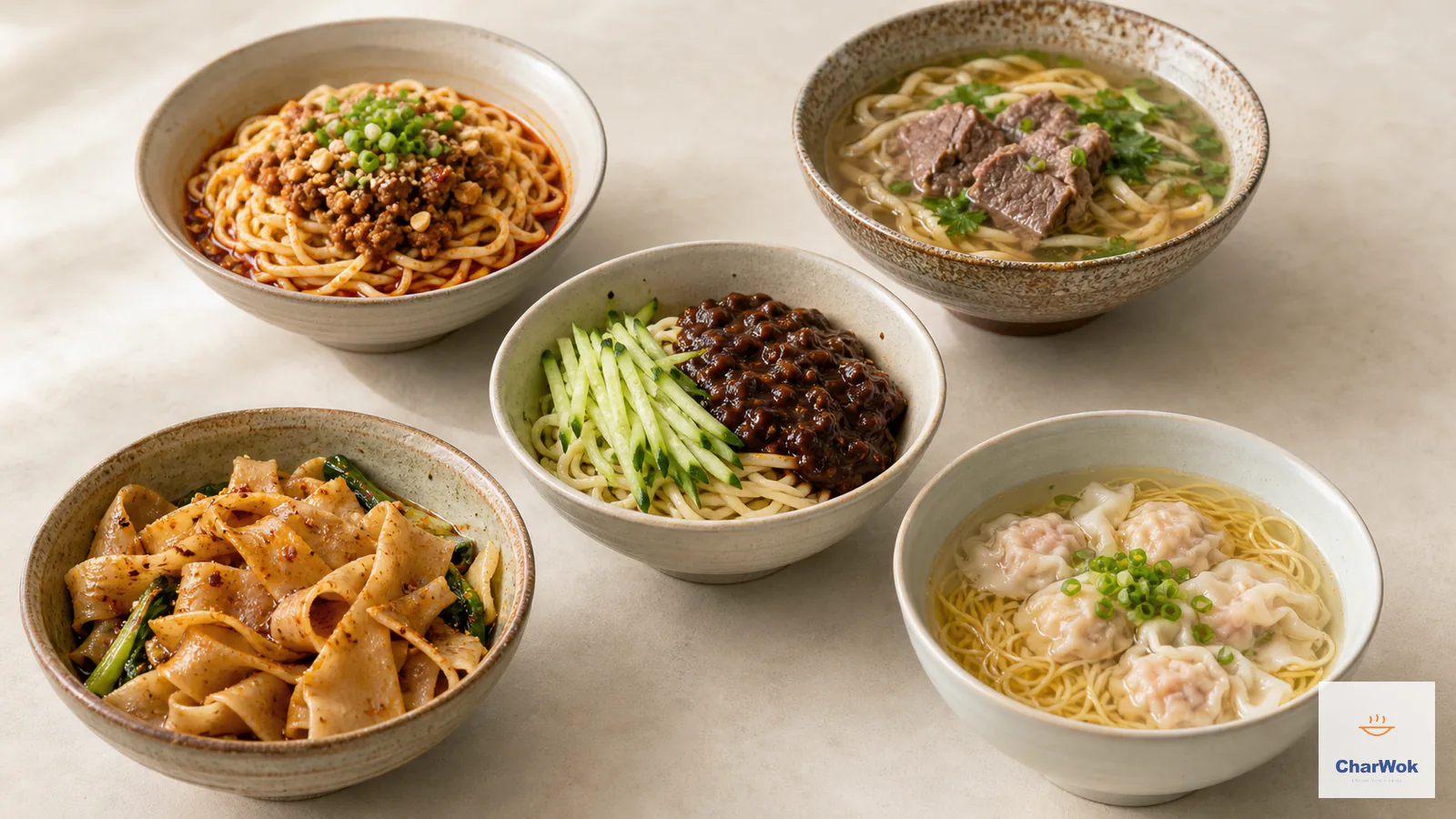
Five noodle families and the pantry anchors behind the twenty dishes
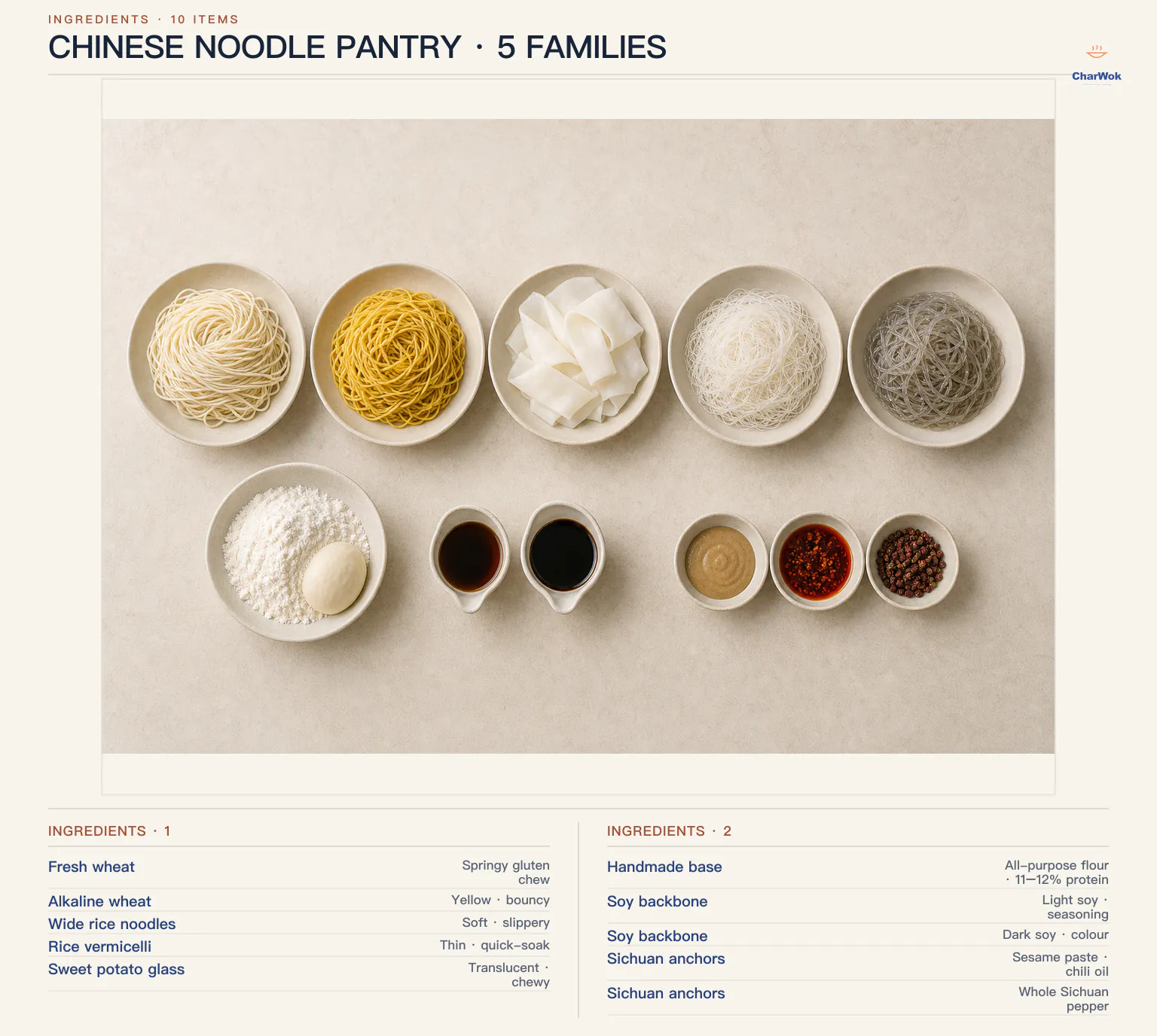
Wheat noodles dominate the north, where the climate grows good wheat and the dough tradition runs deep. Rice noodles and rice-starch noodles rule the south and the river deltas. The texture you chase is completely different. Wheat noodles are about gluten: a springy, slightly rubbery bite the Chinese call jin dao. Rice noodles are about starch gelatinization: a soft, slippery, almost translucent yield that holds a glossy sauce without ever turning gummy.
There is a third lever people rarely talk about: alkali. A pinch of lye water or kansui raises the dough's pH, which strengthens the gluten network and gives the noodles their yellow tint and that firm, almost bouncy mouthfeel. It is why Wuhan hot dry noodles (re gan mian) and Cantonese soy-sauce pan-fried noodles have a chew you cannot fake with plain flour. My guide to lye water walks through the safety and sourcing if you want to go down that road.
Where to begin: the five I would teach first
If a friend told me they wanted to learn Chinese noodles, I would not start them on hand-pulling. I would start here, in roughly this order.
- Scallion oil noodles (cong you ban mian). Three ingredients, twenty minutes, and the lesson is patience. You fry scallions in oil until they collapse into amber, then toss the noodles in that infused oil with soy. The scallion oil noodle recipe is the cheapest tuition you will ever pay in Chinese cooking.
- Tomato and egg noodle soup. The Chinese home-cooking default. The trick is cooking the tomatoes down until the skins slip and the juice darkens, then floating beaten egg through the broth in ribbons. The tomato egg noodle soup is what you eat when you are tired and hungry and want something ready in fifteen minutes.
- Dan dan noodles. Your first sauced, no-broth Sichuan bowl. The skill is layering: toasted chili oil, ground pork, Sichuan peppercorn, sesame paste, black vinegar, all clinging to the noodles. Follow the dan dan noodle recipe and stir the bowl before the first bite.
- Chow mein. Your first wok noodle, and the place most people fail. The two-step cook (par-cook, then crisp) is what separates a restaurant noodle from a soggy one.
- Beef chow fun. Your first rice noodle and your introduction to wok hei. The wide ho fun ribbons must be separated cold and tossed hard over high heat. It is the dish that will teach you whether your burner is hot enough.
The wheat-and-chew school: northern and hand-made noodles
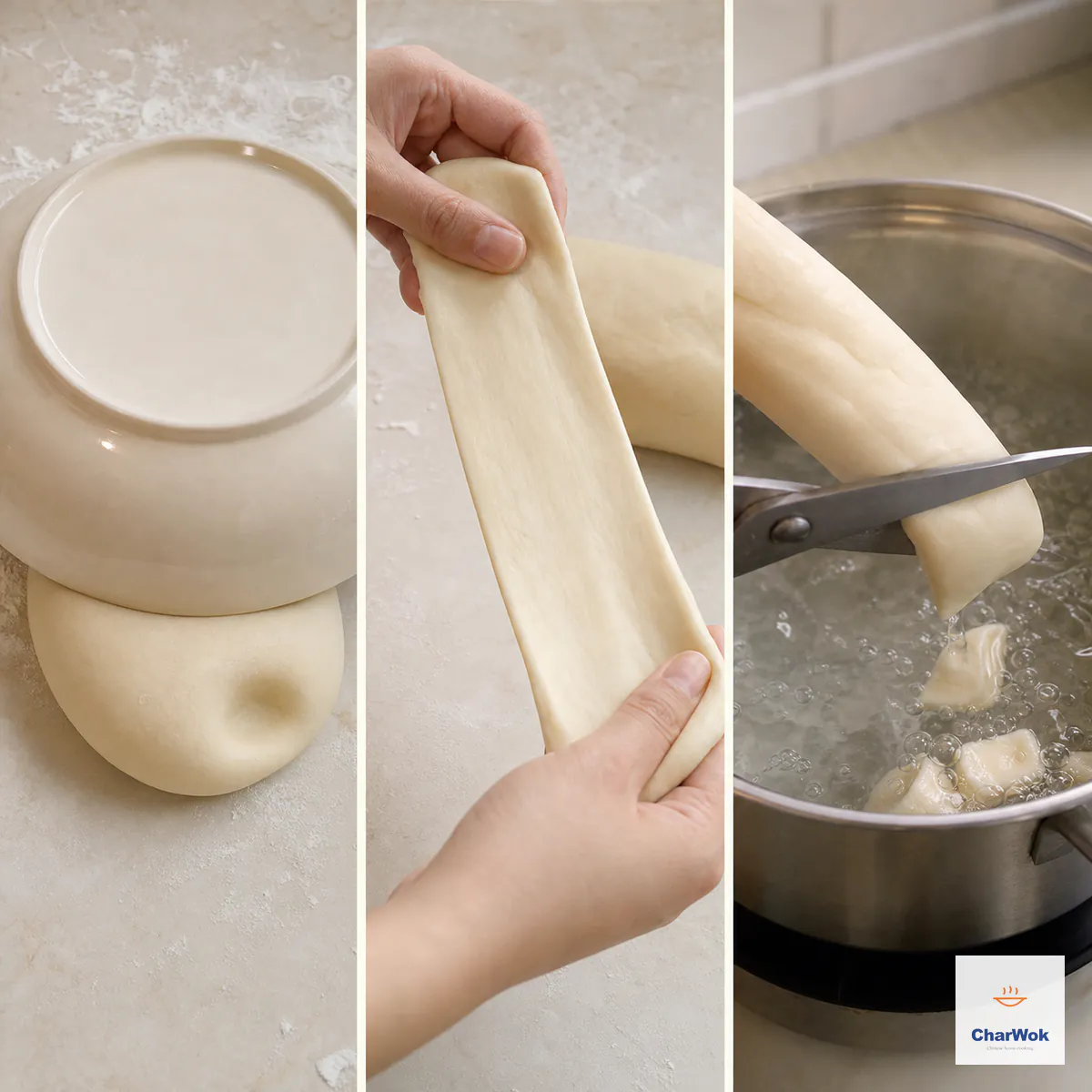
Give salted wheat dough enough covered rest to relax, stretch a forgiving wide ribbon without forcing it, or skip rolling and snip a soft dough log straight into boiling water.
These are the bowls where the noodle itself is the point. The sauce is often simple, sometimes just chili oil and vinegar, because the dough did the heavy lifting.
Biang biang noodles from Xi'an are the poster child: thick, belt-wide ribbons, hand-pulled and slapped against the counter, then drowned in chili oil, garlic, and Sichuan pepper. The biang biang noodle recipe is forgiving because width hides irregularity. This is the hand-made noodle I would point a beginner toward before la mian.
If you want the real hand-pulled challenge, la mian teaches the feel of a properly rested, properly salted dough that stretches without snapping. Two things will save you: rest the dough a full hour, and use a slightly lower protein flour than you think. All-bread-flour dough fights back.
For something genuinely easy, scissor-cut noodles skip rolling entirely. You snip pieces straight from a soft dough log into boiling water, and the irregular shapes catch sauce in their creases. It is the closest thing to a foolproof hand-made noodle. The spicy cumin hand-torn lamb noodles use the same no-equipment logic and are a Xinjiang-flavored favorite in my house.
The sauce-and-broth school: Sichuan and the spicy south
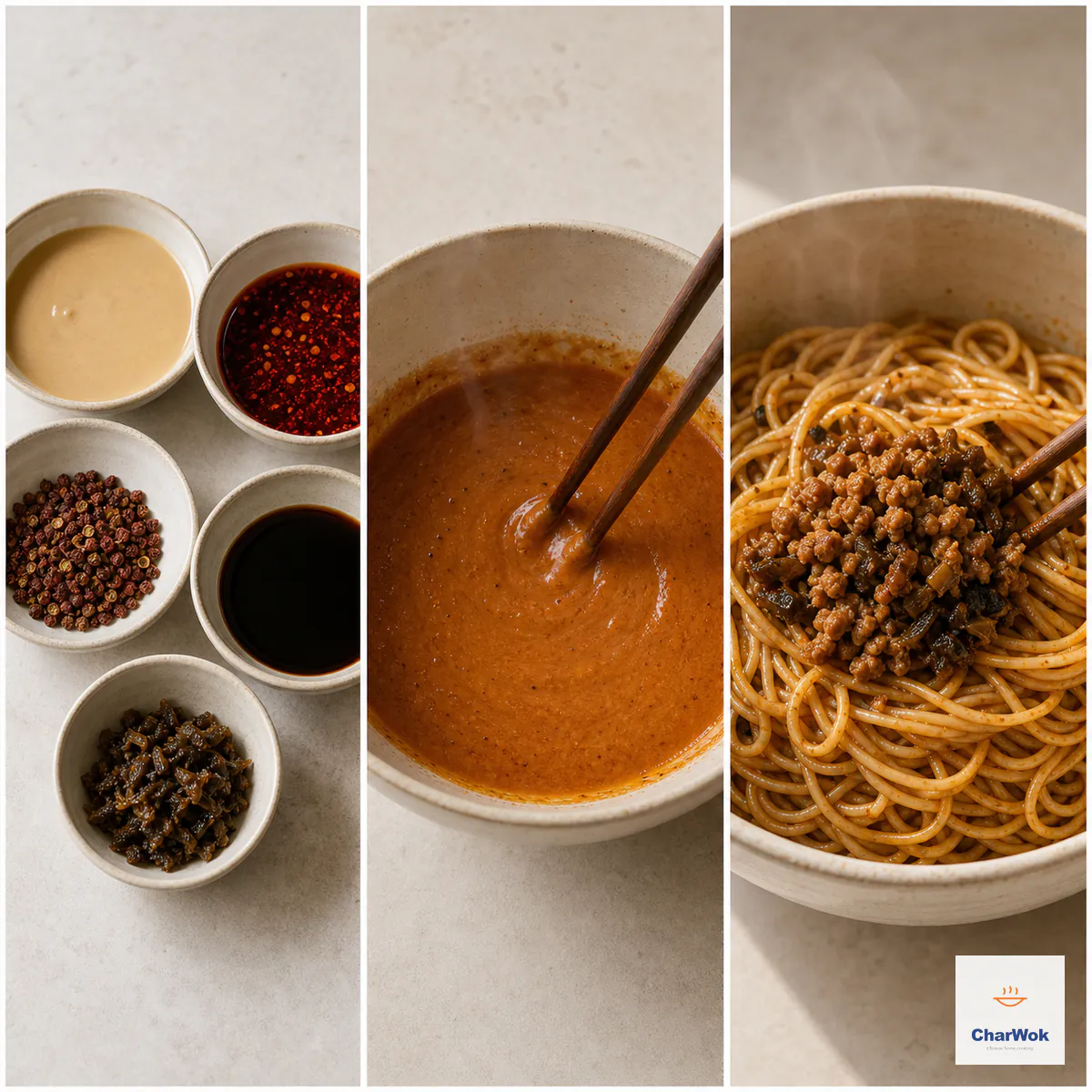
Layer the Sichuan elements, loosen sesame paste and chili oil with only a splash of hot noodle water until glossy, then toss the drained noodles while they are still steaming.
Sichuan noodle culture runs on chili, Sichuan peppercorn, sesame paste, and a willingness to combine all three. The bowls below are sauced or brothy, never timid.
- Dan dan noodles, covered above, are the gateway and the one I make most.
- Chongqing xiao mian is the breakfast of the city: thin noodles in a deep red oil bowl with preserved mustard greens. The Chongqing noodle recipe is fiercely spicy and mouth-numbing; start with half the peppercorn the first time.
- Hot and sour noodle soup (suan la fen) uses sweet potato glass noodles in a tingly, vinegary broth. See suan la fen for the version that taught me to love glass noodles, and the wheat-based hot and sour noodles for a softer chew.
- Tian shui mian (sweet water noodles) is the sleeper hit: extra-thick chewy ropes in a sweet, spicy, aromatic sauce. The tian shui mian recipe is almost unknown outside Sichuan and worth seeking out.
- Cold noodles with Sichuan dressing are summer salvation. The liang mian recipe uses a sesame-chili sauce over cool noodles; sesame noodles give you a milder, kid-friendlier version of the same idea.
Broth bowls and noodle soups
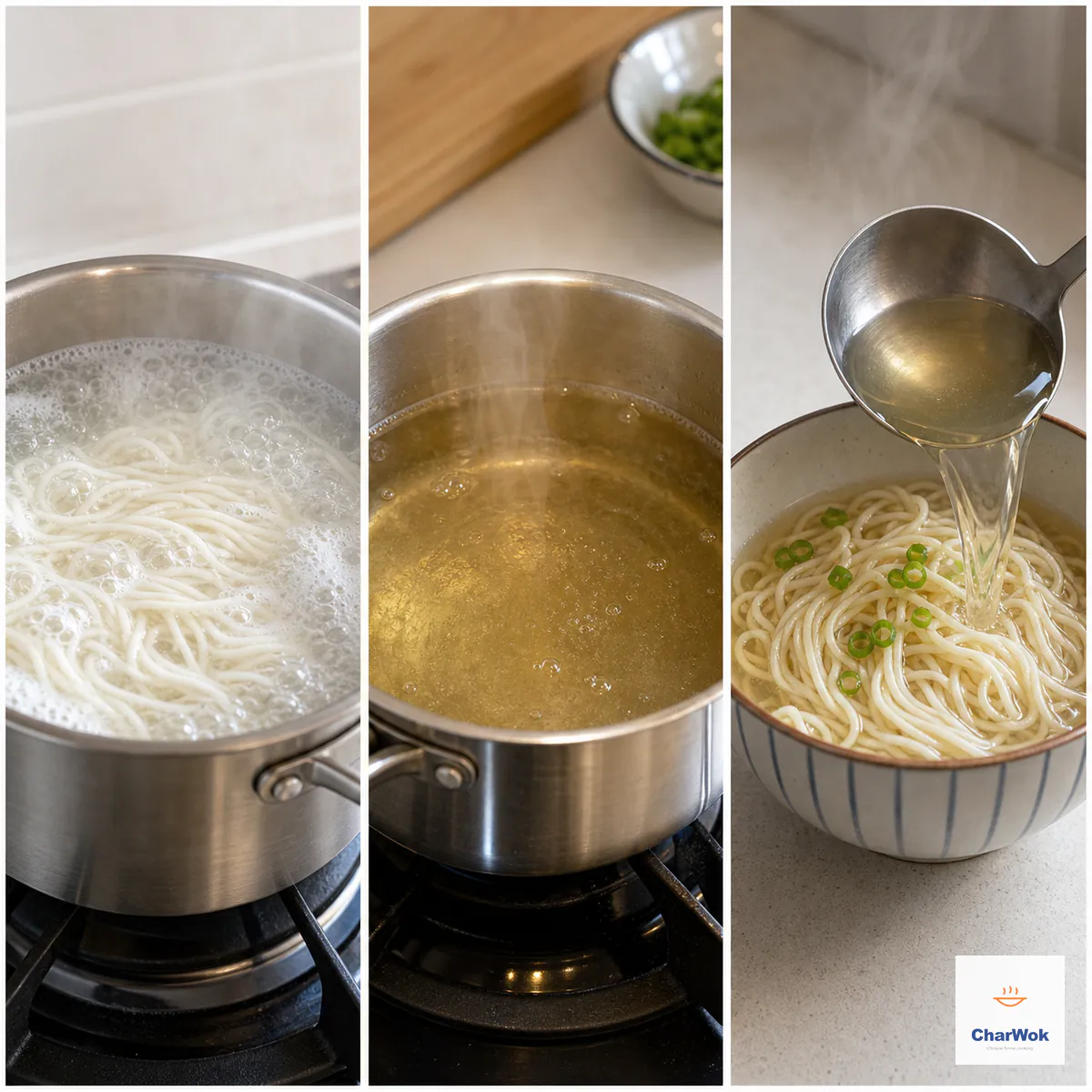
Cook noodles in abundant water, keep the broth in a separate pot, and combine them only in the serving bowl so surface starch never clouds the soup.
Noodle soups are where home cooks go wrong by overthinking the broth. A great bowl does not need a twelve-hour stock. It needs the right base and the right noodles cooked separately, never in the soup.
The regional legends: Lanzhou beef noodle soup with its clear, fragrant beef broth and hand-pulled noodles; the darker, chili-braised spicy beef noodle soup; and the richly sauced Taiwanese beef noodle soup, which is the one I would cook for a crowd. All three reward a properly made chili oil, and my chili oil recipe is the base I use across them.
For everyday, lighter bowls: the Chinese chicken noodle soup uses a quick poaching-liquid trick that is full of umami without a long simmer; wonton noodle soup pairs delicate pork wontons with springy alkaline noodles in a shrimp-and-pork broth; and Yunnan rice noodle soup is the gentle, aromatic cousin for when you want something clean. For a project bowl that doubles as a crowd centerpiece, liang pi (cold skin noodles) sits at the edge of this group.
The stir-fry and rice-noodle corner
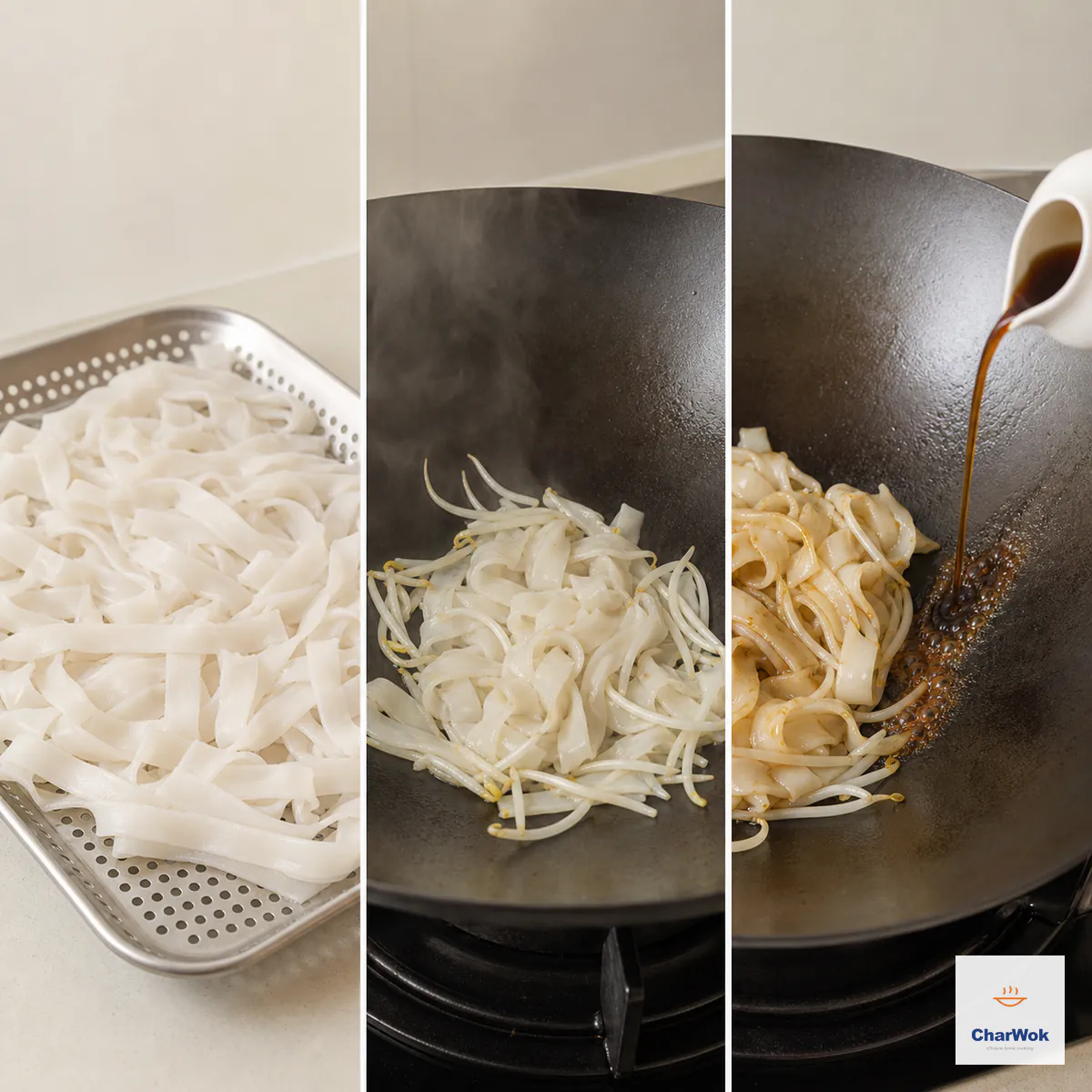
Drain rice noodles thoroughly, keep the batch small enough to preserve open hot wok surface, then pour the sauce along bare metal so it sizzles before glazing the noodles.
Stir-fried noodles live or die by heat and sequence. Get the pan screaming hot, cook in batches, and never crowd. The classic Cantonese wheat stir-fries are chow mein (crisp then sauce) and lo mein (soft, sauced, no crisping). People conflate them; the difference is whether the noodle meets dry heat. Lo mein does not.
For rice noodles, the family splits three ways. Wide ribbons: beef chow fun and the lighter chicken chow fun. Thin vermicelli: Singapore mei fun and the simpler chow mei fun. And egg-coated ribbons in egg fried rice noodles, a comfort-food favorite. All of them demand the same thing: rinse the soaked noodles, drain them bone-dry, and toss fast.
Two more that earn their place: zha jiang mian (Beijing fried sauce noodles), where chewy noodles meet a glossy pork-and-bean-paste sauce with crunchy cucumber on top; and longevity noodles (yi mein), the celebratory, slightly spongy egg noodle served at birthdays and banquets.
What goes wrong, and how to fix it
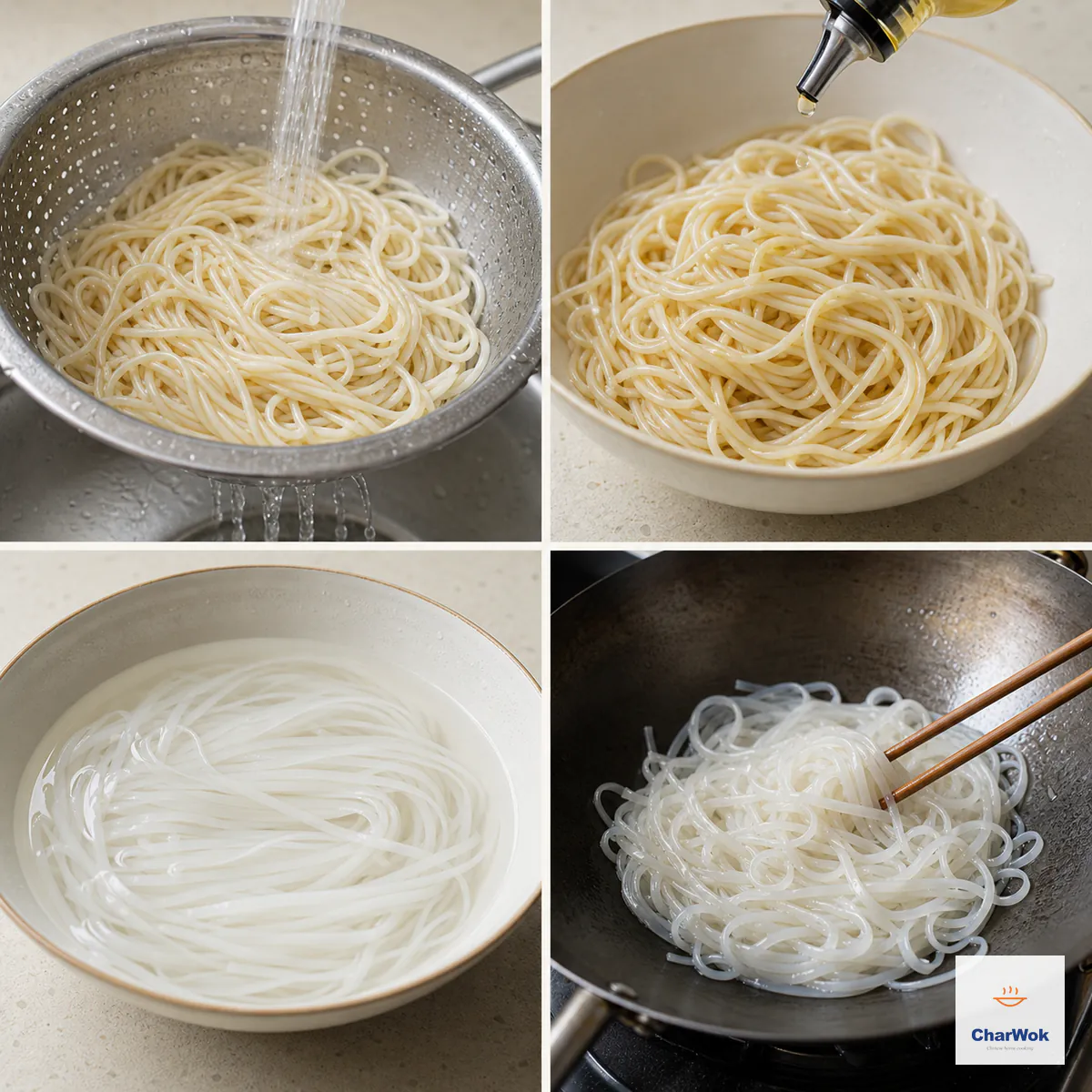
Prevent wheat noodles welding by stopping just shy of soft, rinsing, and using only a few drops of oil; soak rice noodles rather than boiling them, then toss only until coated.
| Problem | What is actually happening | The fix |
|---|---|---|
| Noodles stick together in one clump | Surface starch gelatinized and welded them; usually overcooked or not rinsed. | Cook to just shy of al dente, drain, and rinse under warm water. Toss with a few drops of oil if holding. |
| Hand-pulled or biang biang dough snaps back | Gluten too tight; under-rested or too high protein. | Rest another 30 minutes covered. Drop the flour protein a notch. Salt the dough, it relaxes gluten. |
| Rice noodles break into mush in the wok | They were already fully cooked, then cooked again hard. | Soak to soft, never boil. Add them last and toss only until coated, 30 to 60 seconds. |
| Chow mein comes out soggy, not crisp | Too much noodle for the pan, or sauce added before the noodle crisped. | Use half the noodle you think. Pan-fry undisturbed until golden on one face before any liquid. |
| Dan dan sauce looks split and oily | Sesame paste and chili oil were not emulsified; noodles too wet. | Whisk the sauce base with a splash of noodle water into a paste first. Drain noodles thoroughly. |
| Beef in noodle soup is tough and gray | Boiled instead of braised low; sliced across the grain too thick. | Braise at a bare simmer, never a rolling boil, until fork-tender, then rest in the liquid. Slice thin across the grain. |
| Wheat noodles taste flat | Under-salted water; noodles were the delivery vehicle but had no seasoning of their own. | Salting the cook water like the sea is non-negotiable for wheat noodles. |
I will cop to the worst version of the mush problem. The first time I made beef chow fun I soaked the ho fun in hot tap water for twenty minutes, then stir-fried them for another five. They disintegrated into a starchy paste that tasted like nothing. The lesson, learned ugly: rice noodles want a brief warm soak and the gentlest possible finish in the wok. It is now the dish I make to test a new burner, because if the heat is wrong it tells you immediately.
Which noodle to keep in the pantry
| Noodle | Best for | Notes / substitute |
|---|---|---|
| Fresh thin wheat noodles (alkaline) | Chow mein, lo mein, chongqing xiao mian | Look for "yellow" or "alkaline" on the label. Dried Shanghai noodles work; skip Italian pasta. |
| Fresh wide ho fun (rice) | Beef chow fun, chicken chow fun | Refrigerated section of Asian markets. Dried is acceptable but less tender. |
| Dried rice vermicelli (mee fun) | Singapore mei fun, chow mei fun | Soak in warm water 10 to 15 minutes. Pad Thai sticks are similar. |
| Dried sweet potato glass noodles | Suan la fen, hot and sour soups, cold salads | These hold their chew longest. Korean dangmyeon is a close relative. |
| All-purpose flour (11 to 12% protein) | Hand-cut, scissor-cut, biang biang | Bread flour for more chew; do not use cake flour, too weak. |
| Dried thin egg noodles (yi mein) | Longevity noodles, banquet bowls | Pre-fried and slightly spongy; available dried and vacuum-packed. |
Variations and pairings
Once a noodle recipe works, the variations are endless. Swap the protein in dan dan from pork to ground chicken or crumbled mushroom. Turn cold Sichuan noodles vegan by replacing the sesame paste with peanut butter thinned with warm water. Add blanched greens, bok choy, or bean sprouts to any soup bowl for color and crunch; the garlic bok choy treatment works on the side too.
For a full meal, pair a sauced noodle with a cold vegetable plate. Smashed cucumber salad or cucumber salad three ways cuts the richness of dan dan and zha jiang mian. A bowl of tomato egg noodle soup alongside a stir-fry is a classic two-dish household dinner.
Storage and reheating
Cooked wheat noodles hold one day in the fridge if tossed with oil. Reheat in boiling water for 30 seconds, or briefly in a dry pan to re-crisp. Rice noodles do not reheat well; cook only what you will eat, because leftover ho fun turns hard and then leathery. Broth-based noodle soups keep best when you store noodles and broth separately and combine them at the table; otherwise the noodles drink the broth and go soft. Dough for hand-made noodles rests overnight in the fridge, wrapped tight; let it come back to room temperature before pulling or cutting.
Related recipes & further reading
A few more bowls and pantry pieces round out the picture, from a quick spring-noodle soup to the chili and sesame pastes that anchor so many of the sauces above.
- For a plain, restorative wheat-noodle soup, yang chun mian (spring noodle soup) is the bare-bones bowl that taught me how good a little soy and scallion can be.
- If you want to make the alkaline dough yourself, the homemade alkaline noodle recipe uses kansui for that signature yellow, bouncy chew.
- Ants climbing a tree (spicy vermicelli with pork) is a classic Sichuan glass-noodle stir-fry worth adding to your rotation.
- A cool glass noodle salad is the summer counterpart to the hot, sauced bowls on this list.
- The slippery, chili-dressed liang fen (mung bean jelly noodles) sit at the edge of the noodle family and shine cold.
- Leftover holiday bird becomes a clean, restorative turkey noodle soup built on the same logic as the chicken bowl above.
- For a cold noodle with depth, cold soba noodles in beef broth borrow from Yanji cold-noodle tradition.
- The Xinjiang big plate chicken with belt noodles is a one-pan stew-and-noodle feast in the same northern wheat tradition as biang biang.
- The chili-and-vinegar sauce in many of these bowls starts with spring onion oil, a make-ahead pantry staple.
- Dan dan, sesame noodles, and liang mian all lean on Chinese sesame paste; knowing the paste and its substitutes tightens every sauce.
- Browse the wider must-try authentic Chinese recipes list for dishes that pair well with any noodle bowl here.
- Or connect noodle technique with braises, steaming, and dough in the core Chinese cooking skills guide.
- For the regional stories behind these bowls, a culinary tour of China traces the food cultures that shaped them.
Questions home cooks actually ask
Can I use Italian spaghetti for Chinese noodle dishes? You can in a pinch, and a zha jiang style spaghetti is a real thing in some Chinese-American kitchens. But spaghetti's durum gluten gives a wrong, dense chew and it drinks sauce differently. For sauced bowls like dan dan or scallion oil, a thin fresh wheat noodle is better.
Do I need a wok? For stir-fried noodles, yes, the shape and the heat matter. For sauced and souped noodles, a pot and a bowl are enough. The wok guide covers choosing and seasoning one if you are buying your first.
Store-bought or homemade noodles? Store-bought for weeknights, homemade when the noodle is the dish. Dan dan, chow mein, scallion oil, and any rice noodle bowl are excellent with bought noodles. Biang biang, la mian, and scissor-cut are worth making yourself because the fresh chew is the whole point.
Why do my noodles clump after cooking? Starch on the surface gels and welds them. Rinse wheat noodles in warm water right after draining, and never leave them sitting naked. A few drops of sesame or neutral oil tossed through stops the weld.
The honest summary: pick one dish from this list and make it three times in a month. The first time you will learn the recipe. The second time you will fix the one thing that went wrong. The third time it becomes yours, and the other nineteen stop being intimidating. For most cooks that first dish should be scallion oil noodles or tomato egg noodle soup. Start there, and the rest of the list opens up.