The first time I made chow mei fun at home, I ended up with a wok full of mush. The noodles had collapsed into a paste, the chicken was dry, and the bean sprouts had given up entirely. I had done what a lot of recipes quietly assume you already know not to do: I boiled the rice vermicelli like pasta. The whole dish turns on one decision you make before the wok is even hot, and most instructions skip past it in a sentence.
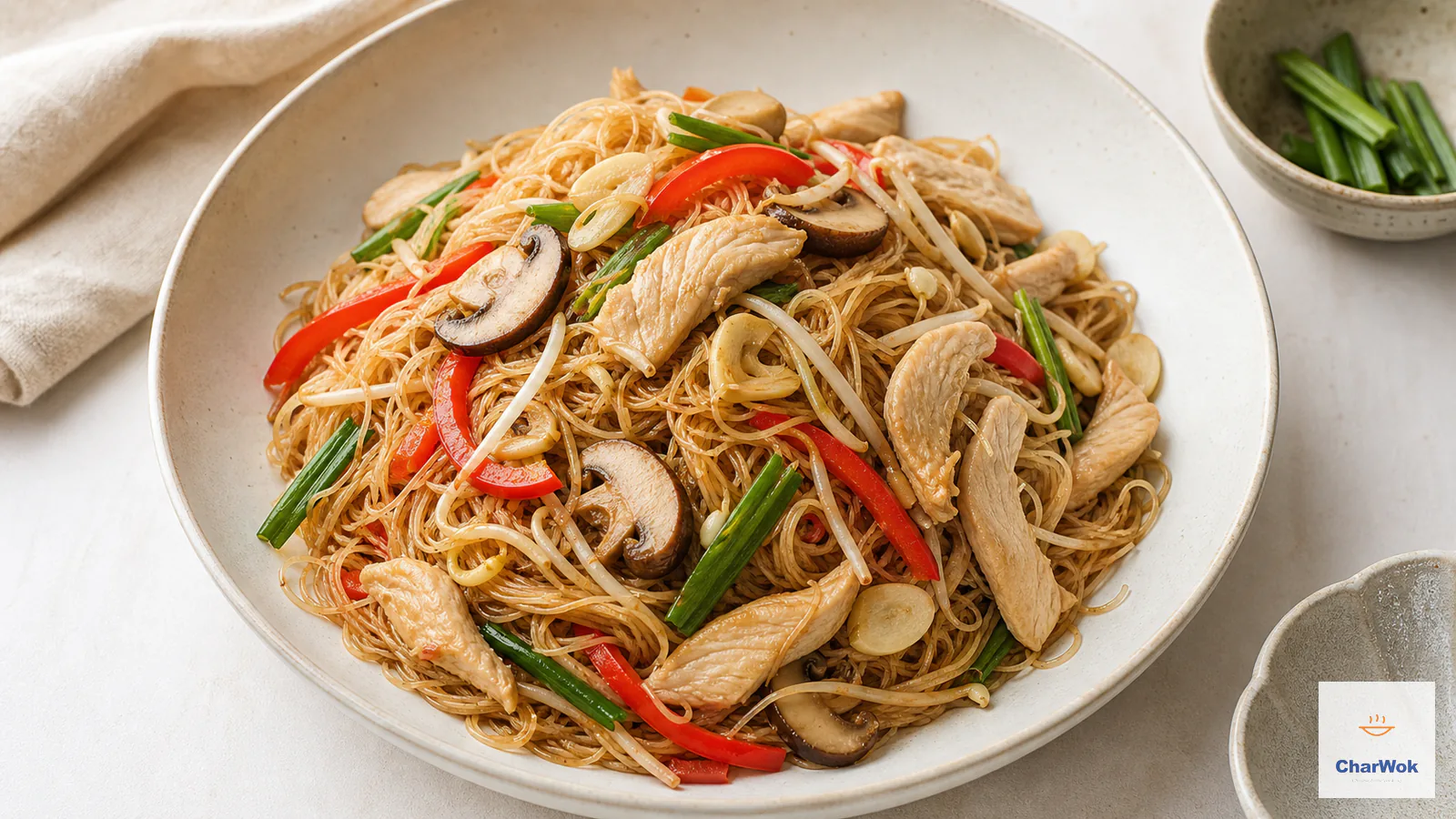
Chow mei fun is a quick stir-fry of thin rice vermicelli with velveted chicken and crisp vegetables. The soul of the dish is contrast: noodles that are tender but still have bite, chicken that is juicy, vegetables that snap. None of that happens by accident. It comes from soaking the noodles to the right stage, sealing the chicken with starch, and cooking everything fast over real heat. Once you understand why each step exists, the recipe takes about six minutes in the pan and forgives a lot.
Soak the mei fun in just-boiled water for 2 minutes, no longer. Velvet the chicken with cornstarch and Shaoxing wine so it stays juicy. Cook over the highest heat your stove can give you, and the whole stir-fry is done in about 6 minutes. Serves 2.
What chow mei fun actually is
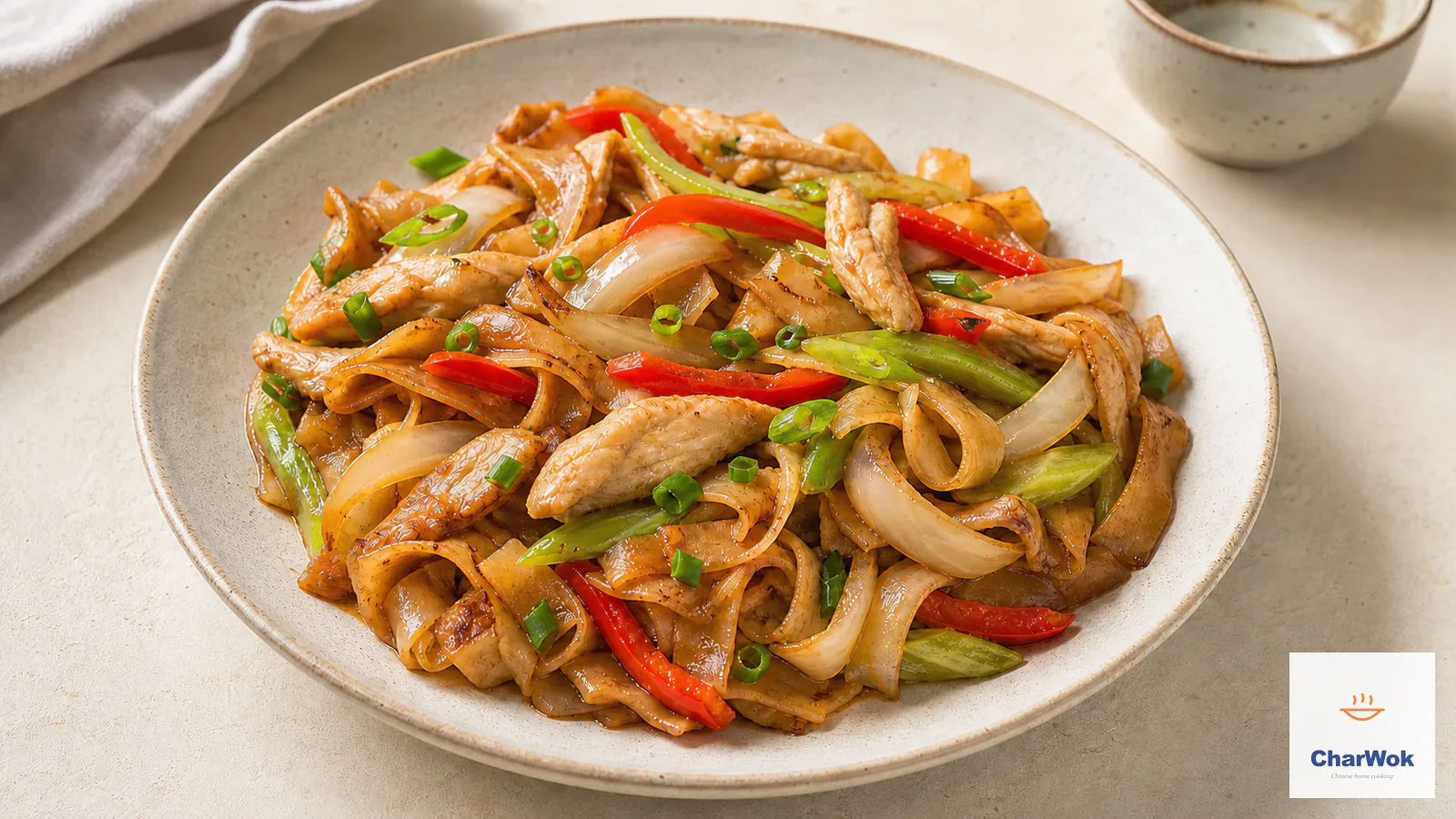
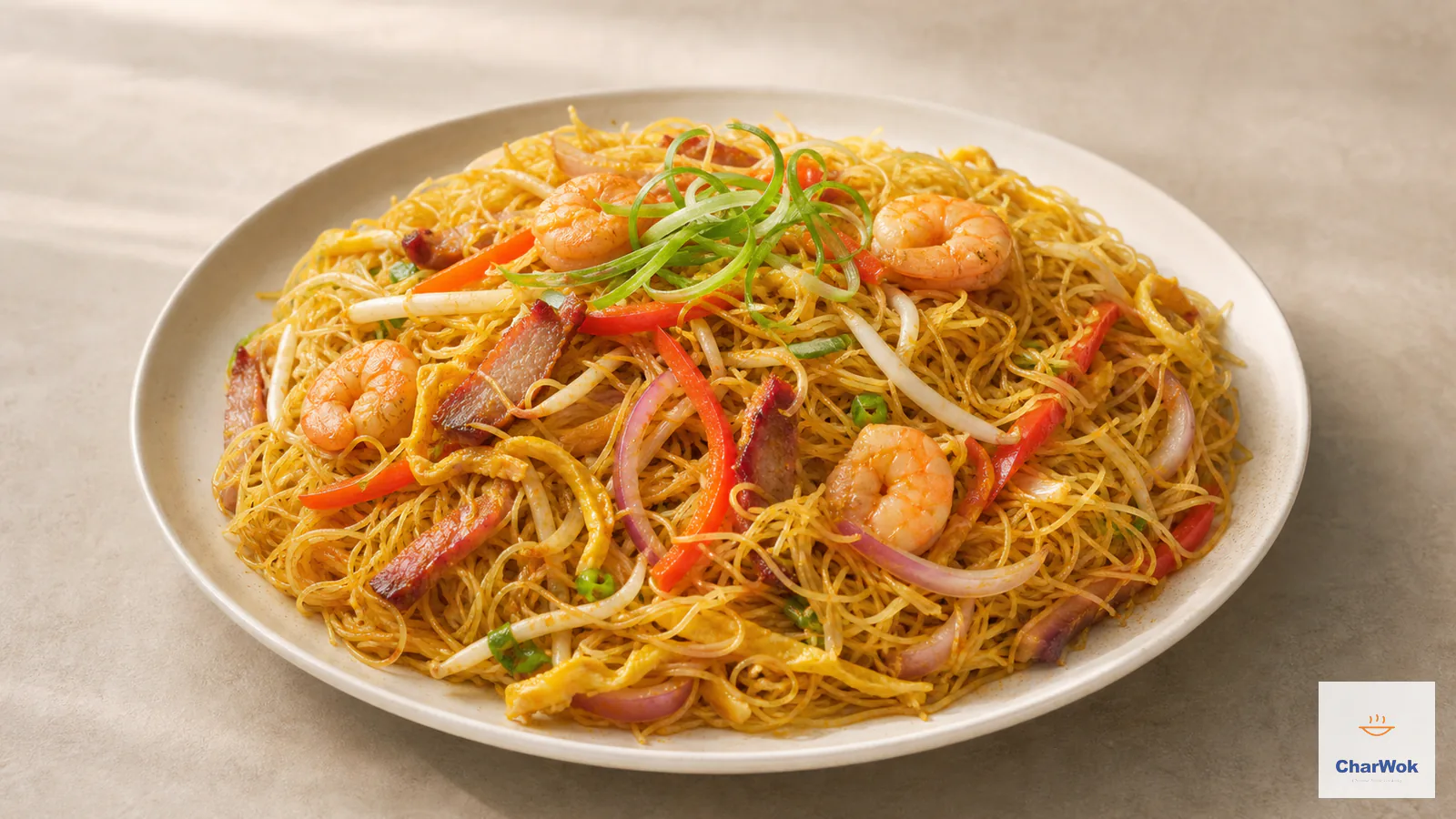
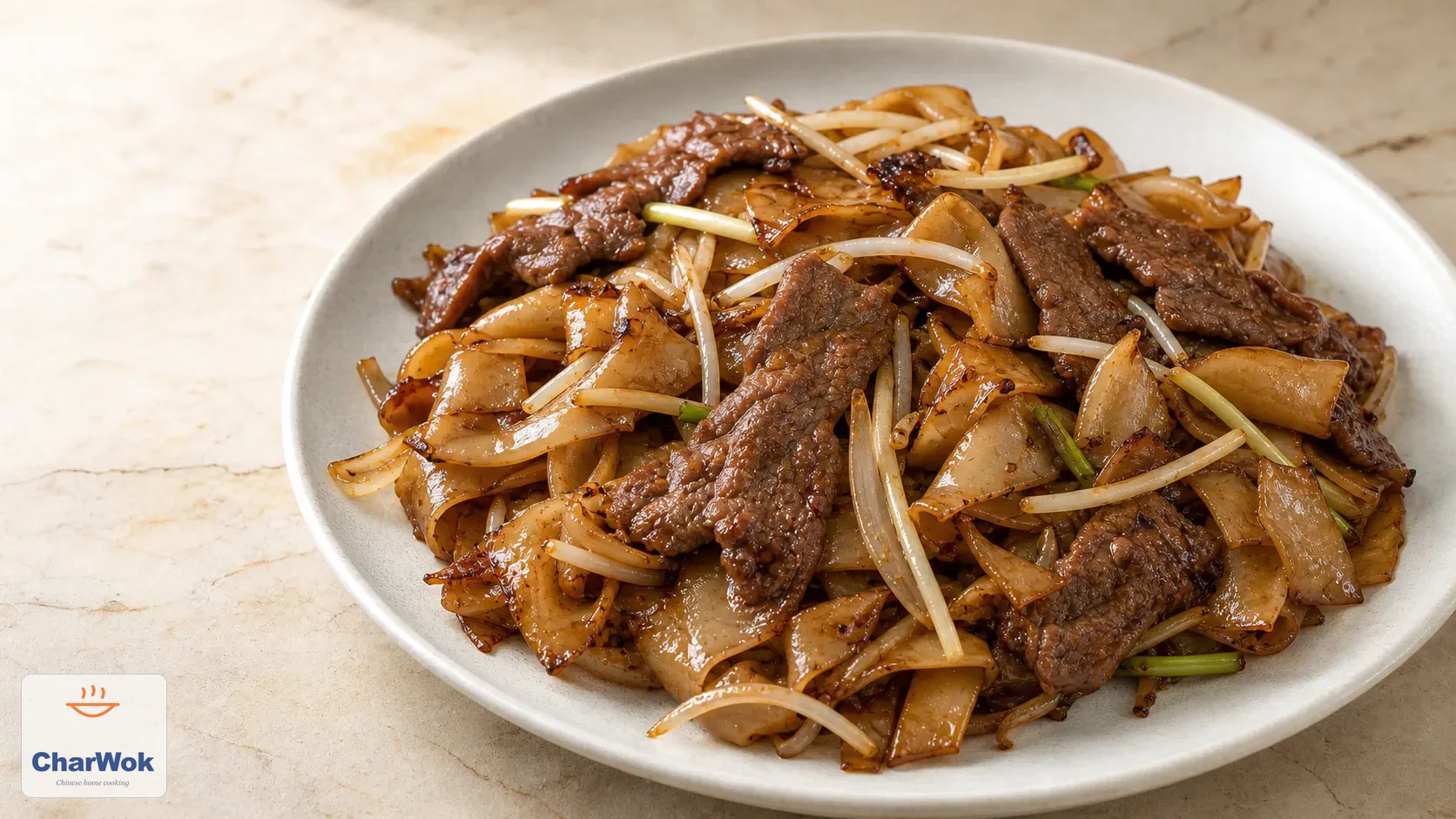
"Mei fun" (米粉) just means rice vermicelli, the thin dried noodles made from ground rice and water. "Chow" means stir-fried. So chow mei fun is fried rice vermicelli, a dish that shows up across southern China and the Chinese diaspora, most often with chicken, shrimp, or pork, and always with a gloss of soy-based sauce that the noodles drink in. It is a cousin of the curry-laced Singapore rice noodles and of chicken chow fun, which uses the wide, flat ho fun noodles instead.
The version here is the plain, home-style one: chicken, mushrooms, bell pepper, bean sprouts, scallion, garlic. No curry powder, no chili. It is the kind of thing you throw together on a weeknight when you want noodles but not a project. If you are newer to Chinese noodle dishes, it is one of the most forgiving places to start, far less finicky than hand-pulled noodles or beef chow fun, where the wide noodles demand a wok surface most home stoves cannot match.
The ingredient list, with my notes
Ingredients at a glance
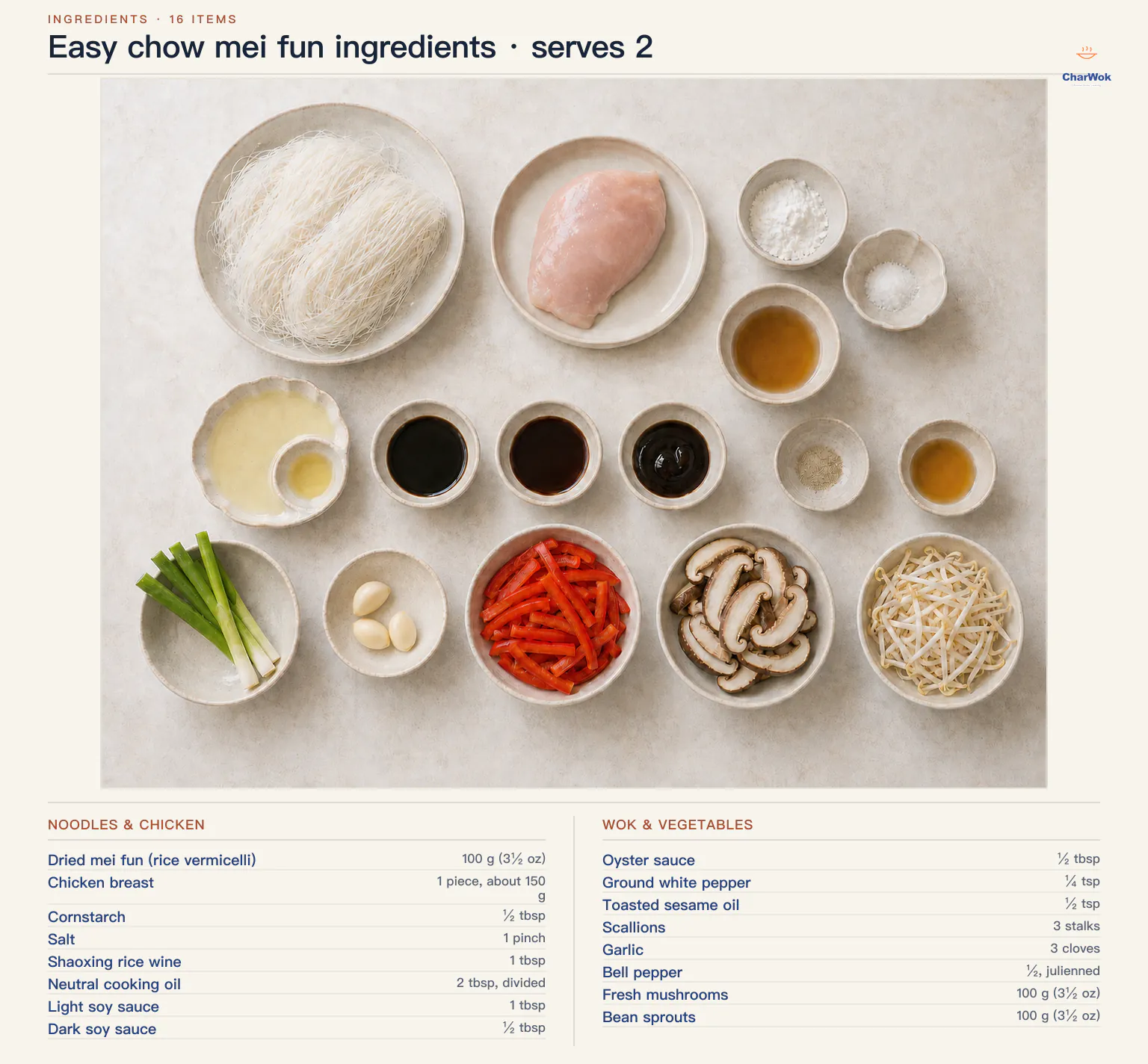
| Ingredient | Amount | Notes / substitute |
|---|---|---|
| Dried mei fun (rice vermicelli) | 100 g (3½ oz) | The very thin white rice sticks. Do not use laksa noodles or ho fun here. See notes below on choosing. |
| Chicken breast | 1 piece, about 150 g | Thigh works too and is more forgiving; slice thin either way. |
| Cornstarch | ½ tbsp | Tapioca or potato starch swap fine. This is the velvet, not a thickener. |
| Salt | 1 pinch | |
| Shaoxing rice wine | 1 tbsp | Dry sherry is the closest Western substitute. Skip rather than use cooking wine loaded with salt. |
| Neutral cooking oil | 2 tbsp, divided | Peanut, canola, or grapeseed. 1 tsp goes into the marinade, the rest into the wok. |
| Light soy sauce | 1 tbsp | Salt and savory base. See the light vs. dark soy sauce guide if your kitchen has only one bottle. |
| Dark soy sauce | ½ tbsp | For color and a touch of sweetness. Leave out if you only have light; the dish goes paler but still works. |
| Oyster sauce | ½ tbsp | Body and umami. Vegetarian oyster sauce (mushroom-based) is a fine swap. |
| Ground white pepper | ¼ tsp | White pepper specifically. Black pepper tastes different and looks like specks in the noodles. |
| Toasted sesame oil | ½ tsp | Stirred into the sauce at the end, never into a screaming-hot wok or it goes bitter. |
| Scallions | 3 stalks | Cut diagonally; keep the white and green parts separate, they go in at different times. |
| Garlic | 3 cloves | Minced fine. Burns in seconds, so it goes in after the scallion whites. |
| Bell pepper | ½, julienned | Any color. A sweeter red or yellow reads better than green in photos and on the plate. |
| Fresh mushrooms | 100 g (3½ oz) | Shiitake, oyster, or button. Shiitake has the most flavor; rehydrated dried shiitake is even better, see the shiitake guide. |
| Bean sprouts | 100 g (3½ oz) | Mung bean sprouts. Add last, cook seconds, or they go limp. Homegrown taste noticeably cleaner. |
Why each step matters (the science, briefly)
Before the method, three things worth knowing, because they explain why the recipe is written the way it is.
Soak, do not boil. Rice vermicelli is precooked during manufacture, then dried. The noodles are already cooked through; they only need to rehydrate. A two-minute soak in just-boiled (off the boil) water lets the starch granules absorb water and soften without dissolving the strand structure. Boil them, and the outer layer gelatinizes into paste while the core is still chalky, and the noodles turn to mush the instant they hit the wok. If you have ever made ants climbing a tree and wondered why the vermicelli held its shape, the same principle is at work.
Velvet the chicken. The cornstarch-and-wine coating is not flavoring, it is armor. Cornstarch gelatinizes into a thin gel around the meat as it sears, forming a barrier that slows moisture loss and keeps the surface from seizing up. The small amount of oil in the marinade keeps the slices from sticking to each other and to the pan. This is the same trick behind nearly every tender stir-fry in this style, from cashew chicken to black pepper chicken.
Heat is non-negotiable. A home wok on a home burner will never throw off the smoky char of a restaurant wok, but you can get close on a single batch. High heat keeps the pan above the boiling point of the liquid the vegetables release, so the moisture evaporates instead of pooling. Pooling turns a stir-fry into a braise, and braised rice noodles are glue. If your stove is weak, cook the chicken and vegetables in batches rather than crowding the pan.
The method
- Velvet the chicken. Slice the breast across the grain into thin pieces about the size of a postage stamp. Put them in a bowl with the cornstarch, salt, and Shaoxing wine. Rub with your fingers until no liquid pools and the slices look frosted. Add 1 tsp of oil and toss to coat. The oil seal is what stops them welding together later. Let it sit while you do everything else, 10 minutes is plenty.
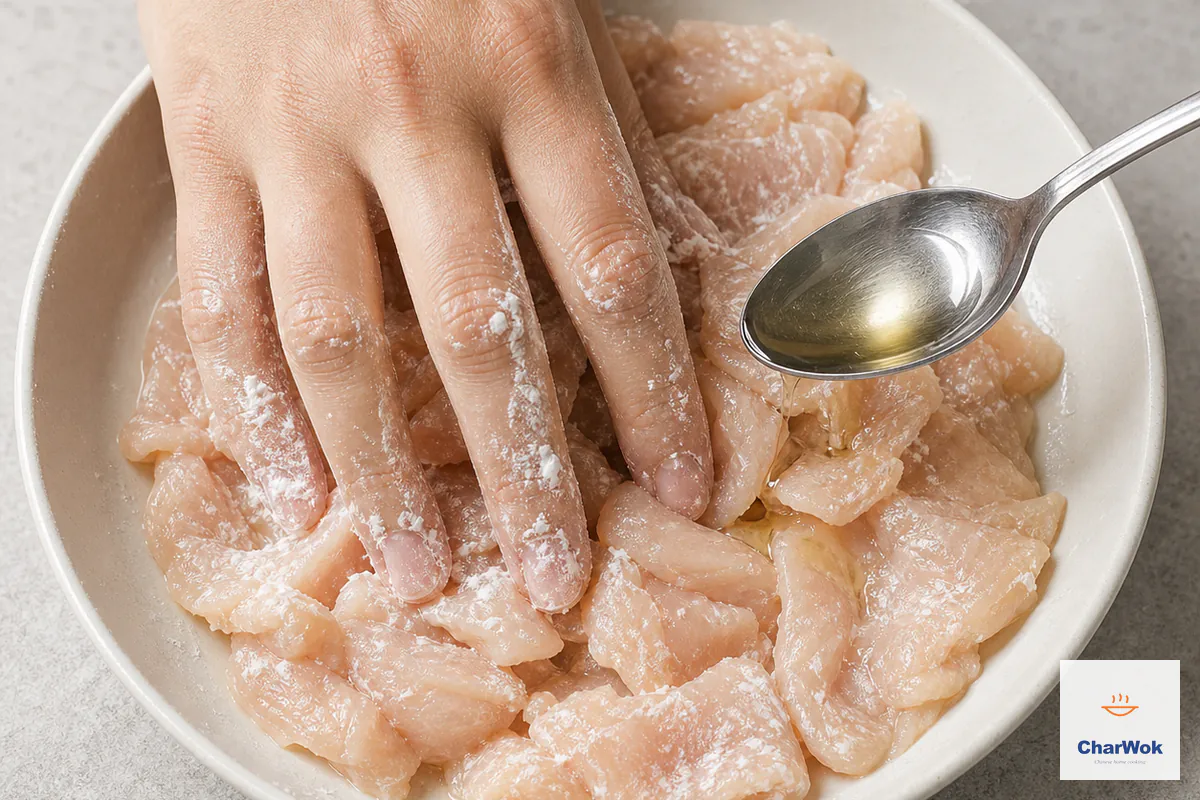
Rub until every slice has a thin frosted coating and no liquid remains in the bowl, then add the teaspoon of oil so the pieces stay separate.
- Soak the noodles. Put the dried mei fun in a large bowl and pour in just-boiled water straight from a kettle, enough to submerge them completely. Push the noodles under with chopsticks. Set a timer for 2 minutes. Drain in a colander and rinse once with cool water to stop the softening. They should be pliable and opaque, still slightly firm, not limp. Snip the bundle in a few places with kitchen shears so the strands are easier to toss.
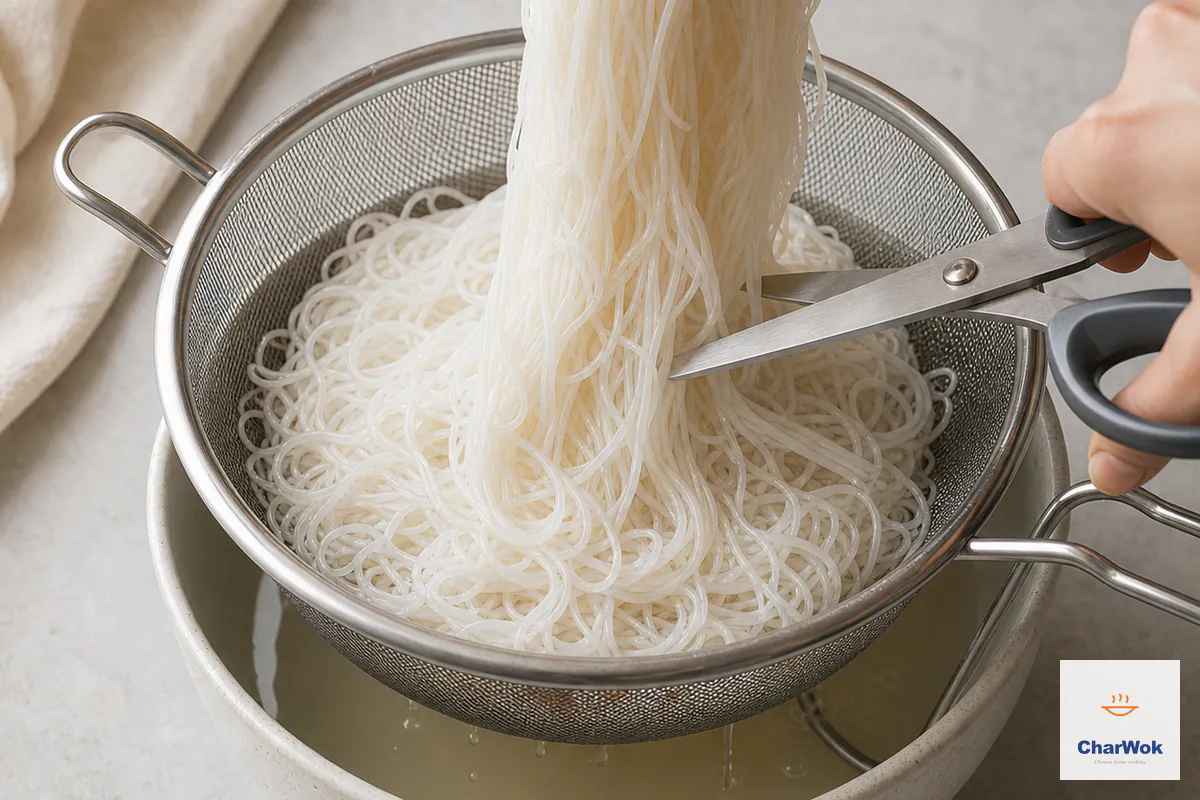
Stop the soak at 2 minutes, drain until water no longer pools, and snip the still-firm bundle in only a few places.
- Mix the sauce. Combine the light soy, dark soy, oyster sauce, white pepper, and sesame oil in a small bowl. Stir and set aside. Having it ready is not optional; once the wok is moving you will not have a free hand.
- Prep the aromatics and vegetables. Cut the scallions on a sharp diagonal, white and green in separate piles. Mince the garlic. Julienne the bell pepper. Slice the mushrooms. Rinse and drain the bean sprouts. Lay everything within arm's reach of the stove.
- Sear the chicken. Get the wok or a deep skillet hot enough that a drop of water dances and vanishes. Add 1 tbsp of oil and swirl to coat. Add the chicken in a single layer and leave it alone for 20 to 30 seconds so the underside colors. Toss until no pink remains, then scoop it out onto a plate. It will finish cooking later; pulling it now is the single biggest thing you can do to keep it juicy.
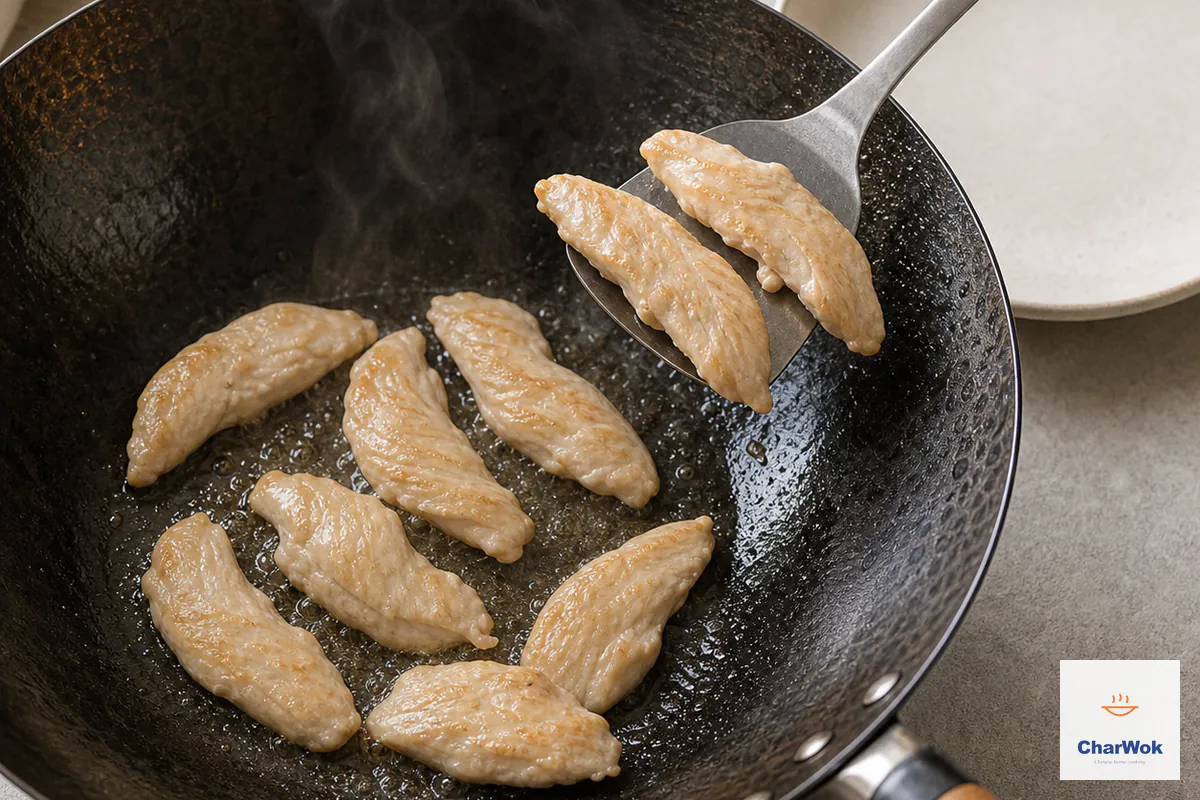
Sear in one layer and remove the chicken as soon as the surfaces turn opaque and the underside is only pale gold; it finishes later.
- Bloom the aromatics. Add the remaining 1 tbsp of oil to the wok. Add the scallion whites and the garlic and stir for about 10 seconds, just until you can smell them. If the garlic starts to brown, the pan is too hot or you are too slow, take the wok off the burner for a moment.
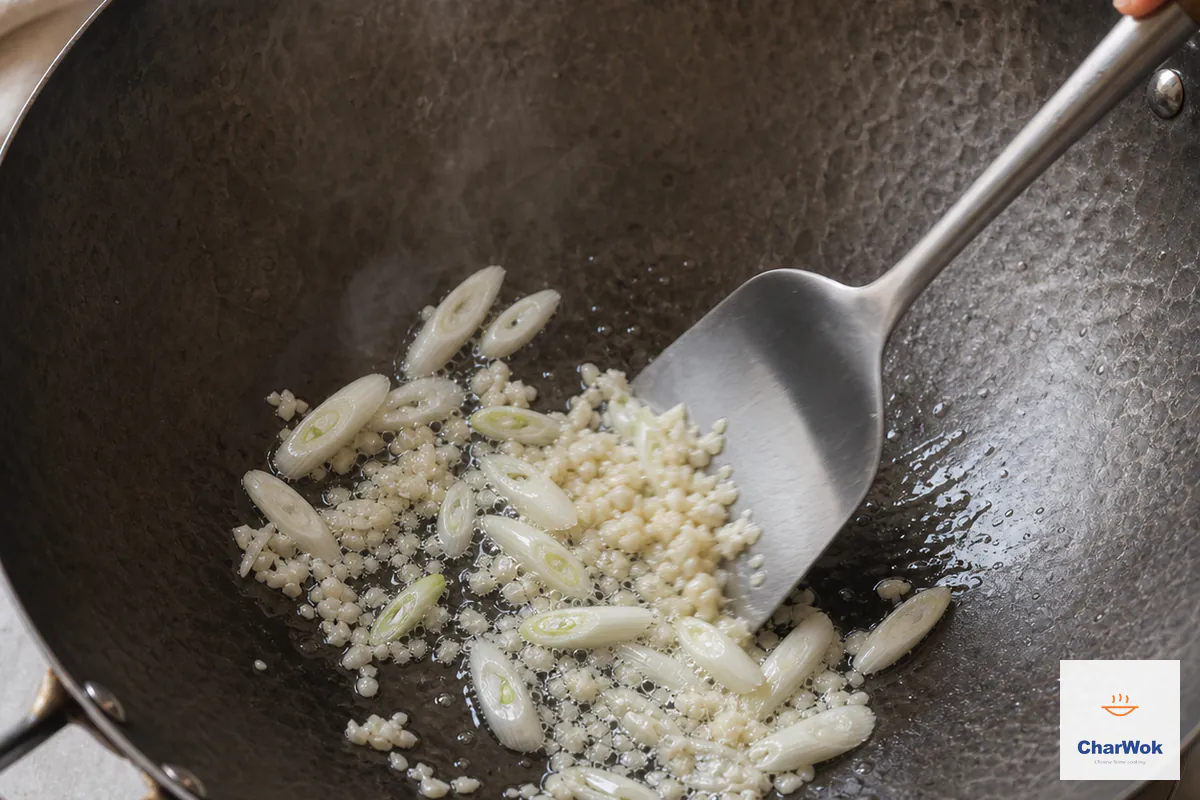
Stir the scallion whites and garlic for about 20 seconds and move on while the garlic is still pale, before any bitter browning.
- Stir-fry the noodles and vegetables. Add the noodles and use chopsticks or tongs to separate the strands. Add the bell pepper, mushrooms, and bean sprouts. Toss constantly for about a minute. You want the vegetables barely wilted, the mushrooms starting to soften, the bean sprouts still crunchy.
- Bring it together. Return the chicken to the wok. Pour the sauce around the edge of the pan so it hits the hot metal first and reduces for a second, then toss everything to coat. Add the scallion greens. Give it a final few tosses, no more than 30 seconds, and dish out immediately. The noodles keep cooking from residual heat, so pull the pan off the stove a beat before you think it is done.
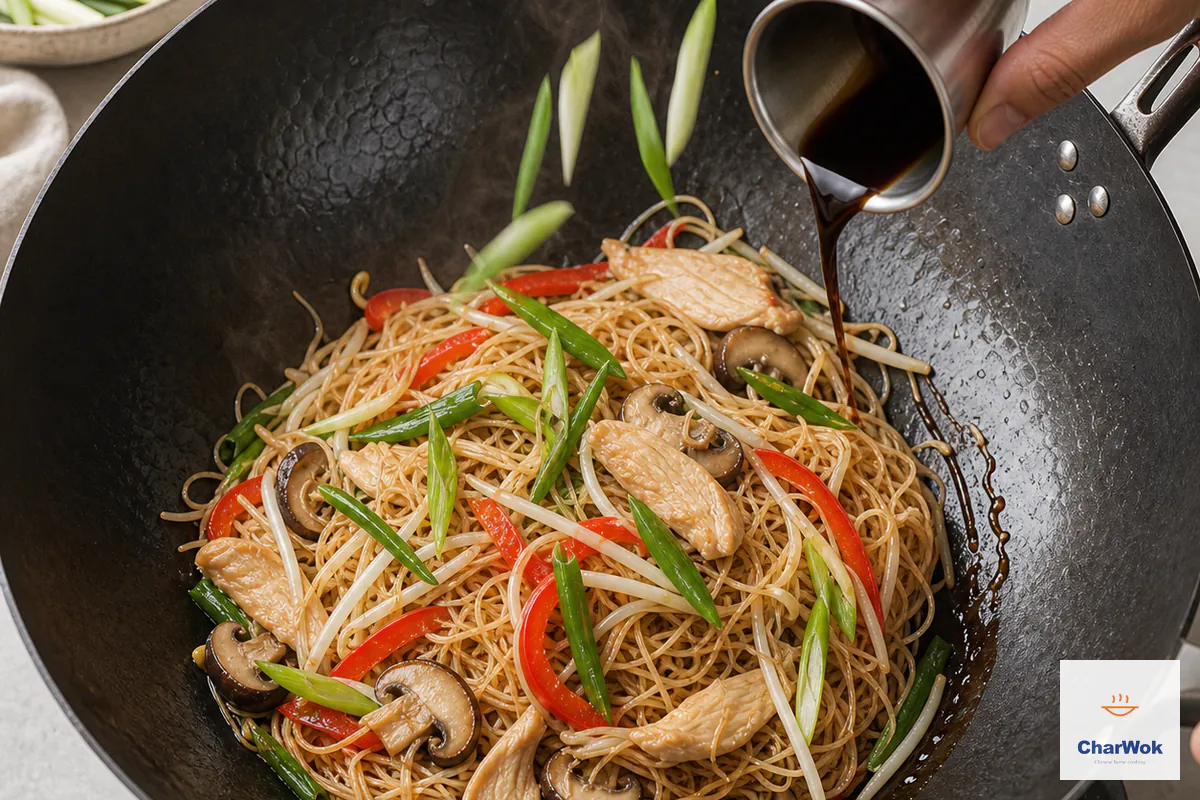
Return the chicken, pour the sauce around the hot wok edge, add the scallion greens and toss only until the loose noodles are evenly coated with no pooled liquid.
When it goes wrong, and how to fix it
I have made every mistake below at least once. Here is what to look for and what to do.
The noodles turned to mush. You either soaked too long, soaked in a rolling boil, or left the dish in the wok after it was done. Next time, use off-the-boil water and a strict 2-minute timer. For the batch in front of you, drain any liquid, spread the noodles out to cool, and accept that the texture is lost. Flavor is still fine; serve it and call it soft-style.
The noodles broke into short bits and the dish looks like fried crumbs. You tossed too hard or the strands were dry and brittle going in. Soak a touch longer next time, and lift rather than shove when you toss.
The chicken is dry and rubbery. It overcooked. Either you skipped the velvet, left it in the wok the whole time, or sliced it with the grain so the fibers contracted tight. Slice across the grain, velvet it, and pull it out early. There is no rescuing the chicken once it is overcooked, so this one is about prevention.
The whole thing is pale and bland. Two likely causes: you skipped the dark soy, or the pan was not hot enough and the sauce got diluted by vegetable water instead of reducing onto the noodles. Crank the heat and let the sauce hit hot metal first. A pinch of sugar in the sauce also rounds out the salt without making it taste sweeter.
The noodles stuck into one clump. The wok was not hot enough, or the oil was not spread before the noodles went in. Loosen the soaked noodles well before adding, and do not be shy with the chopsticks in the first 10 seconds in the pan.
Variations and what to serve with it
The core ratio, 100 g noodles to about 150 g protein to roughly 200 g vegetables, holds up to almost any swap. A few I keep coming back to:
- Shrimp mei fun. Replace the chicken with 150 g peeled shrimp. Skip the velvet (shrimp does not need it) but still marinate briefly in wine and a little salt. The salt and pepper shrimp seasoning idea is a nice riff if you want a punchier version.
- Curry-scented. Add ½ tsp curry powder to the oil with the aromatics and you are most of the way to Singapore mei fun. A spoon of the chili bean paste takes it in a spicy direction instead.
- Char siu mei fun. Dice leftover char siu in place of the chicken and add at the end just to warm through. The pork's glaze flavors the noodles; cut back the oyster sauce a little.
- All-vegetable. Drop the meat, add more mushrooms and a handful of rehydrated dried shiitake, and use mushroom-soaking liquid to loosen the sauce. Vegetarian oyster sauce keeps the body.
As for what to put alongside: chow mei fun is a complete plate on its own, so I usually serve a light, crunchy vegetable rather than another heavy dish. A quick smashed cucumber salad or spinach salad with ginger dressing cuts through the noodles nicely. A bowl of chicken corn soup turns it into a sit-down meal.
Storage and reheating
Leftovers keep in the fridge for up to 2 days in an airtight container, but rice noodles continue to soften, so this is never as good as fresh. Reheat in a hot pan with a splash of water or oil, tossing constantly, never the microwave, which turns the noodles gummy. I do not recommend freezing; the texture suffers badly.
Frequently asked questions
Do I have to soak the noodles, or can I boil them? Soak only. The vermicelli is already cooked during drying and just needs to rehydrate; boiling dissolves the strands into paste.
Can I use chicken thigh instead of breast? Yes, and it is more forgiving. Thigh stays juicy longer, so if your knife skills are rough or your stove runs cool, thigh is the safer pick. Slice it just as thin.
What if I only have one kind of soy sauce? Use light soy and skip the dark. The dish will be paler and a little less rich, but the seasoning still works. Do not try to compensate by adding more light soy, it will get too salty before it gets dark enough.
Is this the same as Singapore noodles? No. Singapore mei fun adds curry powder and usually shrimp, char siu, or both. This is the plain, curry-free home version.
My wok is small. Can I double the recipe? Cook in two batches. A crowded wok drops in temperature and steams the noodles instead of frying them.
Strip it back to its bones and chow mei fun is a lesson in two instincts: soak, do not boil, and pull the protein before it is fully done. Get those right and the rest, the sauce, the vegetables, the toss, takes care of itself. The first time the noodles come out glossy and separate, still with a little chew, you will understand why this unassuming plate is the one I make on the nights I cannot face anything complicated.