If you have ever stood in a Chinese grocery store, frozen in front of fifty sauces and a wall of noodles you cannot name, this list is for you. The hard part of cooking Chinese food at home is not the knife work or the wok heat. It is choosing where to begin, because the cuisine is enormous and most beginner guides drown you in options instead of telling you what is actually worth your Saturday.
What follows is not a ranking. It is a working cook's shortlist of dishes that teach you the core techniques of the kitchen, ordered roughly by how much patience they ask of you. Start at the top and you learn to control a hot wok. Push to the bottom and you are folding dumplings and stretching dough. Each one earns its place because it rewards a single decision most people get wrong, and I will name that decision in plain language.
At a glance: A dozen-plus dishes, ten techniques, one weekend's cooking. The two that teach you the most are hand-pulled noodles (dough hydration and rest) and red-braised pork belly (caramelization and patience). Budget 45 minutes for the fastest dish, a full afternoon for dumplings. Read the "why" before the "how" on every one.
How this list is built
12 must-try Chinese recipes at a glance
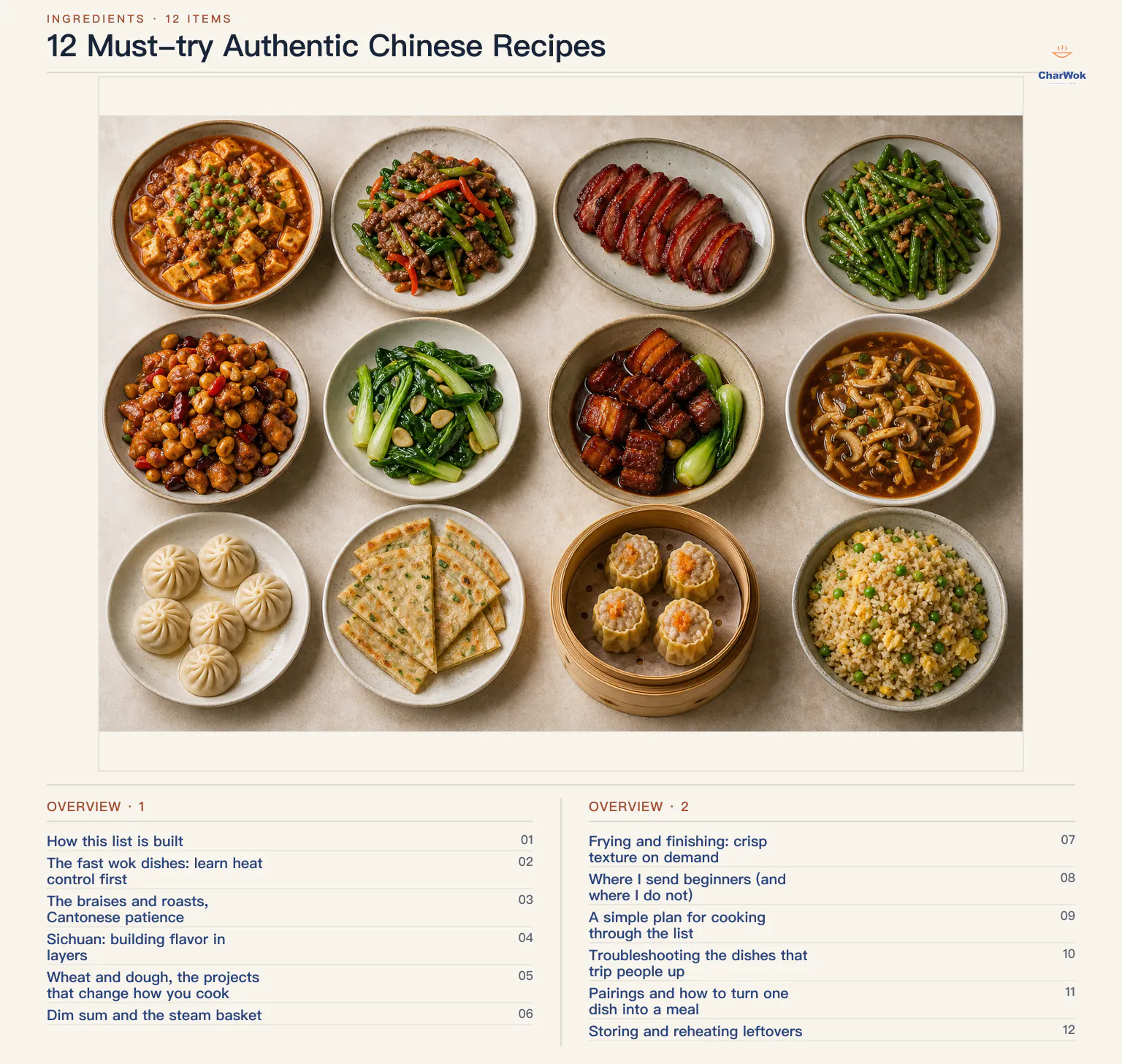
I grouped the dishes by the skill they drill, then by region so you can taste your way across the country instead of cooking five versions of the same stir-fry. Northern wheat cooking, Cantonese roasting and braising, Sichuan heat, and a couple of dim sum and dessert projects round it out. When a dish has an obvious shortcut that still produces a good result, I say so. When a shortcut ruins it, I say that too.
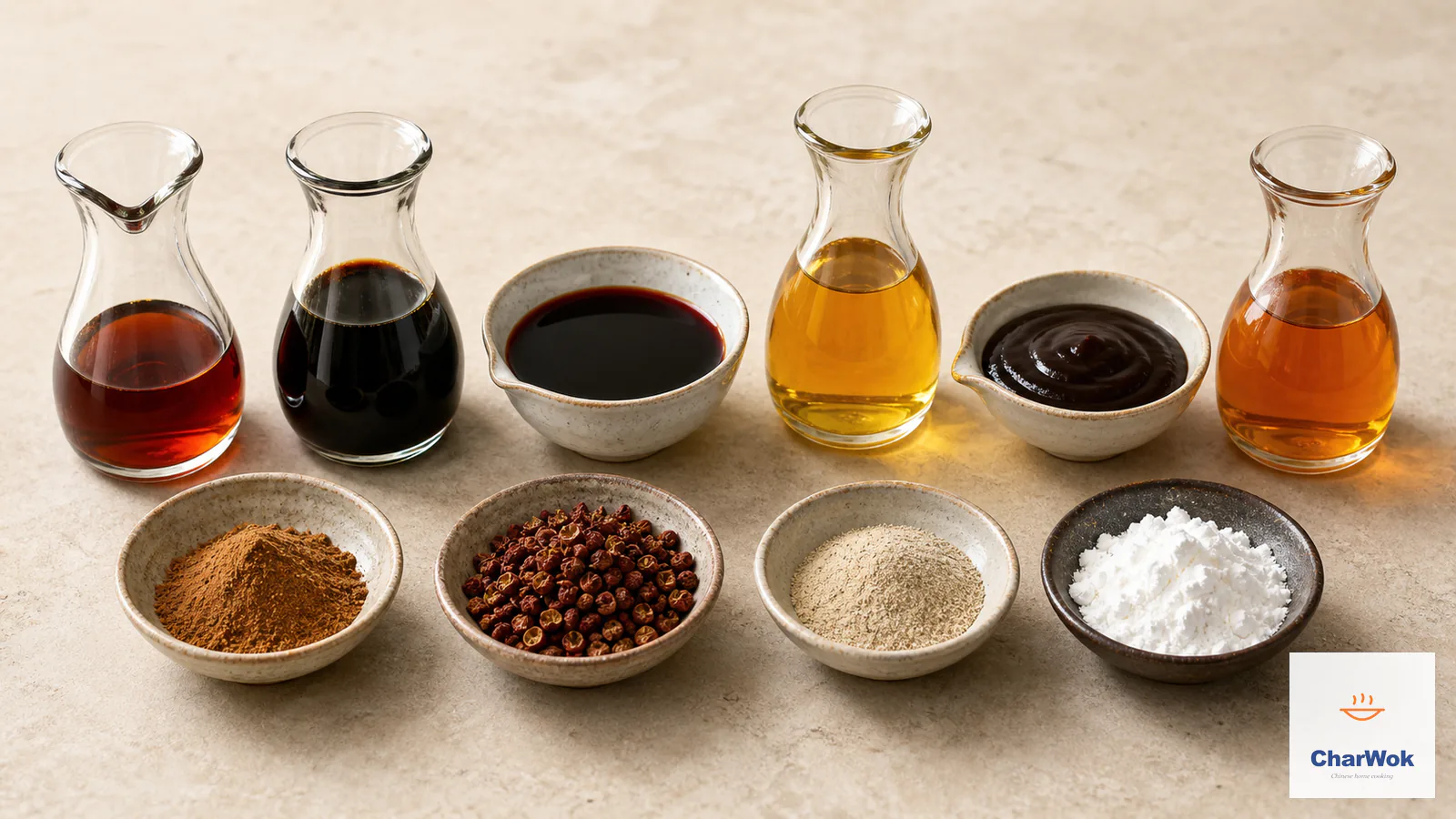
A note on sourcing. Most of these need nothing exotic if you keep a basic Chinese condiment shelf stocked. The one ingredient I will push you toward without apology is Shaoxing rice wine; it does the work that Western cooking asks of white wine, and a dish made without it tastes noticeably flat.
The fast wok dishes: learn heat control first
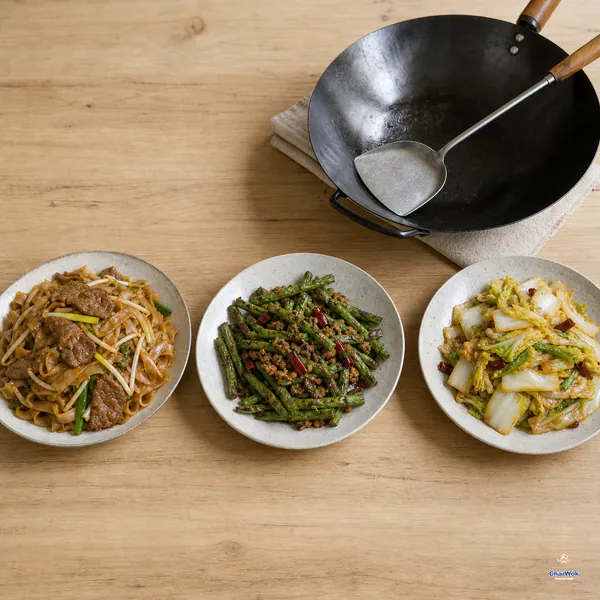
These three wok dishes reward the same discipline: dry the ingredients, heat the pan fully, cook small batches and stop before the vegetables soften or the noodles steam.
Three of the opening dishes are stir-fries, and they belong at the start because wok technique is the foundation everything else rests on. The principle is simple and unforgiving: a wok cooks by conduction from hot metal plus a flash of steam, so the pan must be genuinely smoking before the food lands. A warm wok gives you pale, weepy vegetables and tough meat. There is no fixing it once the food is in.
Begin with hot-and-sour stir-fried napa cabbage. It is cheap, it cooks in under three minutes, and it exposes every mistake: add the cabbage before the oil shimmers and you get a soggy mess; forget the vinegar off the heat and the bright edge vanishes. Get this one right and the rest of the wok chapter opens up. The same fast, dry-stir method powers Sichuan dry-fried green beans, where the beans are blistered in a thin film of oil until the skin wrinkles, then tossed with ground pork and preserved mustard greens.
For a noodle dish that drills the same lesson, make beef chow fun. Wide rice noodles demand a screaming pan and a confident wrist. The classic tell of a good version is wok hei, the smoky breath that only appears when the noodles hit oil vaporized on a hot surface. I will be honest: a home stove rarely produces the full effect, but preheating your pan until a drop of water dances, then dies, gets you close enough that you stop caring.
The braises and roasts, Cantonese patience
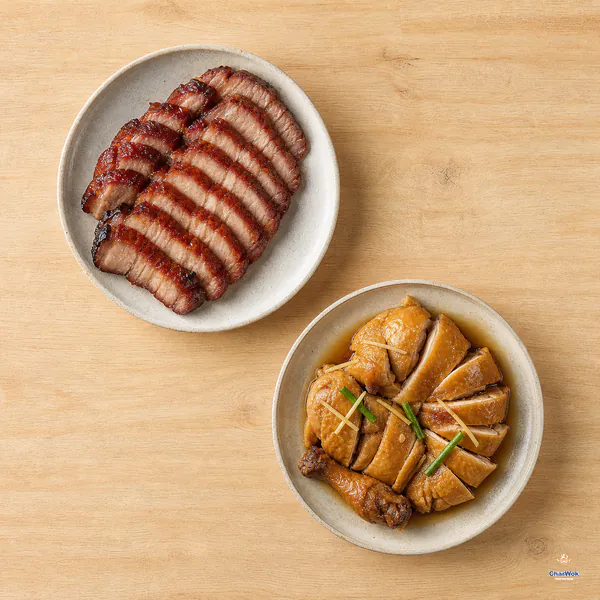
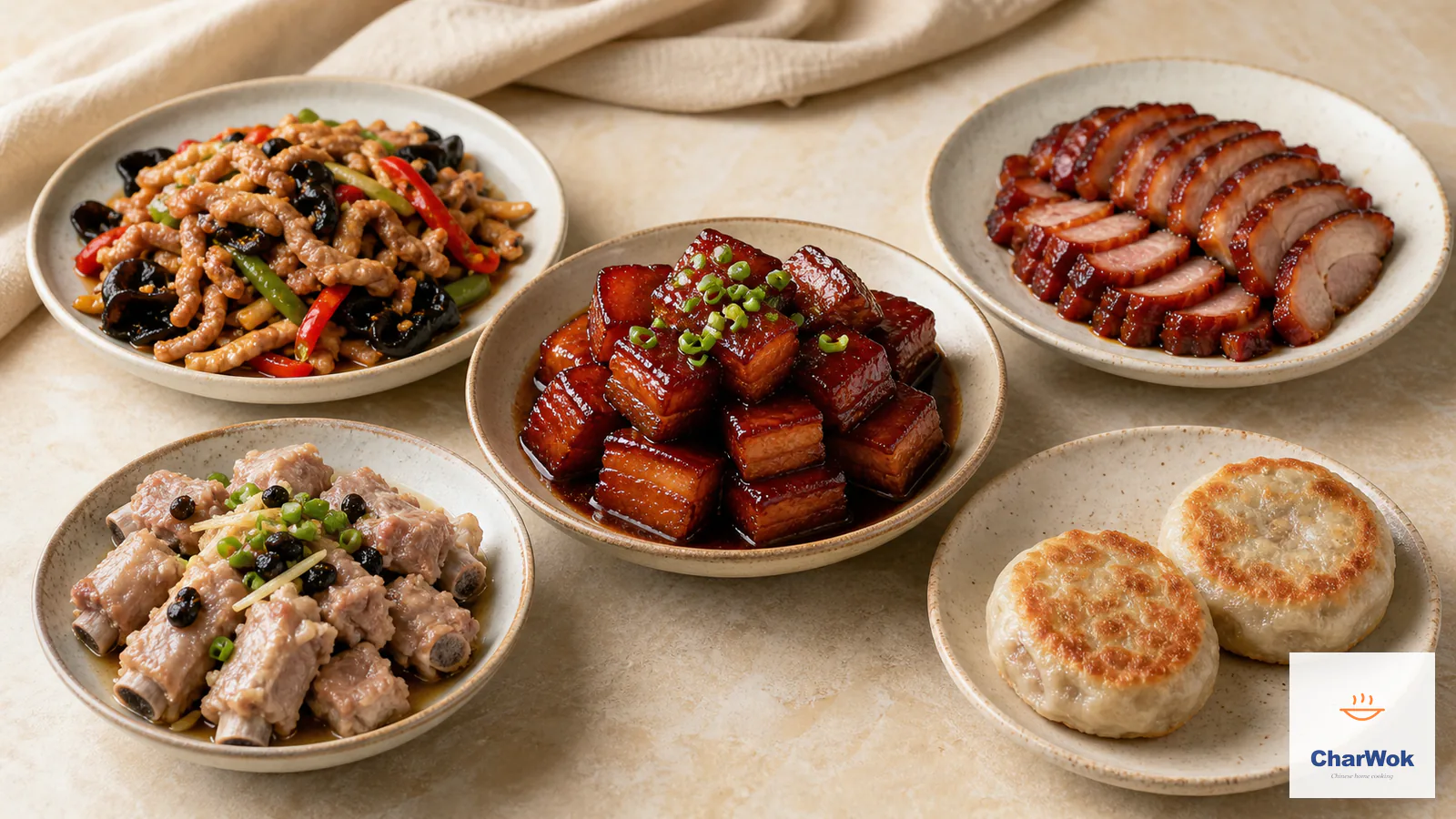
Char siu develops a lacquered caramelized edge without burning, while soy sauce chicken depends on gentle, even cooking; both teach patience with color and doneness.
Cantonese cooking is built on controlled browning and long, gentle simmering. Two dishes here teach that idea, and both reward a slow afternoon more than a busy weeknight.
Char siu, the glossy barbecue pork, is where I send everyone who thinks Chinese food is fussy. Marinate a strip of pork shoulder or butt in honey, soy, hoisin, fermented bean paste, and a splash of wine, then roast it hot and watch the sugars caramelize into that lacquered red crust. The decision that matters is the sugar ratio. Too little and the meat reads savory but dull; too much and the surface burns before the inside is tender. The single most common failure is under-marinating, so give it a full overnight in the fridge.
Once you trust the oven, move to red-braised pork belly, the dish that taught me what rock sugar actually does. The pork is first fried, then simmered in a master sauce of soy, wine, and rock sugar until the collagen dissolves into something silky. Rock sugar melts slowly and gives a clear, glassy glaze that granulated sugar cannot match; substituting brown sugar works in a pinch but leaves a murkier sauce. This is the one I make when someone needs convincing that home Chinese cooking beats takeout.
The same braising logic, applied to bone-in chicken thighs (the cut the linked recipe uses, though it works for a whole bird too), gives you soy sauce chicken. The trick is not the sauce, it is the temperature. You want a poaching liquid just below a simmer, around 85°C, held there so the meat cooks gently and stays juicy. A rolling boil turns the meat dry and stringy. Use a thermometer the first time; after that your eye learns the look of "shimmering but not bubbling."
Sichuan: building flavor in layers
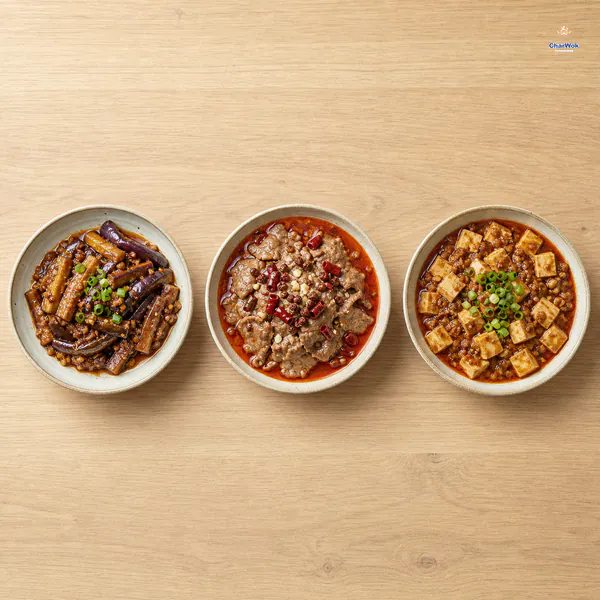
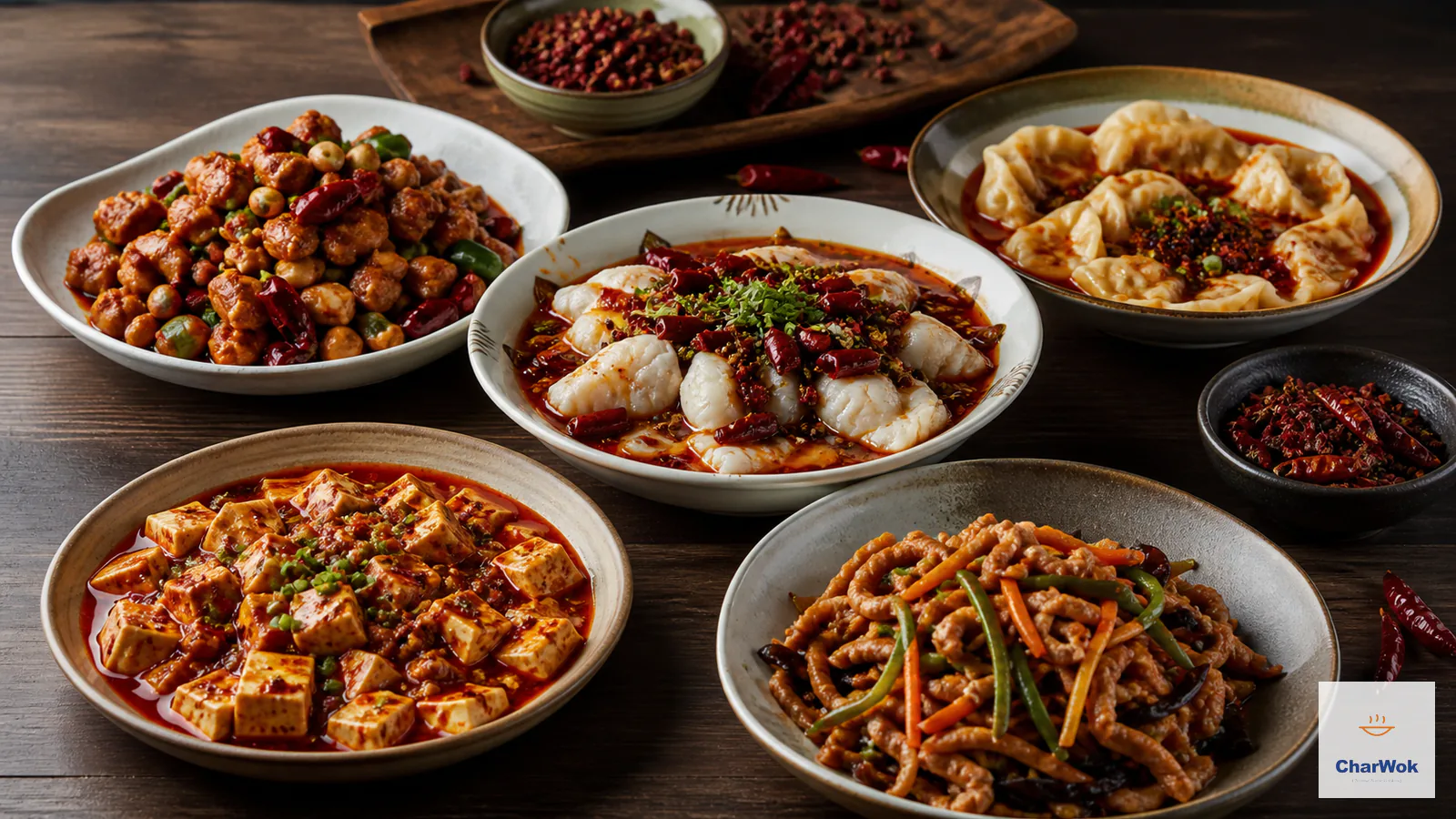
Fish-fragrant eggplant, boiled beef and mapo tofu build distinct results from aromatics, fermented chili bean paste, vinegar, peppercorns and hot oil rather than relying on heat alone.
Sichuan dishes look like they are about heat, but the real subject is layering. Each dish builds a base of aromatics, then adds a distinct textural or temperature contrast on top. Master the sequence and you can cook half the cuisine.
Eggplant with garlic sauce, the Sichuan classic the list calls yu xiang, is the gentlest entry point. The eggplant is cooked until it collapses into a silky sponge, then dressed with a sauce built from garlic, ginger, fermented chili bean paste, and a hit of black vinegar. The decision is fat. Restaurants deep-fry the eggplant to set the skin and seal it against the oil, but that path needs a full wok of hot oil and smells up the kitchen for hours. The home-style move is to salt the eggplant, press it to collapse the spongy cells, then pan-fry it in a generous film of oil. You lose a little of the lacquered sheen and gain a cleanup you can live with on a weeknight.
For something louder, Sichuan boiled beef teaches the genre's signature move: proteins poached in a seasoned broth, ladled over vegetables, then drowned in sizzling chili oil at the table. The beef is velveted, a quick coat of cornstarch and egg white that keeps thin slices tender in a rolling boil. Skip the velveting and the meat turns gray and chewy. Do it and even cheap stewing steak comes out soft. The same trick underwrites mapo tofu, where silken tofu floats in a sauce given its glossy body by a dedicated cornstarch slurry (gou qian) stirred in at the end, not by the meat.
Wheat and dough, the projects that change how you cook
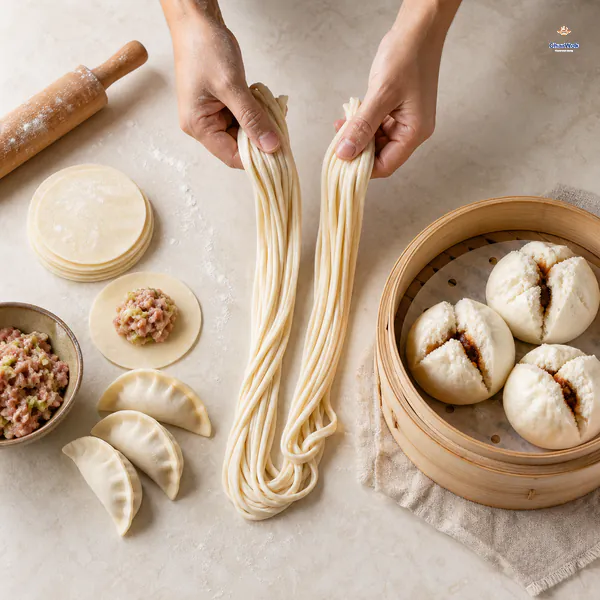
Rested, well-hydrated dough teaches the feel behind hand-pulled noodles and dumpling wrappers; steamed char siu bao adds yeast and a full steam basket to the same patient practice.
This is the chapter that converted me from a wok cook into someone who keeps dough in the fridge. Northern Chinese food runs on wheat, and the two dishes here are the ones I would teach to a friend who has only ever boiled pasta.
Hand-pulled noodles look like magic on video and feel impossible the first time you try. They are neither. The ingredient list is almost embarrassingly plain, but the method rests on one fact the source guides understate: you cannot pull dough until the gluten has both developed and relaxed. Knead it until smooth, rest it at least an hour, knead again, rest again. Rush either rest and the strands snap. When the dough finally stretches in your hands without fighting back, you understand why every noodle cook talks about "listening to the dough."
Once noodles feel routine, the natural next step is making dumplings from scratch. This is the project that swallows a whole afternoon and pays it back tenfold. You will learn to roll wrappers with a thin edge and a puffy center, to build a filling that holds together without turning wet, and to fold a shape that survives the pot. My failure, the first three times, was overfilling. A dumpling that looks generous raw splits open in the water. Start with a teaspoon and resist the urge to add more.
For a faster, no-dough project in the same spirit, fold Sichuan spicy wontons using store-bought wrappers. The skill transfer is the pleating and the sauce, and you skip the rolling entirely.
Dim sum and the steam basket
The hardest single dish on this list is also the most rewarding when it works: char siu bao, the fluffy steamed barbecue pork buns. They demand a yeasted dough that proofs twice and a filling bound with enough cornstarch to hold but not so much it turns gluey. The make-or-break detail is the final proof. The buns must double in size and feel light as a marshmallow before they touch steam; under-prove them and you get dense, sad buns that never recover. I have thrown out entire batches for this mistake, and the lesson is to trust the clock and the poke test, not your impatience.
If you want a dim sum dish that succeeds on the first try, steam har gow or work through two steamed-dumpling methods instead. The starch wrappers are fiddly, but the cooking itself is forgiving because steam cannot burn the food.
Frying and finishing: crisp texture on demand
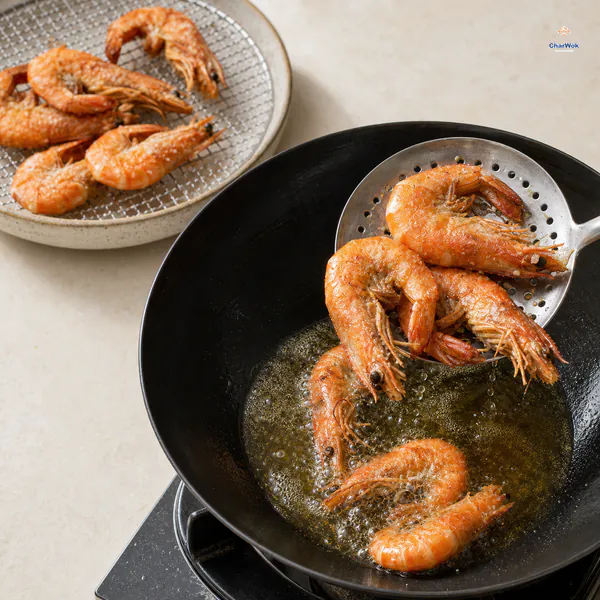
Salt-and-pepper shrimp makes oil control visible: fry briefly at high heat, lift the shrimp as the shells turn crisp and orange, then drain thoroughly before seasoning.
Two dishes here teach deep and shallow frying, the texture skills that turn a competent cook into a generous host. Salt and pepper shrimp, eaten shell and all, is the faster one. A light starch coating fries into a glassy shell in a minute or two, and the shrimp are tossed with a finely minced mix of garlic, scallion, white pepper, and salt. The decision is oil temperature. Too low and the coating sloughs off; too high and the shells scorch before the meat cooks. Aim for around 180°C, and fry in small batches so the oil does not crash when the shrimp go in.
The seasoning mix itself is the real takeaway. Minced aromatics, white pepper, and salt work as a finishing dust on almost anything that comes out of hot oil, so once the ratio lives in your head the shrimp becomes a template rather than a single recipe.
Where I send beginners (and where I do not)
If you have one evening, make the napa cabbage stir-fry or char siu. Both teach a real lesson with almost no risk of failure. If you have a weekend and want a story to tell, pull the noodles. If you are cooking for a crowd and want them impressed but not exhausted, braise the pork belly.
What I would hold back on: char siu bao and xiao long bao on your first month. They are wonderful, and they punish the impatient. Cook five things on this list first, and the dough projects will make sense instead of feeling like a fight.
A simple plan for cooking through the list
- Stock the pantry. Buy Shaoxing wine, light and dark soy sauce, Chinkiang vinegar, toasted sesame oil, and chili bean paste (doubanjiang). Everything else can wait.
- Master one wok stir-fry. Start with the napa cabbage; repeat it until the vegetables come out crisp and glossy every time.
- Braise one protein. Char siu or red-braised pork belly will teach you caramelization and the value of patience.
- Stretch one dough. Hand-pulled noodles come before dumplings, because the dough teaches you what gluten should feel like.
- Steam one basket. Wontons or steamed dumplings bridge the gap before you attempt the yeasted buns.
- Finish a dessert. A mango pancake or a batch of snow skin mooncakes closes the meal and needs no oven.
Troubleshooting the dishes that trip people up
| Problem | Why it happens | The fix |
|---|---|---|
| Stir-fried vegetables go limp and wet | Pan not hot enough, or too much food added at once, dropping the temperature | Preheat until the pan smokes lightly; cook in two batches; salt at the very end |
| Hand-pulled noodles snap when stretched | Gluten not relaxed, or dough too dry | Rest the dough another 30 minutes covered; knead in a few drops of water if it cracks |
| Dumplings split open while boiling | Overfilled, or wrappers rolled too thin at the seam | Use one level teaspoon of filling; pinch the seam twice; bring water back to a gentle boil, not a rolling one |
| Char siu burns on the outside, raw inside | Sugar too high in the marinade, or oven temperature uneven | Keep honey at about a teaspoon per quarter-pound of pork; loosely tent with foil if the top darkens early; finish under the broiler for glaze only |
| Braised pork belly is tough, not silky | Simmered too hard or not long enough | Keep the liquid at the barest tremble; cook until a fork slides through the meat, about 75 minutes, longer for a bigger piece |
| Soy sauce chicken turns out dry | Poaching liquid was boiling, not shimmering | Hold the liquid around 85°C (185°F); pull the chicken when the thickest part reads 74°C (165°F) and rest it in the warm liquid off the heat |
| Steamed bao buns are dense | Under-proofed before steaming | Let the shaped buns double in size and spring back slowly when poked; steam only after the poke test passes |
Pairings and how to turn one dish into a meal
A single Chinese dish rarely stands alone; the cuisine is built on the contrast of one saucy or rich item with a plain starch and a vegetable. Here are combinations that work without thinking.
- Rich plus plain: red-braised pork belly over steamed rice with a plate of smashed cucumber salad to cut the fat.
- Dry plus soupy: hand-pulled noodles in a bowl of chicken noodle soup alongside a cold napa cabbage salad.
- Salty plus sweet: char siu with rice and a clear vegetable soup, finished with sliced mango or a mango pancake.
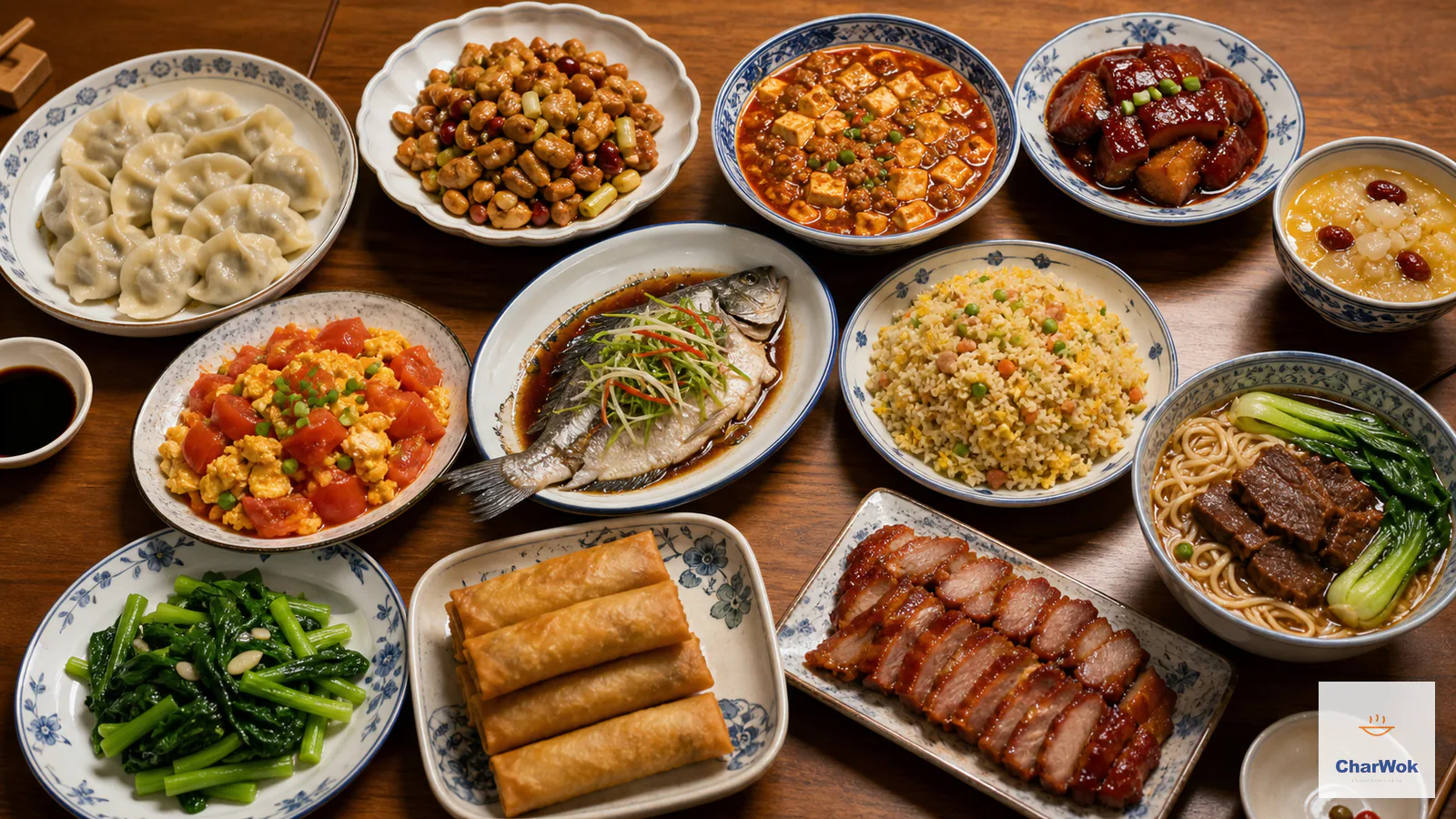
- Feast spread: a platter of dumplings, a plate of salt and pepper shrimp, a stir-fried green, and a bowl of congee for anyone who wants something mild.
Storing and reheating leftovers
Most of these dishes keep well, with two exceptions. Stir-fried greens lose their crunch overnight, so cook only what you will eat. And steamed bao, once cooled, is best reheated by steaming for a few minutes rather than microwaving, which turns the bread rubbery.
Braised meats actually improve after a night in the fridge, because the fat absorbs back into the sauce. Reheat them gently in a covered pan with a splash of water. Fried items like salt and pepper shrimp re-crisp in a 200°C (400°F) oven or air fryer in three to four minutes; the microwave is the enemy of the starch coating. Noodle dough, wrapped tightly, holds for two days in the fridge or a month in the freezer; thaw overnight in the fridge before pulling.
Related recipes & further reading
Once you have worked through the dishes above, these recipes pick up the same threads and take them further. They map onto the chapters here, from quick stir-fries and Sichuan heat to dough projects, dim sum, and the home meals that round out a Chinese table.
- For another fast beef stir-fry built on the same heat-control lesson, try spicy orange beef, where a sweet-tart glaze and dried chilies meet velveted beef.
- If the napa cabbage lesson hooked you on wok speed, beef and broccoli and pepper steak drill the same timing on a heartier plate.
- The Sichuan chapter opens further with kung pao chicken and Hunan chicken, two stir-fries that teach layering with dried chilies and aromatics.
- When you want a quick noodle bowl that skips the dough, dan dan noodles and Chongqing noodles are weeknight-fast and carry serious Sichuan flavor.
- Scissor-cut noodles are a forgiving first wheat project if hand-pulled dough still feels out of reach.
- For a one-dish meal built on the Cantonese braising instinct, clay pot rice and Yangzhou fried rice turn leftover rice and a few toppings into dinner.
- The simplest way to add a vegetable or a quick egg dish to any of these meals is tomato egg stir-fry, cooked in under five minutes.
- To round out a feast with a centerpiece, a home-style Peking duck or a whole steamed fish closes the table the way restaurants do.
- If dim sum is what pulled you in, a culinary tour of China places these dishes in their regional context and points you to where each one is eaten best.
Questions I get asked most
Do I need a wok to cook these?
A flat-bottomed carbon steel wok on a home burner is ideal for the stir-fries, but a large heavy skillet works for every dish except hand-pulled noodles and dumplings, which need a pot. Buy the wok when you decide you cook this food weekly.
Can I substitute ingredients I cannot find?
Yes for most, with judgment. Dry sherry stands in for Shaoxing wine. Regular soy plus a pinch of molasses approximates dark soy. Do not substitute the chili bean paste, because it carries the Sichuan dishes; find the real thing online if your store lacks it.
Which dish should I cook first?
The napa cabbage stir-fry if you want to learn heat control fast, or char siu if you want a guaranteed crowd-pleaser. Both forgive mistakes that the dough projects will not.
Are these recipes spicy?
Only the Sichuan dishes carry real heat, and even those you can tune by holding back the chili and the Sichuan peppercorn. Everything else is savory-sweet and family friendly.
How do I scale these for a crowd?
Double the braises and the char siu with no changes; they hold and reheat well. For stir-fries, cook in two pans rather than one giant batch, because a wok overloaded with food stops frying and starts steaming.
A final word from the stove
Cook the list in whatever order pulls you, but do not skip the dull-sounding step in any of them, the rest, the marinade overnight, the slow braise. Those are the steps that look optional and decide everything. I wasted a year shortcutting them before I admitted the recipes were right and my impatience was wrong. Start with the cabbage, end wherever your appetite leads, and you will have cooked more of China than most people ever attempt.