The first cold snap of the year is when my kitchen changes shape. Out go the quick stir-fries eaten standing up; in come the pots that simmer for an hour and fill the house with the smell of toasted spice and bones. The trouble with most "winter recipe" lists is that they dump twenty links on you with no guidance on which one fits a Tuesday night and which one is a weekend project. So this one does the opposite. I have cooked every dish here more times than I can count, and I will tell you straight: which broth is forgiving, which noodles you should pull yourself, which stew actually improves on day two, and which one I have burned more than once.
Think of this as a cold-weather menu built around four warmths that Chinese home cooks actually rely on: long-simmered stews, brothy noodles, soothing rice porridges, and the bold chili-and-vinegar dishes that make you sweat your way warm. If you want a deeper pantry guide to go with these, build a chili oil to finish bowls with and keep the homemade chicken stock method on hand, because it quietly fixes half of these recipes.
Twenty warming Chinese recipes, sorted by effort, not by mood. Rule of thumb: anything braised or stewed rewards you on day two; anything noodle-soup wants to be eaten the minute it is done. Budget 90 minutes for the deep stews, under 20 for the soups, and keep a quart of good stock in the freezer at all times.
Why these dishes warm you (and others don't)
Eighteen warming dishes in the English guide, grouped by comfort style
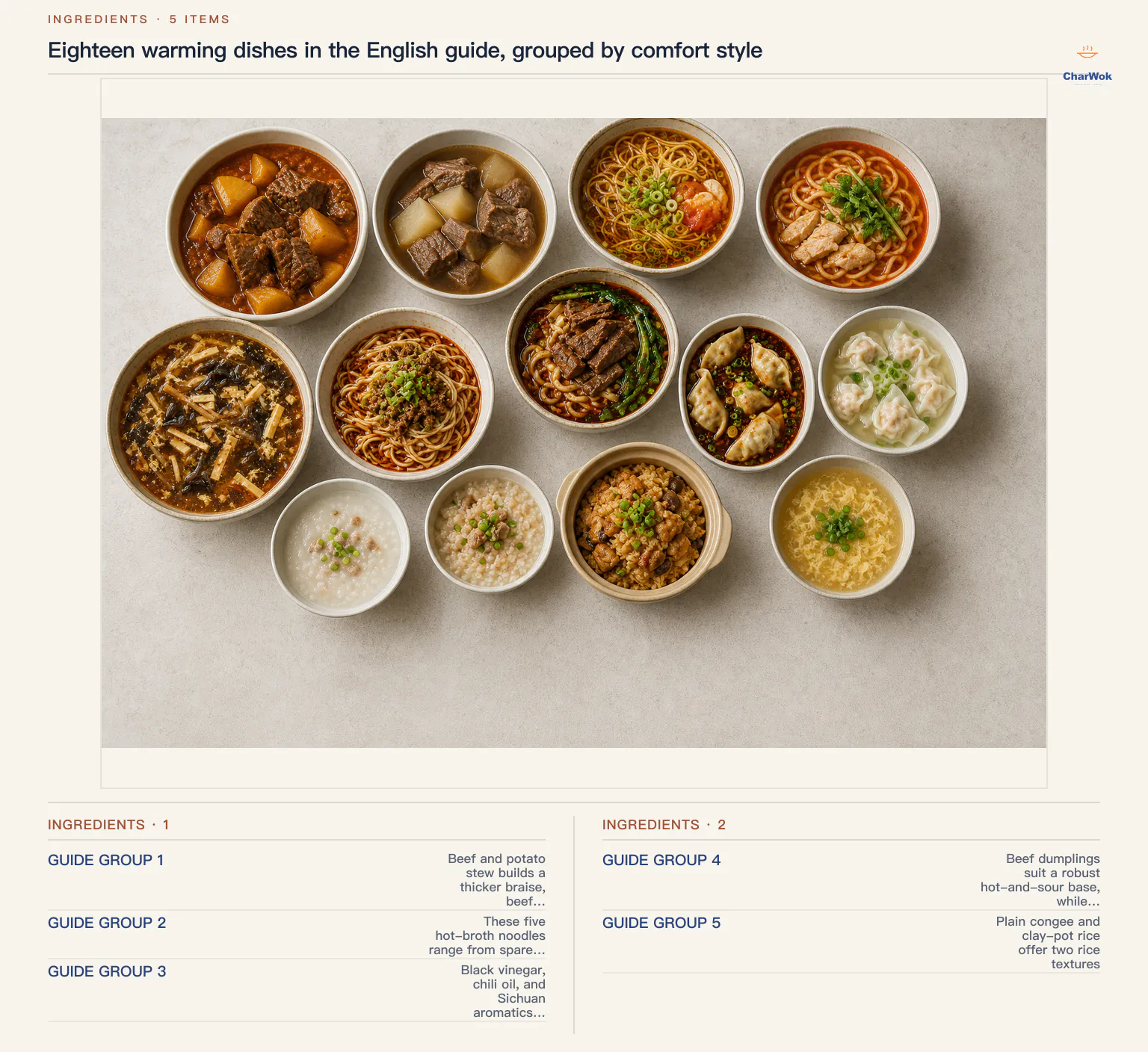
There is a reason cold-weather Chinese cooking leans on braising, simmering, and congee rather than grilling. Slow wet heat does two jobs. It extracts gelatin and collagen from cheap cuts and bones, giving the broth a body that coats your mouth and reads as "rich" without any cream. And it softens the fibrous root vegetables, dried mushrooms, and tough greens that Northern cooks rely on through winter. The spicy dishes here work on a different mechanism: capsaicin and Sichuan peppercorn raise your surface temperature and make you sweat, which is why a bowl of Sichuan boiled beef feels warming in a damp Chengdu winter and not just a gimmick.
The dishes below are grouped by the kind of cold-weather comfort they deliver. Cook your way down the list in any order. I have flagged the ones I make most often and the ones that have tripped me up.
The deep, slow stews
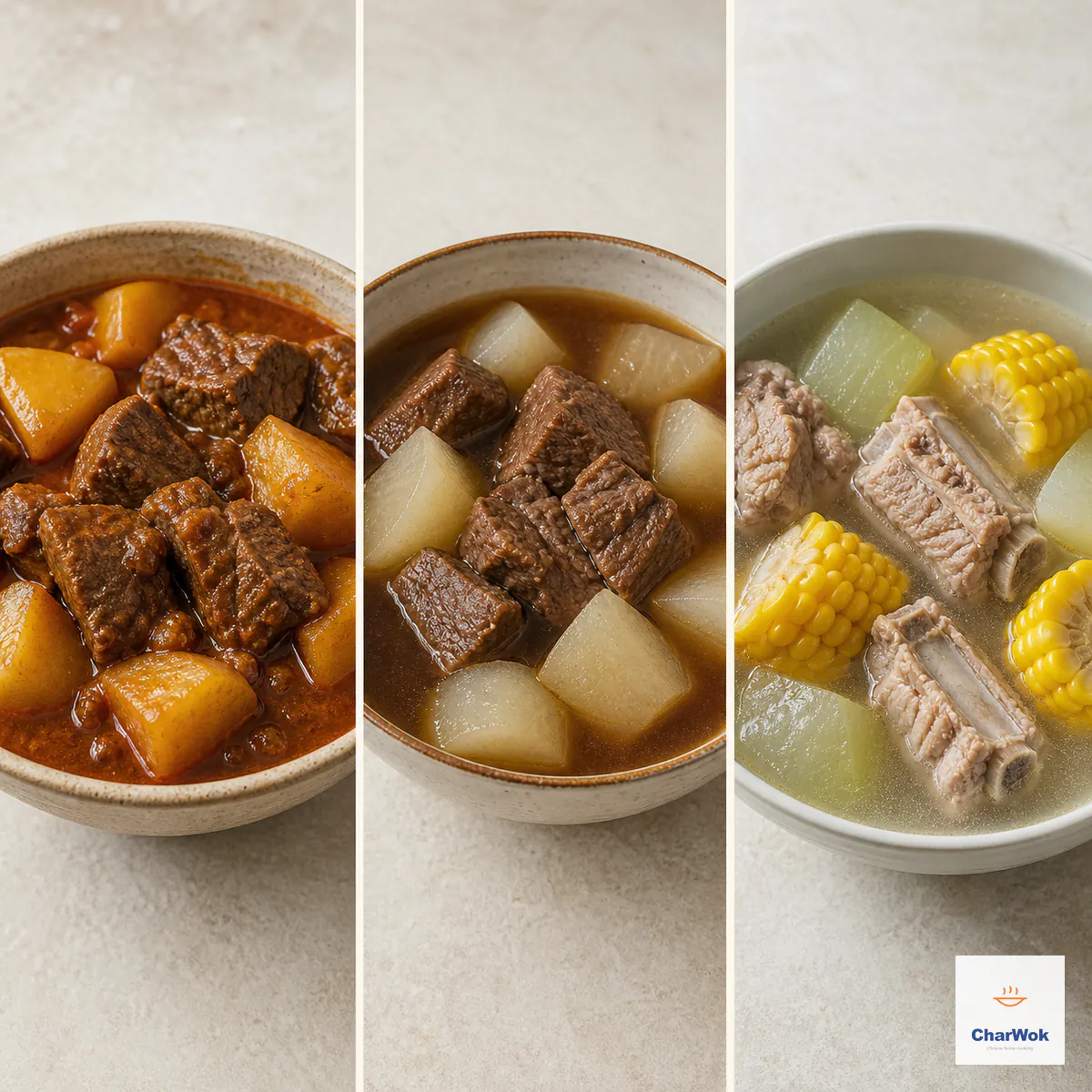
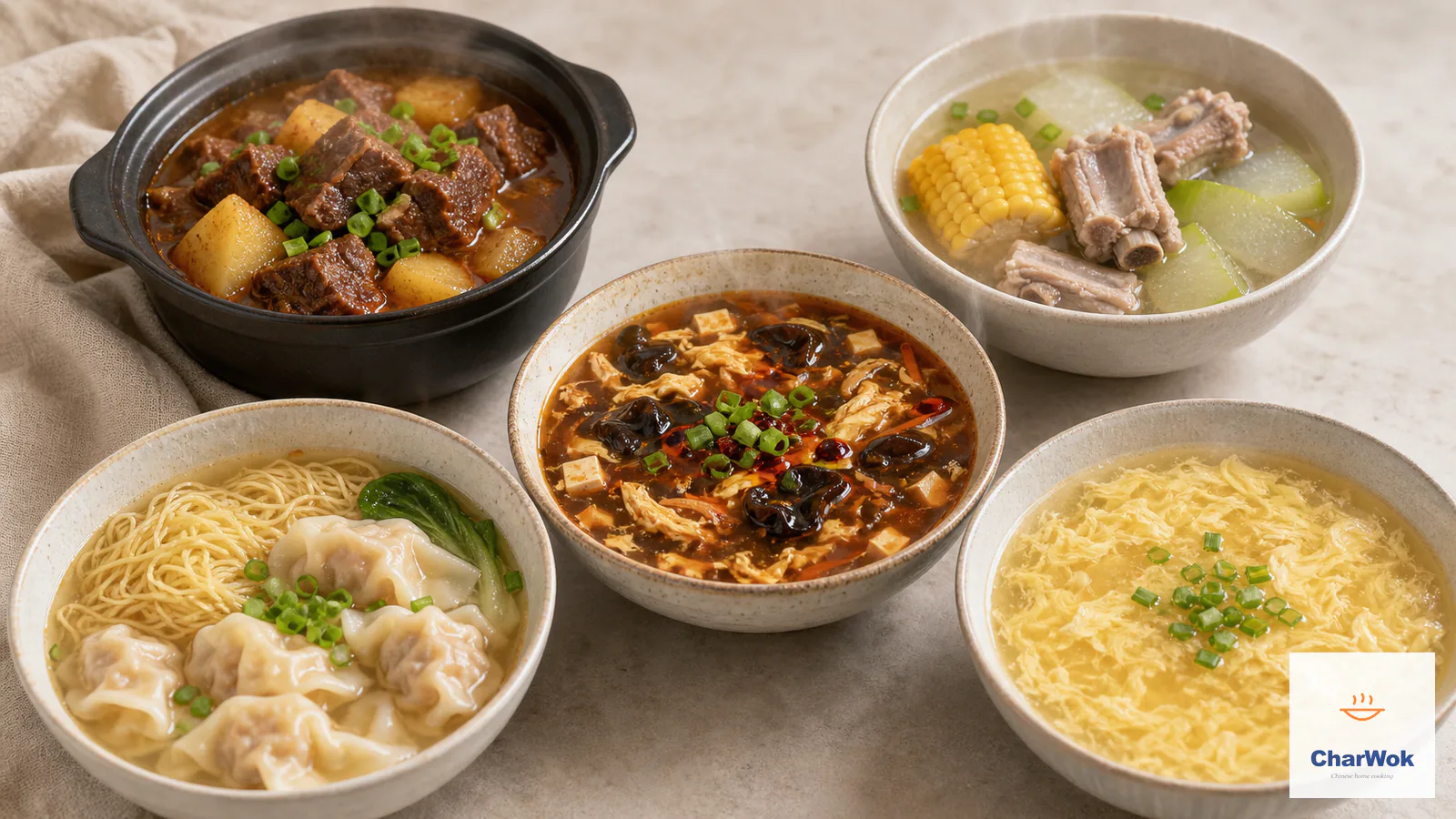
Beef and potato stew builds a thicker braise, beef and daikon stays cleaner, and pork rib soup depends on skimming and gentle heat for a clear broth.
These are your weekend pots. They take 60 to 90 minutes of mostly unattended simmering and reheat better than they taste fresh. My top pick is Chinese beef stew with potatoes, which I make in a double batch every November and freeze in portions. The potato collapses a little into the broth and thickens it; that is a feature, not a failure. Its close cousin is braised beef with daikon, where the radish does the same softening job and adds a clean, slightly peppery edge that cuts the beef fat. Make one, then the other the following week, and you will see how the same technique reshuffles around a single vegetable swap.
For something quieter, there is pork rib soup, a clear, gently seasoned broth that Northern Chinese families drink as much for recovery as for pleasure. It is the dish I make after a cold, and it is almost impossible to overcook if you keep the heat low. The honest limitation: clear soups punish a hurried skimmer, so plan to ladle off the gray foam in the first ten minutes.
Noodles in hot broth
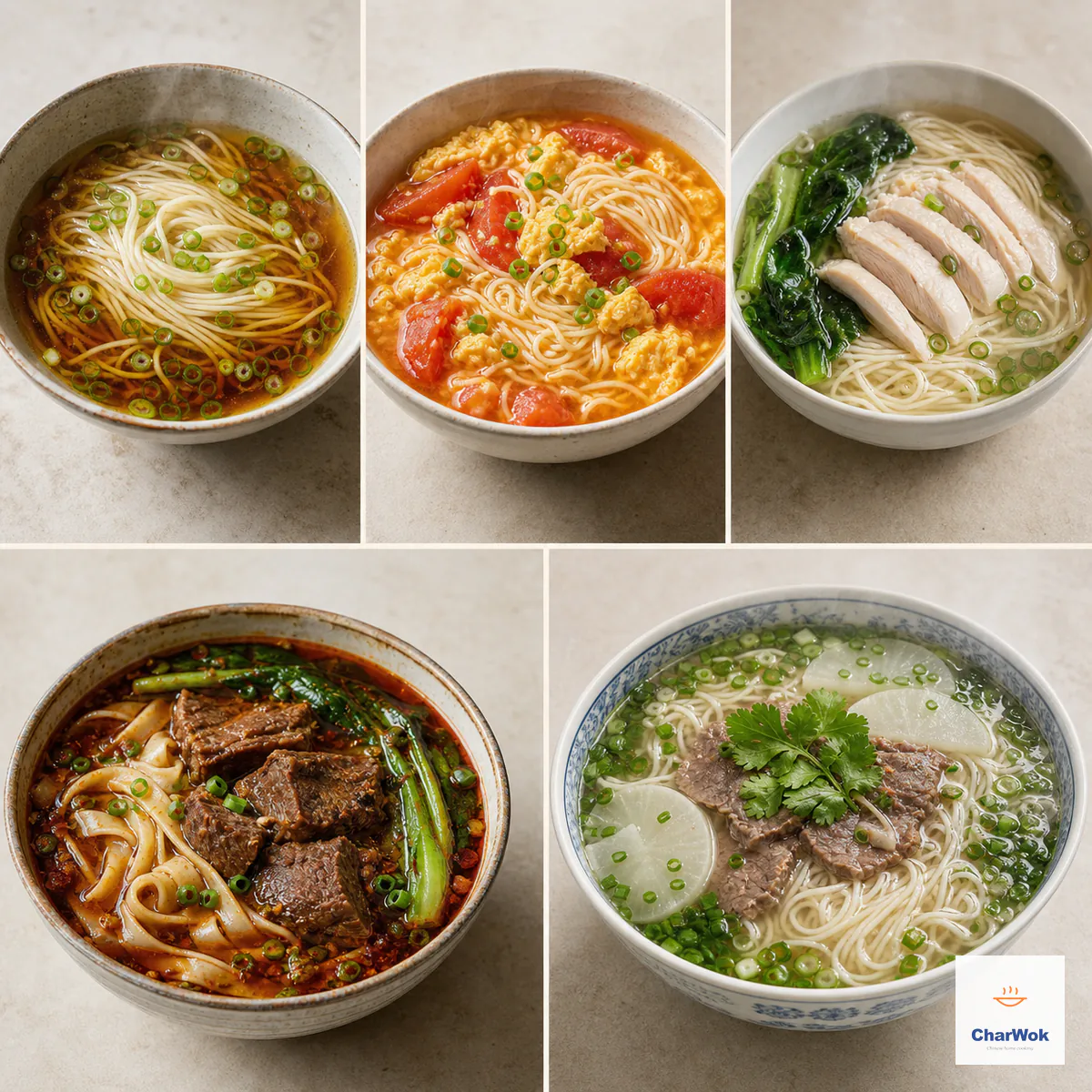
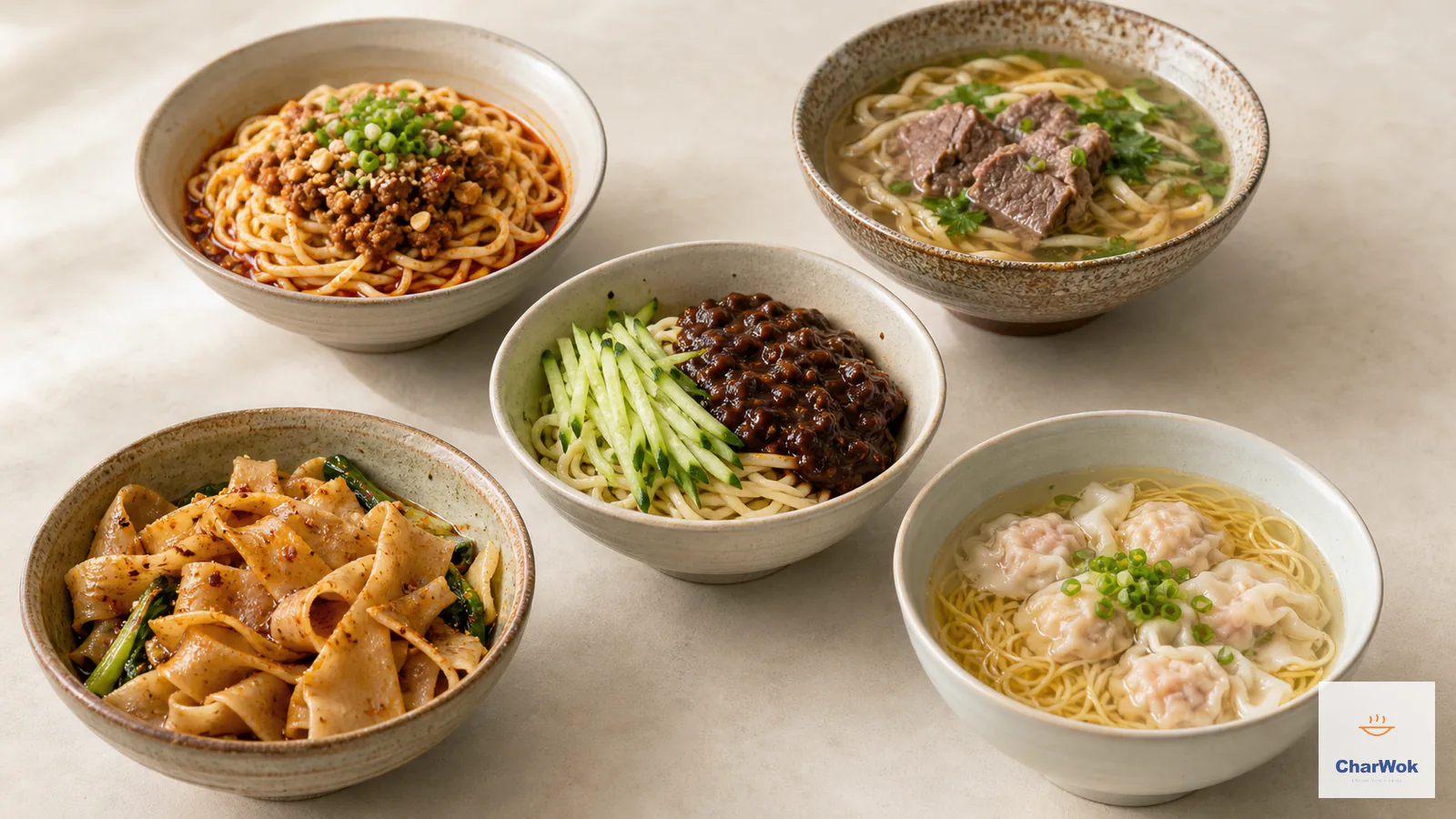
These five hot-broth noodles range from spare scallion-oil broth to tomato egg, clear chicken, spicy beef, and aromatic Lanzhou beef soup.
If stews are the weekend, noodle soups are the weeknight. The fastest of the lot is Yang Chun Mian, a Shanghai classic that is broth, noodles, scallion oil, and soy, ready in the time it takes to boil water. It taught me that a great soup bowl is about seasoning the liquid correctly, not about piling on ingredients. For something more substantial, tomato and egg noodle soup turns two everyday ingredients into a sweet, tangy broth that children reliably eat, and Chinese chicken noodle soup is the clean-tasting all-in-one bowl I reach for when someone in the house is run down.
When you want heat, the broth changes character entirely. Spicy beef noodle soup is the Taiwanese cafe staple, built on a dark, spice-laden beef broth that is worth making on a Sunday and eating from all week. Lanzhou beef noodle soup is its clearer, more delicate northwest cousin, traditionally served with hand-pulled noodles. If you have never pulled noodles, the home version of la mian is more forgiving than people claim, as long as you rest the dough twice. For the full landscape in one place, my guide to classic Chinese noodle recipes sorts them by region and difficulty.
Sour, spicy, and sweat-it-out bowls
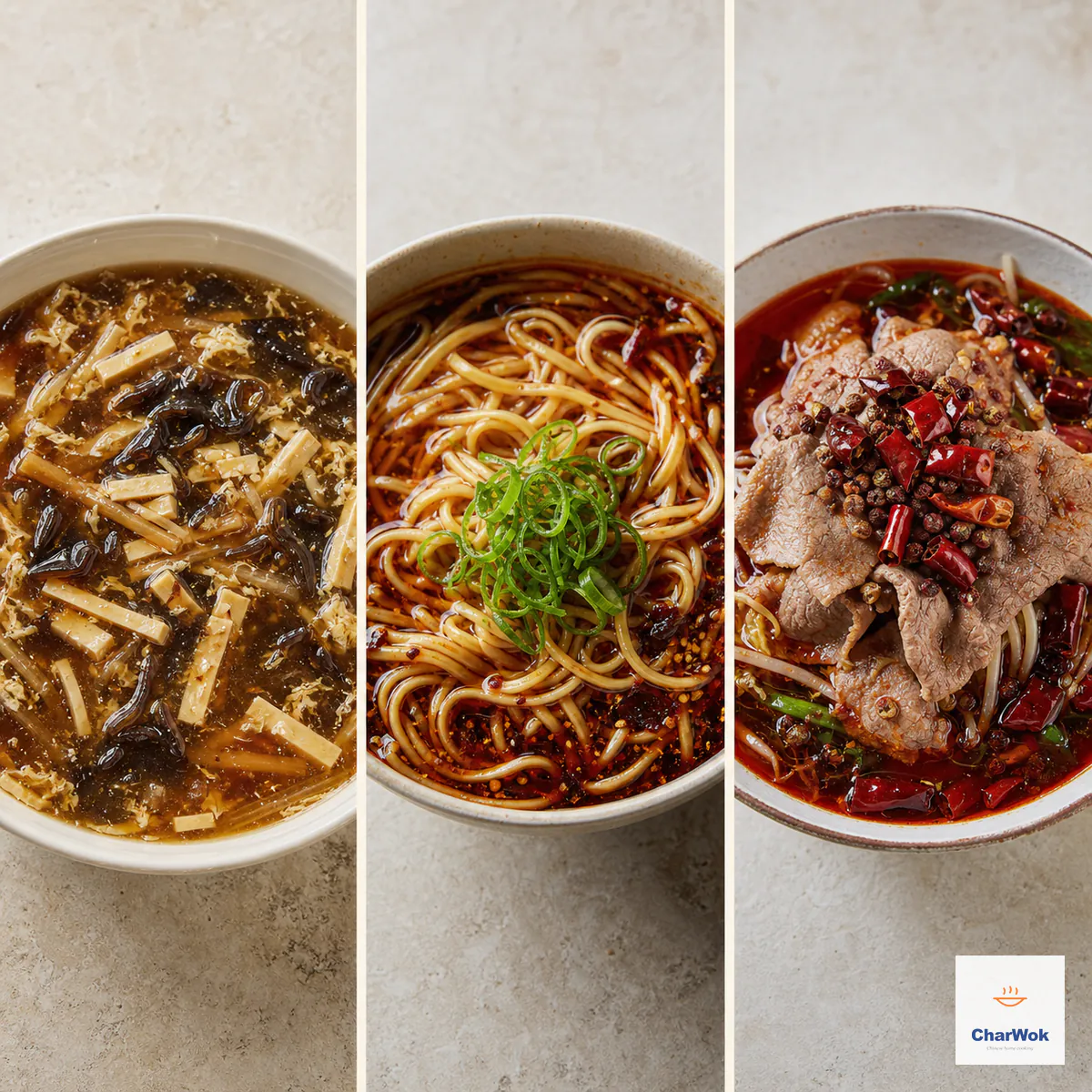
Black vinegar, chili oil, and Sichuan aromatics create three different kinds of sour-spicy warmth without turning every bowl into the same flavor.
Two of the most ordered soups in any Chinese restaurant belong here, and both are better at home because you control the acid. Hot and sour soup lives or dies on the balance of black vinegar to white pepper, and the version most people remember from takeout is usually under-vinegared. Pour the vinegar in at the end, taste, and add more until the broth bites back. Hot and sour noodles take the same idea onto a Sichuan noodle base, with chili oil and toasted sesame paste doing the heavy lifting.
The most dramatic bowl on this list is Sichuan boiled beef, where thin beef slices are poached in a vat of chili-and-peppercorn oil poured over raw vegetables at the table. It looks intimidating and is genuinely easy; the part that has burned me is overcooking the beef, which turns silky to tough in about thirty seconds. Slice it thin across the grain and pull it out the instant it loses its red.
Dumplings and wontons in soup
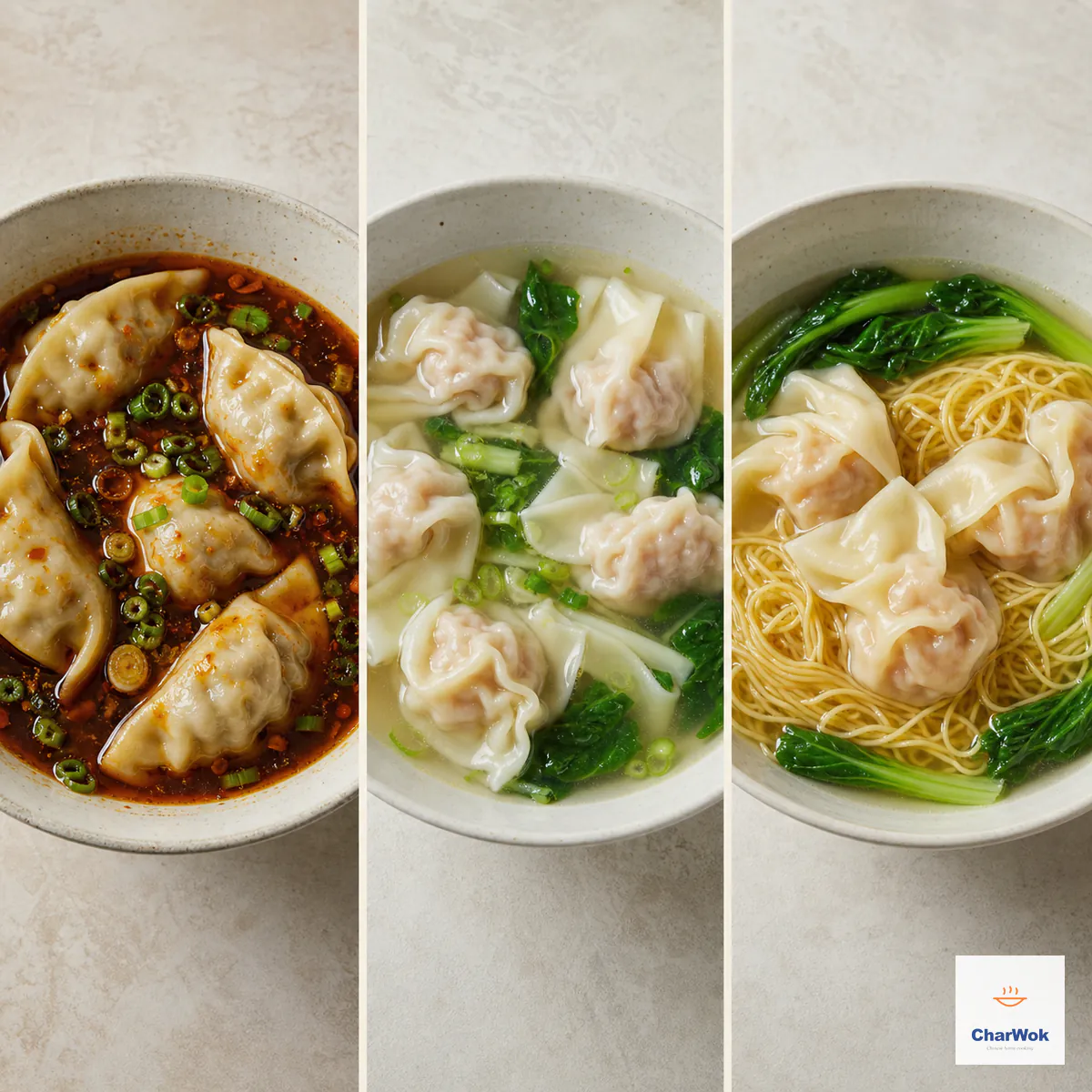
Beef dumplings suit a robust hot-and-sour base, while thin pork wontons and Cantonese wonton noodles need a lighter broth that does not hide their wrappers.
When the weather turns, dumplings move from plate to bowl. Beef dumplings in hot and sour soup is a Shaanxi-style bowl where the broth is sharpened with spice-infused vinegar and a spoon of chili oil; the dumplings become the protein and the soup becomes the sauce. If folding is new to you, start with the dumpling recipe overview and pick one shape to learn. For a lighter hand, pork wonton soup uses thinner wrappers and a quicker fold, and Cantonese wonton noodle soup stacks wontons over springy alkaline noodles in a shrimp-scented broth for a complete meal in one bowl.
Comforting rice: congee and clay pot
When nothing else sounds right, rice porridge does. Congee is the closest thing Chinese cooking has to a cure-all, and the trick I swear by is freezing raw rice for an hour before cooking; the cracked grains release starch faster and give you a silky texture in half the usual time. For something savory and crisp-edged, clay pot rice cooks rice, marinated meat, and a drizzle of sweet soy into one pot, with a layer of crackling rice at the bottom that is the whole point of the dish. Both are weeknight-quick once you have done them once.
Two more to round out the list
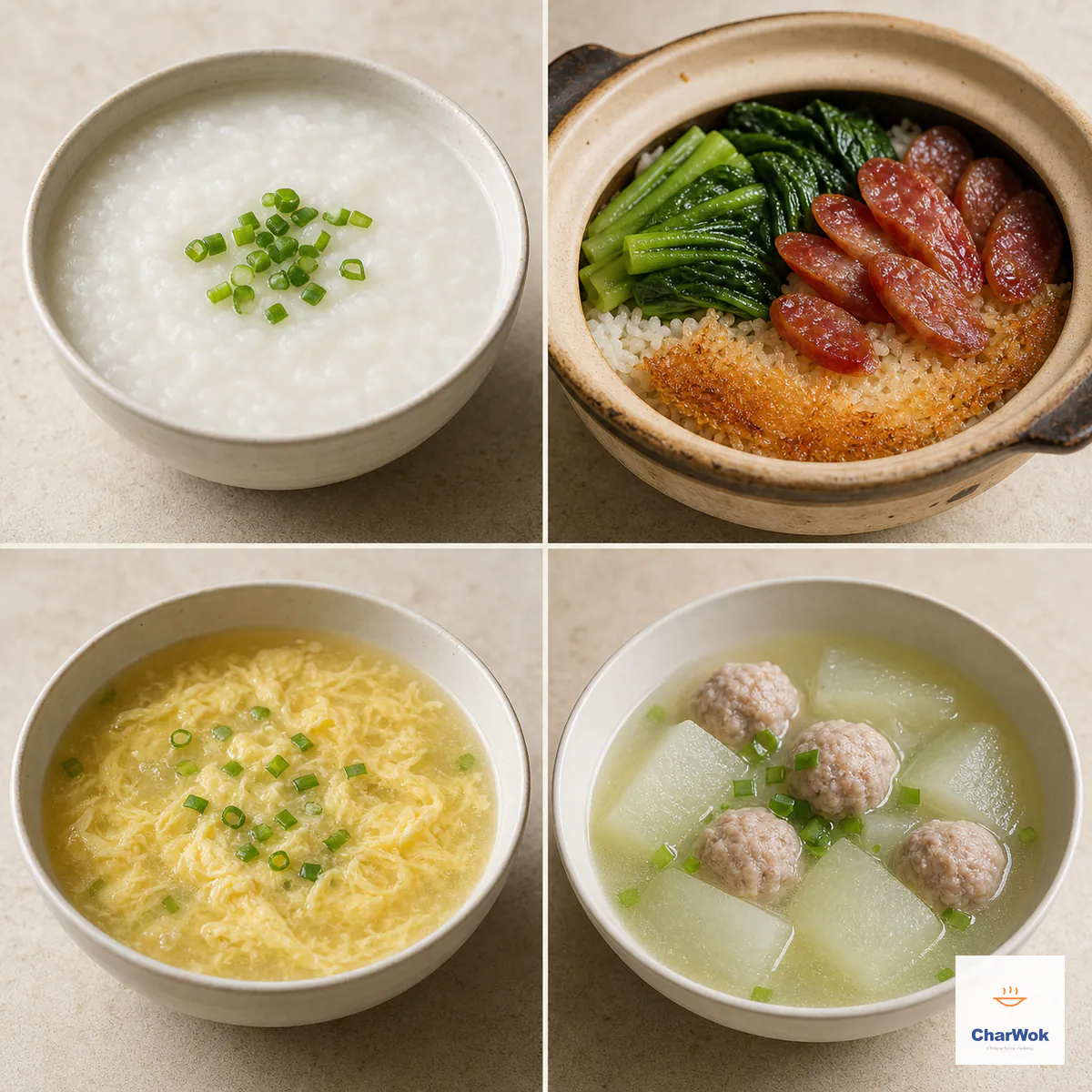
Plain congee and clay-pot rice offer two rice textures; egg drop soup and winter melon meatball soup are the quick, soothing finish to the guide.
I keep egg drop soup in the rotation because it is the five-minute dinner that rescue a cold night when I have not planned at all, and winter melon soup with meatballs because the delicate winter melon soaks up the pork flavor and turns a clear soup into something surprisingly filling. Add a handful of mung bean vermicelli and it stands alone as a meal.
Choosing what to cook tonight
| Situation | Reach for | Real time |
|---|---|---|
| Tired, no plan, 20 minutes | Egg drop soup, Yang Chun Mian, tomato egg noodle soup | 10–20 min |
| Sick or recovering | Congee, chicken noodle soup, pork rib soup | 30–75 min (mostly hands-off) |
| Want to sweat and feel alive | Sichuan boiled beef, hot and sour noodles, spicy beef noodle soup | 30–45 min |
| Weekend project, eating all week | Beef stew with potatoes, braised beef with daikon, Lanzhou beef noodle soup | 90 min+, reheats well |
| Feeding kids, picky eaters | Tomato egg noodle soup, wonton soup, clay pot rice | 20–40 min |
| Impressing guests | Wonton noodle soup, beef dumplings in hot and sour soup | 45–60 min |
Where these recipes go wrong
A few failures repeat across all of these dishes, and most of them are about broth, not about the main ingredient.
- The broth tastes thin and watery. Almost always a stock problem. Carton stock works in a pinch, but a quart of good homemade stock in the freezer is the single upgrade that lifts every soup on this list. If you are stuck with weak stock, reduce it by a third before adding the seasonings.
- The stew meat is dry and stringy. You pulled it too early. Collagen does not melt until the meat has held at a gentle simmer for at least 75 minutes. Keep the heat low enough that you see one or two bubbles break the surface, never a rolling boil.
- The noodles turn to mush. Cook noodles in the broth only for dishes built for it (congee, soft noodle soups). For everything else, boil the noodles separately in plain water, drain, and ladle hot broth over them at the bowl. This is non-negotiable for wonton noodle soup.
- Hot and sour soup tastes flat. The vinegar has cooked off. Black vinegar goes in at the end, off the heat, and you should taste and adjust right before serving. The white pepper goes in the same way.
- Congee is grainy, not silky. Either the heat was too high or the rice was not cracked. Freeze the raw rice first, stir a few times in the first twenty minutes, then leave it alone on the lowest flame your stove will hold.
- The dumpling wrappers split in the soup. The dough was rolled too thin at the center, or the soup was at a hard boil. Dumplings cook at a bare simmer; a rolling boil slams them against the pot and tears them.
Variations and pairings
Most of these bowls take well to the same set of finishing touches. A spoon of chili oil on top of any noodle soup turns a gentle bowl into something a Sichuan grandmother would approve of. A dish of quickly pickled cucumber or blanched greens cuts the richness of the beef stews. And nearly every soup here improves with a soft-boiled egg cracked in for the last minute, or a handful of leafy greens added just before serving so they stay bright.
If you are cooking for a crowd through the colder months, the make-ahead logic in my make-ahead Chinese recipes guide pairs naturally with this list. The stews and congee are the ones to cook a day ahead; the noodle soups and dumpling soups are the ones to assemble at the last minute from components you prepped earlier.
Storage and reheating
The braises and stews keep four days in the fridge and two months in the freezer, and the flavor deepens overnight as the spice and fat meld. Reheat them gently in a saucepan with a splash of water. Congee thickens to paste in the fridge, so stir in water or stock when you reheat until it flows again. Noodle soups do not store well once assembled; keep broth, noodles, and toppings separate and combine them fresh each time. Dumpling soups hold for one day if the dumplings were cooked separately, but the wrappers soften noticeably by day two.
Related recipes & further reading
If this cold-weather list has you sorted for soups and stews, a few neighboring dishes round out the rotation and travel in the same direction.
- Taiwanese beef noodle soup sits in the same family as the spicy beef broth above, with a deeper, darker spice profile that improves overnight.
- Suan La Fen hot and sour glass noodle soup pushes the hot-and-sour idea onto chewy sweet potato noodles for a sweatier bowl.
- chicken meatball noodle soup is the gentle, kid-friendly cousin of the chicken noodle soup on this list.
- Yunnan rice noodle soup adds a southern, herb-scented broth to the line-up of warming bowls.
- turkey noodle soup is the post-holiday way to stretch leftover bones into a second warming meal.
- Chinese braised beef shank gives you a master stock you can reuse for several of these stews.
- red-cooked pork belly brings the same low-and-slow braise logic to pork, and reheats even better on day two.
- Lion's Head meatballs pair slow-simmered pork with cabbage in a clear broth that fits right into a cold night.
- Sichuan fish with sour vegetable is the piscine version of the sweat-it-out bowls, built on a warming, peppery broth.
- pear with rock sugar is the soothing, gently warming dessert I finish a spicy bowl with.
- sweet red bean soup is the other classic cold-weather closer, thick and quietly restorative.
- For the wider landscape, browse the must-try authentic Chinese recipes collection, the core Chinese cooking skills guide, or my notes from a culinary tour of China for regional context on these dishes.
FAQ
Which of these is best for a beginner?
Start with egg drop soup or Yang Chun Mian. Both need only a handful of pantry staples, take under twenty minutes, and teach you the two skills that matter most: seasoning a broth by taste, and getting the timing of the final additions right. Move to a beef stew once you trust your stove's lowest setting.
Can I make these less spicy for kids?
Yes, and the spicy ones are easier to tame than they look. For Sichuan boiled beef and the hot and sour dishes, hold back the chili oil and white pepper and serve them on the side so each bowl is dialed to taste. The broth itself, built on stock and aromatics, is mild underneath the heat.
Do I need a clay pot or special equipment?
No. A heavy Dutch oven handles every stew and braise here, and clay pot rice works in any heavy lidded pot or rice cooker. The only tool genuinely worth buying is a pot that holds heat on low, because gentle simmering is what makes these dishes taste right.
What is the most freezer-friendly dish on the list?
The beef stews freeze best by a wide margin. Portion them before freezing so you can thaw exactly what a meal needs, and reheat from frozen with a little water in a covered pot over low heat. Avoid freezing noodle soups and dumpling soups, which turn to mush.