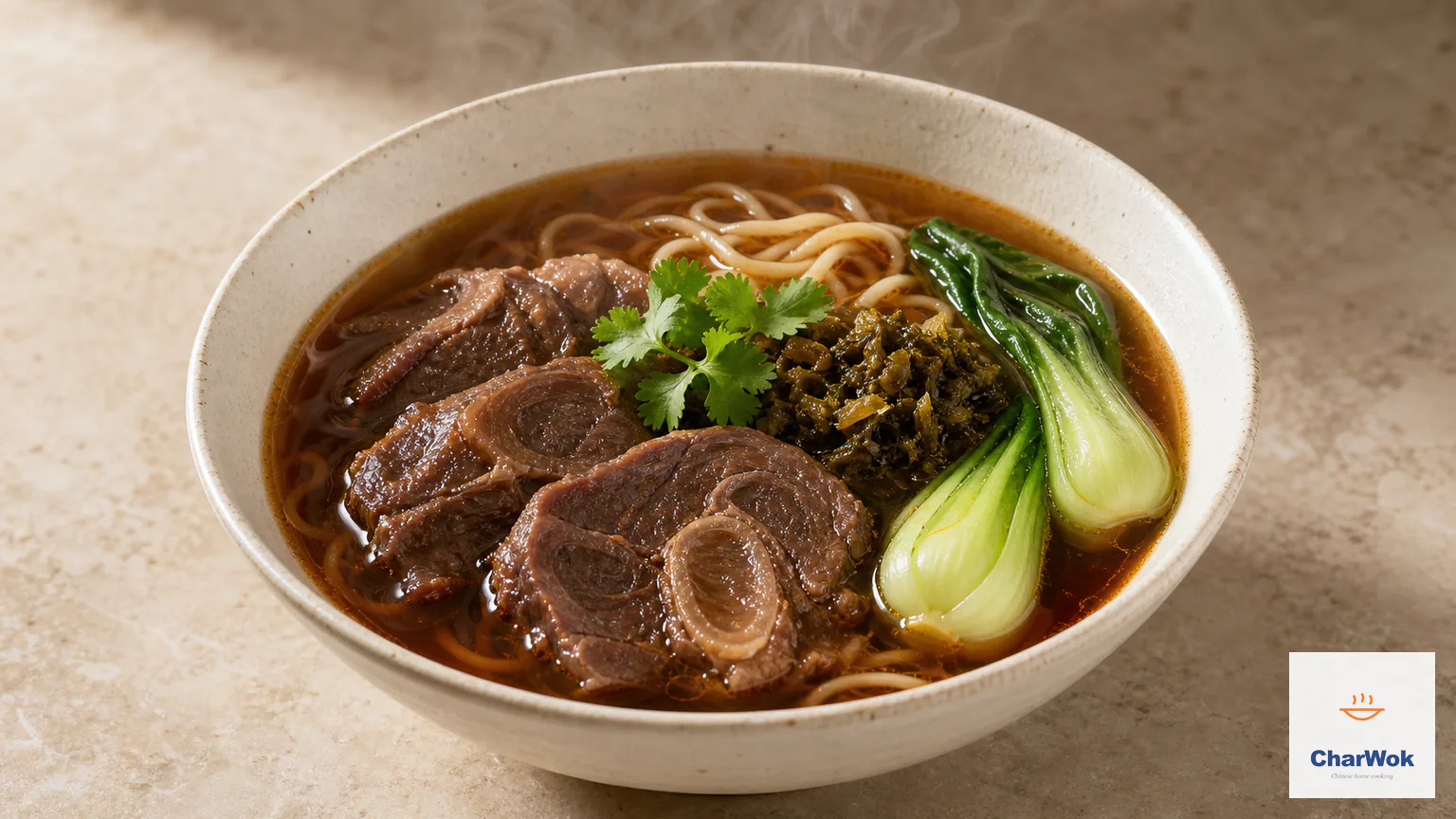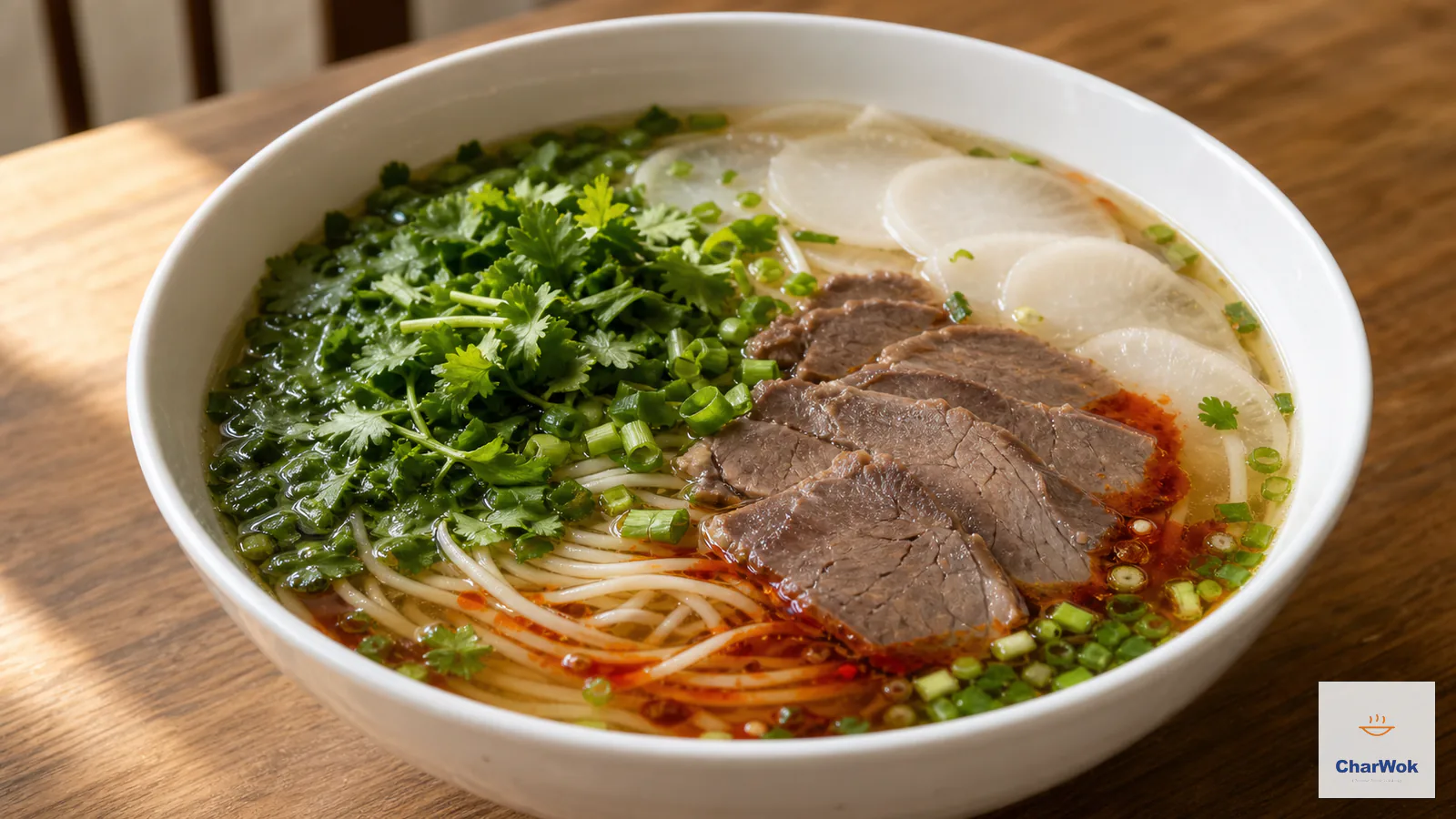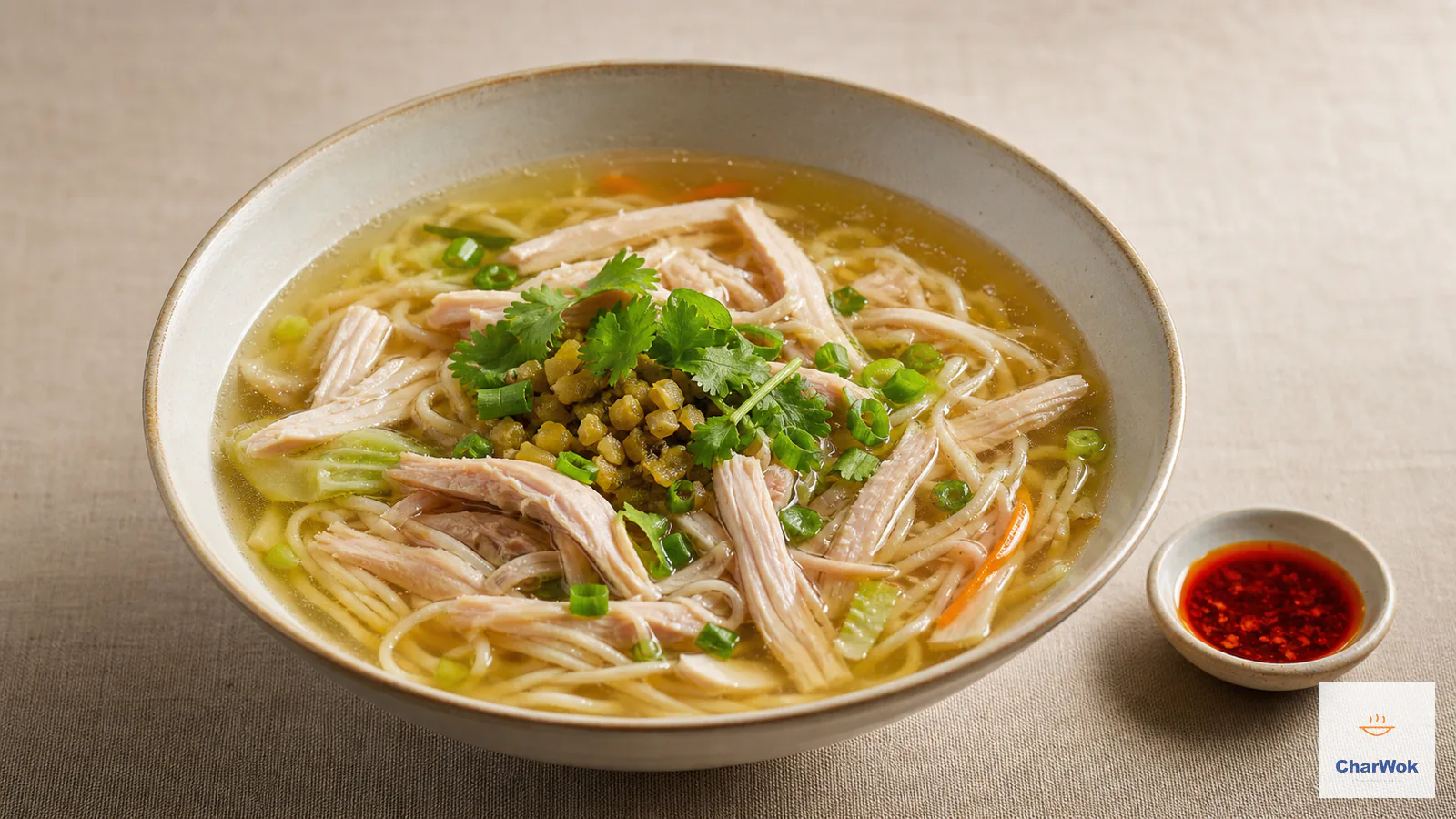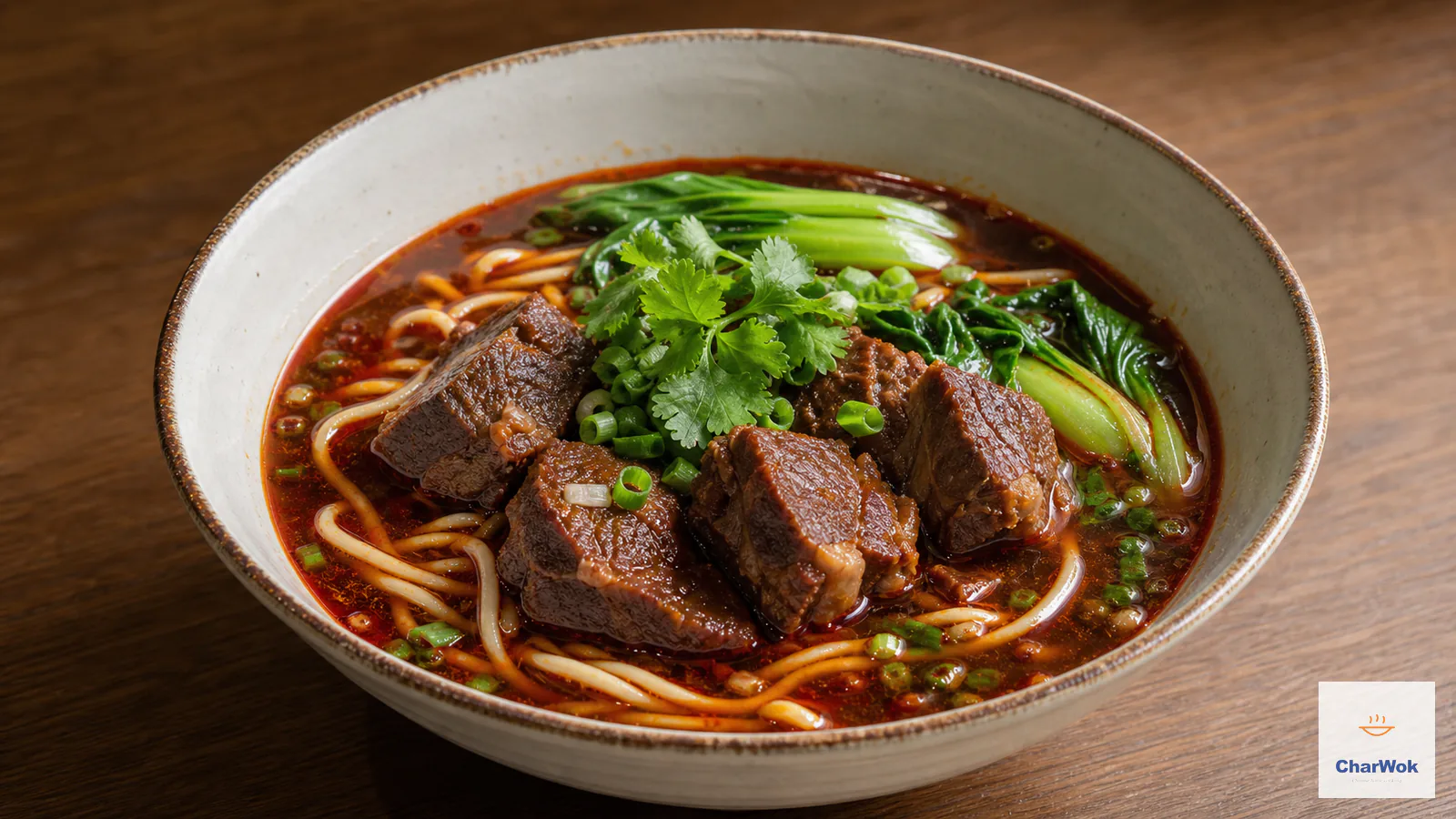
The thing that separates a great bowl of spicy beef noodle soup from a forgettable one is never the chili. It is the broth. A chili-forward soup that hasn't been built on a long, well-strained beef base tastes like hot water with hot sauce, and after three spoons you stop wanting it. The good bowl is dark, glossy, faintly sweet from spice and bone, with beef cubes that yield to a nudge of the chopstick. That is the bowl I want to teach you to make at home, and the two things that get you there are a proper aromatic base and a patient simmer.
Let me name the failure I made for years. I used to dump raw doubanjiang, chili powder, and water straight into the beef pot and call it done. The broth was cloudy, the spice raw and slightly bitter, and the chili oil sat on top in an angry orange slick. The fix turned out to be a small Sichuan technique: fry the chili bean paste in oil first, let it bloom and darken, then build the broth on top of that flavored oil. That one change moves this dish from a dorm-room approximation to something that tastes like it came out of a noodle shop.
At a glance: 600 g beef simmered in 1.5 L of broth for 60-90 minutes, with 3 tablespoons of doubanjiang fried in oil as the flavor base. The single biggest decision is the chili bean paste: fry it until the oil turns red before any liquid goes in. Skip that step and the broth stays thin and harsh no matter how long you simmer.
What kind of beef noodle soup is this, exactly
Spicy beef noodle soup sits in a family of dishes that all answer roughly the same craving but come from different kitchens. The Taiwanese红烧 version leans on soy and rock sugar for a dark, slightly sweet, soy-forward broth and is the one most Western diners picture when they hear the name. The Lanzhou clear-broth style is the opposite: pale, clean, built on a clarified beef-and-bone stock, with chili added at the table rather than cooked in. The bowl you are making here is the spicy, chili-bean-paste-driven cousin that lives somewhere between Sichuan and home-style northern cooking. It is unapologetically ruddy, numbing-warm rather than scorching, and it does not try to be clear.
If you have made Dan Dan Noodles or Chongqing Xiao Mian, the spice logic will feel familiar: fat carries the chili, and the chili has to be cooked into the fat before it meets liquid. The difference is that those are sauce-on-noodle bowls. Here the flavored oil becomes the foundation of a soup, so the technique scales up and the timing stretches out.
Ingredients
Ingredients at a glance
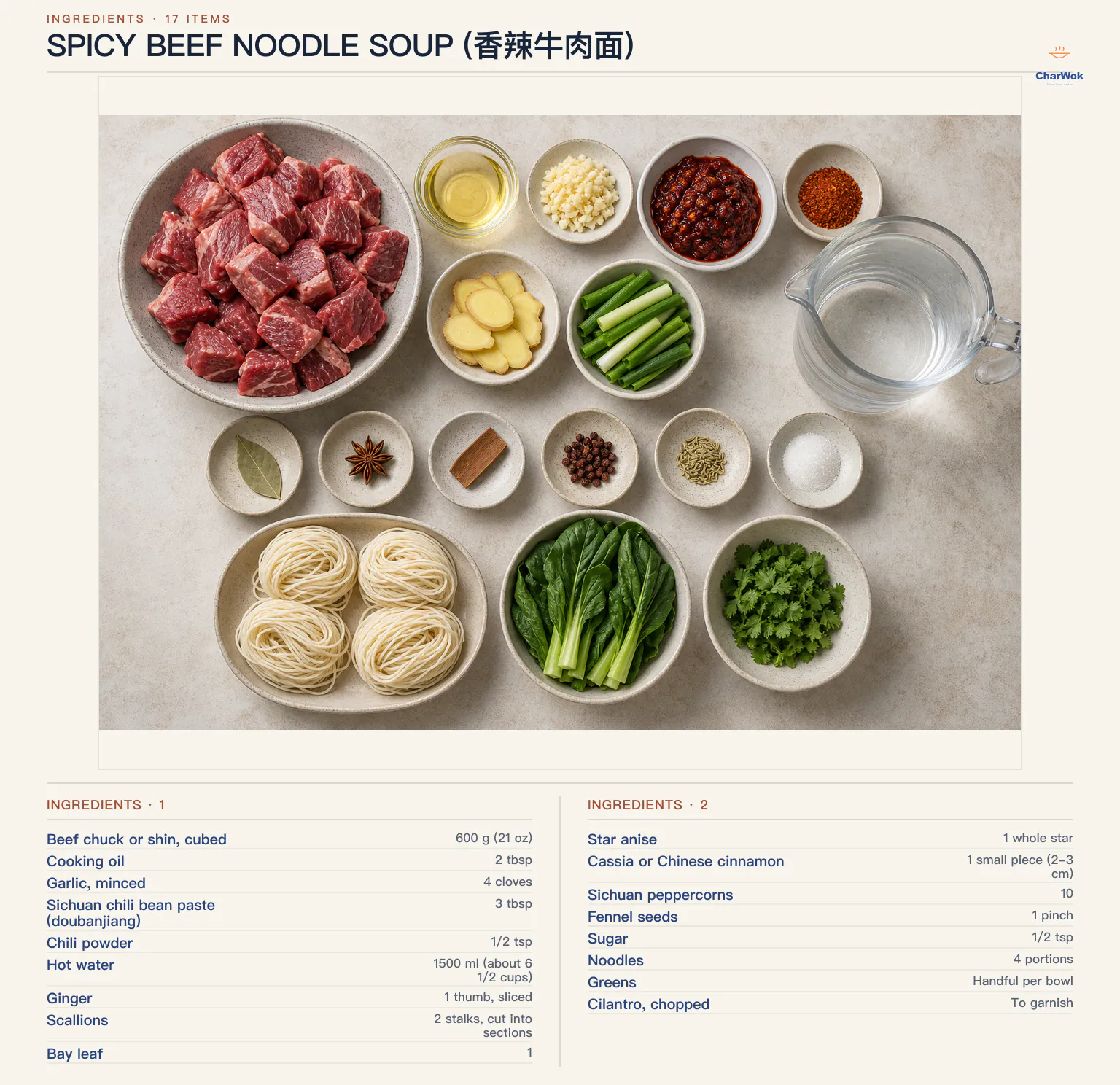
| Ingredient | Amount | Notes / substitute |
|---|---|---|
| Beef chuck or shin, cubed | 600 g (21 oz) | Shin and shank give the richest broth; chuck is easier to find and still tender. Avoid lean steak cuts, which dry out. |
| Cooking oil | 2 tbsp | Neutral oil. A little extra renders out flavor from the doubanjiang. |
| Garlic, minced | 4 cloves | Smashed and chopped fine so it disperses into the oil. |
| Sichuan chili bean paste (doubanjiang) | 3 tbsp | Pixian doubanjiang is the benchmark. See the doubanjiang guide for brands and the difference between aged and regular. |
| Chili powder | 1/2 tsp | Korean or generic red chili flakes work. Use less if yours is very hot. |
| Hot water | 1500 ml (about 6 1/2 cups) | Hot, not cold, so you don't stall the braise. |
| Ginger | 1 thumb, sliced | Slice don't mince; you'll fish it out later. |
| Scallions | 2 stalks, cut into sections | Use the white and pale green for the braise; save dark green for garnish. |
| Bay leaf | 1 | One only. More reads as Western stew. |
| Star anise | 1 whole star | Two stars will overpower a 1.5 L pot; resist the urge. |
| Cassia or Chinese cinnamon | 1 small piece (2-3 cm) | Keep it small. A reader once used a full stick and the bowl tasted like a candle. A sliver of five-spice blend works in a pinch. |
| Sichuan peppercorns | 10 | For the gentle numbing hum. Toast and grind your own; see the Sichuan pepper guide. |
| Fennel seeds | 1 pinch | Optional, but it rounds the spice profile toward a master-stock feel. |
| Sugar | 1/2 tsp | Rock sugar preferred; white sugar is fine. It tames the chili, it does not sweeten the soup. |
| Noodles | 4 portions | Fresh wheat noodles are ideal. Dried works. See notes below. |
| Greens | Handful per bowl | Spinach, bok choy, or baby bok choy. |
| Cilantro, chopped | To garnish | The fresh top note the heavy broth needs. |
The noodles: make or buy
This soup deserves a noodle with chew. The two best home options are fresh wheat noodles from an Asian market (look for the ones meant for beef noodle soup, slightly thick and flat) or noodles you pull yourself. Hand-pulled la mian is the romantic choice and gives the most authentic bite, but it asks for the right flour and a rested dough. A simple hand-cut noodle is the forgiving middle ground and still beats anything dried. If you go dried, choose a thicker wheat noodle, never vermicelli or rice sticks; they collapse under this broth.
Curious about why wheat noodles in this region have that particular springy texture? It is the alkali. A pinch of lye or baked baking soda changes the gluten and the color, and the same trick is what gives ramen and jian shui noodles their characteristic chew. Not required here, but worth understanding if noodles are becoming a habit in your kitchen.
Method
- Blanch the beef first, and do not skip it. Put the cubed beef in a pot of cold water, bring it to a full boil, and let it roll for two to three minutes. You will see gray foam and clotted protein rise to the top. That scum is what clouds a broth and leaves a metallic edge. Drain the beef, rinse it, and put it back into a clean pot. This is the step home cooks want to skip and should not.
- Bloom the doubanjiang in oil. Heat 2 tablespoons of oil in a wok or deep pan over medium heat. Add the minced garlic, the 3 tablespoons of doubanjiang, and the 1/2 teaspoon of chili powder. Stir constantly for about 90 seconds. You are watching for the oil to turn a deep, translucent red and to rise to the surface, separating from the paste. This is the chili and the salt migrating into the fat, and it is the moment the harshness cooks out. Do not let it smoke or the paste turns bitter.
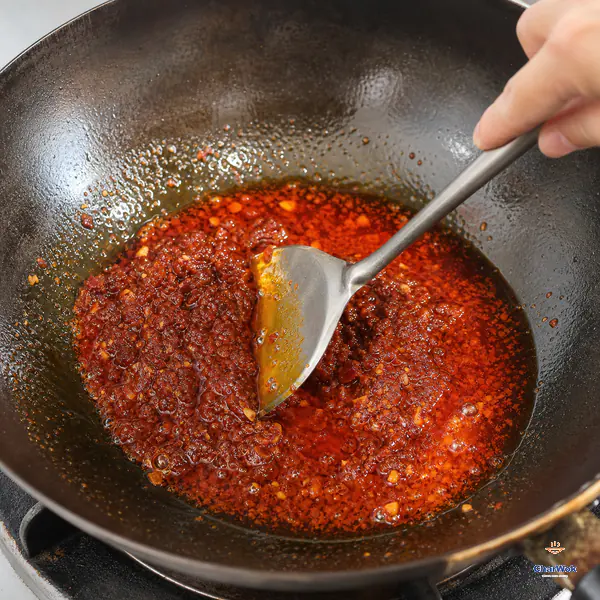
Keep the doubanjiang, garlic and chilli powder over medium heat and stir constantly for about 90 seconds; continue only until the surrounding oil turns clear brilliant red, before any paste edge darkens or smokes.
- Build the broth. Pour in the 1500 ml of hot water carefully; it will hiss. Stir to lift the colored oil off the bottom, cover, and let it simmer for five minutes. This short simmer melds the chili oil with the water before it meets the beef. Pour the whole thing through a fine sieve into the pot with the blanched beef, pressing on the solids to push the flavored oil through. Discard what stays in the sieve.
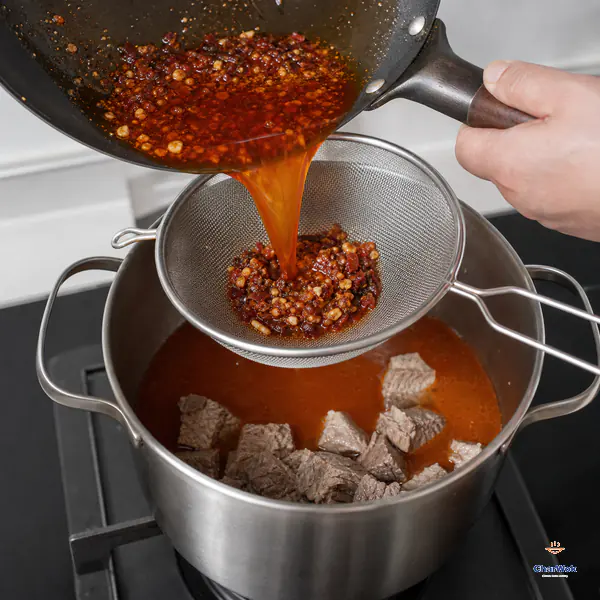
After simmering the red broth for five minutes, strain it into the clean pot of blanched beef and press out the flavoured oil; discard the coarse bean and garlic residue before adding ginger, scallion and whole spices.
- Add aromatics and spices, then simmer low. Drop in the sliced ginger, the scallion sections, the bay leaf, star anise, the small piece of cassia, the Sichuan peppercorns, the pinch of fennel, and the 1/2 teaspoon of sugar. Bring to a boil, then drop to the lowest simmer that still moves the surface. Cook uncovered or with the lid cracked for 60 to 90 minutes. You want the beef to yield to a fork with gentle pressure but not fall into shreds. A hard boil will toughen the meat and emulsify the fat into a cloudy soup.
- Strain and rest. When the beef is tender, fish out the ginger, scallions, and whole spices and throw them away. Taste the broth. It should be savory, gently numbing, with a clean chili warmth at the back of the throat. If it reads flat, a small pinch of salt fixes it; doubanjiang is already salty, so add salt last and in tiny amounts. Let the broth sit off the heat for 15 minutes if you have time; like any braise, it tastes deeper after a rest.
- Cook noodles and greens in a separate pot. Boil the noodles in plenty of water according to their type. In the last 30 seconds, drop in the spinach or halved baby bok choy to blanch. Drain both and rinse for a few seconds under cold water. The cold rinse stops the carryover cooking so the noodles keep their chew and the greens stay bright rather than going khaki.
- Assemble and serve immediately. Divide noodles and greens among four bowls. Ladle the hot broth over, then distribute the beef cubes on top. Finish with chopped cilantro and, if you like, a spoonful of chili oil or a scatter of Sichuan mala peanuts for crunch. Eat it while the broth is still steaming; lukewarm beef noodle soup is a different, lesser dish.
When it goes wrong, and how to fix it
The broth is cloudy and gray. You either skipped the blanch or let the soup boil hard. Cloudiness is fat and protein emulsified into the liquid. For this rustic style a little opacity is fine, but if yours looks like dishwater, next time blanch longer and keep the simmer gentle, not rolling.
The chili tastes raw and harsh. You did not fry the doubanjiang long enough, or your heat was too high and the paste caught. The fix in the moment is to ladle out about half a cup of broth, return it to a small pan, and reduce it hard with an extra teaspoon of oil until it darkens and smells sweet, then stir it back in. Better to do this next time: fry the paste on medium, not high, and wait for the red oil.
The beef is tough after 90 minutes. Either you boiled instead of simmered, or you used a cut with no connective tissue. Lean leg or steak will never get tender here. Switch to chuck, shin, or shank, all of which carry collagen that melts into gelatin over a slow braise and is exactly what gives the broth body.
One spice is drowning out the rest. The usual culprit is cassia or star anise used too generously. Cassia in particular is strong and slightly sweet in a way that reads as cinnamon toast if you overpour. Fish the offending spice out now, dilute with a little hot water, and accept a thinner broth this round. Next time, measure with your eyes, not your enthusiasm.
The noodles turned to mush. You cooked them too long, or you used a thin dried noodle meant for soup and left it in the bowl. Pull fresh or thick wheat noodles a touch under your ideal doneness, since the hot broth continues to cook them in the bowl.
Variations and pairings
For a richer, more deeply savory bowl, add a halved tomato for the last 30 minutes of simmering and fish it out before serving. The tomato breaks down and rounds the chili with a faint acidity that the Taiwanese version leans on heavily. If you want to push toward a full master-stock character, fold in a few pieces of cold braised beef shank at the end, or serve the soup with a side of braised beef and daikon for a double-beef dinner.
To dial the heat without losing balance, increase the Sichuan peppercorns for more numb and add a spoonful of Chiu Chow chili oil per bowl at the table rather than cooking more chili into the base. Adding heat at the bowl lets each diner calibrate, which matters when you are feeding kids or spice-sensitive guests. On the side, a simple scallion pancake or a plate of garlic water spinach turns this into a full meal without competing with the broth.
Storage and reheating
The broth keeps beautifully. In fact it is better on the second day, once the spices have had overnight to settle. Store the broth and beef together in the fridge for up to four days, or freeze for two months. Keep the cooked noodles separate; they turn to paste in storage. Cook fresh noodles each time you serve, and blanch the greens to order.
One note on freezing if you decide to thicken the broth with a cornstarch slurry, which some cooks do for body: do not freeze it with the starch in. Starch breaks under freezing and comes back grainy. Freeze the broth thin, and add the slurry only when you reheat to serve. Reheat gently on the stove, never at a hard boil, so the beef stays tender and the chili oil does not separate into an oily ring.
Frequently asked questions
Can I use a pressure cooker? Yes. After the blanch and the doubanjiang bloom, pressure-cook the beef and broth on high for 30 minutes with a natural release. You trade a little depth for speed; the stovetop 90-minute version has more integrated flavor.
Is doubanjiang the same as chili paste? No. Doubanjiang is fermented broad bean and chili, salty and complex. Plain chili paste is just heat. For this dish you want doubanjiang; if you only have chili paste, add a teaspoon of fermented black bean or soybean paste to recover the umami.
Why blanch the beef separately? Blanching lifts the clotted blood and surface proteins that otherwise cloud the broth and leave a metallic taste. It takes five minutes and is the cheapest clarity upgrade in Chinese cooking.
What if I can't find Sichuan peppercorns? Leave them out rather than substituting. They provide the signature numbing hum, and nothing else mimics it. Without them you simply get a spicy beef broth, which is still good, just less characteristic.
Can I make it less spicy? Drop the doubanjiang to 2 tablespoons and omit the chili powder. Keep the whole spices the same; the warmth comes mostly from the fried paste, so trimming it is the cleanest lever.
Get the blanch and the doubanjiang bloom right and the rest of this recipe almost cannot fail. The simmer is forgiving, the spices are adjustable, and the broth only improves overnight. Make a full pot, eat half, and freeze the rest; future-you on a tired weeknight will be grateful.