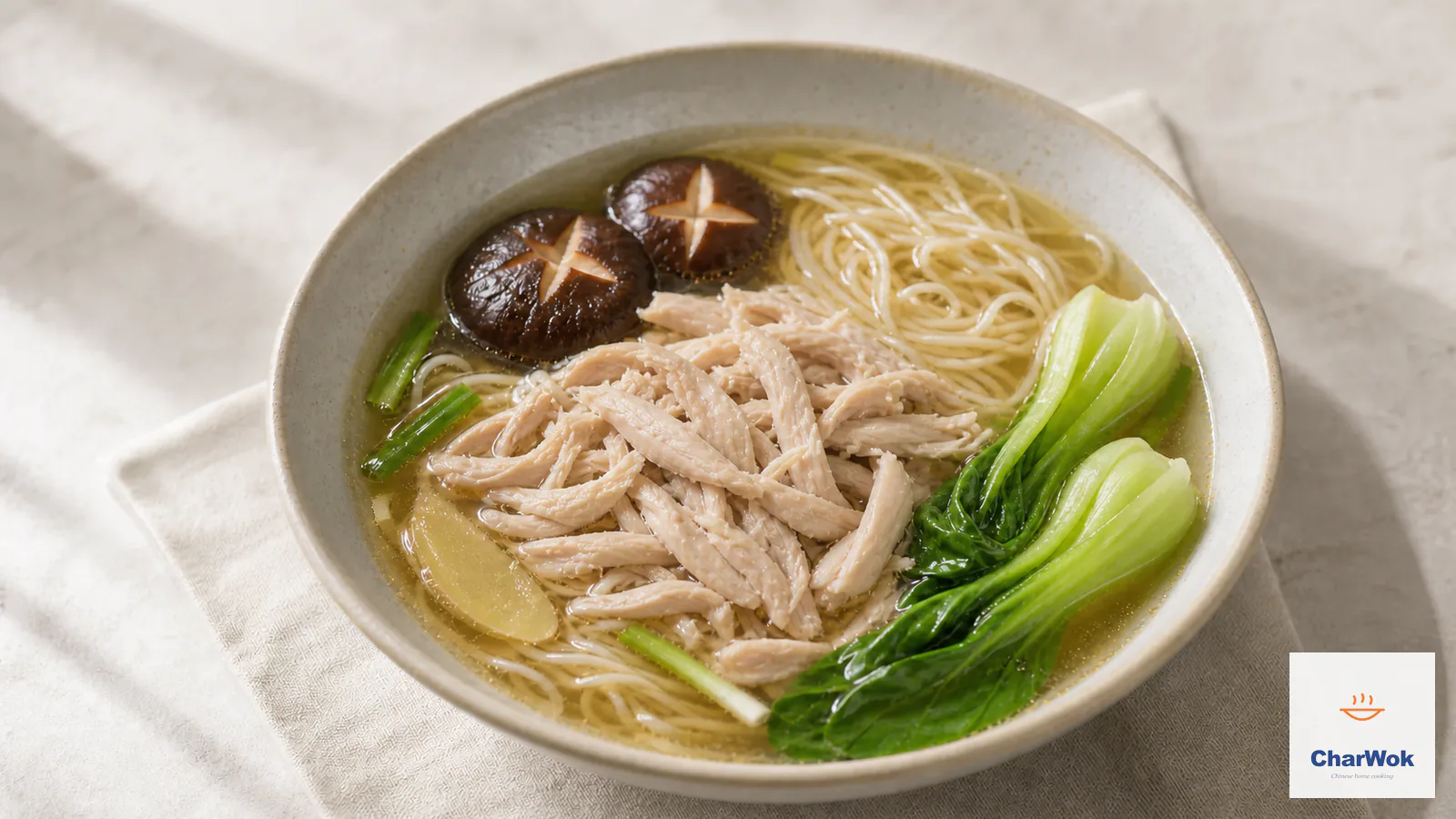
This chicken noodle soup pairs a clear chicken-and-shiitake broth with wheat noodles cooked in a separate pot. Keeping the broth at a bare simmer preserves its clarity; checking the chicken with a thermometer confirms when it is safe to shred.
The method has two separate controls. Heat controls whether the broth stays clear, while internal temperature controls whether the chicken is done. A clear broth can still contain undercooked chicken, so appearance and timing are not substitutes for the temperature check.
At a glance. Rehydrate 8 dried shiitake in 1400 ml (6 cups) of water in the refrigerator for at least 4 hours or overnight. Simmer bone-in, skin-on chicken legs in that same water at the lowest bubble you can hold. Start checking at about 30 minutes and remove the chicken only when the thickest part of every piece reaches 165°F (74°C), away from bone. Skim, season, and serve over noodles blanched separately.
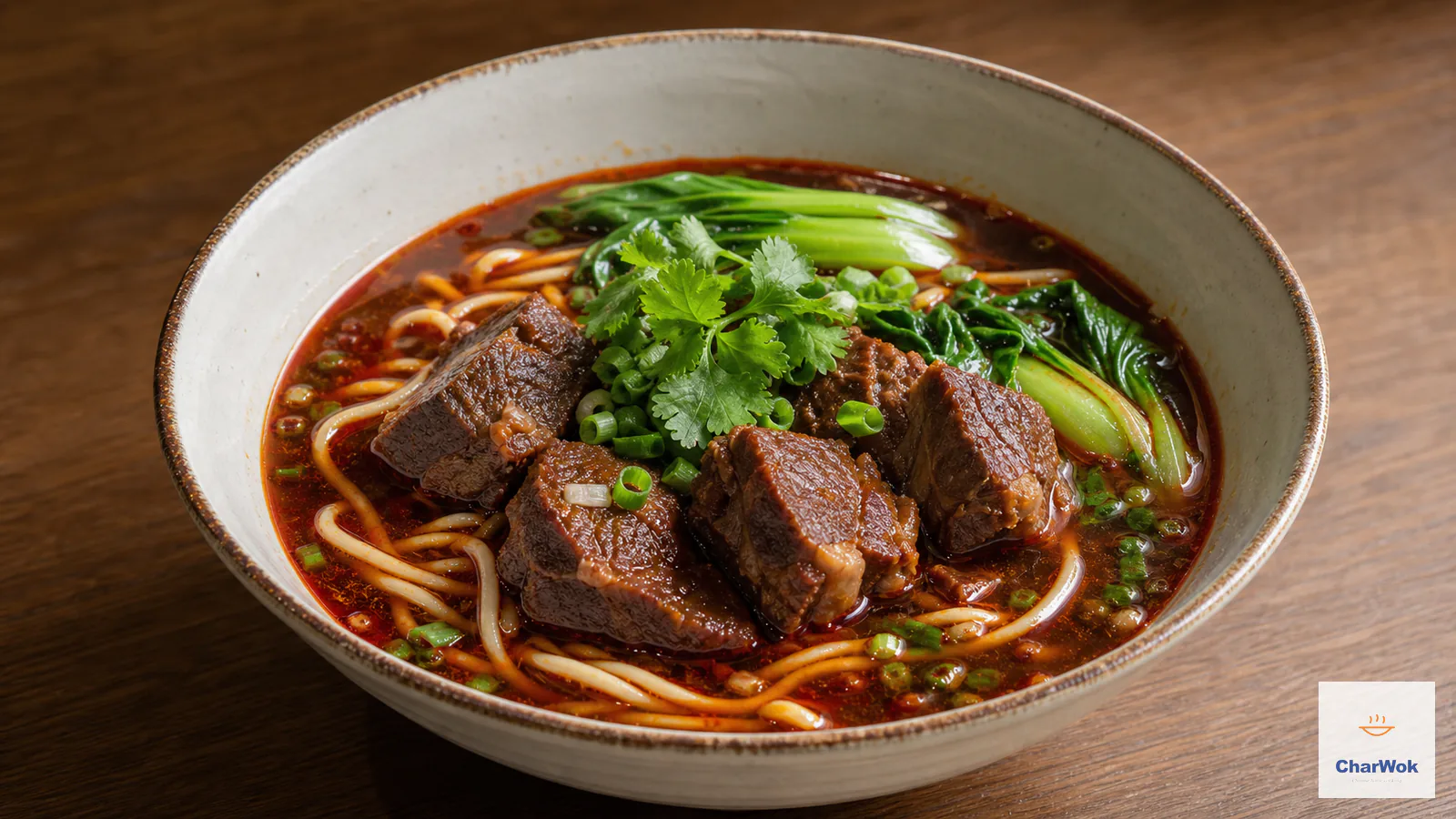
Cooking the noodles separately is also used in other clear-broth noodle dishes because loose starch would cloud the serving broth. Yang Chun Mian uses seasoned stock and scallion oil, while tomato and egg noodle soup takes the broth in a tangy direction. In this version, dried shiitake mushrooms deepen the savory flavor of the chicken broth.
Why dried shiitake, and why bone-in chicken
The mushrooms do most of the heavy lifting here, and they have to be dried, not fresh. Fresh shiitake are mild and almost watery. Drying concentrates their glutamate and produces a deep, slightly smoky aroma that the broth cannot get anywhere else. You will taste the difference immediately.
Two details about the soak matter. First, use cool water and refrigerate the covered bowl for at least 4 hours or overnight. Second, keep the soaking water, but pour it into the pot without the gritty sediment at the bottom of the bowl. The mushrooms should be soft all the way through before cooking.
For the chicken, use bone-in, skin-on legs or thighs. Bones and connective tissue give up gelatin over a long, gentle cook, which is what coats your tongue and makes the broth feel rich even though it looks thin. Skinless, boneless breasts will give you flavored water and tough meat, so save those for a stir-fry. If you have made homemade chicken stock before, the principle is identical; here you are just stopping earlier and serving the meat in the bowl.
Ingredients
Ingredients at a glance
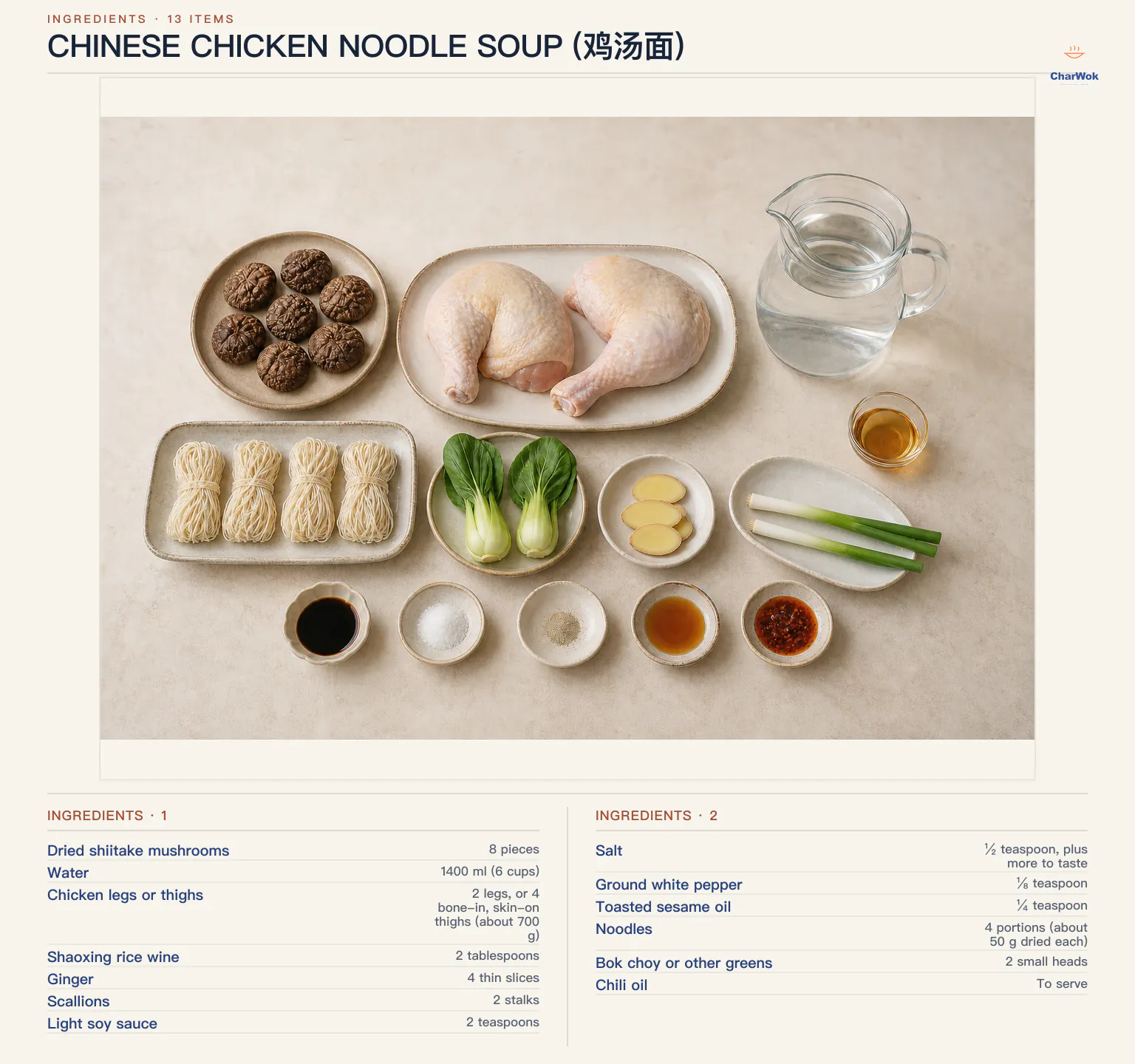
| Ingredient | Amount | Notes / substitute |
|---|---|---|
| Dried shiitake mushrooms | 8 pieces | Dried, not fresh. Donko (thick-cap) preferred. Dried porcini in a pinch, half the amount. |
| Water | 1400 ml (6 cups) | For soaking and simmering. Use filtered if your tap water tastes chlorinated. |
| Chicken legs or thighs | 2 legs, or 4 bone-in, skin-on thighs (about 700 g) | Bone-in and skin-on are non-negotiable for body. Drumsticks work too. |
| Shaoxing rice wine | 2 tablespoons | Offsets any gaminess. Dry sherry is the standard substitute. See Shaoxing rice wine. |
| Ginger | 4 thin slices | Smashed gently to release flavor. Leave the skin on if scrubbed clean. |
| Scallions | 2 stalks | Split white and green parts. Whites flavor the broth, greens garnish the bowl. |
| Light soy sauce | 2 teaspoons | Adds salt without darkening. Use light soy sauce, not dark. |
| Salt | ½ teaspoon, plus more to taste | Adjust at the end by taste. Underseason first. |
| Ground white pepper | ⅛ teaspoon | White, not black, for a cleaner heat. A small pinch of Sichuan pepper is a nice optional warmth. |
| Toasted sesame oil | ¼ teaspoon | Finishing aroma only. A little goes far. See sesame oil. |
| Noodles | 4 portions (about 50 g dried each) | Thin fresh or dried wheat noodles. See the noodles section below. |
| Bok choy or other greens | 2 small heads | Baby bok choy, gai lan tips, or spinach all work. |
| Chili oil | To serve | Optional. Homemade chili oil is worth the ten minutes. |
About the noodles
Any plain wheat noodle will work, but the thickness changes the bowl. Thin dried noodles (around 1.5 mm) drink up the broth and feel delicate; fresh round noodles are bouncier and more filling. If you want the full project, easy homemade noodles with no machine are surprisingly quick and have a texture dried noodles cannot match. Avoid strongly alkalized noodles like ramen; they will tint and season the broth in a way that fights the clean chicken flavor. Rice noodles are a fine gluten-free swap but turn this into a different dish, closer to Yunnan rice noodle soup.
How to make it
- Soak the mushrooms under refrigeration. Put the dried shiitake in a large bowl, pour in the 1400 ml of water, cover, and refrigerate for at least 4 hours or overnight. The caps should be soft all the way through and the water dark brown.
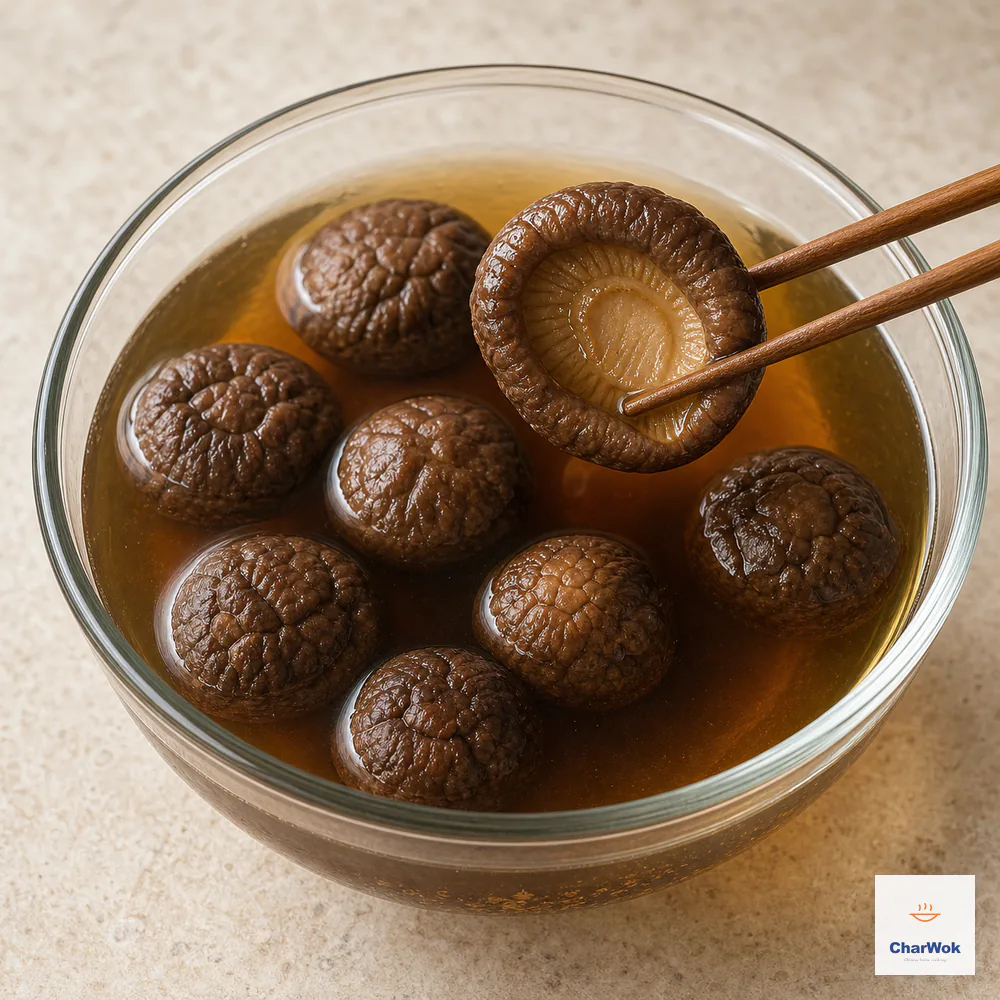
Cover and refrigerate all eight dried shiitake in the full 1400 ml of cool water for at least four hours or overnight, until every cap is soft and the liquid turns deep brown.
- Start the broth cold. Put the chicken and the rehydrated mushrooms into a pot, then pour in the soaking water, stopping short of the grit at the bottom. Starting everything together in cold water lets the proteins and impurities rise to the top as one foamy layer instead of locking into the meat.
- Skim at the boil, then drop the heat. Bring it to a full boil and skim off the grey foam on the surface. The moment it boils clean, turn the heat down to the lowest flicker that still shows a bubble every few seconds. This is the make-or-break moment. A rolling boil emulsifies fat and breaks the chicken fibers into a cloud; a bare simmer keeps the broth clear and the meat intact.
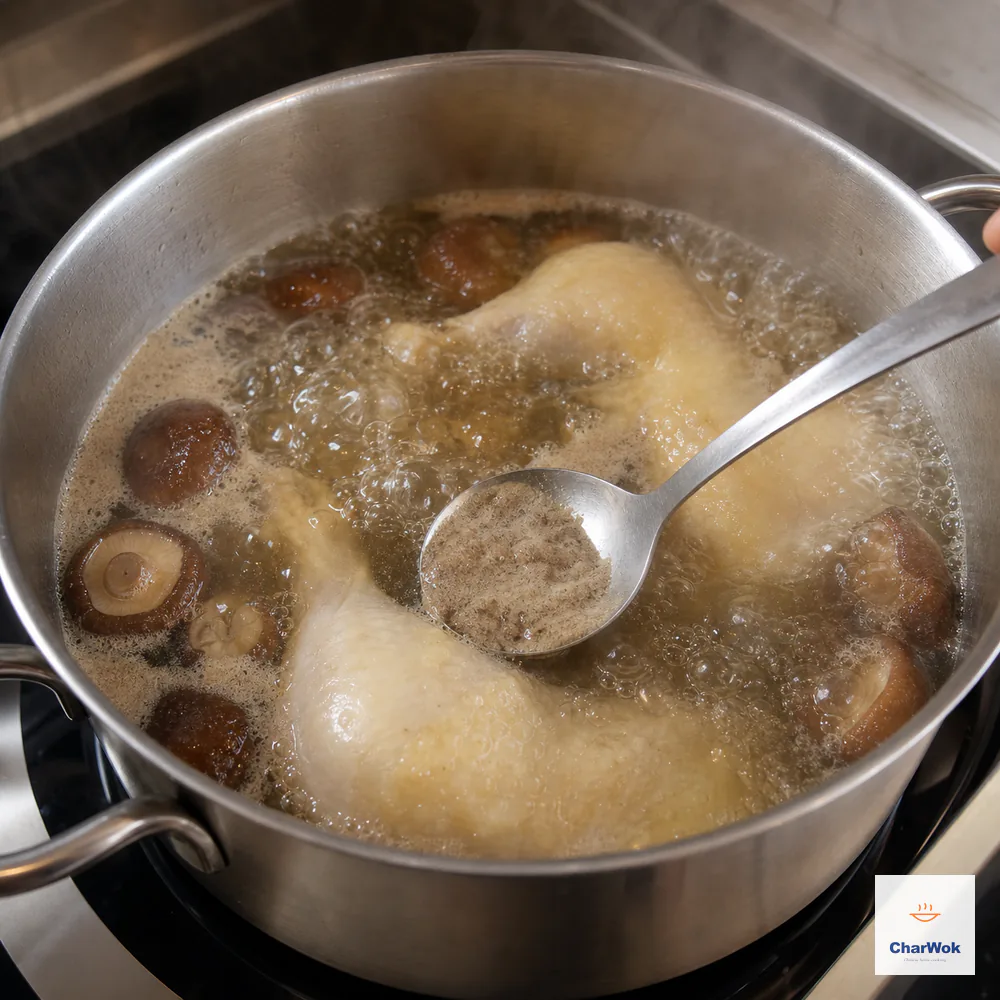
Start the chicken, mushrooms, and carefully poured soaking water cold, bring them to one full boil, and skim the grey-brown foam before reducing the heat.
- Add aromatics and cook gently. Add the Shaoxing wine, ginger slices, and the white parts of the scallions. Cover with a tight lid and keep the broth at a bare simmer. Start checking at about 30 minutes: insert an instant-read thermometer into the thickest part of every chicken piece without touching bone. Remove the chicken only after every piece reaches 165°F (74°C); if any piece is lower, cover and continue simmering before checking again.
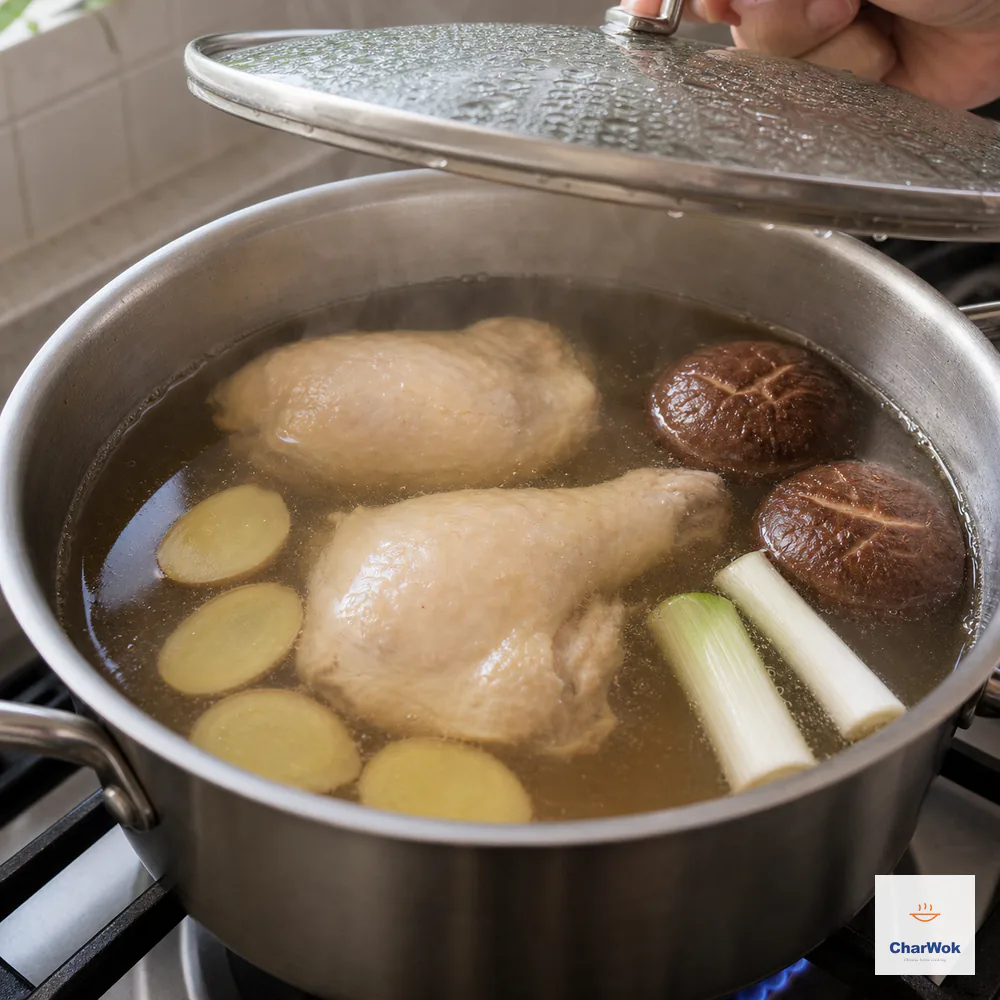
Hold a bare simmer and start checking at about 30 minutes; remove each chicken piece only when its thickest part reaches 165°F (74°C), away from bone.
- Pull the chicken and season the broth. Lift the chicken out to a plate to cool, and fish out the ginger and scallion whites. Their job is done, and leaving them in makes the broth taste muddy. Now add the soy sauce, salt, white pepper, and sesame oil. Taste. The broth should read as clean chicken with a faint mushroom sweetness. Add salt a pinch at a time until it does; undersalted broth is the most common failure and the easiest fix.
- Shred the chicken. Once it is cool enough to handle, pull off and discard the skin, then tear the meat into bite-sized shreds by hand. Tearing along the grain gives long, soft fibers that hold broth; knife-cut cubes feel dense and dry in the bowl.
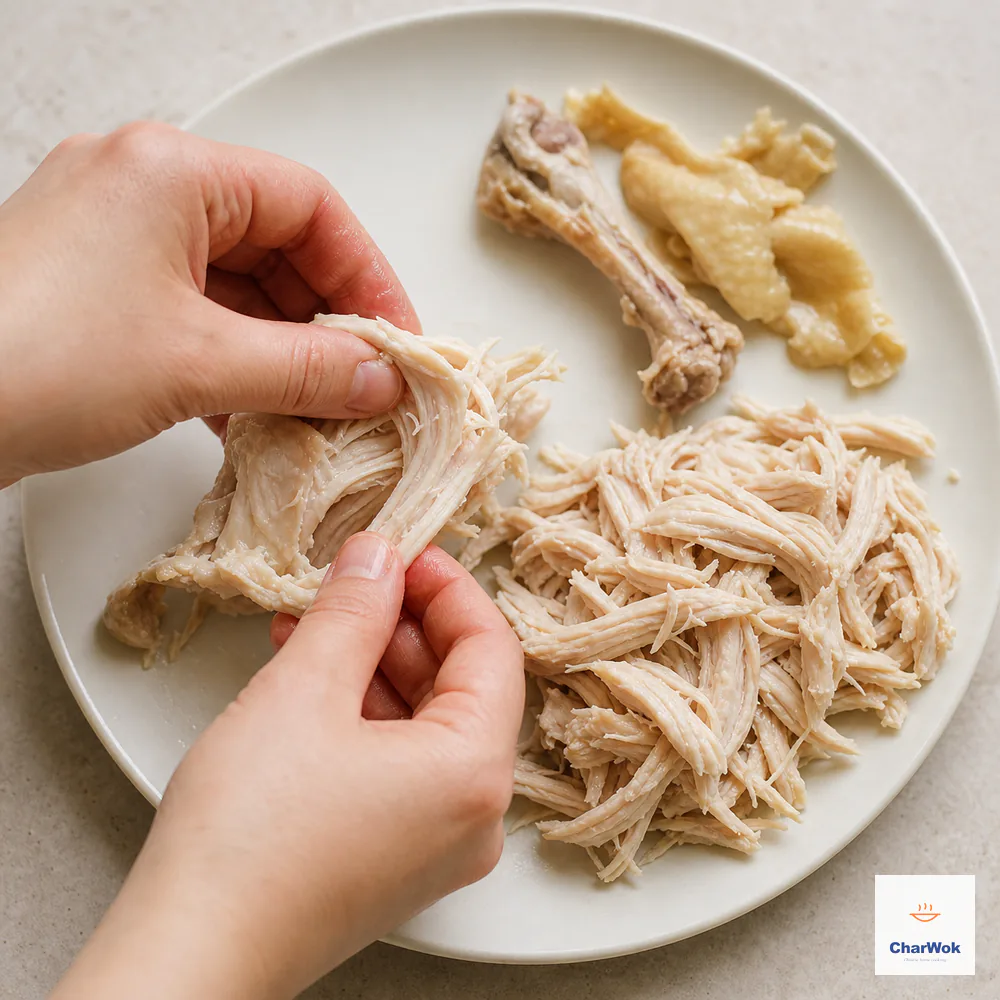
Cool the chicken until safe to handle, remove and discard the skin, then pull the meat along its grain into soft bite-size shreds rather than cutting cubes.
- Cook noodles separately. Bring a second pot of water to a full boil and cook the noodles until just tender. Twenty seconds before they are done, drop in the bok choy to blanch. Cooking noodles in the broth would cloud it and turn the soup starchy, which is exactly what we spent the previous steps avoiding.
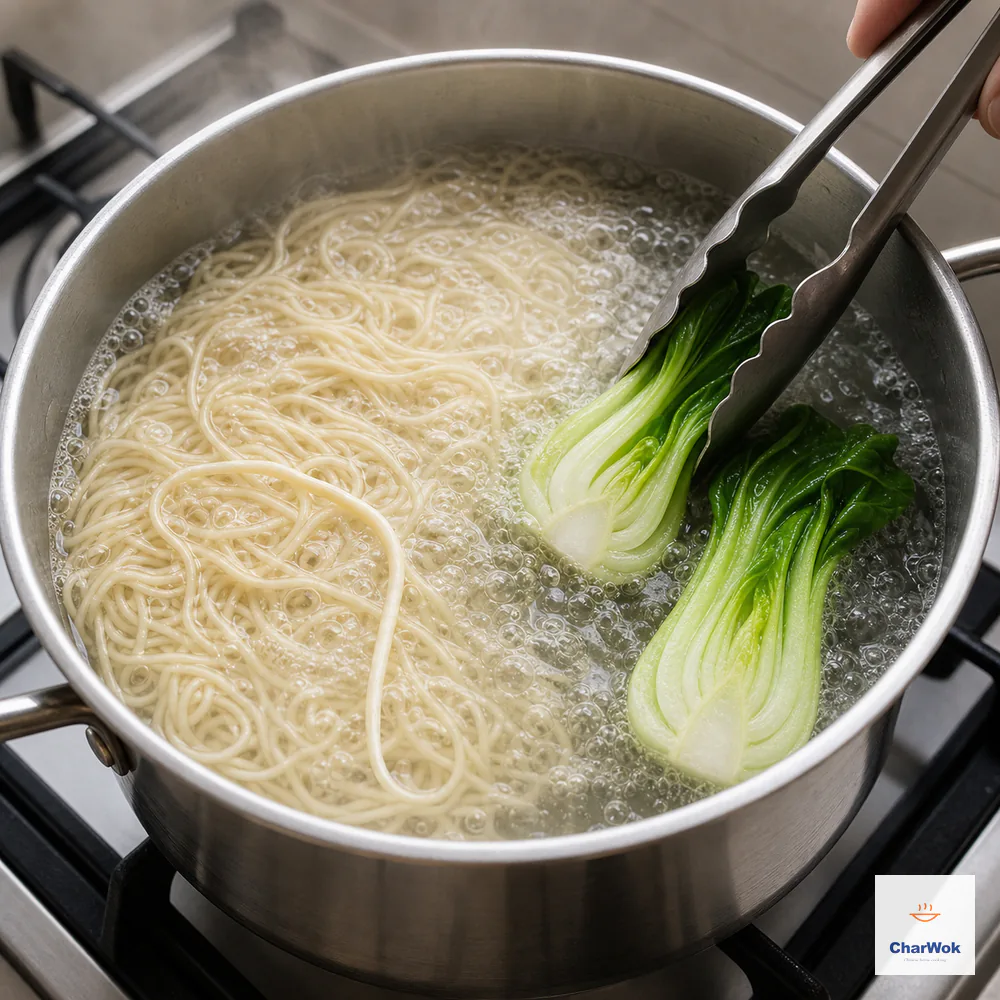
Cook the noodles in a separate pot of plain water until just tender, add the two bok choy for the last 20 seconds, then drain both so the chicken broth stays clear.
- Assemble the bowls. Drain the noodles and greens and divide them among four bowls. Ladle the hot broth over the top, add a mushroom and a generous pile of shredded chicken to each, and finish with the sliced scallion greens. Add chili oil if you want a little heat.
The order of assembly matters more than people think. Noodles first, then broth, then toppings. If you pile the chicken on the noodles and pour broth over it, the meat warms evenly and the scallion greens soften just slightly in the steam instead of cooking to gray.
When the broth tastes weak
If the broth tastes thin, check the water-to-chicken ratio, the seasoning, and whether the broth needs a short uncovered reduction.
- It boiled too hard for too long. A hard boil does not concentrate flavor, it destroys clarity and shreds the meat into the liquid, which then tastes of nothing in particular. Keep it at a lazy shimmer, not a churn.
- Too much water for the chicken. 1400 ml for two legs is about the upper limit. If your chicken was small, the ratio tips watery. Either use less water or add one more thigh. You can always top up with boiling water later; you cannot take it out.
- Not enough salt at the end. Chicken broth is a notorious salt-trap. It will smell incredible and taste flat until you add the final half teaspoon, at which point every other flavor suddenly snaps into focus. Season by taste, not by the recipe number.
If the broth is still mild, remove the cooked chicken first, then simmer the broth uncovered for 10 to 15 minutes. Reducing with the chicken left in the pot can overcook the meat.
Other things that go wrong
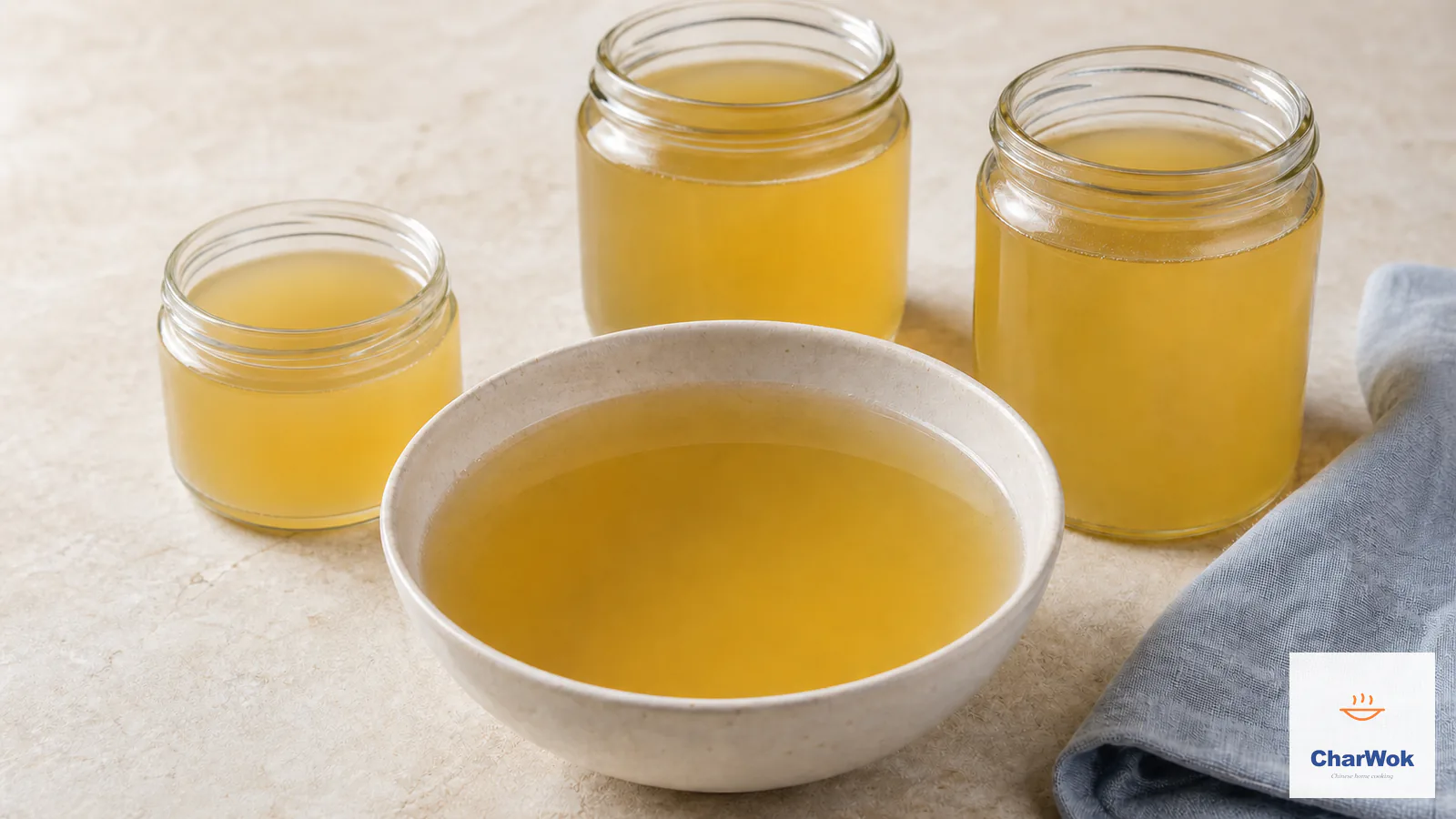
- Cloudy, greasy broth. You boiled it. Next time, hold a simmer. For the pot you already have, strain it through a fine mesh lined with a paper towel and chill it; the fat will solidify on top and you can lift it off.
- Tough, stringy chicken. The broth may have boiled too hard or the chicken may have cooked past the point needed for safety. Begin checking at about 30 minutes and remove each piece as soon as its thickest part reaches 165°F (74°C), away from bone.
- Mushrooms taste rubbery. They were not fully rehydrated, or they were soaked in water too hot. Plan ahead for a long, cool soak.
- Noodles clump and turn gummy. They sat in the bowl too long before the broth went on, or the pot was crowded. Cook in plenty of boiling water, drain, and broth them immediately.
- Bok choy is limp and yellow. It blanched too long or sat in the colander over steam. Twenty seconds in actively boiling water, then straight out.
Variations and what to serve alongside
The broth is a template. Once it is built, you can push it in several directions without losing its identity.
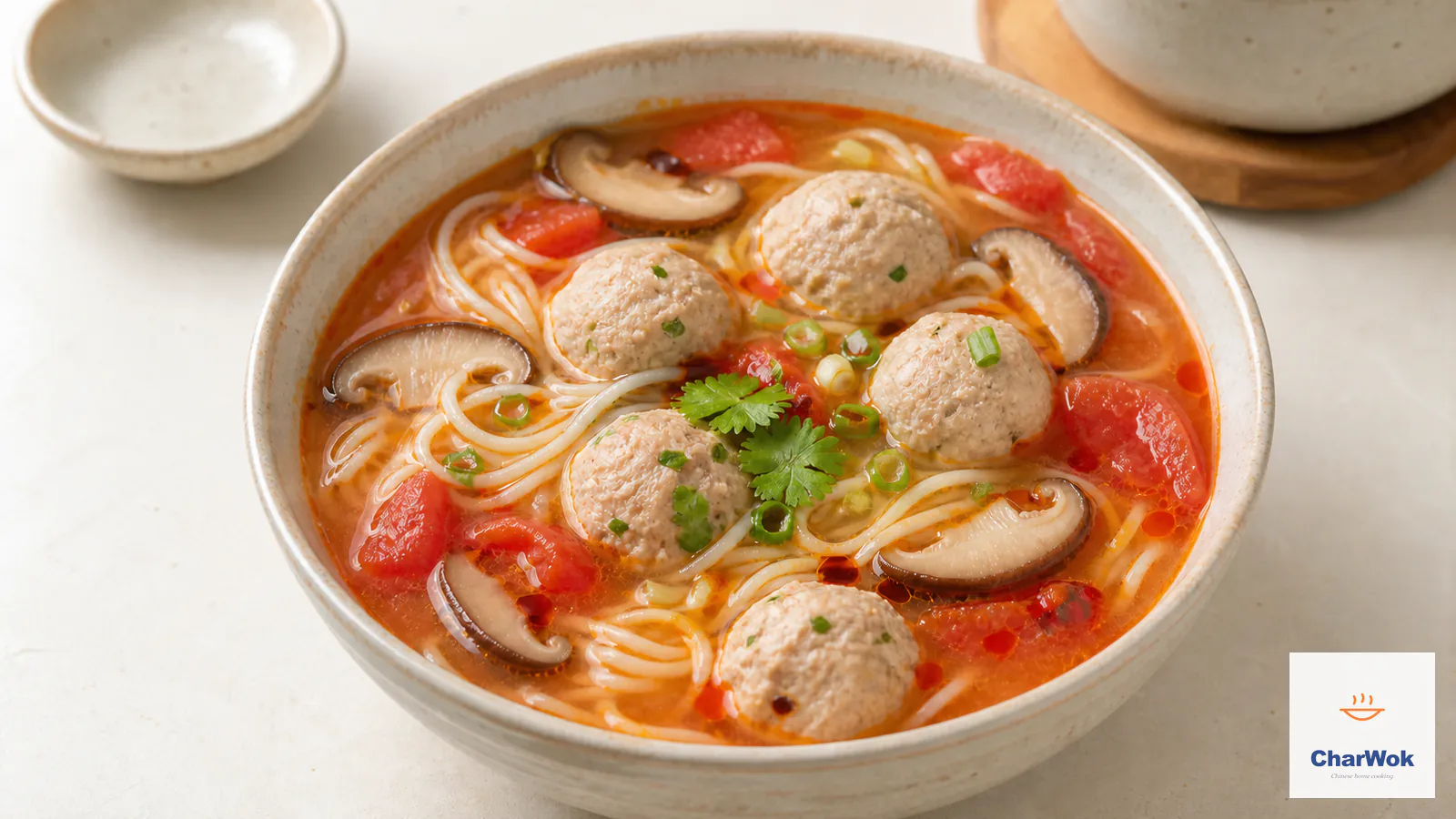
- Add meatballs instead of shredded chicken. Roll small pork-and-water meatballs and poach them in the broth for the last few minutes. It turns the bowl into something close to chicken meatball noodle soup, heartier and a little sweeter.
- Make it spicy. A spoonful of chili oil at the table is the easy answer. For a more aromatic, garlick heat, try a drizzle of Chiu Chow chili oil, which keeps its crunch and garlic scent even in a hot bowl. For deeper, slower warmth, add a dried chili and a slice of ginger to the pot in step 4.
- Use leftover roast bird. After a roast chicken, simmer the carcass with the mushrooms for a longer, slower stock, then add shredded roast meat at the end. This is essentially the move behind turkey noodle soup the day after a holiday.
- Swap the greens. Spinach, gai lan tips, or bok choy all work; match the blanch time to the leaf.
For a fuller meal, this soup sits well next to a simple ginger chicken if you want more protein, or a cold vegetable plate like smashed cucumber. If you are cooking for a chilly evening, it pairs naturally with other warming Chinese recipes for cold days. And if you want to round out a noodle night, browse the wider collection of classic Chinese noodle recipes for a second bowl.
Storing and reheating
Refrigerate the broth, shredded chicken, and cooked noodles in separate shallow containers within 2 hours of cooking, or within 1 hour when the room is above 90°F (32°C). Keep them at 40°F (4°C) or below and use the chicken and broth within 3 to 4 days. Cooked noodles left in broth soften as they absorb liquid.
To reheat, combine the portion of broth and chicken you plan to serve and heat it to 165°F (74°C), checking the chicken at its thickest shreds. Re-blanch the noodles separately for about 30 seconds. Freeze broth and chicken without the noodles for up to 2 to 3 months for best quality. These limits follow FoodSafety.gov temperature guidance and its cold-storage chart; the Hong Kong Centre for Food Safety also advises refrigerating mushrooms during an overnight soak.
Frequently asked questions
Can I use a pressure cooker or Instant Pot? Yes. Follow the appliance guidance for bone-in chicken and allow the pressure to release safely. After opening, check the thickest part of every piece away from bone; if any piece is below 165°F (74°C), simmer it in the broth until it reaches that temperature.
Do I have to soak the mushrooms overnight? No. Four hours is enough when the caps are soft all the way through. Keep the covered bowl refrigerated for the entire 4-hour or overnight soak.
Can I make this with chicken breast? You can, and the broth will be fine if you still include bones, but breast meat dries out in the simmer and shreds poorly. Use thighs or legs for the in-pot meat, and save breast for a quick stir-fry on the side.
Why is my broth cloudy? Almost always because it boiled instead of simmered. Hold the lowest heat that still shows the occasional bubble, and skim the foam as it rises. Clarity is a heat-control problem, not an ingredient problem.
What noodles should I buy? Plain dried wheat noodles around 1.5 mm thick are the safest choice. Thin fresh noodles are better still if you can find them. Avoid instant ramen blocks and strongly alkalized noodles, which will tint and season the broth.
The bowl comes down to two things you control: how gently the broth simmers, and how much salt you add at the very end. Get those right and the rest mostly takes care of itself. Cook the noodles separately, keep the greens bright, and serve it hot enough that the scallion greens soften as you eat. That is the whole job.