The first time I tried to make alkaline noodles at home, the dough fought me for twenty minutes, then snapped apart the second I put it through the pasta machine. I had measured everything wrong and used tap water that was too warm. What I learned that afternoon is that alkaline noodle dough isn't difficult, but it is unforgiving about one thing: hydration. Get the water right and the rest follows. Get it wrong and you'll be scraping yellow crumbs off your counter.
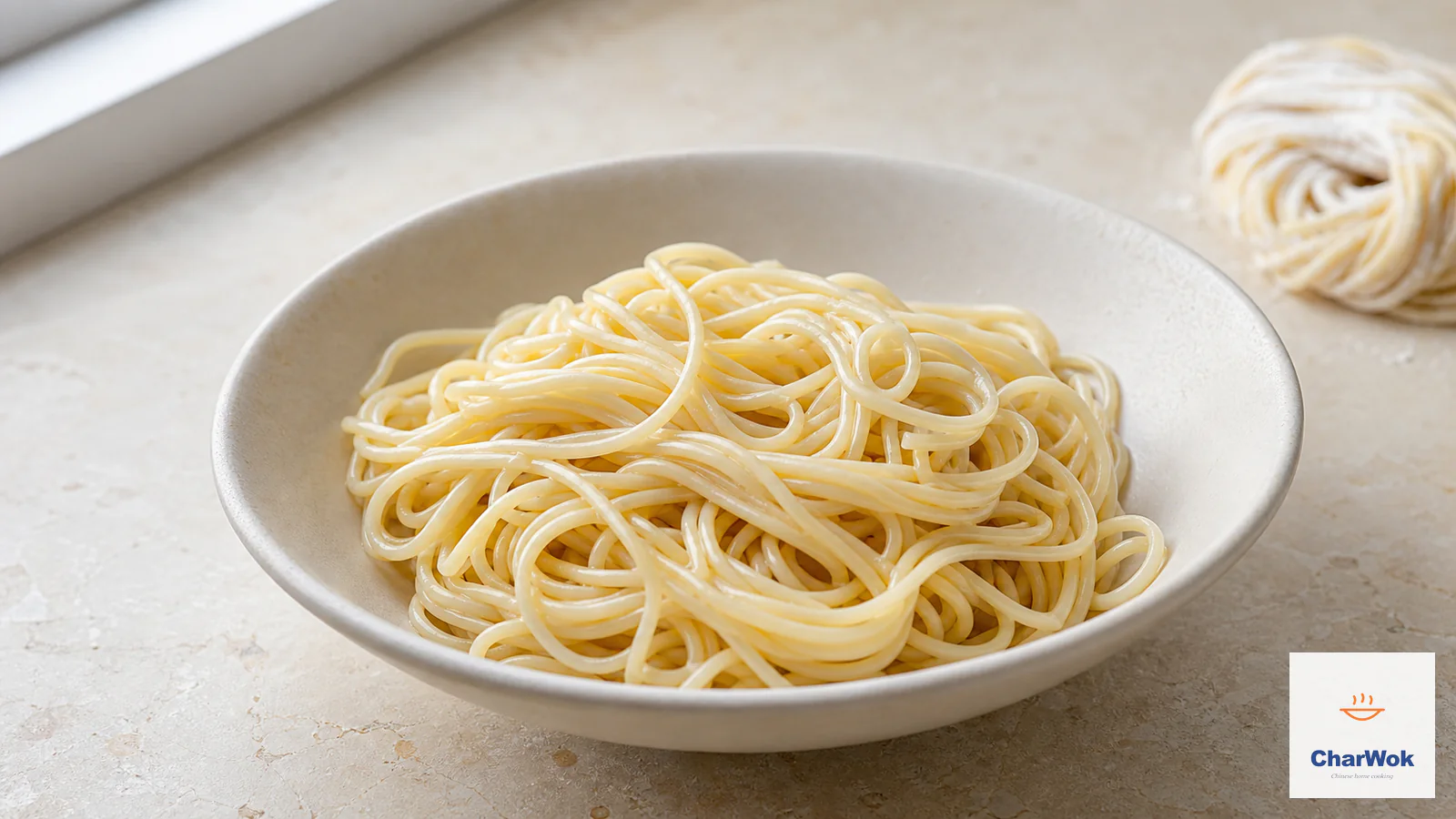
These are the bouncy, slightly slippery wheat noodles you find in ramen shops and in the noodle stalls of southern China, where they're called jian shui mian (碱水面), "lye water noodles." The signature springiness and faintly yellow tint don't come from eggs. They come from a thin splash of kansui, or lye water, an alkaline solution that changes how the flour's proteins and starches behave. Once you understand what that little bit of alkali is actually doing, the recipe stops feeling like alchemy and starts feeling like clockwork.
At a glance: 500 g of flour to 210 g of water is the ratio that matters, a startlingly dry 42% hydration that feels wrong but is correct. A 1-hour rest, not more kneading, is what turns a crumbly mass into a smooth, rollable sheet. Lye water gives the bounce and the color; salt tightens the gluten. Boil hard, rinse, and never overcook.
What alkaline noodles are, and where they come from
Alkaline noodles are wheat noodles made with a small amount of food-grade lye water, which raises the pH of the dough. That shift does two visible things. It tints the starches a pale yellow, and it firms the texture so the cooked noodle springs back when you bite it instead of going soft and pasty. The same chemistry is what gives Cantonese wonton noodles their snap and ramen their distinctive chew. If you've ever wondered why a bowl of wonton noodle soup has noodles that seem almost rubbery in a good way, alkali is the answer.
The technique is older than the ramen shop. In southern China and Southeast Asia, cooks traditionally made their own alkali by leaching wood ash in water, and the resulting jian shui seasoned noodles, dumpling wrappers, and even mooncake skins. Modern bottled lye water is simply a clean, measured version of the same thing. The dish most home cooks in the West know it through is ramen, which is why the two names are used interchangeably in recipes, but the family of noodles is much broader than one bowl.
Why the dough feels so dry (and why that's the point)
Here's the part that trips people up. A 42% hydration dough, which is what this recipe uses, will look and feel broken when you first mix it. Shaggy clumps, dry flour in the corners of the bowl, a ball that won't come together no matter how long you knead. Resist the urge to add water. Every tablespoon you add makes the cooked noodle softer and less bouncy, and you'll end up with something closer to plain homemade noodles than the springy thing you set out to make.
The reason the dough can be this dry is the alkali. Lye water weakens gluten slightly, which means you can push hydration down to levels that would make ordinary pasta dough crack and crumble, and still get a workable sheet after a long rest. The rest is doing the real work. As the flour hydrates evenly, the gluten network forms on its own, and what felt like dry rubble becomes smooth and pliable without you fighting it. I knead for under two minutes. The hour of rest does more than ten minutes of kneading ever could.
Ingredients
Ingredients at a glance
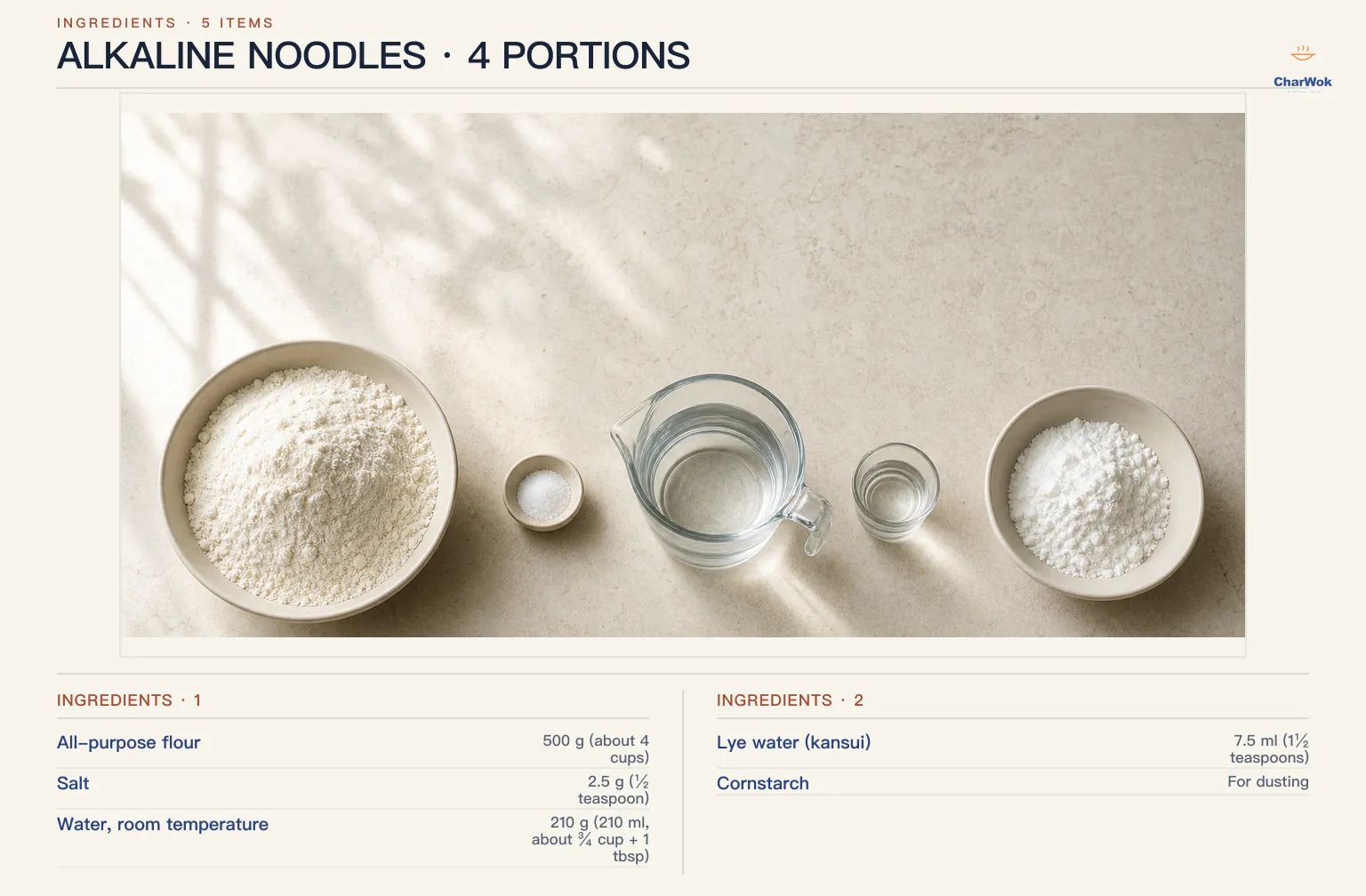
| Ingredient | Amount | Notes / substitute |
|---|---|---|
| All-purpose flour | 500 g (about 4 cups) | Plain wheat flour, 10-11% protein. Bread flour works too and gives a firmer bite; do not use cake flour. |
| Salt | 2.5 g (½ teaspoon) | Tightens gluten and seasons subtly. Fine sea salt dissolves most evenly. |
| Water, room temperature | 210 g (210 ml, about ¾ cup + 1 tbsp) | Cool, not warm. Warm water softens the dough and fights the alkaline firmness. |
| Lye water (kansui) | 7.5 ml (1½ teaspoons) | Bottled food-grade lye water from an Asian grocer. For a homemade substitute, see the note below. |
| Cornstarch | For dusting | Use starch, not flour, to keep cut strands from sticking. Potato or tapioca starch work equally well. |
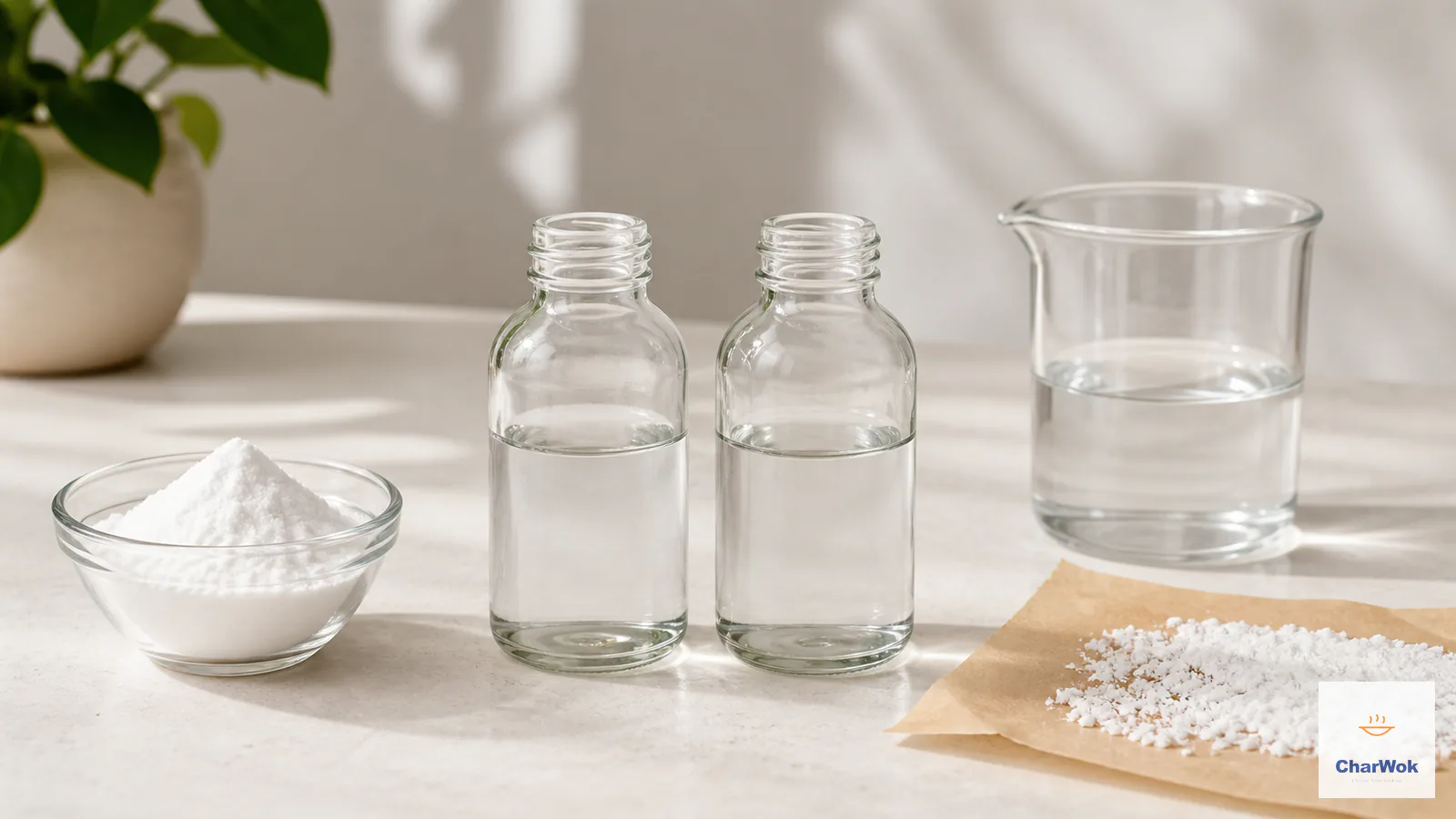
If you can't find bottled lye water: dissolve 1 teaspoon of baked baking soda in 2 tablespoons of warm water and use that in place of the kansui. To bake the soda, spread it on a foil-lined tray and bake at 120°C (250°F) for an hour. Baking converts sodium bicarbonate to sodium carbonate, a milder alkali that gives a similar, if slightly gentler, result. It's a fine substitute, but the commercial lye water does produce a cleaner yellow and a snappier bite.
Equipment you'll actually need
You can roll these by hand with a rolling pin and cut them with a knife, and plenty of home cooks in China do exactly that. But a pasta machine, even a cheap hand-cranked one, makes the difference between a chore and a five-minute job. The dough is too stiff to roll thin by hand without a fight. If you own a stand mixer with a roller attachment, this is the recipe to use it for. You do not need a noodle-specific machine, and you don't need a motor.
The method, step by step
- Mix the dough without overworking it. Combine the flour and salt in a bowl. Stir the lye water into the room-temperature water, then pour it into the flour in a thin stream while stirring with chopsticks or a fork. You're not trying to form a smooth dough here, just to distribute the liquid evenly so no pocket of lye water stays concentrated. Stop when the flour looks like damp, shaggy flakes with no dry spots.
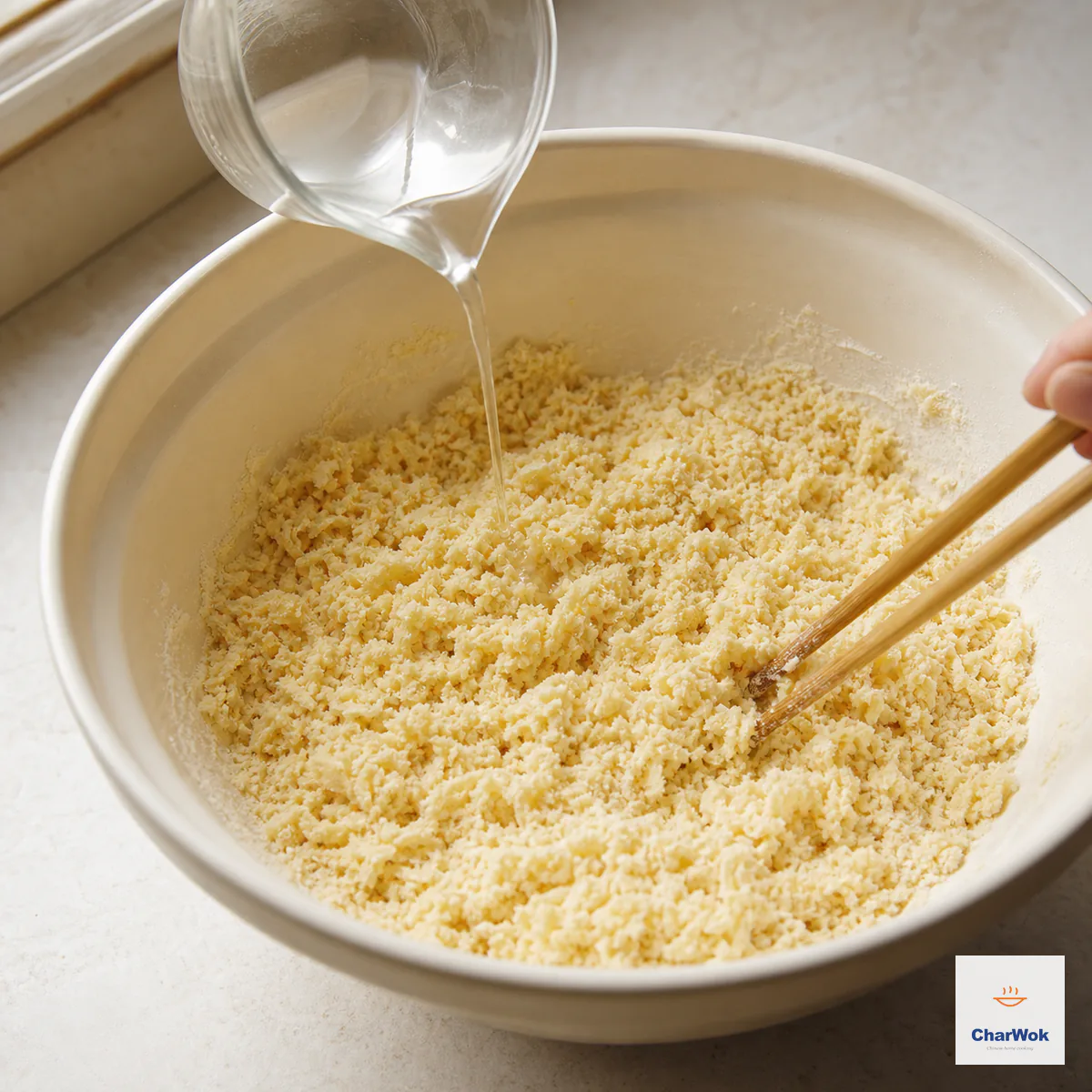
Pour the diluted lye water gradually and stop at evenly damp, shaggy flakes with no dry pockets
- Squeeze it into one rough ball. Press the shaggy mass together with your hands just until it holds in a single lumpy piece. It will look ugly and feel too dry. That's correct. Don't add water. Cover tightly with plastic wrap or a damp cloth.
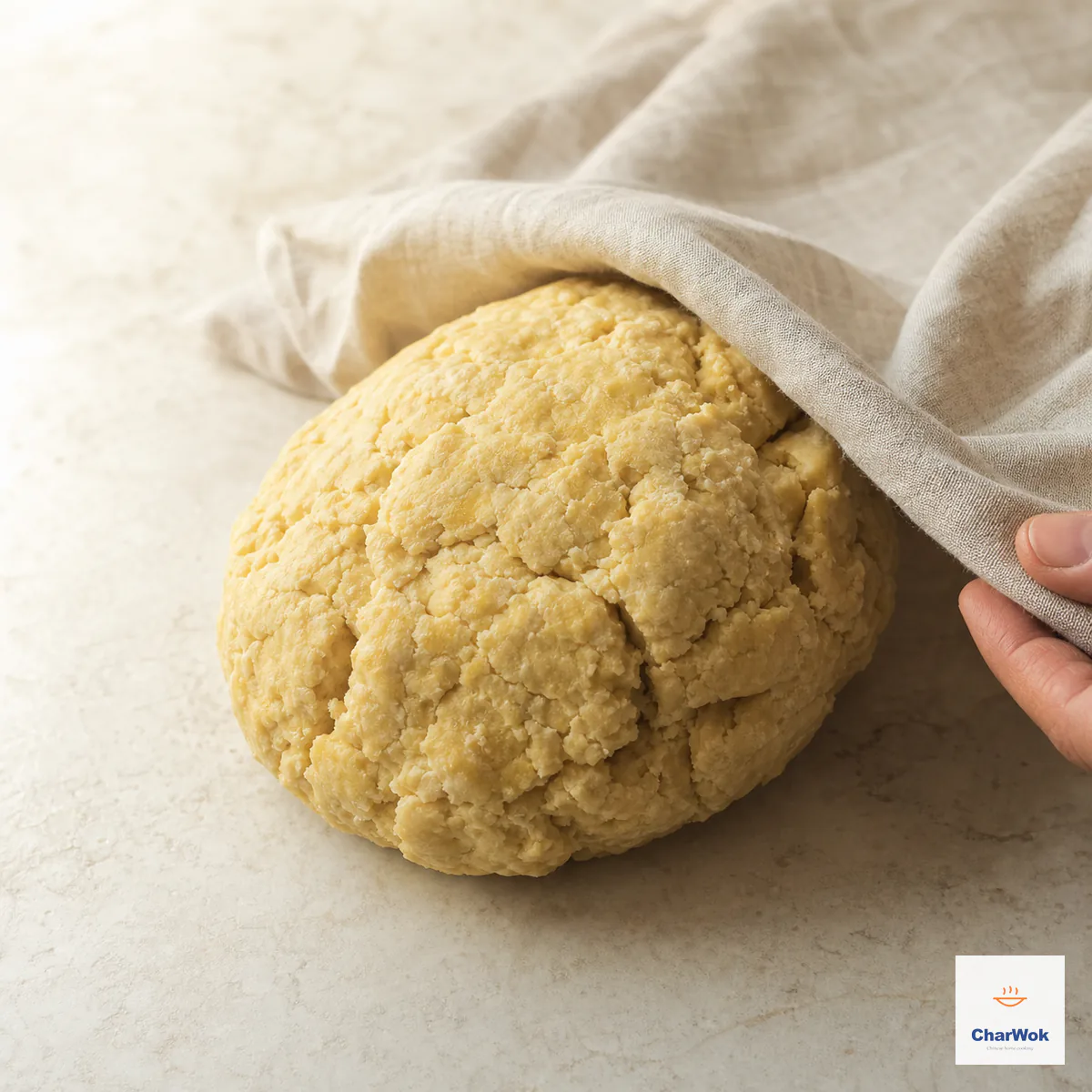
Press every crumb into one rough piece, resist adding water, and cover it for the full rest
- Rest for one full hour at room temperature. This is the step that makes or breaks the recipe. During the rest, the flour hydrates from the inside out and gluten forms passively. Skip it or shorten it and the dough will tear in the roller. You can rest longer, up to two hours, but one hour is enough.
- Knead briefly, then divide. Uncover and knead for one to two minutes. The dough will suddenly feel smooth and cooperative. Cut it into four equal pieces and keep the unused portions covered so they don't skin over.
- Flatten and feed through the widest setting. Press one piece into a rough oval thin enough to clear the rollers on the widest setting (usually 0 or 1). Run it through, then fold the sheet in half lengthwise and run it through the same setting two more times. This folding layers the gluten and produces a more even sheet, the same logic behind making dumpling wrappers with a rolling pin.
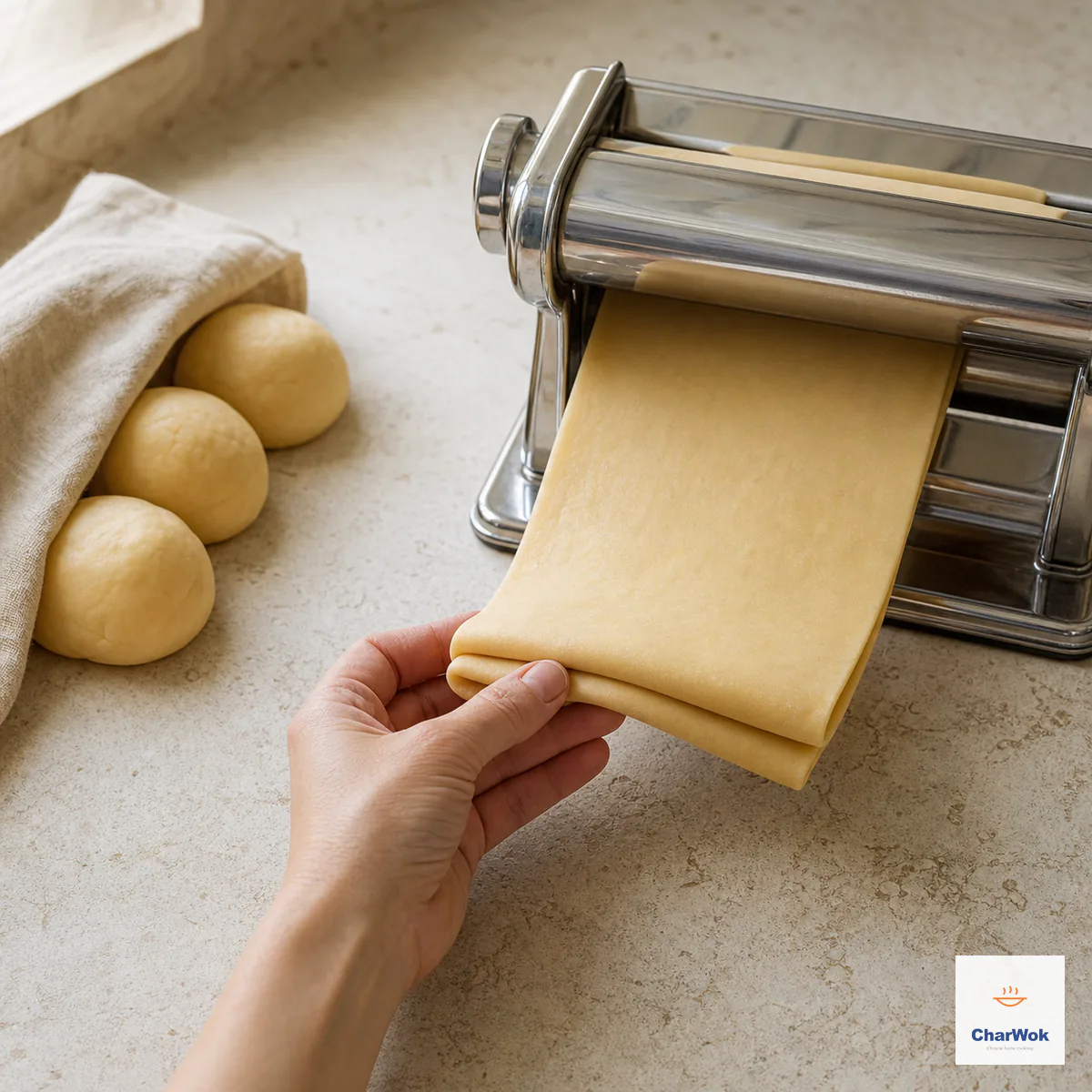
Fold the sheet lengthwise and pass it through the widest setting two more times to even the gluten layers
- Roll progressively thinner. Reduce the thickness setting one notch at a time, running the sheet through twice at each level. Stop when the sheet is thin but still holds together, around 1.8 to 2.4 mm on a standard machine (settings 3 or 4 on a 0-9 scale). Going thinner gives a more delicate noodle; going thicker gives more chew. I stop at 2 mm for soup and 2.4 mm for stir-frying.
- Dust, then cut. Lay the sheet flat and dust it lightly with cornstarch, rubbing it in with your fingers. Flour won't stop the strands from re-sticking because the dough is so stiff; starch will. Run the sheet through a spaghetti or fettuccine cutter and catch the strands by hand as they emerge.
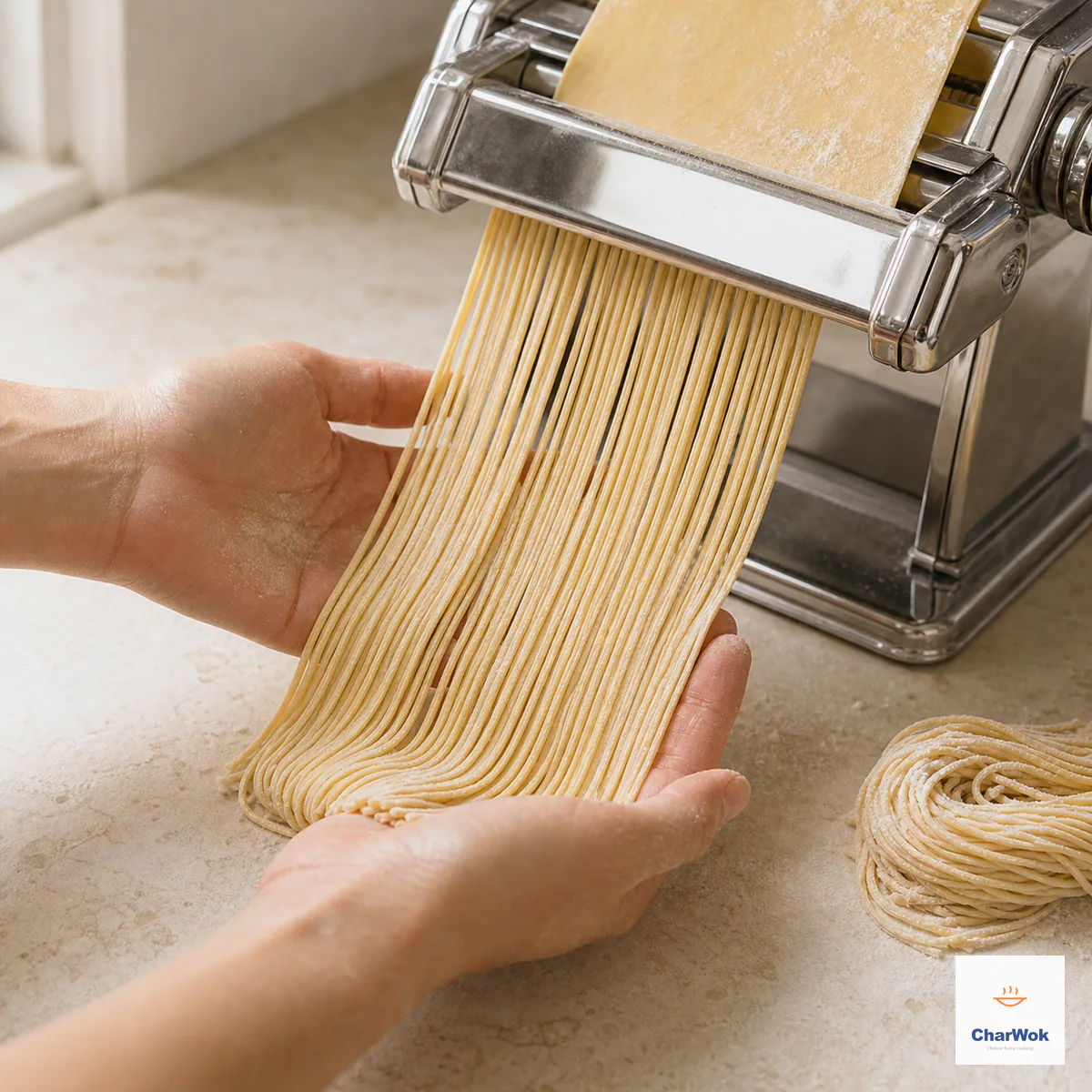
Dust both sides with cornstarch, then support the strands halfway through cutting so they stay separate
- Cook immediately, or portion and store. Bring a large pot of water to a full, rolling boil. Drop in the noodles. The moment the water returns to a boil, cook one to two minutes more and taste a strand. They should be tender through but still resist your teeth. Drain and rinse under running water to wash off surface starch and stop the cooking. For cold dishes, rinse until fully cool.
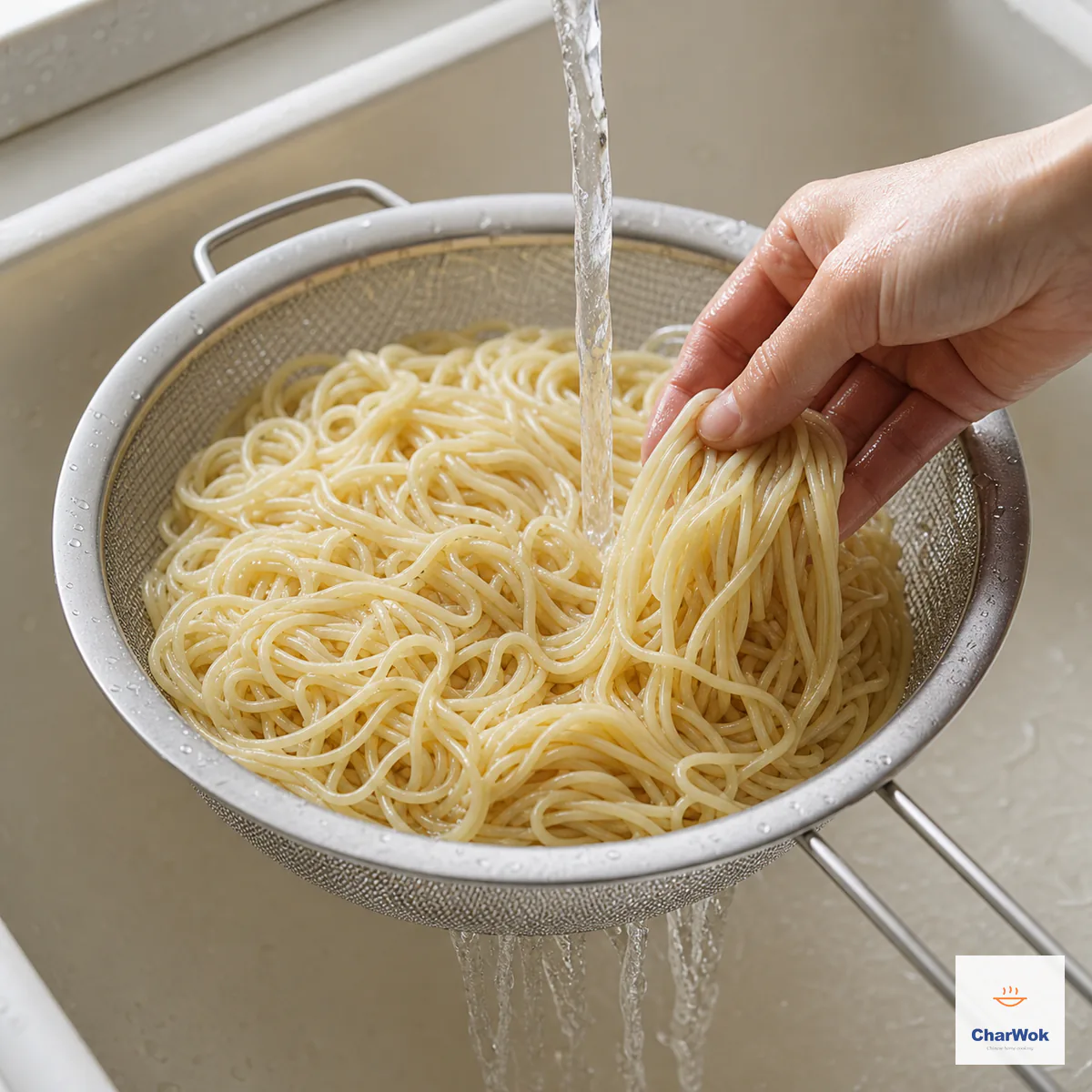
Rinse briefly and drain well to remove surface starch and stop the residual heat from softening the noodles
When things go wrong
Most failures with alkaline noodles come from one of three places, and all three are easy to diagnose once you know what to look for.
- The dough tears or won't roll smooth. It hasn't rested long enough, or it dried out while waiting. Cover it again and give it another 30 minutes. If the surface is cracked and dry, wrap it in a barely damp cloth and rest it. Do not add loose water to the dough itself.
- The noodles stick together after cutting. Either you under-dusted with starch, the sheet was too damp when it went through the cutter, or you piled the strands too high. Toss the cut noodles with more cornstarch immediately and separate them by hand. For next time, dust the sheet more generously before cutting.
- The cooked noodles are soft and limp instead of bouncy. This is almost always hydration creep: you added water during mixing because the dough looked too dry, or you overcooked them. Alkaline noodles should be pulled from the water the instant they're tender. Thirty extra seconds ruins the texture. If the dough itself was the problem, remake with the full 210 g of water and no more, and trust the rest.
- The dough has a harsh, soapy smell. You measured the lye water by volume carelessly or used too much. Use a proper measuring spoon, and never pour lye water directly onto the flour; always dilute it into the water first so it disperses rather than concentrating in one spot.
- The noodles are pale, not yellow. Either the lye water is old and weakened, or you used a substitute that was too mild. Fresh commercial lye water gives a clear yellow; the baked-soda substitute gives a paler, more ivory tone.
I'll be honest about one limitation. Even at their best, home-rolled alkaline noodles are a touch softer than the factory-made ramen you get in a shop, because commercial makers use vacuum mixing and strong dies that compact the dough far harder than a pasta roller can. You will not perfectly replicate a fresh ramen-shop noodle at home. What you will get is something fresher-tasting, with a clean wheat flavor and a satisfying bite, and that's a fair trade.
Ways to serve them
The beauty of these noodles is that they hold up to strong sauces and hot broth without collapsing. For a simple weeknight bowl, dress them with scallion oil and a splash of soy, or toss them with a spoonful of zha jiang, the fried sauce for a northern-style plate. They're sturdy enough for the bright, tingly dressing of Dan Dan noodles and rich enough to anchor a bowl of Taiwanese beef noodle soup on a cold evening.
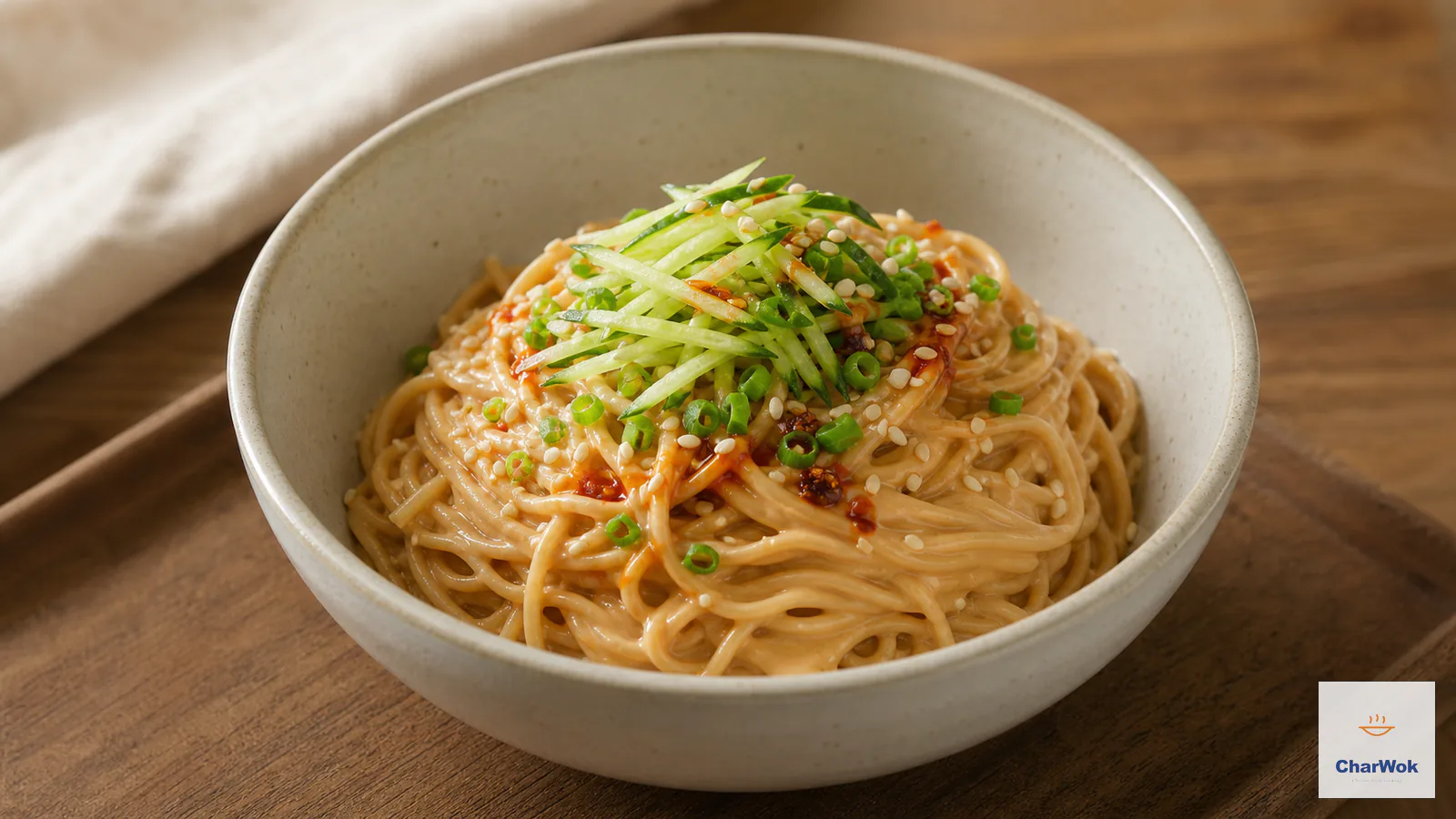
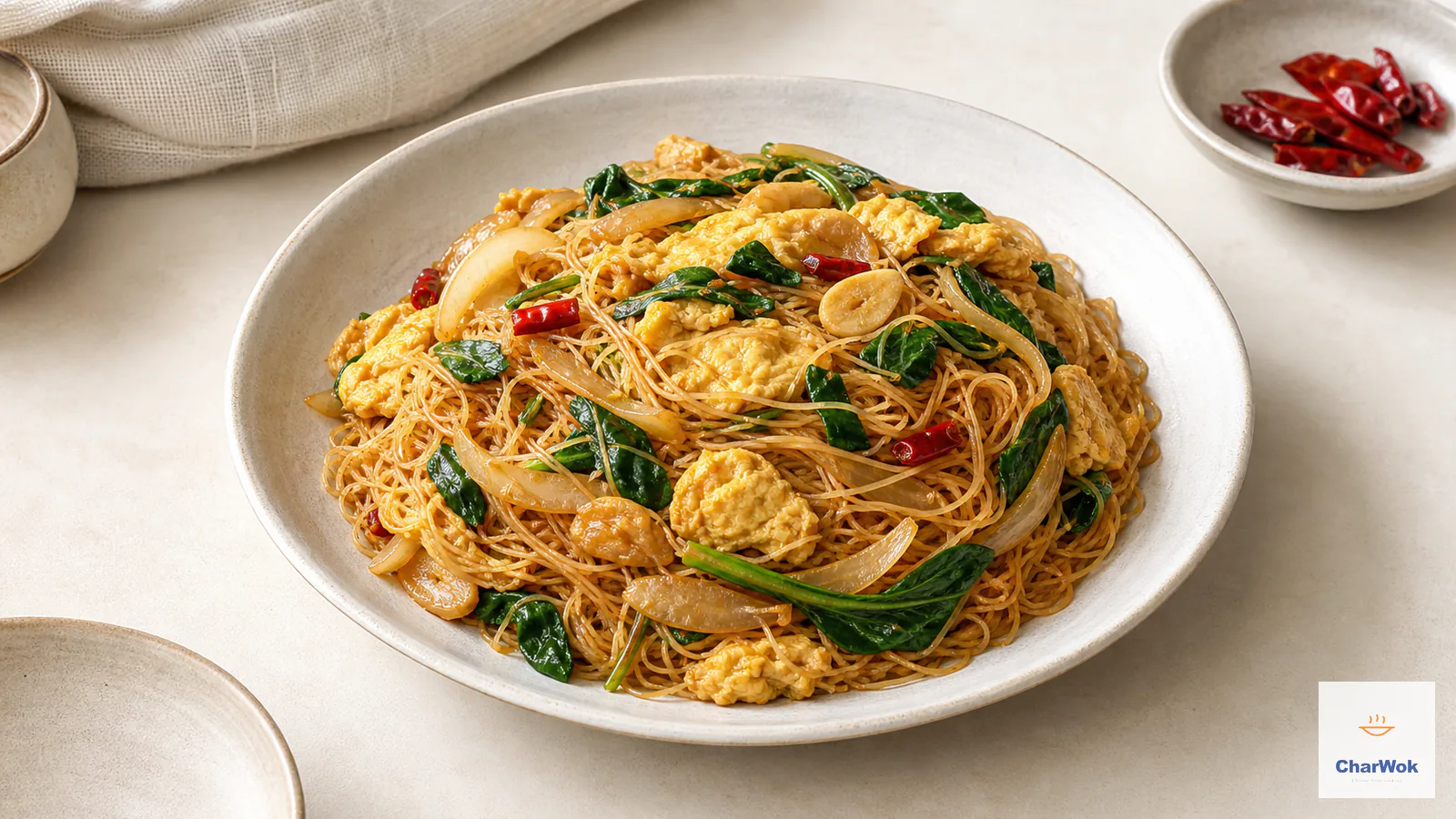
For a lighter meal, serve them cold with a sesame noodle sauce and shaved cucumber, or drop them into a clear broth like chicken noodle soup where their bounce is the main event. A quick stir-fry also works, and pairs naturally with a chow mein treatment, though their firmer texture means they won't pick up sauce the way softer noodles do, so season a little more aggressively than you would otherwise.
Storing and reheating
Raw cut noodles keep beautifully, which is reason enough to make a full batch. Portion them into single-serving nests on a cornstarch-dusted tray, freeze until solid, then transfer to a sealed bag for up to three months. They also keep in the fridge for about five days. Cook straight from frozen or cold, dropping them into boiling water with no thawing; add about thirty seconds to the cook time if frozen.
Cooked noodles don't reheat well in the microwave, which turns them gummy. The fix is to drop them back into boiling water for ten seconds, just to warm through, then drain and sauce immediately. If you've already sauced them, a quick re-blanch in plain water, then a return to the sauce, restores more bite than direct reheating ever will.
Questions home cooks ask
Here are the questions I get most often, with short answers. The detail lives in the sections above.
Make these once and the ratio gets locked into your hands. Five hundred grams of flour, two hundred and ten of water, a teaspoon and a half of lye water, and an hour of patience. After that, the bowl is yours to fill. Once you've got the base noodle down, it's a short step to folding that same springy dough into wonton wrappers or stretching it into hand-pulled noodles on a weekend when you want a different kind of chew.