The first time I tried to make Suan La Mian at home, I dumped raw chili flakes into cold broth and waited for the magic. It never came. The soup tasted thin, gritty, and flatly spicy in a way that numbed without any fragrance. What I had missed is the whole point of the dish: the hot-and-sour bowl isn't a soup you simmer, it's a dressing you build in the bottom of the bowl and then wake up with properly heated oil. Get that one move right and the rest of the recipe takes about six minutes.
At a glance: the entire bowl hinges on pouring oil heated to about 180°C (355°F), hot and shimmering but not smoking, over chili flakes, Sichuan pepper, sesame seeds, and raw garlic in a dry heatproof serving bowl. That flash of heat is what turns aromatics into fragrance. After that, it's black rice vinegar to soy sauce at roughly 2:1, one fried egg, one handful of noodles and greens, and about 300 ml of the noodle water to finish the broth. Total active time: under 10 minutes for one bowl.
What this bowl actually is
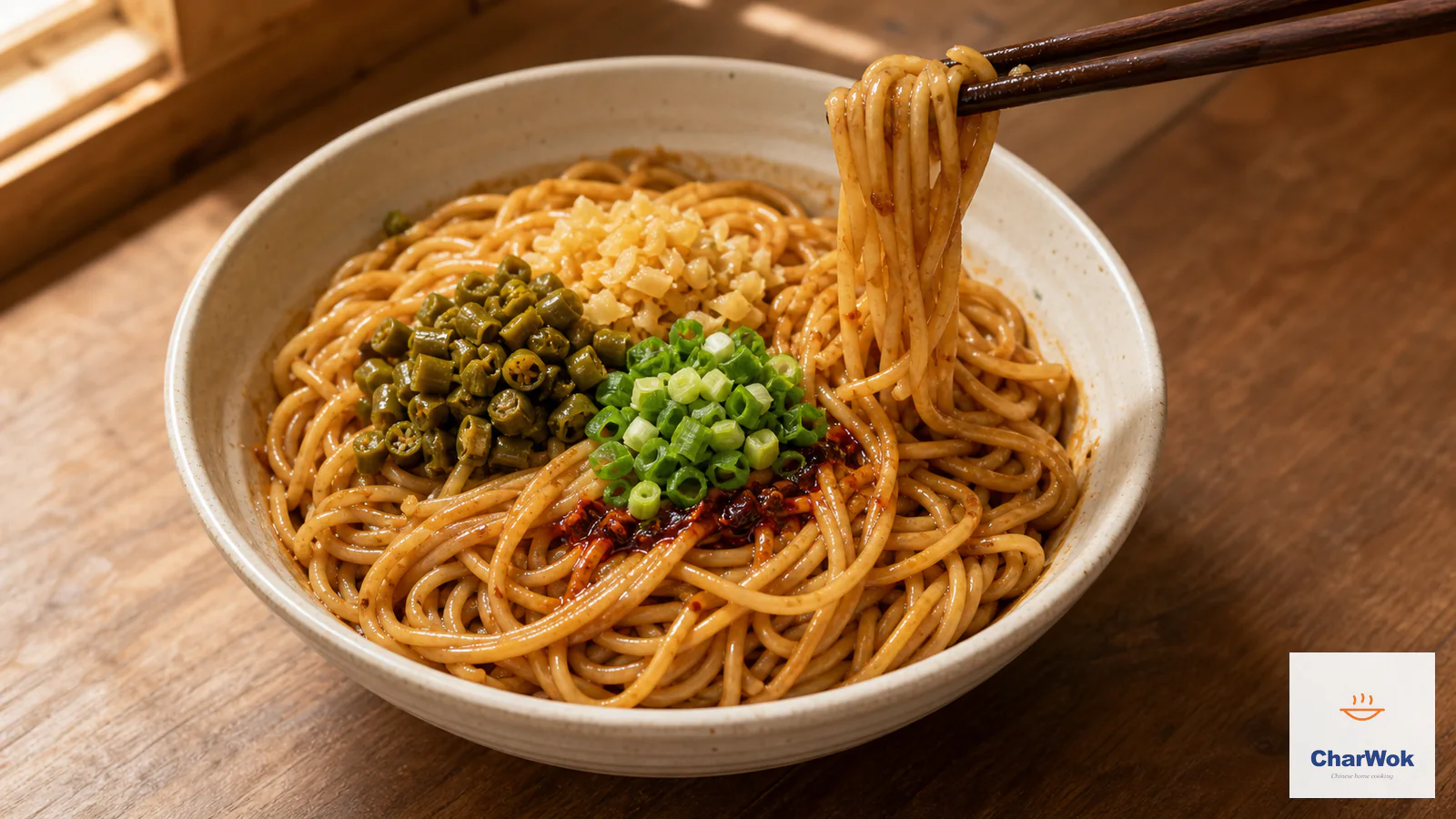
Suan La Mian (酸辣面) is a everyday Sichuan noodle bowl sold at breakfast counters and quick-lunch stalls across the province. It sits in the same family as Dan Dan Noodles and Chongqing Xiao Mian: wheat noodles in a punchy, oily, bottom-of-the-bowl sauce that becomes broth when you add hot water. The difference is the seasoning signature. Dan dan leans sesame-paste-savory and meaty; Chongqing leans straight chili-oil heat; suan la mian leads with two flavors stated right in its name: sour and numbing-hot.
The sourness is the part most home cooks outside China get wrong, because they reach for the wrong vinegar. This dish is built on black rice vinegar (Chinkiang / Zhenjiang style), which is malty, smoky, and almost balsamic in its complexity. White vinegar or rice vinegar will give you a sharp, one-dimensional sourness that reads as "pickle," not "Sichuan." The heat, meanwhile, is doubled: dried chili for burn and ground Sichuan pepper for the tingle that makes your lips hum.
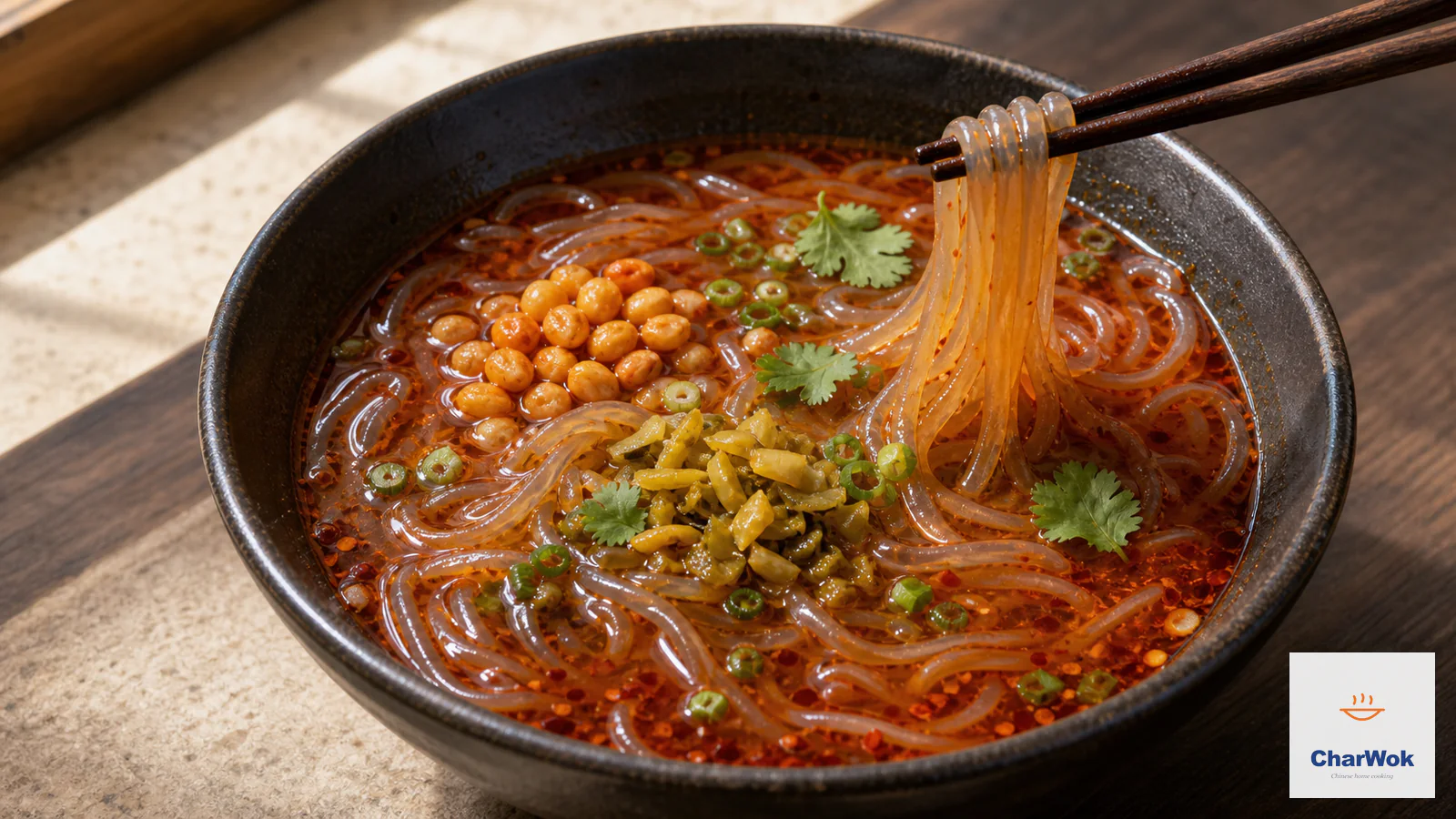
Its closest cousin is Suan La Fen, the sweet-potato-starch glass-noodle version you've probably seen under a heat lamp at a food court. Same flavor profile, different carrier. The wheat-noodle version here is softer, chewier, and absorbs the broth more like a ramen, which is why I reach for it on a cold weekday more often than the slippery glass noodles.
Ingredients (one bowl, scale up by multiplying)
Ingredients at a glance
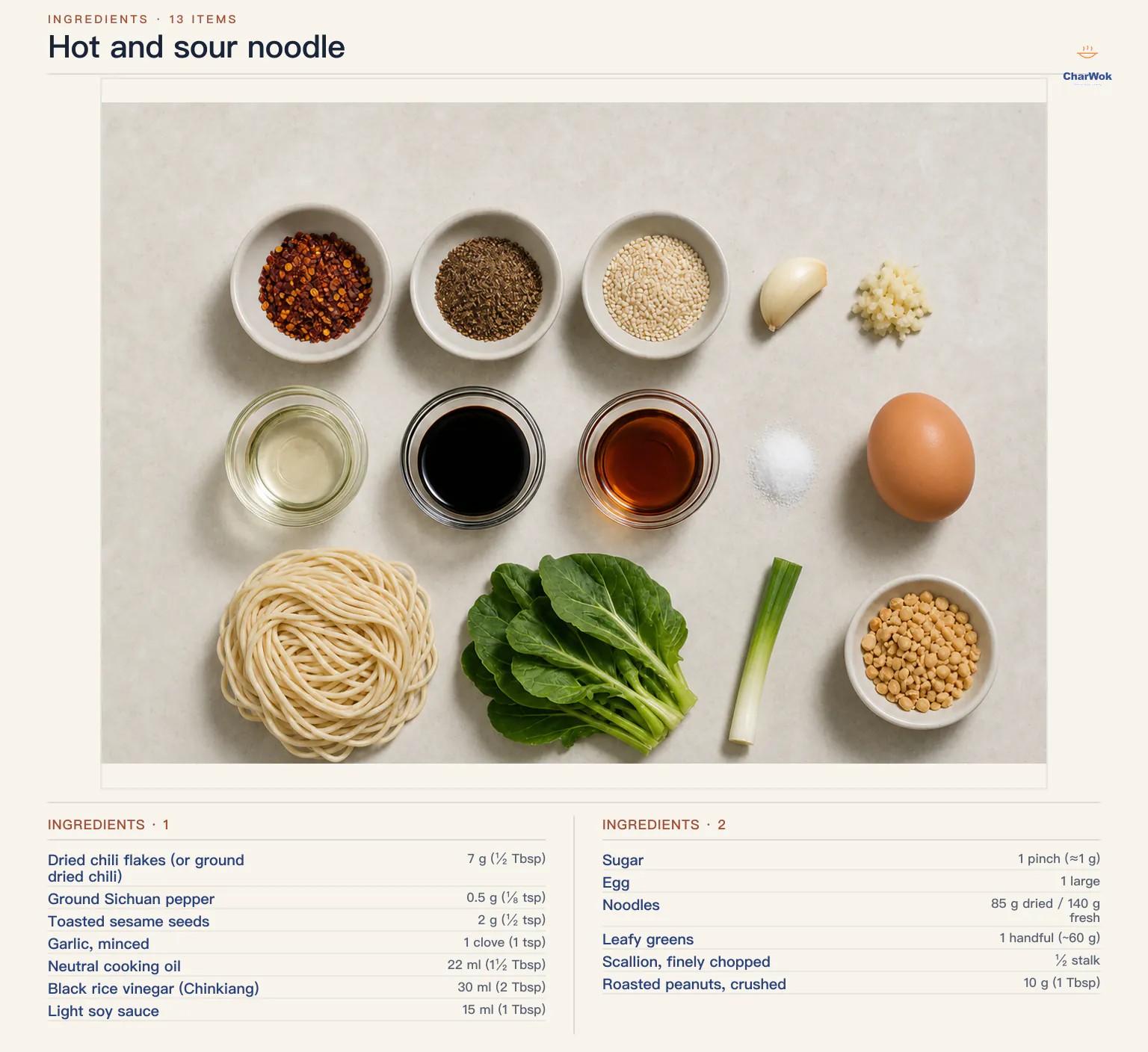
| Ingredient | Amount | Notes / substitute |
|---|---|---|
| Dried chili flakes (or ground dried chili) | 7 g (½ Tbsp) | Use medium-heat flakes. Korean gochugaru works but is sweeter and milder. |
| Ground Sichuan pepper | 0.5 g (⅛ tsp) | Grind whole peppercorns yourself; pre-ground loses aroma fast. White pepper is a fallback if you can't find it. |
| Toasted sesame seeds | 2 g (½ tsp) | White or mixed; toast raw seeds 2 min in a dry pan if untosasted. |
| Garlic, minced | 1 clove (1 tsp) | Mince fine; large chunks scorch in the hot oil. |
| Neutral cooking oil | 22 ml (1½ Tbsp) | Peanut, canola, or sunflower. Smoke point matters; don't use extra-virgin olive oil. |
| Black rice vinegar (Chinkiang) | 30 ml (2 Tbsp) | The soul of the dish. Aged balsamic is the closest Western substitute; do not use white or plain rice vinegar. |
| Light soy sauce | 15 ml (1 Tbsp) | See light vs. dark soy sauce; dark soy will muddy the color and add unwanted sweetness. |
| Sugar | 1 pinch (≈1 g) | Just enough to round the acid; not making it sweet. |
| Egg | 1 large | For a vegan bowl, swap for a few slices of smoked tofu or a spoon of silken tofu. |
| Noodles | 85 g dried / 140 g fresh | Thin wheat noodles are ideal. Homemade noodles are wonderful, but a good dried ramen or plain alkaline noodle works. |
| Leafy greens | 1 handful (~60 g) | Bok choy, baby spinach, or you cai. Blanch in the noodle water. |
| Scallion, finely chopped | ½ stalk | Green and white parts both fine. |
| Roasted peanuts, crushed | 10 g (1 Tbsp) | Texture and a little fat. Sichuan spicy peanuts are a great upgrade if you have them. |
If you're stocking a Chinese pantry from scratch, the vinegar, Sichuan pepper, and soy sauce here are exactly the three bottles I'd buy first. They show up again in everything from hot and sour soup to most must-have Chinese condiments, so none of them will sit unused.
The method, and why each step matters
Read the whole sequence before you turn on a burner. This dish moves fast, and the oil needs to be hot and shimmering—but not smoking—at exactly the moment the noodles are a minute from done.
- Build the seasoning in a dry heatproof serving bowl. Set the bowl on a stable trivet, then add the chili flakes, ground Sichuan pepper, sesame seeds, and minced garlic. The reason everything goes in raw here (instead of being cooked in a pan) is that you want the oil to hit all four aromatics at once: the chili releases capsaicin into the fat, the sesame seeds toast in real time, the garlic's sulfurs flash off, and the Sichuan pepper's hydroxy-alpha-sanshool (the molecule behind the tingle) dissolves into oil far better than into water.
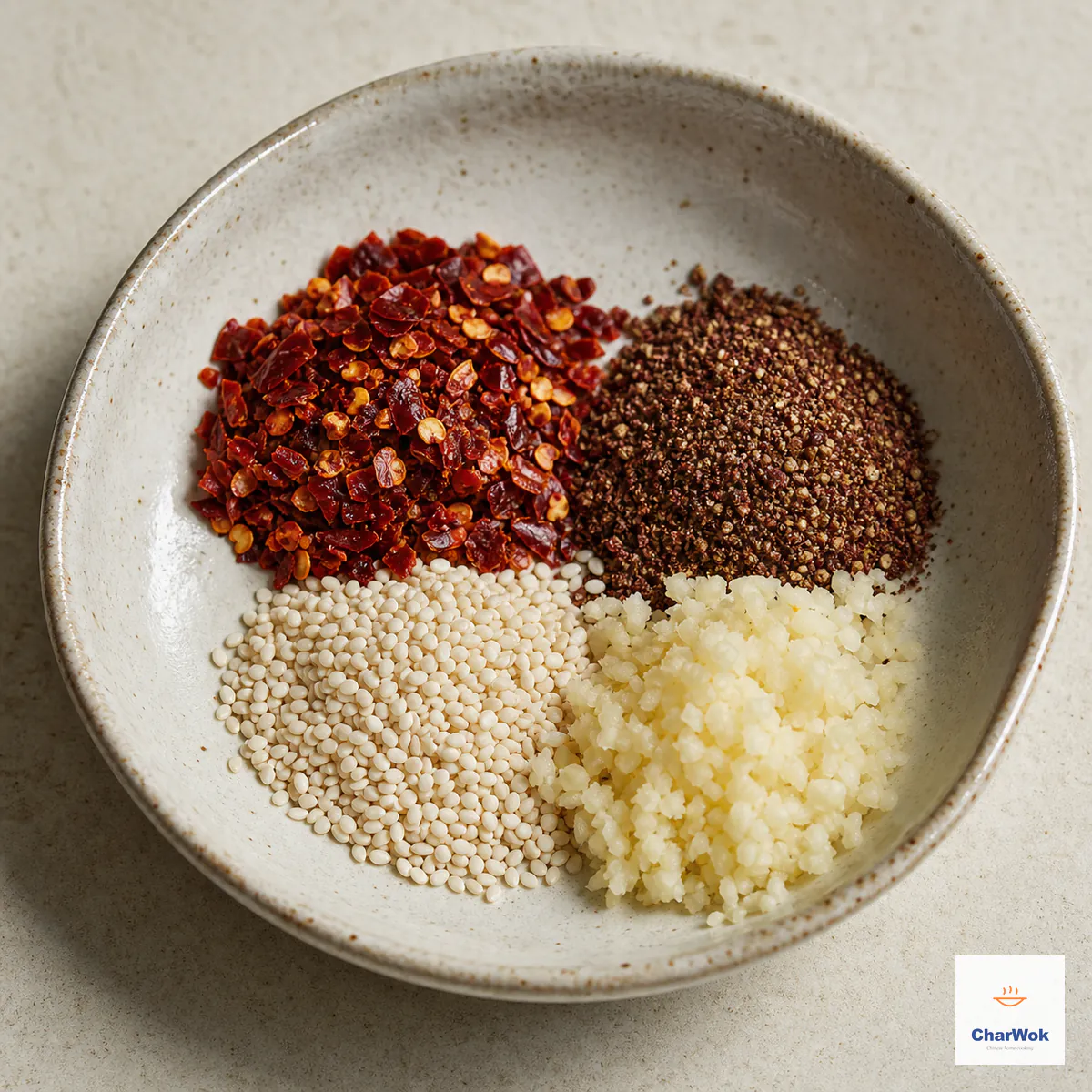
Put the chili flakes, ground Sichuan pepper, sesame, and minced garlic in a dry heatproof serving bowl on a stable trivet before heating the oil
- Heat the oil until shimmering, then pour most of it over the aromatics. Heat the neutral oil gradually to about 180°C / 355°F; it should move freely and shimmer, but it should not smoke. Stay beside the pan. If smoke appears, turn off the burner and let the oil cool before pouring. Pour all but a teaspoon over the bowl in one controlled pass. You should hear a strong sizzle and smell toasted chili within seconds. Leave the last teaspoon of oil in the pan for the egg.
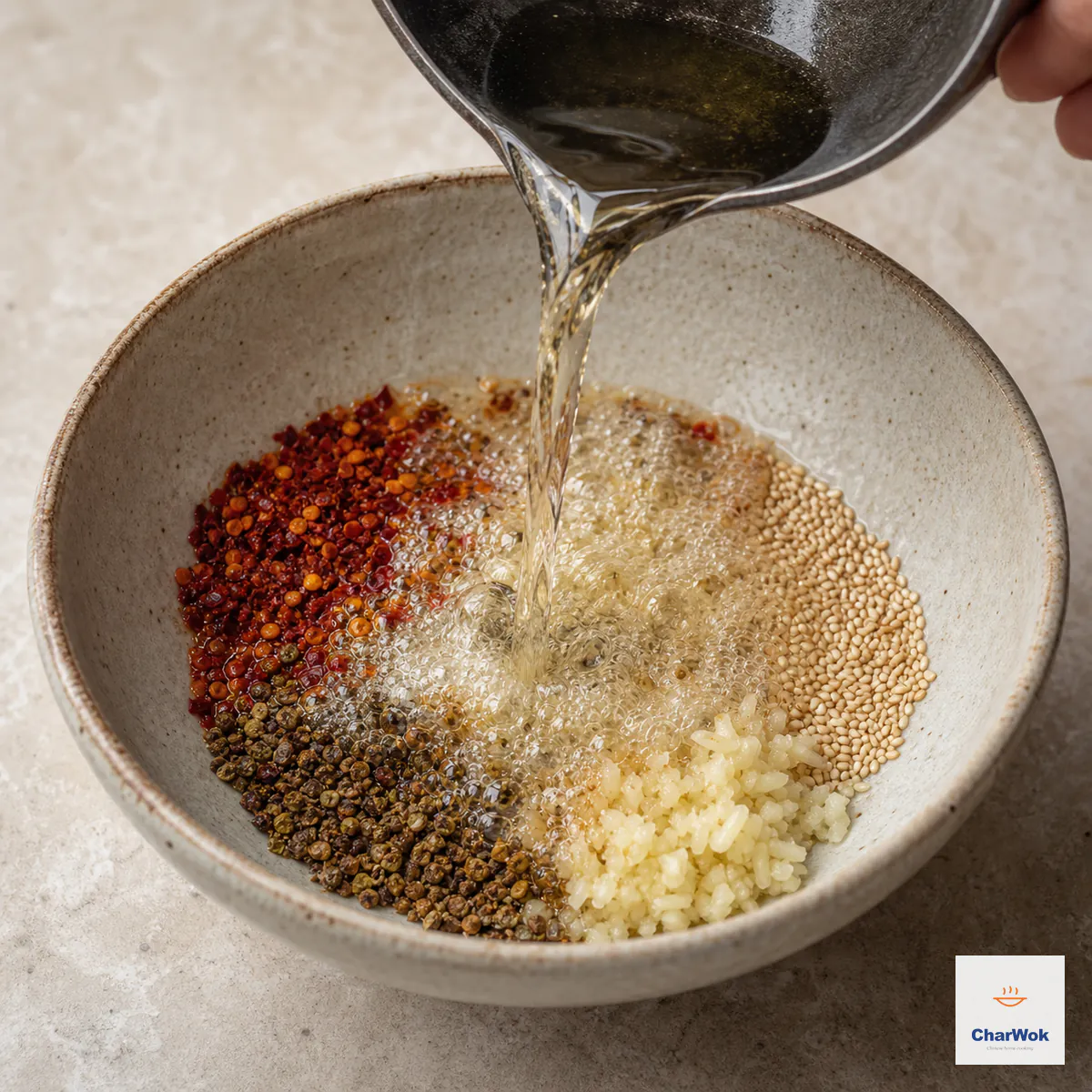
Heat the oil gradually to about 180°C / 355°F without smoking and pour all but 1 teaspoon over the aromatics; add vinegar, soy, and sugar only after the strongest sizzling settles
- Stir in the liquids after the strongest sizzling settles. After about 5 seconds, add the black rice vinegar, light soy sauce, and the pinch of sugar; keeping the liquids out of the bowl until after the oil pour reduces splatter. The hot oil partially tempers the vinegar's raw acid edge and carries the aromatics' flavors into the liquid. This is the move that makes the broth taste integrated rather than like condiments floating in water.
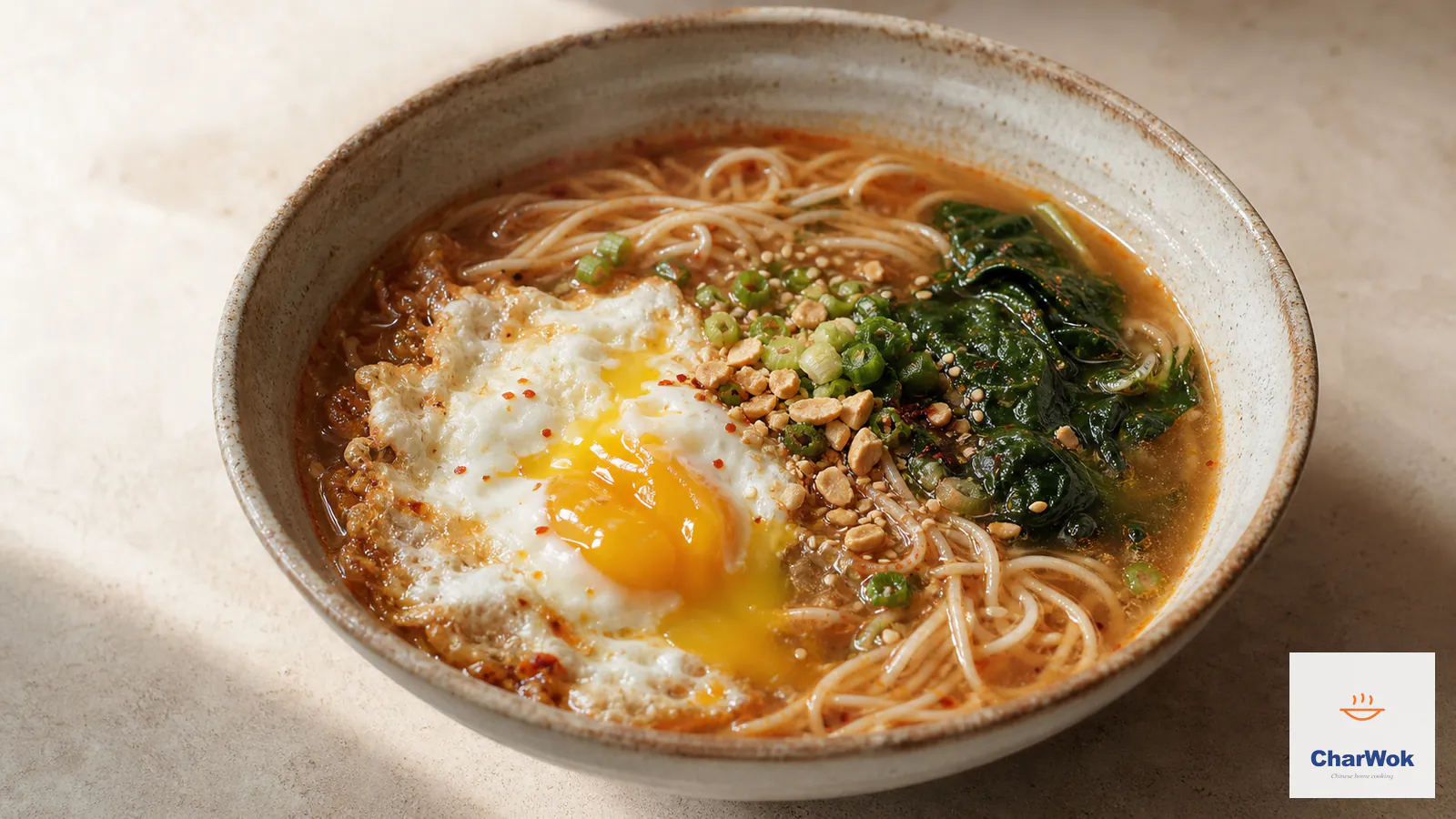
- Fry the egg in the leftover oil. Crack it into the same pan over medium heat. One-sided with a runny yolk is the classic and the better choice; the liquid yolk enriches the broth when you break it. If you prefer set yolks, flip it.
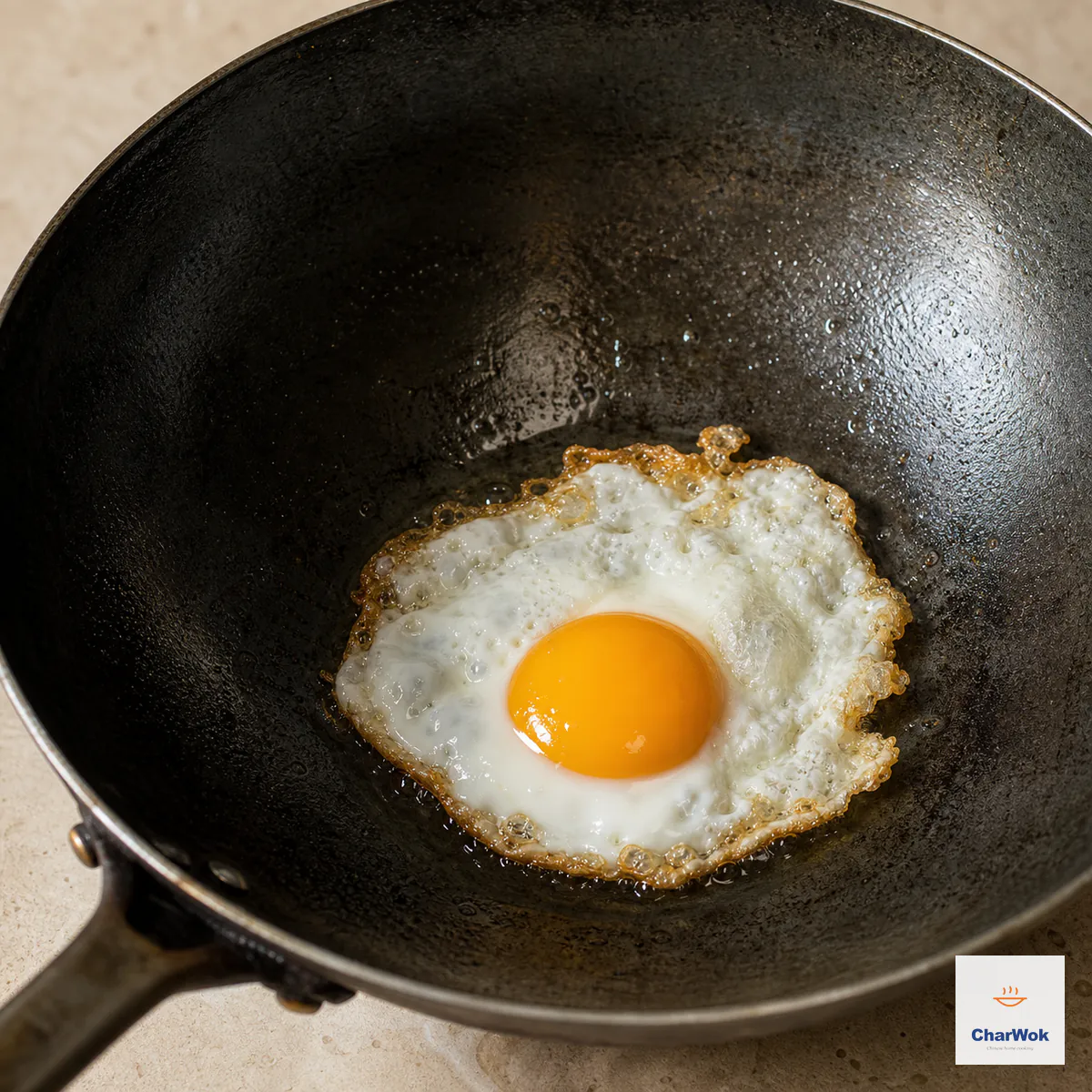
Use the reserved teaspoon of oil to fry one side until the white is set and lacy while the yolk stays runny, or flip briefly for a firmer yolk
- Boil the noodles, then add the greens in the last 30 seconds. Use a generous pot of water at a hard boil. Drop the noodles and cook per the package time minus about a minute, then throw in the greens. The greens take only seconds; you want them just wilted, not collapsed, because they'll keep softening in the hot broth.
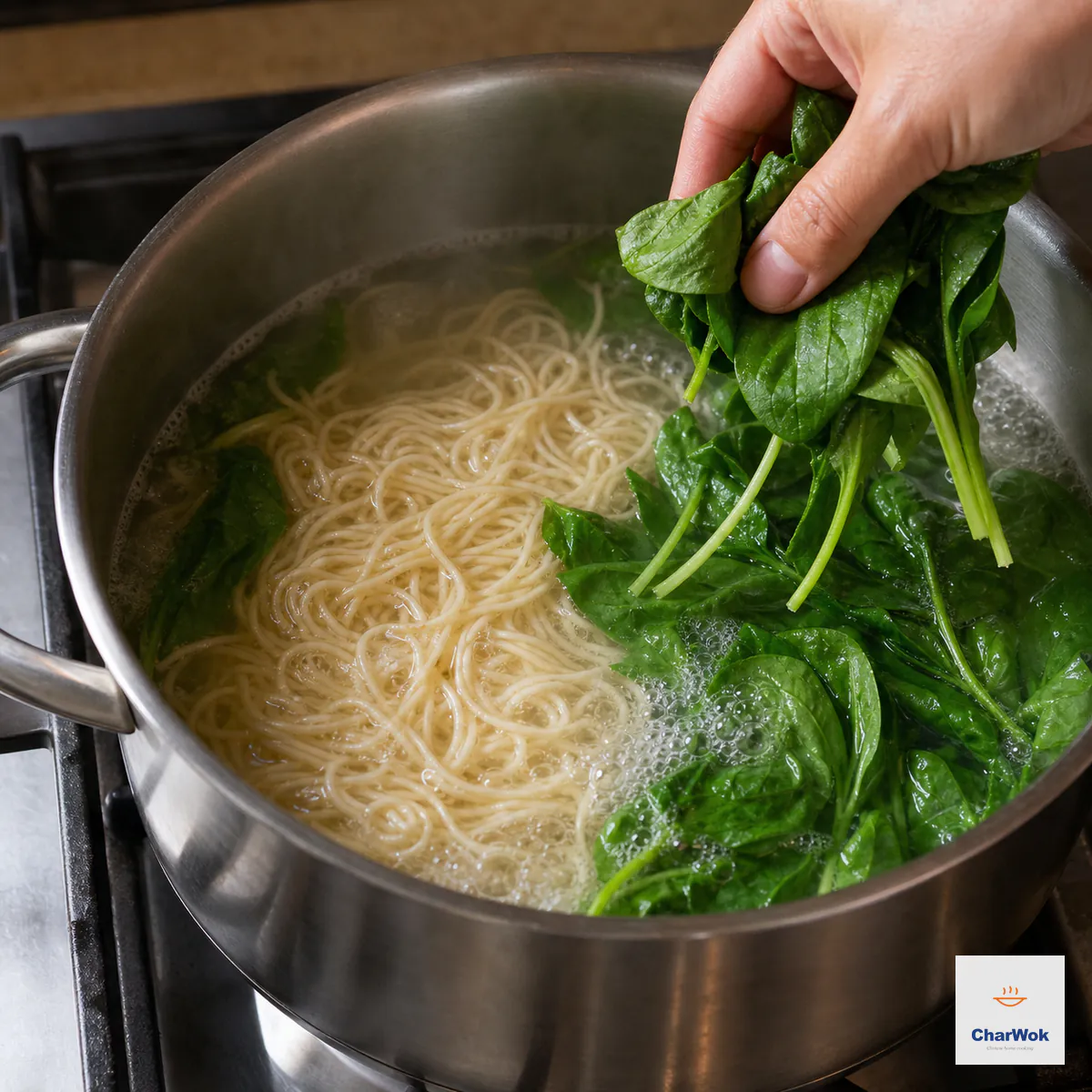
Cook the noodles until about 1 minute short of done and add the leafy greens only for the final 30 seconds so both stay springy
- Ladle noodle water into the bowl to make the broth. Scoop about 300 ml of the starchy boiling water straight from the noodle pot into the seasoned bowl and stir. This is not a detail to skip: the starch in the noodle water emulsifies the chili oil and vinegar into a cloudy, body-rich broth instead of an oil-slick on top of sour water. It's the same principle behind pasta-water emulsions in Italian cooking.
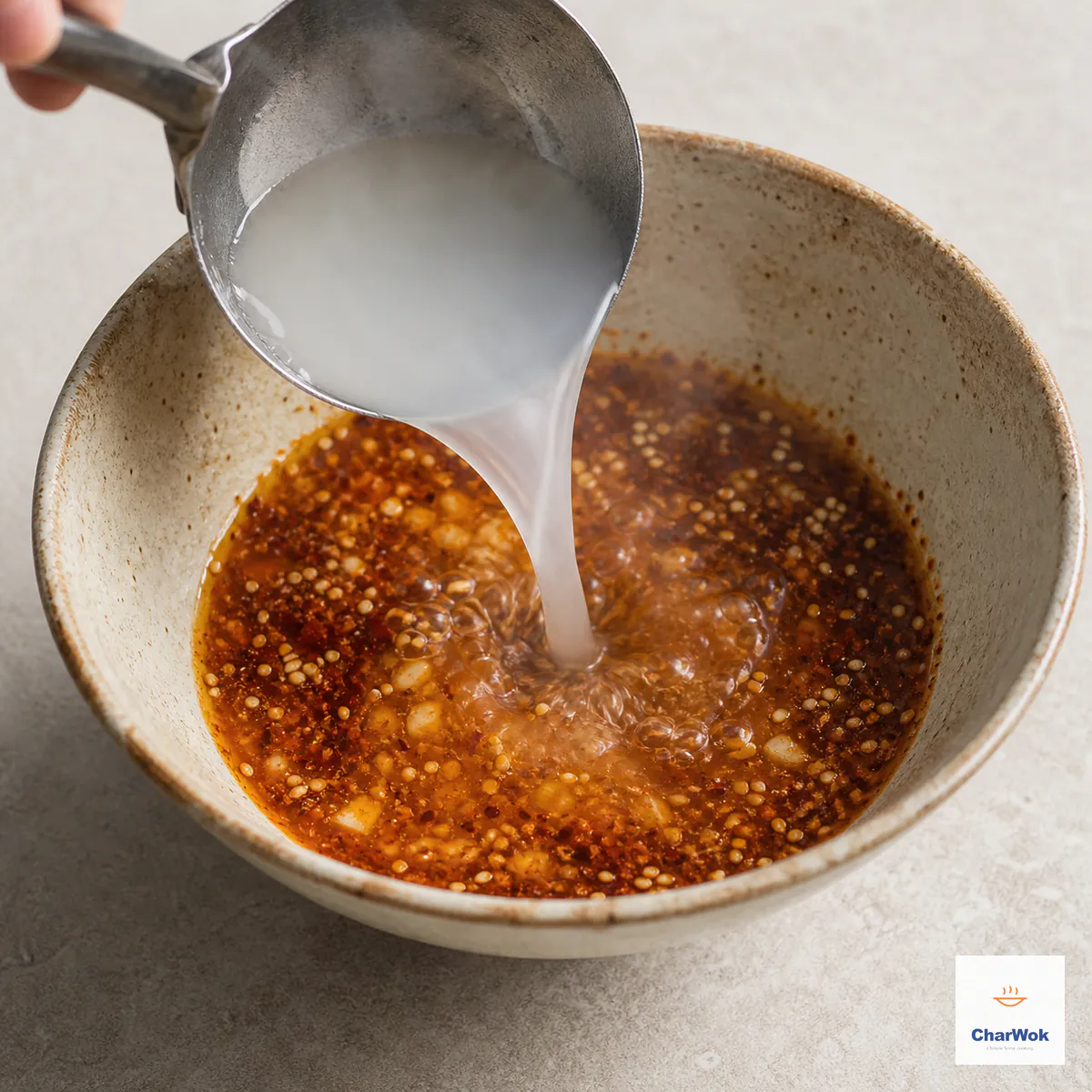
Ladle about 300 ml of cloudy noodle water into the seasoning bowl and stir until the broth looks emulsified rather than separated into an oil slick
- Drain and add the noodles and greens. Lift them out, let the water drain for a second (don't shake them bone-dry), and drop them in. Top with the fried egg, scallions, and crushed peanuts. Eat immediately; this bowl doesn't wait.
Hot-oil safety follows the U.S. Fire Administration cooking guidance: stay beside the pan, turn off the burner if the oil smokes, and never add water to burning oil.
When it goes wrong
I've made every mistake below at least once. Here's how to spot and fix them.
- The broth tastes flat, not fragrant. The oil may have been too cool when you poured it, or you added the vinegar before the strongest sizzle died down. Next time, use a thermometer and aim for about 180°C / 355°F; do not keep heating until it smokes.
- The chili flakes turned black and bitter. Oil was too hot or the pour was slow. Blackened chili tastes acrid and dusty. Medium-bright red, not dark brown, is the target color after the pour. Burnt? Scrape it out, start the bowl over; it's only a tablespoon of ingredients lost.
- The broth is greasy with a chili-oil slick on top. You skipped the starchy noodle water or used plain hot water instead. The starch is what binds the oil in. Always ladle from the noodle pot, never from a kettle.
- It's too sour and one-note. You used white or plain rice vinegar. Black rice vinegar is non-negotiable for the right flavor. If you're stuck with white vinegar, add a tiny splash of soy sauce and a few drops of sesame oil to fake some depth, but plan to buy the real thing.
- The noodles are mushy. They overcooked while you fussed with the egg or the oil. Cook the noodles last, and pull them 30 seconds before the package time since they keep cooking in the hot broth.
- It's not numbing enough. Pre-ground Sichuan pepper goes stale in weeks. Grind whole peppercorns fresh, and toast them dry for 30 seconds before grinding to wake up the sanshool.
Variations and how I riff on it
Once the base bowl is reliable, it becomes a vehicle. A few directions worth taking:
- Use your own chili oil. If you keep a jar of homemade chili oil, halve the chili flakes in the bowl and add a generous tablespoon of your chili oil (with its sediment) after the hot-oil pour. You get the freshness of the sizzled aromatics plus the deeper, slow-developed flavor of the aged oil.
- Make it a full meal. Lay slices of Char Siu pork, leftover shredded scallion oil chicken, or pan-fried shrimp on top. The broth is bold enough to carry a plain protein without needing more seasoning.
- Go vegan. Drop the egg and add silken tofu cubes or a handful of blanched edamame. The bowl stays satisfying because the flavor comes from the oil-vinegar-soy dressing, not from animal fat.
- Swap the noodles. Thin Wuhan-style alkaline noodles have the best chew, but fresh ramen, thin spaghetti in a pinch, or even the cold-noodle wheat strands you'd use for Sichuan liang mian all work. Avoid thick udon; it overwhelms the delicate broth.
- Turn up the vegetable count. Add a side of tomato egg flavors by spooning in a little leftover tomato-egg stir-fry, or top with quick-pickled cucumber for crunch.
Storage and reheating
Honest answer: this is a cook-and-eat-now dish. The noodles soak up the broth and turn to paste within an hour, and the fried egg gets rubbery. If you must prep ahead, combine the dry seasonings, vinegar, soy sauce, sugar, and minced garlic in a covered container and refrigerate it promptly for no more than one day; do not hold the garlic mixture at room temperature. Then it is a three-minute job to boil noodles, heat fresh oil, and assemble. For general cold-storage guidance, see FoodSafety.gov's cold food storage chart.
FAQ
A few questions I get asked most often about this bowl.
Can I use regular white vinegar instead of black rice vinegar?
You can, but you'll lose the smoky, malty depth that defines the dish. Black rice vinegar is the single ingredient I'd insist on buying; everything else has a workaround.
Why pour the oil into the bowl instead of cooking the aromatics in a pan first?
Speed and flavor. The pour-in-the-bowl method browns the aromatics just enough to bloom them, then the vinegar immediately stops the cooking so nothing scorches. Pan-frying risks burning the garlic and dirtying an extra pan.
What kind of noodles work best?
Thin wheat noodles, fresh or dried. Avoid thick or wide noodles; they drown out the delicate balance of the broth.
Is this the same as hot and sour soup?
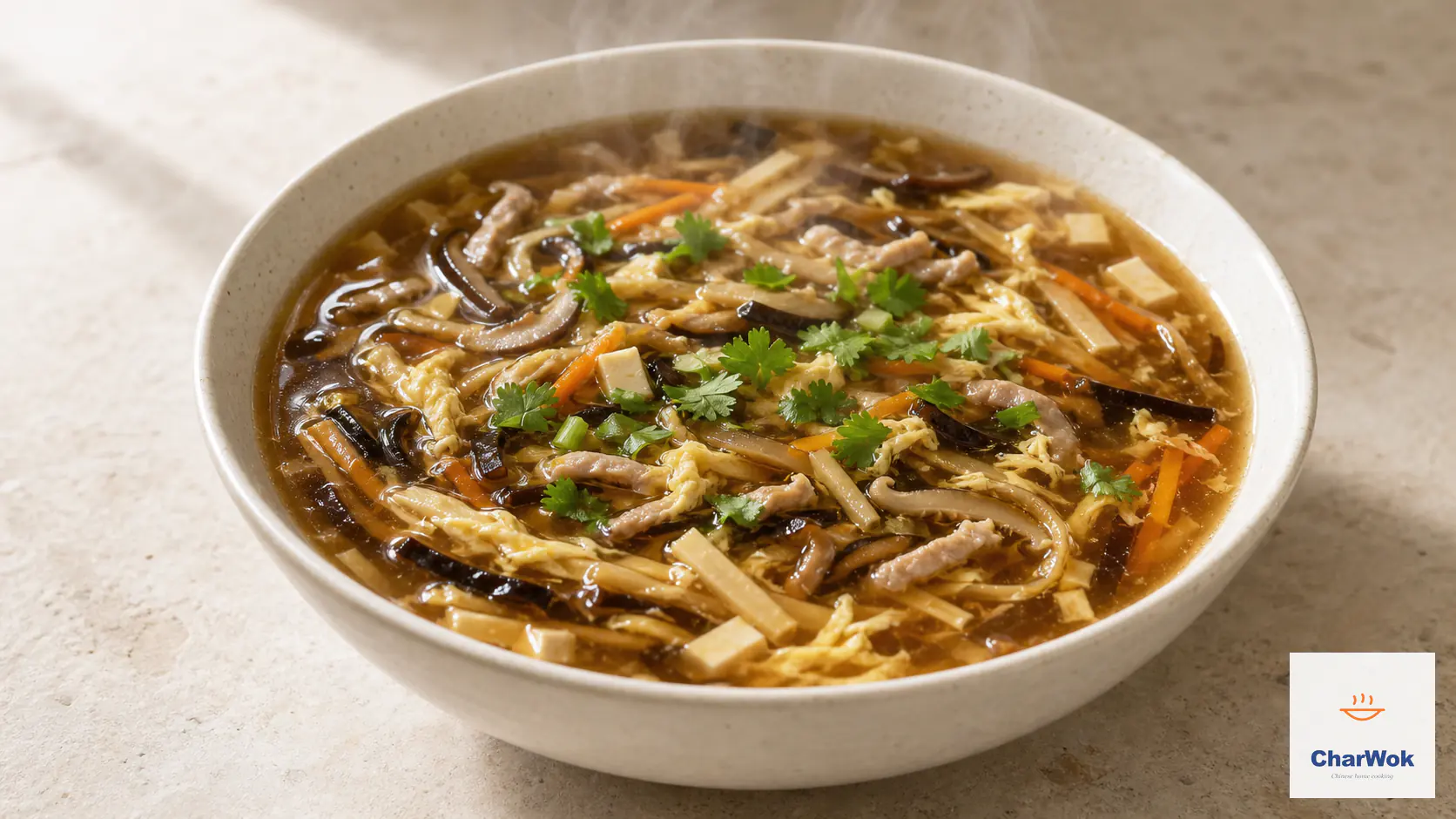
No. Hot and sour soup is a slowly built, starch-thickened soup with pork, tofu, and egg ribbons. This is a quick noodle bowl with a different, brighter character.
How spicy is it, and can I dial it back?
Medium by Sichuan standards. To tame the heat, cut the chili flakes to a quarter tablespoon and leave the Sichuan pepper as is; the numbing tingle is the part you want to keep.
Looking for more bowls in this register? Browse the full set of classic Chinese noodle recipes, or go deeper into the regional canon with these Sichuan recipes.