Clumped noodles and rubbery chicken usually come from treating chow mein as a one-pan dump-and-stir recipe. The reliable method rests on three ideas: prepare each component for its own cooking time, keep the sauce light, and finish everything together in a properly preheated pan.
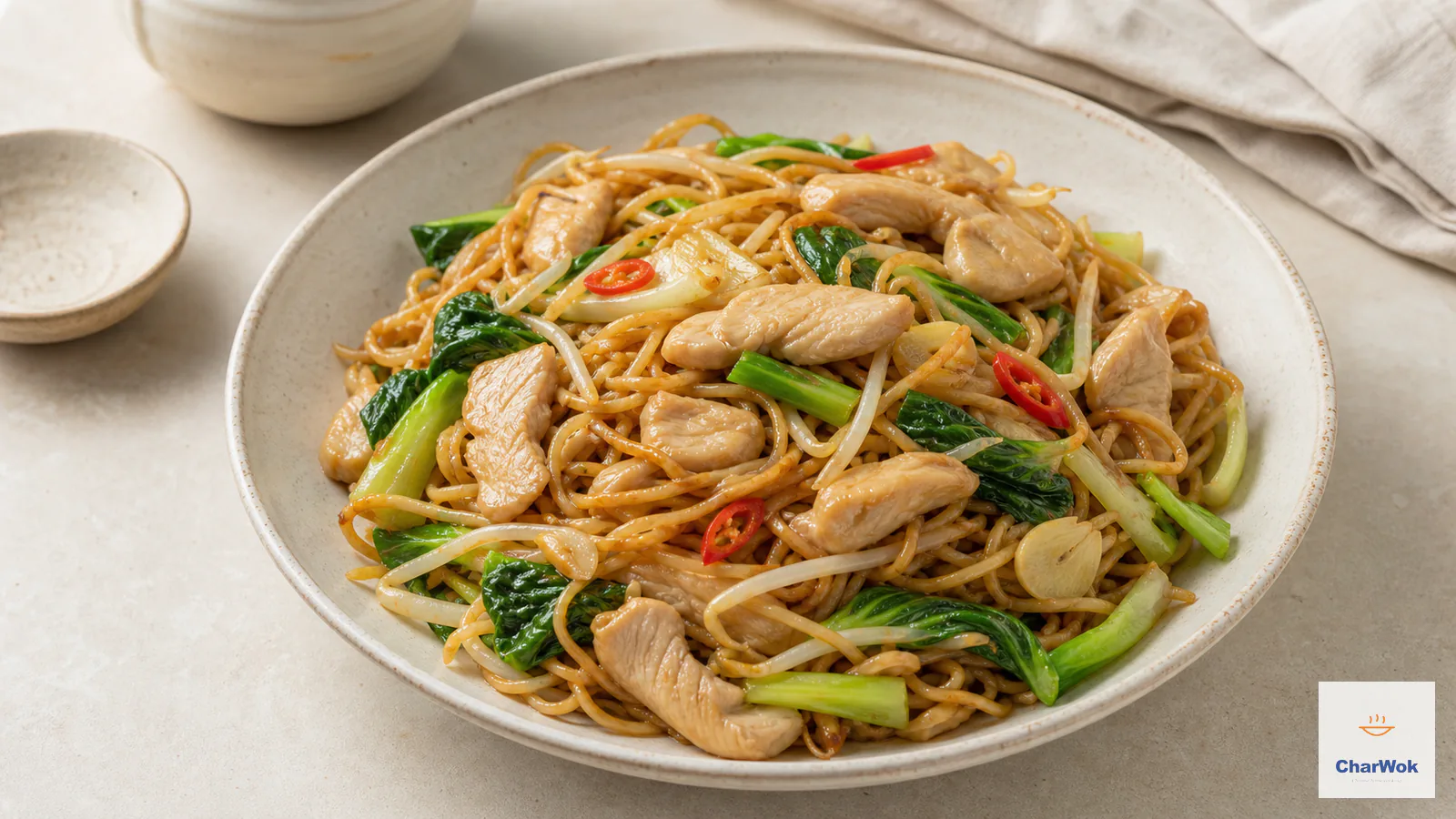
With those steps in place, chicken chow mein becomes a practical fifteen-minute dinner built from egg noodles, bok choy, bean sprouts, and a thin savory glaze. It belongs with the other takeout-style dishes worth making at home, but this guide focuses on the details that keep the noodles separate and the chicken tender.
At a glance. Use about two tablespoons plus one teaspoon of seasoning for 400 g noodles. Dry the noodles well, briefly sear the chicken as an undercooked intermediate step, then return it and verify the thickest piece reaches 165°F (74°C). The five-minute cook time is an estimate; temperature, not colour or time, decides when the chicken is safe to serve.
What chow mein actually is
The name is Cantonese. Say it out loud and you can hear the cooking method hiding inside it: chow is the verb for tossing food over fierce heat, and mein is the everyday word for a strand of wheat dough. Put them together and the dish tells you what it wants: noodles that meet the wok rather than the sauce pot. The confusion starts because Americans use the word for two very different things. One is the crisp deep-fried noodle cake at the bottom of a takeout box, covered in a cornstarch-thickened gravy. The other, the one most Chinese home cooks mean, is soft egg noodles tossed quickly in a wok with a little protein and vegetables until each strand is lightly glazed but still distinct. This recipe is the second kind.
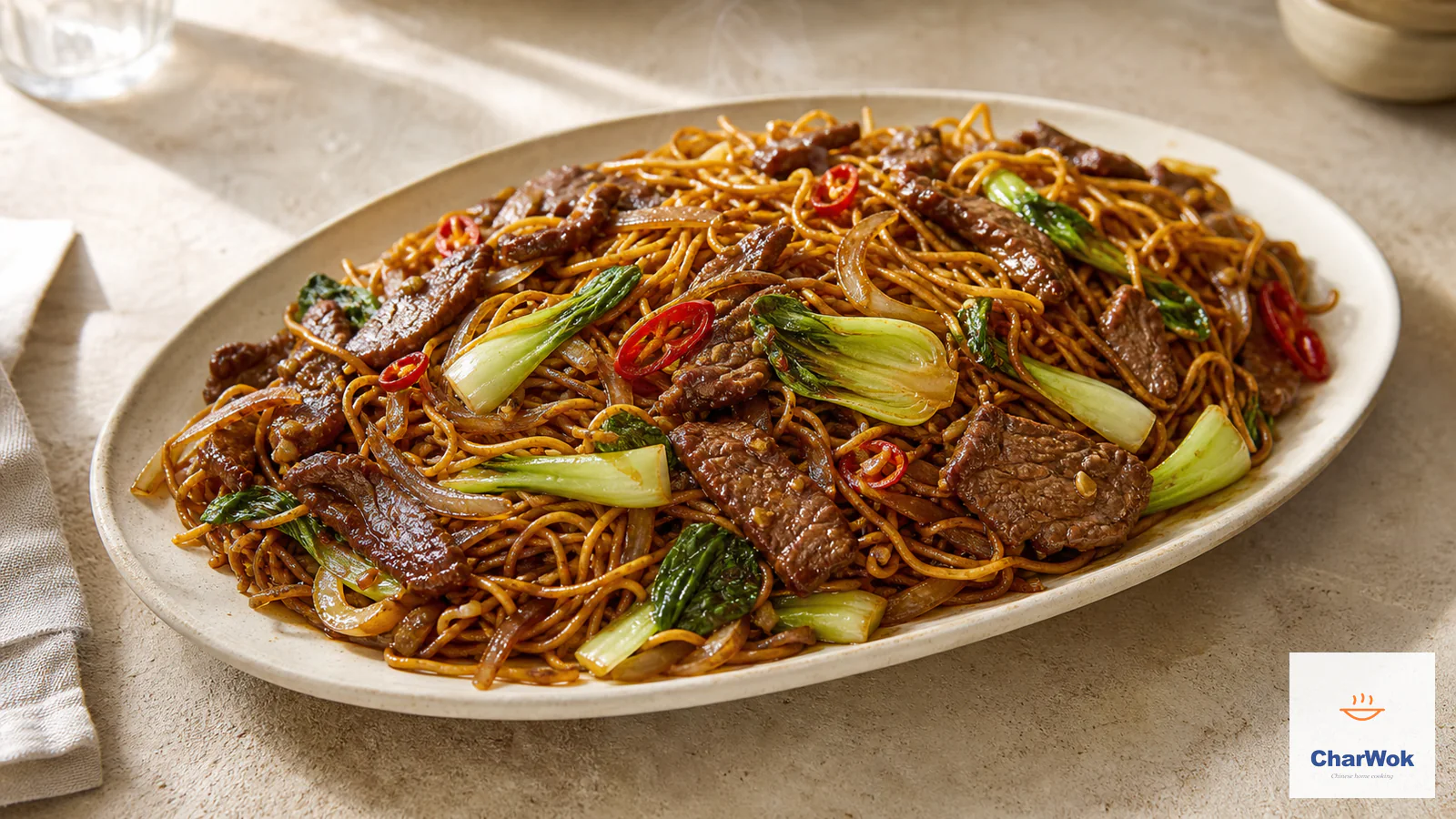
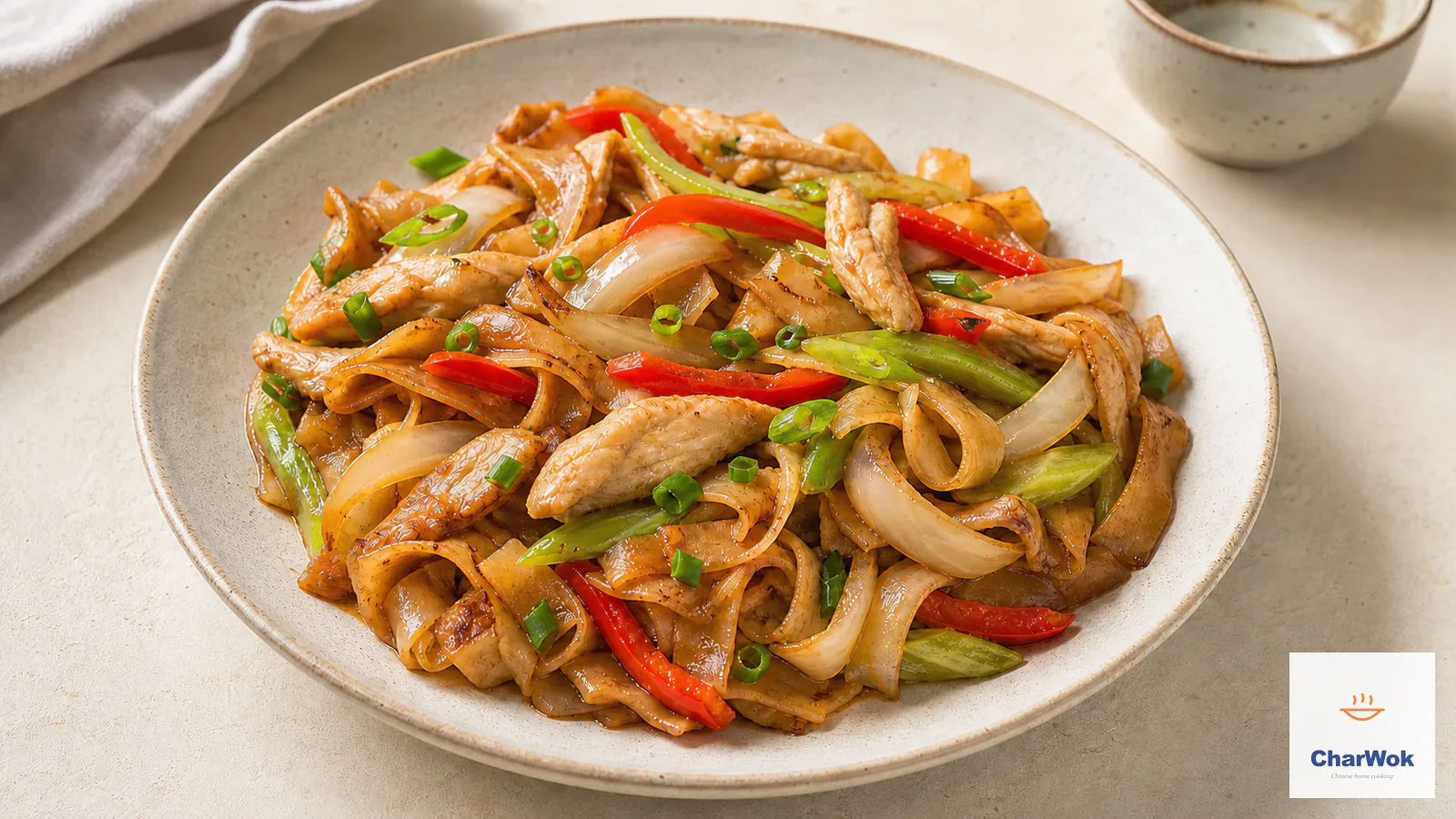
It belongs to the same family as lo mein, but the two are not the same. Lo mein is dressed: the noodles are boiled, then tossed with sauce, almost like a pasta salad in a hot dressing. Chow mein is genuinely fried, which means the noodles spend time on direct heat and pick up a little color and chew. If you want the rice-noodle cousin, that is beef chow fun or chicken chow fun, made with wide rice sheets instead of wheat.
The noodles: pick the right one, undercook it on purpose
Before we talk about which noodle to buy, fix the two ideas that decide whether the dish works. The strands have to land in the wok dry, and they have to land there one shade short of done. Any surface moisture turns to steam on contact and you end up steaming the noodles grey instead of frying them golden. Any extra doneness, and the second round of heat pushes them past tender into mush.
The classic strand is a thin Chinese egg noodle: yellow, with a slight chew, sold vacuum-packed in the refrigerated aisle of any Asian grocery under labels like "Hong Kong-style pan-fried noodles" or simply "chow mein noodles." How you get it ready for the wok depends on which form you buy.
- Ready-to-fry (pre-cooked). The fastest weeknight option. Sold loose in a bag and already par-boiled, these noodles go straight from bag to wok.
- Fresh, uncooked egg noodles. The refrigerated ones that have never seen heat. A soak in just-boiled water for about three minutes softens them; check the package, since one brand's dough differs from the next.
- Dried egg noodles. The shelf-stable option. Boil until the strands bend easily but still hide a chalky line at the center: pull them roughly a minute before they feel fully cooked. They also work well for soy sauce pan-fried noodles.
Whatever you start with, finish the prep the same way: tip the drained noodles onto a plate and give them a moment, then lift the batch onto a clean cloth and roll it around until the strands stop glistening. Wet noodles steam instead of fry, and that is the fast road to mush. If the strands have set into a block, tease them apart with chopsticks before they go anywhere near the heat.
Out of egg noodles? Plain Italian spaghetti is the most accessible stand-in if you boil it a minute shy of done and rinse away the surface starch; the bite will be softer and less springy. Closer alternatives are alkaline ramen blocks without the seasoning packet, since alkaline noodles share a bouncy texture, and yi mein, the fried egg-noodle cakes traditionally used for longevity noodles.
Why the chicken needs a cornstarch coat
Thin chicken breast can dry out quickly in a hot wok. A quick form of Chinese velveting helps: coat the slices with cornstarch and water, then add sesame oil last. The thin starch coating reduces surface moisture loss and helps the slices separate in the pan.
Ten refrigerated minutes is enough while the vegetables are prepared. Keep the covered raw chicken on a low refrigerator shelf, separate from ready-to-eat food. Tapioca starch is a workable substitute and gives a slightly clearer coating. The same starch-coating principle appears in kung pao shrimp, though every protein still needs its own safe doneness check.
The sauce: less than you think
The single most common mistake with homemade chow mein is adding too much sauce. A proper plate is barely glazed, not saucy. The flavor should come from the noodles themselves, from the chicken, and from the vegetables, with the seasoning acting like salt on a good steak rather than a covering gravy. For two servings, the whole seasoning budget is small: roughly two tablespoons plus a teaspoon of liquid.
The mix is light soy sauce for seasoning, a smaller splash of dark soy for amber colour, oyster sauce for savory richness, and black pepper. The light versus dark soy sauce guide explains the difference in detail; the short version is that light soy seasons and dark soy colours. Mix all four in a small bowl before turning on the stove.
Ingredients
Ingredients at a glance
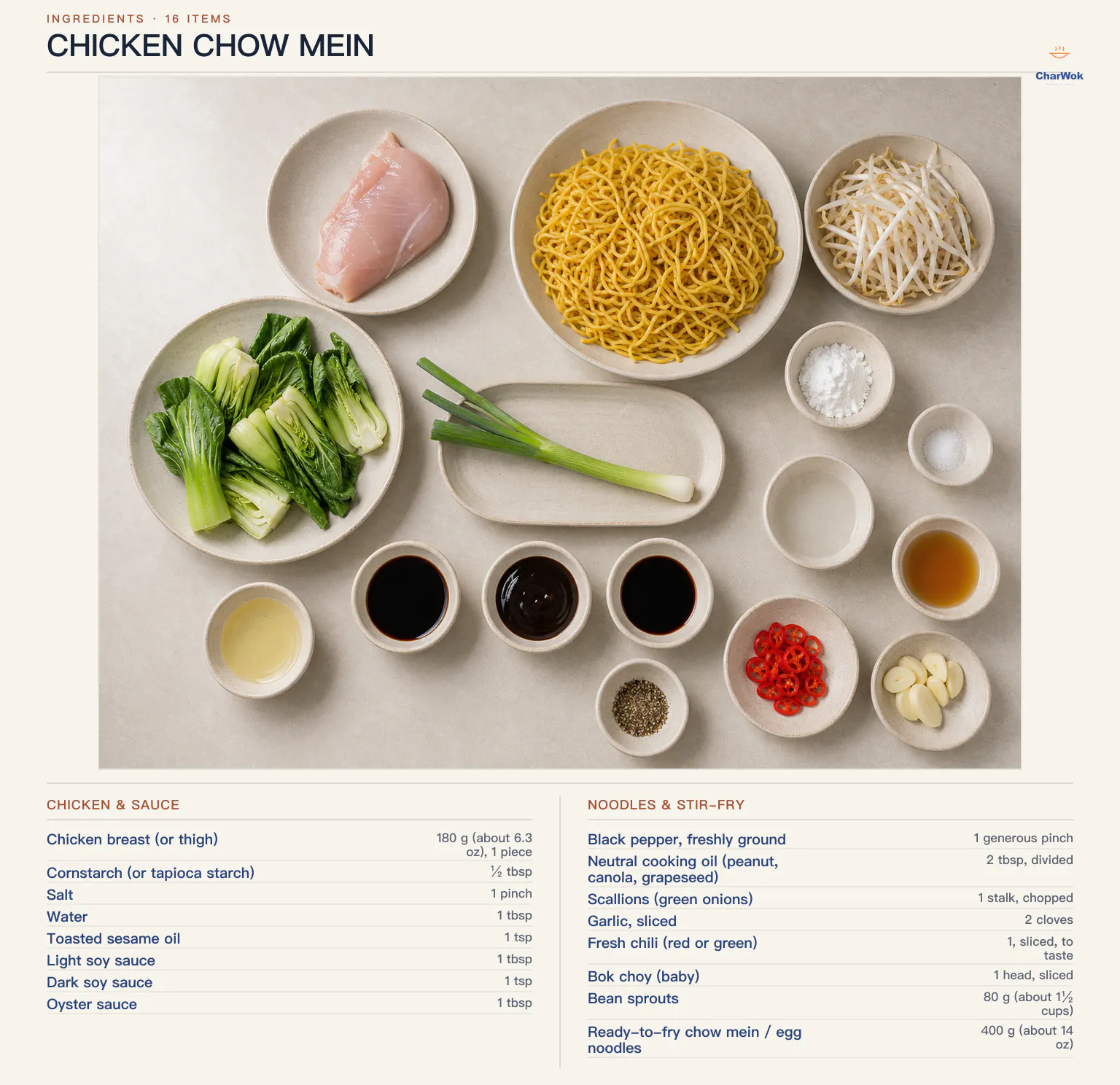
| Ingredient | Amount | Notes / substitute |
|---|---|---|
| Chicken breast (or thigh) | 180 g (about 6.3 oz), 1 piece | Thigh stays juicier; slice against the grain into thin strips |
| Cornstarch (or tapioca starch) | ½ tbsp | Forms the velvet coating on the meat |
| Salt | 1 pinch | - |
| Water | 1 tbsp | Carries the starch onto the meat evenly |
| Toasted sesame oil | 1 tsp | Added last to seal the coating; do not skip |
| Light soy sauce | 1 tbsp | Salt and umami backbone of the sauce |
| Dark soy sauce | 1 tsp | For color; a little molasses works in a pinch |
| Oyster sauce | 1 tbsp | Use vegetarian stir-fry sauce to keep it plant-based |
| Black pepper, freshly ground | 1 generous pinch | More than you think; it carries the dish |
| Neutral cooking oil (peanut, canola, grapeseed) | 2 tbsp, divided | High smoke point; do not use olive oil |
| Scallions (green onions) | 1 stalk, chopped | Keep white and green parts separate |
| Garlic, sliced | 2 cloves | Slice, do not mince, so it does not burn |
| Fresh chili (red or green) | 1, sliced, to taste | Optional; leave seeds in for more heat |
| Bok choy (baby) | 1 head, sliced | Or napa cabbage, snow peas, celery, carrot |
| Bean sprouts | 80 g (about 1½ cups) | Add at the end so they stay crisp |
| Ready-to-fry chow mein / egg noodles | 400 g (about 14 oz) | See noodle section if using dried or fresh |
Method, step by step
- Velvet the chicken. Slice the breast against the grain into thin strips roughly the width of a chopstick. Toss with the cornstarch, salt, and water until evenly coated and the liquid is absorbed, then stir in the sesame oil. Cover and refrigerate while preparing the other ingredients. Keep raw chicken on a low shelf away from ready-to-eat food, and switch to a clean board, plate, and utensils afterward.
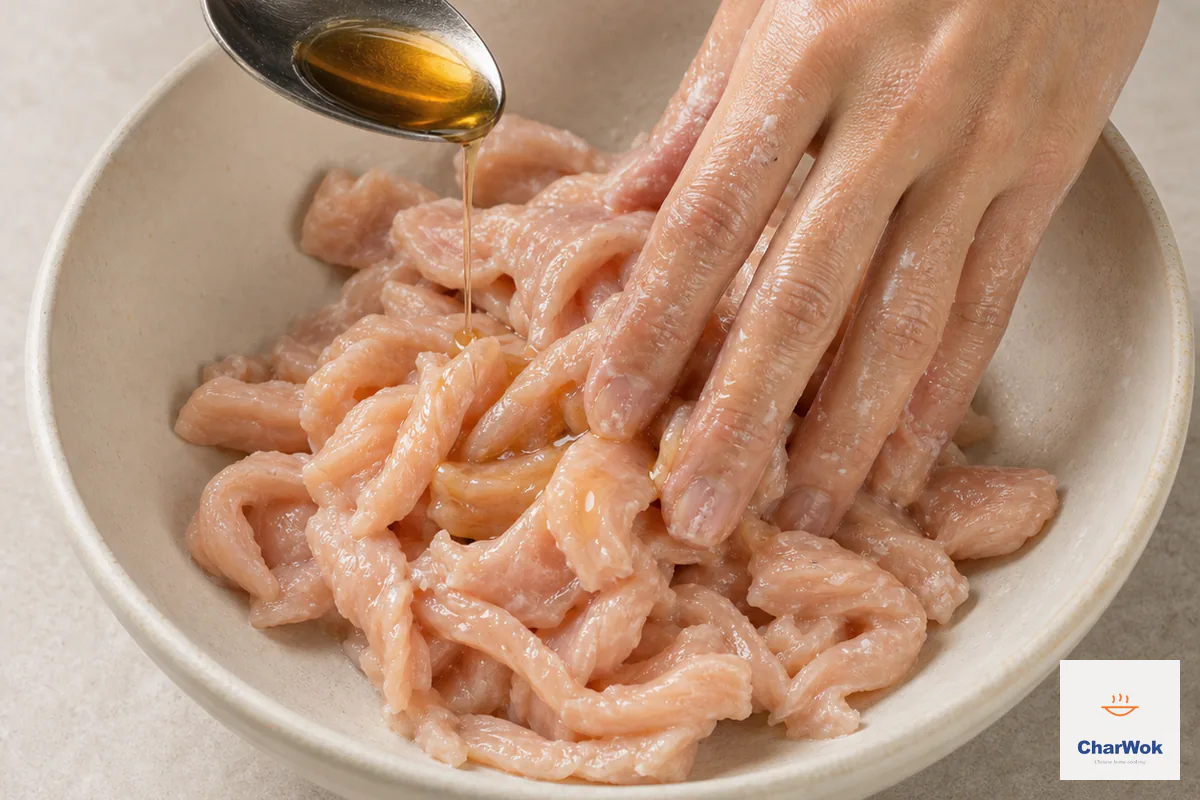
Work in the starch, salt and water until fully absorbed, then add the sesame oil last to keep the coated strips separate.
- Mix the sauce. Stir the light soy sauce, dark soy sauce, oyster sauce, and black pepper together in a small bowl. Having it ready in one pour is non-negotiable, because the final toss moves fast and you cannot stop to measure once the wok is loaded.
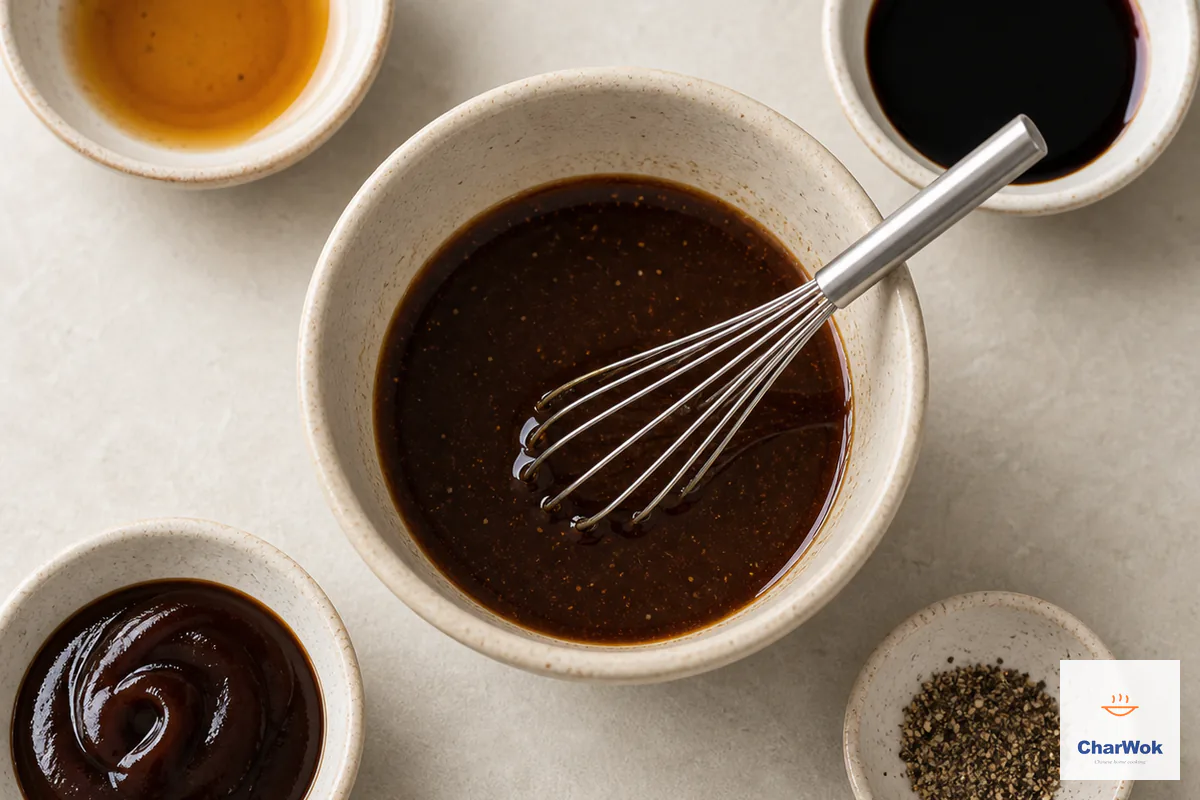
Combine all four seasonings before heating the wok so the fast final toss needs only one pour.
- Briefly sear the chicken. For a carbon-steel wok, preheat over medium-high until a small water drop beads and glides; discard the water and wipe the wok completely dry. Add 1 tablespoon oil and heat until shimmering, about 350–355°F (175–180°C), without smoke. For non-stick cookware, add oil before heating and stay within the manufacturer's temperature limit. Spread the chicken in one layer, let it sit for about ten seconds, then stir briefly and transfer it to a clean plate. This is an undercooked intermediate step, not a doneness check based on colour.
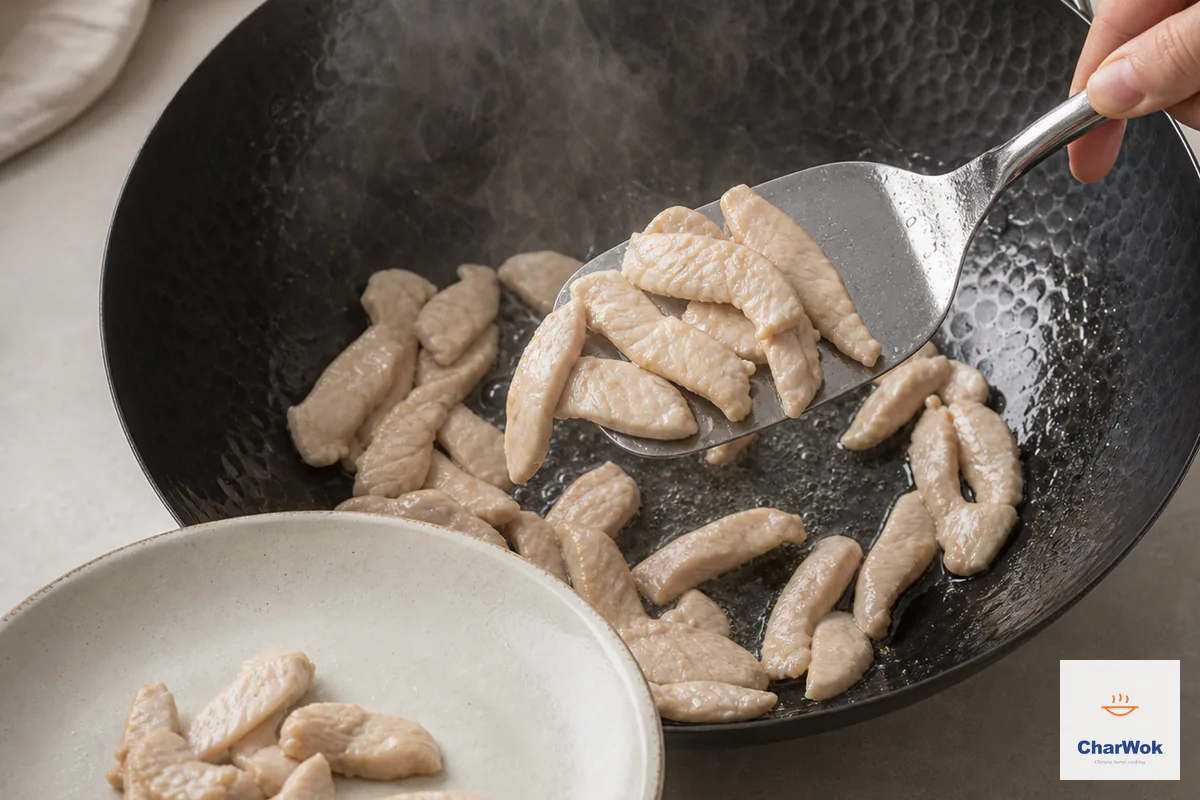
This brief first sear only sets the coating; transfer the still-undercooked chicken to a clean plate without using colour as a doneness test.
- Bloom the aromatics and fry the noodles. Add the remaining tablespoon of oil to the hot wok. Drop in the garlic, chili, and scallion whites and let them crackle for a count of ten, just until their fragrance rises and before the garlic takes on any color. Add the noodles and toss for a minute, pressing them against the hot metal in places so a few strands pick up a little char. This is the moment the dish earns its name; the noodles should look glossy and slightly toasted, not steamed.
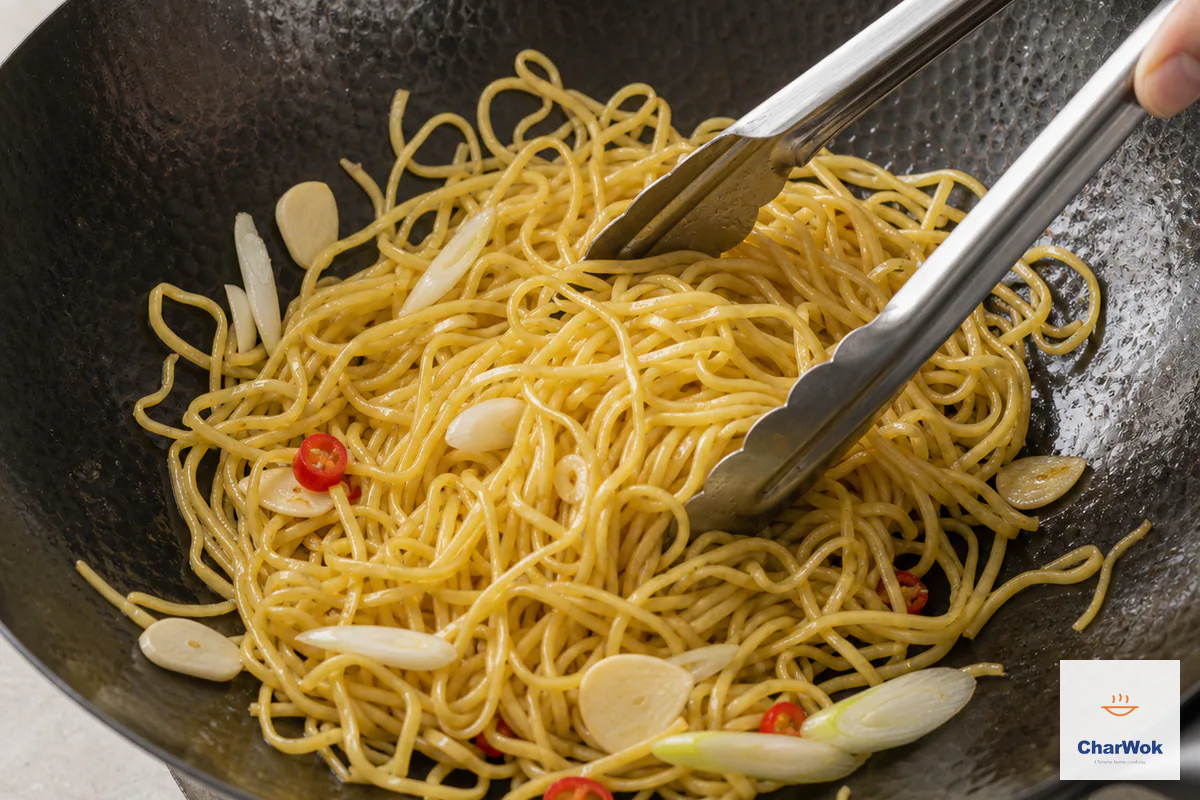
Bloom the aromatics only until fragrant before the garlic colors, then toss and press the noodles until a few strands lightly toast.
- Finish and verify. Return the chicken with the bok choy and bean sprouts. Pour the sauce down the side of the wok and keep everything turning until the greens begin to wilt and the noodles are coated. Check the thickest chicken piece with an instant-read thermometer; it must reach at least 165°F (74°C). If the sauce tightens first, add 1 tablespoon water and continue cooking. The roughly one-minute toss is an estimate, not the doneness test. The wok-rim technique also works for stir-fried rice cakes.
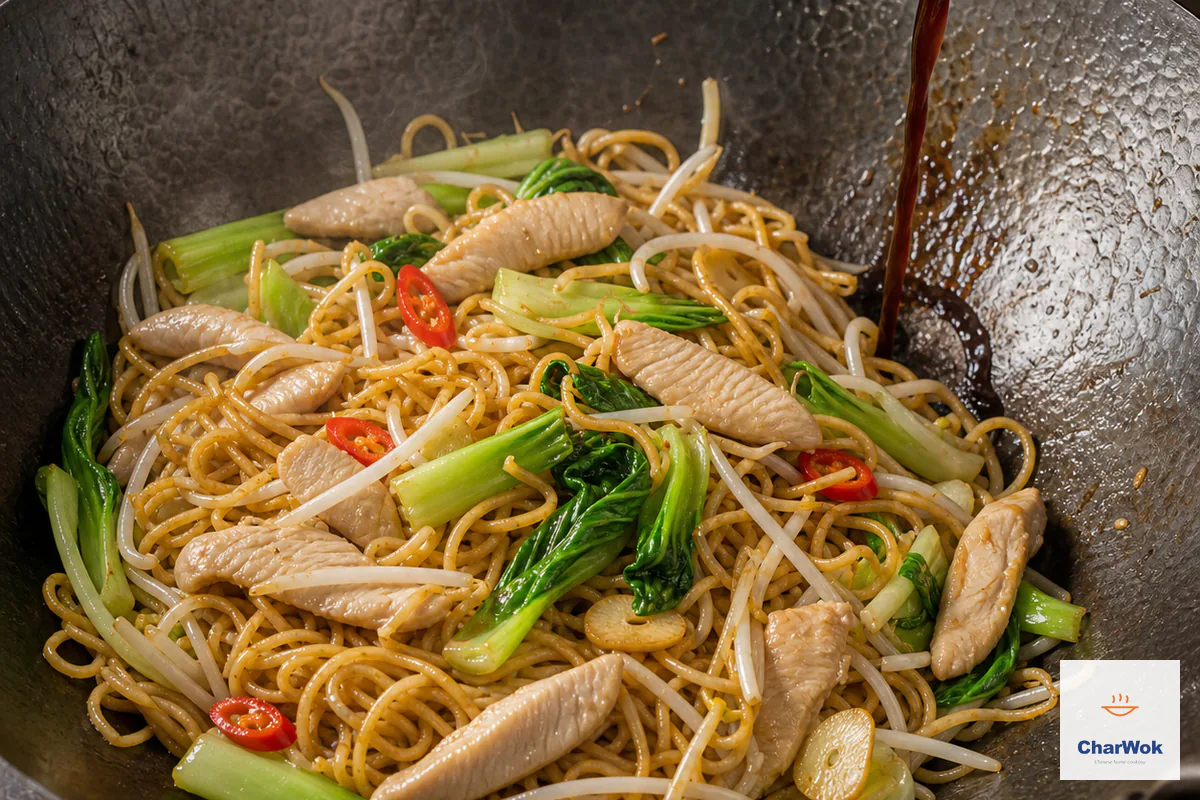
Return the chicken with the vegetables, pour in the sauce, and toss until the thickest chicken piece reaches at least 165°F (74°C); add water if the sauce tightens first.
- Finish and serve. Off the heat, shower the scallion greens over the top and give it one last toss. Turn it out onto plates right away, and set a jar of homemade chili oil on the table for anyone who wants to push the heat.
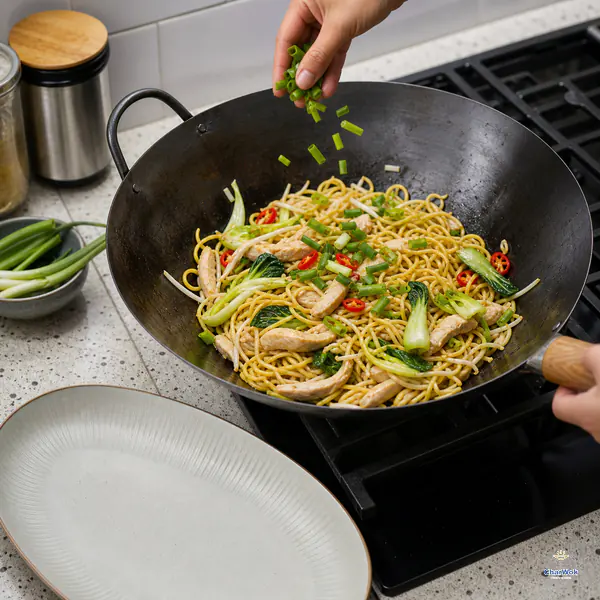
Scatter in the scallion greens after the sauce has been absorbed, toss briefly, then transfer the chow mein to a platter and serve hot.
When things go wrong
Most chow mein failures fall into three buckets, and each has a clear cause.
The noodles clump into one mass. They went in wet, or they were overcooked before frying. Next time, drain longer, pat the noodles dry with a towel, and pull apart any stuck strands by hand. If it is happening live, do not add more oil; that makes it greasy. Instead, use tongs to lift and shake the mass apart over the heat, letting steam escape, and toss more aggressively.
The noodles stick to the wok and come out dry. This is the cast-iron or carbon-steel wok that was not hot enough, or the oil was added to a cold pan and never bonded to the metal. Preheat the wok until a drop of water dances and evaporates instantly, add the oil, swirl to coat up the sides, and only then add the food. If the sauce is scorching onto the metal, your heat is slightly too high or you are standing still too long. Keep it moving. This is the same heat-management lesson behind beef and broccoli and every other fast stir-fry.
The chicken is tough and rubbery. The slices may be too thick, crowded, or cooked well beyond 165°F (74°C). Cut them evenly, velvet them, use a brief first sear, and finish only until the thickest piece reaches the safe temperature. Chicken thigh is more forgiving than breast.
The dish tastes salty and wet. You used too much sauce, or you added water. Chow mein is not meant to pool. Measure the sauce with a spoon rather than pouring from the bottle, and trust that a couple of spoonfuls is enough. You can always serve extra soy sauce at the table; you cannot take it back out of the wok.
Swap the protein, swap the vegetable
Once the technique is in your hands, the recipe becomes a template. For protein, thinly sliced pork or beef works the same way, and leftover char siu is a luxurious shortcut because it is already cooked, so you add it at the very end just to warm through. Shrimp goes in raw and comes out in seconds. For a vegetarian plate, scramble an egg in the oil first the way you would for egg fried rice, or use firm tofu pressed dry and pan-fried until golden.
For vegetables, lean on things that cook in under a minute: bok choy, snow peas, bean sprouts, sliced celery, julienned carrot, shredded napa cabbage. Anything dense, like broccoli florets, needs a thirty-second blanch in boiling water first, or it will still be raw when the noodles are already overcooked. Keep the total vegetable volume modest, around two cups for two servings, so the noodles stay the star.
Variations and what to serve alongside
For a saucier, deeper-flavored cousin, build the sauce around sha cha paste as in sha cha beef chow mein. For something lighter, omit the dark soy and finish with toasted sesame oil and chopped cilantro off the heat. A crisp-bottom version presses the cooked noodles flat in the pan with a little extra oil until the underside is golden, then turns the noodle cake onto a plate.
Because chow mein is a complete one-plate meal, it does not need much beside it. A bowl of plain fried rice is redundant; reach instead for a quick cold dish, like smashed cucumber or a simple leaf soup, to cut the richness.
Storage and reheating
Refrigerate leftovers in small, shallow containers within two hours, or within one hour when the surrounding temperature is above 90°F (32°C). Eat or freeze them within three to four days. Reheat only the portion needed to 165°F (74°C): add a small splash of water and toss in a pan, or cover and rotate in the microwave so it heats evenly. Check the temperature in several places; time, steam, or touch alone is not enough.
Food-safety sources: the U.S. Fire Administration cooking-fire guidance, the U.S. government's safe minimum internal temperature chart, and FoodSafety.gov leftover guidance.
Frequently asked questions
Can I use spaghetti instead of egg noodles? Yes, in a real pinch. Under-boil it by a minute, rinse off the surface starch, and drain it bone-dry before frying. The texture will be softer and less bouncy, but the dish will still work.
Do I have to velvet the chicken? For quick-fried breast, yes. Without the starch coating the meat seizes and goes tough in seconds. If you skip it, use thigh and accept a slightly chewier result.
My wok is not carbon steel. Will non-stick work? Yes. Add oil before heating, stay within the manufacturer's temperature limit, and work in small batches. It will brown less aggressively than carbon steel, but it can still produce separate, evenly glazed noodles.
Can I make it ahead for meal prep? Cook and store the components separately if you can, combining and re-frying on the day. Fully assembled chow mein reheats fine but the noodles lose some bite overnight.
Is chow mein gluten-free? Not this version, since wheat noodles and regular soy sauce both contain gluten. Use rice noodles and tamari for a gluten-free plate, closer to chow fun.