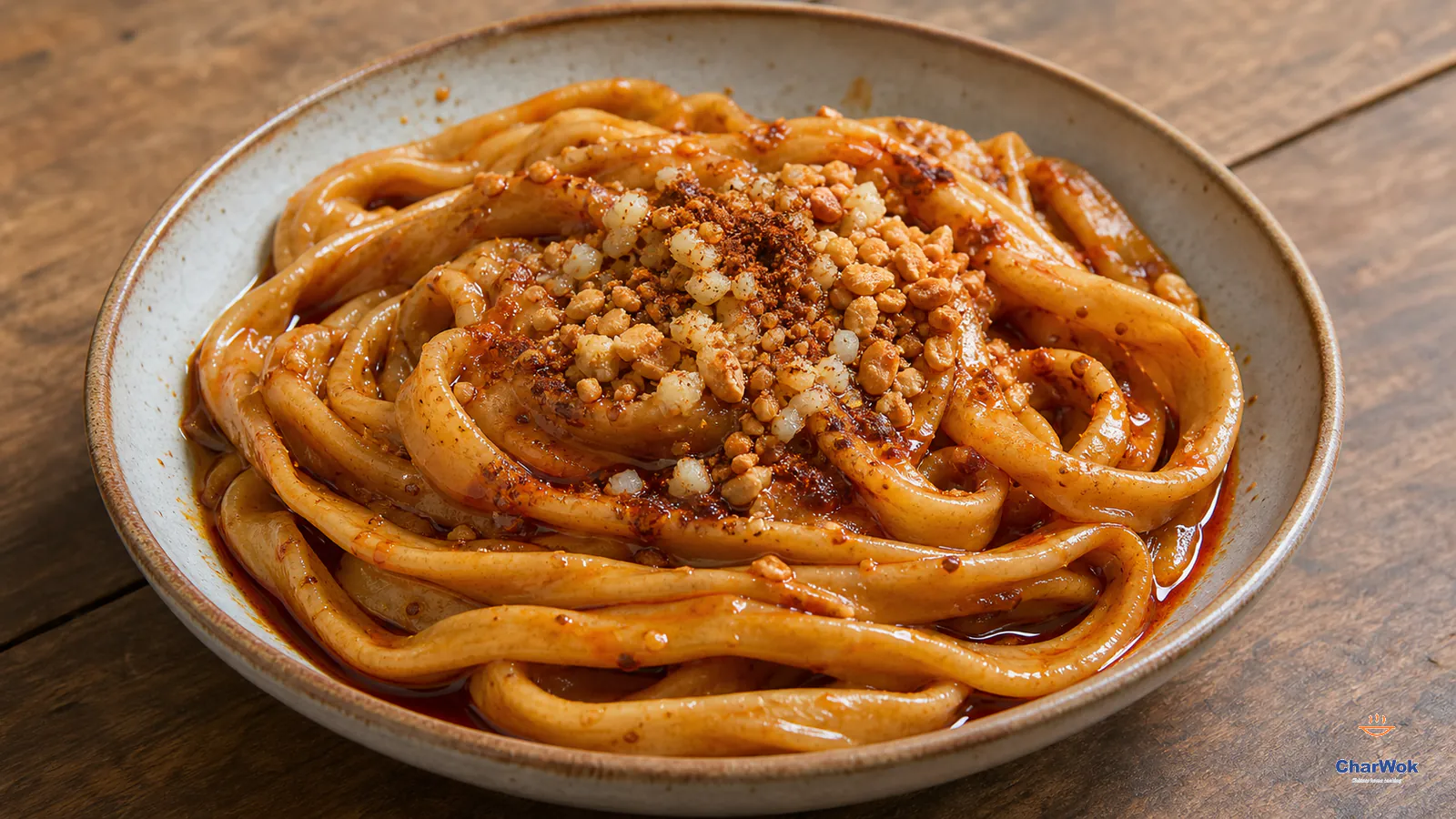
Tian Shui Mian, or "sweet water noodles," is a Chengdu street snack that trips people up on the first bite. The sweetness lands before the heat does. You taste soy sauce and brown sugar reduced to a dark, glossy syrup, then a slow wave of Sichuan pepper and chili oil catches up and sits on your tongue for a while. The noodles are thick, roughly the width of a whole pencil, and they fight back when you chew.
That bite is the whole reason the dish exists. A thin noodle would collapse under a sauce this heavy. Most home versions fail in one of two places: the noodles turn gummy because the dough was overworked and under-rested, or the sauce reads as one-note sweet because it was never simmered long enough to let the spices actually dissolve into the sugar. I have made both mistakes, more than once, and the fixes are simple once you understand what each step is doing.
At a glance
Thick hand-cut noodles with a reduced sweet-spiced soy syrup, finished with chili oil and ground Sichuan pepper. The dough rests twice so the gluten relaxes; you cut the strands fat, around 8 mm, and rinse them cold after cooking so the sauce clings instead of sliding off. Start the sauce first; it needs a slow, patient reduction — you judge it by sight, not by the clock — to taste like anything.
What this dish is, and where it sits in the Sichuan canon
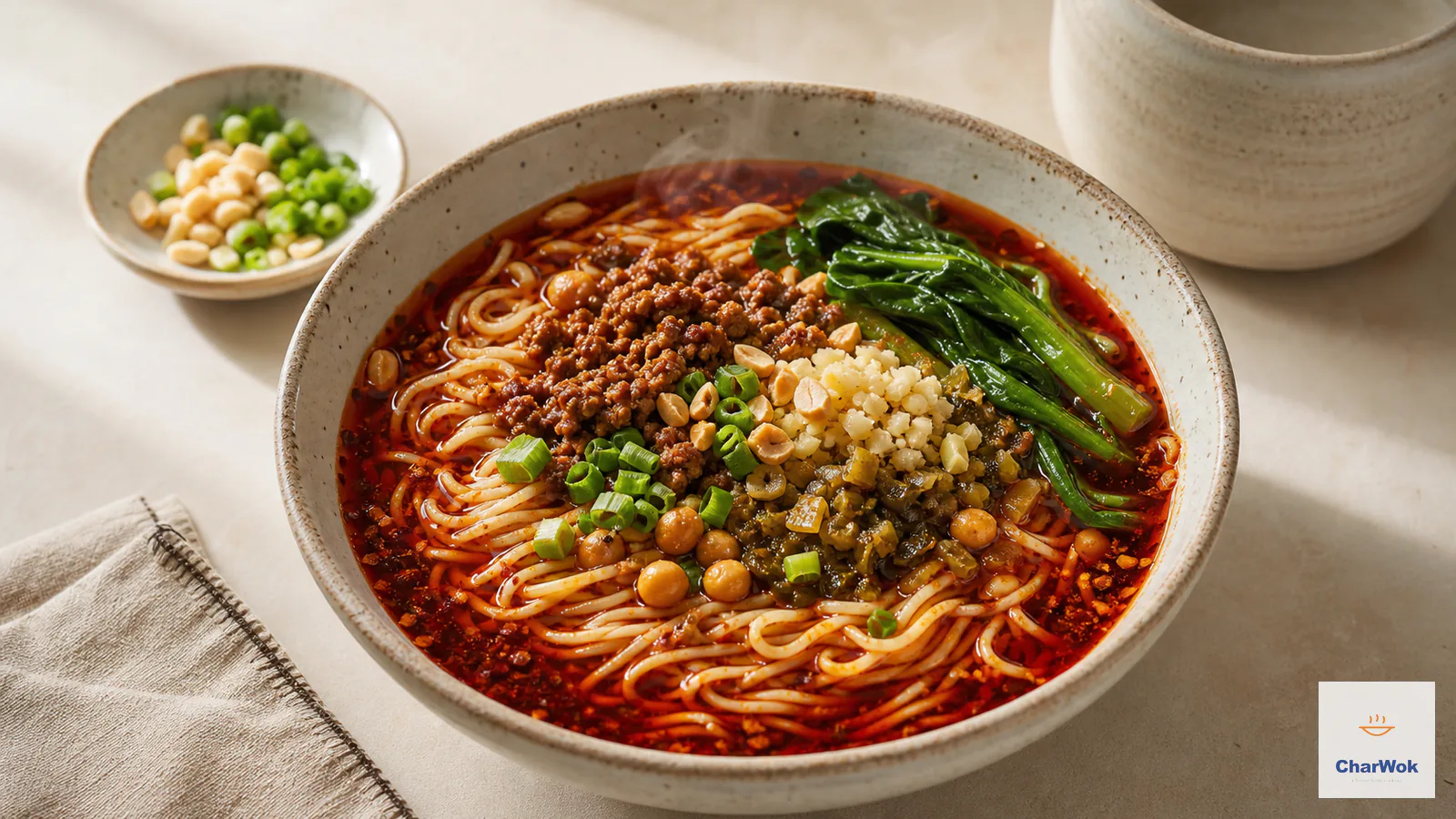
Tian Shui Mian (甜水面, literally "sweet water noodles") is a Chengdu cold-tossed noodle dish, usually eaten as a snack or a light meal rather than a main. It belongs to the same family of Sichuan cold-tossed noodles you see in summer, but it leans sweet where its cousins lean sour or numbing. The "sweet water" is the reduced soy-sugar syrup, and the thick noodle is the dish's signature. You will not see this width on a bowl of Dan Dan Noodles or a plate of Chongqing Xiao Mian, which both use thinner strands built for a soupier or oilier dressing.
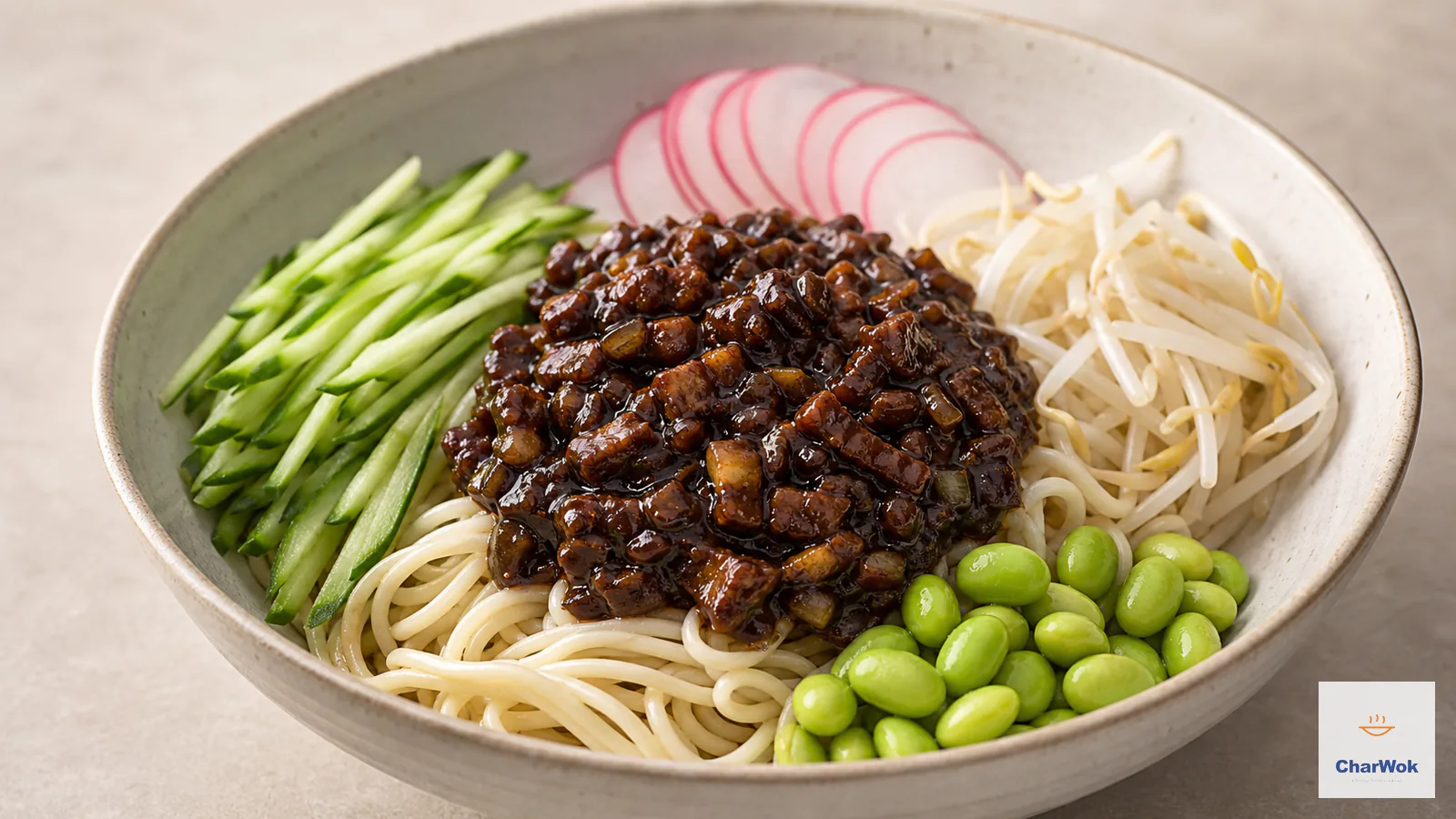
It sits closer in spirit to Wuhan hot dry noodles and the sesame-forward Chinese sesame noodles: a small amount of intense sauce, a noodle sturdy enough to stand up to it, and no broth to dilute anything. If you have made liang pi or liang fen and wondered what to do with your leftover chili oil and sesame paste, this is the dish that uses both.
The dough: low hydration, two rests, no argument
Use a firm, low-hydration dough, roughly 200 g of all-purpose flour to about 90 ml of water. That is a drier dough than most noodle recipes, and it is deliberate. A wet dough gives you soft, tender noodles; a dry dough gives you the springy, almost rubbery chew Tian Shui Mian is famous for. The trade-off is that a dry dough is harder to knead, which is why the resting matters as much as the kneading.
Rest the dough twice. The first rest, about 15 minutes covered, lets the flour fully hydrate and the gluten strands relax after the rough knead. You will come back to a dough that kneads smooth in two or three minutes where ten minutes of fighting would not have done it before. The second rest, another 10 minutes after the smooth knead, is what lets you roll it out without it springing back like a rubber band. Skip either rest and you will be wrestling a dough that tears and retracts. If you want the long version of why resting works the way it does, the basic homemade noodles guide walks through gluten relaxation in detail.
All-purpose flour is the right call here. Bread flour makes the noodles tough in a bad way, and cake flour makes them too soft to carry the sauce. Do not reach for the high-gluten flour you would use for hand-pulled noodles; this is a knife-cut noodle, and a moderate protein level is what you want. You are not pulling and stretching it, so you do not need that extra gluten scaffolding.
The sauce: it is a syrup, not a seasoning
The "sweet water" is a reduced mixture of soy sauce, brown sugar (or rock sugar if you have it), water, and a small bundle of aromatics: scallion, ginger, star anise, cassia cinnamon, bay leaf, whole Sichuan pepper, and fennel seed. The point of the simmer is not just to infuse. It is to drive off enough water that the soy and sugar concentrate into something that coats the noodle instead of pooling at the bottom of the bowl. You are making a syrup, and syrups only happen when you reduce.
Watch for the visual cue, not a timer. The surface goes from loose, fast-breaking bubbles to slower, larger bubbles that hang around for a beat before popping. Dip a spoon in and lift it; when the liquid runs off slowly and leaves a thin, glossy film behind, it is done. Pour it through a fine sieve to catch the aromatics, then let it cool; it thickens further as it cools, which is the part most people miss. A hot sauce poured on a cold noodle will thin out and slide off.
On the soy sauce: use light or regular soy sauce, not dark. Dark soy is for color and has less salt and more sweetness built in, which throws the sugar balance off here. The color comes from the reduction and the brown sugar, not from a heavy pour of dark soy.
Ingredients
Ingredients at a glance
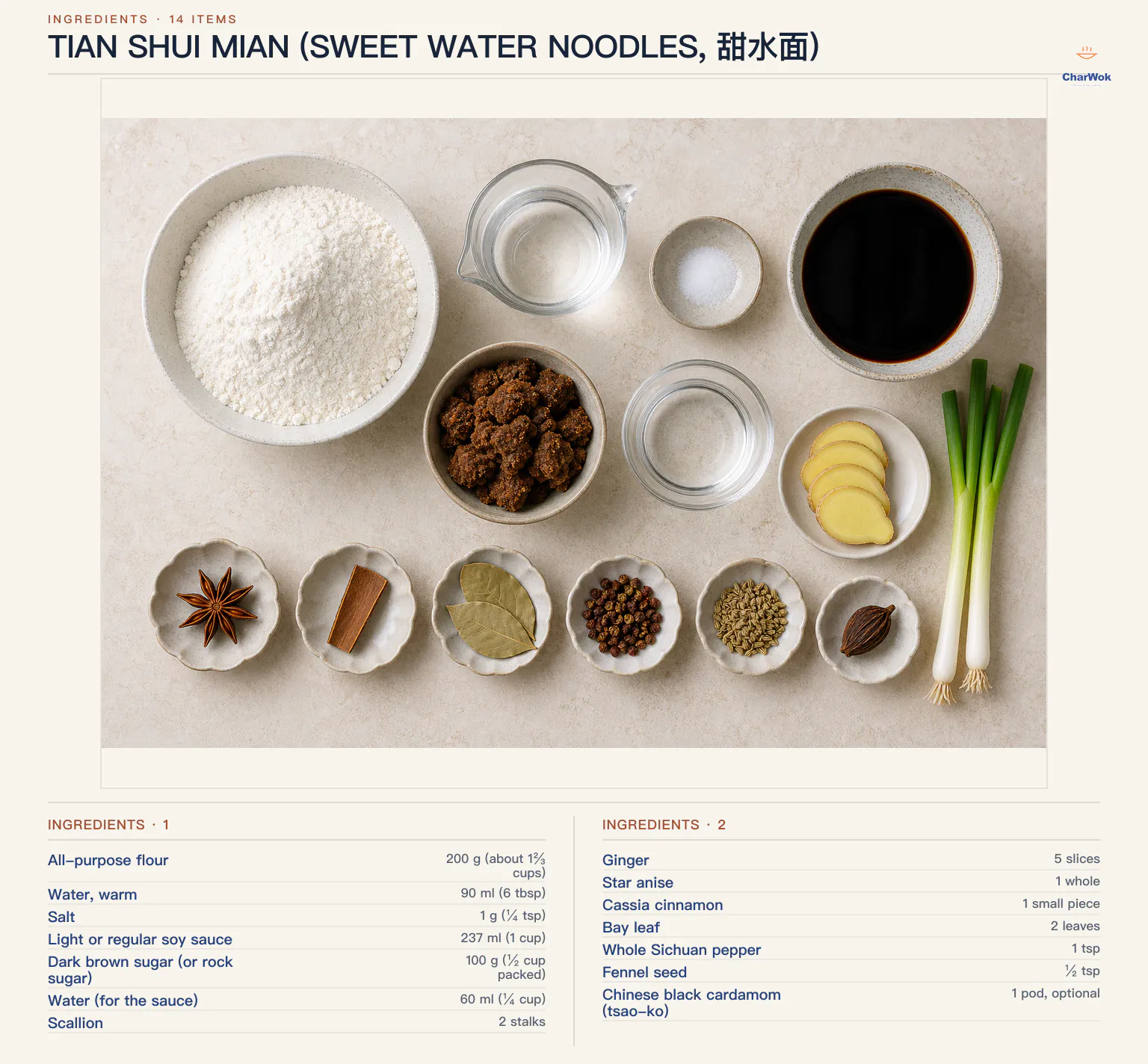
The recipe makes two snack-size portions. The sauce recipe makes more than you need for two bowls; it keeps for weeks and is worth having around (see the variations below).
| Ingredient | Amount | Notes / substitute |
|---|---|---|
| All-purpose flour | 200 g (about 1⅔ cups) | US all-purpose, not bread flour. A 1:1 gluten-free blend will not work; the chew depends on gluten. |
| Water, warm | 90 ml (6 tbsp) | Warm, not hot. Add gradually; the dough should feel firm and slightly dry. |
| Salt | 1 g (¼ tsp) | Tightens gluten slightly and seasons the noodle itself. |
| Light or regular soy sauce | 237 ml (1 cup) | Avoid dark soy here. See note above. |
| Dark brown sugar (or rock sugar) | 100 g (½ cup packed) | Rock sugar gives a cleaner sweetness; brown sugar adds molasses depth. Both work. |
| Water (for the sauce) | 60 ml (¼ cup) | Just enough to dissolve the sugar before it reduces. |
| Scallion | 2 stalks | Cut into lengths; these are aromatics, strained out. |
| Ginger | 5 slices | Smash them lightly to release flavor. |
| Star anise | 1 whole | One is enough; more makes it taste like five-spice. |
| Cassia cinnamon | 1 small piece | Cassia is what gives Chinese-bakery warmth; regular cinnamon is milder. |
| Bay leaf | 2 leaves | Standard bay leaf is fine. |
| Whole Sichuan pepper | 1 tsp | Whole for the simmer; ground separately for finishing. |
| Fennel seed | ½ tsp | Adds the sweet-licorice back-note. |
| Chinese black cardamom (tsao-ko) | 1 pod, optional | Smoky and camphor-like; skip if you do not have it. |
Method
- Start the sauce first. Combine the soy sauce, sugar, water, and all the whole aromatics in a small saucepan. Bring it to a boil, then drop to a low simmer, uncovered. Leave it at that gentle bubble until the liquid darkens and a lifted spoon runs off slowly, leaving a glossy film. The time it takes will depend on your pan and flame, so trust the look, not any number on the clock. Pour it through a fine sieve to catch the aromatics, then set the syrup aside to cool and thicken. This is the step that decides whether the dish tastes like anything.
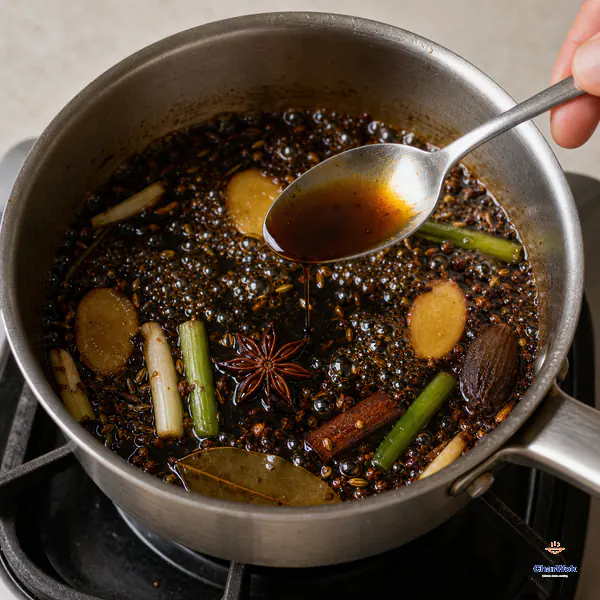
Simmer the soy, sugar, water and whole aromatics gently without a lid. Stop when dense large bubbles cover the surface and a lifted spoon keeps a thin glossy film; strain at once, because the syrup thickens further as it cools.
- Make a firm dough. Put the flour and salt in a bowl. Pour the water in slowly while stirring with chopsticks or a fork so it forms shaggy flakes and small lumps rather than a single wet mass. Press it together with your hand into a rough, firm ball. It will look ugly. That is fine.
- First rest, 15 minutes. Wrap the dough in cling film or cover the bowl with a damp towel. Walk away. The gluten relaxes and the flour finishes absorbing the water while you do something else.
- Knead smooth, then rest again. Knead the rested dough for 2 to 3 minutes until it is smooth and springs back lightly when pressed. Cover and rest 10 more minutes. This second rest is what makes the dough rollable without snapping back.
- Roll it thick. On a lightly floured surface, roll the dough into a rectangle about 8 mm (⅓ inch) thick. This is much thicker than you would roll for scissor-cut noodles or biang biang; the thickness is the point. Scatter more flour underneath if the dough grabs the surface.
- Cut fat strips. Cut the sheet into noodles about 8 mm wide, roughly the thickness of a chopstick. Dust them with flour and shake them apart so they do not fuse. If a few stick, pry them apart gently; a torn edge is not the end of the world.
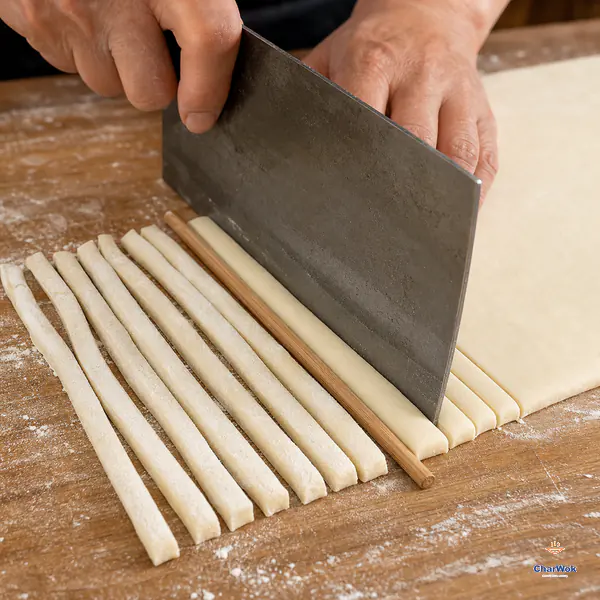
Roll the firm rested dough to an even 8 mm sheet, then cut strips about 8 mm wide so thickness and width match. Dust and separate the long square noodles immediately so they do not fuse or dry together.
- Boil until just cooked. Have a large pot of water at a vigorous, rolling boil. Give each strand a gentle, even pull as it goes in, just to even it out, never a hard yank. Cook until the noodles are just cooked through but still offer real resistance when you bite; they carry on softening after the drain, so pull them a touch early. Overcooking is the most common failure here; a soft noodle ruins the dish.
- Rinse cold. Drain and immediately run the noodles under cold tap water, or plunge them into an ice bath. This stops the residual cooking, sets the surface starch so the sauce clings, and brings the noodle to the cool temperature the dish is served at. Do not skip this.
- Assemble per bowl. Put a portion of noodles in a bowl. Add the sweet soy syrup, chili oil, thinned sesame paste, garlic, peanuts, sugar, and freshly ground Sichuan pepper. Toss vigorously for a good 15 seconds so every strand is coated. Eat immediately; the sauce thins and separates as it sits.
When it goes wrong
The dough is impossible to knead and keeps tearing. It is too dry, or you skipped the first rest. Wrap it and wait 15 minutes. If it still cracks at the edges after resting, wet your hand and knead that moisture in, a teaspoon at a time rather than a pour.
The noodles spring back and refuse to roll out. The second rest was too short. Cover it and wait another 10 minutes. Forcing it will give you noodles that shrink and curl when boiled.
The noodles are gummy or soft. Either the dough was too wet to begin with, or you overcooked them. Pull a single strand early next time and trust your teeth, not the clock. The cold rinse also matters; without it the surface starch stays sticky.
The sauce tastes flat, just sweet. It did not reduce enough, or the spices were not in long enough. The syrup should leave a glossy film on a lifted spoon and have a dark, almost lacquered look. Also check that you used regular soy, not a low-sodium one; the salt is what stops the sugar from reading as dessert.
The sauce slides off and pools at the bottom. Two likely causes: the sauce or the noodles were too hot when they met, or you skipped thinning the sesame paste. Sesame paste is the binder here; a teaspoon thinned with warm water into a pourable paste is what makes the sauce grab the noodle.
It tastes one-dimensionally spicy with no sweetness. You went heavy on the chili oil and light on the syrup. The sweet note has to come first, so start with equal parts syrup and chili oil by volume, then adjust up.
Ingredients that pull their weight
A few pantry items do a lot of the work here, and it is worth getting them right. The sesame paste is not the same as tahini. It is made from toasted sesame and has a deeper, roasted flavor. If you cannot find it, the substitute guide linked there covers three options. The chili oil should be one with the flakes and sediment, not a clear infused oil; the solids are part of the texture. The guide to making chili oil is worth your time if you cook Sichuan more than once a year.
On the Sichuan pepper: grind it fresh, right before finishing the bowl. Pre-ground pepper loses its numbing kick within weeks. The full Sichuan pepper guide covers sourcing and storage, and the page on how to grind it shows the toast-then-grind method that releases the most flavor.
Variations and pairings
The extra sweet soy syrup is a gift. Use it as a finishing drizzle on scallion oil noodles, spoon it over cold tofu, or thin it with a little vinegar and use it as a dip for dumplings. It keeps for a long time in a jar in the fridge; the sugar acts as a preservative.
For a colder, more refreshing take, chill the cooked noodles fully and serve them over a handful of shredded cucumber, and the dish becomes something close to a sesame noodle salad with a sweet-spicy dressing. It is one of the more rewarding classic Chinese noodle recipes to keep in your rotation. In winter, I will sometimes ladle a little hot spicy beef noodle soup broth over the noodles to turn it into a warm bowl, though that is no longer really Tian Shui Mian, just a very good bowl of noodles.
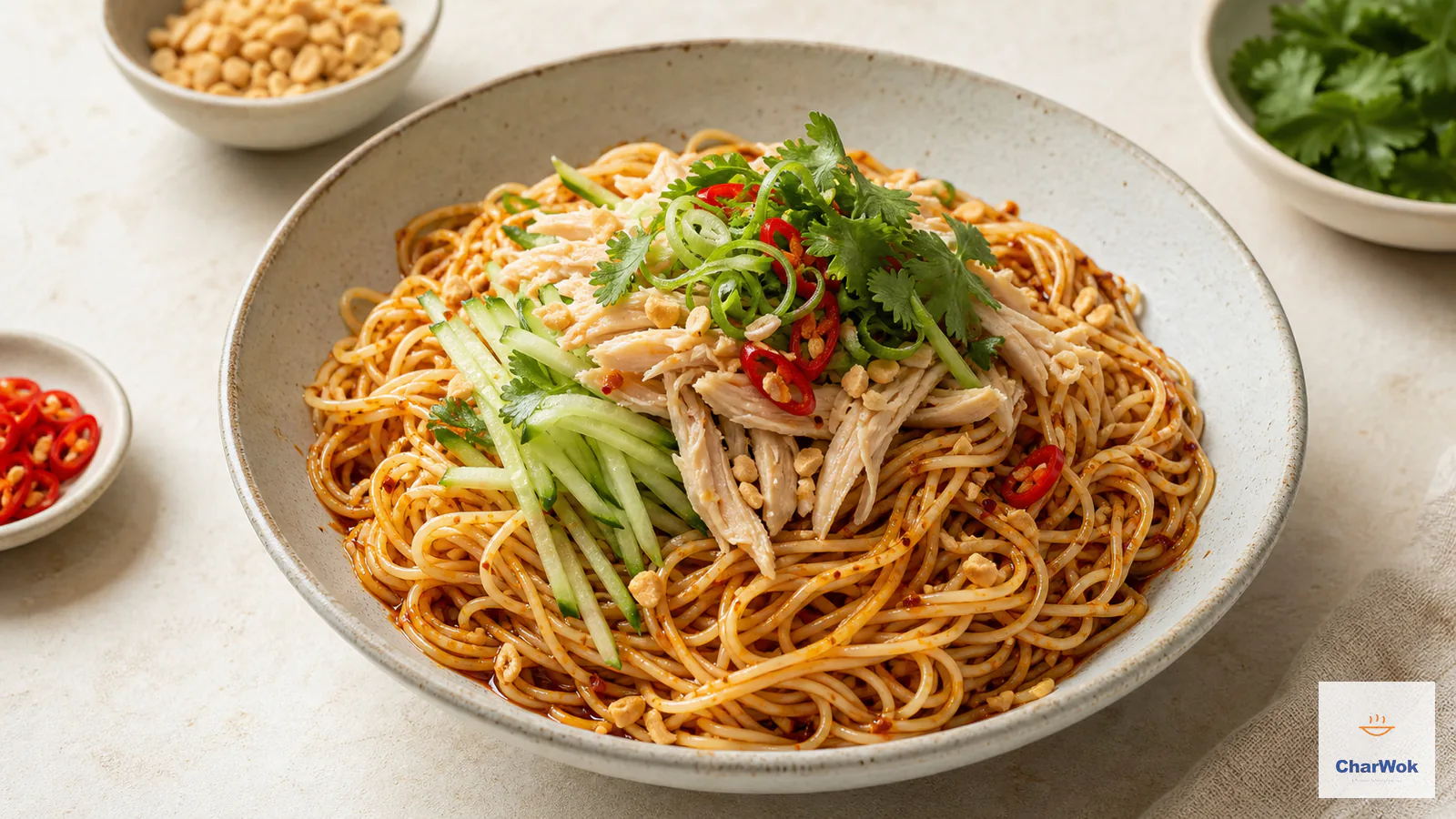
If making the dough from scratch feels like too much on a weeknight, the technique also works with store-bought fresh udon or thick alkaline noodles; the texture is different but the sauce carries it. For a full Sichuan dinner, this pairs well with a plate of smashed cucumber and a cold protein like sliced chicken in chili oil. It is one of the easier entries in the broader set of Sichuan recipes you can make at home.
Storage and reheating
The sweet soy syrup keeps in the fridge for a long time and actually improves after a day as the spices keep infusing. The dough, before cutting, can be wrapped and refrigerated overnight; bring it back to room temperature before rolling or it will crack. Cooked noodles do not reheat well; they go limp, so only cook what you will eat. If you have leftover cooked noodles, rinse them, toss with a few drops of sesame oil to stop sticking, and eat them cold the next day with a fresh spoon of syrup.
Frequently asked questions
Can I use dried noodles instead of making dough? Yes, but pick the thickest dried noodle you can find, ideally a fresh or frozen udon. Thin dried noodles will not have the chew the sauce is built for.
Why rinse the noodles in cold water? It stops the cooking so they stay firm, sets the surface starch so the sauce sticks, and brings them to the cool serving temperature. Skipping it leaves you with sticky, limp noodles.
Is Tian Shui Mian spicy? Only as spicy as the chili oil you add. The base syrup is sweet and savory with no heat; you control the burn at the bowl. For a milder version, use just a teaspoon of chili oil and a pinch of Sichuan pepper.
Why is my sauce not thickening? It needs more reduction. Keep the simmer going until a spoon dragged through leaves a clear track on the pan. The sauce also thickens as it cools, so judge the final texture after it has rested.
Can I make the dough ahead? The dough holds overnight in the fridge, wrapped. Let it warm up for 20 minutes before rolling. Cut noodles can be dusted with flour and refrigerated for a few hours but are best cooked the same day.
The one thing to remember
If you forget everything else, hold onto two things: rest the dough twice, and reduce the sauce until a lifted spoon runs off slowly and leaves a film. Get those right and the rest is seasoning to taste. Tian Shui Mian is forgiving once the noodle has its chew and the syrup has its body; after that you are just deciding how much fire you want on a given day.