The first time I made longevity noodles for a birthday dinner, I overcooked them by ninety seconds and turned the whole thing to paste. That is the entire difficulty of this dish in one sentence: the noodles cook twice, so what feels "almost done" in the pot is already too far. Get that one timing call right and the rest is forgiving.
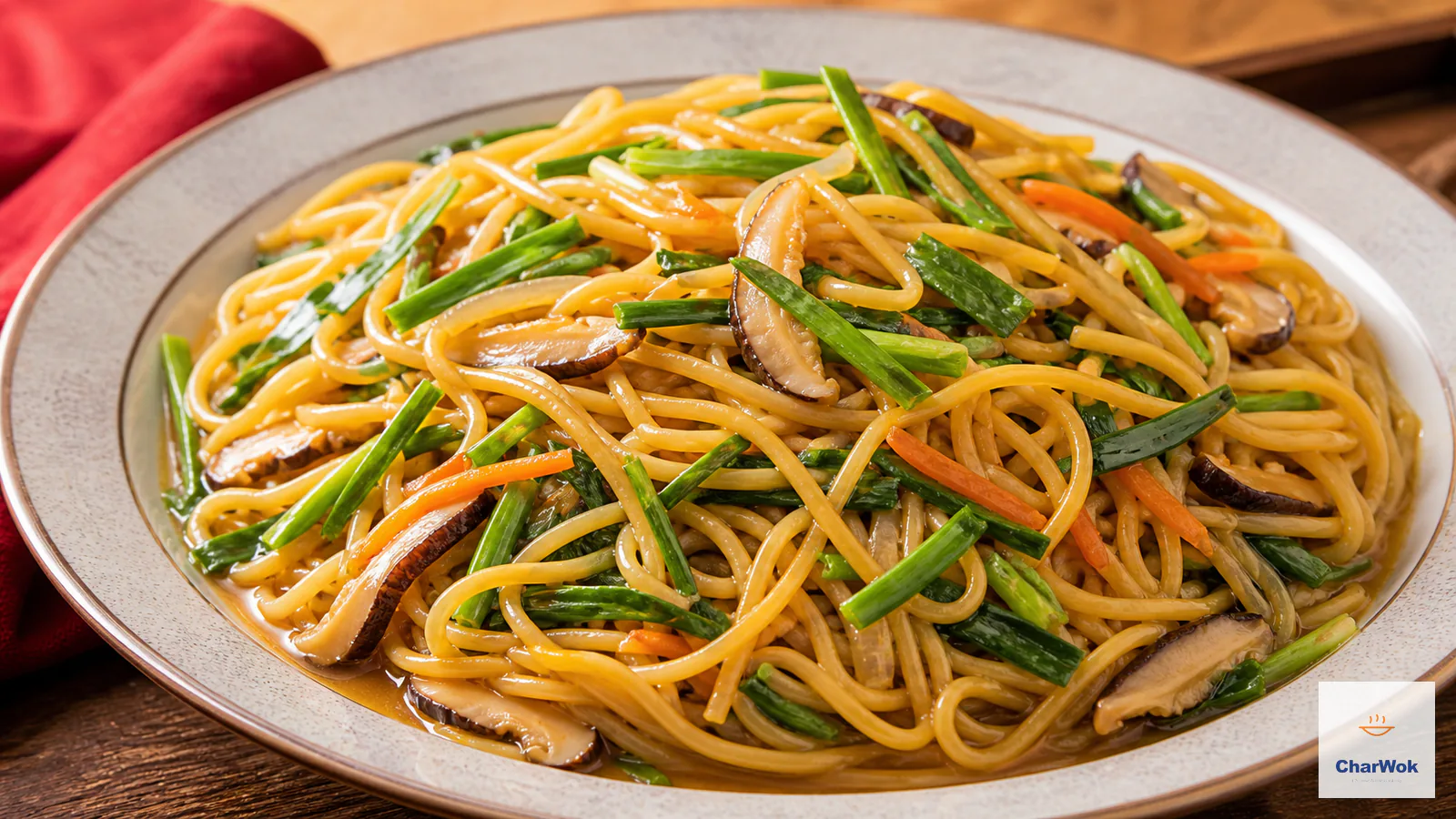
What we are after is the Cantonese birthday noodle, Yi Mein (伊面): deep-fried dried egg noodles braised in a glossy sauce with mushrooms, carrot, and chives. The strands come out springy and bouncy, with a porous quality that no other dried noodle shares. At a birthday or New Year table the long, unbroken strand is the whole point, so you serve it without cutting. If you are looking for the broader category, this is one of the classic Chinese noodle dishes worth keeping in rotation.
At a glance: Parboil dried Yi Mein to one minute under the package time, then braise in stock and soy until the sauce all but disappears. Cooked twice means pull them early. Serves 3 in about 15 minutes; the only real failure mode is over-boiling.
Why Yi Mein behaves differently from every other noodle
Most dried noodles are just dried. Yi Mein goes one step further: after drying, the nests are deep-fried. That second step sets the starch and creates a network of tiny air pockets inside each strand. When the noodles hit liquid again, they soak it up like a sponge, which is why they braise rather than stir-fry. The frying also partly cooks the gluten, so the strands hold their bounce and stay intact when you work them around the pan, the opposite of the fragile fresh noodles you'd use for lo mein or a quick soy-sauce pan-fried noodle.
This is also why substituting is hard. The famous northern longevity noodle skips Yi Mein entirely and uses a single, uncut hand-pulled noodle per bowl, leaning into the "one long strand, one long life" symbolism. That is a different dish with a different texture, made for a different kind of occasion. Here we want the Cantonese braised version, and for that the fried dried nest is the whole point.
The noodles: what to buy and what is an acceptable fallback
Look for dried Yi Mein, sometimes labeled E-fu noodles, sold in round or oval nests in a cellophane bag, usually in the dry-goods aisle of any Chinese grocery. The surface should look slightly oily and a touch blistered from the fry. If your regular supermarket does not carry them, order online; they keep for months.
If you genuinely cannot find Yi Mein, fresh thin egg noodles (the kind used for chow mein) work, but you must adjust the boil down to a 30-second blanch, because they have no fried crust to protect them. Instant ramen noodles, drained of their seasoning packet, are a closer textural match than fresh noodles, since they are also fried; the trade-off is they are thinner and saltier, so skip any added salt in the sauce and taste before seasoning. Neither is the real thing. For a birthday, I would make the trip to get Yi Mein.
Ingredients
Ingredients at a glance
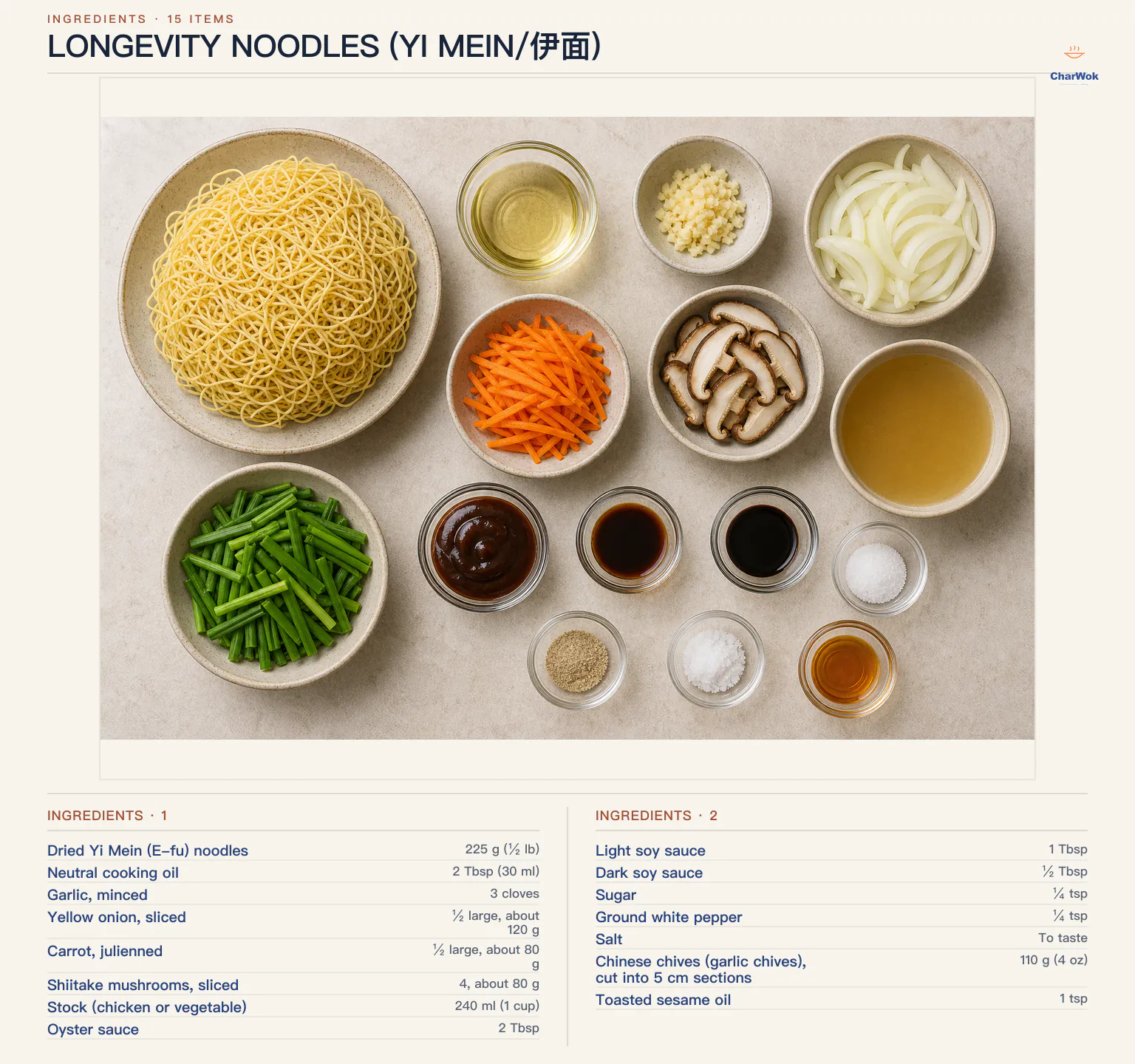
For 3 servings. The quantities below assume dried Yi Mein; if you swap the noodle, see the note above on timing. Dried shiitake will give you a deeper sauce than fresh, and the soaking liquid is worth more than the mushrooms, so plan ahead.
| Ingredient | Amount | Notes / substitute |
|---|---|---|
| Dried Yi Mein (E-fu) noodles | 225 g (½ lb) | About one 8 oz packet. Fresh thin egg noodles or fried instant ramen as fallback (adjust boil time). |
| Neutral cooking oil | 2 Tbsp (30 ml) | Peanut, canola, or avocado. Not olive oil. |
| Garlic, minced | 3 cloves | Don't chop too fine; it burns fast. |
| Yellow onion, sliced | ½ large, about 120 g | Sweet onion works; shallot is fine. |
| Carrot, julienned | ½ large, about 80 g | Cut matchstick-thin so it cooks in a minute. |
| Shiitake mushrooms, sliced | 4, about 80 g | Dried preferred. If using dried, soak in hot water 20 min and keep the liquid. |
| Stock (chicken or vegetable) | 240 ml (1 cup) | Low-sodium. Dried-shiitake soaking water is an excellent vegetarian substitute; see homemade chicken stock. |
| Oyster sauce | 2 Tbsp | Vegetarian oyster sauce (mushroom stir-fry sauce) for vegan. |
| Light soy sauce | 1 Tbsp | For salt and aroma; see light vs. dark soy sauce. |
| Dark soy sauce | ½ Tbsp | For color only; adds little salt. |
| Sugar | ¼ tsp | Just to round off the salt; rock sugar melted is traditional. |
| Ground white pepper | ¼ tsp | Black pepper is too aggressive here. |
| Salt | To taste | Only if your stock is unsalted; taste first. |
| Chinese chives (garlic chives), cut into 5 cm sections | 110 g (4 oz) | Scallion greens or flowering chives as substitute. |
| Toasted sesame oil | 1 tsp | Stirred in off the heat; see Chinese sesame oil. |
Method, with the reasoning baked in
Have everything prepped and within arm's reach before you turn on the stove. Once the wok is hot this moves in under five minutes, and there is no time to julienne a carrot mid-stream. A 12-inch carbon-steel wok or a wide skillet works; the pan needs to be big enough to toss the noodles freely.
- Parboil the noodles, and pull them early. Bring a full pot of water to a rolling boil, plenty of water, the way you'd cook pasta. Drop in the nests and use chopsticks to separate the strands as they soften. The package gives a recommended boil, but stop a full minute before it; set your timer to that early mark. Bite a strand: it should be firm with a chalky core, more underdone than you think is safe. The braising will finish the cook. Drain immediately. If you are not braising right away, cool the noodles quickly under a stream of cold water for about half a minute to halt the carryover cooking and keep them from sticking.
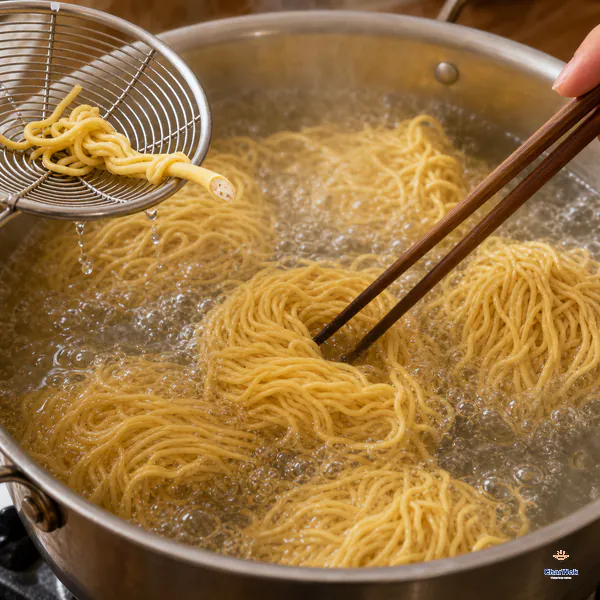
Pull the noodles one minute before the package time, while the center is still firm enough to finish in the braising liquid.
- Heat the pan properly. If you are using carbon steel, heat the empty wok until it just begins to smoke, then add the oil and swirl to coat. This is the standard non-stick trick for a seasoned wok: hot pan, cold oil. With non-stick cookware, do the opposite, add oil to a cool pan and heat together, because an empty non-stick pan left on high heat will warp and off-gas.
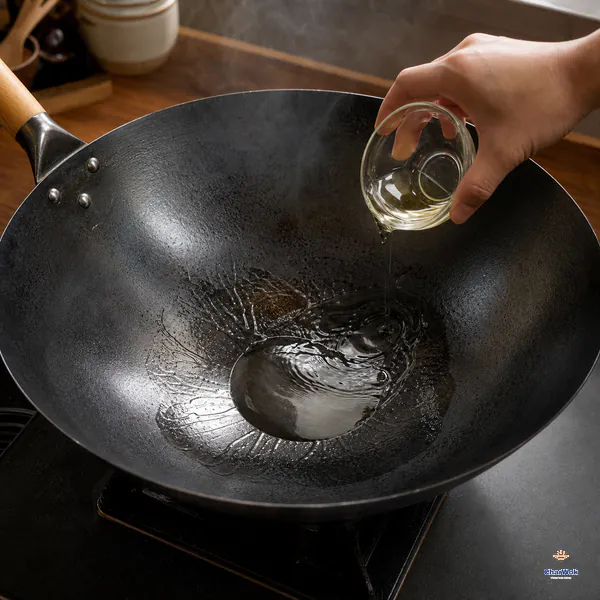
For carbon steel, heat the empty wok until it just smokes, then add and swirl the oil; never preheat an empty non-stick pan this way.
- Bloom the aromatics. Add the garlic and onion and stir for 20 to 30 seconds, just until you can smell the garlic but before it colors. Add the carrot and mushrooms and cook about a minute. You are building a flavor base, not browning; the goal is raw-edge-off, not caramelization.
- Build the braising liquid. Pour in the stock, then add the oyster sauce, light soy, dark soy, sugar, and white pepper. Stir to dissolve. Bring to a boil, then taste. The liquid should taste a little too salty and a little too concentrated, because the noodles will dilute it as they drink. Add salt only now, only if needed.
- Braise the noodles uncovered. Add the drained noodles and toss so every strand meets the sauce. Turn the heat down to low and leave the pan uncovered. Uncovered matters: a lid traps steam and turns the strands gummy, exactly the texture we are avoiding. Simmer, tossing once or twice, until almost all the liquid has been absorbed, about 3 to 4 minutes. You want a thin glossy film coating the noodles, not a soup, and not bone-dry.
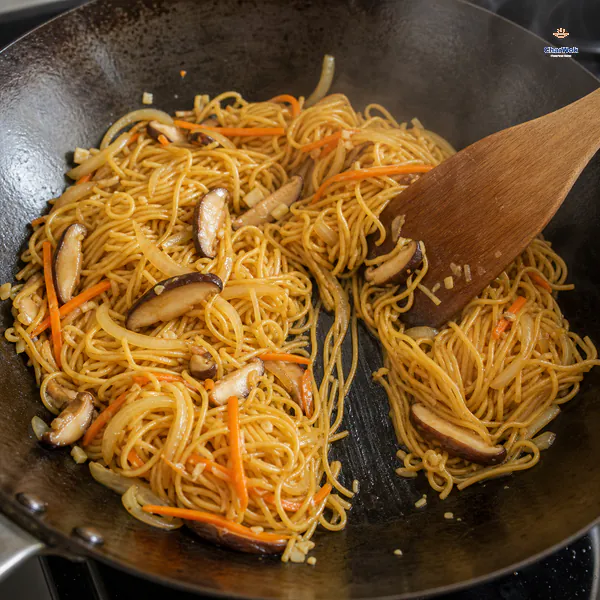
Braise uncovered over low heat until the sauce only coats the strands and a spatula leaves a clean streak across the wok.
- Finish with chives and sesame oil, off the heat. When the sauce is nearly gone, slide in the chives along with the sesame oil and take the pan off the burner. Keep tossing for a brief stretch, half a minute to a minute, just long enough for the chives to brighten and soften. Pull them the instant they collapse; chives go slimy and sulfurous if you push them. Serve at once, ideally in one long tangle per plate.
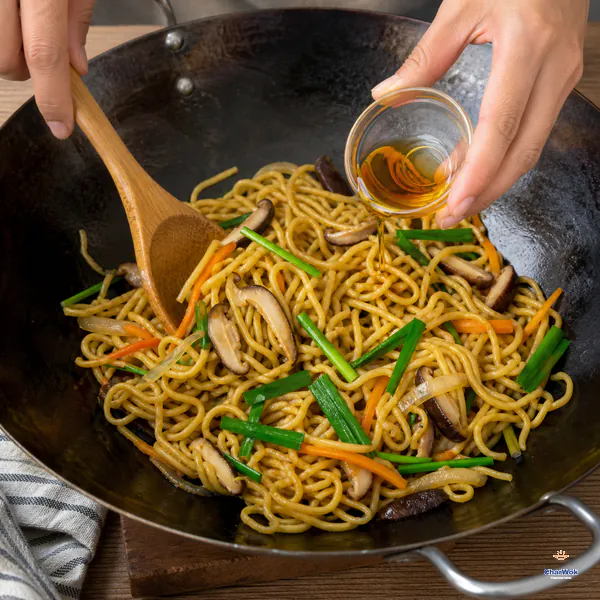
Take the wok off the heat, add the chives and sesame oil, and stop as soon as the chives begin to soften.
When things go wrong
I have wrecked this dish in basically every way possible, so here are the fixes.
- The noodles turned to mush. You boiled too long. Yi Mein keeps cooking from residual heat even after draining, so the pull-early rule is not optional. Next time, aim for what feels underdone. If the damage is done, spread the drained noodles on a tray to cool fast and shorten the braise to two minutes; the texture will still be soft but you can stop it getting worse.
- The sauce vanished and the noodles are dry. You let it go too long, or your stock evaporated faster than it soaked in. Add a splash of hot water, two tablespoons at a time, and toss over low heat until a glossy film returns. The noodles should glisten, not look parched.
- The dish is too salty. Almost always the stock or the oyster sauce. Dilute with a quarter cup of hot water and add a few extra chives; the sugar can also be nudged up by a pinch to balance.
- The noodles clumped into one brick. They stuck during the parboil drain. Either you did not rinse (if there was a delay) or you did not toss them into the sauce quickly enough. Separate with chopsticks and a little hot oil before braising.
- The garlic burned and turned bitter. The pan was too hot or the garlic too fine. Scrape out the burnt bits before adding the liquid, or the bitterness will run through the whole sauce. Next time, add garlic to a slightly cooler pan.
- The strands broke apart when tossing. Usually means a substitute noodle, not Yi Mein. The real thing is famously elastic. If you must use a fragile noodle, toss gently with tongs rather than chopsticks.
Variations and what to serve alongside
The base recipe is intentionally plain so the noodle is the star, but it takes additions well. For a birthday or New Year spread, the restaurant move is to top the platter with quick-seared shrimp, scallops, or even lobster tails; add them in step 5 so they warm through without overcooking. Sliced char siu pork, leftover chicken, or pan-fried tofu cubes can go in at the same stage. For a purely vegetable version, braised shiitake and wood-ear mushrooms make the dish feel substantial without meat.
On the side, keep it light. A clear soup, a simple steamed vegetable, or a whole steamed fish (itself a symbol of abundance at a festive meal) round out a birthday table without competing. For drinks, jasmine tea cuts the richness better than anything cold.
Heat-seekers can finish with a spoonful of chili oil at the table. I do this more often than not. If you love the sesame-forward profile, the same braised-noodle technique with a sesame sauce base will point you toward Chinese sesame noodles, and the related northern stir-fried classics like zha jiang mian or a scallion oil noodle are good next stops once you have the timing down.
Make-ahead and leftovers
For a party, parboil and cold-rinse the noodles up to a few hours ahead, then finish the braise in the last five minutes before serving. You can also cook the whole dish through, cool it flat on a tray, and refrigerate overnight; to reheat, warm it gently in a pan with a couple of spoonfuls of water, stirring steadily so each strand softens again rather than crisping up in the oil. Microwaving works in a pinch but leaves the edges dry.
Leftovers keep two days in the fridge, covered. The noodles will have absorbed most of the sauce by day two, so always reheat with a splash of water. I do not recommend freezing; the fried-noodle texture breaks down and turns mealy on thaw.
FAQ
Can I use fresh egg noodles instead of Yi Mein?
Yes, but only as a fallback, and the timing changes. Fresh noodles are not fried, so blanch them for 30 seconds at most, or they will fall apart during the braise. The signature spongy texture will be missing.
Do I have to rinse the noodles after boiling?
Only if you are not braising immediately. Rinsing stops carryover cooking and washes off surface starch so the strands do not clump. If you are moving straight to the wok, skip it.
Is this the same as the noodles at Chinese New Year?
It is one version of them. This Cantonese Yi Mein style is common at New Year and birthday feasts. The northern New Year noodle is different: a single long, uncut hand-pulled strand in soup, chosen for the symbolism of an unbroken line.
Why braise uncovered instead of covered?
A lid traps steam, which overcooks the outside of the strand and turns it gummy before the inside is ready. Uncovered lets water escape as the noodles drink in the sauce, leaving a glossy film rather than a wet soup.
Can I make it vegan?
Easily. Use vegetarian oyster sauce (mushroom stir-fry sauce), vegetable stock, and the soaking liquid from dried shiitake. Confirm your Yi Mein contains no egg if you are strict, as some brands do; a wheat-and-water noodle is the safe swap.
The whole dish turns on a single call: pull the noodles one minute before you think they are ready. Make that judgment with your teeth, not the clock, and the braise takes care of everything else. The symbolism is a bonus; the texture is the reward.