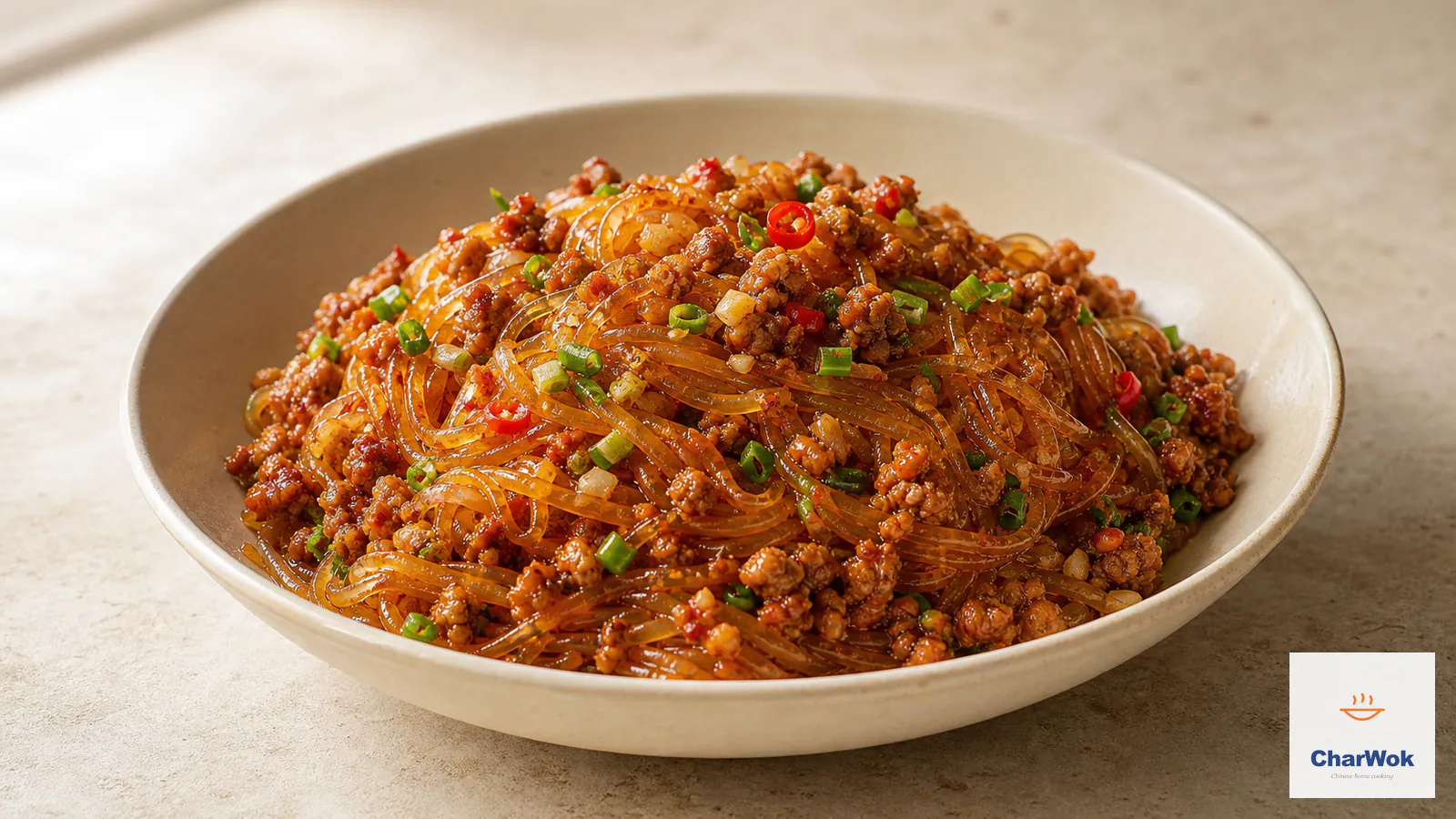
Ants Climbing a Tree is a Sichuan glass-noodle dish that lives or dies on one decision: how much broth you leave in the wok at the end. Too much and the noodles swim, bland and soupy. Too little and they seize into a sticky clump before they reach the table. The cook I learned this from called the target state "the noodles still wet, but the bowl dry," and that single image is the whole technique in a sentence.
Translated from its Chinese name, Ma Yi Shang Shu, the dish is a theatrical literal description: the fine bits of minced pork clinging to the pale vermicelli look like ants crawling up the branches of a tree. I have served this to skeptical guests who expected novelty and asked for seconds. The flavor is built on Sichuan chili bean paste fried in oil until it reddens and turns fragrant, then carried into the noodles through the liquid they absorb. If you have made Dan Dan Noodles or Mapo Tofu, you already know the base vocabulary. This is the glass-noodle version of that same Sichuan instinct.
At a glance: 100 g dried mung bean vermicella cooked in about 250 ml of seasoned liquid, never more, until it drinks up nearly all of it. The judgment call is timing: pull the wok off the heat when a spoon drawn across the bottom leaves a momentary clean streak. Overcook by 30 seconds and the noodles turn to paste.
What the dish actually is
Despite the fanciful name, this is humble Sichuan home cooking. Glass noodles (mung bean vermicelli, fensi) are cheap, shelf-stable, and almost flavorless on their own, which is exactly the point. They are a flavor delivery system. The starch in the noodle gelatinizes and swells as it simmers, pulling the chili-red pork broth into its core. What tastes like 100 ingredients is really one ingredient doing the absorbing and one base doing the flavoring.
The dish belongs to the same family as Yu Xiang shredded pork and Twice Cooked Pork: fast wok work built on a Doubanjiang foundation. Where it diverges from those is technique. You are not stir-frying the noodles so much as braising them in a concentrated sauce, which is closer in spirit to glass noodles braised with napa cabbage than to a quick toss in a hot pan.
The three things that go wrong, and why
I have wrecked this dish more times than I have nailed it, and the failures cluster around the same three mistakes. Worth naming them up front so the method below makes sense.
- Mushy noodles. The vermicelli was soaked too long before cooking, or the simmer ran past the absorption point. Mung bean starch holds its shape briefly, then collapses. The window between done and ruined is narrow.
- A noodle brick. Not enough liquid, or the heat was too high and the liquid evaporated instead of absorbing. The noodles weld together and the bottom scorches.
- One-dimensional salt. Doubanjiang alone is loud and flat. The dish needs sugar to round the heat, and it needs the raw garlic and scallion added off the heat at the end so their volatile aromatics survive.
Ingredients
Ingredients at a glance
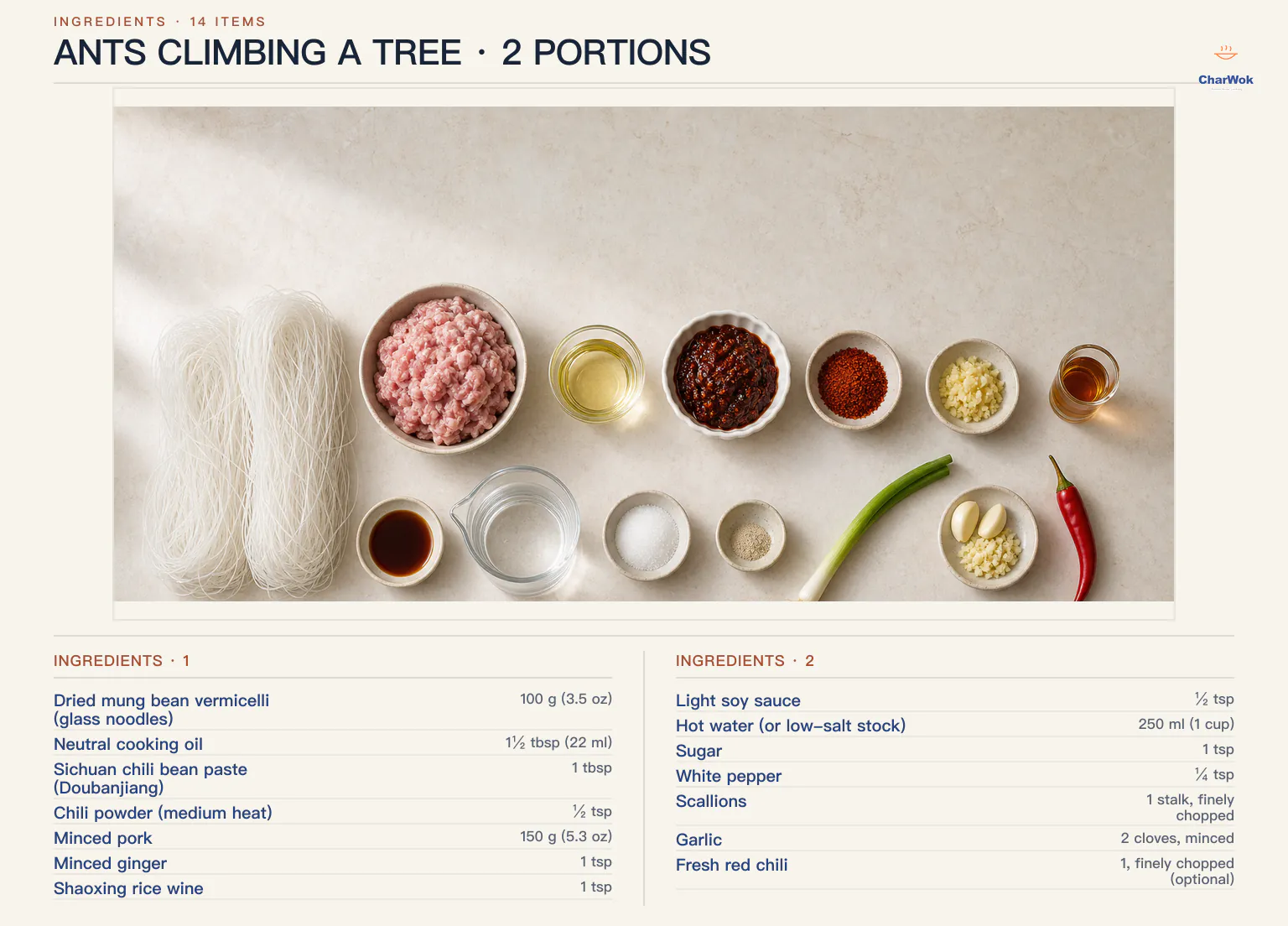
Serves 2 as a main, or 4 as one dish in a larger spread. Pork is traditional; the recipe below also works with minced beef or chicken thigh. The brand of Doubanjiang matters more than any other variable, so I have flagged it in the notes.
| Ingredient | Amount | Notes / substitute |
|---|---|---|
| Dried mung bean vermicelli (glass noodles) | 100 g (3.5 oz) | One 50 g bundle is two bundles. Look for 100% mung bean starch on the label; sweet potato vermicelli works but needs a longer soak and drinks less liquid. |
| Neutral cooking oil | 1½ tbsp (22 ml) | Peanut, canola, or grapeseed. |
| Sichuan chili bean paste (Doubanjiang) | 1 tbsp | Pixian Douban is the gold standard. Chop it coarsely before using. See note below. |
| Chili powder (medium heat) | ½ tsp | Optional but adds depth and color; omit for a milder dish. |
| Minced pork | 150 g (5.3 oz) | 80/20 fat ratio. Beef or chicken thigh mince are fine substitutes; add 1 tsp oil to lean meat so it does not dry out. |
| Minced ginger | 1 tsp | Fresh, peeled, minced fine. |
| Shaoxing rice wine | 1 tsp | See Shaoxing rice wine; dry sherry is the standard substitute. |
| Light soy sauce | ½ tsp | Just enough to season the meat. The Doubanjiang carries most of the salt. |
| Hot water (or low-salt stock) | 250 ml (1 cup) | Hot, not cold, so the wok does not lose its heat when you deglaze. |
| Sugar | 1 tsp | Granulated is fine. Balances the salt and heat. |
| White pepper | ¼ tsp | Ground. You can swap in a pinch of ground Sichuan pepper for a numbing edge. |
| Scallions | 1 stalk, finely chopped | Green and pale parts, kept separate from the white parts used in the oil. |
| Garlic | 2 cloves, minced | Added at the end, not the start. |
| Fresh red chili | 1, finely chopped (optional) | For color and a fresh heat hit. Bird's eye or Fresno both work. |
How to cook it, step by step
- Soak the noodles warm, not hot. Cover the vermicelli in warm water (about 40°C / 105°F, bath temperature) for 5 minutes, or cold water for 10 minutes, until the strands are pliable but still have a faint chalky core when you bite one. They will finish cooking in the sauce. Soaking in boiling water overcooks them before they ever hit the wok, which is the single most common cause of mush. Drain and rinse under cold water to stop the softening and wash off surface starch that would otherwise turn the sauce cloudy.
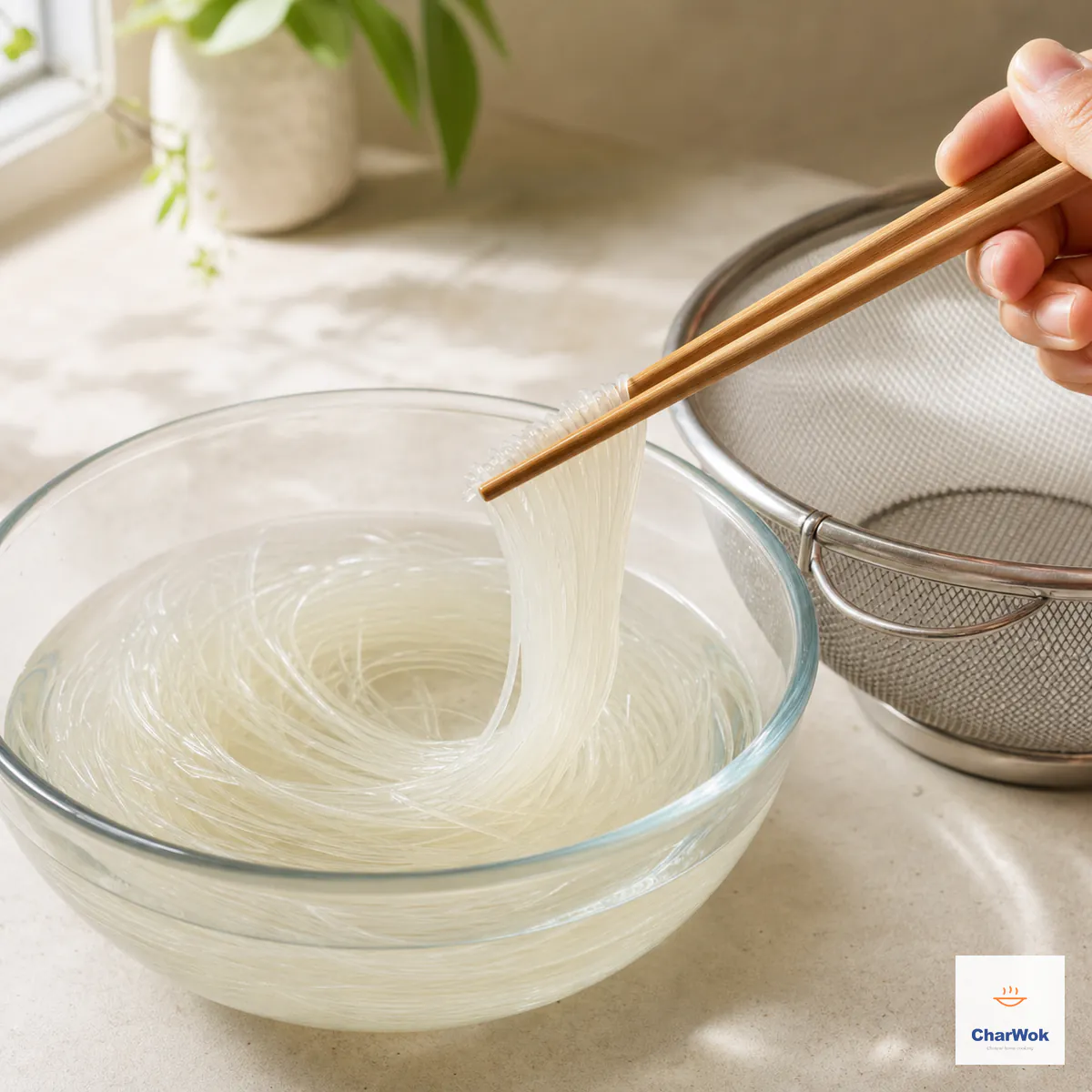
Soak until the strands bend easily but retain a faint chalky core, then rinse cold and drain well
- Bloom the Doubanjiang in oil over medium heat. Heat the oil in a wok or wide skillet over medium, add the chopped Doubanjiang and chili powder, and fry for 20 to 30 seconds, pressing and stirring. You are looking for the oil to turn a deep, glossy red and the paste to smell sweet and toasted rather than raw. Keep the heat moderate: burnt Doubanjiang turns bitter and there is no rescuing it. This step is the foundation of the whole dish, and it is why a properly seasoned wok pays off here.
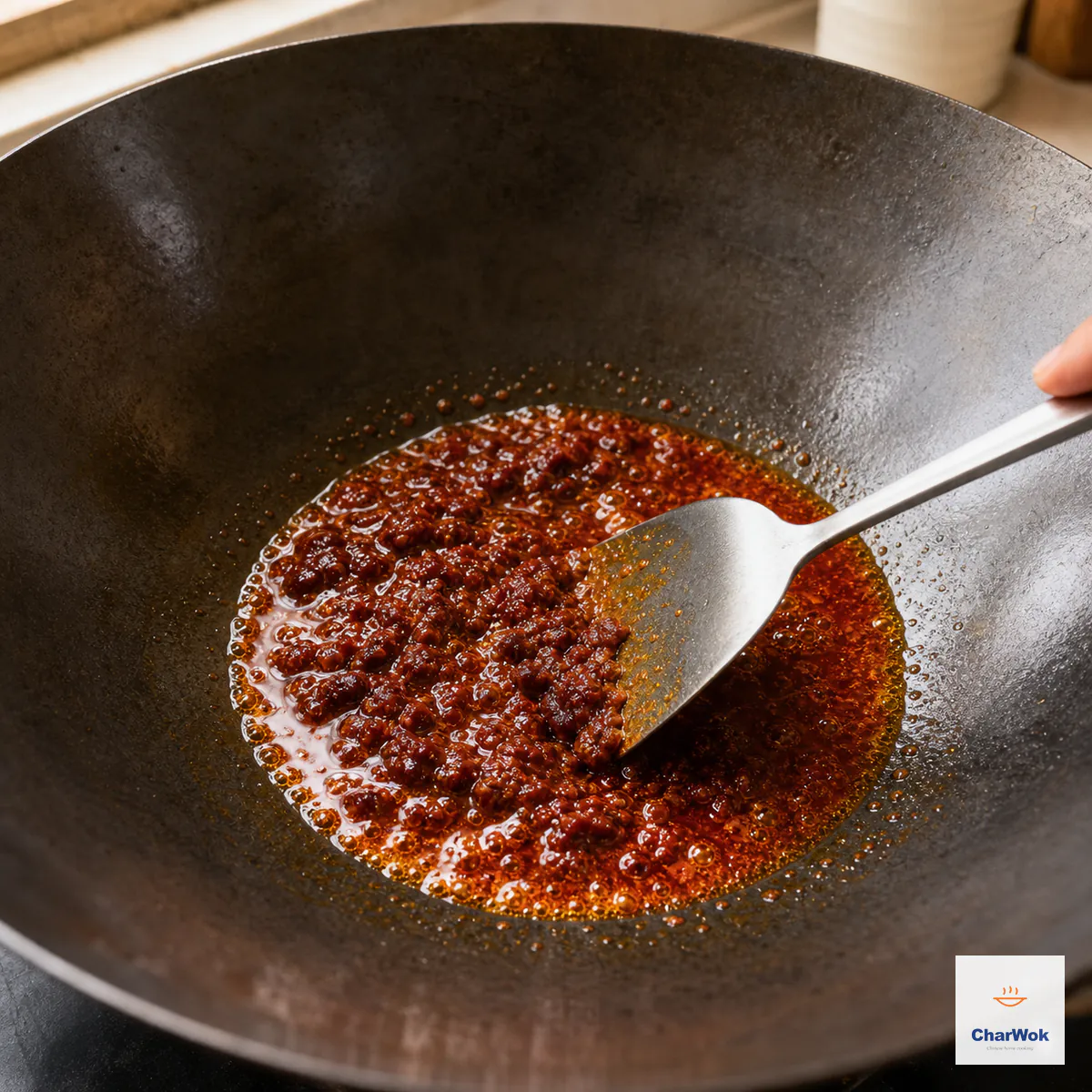
Fry over medium heat for 20 to 30 seconds, stopping when the oil is glossy red and the paste smells toasted rather than raw
- Brown the pork with the aromatics. Add the minced pork, ginger, rice wine, and soy sauce. Break the meat up with your spatula and fry until it is no longer pink and the fat has begun to render, about 2 minutes. You want the meat in small crumbles, not a paste, because those distinct little bits are the "ants." If the pan looks dry, the pork was too lean; a teaspoon of oil helps.
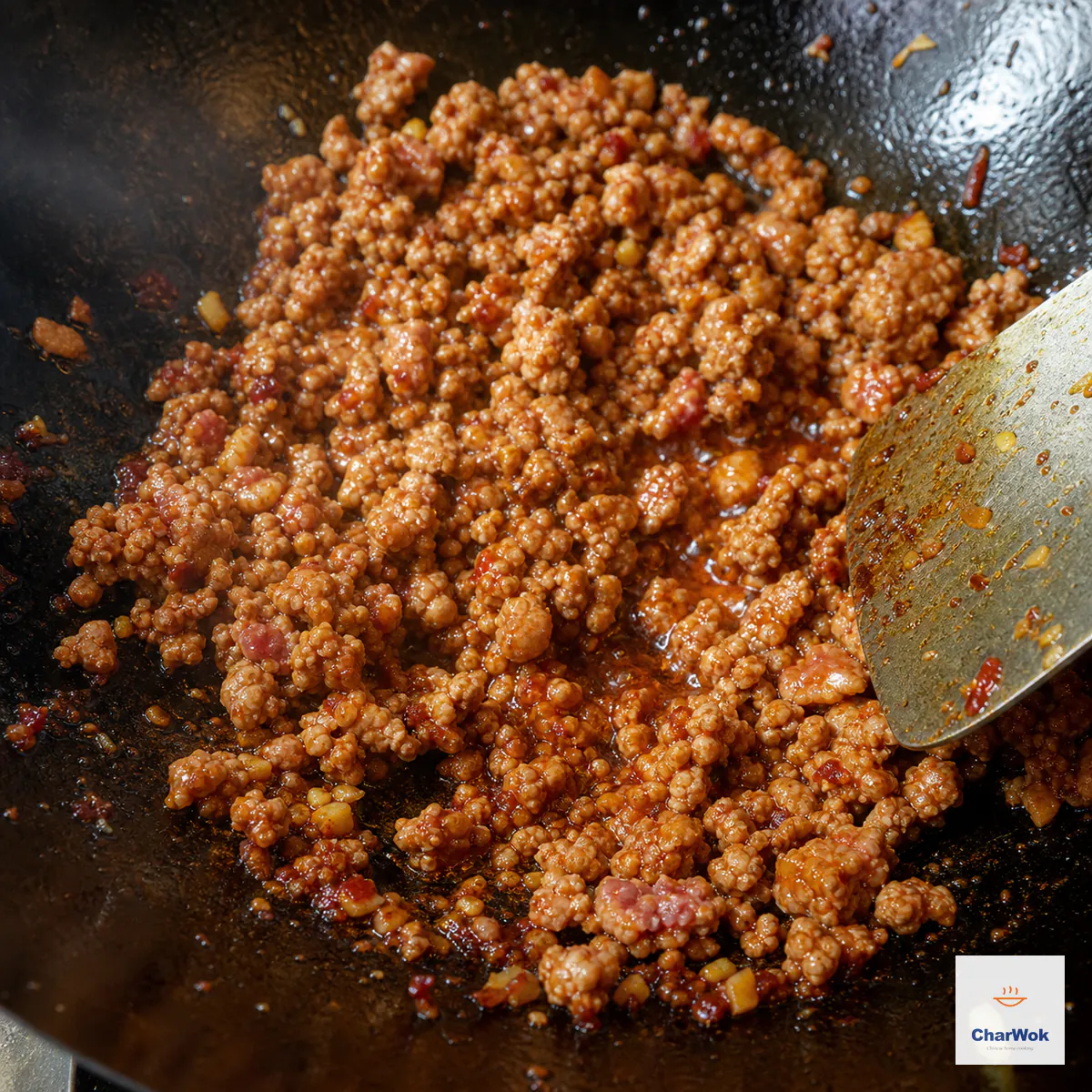
Break the pork into separate small crumbles and cook until the last raw pink disappears; those pieces are the dish's ants
- Deglaze and simmer with the noodles. Pour in the hot water, add the sugar and white pepper, then lay the drained noodles on top. Bring to a lively simmer and use tongs to toss the noodles through the liquid so they are evenly coated. From here, cook for about 3 minutes, lifting and turning the noodles constantly so they absorb the sauce evenly. The liquid level will drop as the starch drinks.
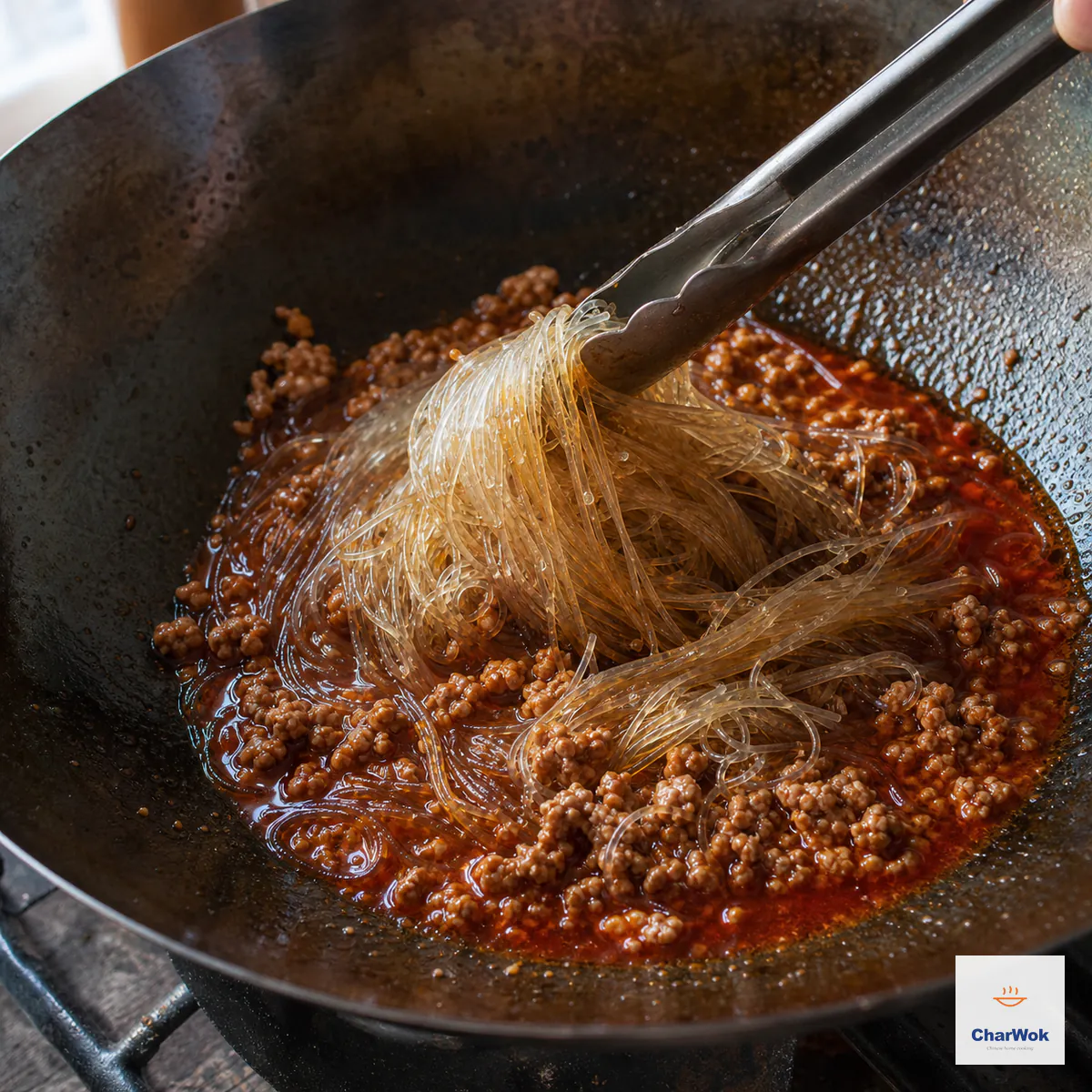
Toss continuously through the lively simmer so the glass noodles absorb the sauce evenly without clumping
- Stop at the clean-streak stage. When you can drag a spatula across the bottom of the wok and see the metal for a half-second before liquid runs back in, the dish is done. The noodles should be tender with a slight bite, glossy, and stained red. If there is still a pool of broth, keep simmering another 30 to 60 seconds. If the noodles are already clumping and the pan is dry, you went too far; add a tablespoon of hot water next time.
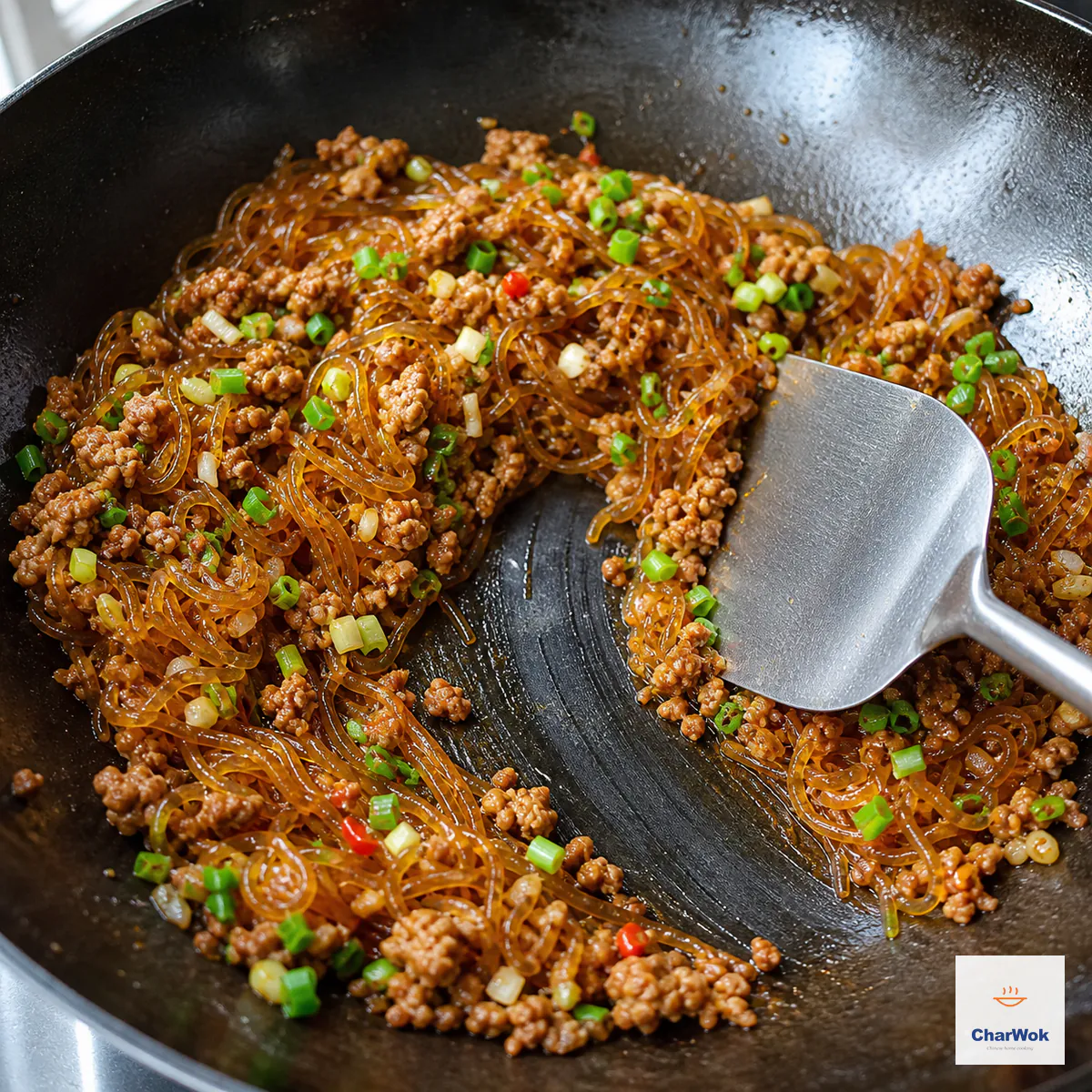
Stop when the spatula briefly exposes the wok, then turn off the heat and toss in garlic, scallion greens, and optional fresh chili
- Finish off the heat with the raw aromatics. Kill the heat, then add the garlic, scallion greens, and fresh chili if using. Toss for 30 seconds. Adding garlic now, rather than frying it at the start, preserves its sharp sulfur bite, which is the contrast that makes the dish interesting rather than monotonically rich. Serve immediately in shallow bowls.
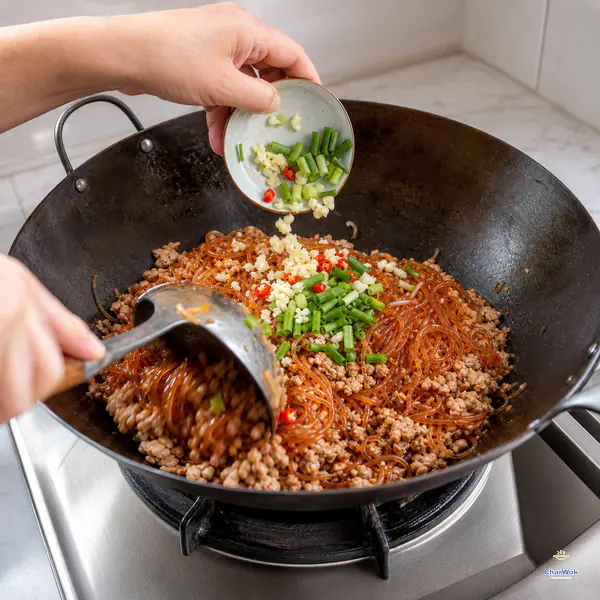
With the heat off and no broth left in the wok, add the raw garlic, scallion greens, and optional fresh chili, then toss for only 30 seconds to preserve their sharp aroma.
When things go wrong: troubleshooting
- The noodles are a solid brick in the bowl. Either you used too little liquid, the heat was too high and it evaporated instead of absorbing, or you let them sit off the heat too long before serving. Glass noodles continue to set as they cool. To fix at the table, splash in a tablespoon of hot water and toss with chopsticks to loosen. Next time, add 50 ml more liquid and pull the wok off 30 seconds sooner.
- The noodles are mush and falling apart. The soak ran too long, or the vermicelli was a cheap blend cut with tapioca starch. Real mung bean vermicelli should bend without snapping when soaked but still look slightly opaque at the center. Salvage what you can by draining immediately and reducing the simmer time to under 2 minutes.
- The dish is too salty. Almost always the Doubanjiang. Stir in a teaspoon of sugar and a splash of hot water to dilute, then serve over plain rice, which absorbs the salt. For a one-bowl meal version, cut the Doubanjiang to 2 tsp from the start.
- The sauce looks greasy and split. The heat was too high when you fried the paste, or the pork was very fatty and rendered aggressively. Skim the excess oil off the top with a spoon before adding the noodles. A teaspoon of sugar also helps the sauce emulsify back together.
- The meat is gray and rubbery. You crowded the pan and the pork steamed instead of frying. Cook it in a single layer over higher heat, breaking it up fast so it browns in spots before it releases moisture.
Variations and pairings
The most useful variation is also the most traditional: swap the pork for minced chicken or shrimp, and add a handful of soaked dried shrimp or finely diced shiitake for umami depth. A vegetarian version built on crumbled pressed tofu and mushroom soaking liquid works well, provided you keep the Doubanjiang intact, since that is the dish's backbone.
For a sharp, cooling contrast, serve it alongside smashed cucumber salad or a bowl of tomato egg drop soup. The dish also stands on its own as a quick lunch; in that case, dial the Doubanjiang back slightly and add an extra pinch of sugar so it reads as a complete bowl rather than a salty side. If you want a rice base, plain steamed jasmine rice is the usual pairing in a Sichuan meal, with the noodles doing the carbohydrate heavy lifting alongside a vegetable stir-fry.
Branching out, the same vermicelli-absorbs-broth technique shows up across the cuisine. Suan La Fen serves the noodles in a sour, numbing soup. Cold glass noodle salad dresses them with a chili oil vinaigrette. And steamed shrimp with garlic vermicelli lets the noodles drink up shellfish juices under steam instead of in a wok. Once you internalize how the starch behaves, all of these become variations on one idea.
Storage and reheating
This dish is best eaten the moment it leaves the wok. Glass noodles do not reheat well; they continue to absorb any surrounding liquid and turn to paste overnight. If you must store leftovers, keep them in an airtight container in the fridge for up to one day, and reheat gently in a pan with a tablespoon of water, tossing constantly just until warm. Do not microwave, which heats unevenly and toughens the starch. The texture will never match the first serving, so I cook only what we will finish.
Frequently asked questions
A few questions that come up repeatedly, answered short and direct.
- Can I use rice noodles instead of mung bean vermicelli? You can, but the result is different. Rice noodles release more starch and turn softer, and they absorb less flavor. Soak them to the same pliable stage and reduce the cooking liquid by about 50 ml.
- Is there a non-alcoholic substitute for Shaoxing wine? Use an equal amount of dry sherry, or half the amount of rice vinegar with a pinch of sugar. The wine mainly deglazes and lifts the meaty flavor; omitting it entirely leaves the dish slightly flat.
- How spicy is this? Moderately spicy with a slow build. The heat comes from the Doubanjiang and chili powder; drop the powder and use a milder paste to bring it down. For more heat, add the fresh chili and a pinch of ground Sichuan pepper for the numbing edge typical of Sichuan cooking.
- Can I make it ahead for a crowd? Not really. Prep everything (soak the noodles, mince the aromatics, measure the sauce) up to a day ahead, but cook it at the last minute. The whole thing takes under 10 minutes once the wok is hot.
Done right, Ants Climbing a Tree is one of the most rewarding dishes in the Sichuan repertoire for the effort involved: ten minutes, a handful of pantry ingredients, and a technique you can reuse across half the glass-noodle recipes in this cuisine. The single skill to practice is reading the liquid level in the final simmer. Once you can feel when to stop, the rest follows.