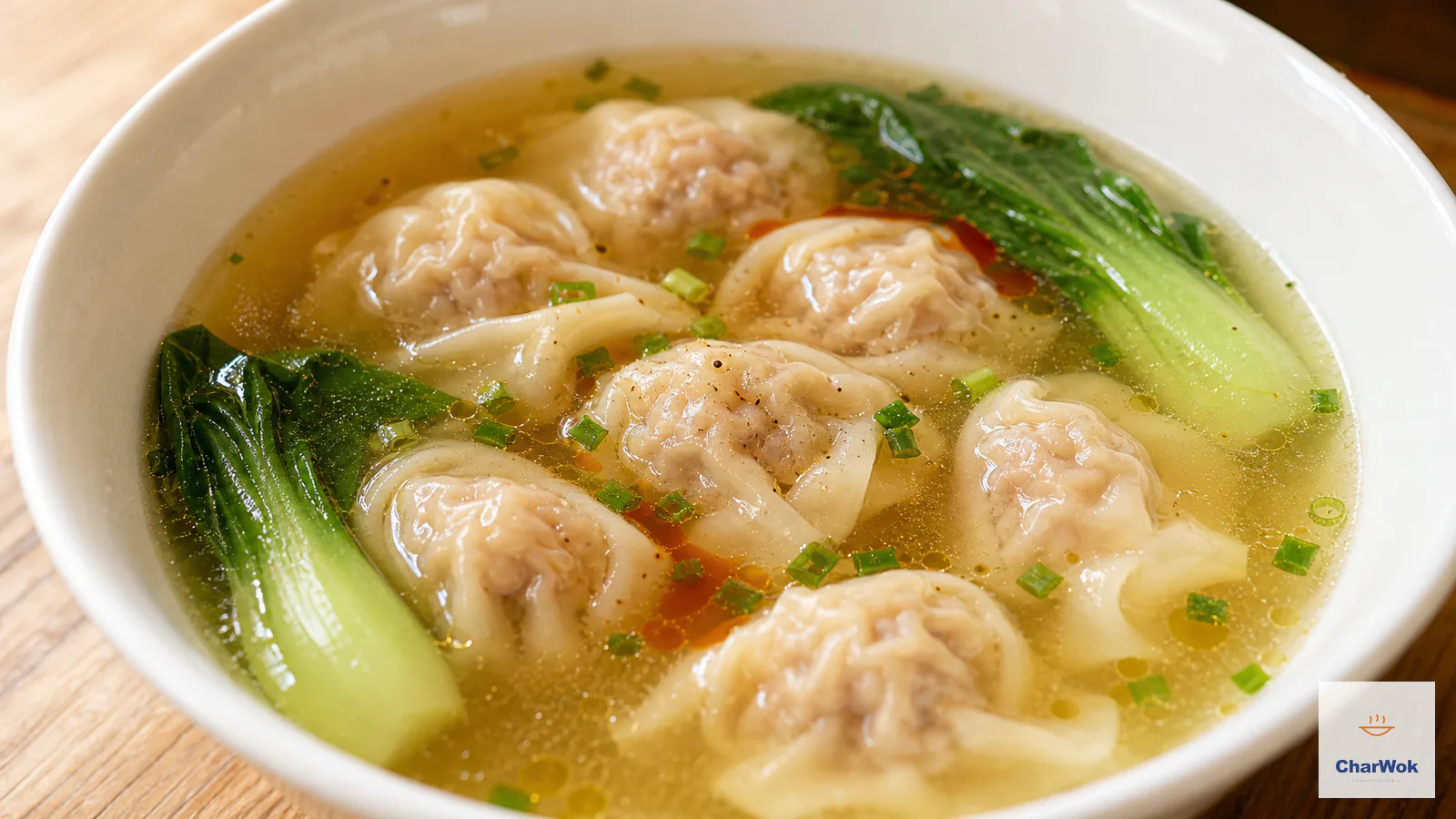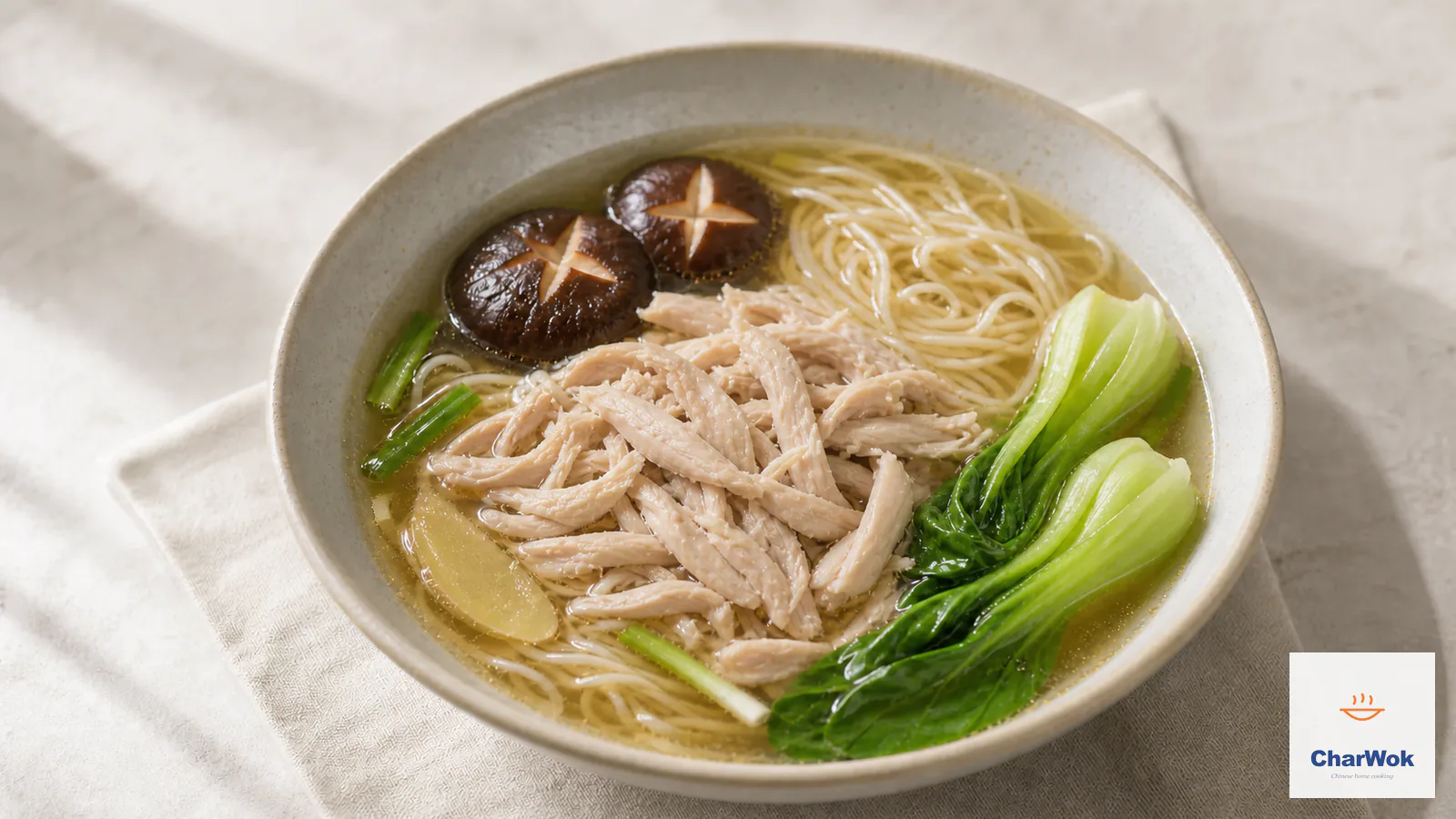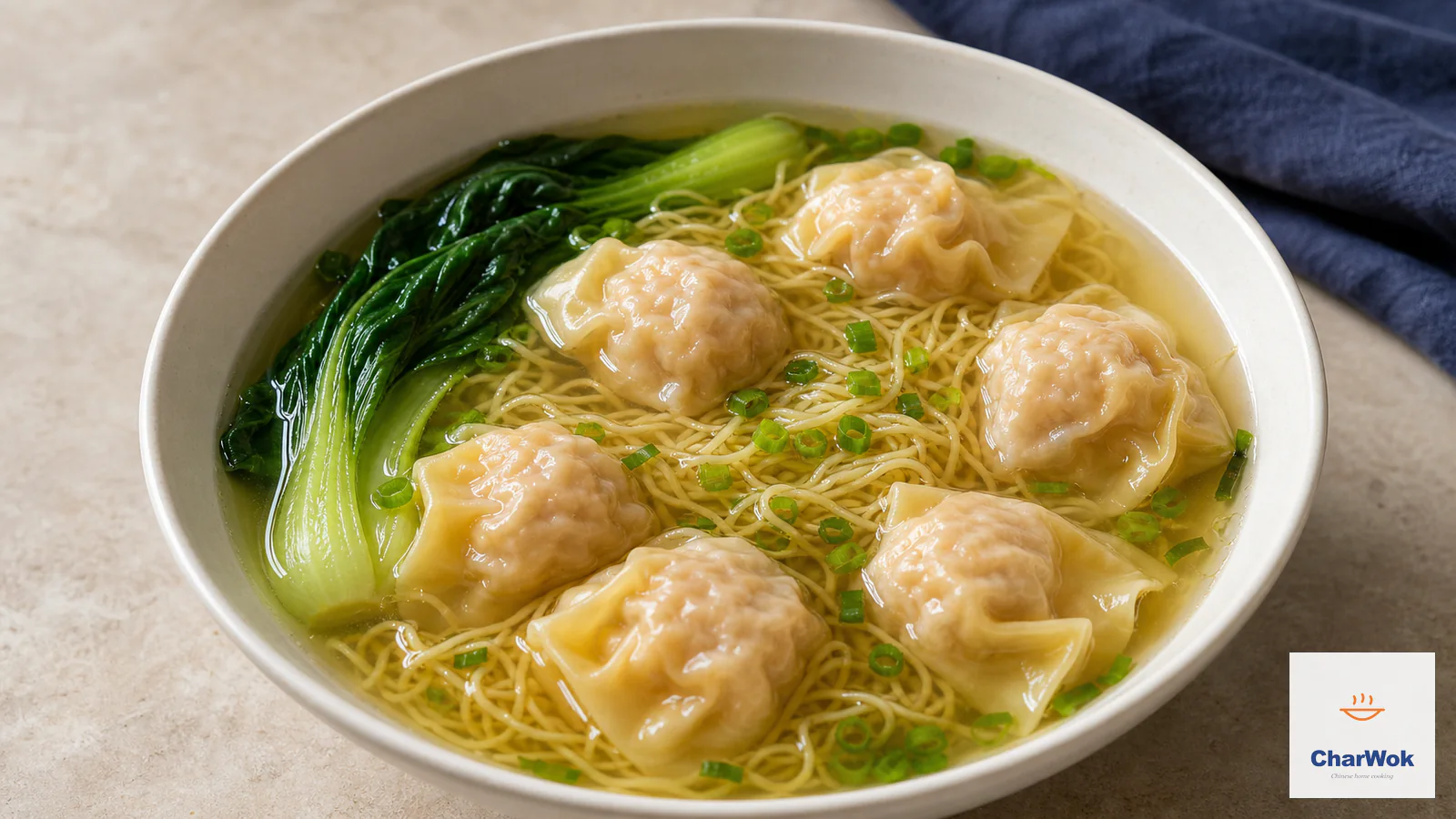
A bowl of Cantonese wonton noodle soup depends on three separate things at once: springy shrimp, clear broth, and noodles that still have some bounce. Treating them as separate components is what makes the recipe manageable at home. Keep the broth hot, cook the noodles separately, and use a measured temperature—not floating or a fixed timer—to decide when the shrimp-and-pork wontons are done.
This Guangzhou and Hong Kong comfort classic combines plump shrimp-and-pork wontons, thin egg noodles, and a clear golden soup built on chicken or seafood stock. Among the classic Chinese noodle dishes, it rewards careful sequencing more than high heat and turns a snack-size wonton soup into a full meal.
At a glance. The whole bowl comes down to three separate pots: broth simmering, a rolling boil for noodles, and a second rolling boil for wontons. Aim for roughly 200 g shrimp to 200 g pork (close to a 1:1 ratio), stir the filling in one direction until it turns sticky and stringy, and cook the noodles 10 to 15 seconds shy of done so they finish softening in the hot broth. Never boil the wontons in the broth itself; it clouds it. Six bowls from this quantity.
What makes it Cantonese
Guangzhou wonton noodles, wonton mein in Cantonese, are cousins to the Sichuan spicy wontons in chili oil you may know from hong you chao shou, but the flavour profile is different. The Sichuan version leads with numbing chili oil and a sweet-soy sauce; the Cantonese version leads with seafood. Traditional fillings prominently feature shrimp, often paired with fatty pork for body. Dried shrimp, dried flounder, or shell-on shrimp heads deepen the broth, while clean chicken stock seasoned with fish sauce is a practical home alternative.
The noodles matter as much as the wontons. Authentic shops use thin alkaline (kansui) egg noodles, which have a springy, almost rubbery bite that holds up against hot broth without collapsing. Standard fresh thin egg noodles from an Asian grocery are the practical home choice; dried egg noodles work if that is what you have, but expect a softer texture.
Ingredients
Ingredients at a glance
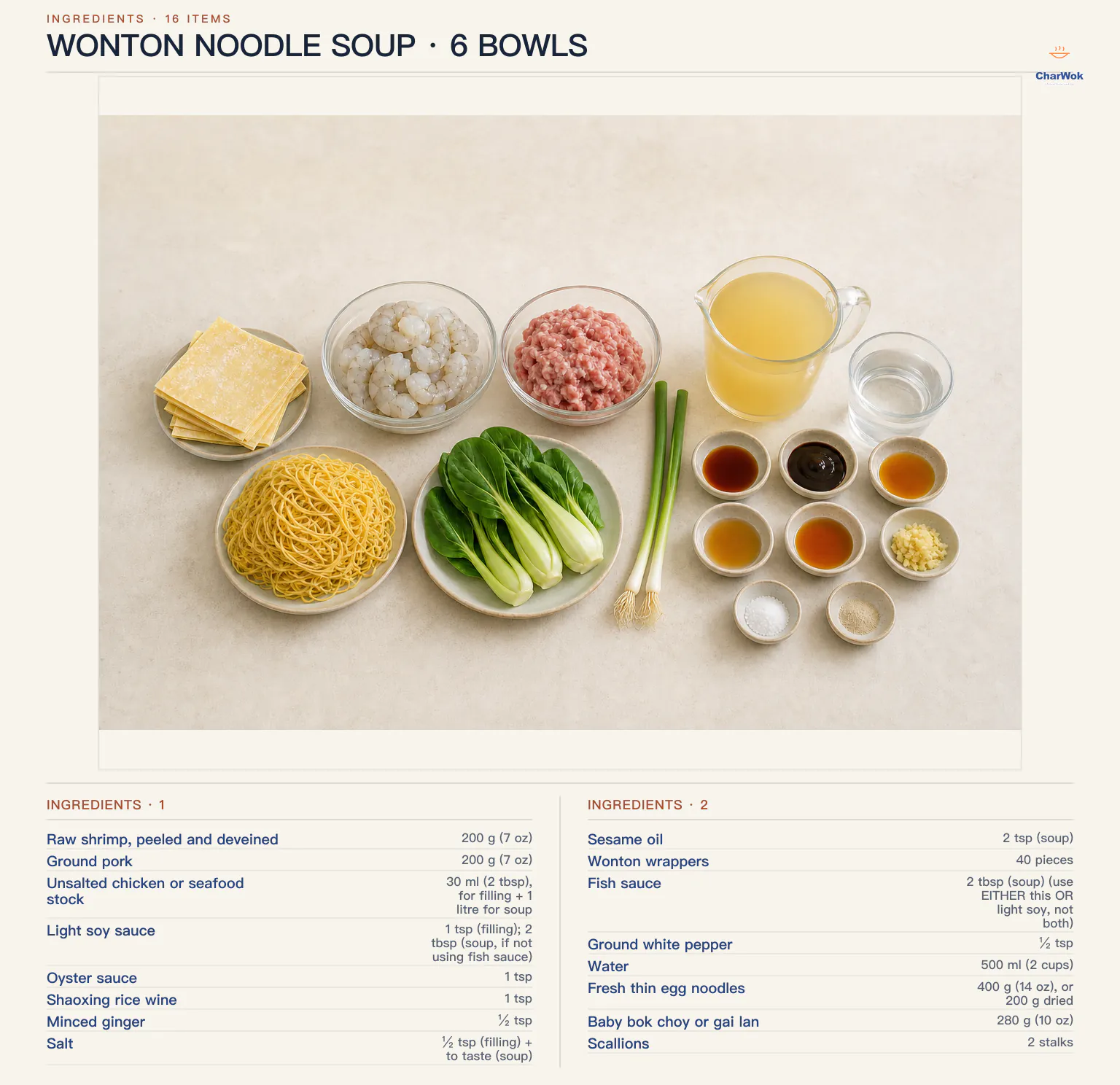
| Ingredient | Amount | Notes / substitute |
|---|---|---|
| Raw shrimp, peeled and deveined | 200 g (7 oz) | Headless and peeled; any size works. Fresh or thawed frozen both fine. |
| Ground pork | 200 g (7 oz) | Ask for 80–85% lean; a little fat keeps the filling juicy. |
| Unsalted chicken or seafood stock | 30 ml (2 tbsp), for filling + 1 litre for soup | Homemade chicken stock preferred; clam juice or shrimp-stock (from the shells) is even better. |
| Light soy sauce | 1 tsp (filling); 2 tbsp (soup, if not using fish sauce) | Use light, not dark (see light vs. dark soy sauce). |
| Oyster sauce | 1 tsp | Vegetarian mushroom oyster sauce works. |
| Shaoxing rice wine | 1 tsp | Dry sherry is the closest Western substitute (see Shaoxing wine). |
| Minced ginger | ½ tsp | Finely grated; keep it small so no one bites a fiber. |
| Salt | ½ tsp (filling) + to taste (soup) | Kosher or fine sea salt. |
| Sesame oil | 2 tsp (soup) | Toasted sesame oil; a little goes far (guide). |
| Wonton wrappers | 40 pieces | Store-bought Hong Kong-style (yellow, thin) or homemade wonton wrappers. |
| Fish sauce | 2 tbsp (soup) (use EITHER this OR light soy, not both) | Fish sauce adds seafood depth; light soy is the fish-sauce-free alternative for the broth. |
| Ground white pepper | ½ tsp | White, not black, to keep the broth looking clean. |
| Water | 500 ml (2 cups) | Cuts the stock so the soup isn't too rich. |
| Fresh thin egg noodles | 400 g (14 oz), or 200 g dried | Alkaline noodles if you can find them. |
| Baby bok choy or gai lan | 280 g (10 oz) | Gai lan needs a quick peel of the tough stem (see gai lan two ways). |
| Scallions | 2 stalks | Finely chopped, for finishing. |
Step 1: Build a filling with actual bite
- Reserve the shrimp shells for stock. Before peeling, pull the shells and heads off into a small pot. Simmered for ten minutes with your chicken stock, they turn ordinary broth into something that tastes like the sea. Strain and discard before seasoning. This single step is the difference between a generic soup and one that earns the word "wonton."
- Cut the shrimp, don't mince it. Chop each shrimp into 3 to 4 chunks. You want recognizable pieces that snap when you bite, not paste. If you machine-mince the shrimp you get a bouncy-but-monotonous filling, closer to a fish ball than a wonton.
- Combine everything and stir in ONE direction. Add the pork, the 2 tablespoons of stock, light soy, oyster sauce, Shaoxing, ginger, and salt. Stir steadily clockwise (or counterclockwise, just pick one) for 2 to 3 minutes. The mixture will go from loose and grey to cohesive, slightly sticky, and visibly stringy. That stringiness is myosin, a muscle protein that unwinds and links up under sustained, one-directional agitation. It is the same trick that gives lion's head meatballs their spring. Stirring back and forth tangles the proteins randomly and you lose it.
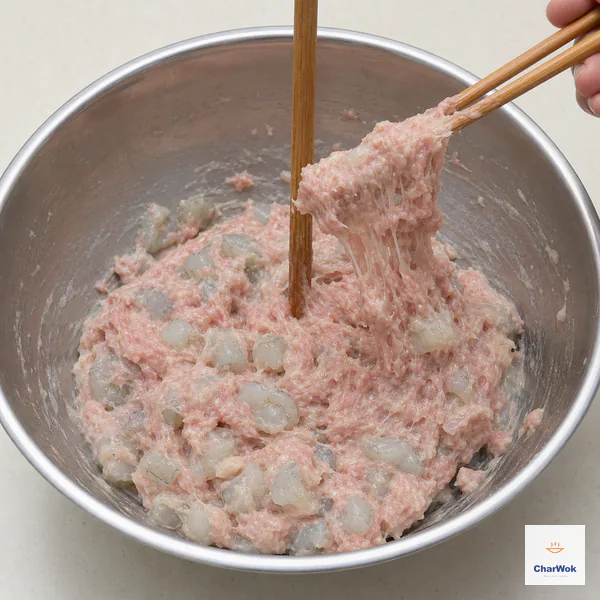
Stir firmly in one direction until the pork turns tacky and stringy, but stop while distinct shrimp pieces are still visible
- Rest the filling 15 minutes, chilled. Cover and refrigerate at 40°F / 4°C or below while you set up the wrappers. Cook or freeze the raw shrimp-and-pork filling within one day, and wash hands, the bowl, and utensils before they touch cooked noodles, broth, or garnishes.
Step 2: Fold the wontons
- Keep the filling small. About a level teaspoon per wonton. Overstuffing is the number-one cause of burst wontons: the wrapper can't seal around a mound that big, and the meat stays cold in the center while the wrapper overcooks.
- Seal with water, not egg. Trace a wet finger around the edge of the wrapper. Egg makes a tougher, doughier seam; water gives the clean, near-invisible join you want in soup.
- Pick a fold and commit. The quickest pouch fold: bring all four corners up over the filling, pinch the top into a little money-bag shape, and twist gently. For tighter shapes, see the six wonton folds; the triangle-and-roll traps less air and works well in soup. The fold is cosmetic; the seal is functional. Get the seal right and any shape works.
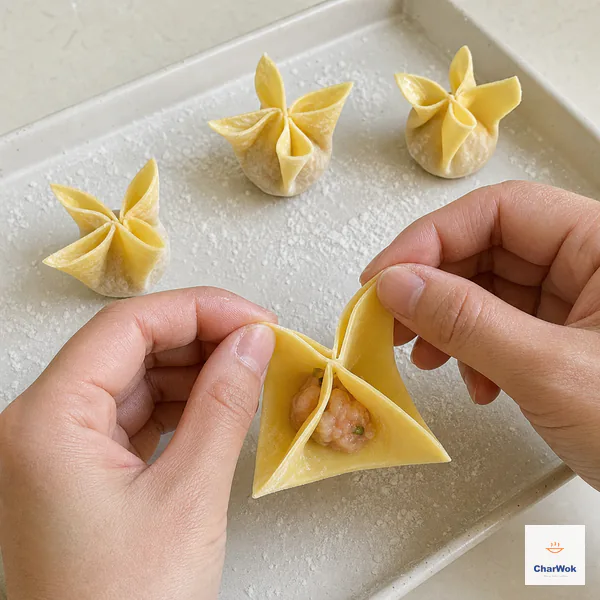
Use only a level teaspoon of filling, gather the four corners into a light pouch, and keep the sealing edge dry so it closes cleanly
- Cover folded wontons with a damp cloth. Wonton wrappers crack at the edges within minutes in dry air. A damp towel over the tray prevents the heartbreak of a beautifully folded batch turned brittle.
Step 3: Build a clear, seasoned broth
- Combine, bring to a boil, then drop to a shimmer. Combine your shrimp-shell-enriched stock with the water and bring it to a boil. Once it boils, ease the heat down to a gentle shimmer and hold it there. A long, hard, rolling boil can emulsify fat and protein into tiny droplets that dull a clear stock, so once it is hot and seasoned, keep it calm rather than crashing it.
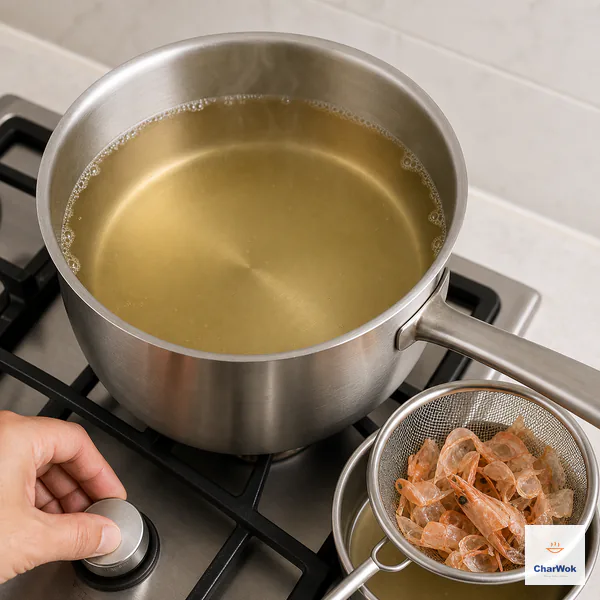
Gently simmer the shrimp shells in the stock, then strain them out to keep the broth clear rather than cloudy or greasy
- Season last, taste first. Stir in the light soy (or fish sauce — pick one, not both), sesame oil, and white pepper. Taste. Stock saltiness varies wildly; the 2 tablespoons of fish sauce is a starting point, not a commandment. Add salt in small pinches until it tastes like a good soup rather than seawater.
- Hold it hot, don't reduce it. Keep the broth at a gentle shimmer while you cook noodles and wontons. Reducing will concentrate salt faster than flavor and throw off your balance.
Step 4: Cook noodles and wontons separately, assemble fast
- Get a separate large pot of water furiously boiling on a different burner. This is the cook pot for both noodles and wontons, never the broth. Cooking starch clouds soup; cooking wontons leak raw pork juice into it.
- Blanch the noodles until just underdone. Fresh egg noodles need 30–60 seconds; dried need 2–3 minutes. Pull them 10–15 seconds before you think they're ready. They will finish cooking in the hot broth in the bowl, which keeps them from turning to mush while you plate everything else.
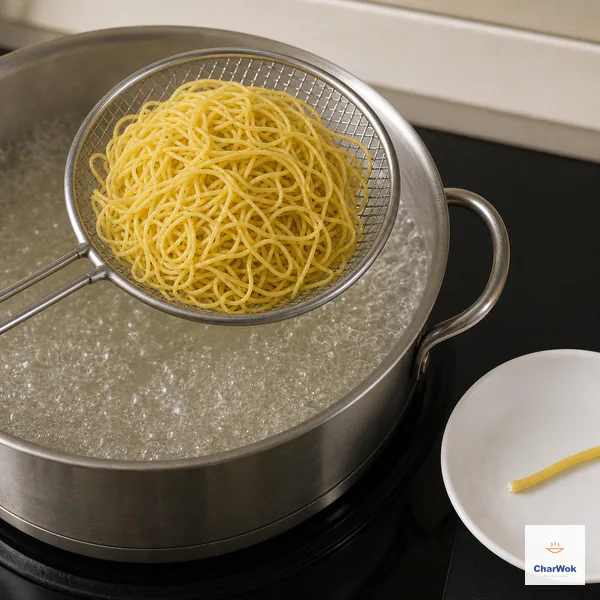
Cook the noodles separately and lift them while they are still slightly underdone; the hot broth finishes the last trace of firmness
- Rinse the noodles briefly with freshly boiled drinking water. This washes away the surface starch that can make fresh noodles gummy without cooling them. Divide the noodles among six bowls and ladle a splash of hot broth over each so they do not stick into a clump.
- Cook the wontons in two batches and check the filling. Drop them in, give the pot one gentle stir so they do not stick to the bottom, then leave them alone. Floating is only the cue to start checking. Insert a thin instant-read thermometer sideways into the centre of 2 to 3 of the largest wontons from different parts of the pot, avoiding the wrapper; every sampled pork filling centre must reach 160°F / 71°C. If one is cooler, keep boiling and recheck. Pot size, batch size, wrapper thickness, and whether the wontons are frozen all change the time.
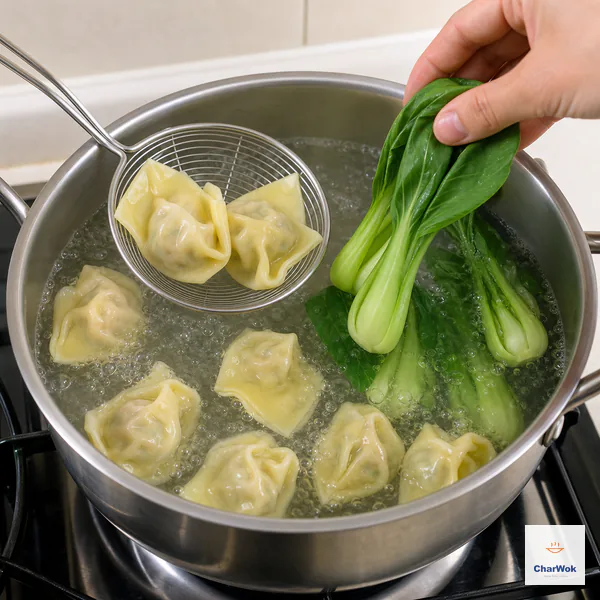
Floating is the cue to check 2 to 3 large wontons from different pot positions; once every pork centre reaches 160°F / 71°C, blanch the greens briefly and lift everything out
- Blanch the greens only after the wontons pass the temperature check. Drop the bok choy or gai lan into the wonton pot for the final 20 to 30 seconds, then lift the greens and wontons out together with a spider and divide among the bowls.
- Ladle the hot broth and finish with scallions. Pour the seasoned broth over everything, scatter scallions, and serve immediately. The bowl loses its best texture within two minutes of assembly, so call everyone to the table before you start plating.
When things go wrong
Most wonton noodle problems share a small set of root causes.
- Wontons split open in the pot. Either you overstuffed, left a gap in the seal, or dropped them into water that wasn't truly boiling. Drop them into a full, furious boil so the wrapper sets instantly, and seal every edge with a wet finger, no exceptions.
- Filling is dense and bouncy, almost rubbery. You over-stirred, or you minced the shrimp too fine. Next time, chop the shrimp by hand into chunks and stop stirring the moment the mixture turns sticky.
- Filling is loose and falls apart. Under-stirred, or the pork was too lean. The 200 g pork / 200 g shrimp ratio assumes 80–85% lean pork. Stir longer in one direction until you see the strands form.
- Broth is cloudy and grey. You left it at a hard boil for too long, or you cooked the wontons in it. Bring the stock to a boil, then ease back to a gentle shimmer, and use a separate pot for everything else.
- Noodles are clumpy or gummy. You skipped the hot-water rinse, or you left them sitting dry in the bowl. Rinse, then wet them with a splash of broth right away.
- Greens are wilted and yellow. You blanched them too long or in water that wasn't hot enough. The water must be at a full boil, and 20 seconds is the ceiling for baby bok choy.
Variations and pairings
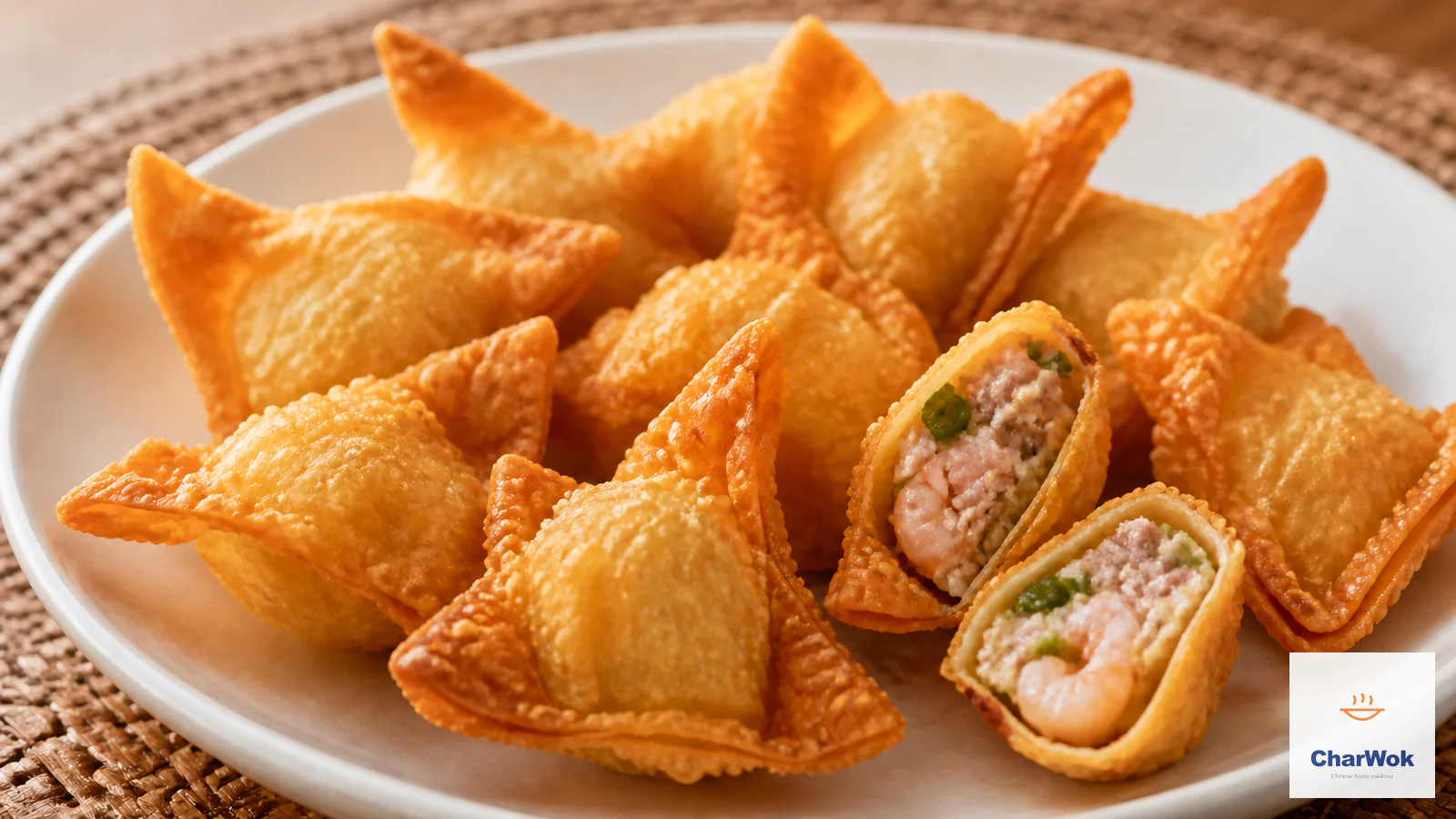
The wontons here are versatile. Drop the same filling into a fried wonton for crunch, or fold the leftovers into a quick dan dan noodle bowl the next night. For a totally different broth experience, a bowl of Lanzhou beef noodle soup uses the same "clear soup, separate cook" discipline with hand-pulled noodles and beef instead of shrimp.
On the side, the bowl wants something crisp and cold to cut the richness. Garlic bok choy doubles down on the greens if you want a vegetable-forward meal; a plate of smashed cucumber salad is the lighter, more traditional partner. For heat, a spoonful of Chiu Chow chili oil stirred in at the table is exactly how a lot of Hong Kongers eat this: the orange oil floats on the broth and seasons each spoonful.
Storage and reheating
Freeze folded, uncooked wontons in a single layer on a parchment-lined tray, then transfer them to a sealed bag once solid; use within one month for best wrapper quality. Boil them from frozen, but do not add a fixed number of minutes: on the first batch, check 2 to 3 large wontons from different parts of the pot and require 160°F / 71°C in every sampled pork centre. For cooked components, follow the USDA leftovers guidance: refrigerate within 2 hours, or within 1 hour when the surrounding temperature is above 90°F / 32°C. Use shallow containers, keep broth, wontons, and noodles separate for better texture, eat within 3 to 4 days, and reheat the broth and wontons to 165°F / 74°C. Assembled bowls do not reheat well because the noodles absorb the broth. For more options, see make-ahead Chinese recipes.
FAQ
Can I use all pork and skip the shrimp? You can, but the result moves away from the shrimp-forward Cantonese style and closer to a pork wonton soup. If cost is the concern, use a 2:1 pork-to-shrimp ratio rather than removing the shrimp entirely.
Why cook the noodles and wontons in a separate pot from the broth? Starch from the noodles clouds and thickens the broth, and any juice that leaks from undercooked wontons ends up in your soup. A separate pot of plain boiling water keeps the broth clean and lets you control each component's timing.
How do I know shrimp-and-pork wontons are cooked? Floating is not a doneness test. Once they float, use a thin instant-read thermometer to check the centre of 2 to 3 of the largest wontons from different parts of the pot. Every sampled pork filling centre must reach 160°F / 71°C; keep boiling and recheck if any one is cooler.
Do I have to rinse the noodles? Rinsing fresh egg noodles removes surface starch that can make them gummy; for dried noodles it is optional. Use freshly boiled drinking water rather than cold water so the noodles stay hot before they meet the broth.
Can I make the wontons ahead and cook them later? Yes. Keep the raw filling and folded wontons covered at 40°F / 4°C or below and cook or freeze them within one day. Freeze in a single layer, bag once solid, and use within one month for best quality. Cook from frozen and verify that 2 to 3 large wontons from different parts of the pot each reach 160°F / 71°C.
If you take one thing from this, take the three-pots rule: broth shimmering, noodles blanching, wontons boiling, each on its own clock. Get those three right and the bowl builds itself. The wontons will snap, the broth will shine, and the noodles will still have something to say when the last spoon comes out.