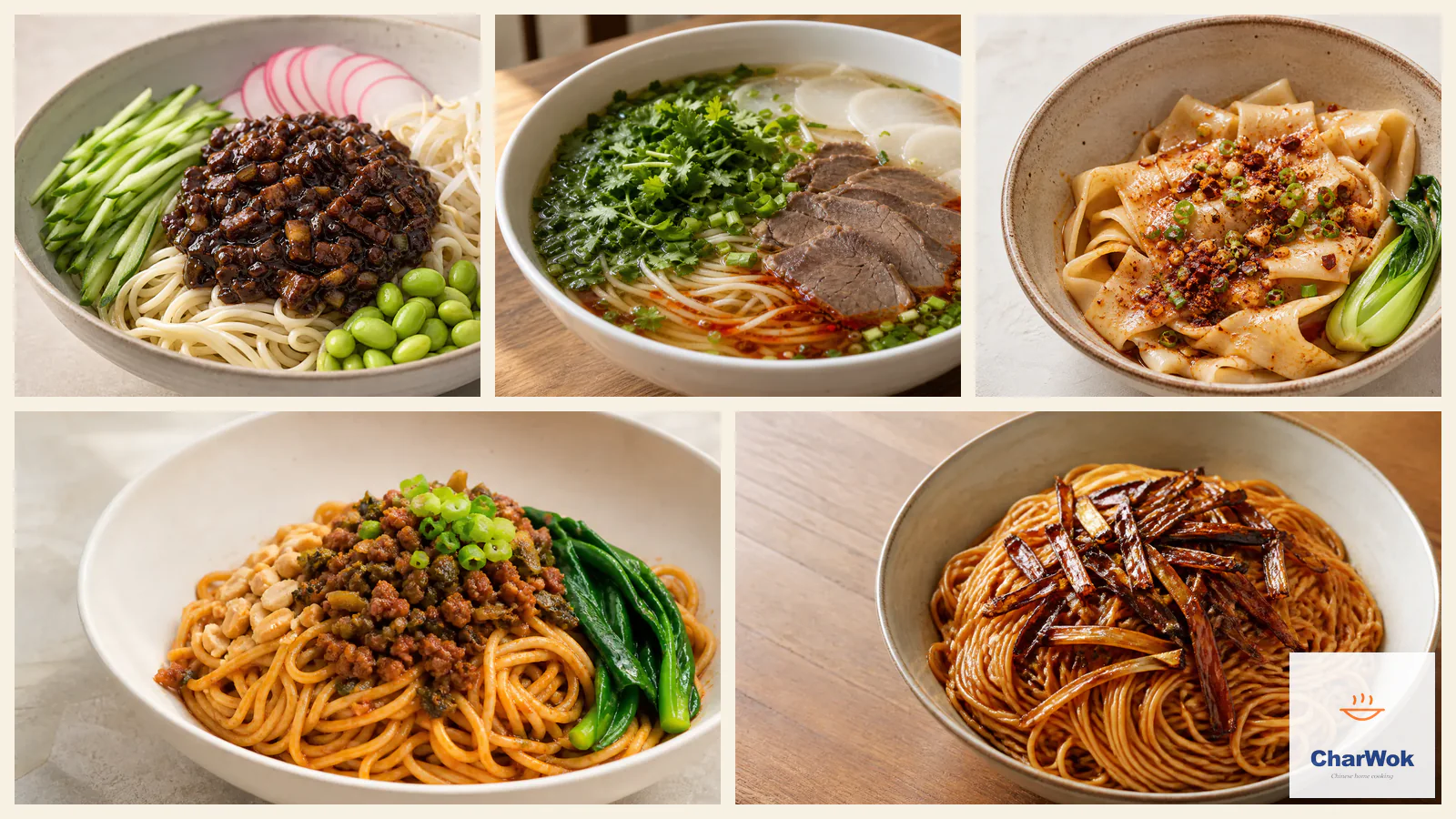
You can eat your way across northern and western China without leaving your kitchen, and the easiest thread to follow is the noodle. I have cooked through this five-city arc many times with friends who wanted to understand why a bowl of noodles in Lanzhou tastes nothing like one in Chengdu, and the answer is never a single ingredient. It is the flour, the water, the alkali, the hand that pulls or tears or cuts, and the sauce logic each region trusts. A trip across these places teaches you that Chinese cooking is not one cuisine but a family of fiercely local ones, and the quickest way to feel that difference at home is to make one bowl from each stop.
The pain point for most home cooks is that recipe collections hand you five unrelated dishes and leave you to guess how they connect. What I want to do here is the opposite: treat Beijing, Lanzhou, Xi'an, Chengdu, and Shanghai as a single argument about how wheat, beef broth, chili, and oil change character as you move east and south. Cook them in order and you will start to see the through-lines yourself.
Five cities, five bowls, one principle: the noodles carry the region, not the other way around. Give yourself about two weeks of weekend sessions to cook all five properly, and expect the hand-pulled Lanzhou dough to be the bowl that humbles you first. The Shanghai scallion-oil bowl is the one you can rescue any weeknight.
What this arc is really about
Five cities, five noodle traditions
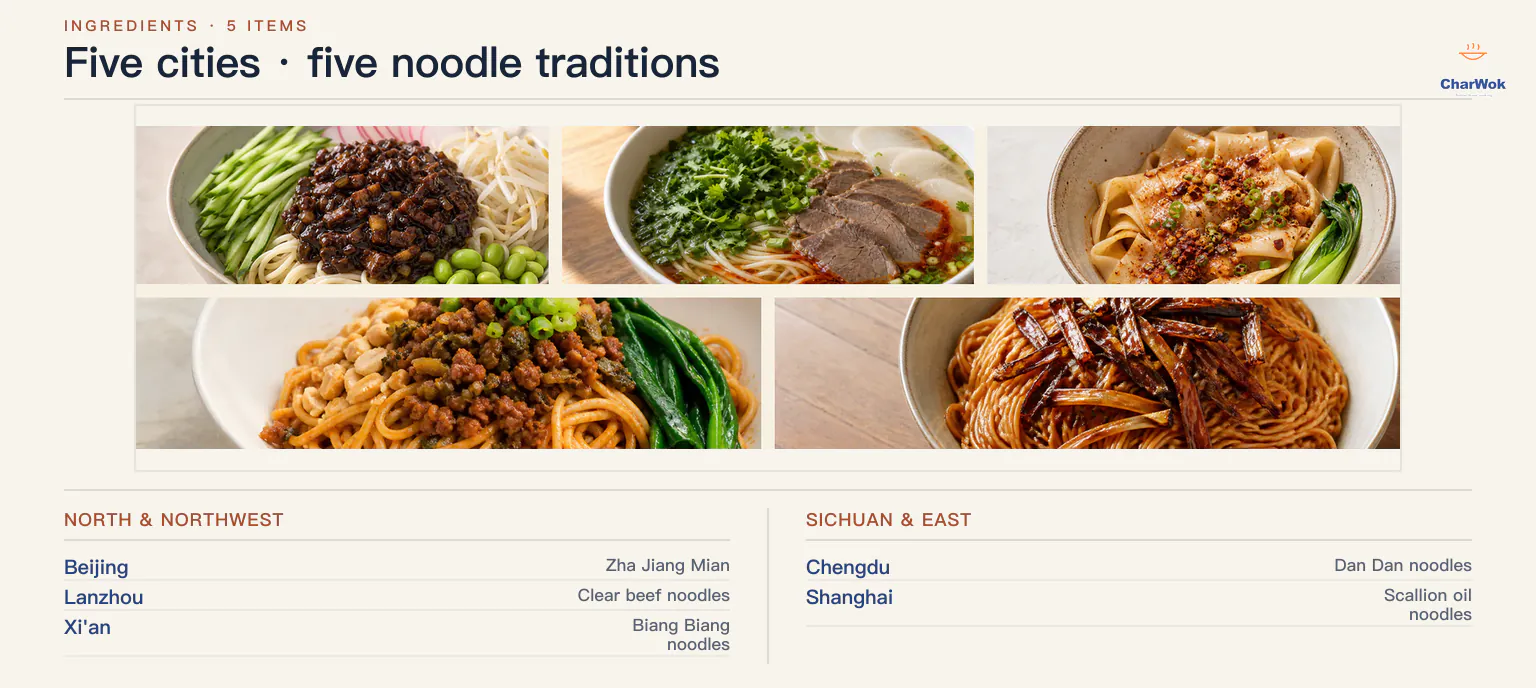
Geography writes the recipe. Beijing sits on the northern wheat plain, so its bowls are heavy on flour and fermented bean pastes. Lanzhou sits at the edge of the northwest, where Hui Muslim butchers built a beef-and-cumin tradition that has nothing to do with the soy-braised pork bowls of the Han east. Xi'an, the old dynastic capital, leans into wheat that is torn, slapped, and belt-thick, with a love of vinegar and cumin that betrays its Silk Road past. Chengdu, down in the Sichuan basin, swaps wheat confidence for a more delicate noodle dressed in chili oil and ground Sichuan pepper. Shanghai, last, sits where sweet soy and shallot oil have always ruled.
If you remember only that, the rest falls into place. The same bowl of noodles becomes five different meals because each city asks the flour to do a different job and reaches for a different condiment. Start with the dish built on a master sauce and end with the dish built on raw oil, and you have a usable mental map of the country's wheat belt.
Beijing: the noodle that runs on a dark bean sauce
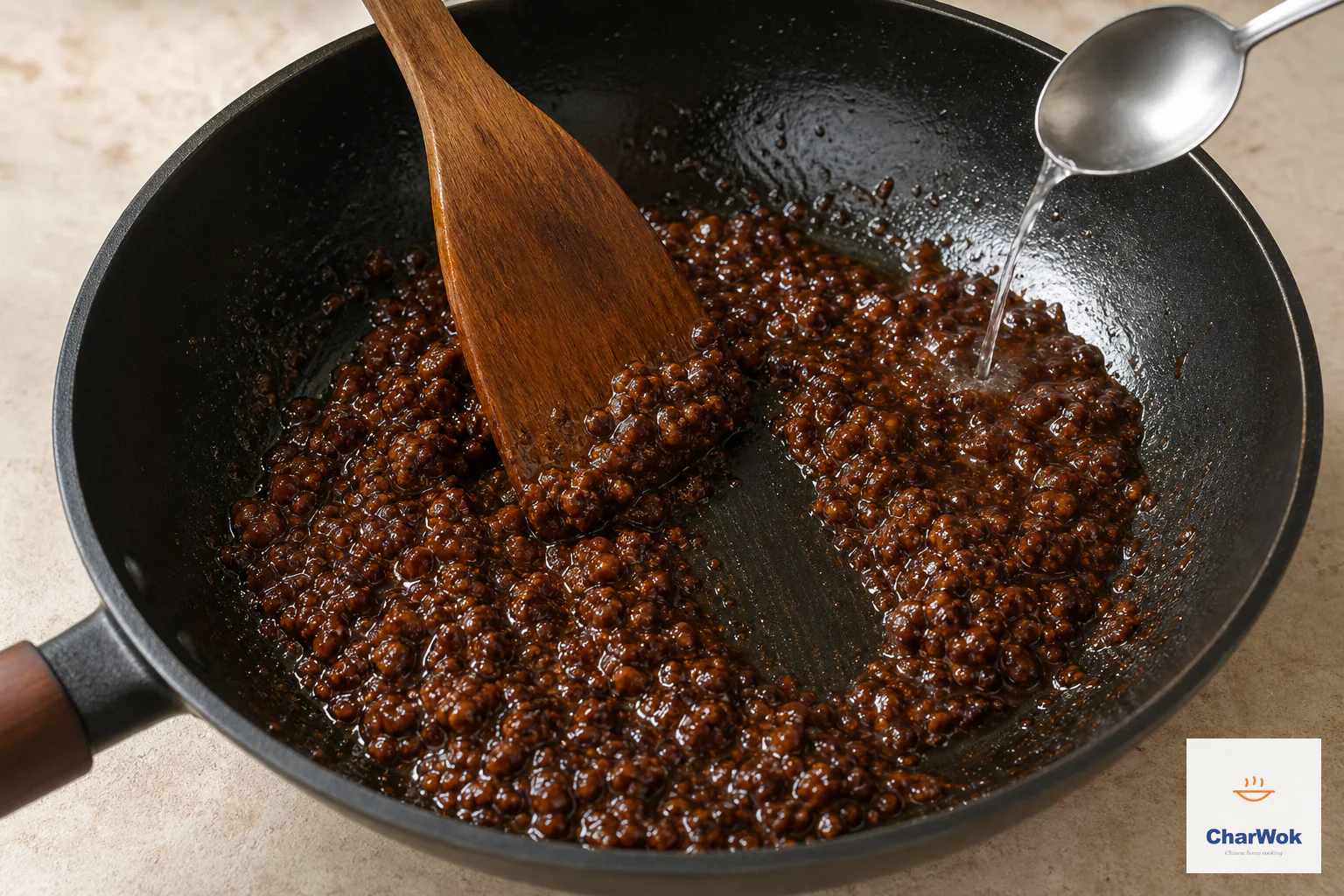
For Beijing Zha Jiang Mian, fry the bean-and-pork sauce patiently over low heat, then loosen it at the edge so it stays glossy and cohesive rather than scorched or split.
Beijing's signature bowl is Zha Jiang Mian, the fried-sauce noodle, and the entire dish lives or dies on one decision: how you cook the sauce. The base is a slowly fried paste of yellow soybean paste cut with sweet bean sauce, loosened with oil and water, simmered until it turns dark and glossy. Get that right and the noodles almost do not matter. Get it wrong and you have salty sludge.
The technique worth understanding here is the long, low fry. You are not browning the meat for its own sake; you are using the rendered fat as a carrier for the paste, letting the Maillard reaction develop in the paste itself over ten to fifteen minutes of patient stirring. If the pot threatens to catch, add hot water by the tablespoon, never cold. Cold water shocks the oil and the sauce breaks into grainy lumps.
If you want to round out a Beijing table, an easy home version of Peking duck gives you the other half of the city's voice, the imperial, lacquered, sweet-and-savory half that the street bowls deliberately avoid.
Lanzhou: clear broth and the hand that pulls the dough
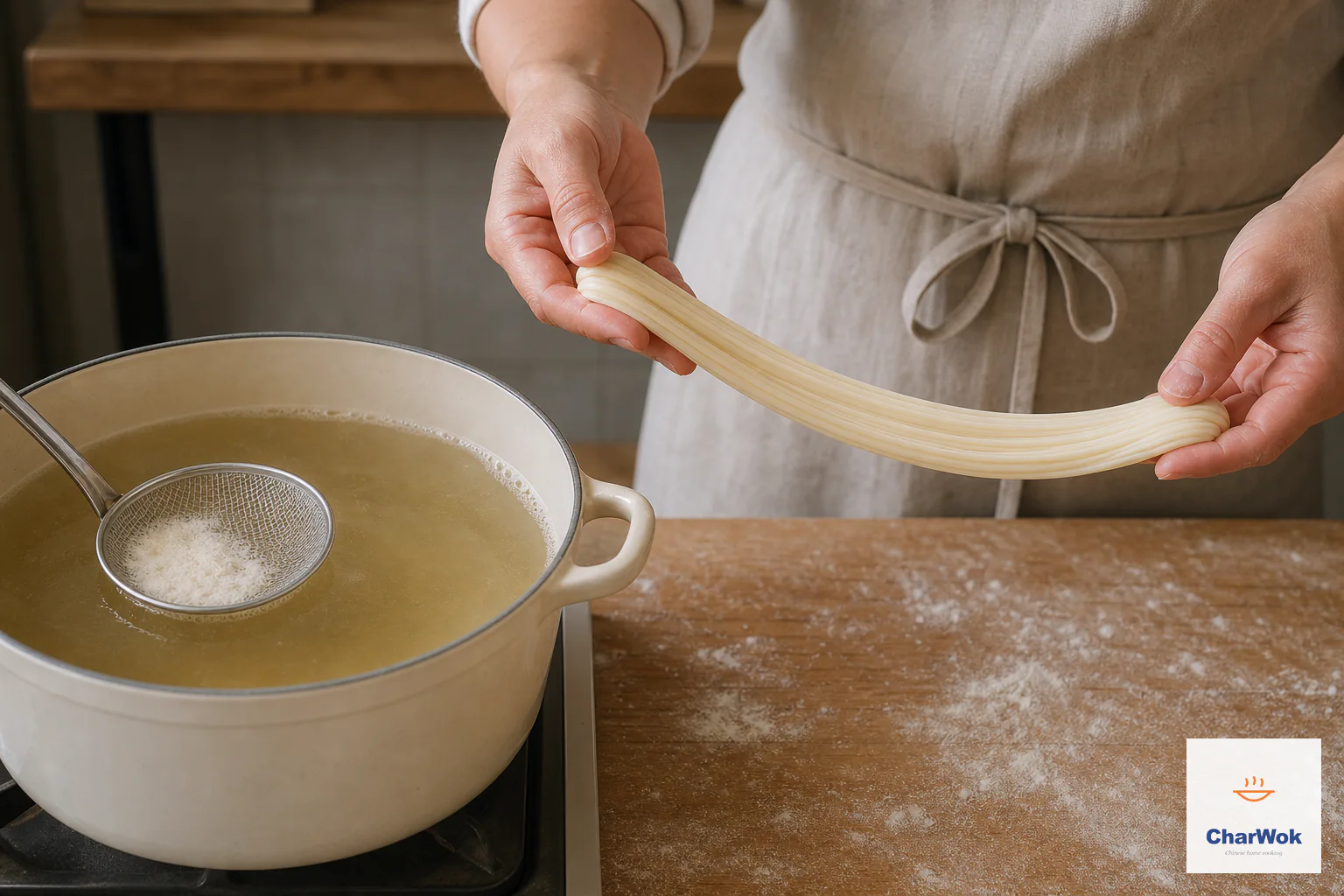
Lanzhou clarity comes from a bare simmer and careful skimming; fully rested dough then stretches smoothly into even parallel strands without tearing.
Drive the noodle argument to its extreme and you arrive in Lanzhou, where the broth is a pale, clear beef stock scented with radish and a precise pinch of spices, and the noodle is pulled by hand to whatever thickness you order. The home version of Lanzhou beef noodle soup will teach you humility in a way no restaurant visit can.
The reason the broth stays clear is the same reason French consomme stays clear: patient skimming and a bare simmer, never a rolling boil. A hard boil emulsifies the fat and the suspended proteins into a cloudy cloud that no amount of straining will reverse. Keep the pot at the temperature where you see only the occasional lazy bubble, skim every twenty minutes, and you will pour a broth that is almost tea-colored.
The noodle itself is the hard part. Real Lanzhou la mian is pulled from a rested dough of flour, water, salt, and a touch of peng hui, a plant-ash alkali similar in effect to the lye water used in ramen. If you are not ready for that, a foolproof hand-pulled noodle recipe will get you close enough at home, and I would honestly start there before chasing authenticity. My own early pulls tore into ugly short strands because I under-rested the dough; gluten cannot elongate cleanly until it has had at least an hour, ideally two, to relax.
Xi'an: where the noodle is slapped, torn, and dressed in cumin
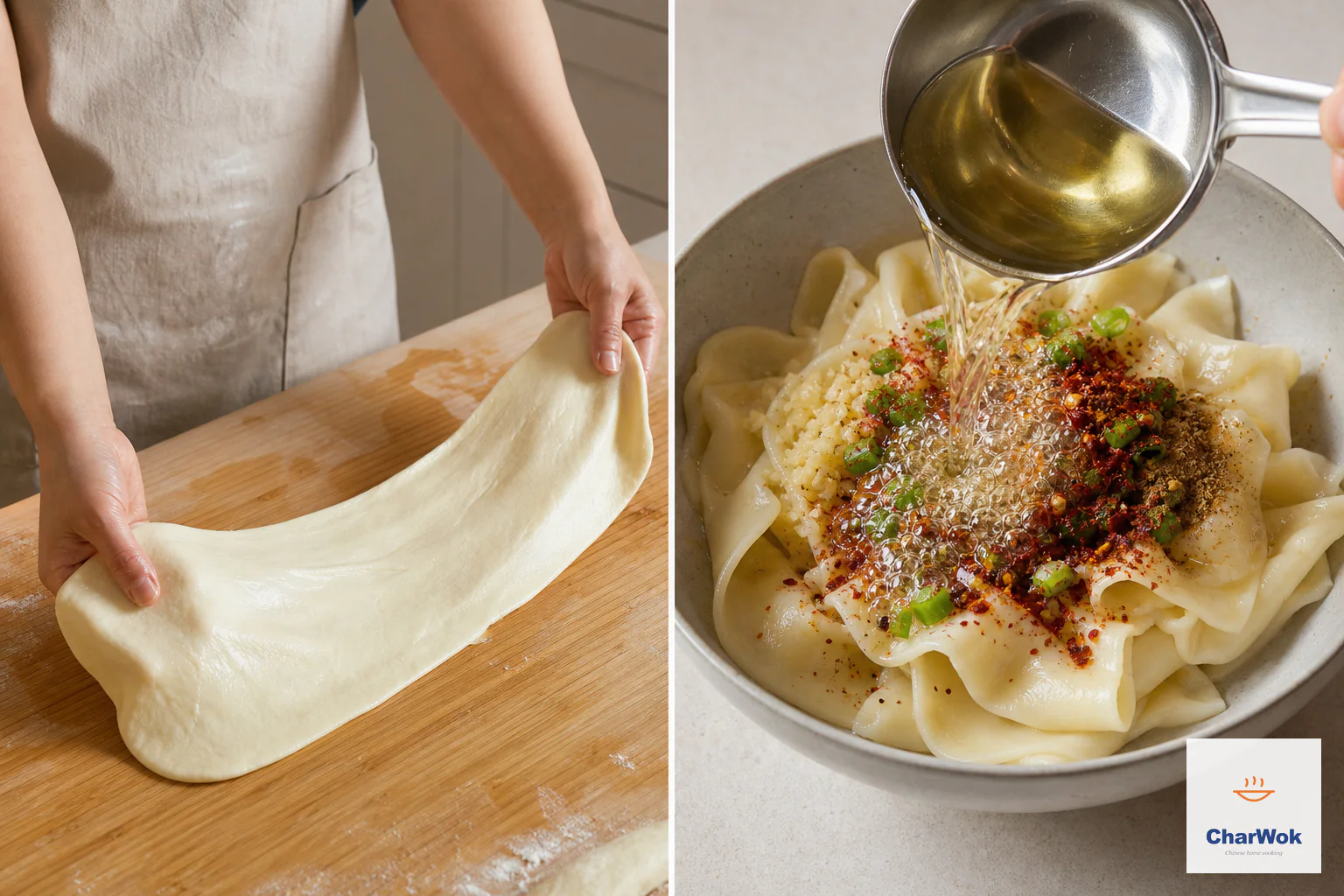
Xi’an Biang Biang noodles rely on relaxed dough that can be slapped and stretched into a broad belt, followed by a hot-oil pour that blooms the dry aromatics at serving time.
Xi'an takes the wheat tradition in a rougher, more visceral direction. The belt-thick biang biang noodles of Xi'an are not pulled thin; they are slapped against the counter to lengthen, then torn into wide ribbons and drowned in sizzling chili oil. The drama of the hot oil hitting dried chili flake, Sichuan pepper, garlic, and cumin is the whole point.
What makes Xi'an food feel different from Beijing's is the flavor signature: vinegar and cumin, not sweet bean and soy. The city was the eastern terminus of Silk Road trade, and its kitchens still carry the spice logic of Central Asia. The same instinct shows up in the city's bread culture. If you want the full picture, the Xi'an pork burger, rou jia mo pairs cumin-scented chopped meat with a toasted wheat bun, and a wider tour of classic Xi'an dishes shows how consistent that flavor palette is across noodles, breads, and street snacks.
Chengdu: the bowl that runs on chili oil and ground pepper
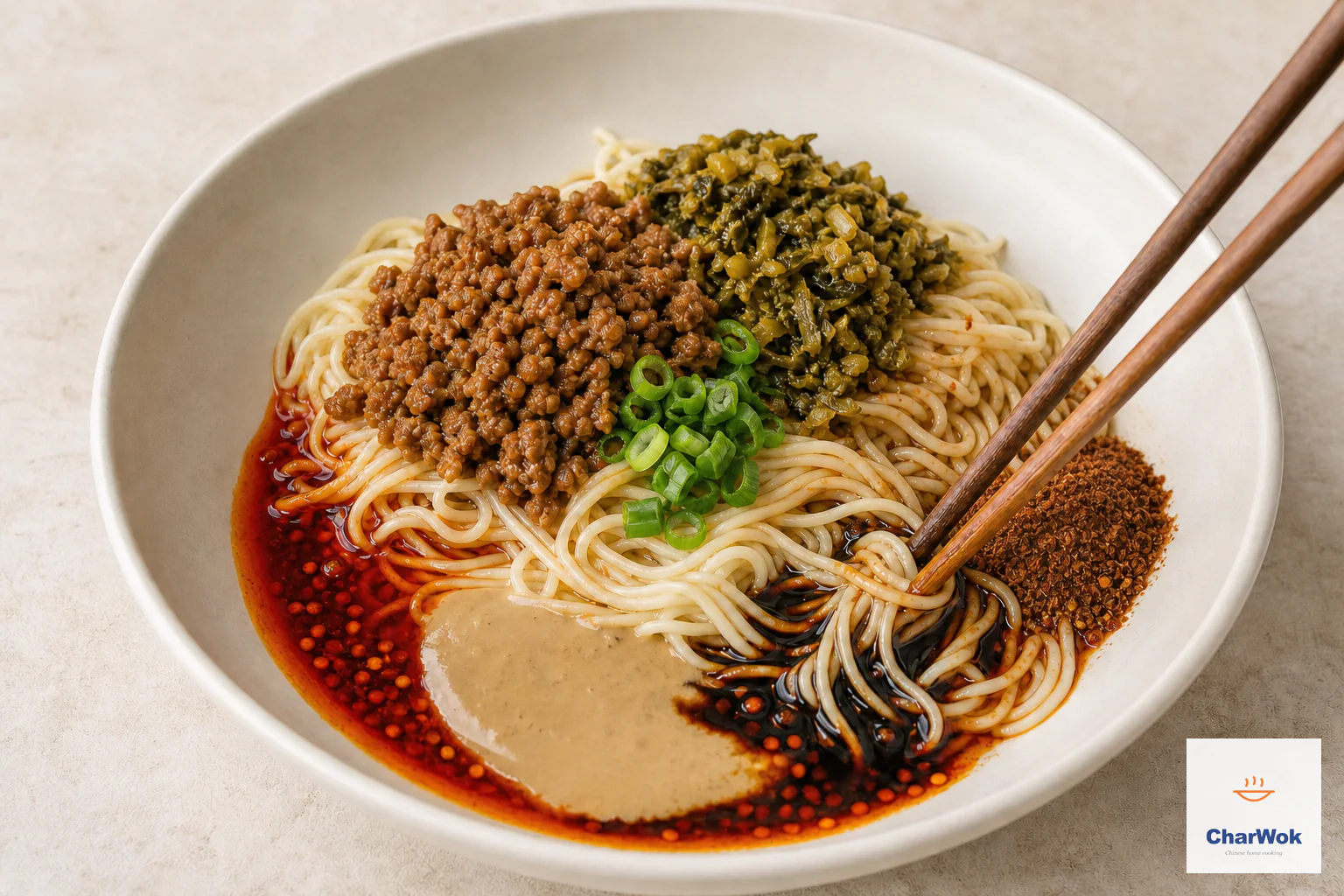
Chengdu Dan Dan noodles build numbing, hot, nutty, sour and savory layers separately in the bowl; lifting from the bottom combines them only when ready to eat.
Chengdu is the stop that changes everyone's mind about Chinese food. Here the noodle is thinner and the dressing is the star: a slick of red chili oil, toasted ground Sichuan pepper, sesame paste, soy, and black vinegar, with a layer of savory minced pork on top. Dan Dan noodles are the gateway, and once you make them once you will keep the components in the fridge permanently.
The two pantry items you must get right are the chili bean paste and the pepper. Sichuan chili bean paste, doubanjiang is the fermented backbone of nearly every red Sichuan dish, and the cheap supermarket version will flatten the whole bowl; look for a Pixian-style aged paste and fry it in oil until the oil runs red. For the numbing side, a clear guide to Sichuan pepper and how it works is worth reading once, because the difference between fresh, fragrant red pepper and stale gray dust is the difference between a tingle and nothing.
If dan dan hooks you, the obvious next move is mapo tofu done the authentic way, which runs on the same sauce logic in a softer, silken form. And for a broader sweep, a good collection of Sichuan recipes to cook at home will keep you busy for months without repeating yourself.
Shanghai: shallot oil and the genius of three ingredients
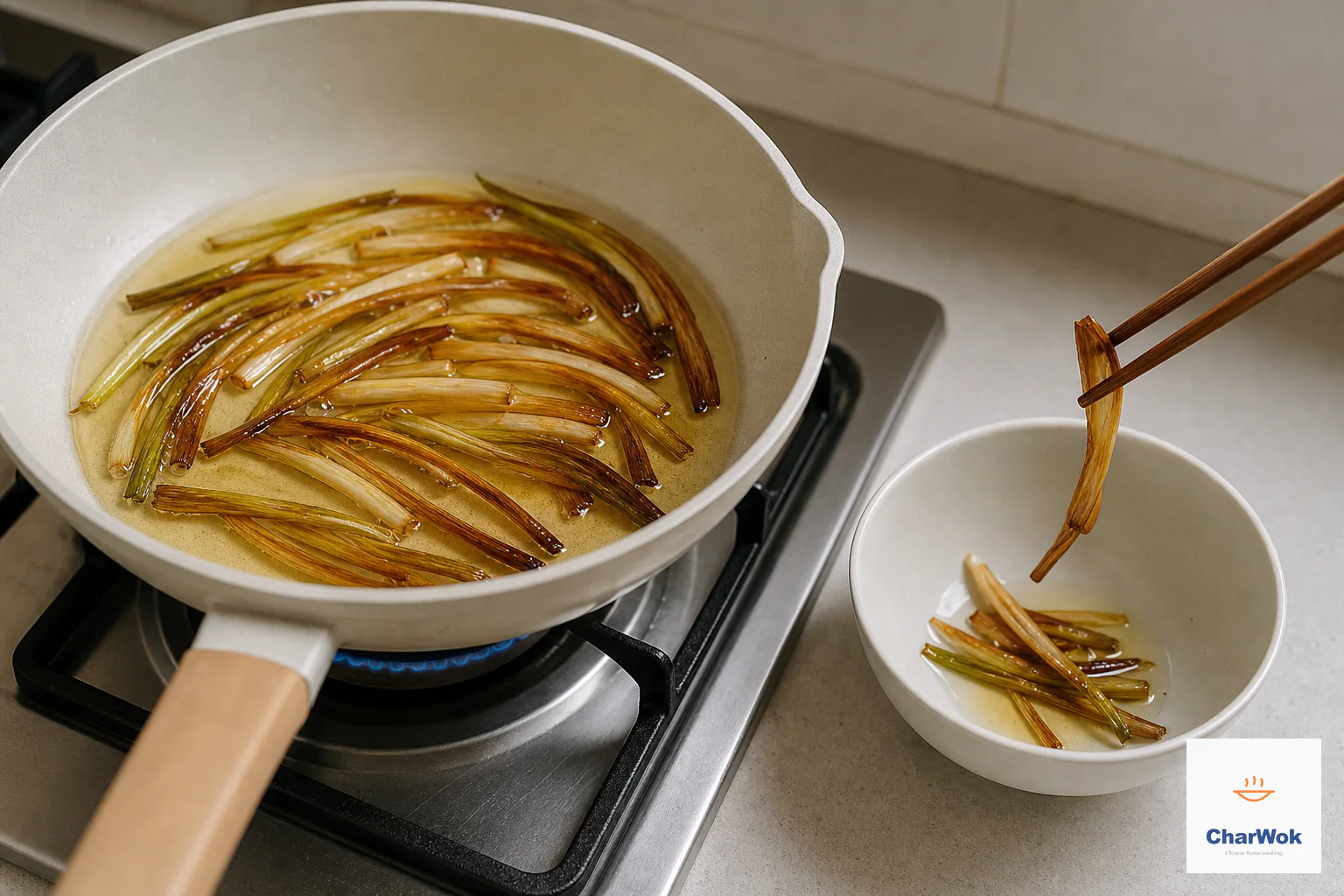
Shanghai scallion oil develops slowly over the lowest heat. Remove the flexible deep-amber scallions before they blacken so the clear golden oil stays fragrant instead of bitter.
The arc ends in Shanghai, where the bowl is stripped down to its most elegant. Scallion oil noodles, cong you ban mian are proof that a great dish can be built from shallot oil, soy sauce, and sugar, with the noodles themselves doing the rest of the work. It is the bowl I cook on a weeknight when I have nothing else planned.
The trick is the oil. You fry scallion whites and greens slowly in cool oil until they are deep amber and almost crisp, then pull them out and let the flavored oil cool before mixing in a soy-and-sugar blend. The slow fry pulls the sulfur aromatics out of the allium and into the fat; a fast fry burns them bitter. This is the same principle behind every infused oil in the Chinese pantry, and once it clicks you understand why shallot oil shows up in so many southern dishes.
How to actually cook your way through the five
If you want to do this as a project instead of reading about it, treat it as a curriculum rather than a list. Cook the bowls in the order I have laid them out, Beijing first and Shanghai last, because the difficulty and the pantry commitment ramp up and then settle back down in a way that keeps you encouraged.
| Stage | Bowl | Notes / what you learn |
|---|---|---|
| Week 1 | Zha Jiang Mian (Beijing) | Long low fry of bean paste; the sauce makes the dish |
| Week 2 | Lanzhou beef noodle soup | Clear-broth skimming; first attempt at pulled dough |
| Week 3 | Biang biang noodles (Xi'an) | Slap-and-tear dough; hot chili oil poured to order |
| Week 4 | Dan Dan noodles (Chengdu) | Building a chili-oil dressing; sourcing good doubanjiang |
| Week 5 | Scallion oil noodles (Shanghai) | Slow allium infusion; the three-ingredient bowl |
What tends to go wrong
A few failures come up again and again when people cook this arc at home, and almost all of them are technique, not ingredient, problems.
- Cloudy Lanzhou broth. You boiled it. Drop to a bare simmer and skim; the cloudiness is emulsified fat and protein that a hard boil whipped in, and it will not settle out.
- Torn, short hand-pulled strands. The dough was under-rested or under-salted. Gluten needs time and salt to build the extensibility that lets it stretch without snapping. Rest an hour minimum, two if your kitchen is cool.
- Grainy, broken Zha Jiang sauce. You added cold liquid to hot oil. Always loosen with hot water, a tablespoon at a time, and keep stirring so the paste emulsifies instead of seizing.
- Bitter scallion oil. You fried too hot. The alliums should take ten minutes to reach deep amber; if they brown in three, the oil is ruined and you should start over.
- Flat, one-note Dan Dan dressing. Stale Sichuan pepper or weak doubanjiang. Toast the pepper fresh and grind it yourself, and spend the money on an aged Pixian paste.
Variations and how to extend the trip
Once the five are in your rotation, the obvious move is to widen the noodle shelf. A reliable collection of classic Chinese noodle recipes gives you dozens of directions, from cold sesame bowls to dry-fried rice noodles. The two I would add first are a Taiwanese beef noodle soup, which takes the Lanzhou clear-broth idea and adds a soy-braised, spicy edge, and a Chongqing small noodle bowl, which pushes the Chengdu dressing even further toward chili and pork mince.
For pairings, keep the side dishes simple and regional. A smashed cucumber salad works with every one of these bowls because acid and crunch reset the palate between rich, oily mouthfuls. With the Chengdu bowl specifically, something cooling like silken tofu or a plain congee balances the heat better than another spicy dish would.
Storing and reheating the components
The smart way to cook this arc is to make components ahead, not whole bowls. The Zha Jiang sauce keeps five days in the fridge and freezes for two months; the Lanzhou broth keeps four days refrigerated and freezes beautifully; the Chengdu chili-oil dressing holds for a week and actually improves on the second day as the flavors marry. The scallion oil keeps two weeks refrigerated in a clean jar. Only the pulled and torn noodles are best cooked fresh, because cooked wheat noodles turn unpleasantly soft and sticky in the fridge.
To reheat, always warm the sauce or broth separately and pour it over freshly cooked noodles, never microwave the assembled bowl. Microwaving makes the noodles mushy and the oil greasy in a way you cannot fix.
Frequently asked questions
A few questions come up every time I walk someone through this set of bowls.
Do I need a stand mixer or pasta machine for these noodles?
No. Hand-pulled, biang biang, and most of these bowls are traditionally made by hand with nothing more than flour, water, salt, and patience. A machine speeds up the kneading but does not change the result.
Can I use dried noodles instead of making dough?
For Zha Jiang Mian and Dan Dan, yes, good dried wheat noodles work fine. For Lanzhou and biang biang, the texture is the dish, and dried noodles will not get you there.
What if I cannot find aged Pixian doubanjiang?
Use the best chili bean paste you can find and fry it longer in oil until it darkens and the oil runs red. It will not be identical, but the extra fry recovers some of the depth that aging provides.
Is there a vegetarian path through this tour?
Yes. Replace the beef broth with a dried mushroom and kombu stock, swap the pork mince in dan dan for toasted soy crumbs or mushrooms, and the rest of the technique carries over unchanged.
The honest summary is that two of these bowls, the Lanzhou soup and the hand-pulled dough behind it, will probably defeat you the first two tries. Mine did. But the Beijing sauce, the Xi'an chili oil, the Chengdu dressing, and the Shanghai scallion oil are all forgiving, buildable, and worth keeping in permanent rotation. Cook the arc once and you stop thinking of Chinese noodles as one thing, and start reading each bowl for the region it came from.