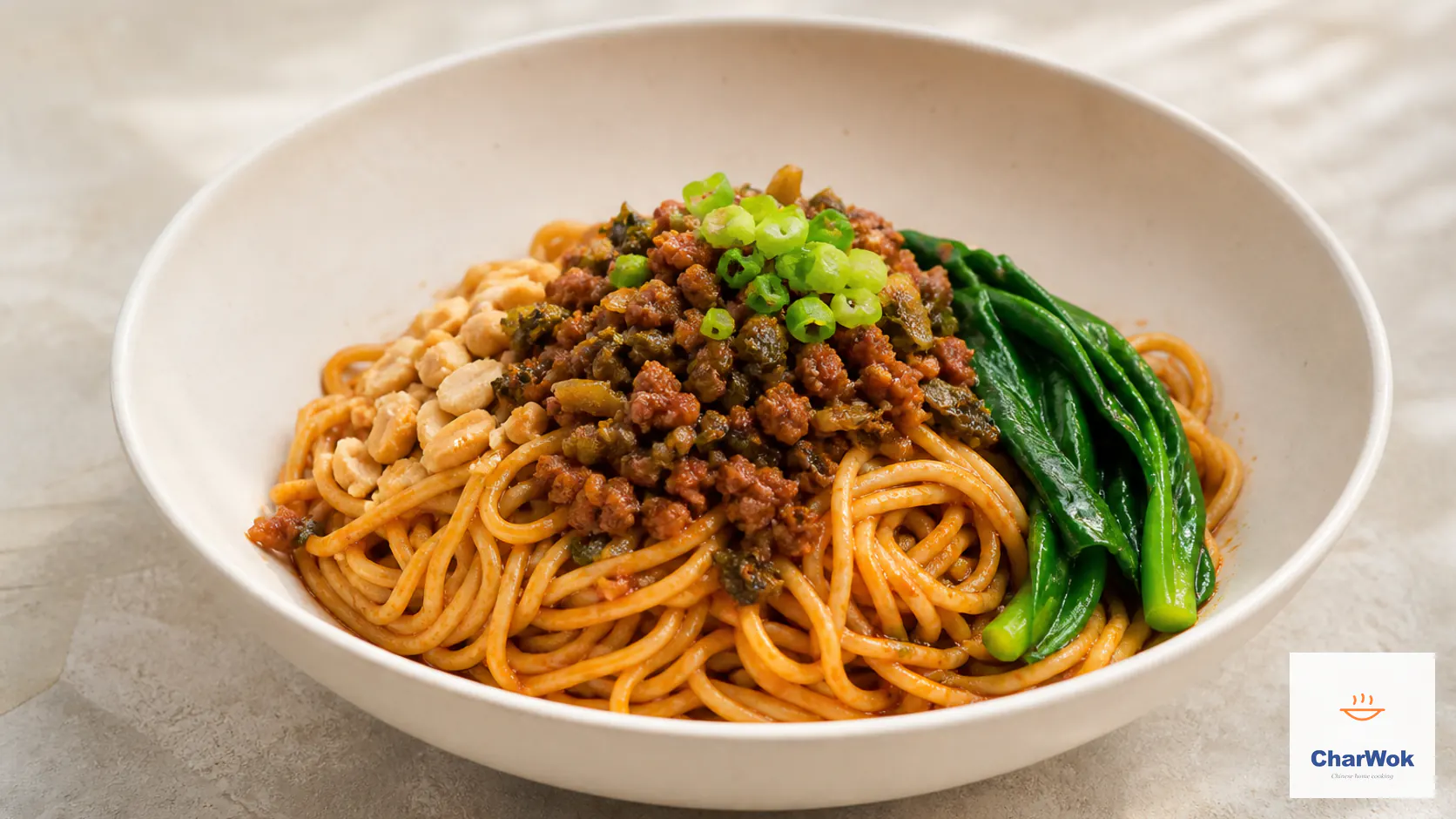
Dan Dan Noodles live or die on the sauce in the bottom of the bowl. Get that paste right and the rest of the dish is almost impossible to ruin. Get it wrong and you have spicy noodle soup with meat on top, which is a perfectly good lunch but is not Dan Dan.
The version most of us meet first is a disappointment: a thin chili-red broth, a clump of noodles, ground meat that tastes of nothing. The real thing is dry, or nearly so. You mix a concentrated layer of sesame paste, soy, black vinegar, Sichuan pepper and chili oil into the noodles at the table, and the sauce clings to every strand rather than pooling around them. That is the bowl I want you to end up with, and the difference between the two is almost entirely technique, not ingredients.
What this dish actually is
Dan Dan Mian is a Sichuan street food named for the carrying pole (dan) that hawkers in Chengdu and Zigong slung over their shoulders a little over a century ago, one basket holding a small charcoal stove and a pot of boiling water, the other the noodles, meat and seasoning jars. You ordered, they assembled, you ate standing up. What made it sell was the sauce: a sturdy paste of roasted sesame, soy and chili oil that coated the noodles the moment you tossed them.
Two things follow from that history, and they explain almost everything that goes wrong at home. First, it is a dry-tossed noodle (ban mian), not a soup. Second, the liquid in the bowl should be mostly seasoned oil and emulsified sesame paste, not stock or water. If you want a deeper look at the Sichuan pantry that drives this bowl, the chili bean paste, ground peppercorns and infused oils are covered in our broader set of Sichuan recipes for the home kitchen, and the peppercorn itself deserves its own study.
At a glance: 2 servings in about 25 minutes. The non-negotiables are a sesame-paste base loosened with about an equal part water (roughly 1:1 by volume), ground Sichuan pepper added at the end, and the bowl assembled dry with only the noodle water that clings to the strands. Toss at the table, never in the pot.
The ingredients, and where I would not cut corners
Ingredients at a glance
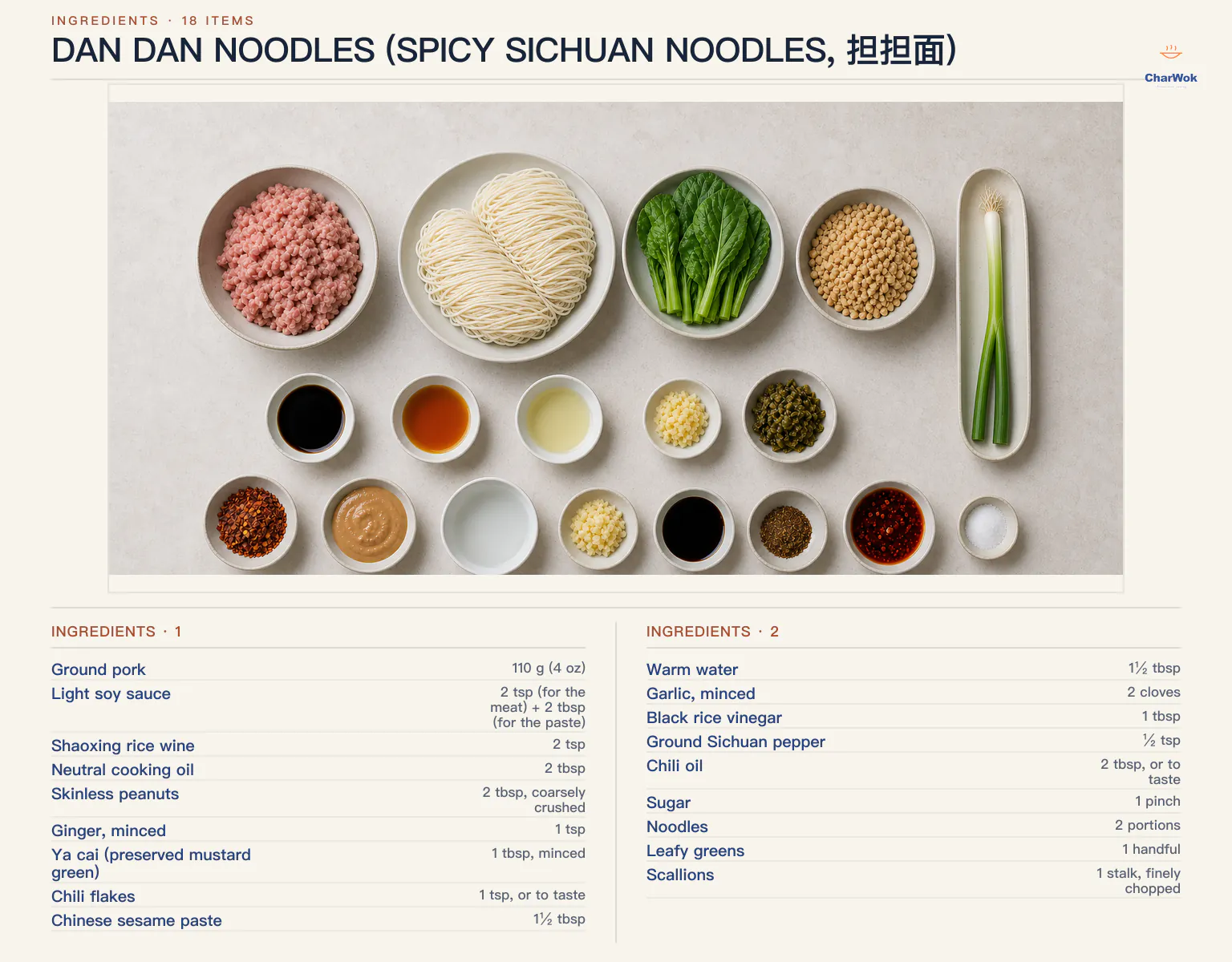
I have grouped these by the job each one does, because Dan Dan is really three small dishes stacked in one bowl: the meat topping, the seasoning paste, and the noodles and greens. You can fudge some of them. You should not fudge others.
| Ingredient | Amount (2 servings) | Notes / substitute |
|---|---|---|
| Ground pork | 110 g (4 oz) | Fatty is better. Beef works; mushrooms or crumbled pressed tofu for a meatless version. |
| Light soy sauce | 2 tsp (for the meat) + 2 tbsp (for the paste) | Salt and umami backbone. See how light and dark soy differ if you are unsure. |
| Shaoxing rice wine | 2 tsp | For the meat. Dry sherry is the closest common stand-in. |
| Neutral cooking oil | 2 tbsp | Grapeseed, canola or peanut. Not olive oil. |
| Skinless peanuts | 2 tbsp, coarsely crushed | Toasted cashews or fried soybeans if you have a peanut allergy. |
| Ginger, minced | 1 tsp | Cuts the pork's edge. Do not skip. |
| Ya cai (preserved mustard green) | 1 tbsp, minced | Zha cai is the standard substitute. The Sichuan pantry often stocks both. |
| Chili flakes | 1 tsp, or to taste | Ordinary red pepper flakes are fine; the meat should be warm, not screaming. |
| Chinese sesame paste | 1½ tbsp | The backbone of the bowl. Tahini thinned with a few drops of toasted sesame oil is the workable substitute. Our guide to sesame paste walks through the options. |
| Warm water | 1½ tbsp | To loosen the paste. Hot pasta water works too. |
| Garlic, minced | 2 cloves | Into the paste, raw. |
| Black rice vinegar | 1 tbsp | Chinkiang style. Balsamic, thinned, in a pinch. Read up on black rice vinegar if it is new to you. |
| Ground Sichuan pepper | ½ tsp | Freshly ground. Pre-ground loses its citrusy buzz in weeks. |
| Chili oil | 2 tbsp, or to taste | With the solids, not just the oil. Our chili oil guide covers making your own. |
| Sugar | 1 pinch | Rounds the acid and heat. Not a sweet dish. |
| Noodles | 2 portions | Fresh alkaline wheat noodles are ideal; dried works. See the noodle notes below. |
| Leafy greens | 1 handful | Baby bok choy, choy sum or spinach. |
| Scallions | 1 stalk, finely chopped | For the top. |
The right noodles (and the ones to avoid)
The best noodles for Dan Dan are thin, fresh, alkaline wheat noodles, the same family used in a good bowl of ramen. The mild kansui alkalinity gives them a springy bite that holds up under a heavy, oily sauce, and the yellow surface takes color well. If you want to make them yourself, our alkaline noodle recipe is the place to start; a plain fresh noodle dough is fine too if alkaline water is not in your pantry yet.
Dried noodles will work, with one rule: slightly undercook them. They will keep softening as they sit in the hot oil at the bottom of the bowl, and Dan Dan is not forgiving of a noodle that collapses. Avoid rice noodles and glass noodles here. The sauce is thick and assertive and needs a noodle with the structure to carry it; glass noodles turn gummy and rice noodles slip straight out of the coating. If you love the spicy-vermicelli genre, Ants Climbing a Tree is the dish that actually suits them.
Method, with the why behind each step
Build this in reverse: paste first, meat second, noodles last. That way nothing sits waiting and going cold, and the noodles hit the sauce at their hottest.
- Loosen the sesame paste with warm water before anything else. Stir the 1½ tbsp of paste with 1½ tbsp of warm water until it goes from a stiff lump to a smooth, pourable cream. This is the step people skip and then wonder why their sauce breaks. Sesame paste is mostly ground solids and oil; add cold liquid and it seizes into grainy curds. Warm water lets the proteins hydrate evenly so the paste can later emulsify with the chili oil instead of splitting.
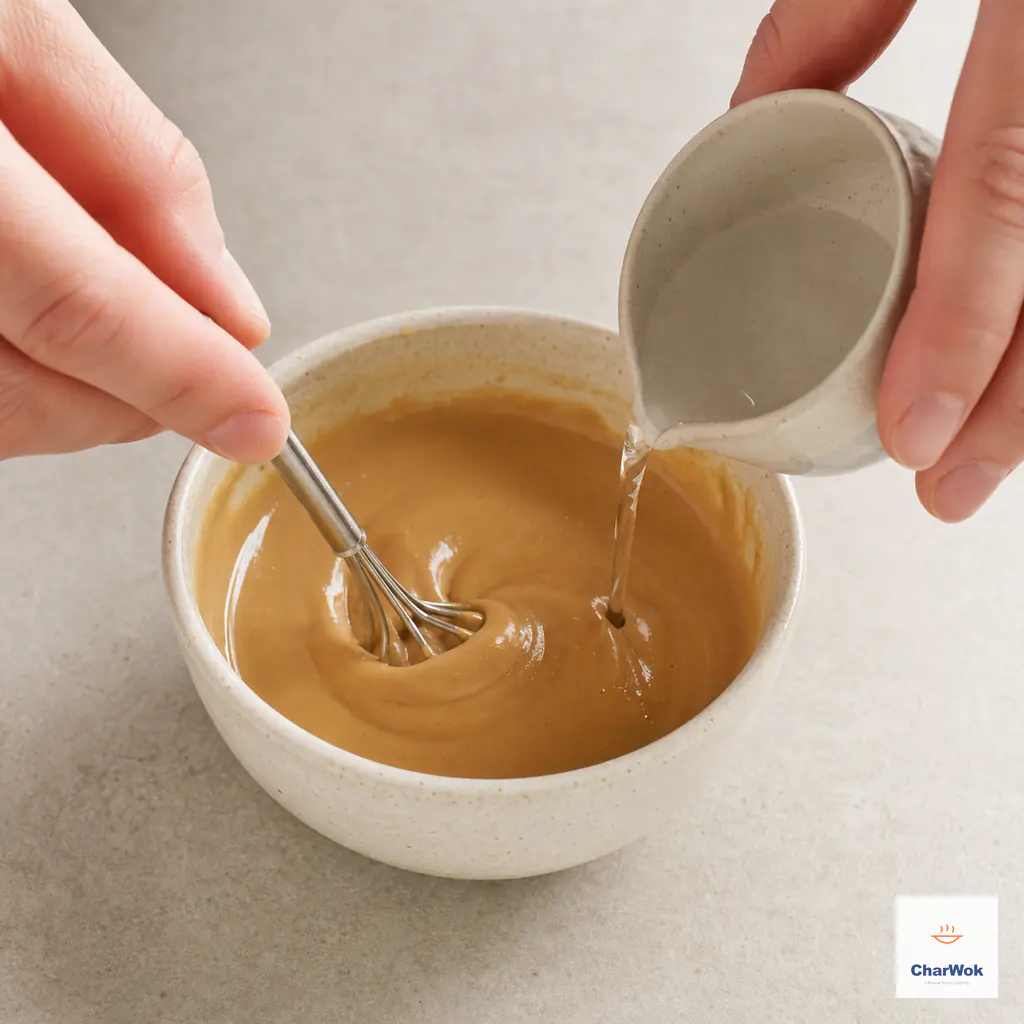
Add warm water gradually until the sesame paste falls in a smooth, semi-runny ribbon
- Build the seasoning paste. To the loosened sesame paste add the minced garlic, 2 tbsp light soy, black vinegar, ground Sichuan pepper, the pinch of sugar and the chili oil with its solids. Stir and taste. It should be intense, almost too salty and too numbing on its own. It will not be too strong once the noodles and greens dilute it.
- Marinate the ground pork, and break it up thoroughly. Toss the pork with 2 tsp light soy and 2 tsp Shaoxing wine. The point is not flavor depth, it is to season the meat evenly and to loosen the proteins so that in the pan the pork fries into fine grains rather than one gray puck. Use a fork and really work it.
- Fry the peanuts in a cold wok over low heat. Add the 2 tbsp of oil and the peanuts to a cold wok, then turn the heat on low. Cold-start lets the oil and peanuts warm together so the nuts toast through without scorching on the outside. Fish them out golden. They keep cooking after they leave the pan, so pull them one shade paler than you think they should be.
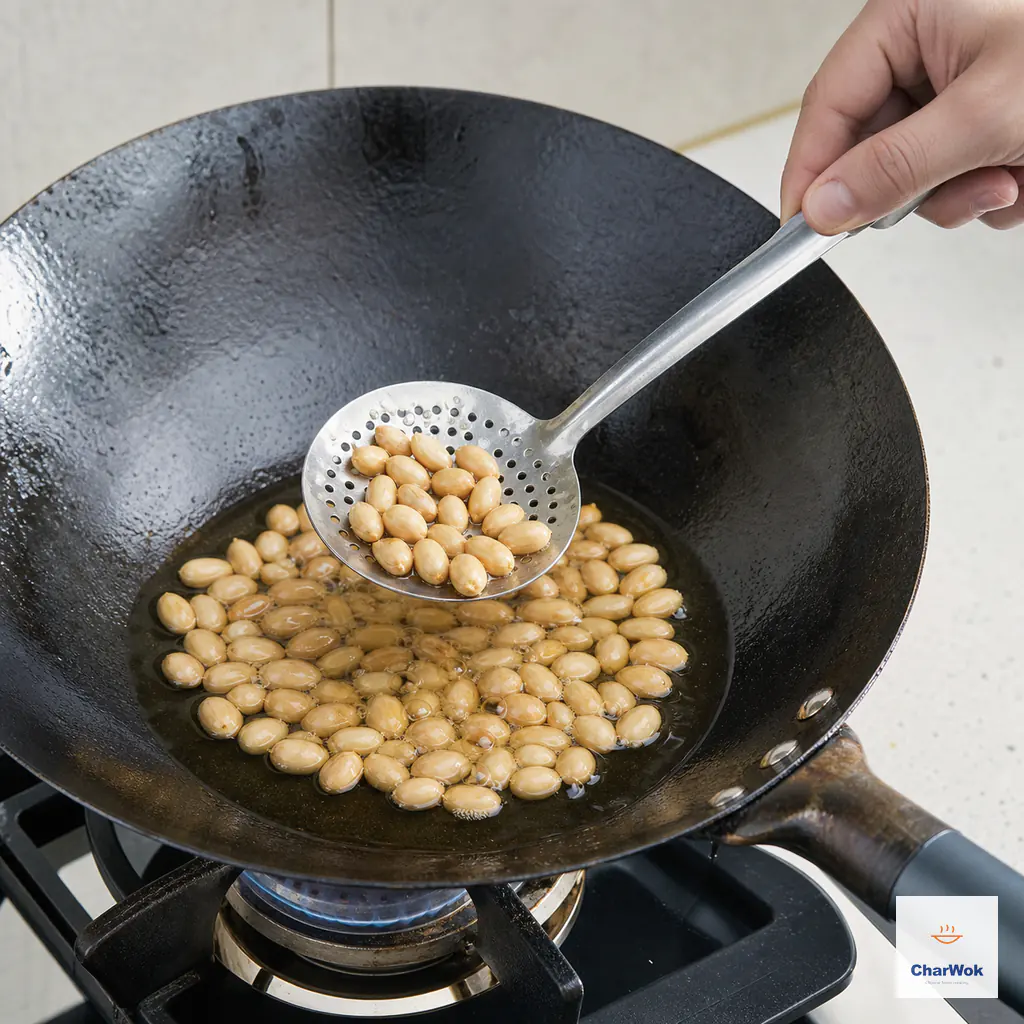
Start in cold oil over low heat; lift the peanuts one shade before their final golden color
- In the leftover peanut oil, fry the meat with ginger, ya cai and chili flakes. The flavored oil now does double duty. Spread the meat in a thin layer, let it sit for ten seconds to brown on one side, then stir and break it up. You want the pork loose, a little crisp at the edges, fully cooked through. The ya cai goes in toward the end so it warms without losing its briny punch. Set the meat aside.
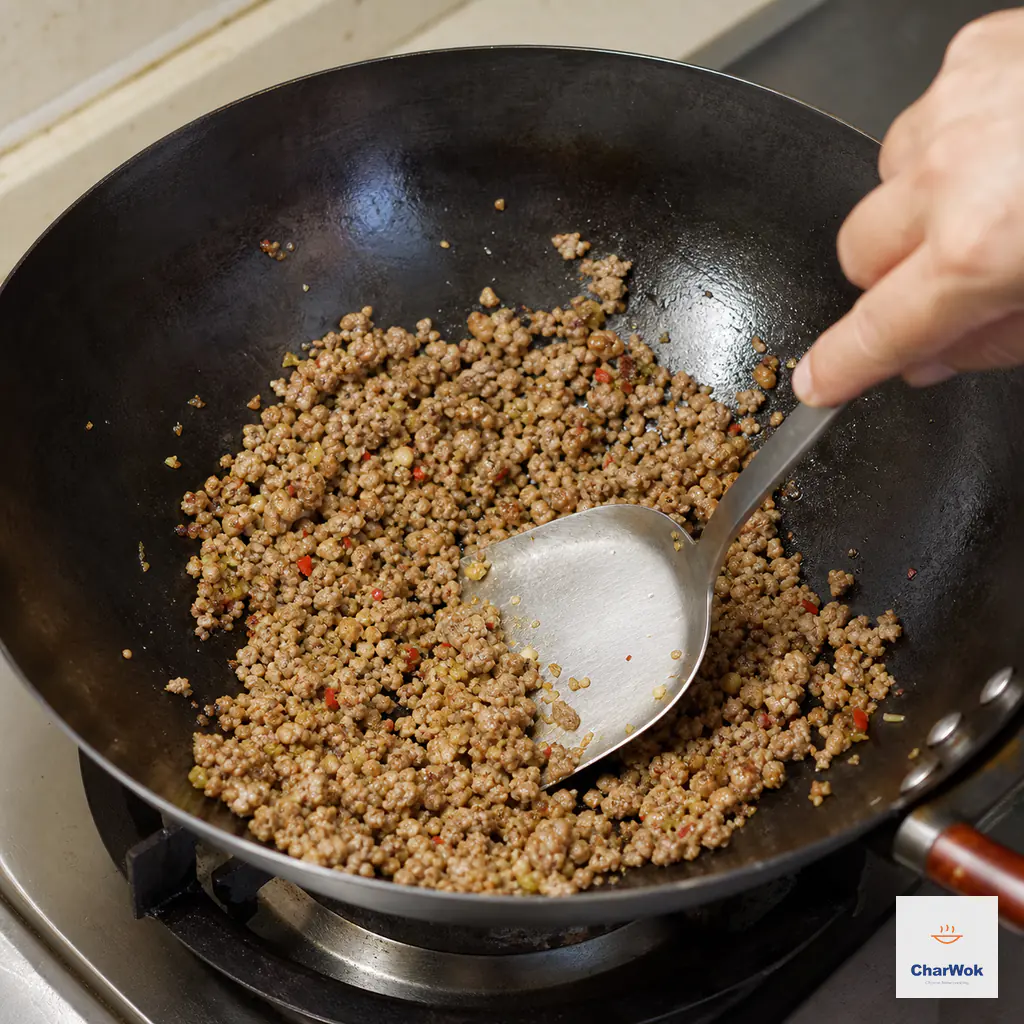
Break up the pork until the grains are cooked through, lightly golden at the edges, and still moist
- Boil the noodles in a generous pot of water. A large volume of water keeps the starch concentration low, so the noodles do not slather each other in a sticky film. Cook to just shy of the package time, then throw the greens in for the final 20 to 30 seconds so they blanch in the same water.
- Drain, and do not over-rinse. Shake off the water but leave the noodles just a touch damp. A film of starchy water on the strands is what lets the thick paste thin out and coat evenly once you toss. A thorough cold rinse strips that starch and the sauce slides off.
- Assemble in the bowl, sauce on the bottom. Divide the paste between two bowls. Add the noodles, then the greens. Crown with the meat and peanuts, and scatter scallions on top.
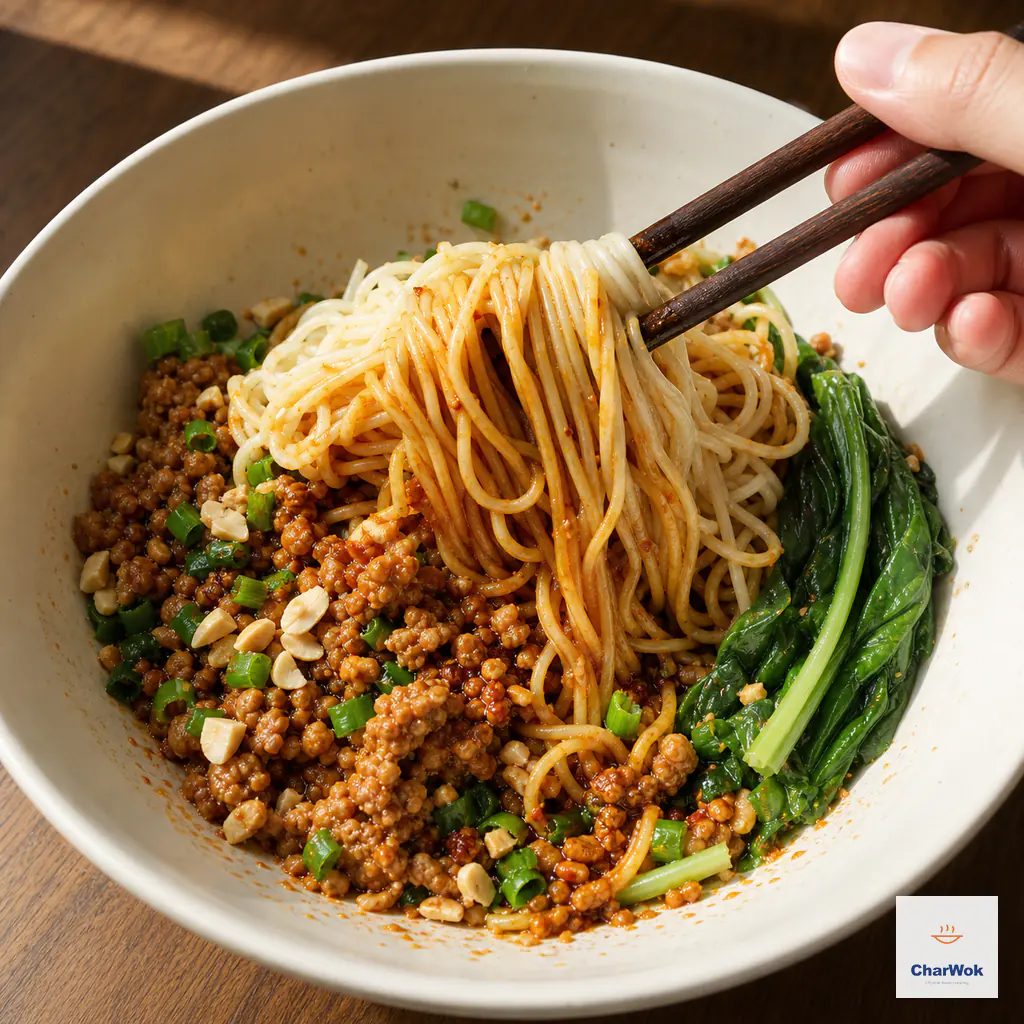
Reach under the noodles and turn upward so the sauce coats every strand
- Toss at the table. Mix from the bottom up so the paste lifts into the noodles. This is the moment the dish becomes Dan Dan. Eat immediately, while the oil and the noodles are still warm enough to stay emulsified.
When it goes wrong, and how to fix it
I have made every mistake below at least once. Most of them trace back to a single skipped step.
- The sauce looks curdled and grainy. You added cold liquid to the sesame paste, or the paste was ice-cold from the fridge. Whisk in a teaspoon of hot water off the heat and keep going; it usually comes back. Next time, loosen the paste first with warm water before the chili oil goes in.
- The bowl is soupy. Either you rinsed the noodles too well, left too much cooking water on them, or poured in stock. Dan Dan is a dry noodle. Drain harder, and trust the paste to do the work.
- The meat fried into one clump. It went into a too-hot pan, or it was not loosened during marinating. Lower the heat, add the pork in a thin layer, wait, then break it up with the side of your spatula. Marinating with a fork and a little extra soy fixes the next batch.
- It is one-dimensional, just hot. You are short on sesame paste or black vinegar. The bowl should read nutty and tangy first, with the heat and numbing pepper arriving second. Add paste and vinegar, not more chili oil.
- The Sichuan pepper tastes dusty, not tingling. The peppercorns are stale or pre-ground too far ahead. Buy whole reddish-brown peppercorns, toast them dry for a minute, and grind fresh; the Sichuan pepper guide covers sourcing and grinding. Old gray peppercorns taste of nothing but cardboard.
- The noodles are soft and sad. You overcooked them or let them sit in the bowl too long before tossing. Undercook dried noodles by 30 seconds, and toss the moment the bowl is built.
Variations and pairings
The meat topping is the most flexible part. A vegetarian version with finely chopped shiitake and crimini mushrooms fried in the same seasoned oil is genuinely good, not a compromise. Crumbled firm tofu, pressed dry and fried until crisp, works the same way. And if you keep a jar of homemade chili oil on the counter, a spoonful of its solids is better than flakes alone.
For a meal, Dan Dan pairs cleanly with a cool, crunchy side that resets the palate between bites. Smashed cucumber in garlic vinegar, or a quick smashed cucumber salad, is the classic. A bowl of Mapo Tofu alongside doubles down on the same Sichuan flavor profile for people who want it, and a cold plate of Sichuan mouth-watering chicken gives you the hot-and-cold contrast that a Chengdu street stall would aim for. If you want the numbing heat dialed all the way up, the broth in our spicy hot pot base uses the same peppercorn-and-chili logic at higher strength.
Cousins worth knowing: Chongqing xiao mian is the soupier, more peppery sibling; cold Sichuan liang mian is the summer version of the same chili-sesame logic; and sesame noodles strip the bowl down to just the paste. The full Chinese noodle recipe collection has more if you are building a noodle night.
Storage and reheating
Dan Dan does not keep well assembled; the noodles drink the sauce and turn to paste by the next day. Keep the components separate. The meat topping and the seasoning paste each hold for three days in the fridge, and the paste actually improves overnight as the garlic and Sichuan pepper meld. Reheat the meat gently in a pan, boil fresh noodles, and rebuild the bowl. The fried peanuts lose their crunch after a few hours, so crush and add them at the last moment.
A note on heat
I have dialed the chili oil to a level most cooks can eat comfortably. Sichuan heat is meant to build, not to punish, and the sesame paste and vinegar are there to absorb it. Push the chili oil up if your guests want more, but push the sesame paste and vinegar up with it, or the bowl turns one-note. The goal is a sauce you keep tasting because every bite shifts between nutty, sour, salty, hot and numbing, not one you have to survive.
Frequently asked questions
Can I make Dan Dan without sesame paste? You can, but it stops being Dan Dan and becomes spicy noodles with meat. Tahini thinned with toasted sesame oil is the closest common stand-in; peanut butter works in a real emergency and gives a sweeter, heavier bowl.
Is it supposed to have soup? No. Authentic Dan Dan is dry-tossed. The liquid you see should be seasoned oil and emulsified paste, not broth, never stock.
What can I use instead of ya cai? Zha cai (preserved mustard stem) is the usual swap and is easier to find. Either one supplies the salty, fermented edge that lifts the meat topping; skip it and the bowl reads flat.
Can I make it vegetarian? Yes. Swap the pork for finely chopped mushrooms or crumbled pressed tofu fried the same way, and use a meatless chili oil. Keep the sesame paste, soy, vinegar and Sichuan pepper exactly as written.