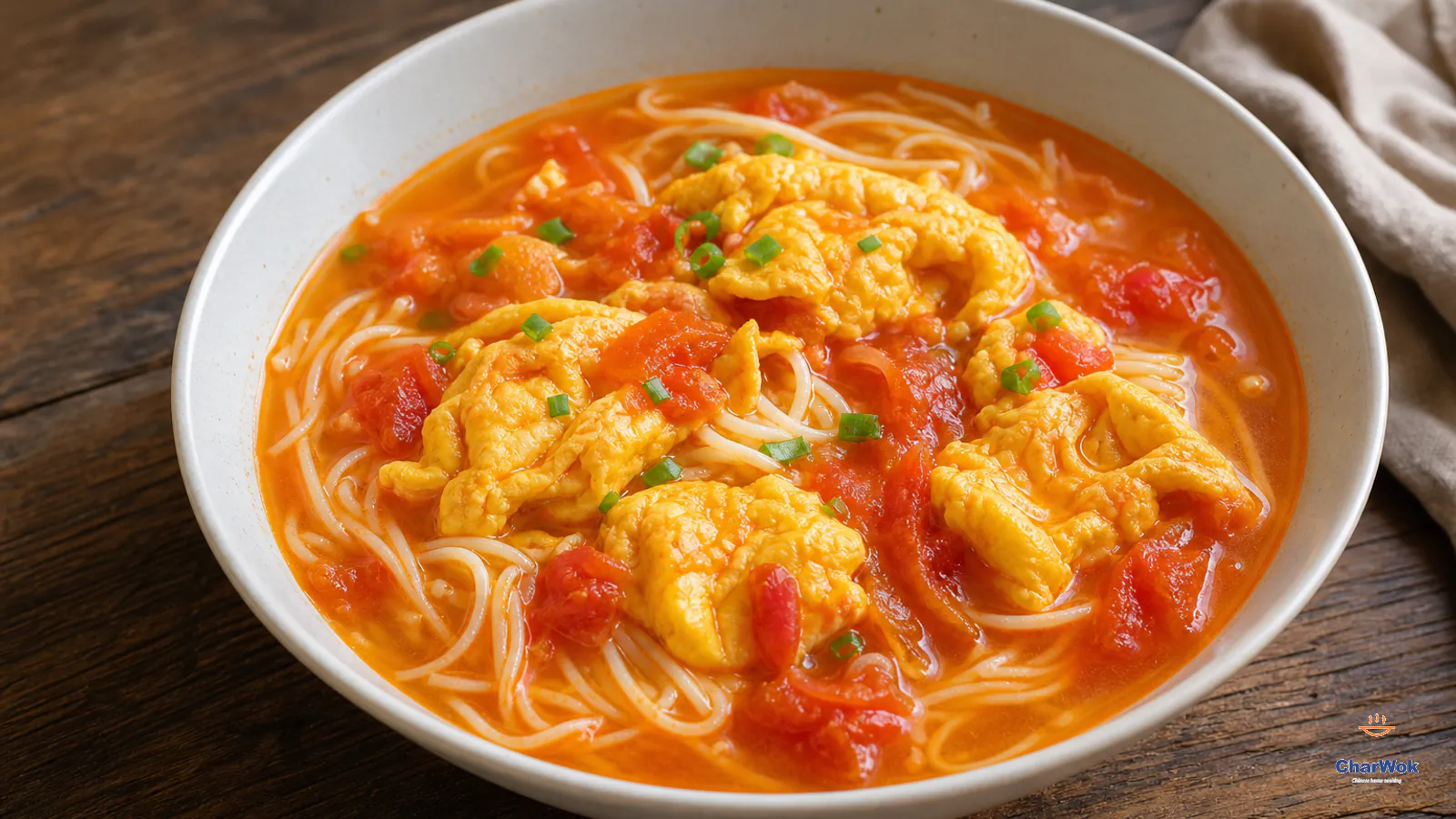
The bowl you want from tomato and egg noodle soup is not what most home cooks produce. Most versions end up as pale tomato chunks bobbing in hot, thin water with rubbery egg folded in at the end. The bowl you are after has a sunset-orange broth that tastes sweet, tangy, and savory all at once, clinging to the noodles, with soft curds of egg running through it. The distance between those two bowls is short, but it lives in a couple of technique choices almost nobody explains.
This is the dish I make when I am tired, broke, or feeding someone who claims they cannot cook. It is also the dish I have wrecked more times than I care to admit, usually by dumping raw tomato into water and calling it soup. Once I understood what the simmer is actually doing, the failure stopped.
At a glance. Sauté 4 ripe tomatoes (about 450 g) in garlic oil until they collapse to a near-paste, then simmer that paste in 350 ml (1½ cups) of water for a full 5 minutes. The whole soup hangs on one decision: how long you cook the tomato before the water goes in. Two minutes of lazy simmering gives you acidic tomato water; a patient collapse gives you a thick, sweet broth.
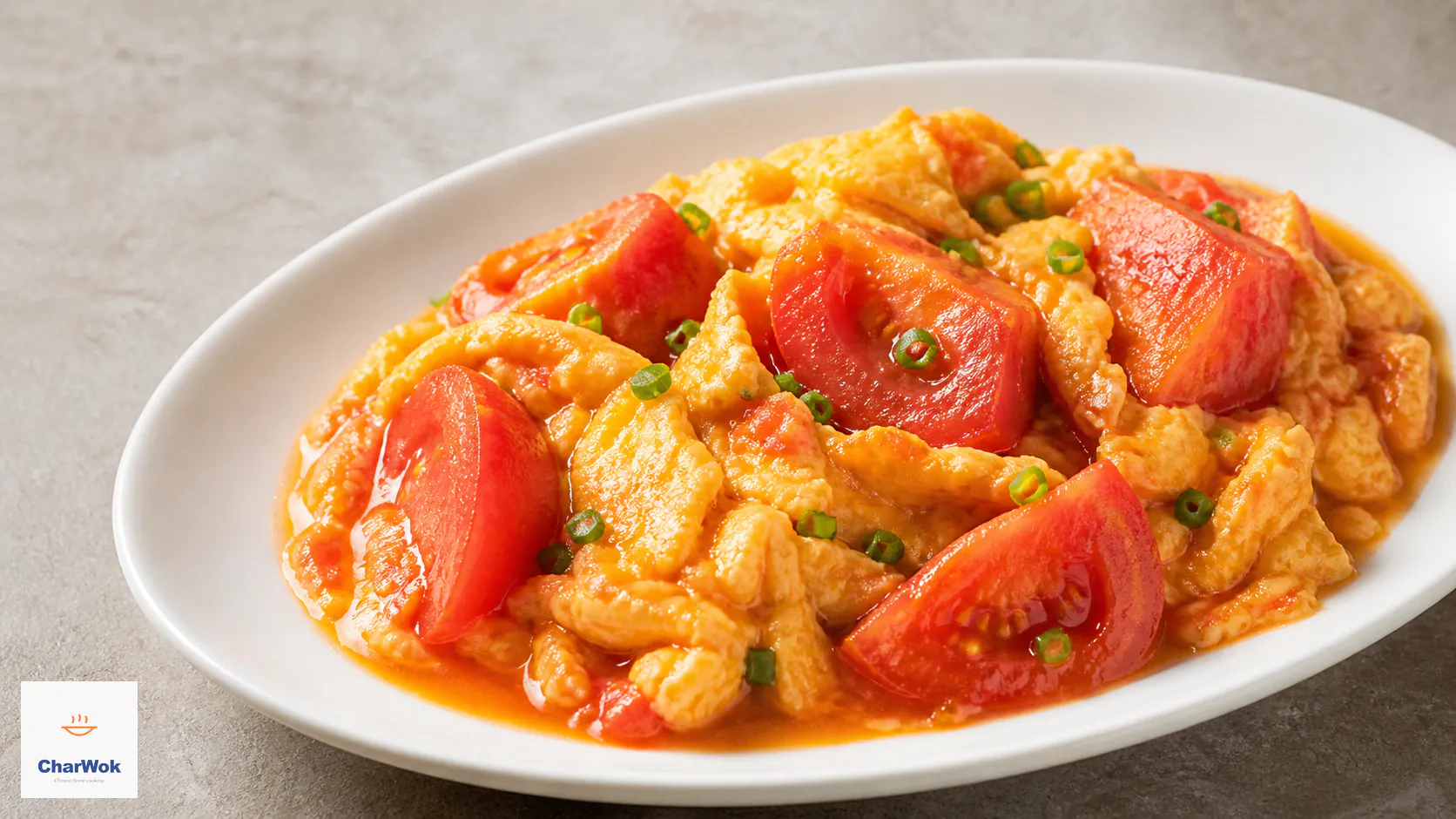
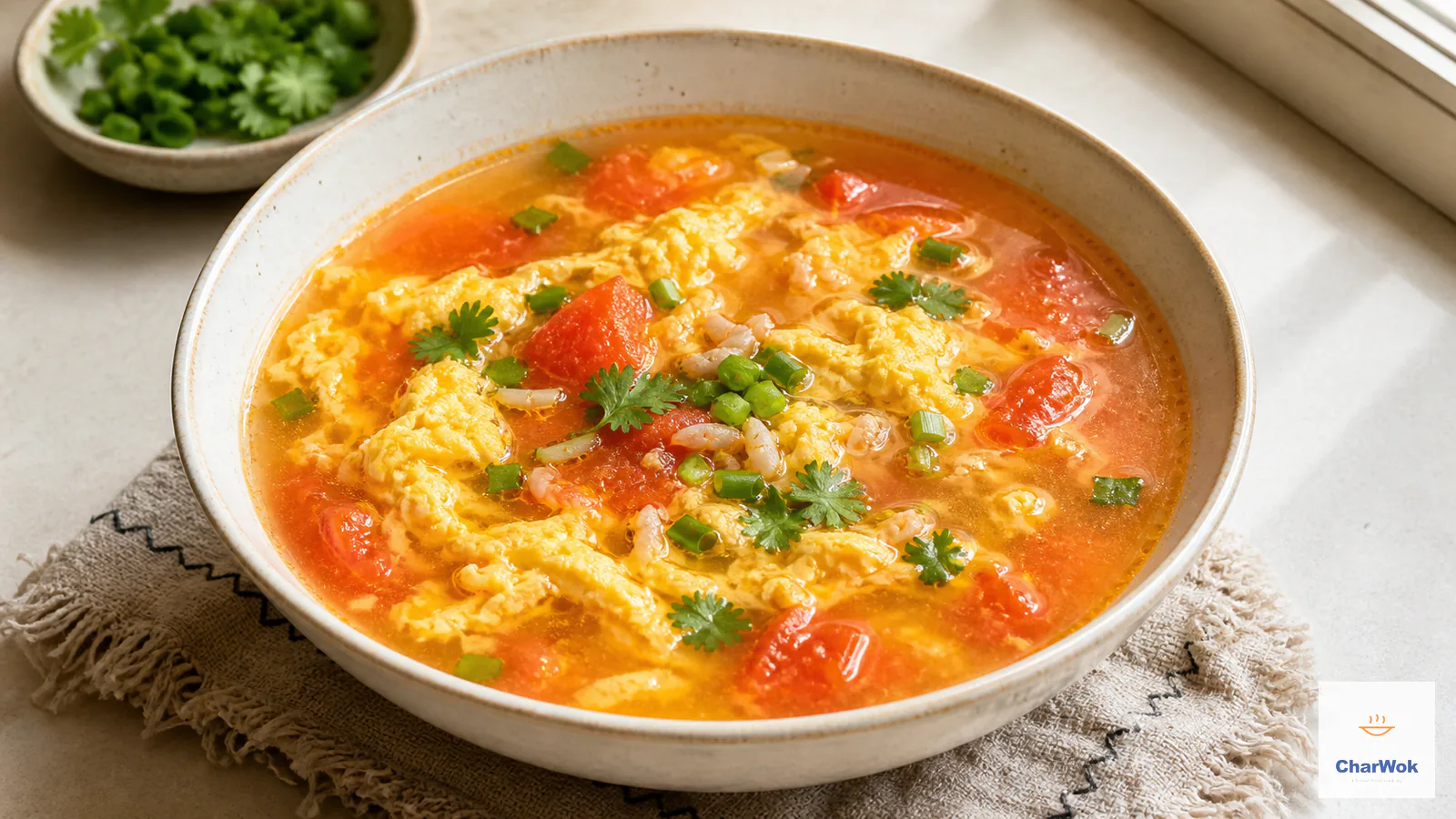
Tomato and egg is a northern Chinese home dish, the kind of thing every family makes a slightly different way. The same tomato-and-egg pairing shows up everywhere, from the dry stir-fry that is its own classic to the quick tomato egg drop soup served before a meal. What makes the noodle-soup version its own animal is the broth. You are not making a clear soup and floating things in it. You are turning the tomato itself into the soup base, then loosening it with water.
What actually makes the broth
Here is the part most recipes skip. A ripe tomato is mostly water held inside cell walls, with pectin gluing those walls together and natural glutamate sitting in the juice. Raw, that structure reads as crisp and fresh. Cooked hard and long, the walls burst, the pectin leaches out, and the glutamate concentrates. That is the difference between "tomato-flavored water" and "tomato broth with body."
So the goal in the pan is not to warm the tomato. It is to break it down. You want the pieces to slump, their edges dissolving into the oil, the whole mass darkening from bright red to a deeper, almost brick orange. When you see that color shift, the pectin has released and the glutamate has woken up. Add the water then, and you get a soup that coats the noodles. Add it early, and you have done nothing but dilute.
The egg is the second pillar, and it does two jobs. Beaten with a splash of water and scrambled hot and fast, the curds stay tender and pale. Folded back into the tomato at the end, their fat rounds off the acid so the soup never reads as sharp. If you have ever made a tomato egg stir-fry, this is the same logic, just with broth instead of a glossy sauce.
Ingredients
Ingredients at a glance
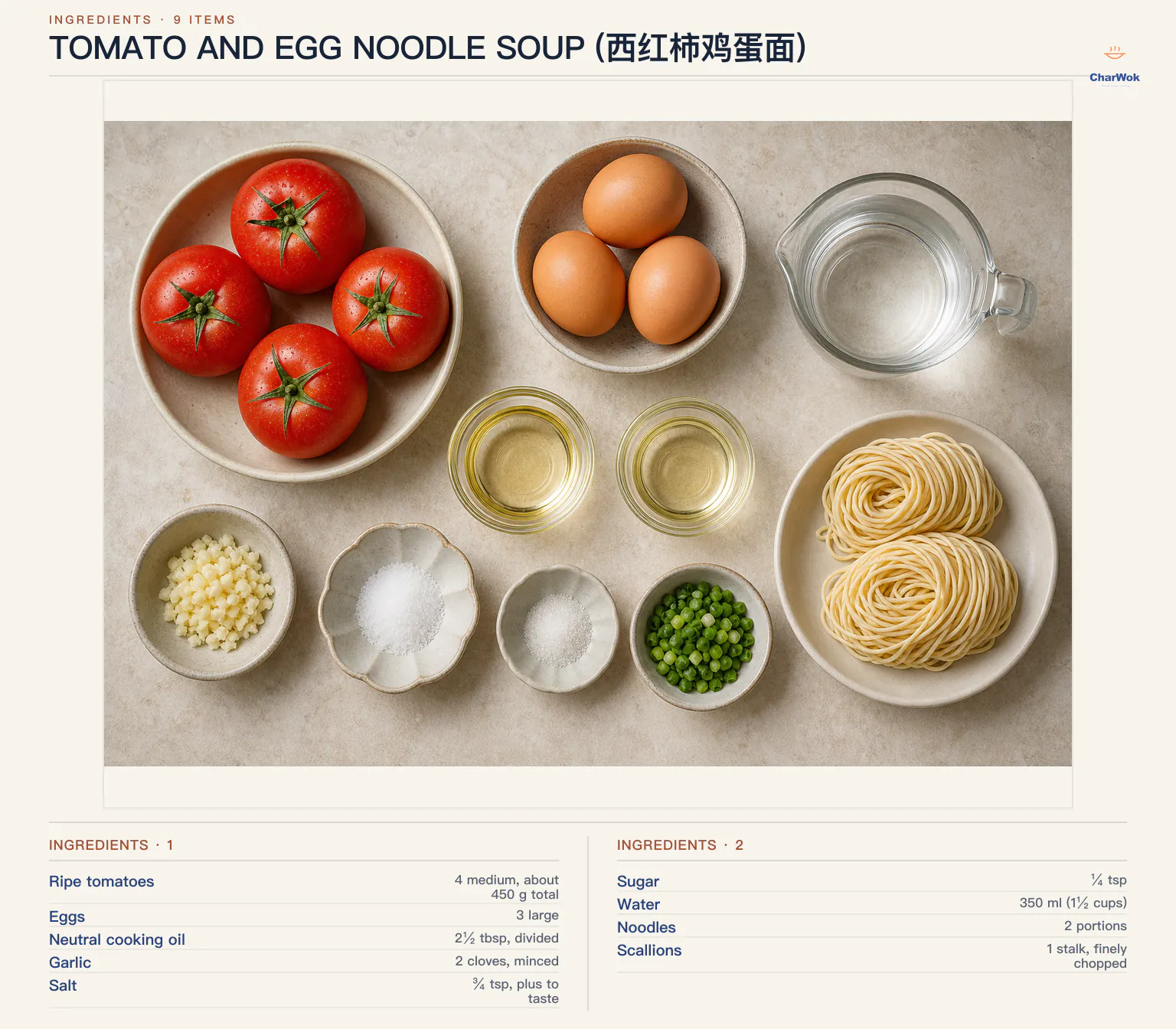
| Ingredient | Amount | Notes / substitute |
|---|---|---|
| Ripe tomatoes | 4 medium, about 450 g total | Vine-ripe or on-the-vine. Skip the pale greenhouse ones; flavor is built in the field. Roma work if very ripe. |
| Eggs | 3 large | Beaten with 1 tbsp water for soft curds. |
| Neutral cooking oil | 2½ tbsp, divided | Grapeseed, canola, or peanut. Avoid olive oil; it fights the dish. |
| Garlic | 2 cloves, minced | One small aromatic base. A thin slice of ginger is a valid add, not a substitute. |
| Salt | ¾ tsp, plus to taste | The main seasoning. Taste at the end. |
| Sugar | ¼ tsp | Balances acid; do not skip even if the tomatoes are sweet. |
| Water | 350 ml (1½ cups) | Chicken or vegetable stock is better if you have it; see variations. |
| Noodles | 2 portions | Fresh or dried wheat noodles. See the section below. |
| Scallions | 1 stalk, finely chopped | For garnish. Cilantro is a fair swap. |
Pick the right pan, or pay for it later
One real warning before you start. Do not reach for your seasoned carbon steel wok for this. Tomatoes are acidic, and a long simmer in acid will strip the seasoning you spent weeks building, leaving a grey, metallic-tasting soup and a wok that needs reseasoning. Use a nonstick pan, an enameled Dutch oven, or a stainless skillet. If you cook Chinese food often, this is one of the few dishes where the carbon steel wok is genuinely the wrong tool.
About the noodles
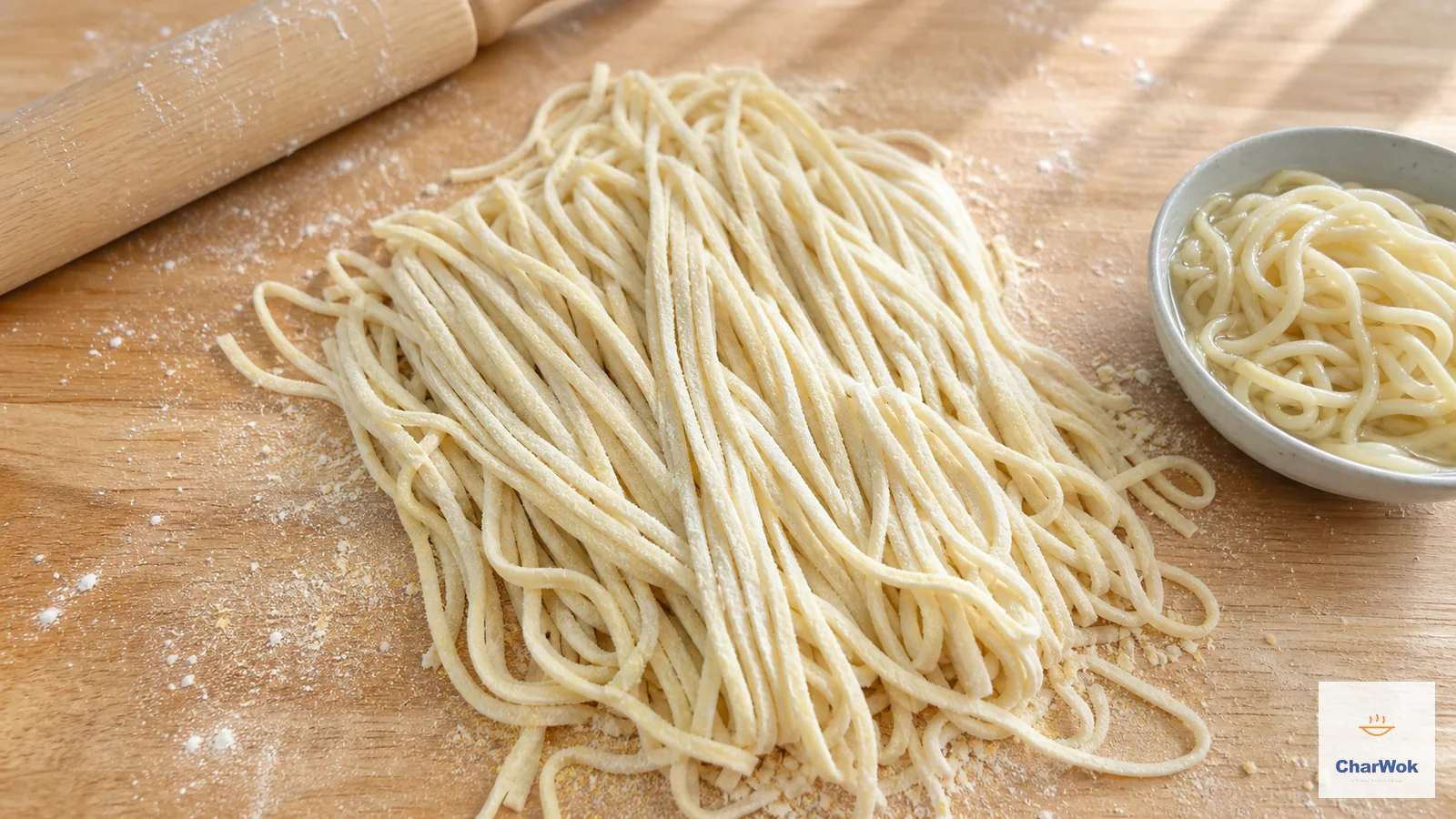
Any plain wheat noodle works, and the dish is forgiving, but the texture changes. Thin dried noodles soak up the broth and feel light. Fresh hand-rolled noodles have a soft chew that catches the soup. If you have the time, easy homemade noodles rolled and cut by hand are the traditional pairing and a noticeable upgrade over dried. The stretchy hand-pulled noodles are also excellent here, though they take practice.
If you want a bouncier bite, fresh alkaline noodles hold up well in soup, but their mineral edge can compete with the tomato, so taste and adjust salt at the end. For a gluten-free bowl, swap in rice noodles, which turns this into something closer to a soupy chow mei fun. Avoid using wide Biang Biang noodles as a soup noodle; that style is dressed, not brothy, and the noodles drown.
Step by step
- Peel and chop the tomatoes. Score a shallow cross in the skin at the stem end of each tomato and drop them into a bowl of just-boiled water for two to three minutes, until the corners of the cross curl back. Peel, cut out the core, then chop coarsely, seeds and all. Peeling is not optional in my book; the skins curl into tough little scrolls in the soup and catch in the teeth. If you are truly rushed, leave them on and accept the trade.
- Beat the eggs loose. Crack the eggs into a bowl with 1 tbsp of water and beat until evenly colored and a little frothy on top. The water is not a trick; it steams inside the curds as they cook and keeps them soft. Without it, scrambled egg in hot oil goes rubbery fast.
- Scramble the egg hot, then pull it. Heat 2 tbsp of the oil in your pan over medium-high until it shimmers, then pour in the egg. Wait a few seconds for the bottom to set, then push the set egg toward the center so the runny part flows out to the hot pan. Keep pushing and folding for about 30 seconds, breaking it into large, soft curds, and tip the egg out onto a plate the moment no liquid remains. Overcooked egg will not recover in the soup.
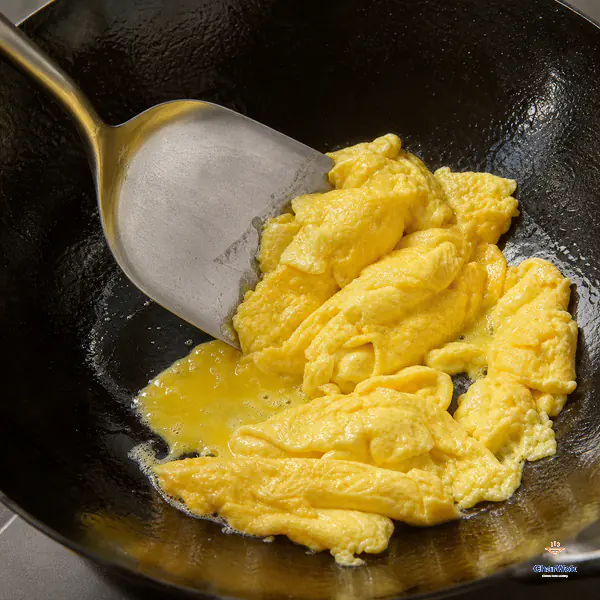
Pour the egg into shimmering oil, wait briefly for the bottom to set, then keep pushing the set portion inward so liquid reaches the hot pan. Transfer the large soft folds after about 30 seconds, as soon as no freely running egg remains.
- Build the tomato base. Add the remaining ½ tbsp of oil to the same pan, then the minced garlic. Let it go for about 15 seconds, no more; garlic scorches fast in a hot pan and turns bitter. Add the chopped tomato and a pinch of salt right away. The salt draws juice and speeds the collapse. Cook, stirring and pressing the pieces against the pan, until the tomato has fallen apart into a rough paste and the color has deepened from red to orange. This takes 4 to 6 minutes and is the step that decides everything. If your tomato is stubborn and dry, add a tablespoon of water to keep it moving.
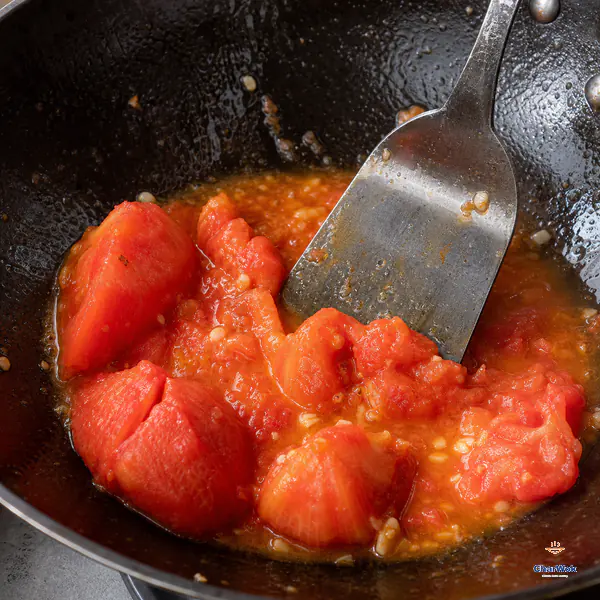
After the garlic smells fragrant, add the peeled chopped tomatoes and a pinch of salt. Stir and press for 4 to 6 minutes until the edges collapse, the colour deepens and red-orange juice collects around a few remaining soft pieces.
- Simmer into soup. Pour in the 350 ml of water, scrape up anything stuck to the pan, and bring it back to a boil. Turn down to a steady simmer and cook another 2 minutes so the flavors marry. Now stir in the ¾ tsp salt, the ¼ tsp sugar, and the reserved egg. Taste. The soup should read tangy-sweet with a rounded finish; add salt or a few more grains of sugar until it does.
- Cook the noodles on their own. While the tomato cooks, bring a separate large pot of water to a full boil and cook the noodles to package directions, or to your own timing if homemade. Drain and rinse the noodles for a few seconds under warm running water to wash off surface starch, which would otherwise cloud the soup and make it sticky. This is the same reason you blanch noodles separately for a proper Chinese chicken noodle soup.
- Assemble and serve. Divide the drained noodles between two bowls and ladle the hot tomato-egg soup over them. Finish with the chopped scallion and serve immediately. The soup does not hold; the noodles drink it up and go soft if it sits.
When it goes wrong
The soup tastes thin and acidic. You did not cook the tomato long enough before adding water, or your tomatoes were underripe. There is a rescue: pour the soup through a sieve, press the solids hard to extract every drop, and return only the liquid to the pan with a pinch of sugar and a few drops of soy sauce. Or just accept it and serve with extra scallion and a spoon of chili oil, which masks a lot.
The egg turned out rubbery or grey. The pan was too hot or the egg sat in it too long. Next time, lower the heat a notch and pull the curds out while they still look slightly wet; they finish cooking from residual heat. Grey egg specifically means the pan was smoking when the egg went in.
The broth is cloudy and starchy. You skipped the noodle rinse, or worse, boiled the noodles in the soup. Always cook noodles in their own abundant water and add them at the end. Starch leaching into tomato broth kills the clean finish.
The noodles went mushy before serving. Two causes. You overcooked them in the first place, or the assembled bowl sat on the counter. Drain the noodles a touch underdone if you cannot serve right away, since the hot soup continues to soften them.
Variations and what to serve alongside
Swap the water for homemade chicken stock and the soup gains a savory depth that plain water cannot give. A teaspoon of Shaoxing rice wine added with the tomato lifts the sweetness. For heat, a spoonful of homemade chili oil stirred in at the bowl is the move most northern families reach for, and it is the single biggest upgrade you can make.
If you want a heartier meal, drop in a handful of leafy greens, like baby bok choy or spinach, during the last minute of the simmer. A fried egg on top instead of scrambled egg inside is a common and excellent variation. To stretch the dish for company, serve it with a quick steamed egg and a plate of blanched greens dressed with soy and sesame.
Storing and reheating
Keep the soup and the noodles apart in the fridge. The soup holds for two days and actually improves overnight as the flavors settle. The noodles, once cooked, will not keep their texture. Reheat the soup to a full boil on the stove, then pour over freshly cooked or quickly re-boiled noodles. Microwaving the assembled bowl turns the noodles to paste; avoid it.
I would not freeze this soup. The tomato base freezes fine on its own, but the egg does not; it weeps water and turns spongy on thawing. Freeze only the cooked-down tomato paste if you must, then finish with fresh egg after thawing.
Questions I get asked
A few things come up often, and the answers are short.
Do I have to peel the tomatoes? No, but I do. The skins curl into tough bits in the soup. If you skip it, at least score and peel the next time; you will taste why it matters.
Can I use canned tomatoes? Yes, a 400 g can of whole peeled tomatoes, drained and chopped, works in the off-season. They are picked ripe, so the flavor is often better than pale fresh ones. Skip the peeling step.
What if my tomatoes are pale and tasteless? Cook them a minute or two longer to concentrate what flavor is there, and lean a little harder on the sugar and a few drops of soy sauce. You can also add a half teaspoon of tomato paste to deepen the base.
Can I make it vegetarian or vegan? It is already vegetarian. For vegan, skip the egg entirely and add a quarter block of soft tofu, cut into cubes, in the last minute. The bowl loses richness without the egg, so finish with a few drops of toasted sesame oil.
Why is my wok seasoning damaged after making this? Tomato acid dissolves the polymerized oil layer on carbon steel. Use nonstick, enameled, or stainless for any long-simmered tomato dish, and save the wok for stir-fries.
The one thing to remember
Cook the tomato down until it looks like a loose paste before any water touches the pan. Get that right and the rest of the recipe is hard to mess up. Get it wrong and no amount of seasoning will save a watery bowl. Make this once the right way and it becomes the dish you reach for at 8 pm with nothing planned.