Scallion oil noodles work a small kind of magic: five pantry ingredients, fifteen minutes, and a bowl that tastes like it came from a noodle shop on a Shanghai side street. The trick isn't the ingredient list. It's how you coax flavor out of nothing but scallions and oil.
I used to dismiss this dish. The first few times I made it the bowl tasted flat, like soy-sauce noodles missing a chapter. Then I watched what happened to the scallions when I let them alone in the oil long enough. The whites turned amber, the greens crackled to a deep jade-brown, and the whole kitchen smelled of toasted alliums. That scent is the dish. Get the oil right and the sauce writes itself.
Most recipes treat this as a five-minute weeknight dump. It can be. But the gap between "fine" and "I ate the whole pot" lives in three places: how dry your scallions are before they hit the oil, how low and slow you fry them, and whether you cool the oil before the soy hits it. I'll walk you through each, and the failures that taught me why they matter.
At a glance: Six scallions, 60 ml (¼ cup) neutral oil, slow-fried over medium-low until amber. Kill the heat, cool one minute, then stir in 2 tablespoons each light and dark soy sauce plus 2 teaspoons sugar. Toss with 350 g (12 oz) dried noodles. The whole dish hinges on patience at the frying stage, not on the sauce ratios.
What this dish is, and where it comes from
Cong You Ban Mian (葱油拌面) is a Shanghai street-and-home staple, the kind of thing you order for a quick lunch or throw together at midnight. "Ban mian" means tossed noodles, and the tossing is literal: you mix the hot oil sauce into the cooked noodles strand by strand until each one is lacquered.
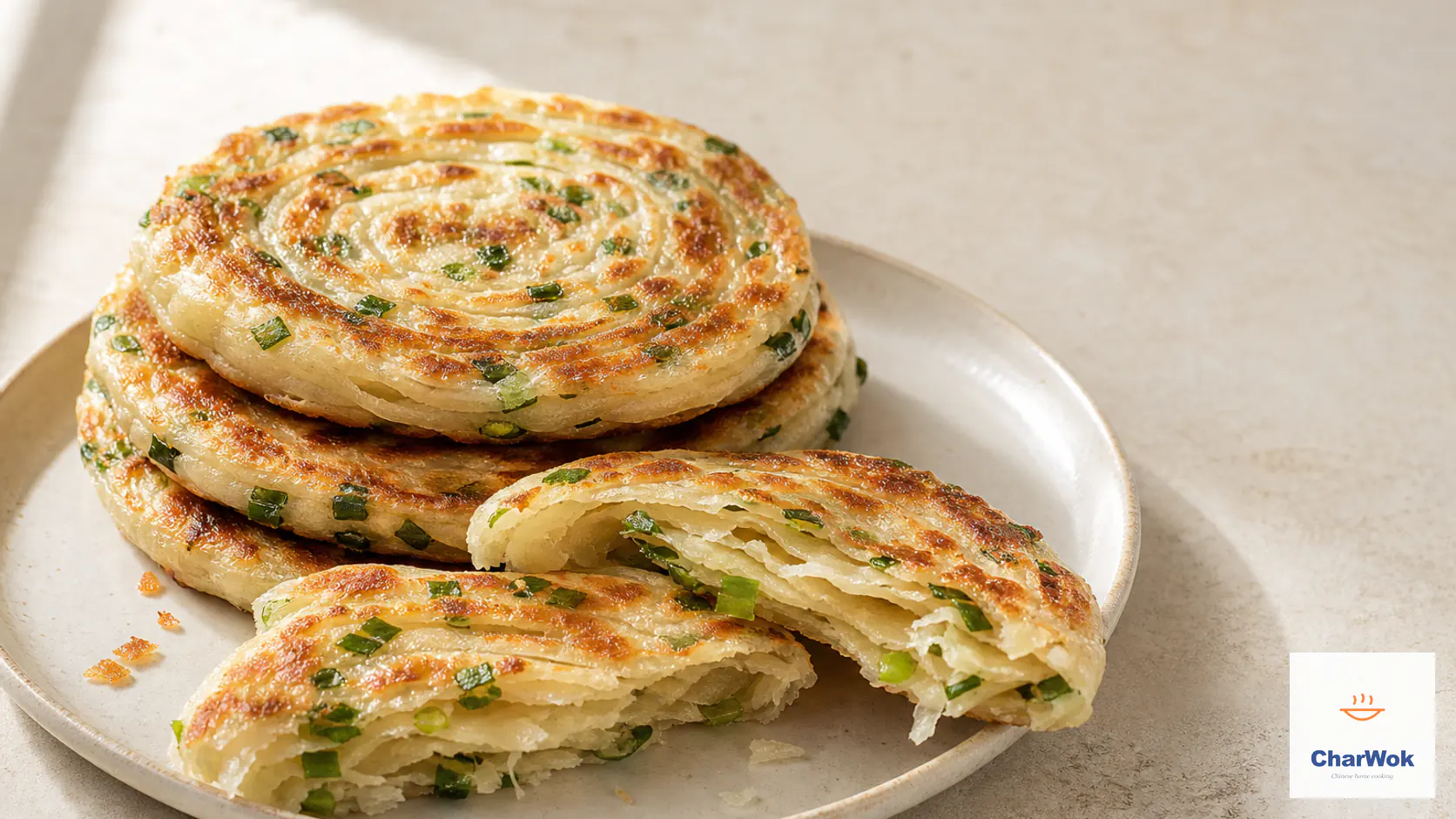
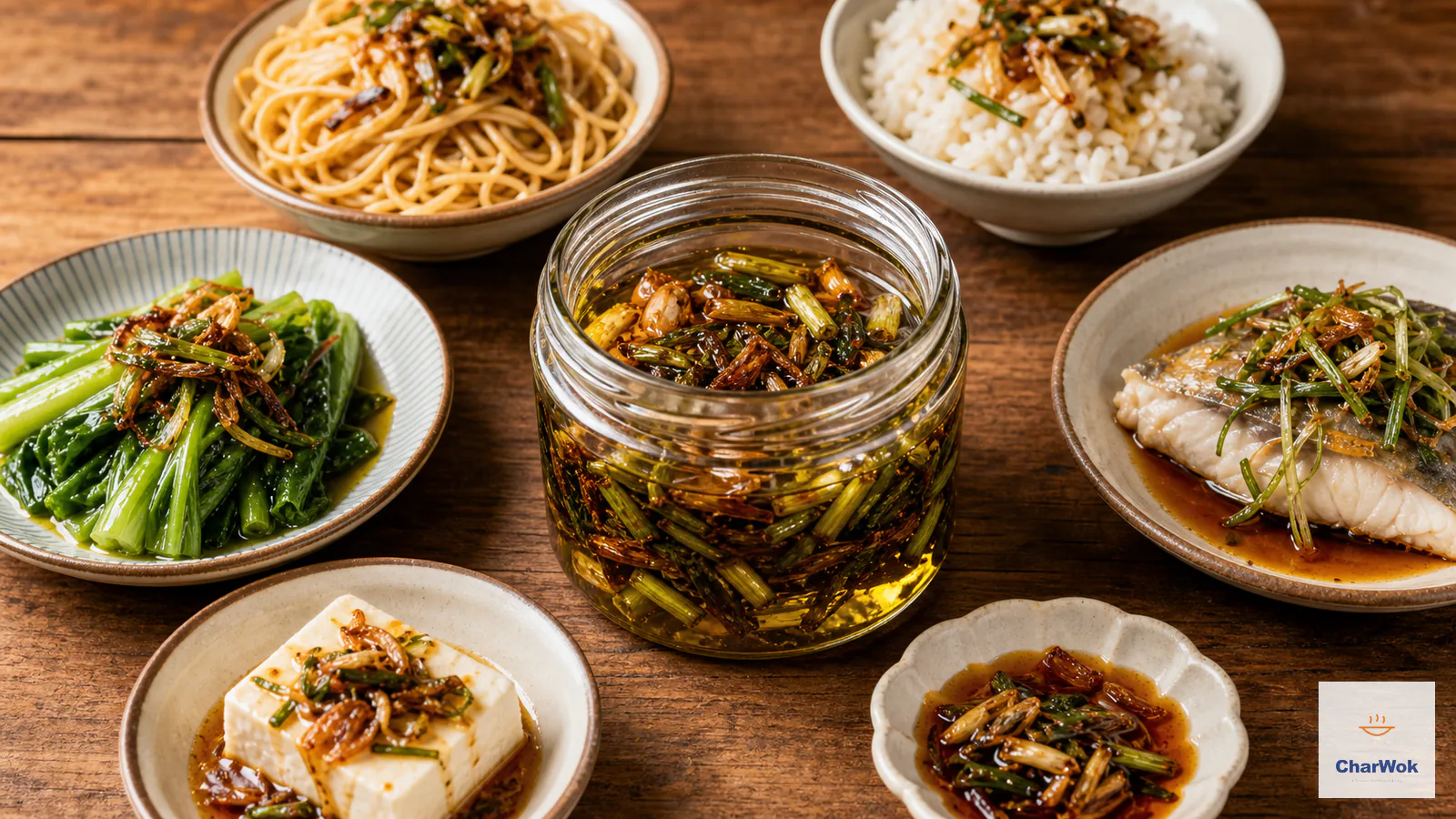
It belongs to a family of Shanghai dishes built on infused oils. The same scallion oil that flavors these noodles shows up in a jar in the fridge, in scallion oil chicken, and brushed onto scallion flatbread. Once you can make a clean scallion oil, you've gained a whole pantry staple, not just one dinner.
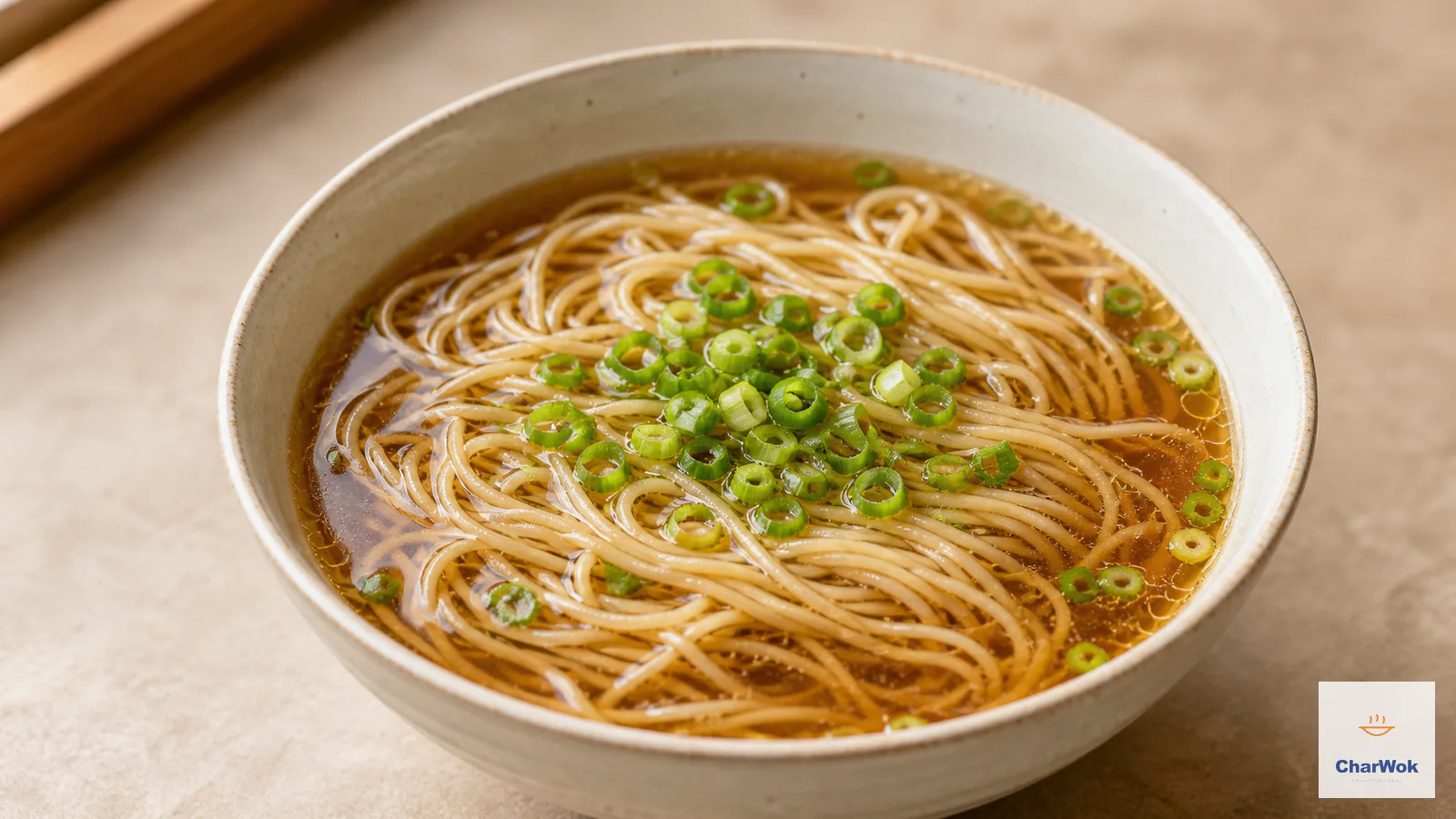
The closest cousin in spirit is Yang Chun Mian, the bare Shanghai noodle soup that also proves how much flavor plain soy, scallion, and oil can carry. If you love minimalist Chinese noodles, those two are the entry point.
The science behind the flavor
Three things are doing the work here, and none of them is complicated.
Maillard browning in the scallions. Frying the scallions low and slow drives off their water and browns the sugars and amino acids. That browning is where the nutty, savory depth comes from. Rush it on high heat and you get scorched greens and raw whites. The two cook at different rates, which is why halving them lengthwise matters.
Oil as a flavor solvent. The aromatic compounds in scallions are fat-soluble, not water-soluble. Hot oil pulls them out and holds them. This is why the oil, not the soy, is the real seasoning. The soy and sugar just finish the job.
Why you cool the oil before the soy. Soy sauce is mostly water with salt and sugar. Dump it into smoking oil and it spits violently and the proteins scorch into a bitter film. Let the oil drop below the smoke point first, around 100°C (212°F), and the soy sizzles gently, the sugar dissolves instead of caramelizing, and you get a glossy sauce instead of a scorched one.
Ingredients
Ingredients at a glance
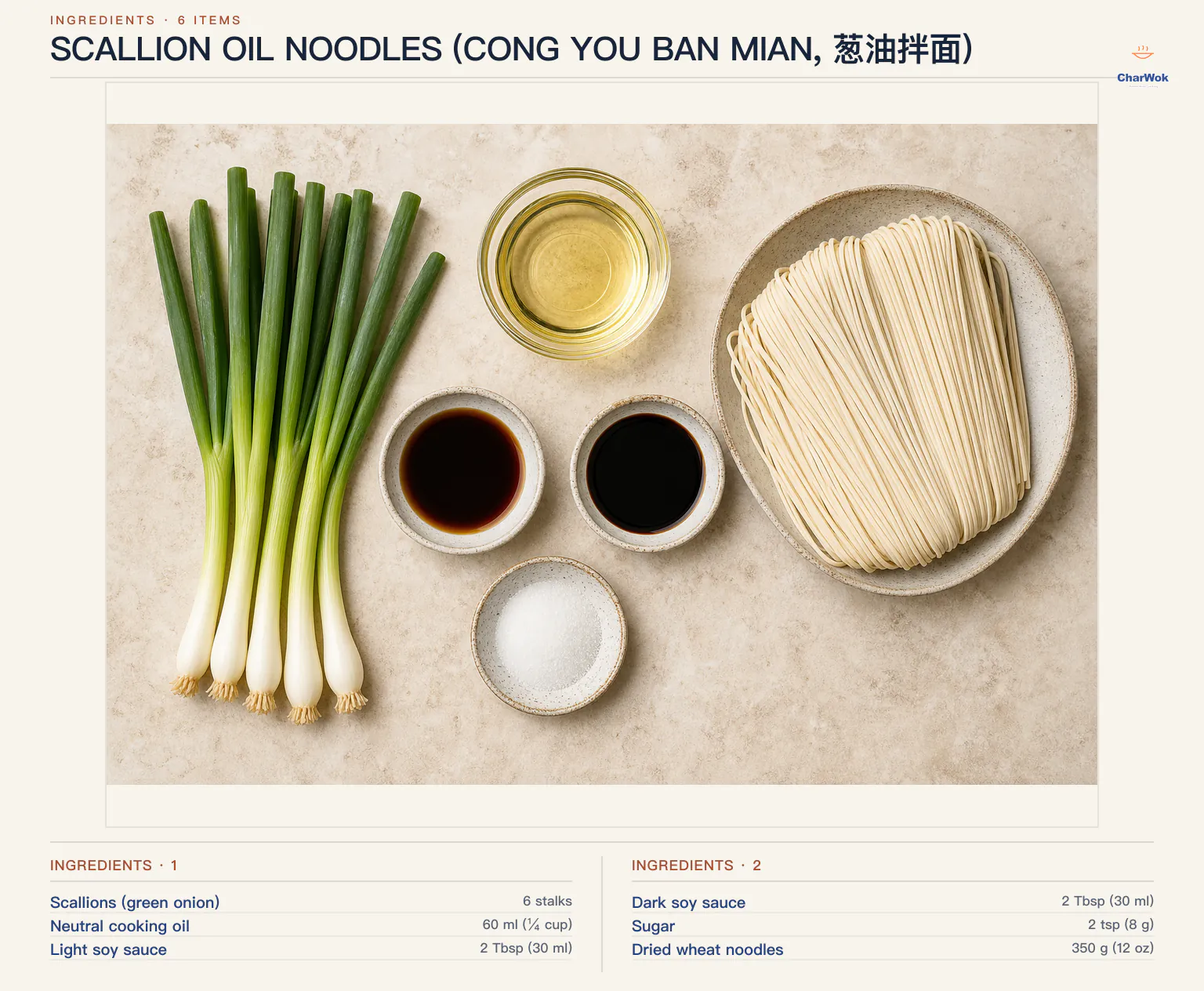
This serves four as a light meal, two as the main event. Scale the oil-sauce linearly; the noodle weight can flex a little without breaking anything.
| Ingredient | Amount | Notes / substitute |
|---|---|---|
| Scallions (green onion) | 6 stalks | About 100 g. Use both white and green parts. Leek is not a swap. |
| Neutral cooking oil | 60 ml (¼ cup) | Peanut, canola, or grapeseed. Not olive oil; the flavor fights the scallions. |
| Light soy sauce | 2 Tbsp (30 ml) | For salt and savory base. If you only have one soy, use this one. |
| Dark soy sauce | 2 Tbsp (30 ml) | For color and a touch of sweetness. Skip and the bowl looks pale. |
| Sugar | 2 tsp (8 g) | White sugar is classic. Rock sugar, dissolved, is even cleaner. |
| Dried wheat noodles | 350 g (12 oz) | Thin Shanghai-style are best. Spaghetti works in a pinch; see the FAQ. |
How to make it, step by step
- Prep and dry the scallions. Wash them, then pat completely dry with paper towels. Trim the root ends and any limp green tips. Cut each stalk into 5 cm (2-inch) sections, then halve those lengthwise so the whites are split open. Drying is not optional: wet scallions will splatter and stew instead of fry, and you lose the brown.
- Start the scallions in cold oil. Put the oil and all the scallion pieces into a wok or skillet at once, then set it over medium-low heat. Cold oil start lets the scallions warm through gently and release flavor into the oil before any browning begins. If your oil is already hot, the greens char before the whites soften.
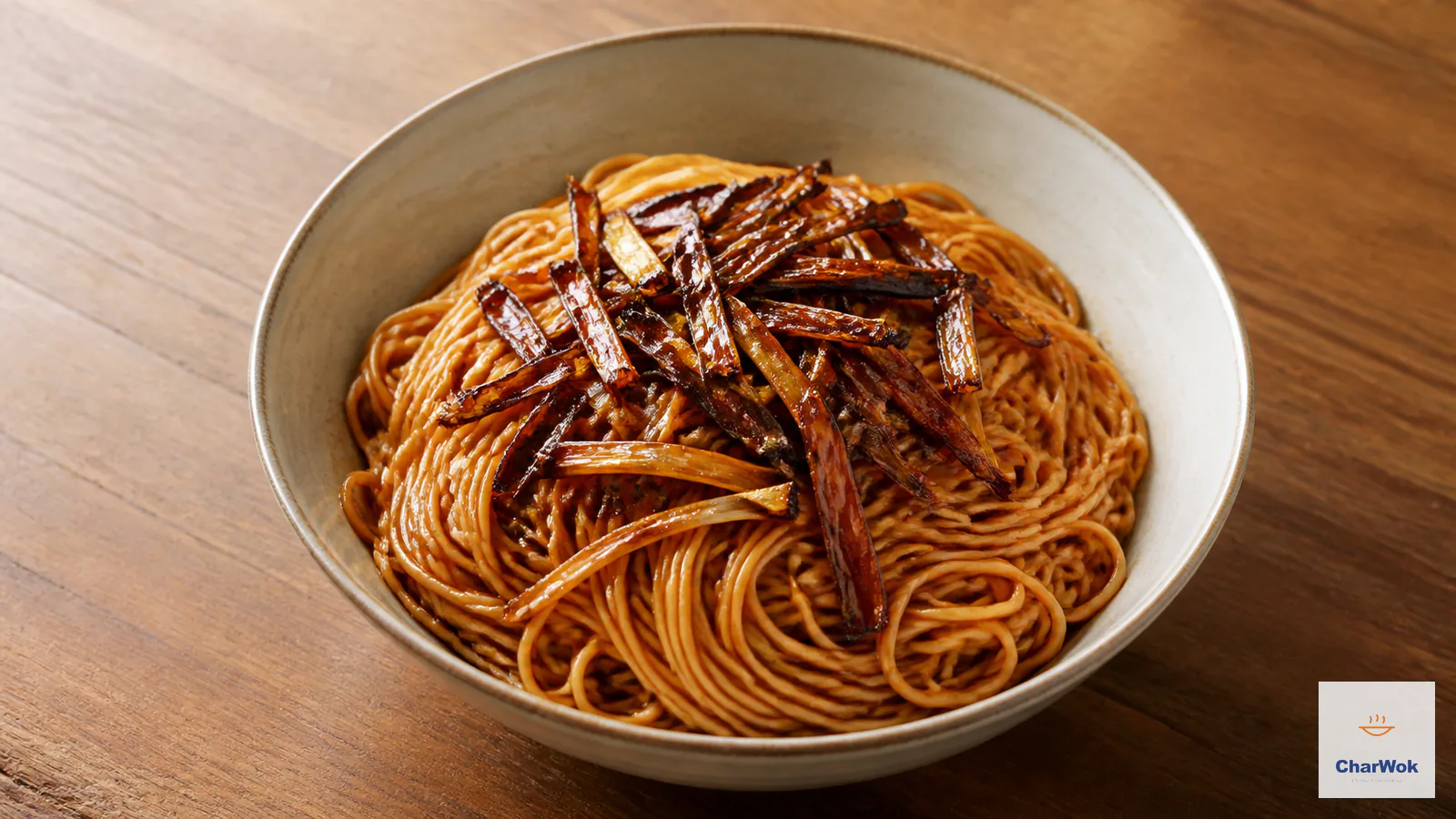
- Fry low and slow, about 8 to 10 minutes. The oil should shimmer, never smoke. Stir occasionally. You're watching for the whites to turn a deep golden amber and the greens to crisp to a dark jade-brown. Pull them out with chopsticks the moment they hit that color; ten seconds late and they go bitter. Save the fried scallions for garnish.
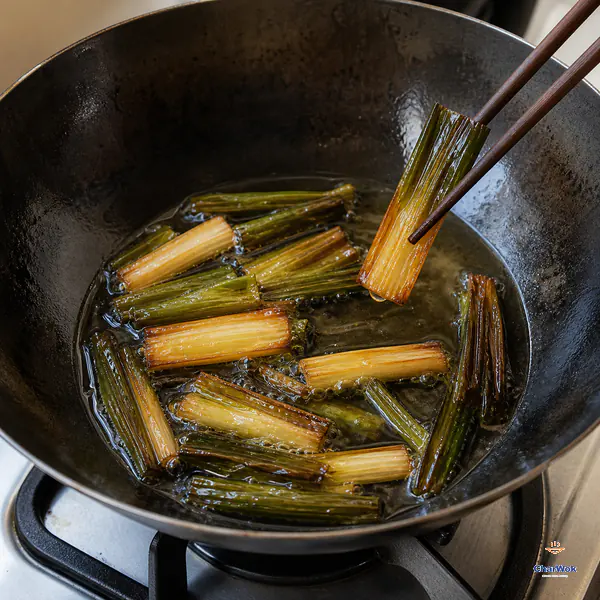
Fry over medium-low heat for about 8–10 minutes and pull the scallions as soon as the whites turn deep golden amber and the greens become dark and lightly crisp, before residual heat makes them bitter.
- Cool the oil, then build the sauce. Turn off the heat. Wait about a minute so the oil settles under its smoke point. While you wait, mix the two soy sauces and the sugar in a small bowl. Pour it into the warm oil carefully; it will sizzle and steam. Stir until the sugar is fully dissolved by the residual heat.
- Boil the noodles in plenty of water. Use a large pot of rapidly boiling water, more than feels necessary. Dried wheat noodles need the room to tumble or they gum up. Cook to the package time, then bite-test one strand; you want tender with a tiny bit of chew, not mush.
- Toss while hot. Drain the noodles and transfer them straight into the wok with the sauce. Don't rinse. The residual heat on the noodles is what lets the oil cling and the sauce set. Toss hard for 30 to 60 seconds until every strand is coated and glossy.
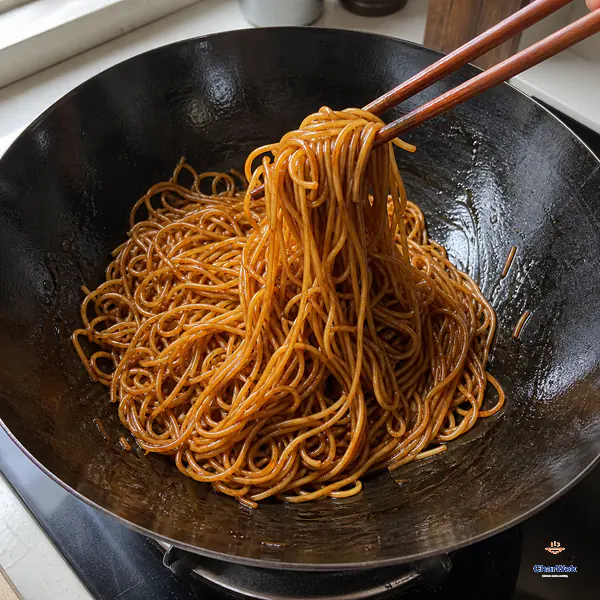
Move the drained noodles straight into the sauce without rinsing and toss hard for 30–60 seconds, stopping when every strand is evenly glossy with no pale dry patches or watery pool.
- Serve immediately. Divide among four bowls or pile onto one sharing plate. Scatter the reserved fried scallions on top. This dish does not wait; the glossy coating dulls as it sits.
When it goes wrong, and how to fix it
This is the section I wish someone had handed me the first three times I flopped this dish.
The oil popped and splattered the moment the scallions went in. The scallions were wet, or the oil was too hot. Pat them bone-dry next time, and start in cold oil. A few pops are normal; a war zone means water.
The scallions burned but the oil still tastes raw. Heat too high. Browning should take the better part of ten minutes. If yours browned in three, you fried, not infused. Scrape it out and start over; burned scallion oil is bitter and unrecoverable.
The soy sauce seized into a scorched film on contact. The oil was still too hot. Next time, wait a full minute off the heat. This batch can sometimes be saved by adding a splash of noodle cooking water and whisking, but it won't be as clean.
The finished bowl tastes bland despite all that soy. Two usual suspects. One, you under-fried the scallions, so the oil never developed depth. Two, the noodles were wet or cool when you tossed, so the sauce slid off instead of clinging. Toss hot, dry noodles, and taste before serving; add a few drops of light soy if it still reads flat.
The noodles clump into a sticky mass. Not enough water in the pot, or you let them sit drained. Boil in a big pot, drain, and toss immediately. A few drops of noodle water in the wok loosen a stubborn clump.
Variations and pairings
The base recipe is a canvas. A few directions worth trying:
Spicy scallion oil noodles. Stir a spoonful of chili oil or Chiu Chow chili oil into the finished bowl. The heat lifts the sweetness of the scallion oil without crowding it. A teaspoon of toasted sesame oil added off the heat rounds out the aroma.
Protein add-ins. Top with shredded leftover chicken, pan-fried tofu, or a soft-boiled egg halved. For a full meal, this bowl pairs well with a quick scallion tofu side or a bowl of soy sauce fried rice if you're feeding a crowd. A bowl of tomato egg soup on the side turns it into a proper lunch.
Make the scallion oil ahead. The fried scallions plus their oil keep in a jar for a week. Double the oil and scallion batch, stash half, and you're ten minutes from this noodle bowl any night. It's the same base oil used in scallion oil chicken, so the jar pulls double duty.
Noodle swaps. Thin dried wheat noodles are the classic, but you can branch out. Fresh alkaline noodles give a springier bite if you enjoy making alkaline noodles at home. Hand-pulled or scissor-cut noodles are wonderful but heavier; this delicate sauce gets a little lost on them.
Storage and reheating
Cong You Ban Mian is best the instant it's tossed. The sauce coating dulls as it cools and the noodles absorb the oil. If you must store it, refrigerate the noodles and sauce separately for up to two days; keep any extra scallion oil in its own jar for a week.
To reheat, warm the sauce gently in a pan with a splash of water to loosen it, then toss in the noodles over low heat until just heated through. Microwaving works but leaves the noodles drier and the oil separated. Leftover fried scallions lose their crunch overnight; crumble them on top regardless, the flavor still lands.
Frequently asked questions
A few things that come up every time I share this recipe.
Can I use spaghetti? Yes, in a real pinch. It won't have the same springy wheat bite, but a thin spaghetti cooked just shy of al dente carries the sauce fine. Avoid angelhair; it turns mushy.
Do I really need both light and dark soy? They do different jobs: light brings salt and savory, dark brings color and a faint sweetness. Use only light and the bowl tastes right but looks anemic; use only dark and it gets murky and too sweet. If you keep one bottle, make it light.
Why are my scallions soggy instead of crispy? Either they went in wet, the oil was crowded, or the heat was too low to fry. Bone-dry scallions, a single layer in the oil, and a steady medium-low flame give you the crisp.
Is this vegetarian? As written, yes, fully plant-based. Just confirm your soy sauces are made without any fish or oyster additions, which most standard Chinese soy sauces are.
Can I make it gluten-free? Swap wheat noodles for rice noodles and use tamari instead of both soy sauces. The texture and color shift, but the scallion oil still does the heavy lifting.
That's the whole dish. The ingredient list is short enough to memorize; the technique is the part worth practicing. Get the scallions amber and the oil cooled before the soy goes in, and the rest takes care of itself. Once you can pull this off without thinking, you'll find yourself reaching for that jar of scallion oil for everything else in the kitchen too.