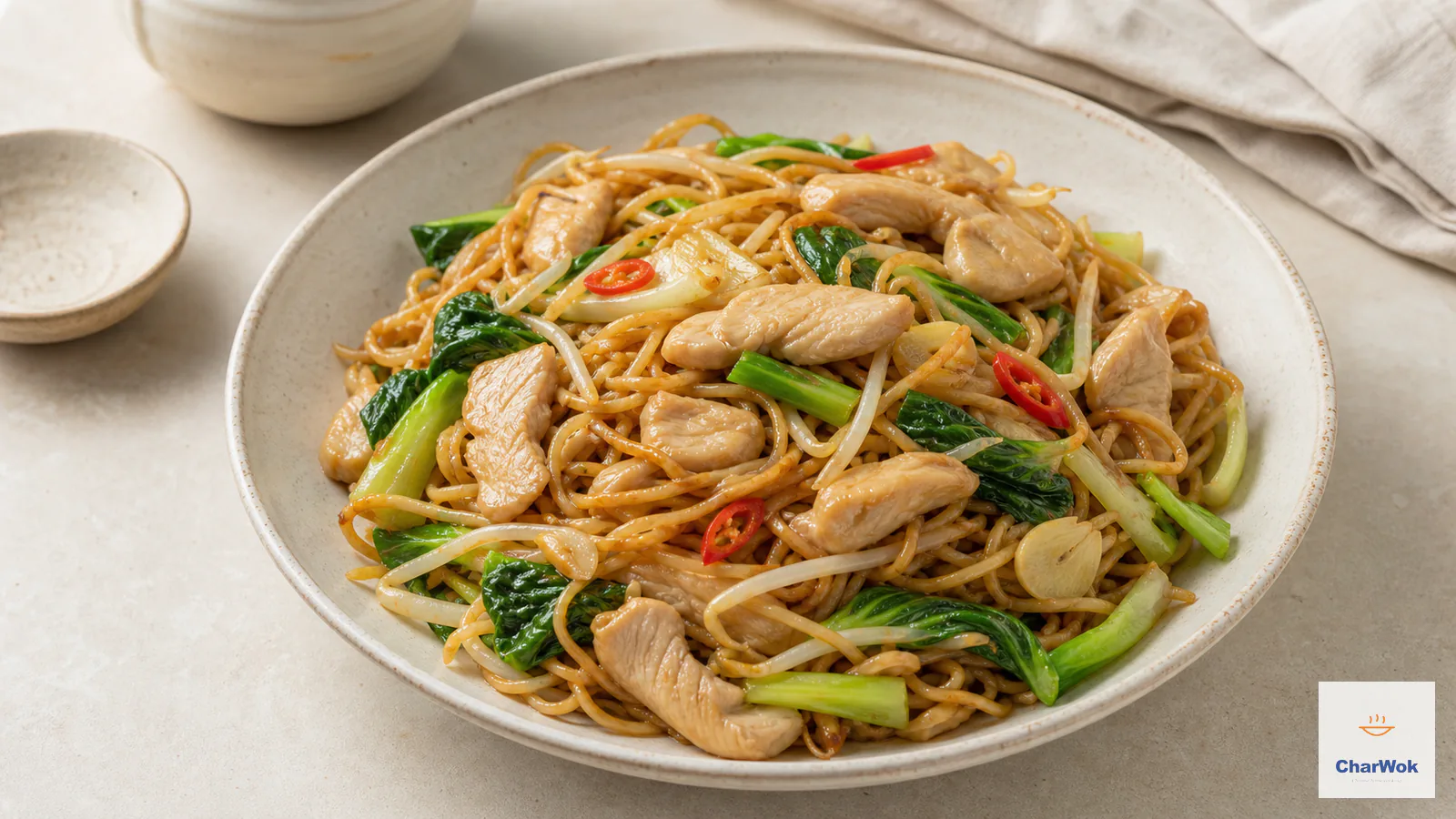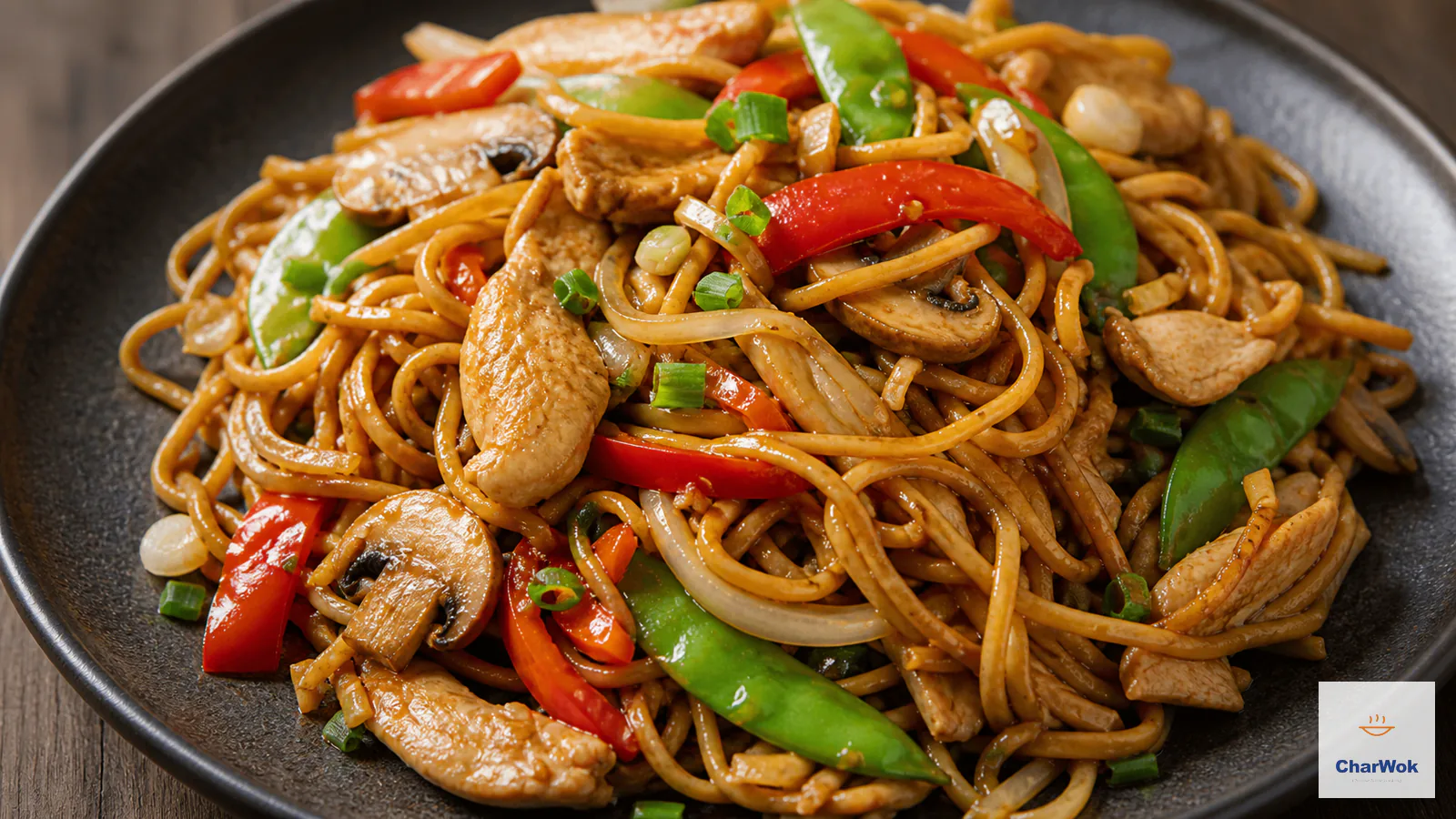
The soul of lo mein is sauce that clings. Not pools at the bottom of the bowl, not a glossy sheen that slides off the noodles the moment you lift them with chopsticks, but a thin, glossy film that coats every strand and seasons it from the inside out. Most home versions fail at exactly this point: the noodles come out of the wok dry in spots, swimming in others, and the chicken turns gray and stringy where it should be silky.
The sauce alone does not determine the result. Three details matter just as much: a cornstarch coating on the chicken, enough starch in the sauce to make it cling, and noodles that are cooked, rinsed, and well drained before they reach the wok. Those controls prevent dry chicken, watery sauce, and gummy noodles.
At a glance: Lo mein means "tossed noodles," not fried noodles. Cook about 600 g (1⅓ lb) of pre-cooked egg noodles per 3 servings, velvet the chicken in cornstarch and water, and build a sauce thickened with 1 tablespoon cornstarch to 90 ml (6 tablespoons) liquid so it clings rather than pools. Total active time is under 15 minutes once the wok is hot.
What lo mein actually is (and how it differs from chow mein)
The name tells you the technique. Lo (捞) means to scoop, toss, or mix. Mein is noodles. So lo mein is boiled egg noodles that get tossed with a seasoned sauce and stir-fried mix-ins at the end, never crisp-fried. The noodles stay soft and saucy. If you want the crackly, browned noodle cake, that is a different dish entirely, closer to chow mein or the Cantonese soy sauce pan-fried noodles, where the noodles spend real time in oil to develop a crust.
This version follows the Cantonese-American takeout style: wheat-and-egg noodles are briefly boiled, then tossed with a soy-and-oyster sauce, protein, and vegetables. Dark soy gives the noodles their reddish-brown colour, while the starch-thickened sauce keeps them glossy rather than wet.
Three things that decide whether your lo mein is great or just fine
1. The chicken needs velveting. Plain chicken breast stirred straight into a wok goes gray, tight, and dry. Toss the slices first in cornstarch, a pinch of salt, and a spoonful of water, then seal the coating with a little oil. The starch gelatinizes in the heat and forms a thin barrier that holds moisture in and lets the surface brown gently. This is the same trick that makes oyster sauce chicken and a clean chicken and mushroom stir-fry taste restaurant-tender. Skip it and you will taste the difference in the first bite.
2. The sauce must be thickened, not just seasoned. A watery soy-oyster mixture will slide off oiled noodles and collect at the bottom of the bowl. Dissolve cornstarch into the sauce before it goes in the wok and it will set into a glossy film as it hits the heat, grabbing the noodle surfaces. This is the same logic behind a good scallion oil noodle dressing: fat and starch together make a coating that water alone cannot.
3. The noodles must be drained hard. Wet noodles bleed water into the wok, the temperature drops, and you end up braising instead of stir-frying. If you start from raw noodles, boil them until just barely done, then drain and either rinse under cold water or toss with a few drops of oil so they do not clump. They go into the wok warm but not dripping.
Ingredients
Ingredients at a glance
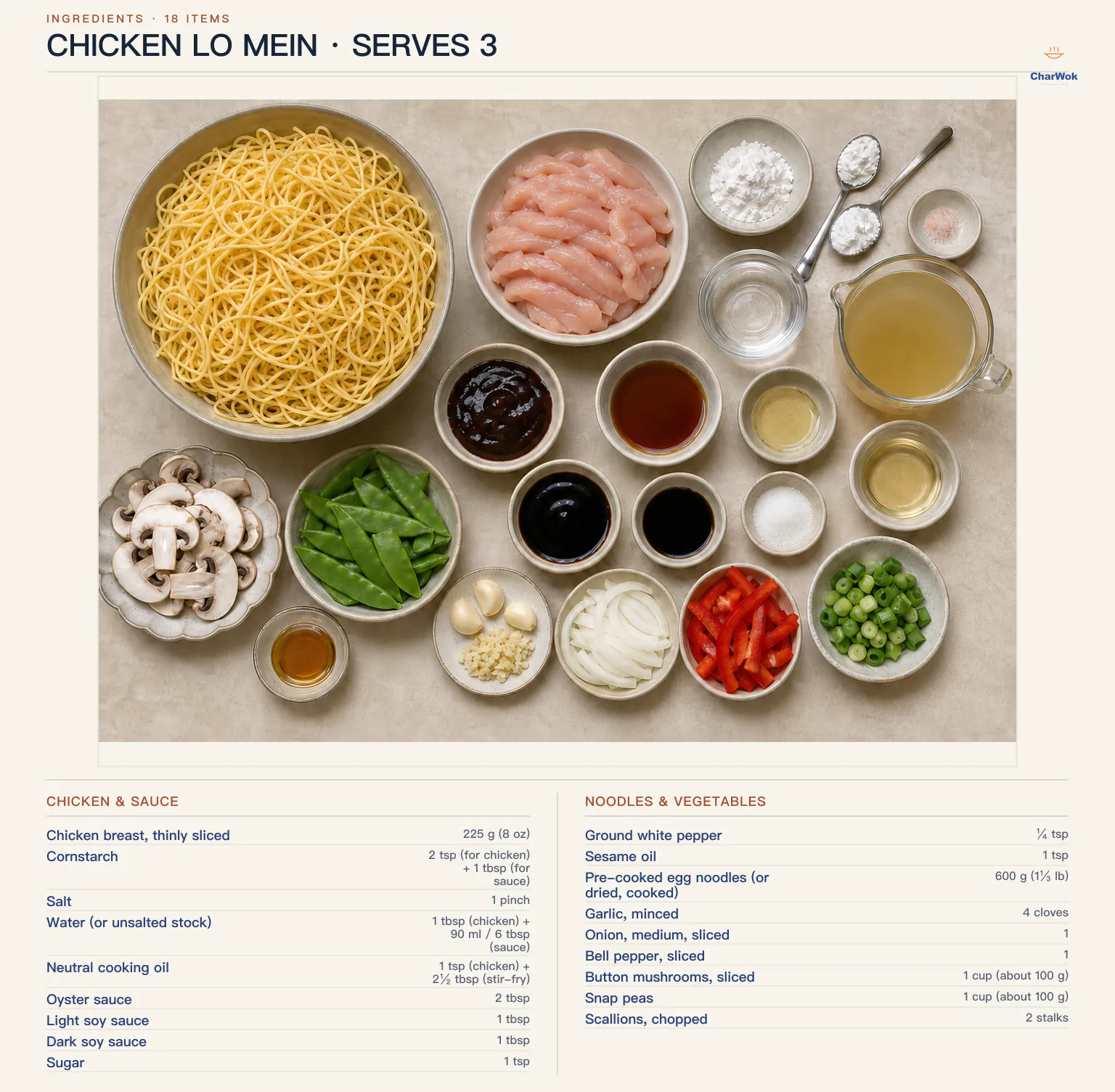
This makes about 3 generous servings. The protein and vegetables are flexible, but the sauce ratio is the part worth memorizing.
| Ingredient | Amount | Notes / substitute |
|---|---|---|
| Chicken breast, thinly sliced | 225 g (8 oz) | Thigh works and stays juicier; pork loin or firm tofu also fine |
| Cornstarch | 2 tsp (for chicken) + 1 tbsp (for sauce) | Potato starch is a near-equivalent; arrowroot works |
| Salt | 1 pinch | For the chicken marinade |
| Water (or unsalted stock) | 1 tbsp (chicken) + 90 ml / 6 tbsp (sauce) | Stock adds body; homemade chicken stock is ideal |
| Neutral cooking oil | 1 tsp (chicken) + 2½ tbsp (stir-fry) | Canola, grapeseed, or avocado; not olive oil |
| Oyster sauce | 2 tbsp | Vegetarian mushroom stir-fry sauce for a meat-free version |
| Light soy sauce | 1 tbsp | For salt and savoriness; see light vs. dark soy sauce |
| Dark soy sauce | 1 tbsp | For color; omit if you only have light, but the dish will look pale |
| Sugar | 1 tsp | Balances the salt; brown sugar works |
| Ground white pepper | ¼ tsp | Black pepper is acceptable but visibly specks the sauce |
| Sesame oil | 1 tsp | Stirred in off-heat; toasted Chinese sesame oil is what you want |
| Pre-cooked egg noodles (or dried, cooked) | 600 g (1⅓ lb) | Fresh Shanghai-style noodles are best; dried Cantonese egg noodles work |
| Garlic, minced | 4 cloves | Roughly 3-4 tsp minced |
| Onion, medium, sliced | 1 | Yellow or white; shallots in a pinch |
| Bell pepper, sliced | 1 | Any color; green is most takeout-authentic |
| Button mushrooms, sliced | 1 cup (about 100 g) | Shiitake or cremini hold up better |
| Snap peas | 1 cup (about 100 g) | Snow peas, halved, or bean sprouts work |
| Scallions, chopped | 2 stalks | Saved for the final toss |
How to make it
- Velvet the chicken. Cut the breast across the grain into even slices about 5 mm (¼ inch) thick. Mix with 2 tsp cornstarch, the pinch of salt, and 1 tbsp water until the liquid disappears, then add 1 tsp oil. Cover and refrigerate for at least 10 minutes while preparing the other ingredients. After handling the raw chicken, wash your hands plus the knife and board before they touch cooked food.
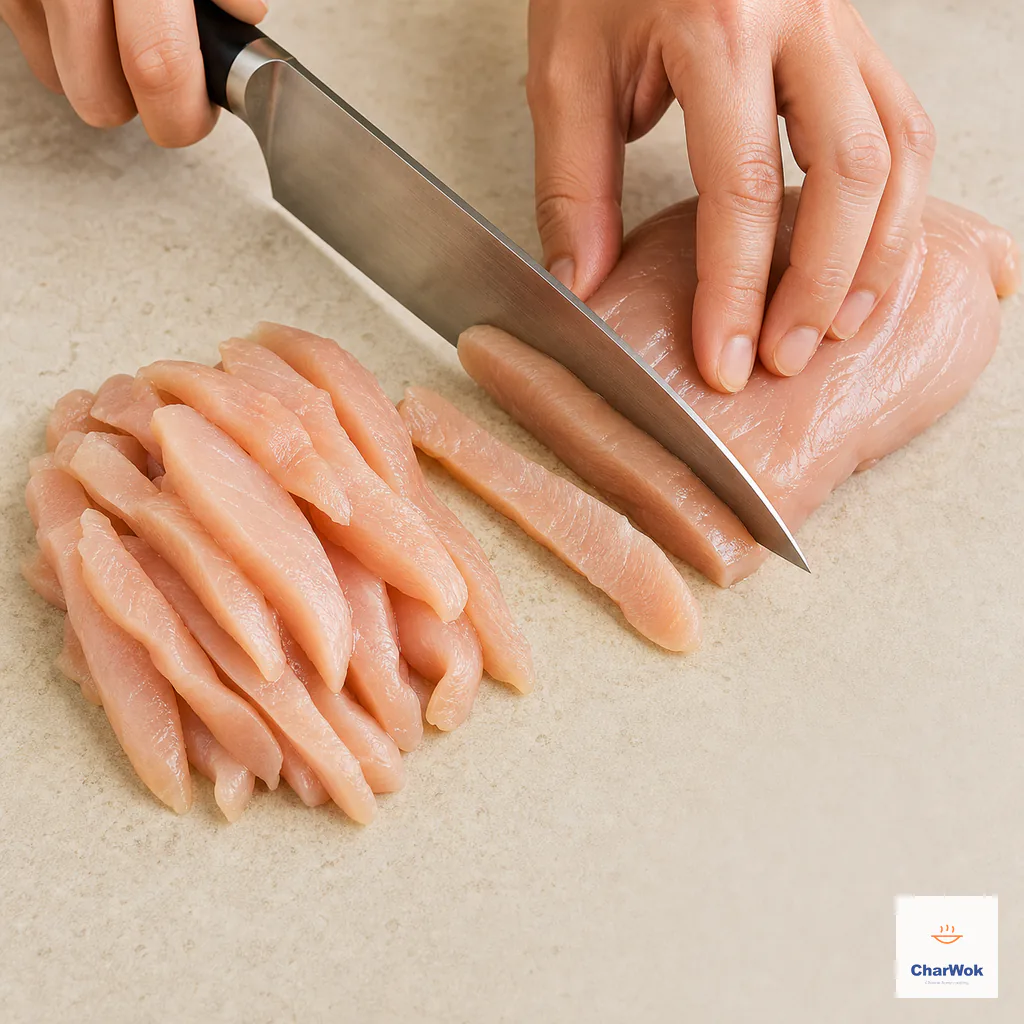
Slice the breast across the grain into even thin strips so the fibers stay short and the meat cooks at the same rate.
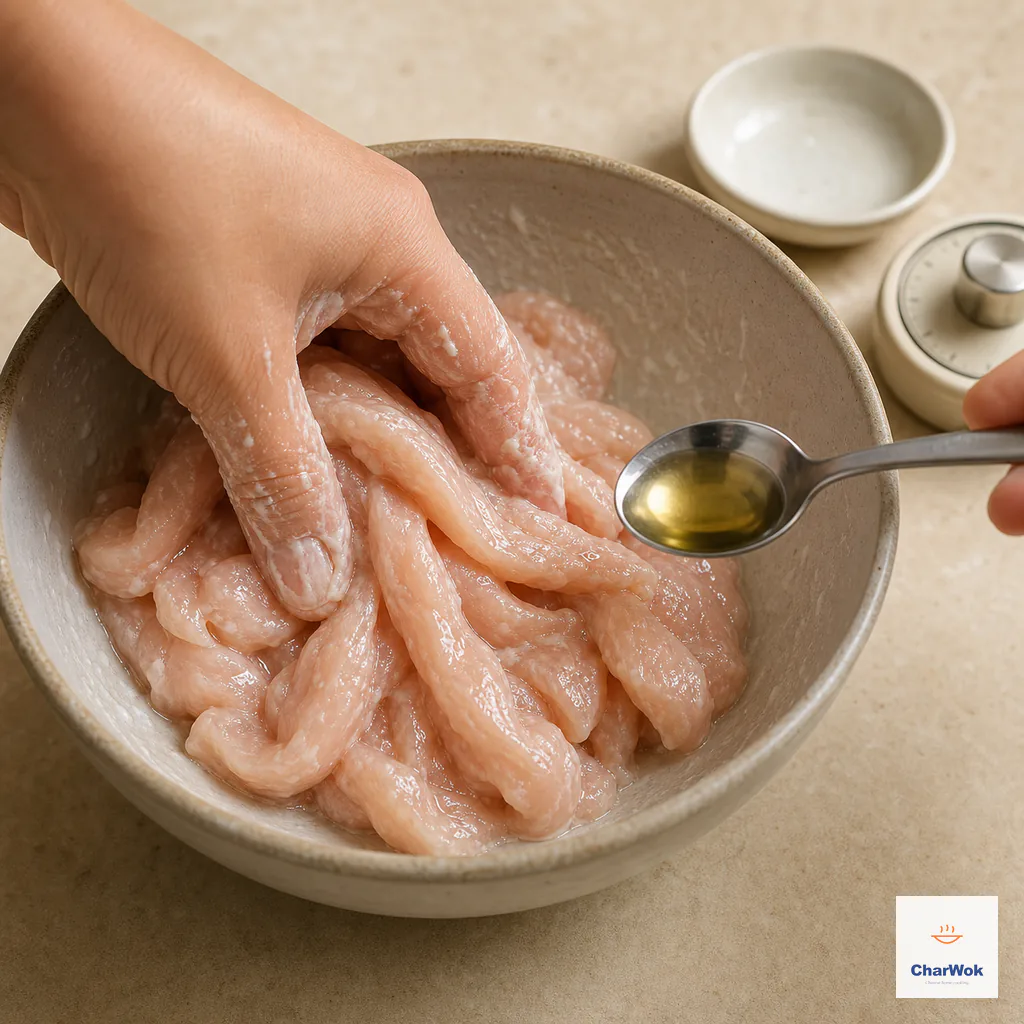
Massage in cornstarch, salt and water until no liquid remains, coat with oil last and rest the chicken at least ten minutes.
- Mix the sauce. Whisk 2 tbsp oyster sauce, 1 tbsp each light and dark soy sauce, 1 tbsp cornstarch, 1 tsp sugar, ¼ tsp white pepper, and 90 ml (6 tbsp) water or stock until smooth. Stir in 1 tsp sesame oil. Re-whisk immediately before using because the cornstarch settles.
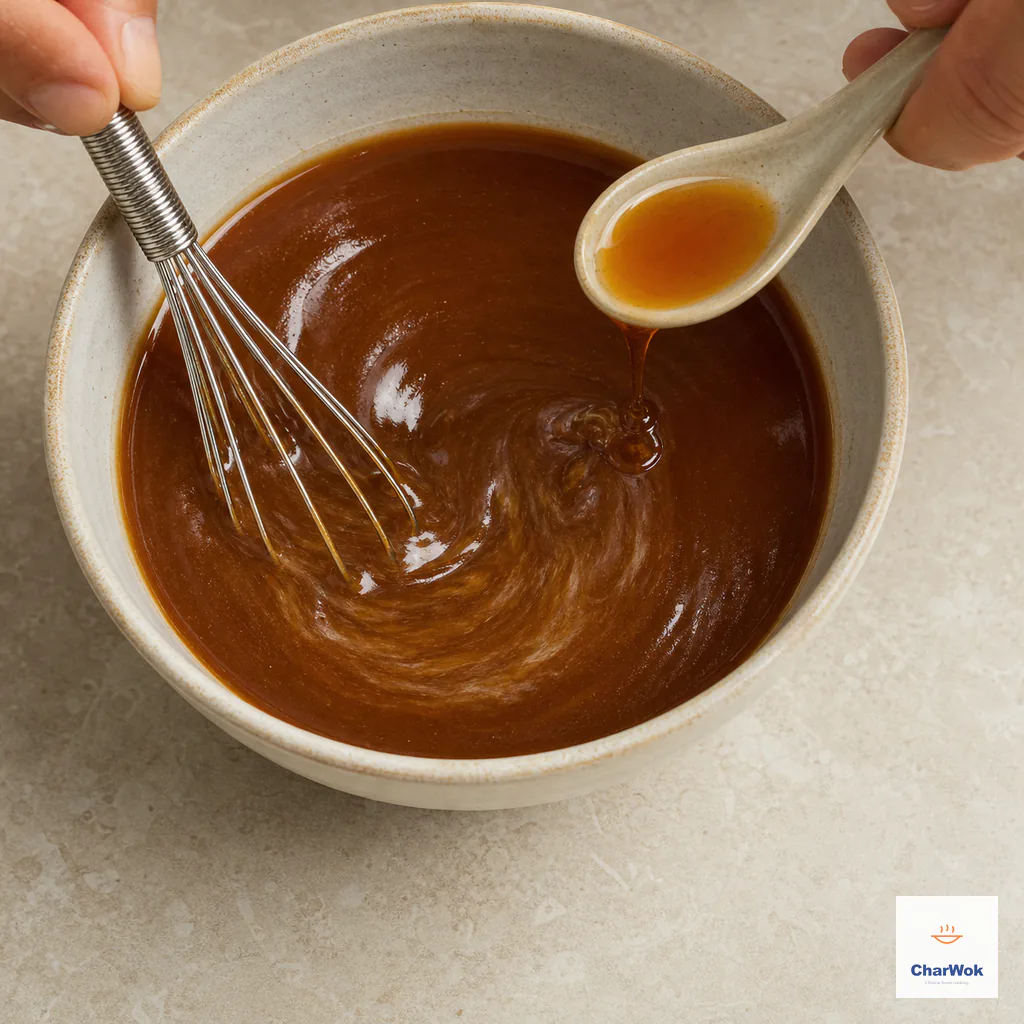
Whisk the sauce completely smooth, add sesame oil last and re-whisk immediately before it goes into the wok.
- Prep the noodles. Warm pre-cooked noodles in just-boiled water for 20 to 30 seconds, then drain thoroughly. If using dried egg noodles, boil them to one minute shy of the package time, drain, rinse under warm water, and toss with a few drops of oil. The strands should be cooked and separate, not wet.
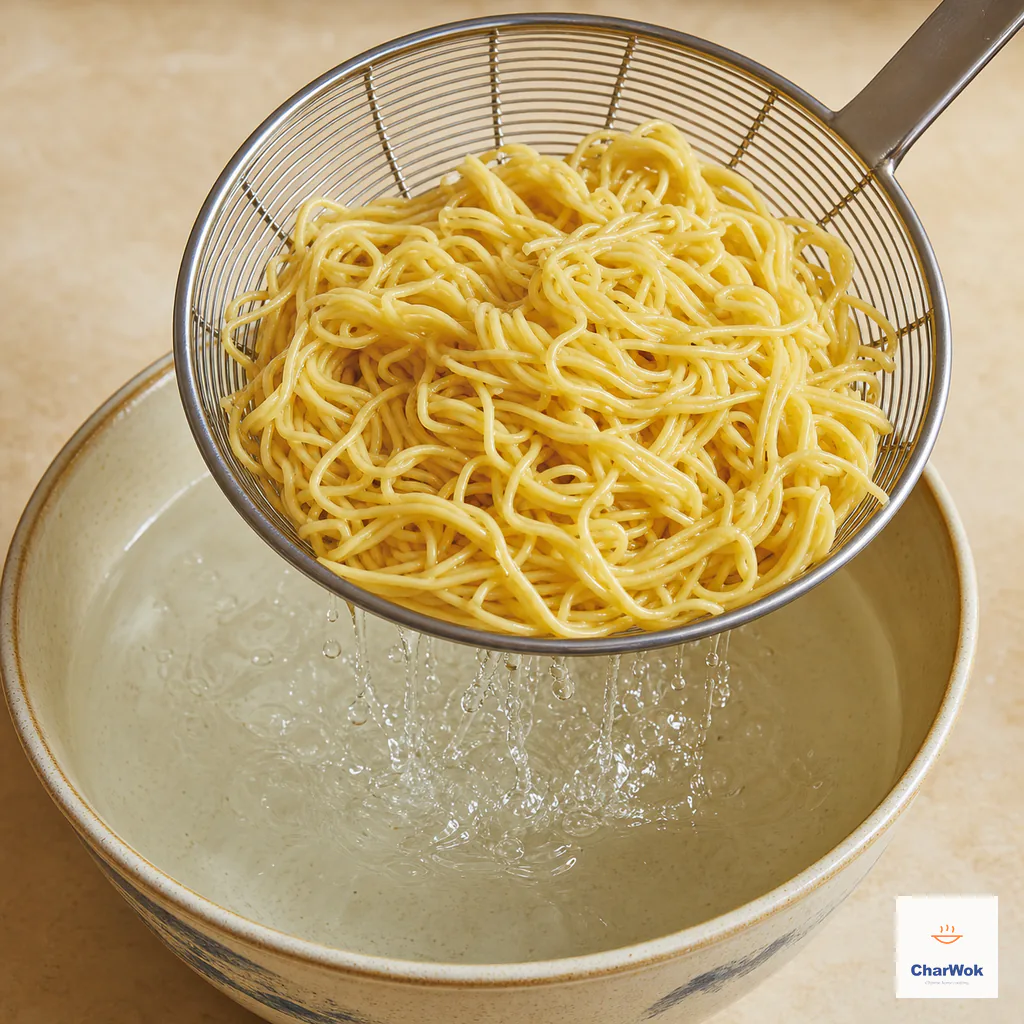
Warm pre-cooked noodles only 20 to 30 seconds, then drain and shake aggressively so the strands are separate but not wet.
- Partially sear the chicken, then clear the wok. Preheat a seasoned wok or stainless skillet over medium-high heat until a water drop skitters and evaporates, then wipe it dry and add 1½ tbsp oil. Start cooking when the oil shimmers but does not smoke. For non-stick cookware, add the oil before heating and follow the maker's heat limit. Lay the chicken in one layer; once the coating sets and the pieces release, toss briefly and transfer them to a clean plate. The centers are still undercooked and must finish in the final toss.
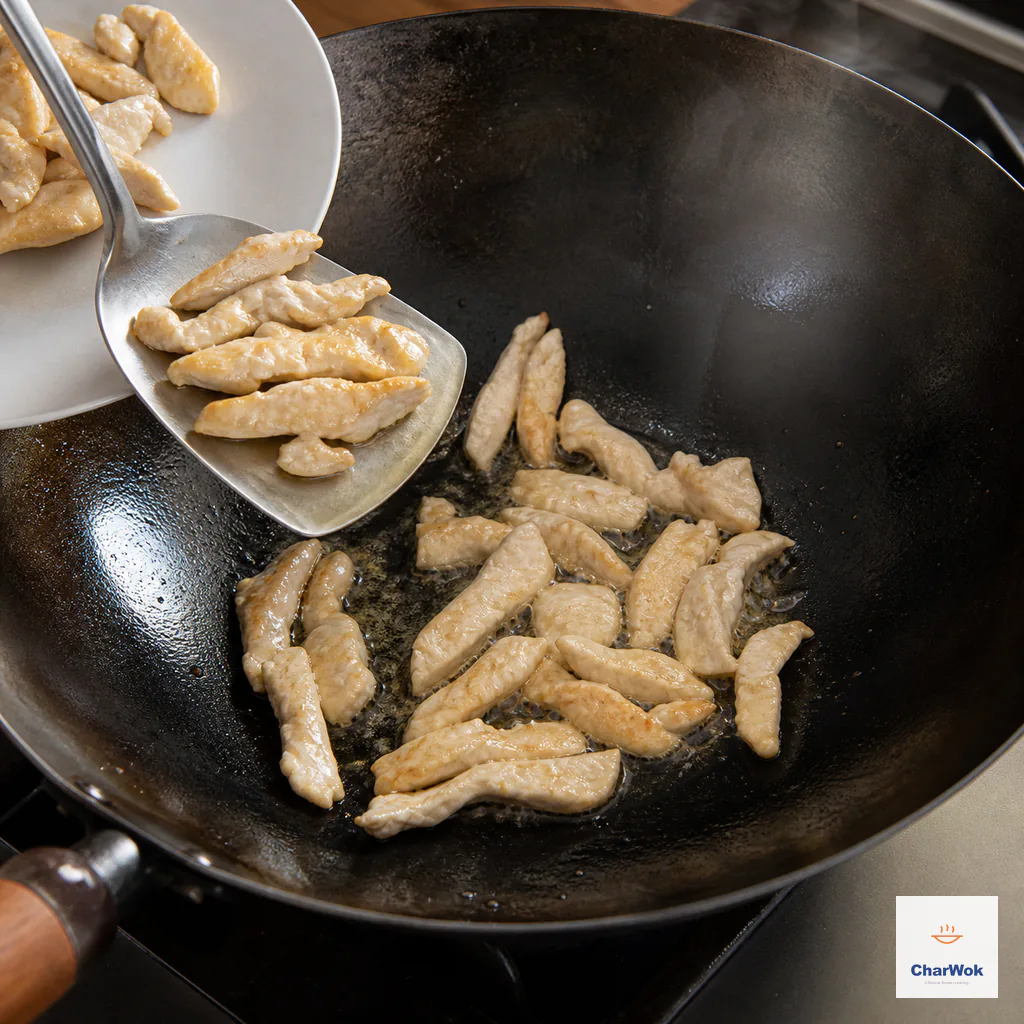
Briefly sear the velveted chicken only until the coating sets and the pieces release, then move the still-undercooked centers to a clean plate.
- Build flavor, then add the vegetables. Add the remaining 1 tbsp oil, garlic, and onion to the same pan. Stir for 15 to 20 seconds without browning the garlic. Add the bell pepper, mushrooms, and snap peas and stir-fry over high heat for 1 to 2 minutes, until lightly charred but still crisp.
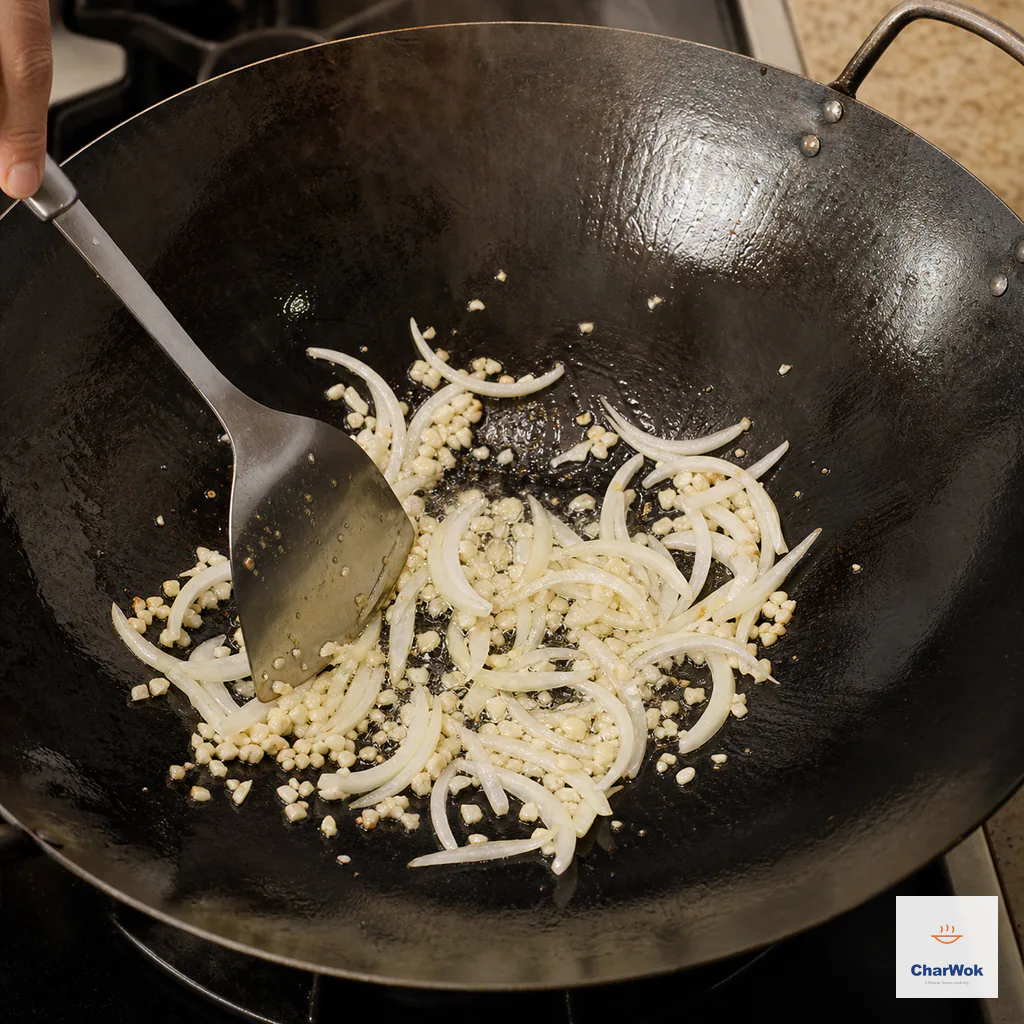
Bloom the garlic and onion for only 15 to 20 seconds; the garlic must stay pale before the vegetables go in.
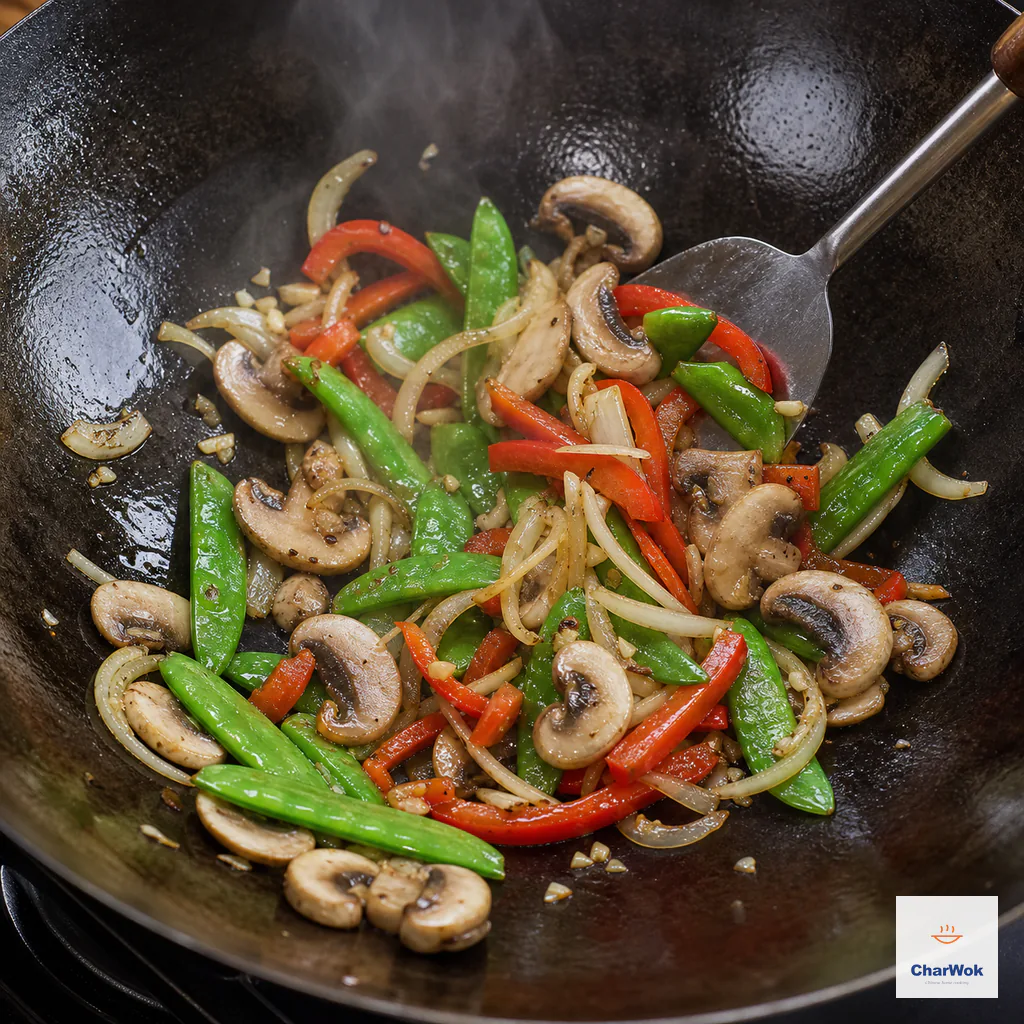
Keep the vegetables moving over high heat until their surfaces char lightly while the snap peas stay bright and crisp.
- Combine, thicken, and verify the chicken. Return the chicken and toss with the vegetables, then lower the heat to medium. Add the drained noodles and re-whisked sauce. Toss until the sauce clings, then insert a thin-tip food thermometer into several of the thickest chicken slices. Continue cooking until every checked piece reaches 165°F (74°C); add a spoonful of water if the sauce tightens first. Sauce gloss, colour, and a 30-to-60-second estimate do not replace the temperature check.
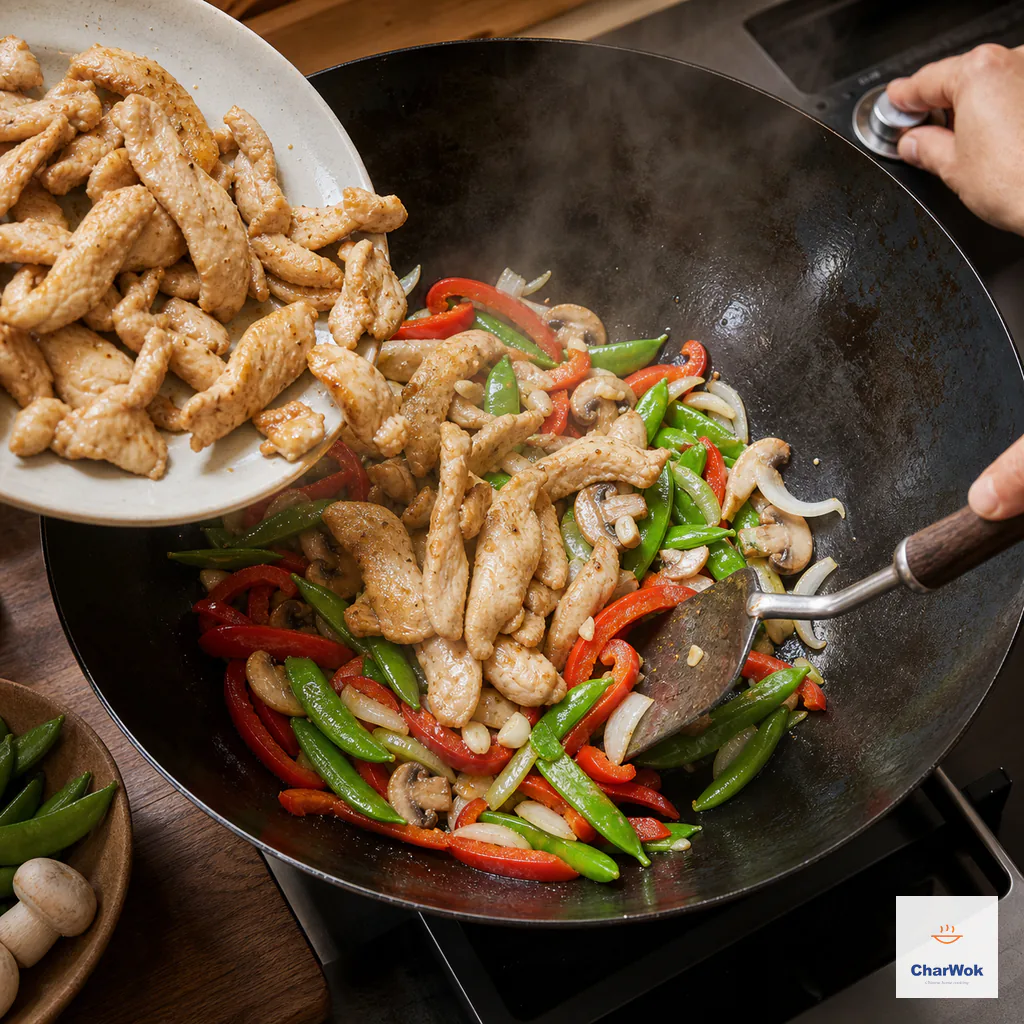
Return the partially cooked chicken and lower the heat before adding the noodles and starch-thickened sauce that will complete the cooking.
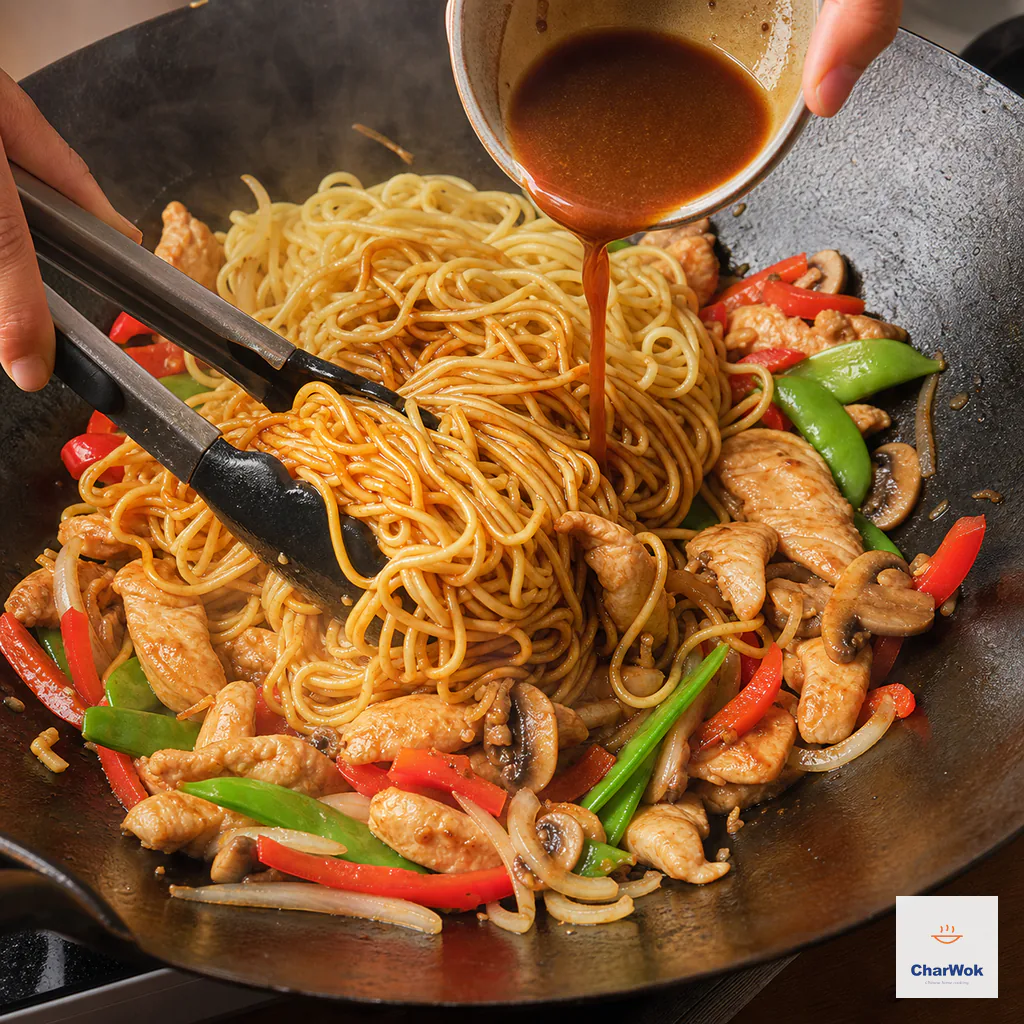
Toss the noodles and sauce until coated, then continue until several of the thickest chicken slices each reach 165°F (74°C), adding water if the sauce tightens first.
- Finish. Once the chicken has reached 165°F (74°C), turn off the burner, fold in the scallions, and serve. The noodles continue absorbing sauce as they sit, so the texture is best right away.
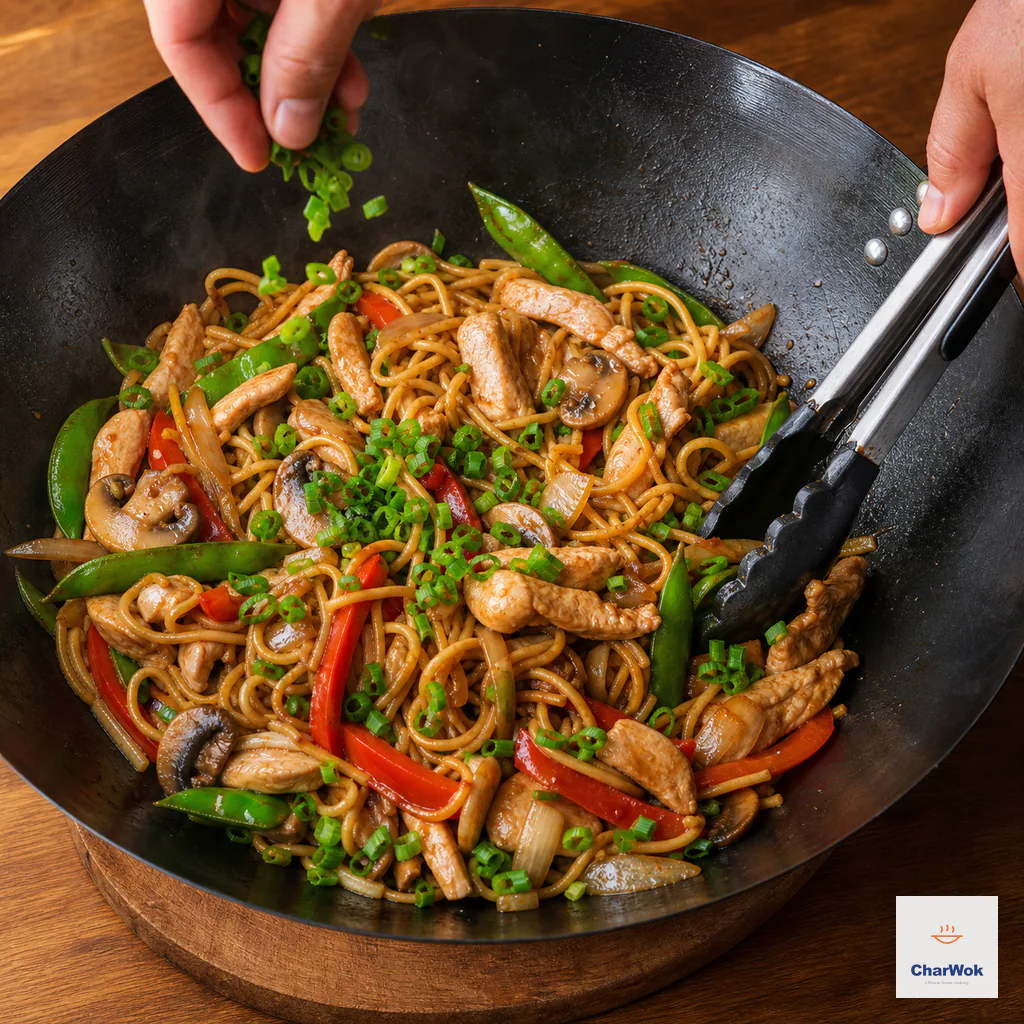
With the heat off, fold in the scallions and serve immediately before the noodles absorb the glossy sauce.
When it goes wrong, and how to fix it
The sauce pools at the bottom of the bowl. Either the cornstarch was not re-whisked before pouring (it settles in under a minute), the heat was too low to gelatinize it, or the noodles were too wet. Next time, drain harder and crank the heat for the final toss. To rescue a watery batch right now, push the noodles to one side, boil the pooled sauce hard for 15 seconds, then toss again.
The chicken is dry and stringy. The slices may be uneven, the velveting rest may have been skipped, or the chicken may have cooked well beyond 165°F (74°C). Keep the first sear brief, then start checking the thickest slices early during the final toss. Thigh meat is more forgiving, but it still needs to reach 165°F (74°C).
The noodles are mushy or breaking apart. You overcooked them in the pot, or you tossed too aggressively in the wok. Undercook dried noodles by one minute versus the package time, and use a gentle lifting motion with tongs rather than a hard stir.
The dish tastes flat despite all that soy and oyster sauce. Usually missing sugar or fat. The 1 tsp of sugar is not optional; it rounds the salt and lets the savory notes read as "rich" instead of "salty." A little more sesame oil at the end also lifts the whole bowl.
Everything sticks to the wok and burns. The pan was not hot enough before the oil went in, or you crowded it. For a home burner that cannot match restaurant BTUs, cook the chicken and vegetables in two batches and combine at the end. A well-seasoned carbon-steel wok also releases far better than a brand-new one.
Variations and pairings
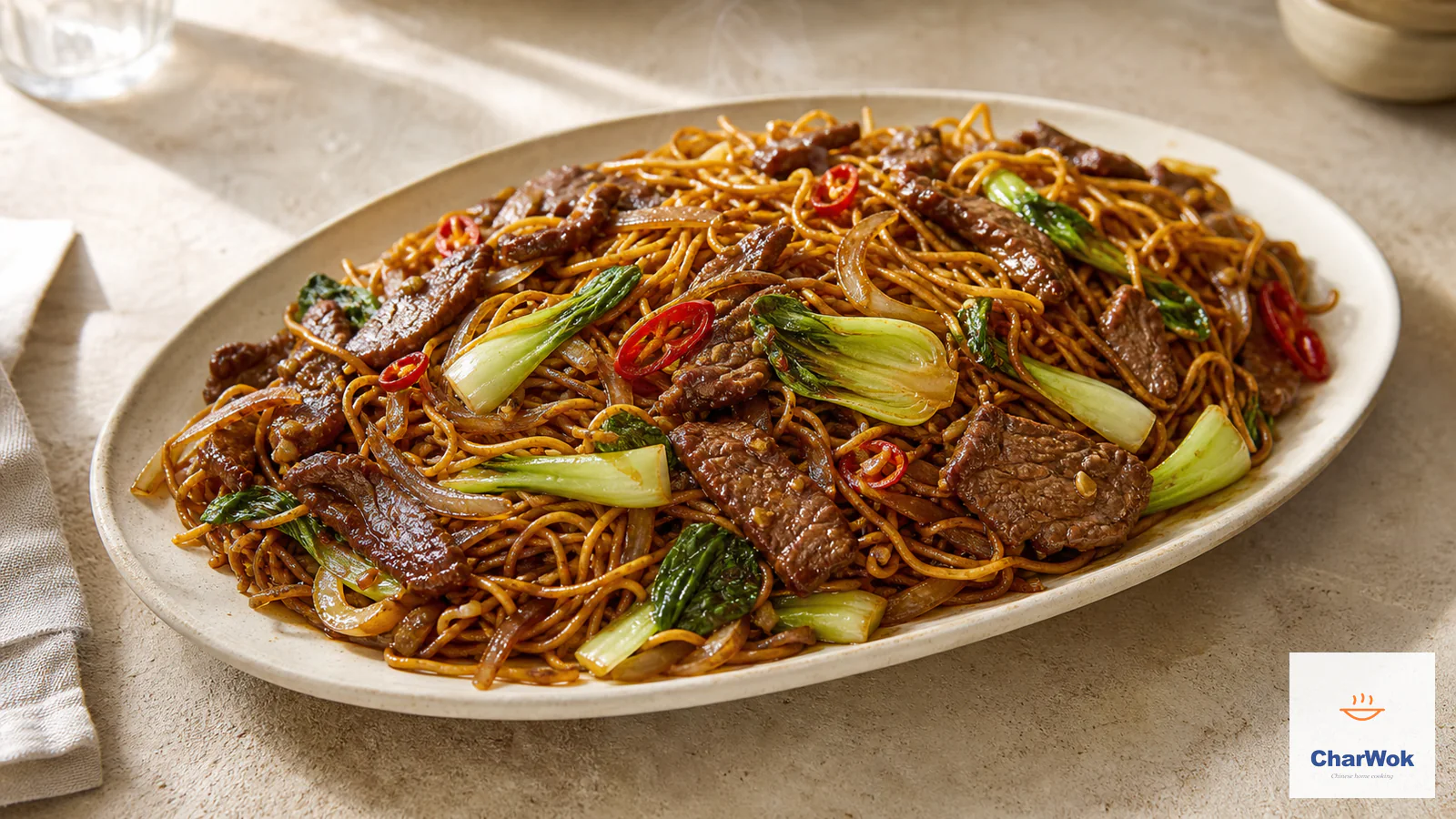
The sauce and noodle technique also works with other proteins, but their safe endpoints differ. Sliced cooked char siu can go in with the vegetables. For beef, slice thinly against the grain and use the method in beef chow fun. Shrimp can skip the chicken velveting step, but cook it until the flesh is pearly or white and opaque rather than relying on a 30-second estimate.
If you want heat, a spoonful of Chiu Chow chili oil stirred in at the end gives a clean, garlick-chili punch that lifts the whole dish without making it a different recipe. For a fully different but related noodle night, branch into Dan Dan noodles for a Sichuan sesame-chili version, or keep it Cantonese and minimalist with scallion oil noodles.
On the side, lo mein is rich enough that it does not need another heavy dish. A quick garlic bok choy stir-fry or a bowl of clear soup balances the meal. For a bigger spread, lo mein is a natural anchor in a takeout recipes lineup alongside a vegetable and a protein.
Storage and reheating
Lo mein is best straight from the wok, but leftovers can be stored safely. Divide them into small, shallow containers and refrigerate within two hours of cooking, or within one hour when the room or outdoor temperature is above 90°F (32°C). Use or freeze within three to four days. Reheat only the portion needed with a splash of water, stirring until the center reaches 165°F (74°C). Freezing is safe, although the thawed starch-thickened sauce may separate and the noodles will be softer.
Safety sources: See FoodSafety.gov for safe minimum internal temperatures and leftover cooling, storage, and reheating guidance. The U.S. Fire Administration advises turning off the burner if cooking oil starts smoking; see its cooking fire-safety guidance.
Frequently asked questions
Can I use dried noodles instead of pre-cooked? Yes. Boil them one minute shy of the package time, drain, rinse warm, and toss with oil. They will finish cooking in the wok.
Is lo mein the same as chow mein? No. Lo mein is tossed and stays soft and saucy. Chow mein crisps the noodles in oil, often into a cake. Same ingredients, different texture goal.
What can I use instead of oyster sauce? Vegetarian mushroom stir-fry sauce is the closest one-to-one swap. Hokey as it sounds, a mix of soy sauce, a little sugar, and mushroom soaking liquid gets you partway there. Do not substitute hoisin; it is too sweet and spiced.
Why is my sauce runny even though I added cornstarch? The starch settled in the bowl. Always re-whisk the sauce immediately before pouring it into the wok, and make sure the pan is hot enough that the sauce bubbles and thickens within 30 seconds.
Can I make it vegetarian? Easily. Swap the chicken for firm tofu or extra mushrooms, use vegetarian oyster-style sauce, and replace any stock with water or mushroom broth. The technique does not change.
How should I store and reheat leftover lo mein? Refrigerate it in small, shallow containers within two hours, or within one hour above 90°F (32°C). Use or freeze it within three to four days, then reheat the portion you need to 165°F (74°C).