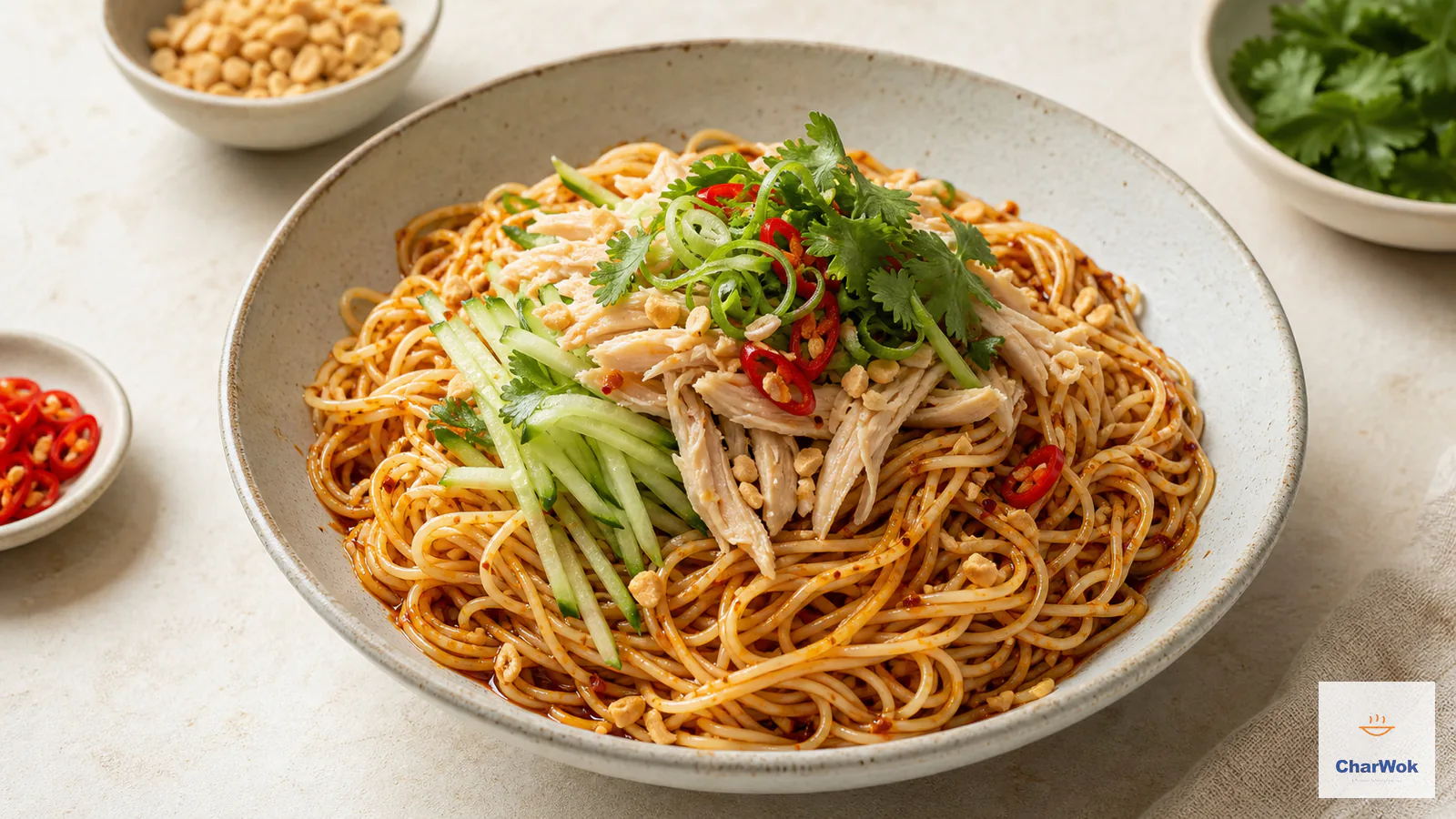
Sichuan cold noodles bring chili oil, black vinegar, garlic, and the citrus-pine hum of Sichuan pepper to chilled wheat noodles. The contrast between cold noodles and a hot, numbing dressing is the point. For a springy rather than pasty bowl, pull the noodles early, cool them completely, and build the dressing in the right order.
This version uses aromatic water to spread the garlic and spice flavors through the dressing instead of leaving the chili oil on the surface. The same technique also works well with sesame noodles and liang pi.
At a glance
Two servings, about 25 minutes if you multitask. The ratio to remember is roughly 1 part soy to 1 part black vinegar to 2 parts chili oil, loosened with spiced garlic water. Pull the noodles one minute before you think they are done. Serve cold, not cool. The aromatic water and the oil-toss are non-negotiable; the chicken is not.
What this dish is, and where it sits in the family
Liang mian (凉面, "cold noodles") is less a single recipe than a summer template that runs across northern and western China. Every region has its own dressing, and the Sichuan branch is the loudest one: garlic, Sichuan pepper, star anise, black rice vinegar, and chili oil, with shredded chicken and cucumber carrying the body. It is sold from street carts and eaten standing up, often as a quick lunch when turning on the stove feels unreasonable.
Sichuan cooks share a pantry with the rest of the province's cold dishes. The same chili-oil-and-vinegar logic shows up in bang bang chicken and in the chili bowl you get with dan dan noodles. Once you internalize the dressing, you can steer it toward dozens of other cold plates. Treat this as a method, not a one-off.
The ingredients, and the calls I make on each
Ingredients at a glance
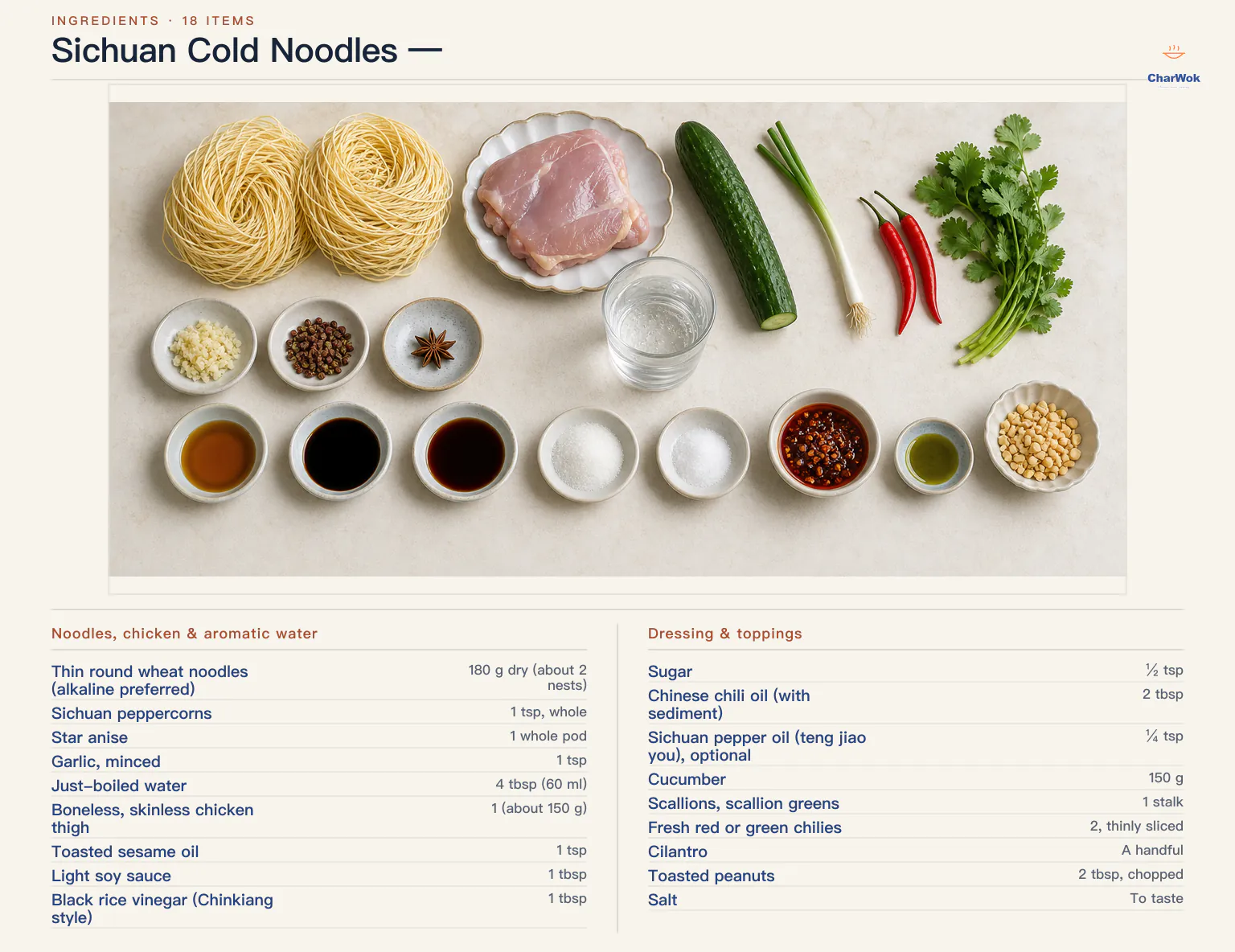
Black vinegar and chili oil vary widely by brand, so taste both before mixing the dressing. A fragrant chili oil with sediment and a malty Chinkiang-style vinegar give the bowl its strongest foundation.
| Ingredient | Amount (for 2) | Notes / substitute |
|---|---|---|
| Thin round wheat noodles (alkaline preferred) | 180 g dry (about 2 nests) | Look for the yellow-tinted alkaline noodles; the kansui gives the springy bite this dish needs. Soba or thin spaghetti work; round rice noodles for gluten-free. Avoid wide flat ribbons, they clump when chilled. |
| Sichuan peppercorns | 1 tsp, whole | Red (hong hua jiao) for aroma. See the Sichuan pepper guide for sourcing and toasting. Toasting before infusing roughly doubles the fragrance. |
| Star anise | 1 whole pod | One pod only. More and it tastes like licorice cough syrup. |
| Garlic, minced | 1 tsp | Fresh, minced fine. The hot water tames its bite without cooking it. |
| Just-boiled water | 4 tbsp (60 ml) | Must be off the boil for a few seconds, not a slow simmer. Pouring boiling water onto garlic cooks out the sharp top notes you want. |
| Boneless, skinless chicken thigh | 1 (about 150 g) | Thigh, not breast. Breast works but dries out unless you steam it gently. A rotisserie thigh, skin removed, is a fine shortcut. |
| Toasted sesame oil | 1 tsp | Used to coat the hot drained noodles so they don't glue together as they cool. |
| Light soy sauce | 1 tbsp | Light, not dark. If you have time, Sichuan spiced sweet soy sauce (fu zhi jiang you) is the upgrade; it lets you drop the added sugar. |
| Black rice vinegar (Chinkiang style) | 1 tbsp | Read the vinegar guide. Balsamic is not a swap, it is too sweet and too syrupy. If you can only find it online, buy it; there is no honest substitute. |
| Sugar | ½ tsp | Balances the chili and lifts umami. Skip if using the spiced sweet soy. |
| Chinese chili oil (with sediment) | 2 tbsp | Homemade chili oil with the crunchy sediment, not the clear red oil floating on top. The sediment is where the flavor lives. |
| Sichuan pepper oil (teng jiao you), optional | ¼ tsp | Green, numbing, floral. A few drops change the whole bowl. Skip if unavailable rather than overusing. |
| Cucumber | 150 g | Cut into matchsticks, not grated. Grated turns to water. English or Persian cucumbers; seed if the skin is tough. |
| Scallions, scallion greens | 1 stalk | Greens only, finely chopped. White parts are too pungent raw here. |
| Fresh red or green chilies | 2, thinly sliced | Thai bird or Fresno. Optional if your chili oil is already fierce. |
| Cilantro | A handful | Stems and leaves, chopped. Skippers will not be punished. |
| Toasted peanuts | 2 tbsp, chopped | The classic crunch. Toast dry in a pan, or follow the fried peanut method. |
| Salt | To taste | Add at the end, after the soy and chili oil, which both carry salt. |
Method, with the why built in
- Start the aromatic water first. Put the minced garlic, toasted Sichuan peppercorns, and the single star anise into a small heatproof bowl. Pour the 60 ml of just-off-the-boil water over them and leave it alone. The point of this step is extraction without cooking: hot water pulls the aromatic oils out of the pepper husks and star anise and softens the garlic's raw sulfur bite, but it never gets hot enough to destroy them. Give it at least 10 minutes. This is the same logic behind the spiced water used for hot and sour glass noodle soup and many Sichuan cold dressings, and skipping it is the most common reason a bowl tastes one-dimensional.
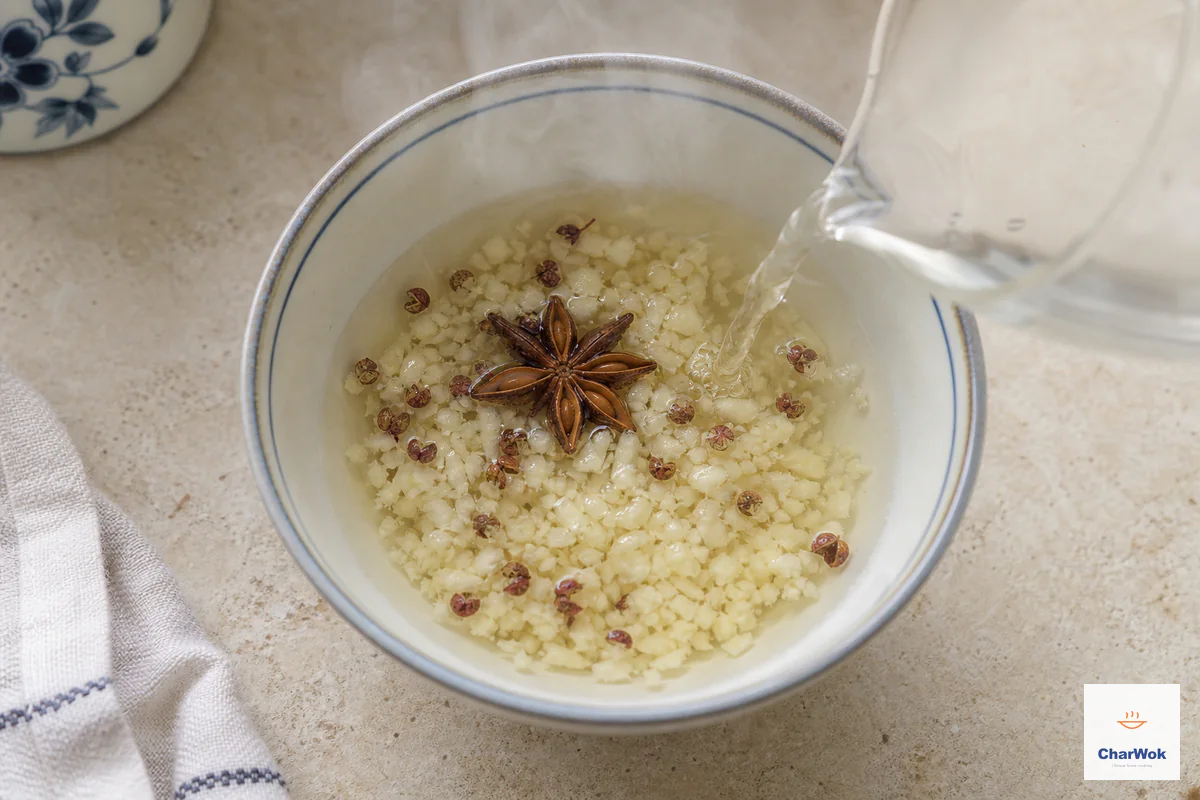
Pour 60 ml just-off-the-boil water over the garlic and whole spices, then steep for at least 10 minutes without boiling them.
- Cook the chicken, then verify the temperature. Steam a boneless thigh on a plate over medium heat for about 15 minutes, or roast it covered at 200°C / 400°F for about 20 minutes. Treat those times as first checks: insert a clean instant-read thermometer into the thickest part and do not remove the chicken until it reaches 74°C / 165°F. If it is under, keep cooking and check again after 2 to 3 minutes, cleaning the probe before each check. Transfer the cooked chicken to a clean plate and let it cool before shredding. Color and clear juices are not reliable safety tests.
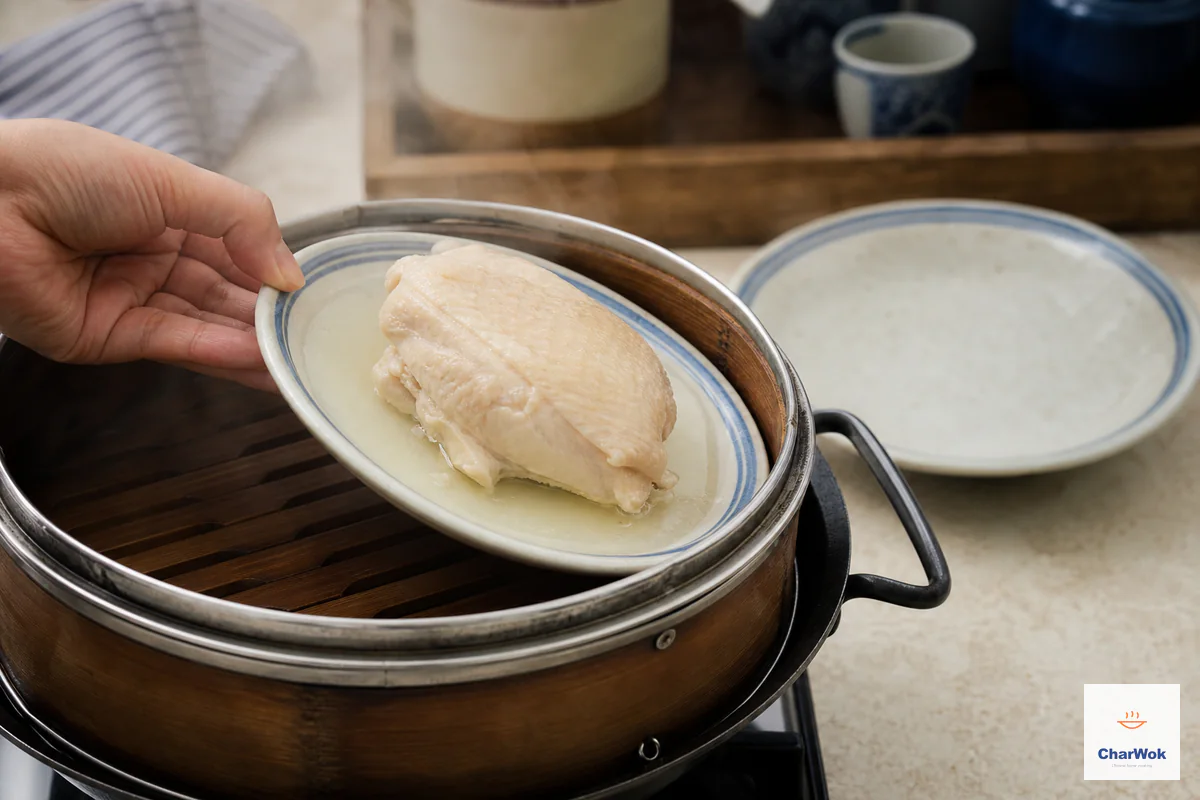
Steam for about 15 minutes as a first check, then verify the thickest part reaches 74°C / 165°F before moving the chicken to a clean plate to cool.
- Prep the toppings while things infuse and cook. Cut the cucumber into clean matchsticks. Chop the scallion greens, slice the fresh chilies, and rough-chop the cilantro. If you are toasting peanuts, do it now in a dry pan over low heat until the skins darken and crackle. Move them off the heat the instant they smell nutty; they keep cooking from residual heat and burn in the time it takes to find a bowl.
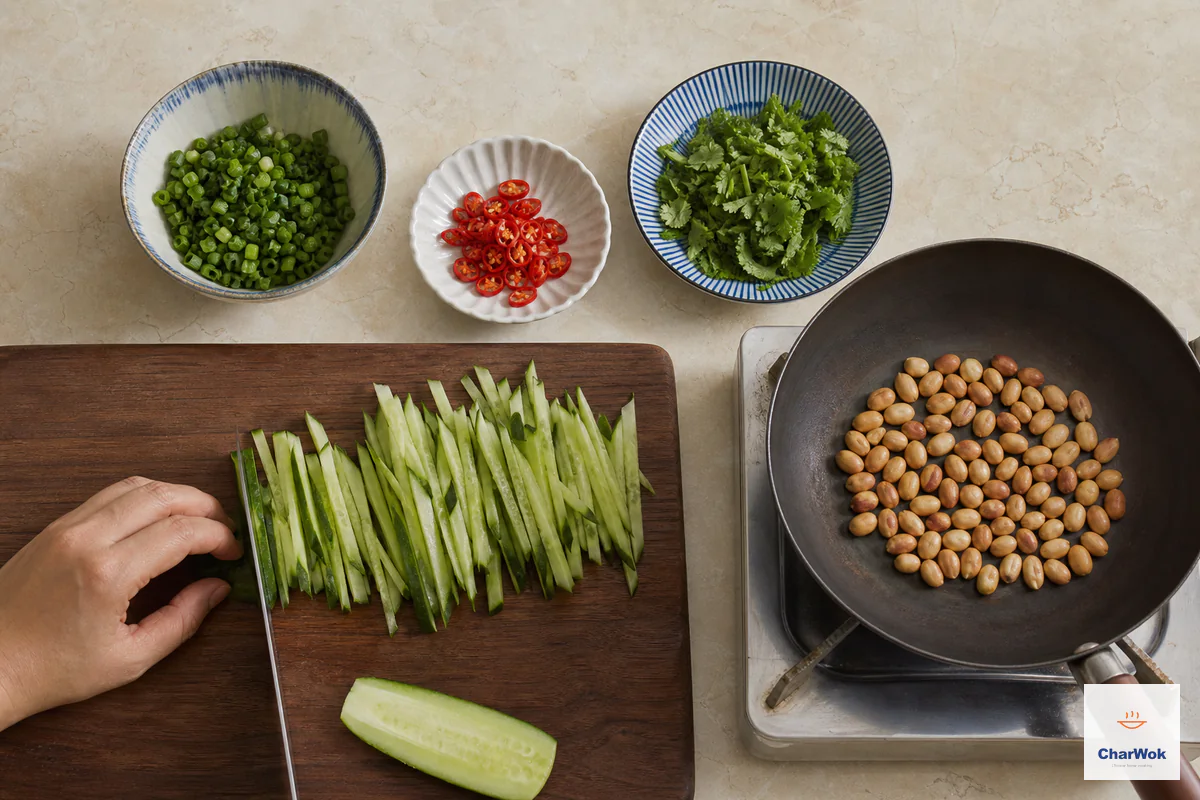
Prepare clean cucumber matchsticks, scallion greens, chili rings and cilantro, and take the peanuts off low heat as soon as they smell nutty.
- Boil the noodles hard, and pull them early. Use a full, rolling boil in a generous pot, the largest you have. Add the noodles, stir once to separate, and cook to just under al dente, one minute before the package time. Here is the reasoning: residual heat keeps cooking the noodles after you drain them, and cold noodles that have gone soft cannot be rescued. Bite one; it should still offer faint resistance at the core.
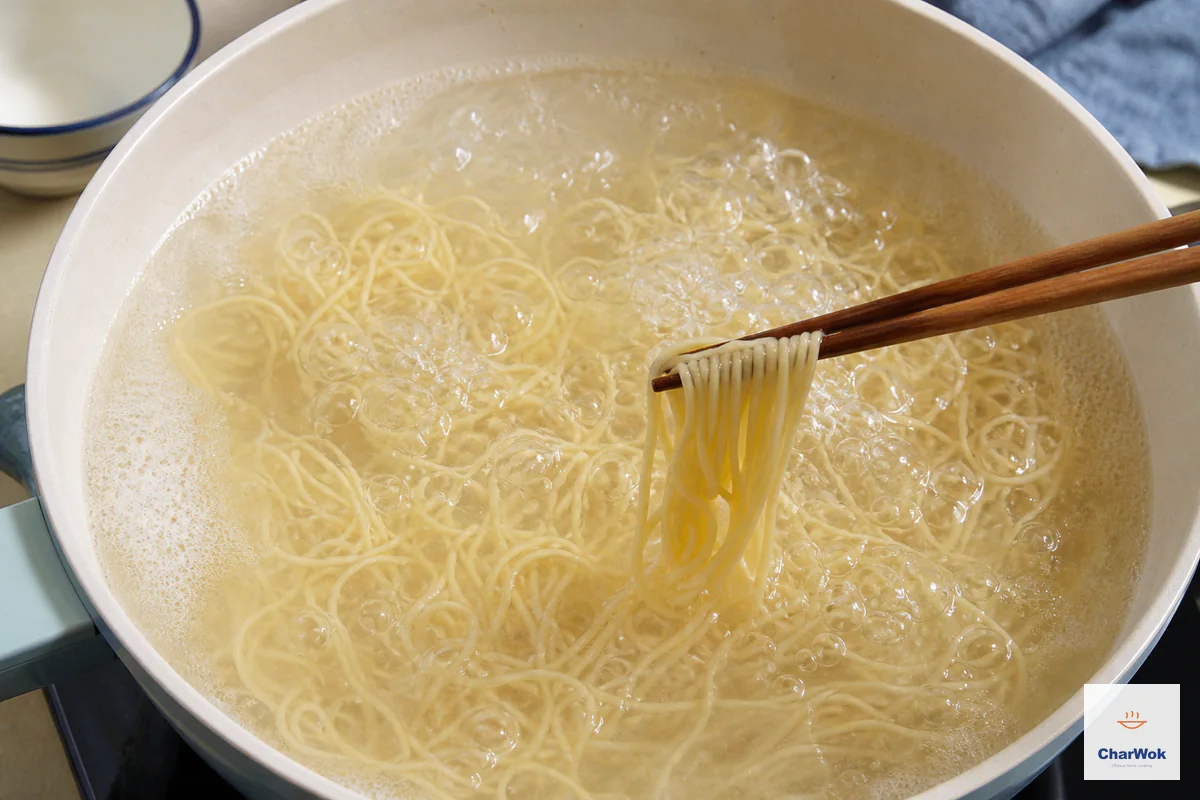
Boil in plenty of water and pull the noodles one minute early, while the center still offers faint resistance.
- Drain, shock, and oil immediately. Tip the noodles into a colander and run cold tap water over them until they are fully cool to the touch, agitating with your fingers. This stops the starch gelatinization in its tracks and washes off the surface starch that would otherwise turn the bowl gummy. Shake off the water, transfer to a wide bowl, and toss with the teaspoon of sesame oil while the noodles are still damp. The oil coats each strand and keeps them from fusing as they sit. This is the same reason hot dry noodles and other cold wheat dishes get an oil toss straight out of the pot.
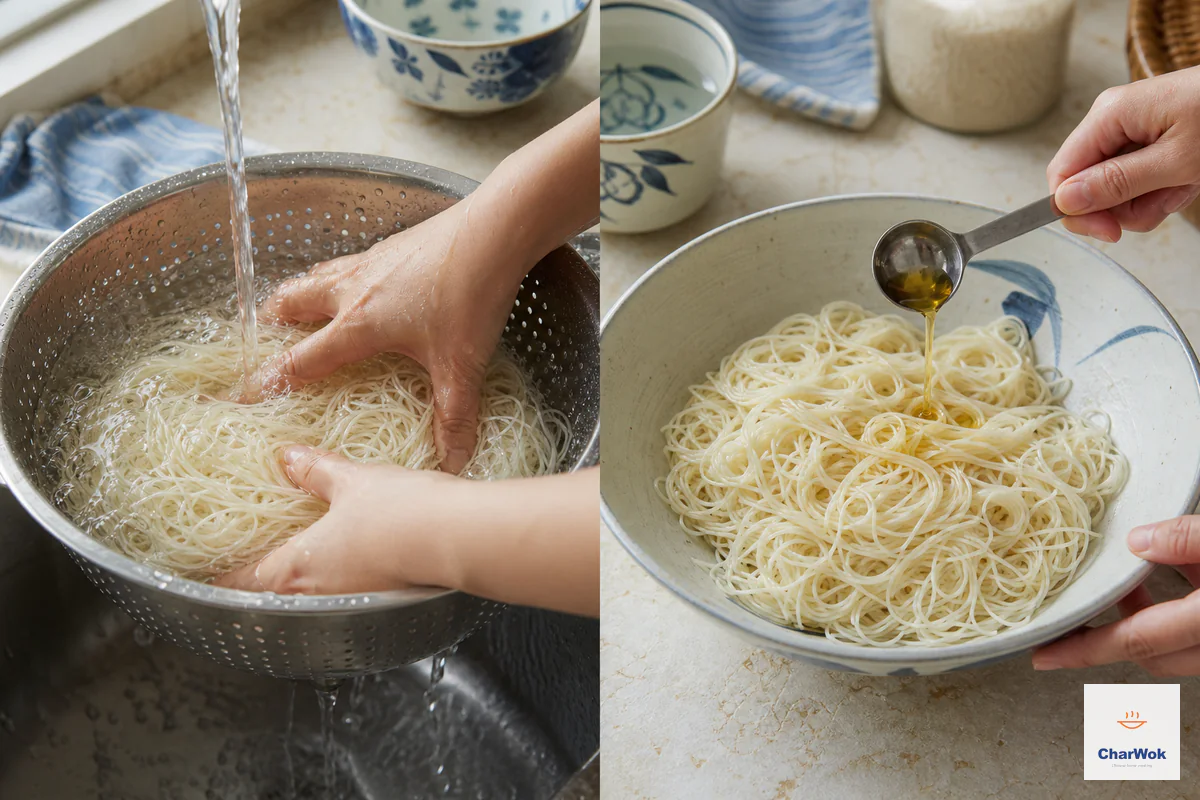
Rinse until completely cool, shake off the water, and toss the still-damp noodles with 1 teaspoon sesame oil so the strands stay separate.
- Shred the chicken. Once cool enough to handle, tear the thigh along the grain into rough shreds with your fingers, or slice across the grain into short strips if you want a cleaner look. Hand-shredding gives more surface area for the dressing to cling to, which matters more than it sounds.
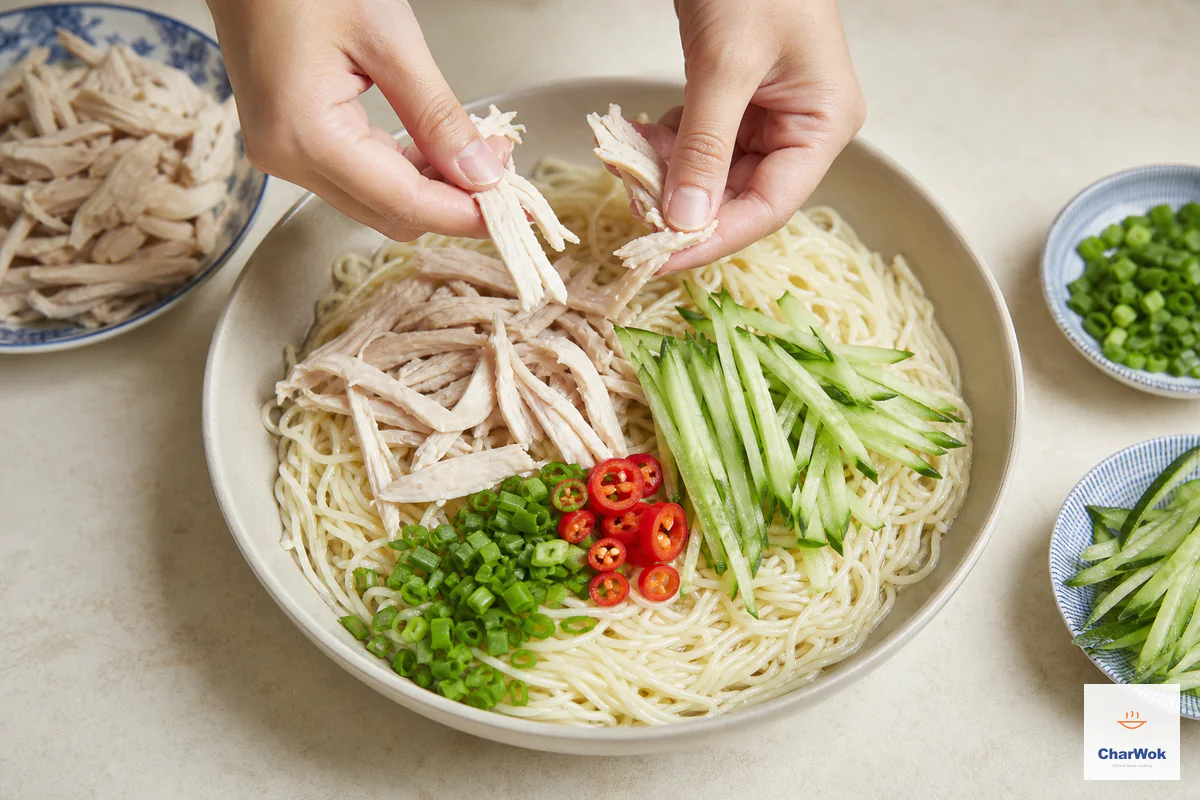
Hand-shred the cooled thigh for a rough sauce-catching surface, then add it with cucumber, scallion greens and fresh chili.
- Build the dressing in the bowl. Strain the aromatic water through a fine sieve, pressing on the garlic, and discard the spent spices. Pour the infused water over the noodles. Add the soy sauce, black rice vinegar, sugar, chili oil with its sediment, and the Sichuan pepper oil if using. Toss thoroughly so every strand is coated, then fold in the chicken, cucumber, scallion greens, and fresh chili. Taste now, before the final garnish, and adjust salt and vinegar. The bowl should taste bright first, then savory, then a slow building heat with a numbing tail.
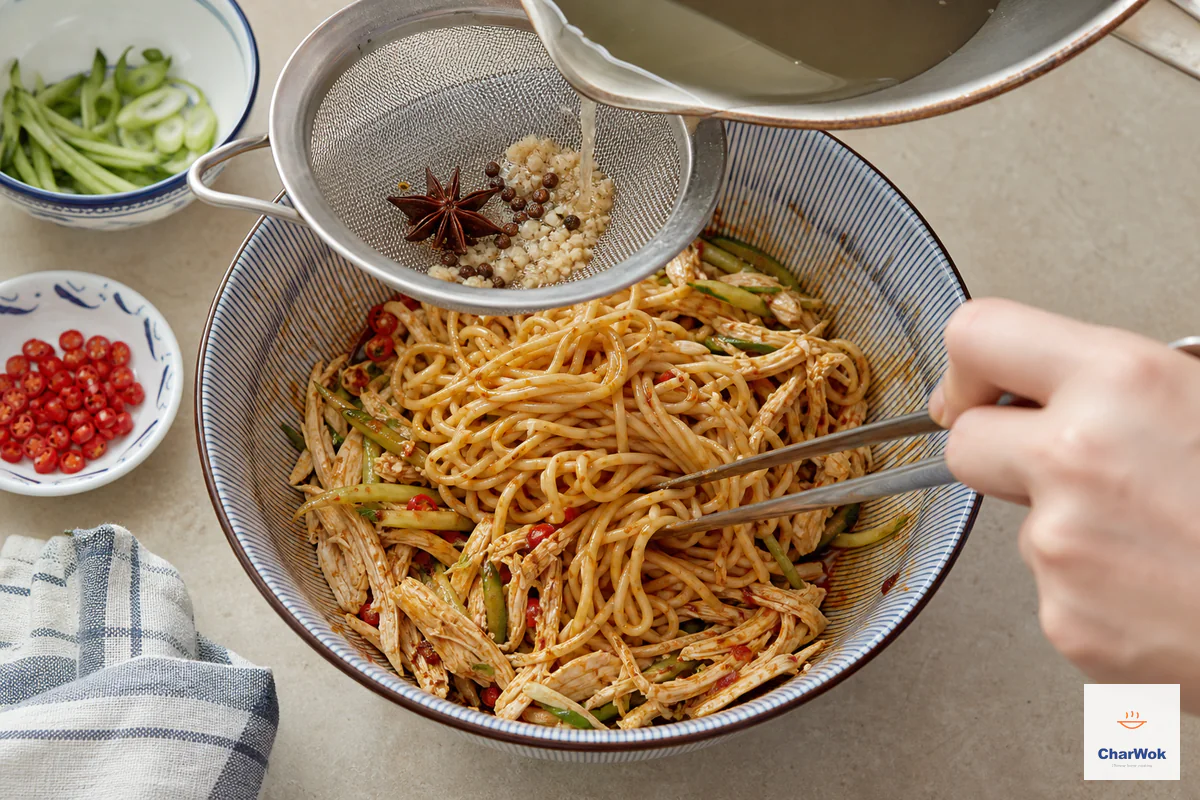
Strain out every spice, add the infused water and dressing ingredients, and toss from the bottom until every strand is evenly coated.
- Plate and finish. Divide between two bowls. Top with cilantro and chopped peanuts. Serve at once. Cold noodles wait badly; the cucumber weeps and the peanuts soften within twenty minutes.
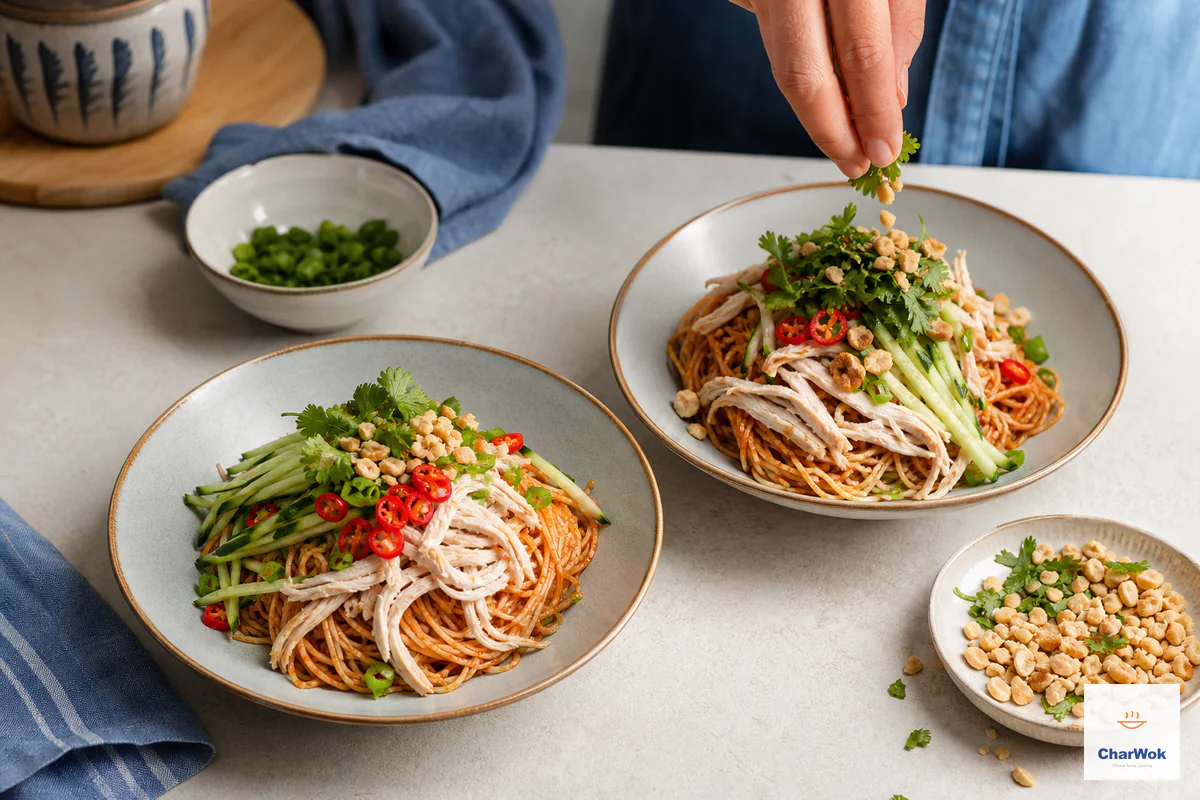
Divide into two bowls and add cilantro and chopped peanuts only just before serving so the garnish stays fresh and crisp.
What goes wrong, and the fix
Most texture and seasoning problems are recoverable if you catch them before plating.
- The noodles are gummy and stuck together. Either they were overcooked or they were not oiled while still damp. There is no real fix for overcooked noodles; next time pull them earlier. If they are merely stuck, rinse again under cold water, drain, and re-toss with a few more drops of sesame oil.
- The dressing pools at the bottom and the noodles taste plain. You skipped or under-dosed the aromatic water. That water is what lets the seasoning travel up the strands rather than slide off. Add another tablespoon of hot water with a pinch of sugar and toss again.
- The bowl tastes flat despite all the right ingredients. Almost always the chili oil. Store-bought clear chili oil is mostly color and heat with no aroma. Use one with settled sediment, or make your own. A second cause is old Sichuan peppercorns that have lost their volatile oils, toast a fresh batch.
- It is too spicy to enjoy. Cut the chili oil by a third and add an extra pinch of sugar and a teaspoon more sesame oil; fat and sugar both buffer capsaicin. Do not add water, that just dilutes everything including the flavor you want.
- It tastes of nothing but licorice. Too much star anise or it steeped too long. Use one pod next time and strain the water at the 10-minute mark.
- The chicken is dry and stringy. Breast is the usual culprit, or thigh cooked past 74°C. Slice across the grain to shorten the fibers, and toss it in a teaspoon of the dressing five minutes before serving so it reabsorbs some moisture.
Variations and what to serve alongside
The noodles and the dressing are the architecture; the toppings are the furniture. Swap them freely.
- Sesame-heavy version. Add a tablespoon of Chinese sesame paste thinned with warm water to the dressing for a richer, nuttier bowl closer to a cold soba cross. This is how many Chengdu shops serve it.
- Vegetarian and vegan. Drop the chicken. For protein, julienne a thin omelette for a vegetarian version, or use smoked or five-spice pressed tofu for vegan. Both come ready to eat; just slice.
- More vegetables. Add a handful of bean sprouts, shredded carrot, or blanched edamame. A separate plate of smashed cucumber or one of the three cucumber salads doubles the cold-crunch factor. For more numbing kick on the side, a small bowl of dry-roasted Sichuan peppercorn salt lets guests dial it up.
- Pairings. This is a complete light meal on its own. If you want company, a clear soup, like a quick egg-drop or tomato-egg broth, balances the heat without competing.
Storage and reheating
Use separate utensils and boards for raw chicken and ready-to-eat cucumber, herbs, and cooked noodles; wash hands and sanitize the work surface before preparing the cold toppings. Refrigerate cooked chicken, noodles, and dressing in separate shallow covered containers within 2 hours, or within 1 hour when the room is hotter than 32°C / 90°F. For the best texture, assemble within 1 day; for safety, use refrigerated cooked chicken within 3 to 4 days. Prepare the aromatic water the day you serve it. Cold noodles can be eaten cold when they have stayed refrigerated; if you reheat the chicken separately, take it to 74°C / 165°F. See the USDA guidance for safe chicken temperatures and cooling and leftovers.
Frequently asked questions
Can I use spaghetti for Sichuan cold noodles?
Yes. Use a thin spaghetti, cook it just shy of al dente, and toss it with sesame oil right after draining. It lacks the alkaline spring of wheat noodles but works well with the dressing.
Why do you rinse the noodles in cold water?
Cold water stops the cooking immediately so the noodles stay firm, and it rinses off surface starch that would otherwise make them clump and turn gummy.
What can I substitute for Chinese black rice vinegar?
There is no true substitute. Balsamic is too sweet and rice vinegar too sharp. Chinkiang-style black rice vinegar is inexpensive, keeps indefinitely, and is worth buying.
Is the aromatic water step necessary?
Optional but recommended. It is the layer that makes the bowl taste composed rather than like plain chili oil. Two minutes of work and ten minutes of waiting.
How do I know the chicken is safely cooked?
Steam for about 15 minutes or roast for about 20 minutes as a first check, then measure the thickest part with a clean instant-read thermometer. It must reach 74°C / 165°F; color and clear juices cannot replace the temperature check.