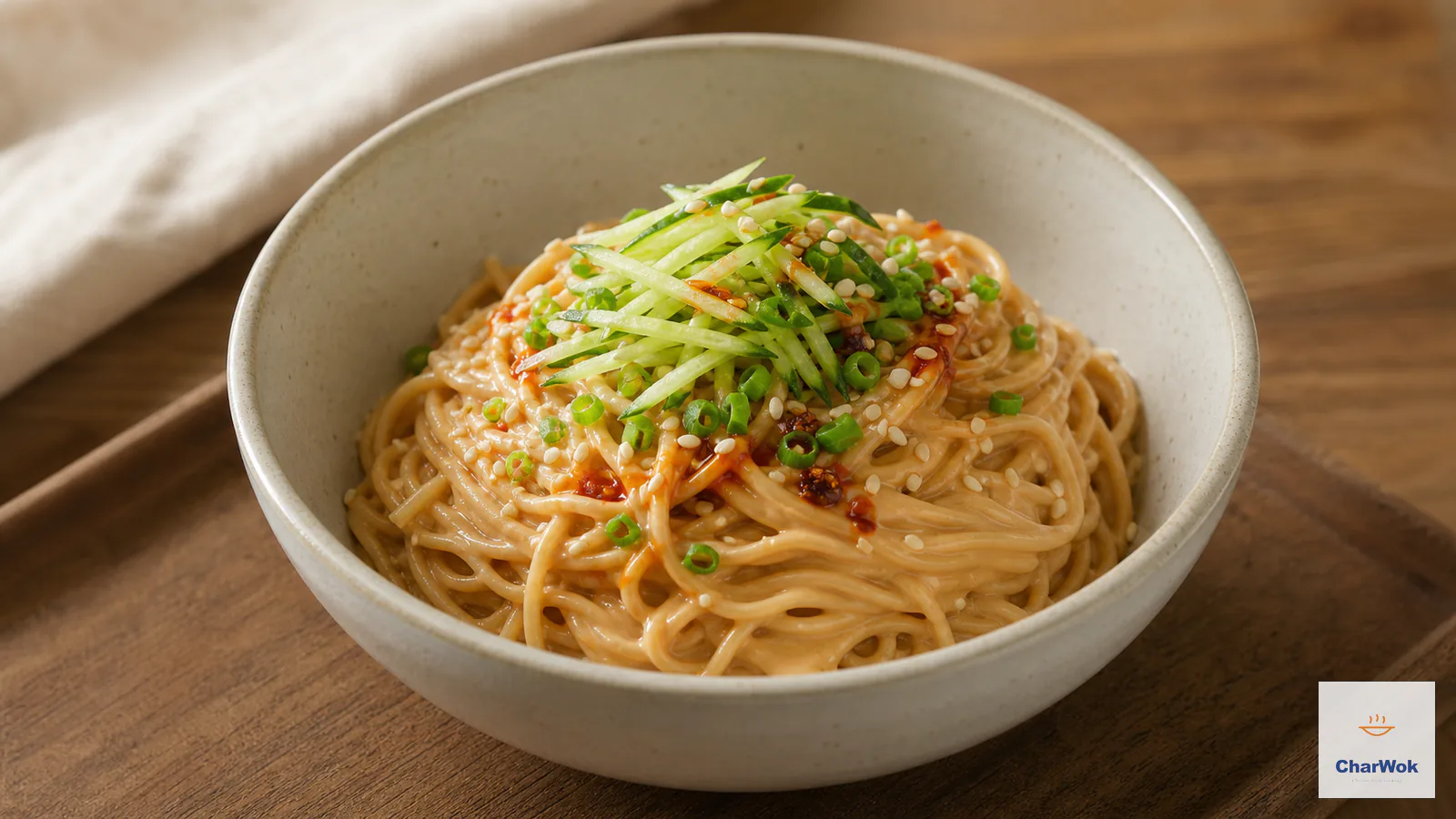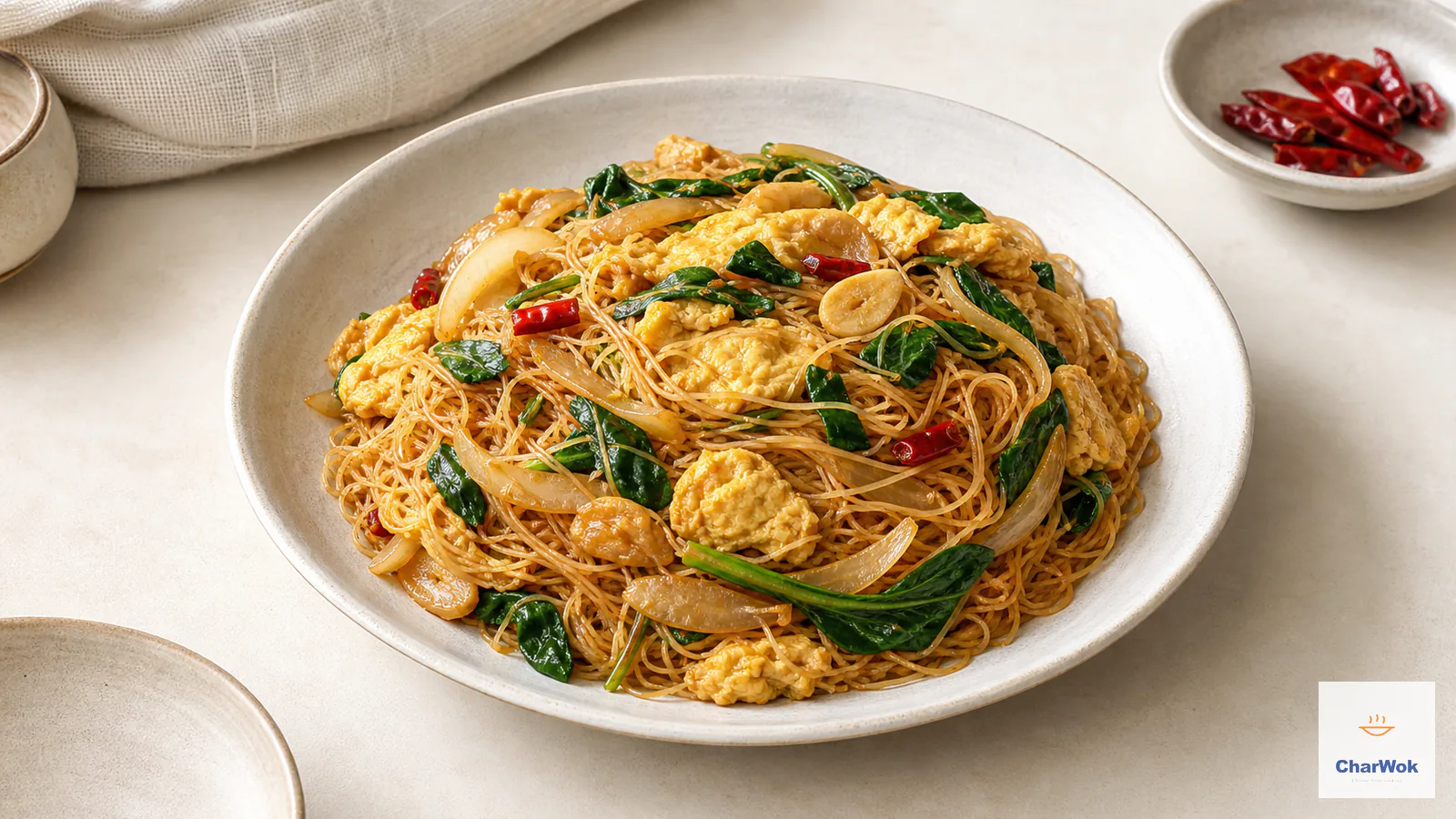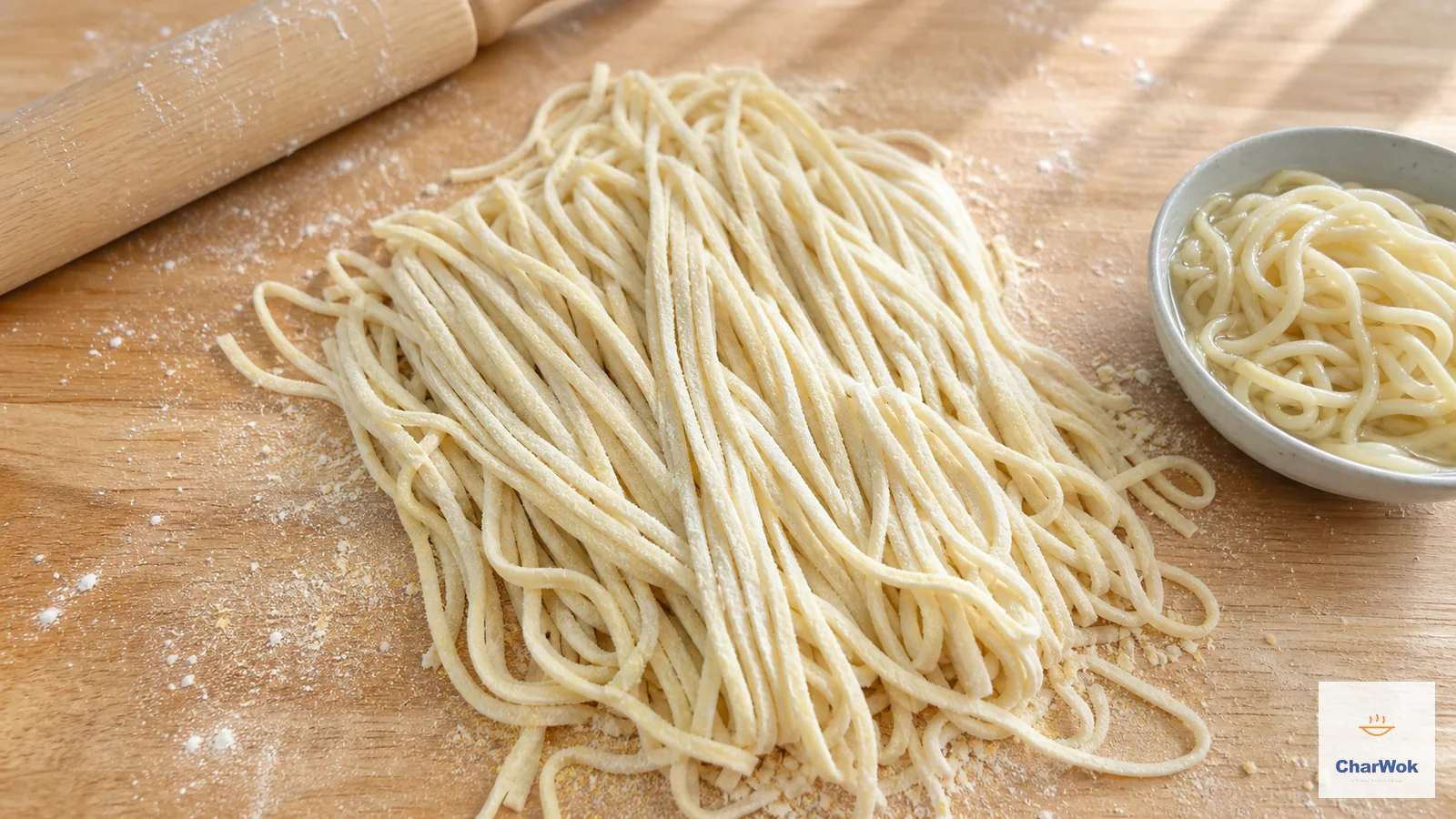
The first time I tried to hand-roll noodles, I ended up with a dough that fought me for twenty minutes and a sheet so uneven the strands ranged from fettuccine to dental floss. They still tasted better than anything from a bag. That gap, between effort and reward, is the whole case for making noodles at home: three ingredients, no machine, and a bowl of something the dried-aisle cannot give you. The chew you get from a fresh, low-hydration wheat dough is the kind that makes a plain bowl of broth feel like a meal.
What follows is a hand-rolled noodle (shou gan mian, 手擀面) method built around one decision the source recipes tend to hand-wave: hydration. Get the water-to-flour ratio right and the dough stays firm enough to slice cleanly but soft enough to roll. Get it wrong and you are either scrubbing paste off your board or cracking a sheet that refuses to thin. I will give you the exact numbers and the failure modes, because I have hit all of them.
At a glance: use 250 g flour to 115 g water (about 46% hydration) plus ¼ tsp salt. Rest the rough dough 30 minutes, knead 3 minutes, roll to 2 mm, slice, and boil 2–3 minutes. The single move that decides success is the 30-minute rest before kneading; without it the gluten is too tight to roll thin.
What these noodles are, and where they sit in the family
Hand-rolled noodles are the everyday wheat noodles of northern Chinese home cooking, the kind a household in Shanxi or Shandong would make for a quick lunch rather than for a banquet. They sit between two more famous cousins on the texture spectrum. On one side are hand-pulled noodles (la mian), which use a softer, higher-hydration dough worked until it can be stretched into long strands by hand. On the other are machine-extruded alkaline ramen noodles, which rely on kansui (lye water) for their spring and need so little water that the dough is too stiff to roll by hand at all. Hand-rolled noodles live in the middle: enough water to roll, little enough to slice cleanly, no alkali, no pulling, no machine. If you have ever eaten biang biang noodles or the belt-like strands of scissor-cut noodles, you have tasted close cousins that use the same kind of dough, just shaped differently.
The texture you are aiming for is what Chinese cooks call jin dao (筋道): a clean, slightly resistant bite that snaps back when you chew. Dried noodles give you softness. These give you structure. That is why they hold up in a long-simmered spicy beef noodle soup or under a heavy sauce like zha jiang mian without going limp.
The ingredients, and the one choice that actually matters
Ingredients at a glance
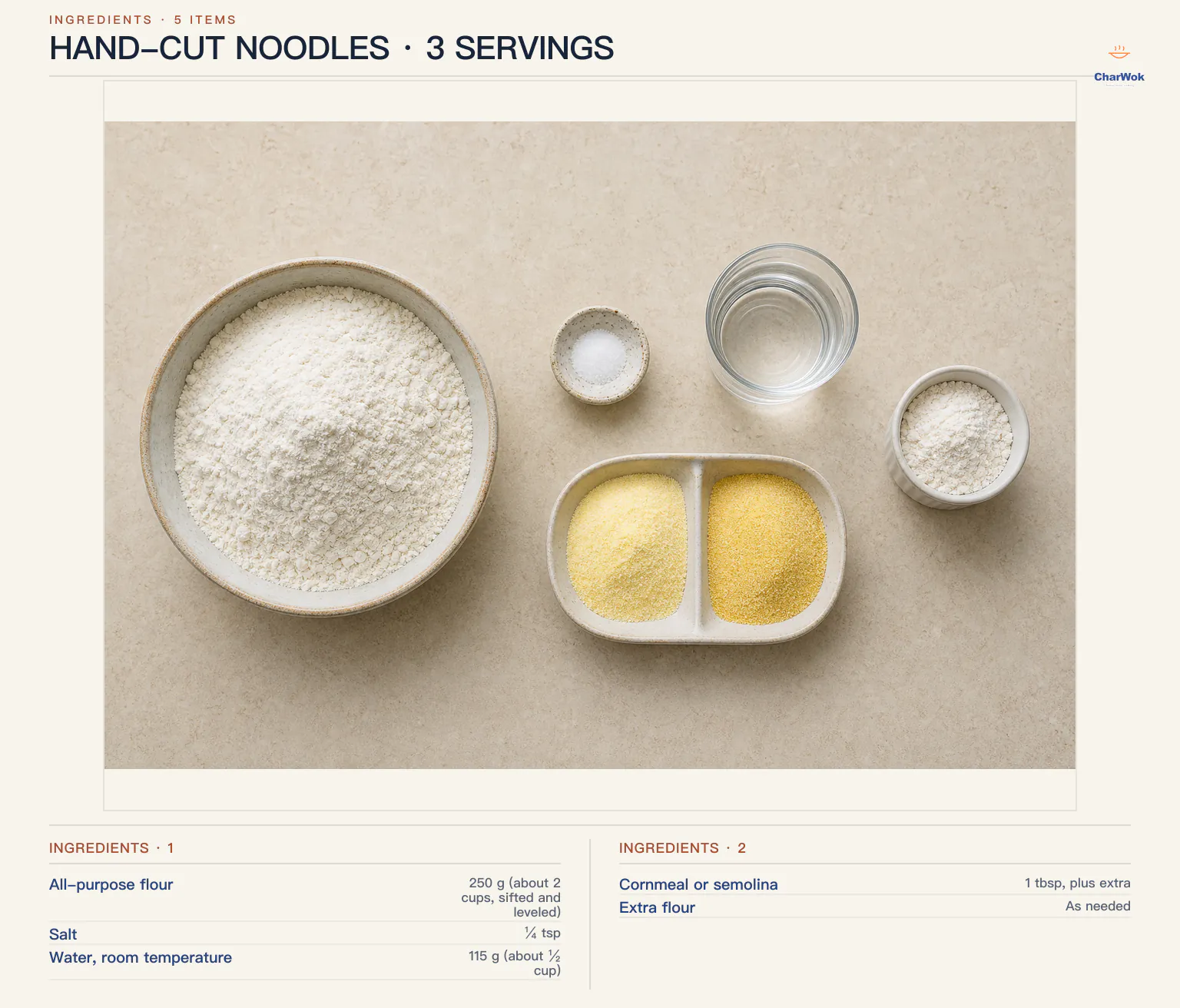
| Ingredient | Amount | Notes / substitute |
|---|---|---|
| All-purpose flour | 250 g (about 2 cups, sifted and leveled) | The reliable default. Substitute bread flour for a chewier, more elastic strand; it absorbs a little more water, so add an extra 5–10 g. |
| Salt | ¼ tsp | Tightens the gluten network so the cooked strand springs back. Do not skip; without it the noodles go slack. |
| Water, room temperature | 115 g (about ½ cup) | Adjust by ±10 g for your flour. The finished dough should feel firm, like a stress ball, not crumbly and not sticky. |
| Cornmeal or semolina | 1 tbsp, plus extra | For dusting between folds when cutting. Its coarse grains stop layers from welding together. Flour works in a pinch but is less reliable. |
| Extra flour | As needed | For dusting the board while rolling. |
The choice that matters is flour, and my firm recommendation is to start with all-purpose. Bread flour gives a noticeably chewier strand and is worth graduating to once your rolling is even, but its higher protein also makes the dough tighten back faster, so beginners end up fighting it. All-purpose forgives you. If you have only bread flour, give the dough a couple of extra minutes of rest between rolling bursts and the gluten will relax enough to thin out.
Why the dough is so dry (and why that is the whole trick)
This dough will look and feel too dry the moment you mix it. That is correct. At roughly 46% hydration it is far below bread-dough territory (65% and up), and that dryness is doing two jobs at once. First, a stiff dough develops long, ordered gluten strands under the rolling pin instead of tearing, which is what gives the cooked strand its snap. Second, low hydration keeps the surface non-sticky, so you can fold the sheet into layers and cut through five plies without them fusing into one block of dough.
The trade-off is that a low-hydration dough resists you. Freshly mixed, it is too tight to knead. This is why the recipe is structured around a rest. You bring it together roughly, walk away for thirty minutes, and only then knead. During that rest, enzymes in the flour begin breaking down starches and the gluten network relaxes into a workable state. Knead it first and you will be pushing a brick around the bowl for ten minutes; rest it first and the same dough kneads smooth in three. I once skipped the rest on a weeknight because I was impatient, and I gave up kneading and threw the dough away. Lesson learned.
The method, step by step
- Mix to a rough dough. Combine the flour and salt in a bowl. Add the water in a thin stream while stirring with chopsticks or a fork. Stop the moment it comes together into a shaggy, flaky ball with dry patches. It will not look like dough yet. That is fine.
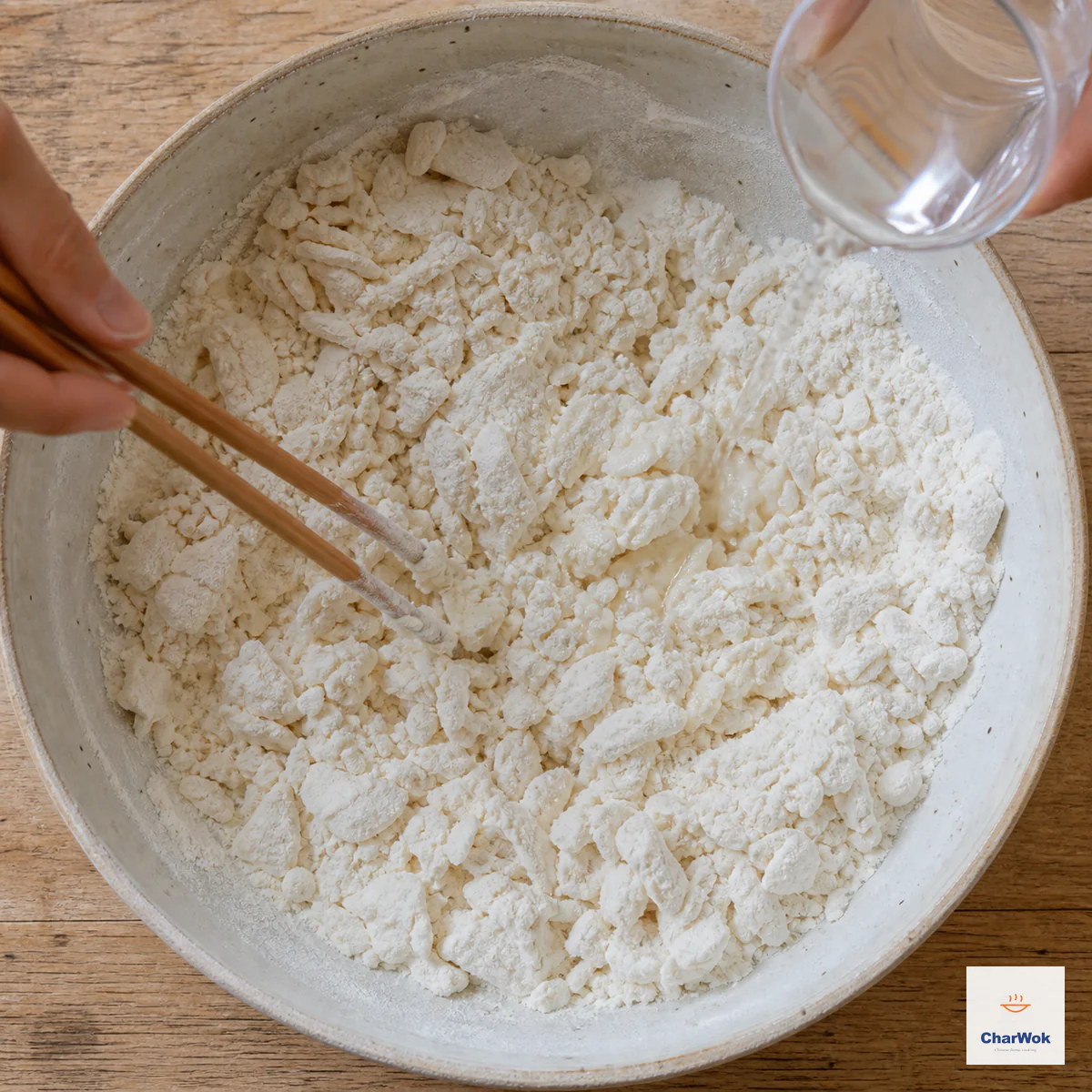
Add the water gradually while stirring until rough flakes form; stop before the mixture becomes a smooth dough.
- Rest 30 minutes, covered. Press it into a flat disc, wrap it or cover the bowl with a damp cloth, and leave it at room temperature for half an hour. Do not refrigerate, do not knead, do not peek. This is the step that makes everything after it possible.
- Knead 3 minutes. Uncover and knead on an unfloured board. Push with the heel of your hand, fold, quarter-turn, repeat. Within two or three minutes the dough turns smooth and slightly tacky but no longer sticky. If it still feels gravelly, let it rest five more minutes and knead another minute.
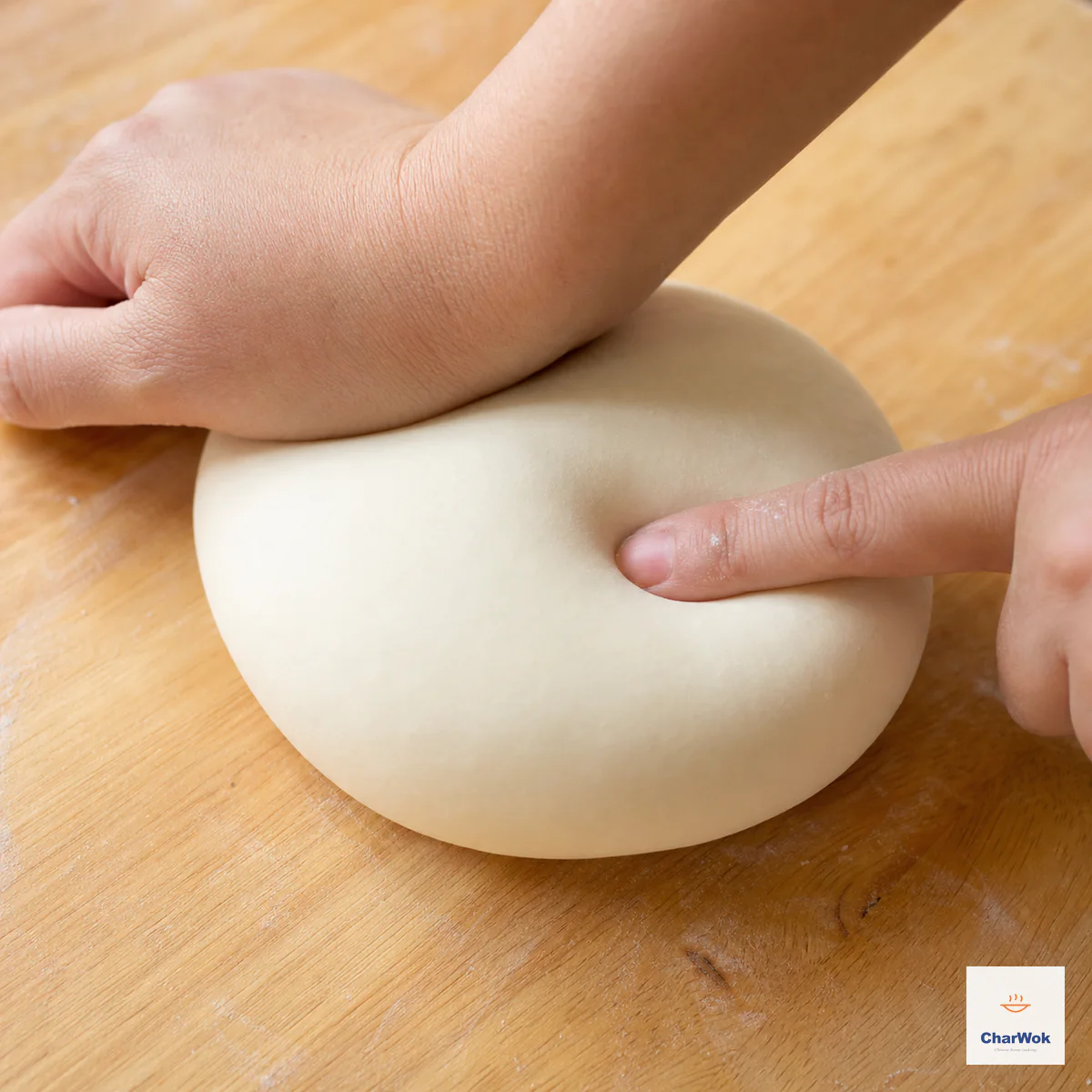
After the first rest, knead until the dough is smooth, firm, and neither crumbly nor sticky.
- Rest again, briefly, before rolling. A 10-minute second rest lets the gluten relax enough to roll without springing back. Skip this and the sheet will shrink every time you lift the pin.
- Roll to 2 mm, turning constantly. Dust the board and the dough. Roll from the center outward, then rotate the dough a quarter turn and roll again. The constant rotation is what keeps the thickness even; roll only in one direction and you get a long oval thick in the middle. Flip the sheet every few passes so neither side sticks. Aim for about 2 mm (just under ⅛ inch). Remember the noodles plump in the pot, so what looks thin raw will be a normal strand cooked.
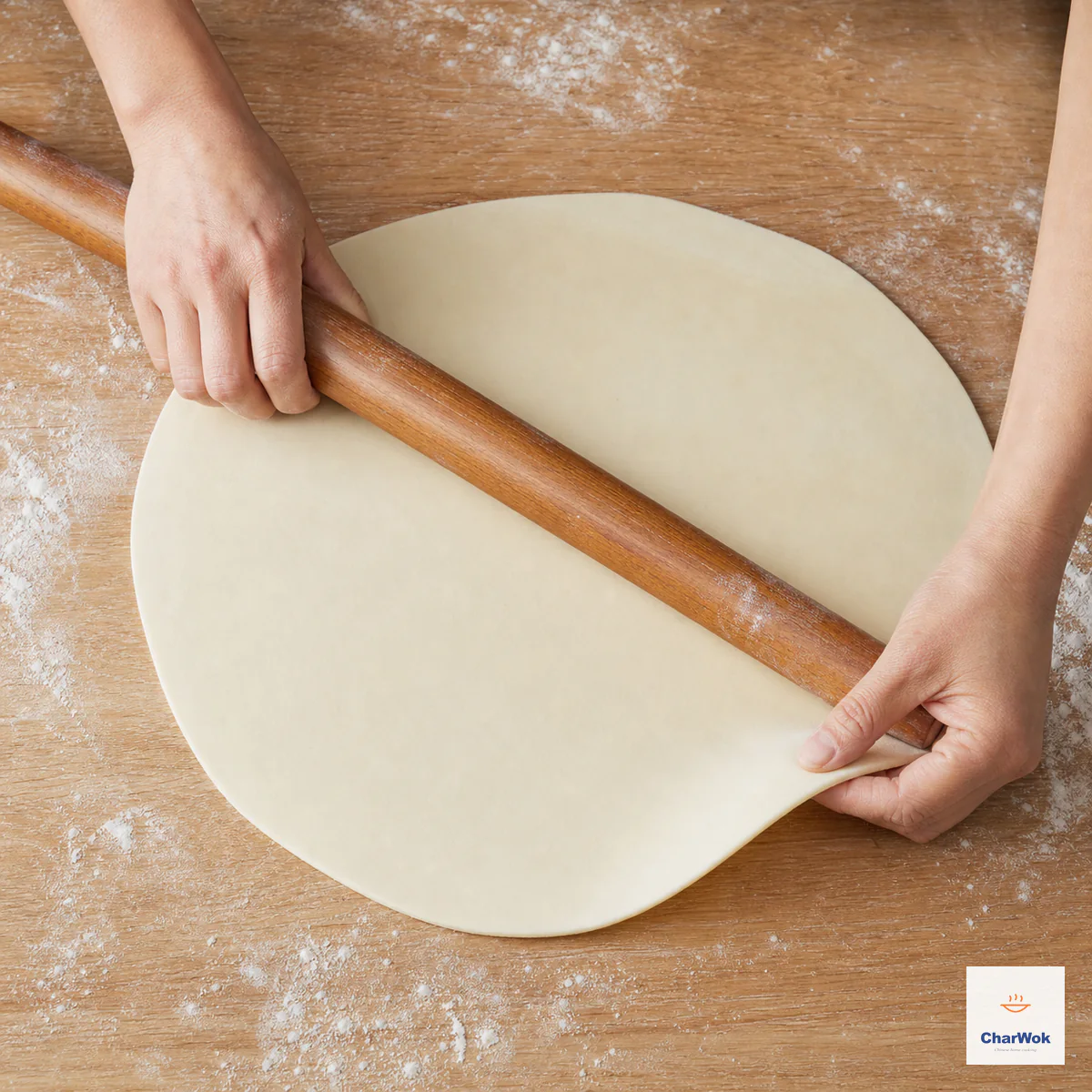
Roll, lift, and turn the sheet often until it is evenly about 2 millimetres thick.
- Dust generously with cornmeal before folding. This is the move that prevents disaster. Scatter cornmeal or semolina over the top of the sheet and under it, then fold the sheet over itself into four or five layers like a letter. Flour will not protect the layers from fusing as well as the coarser cornmeal will.
- Cut with a single downward press. Use a sharp knife with a long blade, or a Chinese cleaver. Cut each strand in one firm downward motion. Do not saw back and forth, because sawing drags the dough and pinches the layers together, which is exactly what you dusted to prevent. Cut thin for soup noodles, wider for stir-fries.
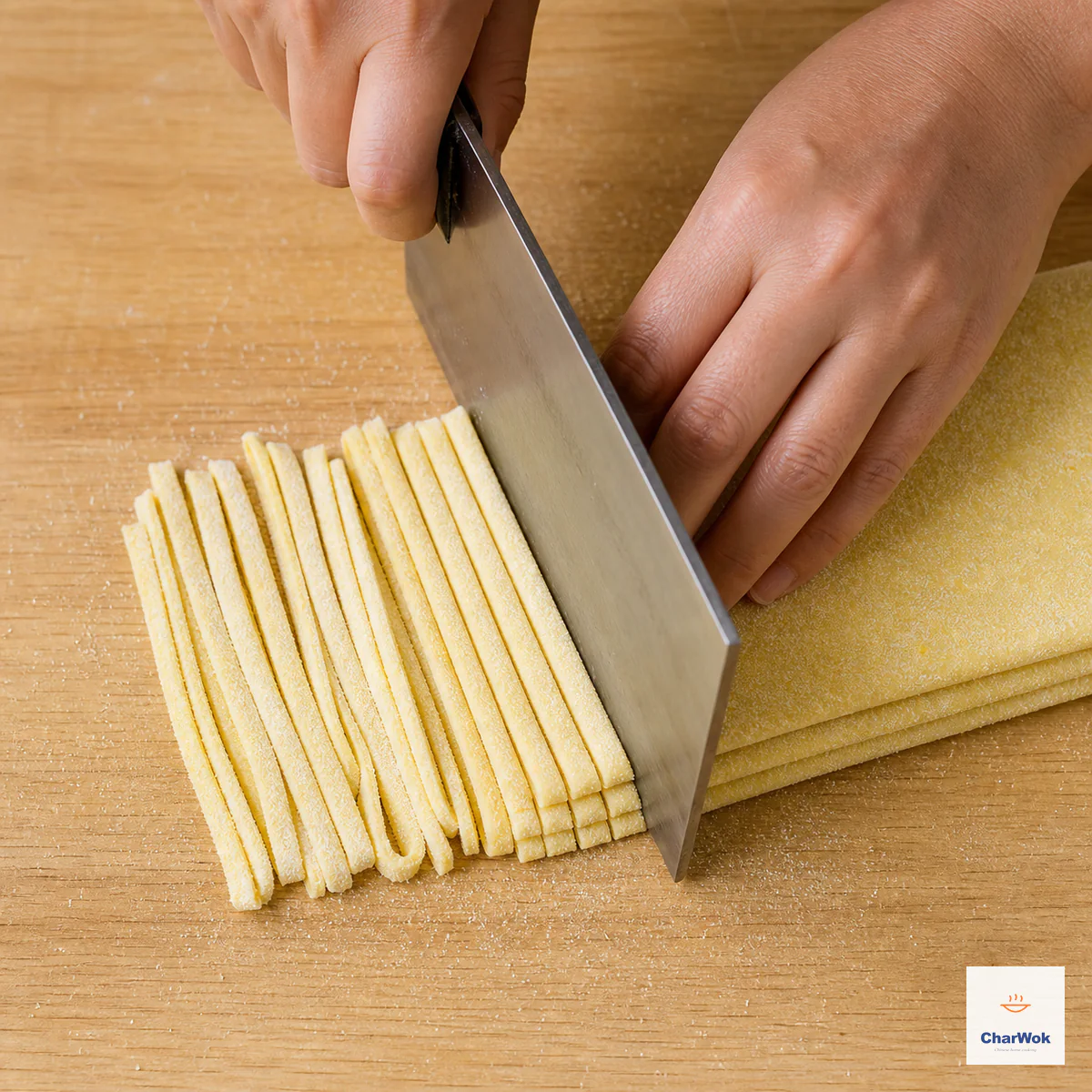
Dust both sides, fold into four or five loose layers, then press straight down once for clean strands without sawing.
- Unfold and separate at once. Lift the cut strands immediately and toss them loose with a little more cornmeal. If you leave them folded, the layers will slowly re-bond from residual moisture.
- Boil in plenty of water. Use the biggest pot you have, brought to a rolling boil. Drop the noodles in and stir once so they do not clump. The moment the water returns to a boil, pour in 120 ml (½ cup) cold water. This old cook's trick drops the temperature just enough that the surface gelatinizes evenly instead of sloughing starch into the water and turning it cloudy. When it boils again, cook another 1–2 minutes. Pull one strand, cool it under the tap, and bite it. The strand should be tender through with a firm chew at the center. Fresh noodles cook in roughly 3 minutes total; thick ones can take 5.
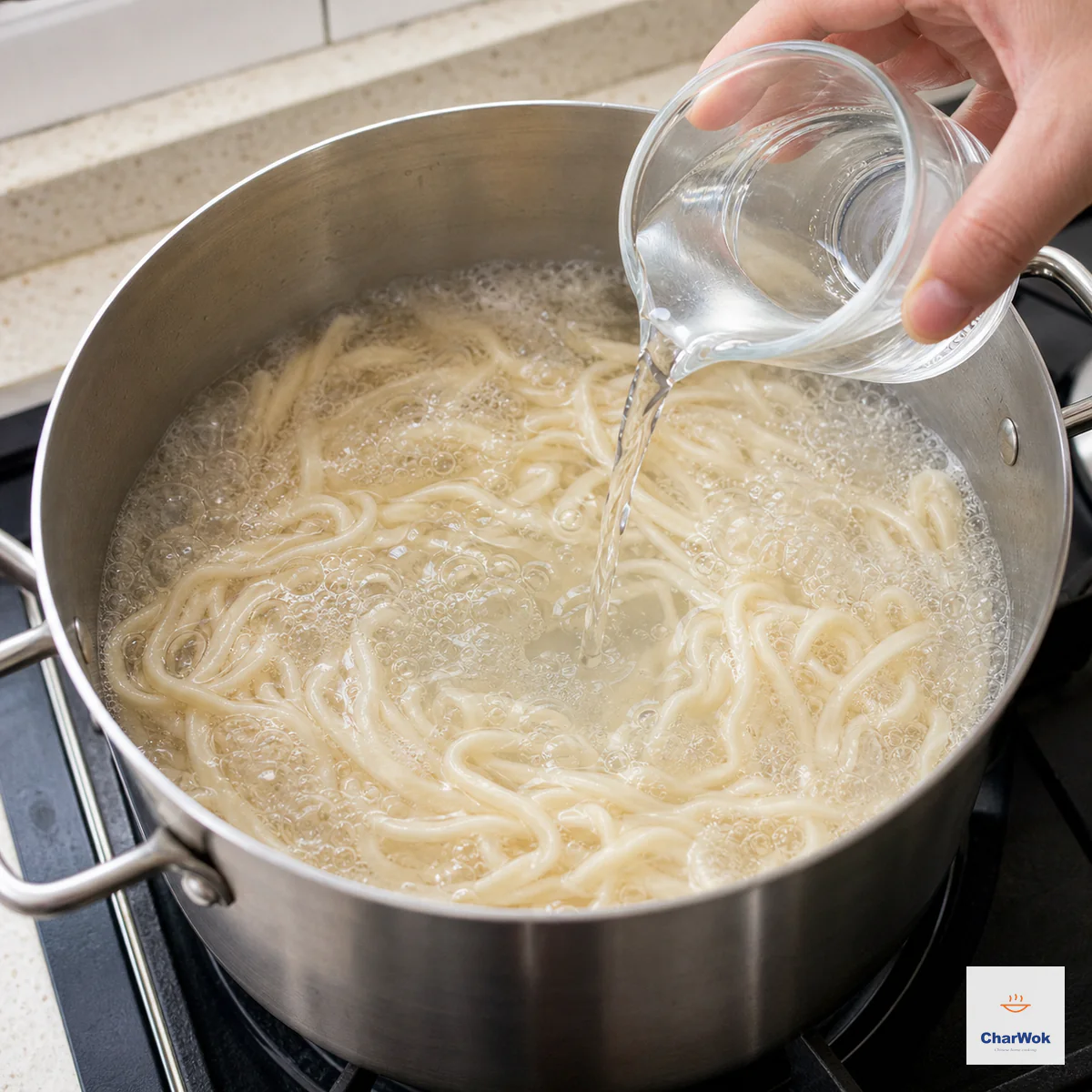
When the noodle water returns to a boil, add about 120 millilitres of cold water to control the boil before finishing the cook.
- Rinse briefly and drain. Run the drained noodles under a tap for a few seconds to wash off surface starch. For soup, you can skip this. For stir-fries and cold dishes, it stops them from clumping on the plate.
When things go wrong
The dough is cracking and will not come together. You measured too dry, or the flour was old and had lost moisture. Sprinkle in water a teaspoon at a time and knead until it holds. Next time, weigh the water; cups are unreliable for this dough.
The dough is sticky and the noodles weld together when cut. Too wet. Knead in flour a tablespoon at a time until it firms up, then rest it again before rolling. When cutting, dust each layer of the fold with cornmeal, not flour.
The sheet springs back every time you roll it. Under-rested gluten. Cover and walk away for 15 minutes. Dough that fights you has not relaxed; forcing it just tears it.
The strands are ragged and uneven. Two causes. Either the sheet was uneven (you rolled in one direction instead of rotating), or you sawed with the knife instead of pressing straight down. Fix the technique, not the dough.
The cooked noodles are mushy. Overcooked or rolled too thin. Fresh noodles need far less time than dried. Start tasting at 2 minutes and trust your teeth, not the clock.
The noodles taste flat. Not enough salt, or you skipped the cold-water addition. The ¼ tsp is not for seasoning; it is structural. And the cold-water pour keeps the surface intact so the strand keeps its bite instead of dissolving into the broth.
Variations, once the basic dough is second nature
The same dough is a blank canvas. Roll it thicker — about 4 mm — and cut it into wide ribbons and you have something close to the chewy strands of Sichuan sweet water noodles (tian shui mian), which are served cold with a sweet-chili soy dressing. Roll it thin, skip the cutting, and tear rough pieces by hand for the belt-noodle style of cumin lamb hand-torn noodles. Add a spoonful of toasted sesame paste to the dough and you are a step toward sesame noodles. Drop a pinch of lye water into the mix (and add extra water to compensate) and the same technique produces a yellow, bouncy strand leaning toward ramen territory.
For a weeknight, the simplest finish is a bowl of these noodles under a slick of scallion oil or a ladle of Chongqing-style chili oil. They also shine dressed cold, like the hot-and-sour noodles you find at northern street stalls.
What to serve them with
These are a side or a base, not a dish on their own. In soup, drop them into a clear chicken or tomato broth; a classic tomato and egg noodle soup is the version I cook most, because the flat strands soak up the tangy broth. For something heartier, ladle on a rich beef broth in the style of Lanzhou beef noodle soup, or top with a savory meat sauce as in zha jiang mian. If you want a Sichuan kick, the numbing-spicy sauce of dan dan noodles was practically designed for this kind of chewy strand.
And because the dough is the same low-hydration wheat dough you use for wrappers, the skills transfer. Once hand-rolling clicks, you are most of the way to making dumpling wrappers and wonton wrappers, which ask for an even thinner sheet and the same rolling-pin discipline. The same logic powers a full wonton noodle soup, where a few fresh noodles join the wontons in the bowl.
Making a batch ahead and freezing
This recipe scales linearly, so I usually double it. Cut all the noodles, dust them well with cornmeal, and portion them into single-serving nests on a tray so they are not touching. Freeze the tray until the nests are solid, then drop them into an airtight bag. They keep about a month with no real loss of texture.
Cook straight from frozen, into boiling water, and add a minute to the time. Do not thaw first; thawing releases moisture and the strands fuse. This is also why fresh noodles beat dried for meal prep: a freezer full of nests means a bowl of hand-rolled noodles is ten minutes away any night of the week, the same convenience that makes a noodle habit worth building.
Questions I get asked
Do I need a stand mixer or a pasta machine?
No. The whole point of this method is that a rolling pin, a knife, and thirty minutes of patience produce a better strand than most home machines. A stand mixer with a dough hook can mix and knead the dough in about 8 minutes on low; rest it 30 minutes, then roll by hand. A pasta roller will work, but at this low hydration the dough can be brittle going through the rollers, so I do not recommend it for beginners.
Can I use whole-wheat flour?
Not on its own. Whole-wheat flour has bran that cuts the gluten strands as they form, so the dough tears instead of stretching. If you want a wheaty flavor, swap in up to a quarter of the flour for whole wheat and add an extra splash of water. Any more than that and the noodles will be crumbly.
Why pour cold water into the boiling pot?
It briefly lowers the boil so the noodle surface gelatinizes evenly instead of sloughing starch into the water. The result is a clearer broth and a strand with a cleaner bite. The technique is borrowed from dumpling cookery and shows up across Chinese noodle recipes. It is optional for thin noodles and useful for thicker ones.
How thin should I roll?
About 2 mm for a standard noodle. Thinner for delicate soups, thicker (up to 4 mm) if you want a chewy, belt-noodle bite. The noodles expand by roughly a third in the water, so cut them thinner than you want the finished strand to be.
So that is the whole method. The dough is unforgiving about one thing, the 30-minute rest, and forgiving about almost everything else. Get the rest and the rolling rotation right and the rest of it is tasting and adjusting. Make the recipe once as written, then change the flour, the width, and the broth until it tastes like yours.