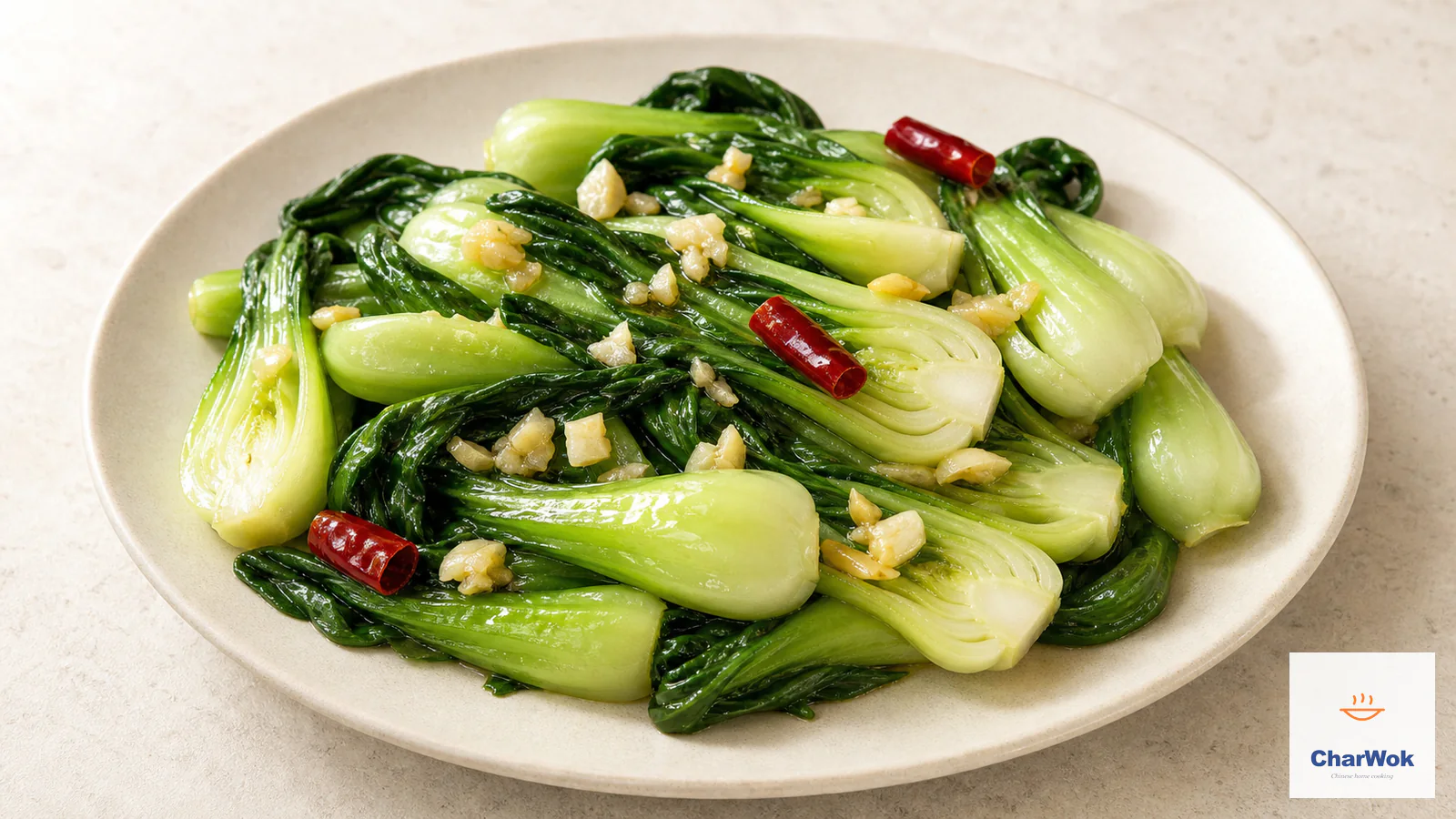
A great stir-fried green is mostly water, mostly heat, and mostly timing. That is the whole dish. The trouble is that "mostly timing" is exactly what home cooks lose control of, and bok choy punishes you for it. Thirty seconds too long and the white stems go from snappy to limp, the leaves darken from bright jade to olive drab, and a vegetable that should taste clean and sweet starts tasting of overcooked cabbage.
I burned through a lot of bok choy before I trusted how fast this actually is. The whole cooking time, once the garlic hits the oil, is under a minute. The recipe below builds in two cheats that make that minute survivable on a normal home burner: a short blanch to jump-start the stems, and a thin cornstarch slurry that gives the finished dish the glossy, restaurant-style cling you can never quite get from a dry pan. Both are optional in theory. In practice I never skip either.
At a glance. Total active cooking is roughly 60 seconds over high heat. Blanch the stems first for 20 to 30 seconds, then flash-fry with garlic and a thin cornstarch slurry. The slurry is what turns watery greens into a glossy side dish. Dish out while the stems still have a little fight left; carryover heat finishes them on the plate.
What this dish is, and where it sits at the table
Bok choy (also written pak choi, Cantonese for "white vegetable") is a member of the turnip and mustard family, grown for its crisp, swollen stems as much as for its leaves. In a Chinese home meal it is almost never the centerpiece. It is the green beside the protein, the thing that keeps a plate of red-braised pork belly or sweet and sour ribs from feeling heavy. You serve it family-style in the middle of the table, with steamed rice and one or two savory dishes.
There are two common shapes at most Asian grocery stores. Baby bok choy, sometimes labeled Shanghai bok choy, is harvested young, with pale green spoon-shaped stems and a mild, almost sweet flavor. Larger mature bok choy has bright white stems and dark, heavier leaves, with more of that peppery, mustardy bite. Both work here. I reach for baby bok choy when I want tenderness and a clean look, and for the large heads when I want more chew and a stronger cabbage character.
The science worth knowing before you light the burner
Three things are happening, and understanding them is what separates a good stir-fry from a soggy one.
Heat versus water. Bok choy is more than 90 percent water. The instant it hits a hot pan it releases juice, and that juice cools the pan and starts the vegetable steaming in its own liquid instead of frying. This is the core problem. The fixes are a blazing-hot pan, a small batch, and a pre-blanch that lets the stems shed some water and soften before they ever see oil.
The blanch is a shortcut, not a compromise. Dropping the greens into rolling salted water for 20 to 30 seconds partially gelatinizes the starch in the stems and collapses the air pockets, so they go into the wok already pliable. It also sets the chlorophyll, which is why a properly blanched green stays vivid instead of going khaki. If your home stove is modest, the blanch is non-negotiable. Without it you will spend two full minutes pushing raw stems around a cooling pan, and they will weep the whole time.
The slurry creates the glaze. A teaspoon of cornstarch mixed with water, poured in at the very end, gelatinizes in the residual heat and clings to the stems. It is the difference between a vegetable sitting in a puddle and a vegetable wearing a thin, savory film. It does not thicken the dish into a sauce. It just stops the seasoning from running off the leaf and pooling on the plate.
Ingredients
Ingredients at a glance
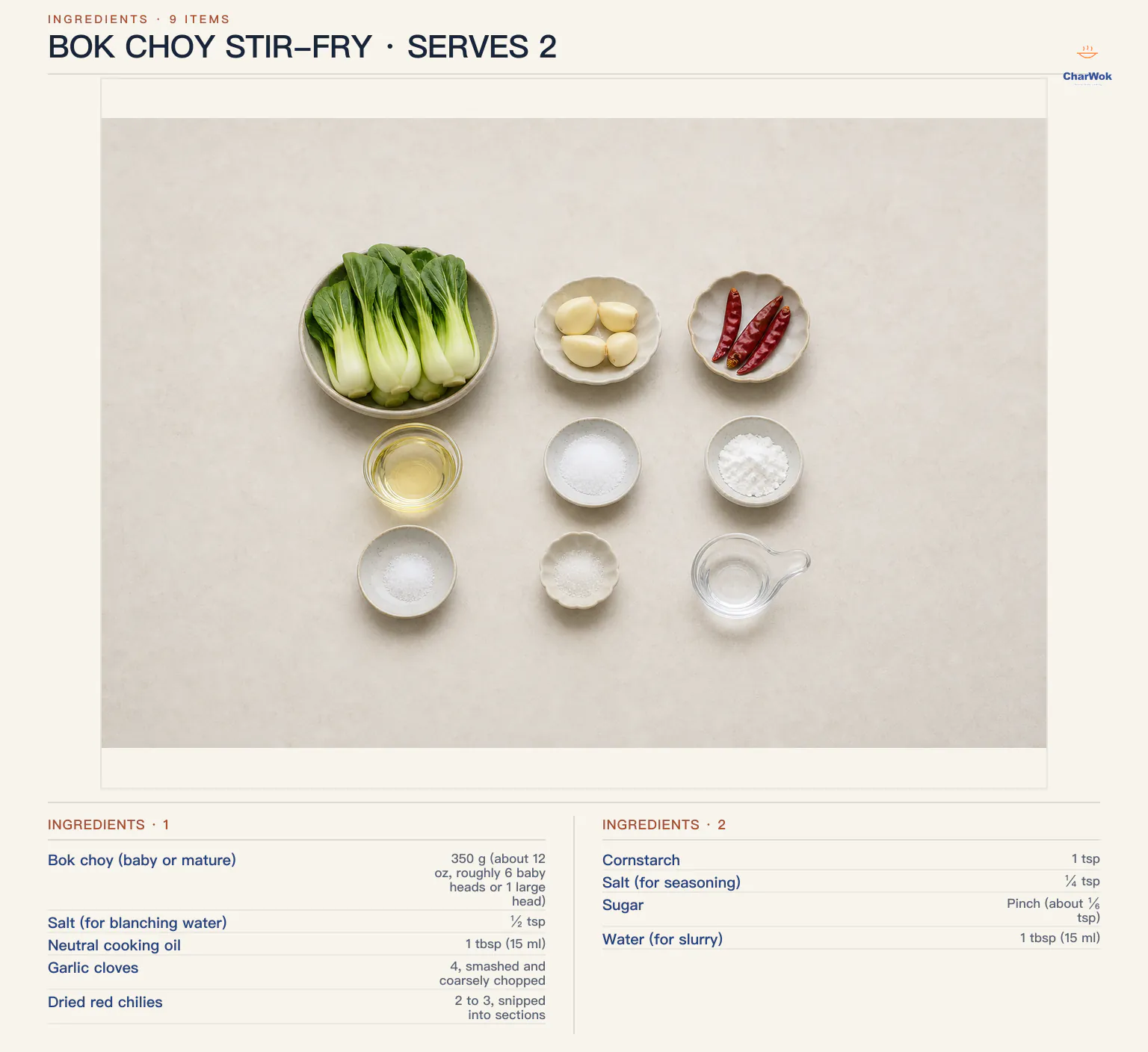
Serves 2 as a side. Double it for a family meal, but fry it in two batches. A crowded wok is a steamed wok.
| Ingredient | Amount | Notes / substitute |
|---|---|---|
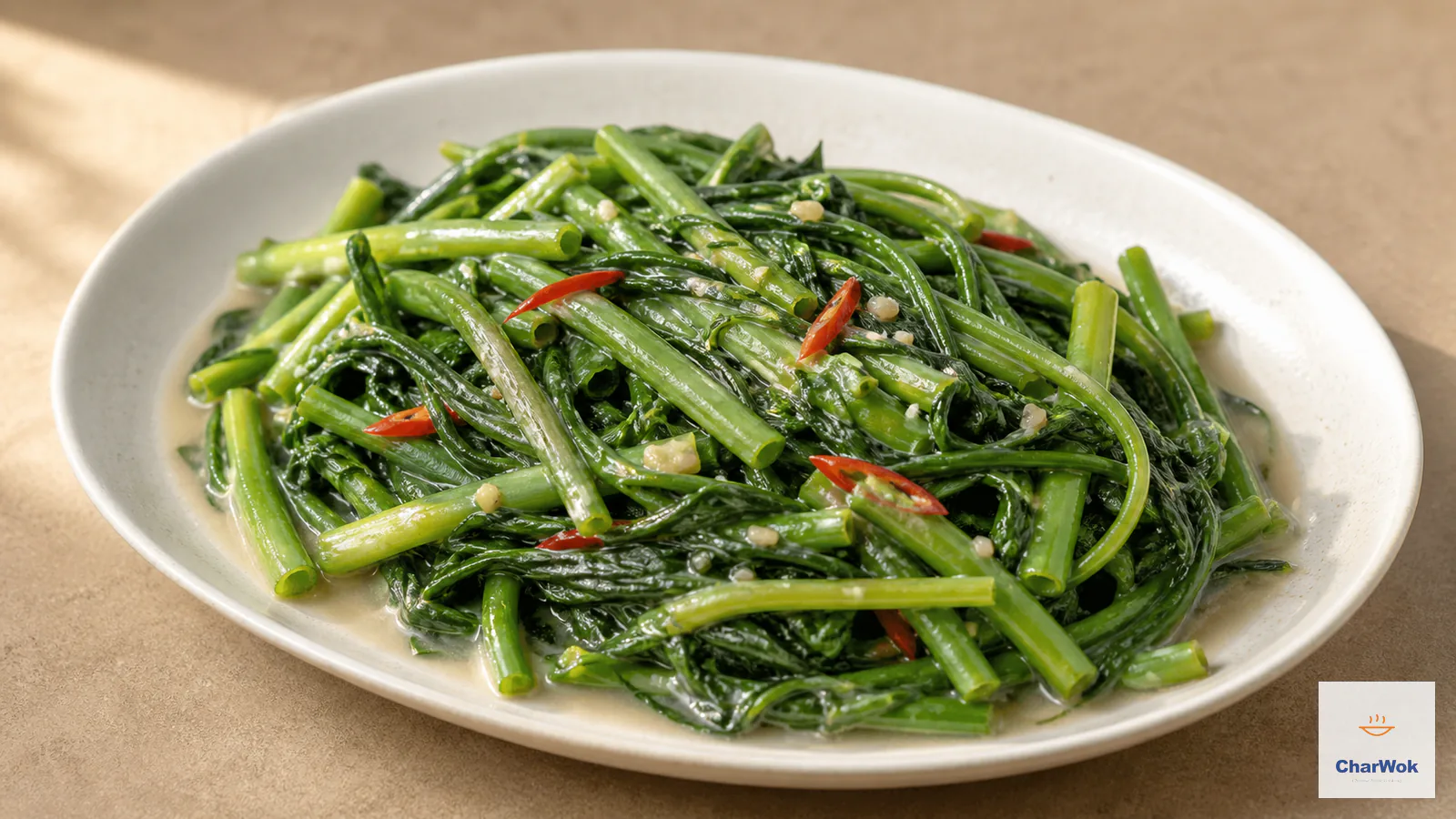
| Bok choy (baby or mature) | 350 g (about 12 oz, roughly 6 baby heads or 1 large head) | Baby/Shanghai bok choy for tenderness; mature for bite. Substitute gai lan (Chinese broccoli) or water spinach with the same method. |
| Salt (for blanching water) | ½ tsp | Kosher or fine sea salt. Seasons the greens and sets the color. |
| Neutral cooking oil | 1 tbsp (15 ml) | Grapeseed, canola, avocado, or peanut. Avoid olive oil, which smokes and fights the garlic. |
| Garlic cloves | 4, smashed and coarsely chopped | Smashing first releases more aroma than mincing. Swap one or two cloves for sliced ginger if you prefer warmth over pungency. |
| Dried red chilies | 2 to 3, snipped into sections | Optional. Adds smoke and a gentle warmth, not real heat. Leave them whole if you want the flavor without any spice at all. |
| Cornstarch | 1 tsp | Potato starch works; arrowroot is fine but breaks down faster on reheating. |
| Salt (for seasoning) | ¼ tsp | Adjust to taste. The blanching salt does some of the work already. |
| Sugar | Pinch (about ⅙ tsp) | Balances the faint bitterness in the stems. Omit only if your bok choy is very sweet and young. |
| Water (for slurry) | 1 tbsp (15 ml) | Hot or cold; stir the slurry again right before pouring, starch sinks fast. |
How to make it
- Prep everything before the pan gets hot. Stir-fries wait for no one. Wash the bok choy by soaking the heads in a bowl of cold water for a few minutes, then separating the leaves and rinsing each one, especially where the stem cups inward. Grit hides there. Trim off the dried, hard base of each stem and discard it. For large heads, halve or quarter the stems lengthwise so every piece is bite-sized and cooks at the same rate. Mix the cornstarch, salt, sugar, and water in a small bowl and set it next to the stove.
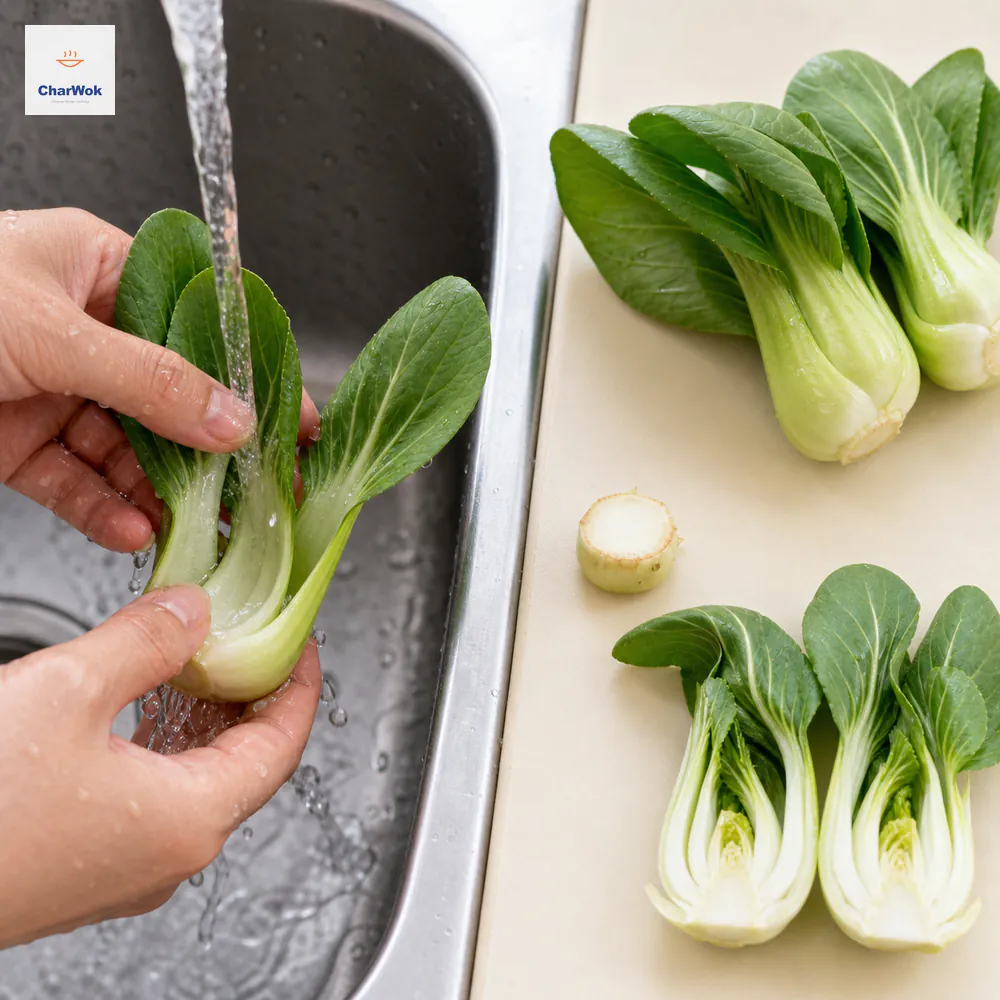
Soak, separate, and rinse each stem cup, trim only the hard base, and halve or quarter large heads lengthwise while leaving baby heads whole.
- Bring a generous pot of water to a full, rolling boil. Use more water than feels reasonable; the goal is for the temperature to barely drop when the greens go in. Add the ½ tsp of salt. The salt seasons the stems and, just as importantly, helps the chlorophyll hold its green.
- Blanch for 20 to 30 seconds, no more. Drop the bok choy in and stir once. Baby bok choy needs about 20 seconds; large stems need closer to 30. You are not cooking it through, you are softening the cell walls just enough that the stems lose their stiffness but still snap when bent. Lift them out immediately and drain well. Leave them even slightly wet and the oil will spatter violently in the next step.
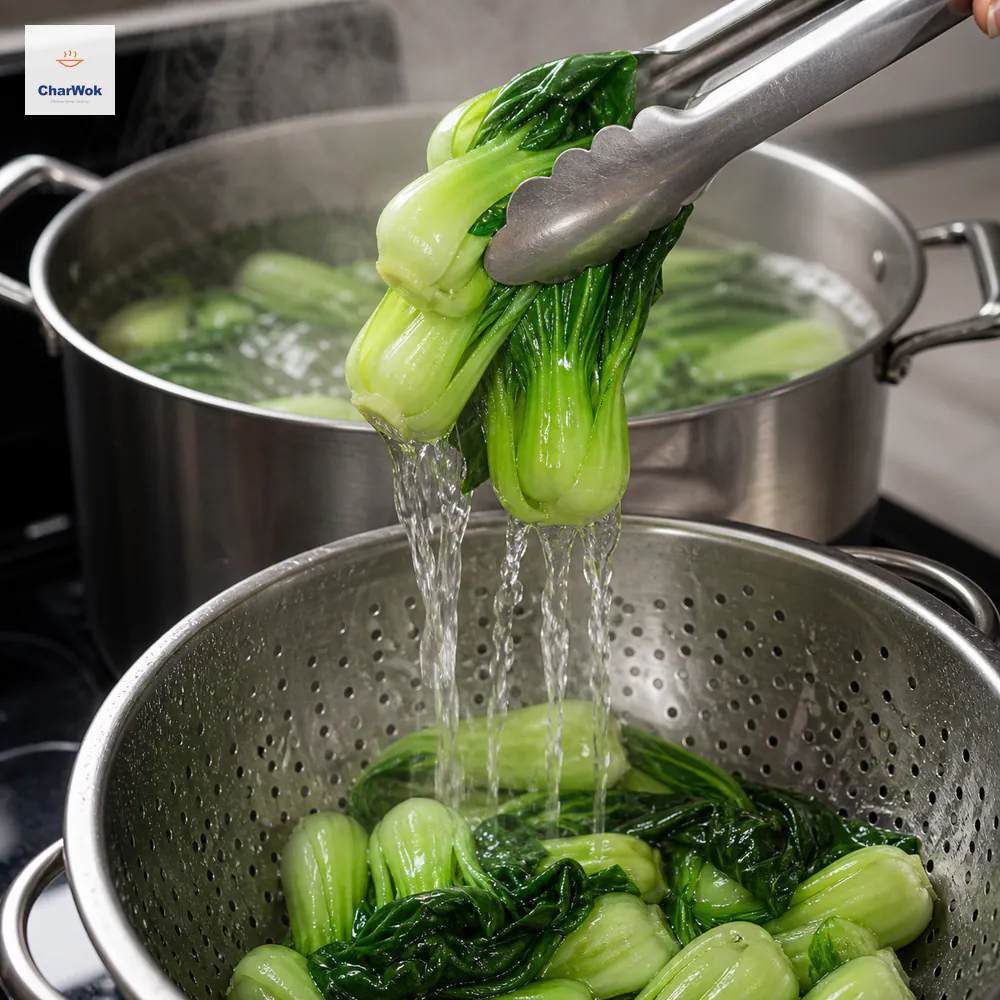
Blanch baby bok choy for about 20 seconds or larger stems for up to 30, then lift immediately and drain thoroughly so no water cools the wok.
- Heat the wok until it is shimmering. A well-seasoned carbon-steel wok is ideal because it recovers heat fast, but a large heavy skillet works if you preheat it thoroughly. Add the oil, then immediately add the garlic and dried chilies, all over high heat. Starting the aromatics in cold oil and heating them together is a gentler, more reliable method than dumping garlic into screaming-hot oil, which scorches it bitter in two seconds. Listen for the sizzle to intensify; that is the garlic's water hitting the oil.
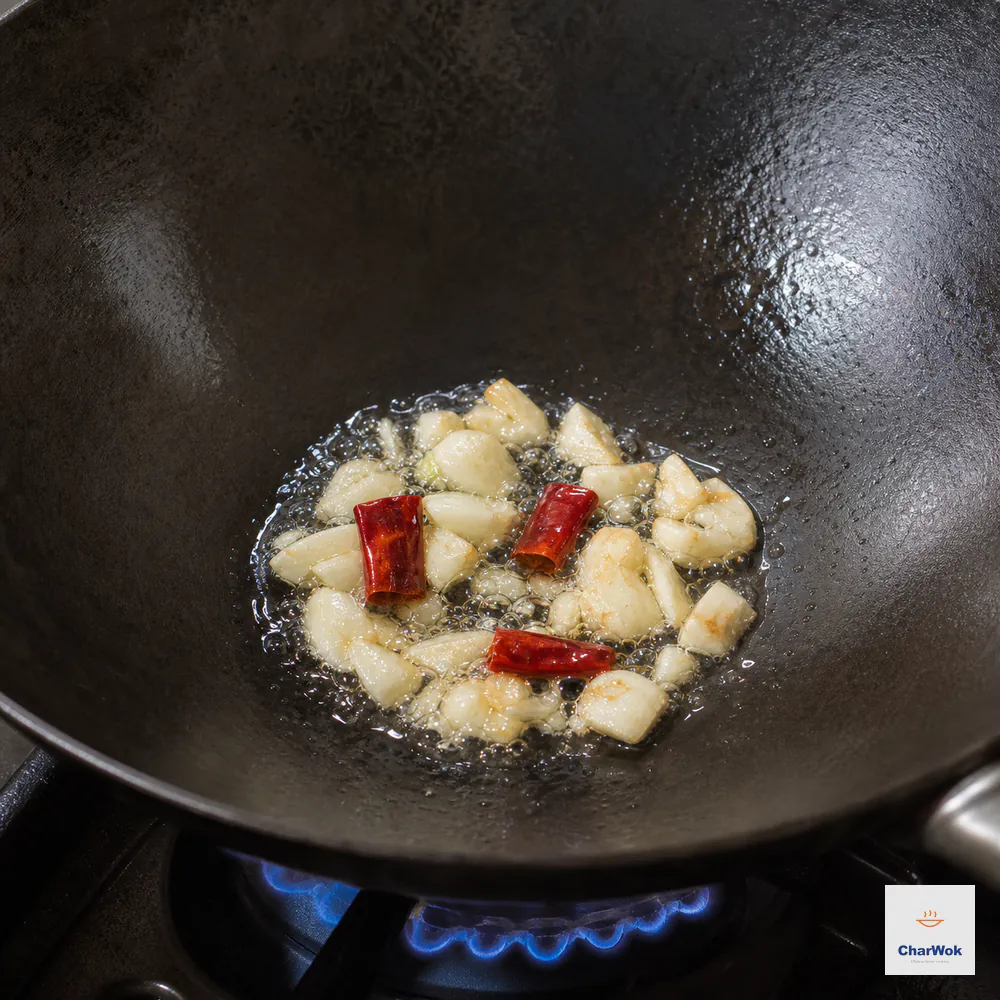
Heat the oil, smashed garlic, and dried chilies together over high heat, stopping at an intense sizzle and the first pale-gold garlic edges before anything burns.
- The moment the garlic is fragrant and just starting to color at the edges, add the drained bok choy. Toss constantly, scooping from the bottom so the garlic and chilies come up too. If they sit against the hot metal they will burn and turn the whole dish acrid. Keep the greens moving for about 20 seconds.
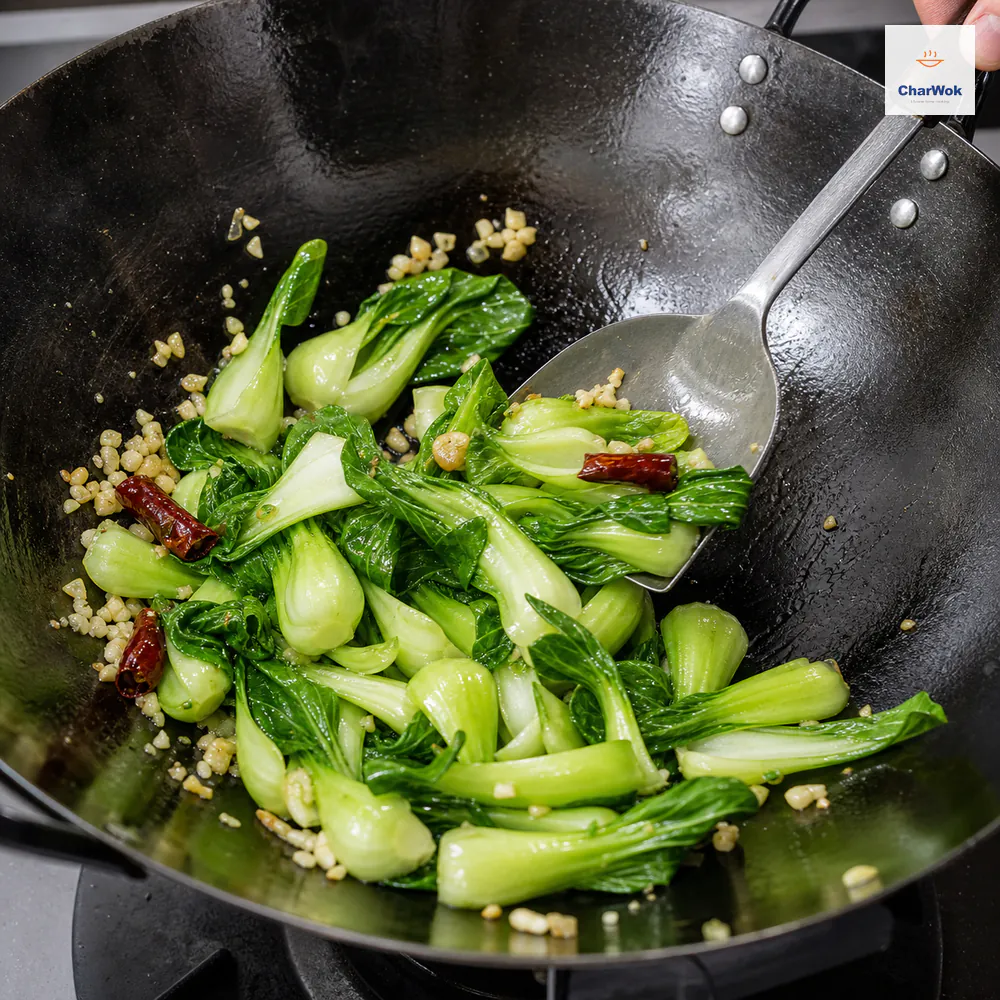
Add the thoroughly drained greens the moment the garlic edges colour, then toss constantly from the bottom for about 20 seconds while the wok stays hot and dry.
- Stir the slurry one more time, then pour it around the edges of the wok, not directly on the greens. Hitting the hot metal first lets it seize into a thin, glossy film that coats the bok choy as you toss. Give everything a final stir so the seasoning is even.
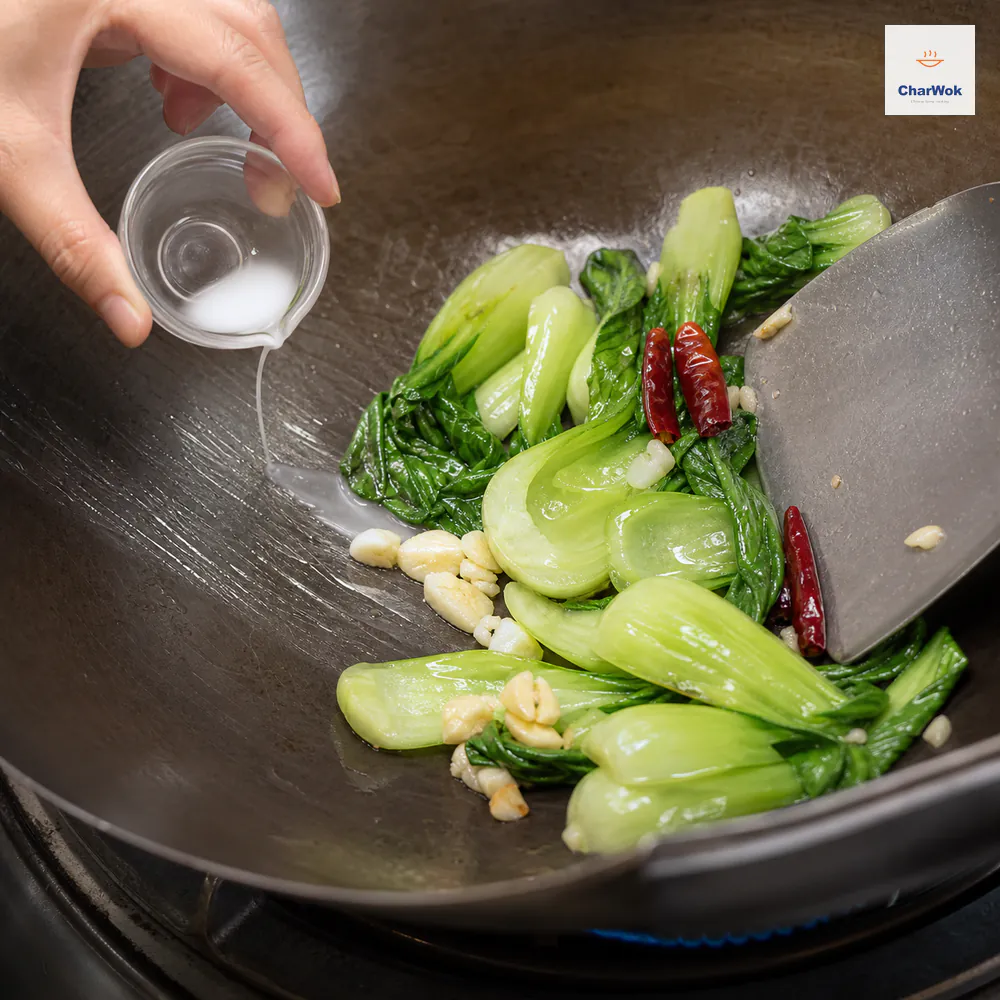
Re-stir the slurry, pour its one tablespoon around the exposed hot wok edge, and toss only until a thin clear film clings before plating immediately.
- Dish out immediately. The entire fry, from garlic in to plated, is under a minute. Serve at once.
When it goes wrong, and how to fix it
I have made every mistake below more than once. Most are recoverable, or at least diagnosable for next time.
The stems are soft and the leaves are army-green. You overcooked it. The fix is prevention; next time pull the bok choy 5 seconds earlier than feels right. Carryover heat on the plate keeps cooking it. A dish that looks slightly underdone in the pan will be perfect by the time it reaches the table.
There is a pool of watery liquid on the plate. Two usual causes. Either the pan was overcrowded and the greens steamed instead of fried, or the slurry was skipped or poured straight onto cold greens. Cook in two batches, and always hit the hot pan edge with the slurry first. If the dish is already plated and weeping, drain the liquid, return it to a hot pan, and reduce it for a few seconds before pouring it back.
The garlic burned and tastes bitter. The oil was too hot before the garlic went in, or the garlic sat on the bottom while you fumbled with the greens. Next time start the garlic in cooler oil and let it come up to temperature with the pan. Burned garlic cannot be rescued; pick the dark pieces out and carry on, and add a fresh minced clove off the heat for aroma.
The cornstarch slurry clumped into jelly the instant it hit the pan. This is the classic failure, and it happens when the slurry sits unstirred and the starch settles, or when it lands on greens instead of metal. Stir the bowl right before pouring, pour onto the hot wok surface, and toss immediately. A clumped slurry will still melt back in if you keep the pan hot and keep moving the food.
The greens taste flat. Almost always under-salted blanching water, or skipping the pinch of sugar. The sugar is not there to make the dish sweet; it is there to round off the mustardy edge of the stems. Try it once with and once without and you will taste the difference.
Variations and pairings
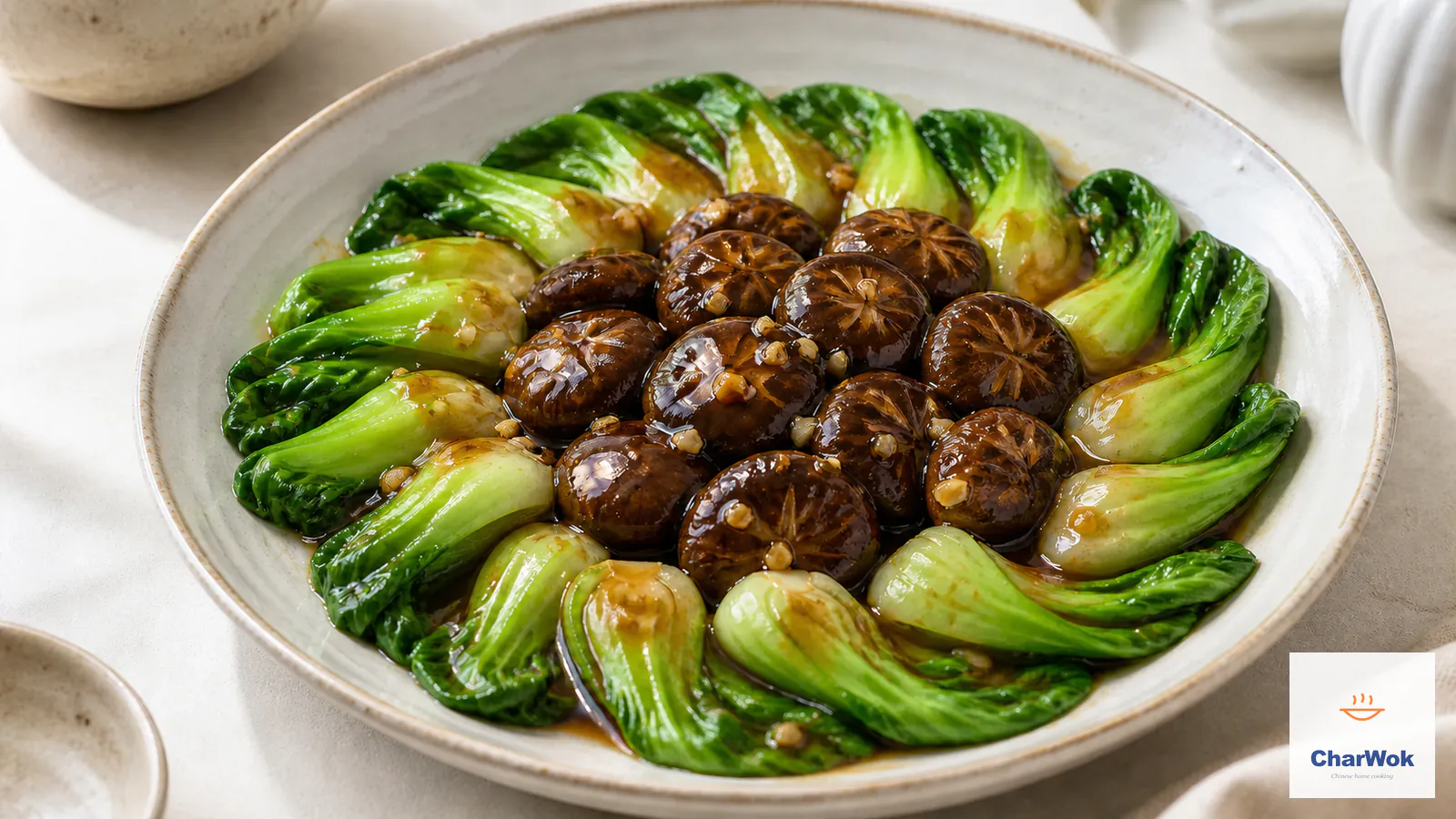
This is a technique recipe more than a flavor recipe. Once you own it, the same blanch-and-flash-fry method carries across most Chinese greens. Broccoli with garlic sauce uses the same logic on firmer florets, and the same slurry glosses a plate of lettuce with oyster sauce or a heartier Sichuan dry-fried green beans (though the beans skip the blanch and char instead). If you want bok choy with more presence, braise it alongside shiitake mushrooms; the mushrooms give up a deep, savory liquid that the greens drink in.
For a richer version, add a teaspoon of oyster sauce or a spoonful of a simple stir-fry seasoning to the slurry. For a vegan umami boost, a few drops of light soy sauce and a tiny pinch of white pepper. Toss in a handful of rehydrated dried shrimp or slivered shiitake with the garlic for a more substantial side.
Pair it the way a Chinese household would: one green, one protein, one starch. Bok choy sits happily next to five-spice roast chicken, Hakka stuffed tofu, or a quick tomato egg stir-fry, with rice to soak up whatever liquid the greens leave behind.
Storage and reheating
Bok choy stir-fry is best cooked to order. It will keep, covered, in the fridge for a day, but reheated greens are always a compromise because the stems continue to soften and weep. If you must reheat, do it fast in a dry hot pan for 20 seconds, never the microwave, which turns them gray and sad. Leftovers also fold neatly into fried rice or a bowl of noodle soup the next day, where their limpness stops being a flaw.
Common questions
Do I really need to blanch the bok choy first?
On a powerful restaurant burner you could skip it, but on a home stove the blanch is what keeps the dish from turning into a steamed puddle. It softens the stems and sets the color so the actual fry stays under a minute.
My cornstarch slurry clumped into jelly. What happened?
The starch settled and you poured it onto greens instead of hot metal. Stir the slurry right before adding it, pour it around the edge of the wok so it hits the pan first, and toss immediately. Keep the heat high and it will melt back into a glaze.
Can I use a regular frying pan instead of a wok?
Yes. A large, heavy skillet holds heat better than a thin wok on a weak burner. Preheat it well, work in batches if needed, and the blanch becomes more important, not less, since a flat pan is harder to toss in.
How do I keep the dish from being watery?
Drain the blanched greens thoroughly, do not crowd the pan, and use the slurry. Those three things together are the whole difference between a glossy side and a soupy one.
Is it spicy with the dried chilies?
Barely. Two or three dried chilies in this much green lend a smoky warmth rather than heat. If you want genuine spice, double the chilies and break them open; leave them whole for aroma only.