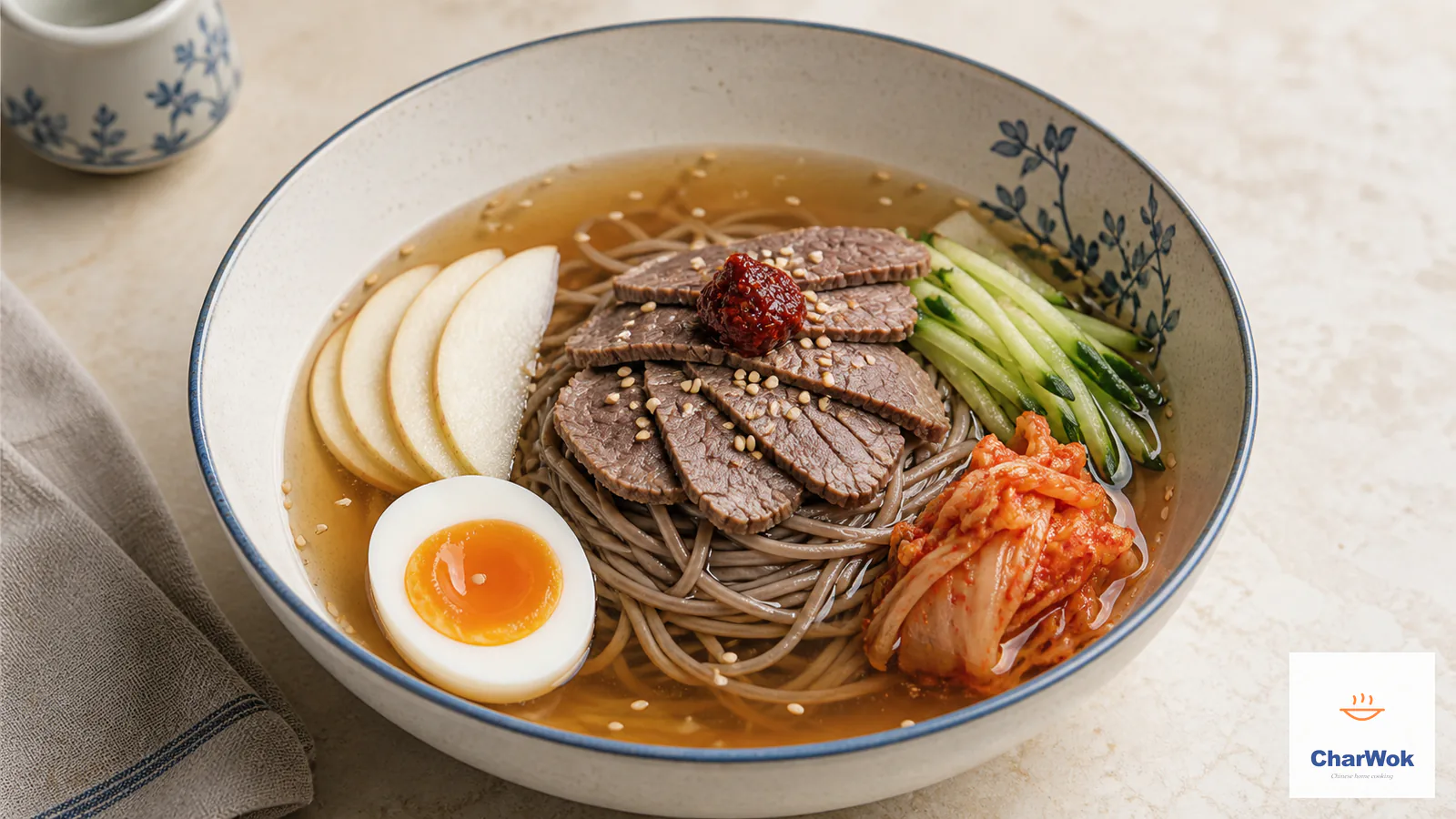
The first time I ate Yanji cold noodles I was twelve, in a Beijing restaurant with the air conditioning broken. The bowl arrived frosted, the broth half-slush, a slice of pear so cold it stung my teeth. I remember thinking the noodles fought back a little as I slurped them. That resistance is the whole point of the dish. Most home versions miss it, because most home cooks treat the noodles as an afterthought and the broth as a quick stock. This recipe exists to fix that.
Build everything around a cold, clear, sweet-sour beef broth. Simmer 500 g beef shank in 1.2 L water with five spices for 90 minutes, chill it overnight, then take it to the edge of ice before serving. Rinse the soba twice under running water. Cold broth plus rinsed noodles is the only formula that gives the slippery, chewy, refreshing bowl you are after.
What this dish actually is
Yanji cold noodles (延吉冷面, Yanji Leng Mian) come from Yanji, a city in Jilin province close to the North Korean border, where a large Korean-Chinese community has shaped the food for generations. The dish is a hybrid: Korean cold-noodle thinking (buckwheat noodles, ice-cold broth, fruit, gochujang) filtered through northeastern Chinese braising (spiced beef shank, soy, star anise). You will find it sold year-round in dedicated shops across the north, and many Chinese eaters rank it among the country's great noodle dishes, right alongside the bowls in our round-up of classic Chinese noodle recipes.
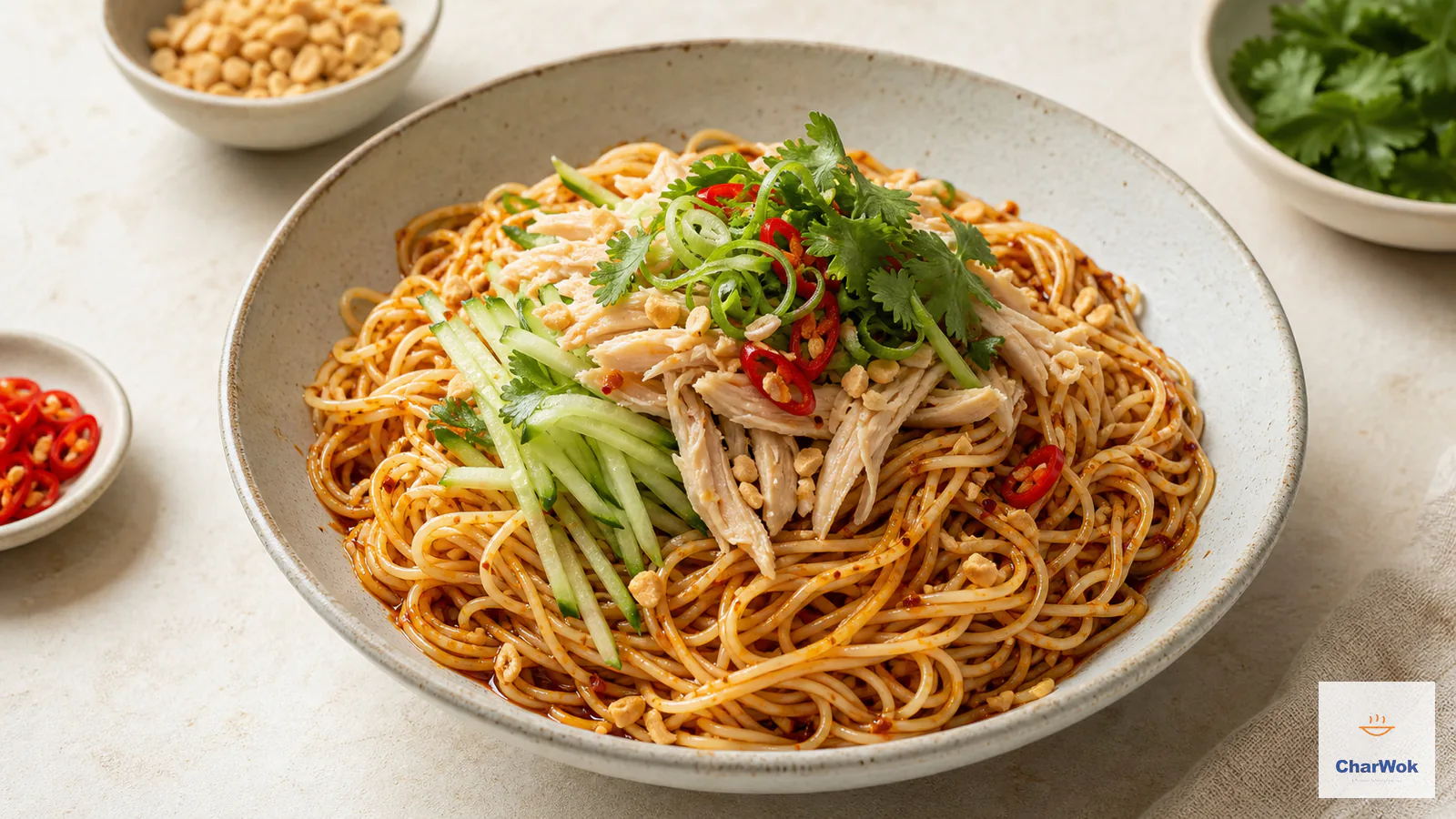
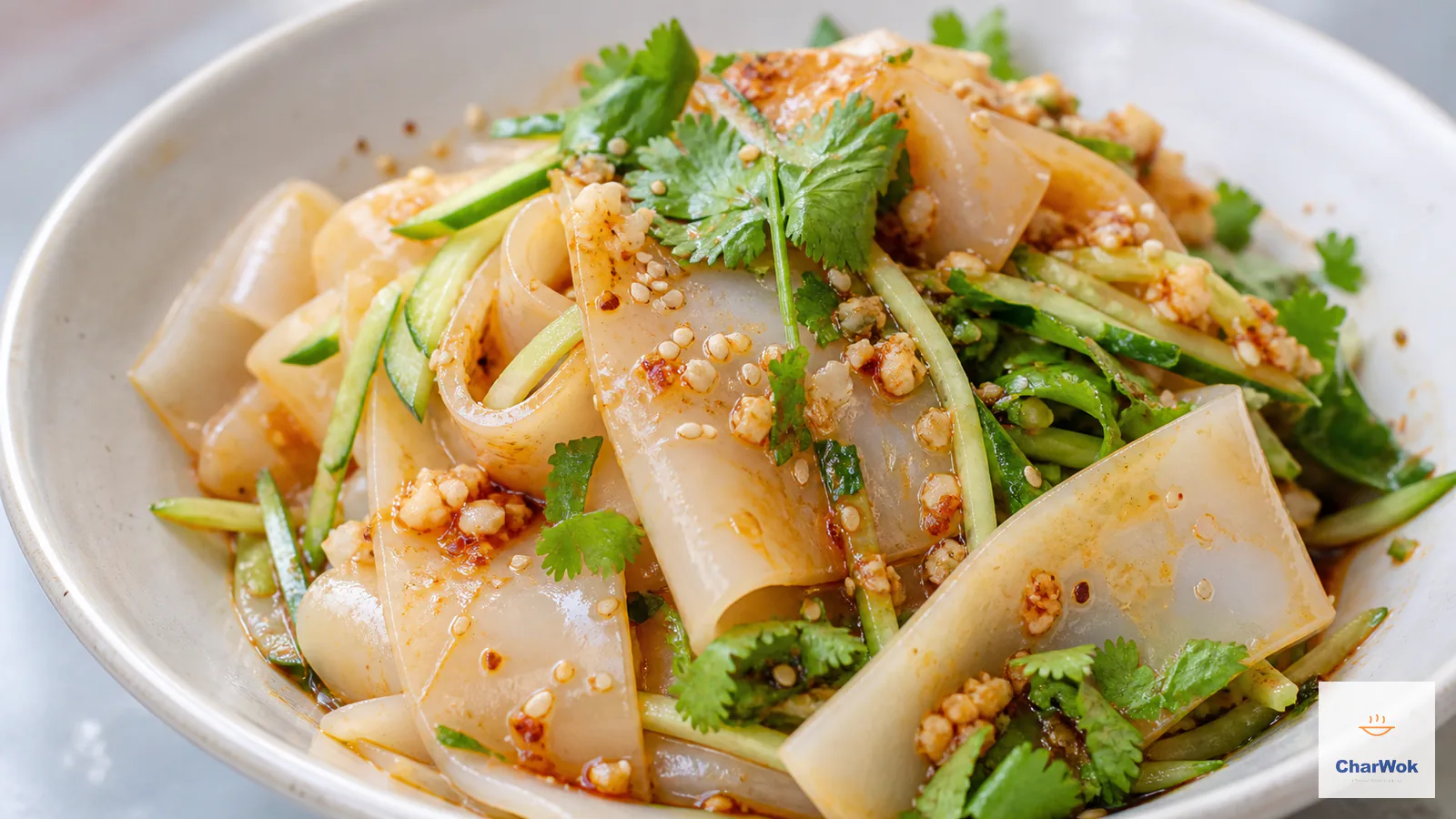
What sets it apart from most cold noodles in China is the broth. Where Sichuan cold noodles with Sichuan dressing or northern liang pi are tossed in a sauce, Yanji noodles swim in a real, reduced beef soup that has been chilled until it is almost a slushie. That is the engineering challenge of the dish: make a stock tasty enough to drink cold, and cold enough that it shocks without diluting.
The two things you must get right
Everything else is flexible. These two are not.
One: the broth must be clear and cold, not cloudy and lukewarm. Cloudiness comes from boiling bones or from skipping the initial blanch. A dirty scum that lifts off raw beef in the first minute of cooking will haunt your bowl if you do not pour it away and start the simmer in fresh water. A gentle simmer, never a rolling boil, keeps fat and proteins from emulsifying back in. Then you chill the strained broth until ice crystals begin to form at the edges. Some shops drop literal ice cubes in, which I refuse to do at home because it dilutes the stock I spent ninety minutes building. The freezer does the cooling without the water.
Two: the noodles must be rinsed. Soba releases surface starch as it cooks. Leave that starch on and the noodles clump into a gummy mat the instant they sit in cold broth. Rinse them under running water, working them apart with your fingers, until the water runs clear and the strands feel slick and separate. This single step is what separates a restaurant bowl from a disappointing home one. The same logic applies to sesame noodles and glass noodle salad, where rinsing is the difference between silky and sticky.
Ingredients
Ingredients at a glance
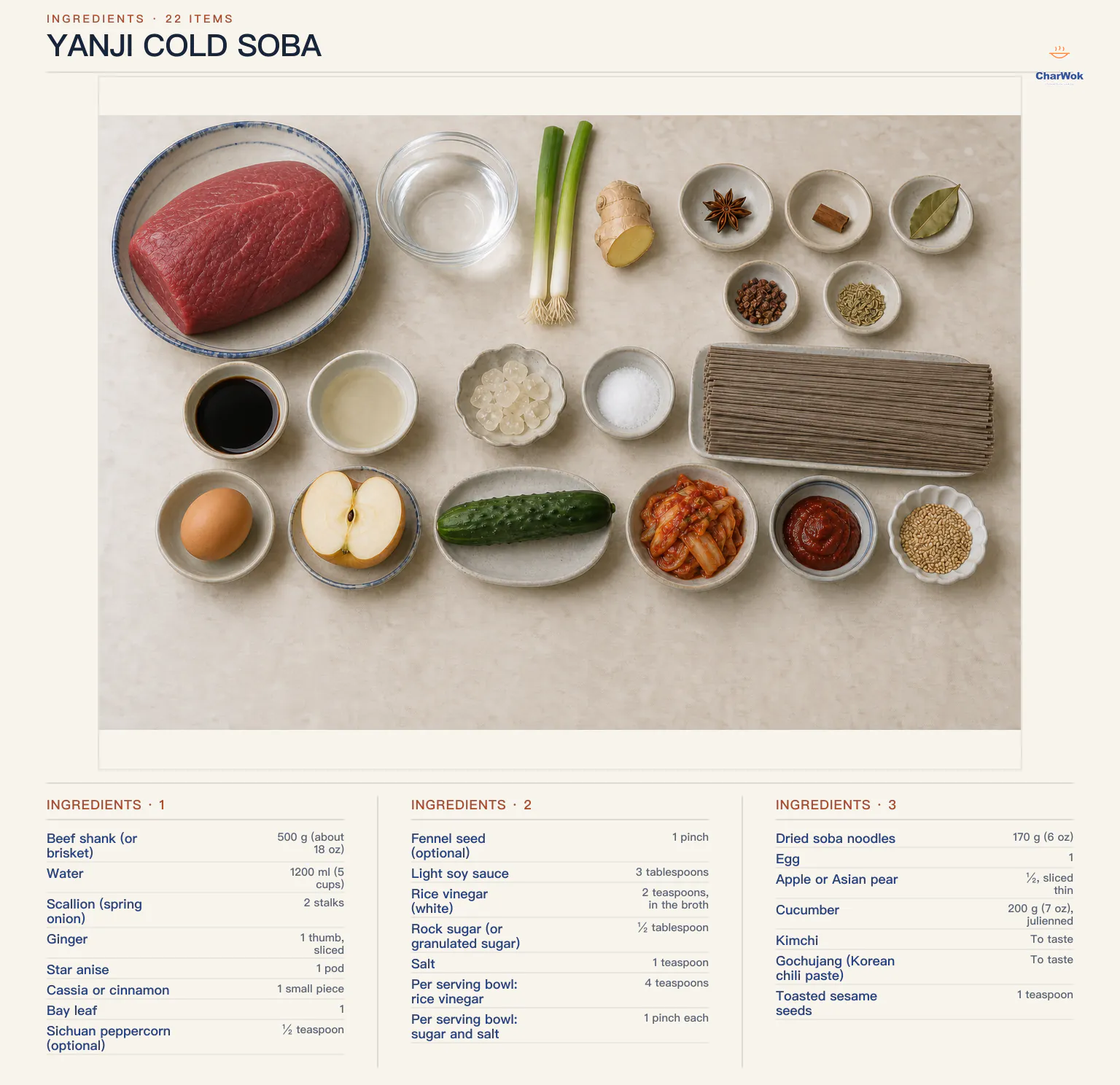
Serves 2 generously. The broth makes more than you need for one meal; see storage below.
| Ingredient | Amount | Notes / substitute |
|---|---|---|
| Beef shank (or brisket) | 500 g (about 18 oz) | Shank slices better; brisket shreds. Both work, but shank is traditional. |
| Water | 1200 ml (5 cups) | Enough to cover by 3 cm. Top up if it evaporates. |
| Scallion (spring onion) | 2 stalks | Halve lengthwise to release flavor. |
| Ginger | 1 thumb, sliced | No need to peel. |
| Star anise | 1 pod | More than one and it dominates. |
| Cassia or cinnamon | 1 small piece | Cassia is the Chinese standard; cinnamon is a fine home swap. |
| Bay leaf | 1 | |
| Sichuan peppercorn (optional) | ½ teaspoon | Read our Sichuan pepper guide for sourcing; it adds a faint tingle. Leave out for a cleaner broth. |
| Fennel seed (optional) | 1 pinch | Traditional in northern beef braises. |
| Light soy sauce | 3 tablespoons | Use the light variety; see our notes on light vs. dark soy sauce. Dark soy would muddy the color. |
| Rice vinegar (white) | 2 teaspoons, in the broth | Round out the pantry with our vinegar primer. |
| Rock sugar (or granulated sugar) | ½ tablespoon | Rock sugar gives a softer sweetness; read about it here. |
| Salt | 1 teaspoon | Adjust at the end; cold liquids taste less salty than hot. |
| Per serving bowl: rice vinegar | 4 teaspoons | Added just before serving. This is where the bright sour note comes from. |
| Per serving bowl: sugar and salt | 1 pinch each | Tune to taste. |
| Dried soba noodles | 170 g (6 oz) | Buckwheat soba is authentic. In a pinch, thin Korean naengmyeon or even alkaline noodles work, but the texture changes. |
| Egg | 1 | Halved. Soft or hard is your call; I like jammy at 7 minutes. |
| Apple or Asian pear | ½, sliced thin | Asian pear (nashi) is more traditional and crunchier. A tart apple like Granny Smith is a good substitute. |
| Cucumber | 200 g (7 oz), julienned | Skin on. Try our smashed cucumber or cucumber salad, three ways for any trimmings. |
| Kimchi | To taste | Napa cabbage kimchi is classic; our kimchi dumplings use the same ferment if you have a jar to finish. |
| Gochujang (Korean chili paste) | To taste | The traditional condiment. A dab of homemade chili oil is a different but valid heat. |
| Toasted sesame seeds | 1 teaspoon | Toast them yourself; pre-toasted ones are stale. |
Method
- Blanch and restart the water. Drop the beef into a pot of already-boiling water for two minutes. You will see grey foam rise to the top. Drain, rinse the beef, rinse the pot, and put the beef back with the clean 1200 ml of cold water. This throwaway blanch is what keeps the final broth clear instead of cloudy.
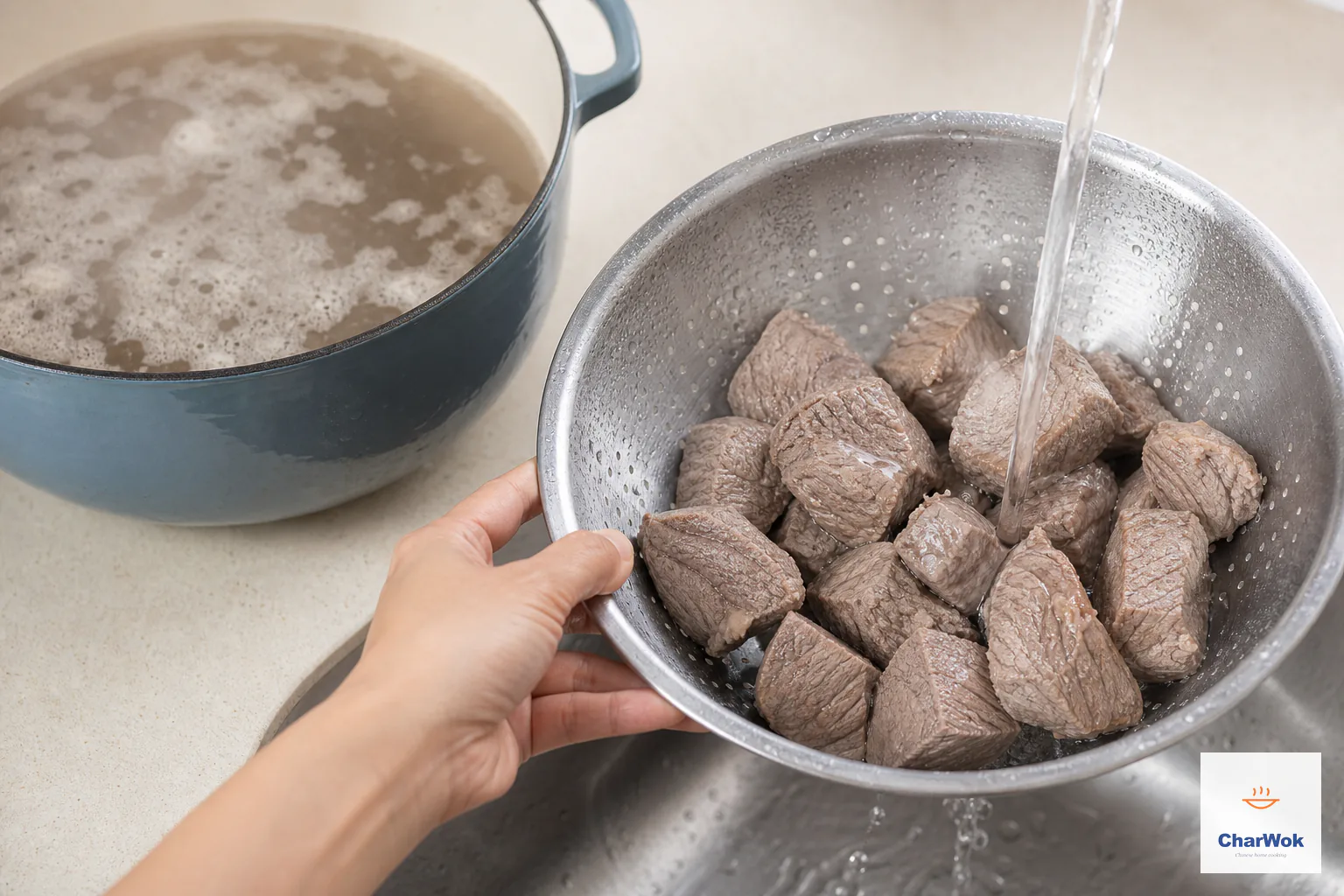
Blanch the beef briefly, drain and rinse both the meat and pot, then restart with 1200 ml clean cold water so the finished broth stays clear.
- Add aromatics and spices, then simmer gently. Add the scallion, ginger, star anise, cassia, bay leaf, and the optional Sichuan peppercorn and fennel. Add the 3 tablespoons light soy, 2 teaspoons vinegar, sugar, and salt. Bring it to a boil, then drop the heat until you see only the occasional bubble break the surface. A hard boil emulsifies fat into the liquid and ruins the clarity. Cook uncovered for 75 to 90 minutes, until a fork slides into the shank with slight resistance. The shank is done when it is tender but still holds its shape; if it falls apart, you have gone too far for slicing.
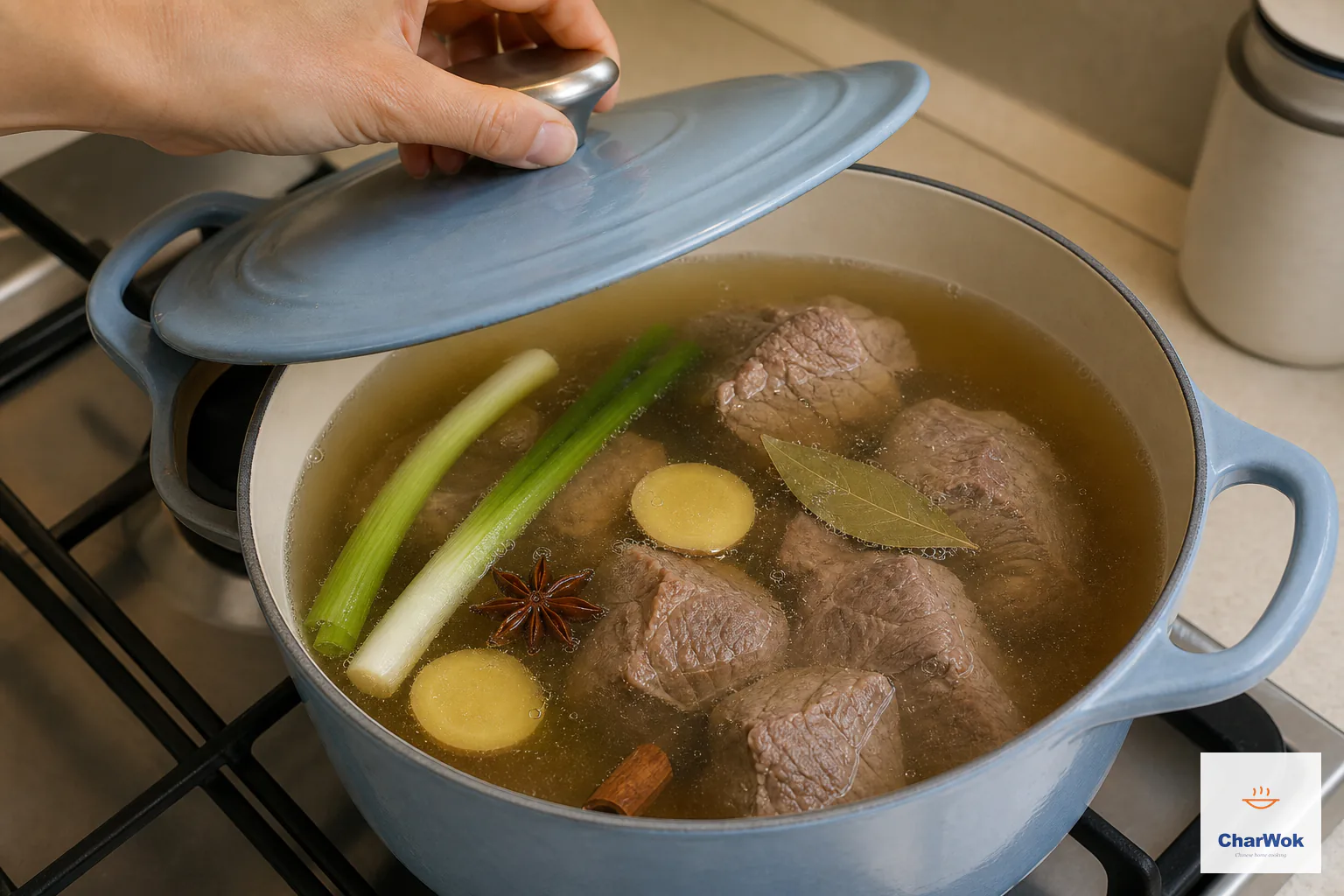
After adding the aromatics and seasonings, hold the broth at an occasional bubble for 75 to 90 minutes; a hard boil would emulsify the fat and cloud it.
- Cool the beef and broth separately, then chill. Lift the beef out and let it reach room temperature on a plate. Strain the broth through a fine sieve and discard all the spent aromatics and spices. Skim any fat from the surface once it firms up in the fridge. Put the beef and the broth in separate containers and refrigerate for at least an hour, ideally overnight. Cold meat slices cleanly; warm meat crumbles.
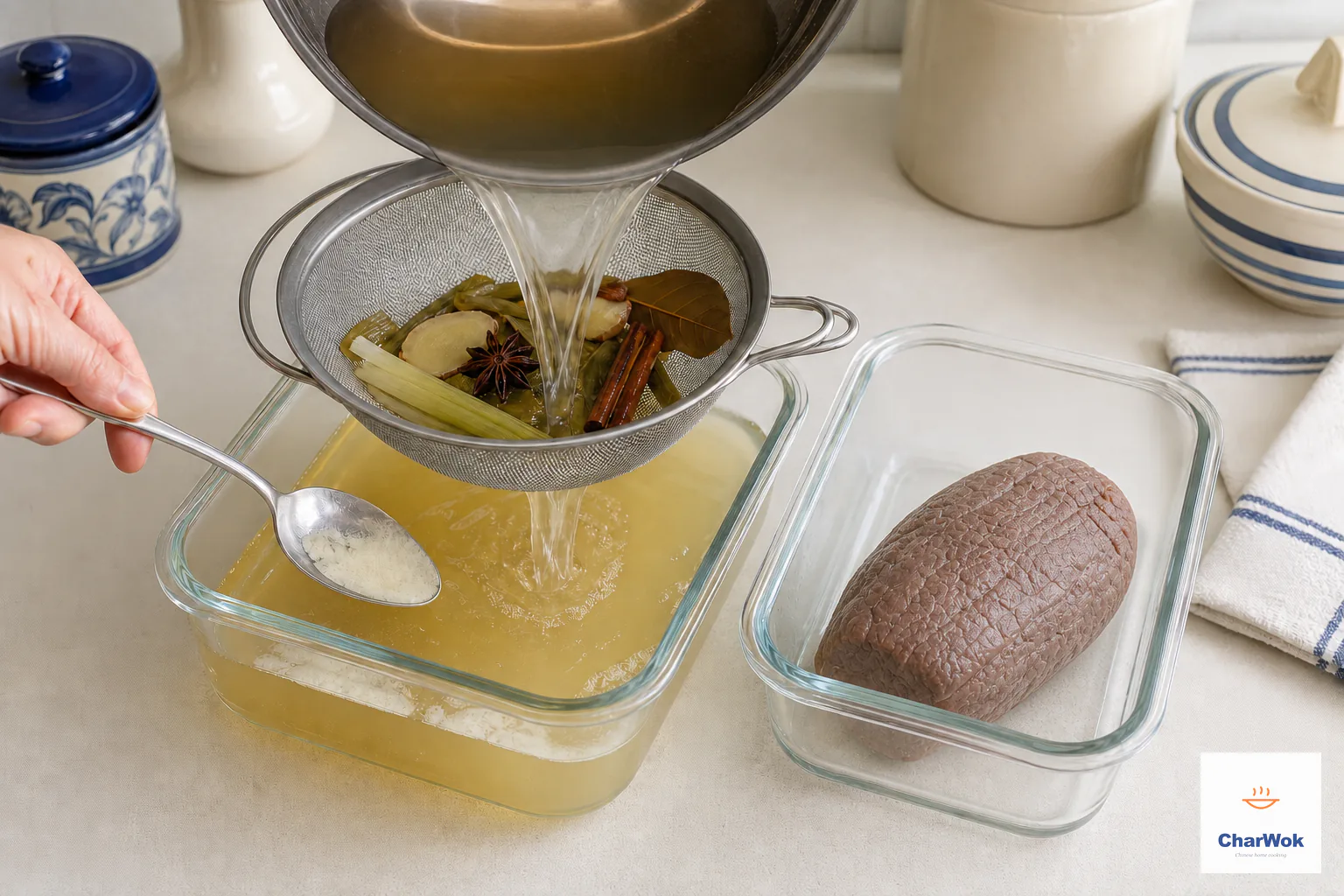
Strain and skim the broth, cool the intact beef separately, then refrigerate both for at least an hour so the meat slices cleanly and the fat lifts off easily.
- Take the broth to the edge of ice. When you are ready to serve, pour the broth into a shallow metal container and put it in the freezer for 20 to 30 minutes, stirring once. Stop the moment ice crystals form at the edges. Go too far and it turns to a block you have to break up; pull it too early and the bowl is only cool, not refreshing.
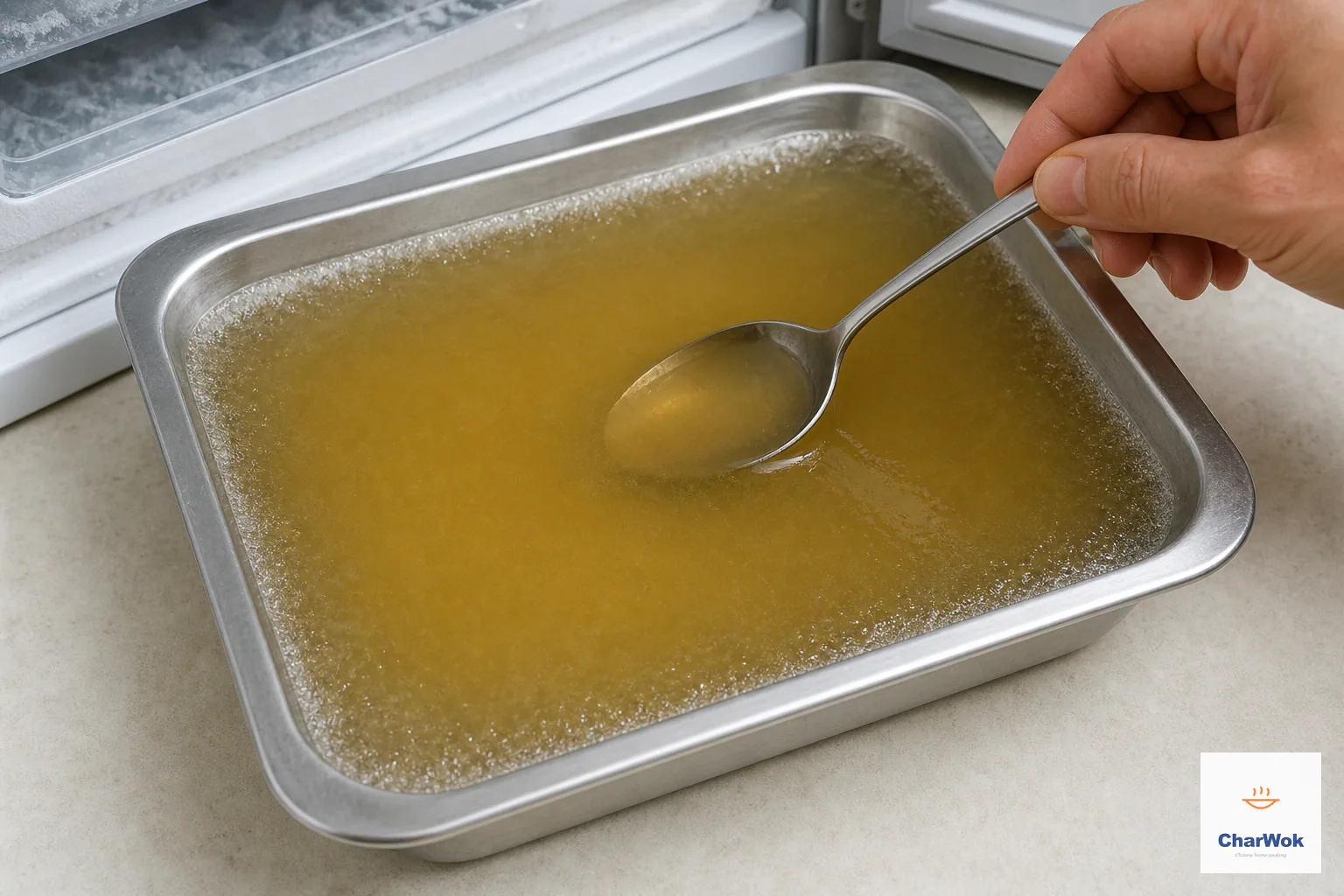
Freeze the broth for 20 to 30 minutes, stirring once, and stop as soon as edge crystals appear—cold enough to refresh without adding ice cubes.
- Boil the egg. While the broth chills, cook the egg your way. For a jammy center that still holds together in the cold bowl, lower a fridge-cold egg into boiling water and time 7 minutes, then plunge into ice water. Peel and halve.
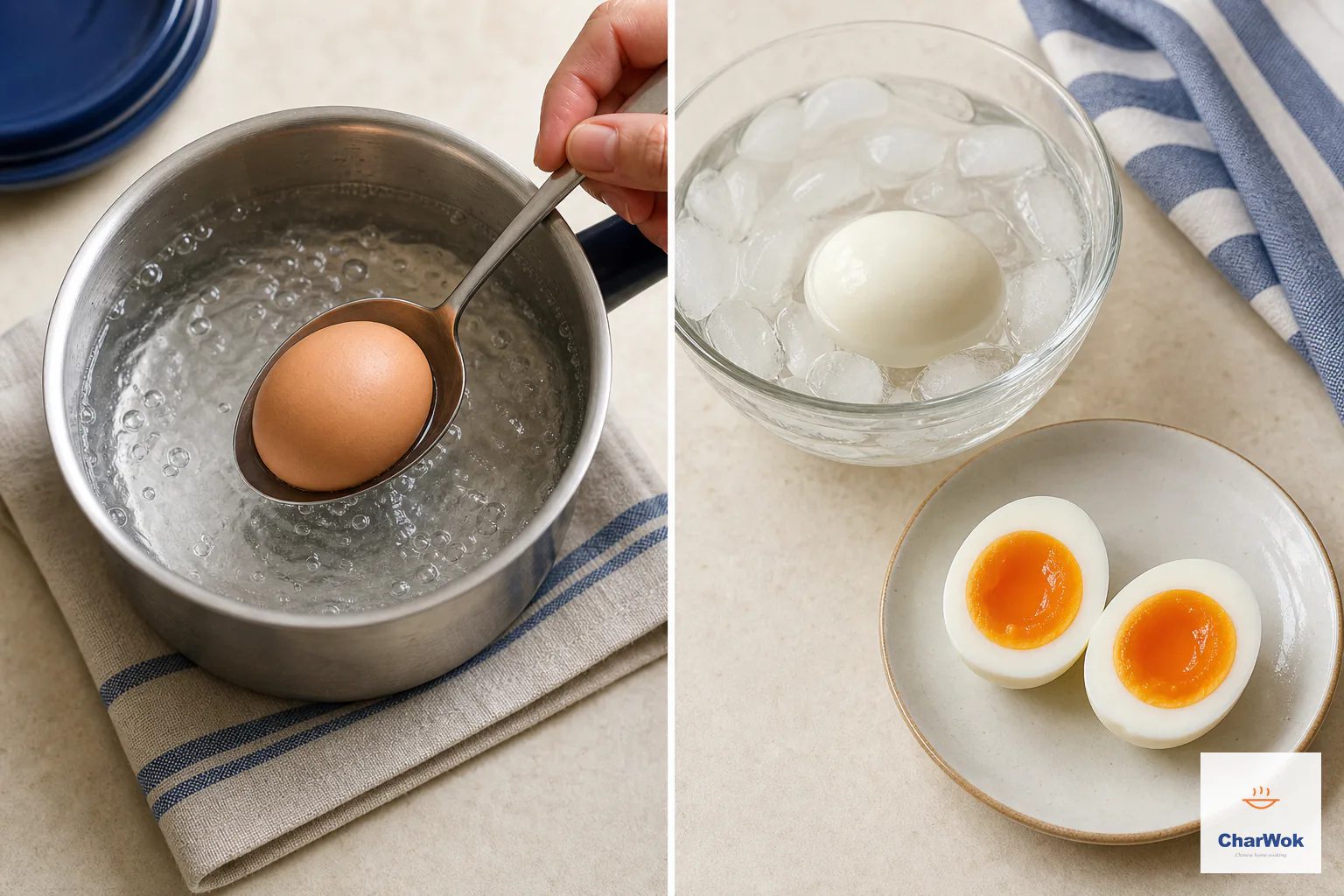
Cook the egg for 7 minutes for a jammy center that still holds together, then chill, peel and halve it.
- Cook the soba, then rinse hard. Boil the noodles one minute longer than the package suggests; cold broth firms them up, so you want them a touch softer coming out of the pot. Drain, then run cold water over them immediately to stop the cooking. Work the strands apart with your fingers under the running water for a full 30 seconds, until the water runs clear. This is the non-negotiable step.
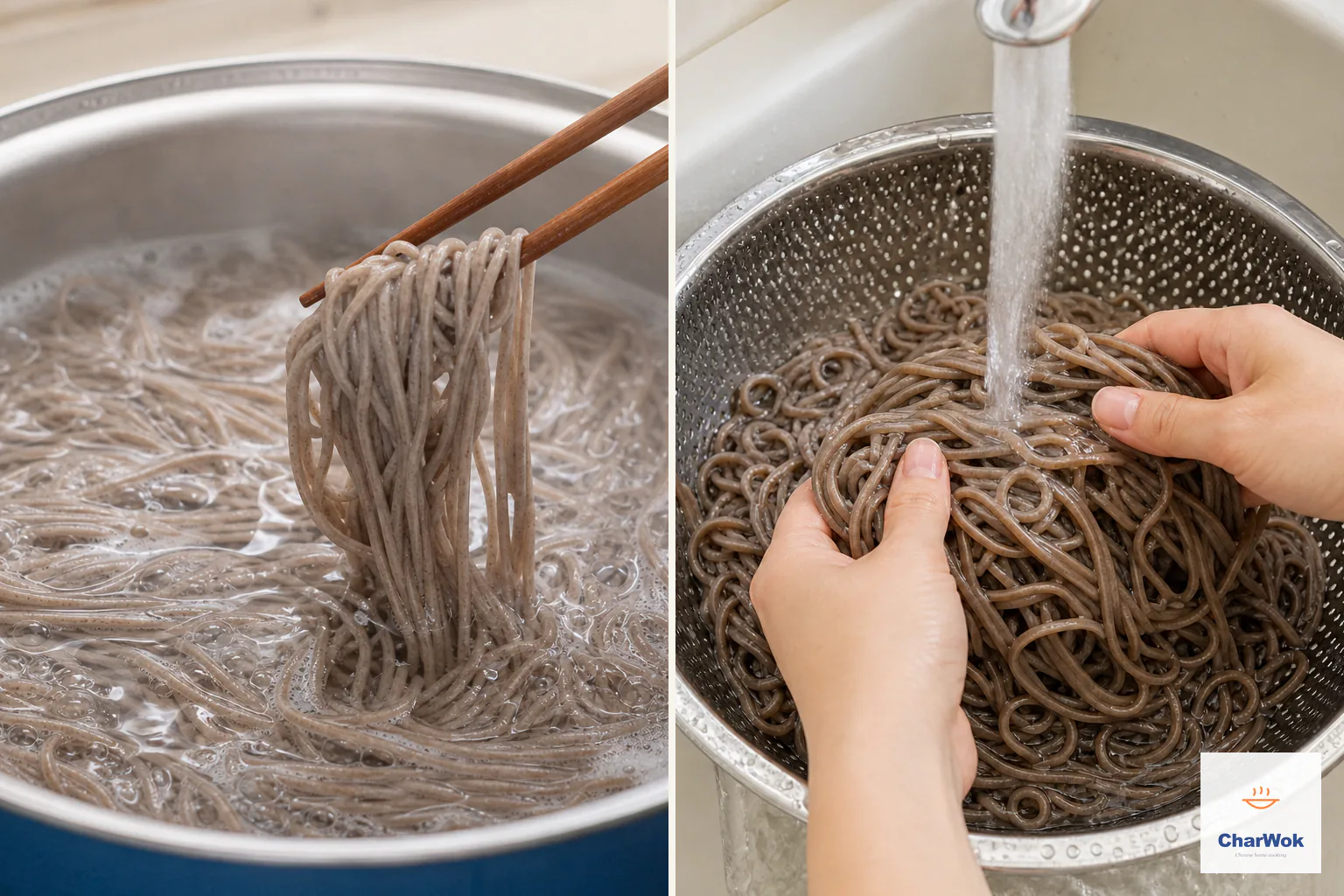
Cook the soba a touch softer for cold broth, then rinse and separate the strands under running water for 30 seconds until the runoff is clear.
- Season the broth in the bowls. Divide the cold broth between two large bowls. Stir the extra 4 teaspoons rice vinegar, a pinch of sugar, and a pinch of salt into each. Taste. The broth should read tart first, sweet second, salty last. Cold suppresses flavor, so season it bolder than you think it needs.
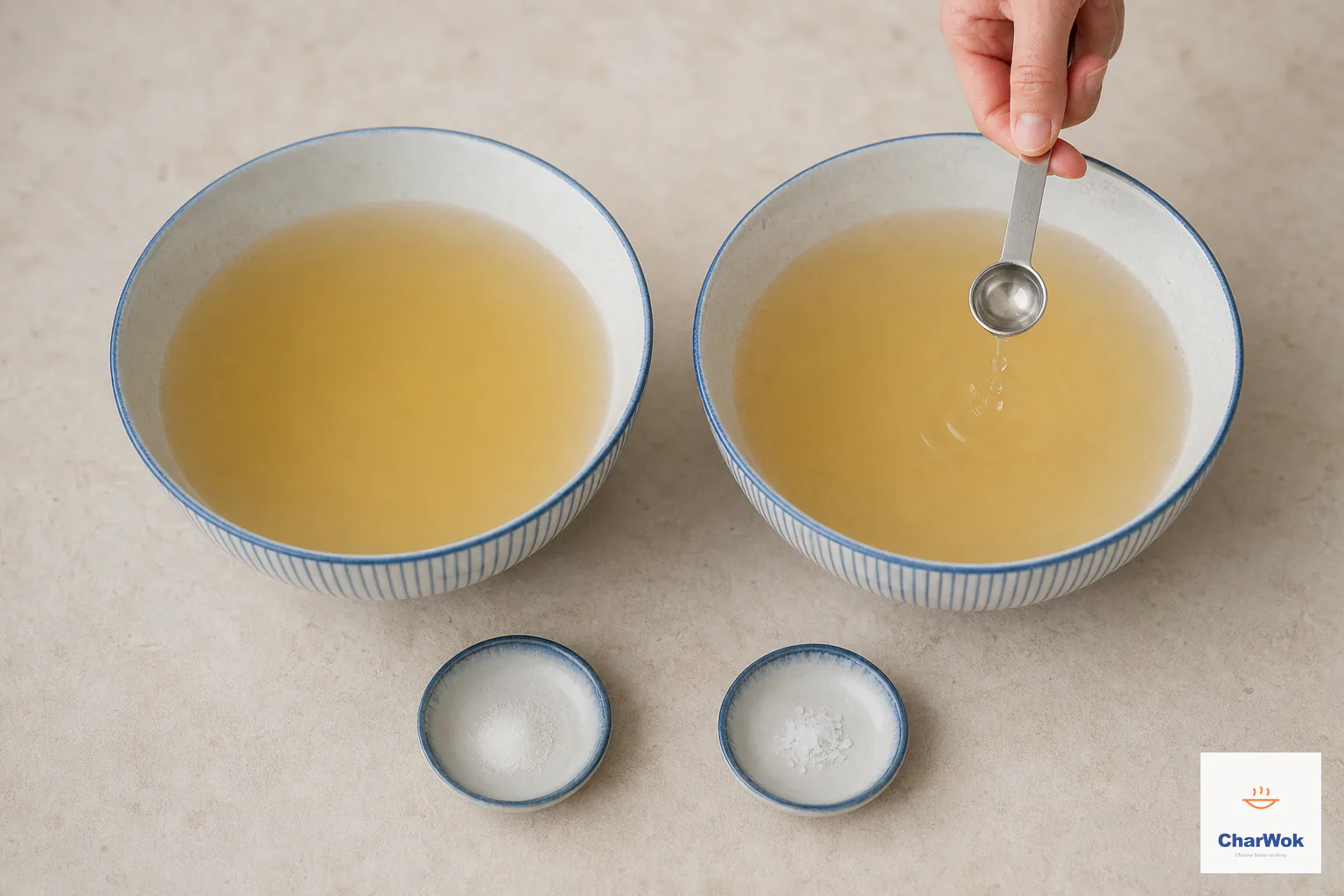
Season each cold bowl with 4 teaspoons rice vinegar plus a pinch each of sugar and salt, then taste for tartness before any noodles or toppings go in.
- Slice the beef thin. Cut the chilled shank across the grain into slices about 2 mm thick. A dull knife will tear it; a sharp one will give you the neat, tender rounds that sit on top of the noodles.
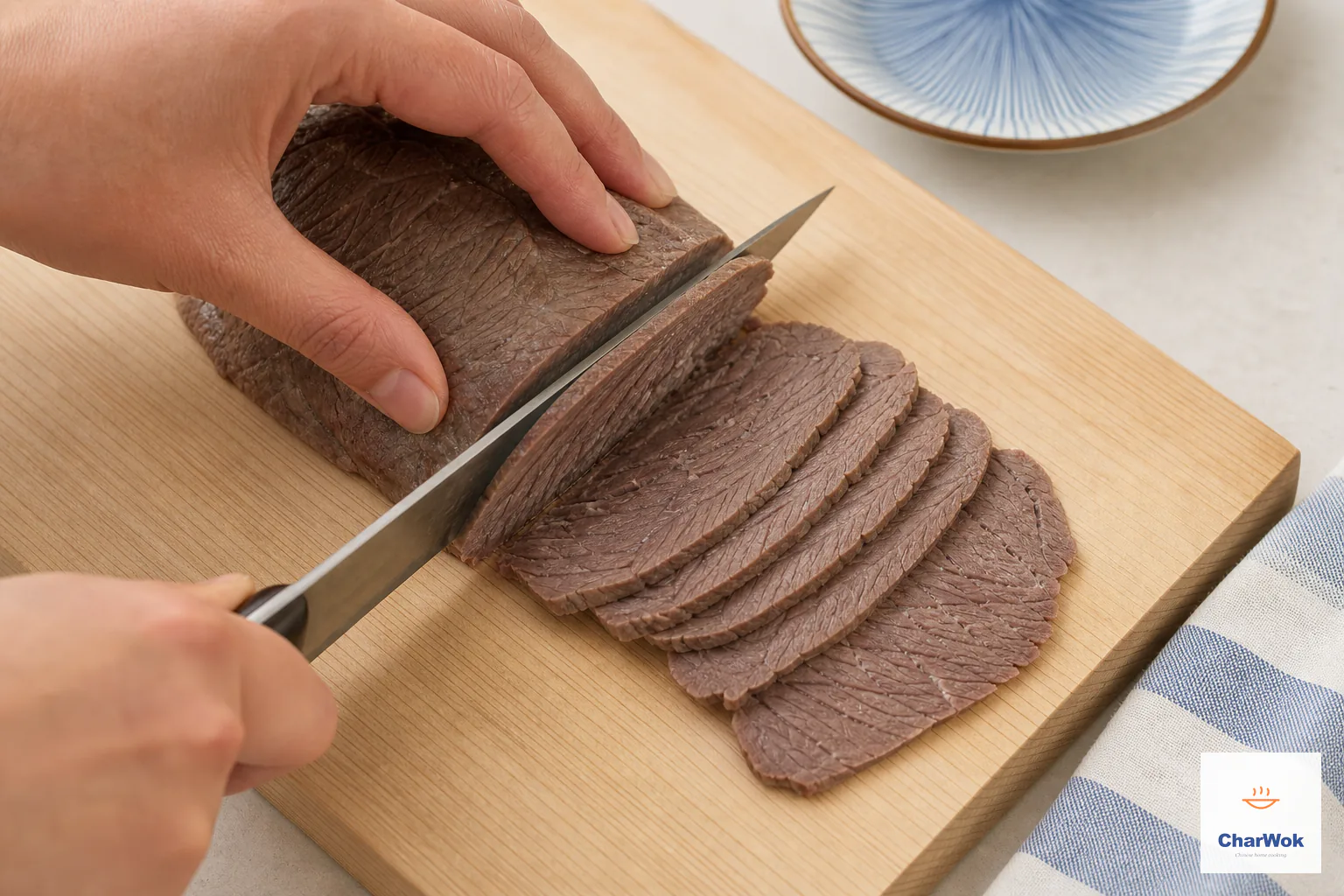
Use a sharp knife to cut the fully chilled beef across the grain into neat 2 mm slices that stay tender and do not crumble.
- Build the bowls. Nest the noodles in the center of each bowl. Arrange the beef, egg, apple or pear, cucumber, and a spoonful of kimchi on top. Add a small dab of gochujang per bowl. Sprinkle with sesame seeds. Serve immediately, while everything is still cold.
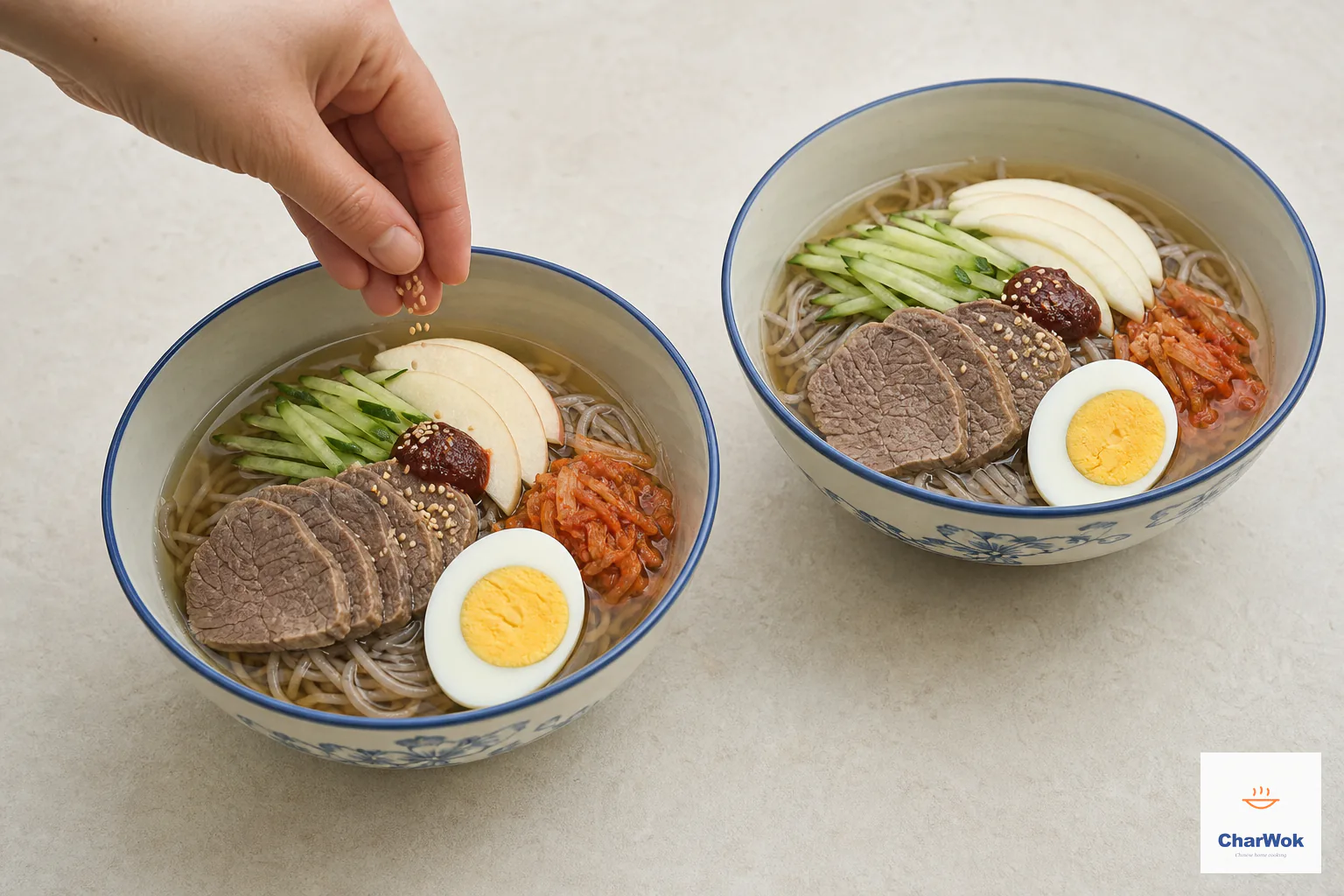
Nest the soba in two bowls, arrange every topping, add a small dab of gochujang and sesame, and serve immediately while the broth is still deeply cold.
When things go wrong
I have made every mistake below at least once.
The broth is cloudy and greasy. You either skipped the blanch or let the pot boil hard. Strain it through a coffee filter and chill it longer so the fat solidifies and lifts off cleanly. Next time, blanch in a separate pot, simmer gently, and skim once in the middle.
The noodles are sticky and clump together. You did not rinse long enough, or you cooked them al dente and the cold broth tightened them into a brick. Re-rinse under cold water, breaking them up with your fingers. For the next batch, overcook by one minute and rinse until the water is genuinely clear.
The broth tastes flat. Cold dulls salt and acid more than you expect. Add another pinch of salt and another teaspoon of vinegar to the bowl and stir. The fix is usually more seasoning, not a longer cook. If the beef flavor itself is weak, you under-simmered; 75 minutes is the floor for shank.
The beef will not slice, it shreds. It is too warm. Chill it fully, ideally overnight. Shank also slices better than brisket, whose fibers separate more easily.
It is not cold enough. The freezer step is doing the heavy lifting. If you forgot it, drop in a few ice cubes as a last resort, but accept that the broth will thin out. Next time, use a metal container and start the freezer step earlier.
Variations and what to serve alongside
The core is the cold sour broth and the rinsed noodles. Around that, the dish bends easily.
Swap the protein. If you do not want to make a beef broth, a lighter version built on our homemade chicken stock works, though it loses the northeastern depth. Leftover sliced beef from a master-stock braised beef shank is an excellent shortcut; use it for the topping and make a quick beef soup for the base.
Change the heat. Gochujang is traditional, but a smear of Sichuan chili bean paste pushes the bowl toward a more Chinese register. Try one bowl each way and decide.
Make it a full summer spread. Yanji cold noodles belong on a hot-weather table. Pair them with other dishes from our Chinese summer recipes collection. A plate of cold cucumber salad and a bowl of tea eggs round it out without turning on the oven.
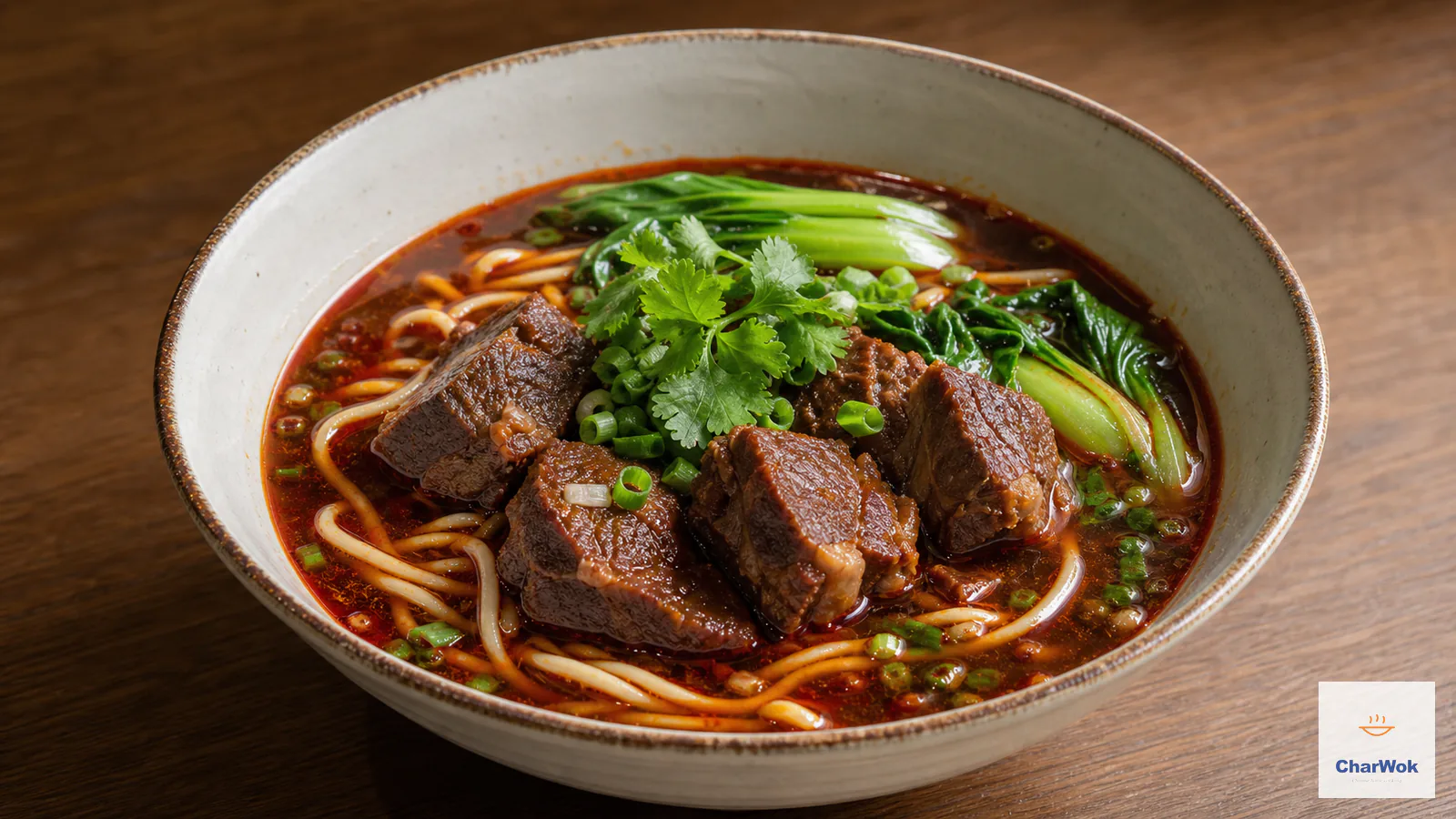
Hot version for cold months. The same beef broth, served steaming with the noodles hot and unrinsed, is essentially a relative of Lanzhou beef noodle soup, spicy beef noodle soup, and Taiwanese beef noodle soup. One broth, two seasons.
Storage and leftovers
The broth keeps for three days in the fridge and freezes well for two months. Freeze it flat in a zip-top bag so it thaws fast. Keep the cooked beef separate from the broth; sitting in liquid turns it gray and soft. Leftover sliced beef, dressed with a little chili oil and soy, makes a cold plate for the next meal.
Do not assemble the bowls ahead of time. Once the noodles sit in the broth they release starch again and the apple browns. Build each bowl to order. The components, kept separate, hold for days.
Questions I get asked
Can I use regular spaghetti or ramen instead of soba?
You can, but the bowl loses its defining character. Soba's buckwheat nuttiness and bite are part of the dish's identity. Ramen works better than spaghetti because the alkaline chew is closer. Spaghetti turns soft and bland once rinsed. If soba is genuinely unavailable, thin Korean naengmyeon is the truest substitute.
Why ice cubes in restaurants but not here?
Shops use ice because they serve hundreds of bowls fast and cannot wait for the freezer. At home you have time, and undiluted broth tastes better. The freezer method chills without watering down the stock you spent an hour building.
Do I have to chill the broth overnight?
No, but it helps a lot. Overnight chilling lets the fat solidify so you can lift it off cleanly, and it gives the spice flavor time to mellow and integrate. A one-hour chill works if you are short on time; the broth will just be a little rougher and fattier.
Is brisket or shank better?
Shank, for slicing. Its tight grain cuts into the neat rounds you see in shops. Brisket is fattier and more tender but tends to shred, so use it if you prefer a softer, pull-apart texture or if slicing thinly is a struggle.
Can I make the broth in a pressure cooker?
Yes. Forty minutes at high pressure roughly matches 90 minutes on the stove, and the blanch-and-strain step still keeps it clear. Let it depressurize naturally so the liquid does not boil and cloud. The flavor is slightly less layered than a slow simmer, but the time trade is worth it on a weeknight.
The dish comes down to two disciplines and a lot of patience. Make a clean broth, chill it hard, rinse the noodles until they slip through your fingers. Get those right and the toppings almost do not matter. Get them wrong and no amount of gochujang will save the bowl.