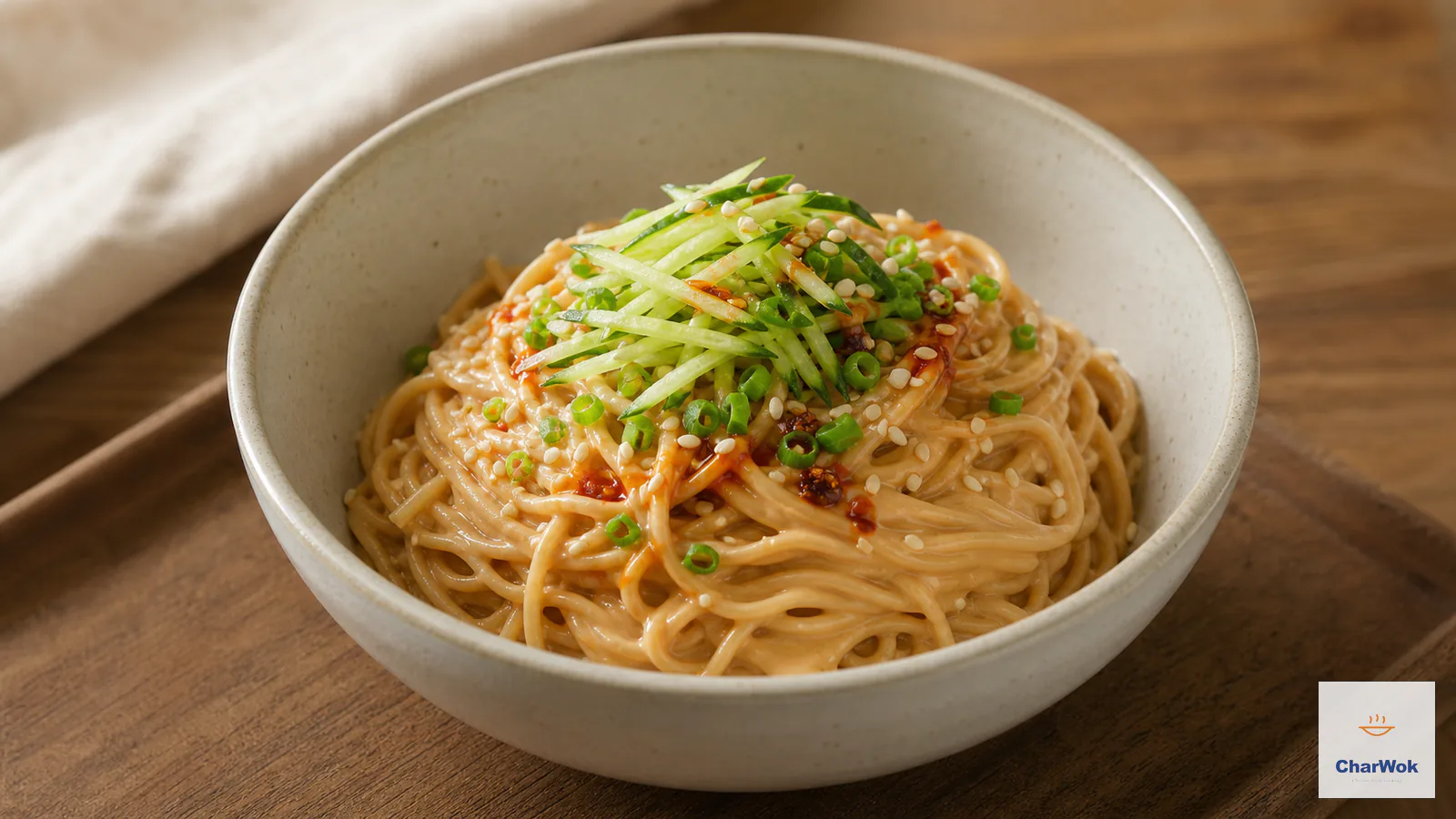
There is one ingredient that separates a bowl of cold noodles that tastes like a snack from one that tastes like a meal, and it is not the chili oil. It is Chinese sesame paste (芝麻酱, zhi ma jiang): toasted sesame seeds ground until their own oil releases and the whole thing collapses into a dark, stiff, deeply savory paste. Open a jar and the smell hits you first, roasted and almost burnt-sweet, nothing like the pale tahini you whisk into hummus.
Here is the pain point that brings most cooks here. You find a recipe for Dan Dan noodles or Wuhan Hot Dry Noodles, and the sauce calls for Chinese sesame paste. You either cannot find it, or you bought a jar, used two tablespoons, and now it sits in the fridge slowly separating into a sad oil slick over a chalky brick. I have done both. This guide covers what the paste actually is, why it behaves the way it does, how to thin and store it so nothing is wasted, and how to build a credible substitute from a North American pantry when the jar is not an option.
At a glance
Chinese sesame paste is toasted whole sesame seeds ground to a stiff, oil-releasing paste. To use it, thin one part paste with roughly one part warm water, stirring patiently until it flips from a tight ball into a smooth, pourable sauce. Always toast your own seeds for a substitute, because toasting is the entire reason the paste tastes different from tahini.
What it is, and why it is not tahini
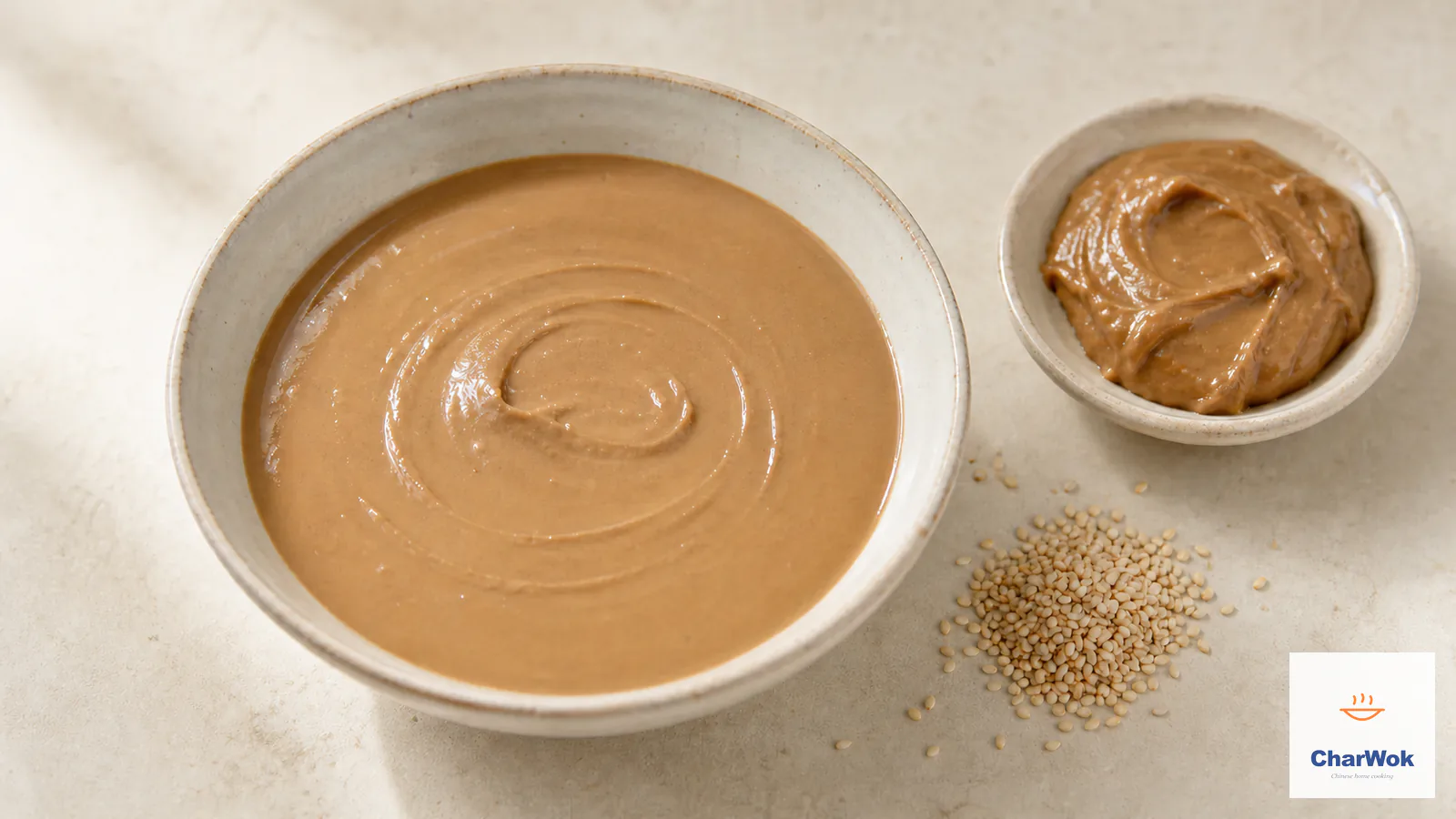
Both Chinese sesame paste and tahini are ground sesame, and that is where the similarity ends. Chinese paste is made from whole, toasted sesame seeds, hull and all. The hull adds bitterness and a darker color; the toasting drives Maillard browning and the roasted aroma. Tahini is made from raw, hulled seeds (sometimes very lightly toasted), so it is pale, creamy, and comparatively mild.
The practical result: you cannot swap them one for one and expect the same dish. Tahini in a Dan Dan sauce tastes flat and slightly sunflower-seedy. Chinese sesame paste in hummus tastes burnt and bitter. If a recipe is built around the roasted, slightly bitter intensity of the Chinese version, reach for the right jar, or build one of the substitutes below.
What to look for when you buy
Good Chinese sesame paste separates in the jar. That is a feature, not a defect. A layer of dark sesame oil floats on top and acts as a seal, slowing oxidation of the paste below. Stir it back in before measuring. If a jar on the shelf shows zero separation and a perfectly uniform texture, it has likely been emulsified with neutral oil and stabilizers, and the flavor will be weaker. I prefer jars that list one ingredient: sesame seeds. Sometimes salt. Nothing else.
Color ranges from medium brown to nearly black-brown depending on how dark the seeds were roasted. Darker is more bitter and more intensely flavored; lighter is gentler and easier for people new to the taste. For noodle sauces and hot pot dipping sauce, a mid-brown jar is the most versatile.
The science of thinning: why it fights you, then surrenders
This is the step that trips up new cooks, and it is worth understanding because the same physics shows up in peanut butter, miso, and chocolate. Straight from the jar, the paste is a thick suspension of ground seed solids held together by its own oil. Add water and the two liquids refuse to mix at first. You stir, it looks worse, you keep stirring, and then suddenly the whole mass loosens into a smooth, glossy sauce.
What is happening: you are creating an emulsion in reverse. The water is displacing the oil as the continuous phase, and the seed solids are absorbing water and swelling. Once enough water is worked in, the paste releases its grip and thins rapidly. The signal that you are nearly there is a sudden change from a stiff, resistant ball to a texture that flows under the spoon.
Ingredients for the base thinned paste
Ingredients at a glance
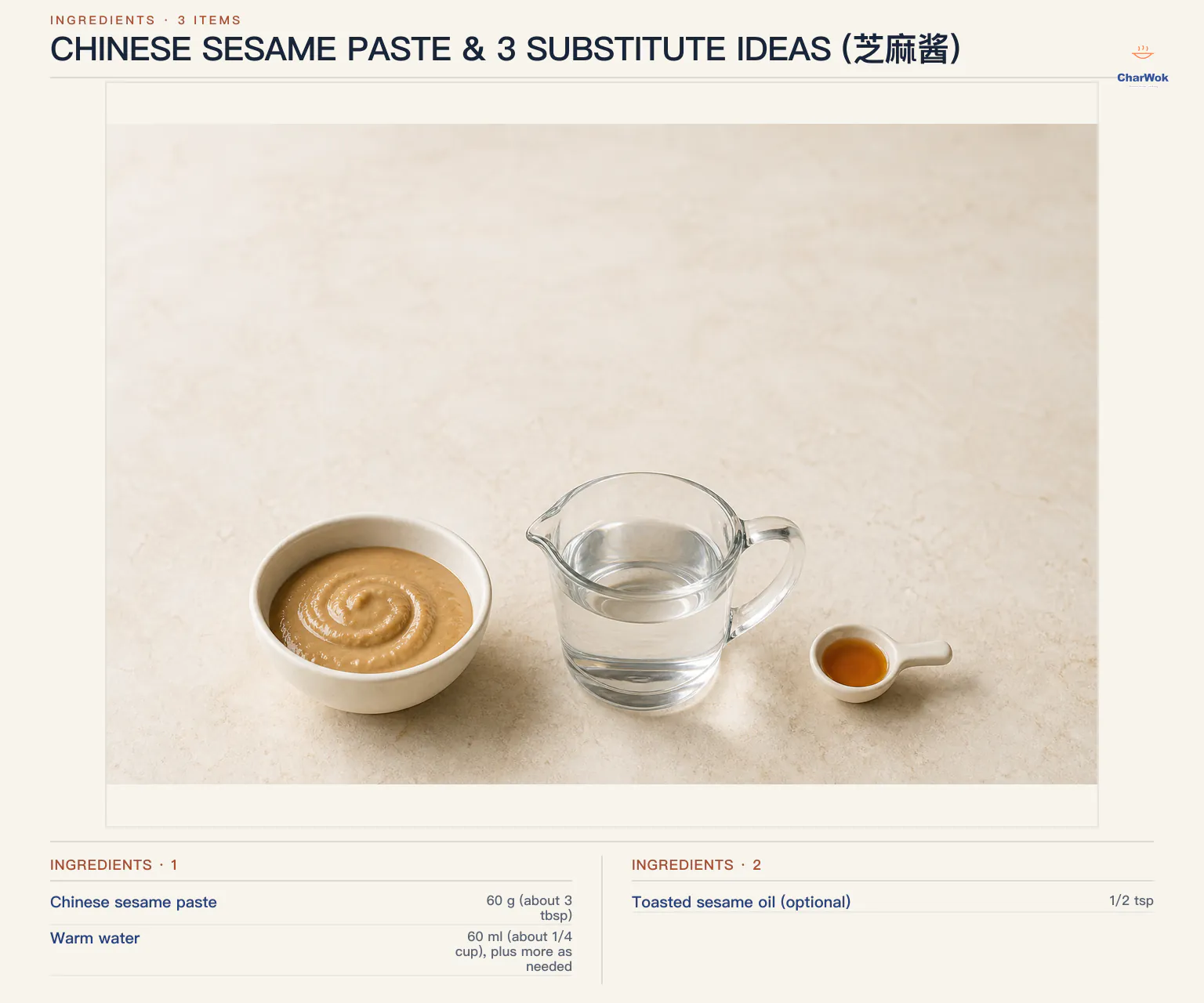
This makes enough thinned paste for about two servings of noodles or a small hot pot dipping bowl. Scale up freely; the ratio is what matters.
| Ingredient | Amount | Notes / substitute |
|---|---|---|
| Chinese sesame paste | 60 g (about 3 tbsp) | Use a single-ingredient jar. See substitute section if unavailable. |
| Warm water | 60 ml (about 1/4 cup), plus more as needed | Warm, not hot. Hot water can make the paste taste cooked and dull. |
| Toasted sesame oil (optional) | 1/2 tsp | Only if your jar is old or low on oil; refreshes the aroma. |
How to thin the paste, step by step
- Stir the jar first. Before measuring, mix the floating oil back into the paste so each spoonful you scoop is the same consistency. Skipping this is why one batch of sauce is runny and the next is a brick.
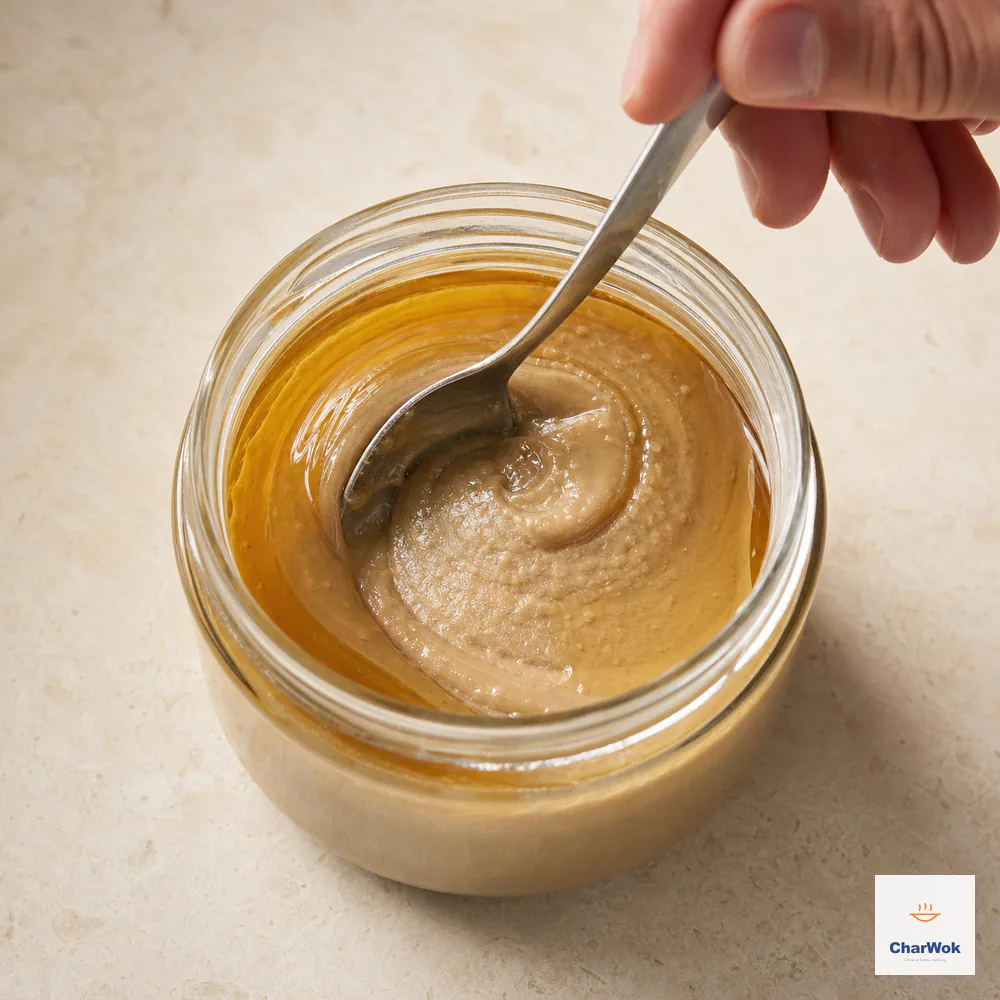
Stir every drop of floating oil back into the jar before measuring so the paste has one consistent concentration.
- Weigh or scoop the paste into a bowl. A wide, shallow bowl gives you room to work. Add about a quarter of the warm water to start, not all of it.
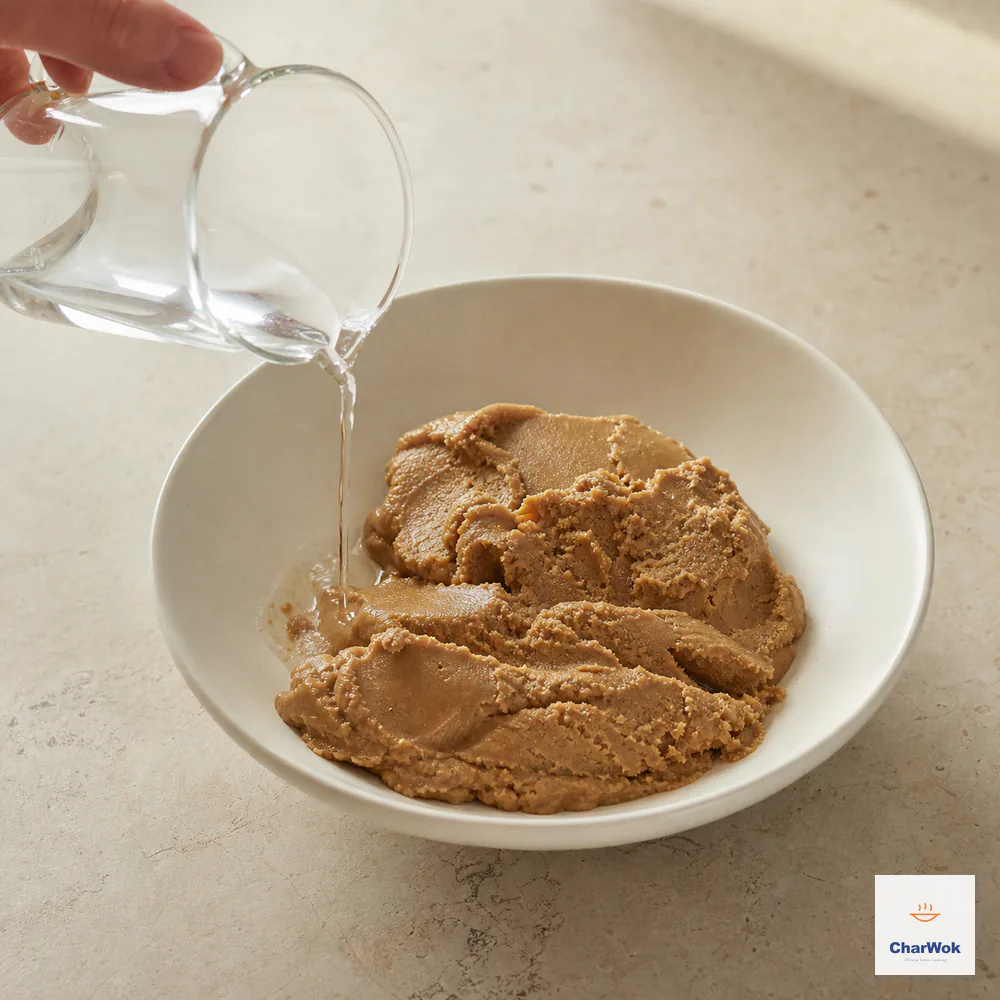
Start with roughly one quarter of the warm water; most should remain in the cup while the thick paste first begins to wet.
- Press and stir with the back of a spoon. Mash the paste against the bowl and work it in small circles. It will look lumpy and wrong for the first 30 seconds. Keep going.
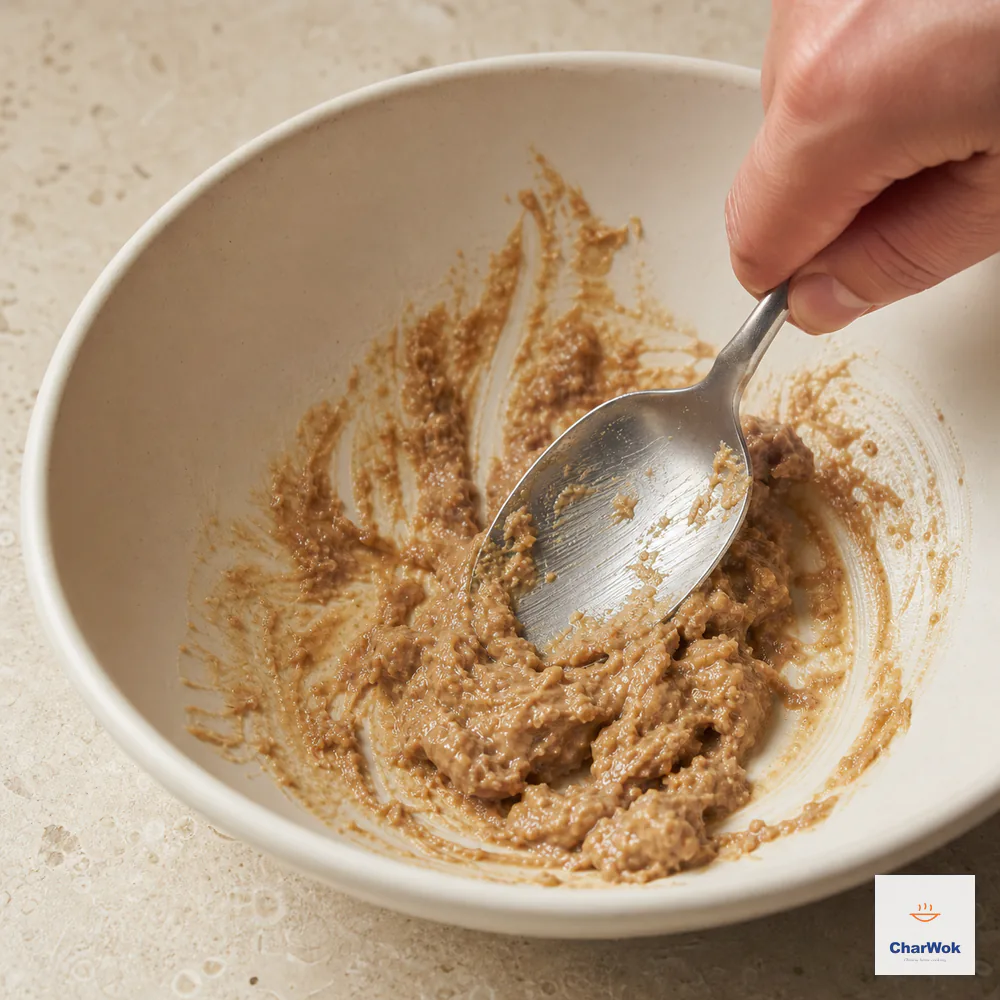
Press and stir through the lumpy first 30 seconds instead of adding a large rescue splash; this awkward seized stage is expected.
- Drizzle in more water, a little at a time. Add the next quarter once the first is mostly absorbed. The paste will pass through a thick, sticky stage that feels like soft peanut butter.
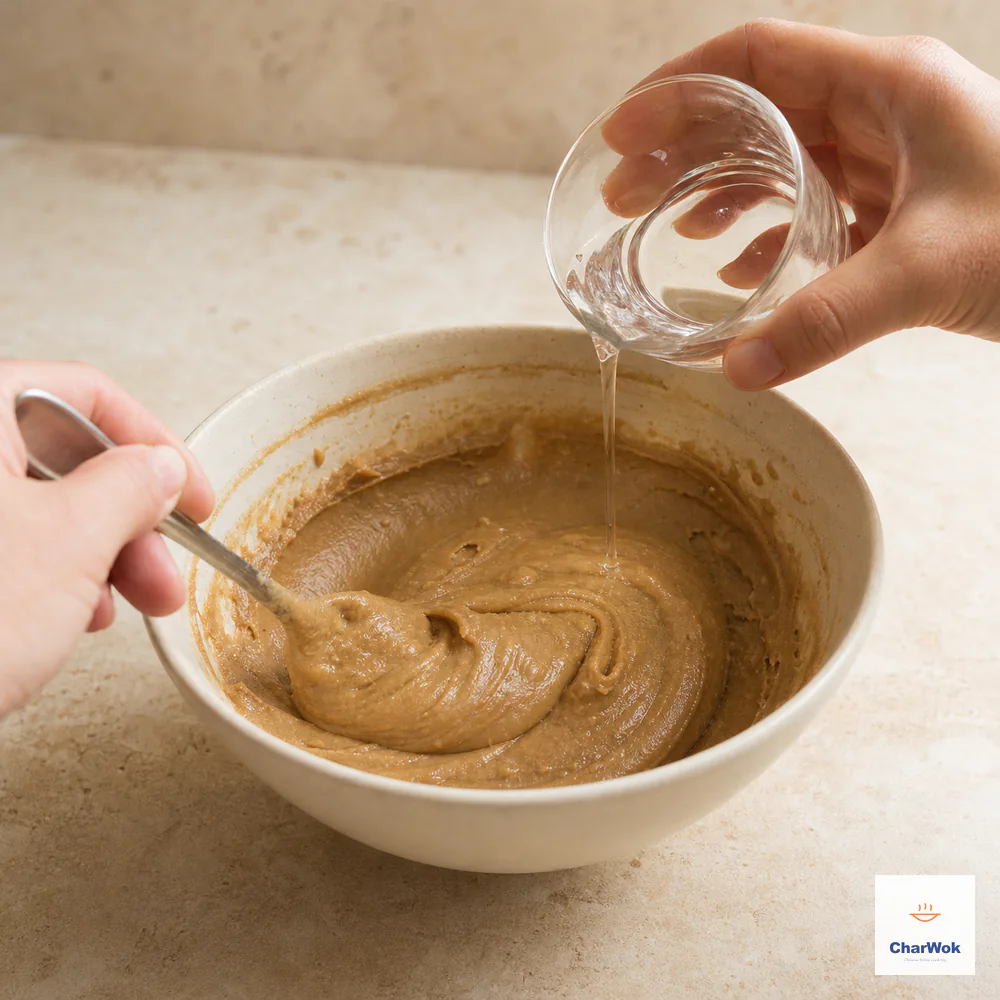
Add the next portions only after the previous water is absorbed; the paste first becomes thick and sticky like soft peanut butter.
- Watch for the flip. As you add the last of the water, the paste suddenly loosens into a smooth, pourable sauce with a satin sheen. Stop when it falls off the spoon in a steady ribbon.
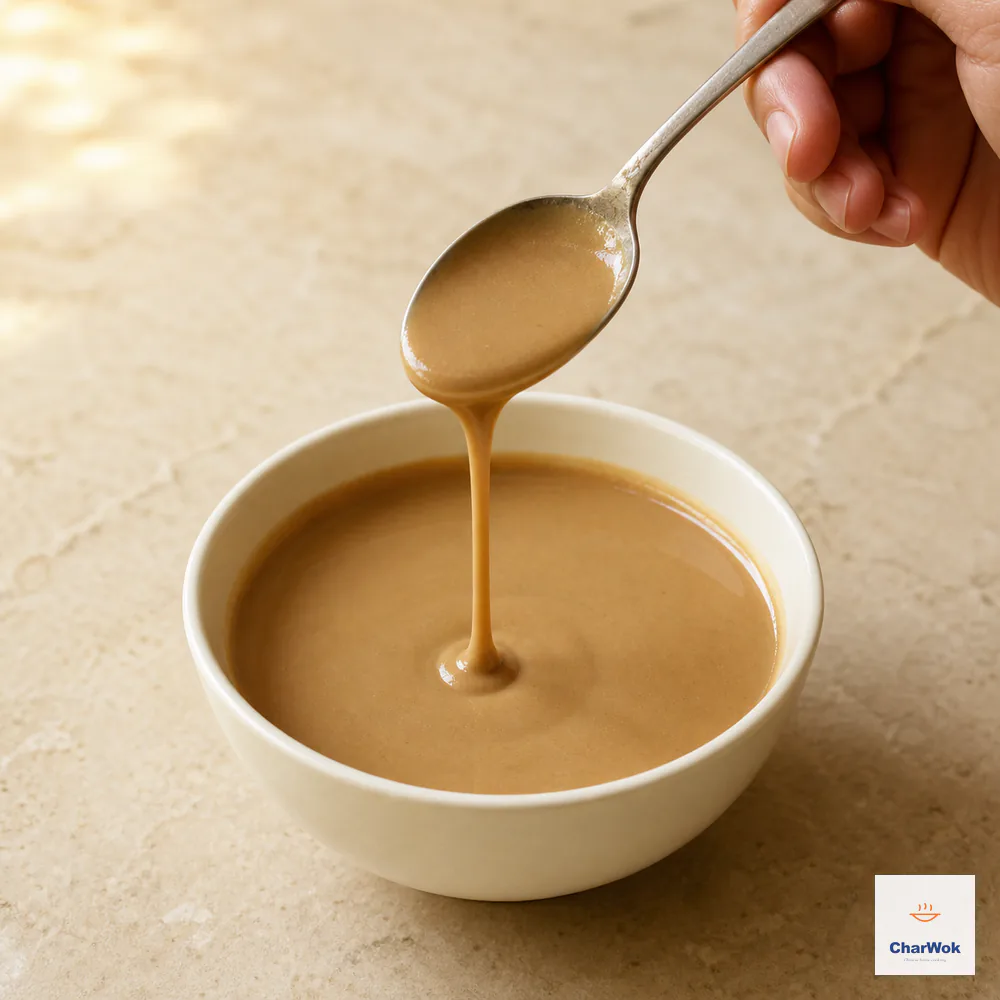
The texture suddenly flips from sticky to smooth; stop when the sauce is glossy and falls in a steady ribbon rather than separate clumps.
- Adjust for the dish. For noodles you toss, aim for heavy-cream thickness. For a dipping sauce or a drizzle over Bang Bang chicken, go a touch thinner.
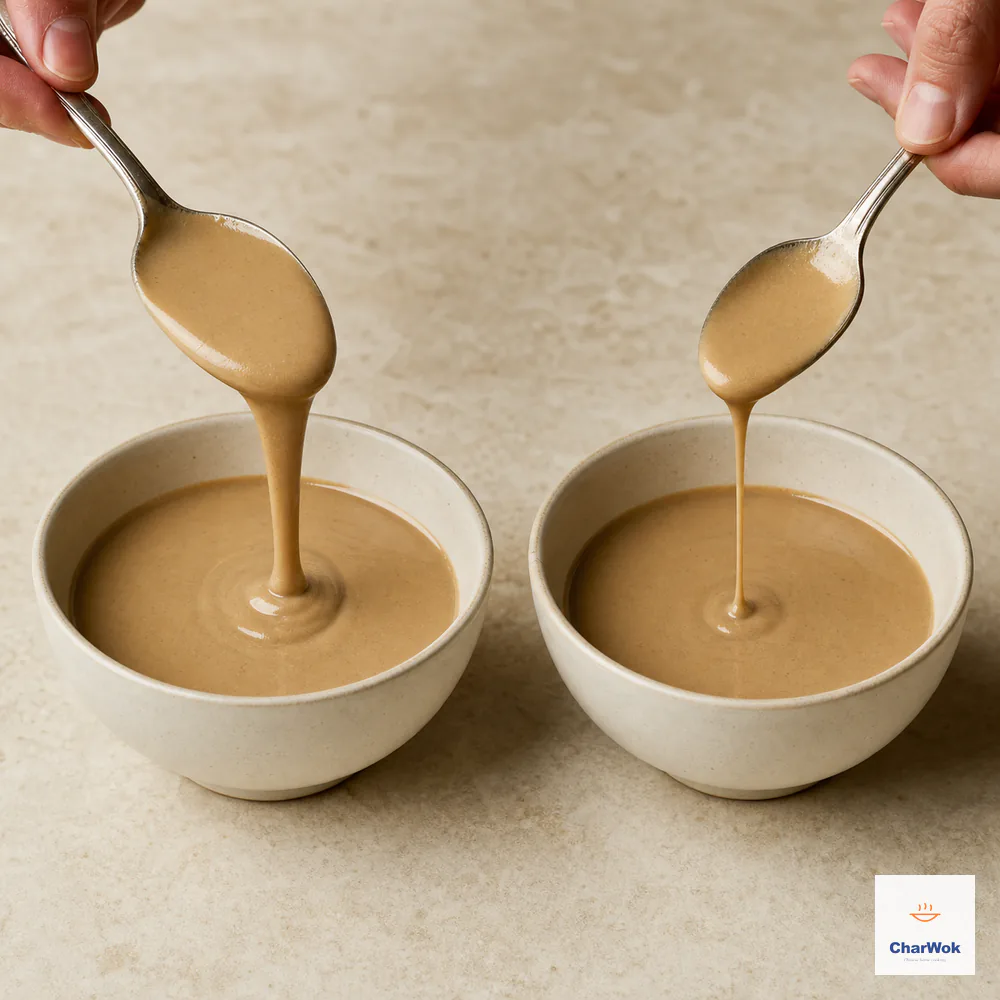
Keep a heavy-cream consistency for tossed noodles and loosen it only slightly more for dipping or drizzling; neither version should be watery.
If you rush and dump all the water in at once, the paste tends to seize into greasy clumps that refuse to incorporate. Patience in the first 30 seconds saves you five minutes of frantic whisking later.
Three substitutes, ranked by how close they get
Sometimes the jar is genuinely not an option. Here are three substitutes I have tested, in order of how faithfully they reproduce the roasted, slightly bitter character. None is a perfect clone, but each works for a specific set of dishes.
Substitute 1: toasted sesame seeds ground with sesame oil (closest)
This is my default when I want the real flavor. You toast the seeds yourself, so you control the bitterness, and the fresh grind tastes more alive than anything in a jar.
| Ingredient | Amount | Notes |
|---|---|---|
| Toasted white sesame seeds | 1 part (e.g. 60 g) | Toasted until deep golden, see method below. |
| Toasted sesame oil | 1/8 part | Just enough to loosen the grind. |
Grind the warm toasted seeds in a mortar or a spice grinder, scraping down the sides, until they collapse into a paste. Add the sesame oil and work it in. The result is gritty if your grinder is weak; for a smooth sauce, push it through a fine sieve before thinning with water.
Substitute 2: tahini loosened with toasted sesame oil (fastest)
| Ingredient | Amount | Notes |
|---|---|---|
| Tahini (raw/hulled) | 1 part | Unsalted, single-ingredient tahini. |
| Toasted sesame oil | 1/4 part | Adds the roasted note tahini lacks. |
Stir the sesame oil into the tahini. The flavor is gentler and less bitter than the real paste, with none of the hull character. It is fine for a quick sesame noodle sauce or a dipping bowl where chili oil and soy sauce carry most of the weight. It will not fool anyone in a dish where sesame paste is the headline, like Hot Dry Noodles.
Substitute 3: ground toasted sesame seeds plus peanut butter (most robust)
| Ingredient | Amount | Notes |
|---|---|---|
| Toasted white sesame seeds | 1 part | Toasted deep golden. |
| Unsweetened peanut butter | 1 part | Natural, just peanuts and salt. Avoid sweetened or stabilized. |
| Toasted sesame oil | 1/4 part | Loosens and rounds out the flavor. |
Grind the toasted sesame seeds to a paste, then beat in the peanut butter and sesame oil. The peanut butter adds body and a sweetness that softens the bitterness of the hulls. Of the three, this holds up best in boldly seasoned dishes like Sichuan spicy wontons in chili oil or a heavy Chongqing noodle bowl, where the peanut notes read as part of the seasoning rather than a flaw.
How to toast sesame seeds properly
Every substitute above depends on toasting, so it is worth doing right. Use a dry, heavy pan over medium-low heat. Add the seeds in a thin layer and stir or shake constantly. They toast from the outside in, so the ones on the edge burn while the middle stays pale if you walk away.
Pull them off the heat when they are a shade darker than golden and you can smell a strong roasted aroma. The residual heat in the seeds keeps cooking them for another 30 seconds, so it is better to take them off a touch early. Spread them on a plate to cool before grinding, or the paste turns gummy from the trapped heat.
When the paste goes wrong: troubleshooting
It seized into greasy clumps when I added water. You added the water too fast or it was cold. Start over with a small fresh portion of paste, work in a teaspoon of warm water at a time, and once it emulsifies you can fold the clumpy batch back in gradually.
The thinned sauce tastes chalky. Either the paste was old and the oils had gone flat, or you under-thinned it. Add more warm water and stir longer; if it is still chalky, a few drops of toasted sesame oil and a tiny pinch of salt wake it up.
My sauce is too thin now. Easy fix: whisk in a little more paste, or let it sit for five minutes. Ground seed solids keep absorbing water and the sauce thickens as it rests. Always thin a shade looser than you think you want.
The ground substitute is gritty. Your grinder is not powerful enough, or the seeds cooled unevenly. Push the paste through a fine-mesh sieve, or accept the texture for rustic dishes. A coffee grinder dedicated to spices does better than a blender.
The paste separated into oil and a hard puck in the fridge. Normal. Let it come to room temperature, then stir vigorously to recombine. If the puck is too hard to stir, warm the jar briefly in a water bath, never in the microwave, which cooks the oils and turns them bitter.
Where it shines: pairings and uses
Thinned sesame paste is the backbone of northern and Sichuan cold dishes. Toss it with cold noodles, thin it further for a Liang Pi sauce, or use it as the base for the dipping bowl at a hot pot table, where each diner balances it with chili oil, garlic, and vinegar to taste.
It also dresses cold proteins. Mouth-watering chicken and other cold-poached chicken dishes rely on a sesame-chili sauce to carry flavor onto lean meat. For a vegetarian route, pour it over steamed eggplant or a glass noodle salad, where the richness stands in for meat.
Flavor variations once you have the base
- Sichuan-style: add Chinese chili oil, a little chili bean paste, ground Sichuan pepper, black rice vinegar, and a pinch of sugar. This is the family of flavor behind Dan Dan and Zhong dumplings.
- Northern garlicky: minced raw garlic, light soy sauce, black rice vinegar, and a splash of toasted sesame oil. Classic for cold noodles and smashed cucumber.
- Sweet-savory hot pot dip: thinned paste with a spoon of Shaoxing wine (optional), minced garlic, cilantro, and chili oil, loosened with hot pot broth at the table.
- Breakfast spread: a thinner version, lightly sweetened, spread on steamed buns or mantou, the way northerners eat it straight.
Storage and how long it keeps
An unopened jar keeps for many months in a cool, dark cupboard. Once opened, refrigerate it and use it within about three months for best flavor. The oil layer that reforms on top actually protects the paste, so do not pour it off, just stir it back in each time.
Thinned paste does not store well. Once water is added, the clock starts, because the water activity lets bacteria grow. Only thin what you will use in a day or two, and keep any leftovers covered in the fridge. A thinned sauce that has been sitting for a day will look thicker; stir in a splash of warm water to bring it back.
Home-ground substitutes are best used the same day. Freshly ground sesame oils oxidize fast and the flavor flattens noticeably after 24 hours, which is exactly why the commercial jar exists.
A note on the two sesame oils
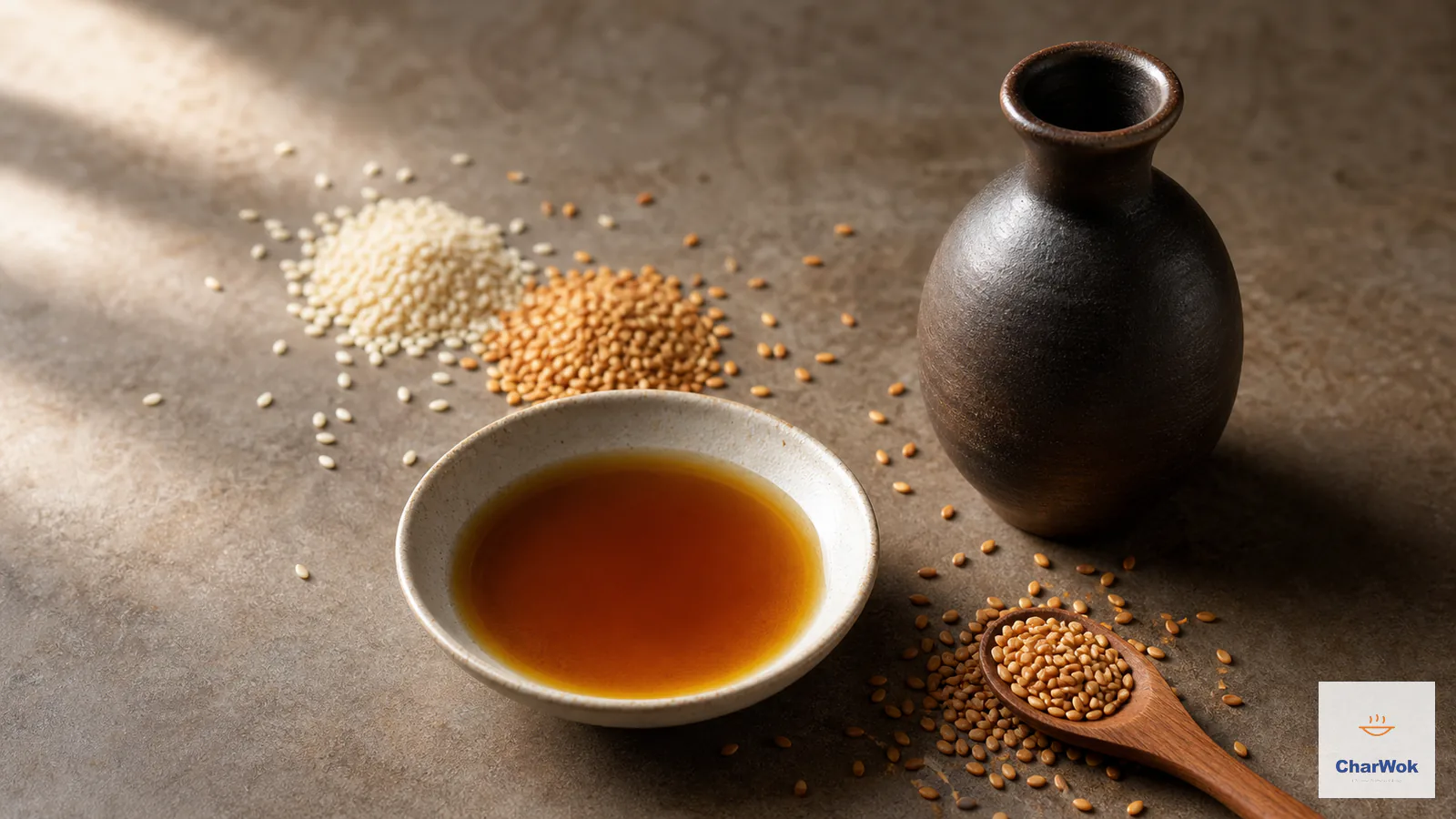
This trips people up because both bottles say sesame. Toasted sesame oil (sometimes labeled pure sesame oil) is pressed from roasted seeds. It is dark reddish-brown, intensely aromatic, and used by the teaspoon as a finishing oil. Untoasted sesame oil (often labeled sesame seed oil or cold-pressed) is pale and nearly neutral, pressed from raw seeds, and used more like a light cooking oil in parts of South India and East Asia.
For everything in this guide, you want the toasted kind. Adding untoasted oil to a substitute adds nothing, because the whole point is the roasted aroma the toasting created.
Questions cooks actually ask
Can I just use tahini instead? You can, but expect a milder, less bitter sauce with no roasted depth. Adding a quarter part of toasted sesame oil to the tahini gets you closer, and it is the fastest substitute if you already have tahini on hand.
Why does my paste seize when I add water? Cold water added too quickly makes the paste clump instead of emulsifying. Add warm water a little at a time and keep stirring through the awkward lumpy stage; it loosens on its own once enough water is worked in.
Do I need to refrigerate it after opening? Yes. Refrigeration slows the oils from going rancid and the paste keeps its flavor for about three months. The oil layer that forms on top is normal and helps protect what is underneath.
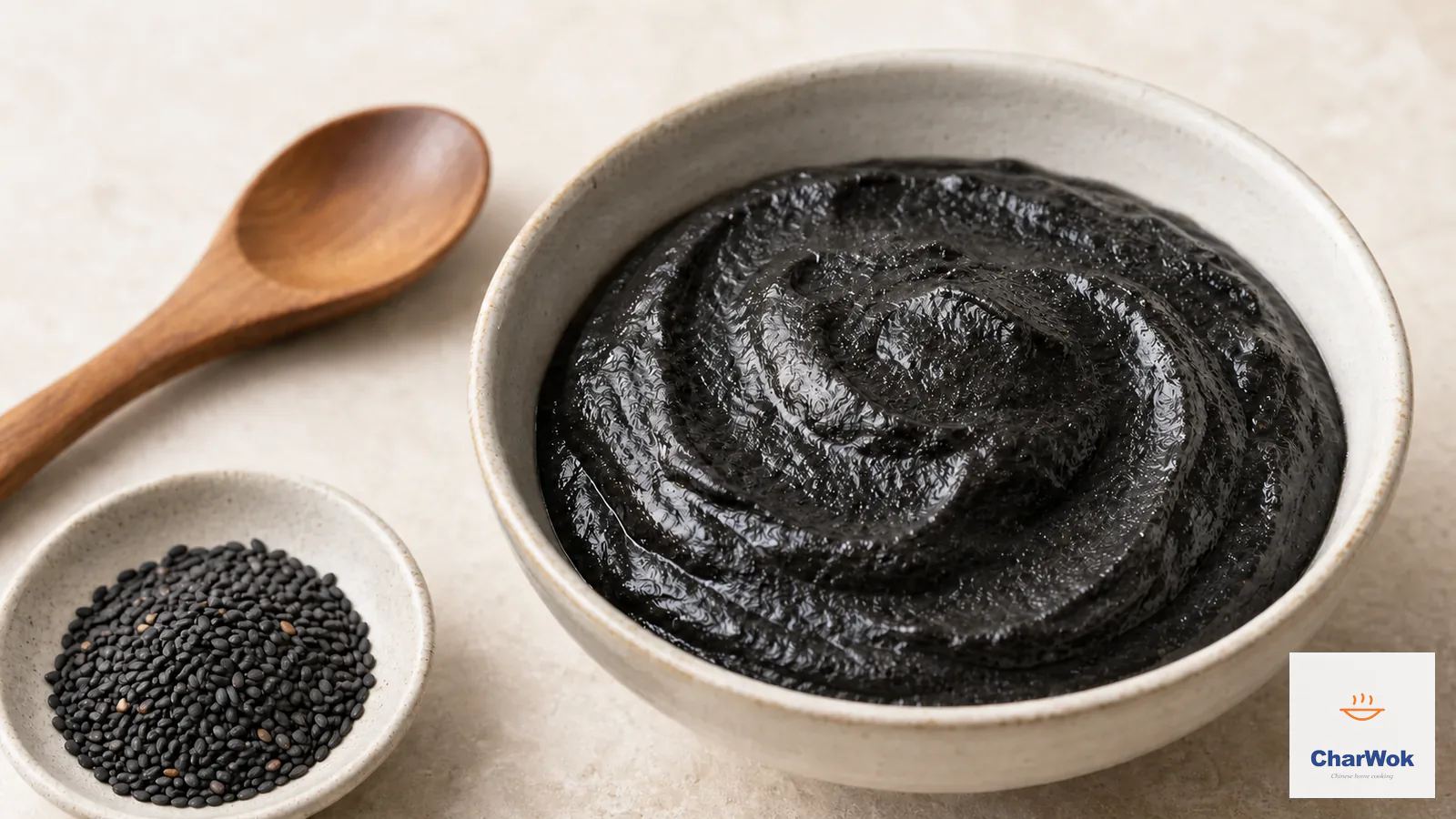
Is black sesame paste the same thing? No. Black sesame paste is made from black seeds, has a more astringent, earthier flavor, and is most often used in sweets and desserts rather than savory sauces.
Can I make a smooth paste in a blender? A high-powered blender works, but a standard one struggles and leaves grit. A mortar gives control but takes effort; a dedicated spice or coffee grinder is the sweet spot for home batches.
Once you understand the paste as toasted seeds suspended in their own oil, everything else falls into place: why it separates, why it needs patient thinning, why toasting your own seeds is the heart of a good substitute. Keep a jar in the fridge and a bag of white sesame seeds in the cupboard, and you have the base for half the cold dishes in northern and Sichuan cooking.