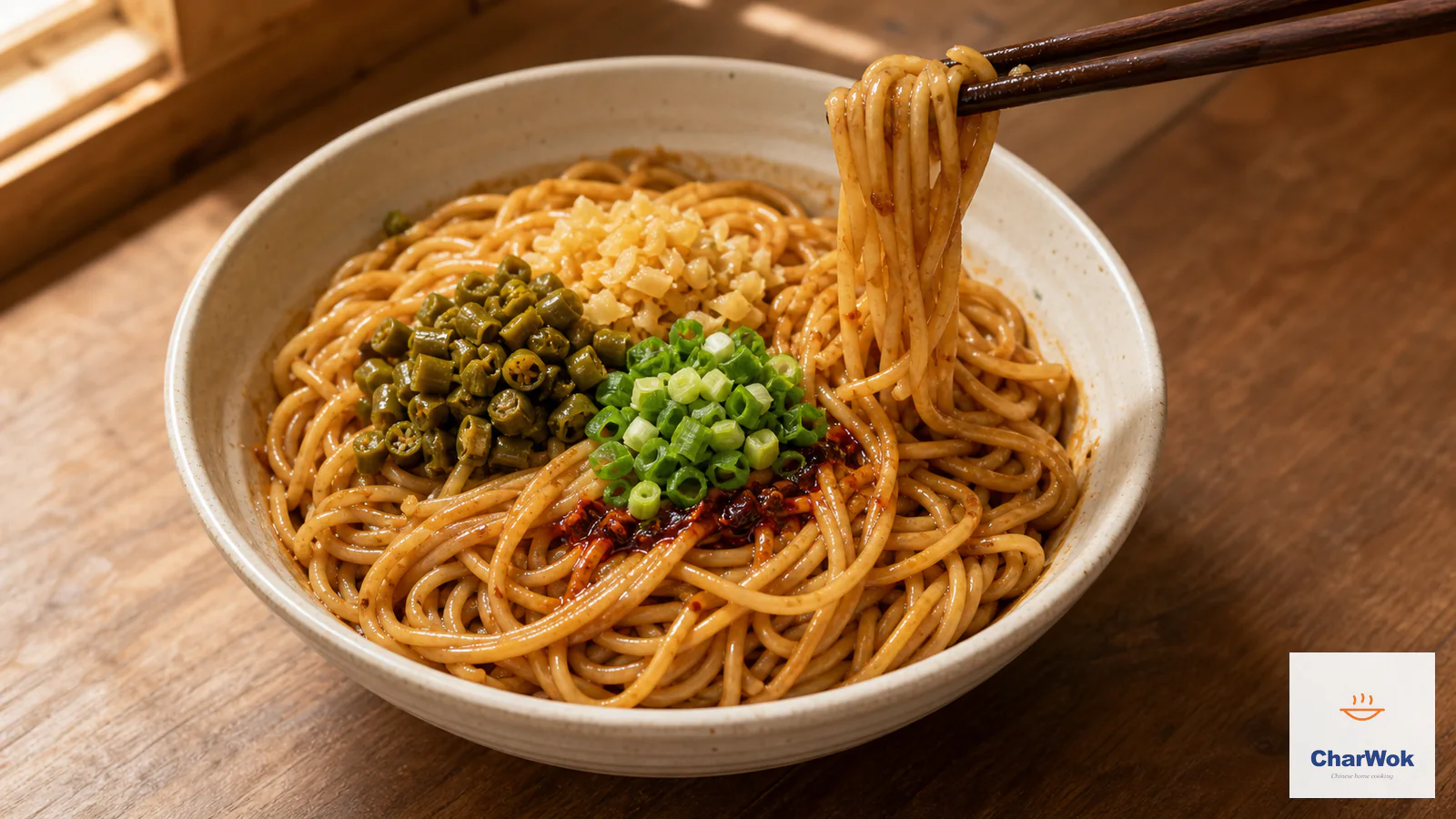
Hot dry noodles are a bowl of trickery. They look plain, almost bare, and then the first bite hits you with toasted sesame, raw garlic bloomed in hot water, the saline crunch of pickled radish, and noodles with a bounce that plain wheat can't explain on its own. This is the breakfast that Wuhan runs on, eaten standing up at a curb-side stall in under five minutes, and the reason most home attempts fall flat is never the recipe. It's the noodles, and the timing of the mix.
I ruined my first few bowls with the most ordinary mistake: I cooked the noodles soft, the way you'd cook spaghetti for a kid, and dumped everything together ahead of time. The sesame paste seized into paste again, the noodles welded themselves into one pale log, and by the time I sat down I was eating lukewarm dough. The fix is two small disciplines, both cheap, neither optional. Below I'll show you exactly where the dish lives or dies.
Cook the alkaline noodles just to the bite, rinse the starch off under the tap, and never dress them ahead. The whole bowl is a 15-minute, single-portion operation: thinned sesame paste loosens to about the consistency of heavy cream, and it must be stirred in at the very last second.
What hot dry noodles actually are
Strip the bowl to its parts and you have three things: hot noodles, a sesame dressing, and a handful of salty crunch. That is the entire recipe, and the Chinese name, Re Gan Mian, names two of the three. Re flags that the noodles must reach you steaming, as in temperature rather than chili heat. Gan flags the absence of broth. The third word the name doesn't say, the sesame, is the part that decides whether the bowl succeeds. Think of it as the austere cousin in the dressed-noodle family: where Dan Dan noodles lean on chili-and-meat and Chinese sesame noodles go cool and creamy, hot dry noodles bet everything on a single paste. No meat topping, no mandatory chili oil, no broth to hide a mistake. Get the paste and the noodle right and nothing else is needed.
Wuhan treats this the way other cities treat coffee. People eat it daily, fast, often on the walk to work, and the stalls survive on speed: pre-cooked noodles that get a ten-second dip in boiling water, a scoop of pre-thinned paste, a scatter of toppings, out the door. That speed is the key to understanding why the home version keeps failing. The stall model is a two-stage process built around pre-cooked noodles. The home cook, doing everything in one shot, has to compress those stages without losing the texture that makes the dish worth eating.
The one decision that decides everything: the noodles
Use alkaline noodles. Not because it's traditional, though it is, but because the alkalinity does two things no other wheat noodle will replicate. The mild alkali (usually kansui, or lye water) raises the dough's pH, which weakens the gluten just enough to give a tender chew and simultaneously yellows the starch through a reaction with the flour's flavones. The result is the round, golden, springy strand you see hanging from chopsticks in any photo of this dish. Plain salt-water noodles cook up gray-white and limp by comparison, and they turn gummy the instant the dressing touches them.
If you can find fresh alkaline noodles, sometimes labeled jian shui mian or fresh ramen noodles, buy those. They are the authentic base and they cook in under two minutes. Dried ramen-style alkaline noodles (not the fried instant blocks, which are a different product entirely) are the next best and keep for months in the pantry. If you genuinely cannot find either, plain dried spaghetti will get you most of the way on texture, though you lose the yellow color and the faintly soapy bite that real alkali gives. Round rice noodles turn this into a related dish called Re Gan Fen, and they are the right answer if you are cooking gluten-free. Just swap in tamari for the soy sauce.
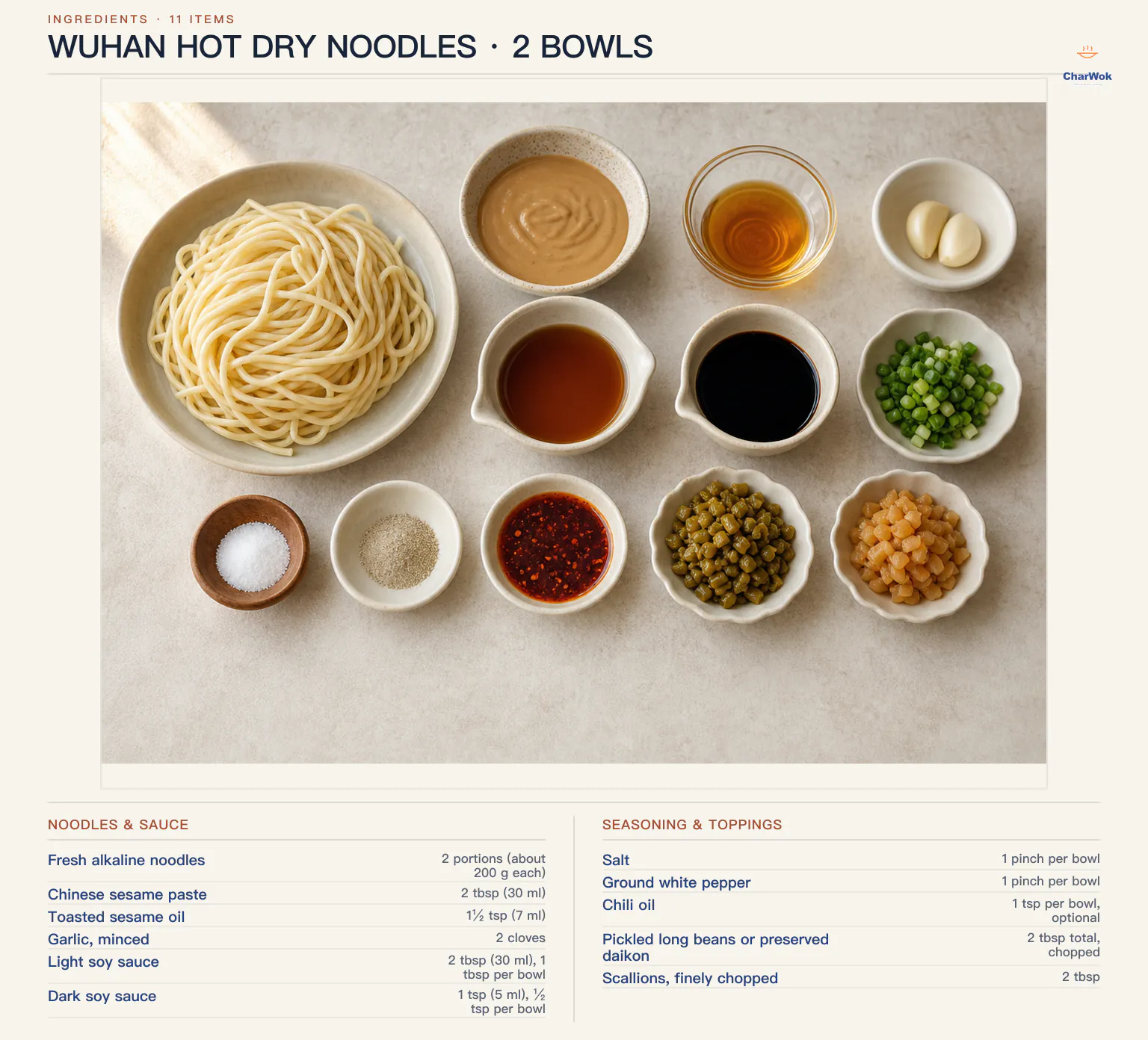
Ingredients for two bowls
Ingredients at a glance
| Ingredient | Amount | Notes / substitute |
|---|---|---|
| Fresh alkaline noodles | 2 portions (about 200 g each) | Dried ramen noodles or spaghetti if unavailable; round rice noodles for gluten-free |
| Chinese sesame paste | 2 tbsp (30 ml) | Toasted, unhulled seed paste; see substitutes below if you can't find it |
| Toasted sesame oil | 1½ tsp (7 ml) | Cuts and enriches the paste; use a good sesame oil |
| Garlic, minced | 2 cloves | Bloomed with hot water before serving |
| Light soy sauce | 2 tbsp (30 ml), 1 tbsp per bowl | Salt and umami; light soy sauce is the standard here |
| Dark soy sauce | 1 tsp (5 ml), ½ tsp per bowl | For color and a touch of sweetness; skip if you only have light |
| Salt | 1 pinch per bowl | To taste; the preserved toppings are already salty |
| Ground white pepper | 1 pinch per bowl | Warmer and less harsh than black |
| Chili oil | 1 tsp per bowl, optional | Highly recommended; a homemade chili oil is best |
| Pickled long beans or preserved daikon | 2 tbsp total, chopped | Classic Wuhan toppings; zhacai or pickled chilies as substitutes |
| Scallions, finely chopped | 2 tbsp | For color and a raw allium bite |
On the sesame paste, the heart of the bowl
The single ingredient you cannot fudge is the Chinese sesame paste. Don't confuse it with the tahini you'd use for hummus. Tahini grinds pale, untoasted, hulled kernels and lands pale, mellow, and faintly bitter. Chinese sesame paste works the opposite way: the seeds go in whole, hulls on, and they are roasted first, so the jar holds a dark, the color of strong coffee, aggressively nutty paste that is stiff enough to stand a chopstick in. Straight from the jar it is too thick to coat a noodle. You thin it with water, and as you stir something peculiar happens: the paste first seizes and looks broken, then with another tablespoon of water it suddenly loosens into a smooth, glossy sauce. Keep going until it falls in a slow ribbon. The sesame oil you measured for the dressing does double duty here: it flavors the paste and gives the thinned sauce something to cling with.
If your local store only stocks the blended peanut-and-sesame jars, those work fine, but pour the water in more sparingly, as peanut butter softens faster than sesame alone, so the blend loosens before you expect. In a real pinch, smooth peanut butter cut with toasted sesame oil and a little warm water will get you a passable dressing, though it tilts sweet. Do not try to substitute tahini alone; the bowl will read as flat and wrong.
How to cook the noodles so they bounce
The biggest flavor difference between a great bowl and a mediocre one is whether the noodles were overcooked. Alkaline noodles must come out firm, with real resistance when you bite through. Soft noodles collapse under the weight of the paste and turn the whole bowl to wallpaper paste within a minute.
- Bring a generous pot of water to a full, rolling boil. Use more water than feels reasonable, at least 2 liters for two portions. A large volume keeps the boil alive when the noodles go in, and that matters because temperature drop is what makes noodles release starch and turn mushy.
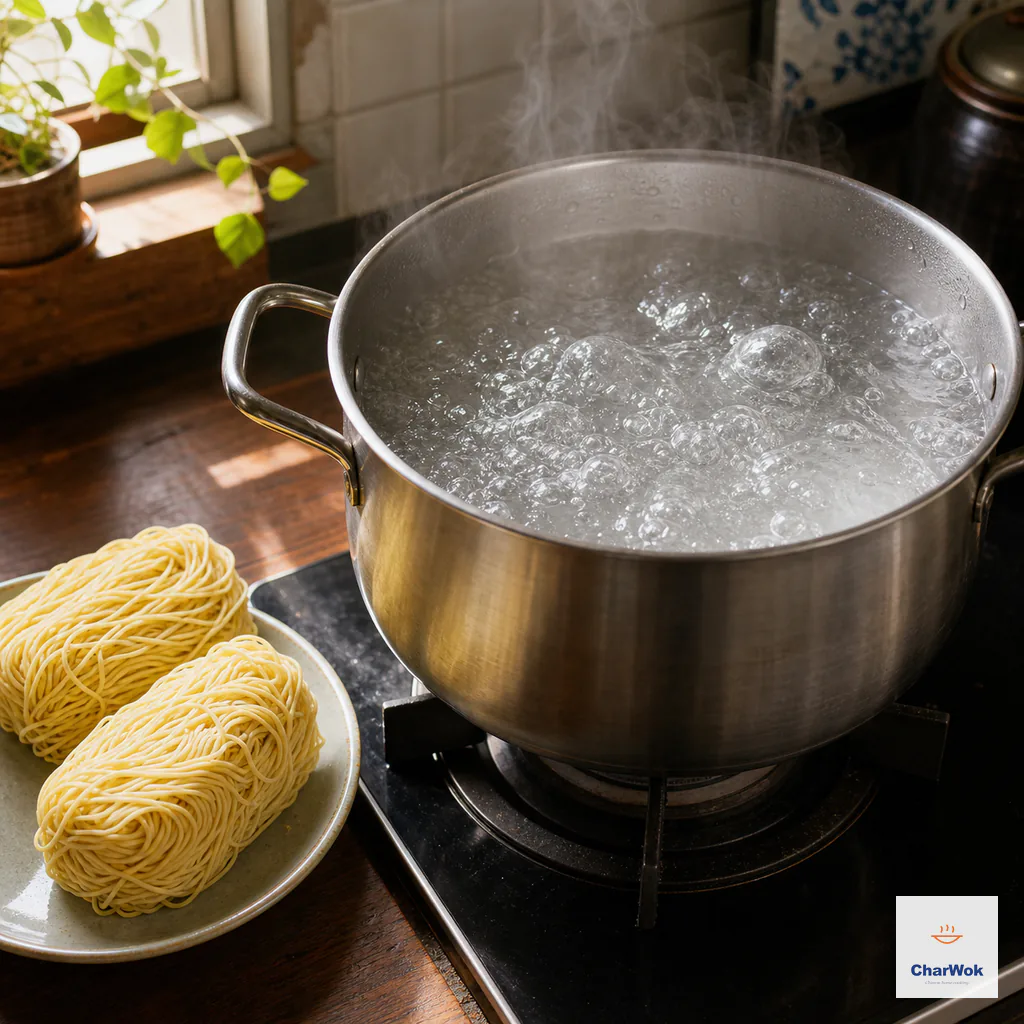
Use at least two litres of water for two portions and wait for a full rolling boil so the noodles do not turn starchy and soft.
- While the water heats, build the dressings. In one small bowl, combine the sesame paste, sesame oil, and 1 tbsp warm water, then stir patiently until smooth and ribbon-thin. In a second bowl, put the minced garlic. The moment the water begins to boil, ladle 2 tbsp of it over the garlic and set aside. Scalding the garlic this way tames the raw bite that would otherwise ambush you at 8 a.m., leaving the flavor round and sweet instead of acrid.
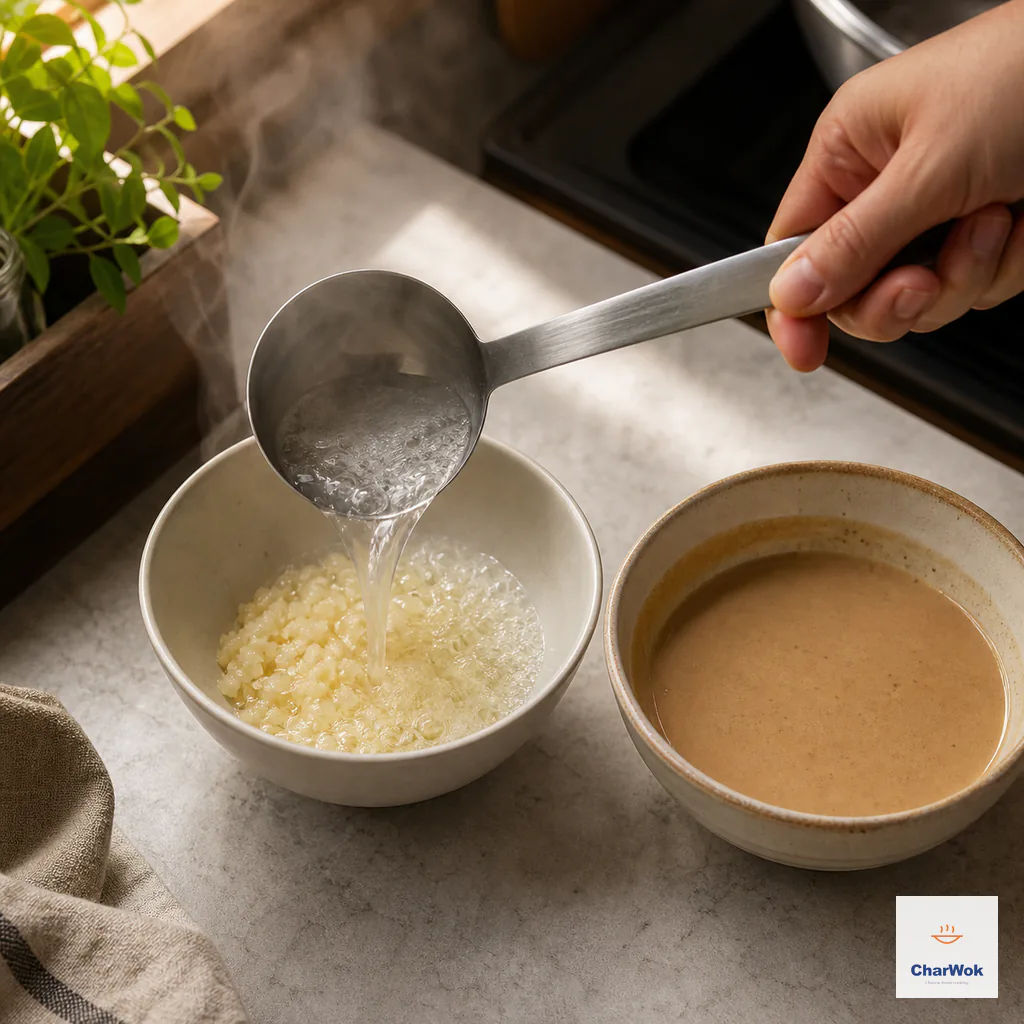
Thin the sesame paste first, then scald the minced garlic with two tablespoons of boiling water to round off its raw bite.
- Drop in the noodles and cook to the bite. Follow the timing on the packet for your cut of alkaline noodle, but pull them a shade before you think they're done. Test by lifting a strand and squeezing it between wet fingers: the center should still show a thread of resistance and bounce back when you let go, rather than collapsing into a paste. They keep softening from residual heat, so when in doubt, underdo it.
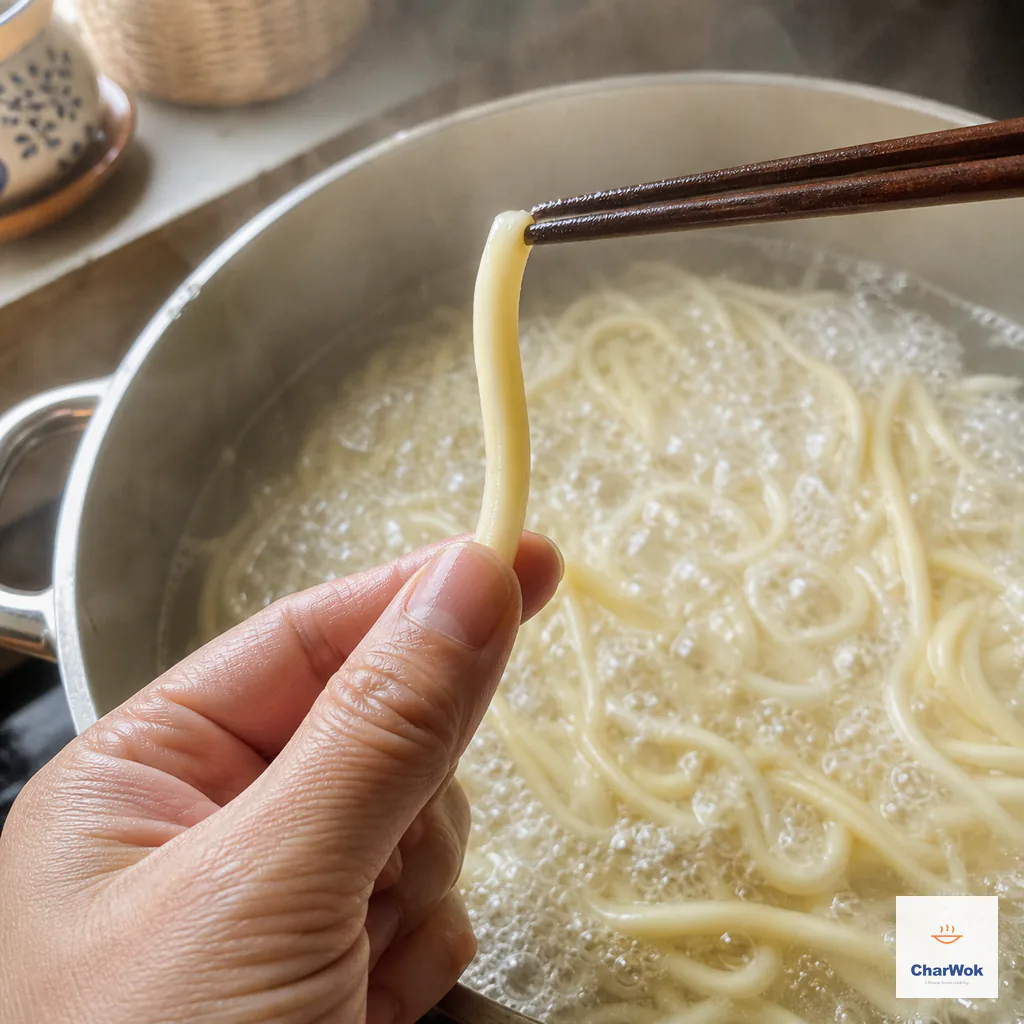
Pull the noodles while the centre still offers a little resistance and the strand springs back instead of collapsing.
- Drain and rinse immediately. Run the noodles under a tap for a few seconds to wash off the surface starch. This is the step most home cooks skip and it is the difference between separate, slick strands and a glued-together clump. Shake them well, then divide between two warm bowls.
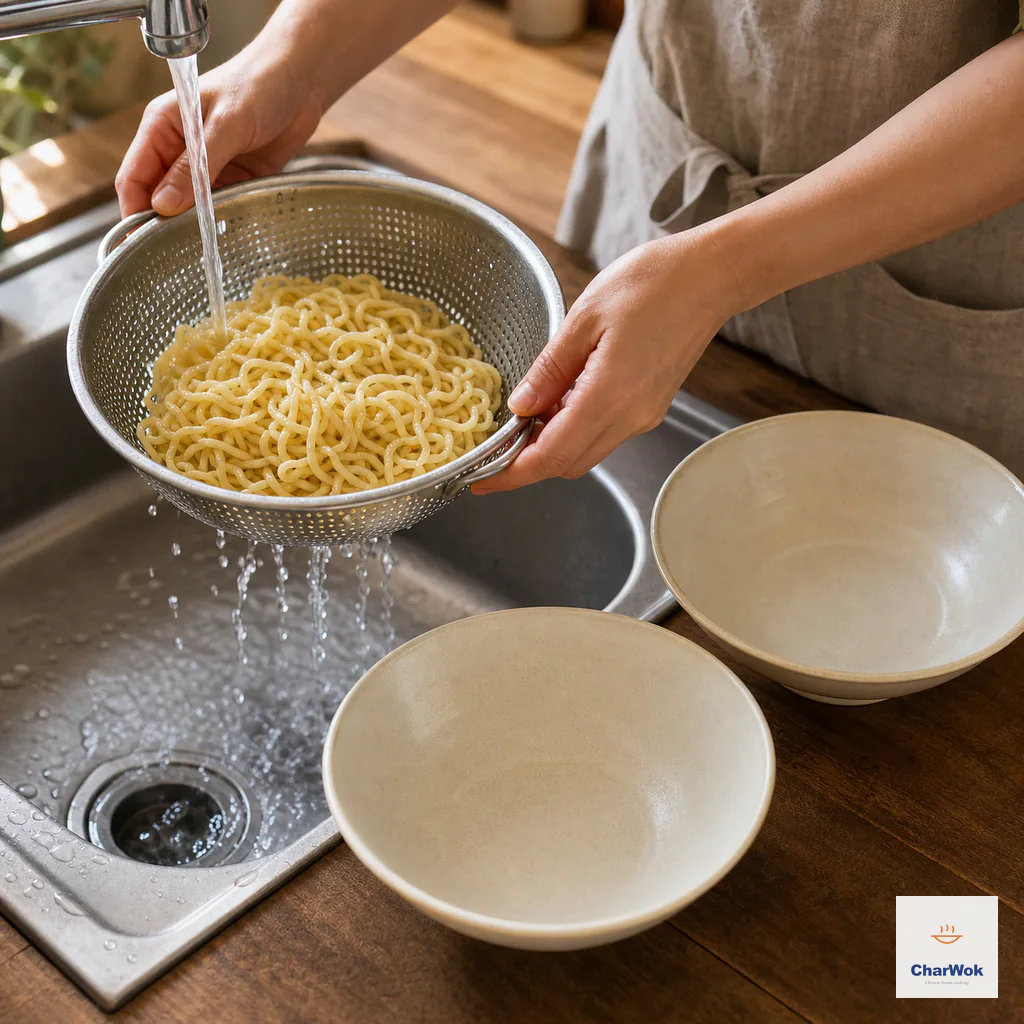
Rinse for only a few seconds to remove surface starch, shake very dry and divide immediately between two warm bowls.
- Dress each bowl, right now. To each portion add 1 tbsp light soy sauce, ½ tsp dark soy sauce, a pinch each of salt and white pepper, and a teaspoon of chili oil if you're using it. Add half the thinned sesame paste and half the garlic water, then the chopped preserved vegetables and scallions.
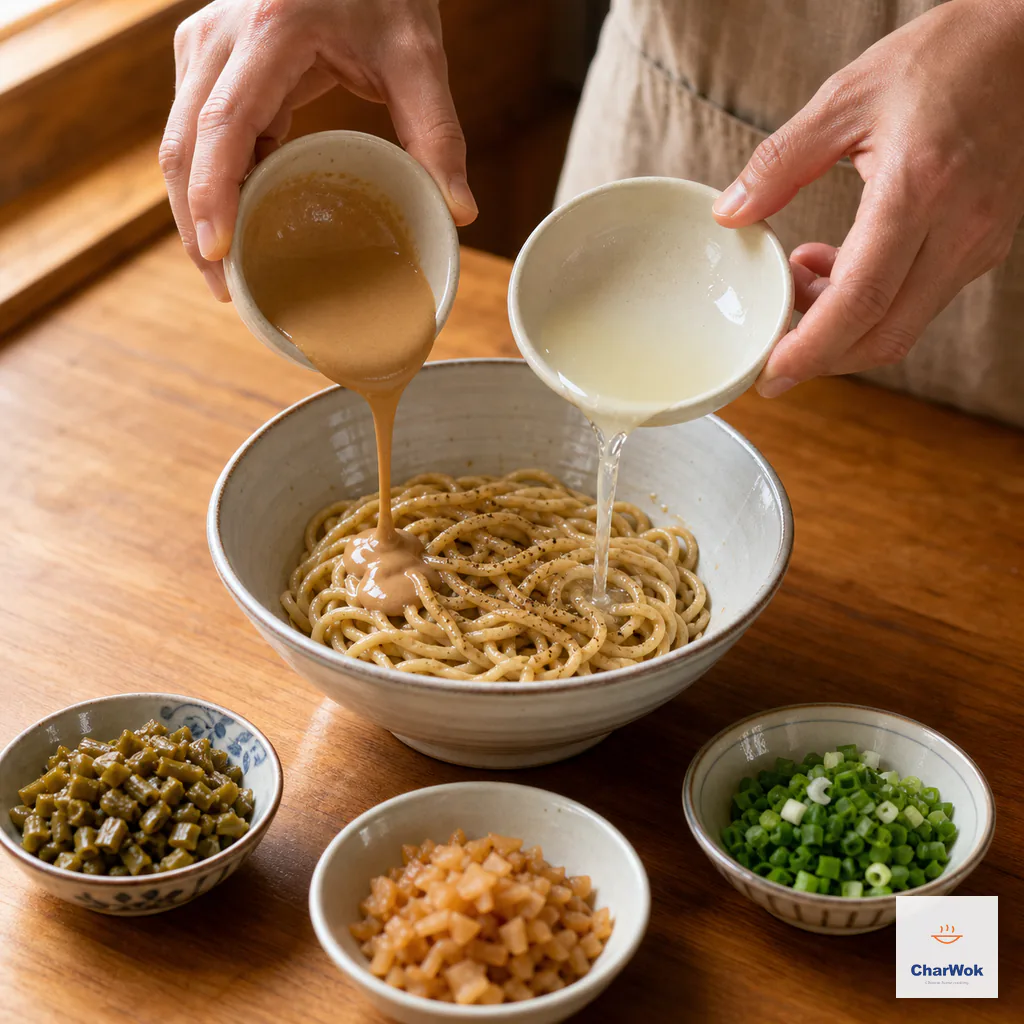
Season each bowl, then add half the thinned sesame paste and half the garlic water before the noodles lose their heat.
- Stir vigorously and eat at once. The paste and the noodle heat need to meet under active stirring for the sauce to coat every strand. Once mixed, the bowl waits for nobody.
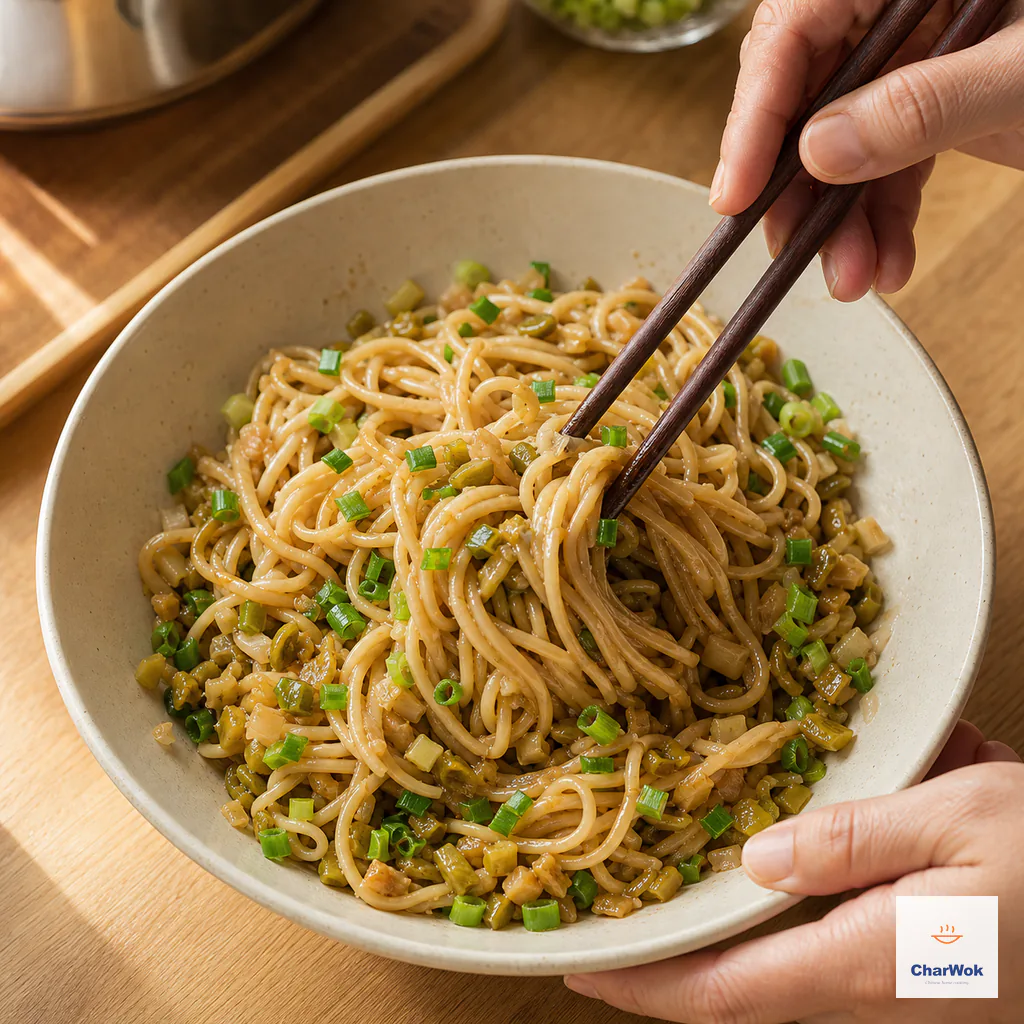
Add the crisp preserved vegetables and scallions, toss vigorously until every strand is coated and eat at once.
When things go wrong: troubleshooting
The paste turned gritty and won't smooth out. You added too much water too fast, or the water was cold. Start over with a fresh spoonful of paste and add warm water a teaspoon at a time, stirring through the ugly seizing stage. It will break and then come back. Patience, not more liquid, is the fix.
The noodles clumped into a single block by the second bite. Either you didn't rinse them, you dressed them too early, or you under-thinned the paste so it couldn't flow. Next time rinse under the tap, shake dry, and thin the paste until it falls in a slow ribbon before it ever touches the bowl.
The bowl tastes flat despite all the seasoning. The preserved toppings are doing most of the heavy lifting on salt and umami. If yours are bland or you skimped, the noodles will taste like paste on wheat. Add more chopped preserved radish or zhacai, or a few extra drops of soy and a small pinch of sugar to wake the sesame up. A bowl with no chili oil also reads as dull to most palates; add it even if you think you don't like heat.
The garlic is overpowering. You used raw garlic with no hot-water bloom, or too much of it. Bloom it in boiling water as described, and if it's still aggressive, let the garlic water sit five minutes and stir only the liquid into the bowl, leaving the solids behind.
The traditional two-stage method, for when you're feeding a crowd
There's a reason the Wuhan stalls move so fast, and it's worth borrowing when you have people over. The day (or morning) before, boil the noodles to the bite, drain, toss with a little sesame oil to keep them separate, and fan them cool on a tray. These pre-cooked noodles hold in the fridge for a couple of days. To serve, slip a portion back into fast-boiling water just long enough to take the chill off, then dress. This is genuinely faster than cooking to order, and the cold rest gives the strands a firmer, more separate character, the same reason cold leftover rice grains stay distinct in a frying pan while fresh rice turns to mush.
Variations and pairings
The bowl is forgiving within its own logic. A spoonful of Chinese chicken stock instead of plain hot water to bloom the garlic adds body and is a quiet upgrade some Wuhan stalls use. A teaspoon of Chinkiang vinegar cut into the dressing brightens the heaviness of the sesame, useful if your paste is especially dense. For toppings, the traditional pair is pickled long beans and preserved daikon radish, but quick pickled vegetables, chopped zhacai, or a spoon of doubanjiang all work as long as you keep the salty-crunchy principle intact.
If you want a fuller meal, hot dry noodles sit comfortably next to a small bowl of soup on the side, since the noodles themselves are dry. A clear beef noodle soup is more than you need at breakfast but right for dinner, and a plain egg drop soup works any time. For a different noodle mood entirely, the dressed-bowl family runs from Chongqing xiao mian on the spicy end through scallion oil noodles and zha jiang mian on the savory end, down to the cold Sichuan liang mian for summer. Hot dry noodles are the warm, nutty, no-broth member of that lineage, and once you can make them you understand all of them better.
Storage and reheating
Store the components separately, never mixed. Pre-cooked, oiled noodles keep in the fridge for a couple of days; the thinned sesame paste keeps about the same in a sealed jar (stir again before using, it separates). Leftover fully dressed noodles do not reheat well, because the paste re-absorbs into the starch and turns gummy. If you must try, run leftover dressed noodles briefly through boiling water, drain, and re-dress with a little extra paste and soy. Honestly, it's a dish built for eating the moment it's stirred.
Frequently asked questions
Can I make hot dry noodles without alkaline noodles?
Yes, but expect a trade-off. Dried spaghetti gets close on chew, though it stays pale where real alkaline noodles are golden, and round rice noodles work for a gluten-free version called Re Gan Fen. You'll lose the faintly mineral bite that alkali gives, but the sesame dressing carries the bowl.
Is the chili oil really optional?
Technically yes, practically no. The original dish is not chili-hot, but a small spoon of chili oil adds aroma and rounds out the richness of the sesame. I add it every time.
What can I use instead of Chinese sesame paste?
A blended peanut-and-sesame jar works with less thinning water. In a true pinch, smooth peanut butter loosened with toasted sesame oil and warm water is acceptable but sweeter than the original. Plain tahini is not a good substitute on its own.
Can I dress the bowls in advance?
No. The paste seizes and the noodles stick within minutes of contact. Build everything else ahead, then dress and stir at the last second.
Why rinse the noodles after cooking?
Washing off surface starch stops the strands from glueing together and lets the dressing coat them evenly. Skip it and you get one starchy clod instead of separate, sauced noodles.