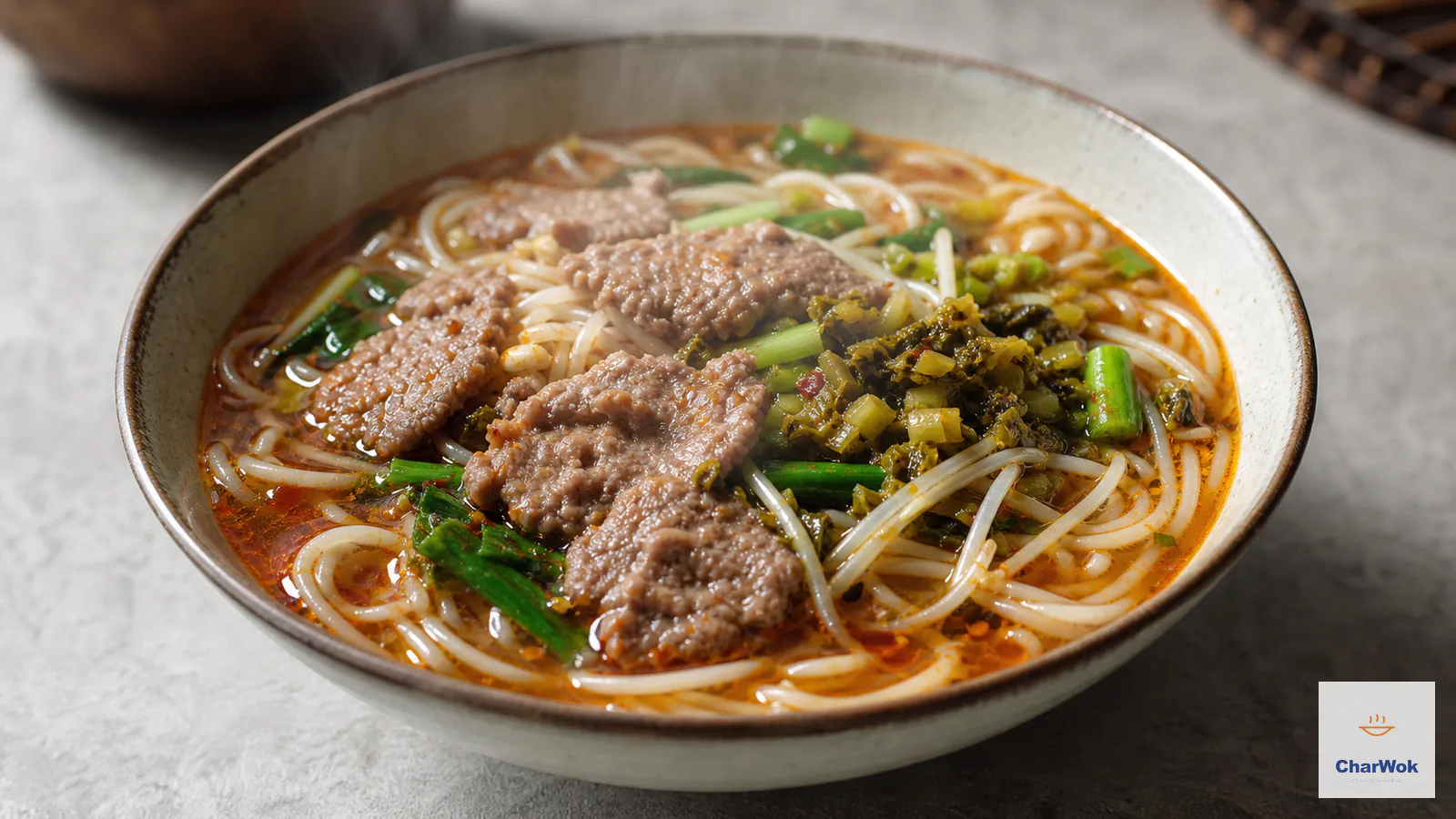
This Yunnan-style rice noodle soup combines rice noodles, pickled mustard greens, doubanjiang, thin ground-pork patties, chives and bean sprouts in a savoury broth. It is a practical home version rather than a ceremonial tableside preparation. The two checkpoints that matter are noodle texture and the internal temperature of the meat patties.
Unlike wheat noodles, rice noodles have no gluten network to protect them from overcooking. Dried noodles therefore get a soak, a brief parboil and a cold rinse before their short finish in the soup. Pickled mustard greens bring acidity, doubanjiang supplies fermented savouriness and heat, and chili oil stays optional at the table.
Makes two large bowls with about 23 minutes of kitchen work, plus at least 4 hours of cold soaking when using dried noodles. Pull the noodles while they still have slight resistance, rinse them cold, and use a thermometer rather than colour or a fixed minute count to check the meat.
Why this dish rewards fussing
Rice noodles have no gluten, which is the entire reason people love them and the entire reason they fall apart. Starch, not protein, holds them together. When starch gelatinizes, it swells and softens; cook it past the gel point and the noodle's structure collapses into starch slurry that thickens and clouds your broth. So the technique is to cook in two stages: a parboil to just-under-done, a cold-water shock to set the surface, then a short finish in the hot soup. The noodle absorbs flavor at the end without disintegrating. This same two-stage logic is why a Chongqing xiao mian cook blanches wheat noodles separately before dressing them.
The pork needs a little structure before it enters the soup. Mixing it with cornstarch, salt, stock and white pepper until tacky helps the thin patties hold together and stay tender. Shape them between two spoons and slide them into a gentle simmer so the broth does not break them apart.
Ingredients
Ingredients at a glance
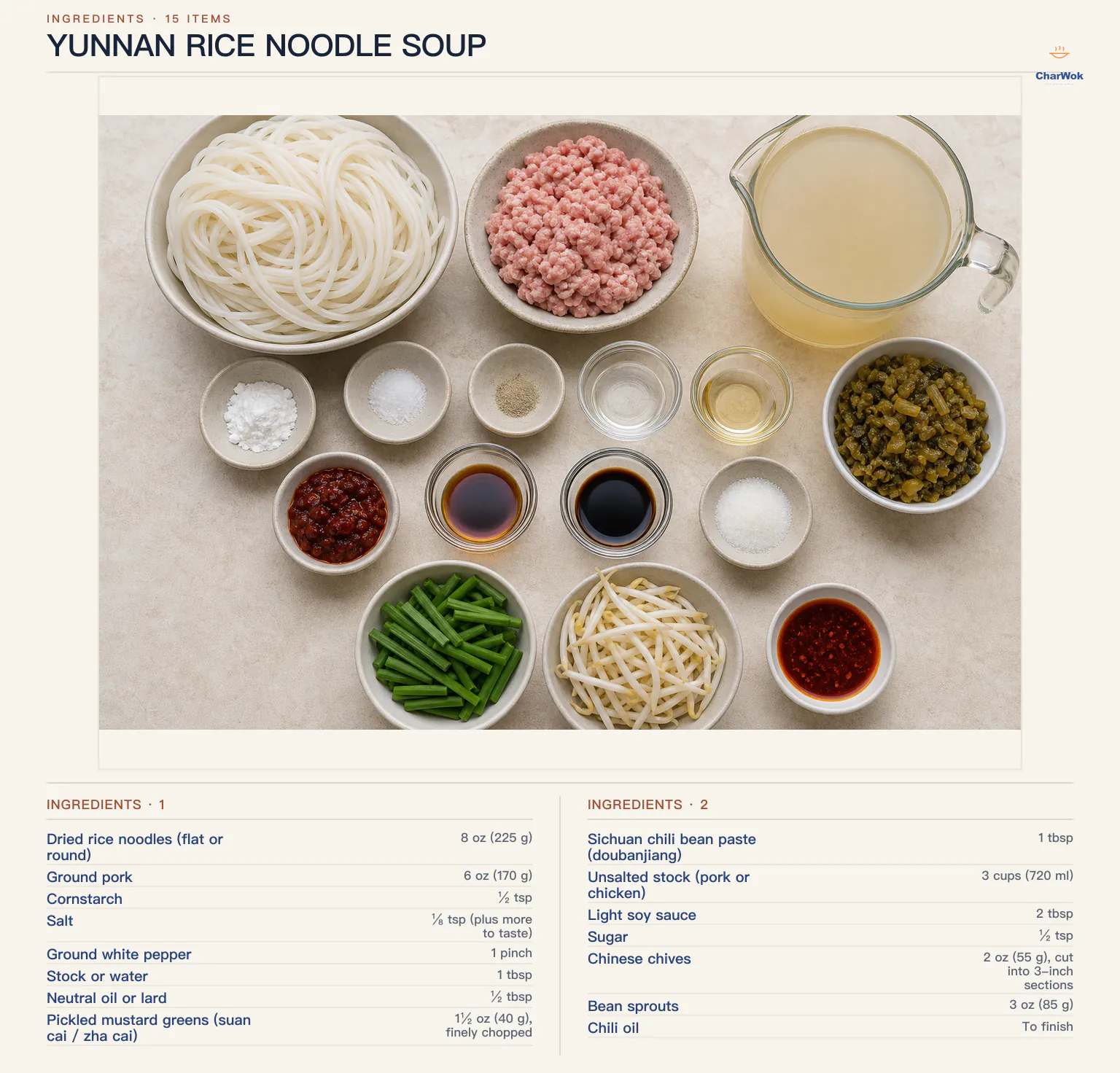
| Ingredient | Amount | Notes / substitute |
|---|---|---|
| Dried rice noodles (flat or round) | 8 oz (225 g) | Fresh rice noodles work too (skip the soak). Vermicelli is too thin and turns to mush; don't substitute. |
| Ground pork | 6 oz (170 g) | Beef, chicken, or turkey all work. Pork gives the richest broth for the least effort. |
| Cornstarch | ½ tsp | Seals the meat so it poaches tender instead of turning grainy. |
| Salt | ⅛ tsp (plus more to taste) | For the meat seasoning only. |
| Ground white pepper | 1 pinch | Warmer and less sharp than black pepper in soup. |
| Stock or water | 1 tbsp | To loosen the meat mixture. |
| Neutral oil or lard | ½ tbsp | Lard adds body; any neutral oil is fine. |
| Pickled mustard greens (suan cai / zha cai) | 1½ oz (40 g), finely chopped | The sour backbone. Find them jarred at Asian grocers. Rinse if very salty. |
| Sichuan chili bean paste (doubanjiang) | 1 tbsp | Pixian-style if you can find it. Adds depth and slow heat. |
| Unsalted stock (pork or chicken) | 3 cups (720 ml) | Homemade chicken stock makes a noticeable difference; water works but the bowl reads thinner. |
| Light soy sauce | 2 tbsp | For salt and umami. See light vs. dark soy sauce if you're unsure which bottle to grab. |
| Sugar | ½ tsp | Balances the salt and sour; do not omit. |
| Chinese chives | 2 oz (55 g), cut into 3-inch sections | Garlic chives, not the flowering kind. Scallion greens are a fair substitute. |
| Bean sprouts | 3 oz (85 g) | Rinsed, tail-on is fine. |
| Chili oil | To finish | Homemade is worth it here. |
How to make it
- Soak and parboil the noodles. If using dried noodles, soak them in cold water for at least 4 hours, or overnight in the fridge. Drain, then drop them into a full rolling boil. Test by pulling one noodle and bending it between chopsticks: it should snap with slight resistance, not fold like wet paper. Immediately rinse under cold tap water to stop the cooking. Set aside. Skip the soak and parboil if you have fresh rice noodles.
- Season the meat. Combine the ground pork with the cornstarch, salt, white pepper and 1 tablespoon of stock. Stir in one direction until the mixture turns tacky and lifts as one mass. Keep it refrigerated if the broth is not ready yet.
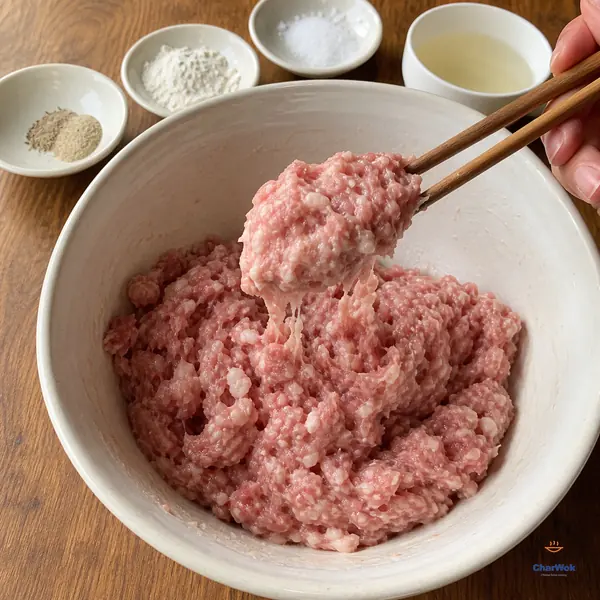
Stir the pork in one direction with the cornstarch, salt, white pepper and tablespoon of stock. Keep beating until the mixture turns tacky, rises with the chopsticks as one cohesive mass and shows only short meat strands; that structure helps each thin patty stay tender and intact in the soup.
- Build the broth. Heat the oil in a wok or medium pot over medium heat. Add the chopped pickled mustard greens and fry for about 20 seconds. Push them aside, add the doubanjiang and stir over low heat until fragrant without scorching it.
- Add liquid and season. Pour in the stock, scraping the pot to lift the fond. Add the light soy sauce and sugar. Bring it to a full boil, then lower to a steady simmer.
- Poach and check the meat. Shape small portions into thin, loose patties between two spoons and slide them into the simmering broth. Keep the broth at a gentle simmer. Start checking when the patties look opaque, inserting an instant-read thermometer sideways into several of the thickest pieces. Ground pork or beef must reach 160°F (71°C); ground chicken or turkey must reach 165°F (74°C). Colour and a one-minute estimate are not doneness tests.
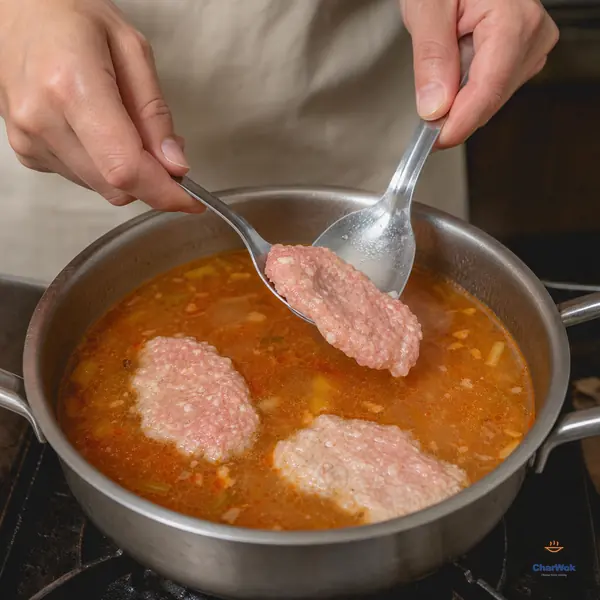
Press a small portion into a thin loose oval and slide it into gently simmering broth. When the patties look opaque, check several thick centres from the side with an instant-read thermometer: ground pork or beef must reach 160°F (71°C), and ground chicken or turkey 165°F (74°C). Colour and a one-minute estimate are not safety tests.
- Finish the noodles and greens. Once the meat has reached its safe temperature, add the parboiled noodles, chives and bean sprouts. Simmer gently for about a minute, just until the noodles finish cooking and the chives wilt. Taste before adding salt because the doubanjiang, soy and pickled greens are already salty.
- Serve. Divide between two large bowls. Finish with chili oil to taste and serve immediately, before the noodles absorb too much broth.
When it goes wrong, and how to fix it
Most problems come from the same few points: noodle texture, simmer strength and seasoning balance.
- Noodles turn to mush. You overcooked the parboil or skipped the cold shock. The fix is upstream: pull them earlier than feels right, because they'll cook another minute in the soup. The cold rinse is not optional: it sets the surface starch into a thin gel that holds the noodle together during the final simmer.
- Broth is cloudy and thick. Two causes. Either the noodles broke down and shed starch (see above), or you boiled hard instead of simmering after the meat went in. A gentle simmer keeps the meat from shedding protein scum. Skim any foam if it forms.
- Broth tastes flat. Almost always under-fried aromatics. The doubanjiang and pickled greens need those 15 to 20 seconds in hot oil to release their flavor into the fat, which then carries it through the whole pot. If yours tastes one-dimensional, fry them longer next time, and check that your doubanjiang is a real fermented one, not a chili-paste imitator.
- Meat is gray and grainy. You skipped the cornstarch or dropped the meat in loose. The thin gel coating is what keeps ground meat tender in liquid; without it, the proteins seize and leach color. Shape into thin patties, not lumps.
- Too salty. Pickled greens and doubanjiang vary wildly in salt. Taste your broth before adding the soy sauce and pull back if needed. You can dilute with a little hot water or stock at the end.
Variations and what to serve alongside
This is a flexible bowl. These variations preserve the same cooking sequence:
- Vegan or vegetarian. Skip the pork and use vegetable or mushroom stock. Add sliced shiitake and napa cabbage for body, and use doubanjiang and pickled greens for the savoury base.
- Beef or poultry. Ground beef can replace pork and uses the same 160°F (71°C) minimum. Ground chicken or turkey must reach 165°F (74°C). Check several patties with a thermometer.
- More vegetables. Thinly sliced napa cabbage, snow peas or baby bok choy all work. Add firm vegetables early and tender greens with the chives.
- Pair it with. A small bowl makes a light meal on its own. For something more, serve with chive pockets, egg drop soup or a cold cucumber salad.
If you want to wander into neighboring traditions, the same rice-noodle-in-spicy-broth idea shows up across the region. The hot and sour glass noodle soup (suan la fen) uses sweet potato starch noodles and a black-vinegar sharpness; hot and sour wheat noodles take the same idea onto a different noodle; and spicy beef noodle soup is the richer, slow-cooked cousin. For a non-soup night, the spicy vermicelli stir-fry or egg fried rice noodles use the same noodle family in a dry form.
Storing and reheating
Rice noodles keep absorbing liquid, so store them separately from the broth. Transfer the broth and meat to shallow containers and refrigerate within 2 hours of cooking, or within 1 hour when the temperature is above 90°F (32°C). Use refrigerated leftovers within 3 to 4 days. Reheat the broth and meat to 165°F (74°C), measured in several places; soups can be brought to a rolling boil. Add only the portion of noodles you need and warm them briefly. These storage and reheating limits follow the USDA leftovers guidance.
The seasoned raw pork mixture can be prepared one day ahead if it is covered and kept at 40°F (4°C) or below. Follow the storage directions on opened jars of pickled greens and doubanjiang rather than assuming they are shelf-stable after opening.
Questions home cooks ask
Can I use fresh rice noodles instead of dried? Yes. Skip the soak and parboil, rinse the fresh noodles, and add them only long enough to heat through at the end.
What can replace pickled mustard greens? Finely chopped kimchi or rinsed sauerkraut can supply the sour note, although each changes the flavour. Taste the broth before adding salt.
Do dried rice noodles need an overnight soak? No. Four hours in cold water is enough; an overnight soak in the refrigerator is simply convenient. Follow the package if its directions differ.
How can I make the soup milder? Reduce the doubanjiang and omit the finishing chili oil. Add a little more stock if needed, then adjust soy sauce and salt after tasting.
How do I know the meat patties are safely cooked? Insert an instant-read thermometer sideways into several thick patties. Ground pork or beef must reach 160°F (71°C); ground chicken or turkey must reach 165°F (74°C). Do not rely on colour or a one-minute estimate. These are the FoodSafety.gov safe minimums.
Can I prepare the meat mixture ahead? Yes. Cover it and refrigerate at 40°F (4°C) or below for up to one day, then cook it to the temperature required for the meat you used.
The bottom line
The noodle and meat checkpoints are different: use texture and package guidance for the rice noodles, then use a thermometer for the patties. Keep chili oil at the table so each bowl can be adjusted without changing the base soup.