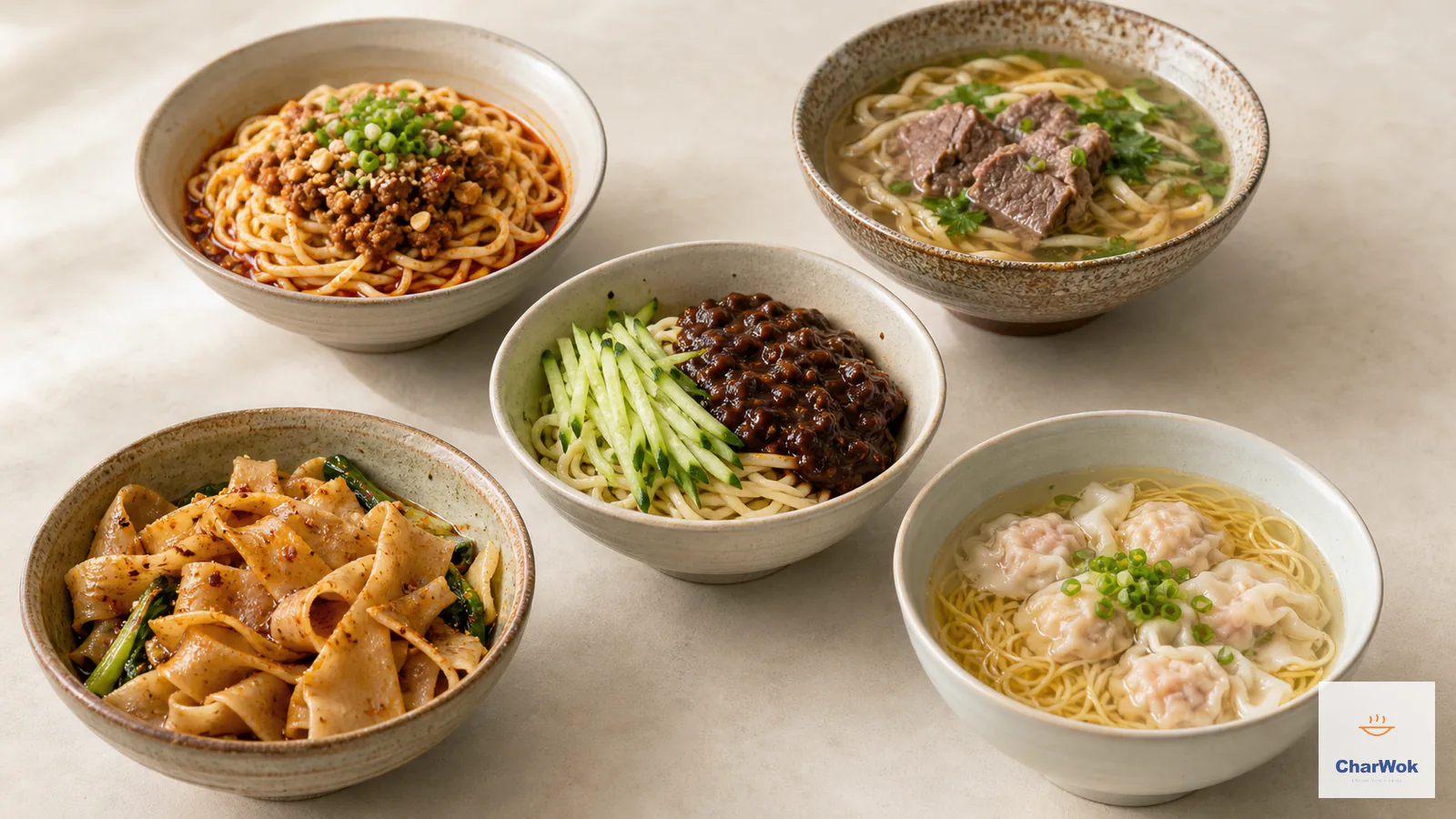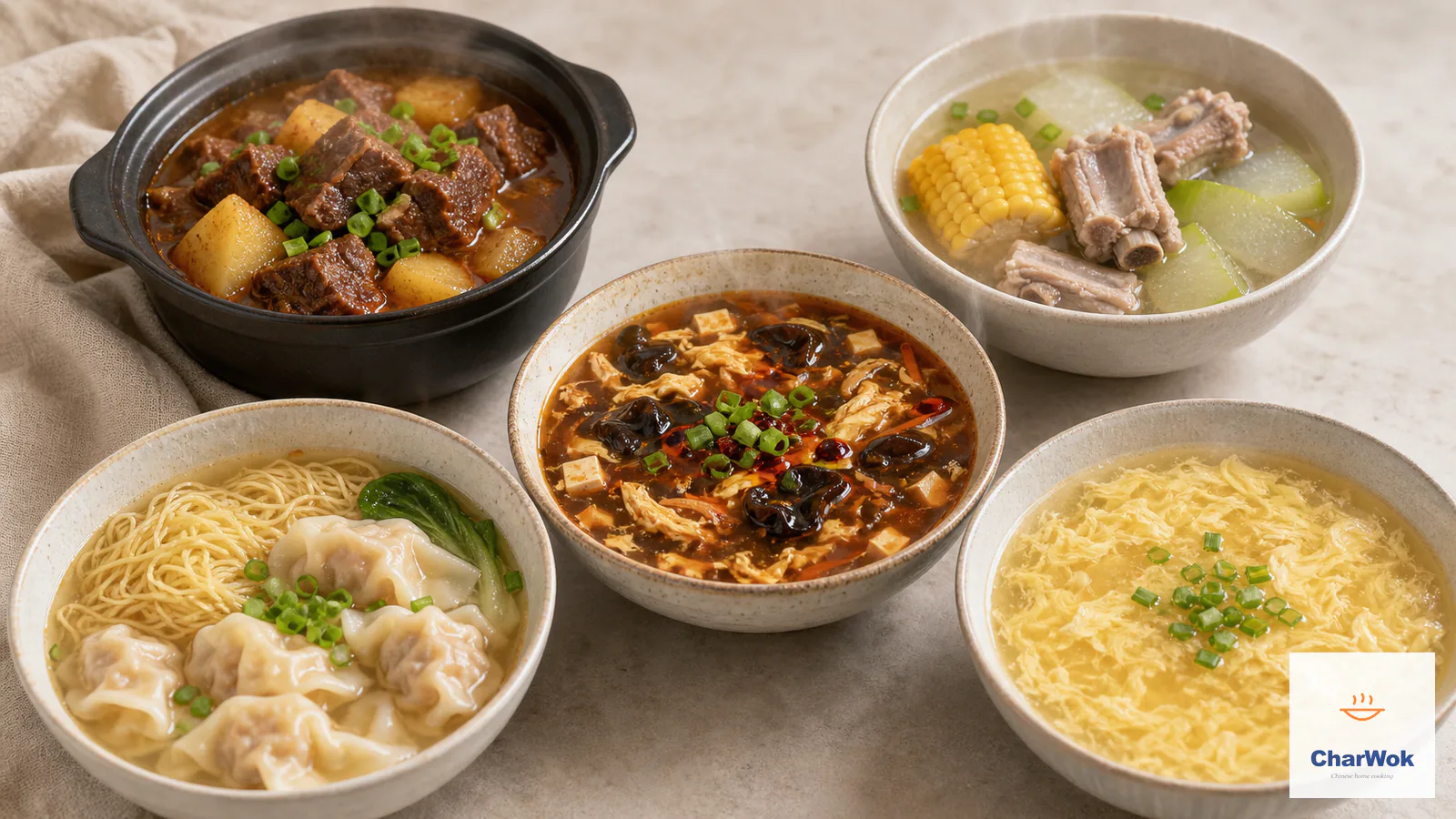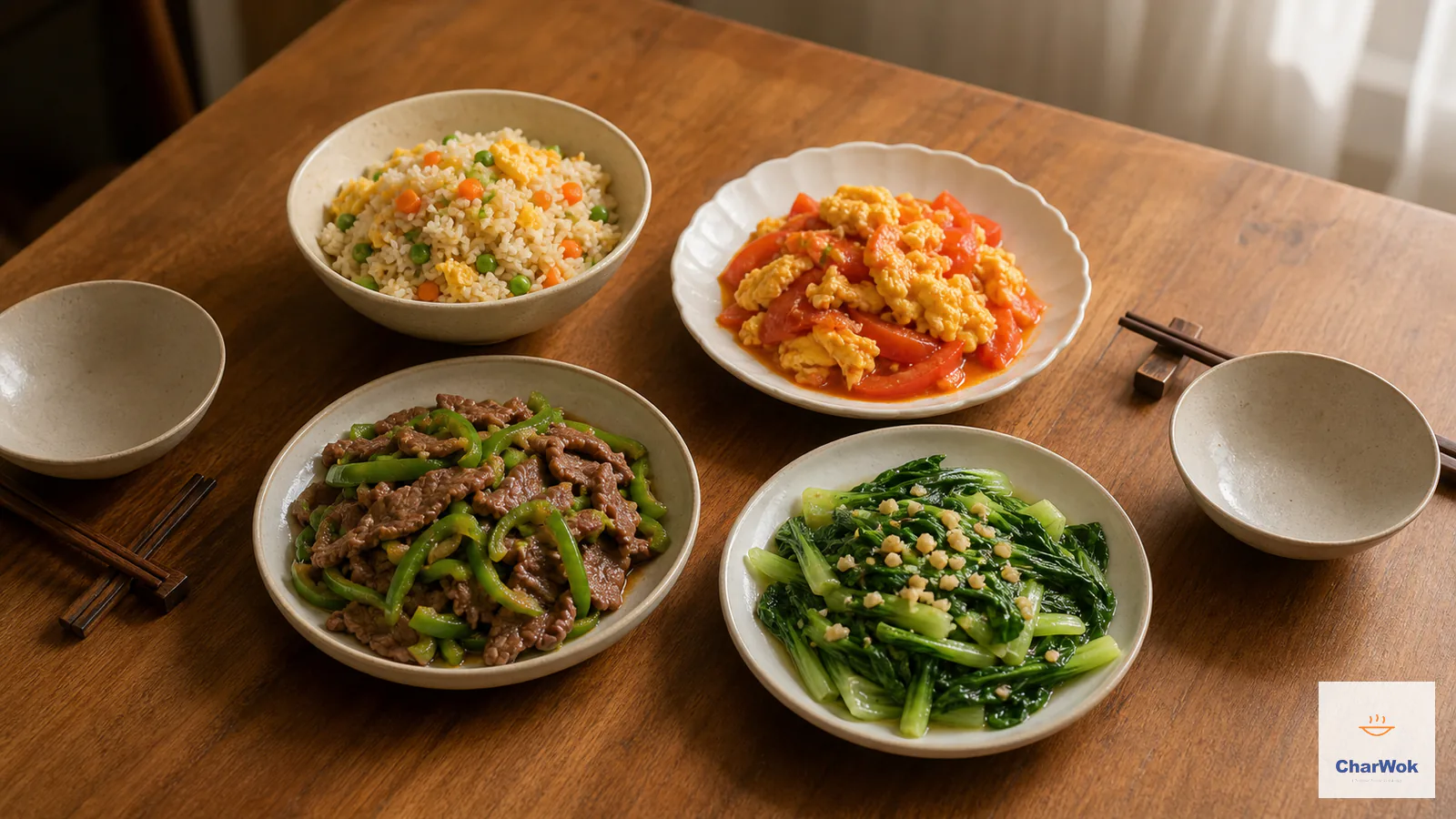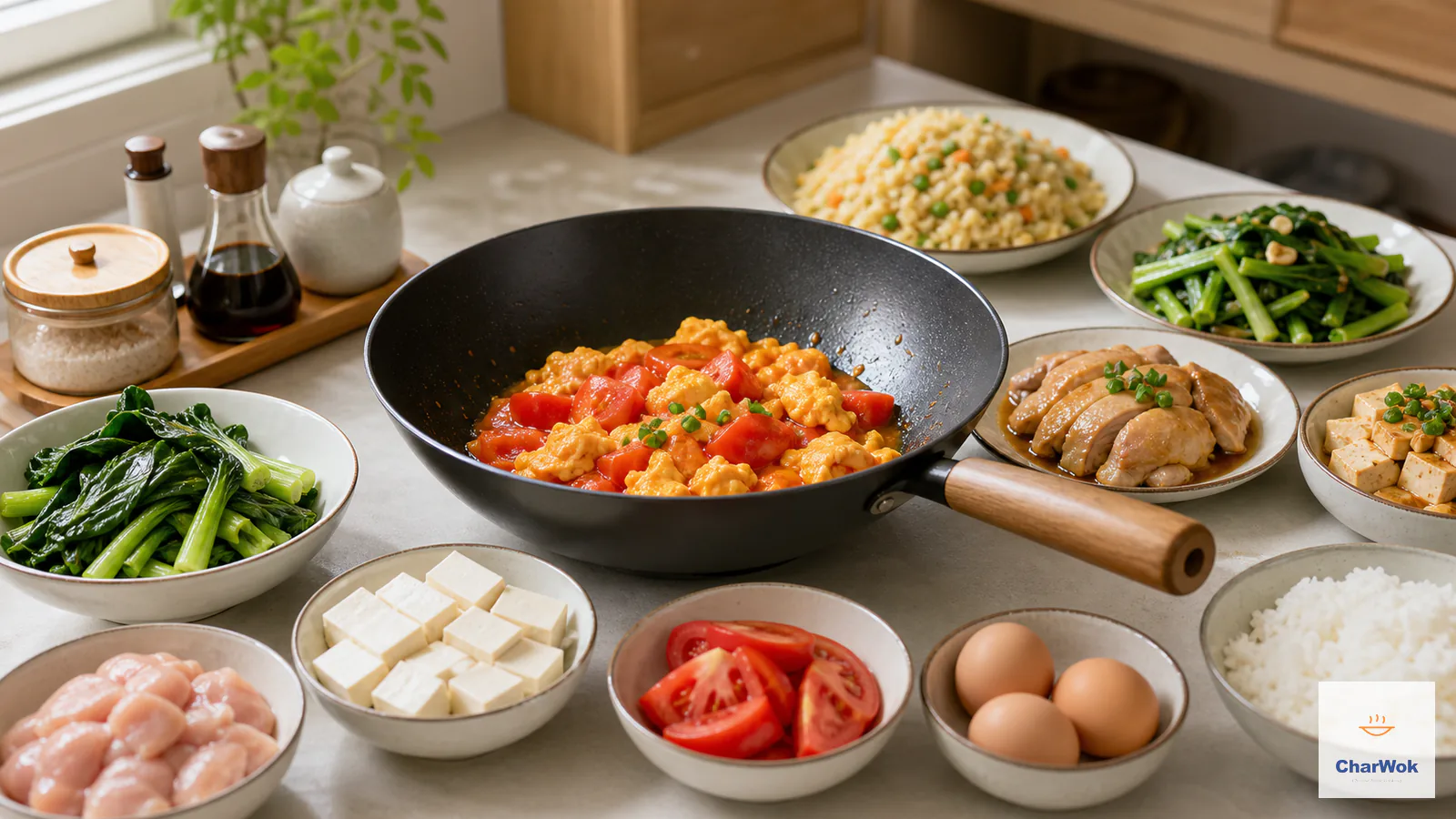
Most people who give up on Chinese home cooking quit at the same moment: staring at a bottle of dark soy sauce they bought once and never opened again, convinced the dish needs fifteen more bottles just like it. It does not. The dishes that actually teach you the cuisine, the ones worth learning first, lean on three or four pantry items and one technique you can repeat until it is automatic. This guide is built around those dishes, organized by what each one teaches you, so you finish each recipe a noticeably better cook than when you started.
I have cooked every dish below dozens of times in a home kitchen, and I have ruined most of them at least once. That matters here. The beginner list is not a random pile of "easy" recipes. It is a sequence. Start with cold dishes to learn seasoning balance, move to eggs and stir-fries to learn heat control, and finish with noodles and fried rice to learn how to manage a wok under time pressure. Skip ahead and you will hit the same wall every new cook hits: a pile of soggy, under-seasoned food and no idea which step went wrong.
At a glance: cook the six flagship dishes in order. The whole set uses fewer than ten pantry staples, and most come together in under 15 minutes of active cooking. If you can hold a stir-fry for 90 seconds without panicking, you can cook 80% of everyday Chinese food. The dishes that look hardest, like shrimp and egg stir-fry, are usually the ones that teach the single most transferable skill.
What "easy" actually means in a Chinese kitchen
Beginner Chinese cooking guide at a glance
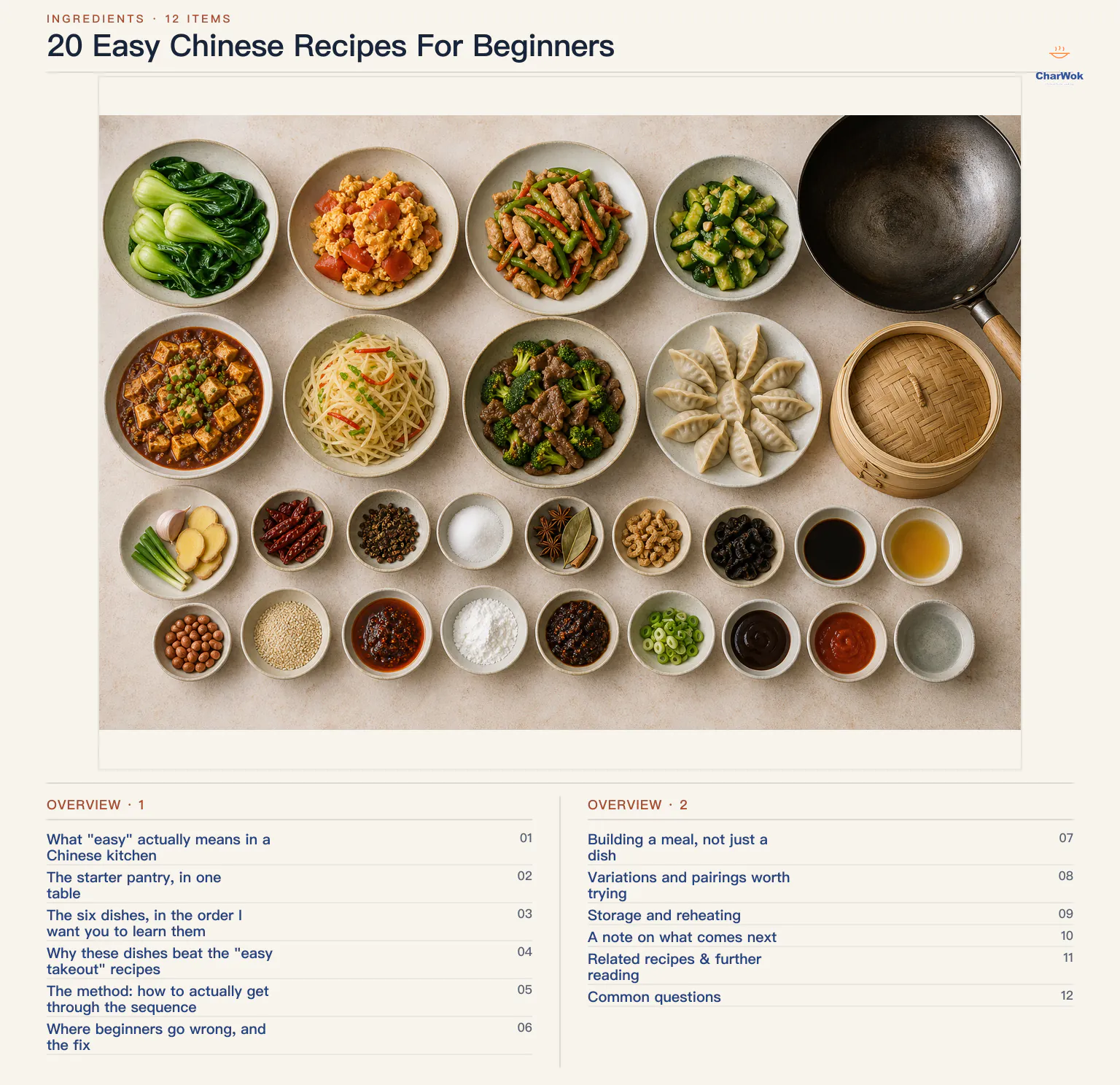
Easy is not the same as short. A dish with two ingredients and three steps can still fail if your heat is wrong or your knife cut is uneven. So when I call a recipe beginner-friendly, I mean three specific things: the ingredient list is short and the items are at any American supermarket, the timing is forgiving, and the failure mode is obvious enough that you can taste what went wrong and fix it next time.
What I do not mean is that you can ignore technique. The gap between a flat tomato-egg stir-fry and a great one is about thirty seconds of heat and one decision about when to add the sugar. That is the whole game. Once you see it, you start seeing it everywhere, in the garlic-and-greens stir-fry, in the fried rice, in every quick dish that comes out of a wok.
The starter pantry, in one table
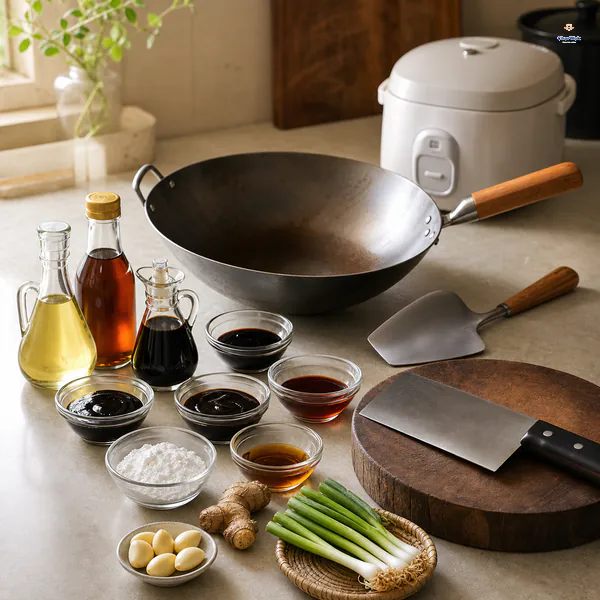
Start with one workable pan, a knife and spatula, then build a compact pantry of sauces, starch and fresh aromatics; use the article table as the exact shopping reference.
Before the first dish, stock these. Once you have them, you can cook the majority of the recipes below without another shopping trip. I am opinionated about brands and types where it actually changes the result.
| Ingredient | Amount to start | Notes / what to buy |
|---|---|---|
| Light soy sauce | 1 bottle (500 ml) | The workhorse for salt and umami. Avoid "less sodium" versions for now; they throw off seasoning ratios. Pearl River Bridge or Lee Kum Kee are reliable. |
| Dark soy sauce | 1 small bottle | Used in tiny amounts for color, not salt. Thicker and molasses-like. A bottle lasts months. |
| Shaoxing wine | 1 bottle (500 ml) | Deglazes and rounds out meat flavors. Cooking-grade is fine. Dry sherry is the closest Western substitute. |
| Toasted sesame oil | 1 small bottle | Finishing oil, never a frying oil. It burns fast and turns bitter. Add at the end. |
| Oyster sauce | 1 bottle | The shortcut to savory, glossy sauces. Lee Kum Kee Panda brand is the household standard. |
| Chinese black vinegar (Chinkiang) | 1 bottle | Malty and tangy, used for dipping and cold dishes. No real Western substitute; rice vinegar is sharper but workable. |
| Neutral cooking oil | 1 large bottle | Peanut, canola, or avocado oil for high-heat stir-frying. Do not use olive oil; its smoke point is too low. |
| Cornstarch | 1 box | For velveting meat and thickening sauces. Potato starch works and gives a slightly clearer glaze. |
| Garlic, ginger, scallions | Always on hand | The aromatic trinity. Buy fresh; the dried versions taste like dust. |
That is the foundation. With those nine things plus rice and noodles you can already make tomato egg stir-fry, egg drop soup, and a credible weeknight dinner. Everything else is a flavor accent on top of this base.
The six dishes, in the order I want you to learn them
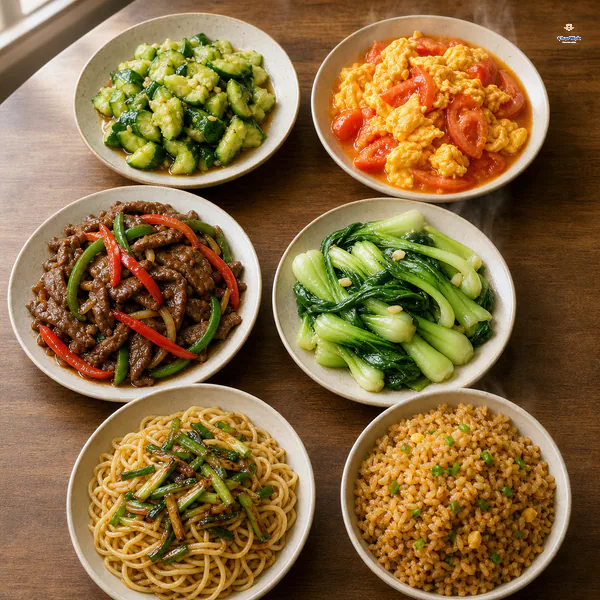
Move from seasoning balance in cucumber to gentle eggs, velveted beef, fast greens, bowl-built noodles and finally high-heat fried rice; each dish isolates one reusable skill.
Here is the learning sequence. Cook each one at least twice before moving on. The second attempt is where the lesson sticks.
- Cold dishes teach seasoning balance. Start with smashed cucumber salad. Because nothing is cooked, you taste every seasoning decision directly and can fix it on the spot. This is where you learn how soy, vinegar, sesame oil, and sugar interact before heat changes everything.
- Eggs teach gentle heat. Steamed eggs and tomato-egg stir-fry both hinge on pulling the pan off the heat early. Eggs overcook in seconds. Once you can keep Chinese eggs silky, you understand temperature control.
- Velveting teaches meat texture. Black pepper beef stir-fry looks intimidating but is the simplest place to learn the cornstarch marinade that makes restaurant beef tender. Without it, home-cooked beef turns gray and chewy. With it, the same cut turns soft.
- Greens teach fast wok work. Bok choy stir-fry and lettuce with oyster sauce are done in under three minutes. They teach you to have everything prepped before the heat goes on, because there is no time once it does.
- Noodles teach sauce-on-pasta thinking. Scallion oil noodles and Yang Chun noodle soup show that the flavor lives in the bowl, not the pot. Cook the noodles plain, build the sauce separately, combine. It reframes how you think about pasta.
- Fried rice teaches high heat and leftover management. Soy sauce fried rice is the final exam. It demands a screaming-hot wok, day-old rice, and a steady hand. Get this right and everything else feels easy.
Why these dishes beat the "easy takeout" recipes
The dishes above are not just simple. Each one isolates a single skill the rest of the cuisine depends on. Skip cucumber salad and you will never quite trust your own seasoning. Skip the beef velveting step and every meat stir-fry after it disappoints you. I learned this the hard way. My first year of Chinese cooking, I jumped straight to kung pao chicken because it sounded impressive, and I produced a pan of tough, sticky chicken in a sauce that tasted burnt. The fix was not a better recipe. It was going back to learn velveting on a simpler dish.
The other reason to start here: these are the dishes Chinese families actually cook on a Tuesday. Tomato and egg is the most-cooked home dish in northern China for a reason. It is cheap, fast, and genuinely good. Treating it as a building block rather than a throwaway beginner recipe is the whole shift in mindset.
The method: how to actually get through the sequence
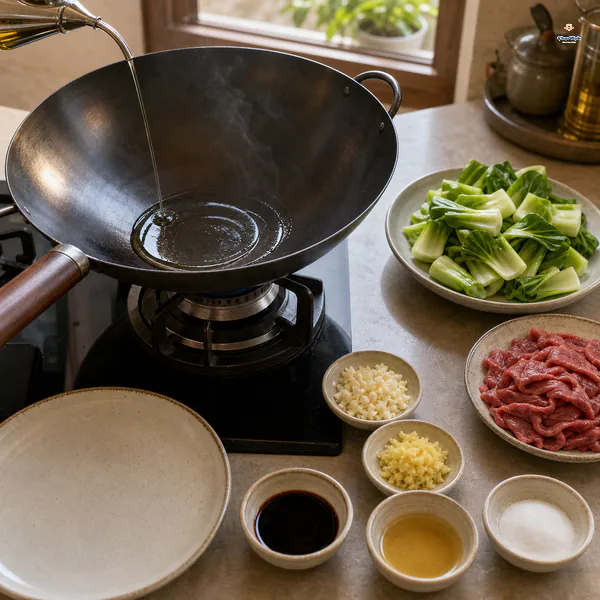
Cut and portion everything before the burner goes on, keep a clean plate ready, then heat the empty wok before adding oil and wait for the oil to shimmer.
- Mise en place first, always. Cut everything, mix the sauce in a small bowl, have a clean plate ready. Once the wok is hot you cannot stop to mince garlic. This single habit fixes more beginner failures than any recipe tweak.
- Heat the wok before the oil, and heat the oil until it shimmers. A common mistake is adding food to oil that is not yet hot. The food steams instead of searing and you get a pale, watery result. Wait for the surface to ripple.
- Cut everything to a uniform size. Even cooking depends on even pieces. A stir-fry with mixed chunk sizes gives you some bits overcooked and some raw. Aim for bite-sized and consistent.
- Season in layers. A splash of wine mid-cook, soy sauce off the heat, sesame oil at the very end. Dumping all the seasoning in at once flattens the flavor. Layering builds depth.
- Pull the pan early for eggs and greens. Carryover heat finishes them on the plate. If they look perfect in the pan, they are already overdone by the time you serve.
- Taste and adjust before serving, especially for cold dishes. Salt, a few drops of vinegar, a pinch of sugar. The dish tells you what it needs once you start tasting actively instead of following the recipe blindly.
Where beginners go wrong, and the fix
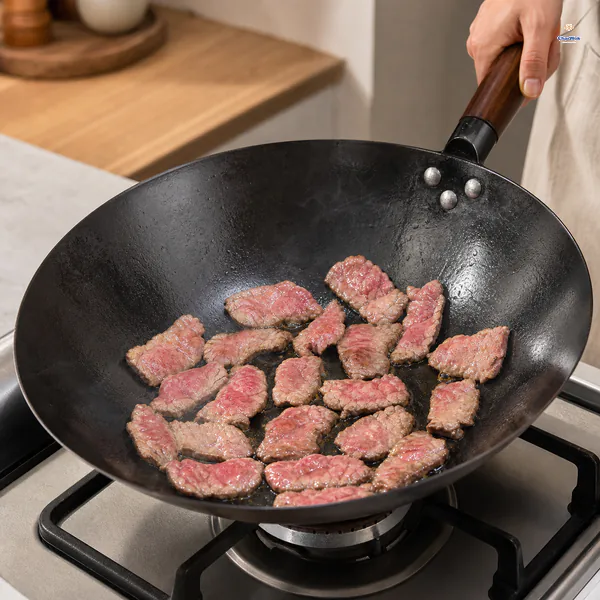
Lay velveted beef in a single layer and leave it until the undersides set before turning; remove it as soon as it is just opaque so it stays tender.
This is the section I wish someone had handed me on day one. Most beginner failures fall into five recurring patterns.
- Soggy stir-fried greens. Cause: greens went in wet, or the pan was crowded. Fix: dry the washed greens thoroughly and cook in batches. Water is the enemy of a stir-fry; it drops the pan temperature and turns a sear into a braise.
- Tough, chewy beef or chicken. Cause: skipped the velveting marinade, or overcooked the meat. Fix: toss sliced meat with a teaspoon each of cornstarch, water, and oil for 15 minutes before cooking. Remove the meat from the wok the moment it is just opaque and return it at the end.
- Eggs that come out rubbery or weepy. Cause: heat too high, or cooked too long. Fix: medium heat, and take the pan off the burner while the eggs still look slightly underdone. The shrimp and egg stir-fry is the clearest teacher here.
- Fried rice that clumps and turns gummy. Cause: fresh, warm rice. Fix: use rice cooked the day before and chilled uncovered in the fridge. Cold, dry grains separate and crisp instead of mushing together.
- Everything tastes the same, vaguely salty. Cause: leaning only on soy sauce. Fix: add the missing axis. If it is flat, it usually needs acid (black vinegar) or sweetness (a pinch of sugar), not more salt.
The last one is the secret most beginners never get told. Chinese seasoning is not just salty. It is a balance of salty, sweet, sour, and the savory depth from aromatics and oil. When a dish is boring, do not reach for more soy sauce. Reach for vinegar or sugar first.
Building a meal, not just a dish
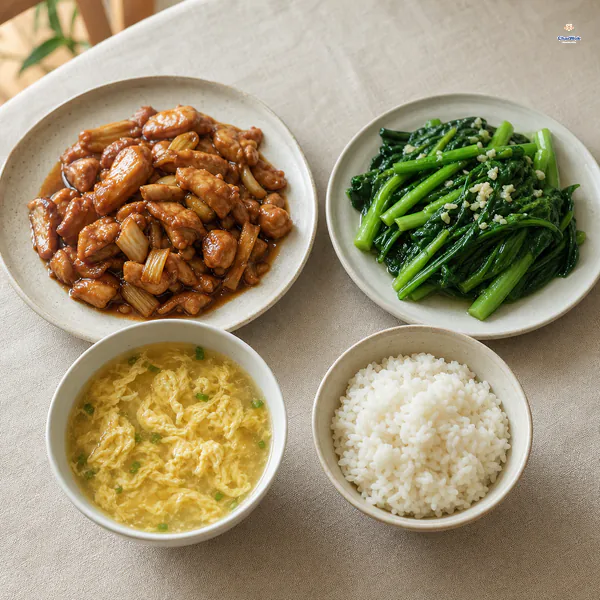
Build a beginner meal from one savoury main, one quick vegetable, one simple soup and rice; oyster-sauce chicken, fresh greens and egg-drop soup are the guide's practical example.
Once you can cook two or three of these reliably, the goal shifts from single dishes to a meal. A standard Chinese home dinner is one main, one vegetable, a soup, and rice. A practical beginner menu: oyster sauce chicken as the main, a quick greens stir-fry on the side, and a bowl of egg drop soup to start. Three dishes, one pot of rice, on the table in under 45 minutes.
If you want one "company" dish that still fits the beginner brief, scallion ginger salmon hits that mark. It looks far harder than it is, and the soy-scallion oil you build for it doubles as a finishing sauce for tofu or noodles later in the week. Silken tofu with scallions and soy dressing is the no-cook fourth dish that rounds out the table.
Variations and pairings worth trying
- Spin the cucumber salad. Once you have the basic smashed-cucumber dressing down, the same template works on blanched spinach, shredded cabbage, or glass noodles. The acid-oil-salt ratio is the part worth memorizing.
- Upgrade your chili oil. A jar of homemade chili oil turns plain noodles, fried eggs, and dumplings into something craveable. It keeps for weeks and is the single highest-leverage condiment in the cuisine.
- Add a dipping sauce course. When you are ready to try dumplings, a good dumpling sauce matters as much as the filling. Start with soy, vinegar, chili oil, and a little sugar.
- Pair a soup with everything. A simple broth balances rich stir-fries. Beyond egg drop, chicken noodle soup in the Chinese style is restorative and almost impossible to ruin.
Storage and reheating
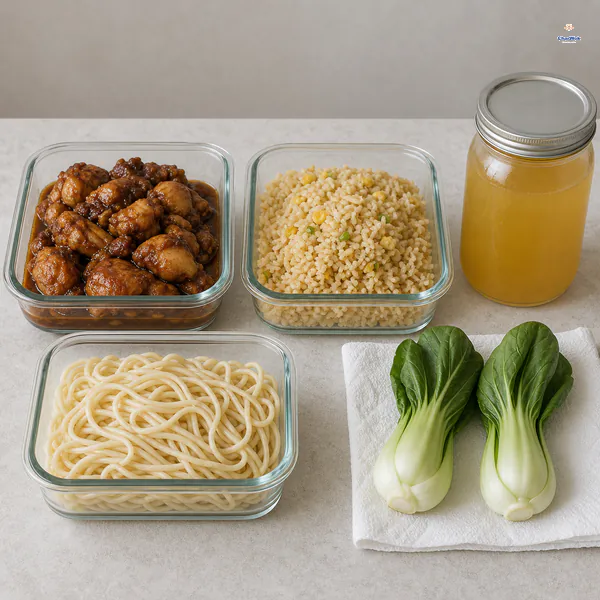
Cool and store braises, rice, broth and noodles separately, keep broth away from noodles, and cook quick greens fresh instead of reheating them.
Most of these dishes are best eaten immediately, and that is not a flaw, it is the format. Cold dishes like cucumber salad keep a day in the fridge but lose their crunch. Stir-fried greens are a one-sitting food; reheating turns them olive-drab and limp. Eggs reheat poorly.
The exceptions that store well: fried rice (often better on day two), braised dishes like ginger chicken, noodle soups kept with broth and noodles stored separately, and chili oil, which improves after a day. When you meal-prep, lean on the braises and the rice, and cook the greens fresh.
A note on what comes next
After the six flagship dishes, the natural next steps are the techniques that open up the rest of the cuisine. A full dumpling session pulls together filling, folding, and cooking in one satisfying project. None of these are required to eat well at home, but each one opens a category of dishes you cannot buy frozen.
Be honest about the limits, too. Some traditional dishes genuinely reward specialized equipment or years of practice, and a home kitchen will not perfectly reproduce a restaurant wok hei no matter how hot your burner gets. That is fine. The goal of this list is not to match a restaurant. It is to put genuinely good Chinese food on your own table on a weeknight, and to give you the instincts to keep improving. Cook the six dishes in order, taste as you go, and the rest follows.
Related recipes & further reading
Once the six flagship dishes feel routine, these recipes and collections pick up where this guide leaves off, expanding into the same techniques with new ingredients and regions.
- If you want a ready-made sequence to work through next, this list of 12 authentic must-try Chinese recipes covers the dishes most home cooks learn after the basics.
- For a broader technique sequence, browse the core Chinese cooking skills guide; many of its dishes reuse the same pantry you just built.
- Trade the black pepper beef for spicy orange beef stir-fry once you are comfortable velveting; the citrus-chili glaze builds on the same skill.
- Graduate from soy sauce fried rice to Yangzhou fried rice, which adds mixed proteins and teaches knife work and timing.
- A gentle next noodle dish after scallion oil noodles is dan dan noodles, where you learn to build a layered sauce base in the serving bowl.
- Rice congee is the forgiving comfort dish that teaches low-and-slow simmering while using up leftover rice.
- Take the egg lessons further with egg foo young, a fluffy Chinese omelette that depends on the same gentle-heat instinct as steamed eggs.
- Move from cold cucumber salad to Sichuan dry-fried green beans, a cooked vegetable dish that trains blistering and quick wok work.
- When you are ready for tofu, authentic mapo tofu pulls together seasoning, heat control, and gentle handling of soft tofu in one recipe.
- For a main that still fits the beginner brief, kung pao chicken rewards everything you learned about velveting and layering sauce.
- Choosing and seasoning a wok is the natural equipment step once stir-frying becomes a weekly habit rather than an experiment.
- And when you want one project that ties filling, folding, and cooking together, the collection of dumpling recipes is a satisfying next challenge.
Common questions
A few things come up again and again from people starting out.
- Do I need a wok? No, not to start. A large, heavy skillet handles all six dishes. A wok becomes worth it once you are stir-frying regularly, because its shape lets you push food up the cool sides and control heat precisely. A flat-bottomed carbon-steel wok on a home burner is the practical choice.
- Light soy sauce or dark? They do different jobs. Light is for everyday salt and umami. Dark is for color, used in small amounts. If a recipe just says "soy sauce" and you only want one bottle, buy light.
- How do I make beef tender without a restaurant? Velvet it. Slice thinly against the grain, then marinate 15 minutes in cornstarch, a splash of water, a little oil, and a drop of soy. The starch coating buffers the meat from direct heat and keeps the juices in.
- Can I use a nonstick pan instead? Yes, especially for eggs. Nonstick is forgiving and great while you learn heat control. You will outgrow it for high-heat stir-fries, where you want the sear that only steel or cast iron gives.
- What if I cannot find Shaoxing wine? Dry sherry is the closest substitute. In a pinch, a splash of dry vermouth or even water with a pinch of sugar works for deglazing, though you lose some depth.