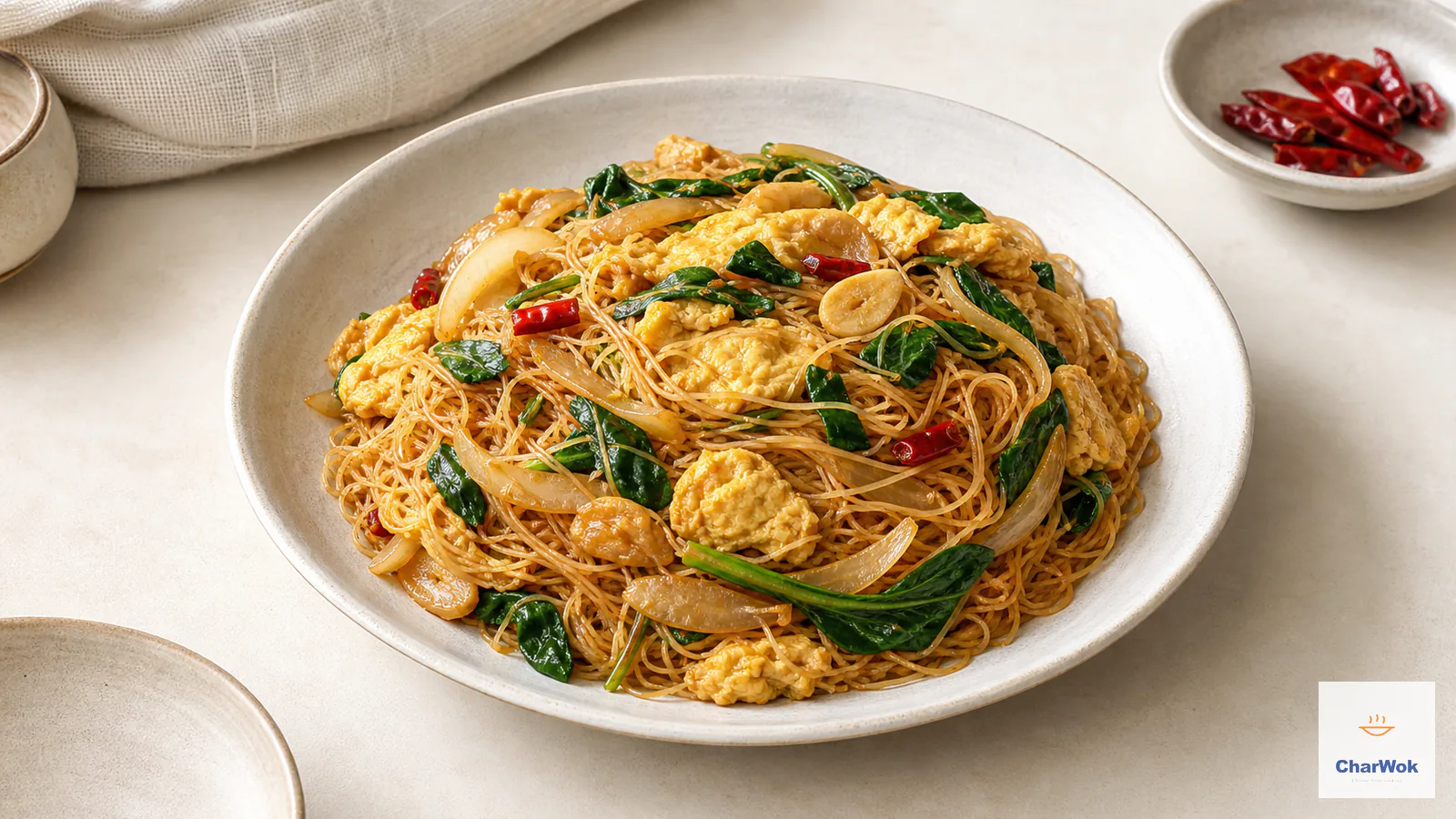
Egg fried rice noodles is the dish I make when I want lunch in ten minutes and cannot face another bowl of egg fried rice. The difference sounds small. It is not. Rice noodles soak up a sour-savory dressing that rice grains only shrug at, and their soft, slightly chewy bite makes the whole plate feel like something ordered from a noodle stall rather than scraped together from a half-empty fridge.
If you have ever pulled a clump of dry rice vermicelli from the cupboard, boiled it into a starch-logged brick, and ended up with one giant noodle that refused to separate in the wok, you already know the single failure that wrecks this dish. Everything below is really about preventing that, plus a sauce ratio I keep coming back to.
At a glance. Two servings in ten minutes. Soak the noodles until just bendable, shock them in cold water, and leave them there until the oil is hot and shimmering at about 180°C / 355°F, not smoking. The dressing is a 1:2 ratio of light soy sauce to black rice vinegar, finished with chili oil. Cook for two people at most; the pan cannot handle more.
What this dish is, and where it sits in the noodle family
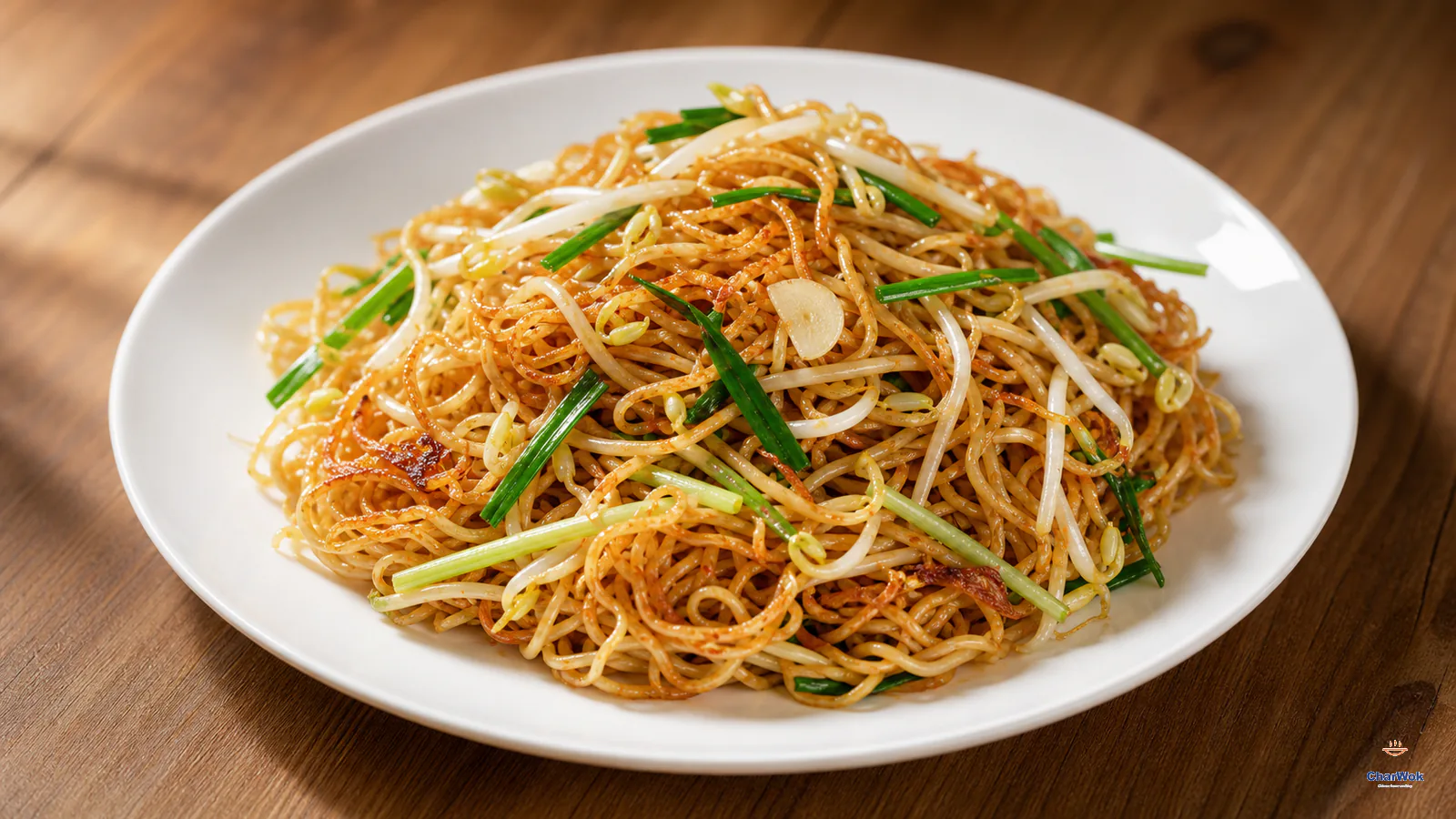
This is a home-style stir-fry of dried rice noodles (mifen / 米粉) tossed with egg, alliums, a fistful of greens, and a punchy vinegar-forward sauce. It is not Cantonese chow fun, which uses wide, fresh rice sheets and a dark soy base, and it is not Singapore mei fun, which dials up the curry powder. Think of it as the quicker, quieter cousin: pantry staples, a bright acidic edge from black rice vinegar, and the kind of char you only get from a screaming-hot wok.
Across southern China and Taiwan, rice noodles turn up stir-fried, souped, and dry-tossed. What unites the stir-fried versions is the same problem the home cook faces: rice starch is greedy for water and equally greedy for sticking to itself. Handle the starch right and the rest is seasoning.
The ingredient table
Ingredients for two servings of egg fried rice noodles
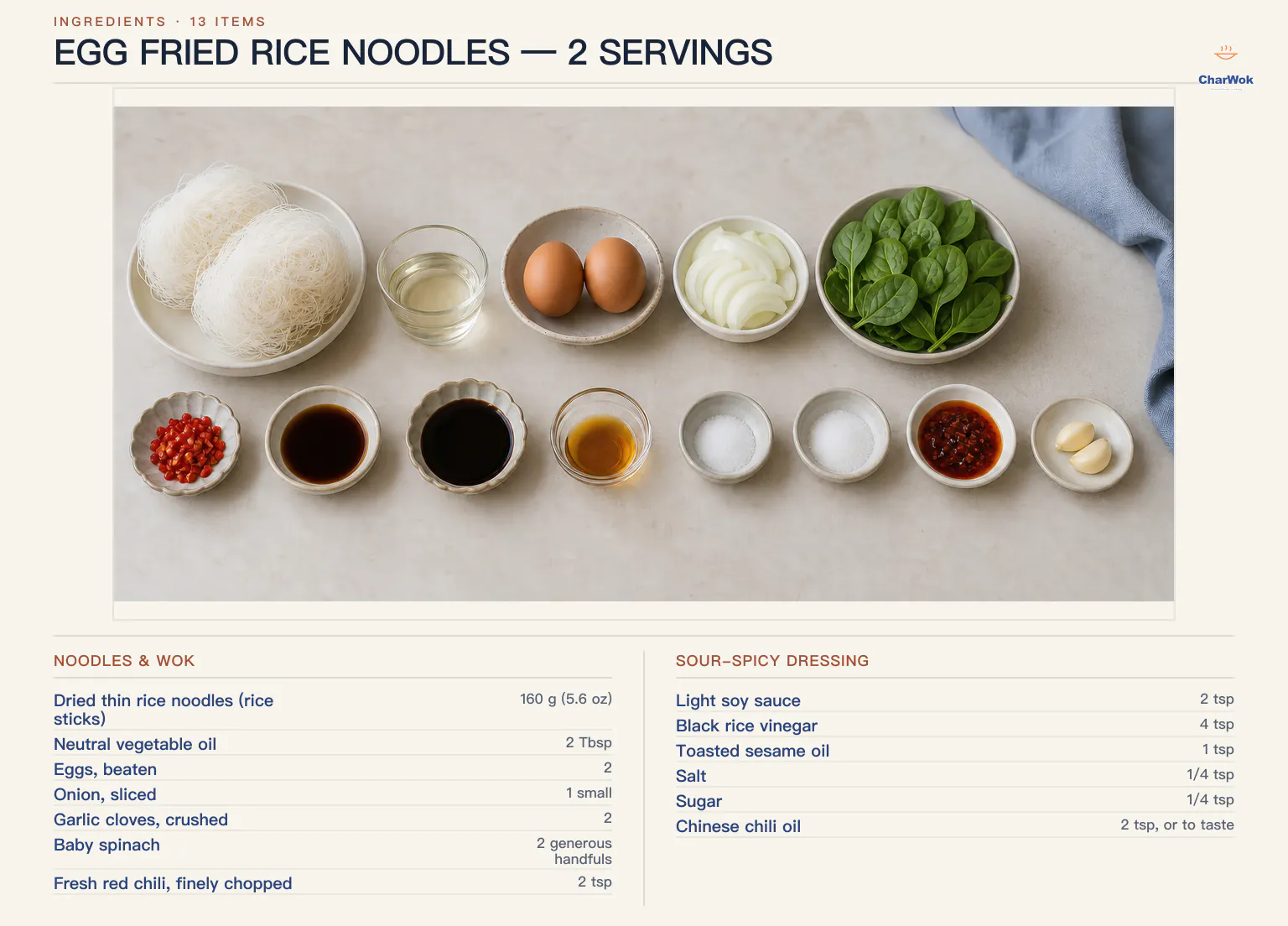
Two servings. Use thin dried rice vermicelli (the kind sold as "rice sticks," about 1 mm wide), not the wide fresh ho fun sheets.
| Ingredient | Amount | Notes / substitute |
|---|---|---|
| Dried thin rice noodles (rice sticks) | 160 g (5.6 oz) | About 2 nests. Vermicelli width is ideal. Do not use wide fresh ho fun here. |
| Neutral vegetable oil | 2 Tbsp | Peanut, canola, or sunflower. Needed for a proper egg fry. |
| Eggs, beaten | 2 | Large. Beat well so they scramble into fine curds. |
| Onion, sliced | 1 small | Yellow or red. Shallot works too. |
| Garlic cloves, crushed | 2 | Smash so they release flavor fast without burning to a crisp. |
| Baby spinach | 2 generous handfuls | Sub napa cabbage shreds, bean sprouts, or choy sum. |
| Fresh red chili, finely chopped | 2 tsp | Thai bird or serrano. Seed it for less heat. |
| Light soy sauce | 2 tsp | Light, not dark. See light vs. dark soy sauce. |
| Black rice vinegar | 4 tsp | Chinkiang style. The sour backbone of the dish; do not skip. |
| Toasted sesame oil | 1 tsp | Finish aroma. A little goes far. |
| Salt | 1/4 tsp | Adjust if your soy sauce is very salty. |
| Sugar | 1/4 tsp | Rounds the acid. Needed even though the amount looks tiny. |
| Chinese chili oil | 2 tsp, or to taste | Homemade chili oil is vastly better than jarred. |
Why each step works
Before the method, the principle behind three moves that decide whether this is great or gluey.
Soak, do not boil. Dried rice noodles are already fully cooked starch that has been dried. You are only rehydrating and warming them, not cooking raw dough. Boiling overcooks the surface into a sticky gel (starch gelatinization gone too far), and that gel fuses the strands. A hot-water soak gets the interior soft while leaving the surface intact. Read the package and use the time it lists for stir-fry, not for soup, which is shorter.
Cold-water hold. As soon as the noodles bend easily, rinse them under cold water and drop them into a bowl of cold water. Two things happen. The temperature drop stops carryover softening, and the thin film of water on the strands keeps them from clumping and gives the wok a little steam to work with when they hit the pan.
High heat, egg first. You want the egg to puff and brown at the edges while the oil is fluid and shimmering, not smoking. That browning is Maillard, and it is the only browning this quick dish gets. Add the dressing off-peak heat at the end so the vinegar stays bright instead of cooking flat.
The method
- Rehydrate the noodles. Put the dry nests in a heatproof bowl, pour boiling water over to cover, and soak for the package's stir-fry time (usually 3 to 6 minutes for thin sticks). Test by bending a strand; it should yield with no chalky core but still have bounce. Drain the moment it is ready.
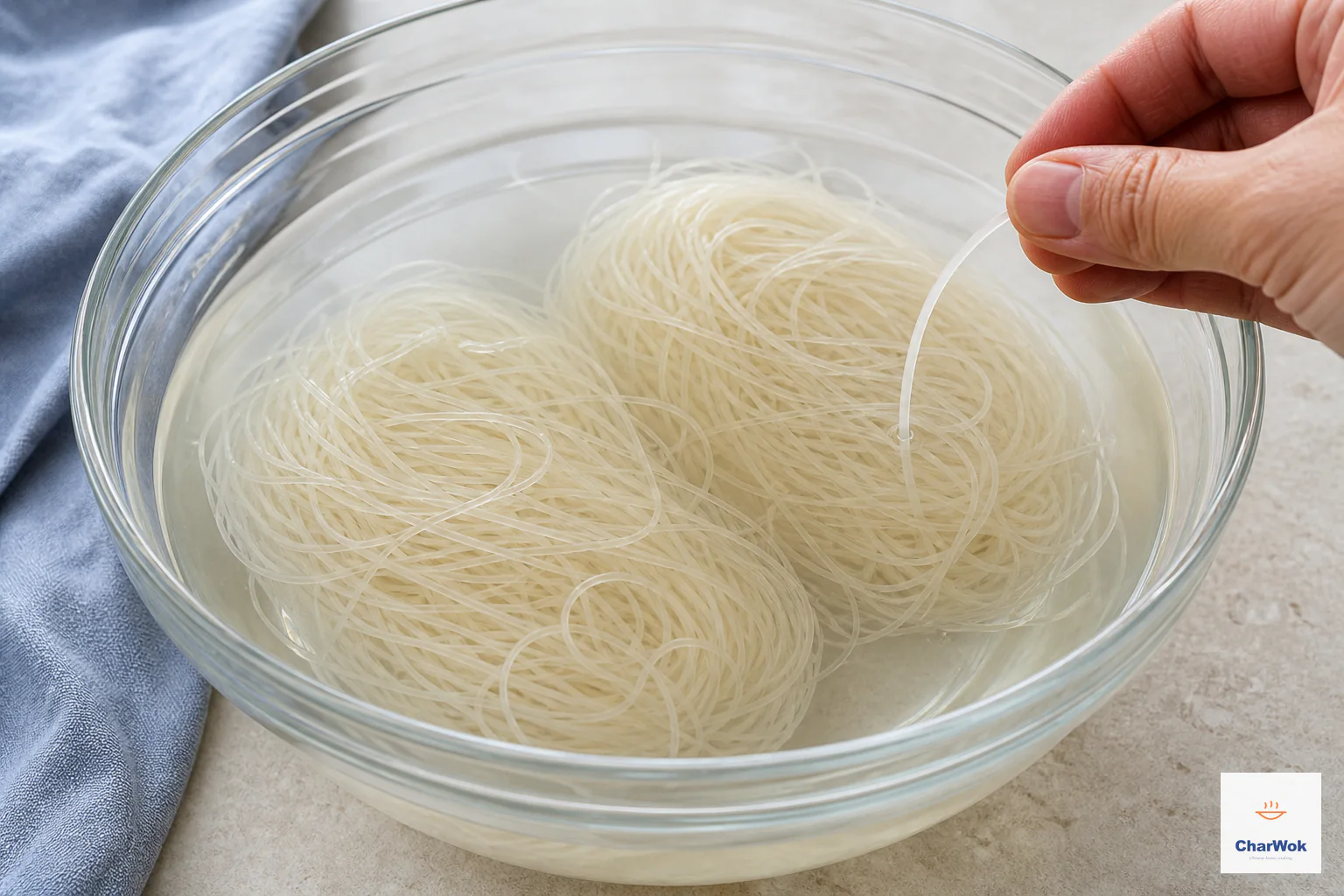
Soak the dry noodles for the package stir-fry time and stop as soon as a strand bends with no chalky centre but still has bounce.
- Shock and hold in cold water. Rinse under cold tap water, then drop the noodles into a bowl of cold water. Snip through the nest a few times with kitchen scissors so the strands are fork-length and will toss evenly. Leave them in the water until step 7.
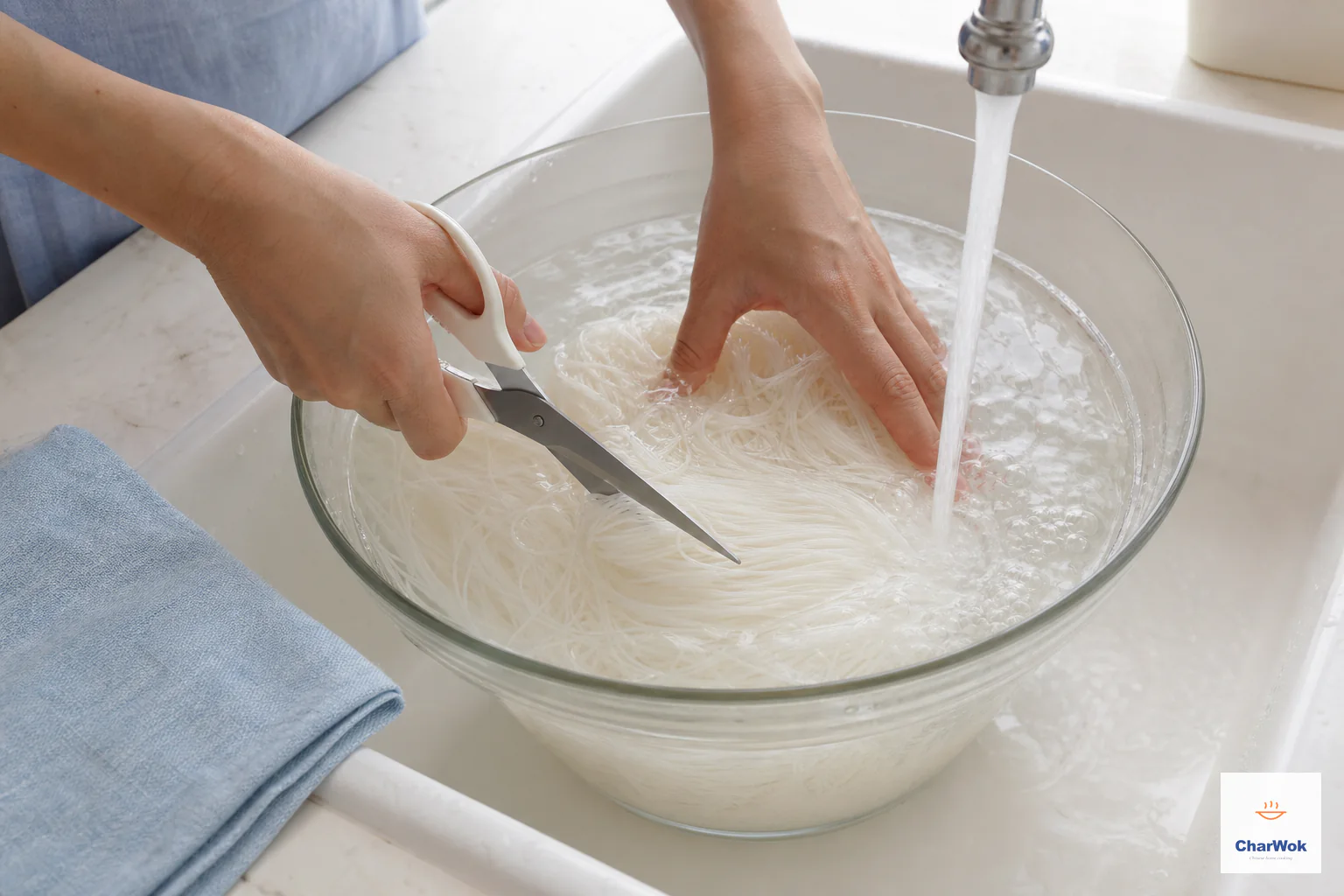
Rinse the noodles cold, keep them submerged until the wok is ready, and snip the bundle a few times for easier tossing.
- Mix the dressing. In a small bowl, stir together the light soy, black rice vinegar, sesame oil, salt, sugar, and chili oil. Have it next to the stove with a spoon. Once the oil is hot you will not have a free second.
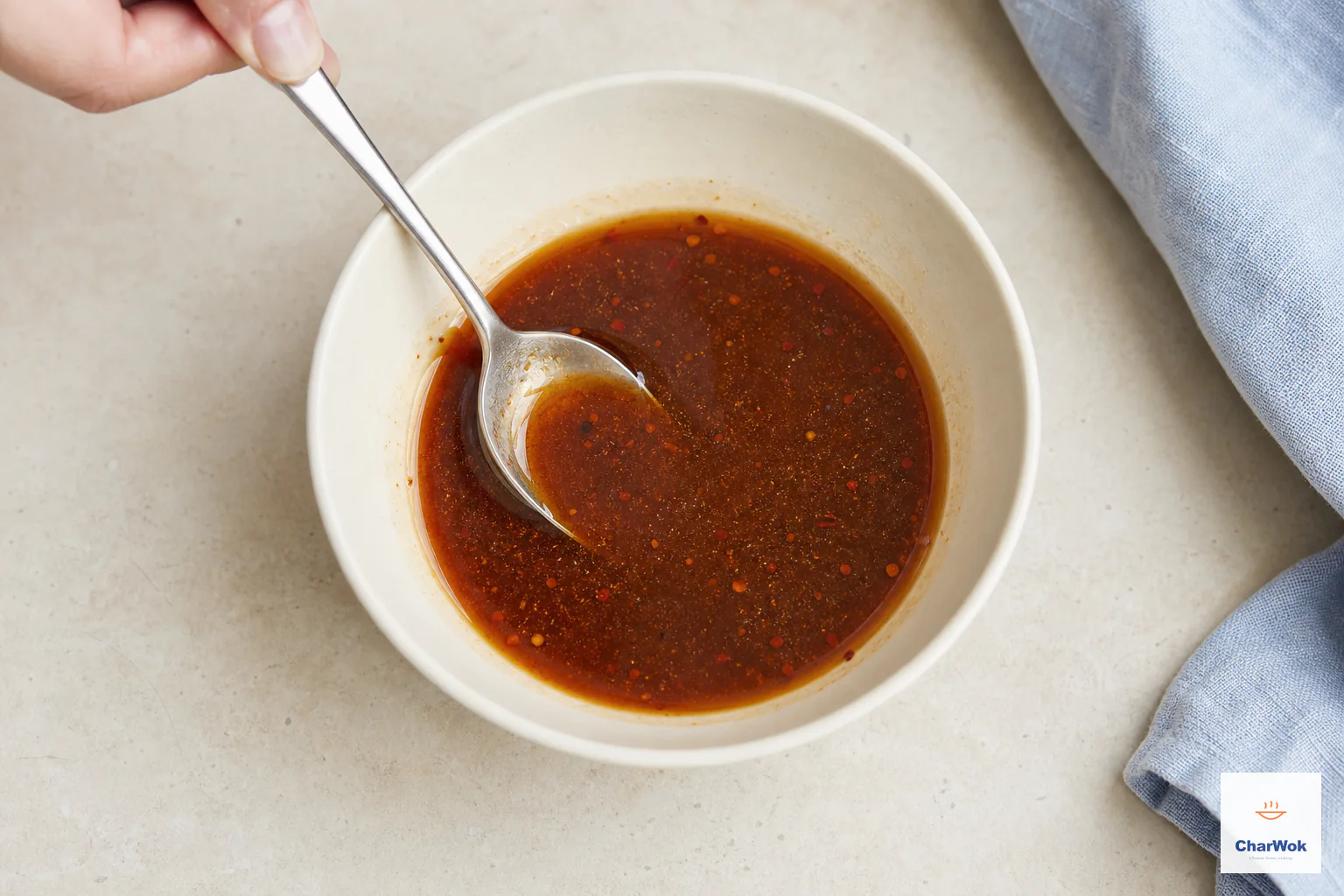
Mix the light soy, black rice vinegar, sesame oil, salt, sugar and chilli oil before heating the wok.
- Heat the oil until shimmering, not smoking. Put 2 Tbsp oil in a wok or deep skillet and heat it gradually over medium-high to about 180°C / 355°F. Stay beside the pan. The oil should move freely and shimmer; if smoke appears, turn off the burner and let it cool before adding the egg.
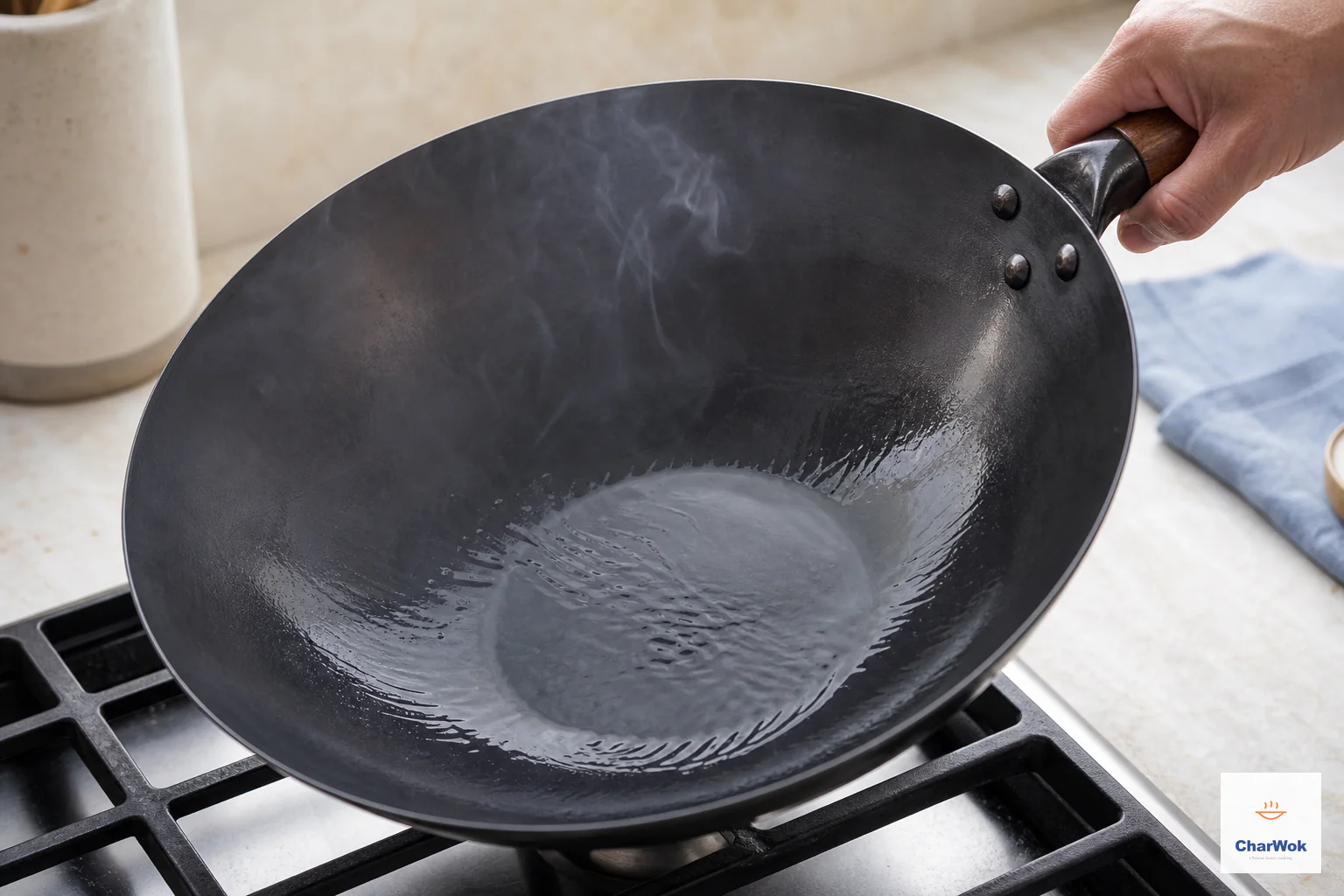
Heat 2 tablespoons neutral oil gradually to about 180°C / 355°F, fluid and shimmering but not smoking; turn off the burner if smoke appears.
- Fry the egg. Pour in the beaten egg. Let it puff for a couple of seconds, then chop it into small curds with a spatula. You want golden, ragged pieces, not a single pale pancake.
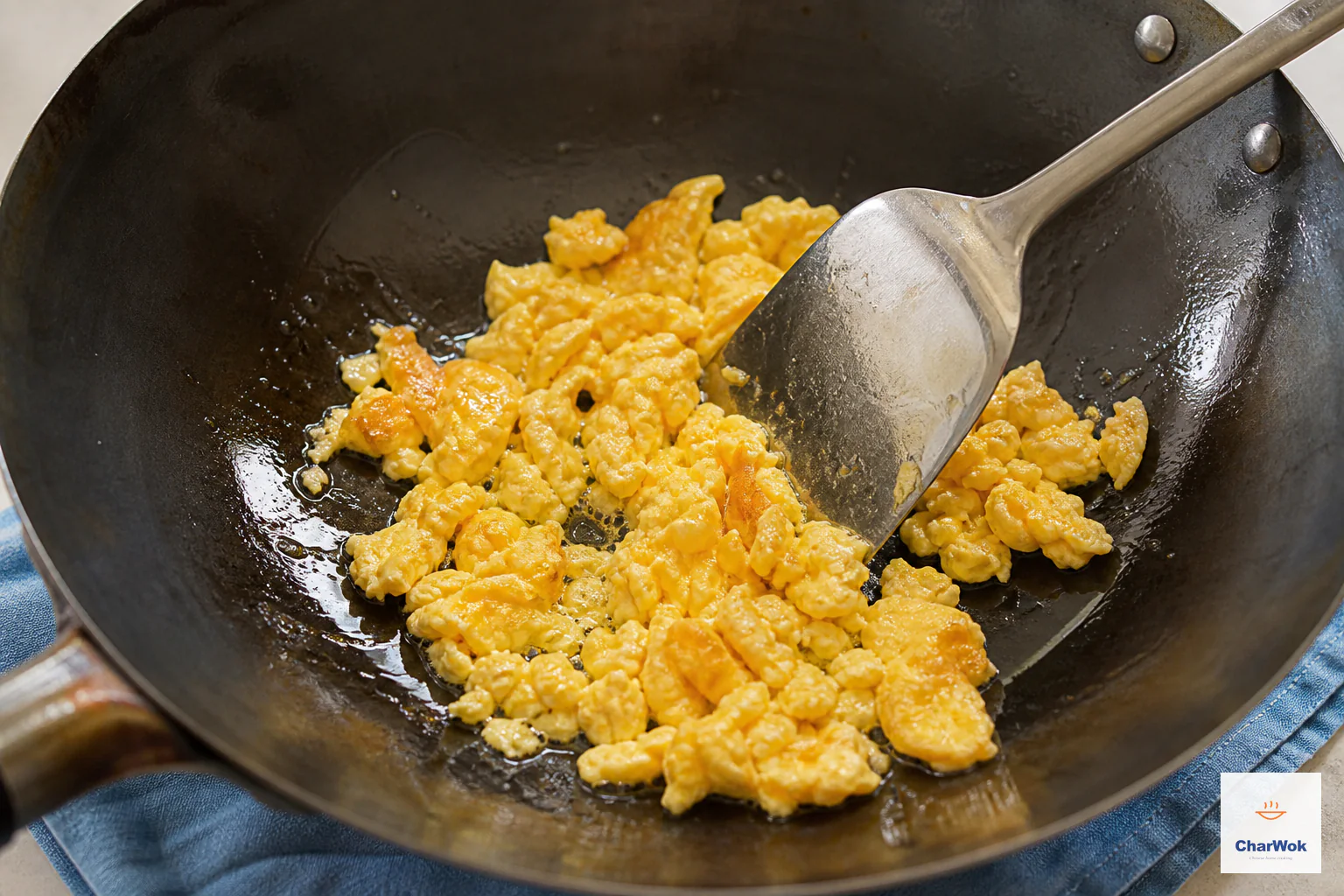
Let the egg puff for seconds, then break it into small golden ragged curds rather than one pale pancake.
- Bloom the aromatics. The instant the egg is just set, add the onion and garlic and toss for about 30 seconds. The onion should soften at the edges but keep some bite.
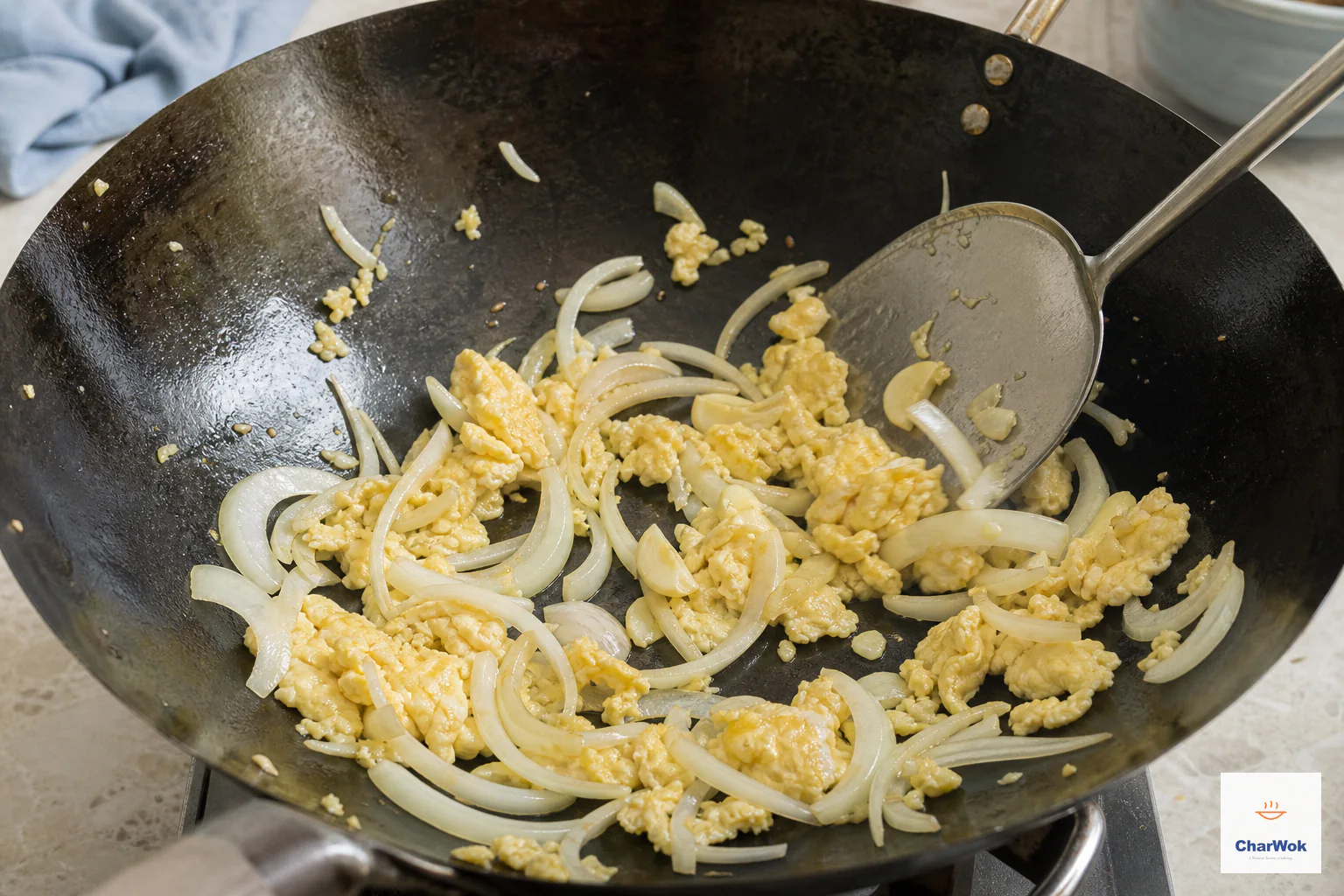
Add the onion and garlic as soon as the egg sets and toss for about 30 seconds, keeping some bite in the onion.
- In with the noodles. Lift the noodles straight out of their cold bath and into the wok. Do not drain them bone-dry; that surface water is what lets the sauce spread and keeps the mass loose. Toss hard to separate the strands.
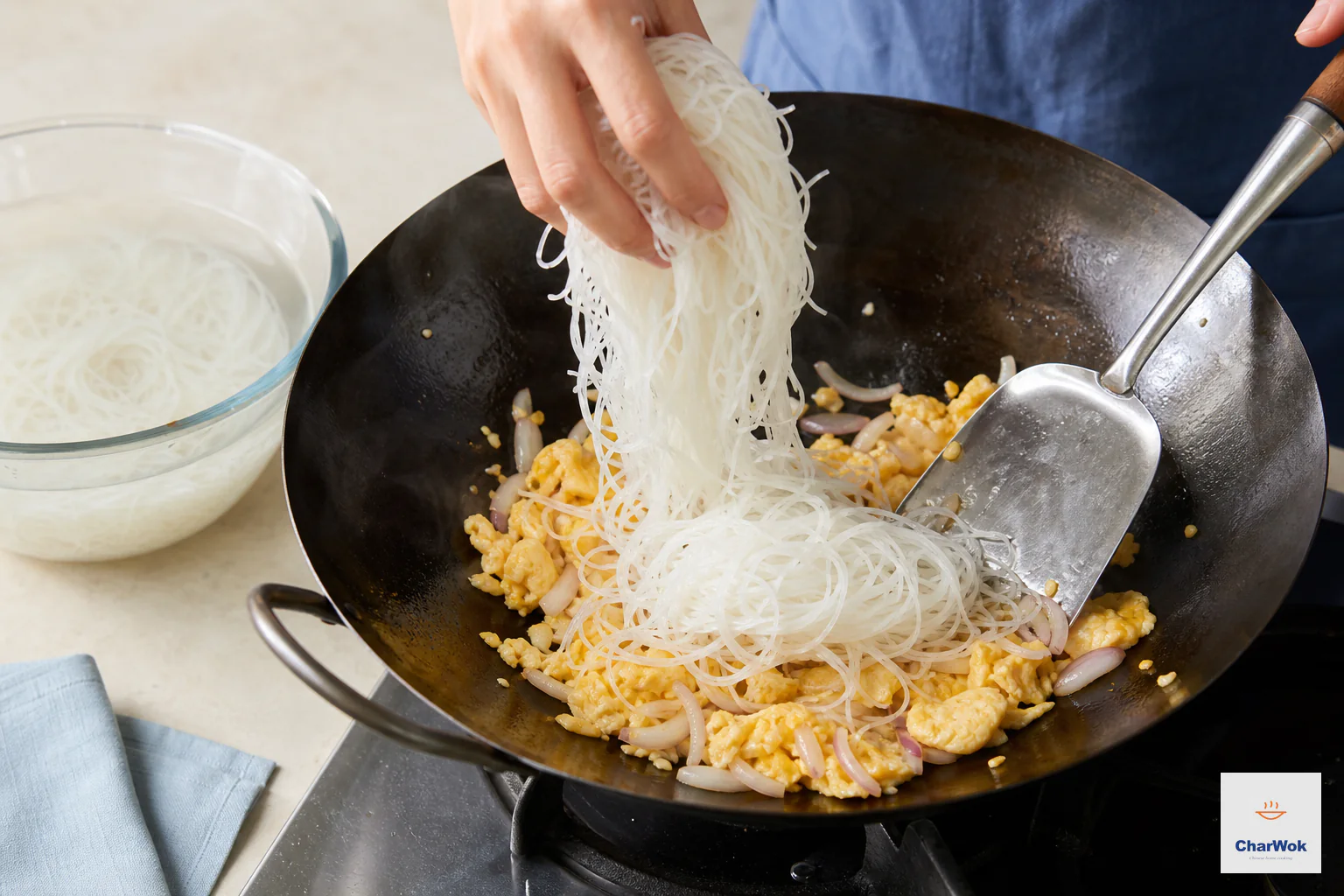
Lift the noodles from the cold bath directly into the wok without draining them bone-dry, then toss to separate the strands.
- Add the dressing. Pour the sauce around the edge of the wok, not directly on the noodles, so it sears and reduces for a second before you fold it through. Keep the noodles moving until they are evenly coated and hot through, about a minute.
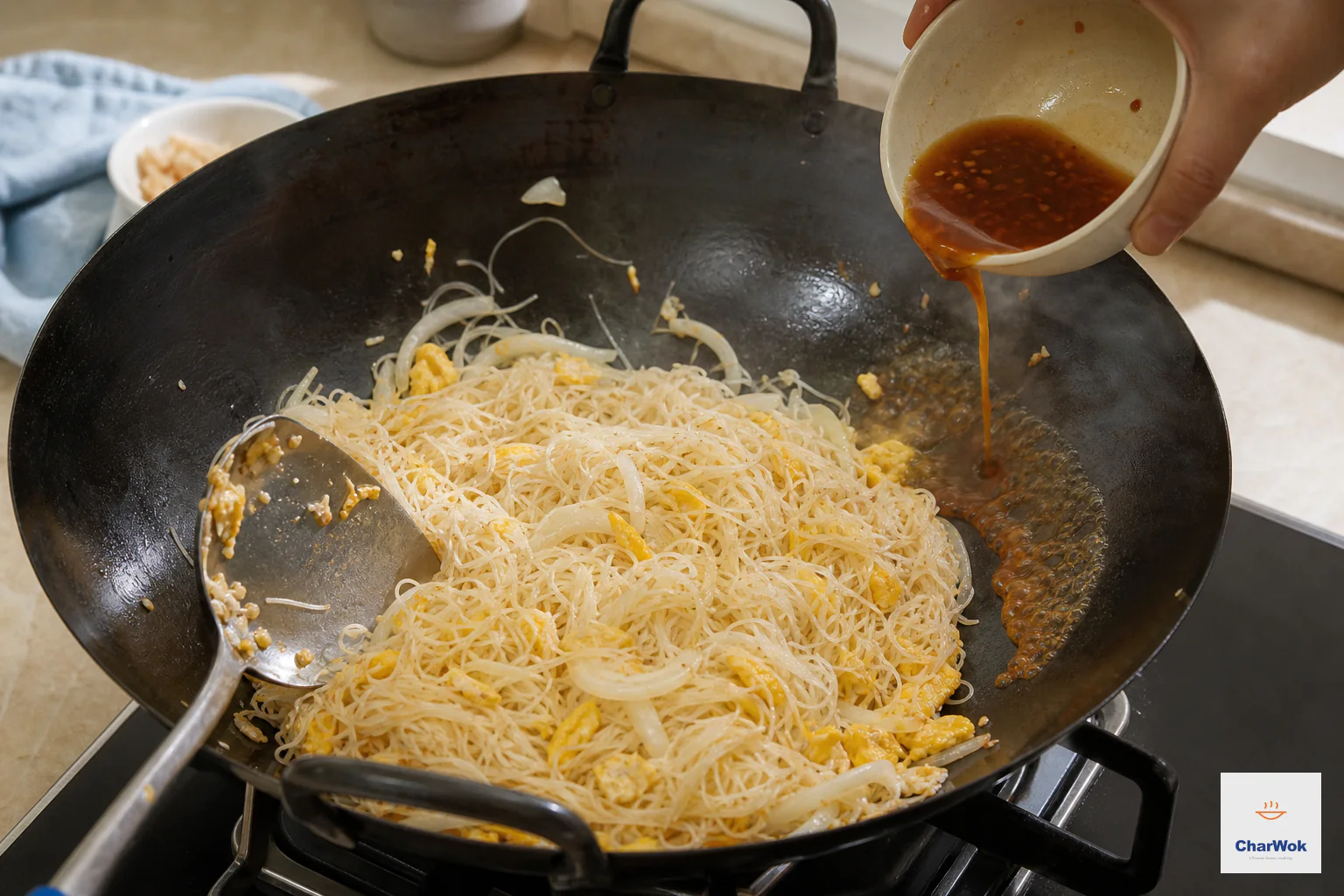
Pour the dressing around the hot wok edge so it sears briefly, then fold it through until the noodles are evenly coated and hot.
- Finish with the greens and chili. Throw in the spinach and fresh chili. Toss for 15 to 20 seconds only, until the spinach just wilts, then kill the heat. Overcooking here turns the leaves to sludge and kills the fresh chili's bite.
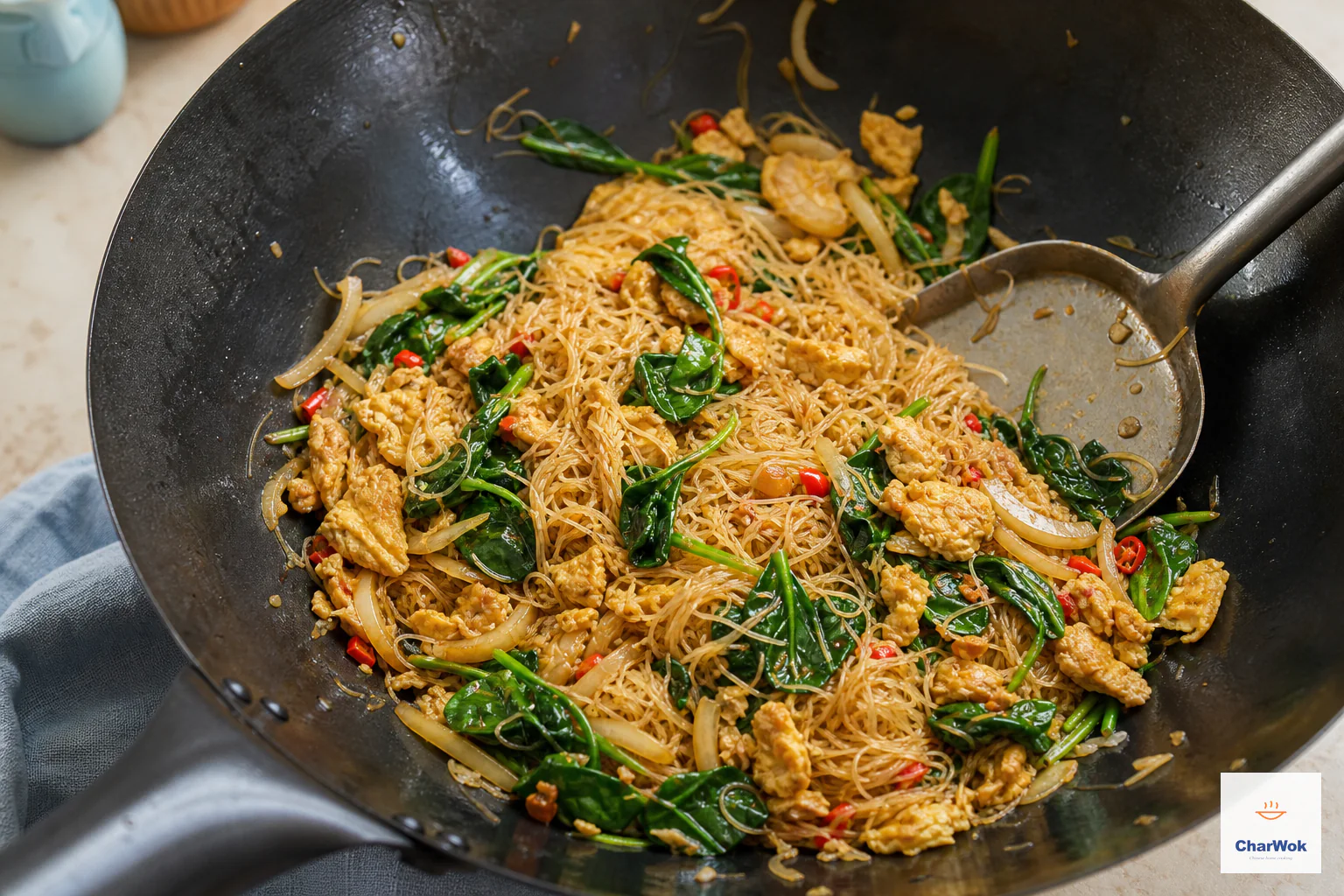
Toss in the spinach and fresh chilli for only 15 to 20 seconds, then turn off the heat as soon as the leaves wilt.
Oil-temperature safety follows the U.S. Fire Administration cooking guidance: stay beside the pan, turn off the burner if oil smokes, and never add water to burning oil.
When it goes wrong: troubleshooting
This is the part that earns its keep, because the dish is simple and the failures are predictable.
One solid noodle brick. You boiled instead of soaked, or you soaked too long and skipped the cold-water hold. Fix: next time, soak only to bendable, shock immediately. Rescue: in the wok, add a tablespoon of water and a teaspoon of oil and toss aggressively with chopsticks in one hand and spatula in the other to coax the strands apart over low heat before re-seasoning.
Mushy, broken noodles. Over-soaked or over-stirred. Thin rice sticks are fragile once wet. Toss with a lifting motion, not a mashing one, and pull them from the water the instant they are pliable.
Pale, steamed egg that tastes of nothing. The pan may not have been hot enough. Next time use a thermometer and aim for about 180°C / 355°F; do not wait for smoke. If your home burner is weak, cook one portion at a time so the metal stays hot.
Salty, harsh, one-note sauce. You forgot the sugar or used dark soy. The quarter teaspoon of sugar is not for sweetness; it rounds the vinegar's edge. Light soy keeps the color bright; dark soy makes the dish brown and muddy.
Soggy bottom, no char. Too much liquid, or the spinach released a flood because you cooked it too long. Keep the greens in for seconds, not minutes, and never add extra water beyond what clings to the noodles.
Variations and pairings
The two-serving limit is real. If you need four portions, cook two batches back to back, wiping the wok between them, rather than piling everything in at once. A crowded pan drops in temperature, the egg steams, the noodles stew, and you end up with the brick you were trying to avoid.
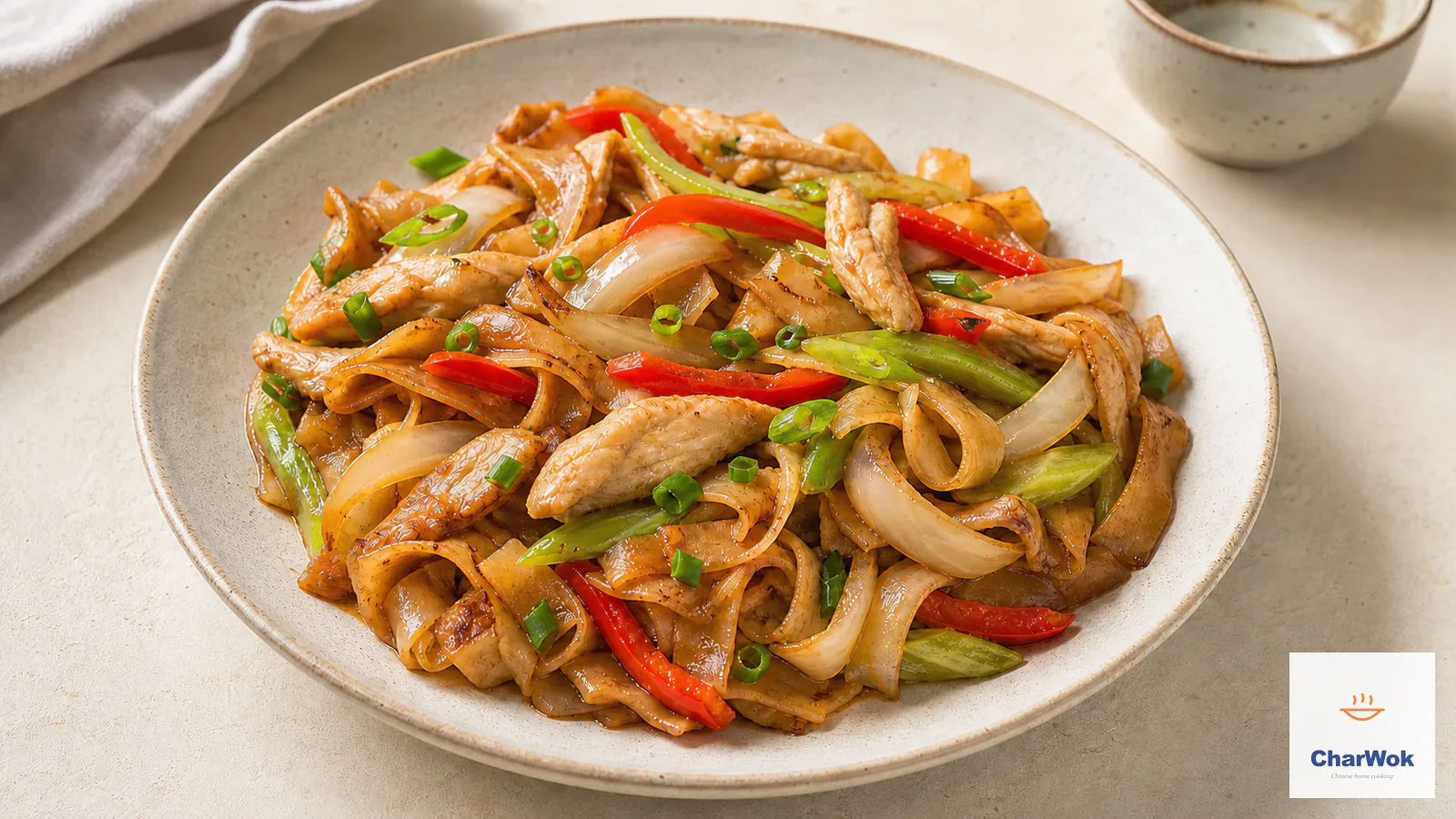
Add protein. A handful of shrimp, sliced chicken thigh, or thin strips of pork, stir-fried first and pushed up the side of the wok before the egg, turns this into a full meal. Leftover char siu, diced, is excellent folded in with the noodles. For a related meat version, the wide-noodle beef chow fun uses the same high-heat logic with a darker sauce.
Swap the greens. Bean sprouts, shredded napa cabbage, snow peas, or choy sum tips all work. I confess I have made this with a sad half-bag of arugula and a squeeze of lime when the spinach was gone, and it was still good. The point is a quick-cooking green that wilts in seconds.
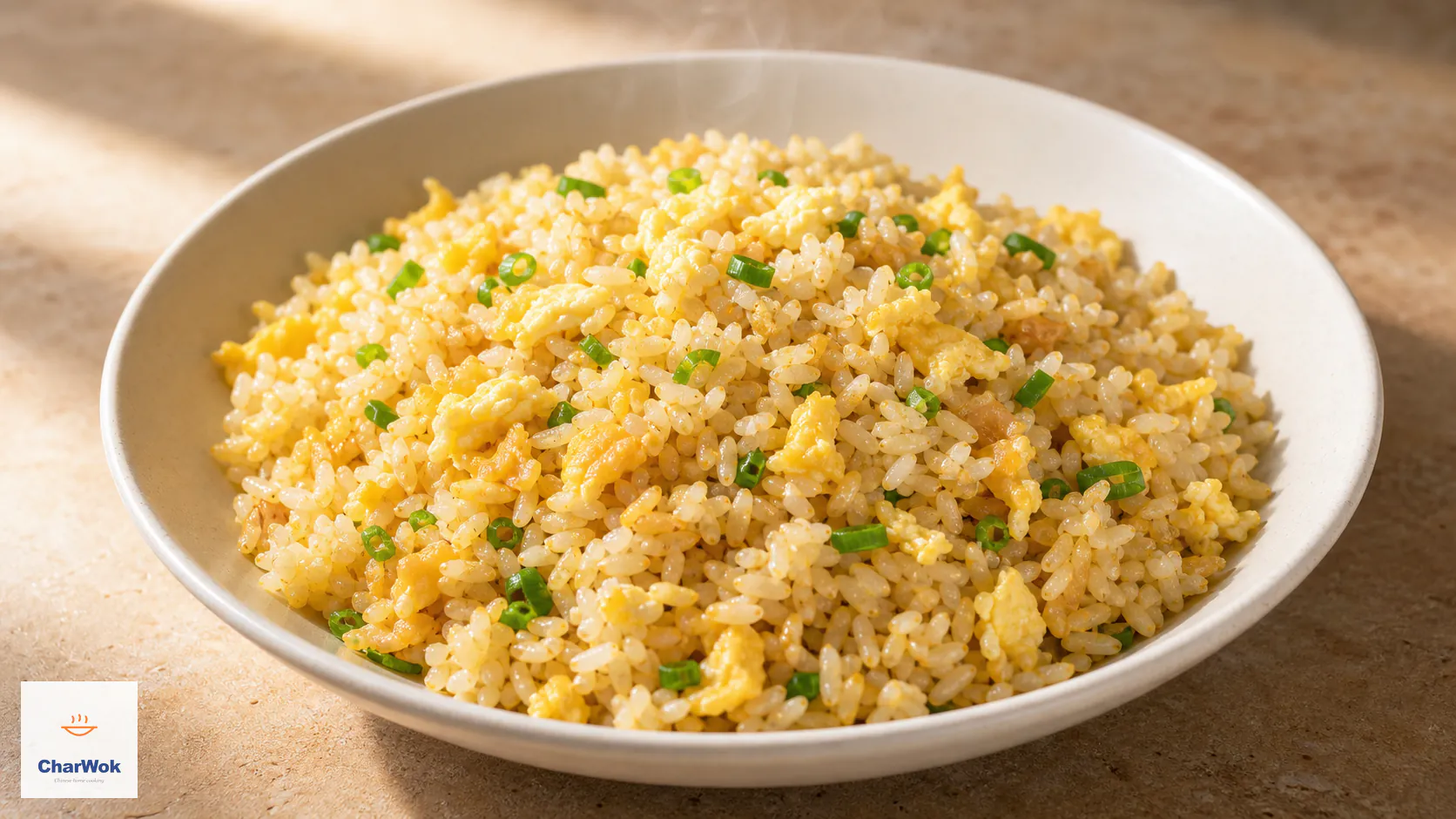
Change the flavor base. Skip the vinegar dressing and toss with scallion oil for a quieter, Northern-style bowl, or lean Sichuan with a spoon of doubanjiang and ground Sichuan pepper. If you love the egg-and-rice combination in general, egg fried rice uses the same instincts with grains instead of noodles, and tomato egg stir-fry shows the same fast-egg technique with no starch at all.
Pair it. A small bowl of plain soup balances the rich, vinegary noodles. Yunnan rice noodle soup on the side would be doubling up on rice noodles, which is a choice I respect but would not make myself; a clear broth is the better contrast. A crunchy smashed cucumber salad resets the palate between bites. For more dishes in this family, browse the full Chinese noodle recipe collection, or push toward bolder territory with Dan Dan noodles and chow mein.
Storage and reheating
This is a cook-and-eat dish. Rice noodles firm up and turn brittle in the fridge, and reheating never quite restores the fresh texture. If you must store leftovers, keep them up to one day, then reheat in a dry hot pan with a teaspoon of water and a few drops of oil, tossing just until warm. Microwaving makes them gummy. The best move is to soak only the noodles you will cook, since the dry product keeps indefinitely in the cupboard.
Questions I get asked
A quick rundown of the things readers ask most. The answers are condensed and worded separately from the body above.
Can I boil the noodles instead of soaking them? You can, but I would not. Boiling over-gelatinizes the surface and makes the strands fuse into a clump. A hot-water soak to bendable is more forgiving and gives the chewy texture you want for stir-frying.
Why leave the noodles in cold water until the last second? Cold water halts the softening and coats the strands in a thin film that stops clumping and adds a touch of steam to the wok. Drain them earlier and you get a dry, sticky tangle.
What can I use instead of black rice vinegar? The closest is a mix of balsamic and rice vinegar, about half and half. Plain rice vinegar works but loses the malty depth; add a tiny splash of Worcestershire to fake some of it.
Can I make a bigger batch for a family? Cook in two-serving batches. One big panful drops the heat, the egg steams instead of browning, and the noodles stew into a brick. Two quick batches beat one soggy one every time.
Is this spicy? Only mildly, and the heat is adjustable. The 2 tsp of chili oil gives a gentle warmth; the fresh chili adds a sharper edge. Leave both out and the dish is fully kid-friendly, driven by the vinegar and soy.