Walk into almost any home kitchen in China and you will find one pan doing nearly everything: stir-frying dinner, steaming a fish, deep-frying spring rolls, smoking a chicken, even boiling soup. That pan is the wok. It is not a specialty tool reserved for takeout-style cooking. It is the daily workhorse, and once you understand why its shape and material behave the way they do, a lot of Chinese cooking stops feeling fussy.
Most home cooks I talk to are scared off for two reasons. They tried a carbon steel wok once, food welded to the metal, and they gave up. Or they bought a cheap nonstick "wok" that flaked after a year and assumed the whole category was a gimmick. I have made both mistakes. The first one was fixable. The second was money down the drain. This guide is built around avoiding both: how to buy the right pan the first time, how to turn raw steel into a genuinely nonstick surface, and how to keep it that way for decades.
Buy one 14-inch carbon steel wok, season it once over high heat with a thin film of neutral oil, dry it on the burner after every wash, and never put it in the dishwasher. That is ninety percent of wok ownership. The rest is cooking.
What makes a wok different from a frying pan
Choosing, seasoning and caring for a wok at a glance
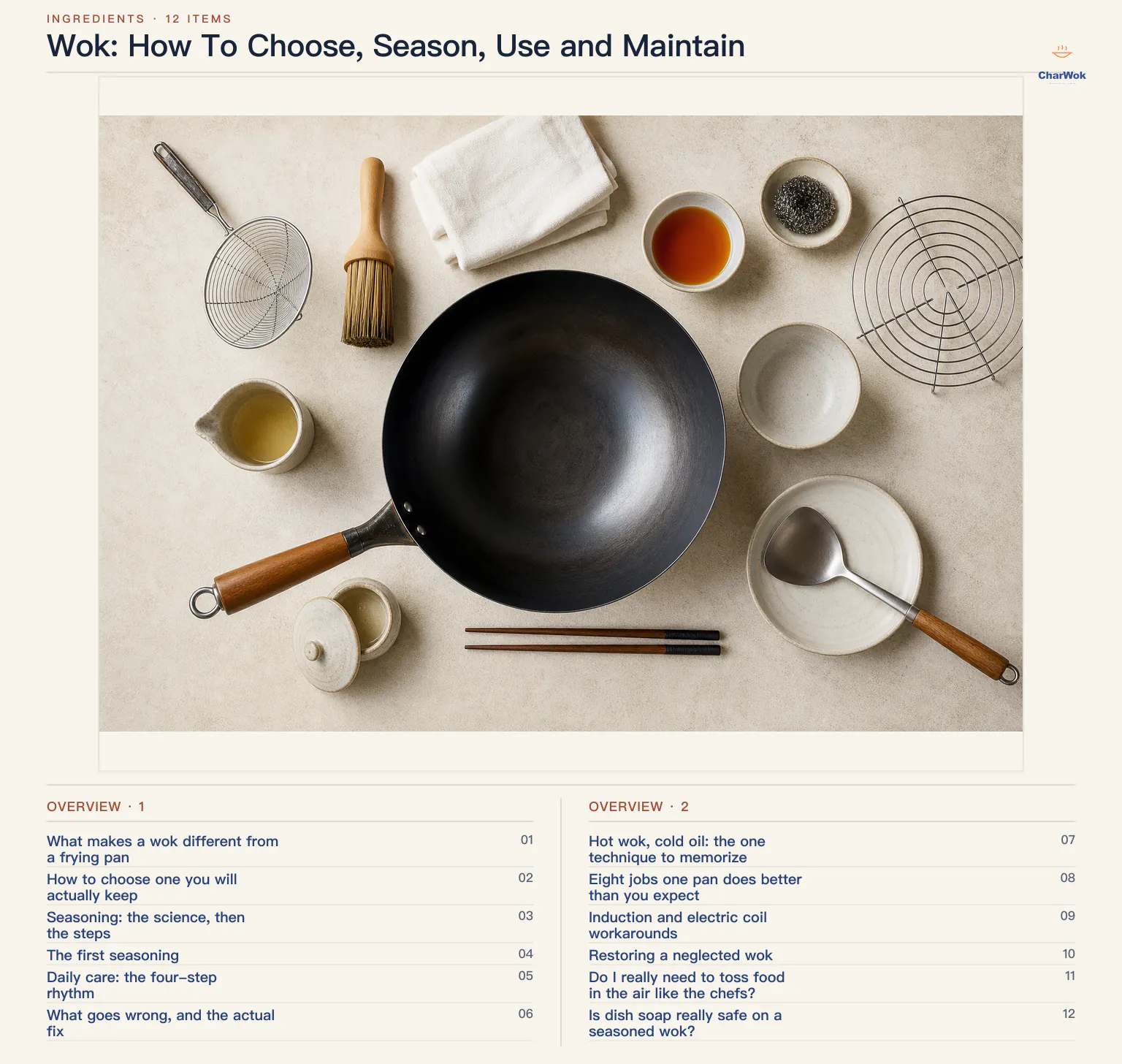
The shape is not decorative. A round, deep bowl creates two things a flat skillet cannot.
The first is a heat gradient. The bottom of the bowl, touching the flame, runs far hotter than the sloped walls. So you can sear a piece of meat in the center, then shove it up the side into a cooler zone while you fry aromatics in the middle, then pull everything back together. On a flat pan the whole cooking surface is one temperature, which is why home stir-fries so often come out either under-seared or overcooked.
The second is volume-to-oil efficiency. Because the bowl is deep and narrow at the base, the food piles into a smaller pool of fat. This matters most for deep-frying: a straight-sided pot needs enough oil to submerge food across a wide flat floor, but a wok's curved bowl concentrates the oil where the food actually sits, so the same batch of spring rolls or salt and pepper shrimp cooks in less oil than a pot would demand.
Carbon steel is the material that makes the shape useful. It is thin enough to rocket up to temperature when the flame hits it and to drop just as fast when you kill the heat, which is the entire basis of a stir-fry like Kung Pao chicken coming out juicy instead of boiled. Cast iron holds heat too stubbornly; once it is too hot you cannot recover. Nonstick coatings cannot take the high heat at all. Stainless looks nice and cleans easily but food sticks until you learn the temperature tricks, and it is heavy.
How to choose one you will actually keep
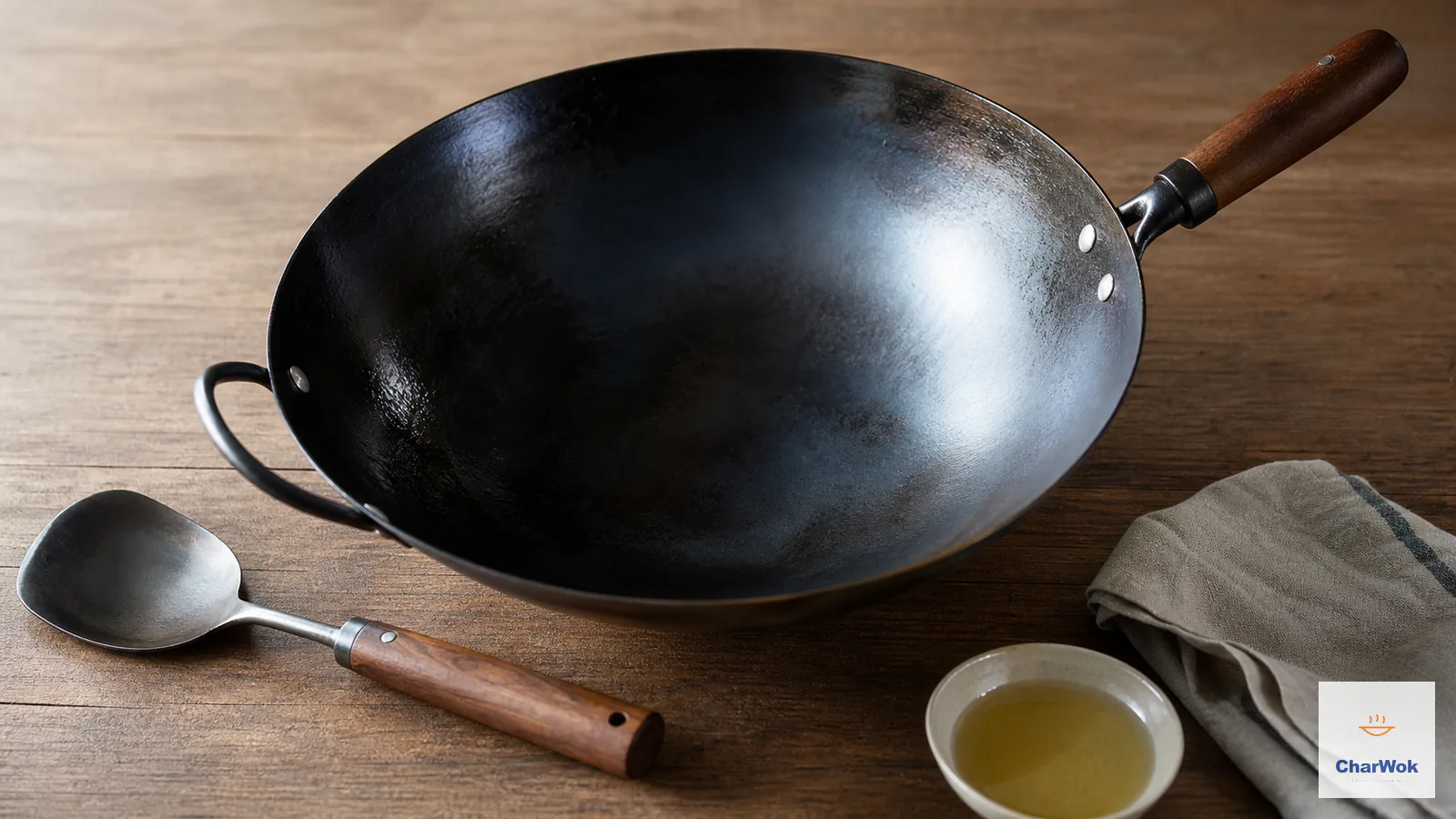
If you cook on a Western gas range, an electric coil, or induction, get a flat-bottomed 14-inch (36 cm) carbon steel wok with one long wooden handle and a small helper handle on the opposite side. That is the single recommendation I will defend against all alternatives, and here is the reasoning behind each part of it.
| Decision | What I recommend | Why |
|---|---|---|
| Material | Carbon steel, thin gauge | Light enough to lift with one hand, responsive to heat, cheap, near-impossible to destroy. Pick a sheet that feels light for its size; go too thin and it dents and warps easily, while too thick turns heavy and slow to respond, which undercuts the whole reason you bought it. For everyday home cooking, a mid-weight gauge that you can still toss single-handed is the sweet spot. |
| Bottom | Flat | Sits stable on a standard grate, electric coil, or induction hob. Round-bottomed woks need a special ring and wobble dangerously on flat burners. |
| Diameter | 14 inches / 36 cm across the rim | Small enough to heat fully on a home burner, large enough to hold a half head of napa cabbage or a double batch of fried rice without spilling. A 12-inch works for one or two people but crowds fast. |
| Handles | One long stick handle, one short loop helper | The long handle lets you toss and lift; the helper gives your other hand a grip when the pan is full and heavy. Two ear handles force you to use both hands for every move. |
| Handle material | Wood or heat-resistant phenolic | Stays cool enough to grab bare-handed. Metal handles get screaming hot and limit you to stovetop-only use. |
| Lid | Domed aluminum or stainless, bought separately if needed | Optional for stir-frying, mandatory for steaming, braising, and smoking. A dome shape clears tall food like a whole bird. |
| Coating | None. Bare steel only. | Any nonstick coating will fail under wok temperatures and is the one thing that ruins the pan. |
Seasoning: the science, then the steps
Seasoning is not a coating you paint onto the pan. It is a chemical reaction: a very thin film of suitable oil is heated on confirmed bare steel until it polymerizes into a hard film bonded to the metal. That film is what gives a well-used wok its dark look and its slip. Use too much oil and it pools into sticky amber beads; use too little heat and it remains greasy. The whole skill is thin plus hot enough, with good ventilation.
Before you start, identify the pan's finish from its packaging or manufacturer. A bare carbon-steel wok may arrive with removable oil or wax, while another pan may be pre-seasoned, lacquered, or permanently coated. Remove a shipping finish only by the method the manufacturer specifies. Never try to burn off an unknown coating, and do not heat the pan if you cannot confirm what is on it. Keep the smoke alarm active, open windows, and run the range hood on high. Use the oil recommended by the manufacturer; common choices for bare steel include canola, grapeseed, soybean, or plain vegetable oil.
What you need:
- One new unseasoned carbon steel wok
- A stainless steel scouring pad or the abrasive side of a sponge
- Dish soap (yes, really, just for this first scrub)
- Paper towels or a clean rag you do not mind staining
- High-smoke-point neutral oil
- Tongs, to hold the oiled paper towel
- Heatproof gloves if your hands are sensitive
The first seasoning
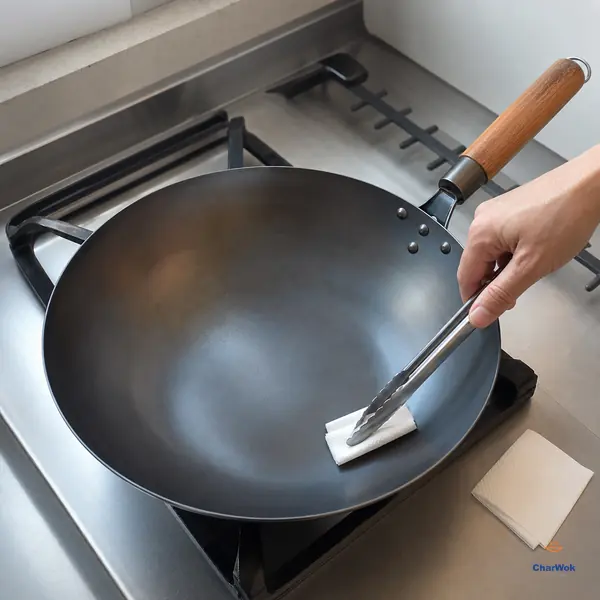
After the factory coating has been scrubbed away and the dry steel has been heated through its colour change, wipe on high-smoke-point neutral oil, then mop it back off until only a faint breathed-on sheen remains. Heat that film until it stops smoking and repeat once; thick oil creates sticky amber beads instead of a hard patina.
- Clean it according to the maker's instructions. For a confirmed bare-steel wok with a washable shipping oil, scrub with warm water, dish soap, and the tool the manufacturer recommends, then rinse and dry immediately. A pre-seasoned wok may need only a normal wash. If a finish remains, smells chemical, peels, or is not clearly identified, stop and contact the manufacturer instead of trying to remove it with heat.
- Heat only confirmed bare carbon steel. With the range hood running and windows open, warm the clean, dry wok as directed by its manufacturer, rotating it for even heat if instructed. Some bare steel develops yellow, blue, or grey heat tint; that color change is not a reason to heat a coated or unidentified pan. Let the wok cool until the handle can be held safely.
- Apply the first oil layer. Pour roughly a tablespoon of oil into the warm pan. Wad up a paper towel, grab it with tongs, and sweep it across every inch of the inner surface so the steel is fully filmed, then take a fresh towel and mop the film until only a faint sheen is left behind. Aim for the look of steel that has been breathed on, not steel that has been painted. A thick layer is the single most common mistake and produces sticky orange beads instead of a smooth patina.
- Heat the thin oil film section by section. Follow the heat level in the manufacturer's seasoning instructions. Tilt the pan so one band of the wall heats at a time, then rotate through the whole interior. A wisp of smoke can occur, but sustained heavy smoke means the pan is too hot or the oil layer is too thick; lower the heat and keep ventilating. Pull the pan off the heat when the film has set and let it cool.
- Repeat only if directed. A second very thin layer can make coverage more even on bare steel, but the manufacturer's instructions take priority over a fixed number of cycles.
- Cool, wipe, cook. Let the pan cool fully. Give the inside one last very light wipe with an oiled paper towel. It is now seasoned. The patina will be functional but not pretty yet. That black, even, glassy surface develops over weeks of real cooking, not in one session. Do not chase perfection on day one.
For the first few cooks, favor oily, forgiving dishes: fried rice, stir-fried noodles, a quick tomato egg stir-fry. Avoid anything very acidic or a long braise until the patina has had ten or so cooking sessions to thicken. The pan will get darker and more nonstick with every use.
Daily care: the four-step rhythm
- Wash warm, not cold. The moment you plate the food, run the hot wok under warm tap water and scrub with a bamboo brush or the soft side of a sponge. The residual heat loosens stuck bits. A drop of dish soap is fine for greasy cooks and will not hurt a mature patina, despite the old folklore.
- Soak only briefly for stubborn bits. If something is truly fused on, fill the pan with hot water and let it sit ten minutes, no longer. Long soaks eat at the patina and invite rust.
- Dry on the burner. This is the step people skip and the step that kills pans. Wipe the wok with a cloth, then set it back on medium heat for a minute or two until every drop has evaporated and the metal is too hot to touch. Water left in the pores overnight is what turns a good wok orange with rust by morning.
- Oil if it looks dry or if you will not cook for a week. While the pan is still warm, give the inside a half-teaspoon wipe of oil with a paper towel. In a humid kitchen or during a stretch when the wok sits idle, oil the outside too. Cooked-on patina does not need oil daily; bare-looking patches do.
What goes wrong, and the actual fix
This is the section I wish someone had handed me the first time I wrecked a wok.
The food sticks and tears. Almost never a seasoning problem on a pan more than a few weeks old. It is a temperature problem. You added cold food to a cold-oil-cold-pan, or you overloaded the pan and dropped the surface temperature below the sear threshold. Fix it with the hot-wok-cold-oil sequence (more on that below) and by cooking in smaller batches.
Orange rust blooms appear. You left water in the pan or stored it damp. Light surface rust is cosmetic. Scrub it off with a scouring pad under running water, dry on the burner, oil lightly, and cook something oily next. Heavy pitting rust needs a full re-seasoning, which is simply the first-seasoning steps repeated.
The patina looks patchy, with sticky amber beads. You used too much oil during seasoning. The cure is to burn it harder. Put the pan on high heat until the sticky spots smoke off and go from tacky to hard, then re-oil thinly and burn again.
The bottom has gone silver again after a tomato braise. Acid strips patina. A long-simmered tomato sauce, a vinegar-heavy hot and sour soup, or hours of Sichuan boiled fish in sour broth will lighten the seasoning. It is not ruined. Two or three ordinary oily cooks will rebuild it. To spare the patina, add vinegar or tomato at the very end of cooking rather than simmering it for an hour.
The wok rocks or wobbles on the burner. Either the bottom warped from thermal shock (quenched hot steel under a cold tap) or the ring is wrong for your grate. A warped bottom on a flat-burner wok is close to fatal for induction; on gas it is merely annoying. Avoid warping by never plunging a screaming-hot pan into water. Let it cool a minute first.
Hot wok, cold oil: the one technique to memorize
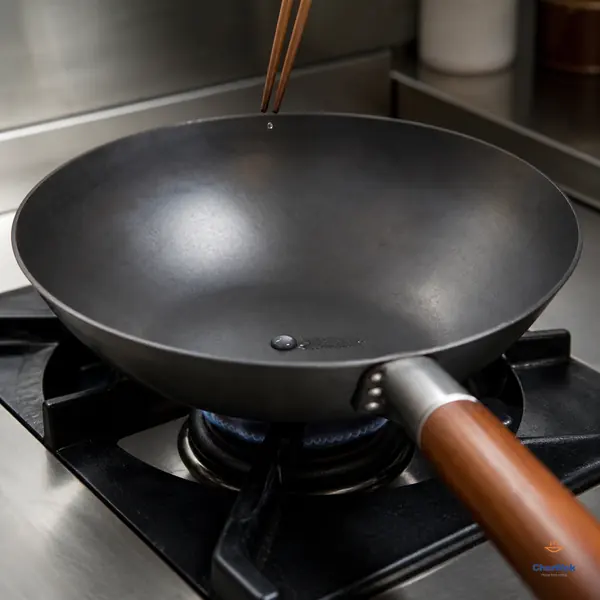
Heat the empty wok until one small water drop gathers into a rounded bead, glides briefly on its own vapour and flashes away instead of spreading and hissing in place. Let the water vanish completely, then add and swirl the oil and put in the food almost immediately.
Restaurant cooks do this instinctively. Heat the empty wok until it passes the mercury test: flick in a few drops of water and, instead of sitting and hissing, they hover on a cushion of their own steam and glide around the metal for a beat or two before flashing away. That float-and-vanish behavior is the Leidenfrost effect, and it tells you the steel is well past the sear point. Then add the oil, swirl it to coat, and add the food almost immediately. The steel is hot enough to sear on contact, but the oil has not had time to overheat and burn. Proteins release from the metal once their surface sets, which takes ten or fifteen seconds. Move them too early and they tear; leave them too long on inadequate heat and they fuse.
There is a chef version of this where you heat a ladle of oil in the wok until it smokes, pour that oil out into a heatproof bowl, then add fresh cold oil and cook. It gives a marginally slicker surface and is worth doing if you are searing a delicate fish or a stack of dumplings. For everyday cooking the home version above is plenty. If food still sticks after nailing the sequence, the pan needs re-seasoning.
Eight jobs one pan does better than you expect
People buy a wok to stir-fry and then leave it in the cabinet. The reason to own one is that it replaces half your other cookware.
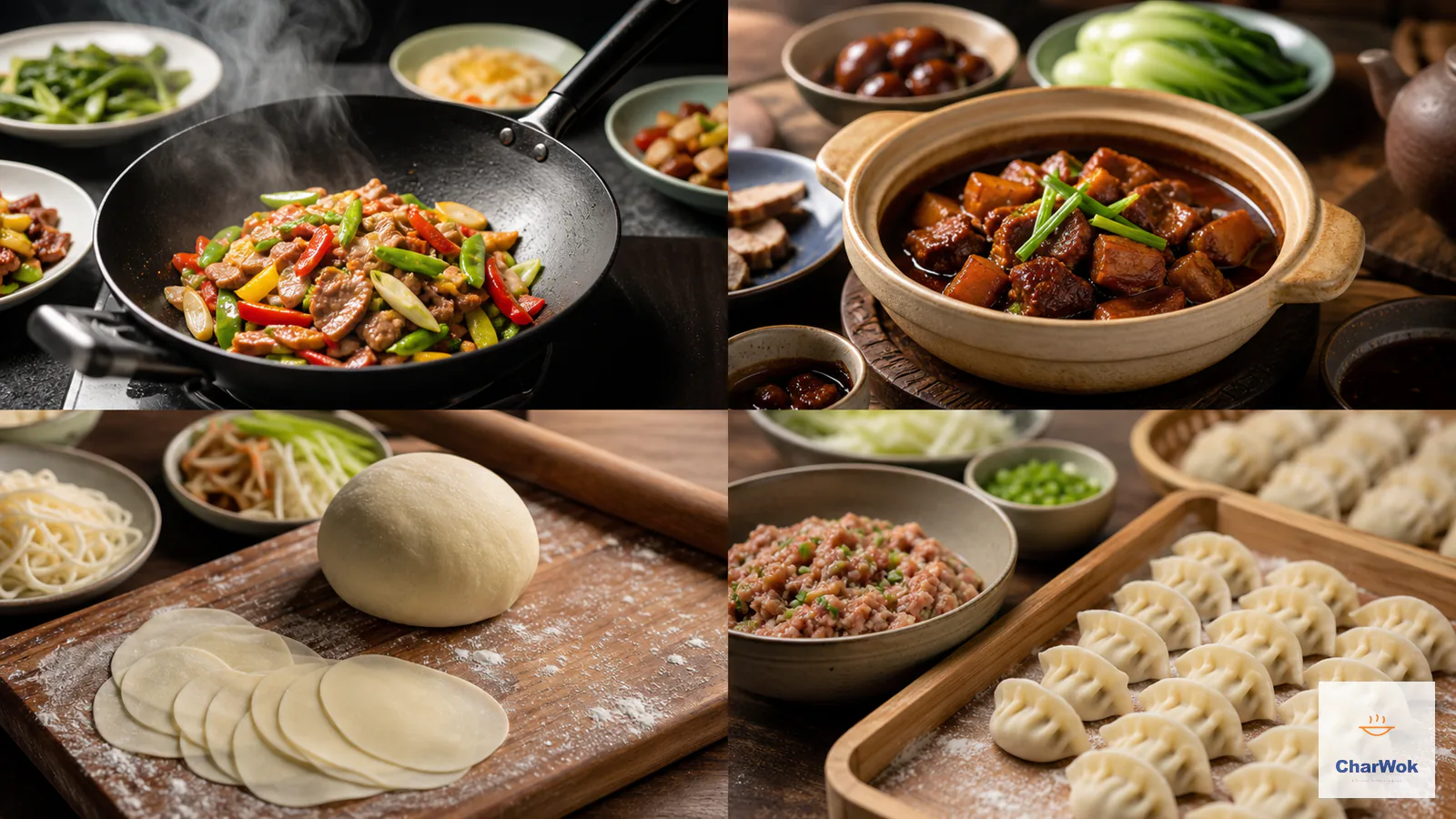
- Stir-frying. The obvious one. High heat, constant motion, small even-cut pieces. Everything from chow mein to egg fried rice to a fast Hunan pork stir-fry lives here.
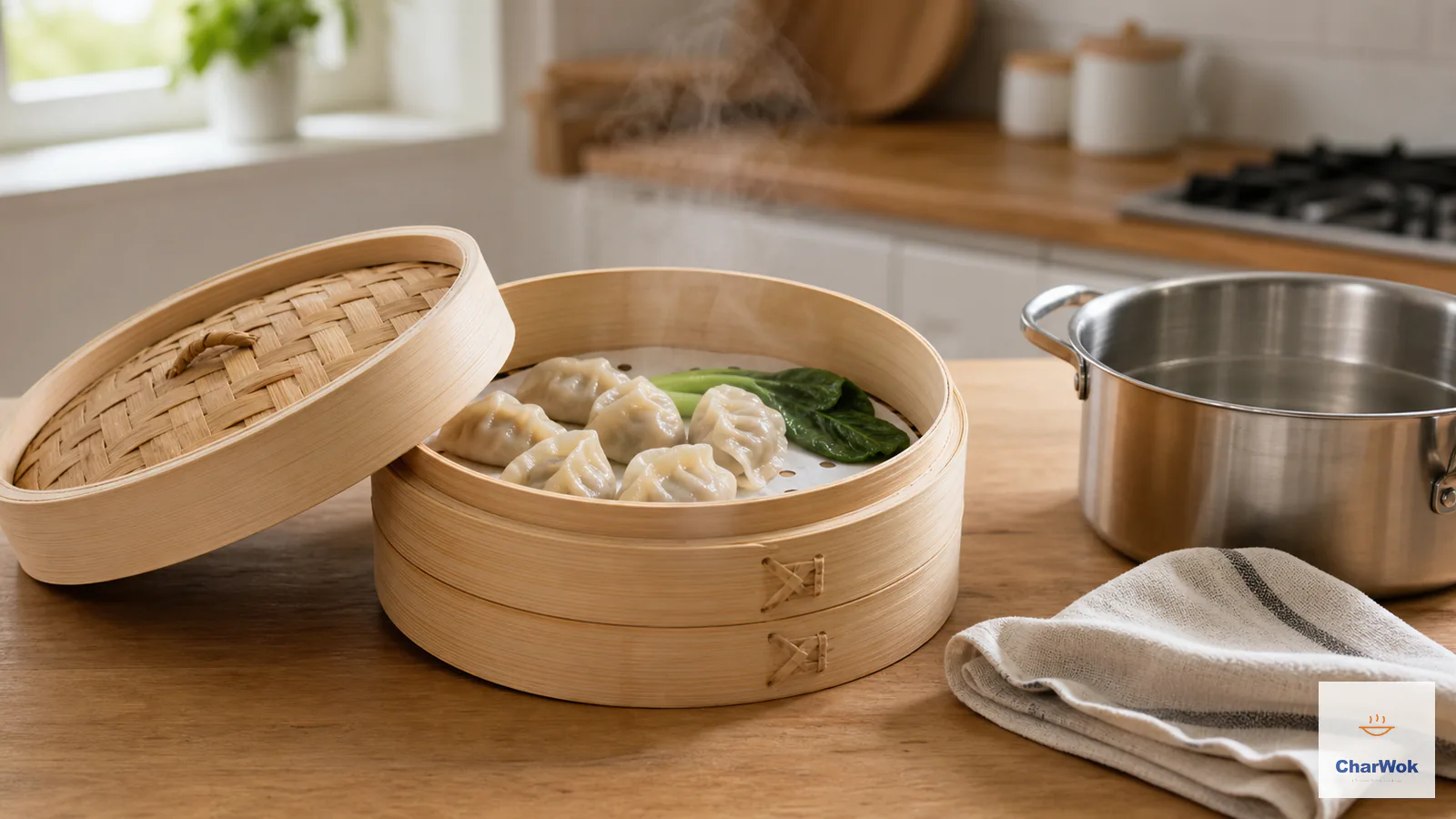
- Steaming. Drop in a steamer rack or set a bamboo steamer inside, add an inch of water, and the wok becomes a stovetop steamer. Use it to cook steamed chicken with mushroom or a whole steamed fish. For a deeper look at the baskets themselves, see the bamboo steamer guide.
- Deep-frying. The curved bowl means a smaller volume of oil covers the food, so you use less and it comes back to temperature faster between batches. Good for fried youtiao and salt-and-pepper anything.
- Shallow and pan-frying. A flat-bottomed wok doubles as a skillet for scallion pancakes and pan-fried dumplings, with the bonus that the high walls contain splatter.
- Braising and simmering. With a lid, the wok holds enough liquid for dishes like Mapo Tofu or ginger chicken, and its wide opening reduces braising liquid fast when you want a concentrated sauce.
- Smoking. Line the wok with foil, pile a mix of uncooked rice, tea, and a little sugar across the floor, and set it over heat until the aromatics begin to smoke. Suspend the food on a rack above, clap on a lid, and you have smoked chicken in a wok with no special equipment.
- Blanching and par-cooking. Boil water in the wok to blanch vegetables or pre-cook meat for a beef and potato stew, then drain and proceed in the same pan.
- Soups and congee. The wok's wide evaporation surface makes it surprisingly good for reducing a broth or stirring a thick congee without it scorching at the edges.
Induction and electric coil workarounds
A home electric or induction hob cannot dump heat into the pan the way a gas flame curling up the sides can, and it cannot drop heat on command. Two adjustments cover most of the gap. First, cook smaller portions; a pan overloaded on a weak heat source steams instead of sears. Second, because the element keeps radiating for several seconds after you dial it back, treat the burner dial as slow. The moment you want less heat, take the pan off the ring entirely for a beat and let the element cool underneath it, rather than trusting the knob to catch up in time. On induction specifically, make sure the flat bottom is fully ferrous and in contact with the cooktop; a warped or partly-aluminum base will not register at all.
Restoring a neglected wok
An old rusty wok is restorable only if you can confirm that it is uncoated carbon steel and that the handles and fasteners are sound. If its material or finish is unknown, do not heat it to identify or remove the coating; ask the manufacturer when possible, or replace the pan. For confirmed bare carbon steel, scrub away the rust, wash and dry the pan, then follow the manufacturer's seasoning method with ventilation and the smoke alarm left active.
FAQ
Do I really need to toss food in the air like the chefs?
No. Air tossing is a speed technique for restaurant burners ten times more powerful than yours. A spatula and constant stirring get the same even cooking at home. The flame-leaping show is for the camera, not the result.
Is dish soap really safe on a seasoned wok?
Yes, in small amounts, on a mature patina. Modern dish soap has no lye and will not dissolve polymerized oil. The no-soap rule dates back to when soap was caustic. What you must avoid is the dishwasher, soaking overnight, and abrasive steel wool on a young patina.
My stir-fried vegetables always come out soggy. Why?
Two likely causes: too much food in the pan at once, which drops the temperature into the steaming range, or a weak burner that never reached sear heat to begin with. Cook in two batches on a home stove and the crunch comes back.
Can I double a stir-fry recipe?
Split the recipe across two pans rather than piling it into one. A wok heaped past its heat surface drops below the sear point and the food stews in its own juice; run two quick batches back to back and the crust stays. If timing matters, hold the first batch warm and fold the two together once both are done.
Round bottom or flat bottom for a home gas stove?
Flat, unless your stove has a dedicated wok burner with a recessed ring. A round-bottomed wok on a standard flat grate wobbles and only the very bottom touches flame, wasting most of the heat up the sides.
How do I know the wok is hot enough before adding oil?
Use the mercury test. Flick a few drops of water in. If they sit, boil, and hiss, the pan is still too cool. If they hover and glide around on a film of their own steam for a moment before flashing away, the steel is hot enough: add the oil and start cooking right away.