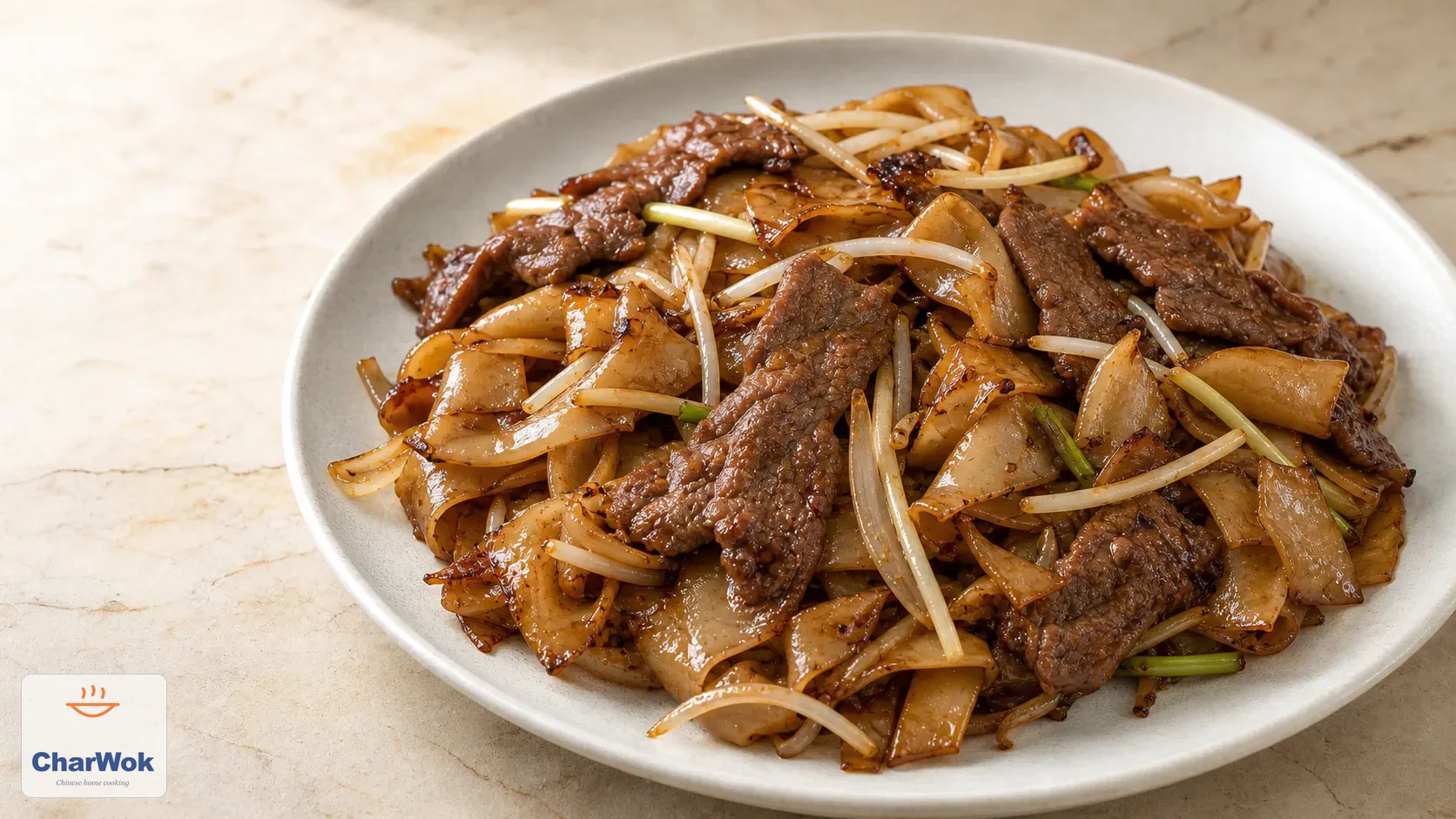
The whole point of beef chow fun is two textures doing opposite things at once: rice noodles gone chewy and edged with a little char, and beef so soft it barely resists the tooth. The Chinese name, gan chao niu he (干炒牛河), spells out the trouble: "dry-fried." A good plate leaves no puddle of sauce, no slick of oil, and no broken noodle fragments. That "dry" finish is what home cooks miss, and the reason is almost always the same: not enough heat, applied too slowly.
I wrecked my first few attempts by treating it like a casual weeknight stir-fry. I crowded the wok, the noodles threw off water instead of browning, and I ended up with a grey, gummy tangle that tasted fine but looked like a mistake. The dish rewards one specific habit: cooking in fast, separate stages so each component hits the hot metal alone. Once that clicks, the rest is seasoning.
At a glance. Cook the beef, noodles, and vegetables in three separate passes over the highest heat your wok can hold, roughly 90 seconds of frying total. Two soy sauces (light for salt, dark for color) and a wok hot enough to singe a strand of noodle are the whole seasoning story. Serve immediately; this dish does not wait.
What you're actually eating
This is a Cantonese dai pai dong and cha chaan teng staple, the kind of plate a cook can turn out every forty seconds on a roaring burner. The noodle is ho fun (河粉): wide, flat rice ribbons, slightly thicker than the round strands in Yunnan rice noodle soup and a different beast entirely from the thin vermicelli you'd use for chow mei fun or Singapore mei fun. Beef, bean sprouts, onion, and chives round it out. That's it. There is no garlic, no ginger, no oyster sauce in the classic version. The bet is that a great noodle, well-seared beef, and two soy sauces will carry the plate. They do.
Three things decide whether it works
1. The noodles. Use fresh ho fun if you can find them, usually sold in vacuum packs or loose in the refrigerated case at a Chinese grocer, pre-cut into ribbons and stacked in a block. Dried ho fun exist and will do in a pinch, but they take on more water during boiling and never quite hit the same chew; if you go dried, undercook them by a minute, shock in cold water, and drain very thoroughly. Do not substitute dried rice sticks meant for egg fried rice noodles. They're too thin and will shatter in the wok.
2. The beef cut and the slice. Flank or skirt steak, sliced thin across the grain. "Across the grain" is not optional on a lean cut like flank; slice with the grain and you've made shoe leather. Partially freezing the block for 25 minutes first makes clean, thin slices much easier.
3. The heat. This is the part that defeats home kitchens. Restaurant burners throw heat a residential stove can't match, so you compensate by cooking in batches and never loading the wok all at once. A heavy carbon-steel wok, properly seasoned and screaming hot, matters more than any ingredient on this list.
Ingredients
Ingredients at a glance
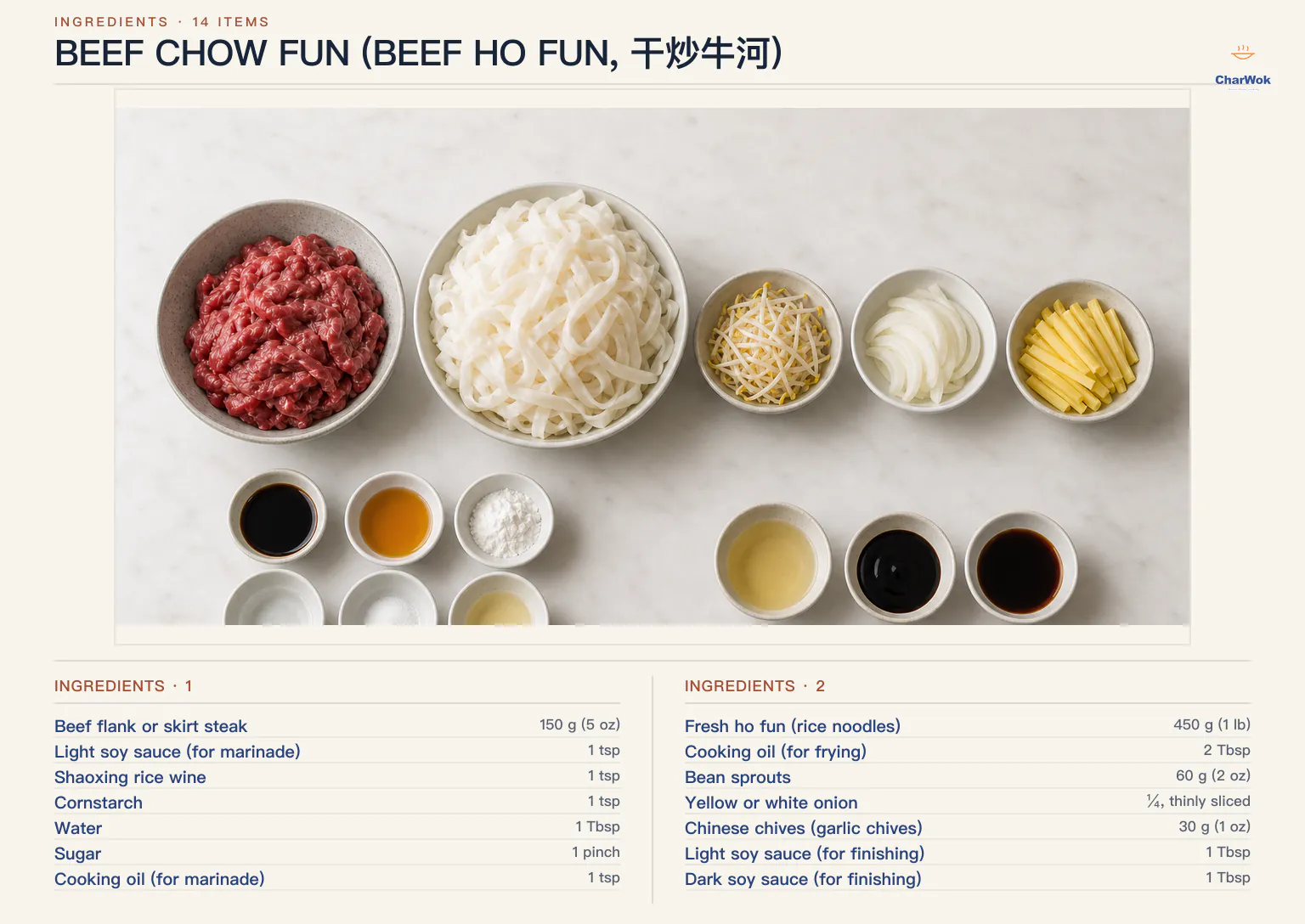
| Ingredient | Amount | Notes / substitute |
|---|---|---|
| Beef flank or skirt steak | 150 g (5 oz) | Partial-freeze, then slice 3 mm thick across the grain |
| Light soy sauce (for marinade) | 1 tsp | See light vs. dark soy sauce |
| Shaoxing rice wine | 1 tsp | Dry sherry works; learn more in Shaoxing rice wine |
| Cornstarch | 1 tsp | The velvet that keeps the beef tender |
| Water | 1 Tbsp | Hydrates the starch slurry so it coats evenly |
| Sugar | 1 pinch | Rounds the salt; not sweet |
| Cooking oil (for marinade) | 1 tsp | Seals in moisture, stops slices clumping in the wok |
| Fresh ho fun (rice noodles) | 450 g (1 lb) | If dried, use 230 g (8 oz) and cook per package, then cold-shock |
| Cooking oil (for frying) | 2 Tbsp | Neutral, high-smoke: peanut, canola, grapeseed |
| Bean sprouts | 60 g (2 oz) | Trim tails if you like; homegrown mung bean sprouts are excellent |
| Yellow or white onion | ¼, thinly sliced | Sweet onion works too |
| Chinese chives (garlic chives) | 30 g (1 oz) | Yellow chives are traditional; green are easier to find. See also chives with egg |
| Light soy sauce (for finishing) | 1 Tbsp | Salt and aroma |
| Dark soy sauce (for finishing) | 1 Tbsp | Color and a touch of sweetness |
Method
- Velvet the beef. Combine the sliced beef with the light soy, Shaoxing wine, cornstarch, water, and sugar. Toss until every slice is filmed with the slurry and the liquid has been absorbed, then drizzle on the teaspoon of oil and toss again. Rest 15 minutes. The cornstarch forms a thin gel that gelatinizes in the hot oil, shielding the meat from direct heat. This is the same principle behind black pepper beef and pepper steak, and it is the difference between tender and tough.
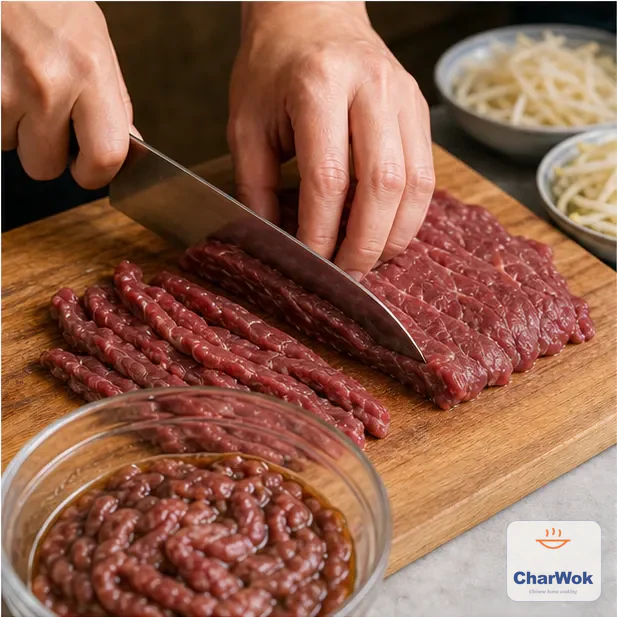
Slice the beef 3 mm thick across the grain, then marinate for 15 minutes
- Separate the noodles. If using fresh ho fun, gently pull the block apart into individual strands with your fingers. Resist the urge to chop; short strands bruise and turn to paste in the wok. If your noodles feel stiff from the fridge, let them sit at room temperature while the beef rests.
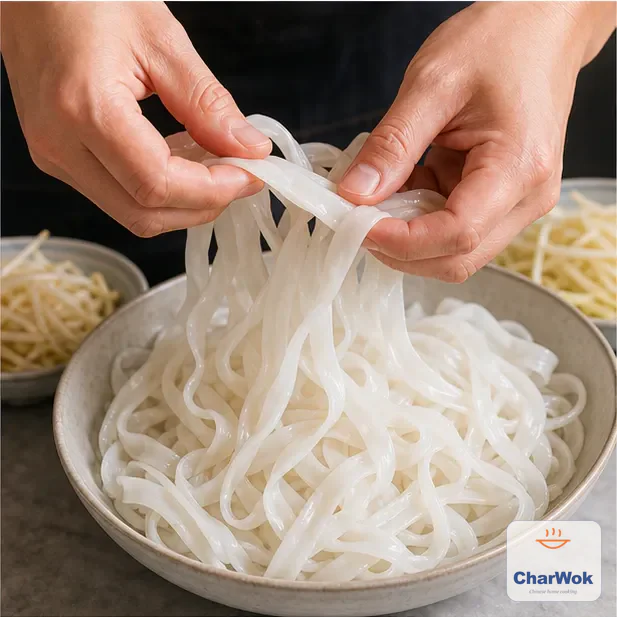
Gently separate fresh noodles before they enter the wok
- Sear the beef, then pull it. Get the wok smoking, add 1 Tbsp oil, swirl, and add the beef in a single layer. Don't crowd; fry in two batches if your wok is small. Let one side color for 20 seconds before tossing, and pull the beef out the instant it has no raw red left. It will finish cooking later; overcooking now is unrecoverable. Leave the oil in the wok.
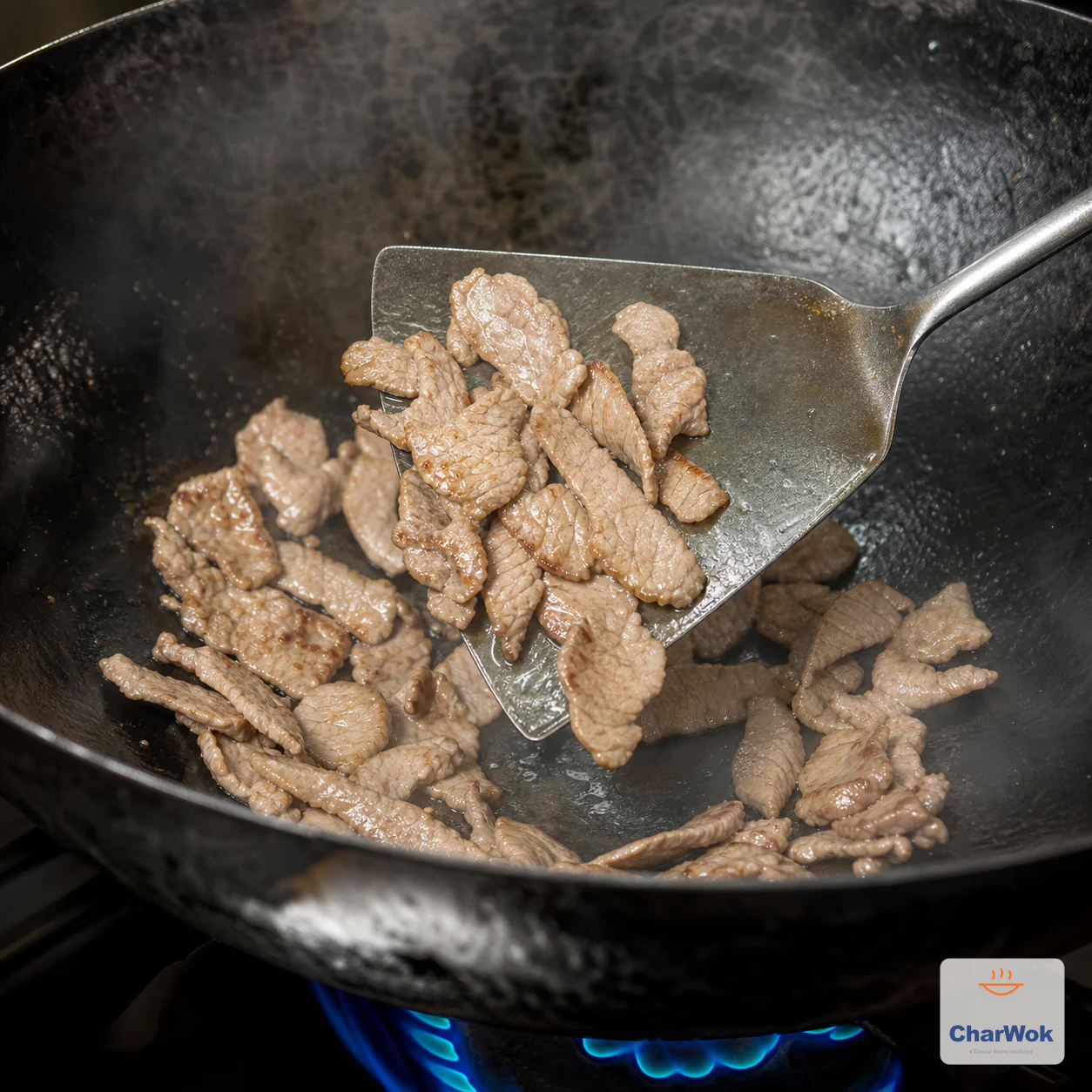
Pull the beef as soon as no raw red remains
- Fry the noodles dry. Add the remaining 1 Tbsp oil, then the noodles. Toss gently with chopsticks rather than a spatula. The goal is to heat the strands through and crisp a few edges, not to mash them. If the noodles are sticking, your wok isn't hot enough; nudge the heat up and keep them moving. After about a minute, when they soften and start to take color, push in the bean sprouts and onion.
- Hit it with soy, return the beef. Add the bean sprouts and onion and fry 30 seconds, long enough to wilt the sprouts slightly, short enough to keep their crunch. Return the beef and any juices, add the chives, then drizzle the two soy sauces around the hot wall of the wok so they flash and caramelize before they reach the noodles. Toss for 30 more seconds and plate immediately. Everything should look dry, glossy, and dark-amber.
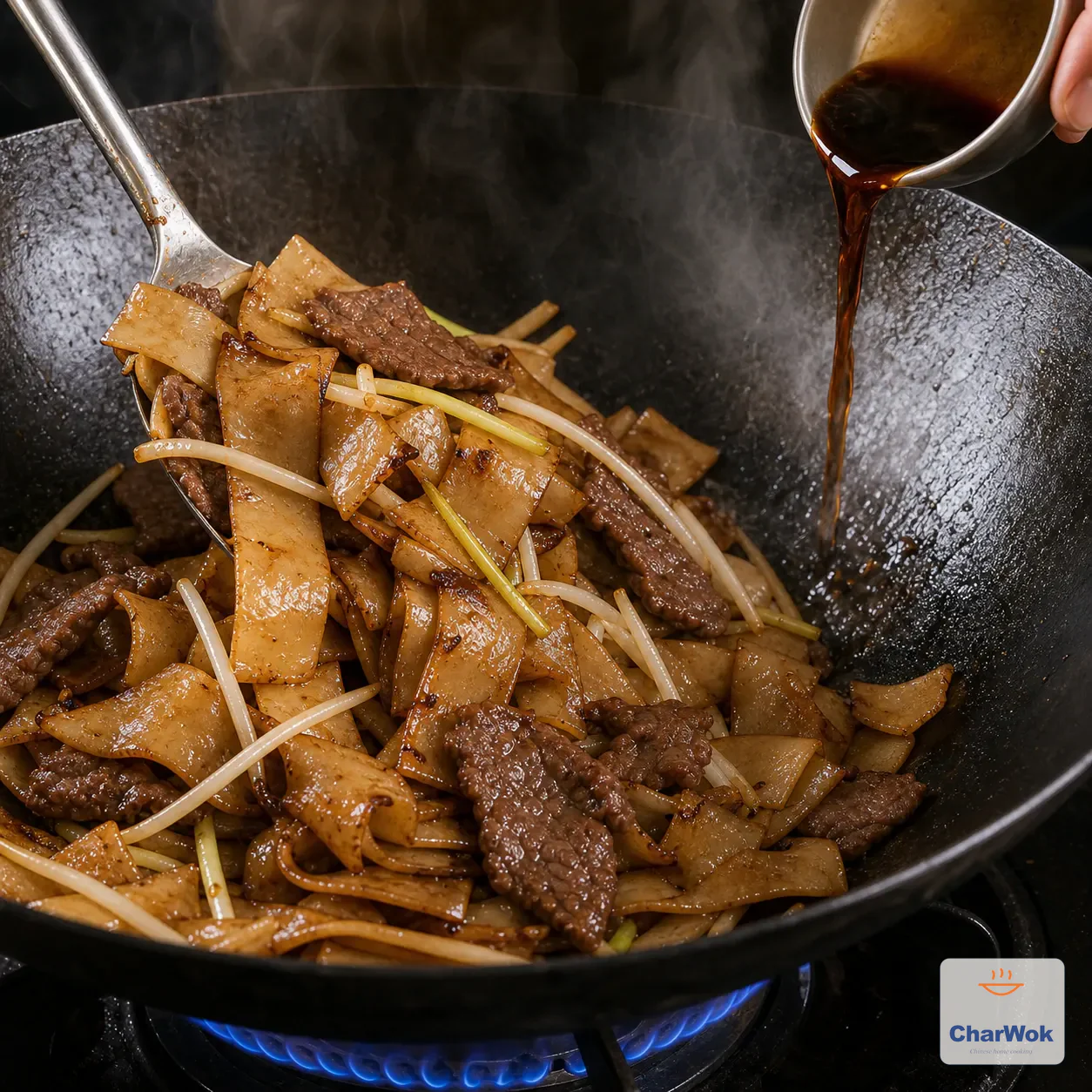
Return the beef, pour soy around the wok rim, and finish quickly
A note on gear: the same single-wok, high-heat sequencing you use for beef chow mein or a classic chow mein applies here. The mistake to avoid is letting the noodles sit in pooling soy sauce, which is how you arrive at the broken, soggy plate nobody wants.
When it goes wrong, here's why
- Soggy, clumped noodles. The wok wasn't hot enough, or you added all the soy at once into a cool spot. Fix: preheat harder, cook the noodles alone first, and pour soy down the wok's hot side, never straight onto the noodles.
- Noodles breaking into bits. You used a spatula instead of chopsticks, or a metal tool on soft fresh noodles. Switch to bamboo or wooden chopsticks and toss in a lifting motion.
- Tough, chewy beef. Either sliced with the grain, sliced too thick, or left in the wok too long. Slice thinner, across the grain, and pull the beef out the moment it loses its raw color.
- Pale, anemic color. Skimped on dark soy, or the wok was too cool to caramelize it. Don't be shy with the dark soy; that mahogany color is the whole visual promise of the dish.
- Sticking and tearing. The wok isn't seasoned or isn't hot enough before the oil goes in. A well-seasoned wok, heated empty until it shimmers, releases noodles on its own. This is the same foundation you need for beef and broccoli or beef with Chinese broccoli.
- Too salty. Light soy sauce brands vary a lot in salt. Taste yours first; if it tastes aggressively salty, back the finishing light soy down to 2 tsp.
Variations worth trying
Swap the beef for chicken and you have chicken chow fun, a gentler, kid-friendlier version that uses the exact same technique. For a deeper, more savory note, a teaspoon of sha cha sauce folded in with the soy is a recognized Hong Kong twist. If you want heat, a spoon of chili oil or a slit fresh red chili added with the chives wakes the plate up without turning it into a different dish. The Cantonese soy-and-noodle backbone is also what carries soy sauce pan-fried noodles, so once this method is in your hands you have a whole family of dishes at your fingertips.
Storing and reheating
Be honest with yourself: this is a cook-to-order dish, and it's never as good the next day. The noodles go stiff and the bean sprouts turn sad. If you must, refrigerate for one day and reheat in a dry smoking wok with a teaspoon of oil and a splash of water, covered for 30 seconds to steam-soften the noodles before a final toss. Microwave reheating makes the texture worse, not better.
Frequently asked questions
Can I use dried rice noodles? Yes, but cook them slightly less than the package suggests, rinse under cold water right away, and drain fully. Expect a softer, less chewy result.
Why two soy sauces? Light soy provides salt and aroma; dark soy provides the brown color and a faint sweetness. Using only one leaves the dish either pale or one-dimensional.
Do I really need to rest the beef 15 minutes? It matters. The resting time lets the cornstarch slurry hydrate and adhere, so the velvet coating doesn't wash off the moment the meat hits the oil.
Can I make it without a wok? A large cast-iron or carbon-steel skillet works for one serving. Avoid nonstick for the noodle stage. It can't get hot enough to char, and high heat degrades the coating.