The first cold glass noodle salad I ever served fell apart in front of guests. The noodles had gone limp and cloudy, the cucumber had wept a puddle into the bowl, and what should have been a taut, slippery, crunchy dish was a sad wet tangle. The failure was instructive. The whole dish lives or dies on three things: how you cook the starch noodles, how you handle the water in the vegetables, and the temperature of the oil you pour over the aromatics. Get those three right and the rest is seasoning.
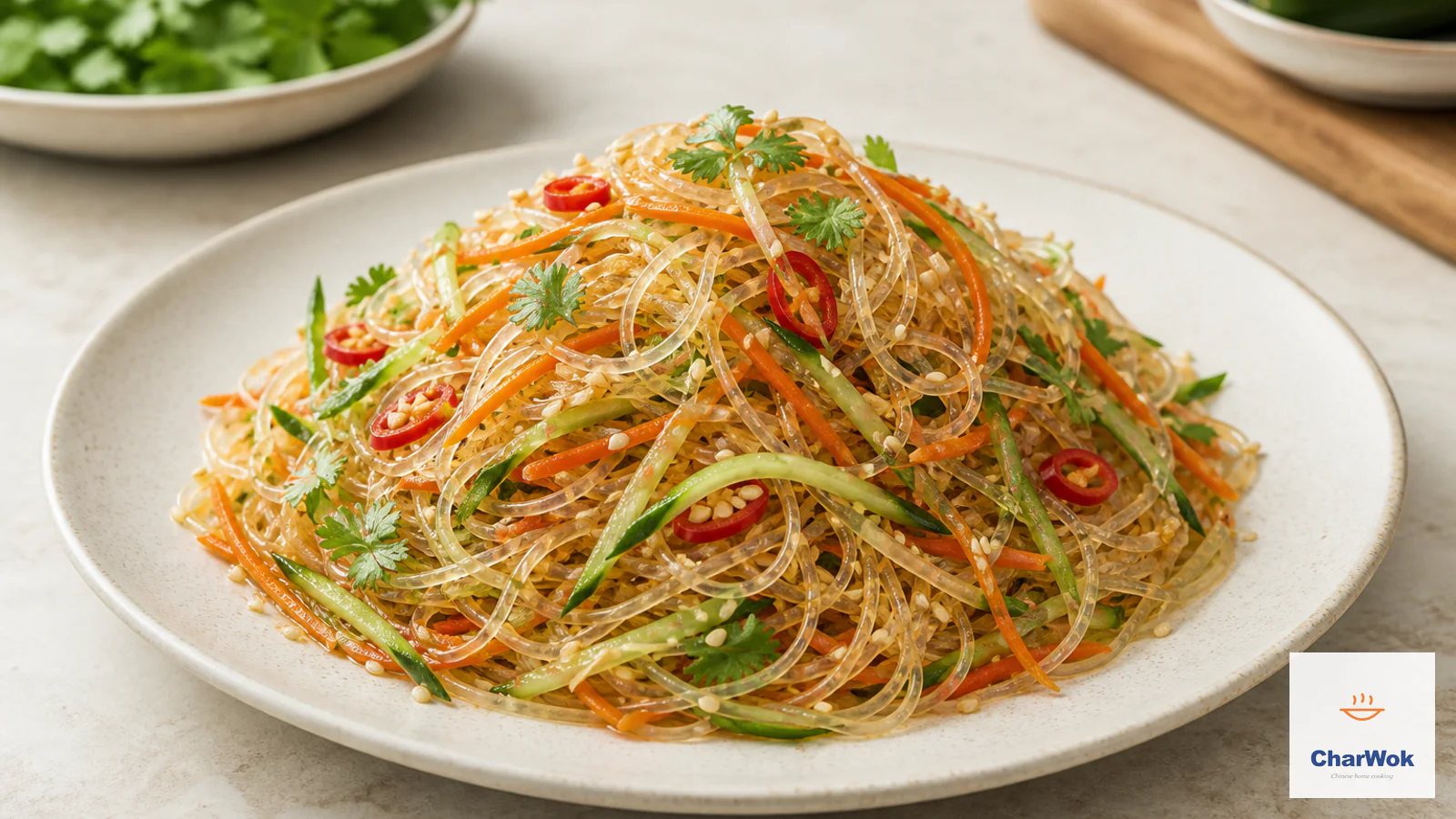
This is liang ban fen si (凉拌粉丝), the cold mung-bean-thread salad that turns up on northern and Sichuanese tables as a liang cai, the opening cold course meant to wake up the appetite before the stir-fries land. It is also, frankly, an excellent thing to eat standing at the kitchen counter at one in the afternoon. The noodles are cooked, shocked, and dressed with a hot-oil chili-garlic sauce in the same family as the one that makes cold noodles with Sichuan dressing so addictive, but the texture here is its own thing, bouncy and translucent instead of chewy-wheat.
At a glance: 100 g (3.5 oz) of dried mung-bean glass noodles serves two as a light meal, four as a starter. Soak first, then boil only 2 to 3 minutes, shock in cold water immediately, drain bone-dry. The non-negotiable move is pouring 190°C (375°F) oil over raw garlic and chili flakes to bloom them before the liquid seasonings go in. Dress right before eating, never ahead.
What "glass noodles" actually means
The phrase covers more than one ingredient, and the confusion costs people their dinner. The noodles you want here are made from mung bean starch, called fen si (粉丝) in Mandarin, sold in the United States as mung bean vermicelli, bean thread noodles, or cellophane noodles. They cook up clear and springy and snap cleanly between your teeth. This is the same ingredient that anchors spicy vermicelli stir-fry and gets tucked under steamed garlic shrimp.
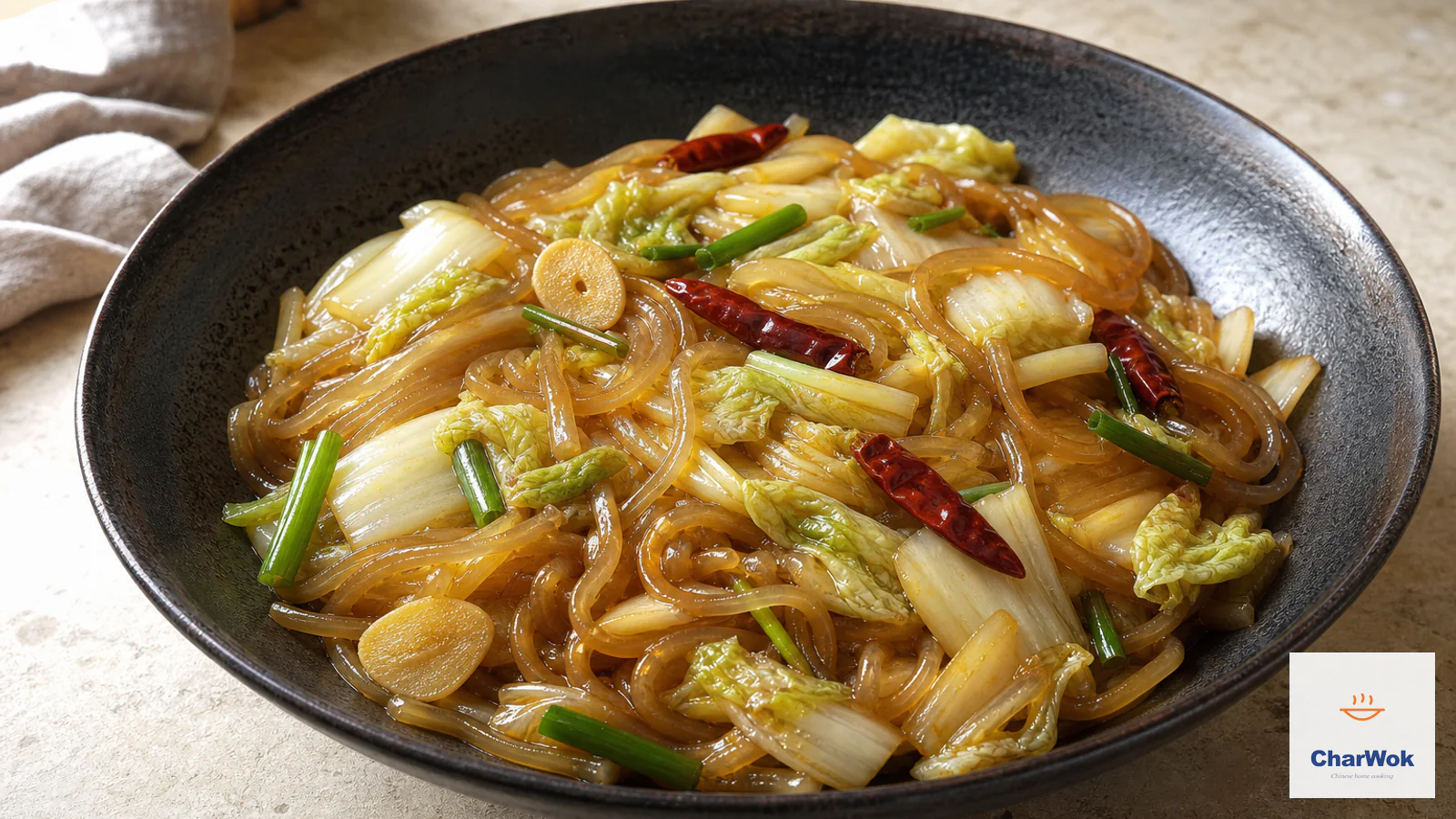
The other "glass noodle" is fen tiao (粉条), made from sweet potato or potato starch. It is thicker, grayer, and stretchier, the noodle you'll find in glass noodles with napa cabbage and northeastern stews. It will work in this salad, but you'll need to soak and boil it longer, and the finished texture is more chewy than snappy. My advice: buy mung-bean threads for cold salads, save the sweet-potato noodles for braises. Don't confuse either of these with rice vermicelli, the thin white noodles used for chow mei fun; rice vermicelli turns gummy and opaque here and is the wrong tool.
Mung-bean threads are sold dried, usually in 50 g (1.76 oz) bundles, two of which make this recipe. They look like brittle white nests and keep indefinitely in the pantry, which is reason enough to stash a couple of packs for the kind of summer afternoon when you want something cold and bright without turning on the oven.
Ingredients
Ingredients at a glance
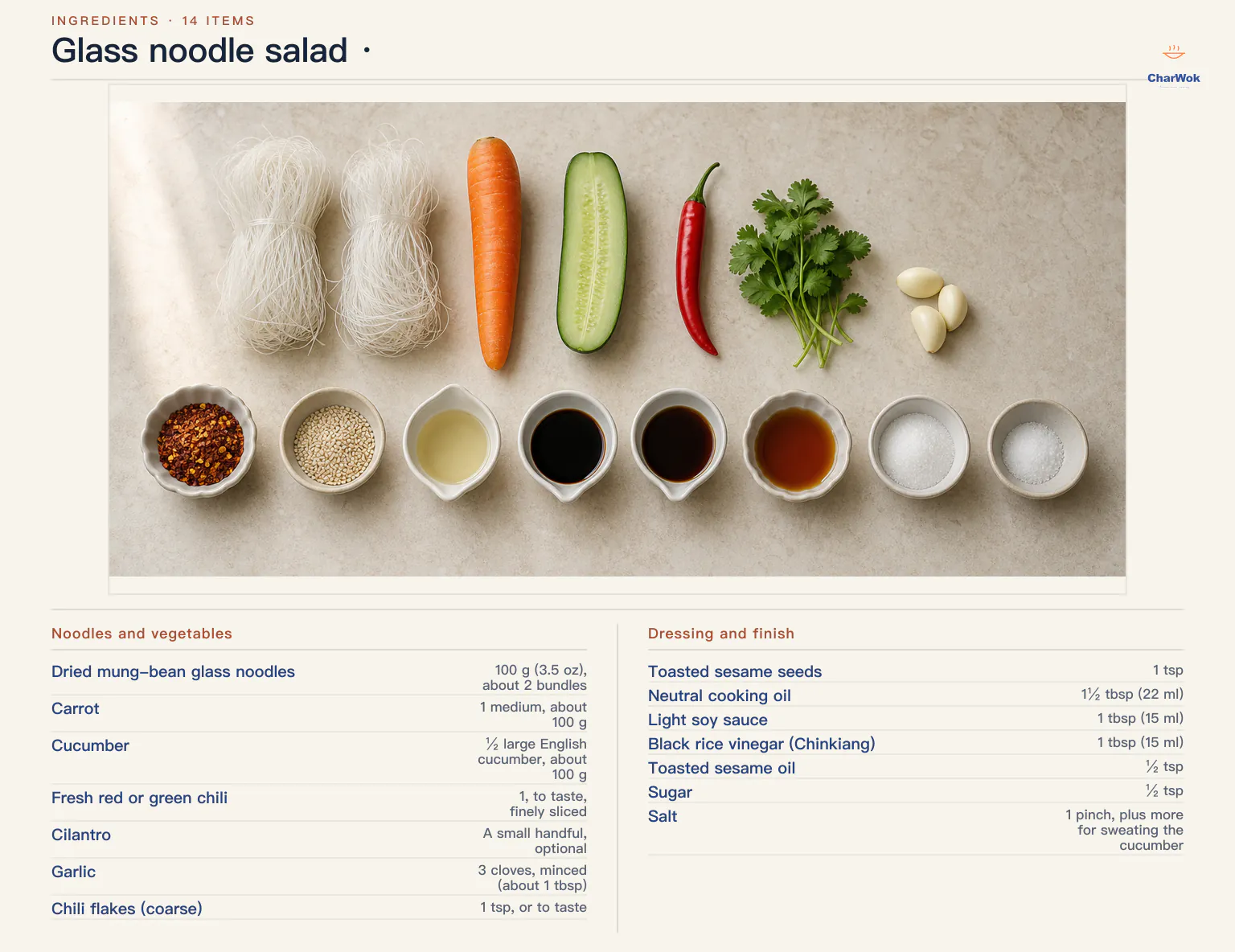
| Ingredient | Amount | Notes / substitute |
|---|---|---|
| Dried mung-bean glass noodles | 100 g (3.5 oz), about 2 bundles | Sweet-potato starch noodles (fen tiao) work if you soak and boil them longer. |
| Carrot | 1 medium, about 100 g | Cut into fine julienne or grated. Julienned stays crunchier. |
| Cucumber | ½ large English cucumber, about 100 g | Persian cucumber works. Seed and salt it first (see method) to stop it weeping. |
| Fresh red or green chili | 1, to taste, finely sliced | Thai bird's-eye for heat, seeded jalapeño for mild. Skip if heat-averse. |
| Cilantro | A small handful, optional | Stems and leaves both fine. Thai basil is a reasonable stand-in. |
| Garlic | 3 cloves, minced (about 1 tbsp) | Grate to a paste if you want it to melt into the dressing. |
| Chili flakes (coarse) | 1 tsp, or to taste | Use a coarse flake, not fine powder. Korean gochugaru is a fine substitute. |
| Toasted sesame seeds | 1 tsp | Raw seeds won't read; toast in a dry pan first if needed. |
| Neutral cooking oil | 1½ tbsp (22 ml) | Grapeseed, canola, or avocado. Not olive oil, not unrefined sesame. |
| Light soy sauce | 1 tbsp (15 ml) | For gluten-free use tamari. See the light vs. dark soy sauce guide. |
| Black rice vinegar (Chinkiang) | 1 tbsp (15 ml) | Mellow, malty, smoky. Lime juice is the gluten-free stand-in; see black rice vinegar. |
| Toasted sesame oil | ½ tsp | Finish oil only; more muddies the flavor. A little goes a long way. |
| Sugar | ½ tsp | Balances the vinegar. Rock sugar syrup or honey (if not vegan) work. |
| Salt | 1 pinch, plus more for sweating the cucumber | Kosher or fine sea salt. |
The method, and why each step matters
- Soak the noodles before you boil them. Drop the dried bundles into a bowl of cold water for 10 minutes, or warm (not boiling) water for 5, until they bend without snapping. Soaking first lets the starch hydrate evenly from the outside in; if you drop dry nests straight into a rolling boil the outside turns to paste before the core softens. The outside always demands gentler treatment than the inside. Once pliable, snip the nests in a few places with kitchen scissors so the strands are fork-length and manageable.
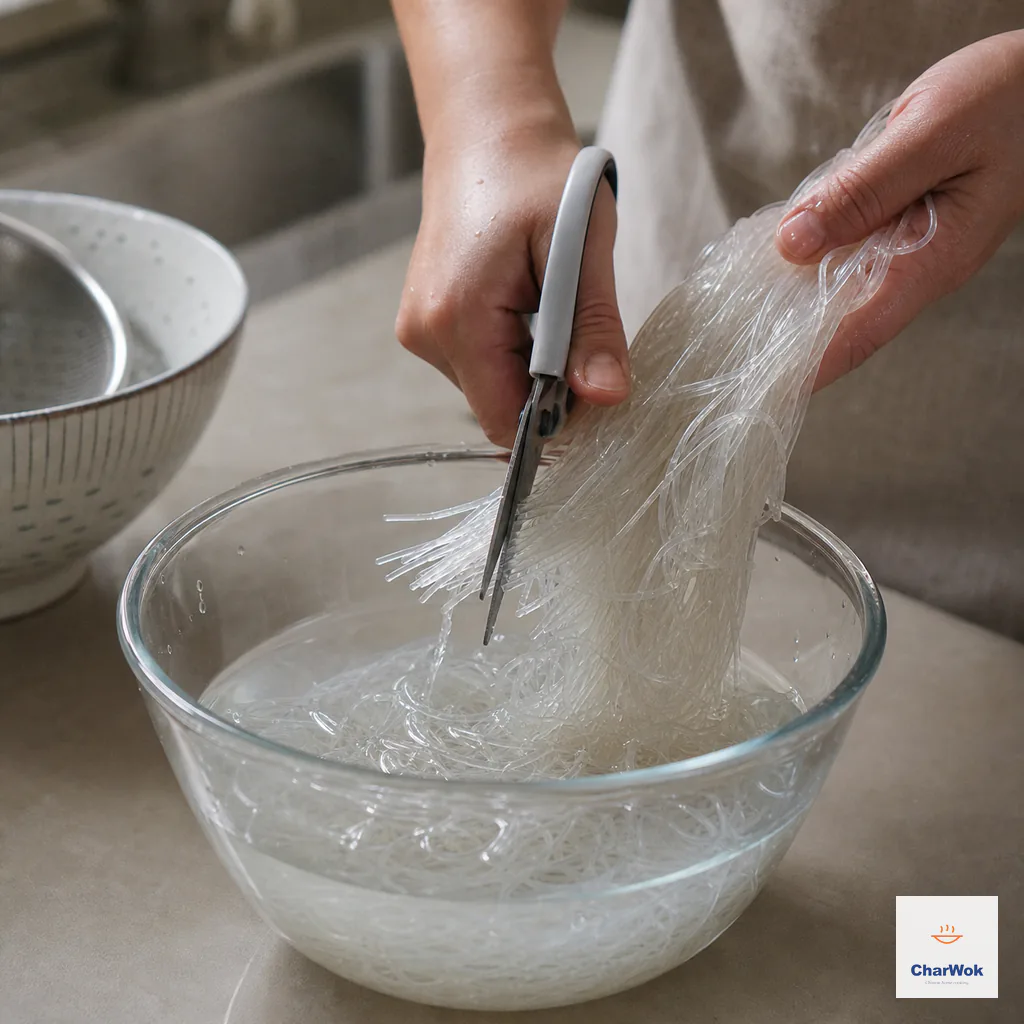
Soak in plentiful cold water only until pliable, then snip the bundles in two or three places before cooking.
- Boil briefly, then trust the carryover. Bring a generous pot of water to a hard boil, salt it lightly, and drop in the drained noodles. Cook 2 to 3 minutes, testing early. Pull a strand, run it under cold water, and bite it. You want it just cooked through with a slight, deliberate snap left, because it will soften a touch more as it sits in the dressing. Pull it when it feels perfect and it will be mush by the time it reaches the table. This is the single step most home cooks overshoot.
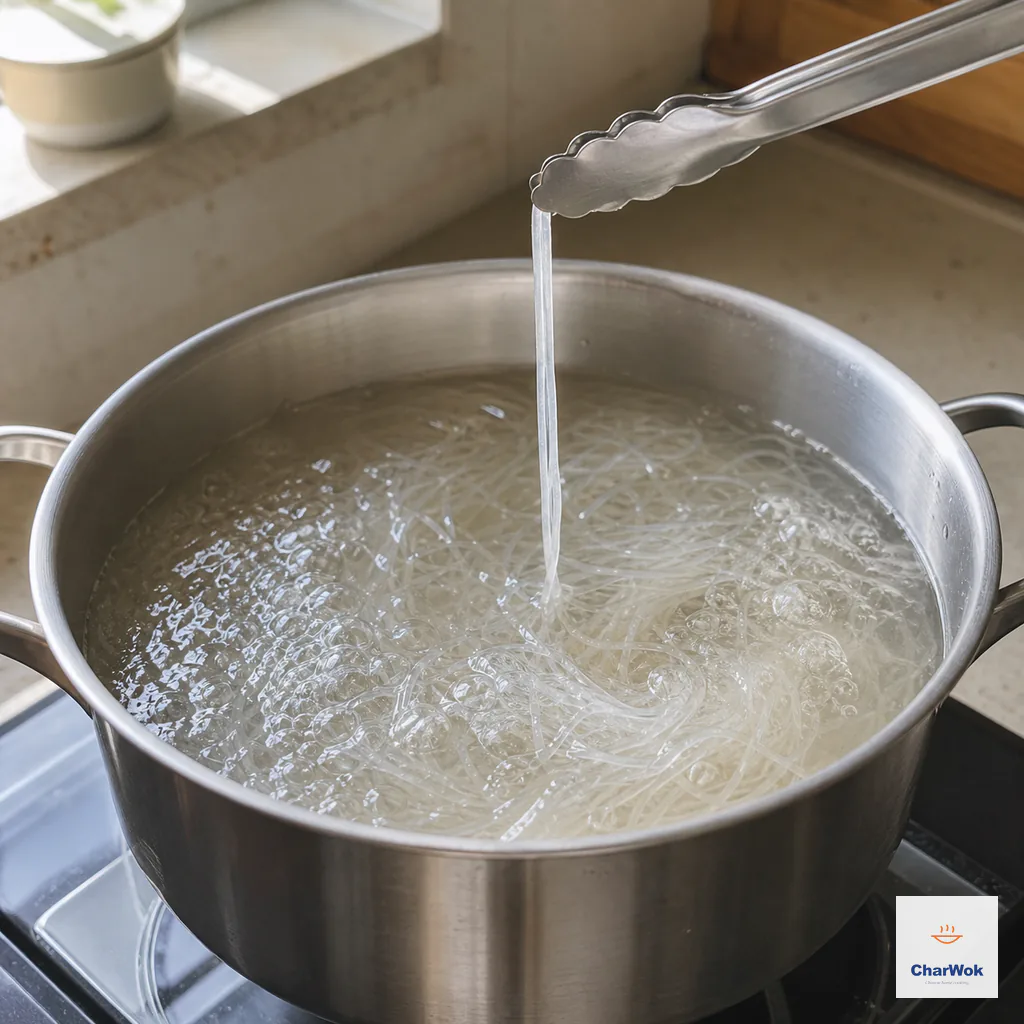
Boil the soaked noodles for about 2.5 to 3 minutes, checking early so they stay springy instead of turning mushy.
- Shock in cold water the instant they're done. Scoop the noodles straight into a bowl of ice water. This stops the residual heat from continuing to cook the starch, which is exactly what would push them past bouncy into slimy. Let them sit a minute, then drain thoroughly, lifting the nest and pressing lightly. Wet noodles water down the dressing.
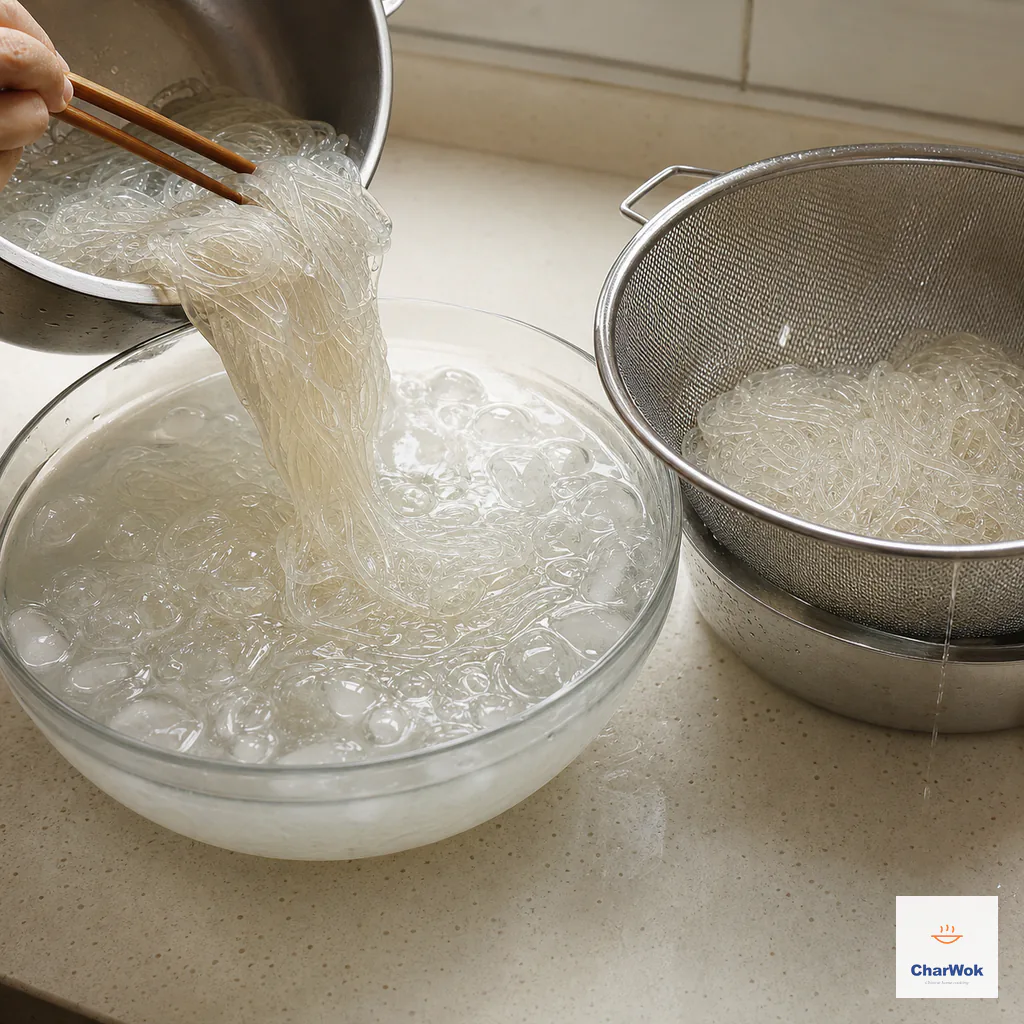
Shock the noodles immediately in cold water, then drain very thoroughly so the finished salad never becomes watery.
- Prep the vegetables and sweat the cucumber. Julienne or grate the carrot. For the cucumber, halve it lengthwise, scoop the seedy core with a teaspoon, and cut the firm wall into thin strips. Toss the strips with a pinch of salt and let them sit five minutes, then squeeze them gently in your fist. An unsalted, un-squeezed cucumber will leak half a cup of water into your finished salad and turn the dressing thin and gray. This is the failure mode that ruined my first attempt. Bean sprouts, briefly blanched and squeezed, or shredded mung bean sprouts make a good crunchy alternative; spinach, blanched and squeezed dry, works too.
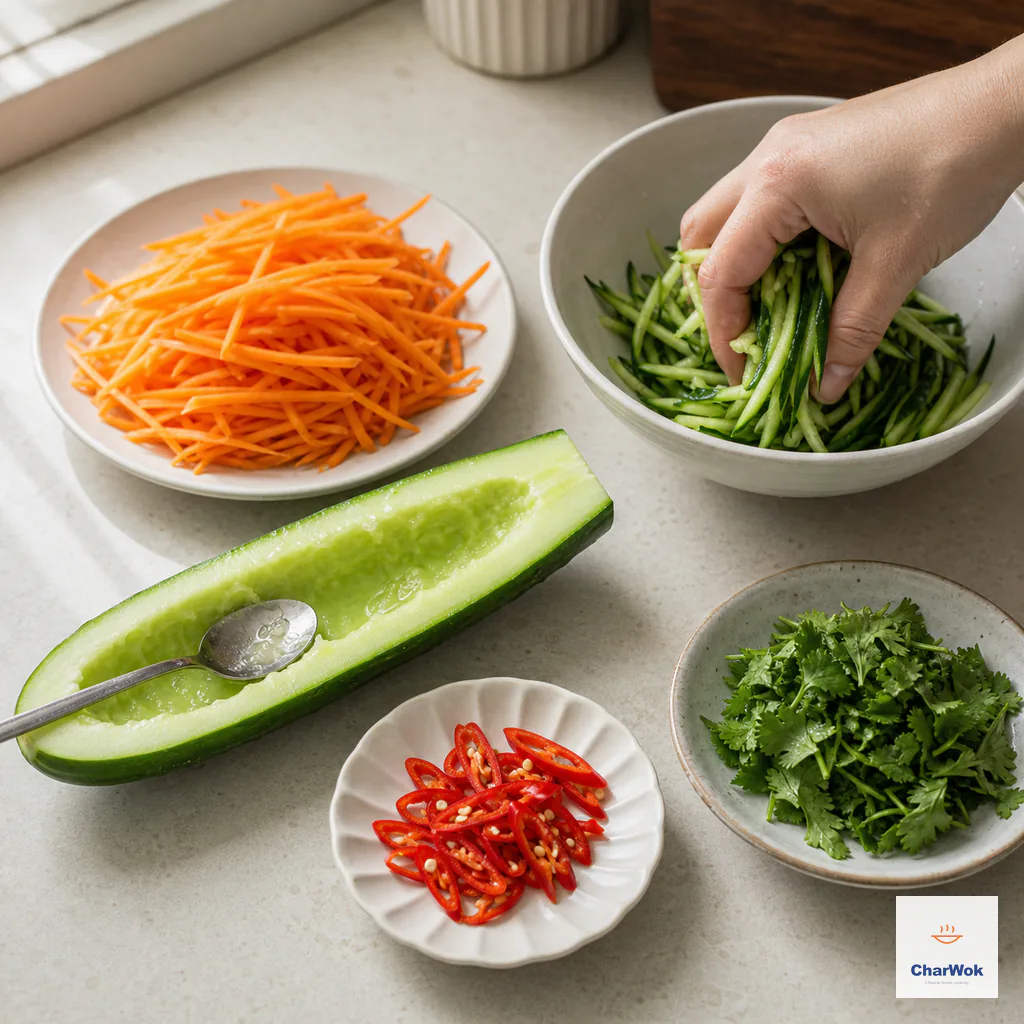
Remove the cucumber seed core, cut the vegetables finely, salt the cucumber briefly and squeeze out excess moisture.
- Bloom the aromatics with hot oil. Pile the minced garlic, chili flakes, and sesame seeds into a small heatproof bowl. Heat the neutral oil in a small pan until it shimmers, about 190°C (375°F); if you have no thermometer, a flake dropped in should sizzle vigorously within a second. Pour the hot oil over the aromatics and stir at once. The violent sizzle is doing real work: it is flash-cooking the garlic to mellow its raw bite, releasing the capsaicin and red color from the chili, and drawing the nutty flavor out of the sesame seeds. This is the same move, in miniature, that builds a jar of chili oil. If your oil isn't hot enough you get raw garlic and pale flakes; if it's smoking you get bitter garlic. Hit the shimmer and you're there.
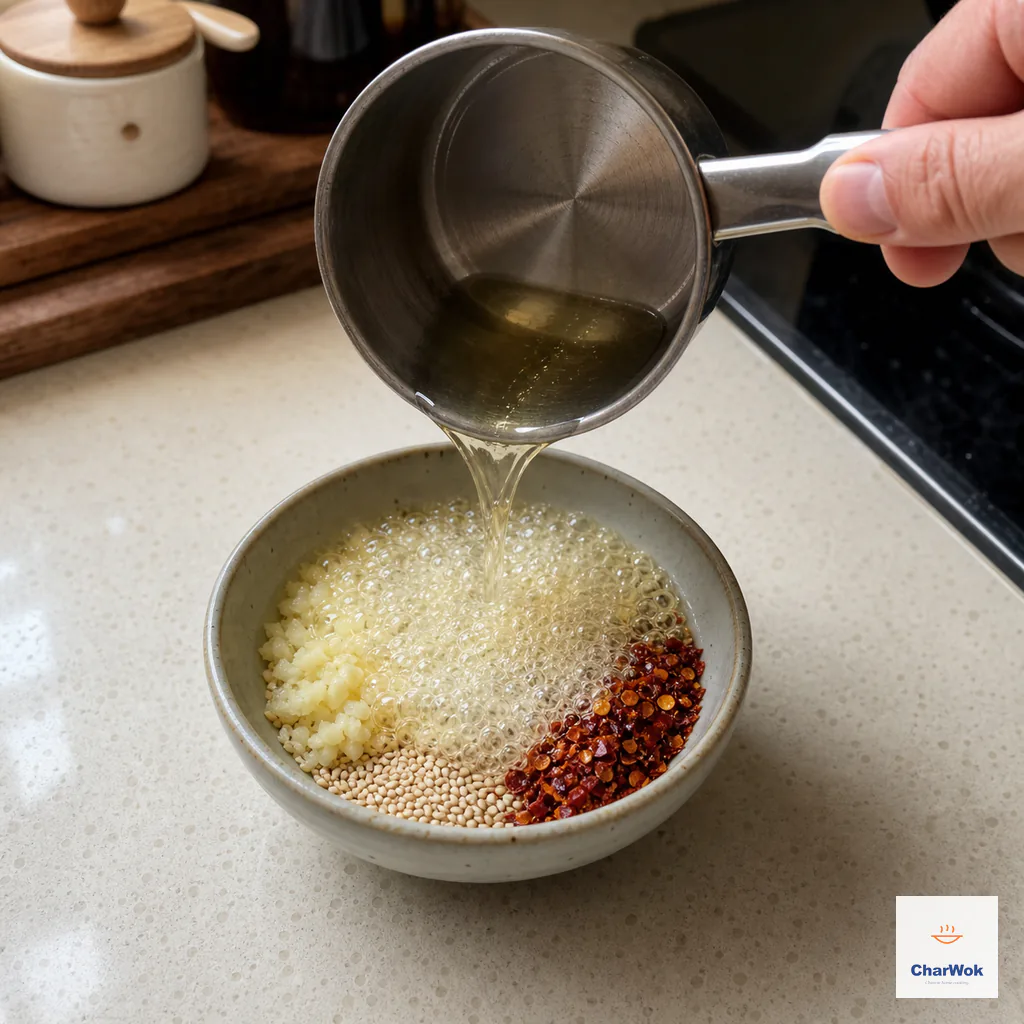
Heat the neutral oil to about 190°C or 375°F, then pour it over the garlic, chili flakes and sesame to bloom them without burning.
- Finish the dressing. Into the hot, sizzling aromatics stir the soy sauce, black rice vinegar, sesame oil, sugar, and a pinch of salt. Stir until the sugar dissolves. Taste. The dressing should read salty-tart first, with heat and sweetness behind it, and it should be slightly too strong on its own, because the bland noodles and watery vegetables will dilute it.
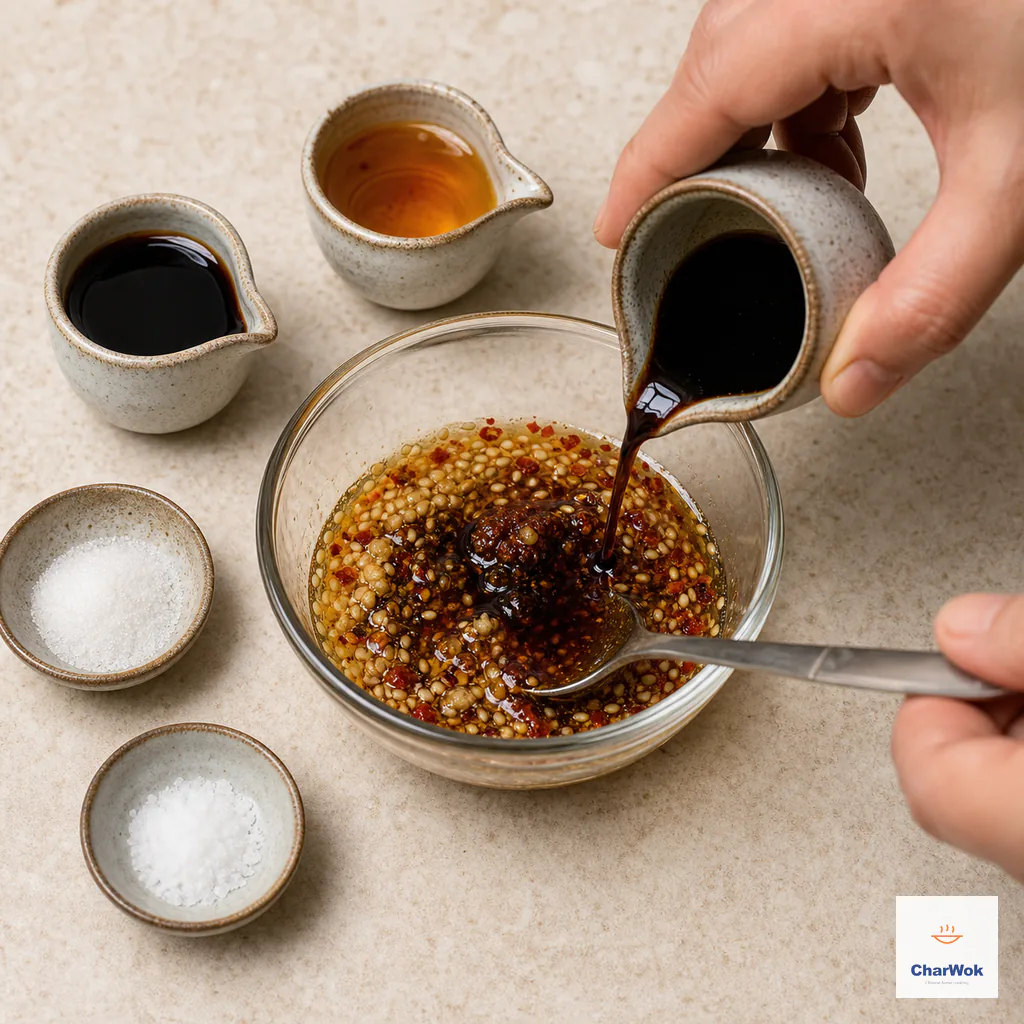
Stir in soy sauce, black rice vinegar, toasted sesame oil, sugar and salt until the sugar dissolves into a fluid dressing.
- Assemble and dress at the last second. Combine the noodles, carrot, cucumber, chili, and cilantro in a wide bowl. Pour the dressing over and toss vigorously with tongs or chopsticks for a good 30 seconds, lifting and separating the strands so every one picks up oil and seasoning. Pile onto a plate and eat immediately.
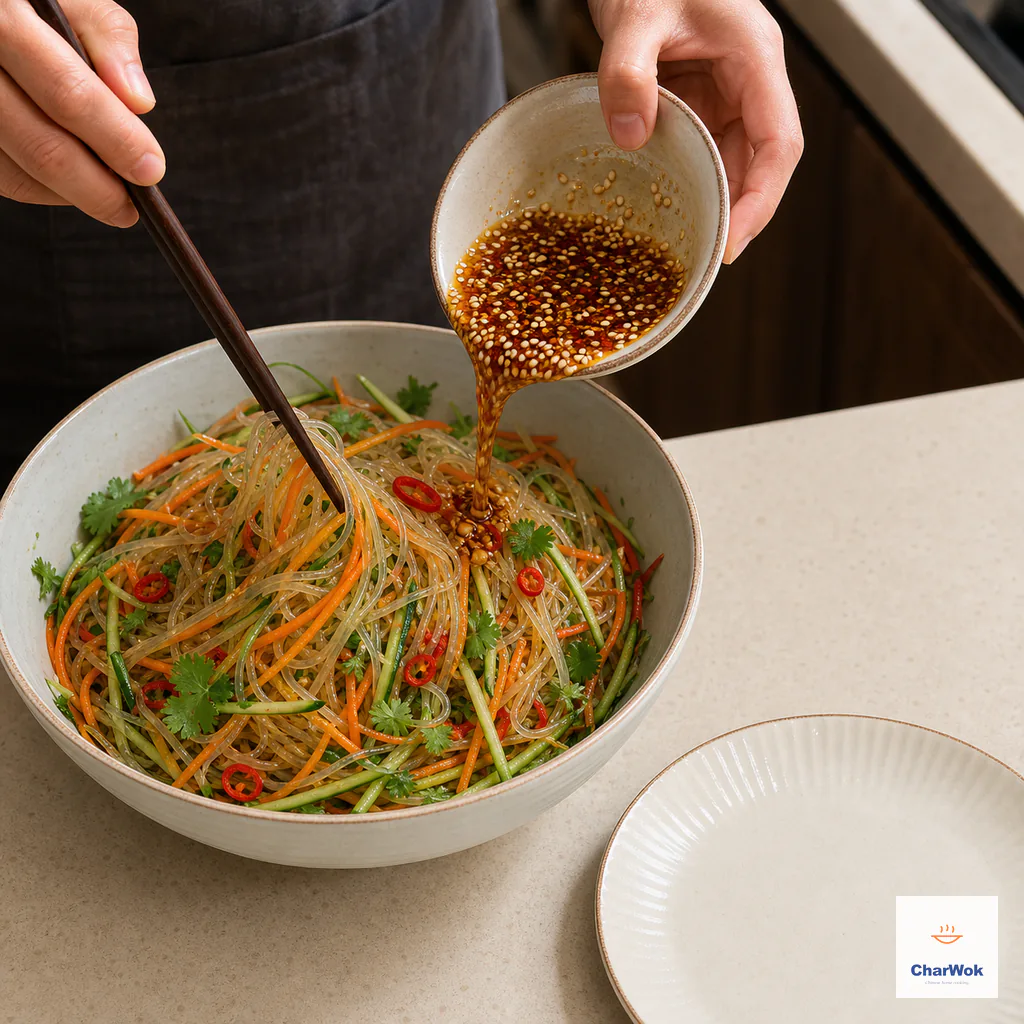
Toss the thoroughly drained noodles and vegetables until evenly glossy, then transfer immediately to the waiting serving plate.
When it goes wrong (and how to fix it)
Mushy, cloudy noodles. You boiled them too long, or skipped the ice bath. There is no rescue for overcooked starch; start over and pull them 30 seconds earlier. The ice bath is not optional.
Noodles that stick into a clump. They weren't drained well, or they sat too long after cooking. Toss the drained noodles with a few drops of sesame oil the moment they're cool if you're not dressing them right away; the thin oil film keeps the strands apart.
A watery, gray, weak-tasting dressing. Two likely culprits, often both. The cucumber wasn't salted and squeezed, so it bled into the bowl; and you dressed the salad too far ahead. Salt and squeeze the cucumber always, and dress at the table.
Raw, harsh garlic. Your oil wasn't hot enough to bloom it. Next time, heat the oil longer. To rescue the current batch, microwave the dressing for 15 seconds to take the edge off, or let it sit ten minutes, which mellows raw garlic considerably.
The whole salad tastes flat. Almost always under-salted or under-acid. Add another teaspoon of vinegar and a few drops of soy, toss, and taste again. Cold dishes need more seasoning than hot ones, because chill dulls the palate.
Variations, add-ins, and what to serve it with
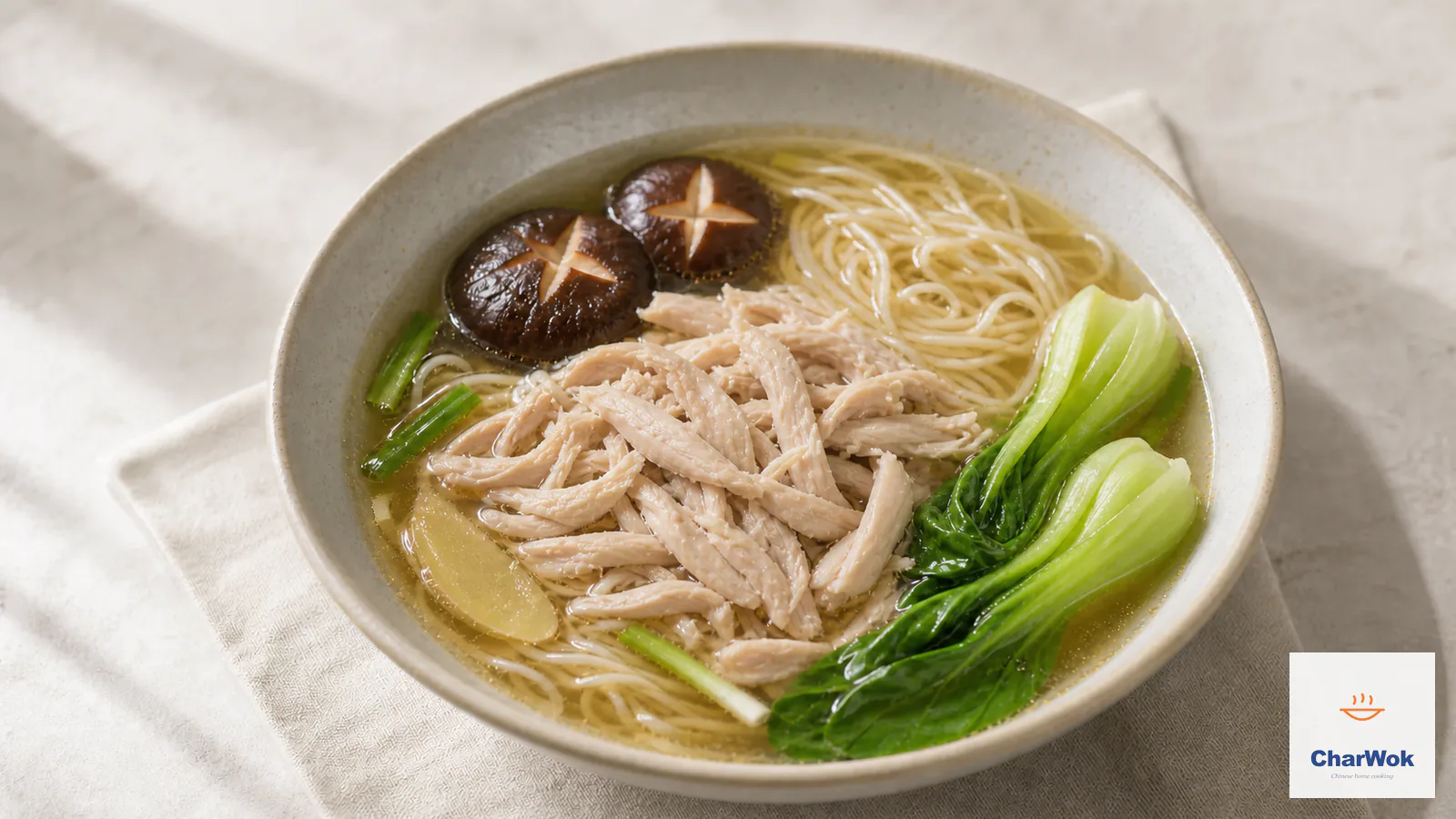
The base of noodles, hot-oil aromatics, and vinegar-soy is a frame you can hang almost anything on. For protein, shred a piece of cold poached chicken and lay it on top, the way kou shui ji dresses its bird. Cold sliced five-spice beef or seared tofu, pressed and torn, both belong here. A soft-boiled egg halved on top turns it from a side into a one-bowl lunch.
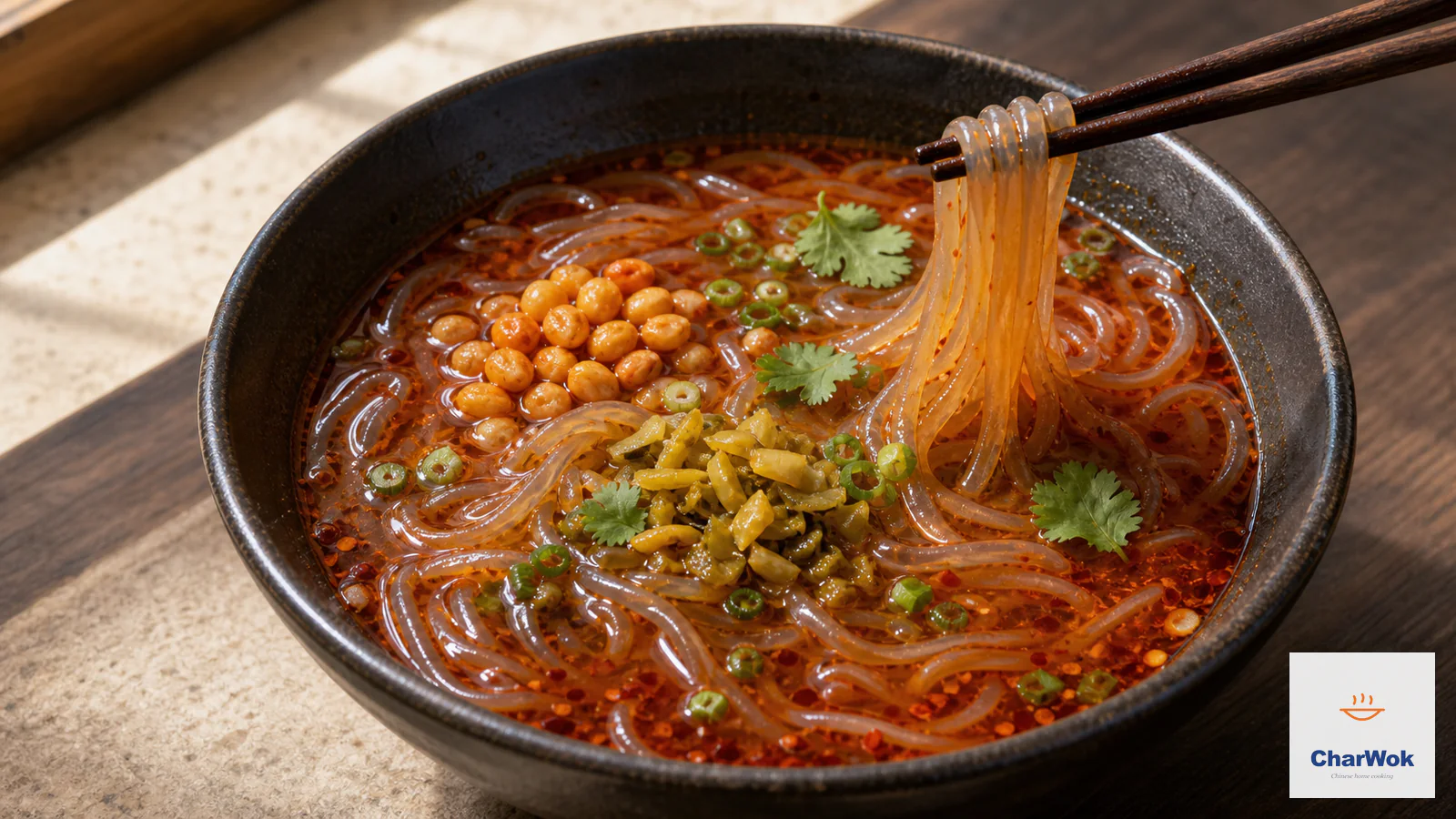
For more cold crunch, fold in any of the other classic liang cai players: smashed cucumber in place of the julienned, a scoop of rehydrated wood ear mushroom, or a handful of shredded napa cabbage. If you like the cold-noodle family, the spicy-numbing hot and sour glass noodle soup uses the same noodle in broth, and mung-bean jelly noodles (liang fen) are a close cold cousin worth knowing.
As a meal, I serve this next to something warm and plain: a simple stir-fried green, or a bowl of plain rice. It also belongs on any table built around the must-have Chinese condiments, since the dressing is essentially a pantry inventory.
Storage and reheating
Store the three parts separately. Cooked, cooled, sesame-oiled noodles will hold in an airtight container in the fridge for up to three days. The dressing keeps the same length on its own. The prepped vegetables, salted cucumber included, will keep a day but lose crunch after that. Do not dress until the moment you eat; a fully dressed salad collapses within an hour into something soft and sorry. This is a dish that rewards being made in the moment, which is also why it shines as a weeknight rescue.
Frequently asked questions
Can I skip the soak and just boil the noodles longer?
You can, but you will lose the texture. Boiling dry noodles makes the exterior disintegrate before the interior is tender. The ten-minute cold soak is what lets a short, gentle boil produce a clear, springy strand.
Is this gluten-free?
The noodles themselves are pure starch and gluten-free. Swap the soy sauce for tamari and trade the black rice vinegar for lime juice, and the whole dish is safe for a gluten-free diet.
Can I make it ahead for a party?
Prep all three components up to a day ahead and keep them cold and separate. Combine and dress only when you are ready to serve. Once dressed, the salad has about an hour of good eating in it.
Why is my dressing bitter?
The oil was overheated and scorched the garlic, or the chili flakes burned. Heat the oil to a shimmer, not a smoke, and pour it over the aromatics rather than frying the aromatics in the pan. Stir the moment it hits.