The first time I tried to pull noodles at home, the dough tore into ugly little nubs before it ever reached the pot. I had skipped the resting step because I was hungry and impatient. That day I learned the one thing every noodle puller has to accept: the dough, not your hands, sets the schedule.
Hand-pulled noodles (called La Mian, 拉面, or in home kitchens La Tiao Zi, 拉条子) are the chewy, slightly slippery wheat noodles you watch a Lanzhou chef stretch into a dozen strands in two seconds. At a restaurant the dough is folded and doubled over and over until a single piece becomes hundreds. At home we cheat in a smart way: we cut the resting dough into strips and pull each strip into one long noodle. Same chew, a tenth of the skill. It is the technique behind Xi'an's famous Biang Biang noodles and the everyday bowl you'd eat across northwest China.
At a glance. Two parts flour to one part water by weight (250 g flour to 125 ml water) makes two servings of firm, chewy noodles. The non-negotiables: medium-protein all-purpose flour, salt in the dough, a generous oil coat, and a full 90-minute rest before you ever cut or pull. Pull and cook one serving at a time, never more. Thin noodles take one minute, wide ones two.
What you are actually trying to build
A wheat dough can stretch because two proteins in the flour, glutenin and gliadin, link up into long elastic chains once they meet water and get kneaded. That network is the spring in the noodle. The goal of this recipe is to develop that network enough that the dough holds together under tension, then relax it enough that it yields instead of snapping back.
Two forces fight you the whole way. Kneading builds tension and makes the dough tight and springy. Time and moisture release that tension so the dough goes limp and stretchy. Nearly every failure I see in comments and kitchens comes from getting that balance wrong. Too much kneading right before pulling and the dough shrinks. Too little rest and it snaps. Salt and oil are the supporting cast. The small dose of salt makes the cooked noodle firmer to the tooth, while the oil keeps the flattened sheets from welding themselves together during the long rest.
Why this home method works (and where it falls short)
Watch a Lanzhou cook and you see a different craft entirely: one rope of dough folded over itself again and again, doubling into more strands with each turn until a single piece has become dozens. That trade depends on peng hui, an alkaline ash drawn from a specific desert plant, which rewires the gluten so it stretches instead of tearing. It is hard to source and easy to misuse, and this home method skips it on purpose. If you want that bouncy alkaline chew for its own sake, that is a separate dough, and I cover it in my alkaline noodle recipe. For an everyday pulled noodle, plain flour, salt, and patience deliver most of the pleasure with none of the chemistry-store hassle.
Ingredients
Ingredients at a glance
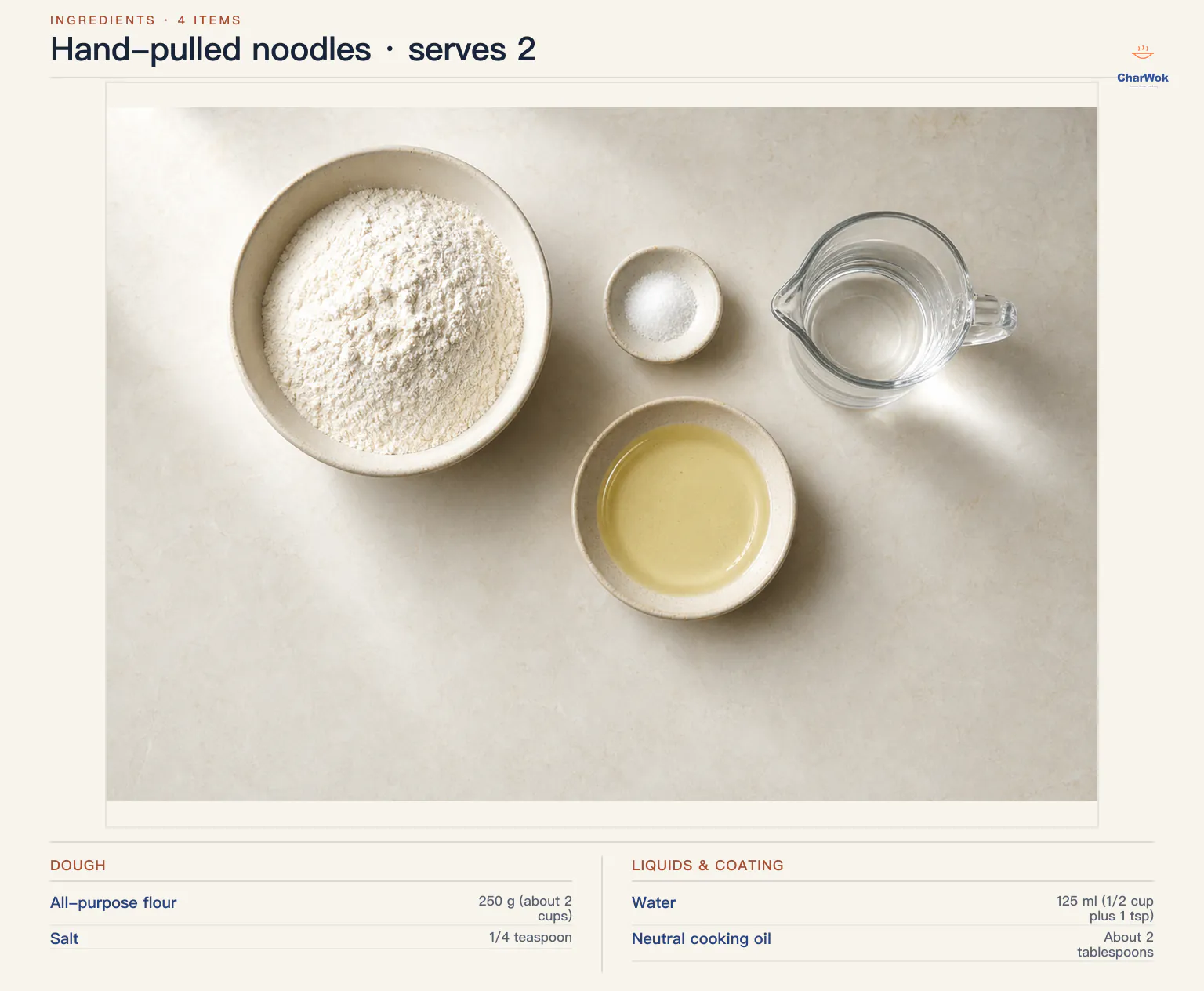
This is a four-ingredient dough. The brands and protein levels matter more than the romance, so I have spelled out what to grab and what to swap.
| Ingredient | Amount (for 2 servings) | Notes / substitute |
|---|---|---|
| All-purpose flour | 250 g (about 2 cups) | Look for 10 to 11 g protein per 100 g. Gold Medal or King Arthur AP both work. Bread flour (13 g+) is harder to pull and snaps more; whole wheat and gluten-free flour will not work here. |
| Salt | 1/4 teaspoon | Kosher or fine sea salt. Tightens gluten for a firmer bite. |
| Water | 125 ml (1/2 cup plus 1 tsp) | Room temperature or cool. Adjust by a teaspoon either way depending on your flour. |
| Neutral cooking oil | About 2 tablespoons | Canola, vegetable, or grapeseed, for coating the dough sheets. Avoid toasted sesame here, it burns and tastes heavy; save sesame oil for finishing. |
The dough, step by step
- Measure by weight if you can. A cup of flour can swing 15 g depending on how you scoop, and at a 2:1 ratio that error is enough to make the dough crack or slump. 250 g flour to 125 ml water is the ratio to memorize; scale it up and down freely.
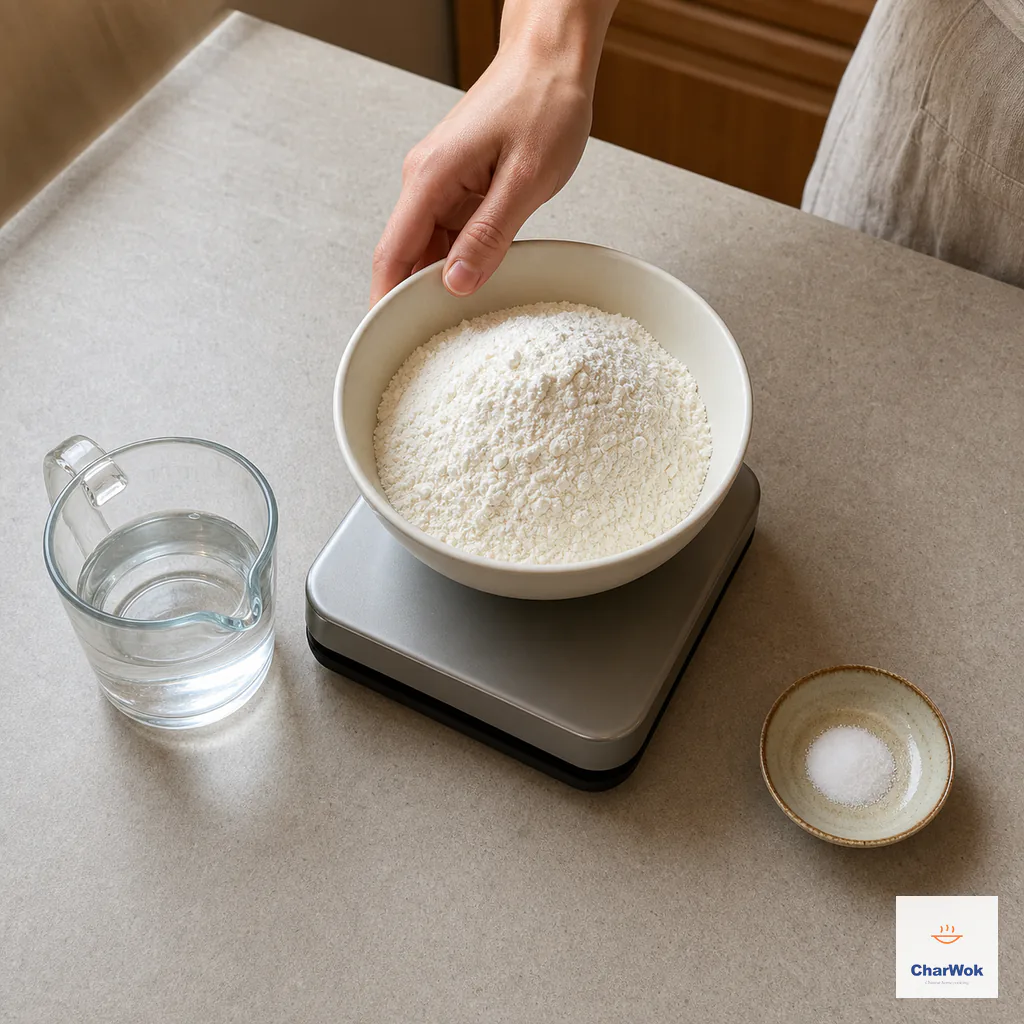
Weigh the flour and water for the firm two-to-one ratio before mixing; small volume differences change how the dough pulls.
- Bring the dough together, then stop early. Stir the salt into the flour, then pour in the water slowly while mixing with chopsticks or a spatula. Stop as soon as no dry flour remains and the mess clumps. It will look rough and feel stiff. That is correct. Knead it briefly in the bowl just until it holds together as one shaggy ball.
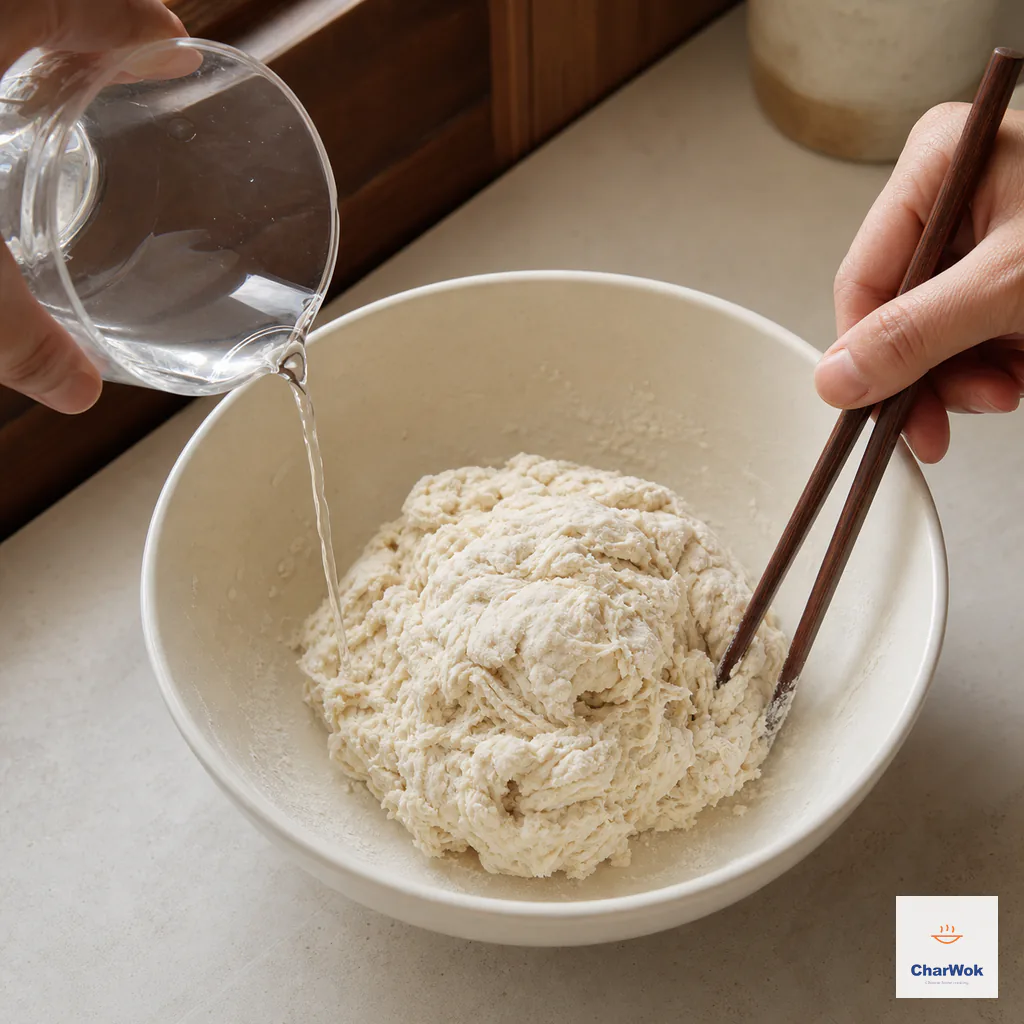
Add the water gradually and stop once no dry flour remains and the stiff clumps hold together as one rough ball.
- Rest 10 to 15 minutes, covered. This is not the long rest. This short pause lets the flour fully hydrate and the gluten relax so the next knead actually smooths it instead of fighting you. Skip it and the dough tears under your hands. I have done this. Do not.
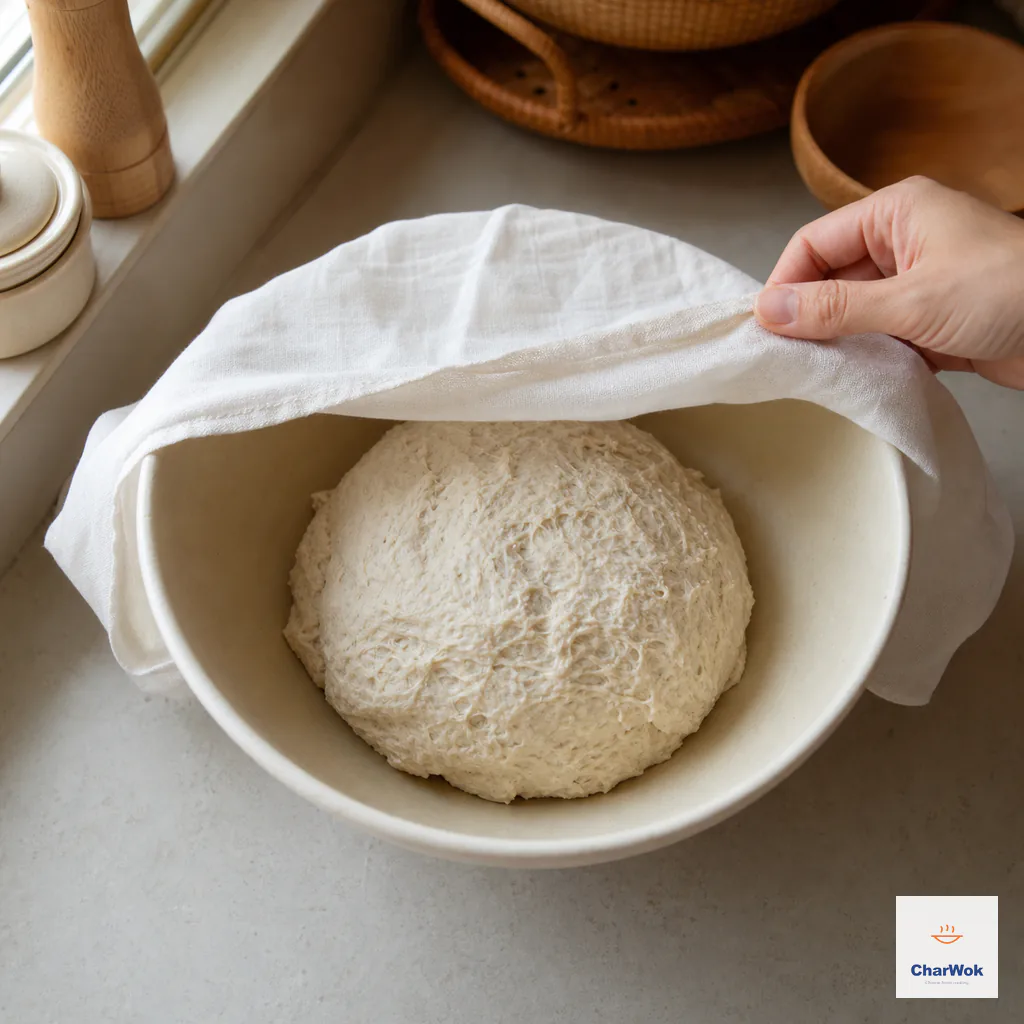
Cover the rough dough for 10 to 15 minutes so hydration softens the stiff mass before the short knead.
- Knead until smooth. About 2 minutes by hand. With a stand mixer, run on low speed and watch the dough rather than the clock; you are done when the surface is smooth and the dough springs back slowly when you press it. It should feel firm, firmer than bread dough, and should not stick to a clean counter.
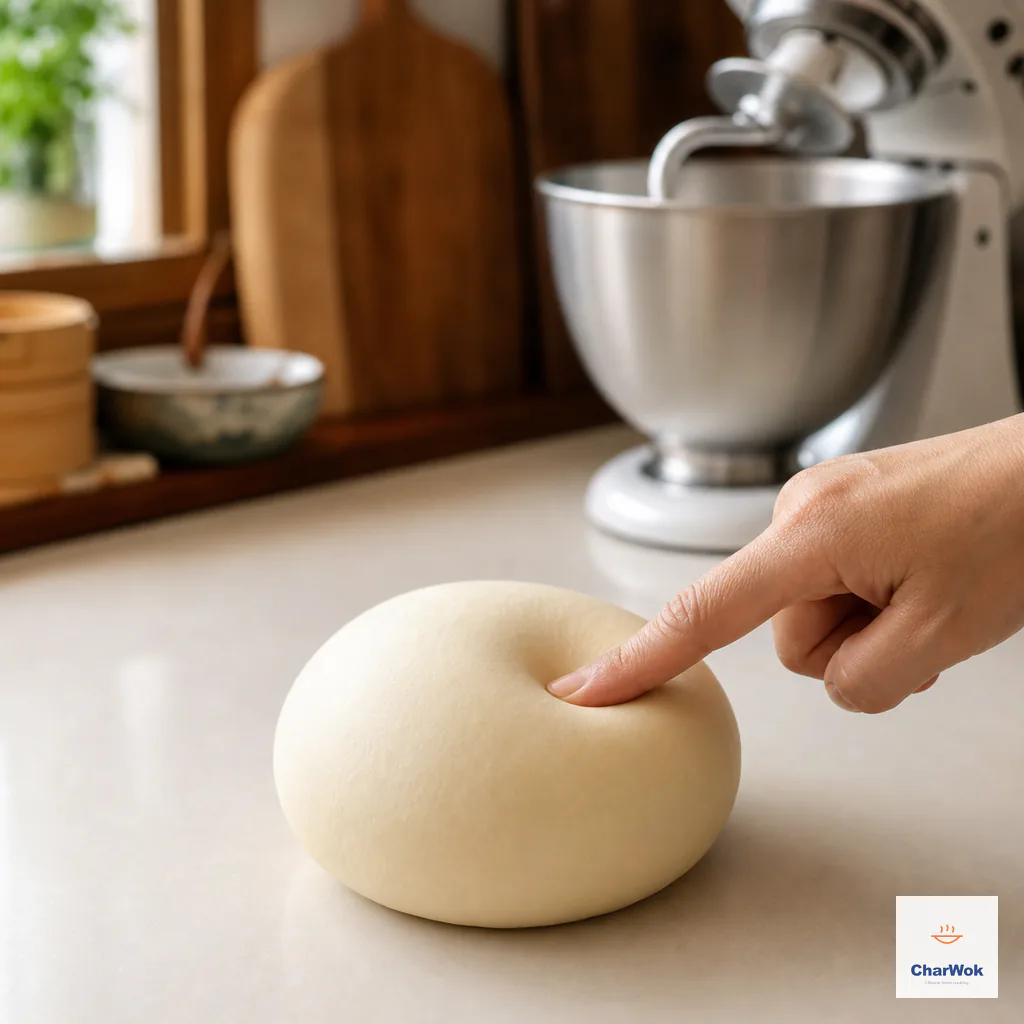
Knead only until the surface is smooth and a shallow fingertip dent begins to spring back.
- Divide and flatten. Cut the dough into two equal pieces. With a rolling pin, roll each into a rough rectangle about 5 mm (just under 1/4 inch) thick. The exact shape does not matter; even thickness does.
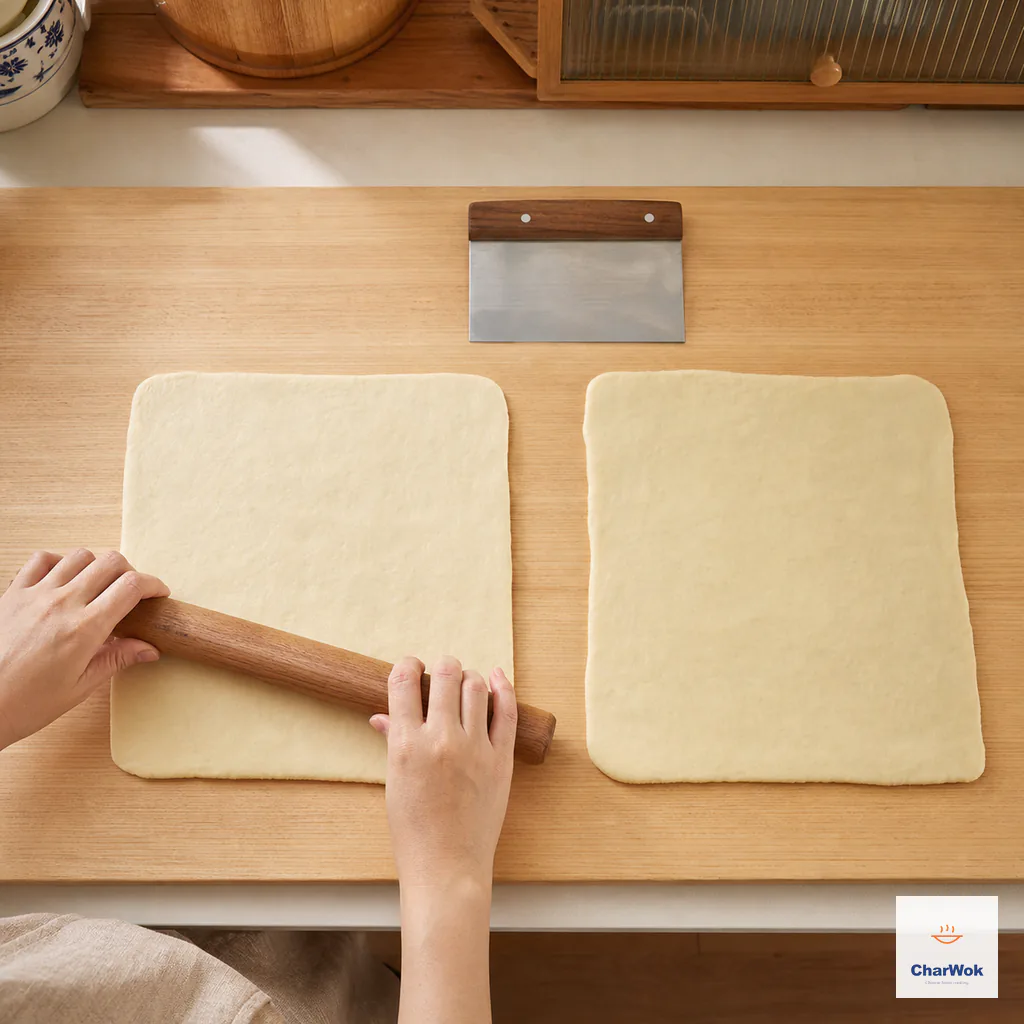
Divide the dough equally and roll both pieces into even rectangles about 5 millimetres thick.
- Coat generously with oil. Brush or rub oil over both sides of each sheet until they glisten. Lay them in a tray so they are not touching the air, then cover tightly with plastic wrap. The oil is doing two jobs: stopping the sheets from sticking to each other or the tray, and giving the cooked noodle its smooth, slightly glossy skin. A flour dusting instead of oil works in a pinch, but the cooked noodle is duller and grittier on the tongue.
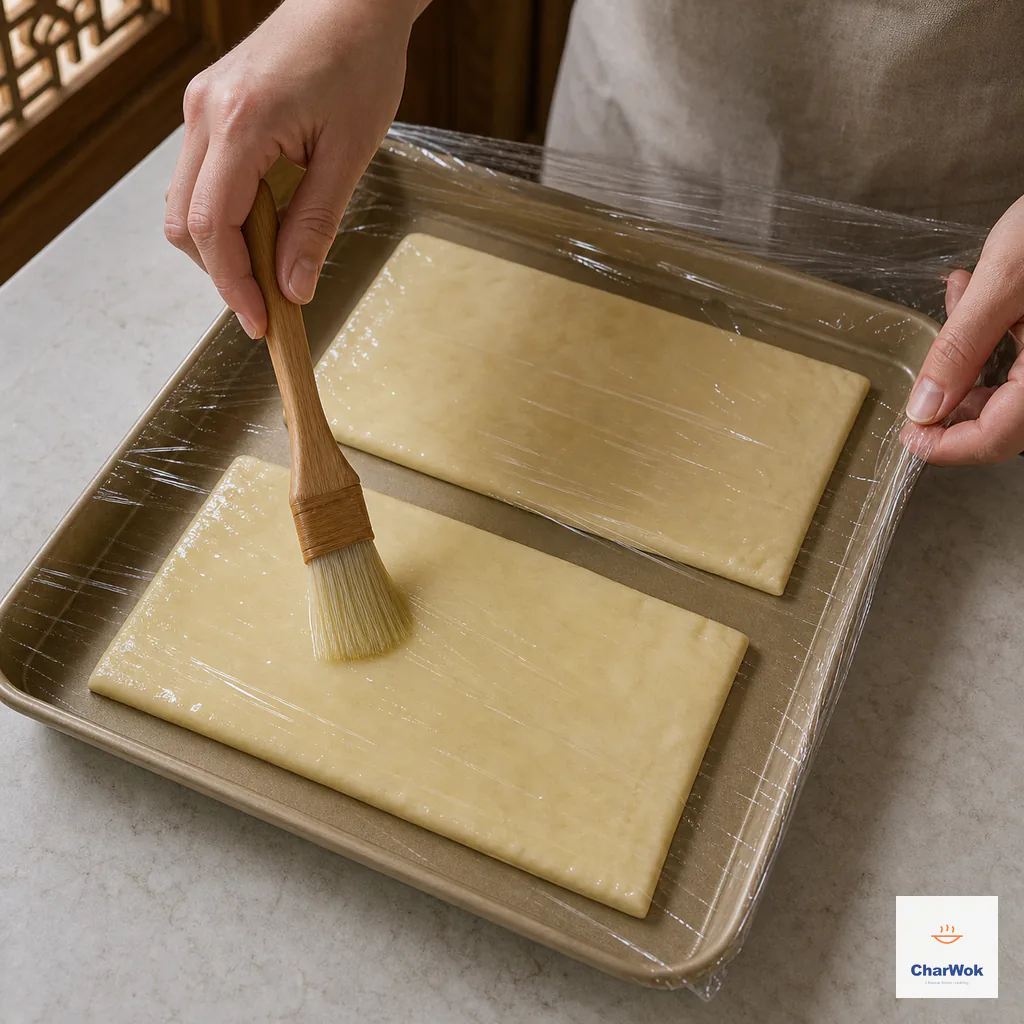
Coat every surface generously with neutral oil, keep the two sheets separate in the tray and cover them tightly.
- Rest at least 90 minutes at room temperature. This is the rest that makes pulling possible. As the dough sits, the gluten network you built relaxes into long, extensible chains. After 90 minutes a sheet should droop and stretch easily when you lift an edge, not snap back. You can rest longer, up to 3 hours. If you need to hold the dough overnight, refrigerate it and bring it fully back to room temperature before pulling. Cold dough breaks.
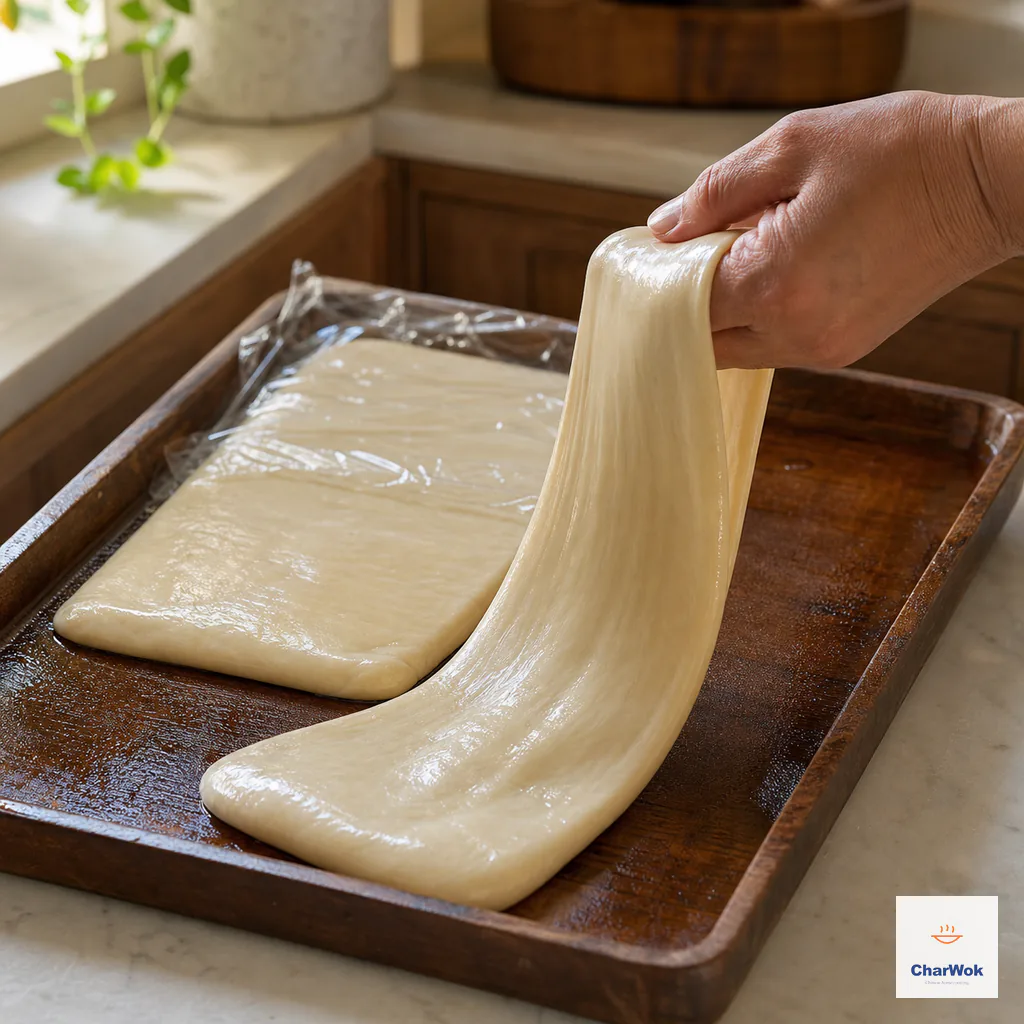
After at least 90 minutes, the oiled dough should droop smoothly under its own weight without snapping back.
Cutting: round or flat
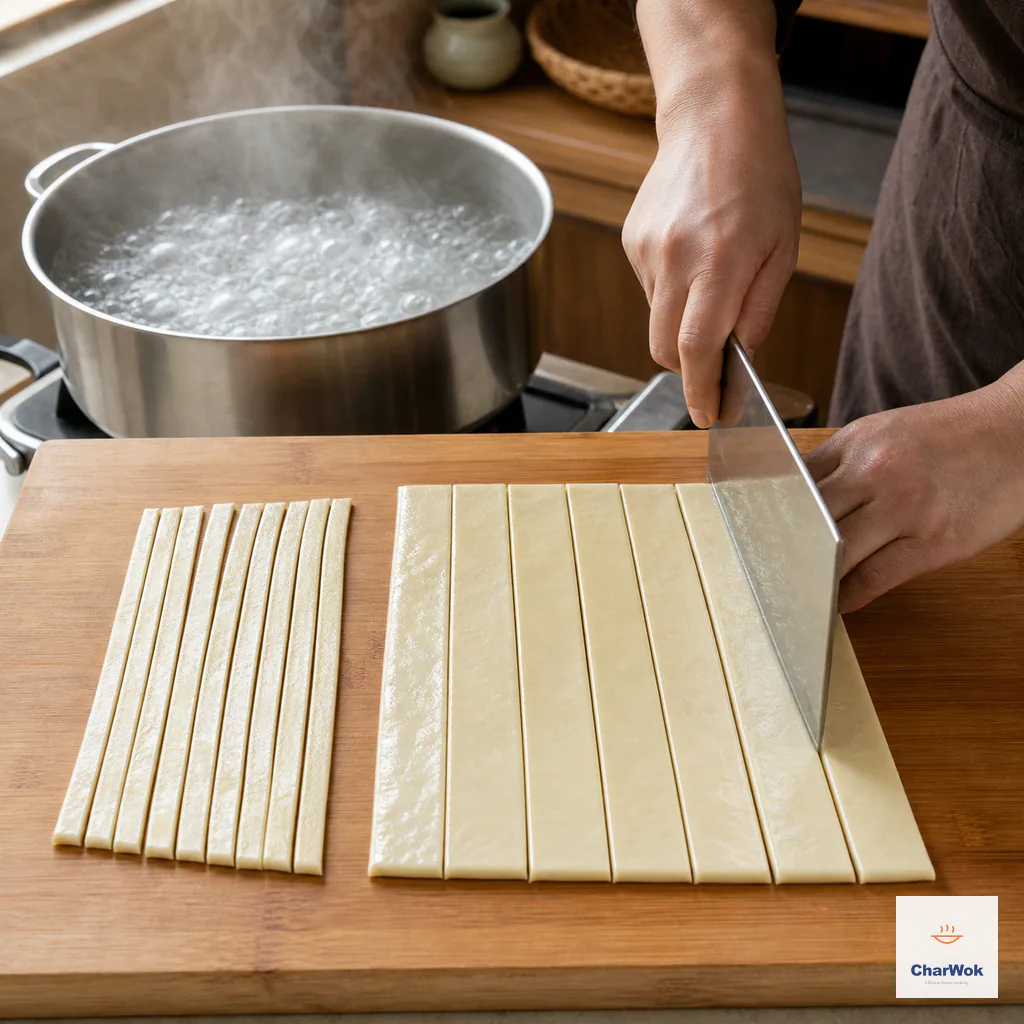
Bring a large pot to a full boil before cutting: use roughly 1-centimetre strips for round noodles or 3-centimetre strips for wide ribbons.
Before you cut, get a large pot of water on to a full boil. Pulling and cooking happen in the same minute, so the water has to be ready when the dough is.
Move one oiled sheet to a board. Cut crosswise into strips. The width sets the shape:
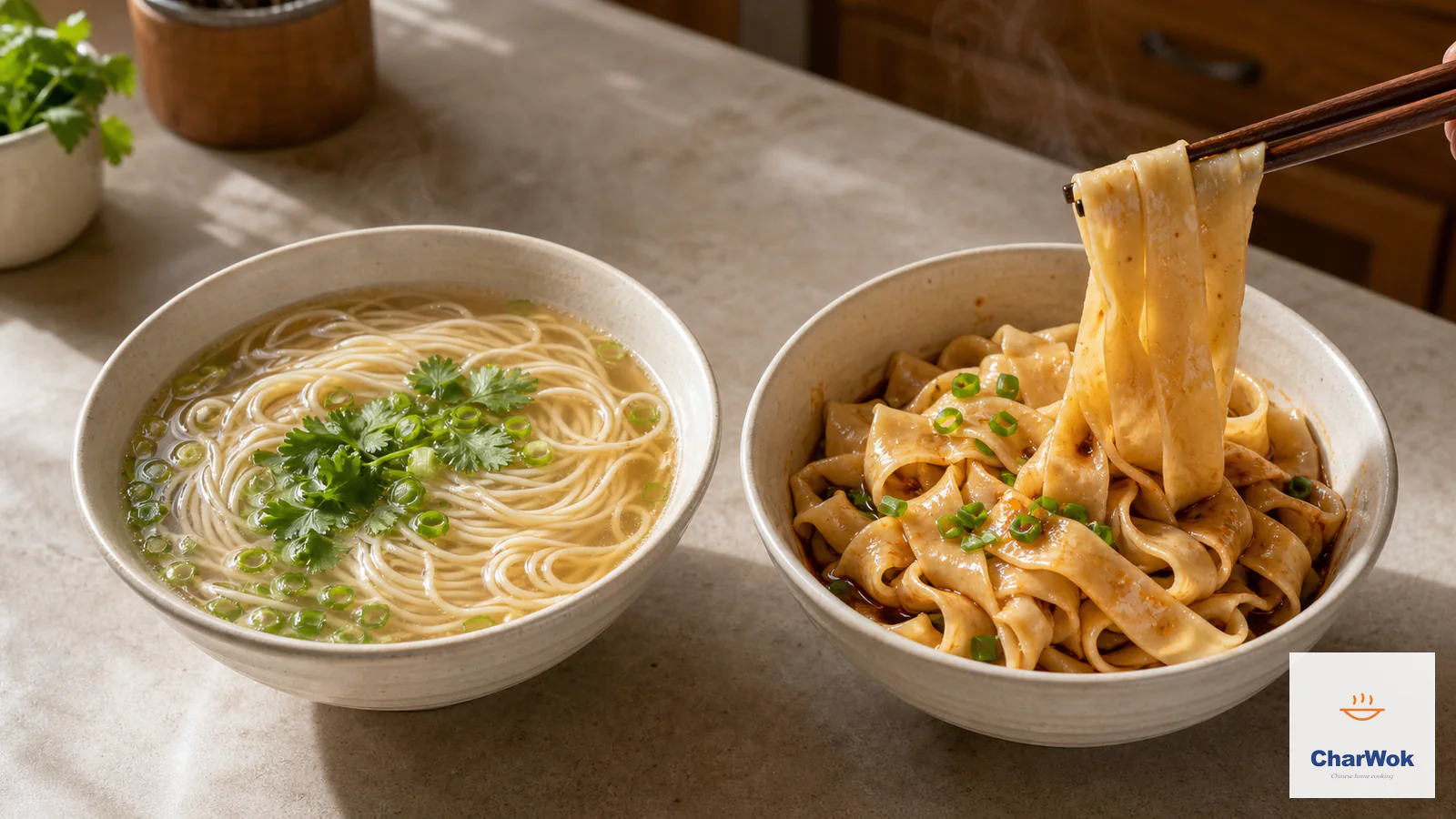
- Thin round noodles: cut about 1 cm wide. As you pull, each strip rounds out into a springy, udon-like strand. Best in broth.
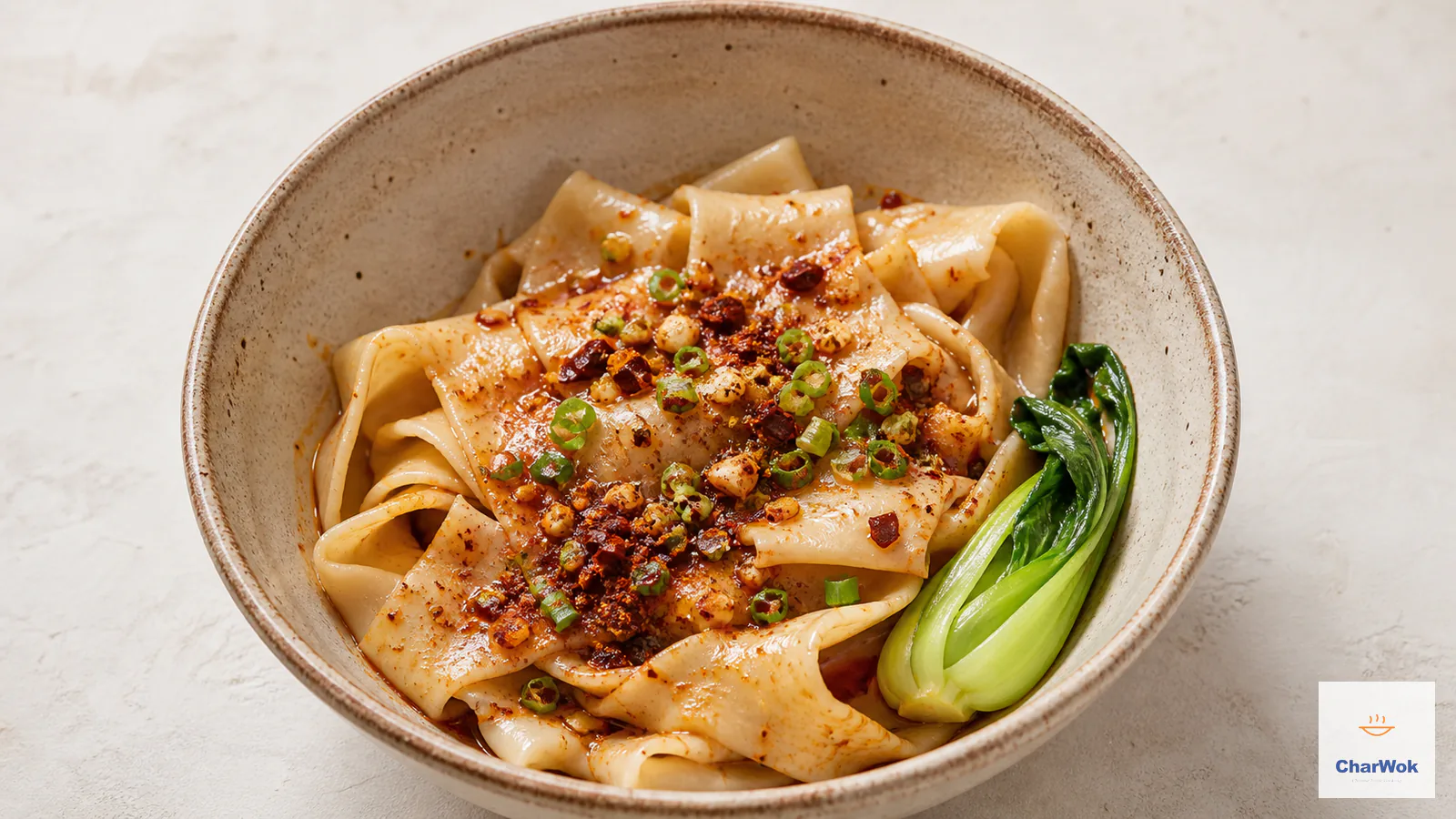
- Wide flat noodles: cut about 3 cm wide. These stay broad and ribbon-like, chewy in a way that grabs onto sauce. Best for tossed, sauced bowls rather than clear broth.
Transfer the cut strips gently to the counter. After the rest they are soft and willing. Do not pinch or stretch them yet. Just lay them out straight.
Pulling, the part everyone fears
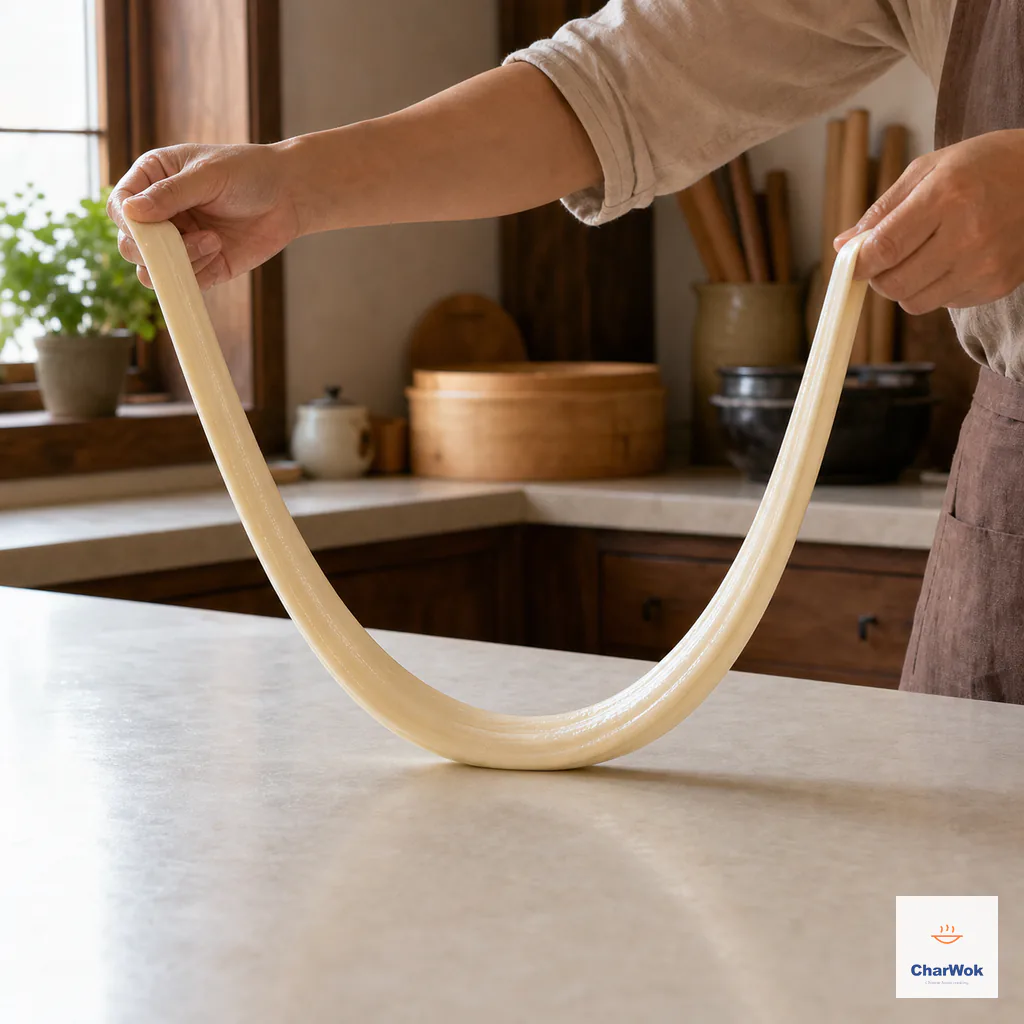
Pull evenly from both ends, let the centre touch the worktop lightly, then fold and repeat without forcing thin spots.
Pick up one strip by its ends, fingers light. The trick is to keep the pull even along the whole length so no single spot thins to nothing. Move your hands apart at a steady pace and let gravity do part of the work; a slight downward snap of the wrists between pulls helps the center catch up to the ends. When a strand gets long enough that it is awkward to hold, gather both ends in one hand, let the loop dangle under its own weight, and stretch that doubled strand the same way. Repeat the gather-and-stretch a couple of times and you have a long, even noodle. Drop it straight into the boiling water and move on to the next strip.
If the gather-and-stretch rhythm feels alien, pull straight over the pot instead. Anchor one end of a strip (you can pinch it against the pot rim or a wooden spoon laid across the top) and walk the other end outward with your free hand, feeding the lengthening strand into the boiling water as you go. The hot water sets the noodle almost on contact, so there is nothing to gather or fold, and a beginner's wobble does not matter. This is the method I would teach a friend on their first try.
Work one serving at a time. Pull the strips from the first sheet, cook them, dish them up, then start the second sheet. If you try to pull everything first and cook it all together the early noodles sit and clump while you finish.
Cooking without overcooking
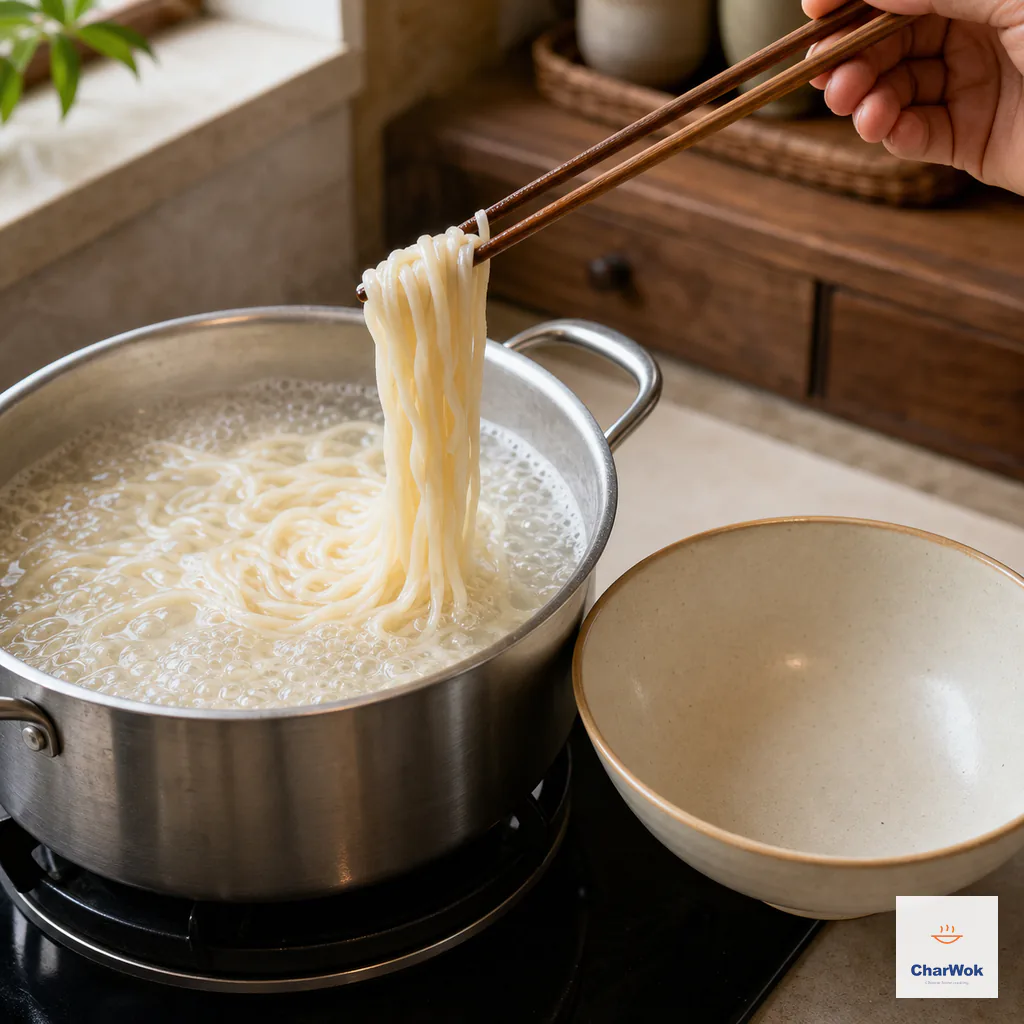
Cook each serving separately in a full boil, then lift it straight into a warmed bowl after about 1 minute for thin noodles or 2 minutes for wide noodles.
Because these noodles are fresh and soft, they cook faster than dried or even most fresh-cut noodles. Thin strands need only about 1 minute in a full rolling boil. Wide ribbons need about 2 minutes. Pull them out the instant they float and look glossy. Left another minute they go from chewy to mushy, and there is no rescue from mushy.
Lift them out with chopsticks straight into a bowl. Do not drain and stack them in a colander, they will weld into a single sad lump within seconds. If you are not saucing immediately, rinse briefly under warm water and toss with a few drops of sesame oil to keep them separate.
When things go wrong
I get more questions about failures than anything else. Here are the ones I see over and over, and the fix for each.
- The dough snaps when I pull it. It has not rested long enough, or it is cold. Give it another 30 minutes at room temperature. If it came from the fridge, let it warm up fully. Snapping is almost always a rest or temperature problem, not a technique problem.
- The dough shrinks back the moment I stop pulling. Opposite cause: you overworked it right before pulling, or the gluten is too strong (you used bread flour). Rest longer next time, and switch to all-purpose flour.
- The sheets stick together during the rest. Not enough oil, or the wrap was loose and a skin dried onto the tray. Re-oil generously and seal tightly.
- The cooked noodles are gummy and stick to the teeth. Overcooked. Pull them out at 1 minute for thin, 2 for wide, and have your sauce or broth hot and waiting so there is no gap.
- The noodles break into short pieces in the pot. Usually a hydration problem from cup-measuring the flour, or the dough dried out during the rest. Weigh the flour, oil the sheets, cover them.
- Salty enough but no chew. You left out the salt. It is a small amount, but it tightens the gluten and is the difference between a noodle with bite and one that is flat.
How to serve them
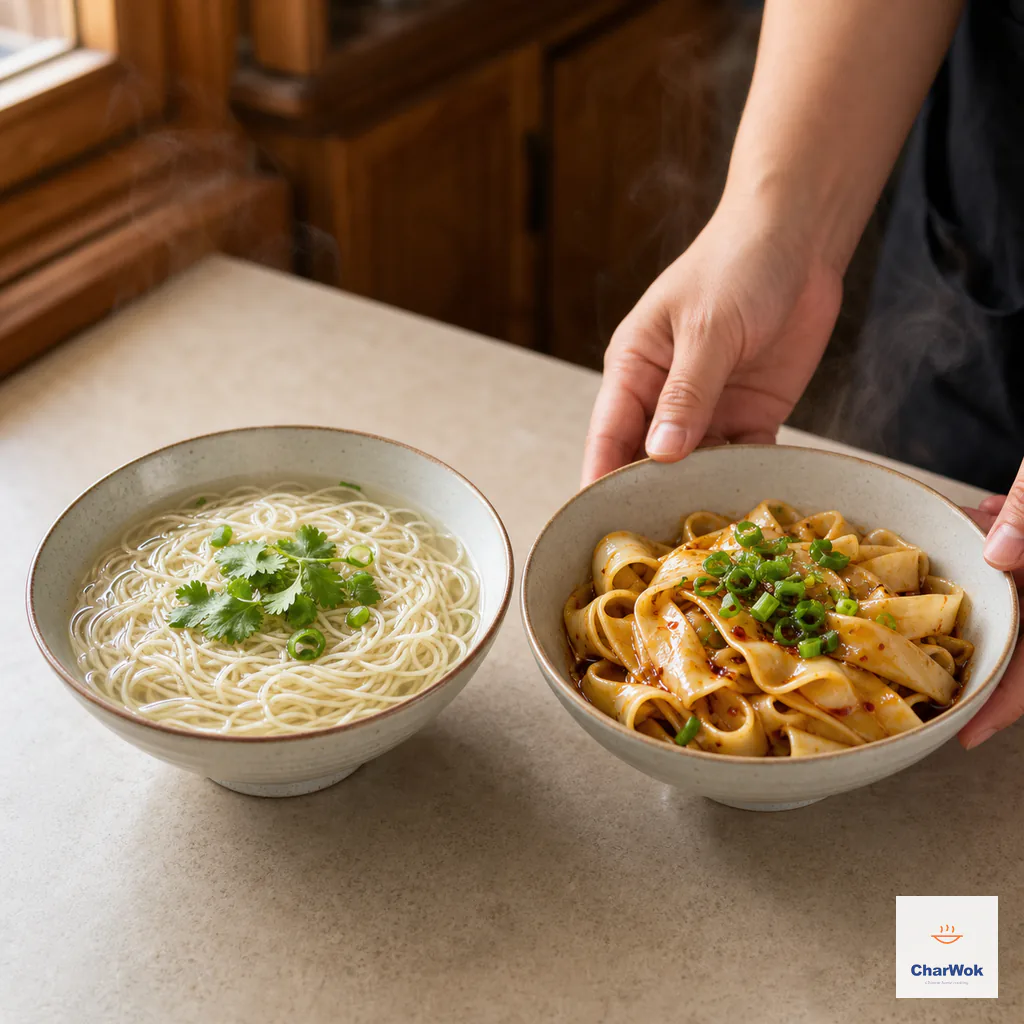
Serve immediately in broth or with the simple chili-oil, black-vinegar, light-soy and scallion dressing from the article.
Once you can pull a noodle, the rest of Chinese noodle cooking opens up. I think about how I want to eat them more than which dish they belong to:
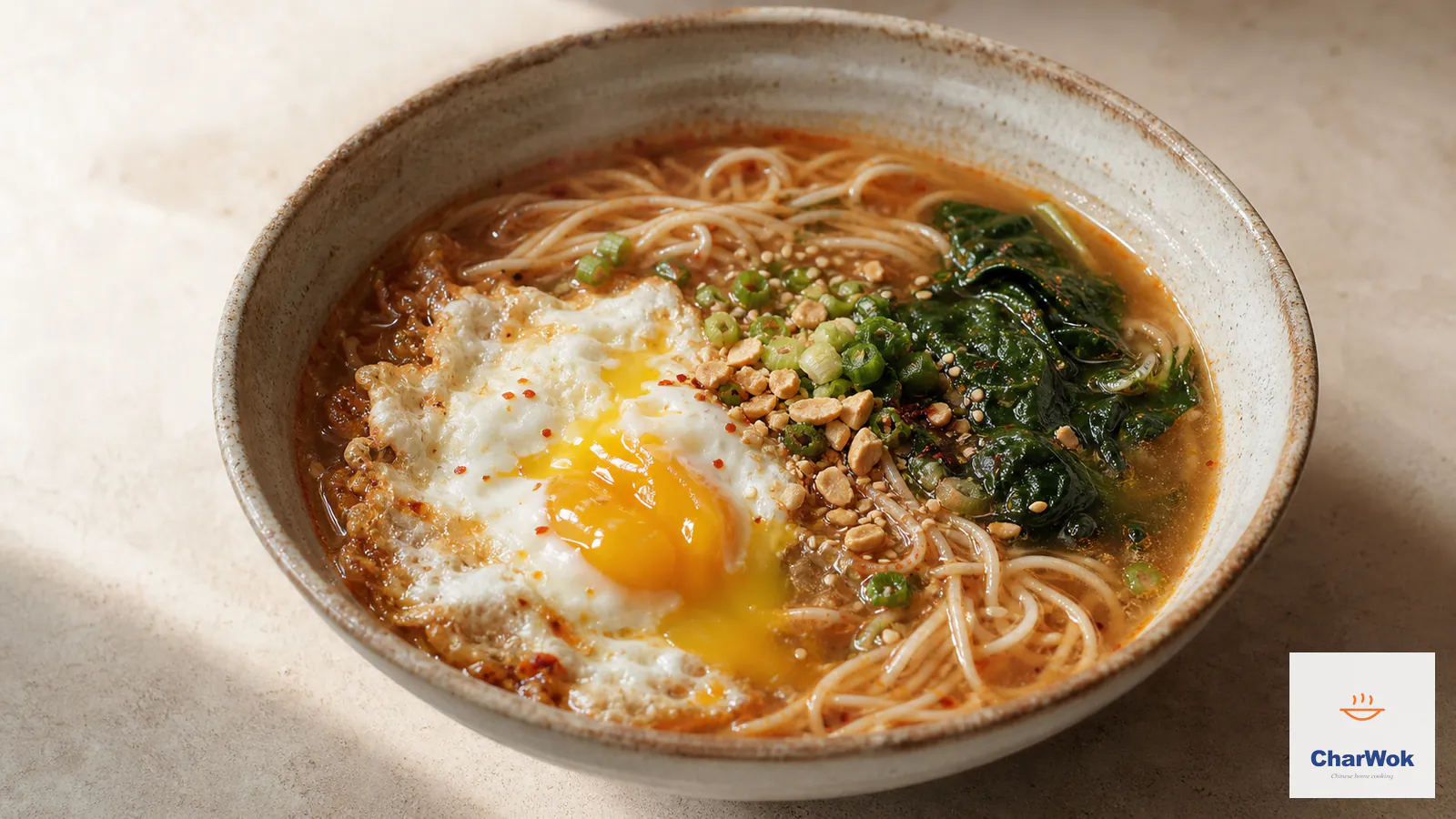
- When I want a bowl of soup. The thin round noodles belong in broth. A clear, deeply seasoned bowl is the stage they were built for, whether that is a Lanzhou-style beef soup or a darker, chili-laced Sichuan beef noodle soup. The round strand stays distinct in the liquid instead of going flabby. See my Lanzhou beef noodle soup and spicy beef noodle soup for the two poles of the style.
- When I want something saucy and substantial. Wide flat noodles are the right tool when the bowl is mostly topping and sauce, because the broad ribbon carries the weight. This is the shape I reach for under a Beijing-style fried bean sauce, a Sichuan chili-oil-and-mince bowl, the numbing Chongqing small noodles, or the quietly rich Shanghai scallion-oil dressing. Try Zha Jiang Mian, Dan Dan Noodles, Chongqing Xiao Mian, and scallion oil noodles.
- When the noodle is the base and the topping is the point. Plain pulled noodles make a neutral, chewy bed for a quick stir-fry spooned on top. A glossy tomato-and-egg, a peppery beef, or a garlicky Sichuan shredded pork all sit well. See tomato and egg stir-fry, black pepper beef, and Sichuan shredded pork in garlic sauce.
- When I have five minutes and no plan. A lazy dressing bowl: hot noodles, a spoon of chili oil, a splash of black rice vinegar, light soy, a pinch of sugar, scallion. The noodle does the heavy lifting.
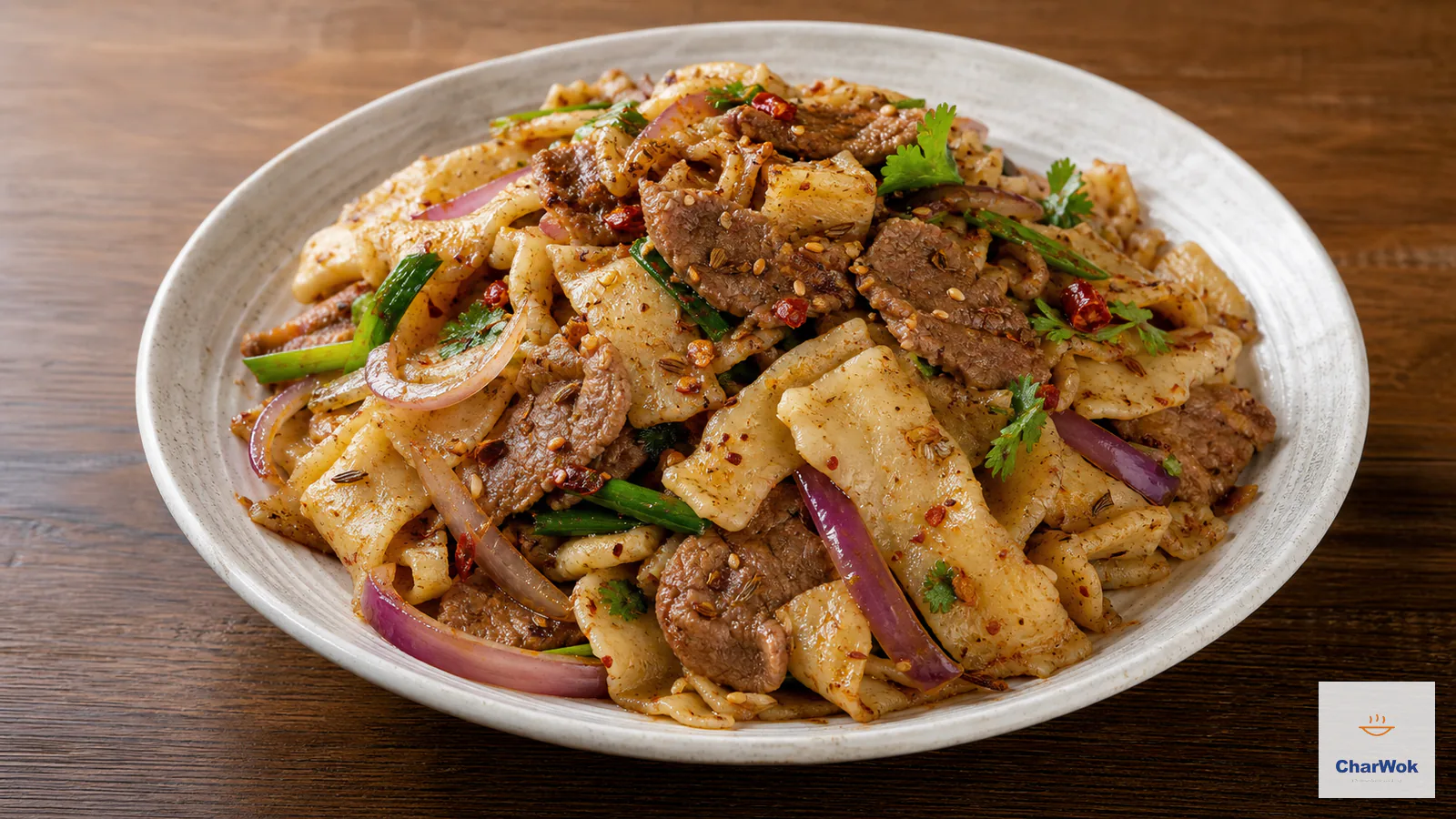
Once you are comfortable with this dough, it is a short step to the rest of the wheat-noodle family. If pulling still feels like too much on a given night, a simple hand-rolled noodle uses the same flour and water and skips the stretching. In a hurry, scissors and a soft dough turn out a rustic strand in minutes. And for a colder northern profile, hand-torn noodles with cumin lamb are worth learning. Browse the full collection of Chinese noodle recipes when you want to wander, or jump straight to basic homemade noodles, scissor-cut noodles, cumin lamb hand-torn noodles, or the sweet-and-chili Tian Shui Mian for a cold day.
Storage and reheating
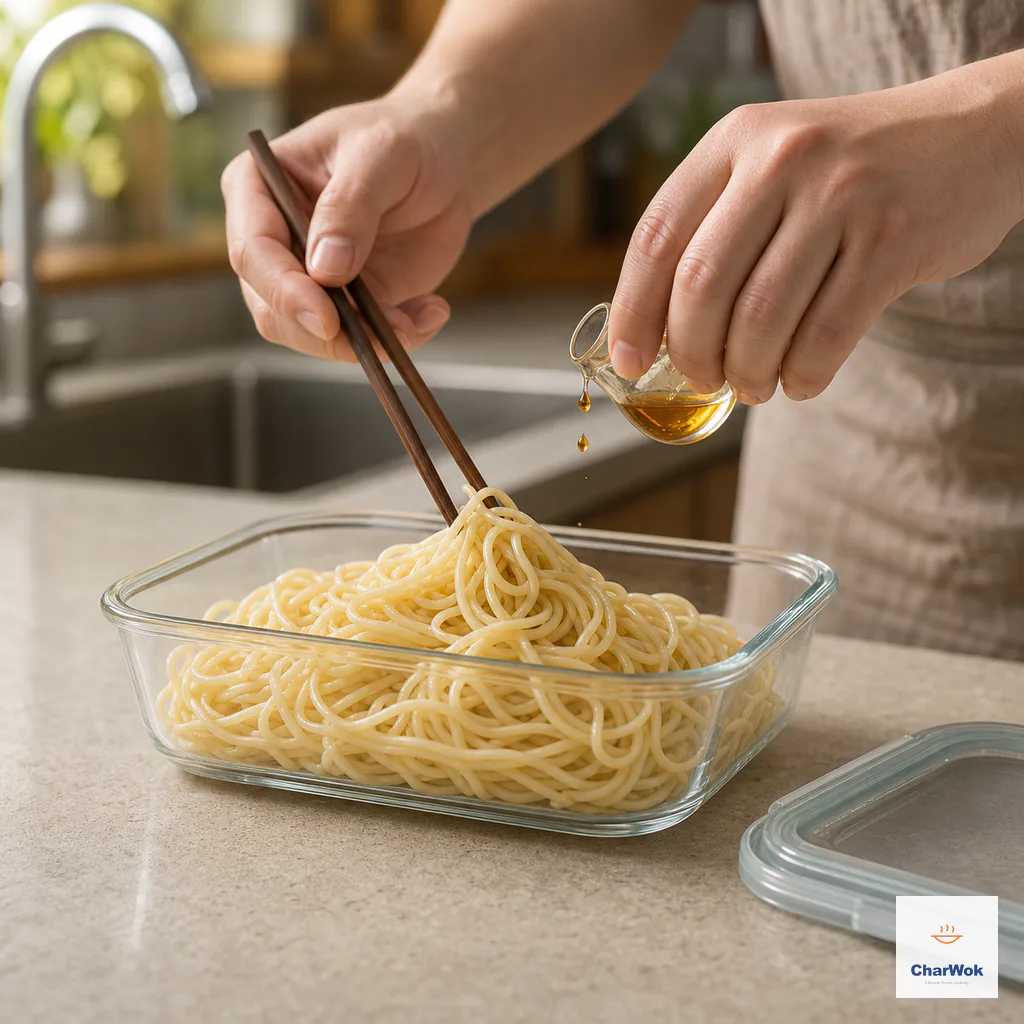
For later use, rinse briefly in cool water, drain well, toss with only a few drops of sesame oil and refrigerate airtight for up to 2 days.
Cooked noodles keep, barely. Rinse them under cold water right after cooking, toss with a few drops of sesame oil, and refrigerate up to 2 days. To reheat, drop them into a full boil for no more than 30 seconds. Any longer and they turn to paste.
The raw dough keeps better than the cooked noodles. Coat the sheets, wrap them airtight, and refrigerate overnight. Pull from cold dough only after it has come fully back to room temperature, about an hour on the counter. I do not recommend freezing; the texture goes slack and the noodles pull unevenly after thawing.
A last word on patience
Hand-pulled noodles reward the cook who reads the dough instead of the clock. If the dough feels tight, rest it. If it snaps, rest it. If your hands are unsure, use the over-the-pot method and skip the folding entirely. The flour and the water have done most of the work before you ever touch them. Give them the time they need and the pulling is almost an afterthought.
Common questions
A few quick answers to the questions I get most often.
Can I use bread flour? You can, but it pulls harder. The strong gluten shrinks back and tears more easily, so rest the dough an extra 30 to 60 minutes and pull gently. All-purpose is the easier choice.
Do I really need to rest 90 minutes? Yes, for a dough that pulls without snapping. You can shave it to an hour in a warm kitchen, but under an hour the gluten has not relaxed enough and the dough will fight you.
Can I make the dough ahead? Yes. Coat and wrap the sheets and refrigerate them overnight. Bring them fully to room temperature before pulling, otherwise the cold dough breaks.
Why oil instead of flour between the sheets? Oil stops sticking and gives the cooked noodle a smooth, glossy surface. Flour dusting works in a pinch but leaves the noodle duller and slightly gritty.
Is there a gluten-free version? Not for this technique. Pulling depends on the wheat gluten network. For a wheat-free option, rice-based cheung fun or cold liang pi scratch a similar itch through a totally different method.