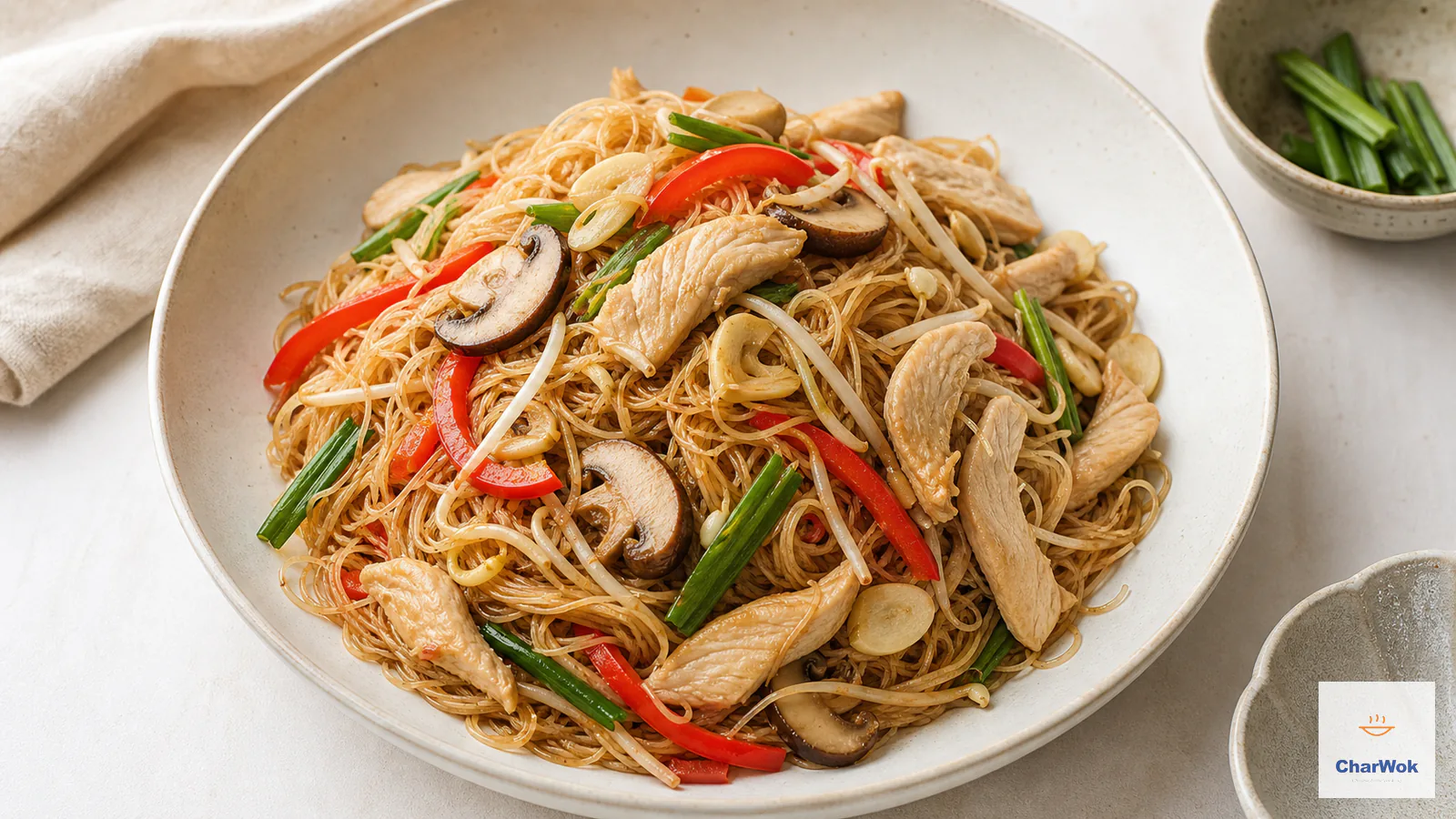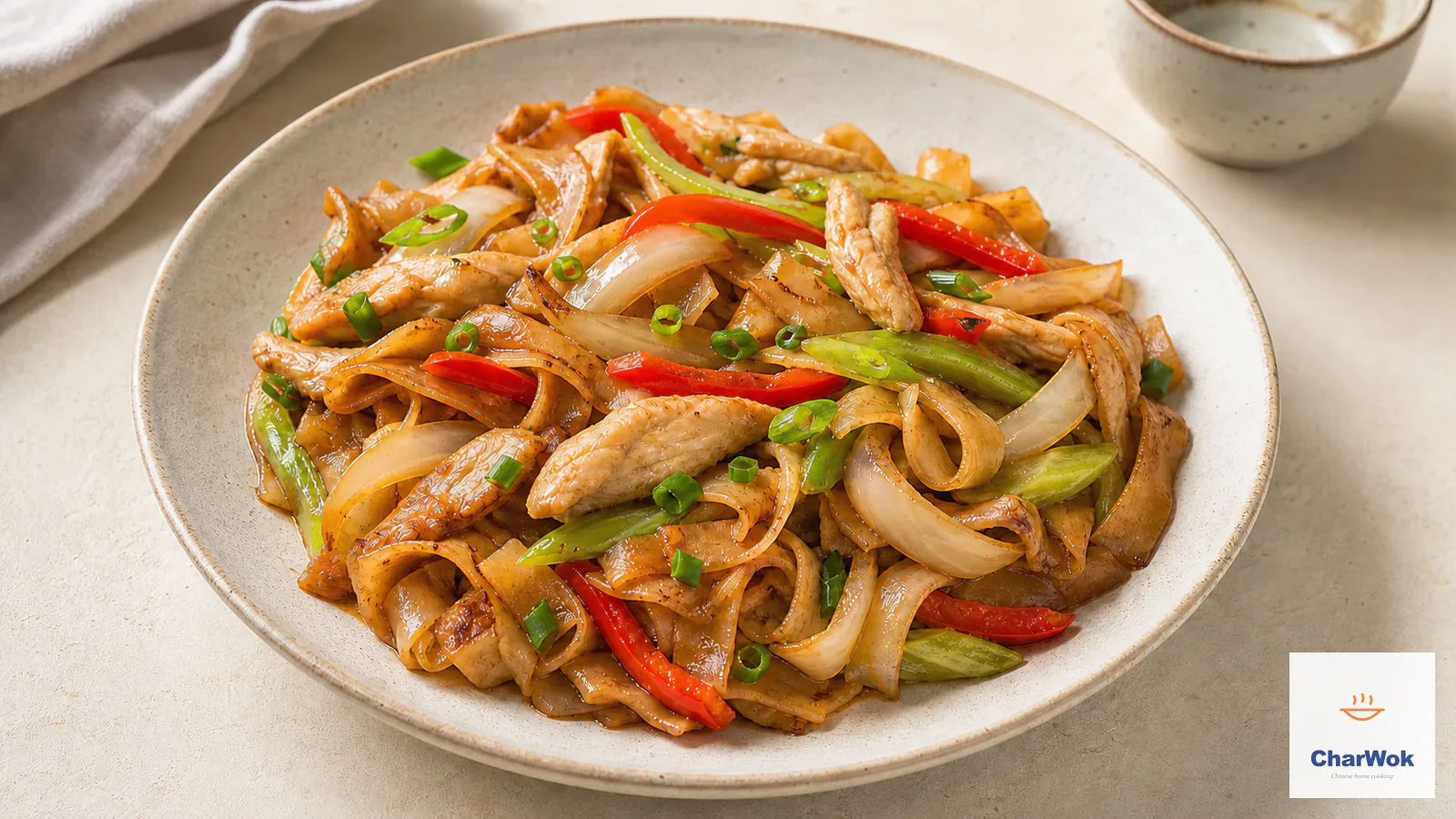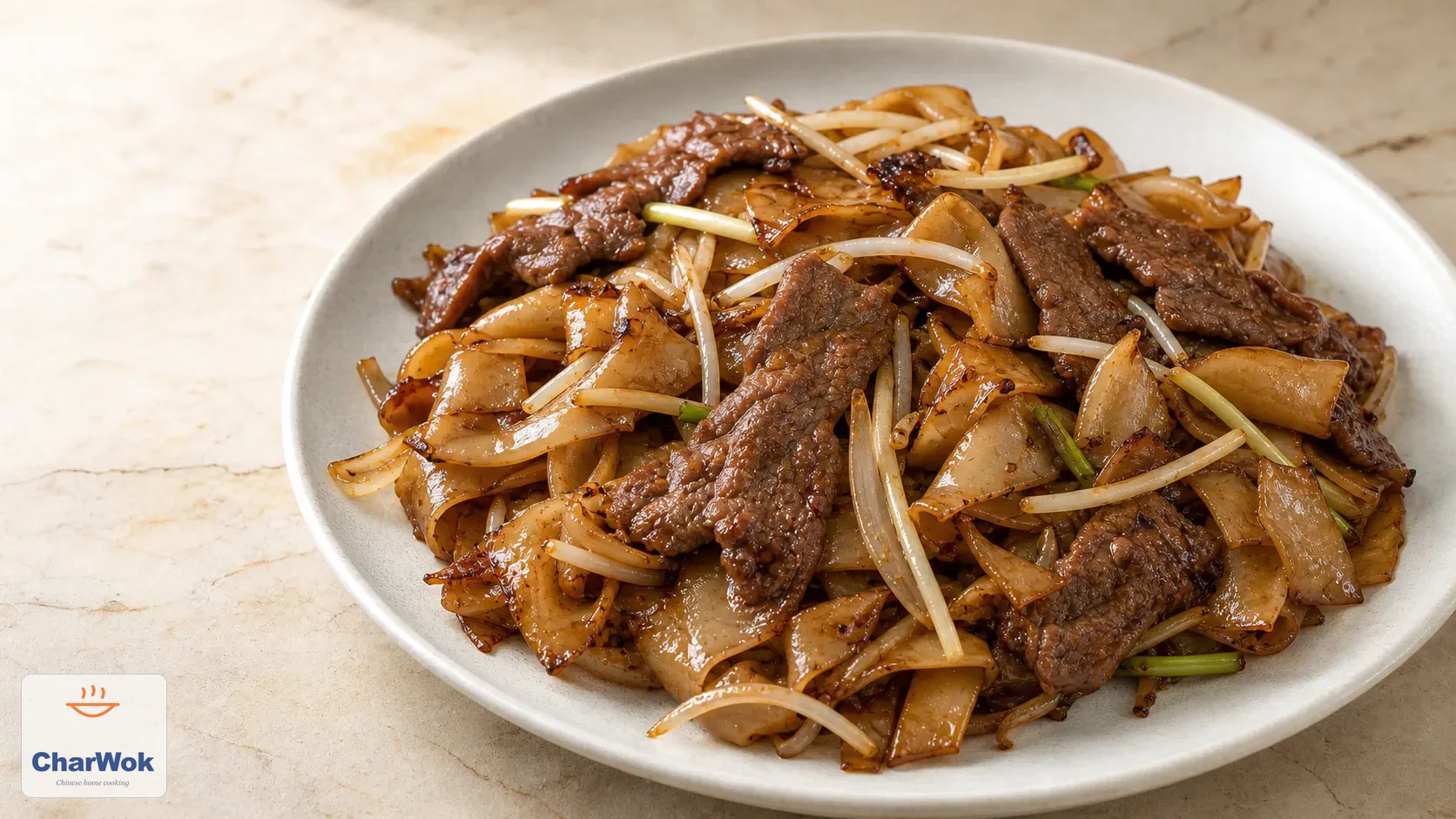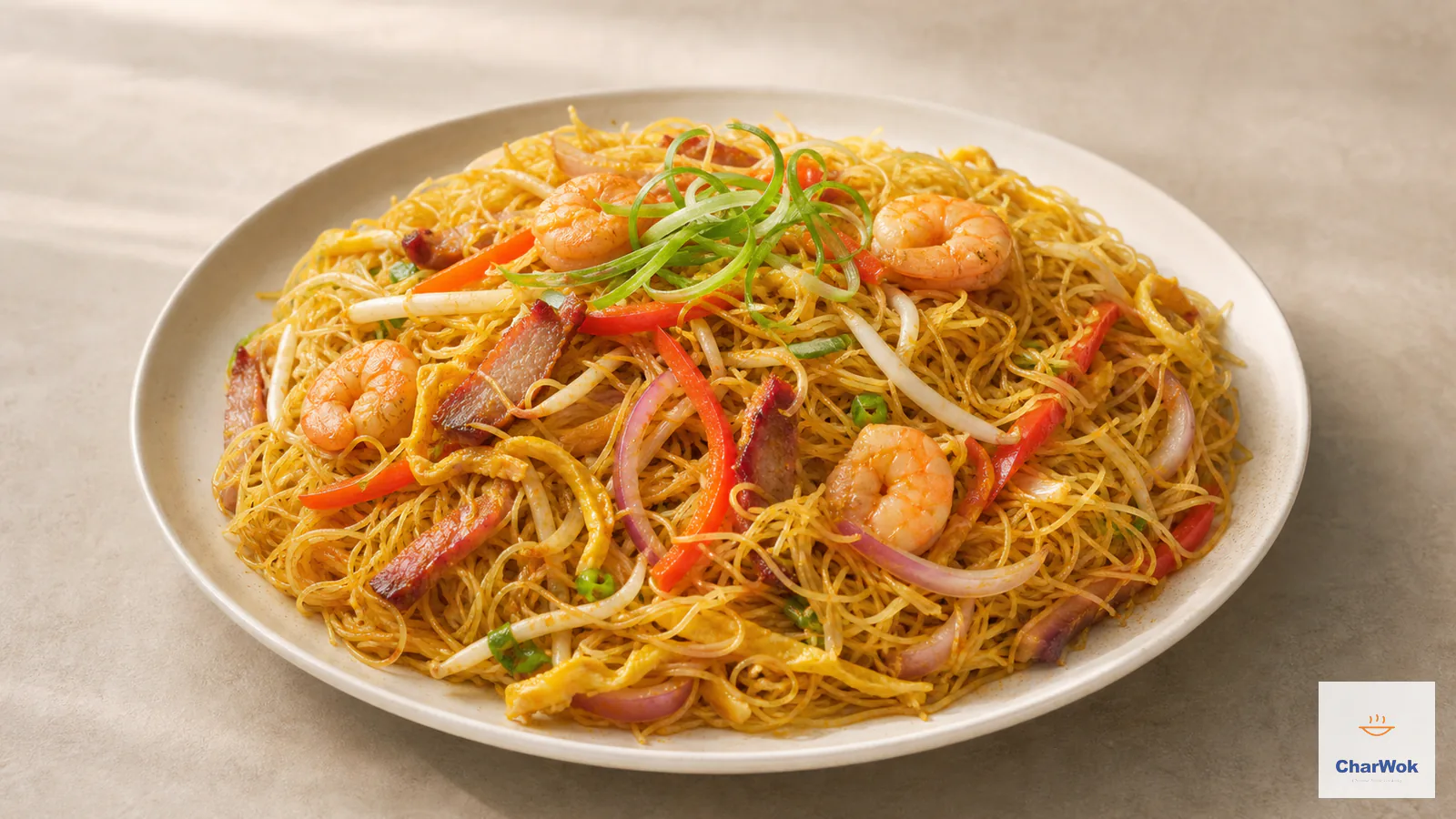
Order Singapore Mei Fun at a takeout counter and you get a turmeric-yellow tangle of thin rice noodles threaded with shrimp, char siu, egg, and crunch. Try it at home and you usually end up with one of two failures: a pale, clumpy brick that tastes of nothing, or a stained, broken mush. The dish is simple to assemble, but the line between bright and broken is thin. Everything comes down to three decisions you make before the wok is even hot: how wet the noodles are when they hit the pan, how hot the oil is when the curry powder meets it, and how late you let the sauce land.
Despite the name, this is not a Singaporean dish. It is a Cantonese-American invention, the kind of thing that lives on the "lo mein / fried rice" page of every Chinese takeout menu in North America. The "Singapore" tag means one thing: curry powder. Yellow Madras-style curry, borrowed from South Indian cooking and folded into a wok stir-fry of char siu, shrimp, and egg. If you can keep the noodles separate and the curry bloomed in oil, you have already won most of the battle.
At a glance: Soak 90 g (3.2 oz) thin dried rice vermicelli in just-boiled water for 2 minutes, drain hard, snip short. Bloom 1 tablespoon yellow curry powder in oil off-peak-heat for 20 seconds, never longer. Cook every protein and the egg first, in batches, then combine everything in under two minutes over high heat. Serve the second the sauce goes in. Serves 2; active time about 18 minutes if everything is prepped.
Why home versions fail (and how the takeout wok wins)
The takeout version looks effortless because the wok is doing three jobs the home cook's pan is not. It is hot enough to sear without stewing, it is curved so a chopstick flick separates strands instead of mashing them, and it has been used so many times that it throws off a faint smoky note called wok hei. You can read more about choosing and seasoning a wok if you want to chase that, but you do not strictly need it. A flat-bottomed carbon-steel skillet, screaming hot, gets you 80 percent of the way.
The real culprit at home is water. Vermicelli is mostly starch. Soak it too long and it arrives in the pan already overcooked; the second stir-frying heat hits it, the strands collapse into paste. Under-soak and the center stays chalky. The fix is not a longer soak. It is a short, aggressive soak in water just off the boil, followed by a ruthless drain and a pair of scissors. More on the exact timing below.
The ingredients, and which ones actually matter
Ingredients at a glance
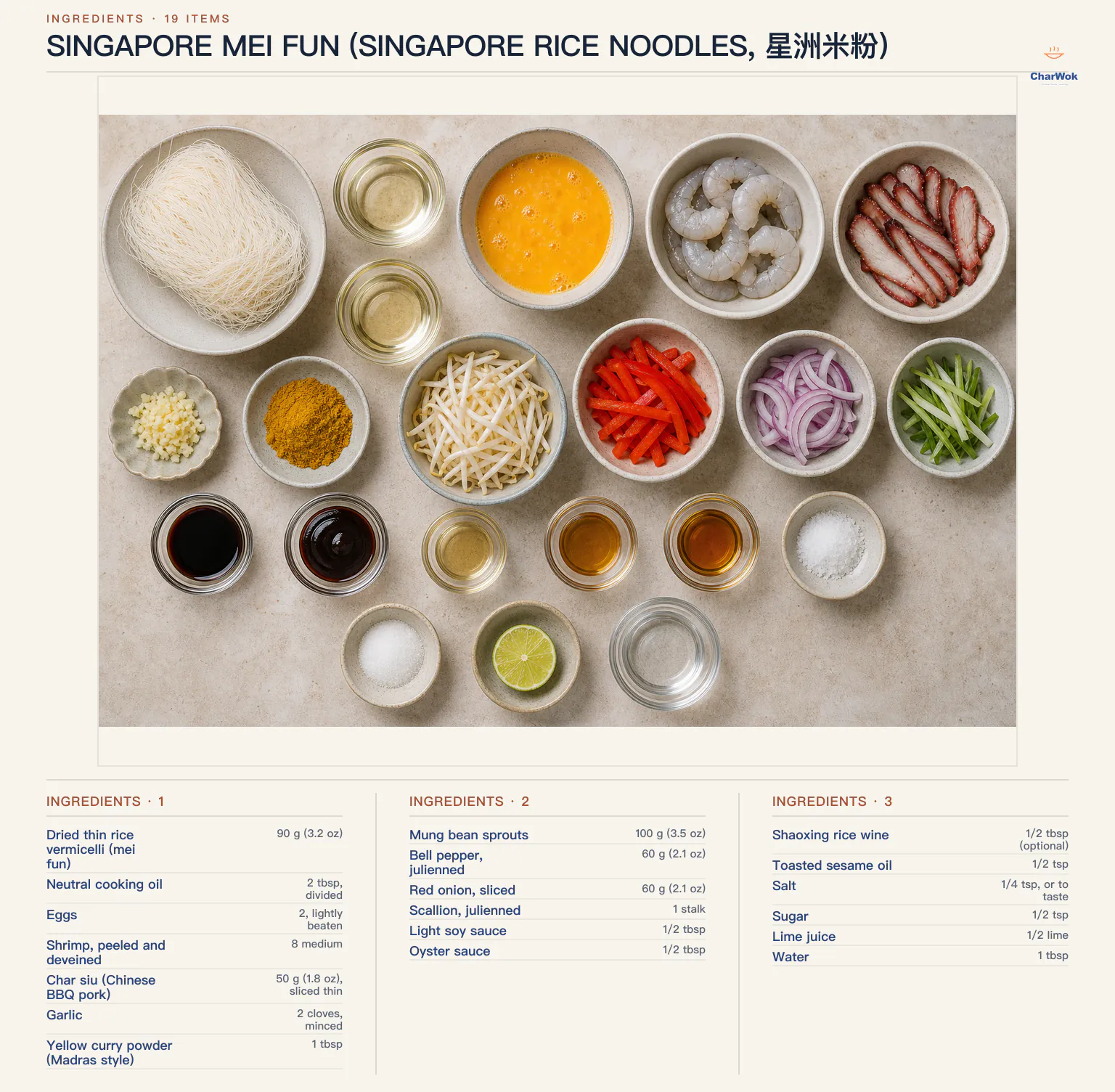
| Ingredient | Amount (for 2) | Notes / substitute |
|---|---|---|
| Dried thin rice vermicelli (mei fun) | 90 g (3.2 oz) | About 2 small bundles. Use the thin stuff, not the wider banh pho. If yours is extra-thin, cut the soak to 90 seconds. |
| Neutral cooking oil | 2 tbsp, divided | Canola, grapeseed, or peanut. Not olive oil. |
| Eggs | 2, lightly beaten | The egg is structure and richness; don't skip. |
| Shrimp, peeled and deveined | 8 medium | Thawed if frozen. See handling shrimp basics. |
| Char siu (Chinese BBQ pork) | 50 g (1.8 oz), sliced thin | Substitute: roast pork, ham, or thin-sliced cooked chicken thigh. Leftover char siu is ideal; make your own if you have time. |
| Garlic | 2 cloves, minced | Fine mince so it doesn't burn in the curry oil. |
| Yellow curry powder (Madras style) | 1 tbsp | The defining flavor. Mild Indian-style yellow curry powder, not Chinese five-spice, not Thai paste. |
| Mung bean sprouts | 100 g (3.5 oz) | Fresh and crisp. Homegrown sprouts beat supermarket every time. |
| Bell pepper, julienned | 60 g (2.1 oz) | Red or yellow for color contrast against the curry. |
| Red onion, sliced | 60 g (2.1 oz) | Shallot or white onion work; red holds its shape best. |
| Scallion, julienned | 1 stalk | Save a few green strips for garnish. |
| Light soy sauce | 1/2 tbsp | Light, not dark. Know the difference; dark will stain the noodles muddy brown. |
| Oyster sauce | 1/2 tbsp | Body and umami. Vegetarian mushroom stir-fry sauce is the clean swap. |
| Shaoxing rice wine | 1/2 tbsp (optional) | Rounds the sauce. Skip or use dry sherry if you don't keep Shaoxing wine on hand. |
| Toasted sesame oil | 1/2 tsp | Finishing aroma only, added in the sauce. Don't fry with it; toasted sesame oil burns. |
| Salt | 1/4 tsp, or to taste | Curry powder and soy are already salty; taste before adding more. |
| Sugar | 1/2 tsp | Balances the curry's bitterness. Don't omit. |
| Lime juice | 1/2 lime | Added raw to the sauce; the acid is what makes the curry read bright instead of flat. |
| Water | 1 tbsp | Just enough to loosen the sauce so it coats instead of clumping. |
Method, with the reasoning behind each step
Mise en place is not optional here. Once the wok is hot this dish is done in under three minutes, so the sauce, the drained noodles, and every prepped ingredient must be within arm's reach. Read the steps through once before lighting the burner.
- Soak the vermicelli, then drain harder than feels right. Drop the bundles into a large bowl and pour just-boiled water over to cover by a couple of inches. Leave 2 minutes for standard thin vermicelli, 90 seconds for the hair-thin kind. The strands should be pliable but still have a chalky, slightly resistant core, because they will finish cooking in the wok. Drain in a colander, then shake firmly and leave them to sit 1 to 2 minutes; surface water is the enemy. Snip the mass in a few directions with scissors so the tangle becomes manageable lengths. This is the same reason egg fried rice noodles call for a tight drain: residual moisture steams the starch instead of frying it.
- Mix the sauce in one small bowl. Stir together the light soy sauce, oyster sauce, Shaoxing wine, sesame oil, salt, sugar, lime juice, and water. Set it next to the stove. Combining everything now means you pour once, late, instead of fumbling with bottles while noodles stick.
- Cook the egg first, hot and fast. Heat half the oil gradually over medium-high to about 180°C / 355°F, fluid and shimmering but not smoking. If smoke appears, turn off the burner and let the oil cool before adding the beaten egg. Let it puff and set on the underside before you scramble it into rough curds with a spatula. You want brown edges and a chewy, almost omelet-like texture, not soft custard, because it will reheat later and soft egg turns to rubber. Transfer to a plate.
- Sear the shrimp in the same pan, no extra oil. The residual fat is enough. Lay the shrimp in a single layer and leave them alone until the edges turn pink, about 20 seconds. Flip and cook another 10 to 15 seconds until just curled into a C. Overcooked shrimp turn mealy and there is no rescuing them, so err on the side of underdone; they come back to the pan at the end. Scoop onto the egg plate. For more on the curl-and-color cue, the shrimp and egg stir-fry walkthrough covers it in detail.
- Bloom the curry in oil, off the peak. Add the remaining oil to the wok and drop the heat to medium-low. Add the garlic and the curry powder and stir for about 20 seconds. This is the most important 20 seconds of the dish. Curry powder is mostly ground spices, and ground spices need fat and gentle heat to release their aroma, the same way you'd bloom them for an Indian curry. Too hot or too long and they scorch into bitterness. You're looking for a sudden fragrance and oil that has turned deep gold, not brown. The technique mirrors how beef chow fun layers flavor in stages rather than dumping everything at once.
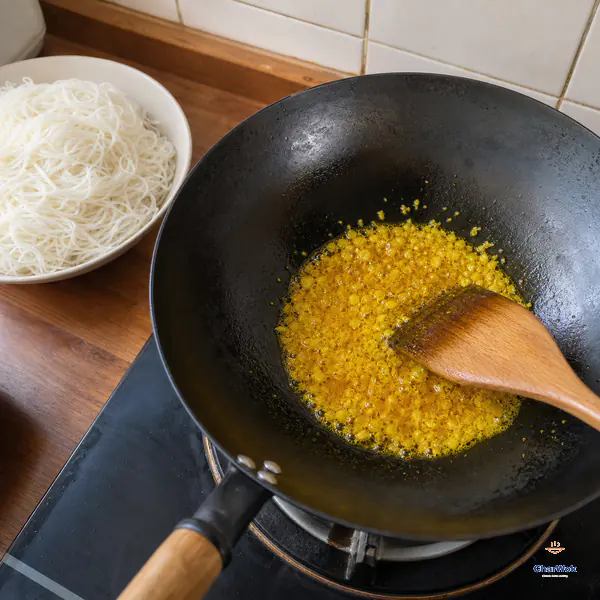
Lower the heat before adding garlic and curry powder, then stir for about 20 seconds until the oil turns vivid gold; add the noodles before any spice speck darkens or smokes.
- Coat the noodles in the curry oil. Add the drained vermicelli and use a pair of chopsticks in one hand and a spatula in the other to lift and toss. The goal is to tint every strand with that golden oil while keeping them separate. If a clump forms, lift and shake rather than pressing. Thirty seconds is usually enough.
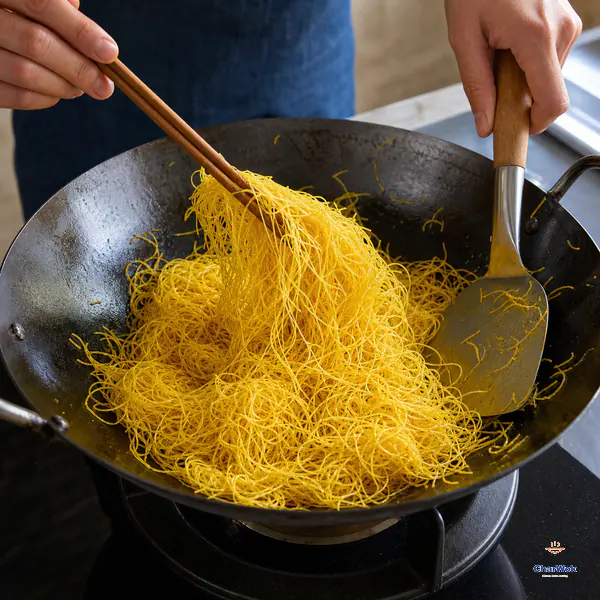
Use chopsticks and a spatula together to lift and shake rather than press; stop when every strand is bright gold, lightly glossy and separate, before adding the meat and vegetables.
- Add the mix-ins and raise the heat. Turn the burner to medium-high. Add the char siu, sprouts, bell pepper, and red onion. Keep the ingredients moving; sprouts collapse fast, and char siu only needs to warm through and crisp at its edges. Cook 45 to 60 seconds, until the vegetables are wilted but still have a snap. Taste a sprout. If it still feels raw in the center, give it 15 more seconds.
- Return egg and shrimp, hit it with the sauce, and stop. Slide the egg and shrimp back in. Pour the sauce around the edge of the wok so it hits the hot metal and flash-boils, then immediately toss to coat. Add the scallion and toss twice more. Kill the heat. The whole return-and-sauce step should take 30 seconds. Plate at once; this dish waits for nobody.
Oil-temperature safety follows the U.S. Fire Administration cooking guidance: stay beside the pan, turn off the burner if oil smokes, and never add water to burning oil.
When it goes wrong: a field guide to common failures
I have made every mistake below at least once. Most are fixable next time, and a couple are salvageable in the moment.
- Noodles are a gummy block. The soak was too long, or the drain was too lazy. Next time, shorten the soak to 90 seconds and rest the colander a full 2 minutes. In the moment, you can sometimes rescue it by drizzling a teaspoon of oil and tossing aggressively off the heat, but a true mush is a loss. Better to cook fewer noodles per batch so the wok isn't overloaded.
- The curry tastes flat or bitter. Either it scorched (heat too high during the bloom) or it never bloomed (added with liquid instead of fat). The fix is purely technique: medium-low heat, oil only, 20 seconds, watch for the color shift to deep gold. Adding a pinch more sugar and an extra squeeze of lime at the end can mask mild bitterness.
- Color is muddy brown, not golden. You used dark soy sauce, or the egg overcooked and bled its color through. Stick to light soy; it seasons without staining. If only dark soy is available, halve the amount and add a pinch more sugar.
- Shrimp are rubbery. They cooked too long, period. Pull them the instant they form a loose C, not a tight ring. The acidic lime in the sauce will finish them gently off the heat.
- The pan is full of liquid. Too much residual water from the soak, or the heat dropped when you added the noodles. Crank it back up and toss until it evaporates, but accept some loss of texture. For next time, drain harder and don't crowd the pan.
- Everything sticks and tears. The wok wasn't hot enough before the egg went in, or the seasoning is thin. A properly seasoned wok at the right temperature is nearly nonstick. If you're fighting your pan, give it a quick re-season; it pays off across every stir-fried noodle dish you make.
Variations and what to serve alongside
The skeleton of the dish, curry oil, rice vermicelli, egg, a protein, a crunchy vegetable, is sturdy. You can bend it without breaking it.
- Chicken mei fun. Swap the shrimp and char siu for thin-sliced chicken thigh marinated 10 minutes in a teaspoon each of soy sauce, wine, and cornstarch. Cook it where you'd cook the shrimp.
- Vegetarian version. Drop the meat and shrimp; add extra scrambled egg, a handful of julienned carrot, and firm tofu pressed and cubed. A teaspoon of mushroom stir-fry sauce replaces the oyster sauce for depth. It lands close to a vegetarian chow mei fun with a curry accent.
- Heat it up. A half-teaspoon of chili crisp stirred into the curry oil, or a minced bird's-eye chili with the garlic, turns this into something closer to a Malaysian street stall. Go easy at first; the heat blooms as it sits.
- Sauce on the side. A small dish of chili crisp, or a quick mix of soy sauce, black rice vinegar, and a drop of sesame oil, lets each diner adjust. Plain Greek yogurt tempered with a little water is the unexpected cooling side that pairs beautifully with the curry.
Because the noodles are rich and assertive, I keep sides simple: a clear soup like egg drop, or a crunchy raw salad to cut through. Singapore mei fun also sits comfortably in a takeout-style spread next to a vegetable dish and a milder protein, the way a real menu would line it up.
Storing and reheating
This is a cook-and-eat dish. Leftovers keep in the fridge for up to 2 days but the texture never fully recovers, because the noodles continue absorbing sauce and softening in the cold. To reheat, use a dry skillet over medium-high heat with a teaspoon of oil and toss constantly; microwaving makes a soggy brick. A few fresh bean sprouts thrown in during the reheat restore some crunch. I would not freeze it.
Frequently asked questions
Can I use wider rice noodles or fresh ones? You can, but the dish becomes something else. Wide ho fun turns it closer to chicken chow fun; fresh rice sticks cook so fast they're prone to tearing under the curry oil. Thin dried vermicelli is the right call here.
Is there a gluten-free version? Rice vermicelli is naturally gluten-free, but standard soy sauce and oyster sauce are not. Use tamari or a certified gluten-free soy sauce and a gluten-free oyster-style sauce. Double-check the curry powder label for wheat filler.
Why lime and not lemon? Lime has a rounder, slightly floral acidity that complements the South Indian roots of curry powder. Lemon works in a pinch but reads sharper and thinner. Either way, add it raw to the sauce, never cook it.
Can I prep everything the night before? Yes, and it helps. Soak and snip the noodles, slice all the vegetables and char siu, and mix the sauce up to 24 hours ahead, each in its own container. The actual stir-fry still needs to happen at the last minute.
The one sentence to remember
If you walk away with a single idea, let it be this: the curry has to bloom in oil before it meets the noodles, and the noodles have to be barely damp when they meet the curry. Get those two things right and the rest of the recipe forgives a lot. Get them wrong and no amount of shrimp or char siu will hide it.