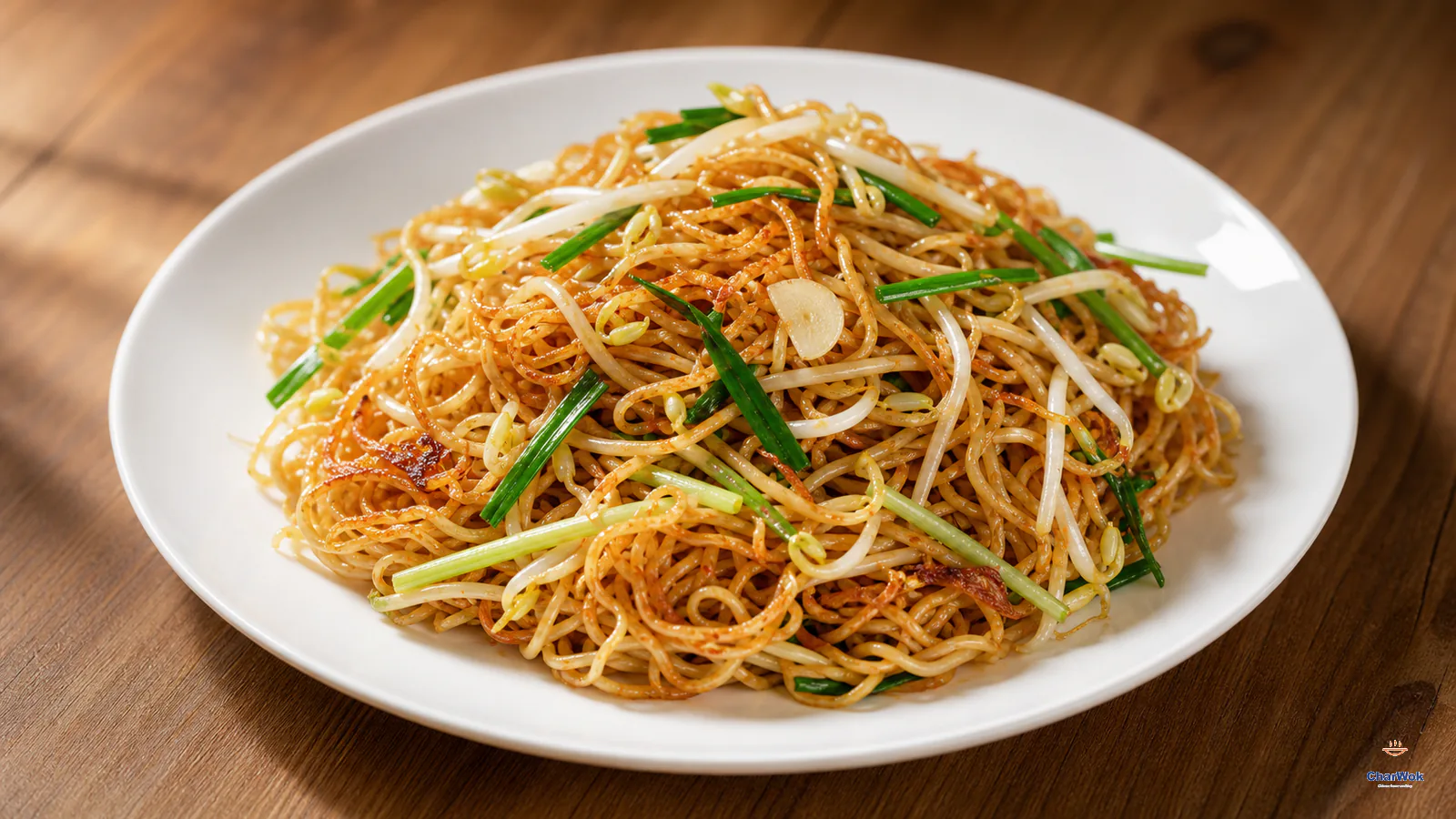
The first time I ordered soy sauce pan-fried noodles at a Cantonese dai pai dong, I expected a humble plate of noodles. What landed in front of me was something else entirely: a nest of thin egg noodles, seared golden at the edges, each strand lacquered in a glossy soy glaze and threaded with bean sprouts that still snapped. The whole thing tasted like the wok itself.
The dish is called 豉油皇炒面 (si yau wong chao mian) in Cantonese, often translated as "supreme soy sauce fried noodles." That word "supreme" is the giveaway. There is no meat, no sauce worth speaking of by volume, no fancy ingredient. The noodles are the whole performance. If they go wrong, the dish goes with them.
At a glance: Thin dried egg noodles parboiled, rinsed, then seared in oil until the underside crisps. Tossed with a four-ingredient soy glaze (1 tbsp light to ½ tbsp dark is the ratio I keep coming back to), scallion whites, garlic, and bean sprouts added at the very end so they stay crunchy. Start to finish under 15 minutes. The make-or-break step is the parboil-and-shock: pull the noodles one minute before you think they're done.
A Cantonese street breakfast, not a dim-sum luxury
This is street food, the kind of plate you grab at 7 a.m. with a glass of soy milk or a bowl of rice congee on the side. It belongs to the same family of quick, sauce-forward Cantonese noodle dishes as beef chow fun and classic chow mein, but it strips the toppings down to almost nothing. Where chow fun leans on beef and dark soy, and chow mein carries cabbage and protein, soy sauce pan-fried noodles trust the noodle and the soy to carry the plate.
That faith is well placed only if you use the right noodle. I learned this the hard way.
The noodle is 80 percent of the result
You want thin dried egg noodles, the kind sold in cellophane nests at any Chinese grocery, often labeled "Hong Kong pan-fried noodles" or "won ton noodles." They are noticeably thinner than the wheat strands I use for lo mein or the chewier hand-cut homemade noodles. The thinness matters because the goal here is a strand that crisps on contact with hot oil yet stays tender and springy inside. A thick noodle will go leathery before the surface browns.
If you can find fresh thin egg noodles, use them and skip the parboil. Many Chinese grocers sell a partially cooked version labeled 熟炒面 ("cooked stir-fry noodles") that needs only a quick rinse. And in a pinch, thin alkaline ramen noodles work surprisingly well, though the flavor tilts slightly away from Cantonese toward something more Japanese. I would not reach for Italian pasta here. The protein structure and the surface starch behave differently, and you lose the specific bounce the dish is built around.
Ingredients
Soy sauce pan-fried noodle ingredients at a glance
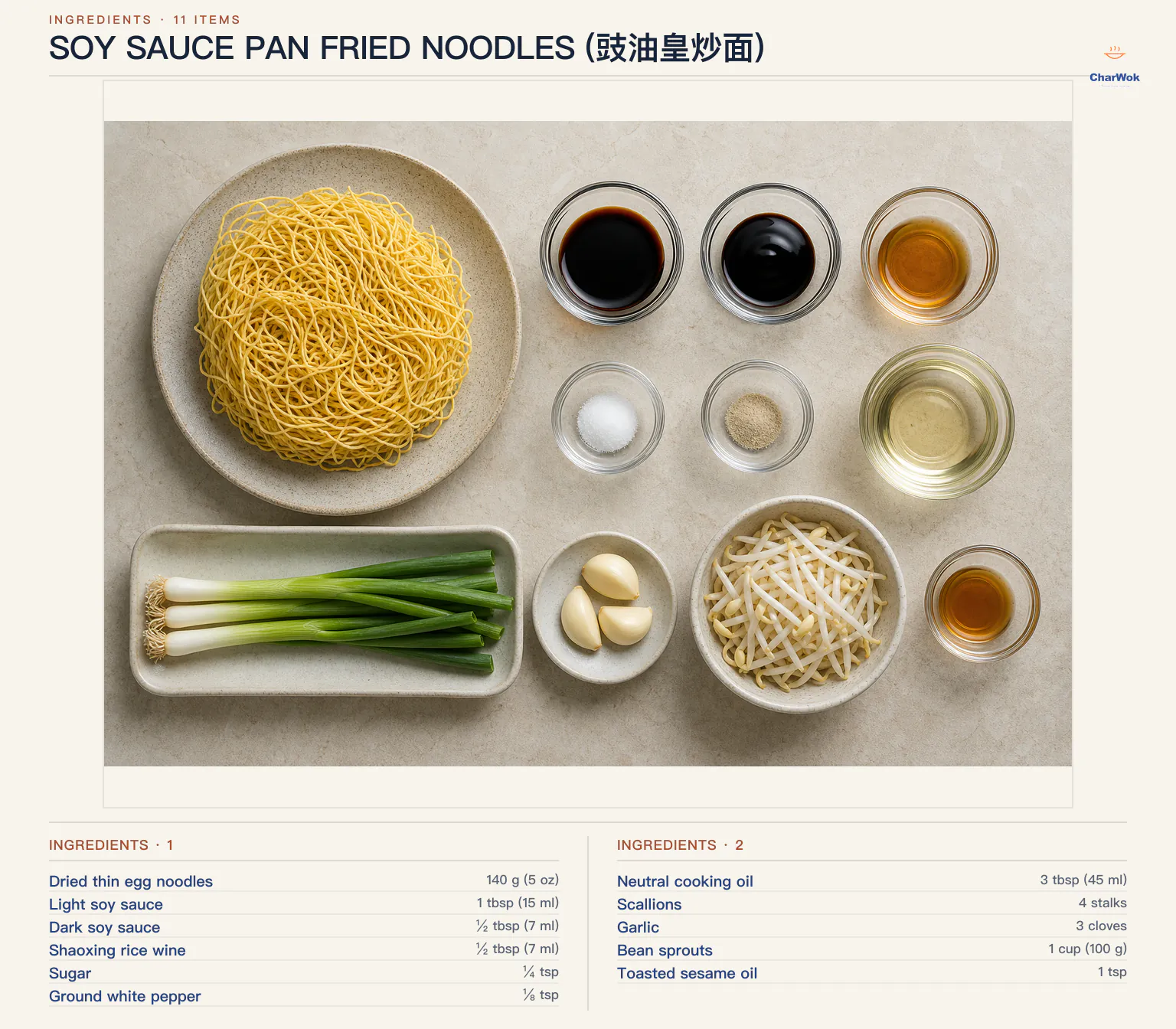
For 2 servings. The oil looks like a lot, and it is, but most of it stays in the pan after the sear. You need that volume to get color without scorching.
| Ingredient | Amount | Notes / substitute |
|---|---|---|
| Dried thin egg noodles | 140 g (5 oz) | Hong Kong style, in nests. Fresh thin egg noodles also work (skip the parboil) |
| Light soy sauce | 1 tbsp (15 ml) | The salt and umami base. See our light vs. dark soy sauce guide |
| Dark soy sauce | ½ tbsp (7 ml) | For color only; it is mild and slightly sweet |
| Shaoxing rice wine | ½ tbsp (7 ml) | Read why Shaoxing wine matters if you're unsure. Dry sherry is a fair substitute |
| Sugar | ¼ tsp | Balances the soy. Leave it out and the dish reads as flat |
| Ground white pepper | ⅛ tsp | Black pepper works but reads more aggressive |
| Neutral cooking oil | 3 tbsp (45 ml) | Peanut, canola, or sunflower. Not olive oil |
| Scallions | 4 stalks | Cut into 5 cm slivers, whites and greens kept separate |
| Garlic | 3 cloves | Sliced thin, not minced |
| Bean sprouts | 1 cup (100 g) | Mung bean sprouts. Julienned carrot or bok choy stems work in a pinch |
| Toasted sesame oil | 1 tsp | Added off the heat, at the very end |
Method, with the reasoning baked in
- Parboil to just underdone, then shock. Bring a full pot of water to a rolling boil, drop in the noodles, and cook about one minute less than the package suggests. They should bend easily but still have a chalky, resistant core. Lift them straight into a colander and rinse under cold running water. The cold rinse halts the carryover cooking and washes off surface starch so the strands separate instead of clumping when they hit the oil. Drain thoroughly, then shake the colander hard. Wet noodles will spit and steam instead of fry.
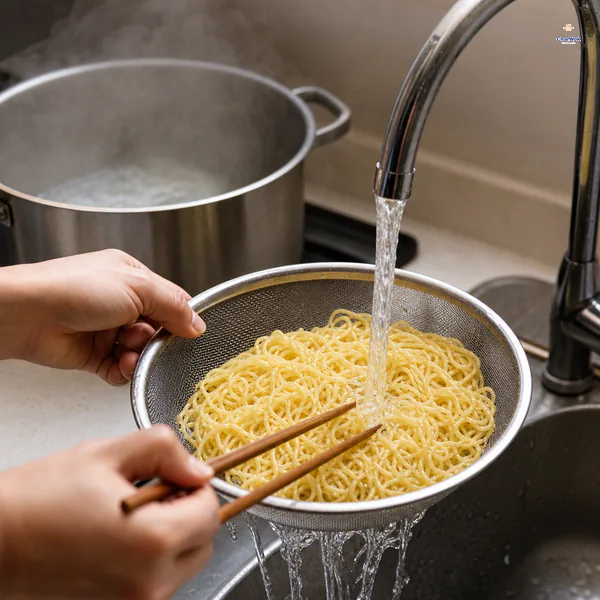
Boil the noodles about one minute short of the package time, rinse immediately until completely cool, separate the strands and drain thoroughly so they fry instead of steam.
- Mix the sauce now, not later. Combine the light soy, dark soy, Shaoxing, sugar, and white pepper in a small bowl. Once the pan is hot you will have roughly ten seconds to act, and fumbling with bottles is how garlic burns. The sesame oil stays out of the bowl; it is a finishing oil and its aroma vanishes if you cook it.
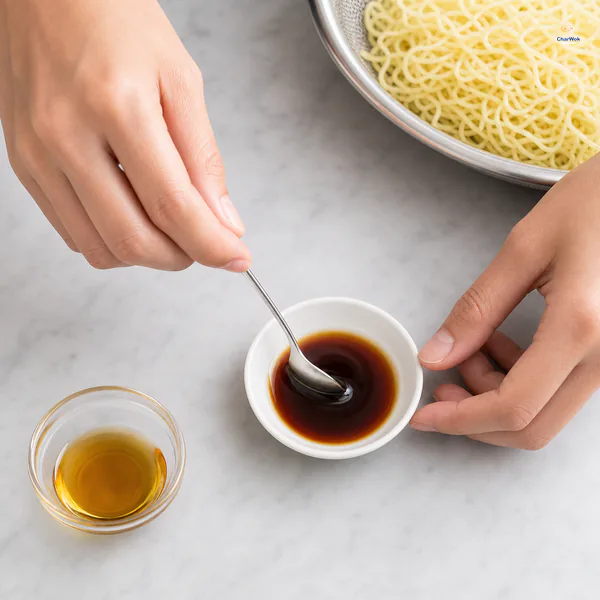
Mix the light soy, dark soy, Shaoxing wine, sugar and white pepper in a small dish; keep the teaspoon of sesame oil separate for the final fifteen seconds.
- Sear the noodles in two tablespoons of oil, undisturbed. Heat a carbon-steel wok or a wide skillet until a drop of water dances and evaporates on contact. Add 2 tbsp of oil and swirl. (If you are using nonstick, add the oil to a cool pan and heat them together, since an empty nonstick pan can off-gas.) Spread the noodles out so they cover as much of the surface as possible and leave them alone for 45 to 60 seconds. You are building a crisp bottom layer through starch gelatinization and Maillard browning. Peek with a spatula; the underside should be golden with some char at the edges. Flip and crisp the second side, another 45 seconds. Slide the noodles onto a plate.
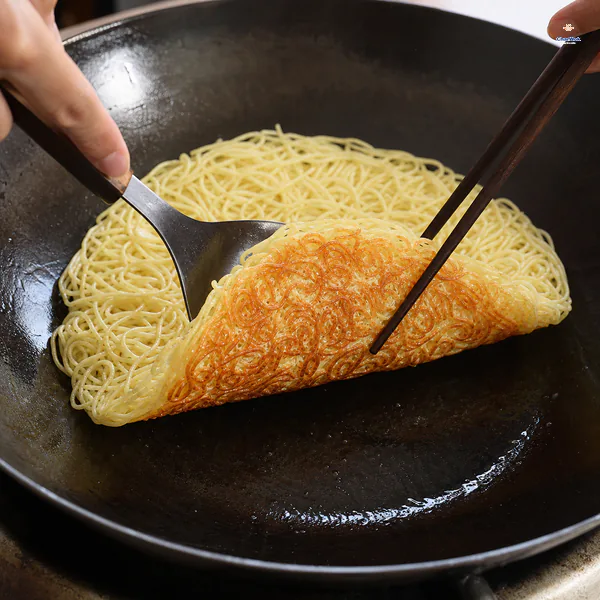
Heat the pan, swirl in two tablespoons of oil and spread the well-drained noodles into the thinnest layer possible; leave them untouched for 45 to 60 seconds, then flip the whole cake and crisp the second side.
- Bloom the aromatics in the remaining oil. Add the last tablespoon of oil to the same pan. Add the scallion whites and sliced garlic and let them sizzle for 10 to 15 seconds, just until the garlic loses its raw edge. You want fragrance, not color. Burnt garlic will turn the whole plate bitter.
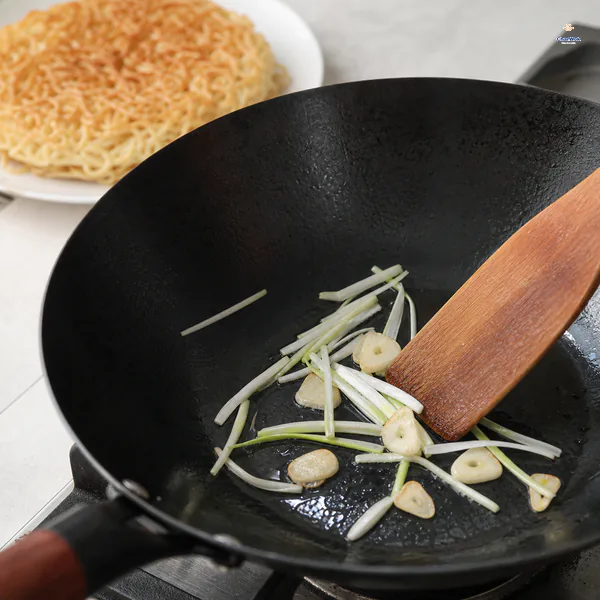
Add the last tablespoon of oil and bloom the scallion whites with sliced garlic for only 10 to 15 seconds; stop while the garlic is still pale, before it turns bitter.
- Return the noodles and glaze them. Add the noodles back and pour the sauce over the top. Toss with chopsticks or tongs for about a minute, constantly, so each strand picks up the seasoning and the soy reduces slightly and clings. This is where the dish gets its shine.
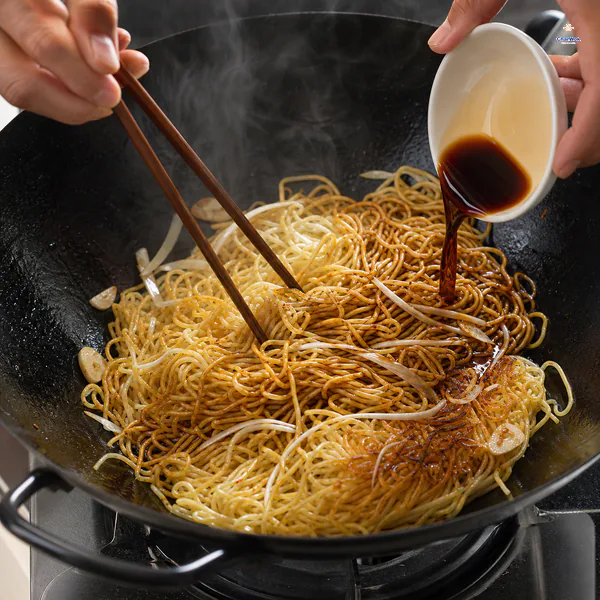
Return the crisp noodles, pour the small measure of sauce along the hot edge and toss constantly for about one minute until every strand is glossy and no liquid pools in the wok.
- Finish with the sprouts, scallion greens, and sesame oil. Throw in the bean sprouts and scallion greens, drizzle the sesame oil, and toss for another 15 seconds, no more. The sprouts should warm through and barely soften at the edges while staying audibly crunchy. Plate immediately. This dish does not wait.
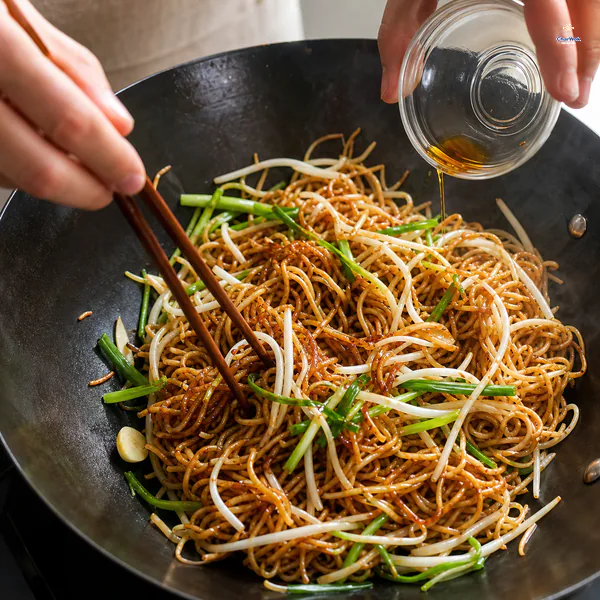
Add the bean sprouts and scallion greens, drizzle in the teaspoon of sesame oil, toss for no more than 15 seconds and plate immediately while the sprouts remain crisp.
Why it goes wrong, and how to fix it
Most failures here come from one of four places. Here is how I diagnose them at the stove.
The noodles are gummy and stuck together. Two usual suspects. Either they were overcooked at the parboil stage, or they were still wet when they hit the oil. Both are fixable next time: pull them earlier and shake the colander like you mean it. If it's already happened, spread the stuck mass on a plate, let it cool, and gently separate with oiled chopsticks before the sear.
No crisp bottom, just soft pale noodles. The pan wasn't hot enough, or you crowded it. For two servings a 30 cm pan is the minimum; double the recipe and you must cook in two batches or you'll steam everything instead of frying it. The other cause is moving the noodles too soon. Patience in step 3 is what builds the crust.
The dish tastes salty but flat. That is the missing sugar and the missing sesame oil. A quarter teaspoon of sugar sounds trivial but it rounds the harsh edge off the soy. The sesame oil at the end adds the top note your nose expects from a "soy sauce noodle." Without it, the flavor sits low and never lifts.
The bean sprouts have gone limp and watery. You added them too early or cooked them too long. They belong in the pan for a count of fifteen, off high heat if your burner runs hot. The whole point of their presence is the contrast between a soft noodle and a crunchy sprout. Lose that and you might as well have used cabbage.
Variations that earn their place
The minimalist version is the test of a cook, but the dish takes additions gracefully. My rule: anything you add should be pre-cooked and ready to fold in at the end, so it never slows the final toss.
Protein. Thinly sliced marinated beef, chicken, pork, or whole shrimp, stir-fried separately and folded back in with the sprouts. The slicing and velveting technique behind beef and broccoli or kung pao shrimp is exactly what you want here. Add a teaspoon of Shaoxing wine to the marinade for depth.
Egg. Soft-scramble an egg the way you would for tomato egg stir-fry and fold it through at the end. It turns the plate into breakfast.
More vegetables. Julienned carrot, celery, bell pepper, or bok choy stems, stir-fried after the aromatics and before the noodles go back. Keep everything in thin, even matchsticks so they cook in the same window.
Heat. A spoonful of chili oil at the table, or a scatter of toasted sesame seeds. I keep the chili off the main recipe so anyone can tailor their own bowl.
What to serve alongside
On its own this is a quick lunch or breakfast. For something more rounded, top the plate with halved tea eggs or a few slices of char siu pork. Because the noodles are dry, I almost always serve a light soup next to them, a simple egg drop soup works better than a heavy one. For a bigger table, treat it like longevity noodles: one starchy anchor among several vegetable and meat dishes, where everyone takes a little of each.
Storage and reheating
Honestly, this is a dish to eat the moment it leaves the pan. The crisp bottom and the sprout crunch are the first casualties of sitting. If you must hold leftovers, refrigerate them airtight for up to two days and reheat in a dry skillet over medium-high heat to re-crisp the strands. The microwave will turn them into a soggy knot. Leftover noodles also fry up well next morning with an egg cracked over them, a different dish but a good use of the same ingredients.
A final note on the technique
What looks like a three-ingredient plate is really a study in heat management. The parboil sets the texture, the cold rinse protects it, the sear builds the crust, and the final glaze adds the flavor and shine. Get those four moments right and you have a dish that tastes more expensive than its parts. Miss any one and the noodles will tell on you.
If you want to go deeper on this style of cooking, the same sear-then-glaze logic runs through our wider collection of Chinese noodle recipes, including the saucier scallion oil noodles and the rice-noodle cousin egg fried rice noodles. They are all variations on the same theme: respect the noodle, control the heat, finish with aroma.
Frequently asked questions
Can I make this without a wok? Yes. A wide, heavy skillet, ideally cast iron or carbon steel, gives you the flat searing surface this dish actually wants. Avoid nonstick if you can; it caps your heat and you'll never get the charred edges.
Is there a gluten-free version? Use gluten-free thin rice noodles and tamari in place of both soy sauces. The texture is softer and the color paler, but the method is identical.
Why rinse the noodles after boiling? Cold water stops the cooking so the strands stay firm, and it rinses loose starch that would otherwise glue the noodles together in the pan.
Can I prep the dish ahead? Parboil, rinse, and drain the noodles up to a day in advance and keep them covered in the fridge. Bring them to room temperature before searing so the pan doesn't drop in heat. The actual cooking should still happen right before serving.