A bottle of lye water looks unremarkable. It is clear, odorless, and pours like water from the tap. But measure out half a teaspoon into a bowl of noodle dough and the flour turns faintly yellow, the strands come out bouncy and slick, and they hold their bite through a long bath in broth. That one ingredient is doing the work that separates a fresh ramen noodle from a plate of soft wheat pasta.
Lye water, or kansui (枧水 in Cantonese, 雪碱水 on some labels), is a food-grade alkaline solution. The store-bought version is mostly potassium carbonate dissolved in water. It is the reason restaurant ramen has that springy chew, the reason Cantonese mooncakes bake up glossy and mahogany, and the reason a southern Chinese alkaline rice dumpling is translucent amber instead of plain white. If you cook Chinese food at home with any regularity, you will run into it. And once you understand what it actually does in the dough, you stop being afraid of it.
At a glance: Lye water raises pH so noodle dough firms up into a springy, resilient chew, turns wheat noodles yellow, and helps baked goods brown. For noodle dough, 1 to 2 grams per 100 grams of flour is the working range. Too much tastes bitter and soapy; too little does nothing. You can make a homemade substitute by baking baking soda at 120°C (250°F) for an hour, then dissolving it in water at a 1:4 ratio by volume.
What an alkaline solution actually does to food
Three things happen when you bring flour or rice into contact with an alkali, and each one shows up on the plate.
The first is texture. Wheat dough is held together by gluten, a network of proteins. Shift the dough toward alkaline and the proteins cross-link more tightly, building a denser, more elastic network that resists stretching and snaps back when pulled. The dough feels firmer and springier under the hands, and it holds its bite through cooking. Boil that dough and you get a noodle that is firm, a little bouncy, and noticeably slower to go limp and mushy in soup. This is the property the Japanese call koshi — the resilient chew — and it is what lets homemade alkaline noodles survive a bowl of broth without falling apart.
The second is color. The flavones in wheat flour are nearly colorless when the dough is acidic but turn yellow in an alkaline environment. The same shift in pigment is what turns a noodle pale gold. (Pretzels take this further and get their dark, almost mahogany crust from a dip in food-grade sodium hydroxide, a much stronger alkali than the potassium carbonate we are talking about here, but the same family of chemistry driving the color change.) The yellow in your noodles is real pigment, not food coloring.
The third is browning and tenderness in baked goods. Cantonese mooncake dough is built on a cooked sugar syrup that is acidic. A few drops of lye water nudge the syrup toward neutral, so the dough stays soft enough to roll thin around the filling, and the surface deepens to that lacquered brown in the oven. The same logic shows up in classic Cantonese mooncakes and in southern Chinese alkaline rice dumplings, where cooked glutinous rice turns translucent and golden rather than staying plain white. (My version of zongzi skips it, but the alkaline style is worth knowing about.)
Where you will find it
Once you start looking, lye water shows up in more of the food you already eat than you would guess. The springy threads of Japanese ramen and Hong Kong-style wonton noodles both owe their chew to an alkaline dough. Across southern China it slips into festival foods: the lacquered Cantonese mooncake skin, the translucent amber alkaline zongzi eaten at the Dragon Boat Festival, and the honeycomb-textured Cantonese honeycomb cake known as gam quoi go. In a Chinese kitchen it is a pantry staple alongside the usual bottles of soy sauce, Shaoxing rice wine, and toasted sesame oil, and it sits on the shelf next to rock sugar, which is the other half of that mooncake syrup.
Bottled lye water is easy to find at any Chinese or Asian grocery and online. It comes in small glass bottles, sometimes plastic. The label uses several interchangeable names: "lye water" or "kansui" in English, and a couple of Chinese terms that all translate to "alkaline water." If you are unsure, check the ingredients list for potassium carbonate. Keep the bottle in a cool cupboard, sealed, away from children, and it lasts indefinitely.
How to use it safely
The dose in any real recipe is small, often under a teaspoon for a batch of dough. At that level the finished food is perfectly safe and the alkaline flavor is faint, almost mineral. Push the amount up and the food turns bitter and soapy, and your mouth will know it instantly. My own approach is the reverse of the way most people reach for a seasoning:
- Treat the bottle like a chemical, not a condiment. Measure it with a proper spoon or a scale, never pour it freehand, and never taste it straight, since on its own it is a strong alkali that burns skin and mouth. Rinse any splash with plenty of water.
- When you are new to an ingredient, start at the low end of what a recipe allows and cook a small test batch. A paler, milder noodle is easy to live with; an overdose is not.
- If a result is too faint, fix it on the next batch by adding a sliver more, not by topping up the one in front of you. Bitterness is much harder to cook out than weakness is to add.
- Keep the bottle labeled and on a high shelf, where a child or a housemate cannot mistake it for water.
If you cannot find a bottle, make it from baking soda
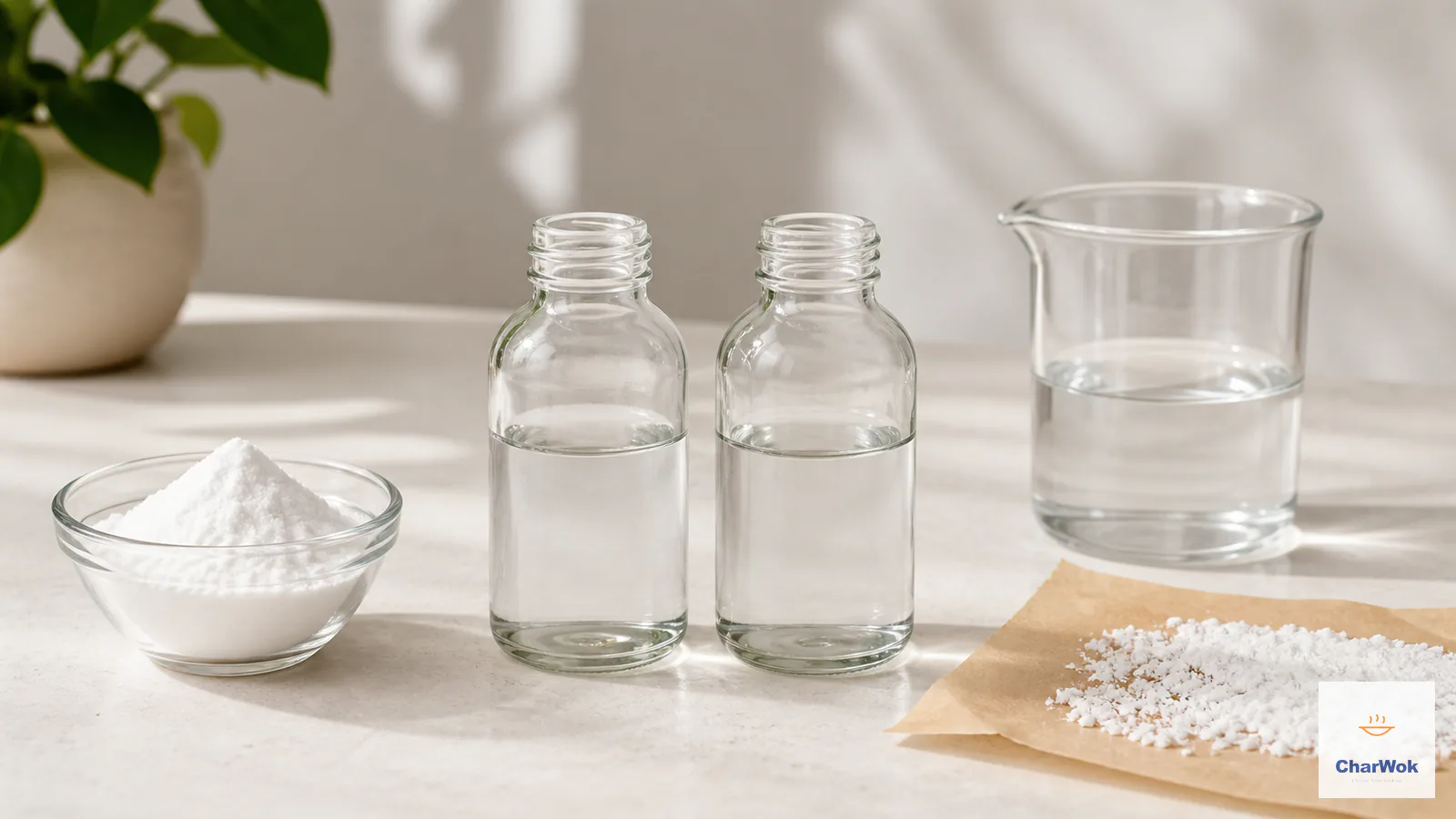
Ingredients at a glance
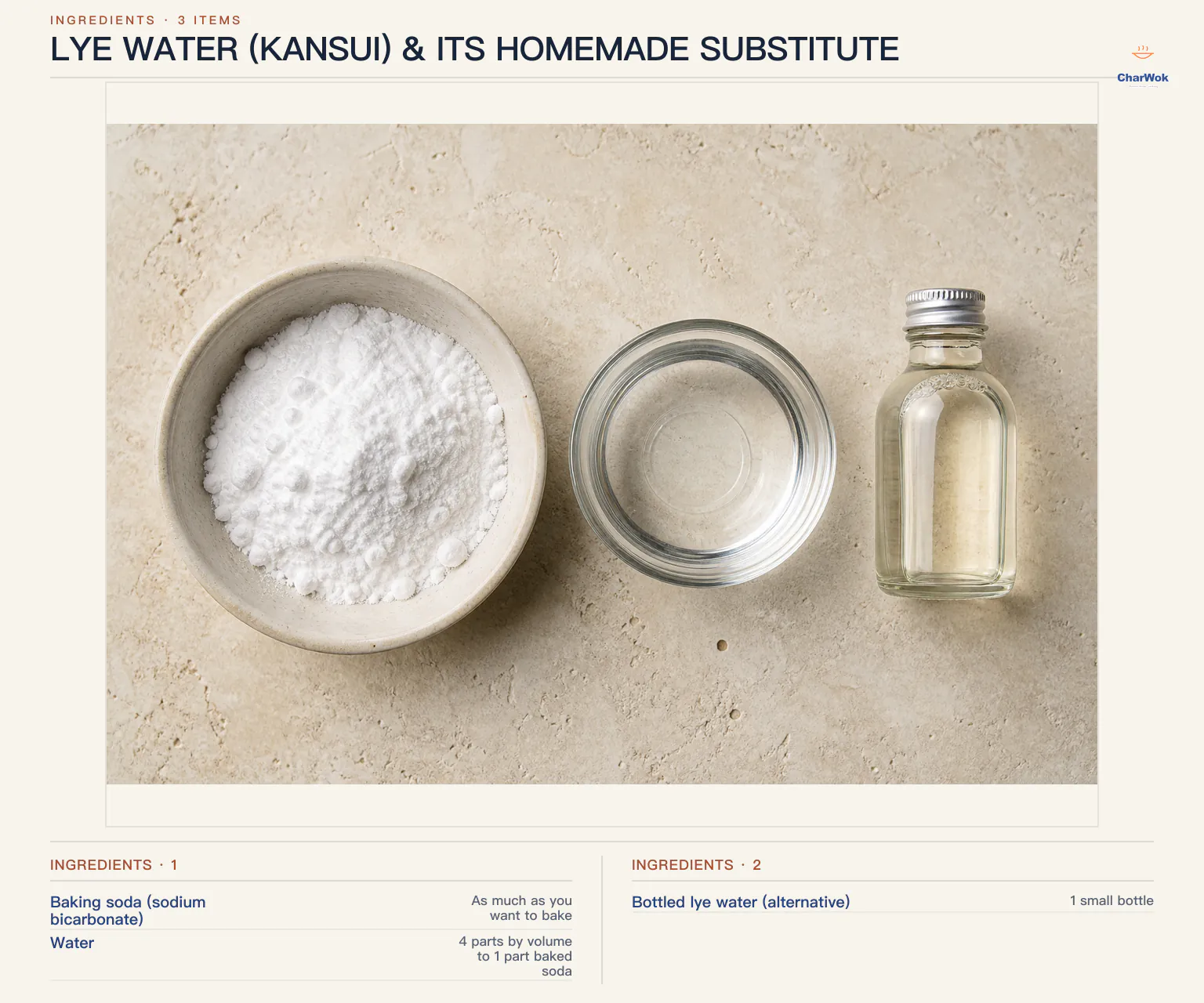
This is the part most home cooks get wrong on the first try, so it is worth a moment. You can build a homemade lye water substitute from two grocery-store items, but you cannot skip the baking step.
Plain baking soda is sodium bicarbonate. Heat it hard enough and it sheds carbon dioxide and water, leaving behind sodium carbonate, which is a noticeably stronger alkali. Dissolve that sodium carbonate in water and you have a solution that behaves close enough to bottled kansui for noodles and dough. Dissolve unbaked baking soda instead and you get a weak alkali that does not dissolve cleanly and barely affects the flour. The baking step is the whole trick.
What you need:
| Ingredient | Amount | Notes / substitute |
|---|---|---|
| Baking soda (sodium bicarbonate) | As much as you want to bake | Plain supermarket baking soda; do not use baking powder |
| Water | 4 parts by volume to 1 part baked soda | Tap water is fine; filtered water gives a cleaner-tasting solution |
| Bottled lye water (alternative) | 1 small bottle | Buy if you make noodles or mooncakes often; lasts years sealed |
Baking the baking soda
- Heat the oven to 120°C (250°F). This temperature is hot enough to drive off the carbon dioxide and fully convert the soda, and low enough to hold steady for the full hour without the powder browning. A gentle, even bake is what you want.
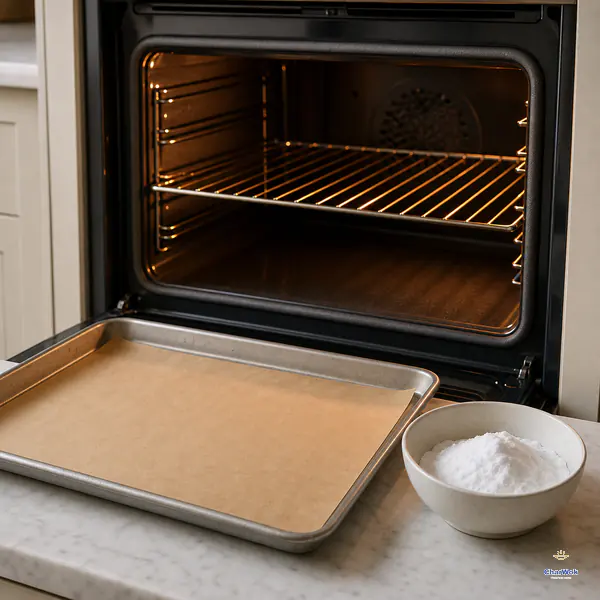
Preheat the empty oven to 120°C (250°F) before spreading or baking the soda so the full hour begins at a steady, even temperature.
- Line a baking sheet with foil and spread the baking soda in a thin, even layer. The foil is for easy cleanup; the soda bakes onto bare metal and is a pain to scrub off. Aim for a layer no thicker than a coin so the heat reaches all of it evenly. A stainless tray will also work, but I still line it.
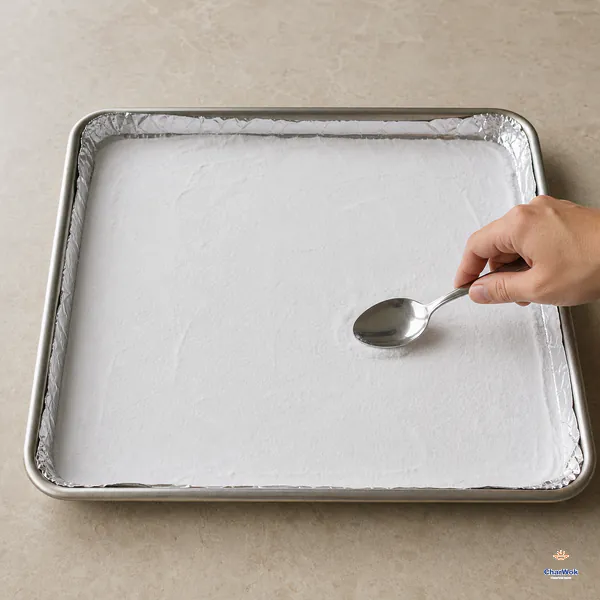
Line the tray with foil and use the spoon back to spread the baking soda no thicker than a coin.
- Bake for one hour. You will not see fireworks. The powder looks almost the same, maybe slightly grainier and a shade less fluffy. The change is chemical, not visual, so set a timer and trust it.
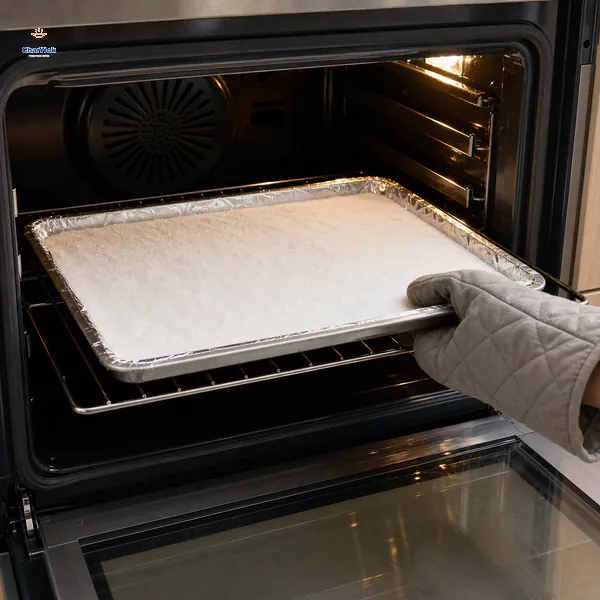
Bake at 120°C (250°F) for one hour; the powder should stay pale, so rely on time rather than browning.
- Let it cool completely on the tray, then transfer it to an airtight jar. Do not handle it with bare hands. The baked powder is a stronger alkali than the soda you started with and will dry and irritate your skin. Use a spoon and ideally gloves. Keep the jar sealed, because the powder grabs moisture from the air and turns into a hard lump.
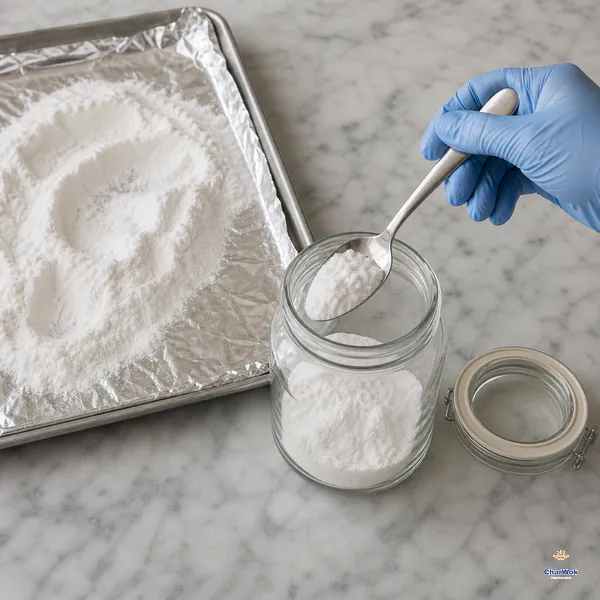
Cool completely, then transfer with a dry spoon and gloves; seal promptly to keep out moisture.
Mixing the solution
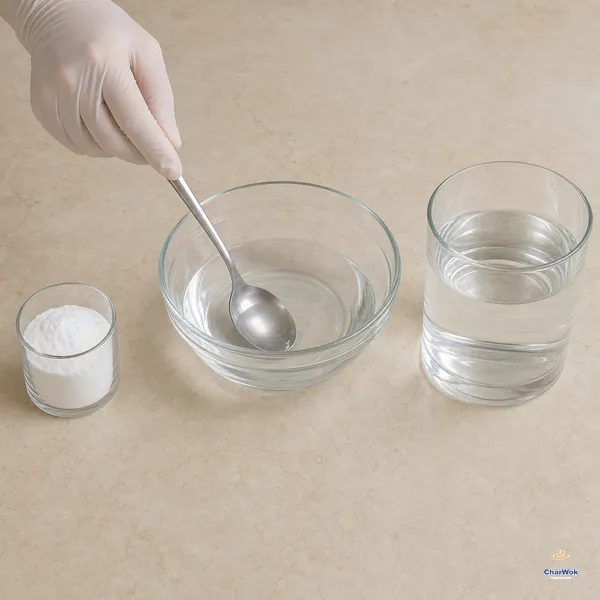
For each use, dissolve one volume of baked soda in four volumes of water and stop stirring when the solution turns clear.
When a recipe calls for lye water, measure out the baked baking soda and dissolve it in four times that volume of water, so a single-spoon batch for one portion of dough takes one measure of powder to four measures of water. Stir until the water is clear; baked soda dissolves fully, where raw baking soda leaves a cloudy residue, which is one quick way to confirm the bake worked.
Mix only what you need for that recipe. The dry powder keeps for months in a sealed jar, but the mixed solution is best used the same day. Reach into the jar with a clean, dry spoon every time, and seal it again right away. A damp spoon will start hardening the powder on contact.
When the homemade version falls short
The baked-soda substitute is genuinely good, and for most home cooking you will not taste the difference. But it is not identical to bottled kansui. Bottled kansui is potassium carbonate, while baked baking soda is sodium carbonate, and the two ions carry slightly different flavor. In a side-by-side noodle test, the baked-soda noodles read as a touch sharper and more metallic, while the bottled-kansui noodles taste rounder. If you are making mooncakes for a festival or a serious bowl of ramen, buy the bottle. If you are throwing together a quick alkaline noodle on a weeknight, the homemade substitute does the job.
Failure modes and how to fix them
- The noodles taste bitter or soapy. Too much lye water. Cut the amount by a third on the next batch and taste a cooked strand before committing. The right dose should read as a clean, slightly mineral bite, never soap.
- The baked soda will not dissolve and leaves a cloudy film. Either the bake was too short, the oven ran cool, or you started with baking powder by mistake. Re-bake at a verified 120°C (250°F) for another 20 to 30 minutes, or start over with plain baking soda.
- The baked powder has gone hard in the jar. Moisture got in. Break the lump up with the back of a spoon, or pulse it in a clean spice grinder, and keep it sealed with a desiccant packet. It is still usable.
- The dough stays gray or pale instead of yellowing. The dose is too low, or the alkali has lost strength from sitting mixed with water for too long. Mix a fresh batch and add a touch more.
- Your mooncake crust is pale or cracked. The syrup may be too acidic and overpowered the small amount of lye water, or the dough rested uncovered and dried out. Re-check the syrup ratio and rest the dough covered.
What to make once you have a bottle
The obvious place to start is fresh alkaline ramen noodles, where the springy chew is the whole point. From there the family branches out. Wuhan hot dry noodles use the same alkaline wheat base, dressed in sesame paste instead of broth. Cantonese wonton noodle soup depends on thin alkaline threads that stay firm under a pile of wontons in hot stock. If you want to push your dough skills further, the firm, springy gluten that lye water builds is a useful contrast to keep in mind next to the stretchy dough you build for hand-pulled noodles and the rolled skins for homemade dumpling wrappers, which rely on rest and kneading rather than alkali.
On the baking side, the small amount of lye water in Cantonese mooncake dough is what gives the crust its sheen and tenderness, and the same logic appears in southern alkaline zongzi, where the rice cooks up translucent and golden. For something simpler, a pinch of baked baking soda is also a handy trick for deepening the color of five-spice-dusted baked goods or speeding the browning of a dough like the leavened one used for mantou when you want a deeper crust on a pan-fried version.
Storage and shelf life
Bottled lye water keeps for years in a sealed container at room temperature; check that the cap is on tight and the bottle is upright. Baked baking soda powder lasts for months in an airtight jar in a dry cupboard, and longer if you add a food-safe desiccant. The mixed solution should be used the same day you make it, so mix in small amounts. None of these belong in the fridge, and the powder in particular should stay dry.
Frequently asked questions
Can I use raw baking soda instead of baking it? Not for the same effect. Raw baking soda makes a weak, cloudy solution that barely changes the dough. Baking converts it to sodium carbonate, which is the stronger alkali you need.
Is homemade lye water the same strength as the bottled kind? Close, but not identical. The baked-soda version is slightly stronger-tasting and more metallic, so if you swap one for the other in a recipe, start with three-quarters of the amount and adjust.
Why do my noodles taste bitter? Too much lye water. Drop the dose by about a third on the next batch and taste a cooked noodle before scaling up. The flavor should be clean and faintly mineral, never soapy.
Is lye water dangerous to cook with? No, at recipe doses it is safe in the finished food. It is unsafe on its own or on bare skin, so never taste the bottle, keep it away from children, and rinse any splash with water.
Do I need gloves when handling the baked powder? They are a good idea. Baked baking soda is a stronger alkali than the raw soda and will dry and irritate bare skin, so use a dry spoon and gloves if you have them.