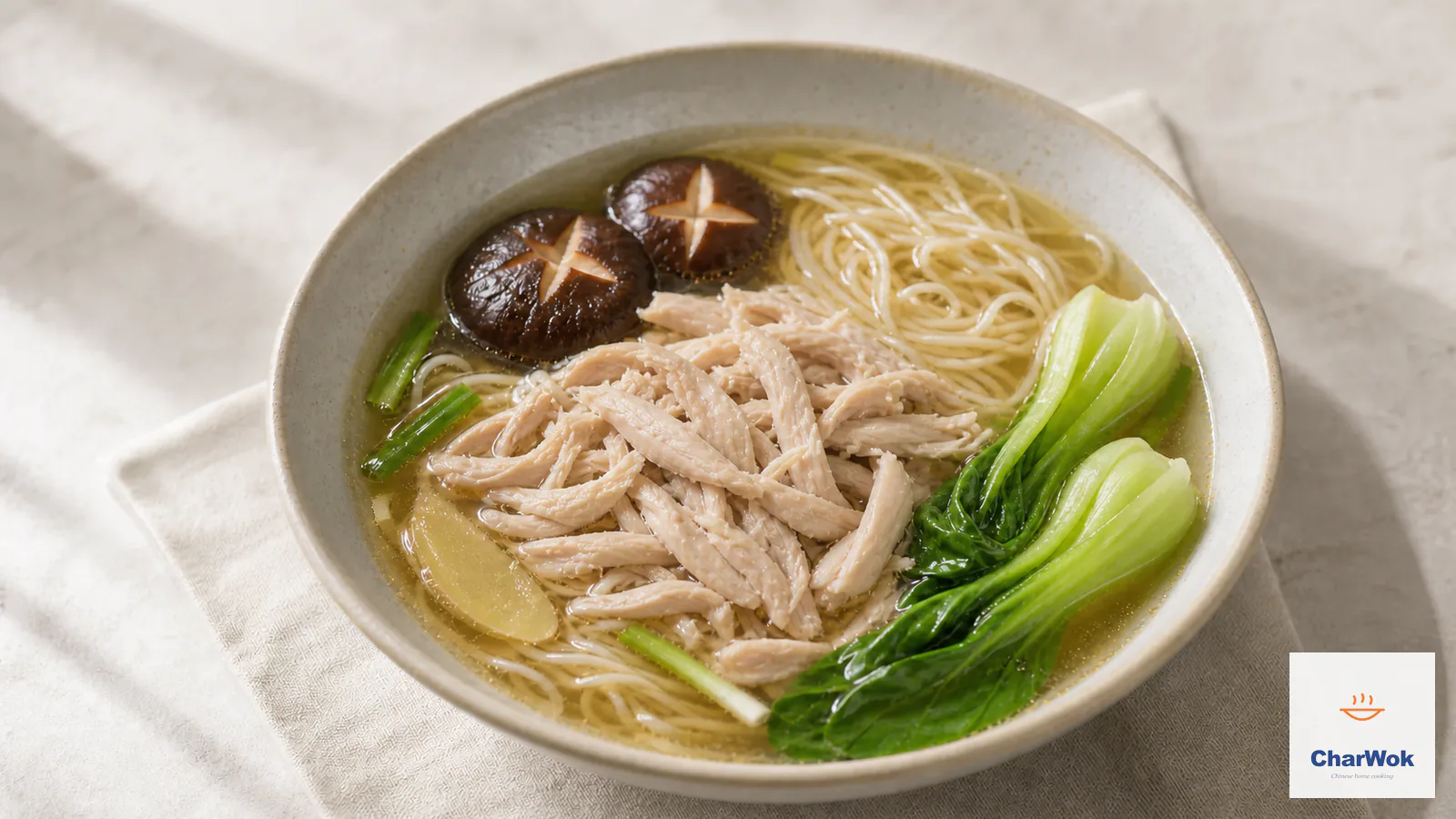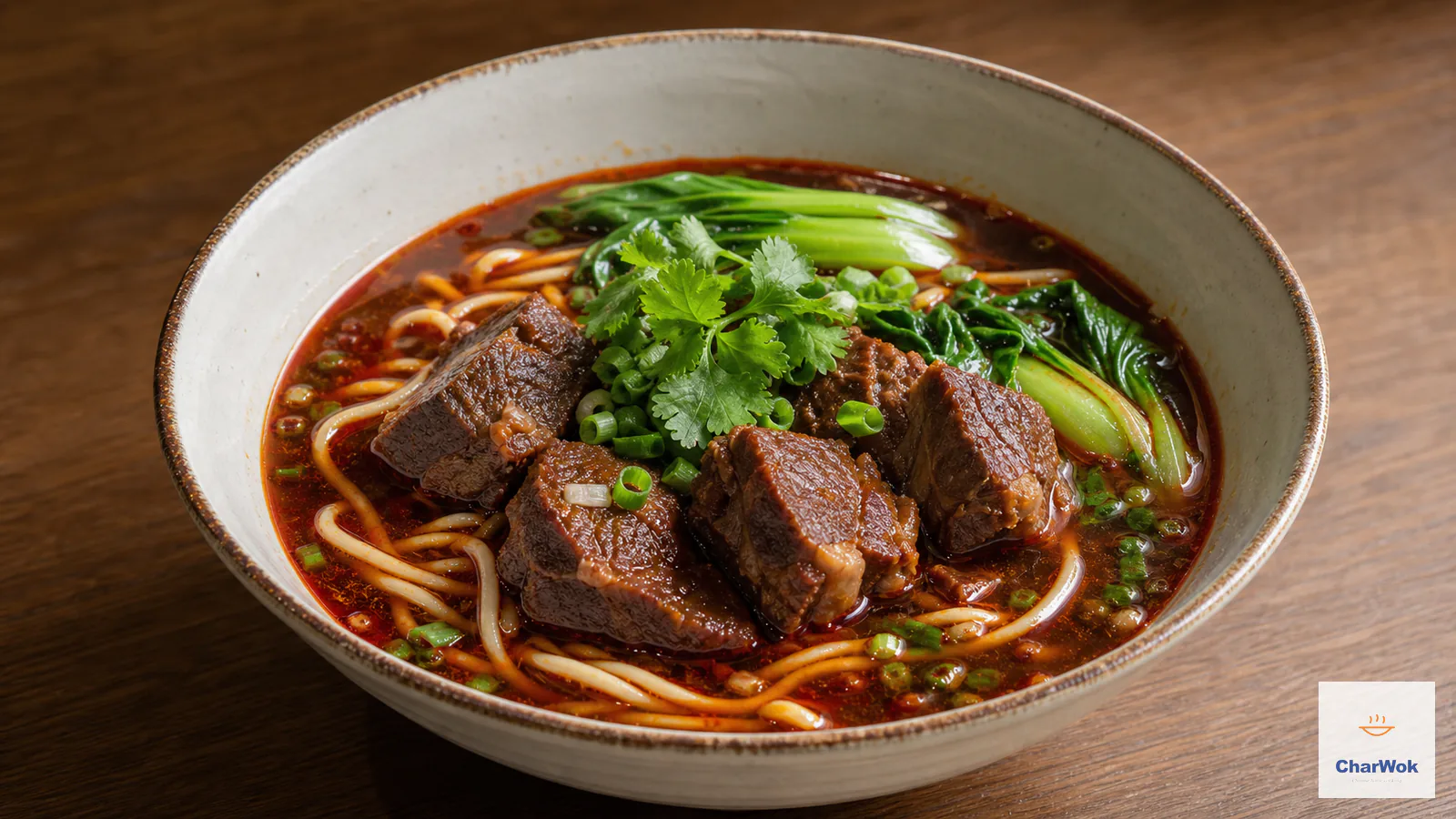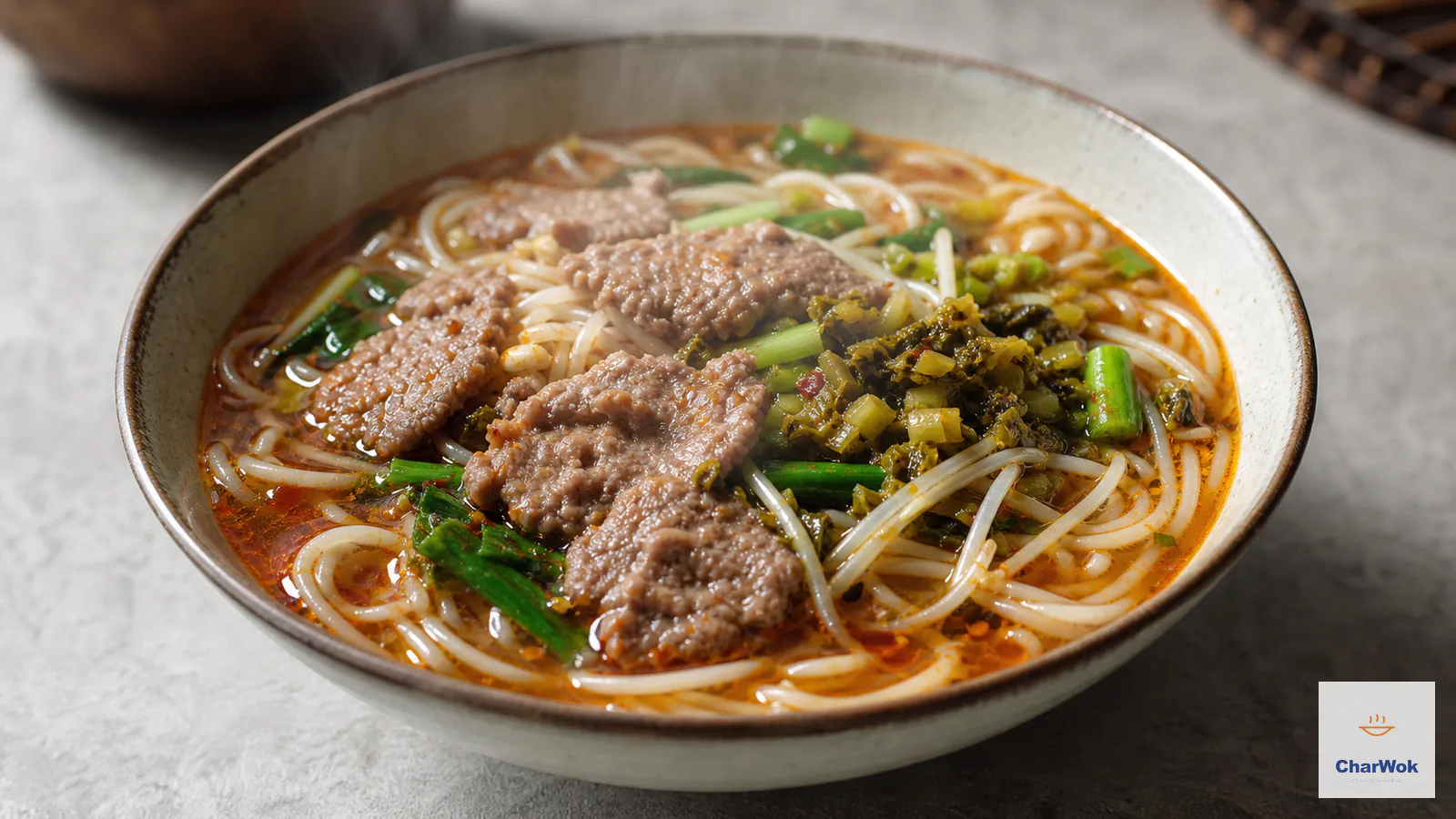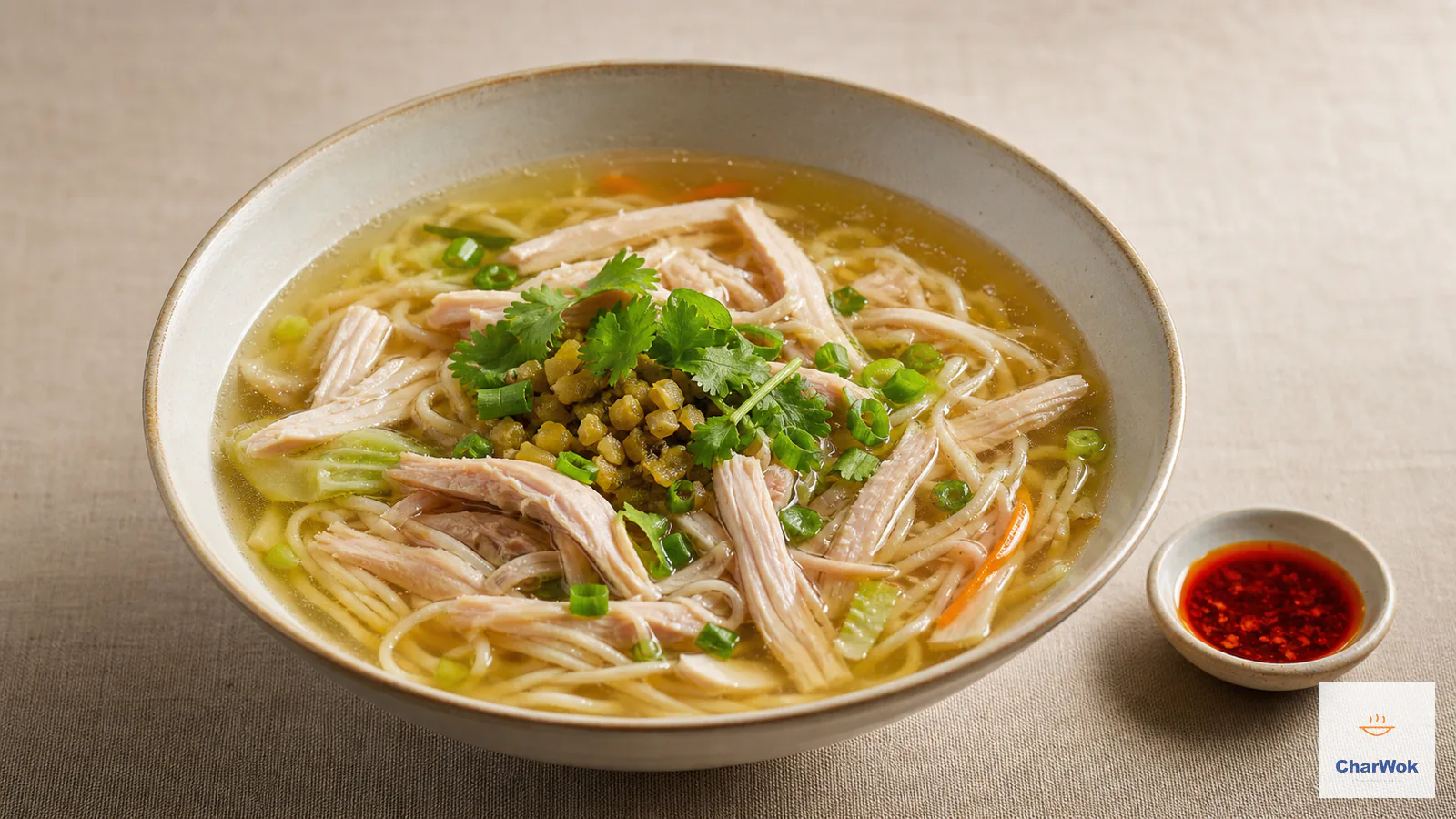
The carcass is the best part of the bird. I know that sounds odd when there is still plump breast and glossy leg meat on the carving board, but for a noodle soup the bones, the joint cartilage, and the bits of skin clinging to the back are where the flavor lives. Most home cooks throw all of that away the morning after a roast, then wonder why their leftover soup tastes like salted water with noodles in it.
This is the soup that fixes that. It borrows the logic of a Chinese noodle-soup shop, where the broth and the noodles are cooked separately and meet only in the bowl, and applies it to the remains of a holiday turkey or a Sunday roast chicken. The roast has already done the hard work of browning and concentrating flavor. Your job is to coax it back out of the bones with a short, gentle simmer, then build each bowl from the bottom up with seasonings that bloom in the hot broth.
At a glance: One carcass simmered 30 minutes in just enough water to cover yields about 1.2 liters of light, clean broth. Plan roughly 80 g (about 3 oz) of dried noodles and 250 ml (1 cup) of broth per person. Season each bowl individually, never the pot. Cook the noodles in a separate pot of water, never in the broth.
What this soup is, and where the idea comes from
In a Chinese noodle shop, a bowl of soup noodles is really three things stacked in one vessel: a clear stock simmered from chicken, pork bones, or dried seafood; wheat or rice noodles boiled to order in their own rolling water; and a layer of toppings that carry color, salt, and texture. The broth never boils the noodles, because surface starch would cloud it and turn it gummy. The toppings are usually pre-cooked and just warmed through.
A roast turkey or chicken already gives you two of those three components. The carcass is stock material. The carved meat and the roasted vegetables from the same meal are ready toppings. All that is missing is the noodles and a quick seasoning base for the bowl. It is, almost accidentally, the ideal way to eat your leftovers, and it is closer to a bowl of chinese chicken noodle soup than to the Western turkey-noodle soup you may have grown up with.
The four parts, and what trips people up
I think of this as a four-part assembly: broth, noodles, bowl seasonings, toppings. Each part has one common point of failure, and most bad bowls fail at the same one. Here is how I think about each.
The broth. The mistake is treating the carcass like a stockpot and boiling it hard for hours. A roast carcass has already been cooked; long, aggressive simmering pulls out fat and dissolved bone crud and leaves you with a greasy, muddy liquid. You want a short, quiet simmer, more like the quick stock method in my homemade chicken stock than a three-hour bone broth. Thirty minutes is plenty for a bird that started out roasted.
The noodles. The mistake is cooking them in the broth to save a pot. Do not. As the noodles hydrate they shed starch into the surrounding liquid, and within two minutes your clean broth turns cloudy and slightly thick. Boil them in a generous separate pot of water, the way you would for chongqing noodles or a bowl of yang chun mian, then drain and add them to the bowl already cooked.
The seasonings. The mistake is salting the broth at the stove. Instead, build each bowl from the bottom: light soy sauce for salt and umami, a little black rice vinegar for a soft acidic edge, sesame oil for aroma, white pepper for warmth, and a teaspoon of raw minced garlic that the hot broth will cook in the bowl. This is how noodle shops do it, and it lets each person tune their own bowl.
The toppings. The mistake is reheating everything in the broth and overcooking it. The toppings do not need to be cooked again. They just need to be warm. The hot broth and the just-cooked noodles will do that for you. Pull the leftovers out of the fridge half an hour ahead so they are not ice cold going in.
Choosing your noodles
Almost any noodle works here, and that is part of why this soup is forgiving. My default is a thin dried wheat noodle, the kind sold as "plain noodles" or "somen-style" in Asian markets, because it has a clean wheat flavor that gets out of the broth's way. Dried rice noodles and glass noodles are fine too; rice noodles are good if you want something lighter, glass noodles are good if you want a slippery, bouncy texture that drinks up the seasoning.
If you have the time and the inclination, homemade noodles are a real upgrade. A simple hand-rolled and cut dough, like the one in my easy homemade noodles, has a chew and a rough surface that grabs the broth in a way dried noodles cannot match. For something with more bite, hand-pulled noodles are the show-off option, and alkaline ramen noodles give you that firm, slightly springy kansui chew. Fresh noodles cook in about a third of the time of dried, so watch them closely.
Ingredients
Ingredients at a glance
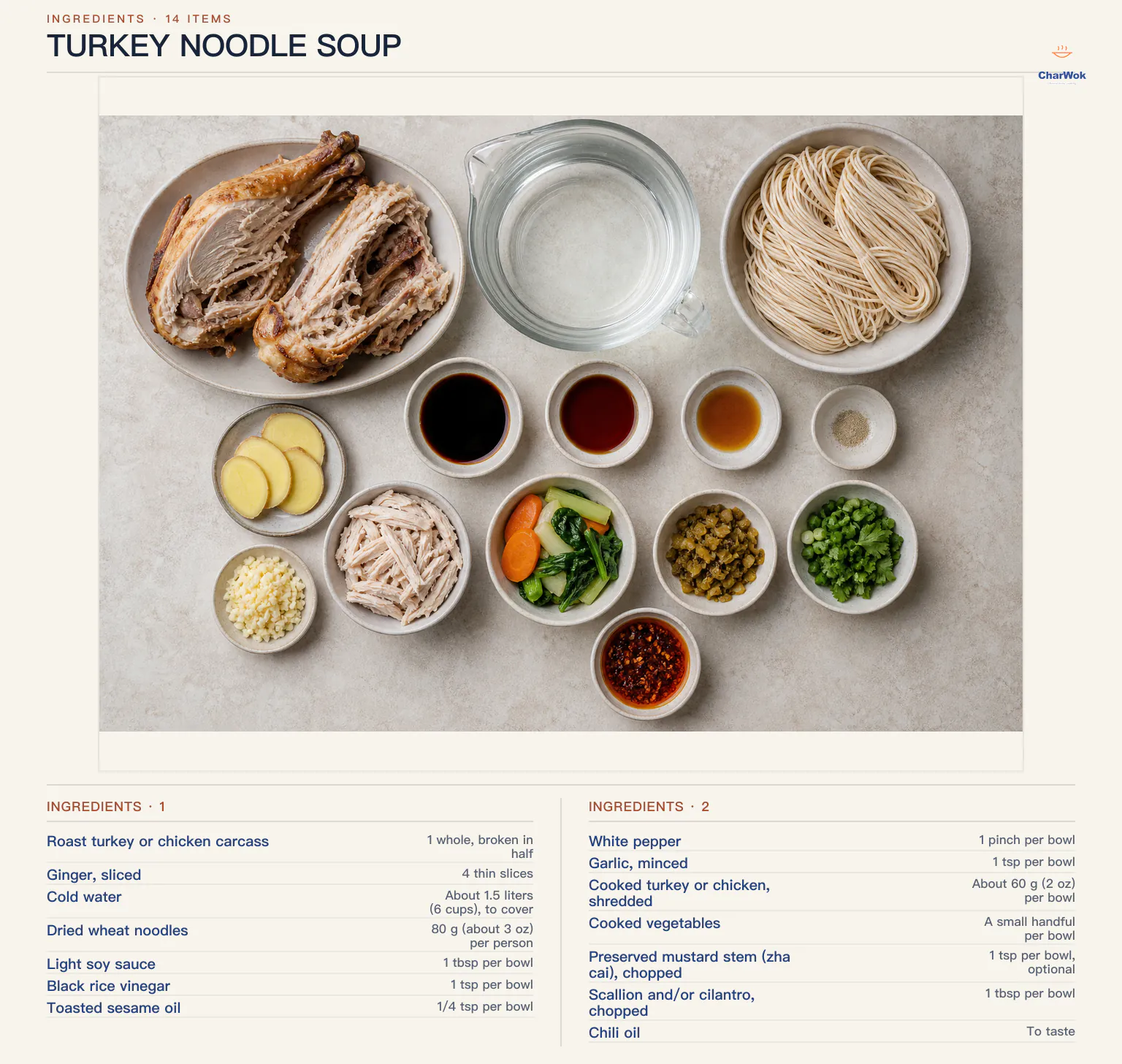
Quantities below are a starting point for four bowls. The seasonings are per bowl because that is where the tuning happens; add a little more soy or vinegar to taste after you pour the broth in.
| Ingredient | Amount | Notes / substitute |
|---|---|---|
| Roast turkey or chicken carcass | 1 whole, broken in half | Include any leftover skin and loose bones; a chicken carcass gives about 4 bowls, turkey 6 to 8 |
| Ginger, sliced | 4 thin slices | Cuts the meaty richness; do not skip, it is what makes the broth read as Chinese |
| Cold water | About 1.5 liters (6 cups), to cover | Start cold so protein and impurities rise as a foam you can skim |
| Dried wheat noodles | 80 g (about 3 oz) per person | Rice noodles or glass noodles also work; fresh noodles about 100 g per person |
| Light soy sauce | 1 tbsp per bowl | For salt and umami; see my notes on light vs dark soy sauce |
| Black rice vinegar | 1 tsp per bowl | Soft, malty acidity; a little black rice vinegar goes a long way, add more to taste |
| Toasted sesame oil | 1/4 tsp per bowl | Aroma only; more is not better |
| White pepper | 1 pinch per bowl | Or a pinch of ground Sichuan pepper for a numbing tingle |
| Garlic, minced | 1 tsp per bowl | Added raw; the hot broth cooks it. Use a microplane so it disperses |
| Cooked turkey or chicken, shredded | About 60 g (2 oz) per bowl | Dark meat is better than breast here, it stays moist |
| Cooked vegetables | A small handful per bowl | Roasted carrots, brussels sprouts, green beans, asparagus, parsnips all work |
| Preserved mustard stem (zha cai), chopped | 1 tsp per bowl, optional | Salty, crunchy, fermented; pickled radish or a spoon of kimchi are good substitutes |
| Scallion and/or cilantro, chopped | 1 tbsp per bowl | Added raw at the end for fresh bite |
| Chili oil | To taste | A drizzle of chili oil on top changes the whole bowl |
Method
- Pick the carcass clean first. Before it goes anywhere near a pot, pull off any usable meat you want as topping and set it aside. Once it is in the water, that meat turns stringy and gray and you will not want to eat it. This is the step people skip and then regret.
- Cover with cold water and ginger, then bring to a boil. Put the broken-up carcass, the skin, the loose bones, and the ginger slices into a pot and add just enough cold water to cover, about 1.5 liters. Cold start matters: as the water heats, proteins coagulate and rise as foam, which you can skim. A hot start traps them in the liquid and clouds the broth.
- Skim, then drop to the gentlest simmer. When it reaches a full boil, a pale foam will collect on the surface. Skim it off. Then lower the heat until you see only the occasional bubble break, cover, and leave it for 30 minutes. A rolling boil emulsifies fat into the liquid and gives you a cloudy, greasy result; a simmer keeps the broth clean and light.
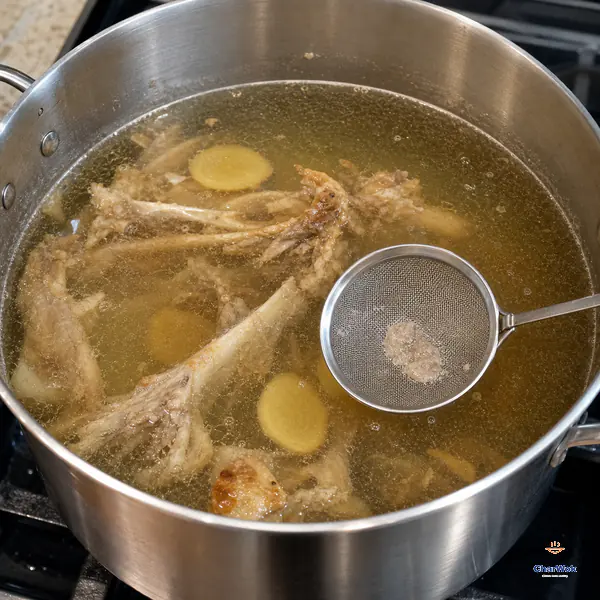
After the cold-start broth reaches a boil, remove the pale protein foam, then lower the heat until only an occasional bubble breaks. Cover and maintain that gentlest simmer for 30 minutes so the broth stays clear instead of emulsifying into a cloudy greasy stock.
- Strain and discard the solids. Pour the broth through a fine sieve into a clean pot. The bones, skin, and ginger have given what they have; do not try to wring more out of them. Taste it. It will be mild and slightly savory, which is what you want, because the bowl seasonings do the heavy lifting. Do not add salt here.
- Start the noodles five minutes before you serve. Bring a large separate pot of water to a full boil, add the noodles, and cook to the time on the package. For dried wheat noodles that is usually 3 to 4 minutes; taste one a minute early. You want them tender but still with a little resistance, because they will keep softening in the hot broth.
- Build each bowl from the bottom. While the noodles cook, put the seasonings directly into each serving bowl: 1 tbsp light soy sauce, 1 tsp black rice vinegar, 1/4 tsp sesame oil, a pinch of white pepper, and 1 tsp minced garlic. Do this for every bowl. The garlic will look raw and sharp; trust that the near-boiling broth fixes that.
- Pour the broth, then add the drained noodles. Have the broth at a full simmer. Ladle about 250 ml (1 cup) into each bowl, straight over the seasonings, and give them no more than a stir to disperse. Add the drained noodles on top. Pouring broth over the seasonings, rather than stirring them in afterward, blooms the sesame oil and tames the raw garlic in one move.
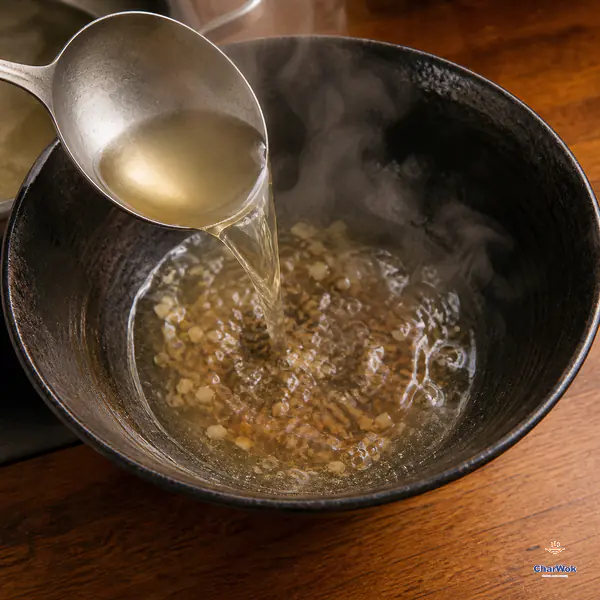
Put the soy sauce, black vinegar, sesame oil, white pepper and minced garlic into every serving bowl first. Pour near-boiling clear broth directly over them and stir only to disperse; the heat blooms the sesame aroma and softens the raw garlic before noodles and toppings go in.
- Top and finish. Lay the shredded meat and the warm vegetables over the noodles. Scatter on the zha cai, scallion, and cilantro. Finish with a drizzle of chili oil. Serve immediately, while the broth is still hot enough to warm the toppings through.
When the bowl goes wrong
The broth tastes thin and watery. Almost always because too much water was used. Cover the carcass, do not drown it. If you are already past that point, the fix is to boil the strained broth hard for a few minutes to reduce it by a quarter, then re-taste. A longer simmer will not help a roast carcass; it just pulls fat and murk.
The broth is cloudy and greasy. You boiled it too hard, or you did not skim. Next time, keep it at a whisper-simmer. This time, let it rest off the heat for ten minutes so the fat rises, spoon the fat off, and pass it through a paper-towel-lined sieve.
The noodles are gummy and the broth is thick. You cooked the noodles in the broth. This is the single most common failure and the easiest to avoid: separate pot, generous water, drain well. There is no rescuing a bowl once the starch is in.
The bowl tastes flat even though the broth is good. The seasonings are off. The most likely culprit is not enough acid. Add another half teaspoon of black rice vinegar and taste again. Vinegar is what makes a clean broth taste alive rather than just salty.
The toppings are cold in the middle. They went in straight from the fridge. Thirty minutes on the counter before serving fixes this. You can also warm the meat briefly in a ladle of hot broth before sliding it onto the noodles.
Ways to take it further
This is a template, not a fixed recipe. A few directions I have taken it:
Hot and sour. Add a second teaspoon of black rice vinegar and a bigger drizzle of chili oil, plus a pinch more white pepper. You are heading toward hot and sour noodles territory, and the richer the roast broth, the better it carries that punch.
Tomato and egg. If you have a few tomatoes going soft, sweat them in a little oil until they collapse, add a ladle of broth, and pour that over the seasonings instead of plain broth. It becomes a cousin of tomato egg noodle soup, brighter and a little sweet.
Beef it up. The same technique works with a leftover roast beef bone or a few oxtail pieces, and it scales toward a lanzhou-style beef noodle soup if you add a star anise and a cinnamon stick to the simmer.
Add a wonton. Drop a few pork wontons into the noodle water for the last two minutes and serve them on top. Now you have something close to wonton noodle soup, with the turkey broth as the base.
What to serve alongside
This is a one-bowl meal on its own, but it sits well next to something crunchy or something pickled. A small plate of overnight pickled vegetables cuts the richness. If you want bread, a piece of scallion bread torn and dipped into the broth is a small luxury.
Storage and reheating
Keep the strained broth, the cooked noodles, and the toppings in three separate containers in the fridge. The broth will hold for three days and freezes well for two months; the noodles go mushy after a day, so cook those fresh each time you serve. To reheat, bring the broth back to a full simmer, boil noodles to order, and rebuild the bowl. Do not store assembled bowls, the noodles drink the broth and turn to paste overnight.
If you are cooking for a crowd after a holiday meal, this is one of the recipes I tuck into my festive season lineup precisely because it scales and reheats so cleanly. You can make the broth the day before, chill it, lift the solidified fat off the top, and you are ten minutes from serving the next day.
A note on the bird
Turkey and chicken are interchangeable here, and in practice a roast chicken carcass makes a slightly better broth because the flavor is more concentrated for its size. Either way, the richer the roast, the better the soup. A plain salted bird is fine; a bird that was brined, dry-brined, or rubbed with five-spice will give you a broth with more depth, and a hint of those seasonings will carry through into the bowl. If you have leftover cooked chicken from another dish, the scallion oil chicken or any of the Chinese chicken recipes by cooking method on this site, you can strip the meat and drop it on top in exactly the same way.
Frequently asked questions
Can I make the broth in a pressure cooker? Yes. Twenty minutes at high pressure with a natural release gives you a slightly cloudier but more deeply flavored broth in less time. Skim after straining.
Do I have to use wheat noodles? No. Rice noodles and glass noodles both work; rice noodles suit a lighter bowl, glass noodles add bounce and soak up the seasonings. Adjust the cook time to whatever the package says.
Can I skip the ginger? I would not. A few thin slices do a lot of quiet work balancing the fatty richness of a roast carcass. Without it the broth reads as plain poultry stock rather than a Chinese-style soup.
Is white pepper or Sichuan pepper better here? White pepper gives a clean, warming heat that suits a clear broth. Ground Sichuan pepper adds a citrusy, tingling note; use it if you like that numbing edge and are already finishing with chili oil.
What if I do not have zha cai? Leave it out, or swap in a teaspoon of finely chopped pickled radish or kimchi. It is there for a salty, crunchy counterpoint, not as a dealbreaker.
One carcass, four bowls, about half an hour of mostly unattended simmering. Cook the broth gently, cook the noodles somewhere else, and season each bowl on its own. Get those three things right and the rest takes care of itself.