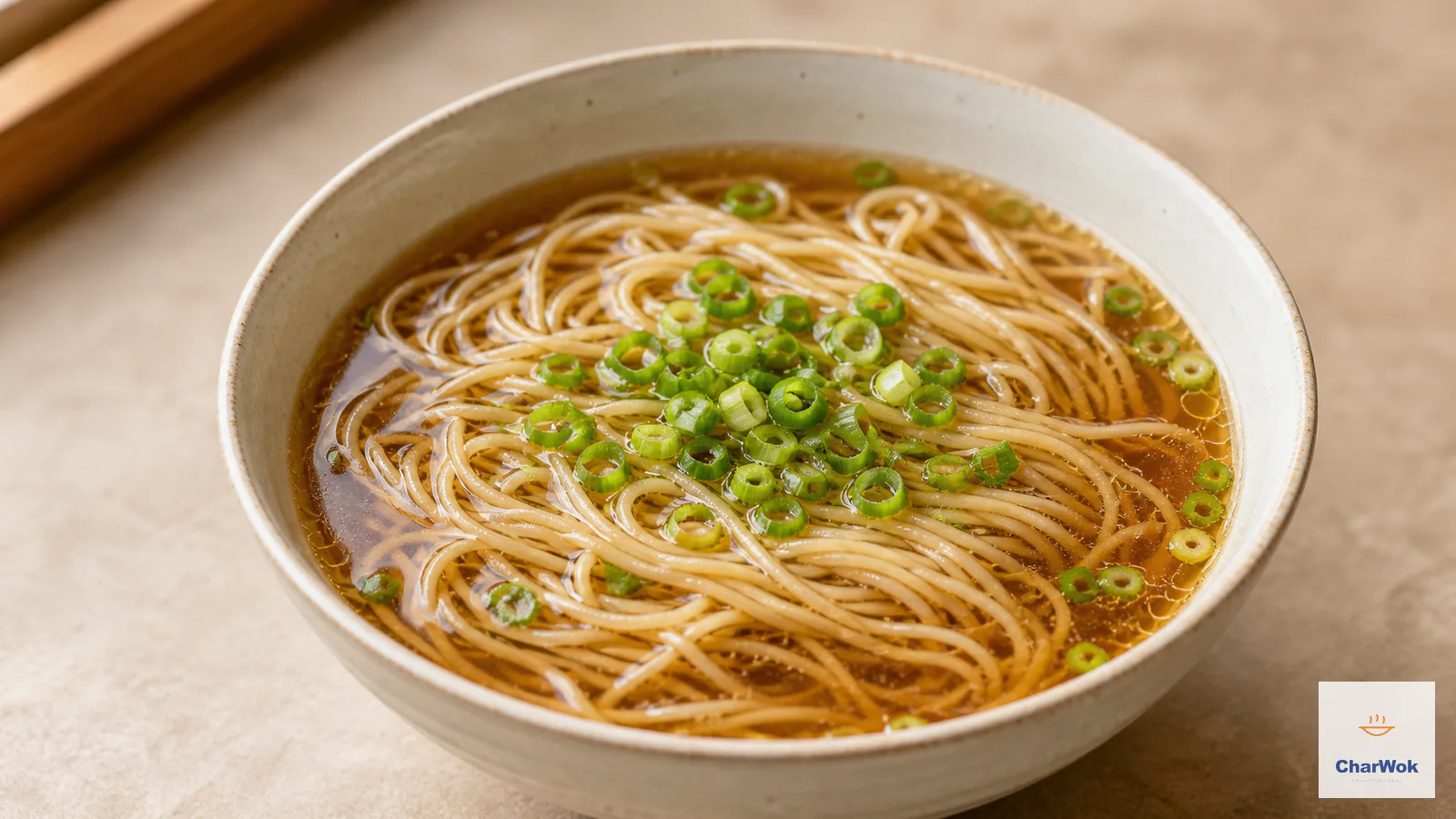
A bowl of Yang Chun Mian is just noodles, broth, scallions, and a film of fat catching the light on the surface. That is the whole dish. Which is exactly why it is hard to make well: there is nowhere to hide. If the broth is dull, or the noodles are overcooked, or you skimped on the fat, the bowl tells on you immediately. I have served this to guests who expected something grand and watched their faces fall at the first sip, then climb back up once the soup actually hit their tongue. The trick is that the seasoning never goes in the pot. It goes in the empty serving bowl, raw, and the boiling stock cooks it on contact.
This is the breakfast and late-night food of Shanghai and the wider Jiangnan region, the Yangtze delta lowlands around the city. Yang Chun Mian literally means "bright spring noodles," a name that old Shanghai tea houses used for a clean, unadorned bowl. Street vendors sold it cheap, and the convention was that nothing topped it except scallions. If you wanted meat, you paid extra and it stopped being Yang Chun Mian. The discipline of the dish is the point. Pile on sliced char siu or a soft egg and you have a perfectly good noodle soup, but you have left the category.
The seasoning goes in the bowl, not the pot. Keep about 1 tablespoon light soy plus 1 teaspoon dark soy and 1 teaspoon fat per serving, with roughly 350 ml (1½ cups) of stock per bowl. Pull the noodles 30 seconds before you think they are done, because the hot broth keeps cooking them.
What kind of noodles to use
The traditional noodle is a thin round wheat noodle made of nothing but flour, water, and salt. No egg, no alkali. The point of using such a plain noodle is that you taste the wheat itself, which is the whole reason a clear broth exists around it. If you can find fresh Shanghai-style thin noodles at a Chinese grocer, buy them. A portion is roughly 140 g (5 oz) fresh or 85 g (3 oz) dried.
If you cannot, the best supermarket fallback is a thin dried Japanese-style wheat noodle (somen is too thin and dissolves; a thin udon or a Chinese dried xi mian works). Dried spaghetti is the wrong choice, it is too hard and too gluten-forward, but I will admit I have used capellini in a real emergency and it was acceptable. Avoid alkaline noodles and egg noodles here, the Cantonese yellow chew that makes them great in other dishes fights against the delicate wheat character this bowl is built around. If you want to go all the way, make your own noodles; a simple flour-and-water dough rolled thin is exactly what this dish wants.
The broth, and why yours is probably too salty
The single most common mistake I see is using a good, full-flavored stock and then adding the full amount of soy sauce on top of it. The result is a bowl you can barely finish. The soy mixture in the bottom of the bowl is already a strong seasoning. Your stock needs to be on the bland side, ideally unsalted, so that when the two combine they land in the middle.
My default is unsalted homemade chicken stock. A simple vegetable stock or a light beef stock works too. If you are honest with yourself about a Tuesday night, the mushroom seasoning powder sold in any Asian grocery, dissolved in boiling water, makes a broth that is shockingly close to a long-simmered one. Canned low-sodium broth is fine if you taste it first and cut it with water if it is already aggressive. Plain hot water with lard and soy is the austere old-school version, and I will defend it. It is thinner, yes, but on a cold morning it has a purity that stock muddies.
Ingredients
Ingredients at a glance
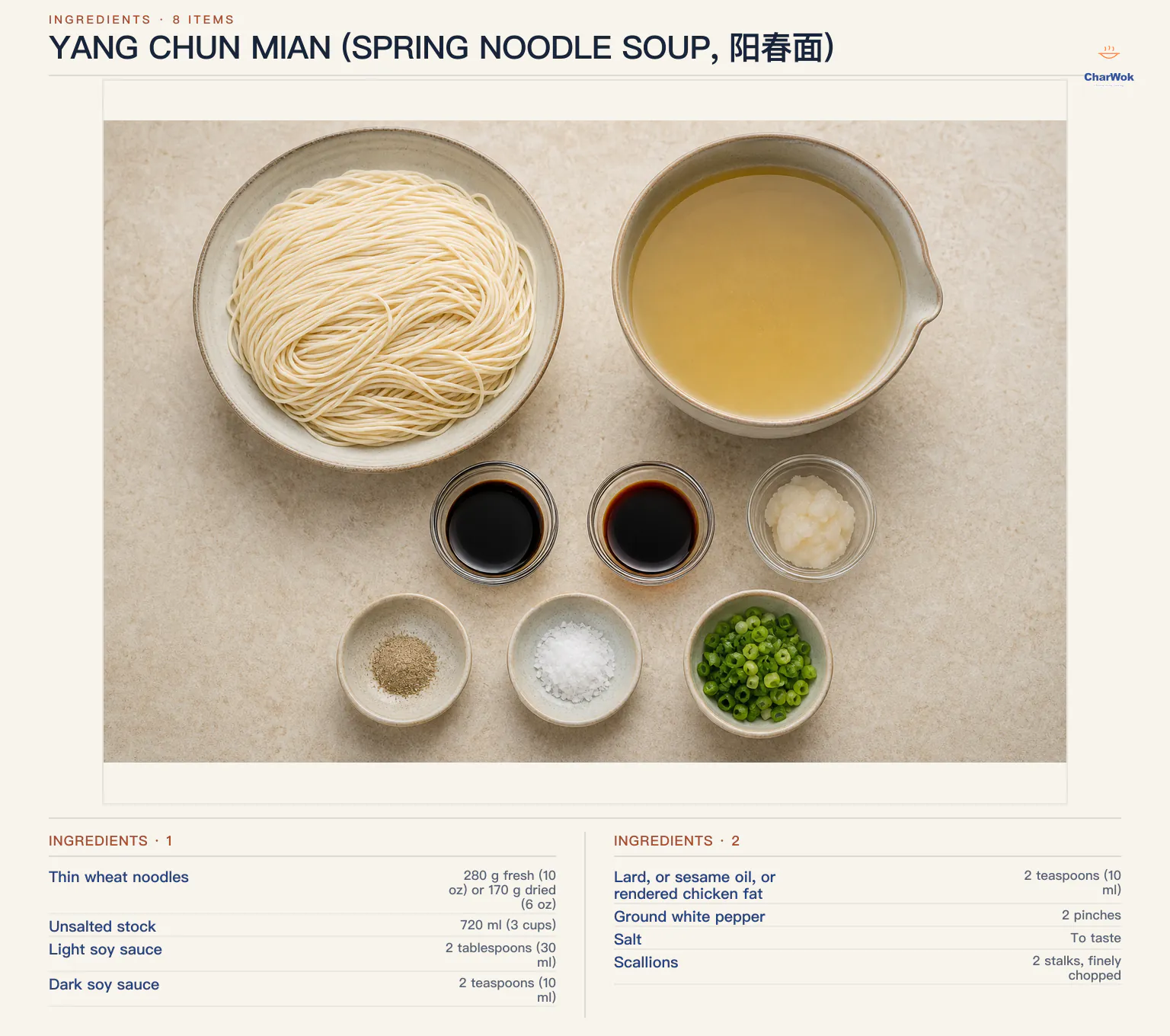
| Ingredient | Amount (for 2 servings) | Notes / substitute |
|---|---|---|
| Thin wheat noodles | 280 g fresh (10 oz) or 170 g dried (6 oz) | Shanghai-style xi mian; avoid egg or alkaline noodles |
| Unsalted stock | 720 ml (3 cups) | Chicken preferred; mushroom powder + hot water works |
| Light soy sauce | 2 tablespoons (30 ml) | The salty base; do not use all-purpose Japanese soy, it is too sweet |
| Dark soy sauce | 2 teaspoons (10 ml) | For color; omit if you only have light, the bowl will be paler |
| Lard, or sesame oil, or rendered chicken fat | 2 teaspoons (10 ml) | Lard is traditional and best; see note below |
| Ground white pepper | 2 pinches | White, not black; black pepper reads wrong here |
| Salt | To taste | Only if the assembled soup is genuinely flat |
| Scallions | 2 stalks, finely chopped | Green and pale parts; reserve a little for garnish |
About the fat: lard is the original, and if you have ever had a Yang Chun Mian that made you close your eyes on the first sip, lard was almost certainly why. It coats the broth in a way sesame oil cannot, and it carries the scallion aroma into your nose. Sesame oil is the everyday substitute and the one most home cooks will actually use; toasted sesame oil, the dark kind sold in Chinese groceries, is what you want. Rendered chicken fat (schmaltz) is an excellent third option that leans savory rather than sweet. Do not mix them. Pick one.
Method
- Get two pots going at once. Bring a large pot of water to a full, rolling boil for the noodles. In a second pot or saucepan, heat your stock until it is genuinely hot, not warm, a bare simmer is not enough. The reason for two pots is that noodles cooked in stock turn the stock cloudy and starchy, which ruins the clean look that defines this dish.
- Build the seasoning in the serving bowls. While the pots heat, put half the light soy, half the dark soy, half the fat, and a pinch of white pepper into each of two serving bowls. Add about a third of the chopped scallions to each. Do not stir. The raw seasonings are meant to hit the hot stock and bloom in the bowl.
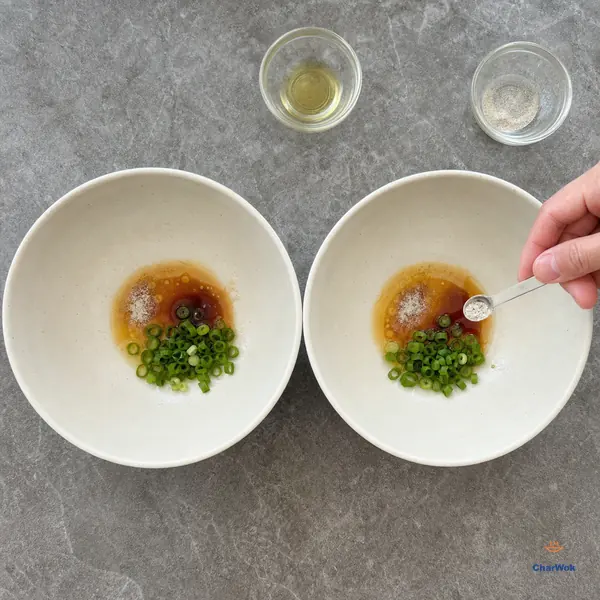
Before the noodles or stock arrive, divide the light soy, dark soy, sesame oil or rendered fat, white pepper and some scallions evenly between two serving bowls. Leave the seasonings distinct and unstirred so the hot stock can bloom them in the bowl.
- Drop the noodles and watch them. Salt the noodle water lightly, add the noodles, and stir once so they do not clump. Dried thin noodles take 3 to 4 minutes, fresh take 1 to 2. Taste one 30 seconds before the package time. It should be tender on the outside with a faint firm core, because the hot broth will finish cooking it. If you cook it to fully soft in the pot, it will be mush by the time you sit down.
- Ladle the hot stock into the bowls. Pour about 350 ml (1½ cups) of the hot stock directly onto the seasonings in each bowl. Stir briefly to dissolve the soy and melt the fat. Taste. Add salt only if it is flat; usually the soy is enough.
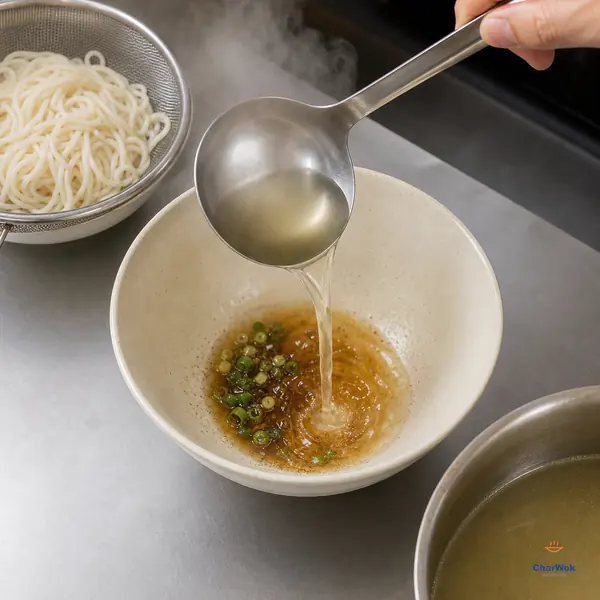
Ladle genuinely hot, clear stock directly onto the bowl seasonings and stir briefly to dissolve them and melt the fat. Taste the broth before adding salt, then slide in the separately cooked, thoroughly drained noodles so no cloudy starchy water follows them.
- Add the noodles and serve at once. Lift the noodles out, let the cooking water drain fully, and lay them in the broth. Scatter the reserved scallions on top. Serve immediately. This is not a dish that waits.
When things go wrong
The soup is too salty. You either used a salted stock or doubled the soy. Fix it by adding a splash of plain hot water to the bowl and stirring. Next time, taste your stock before you commit to the full soy amount.
The noodles are mushy. You boiled them all the way to soft. Pull them earlier, or use a colder stock to slow the carryover cooking. Fresh noodles are unforgiving here, they go from done to dead in about 20 seconds.
The broth looks cloudy. You either cooked the noodles in the stock or poured the starchy noodle water into the bowl. Use the two-pot method and drain the noodles well. A clear broth is non-negotiable for this dish; if you want a heartier cloudy soup, you are really after Chinese chicken noodle soup, which is a different and equally good destination.
The bowl tastes flat even with full seasoning. Your stock is too thin. Mushroom powder or a small piece of dried shrimp steeped in the hot stock will round it out. A tiny pinch of sugar (a quarter teaspoon for the whole pot) also lifts soy-heavy broths without making them sweet.
Variations, within reason
You can push this dish in a few directions without losing the spirit. A spoonful of chili oil floated on top turns it toward a Sichuan-inflected breakfast bowl, closer in mood to Chongqing xiao mian than to Shanghai, but welcome on a cold morning. A soft-poached egg cracked into the hot broth adds richness that the austere original lacks. A few leaves of bok choy, blanched in the noodle water for the last 20 seconds, give it color and crunch.
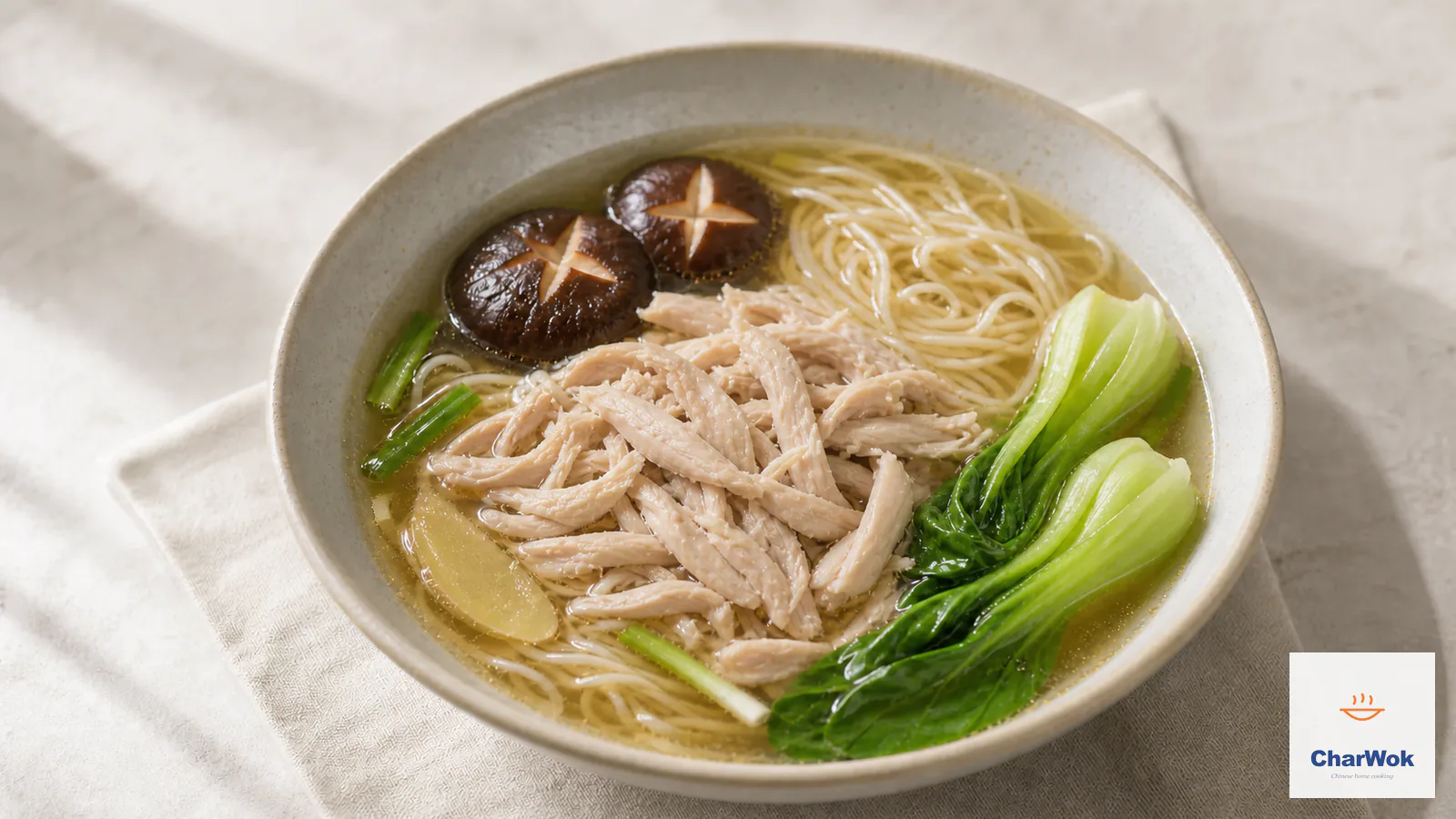
Where I draw the line is turning it into a topped noodle dish. Once you add sliced five-spice chicken, shredded scallion oil chicken, or a ladle of the spicy Sichuan meat sauce that defines dan dan noodles, you have made a different noodle soup. That is fine, it is just no longer Yang Chun Mian, and the broth-to-seasoning balance I gave you will be wrong for it. For a richer topped bowl you would be better off starting from wonton noodle soup or tomato egg noodle soup as your base.
What to serve alongside
Because the bowl itself is so plain, it leans on sides. A cold smashed cucumber salad gives the acid and crunch the soup lacks. A pair of tea eggs steeped the night before adds protein and a savory bite. If you have leftover roast meat, slice it thin and lay it across the noodles, but know you have crossed into topped-soup territory. For a full breakfast spread, this is also the natural partner to plain flower rolls or steamed buns torn and dipped into the broth.
Storage and reheating
This is a cook-and-eat dish, not a make-ahead one. Noodles left in broth turn to paste within an hour. If you must prep ahead, store the seasoned stock and the cooked noodles separately and combine them only when you reheat, bringing the stock back to a full boil first. Dried noodles keep indefinitely; fresh noodles last a couple of days in the fridge. The seasoned broth base (soy, fat, pepper) can be mixed in a jar and held at room temperature for a week.
Frequently asked questions
Can I use water instead of stock? Yes. The original peasant version was hot water, lard, soy, and scallions. It is thinner and cleaner than a stock version, and on a winter morning I sometimes prefer it. Use lard, not sesame oil, if you go this route; lard gives the broth body that water alone cannot.
Why put the soy sauce in the bowl and not the pot? Because the brief contact with the nearly-boiling stock cooks the raw edge off the soy and releases its aroma, while keeping the seasoning precise per bowl. If you season the whole pot, you lose control and any leftover stock is already salty.
What is the difference between Yang Chun Mian and other plain noodle soups? Yang Chun Mian is specifically the Jiangnan style with a soy-seasoned clear broth and a wheat noodle, no toppings. Hot and sour noodle soup adds vinegar and chili. Scallion oil noodles are dry-mixed, not soupy. The plainness is what makes Yang Chun Mian itself.
Is it really done in under 10 minutes? With dried noodles and pre-heated stock, yes. Fresh noodles cut the cook time to under 5 minutes. The longest step is waiting for the noodle water to boil.
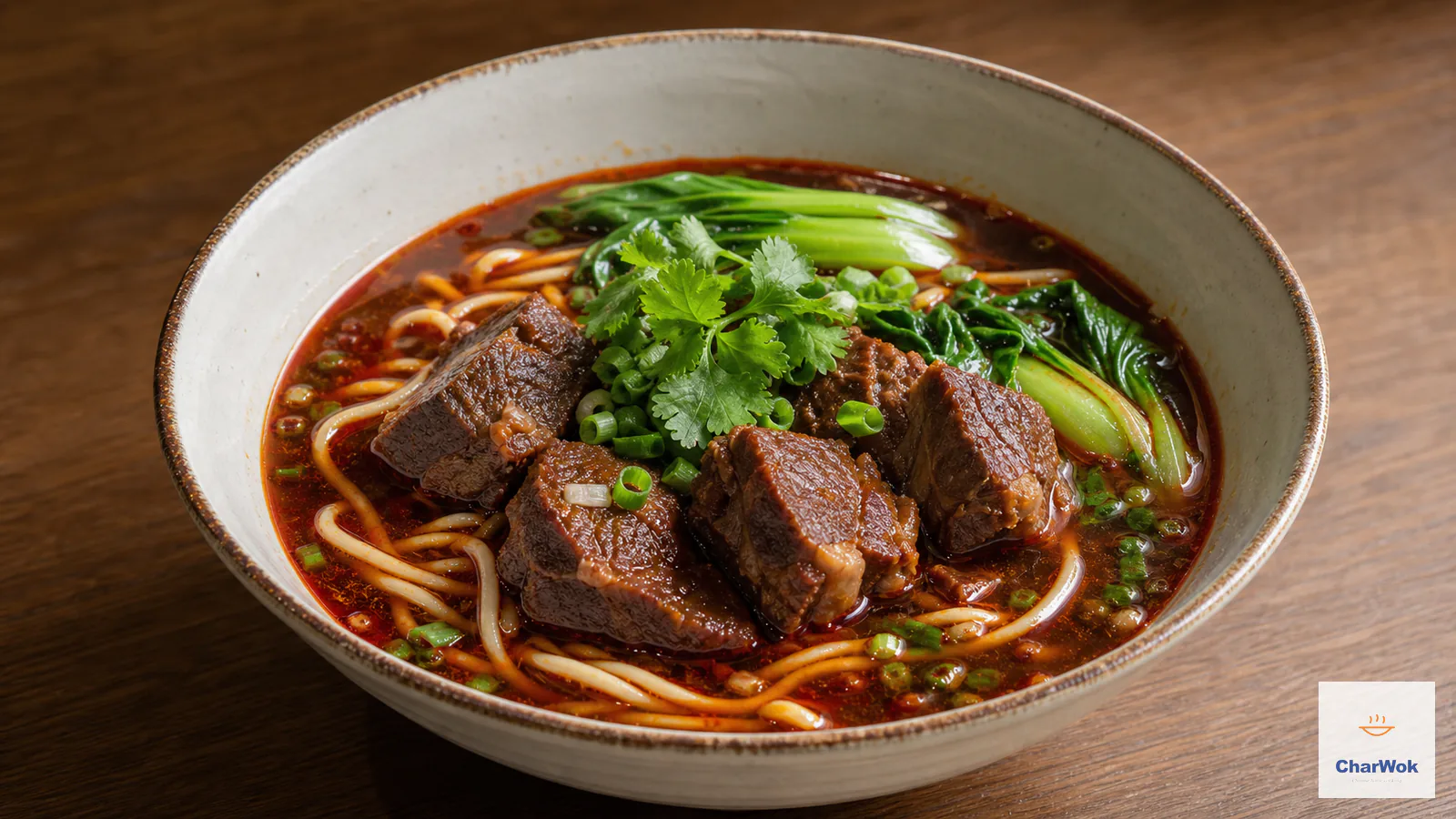
Looking for more bowls in this family? See the full collection of classic Chinese noodle recipes, or for something heartier, the braised spicy beef noodle soup that is the opposite end of the noodle-soup spectrum.