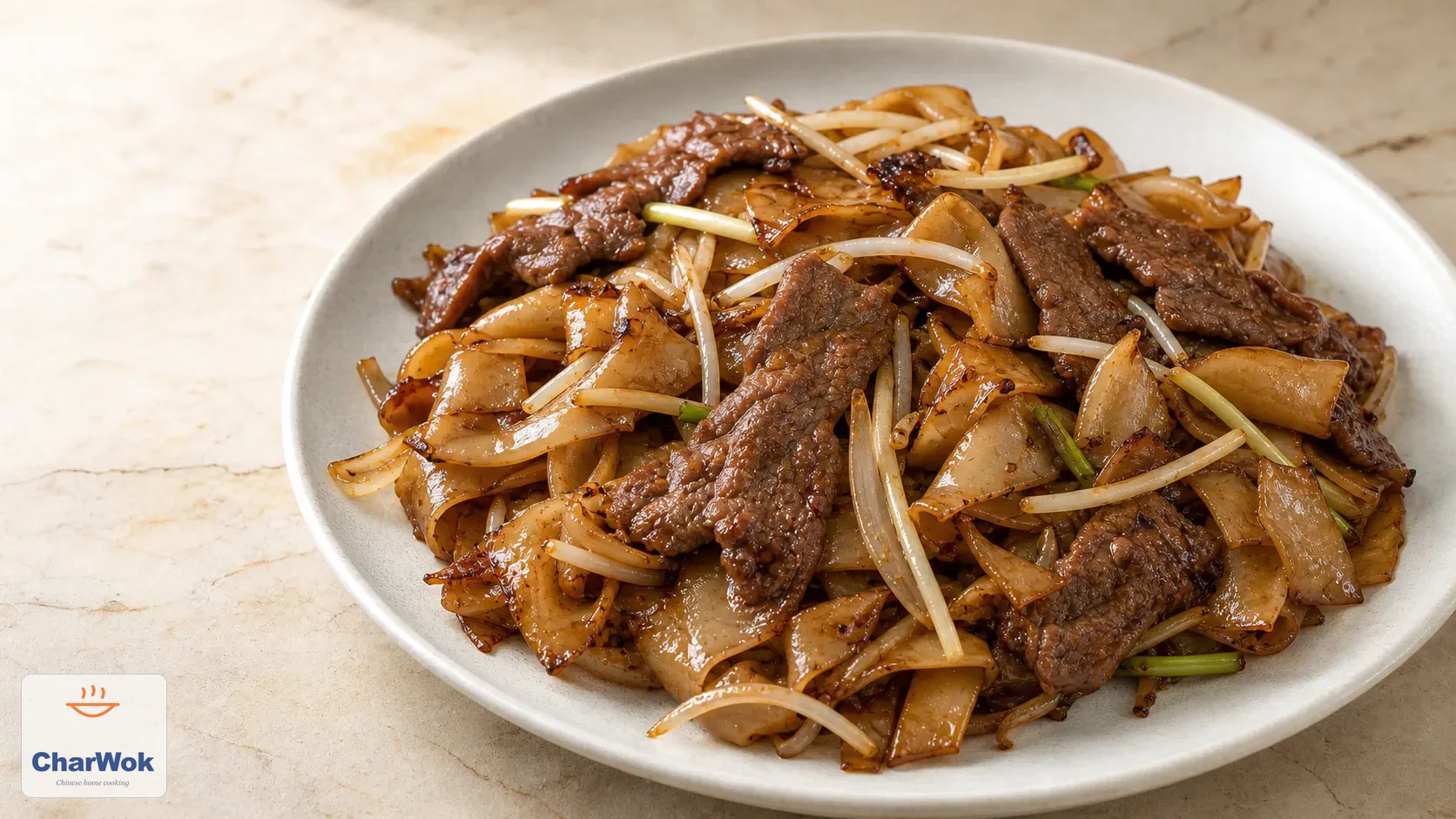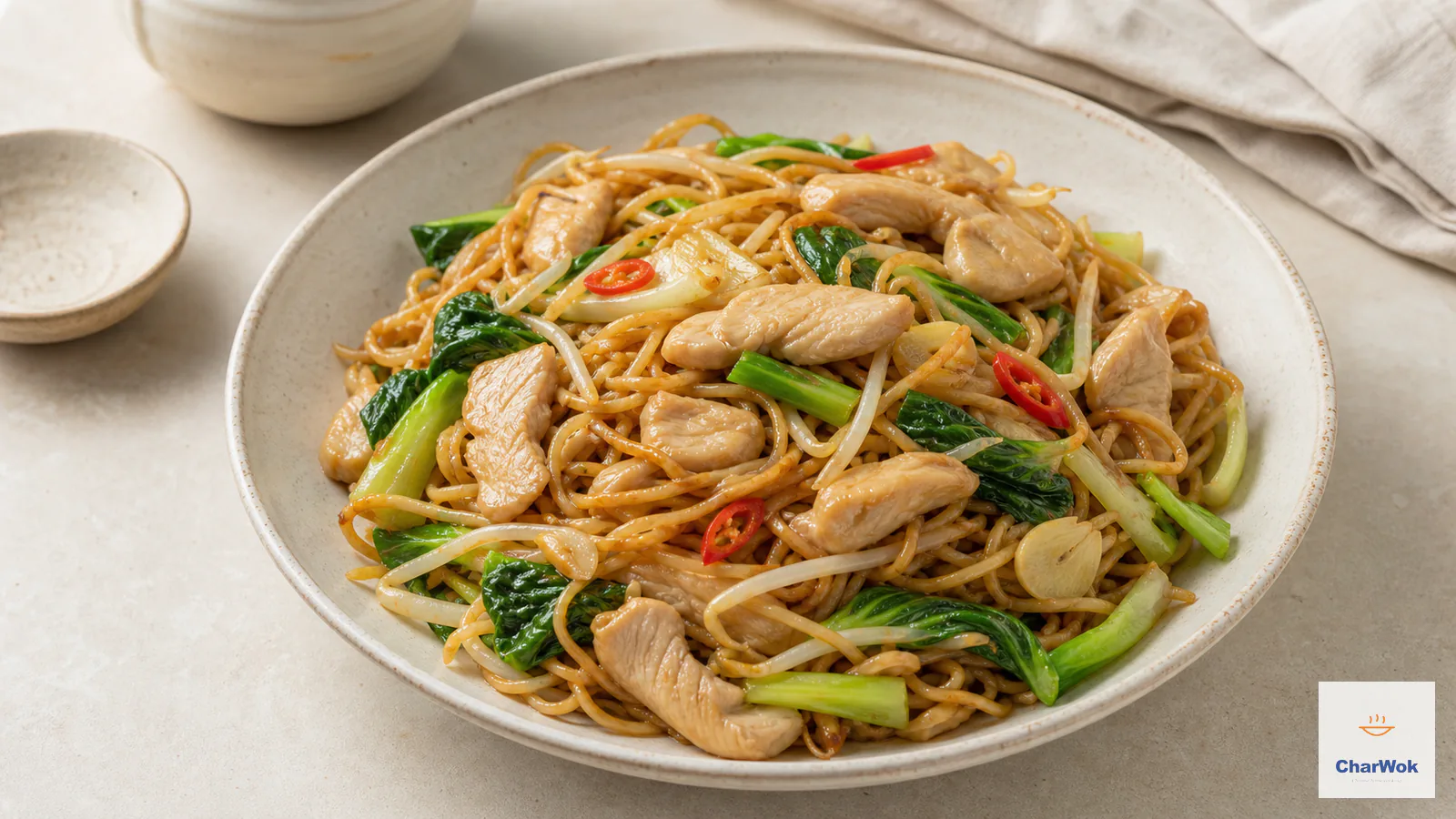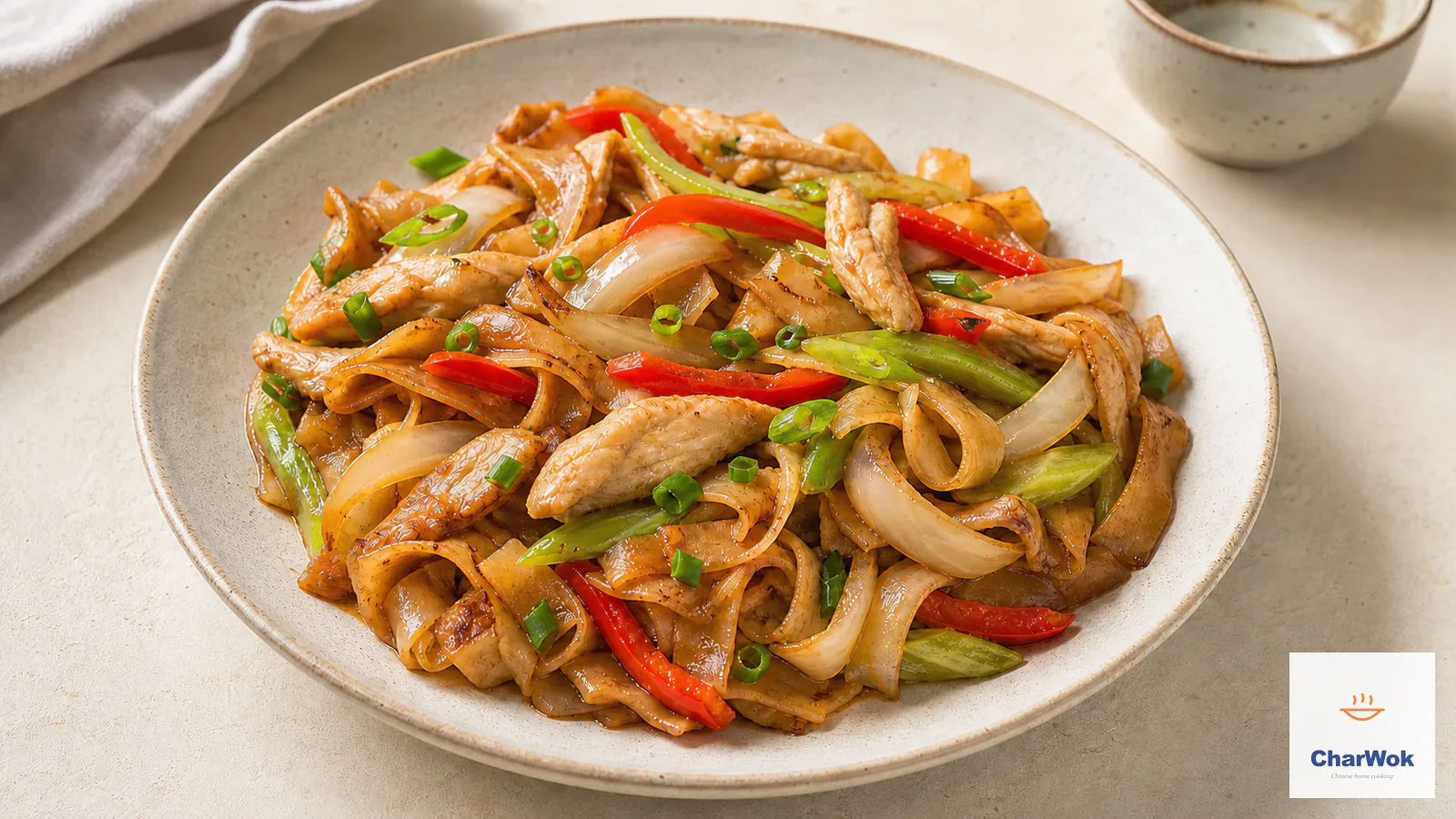
Order chicken chow fun once and you remember the noodles more than the chicken. Wide, flat rice ribbons gone amber from soy, faintly charred at the edges, slippery enough that the whole plate slides onto your chopsticks in a single strand. That is the dish: a study in how much flavor a plain starch can carry when you let it brown instead of steam.
The home cook's version usually disappoints for two reasons. The noodles come out of the pan pale and damp, or the chicken breast comes out dry and stringy. Both are fixable, and neither requires a restaurant burner. The fixes are mechanical: velvet the chicken before it touches the wok, heat the pan hard enough that the noodles sear instead of sweat, and keep every bit of liquid out of the pan except the soy. Do that and you will beat the takeout box.
At a glance: This is a dry-fried noodle dish, not a saucy one. Plan on 400g fresh wide rice noodles and 180g chicken breast for two people. Total pan time is about five minutes, so everything is prepped and within arm's reach before the wok goes on the flame. Hot wok, cold oil, soy at the very end.
What chicken chow fun actually is
The dish comes out of the Cantonese stir-fry tradition, a sibling of beef chow fun, the smoky, dry-fried rice noodle plate that defines Guangzhou dai pai dong cooking. Substitute chicken for beef and you get a lighter, family-friendlier version that shows up in dim sum parlors and takeout shops alike. The noodles are ho fun, also called shahe fen after the Shahe district in Guangzhou where they were first made: flat rice noodles around a centimeter and a half wide, supple and a little bouncy, with no gluten to lean on. They cook by absorbing seasoning and by browning where they touch the metal.
Do not confuse them with the thin vermicelli used in chow mei fun or the spiced curried strands in Singapore mei fun. Those are a different texture and a different technique. Here you want width, because width is what lets the noodle pick up char on its surface while staying chewy inside. The egg-fried rice noodle family shares the same starch, but chow fun is the version built around pure soy and the smoky edge of the wok.
The ingredients
Ingredients at a glance
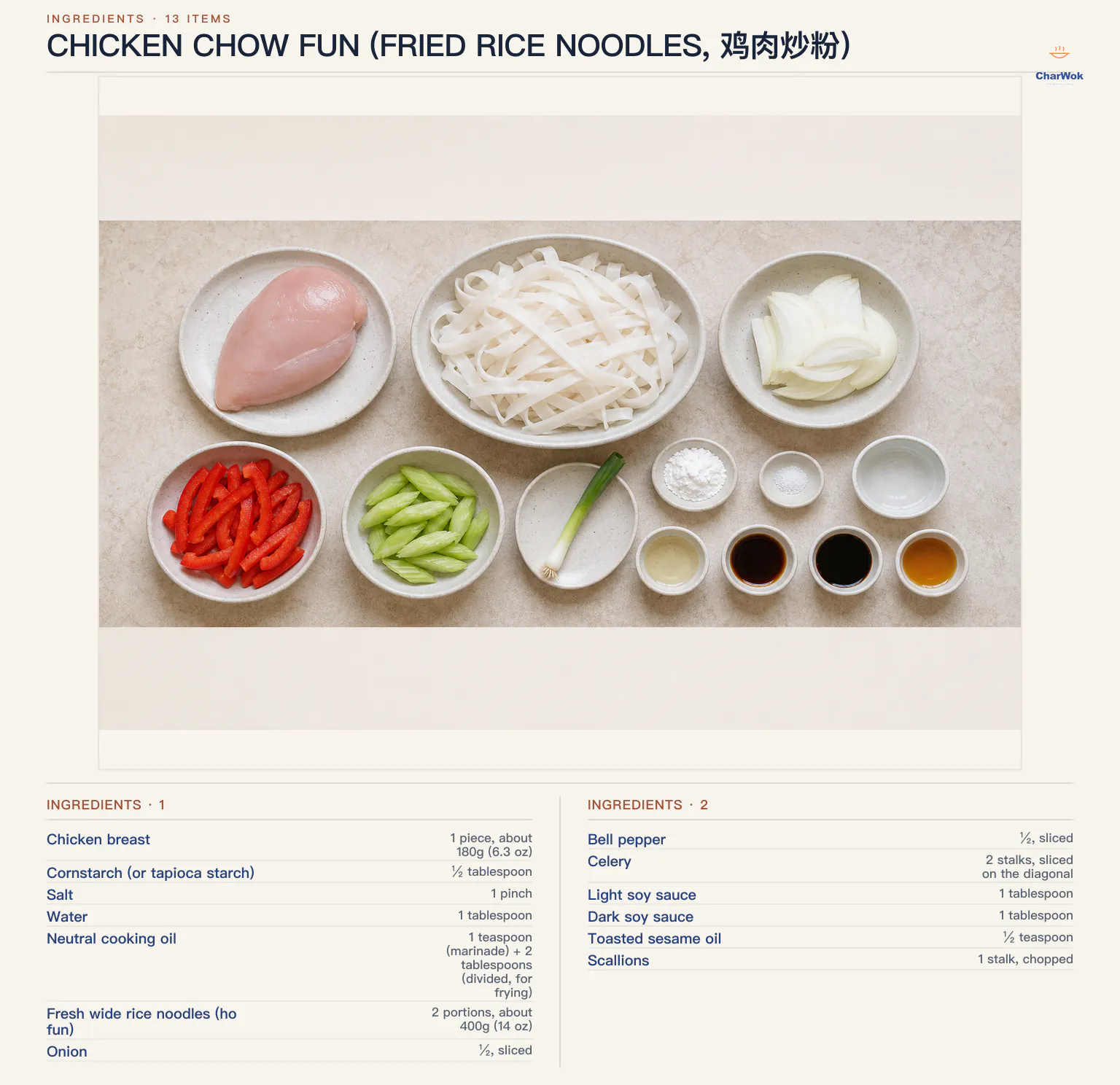
| Ingredient | Amount | Notes / substitute |
|---|---|---|
| Chicken breast | 1 piece, about 180g (6.3 oz) | Thigh works and is more forgiving; slice thin either way |
| Cornstarch (or tapioca starch) | ½ tablespoon | The velvet coating; arrowroot also works |
| Salt | 1 pinch | |
| Water | 1 tablespoon | For the marinade slurry |
| Neutral cooking oil | 1 teaspoon (marinade) + 2 tablespoons (divided, for frying) | Peanut, canola, or grapeseed; nothing with a strong flavor |
| Fresh wide rice noodles (ho fun) | 2 portions, about 400g (14 oz) | Dried rice sticks or vacuum-packed udon work; see notes below |
| Onion | ½, sliced | Yellow or white; shallot in a pinch |
| Bell pepper | ½, sliced | Or bean sprouts, snow peas, scallion greens, napa cabbage |
| Celery | 2 stalks, sliced on the diagonal | Adds a clean snap; bok choy stems sub well |
| Light soy sauce | 1 tablespoon | Salt and seasoning; tamari for gluten-free |
| Dark soy sauce | 1 tablespoon | Color and body; the dish goes pale without it |
| Toasted sesame oil | ½ teaspoon | Finish only, never for frying |
| Scallions | 1 stalk, chopped | Garnish |
Choosing and loosening the noodles
Fresh ho fun come as a solid block from the chiller of any Asian market, the strands glued to each other by their own starch. Cold storage makes them brittle and stubborn. You cannot stir-fry a brick, so the first real step of the recipe is getting the strands apart without shredding them. There are three ways I have used, and one of them is clearly the best.
My preferred method: freeze the block, then defrost it overnight in the fridge. A freeze-thaw cycle changes the structure of the noodle just enough that the strands peel apart cleanly. I stumbled on this after a forgotten package spent a week in my freezer, and it has worked every time since. The second option is to slice the block into sections and dunk them in just-boiled water for about 30 seconds, which softens the bond, then rinse under cold water and drain hard. The third, weakest option is to let the block come to room temperature and pick it apart by hand. It works, but you will lose noodles to breakage.
If you can only find dried rice sticks, follow the package time and then subtract a minute. Rice noodles keep cooking from residual heat and pan time, so a noodle that seems slightly under-boiled will be perfect once it has been fried. Rinse them after draining to wash off surface starch, or the whole pan turns gummy. Vacuum-packed cooked udon, the kind sold in plastic pouches, is a respectable substitute and needs no prep.
Why this chicken stays tender
Breast meat has almost no fat and finishes cooking in seconds, which is why it turns to cardboard in most home stir-fries. Two steps keep it juicy, and skipping either one ruins the dish.
First, velvet it. Cut the breast across the grain into slices about 5 mm (a scant ¼ inch) thick. Mix the cornstarch, salt, and water into a thin slurry, add the chicken, and massage it with your hands until the liquid has disappeared into the meat. The starch forms a thin gel coat around each slice that holds moisture in during the sear, the same technique behind a clean chicken chop suey or a glossy chicken and mushroom stir-fry. Finish with a teaspoon of oil stirred through, which seals the coating and stops the slices from clumping when they hit the pan. Give it ten minutes.
Second, cook the chicken in two stages. Sear it alone until the surfaces turn opaque while the centres remain partially cooked, transfer it to a clean plate, then return it only after the noodles and vegetables are ready. On the final toss, check several of the thickest slices reach 74°C (165°F). This preserves tenderness without using colour or time as the safety test.
The stir-fry, step by step
Before you turn on the stove, line up the chicken, the noodles, and the vegetables on a tray within reach. From the moment the oil is hot, you will not have time to dig through the fridge. Have the soy sauces measured and the sesame oil ready. This is the part where a few minutes of mise en place saves the dish.
- Sear the chicken. Preheat a seasoned carbon-steel wok or stainless skillet over medium-high heat until a water drop skitters and evaporates quickly, then wipe it dry. Add 1 tablespoon of oil and cook when it shimmers at about 175 to 180°C (350 to 355°F), before it smokes. Add the chicken in one layer and sear until the surfaces turn opaque while the centres remain partially cooked. Transfer it to a clean plate; it must finish cooking later. With nonstick cookware, add oil before heating and follow the manufacturer's heat limit.
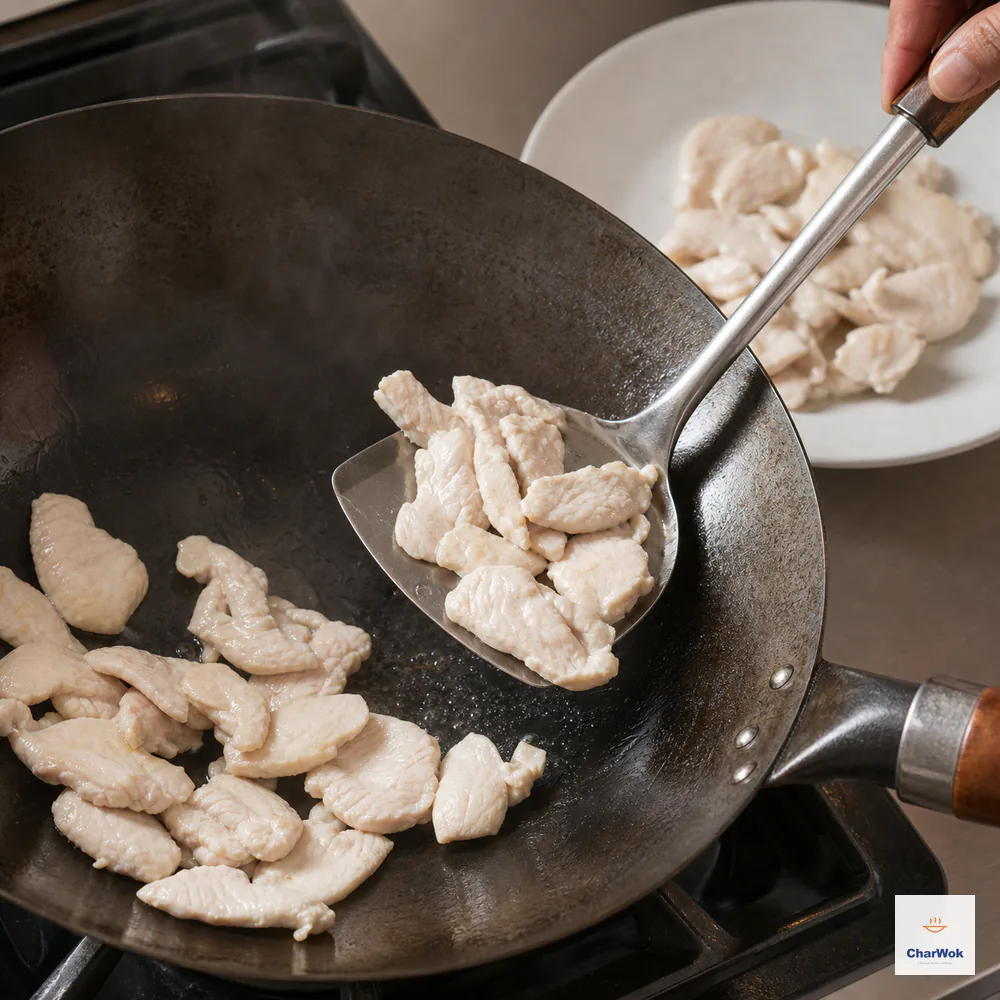
Sear the velveted chicken until the surfaces turn opaque while the centres remain partially cooked, then transfer it to a clean plate to finish later.
- Fry the noodles. Add the remaining tablespoon of oil to the wok. Drop in the loosened noodles and toss them, either by flipping the wok with two hands on the handle or by lifting and turning with chopsticks. The goal is heat and contact, not stirring. Let them sit against the metal long enough to take on a little color, then move them. Pull them off while they still have some bite. They will soften further when the soy hits.
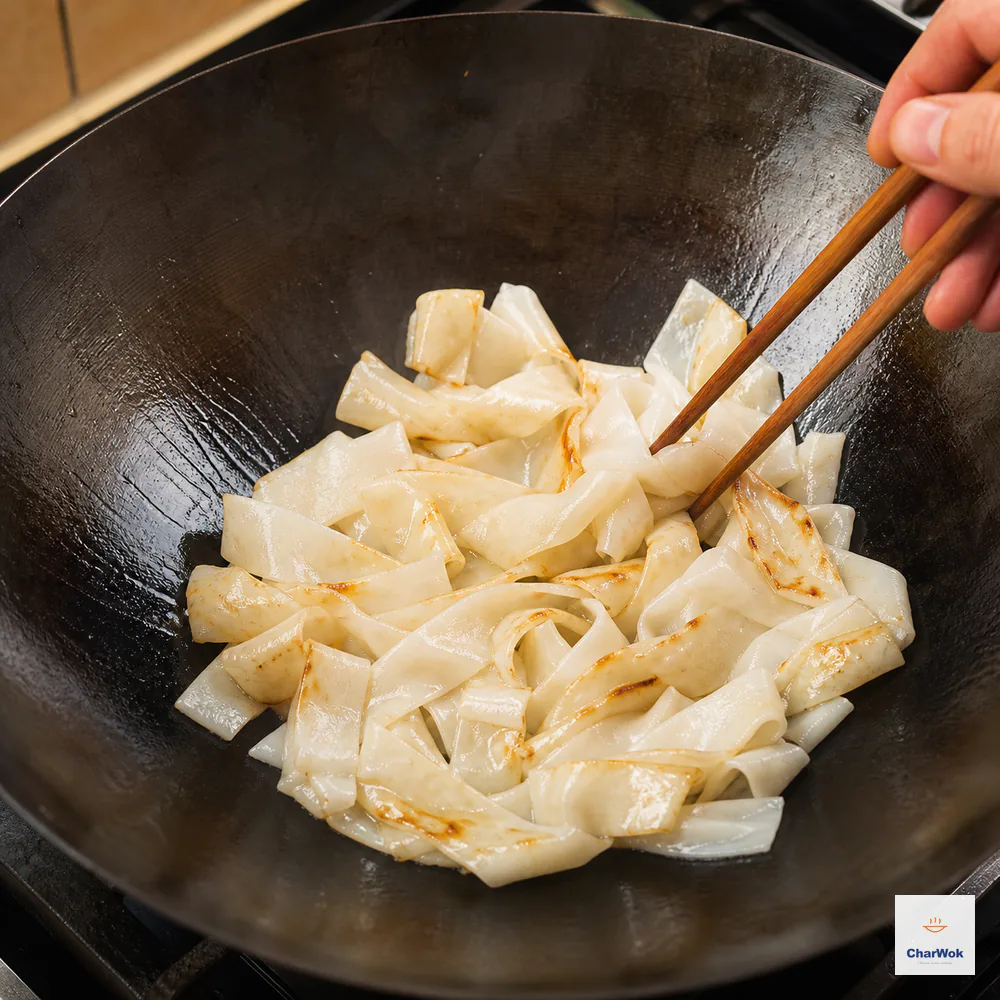
Lift and turn the loosened noodles gently, allowing brief contact with the hot metal until a few edges turn amber while the ribbons stay intact and firm.
- Add the vegetables. Once the noodles are heated through but still firm, push them up the side of the wok and add the onion, bell pepper, and celery to the hot center. Toss for about 30 seconds. You want the vegetables warmed and barely wilted, retaining their crunch, because limp celery is the death of this dish.
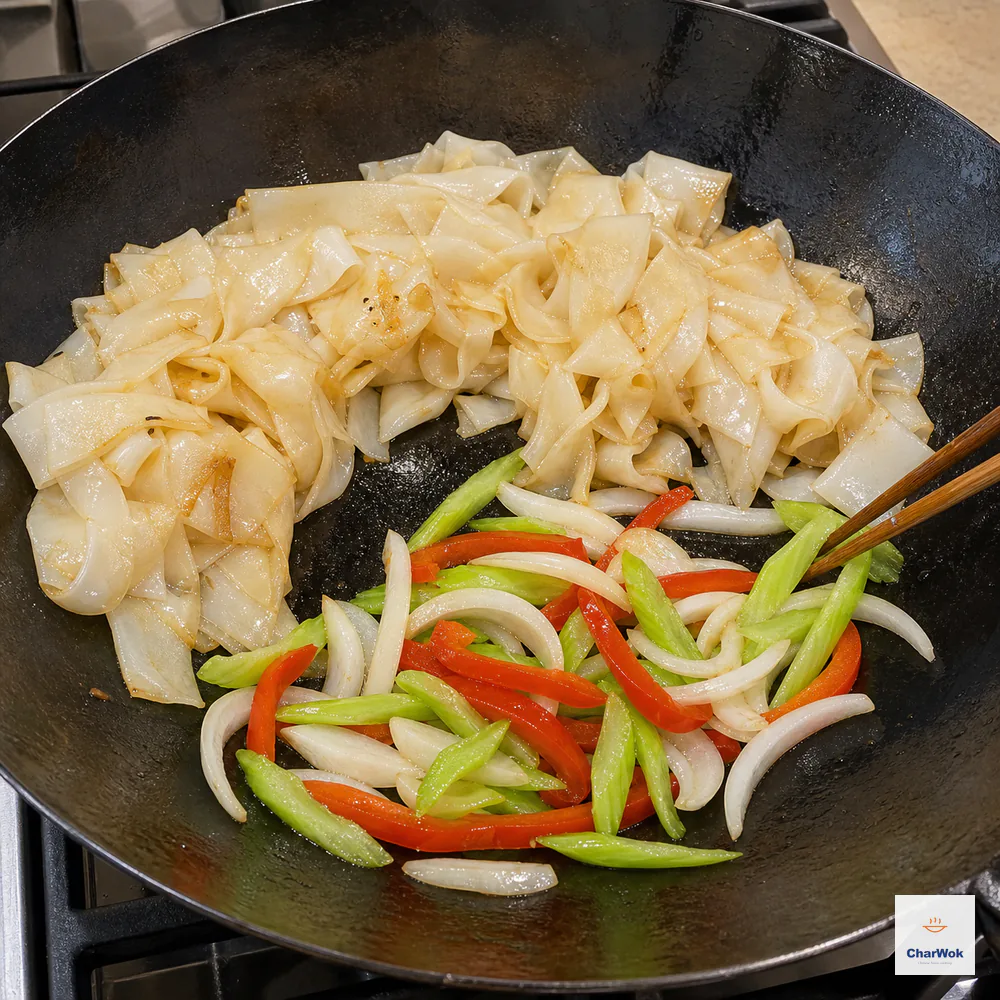
When the noodles are hot but still firm, keep them against the wok sides and toss the onion, red pepper, and celery in the center for only about 30 seconds.
- Return the chicken and season. Slide the chicken back in. Pour the light and dark soy sauces down the side of the wok, then add the sesame oil. Toss gently until several of the thickest chicken slices reach 74°C (165°F) on an instant-read thermometer; do not rely on colour or a fixed toss time. Lift rather than stir so the noodles stay intact.
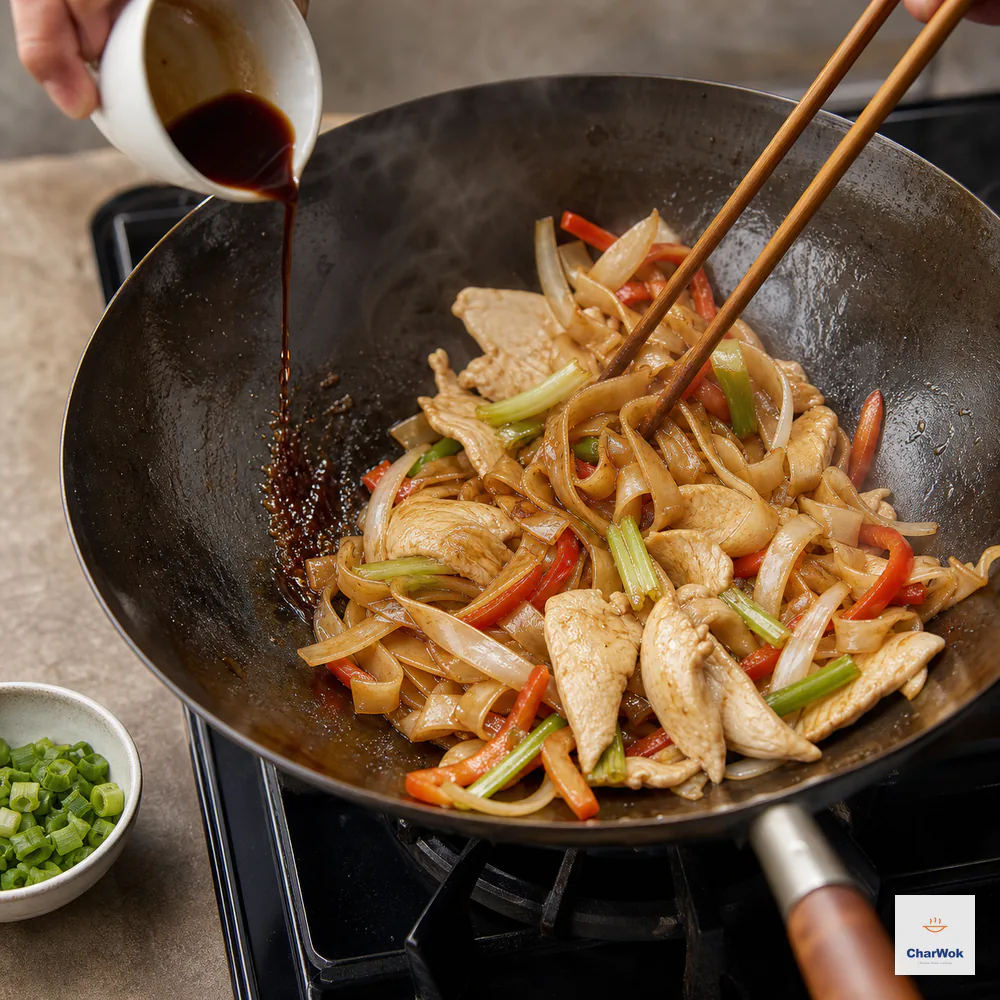
Return the chicken, add both soy sauces and sesame oil around the wok rim, and toss gently until several thick slices reach 74°C (165°F) before adding scallion.
- Finish and serve. Hit the pan with the chopped scallions, give one final toss, and plate immediately. This dish does not wait.
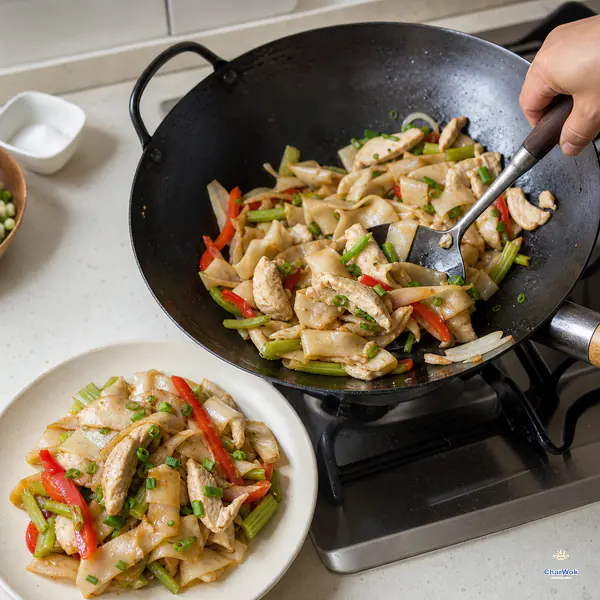
Add the scallions for one final toss, then move the dry, glossy chicken chow fun straight from the wok to the serving plate while the vegetables remain crisp.
Cooking and leftover safety: FoodSafety.gov lists 74°C (165°F) for poultry and reheated leftovers. Its leftover guidance says to refrigerate perishable food in shallow containers within 2 hours, or within 1 hour above 32°C (90°F). The U.S. Fire Administration advises turning off the burner if cooking oil starts to smoke.
When things go wrong
This is the section most recipes skip, and it is the one that decides whether your chow fun lands. Here are the failures I see most often, and what to do about each.
The noodles are pale and damp. The pan was not properly preheated, or it was crowded. Use a wide pan, cook only two portions, dry every ingredient, and let the noodles make brief contact with the hot metal between tosses. Visible smoke is not required; if the oil smokes, turn off the burner and let it cool.
The noodles stick and tear. Rice noodles have no gluten, so they split more readily than wheat noodles. Two answers: keep the pan hot so they release on their own, and favor chopsticks or wok-tossing over a spatula. Shoving a spatula through a noodle mass is how you end up with a pile of half-inch fragments. They taste fine. They look sad.
The chicken is dry. Either the coating was skipped, the slices were uneven, or the first sear ran too long. The first stage is only partial cooking; finish at the end and stop as soon as the thickest slices reach 74°C (165°F).
The dish is soggy and grey. You added water or some other liquid, or you used only light soy and the pan never browned. Chow fun is a dry-fried plate. The only moisture should be a thin film of soy, and the dark soy is what gives it that burnished amber look. A teaspoon of Shaoxing wine around the edge of the wok is fine for fragrance; a splash of broth is not.
Everything sticks to a non-stick pan. The hot-wok-cold-oil trick only works on bare metal. With non-stick, never heat the pan empty. Warm it on medium, add oil, and accept that you will not get the same char. A properly seasoned carbon-steel wok is the right tool here; a non-stick skillet is the compromise tool.
How to scale it
This recipe serves two, and that is the sweet spot for a home burner and a home wok. You can halve it cleanly for one. Do not double it. A domestic stove cannot push enough heat to fry four portions at once, and the moment you overload the pan, the noodles boil in their own steam and turn mushy. If you need to feed four, cook two batches back to back and keep the first warm, uncovered, in a low oven. Covering them traps steam and undoes everything you just did.
Variations, pairings, and swaps
The vegetable trio is a template, not a rule. Keep the onion for its sweetness and swap the other two for whatever is crisp and quick-cooking: bean sprouts, snow peas, scallion greens, napa cabbage, shiitake caps, or wood ear mushroom. Bean sprouts are the classic dim sum addition, and they go in for the last ten seconds so they do not wilt.
The protein swaps cleanly too. Thinly sliced beef shin or flank turns this into beef chow fun by another route, and small shrimp work if you drain them well. For a vegetarian version, scramble two eggs loosely the way you would for a quick tomato and egg stir-fry, or use pressed tofu pan-fried until firm. Smoked tofu, in particular, gives the dish a backnote that mimics the wok smoke a home burner cannot quite match.
For heat, offer toasted sesame oil at the table alongside your favorite chili oil, or a dab of Chinese mustard. Chow fun pairs well with a simple clear soup, a cold cucumber salad, or a plate of soy-sauce pan-fried noodles if you are feeding a crowd that wants both textures. If you want to round out a noodle-heavy spread, it sits comfortably next to a lo mein or a plate of kung pao chicken, and it is the easiest entry point in a collection of Chinese noodle recipes. Some cooks even fold leftover chow fun into the soft rolls of steamed rice noodle rolls the next morning, though that is a project for another day.
Storing and reheating
Chow fun is best immediately. Divide leftovers into shallow containers and refrigerate within 2 hours, or within 1 hour above 32°C (90°F); discard food left out longer. Use refrigerated leftovers within 3 to 4 days. Reheat only the portion needed, covered, until several spots reach 74°C (165°F). For best texture, halve the recipe rather than planning for leftovers.
Questions I get asked
A few common ones, answered briefly.
Can I use dried rice noodles instead of fresh? Yes. Boil them a minute shy of the package time, rinse well, and drain hard. Undercooking slightly is the safeguard, because they finish softening in the wok.
Do I need a wok to make this? No, but you need a pan with a wide base and tall sides that holds heat. A 30 cm (12 inch) cast-iron or carbon-steel skillet works. Non-stick is fine for learning, with the trade-off that you will not get much char.
Why are my noodles breaking into short pieces? Either the pan was not hot enough so the noodles stuck and tore, or you used a spatula instead of chopsticks. Lift and toss; do not scrape.
Is there a gluten-free version? Swap both soy sauces for tamari. The dish will look lighter since tamari lacks the caramel color of dark soy, but the flavor holds up. Rice noodles and cornstarch are already gluten-free.
Can I add a sauce or broth to make it wetter? You can, but you will no longer be making chow fun. This dish is defined by its dry, soy-glossed finish. Adding liquid makes rice noodles mushy and kills the texture. If you want a saucier noodle, choose a different dish rather than fighting this one.
The whole dish comes down to two judgments: heat at the start, and restraint at the end. Get the wok genuinely hot, velvet the chicken, and resist the urge to add liquid, and the noodles will reward you with the kind of smoky, soy-stained chew that makes this one of the best plates in Cantonese home cooking. The technique is unforgiving in the pan and forgiving everywhere else, which is exactly why it is worth learning to do right.