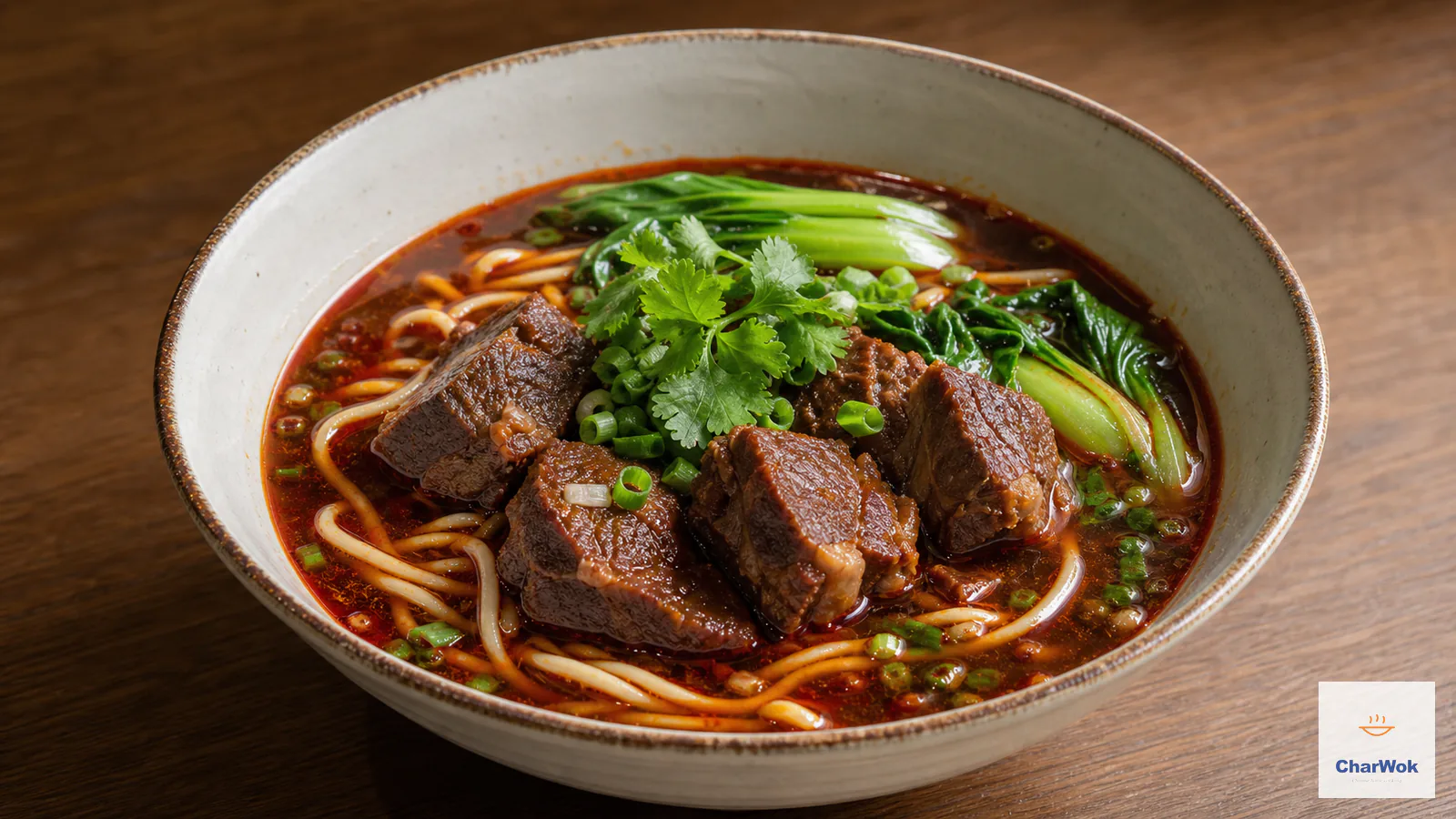
The first time I made Taiwanese beef noodle soup at home, the broth looked the part but tasted flat. Dark, reddish, aromatic while it cooked, then somehow thin in the bowl. I had done the obvious things: browned the beef, simmered it long, added the spices. What I had skipped was the one step that separates a bowl of beef-and-water from a bowl worth standing over, which is frying the chili bean paste in hot oil before any liquid goes in. That single move releases a smell that instantly says beef noodle shop, and without it you are, in effect, just boiling meat in seasoned water.
This is a dish where technique matters more than the ingredient list suggests. The list is long but forgiving; the procedure is short but unforgiving. Get the broth right and you can use dried supermarket noodles and still feel like you ordered well. Get it wrong and no garnish rescues it.
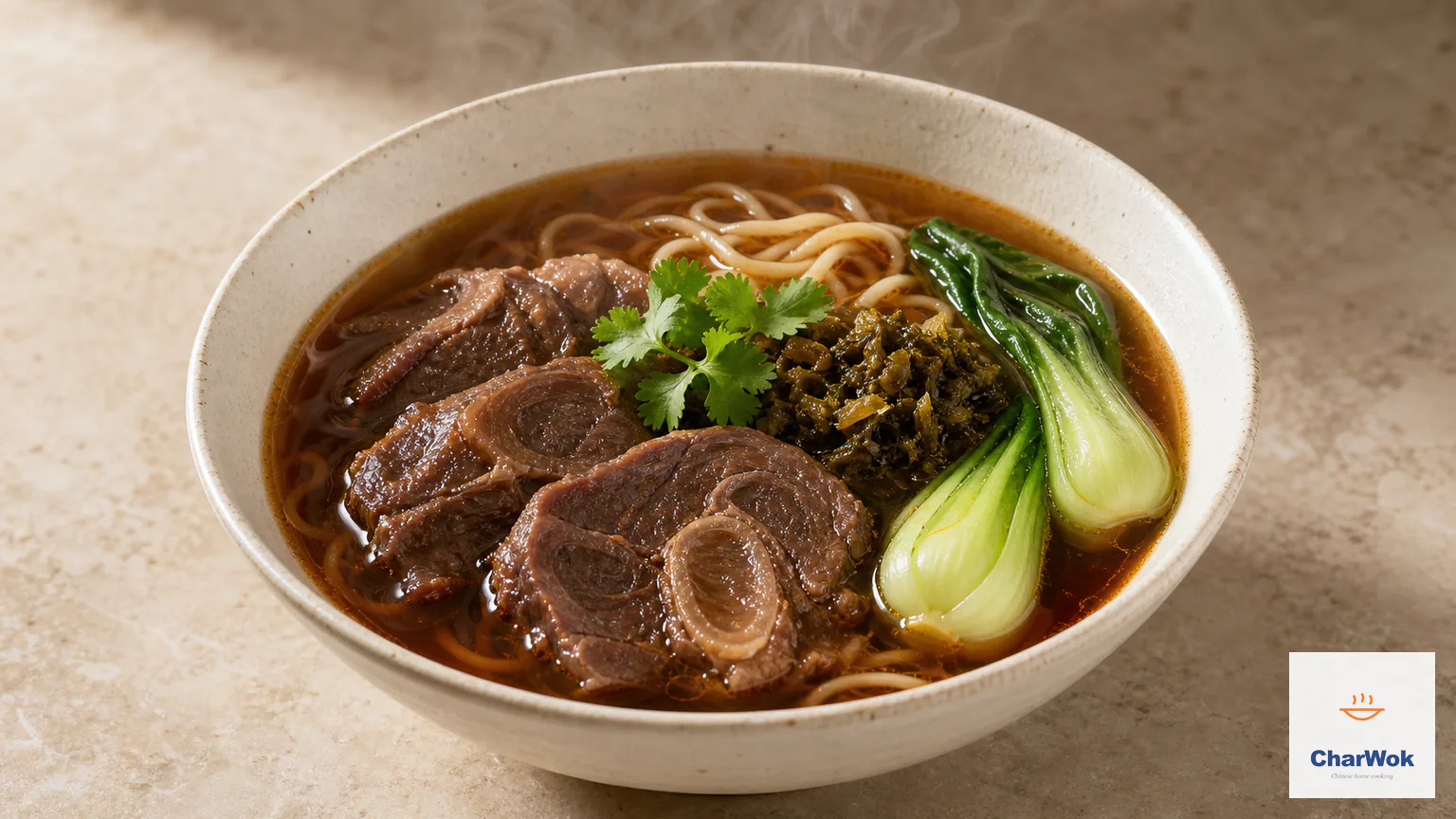
At a glance. Simmer 2 lb (900 g) of bone-in or collagen-rich beef in a broth built on 3 tablespoons of doubanjiang fried in oil, tomatoes, soy, and warm spices for roughly 1½ to 2 hours, until a fork slides through the meat with only slight resistance. Strain, slice, and serve over wheat noodles with blanched greens and fried pickled mustard greens. The make-or-break move is frying the paste, not the simmer time.
What this bowl is, and where it came from
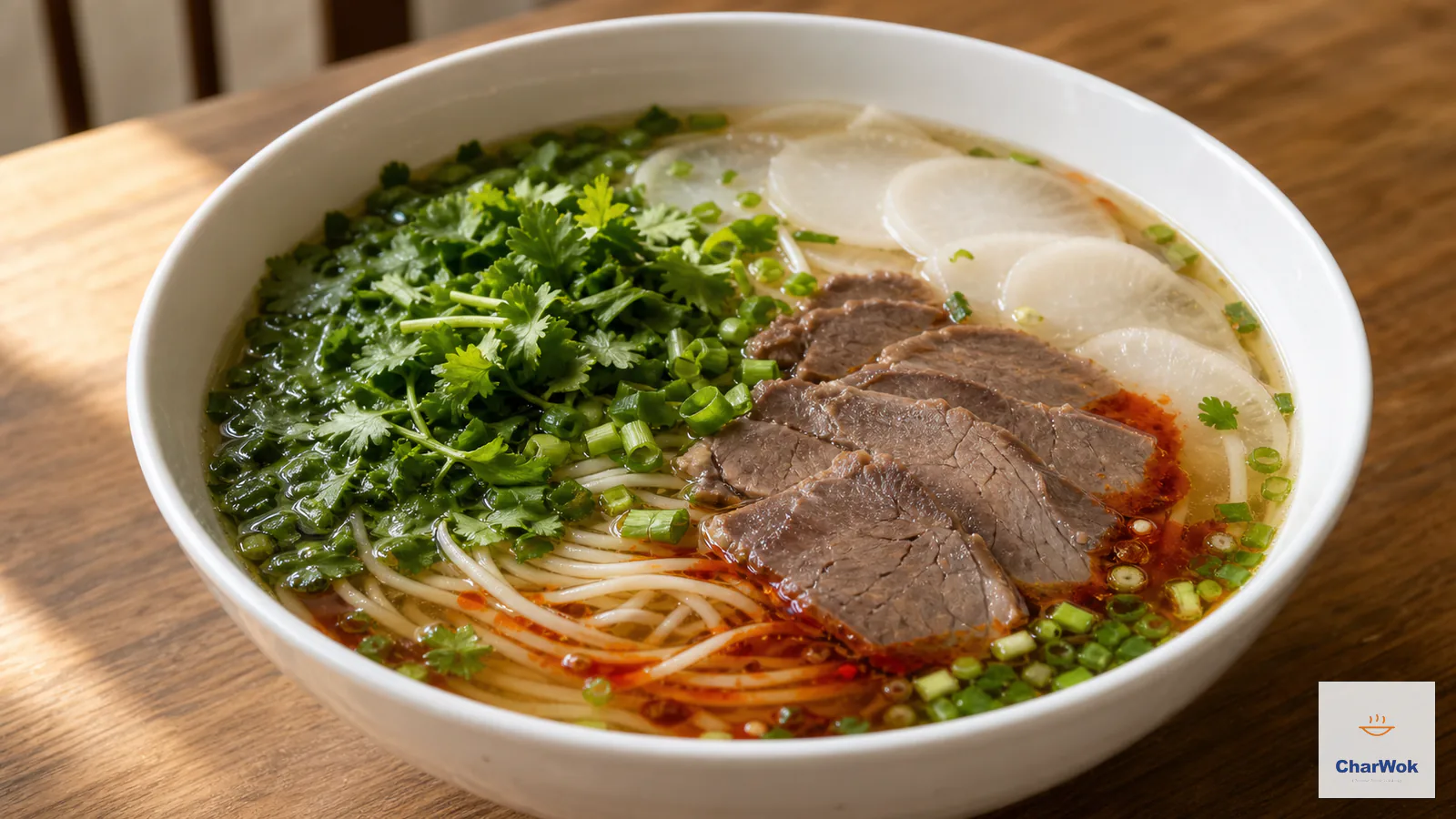
Hong shao niu rou mian, red-braised beef noodles, is the dish Taiwan treats like a national heirloom. Taipei holds an annual beef noodle festival to crown the best bowl in the city. The cooking is braising, not the clear, delicate Lan Zhou style that lives or dies by hand-pulled noodles and a crystal-clear consomme. (If you want to see how different those two schools are, my Lan Zhou beef noodle soup, home version walks through that one.)
The red-braised version traces back to Sichuan cooking, brought over by mainland veterans in the late 1940s and 1950s, then localised over decades. The Sichuan fingerprint is the doubanjiang and the Sichuan peppercorn; the Taiwanese fingerprint is tomato, a little sweetness, and the fried pickled greens on top. It is a hybrid, and a successful one. For another Sichuan-rooted beef dish with a very different texture, my Sichuan boiled beef (Shui Zhu Niu Rou) is the tender-slicing opposite end of the spectrum.
Ingredients, and what each one is doing
Ingredients at a glance
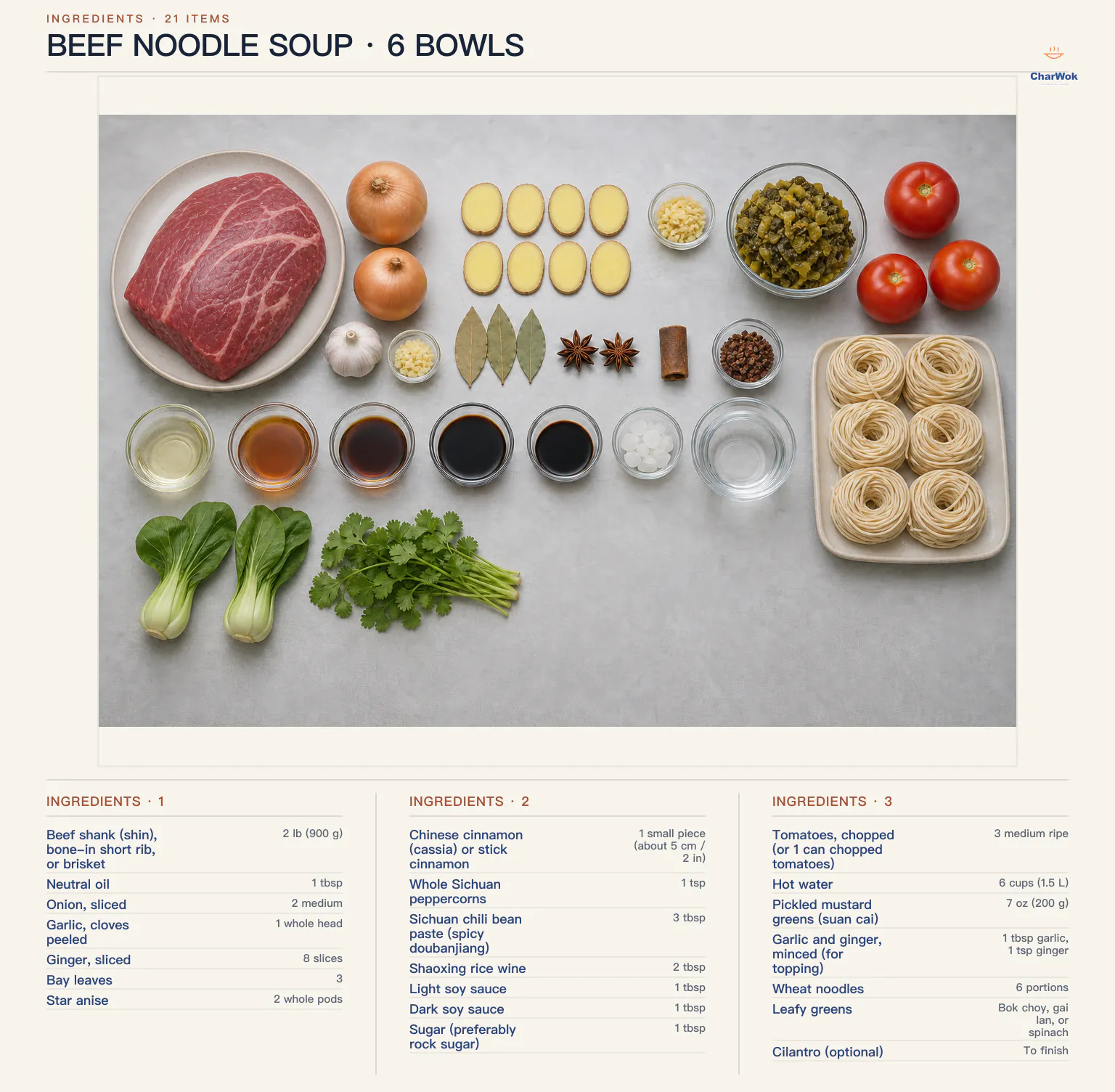
This is a broth engineered in layers. Each ingredient has a job, and knowing the job tells you what you can swap and what you cannot.
| Ingredient | Amount | Notes / substitute |
|---|---|---|
| Beef shank (shin), bone-in short rib, or brisket | 2 lb (900 g) | Shank slices give clean rounds with gelatinous rings; bone-in adds body. Chuck works but the broth is thinner. |
| Neutral oil | 1 tbsp | Grapeseed, canola, or peanut. |
| Onion, sliced | 2 medium | Yellow or white. Shallots in a pinch; do not skip, the fried onion is a base flavor. |
| Garlic, cloves peeled | 1 whole head | Kept whole so they melt into the broth instead of burning. |
| Ginger, sliced | 8 slices | Unpeeled is fine; peel if the skin is gritty. |
| Bay leaves | 3 | Dried. |
| Star anise | 2 whole pods | Do not exceed; anise easily takes over. |
| Chinese cinnamon (cassia) or stick cinnamon | 1 small piece (about 5 cm / 2 in) | Cassia is more correct and stronger. |
| Whole Sichuan peppercorns | 1 tsp | For the low numbing hum; toast briefly for more aroma. See my Sichuan pepper guide if you are new to it. |
| Sichuan chili bean paste (spicy doubanjiang) | 3 tbsp | The soul of the broth. Use Pixian if you can find it. Non-spicy doubanjiang plus 1 tsp chili flakes is an acceptable fallback. More in my chili bean paste guide. |
| Shaoxing rice wine | 2 tbsp | Cuts any beefy gaminess. Dry sherry substitutes well; for alcohol-free, skip rather than swap. |
| Light soy sauce | 1 tbsp | Salt and savory edge. (Light vs. dark matters here; see my light vs. dark soy sauce breakdown.) |
| Dark soy sauce | 1 tbsp | Color and a touch of sweetness. Skip and you lose the mahogany look. |
| Sugar (preferably rock sugar) | 1 tbsp | Rounds the chili and tomato. Rock sugar gives a cleaner sweetness; rock sugar is what I reach for. Granulated is fine. |
| Tomatoes, chopped (or 1 can chopped tomatoes) | 3 medium ripe | Acid brightens and helps tenderize the beef; also deepens the red color. Do not omit. |
| Hot water | 6 cups (1.5 L) | Hot, so you do not stall the simmer. Add ½ to 1 cup more for a thin-walled pot with a loose lid. |
| Pickled mustard greens (suan cai) | 7 oz (200 g) | For the topping. Zha cai or ya cai also work. Taste for salt; soak if briny. |
| Garlic and ginger, minced (for topping) | 1 tbsp garlic, 1 tsp ginger | To fry with the greens. |
| Wheat noodles | 6 portions | Dried thin wheat, fresh alkaline, or hand-pulled. See notes below. |
| Leafy greens | Bok choy, gai lan, or spinach | One or two pieces per bowl. |
| Cilantro (optional) | To finish | Stems in the broth, leaves on top, if you like. |
Choosing the beef
The broth's body comes from collagen, not from the muscle. Lean stewing beef gives you stringy meat and thin liquid. You want cuts with connective tissue and ideally some bone. Shank is the classic: the cross-section shows those pale rings of connective tissue that melt into gelatin over a long simmer, which is what makes the broth coat the noodles instead of running off them. Bone-in short rib is even richer and I often mix the two, half shank for clean slices, half short rib for the bone.
If your shank comes pre-sliced into rounds, cook the slices as they are; they will be falling-apart tender by the end. If you have a whole piece, braise it whole, then slice after resting. My Chinese braised beef shank with master stock uses exactly that whole-cut approach if you want to see it done in detail.
On the noodles
You have latitude here, and the broth is forgiving, but the noodles change the bowl. My ranking, best to worst:
- Hand-pulled noodles (la mian), if you make them or can buy them fresh. The slight chew and the way they hold soup is unbeatable. My foolproof hand-pulled noodle recipe is the project for a weekend.
- Fresh alkaline noodles, the yellow kind with a bouncy bite. The alkalinity stands up to the rich broth. The homemade alkaline noodle recipe is worth making if you cook noodles often.
- Dried thin wheat noodles, the realistic weeknight choice. Cook them a touch less than the package says so they finish softening in the hot broth.
- Plain egg noodles, fine but a little soft for this broth.
If you have never made noodles from scratch and want a no-machine starting point, my easy homemade noodles is the gentlest entry. Rice noodles are not classic here but they are not bad; I would save them for a lighter soup.
Method
- Blanch the beef first. Put the beef in a pot, cover with cold water, and bring to a boil. Cold start matters: it pulls blood and albumin out gradually so they coagulate into removable scum instead of sealing inside the meat. Skim the foam as it rises. When no more gray foam appears, lift the beef out and rinse it lightly. This is the step home cooks skip and then wonder why their broth is cloudy and slightly metallic.
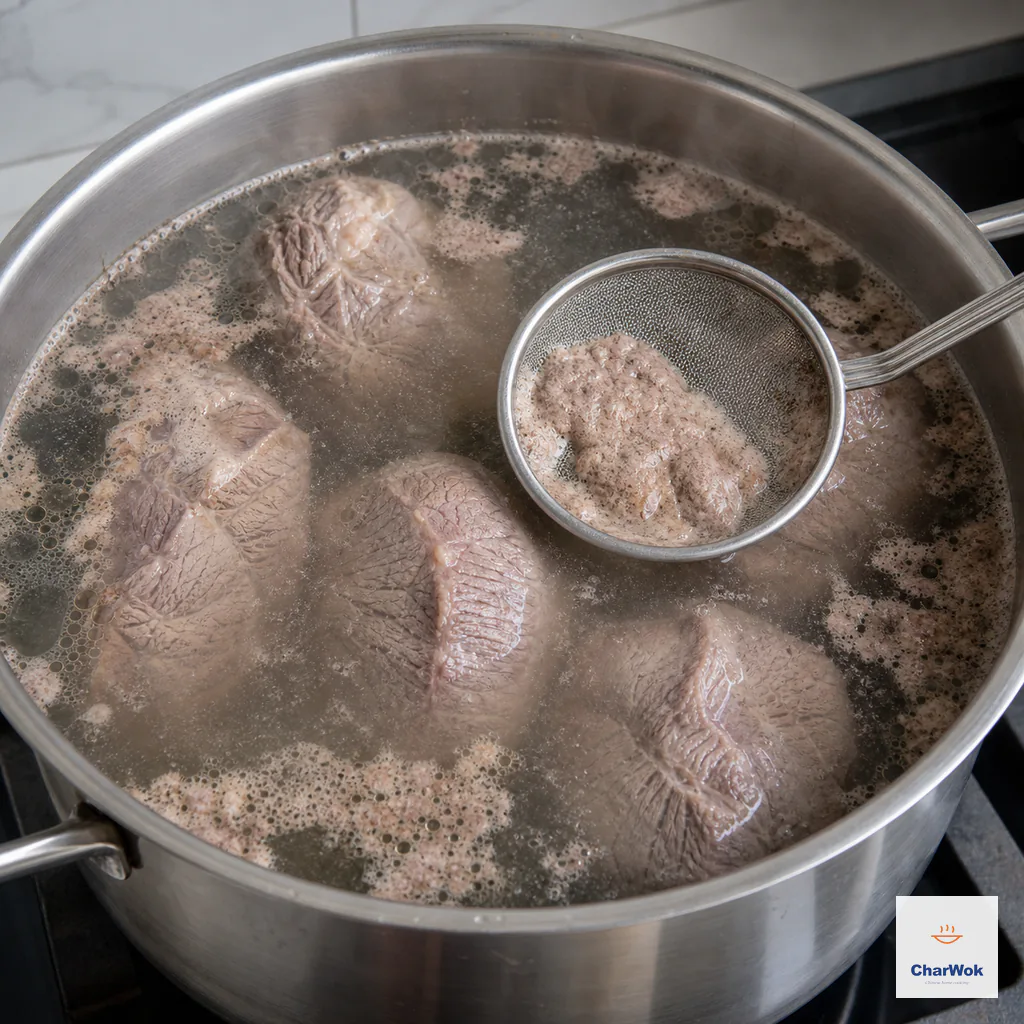
Start the beef in cold water and skim continuously as the liquid approaches a boil; remove and rinse the beef when new gray foam stops appearing
- Fry the aromatics in a heavy pot. Use a Dutch oven or any thick-walled pot with a tight lid. Heat 1 tbsp oil, then add the onion, whole garlic cloves, ginger slices, bay leaves, star anise, cassia, and Sichuan peppercorns. Fry until the onion softens and the edges brown, about 5 minutes. Browning the onion here is the first layer of Maillard depth the broth will carry.
- Fry the doubanjiang for about 20 seconds. Push the aromatics aside, add the chili bean paste into the hot oil, and stir. The oil should turn red and the kitchen should suddenly smell like a noodle shop. This is the make-or-break move. Fried paste is fragrant and complex; paste added straight to liquid is flat and raw-tasting. Do not let it burn; 20 to 30 seconds over medium heat is enough.
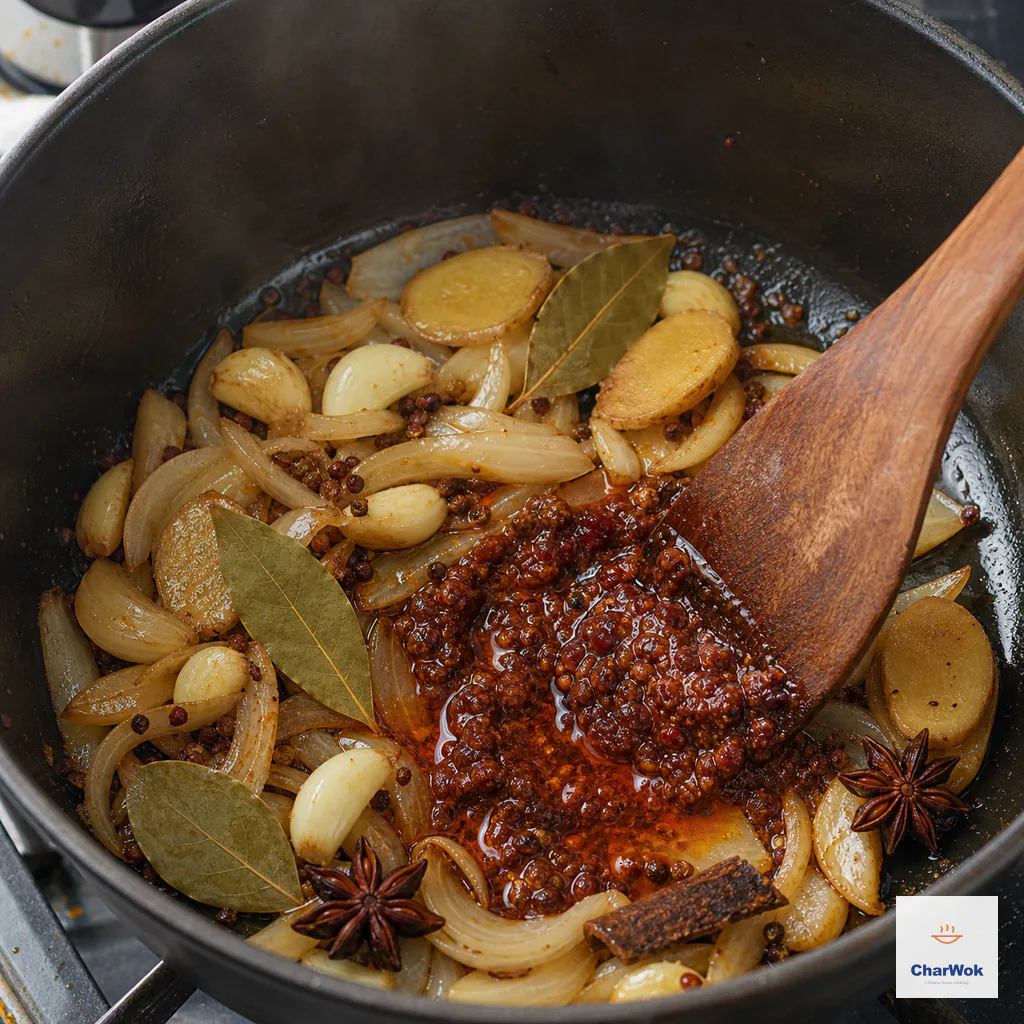
Fry the doubanjiang in the aromatic oil for 20 to 30 seconds, until the oil turns red and smells fragrant, before adding any liquid; do not let the paste blacken
- Build the liquid. Pour in the Shaoxing rice wine to deglaze, scraping up the red paste. Add light soy, dark soy, sugar, the chopped tomatoes, and the hot water. The tomatoes contribute acid that helps break down connective tissue and brightens a broth that would otherwise read as heavy.
- Return the beef and simmer, covered, 1½ to 2 hours. Bring to a gentle simmer, cover, and drop the heat to low. You want the barest tremble, not a rolling boil, because a hard boil emulsifies fat into the broth and turns it murky. Test at 1½ hours: a fork or chopstick should pierce the shank with light resistance. If it still fights you, give it another 20 to 30 minutes. The meat is done when it yields; it is overcooked when it shreds into strings on its own.
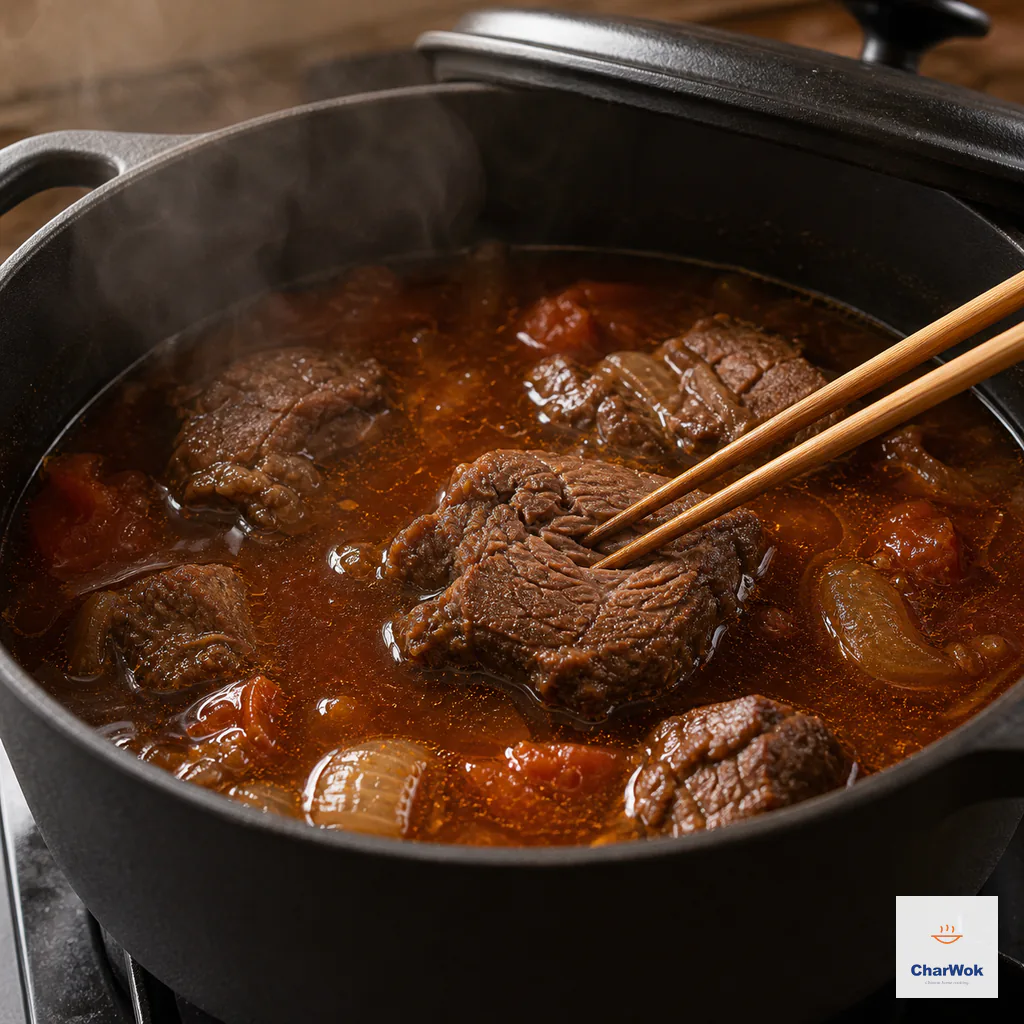
Keep the covered broth at the barest simmer and test after 1½ hours; the chopstick should enter with light resistance while the beef still holds together
- Rest, then strain. Lift the beef out onto a plate and let it cool enough to handle. Pour the broth through a sieve and discard the spent aromatics and spices. They have given up everything useful; leaving them in makes the broth progressively more bitter and anise-heavy. (For a heartier, less refined bowl, like my beef stew with potatoes, you can leave chunky vegetables in. Here we want a clean liquid.)
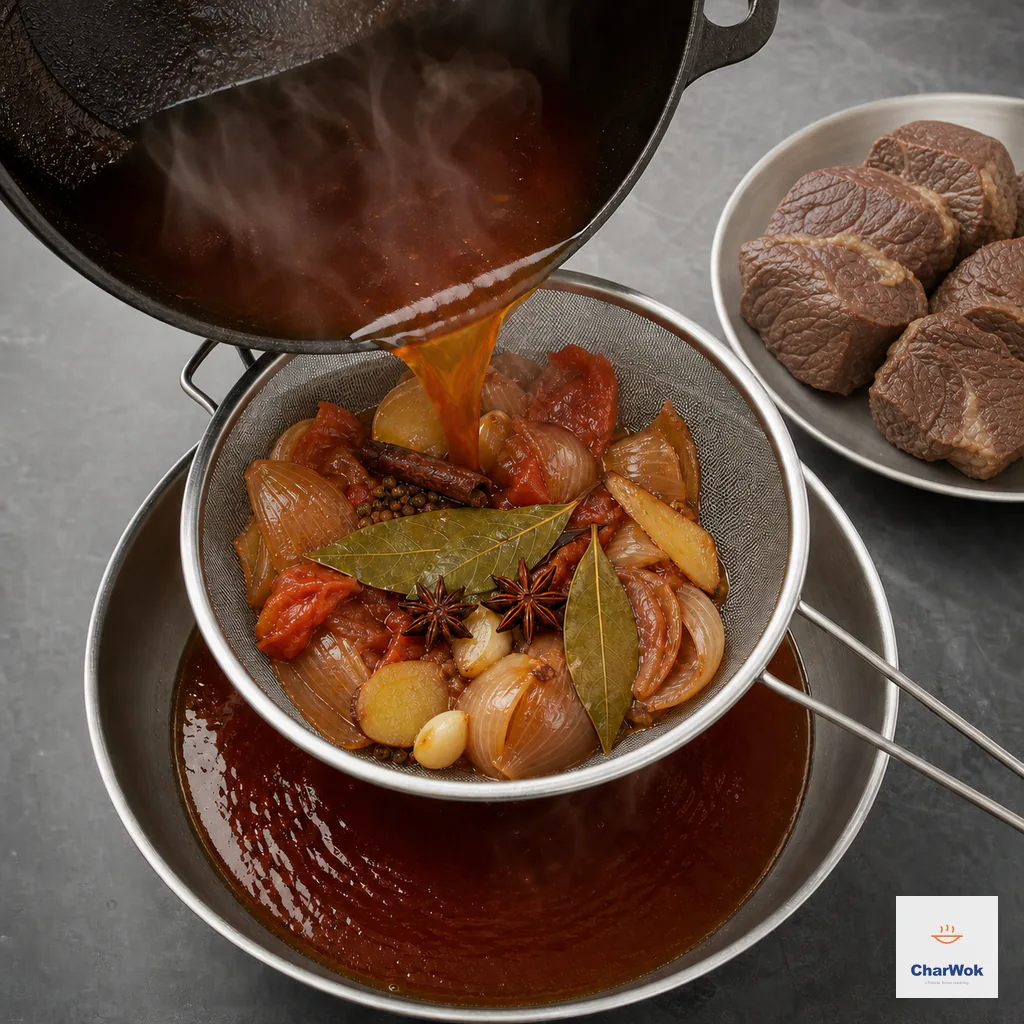
Lift out the beef first, then strain the broth and discard the spent aromatics and spices so the finished soup stays clear and balanced
- Fry the pickled greens topping while the beef cooks. Heat 1 tbsp oil, sizzle 1 tbsp minced garlic and 1 tsp minced ginger, then add the chopped pickled mustard greens. Fry until the greens look dry and smell toasted, about 3 minutes. Set aside. Taste the greens before cooking; if they are very salty, soak in cold water 10 minutes, drain, then chop.
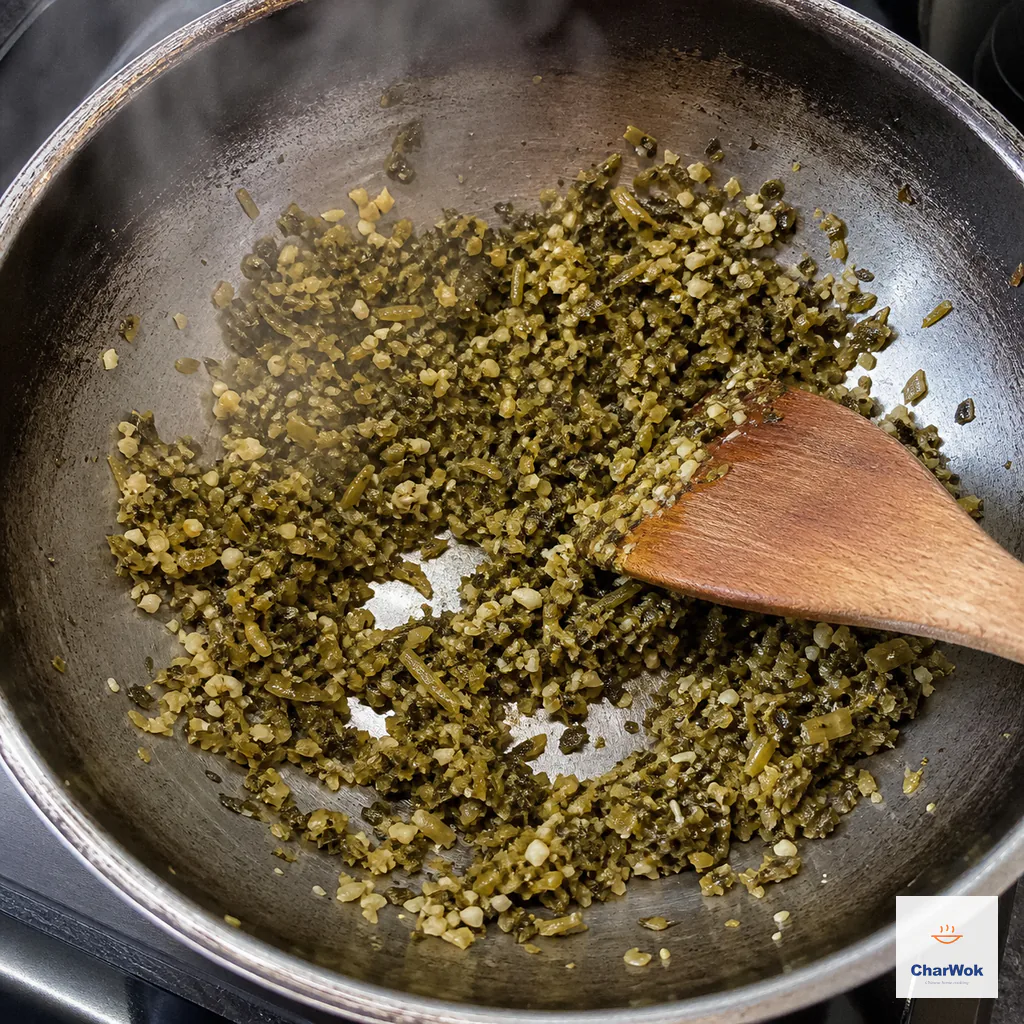
Fry the chopped pickled mustard greens with minced garlic and ginger until fragrant and visibly dry, then keep the topping separate until serving
- Boil the noodles in plenty of water. Use a separate large pot of rapidly boiling water, not the broth. Cooking noodles in broth clouds it and drinks your stock. Cook until just shy of done, then drop in the bok choy for the final 10 seconds. Drain.
- Assemble. Divide noodles among bowls, add greens and sliced beef, ladle the hot broth over, and crown with the fried pickled greens and cilantro. Serve immediately, while the noodles are still chewy and the broth is steaming.
The Instant Pot shortcut, honestly assessed
Under pressure, 40 to 45 minutes gets the beef tender. I use it on weeknights and it is a legitimate option, with two honest caveats. First, the broth is slightly thinner than a two-hour stovetop simmer because the collagen has had less time to fully melt into gelatin. Second, the fried aromatics lose a little of their roasted edge because everything happens so fast. For a Tuesday it is great. For the platonic ideal bowl, take the time on the stove.
Why your broth might disappoint, and how to fix it
- Broth tastes flat despite simmering forever. Almost always the doubanjiang was not fried, or was under-fried. Next time, give it a full 20 to 30 seconds in hot oil before adding liquid. To rescue a finished flat broth, fry a tablespoon of doubanjiang in a little oil until fragrant and stir it in, then simmer 10 minutes.
- Broth is cloudy and greasy. You boiled it too hard, or skipped the blanch. Keep the simmer at a whisper, and skim fat off the top after straining. A night in the fridge lets the fat solidify into a clean cap you can lift off; the broth underneath will be glossy and clear.
- Beef is tough after 2 hours. Either the cut was too lean (collagen is what gets tender; muscle just gets dry), or the simmer was too vigorous and the meat seized before the collagen could melt. Use shank or bone-in cuts, and keep the heat low.
- Too much anise flavor. Star anise and cassia are aggressive. Stick to 2 pods and a small cassia piece, and do not leave them steeping in the finished broth. Strain them out.
- Too salty. The doubanjiang, soy, and pickled greens all carry salt. Under-salt deliberately, then adjust at the end. Dilute an over-salted broth with hot water or unsalted stock, not more seasoning.
- Noodles turn to mush. Cook them just underdone and let the hot broth finish them in the bowl. This also keeps the leftover broth clean if you store noodles and broth separately.
Variations and what to serve alongside
The bowl is a complete meal, but a few additions round it out. A plate of garlic bok choy or gai lan two ways on the side adds green without competing. If you want a second noodle option for a noodle-focused dinner, browse the full collection of classic Chinese noodle recipes.
Flavor variations worth trying: add a halved white radish (daikon) for the last 40 minutes of simmering for a lighter, slightly sweet broth. Up the Sichuan peppercorn to 1½ tsp and add a spoon of chili oil per bowl for a numbing-spicy version closer to my spicy beef noodle soup. A spoon of black rice vinegar at the table, as some Taipei shops do, sharpens everything without making the broth itself sour.
For the pickled greens, jarred suan cai is easiest. If you keep your own pickle jar going, my overnight pickled vegetables are a fast route to a fresh, crunchy version.
Make it ahead, and store it
This is one of the best make-ahead meals I know, and the broth genuinely improves overnight as the flavors marry. Cook the beef and broth a day ahead, cool, and refrigerate. The next day the fat has set into a clean disc you can lift off, and the broth will be noticeably deeper. Reheat gently.
For longer storage, freeze the beef and broth together in single-portion containers for up to 3 months. Keep cooked noodles and broth separate in the fridge; noodles left in soup absorb the liquid and turn to paste by morning. When you want a bowl, boil fresh noodles, reheat the broth, and assemble. On a cold night this is one of the warming noodle soups I reach for most, alongside the tomato-egg version for something lighter.
Frequently asked questions
Can I use a different cut of beef? Yes, if it has collagen. Shank, bone-in short rib, brisket, and oxtail all work. Avoid lean cuts like sirloin or round; they go dry and stringy.
Is the blanching step really necessary? It is, for a clear broth. It removes blood and proteins that otherwise cloud the liquid and leave a faint metallic taste. Skipping it saves 10 minutes and costs you clarity.
How do I make it less spicy for kids? Use non-spicy doubanjiang, halve the Sichuan peppercorn, and omit any chili oil. The broth stays deeply savory without the heat.
What can I substitute for Shaoxing wine? Dry sherry is the closest match. Otherwise use a dry white wine, or omit it for an alcohol-free version rather than substituting something sweet.
Why strain out the aromatics? By the end they have released all their flavor and only bitterness remains. Leaving star anise and cassia in the finished broth makes it increasingly anise-heavy the longer it sits.
The one thing to remember
If you forget every other detail, remember to fry the doubanjiang. That is the line between a bowl that tastes like effort and a bowl that tastes like a noodle shop. Everything else, the blanching, the gentle simmer, the overnight rest, makes a good bowl better. The fried paste is what makes it the dish at all.