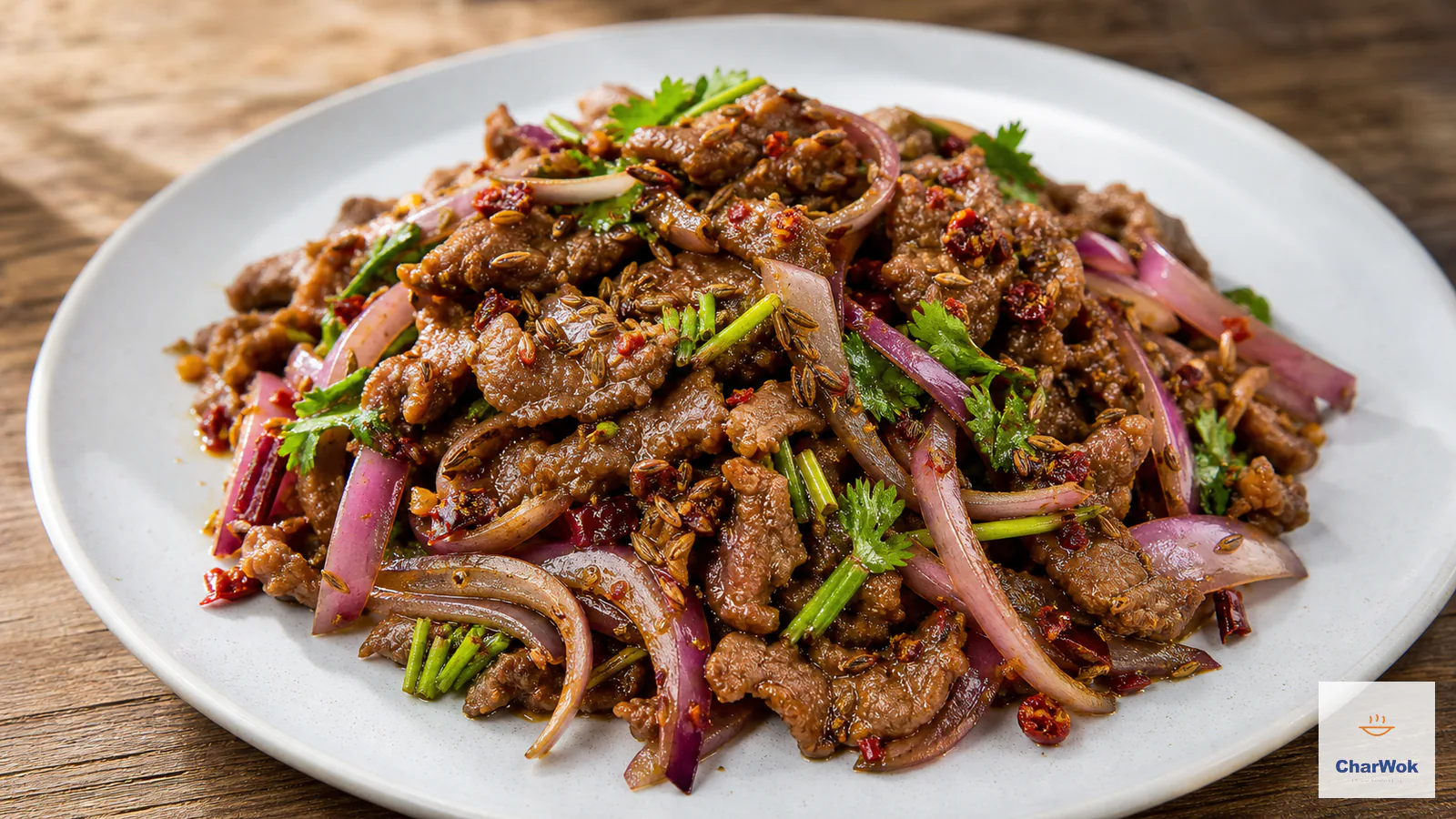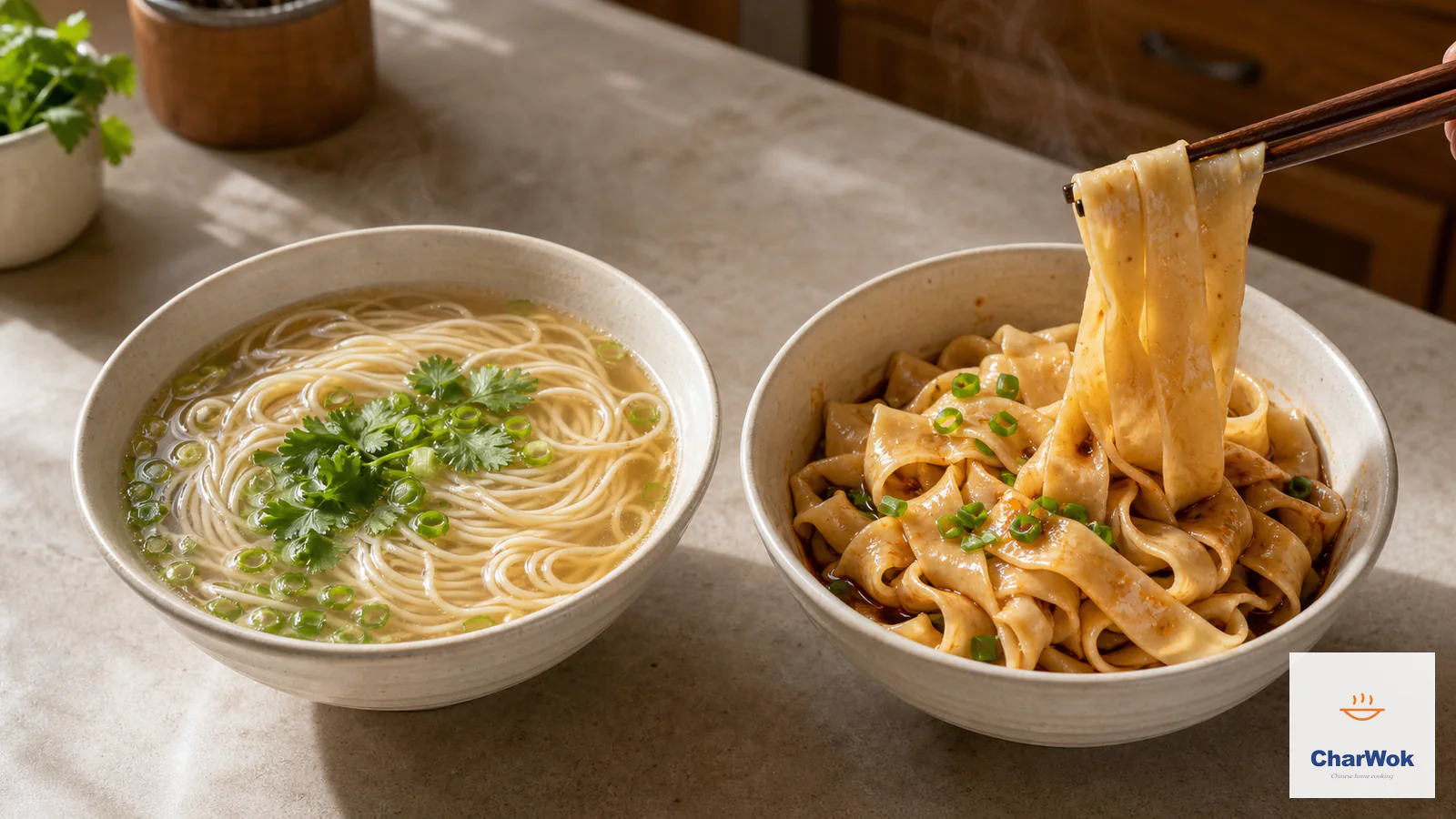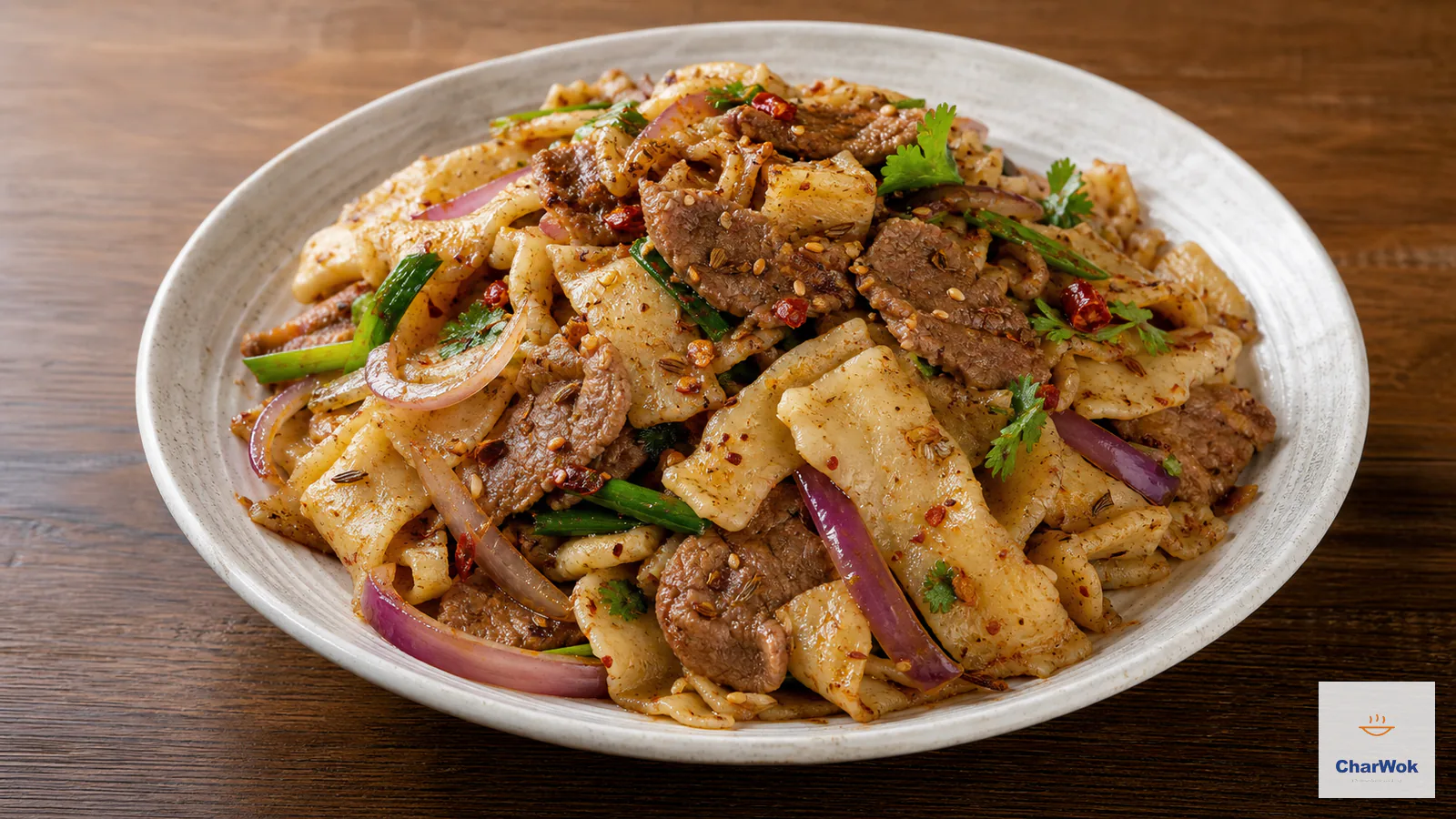
Two things go into this bowl: the cumin-and-chili lamb you find charred on Xinjiang street carts, and the floppy hand-torn wheat flats that northwestern cooks call mian pian. Either one on its own is a meal. Together they are the kind of one-pan dinner I cook when I want something loud and warming without standing at a stove for an hour. The catch that trips people up is the dough. Tear it too thick and you get dumpling-like lumps; tear it too thin and it shreds into threads that vanish into the sauce. I have done both. This recipe is the middle path, and it leans on one idea that most home versions skip: the dough has to rest, fully and patiently, before a single piece hits the water.
At a glance: A 50% hydration dough (200 g flour to 100 g water), rested 60 to 90 minutes so the gluten relaxes, then torn into ragged flats and given one more minute in the boil after the last piece drops. The lamb is coated in a starch slurry and seared smoking-hot so the cumin blooms instead of steaming. Total active time is short; the wait is what makes it work. Use leg of lamb, cut against the grain.
What this dish is, and where it comes from
Hand-torn noodles (mian pian, 面片) belong to the wheat belt of northwest China, the same broad tradition that gives us scissor-cut noodles and the wide, slapped ribbons of Xi'an biang biang noodles. In Shanxi, Gansu, and Ningxia, a cook tears these flats straight into boiling water, no rolling pin or pasta machine involved. Cumin lamb is the other half of the lineage, a Xinjiang flavor built on the lamb-and-onion cooking of the Uyghur northwest that you also taste in charcoal lamb skewers and in baked lamb-stuffed buns. Somewhere along the way a cook tossed the torn flats into a screaming-hot wok with cumin lamb, and the combination stuck. It is a classic Xi'an-style noodle bowl you can reproduce in a home kitchen with a wok and a pot of water.
What makes this version forgiving is the tearing. Pulling the dough by hand lets you control thickness in real time, and the ragged edges hold sauce the way a smooth extruded noodle never will. If you have ever wanted to try hand-pulled noodles but balked at the alkaline dough and the stretching technique, hand-torn flats are the gentler entry point. Same wheat flavor, far less precision required.
The flour, the water, and the rest
Use plain all-purpose flour. Bread flour develops too much gluten and fights you when you tear; cake flour is too weak and the flats dissolve. A 50% hydration dough, 100 grams of water for every 200 grams of flour, sounds dry when you first mix it. That is correct. A drier dough tears cleanly and keeps a slight chew after boiling, where a wet dough goes gummy. The salt is not there for flavor; it tightens the gluten network so the flats hold together in the boil.
Then you wait. After a short first knead, rest the dough ten minutes so the flour fully hydrates and the gluten relaxes from being worked. Knead again until smooth, then rest at least an hour. This second rest is the one that matters. Untightened gluten snaps back when you pull it, so the flats come out thick and rubbery. Well-rested gluten stretches without resistance, and the dough almost pulls itself apart under your fingers. You can rest it longer, even overnight in the fridge; treat it like other make-ahead Chinese doughs and bring it back to room temperature before cooking.
Ingredients
Ingredients at a glance
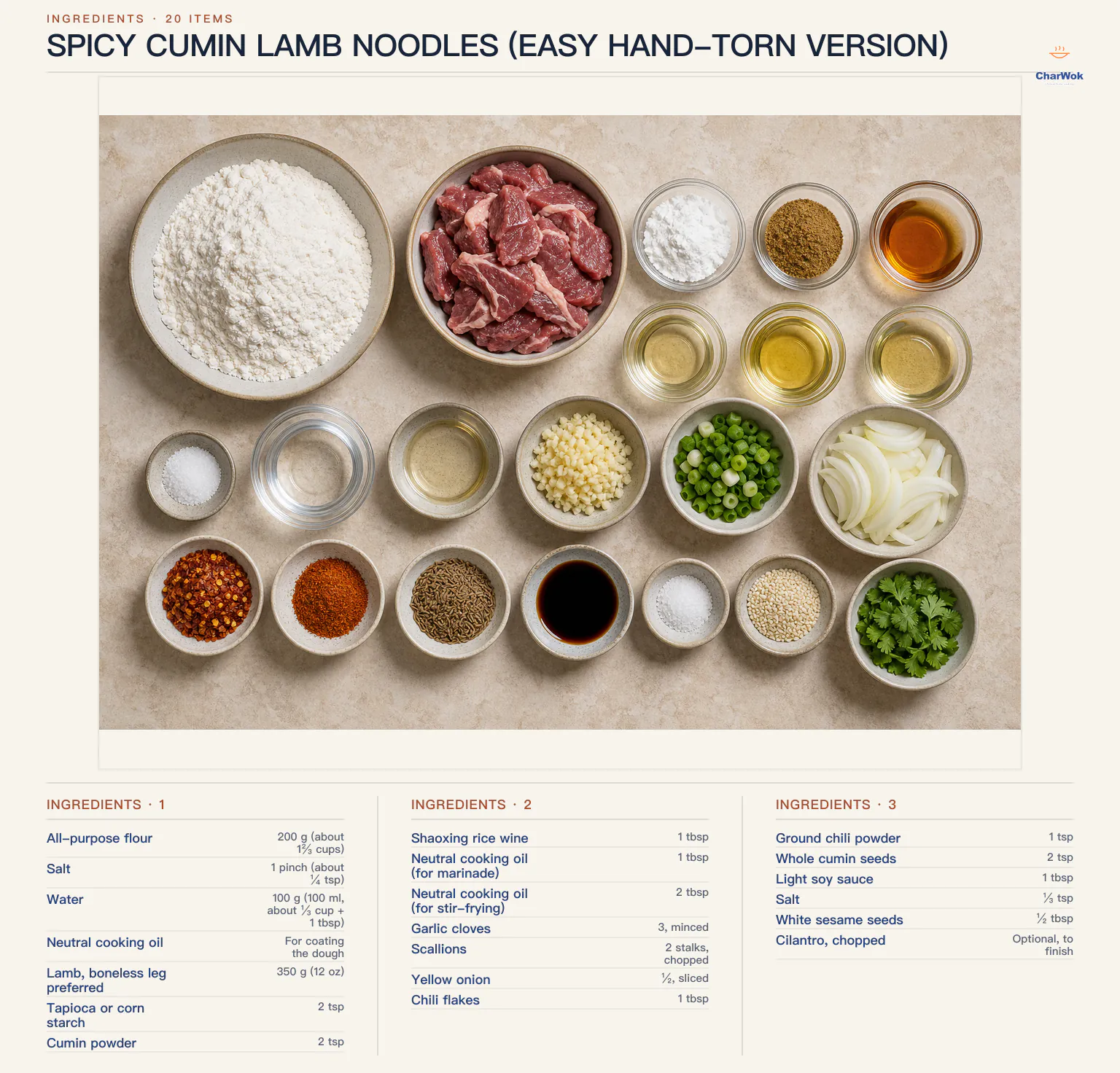
Serves 2 as a main. Times assume the dough has rested.
| Ingredient | Amount | Notes / substitute |
|---|---|---|
| All-purpose flour | 200 g (about 1⅔ cups) | Plain wheat flour, not bread flour |
| Salt | 1 pinch (about ¼ tsp) | Strengthens the gluten |
| Water | 100 g (100 ml, about ⅓ cup + 1 tbsp) | Lukewarm; adjust by a teaspoon either way if needed |
| Neutral cooking oil | For coating the dough | Any flavorless oil; prevents sticking during the rest |
| Lamb, boneless leg preferred | 350 g (12 oz) | Shoulder works; see note on slicing |
| Tapioca or corn starch | 2 tsp | Tapioca gives a silkier coating; cornstarch is fine |
| Cumin powder | 2 tsp | Toast whole cumin and grind for best aroma |
| Shaoxing rice wine | 1 tbsp | Dry sherry or a splash of rice vinegar in a pinch |
| Neutral cooking oil (for marinade) | 1 tbsp | Seals in the starch coating |
| Neutral cooking oil (for stir-frying) | 2 tbsp | Peanut or canola, high smoke point |
| Garlic cloves | 3, minced | Fine mince so it disperses |
| Scallions | 2 stalks, chopped | White and green separated if you like |
| Yellow onion | ½, sliced | Red onion works; shallots are too sweet |
| Chili flakes | 1 tbsp | Adjust to taste; use mild Korean flakes for less heat |
| Ground chili powder | 1 tsp | For color as much as heat |
| Whole cumin seeds | 2 tsp | These are the soul; do not substitute powder here |
| Light soy sauce | 1 tbsp | See our light vs. dark soy sauce guide |
| Salt | ⅓ tsp | To taste |
| White sesame seeds | ½ tbsp | Toasted is better |
| Cilantro, chopped | Optional, to finish | Stems and leaves both fine |
Step 1: Make and rest the dough
- Combine flour, salt, and water. Stir with chopsticks or a spatula until no dry flour remains. The dough will look rough and feel too stiff. That is right; resist adding water.
- Knead briefly, then rest 10 minutes. Bring the shaggy mass into a ball and knead just until it holds together. Cover and leave it alone. This short rest lets the flour absorb the water evenly before you ask the gluten to do any real work.
- Knead until smooth. After the rest, knead about two minutes by hand, or eight minutes on low with a dough hook. The dough should look smooth and feel springy, not sticky. If it tears easily when you stretch a small piece, knead another minute.
- Coat with oil and rest 60 to 90 minutes. Divide into four pieces, rub each lightly with oil so they do not dry out, cover, and rest. The oil also makes the dough easier to handle when you tear it later. Do not skip this rest; it is the difference between flats that stretch and flats that snap back.
Step 2: Marinate the lamb
- Slice against the grain. Cut the lamb into thin slices roughly 5 cm (2 inches) long. Slicing across the grain shortens the muscle fibers so the meat stays tender under high heat. If you have trouble getting clean slices, freeze the lamb for 20 minutes first; a half-firm piece cuts cleanly.
- Coat with starch, cumin powder, and wine. Toss the slices with the tapioca or corn starch, cumin powder, and Shaoxing wine until each piece is coated. This is the classic starch slurry (shang jiang, 上浆) behind many cumin lamb stir-fries: the starch forms a thin shell that locks moisture against the meat and gives the chili and cumin something to cling to.
- Finish with a tablespoon of oil. Stir in the oil last so it seals the starch coating and stops the slices from clumping in the wok. Set aside while the dough finishes resting.
Step 3: Tear and boil the noodles
- Bring a large pot of water to a full, rolling boil. Use more water than you think you need. Hand-torn flats release starch, and a big pot keeps the boil from dying when the dough goes in.
- Press a piece thin in your hands. Take one oiled portion and work it between your palms into a thin, hand-sized leaf. The oil on the surface keeps it from sticking to your fingers, so you can press it flatter than you might expect.
- Tear off pieces and straight into the pot. Working from the edge, stretch a flap of dough until it gives way and let the piece fall into the rolling boil. Keep each flat on the smaller side so it cooks evenly and the ragged edges can grab the sauce later. Move through all four portions without dawdling: the earliest pieces are already softening in the water while you tear the next, which keeps everything finishing close together.
- Boil one more minute after the last piece goes in. The flats float when they are nearly done; give them another minute so the center is fully set and the chew is even.
- Lift out and rinse briefly. Scoop the flats out and give them a quick, cool splash under the tap. That shock halts the cooking and sluices away the loose starch clinging to the surface so the cumin-chili sauce can grip instead of sliding off. Do not soak them; a few seconds is enough. Drain and hold.
Step 4: Stir-fry everything together
- Heat the wok until it just begins to smoke. A properly hot wok is the whole technique. If you are new to judging this, our guide to choosing, seasoning, and using a wok walks through it. When the metal shimmers and a faint wisp of smoke rises, it is ready.
- Add the 2 tablespoons of oil, then the lamb. Spread the slices in a single layer and let them sear for several seconds before tossing. You want brown patches, not gray steamed meat. Once the meat is browning, throw in the garlic, scallions, and onion and keep the wok moving until every slice is just cooked through and no red remains in the center.
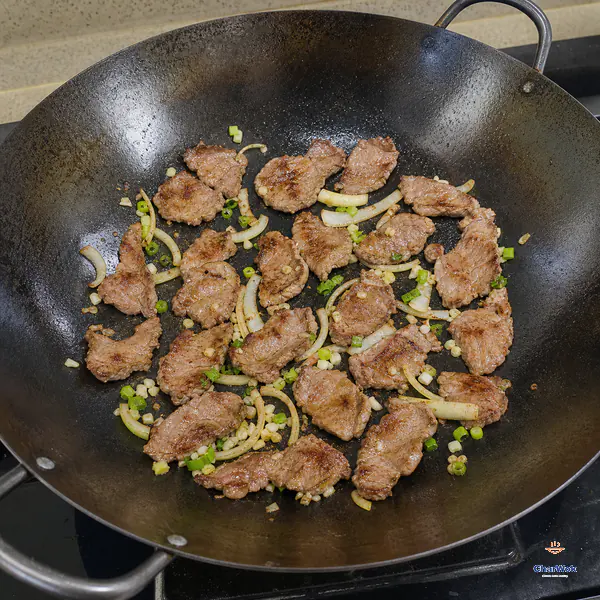
Use a fully heated large wok and keep the lamb slices flat with gaps between them until brown patches form; only then toss in the garlic, scallion and onion until the meat has just lost its pinkness.
- Add the spices and seasonings. Slide the wok off the flame for a beat, then scatter in the whole cumin seeds, sesame seeds, chili flakes, and ground chili, followed by the soy sauce and a pinch of salt. Back over the heat, toss for about half a minute. That short, fierce pass blooms the cumin and toasts the chili without scorching it; burnt chili is the flavor that ruins this dish.
- Add the noodles and toss to coat. Drop in the drained flats and stir until every piece is slicked with the cumin-chili oil. A tablespoon of the noodle cooking water helps the sauce cling if the wok looks dry.
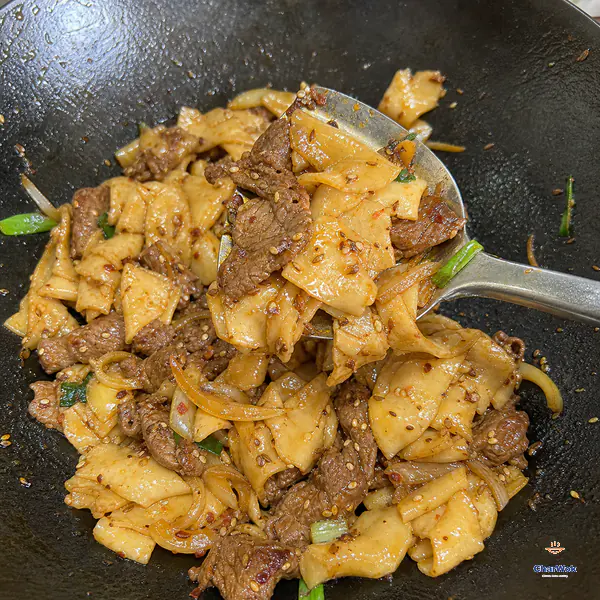
Add the drained hand-torn flats after the spices bloom, then turn from the bottom until each ragged piece is evenly slicked with the thin cumin-chilli oil and no dry pale patches remain.
- Dish out and finish with cilantro. Serve immediately while the spices are at their loudest.
When it goes wrong, and how to fix it
The dough snaps back when you try to flatten it. It has not rested long enough. Cover it and give it another twenty minutes. This is the single most common failure, and the fix is patience, not more kneading.
The flats come out thick and doughy. You are tearing them too large or pressing the dough too thick before pulling. Flatten thinner, and pull from a corner so the piece stretches thin before it breaks. Aim for the thickness of a coin.
The flats shred into threads and dissolve. The dough is too wet, or you boiled too long. Hold back a teaspoon of water next time, and pull the flats out the moment they float and look set, plus one minute. Soft all-purpose flour can also be the culprit; a slightly stronger flour stands up better to the boil.
The lamb is tough and chewy. Either you sliced with the grain instead of across it, or the wok was not hot enough and the meat stewed in its own juice. Slice thinner and across the grain, and let the wok smoke before the oil goes in.
The chili tastes bitter, not fragrant. It scorched. Whole cumin seeds and chili flakes burn in seconds over very high heat. Add them after the lamb is seared, and toss constantly; pull the wok off the burner for a beat if anything starts to darken past red-brown.
The noodles stick together after boiling. You either skipped the quick rinse or rinsed too long. A few seconds under the tap sluices off the loose surface starch and stops the cooking; skip it and the flats glue themselves into a clump, but soak them and they lose the slight tackiness that helps the sauce cling. Drain them well and toss with a few drops of oil if you are not dressing them right away.
Variations and pairings
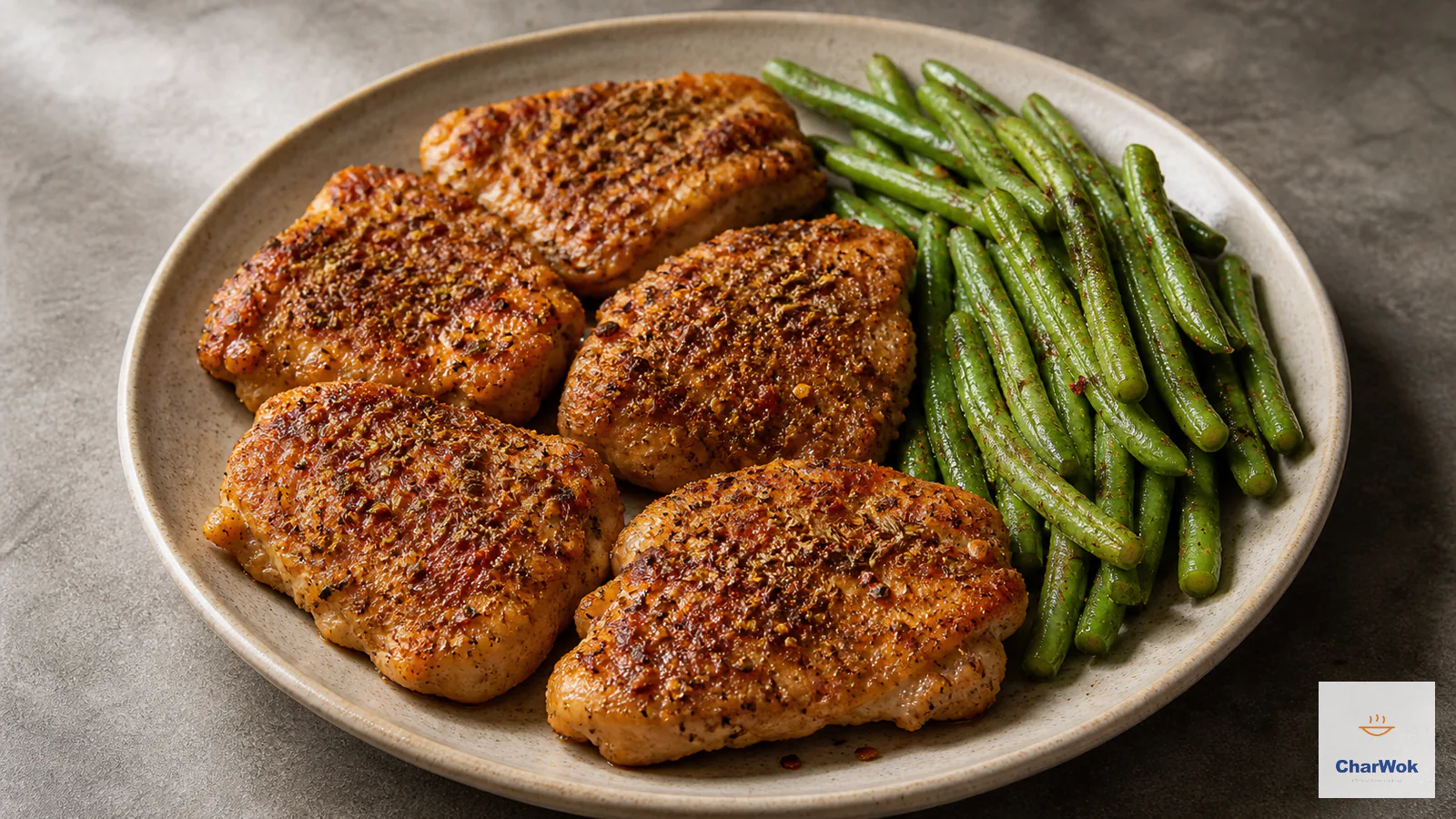
Swap the protein. The cumin-chili treatment works on nearly anything. Boneless chicken thigh cut the same way gives you a milder cumin chicken version; beef flap or sirloin works too. For a vegetarian bowl, pan-fry firm tofu cubes until crisp and treat them as the lamb.
Change the noodle. If tearing dough feels like too much on a weeknight, the same sauce and lamb are excellent over wide store-bought ribbons or over the kind of noodles you would use for dan dan. The dish becomes a quick weeknight bowl with almost no loss of flavor, though you do lose the rustic texture that makes the hand-torn version special.
Turn up the heat or add depth. A spoonful of chili oil or a dab of doubanjiang stirred in at the end adds a darker, slower burn than chili flakes alone. A few toasted Sichuan peppercorns, ground, introduce a numbing edge that pairs naturally with cumin; see our Sichuan pepper guide for how to grind them without losing their aroma.
Pair it with something cold and crisp. A bowl this rich wants a sharp, crunchy counter. A Xinjiang tiger salad of onion, tomato, and cilantro is the traditional partner and the one I reach for first. Smashed cucumber with garlic does the same job faster. If you want a full spread, add a simple soup; a clear seaweed egg drop soup rounds out the meal without competing with the lamb.
Storage and reheating
The cooked dish does not keep well. The flats soak up sauce and turn soft overnight, and the lamb dries out on a reheat. If you must, store the noodles and the lamb-sauce separately in the fridge for a day, then reheat the lamb in a hot wok with a splash of water and toss the noodles in just long enough to warm through. The dough is the forgiving part: if you are resting it for longer than four hours, move the oiled pieces to an airtight container in the fridge, then let them come fully back to room temperature before tearing. Doing the dough a day ahead is what turns this into a realistic weeknight dinner.
Frequently asked questions
Can I make the dough without a stand mixer?
Yes, and many cooks prefer it by hand. Mix until shaggy, rest ten minutes, then knead two minutes. The dough is stiff enough that a machine saves time but does not change the result.
Is there a gluten-free option for the flats?
Not a direct one. The chew of hand-torn flats comes from wheat gluten, so a gluten-free flour will not tear or stretch the same way. For a gluten-free meal, serve the cumin lamb over rice or rice noodles instead.
How spicy is this recipe?
Moderately spicy as written. Cut the chili flakes and ground chili in half for a gentle version, or double them and add chili oil if you want it fierce. The cumin and lamb stay good across that whole range.
Can I use pre-sliced lamb stir-fry meat?
You can, but check the grain. Store-sliced meat is often cut with the grain, which stays chewy after a hot stir-fry. If you can, slice it yourself from a boneless leg, against the grain.
Why oil the dough instead of flouring it?
Oil keeps the surface from drying and sticking without adding raw flour, which would wash off in the boil and cloud the water. It also makes the dough easier to flatten and tear.
The recipe rounds out any collection of classic Chinese noodle dishes, and it shares a family with the broader world of spicy, numbing Sichuan-style food, even though its roots are further northwest. If you have made cumin lamb before, the lamb half will feel familiar; if this is your first time tearing noodles, expect the first batch to look rough. They will still taste right.