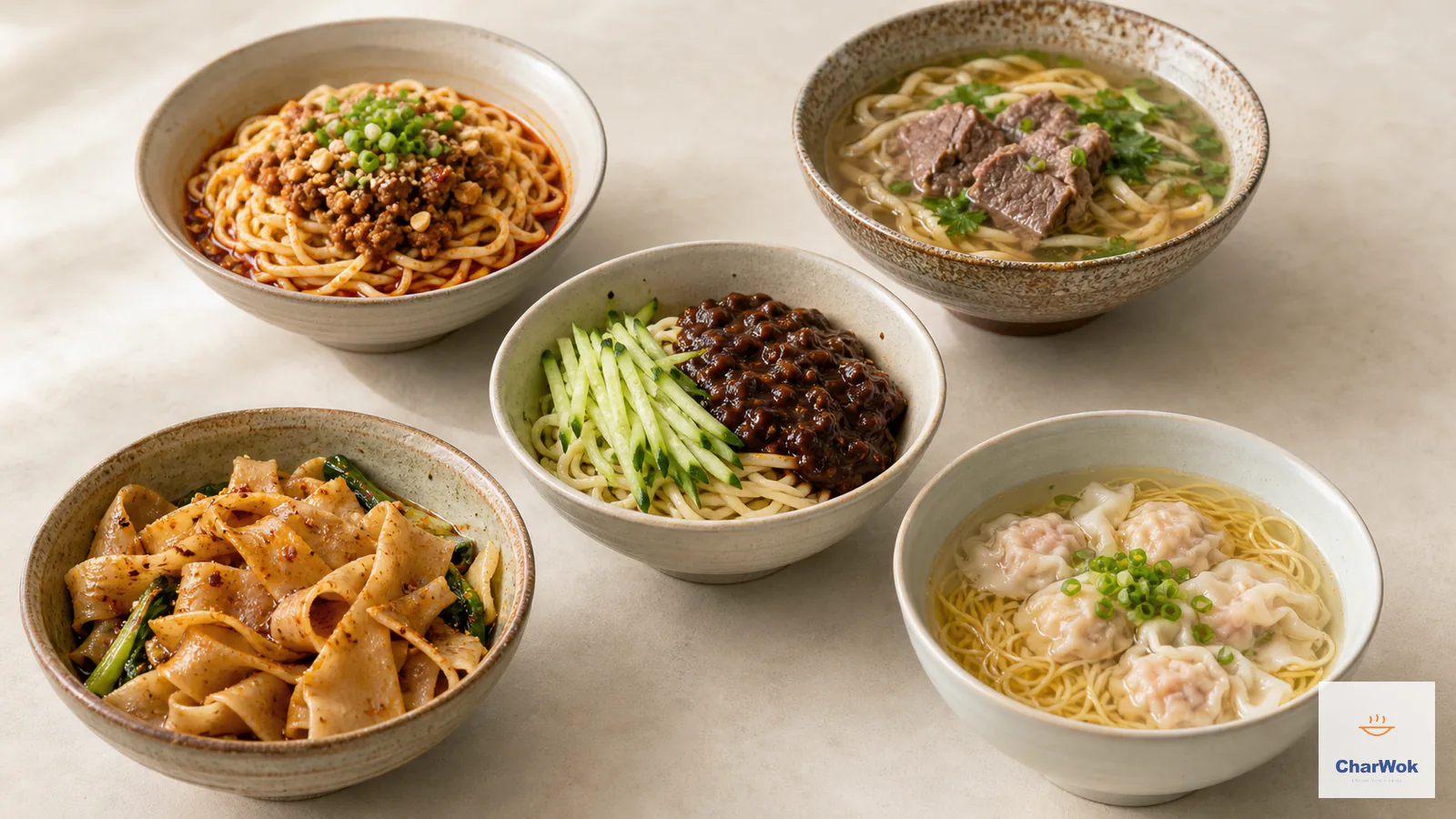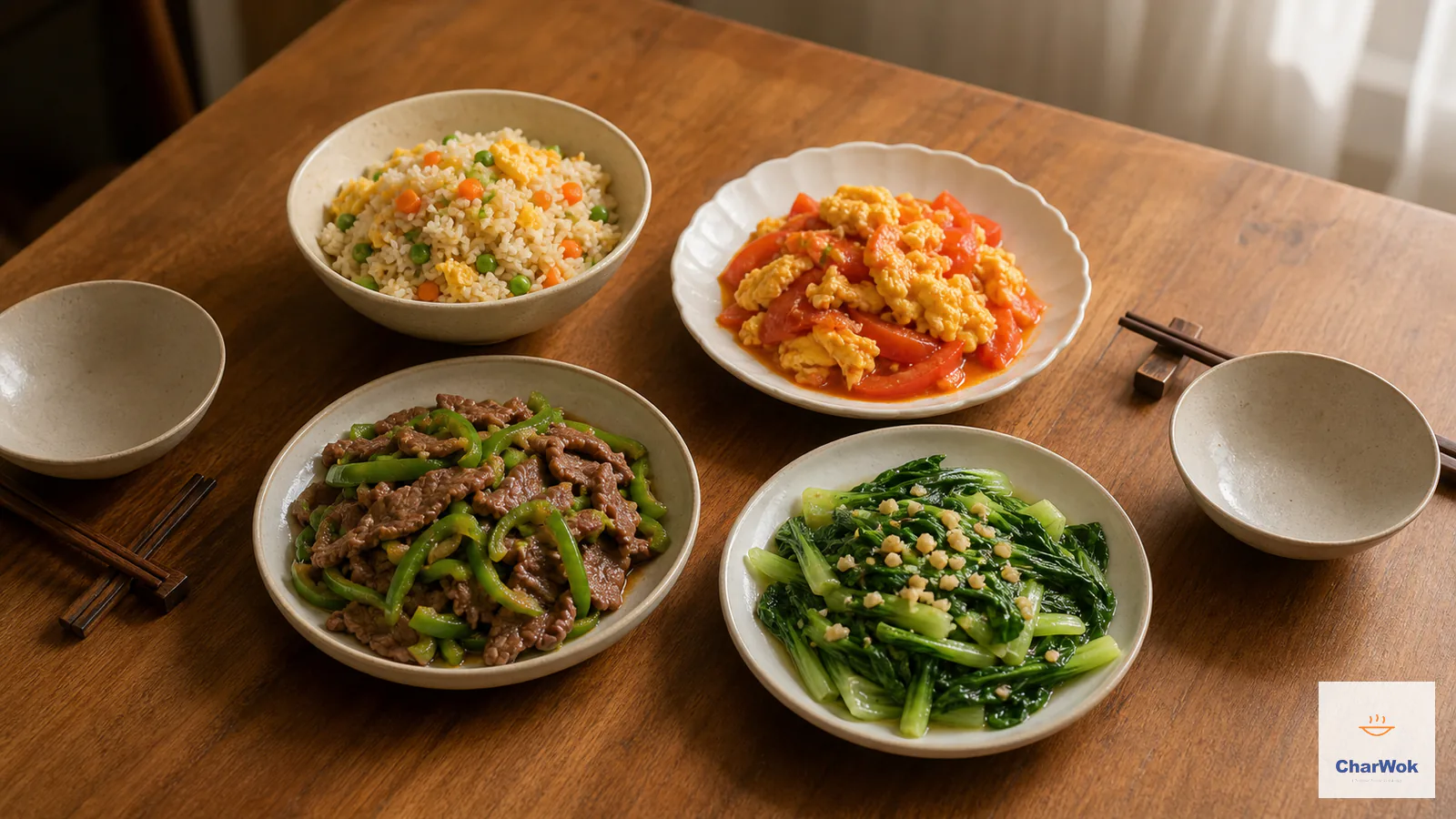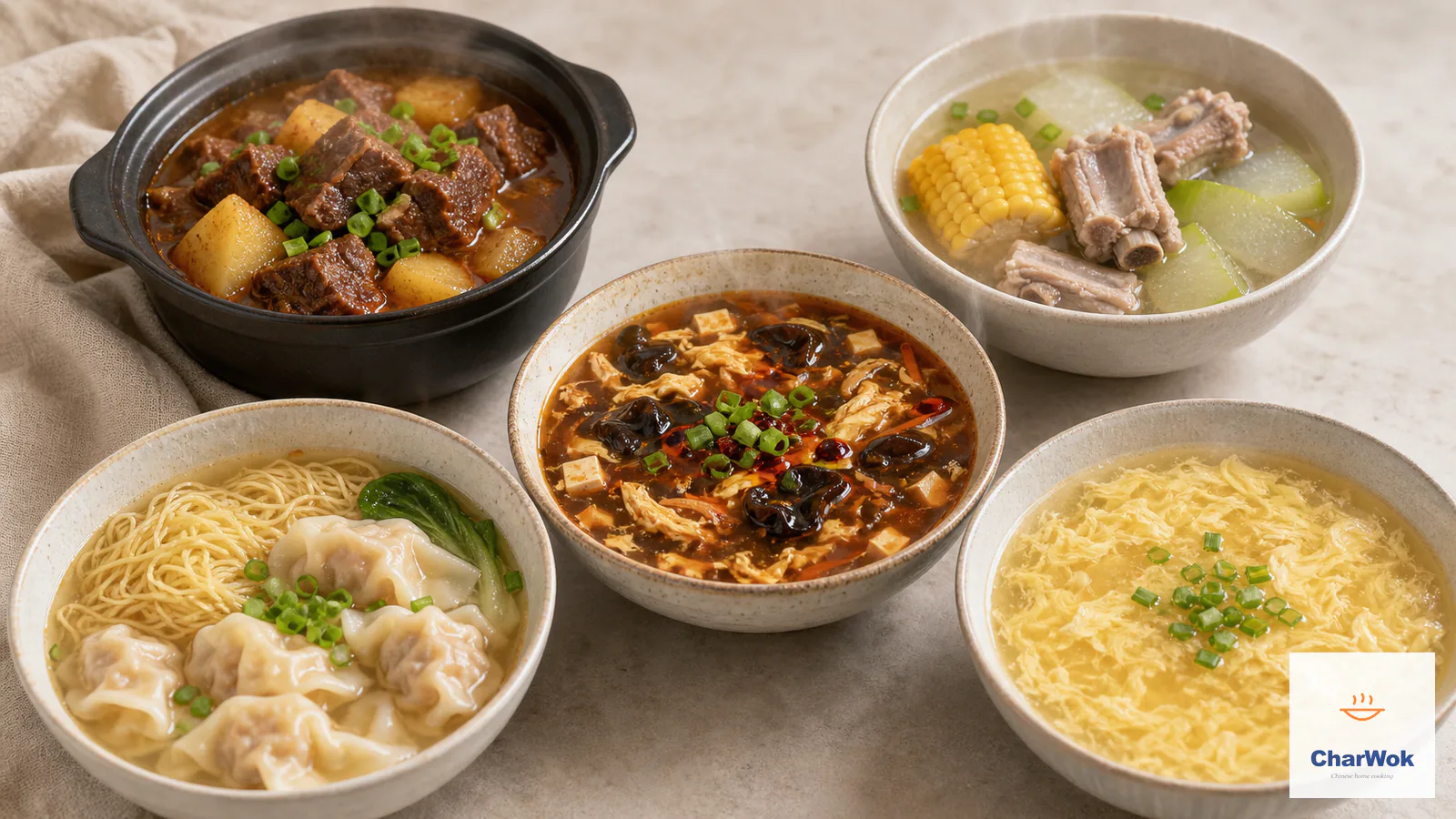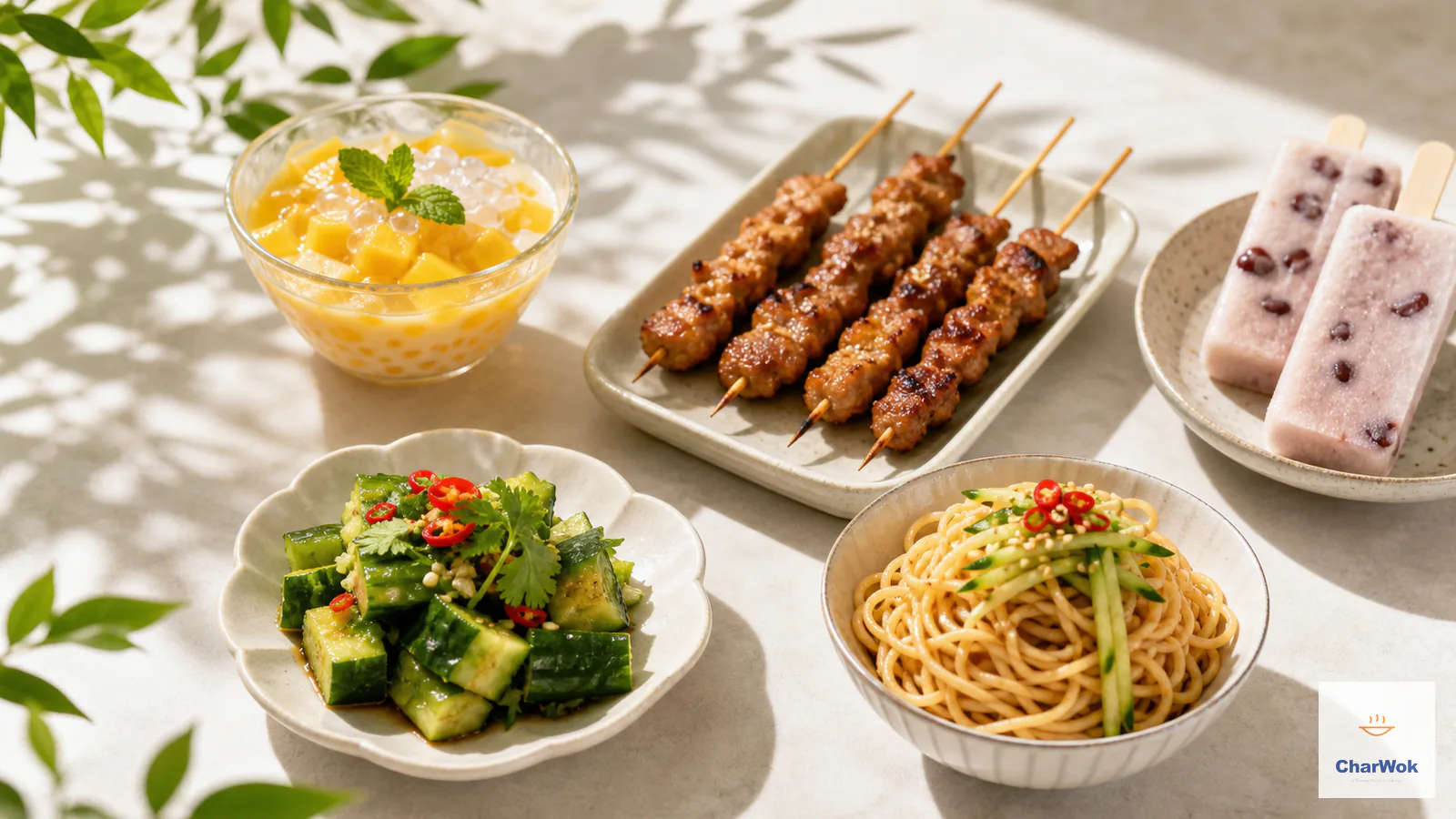
Hot days do something strange to a Chinese kitchen. The wok still comes out, but the table fills with cold things: pale chicken slicked with chili oil, smashed cucumber snapping under the cleaver, jelly noodles slipping through a sweet-vinegary sauce. The logic is older than refrigeration. When the body sweats out salt, it wants acid and a little heat; when the stove makes the room unbearable, you cook once and eat cool for two days. This collection gathers the dishes I actually return to between June and August, grouped by the job each one does on the table.
If you have stood in a humid kitchen at 7 p.m. with no idea what to make, this is for you. If you have been asked to bring a dish to a backyard cookout and want something that travels, this is also for you.
At a glance
20 Chinese summer recipes at a glance
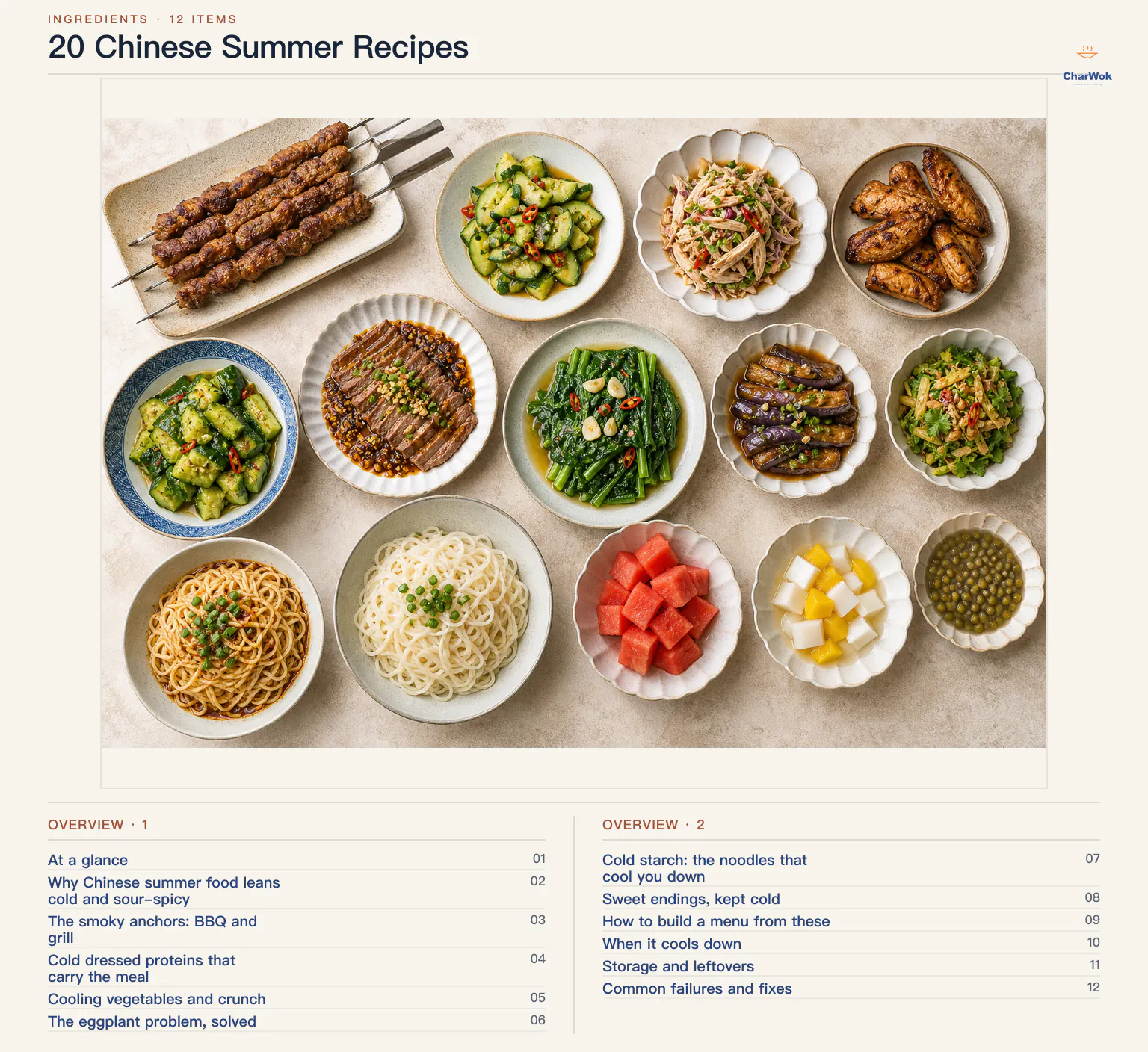
Twenty dishes, four roles: grill-and-roast for the smoky anchor, cold dressed proteins for the cooling center, crunchy vegetables for relief, cold starch and sweets to finish. Pick one from each column and you have a complete summer spread. Most cold items keep three days and improve overnight, so a single cooking session feeds you twice.
Why Chinese summer food leans cold and sour-spicy
Two forces shape this cooking. The first is heat itself: stir-frying at full blast in August is miserable, so the repertoire shifts toward steaming, quick poaching, blanching, and grilling outside. The second is appetite. Humidity dulls hunger, and a plain piece of poached chicken tastes of nothing. The Chinese answer is not cold lettuce salad but a punchy dressing, built from three pillars that light and dark soy sauce, vinegar, and chili oil all sit on.
Acid wakes the palate. A small amount of black rice vinegar, with its malty depth, or a brighter rice vinegar, cuts through fattiness the same way lemon does in Western cooking. Chili brings a different trick: capsaicin makes you sweat, and sweating cools you, which is why the hottest regions of China eat the spiciest food in the hottest months. The numbing tingle of freshly ground Sichuan peppercorn keeps the heat interesting instead of one-note.
So the pattern across these twenty recipes is not random. Nearly every cold dish runs the same engine: a neutral base (chicken, tofu, cucumber, noodle) carrying a dressing built on soy, vinegar, aromatics, and chili oil. Master that ratio once and you can riff forever.
The smoky anchors: BBQ and grill
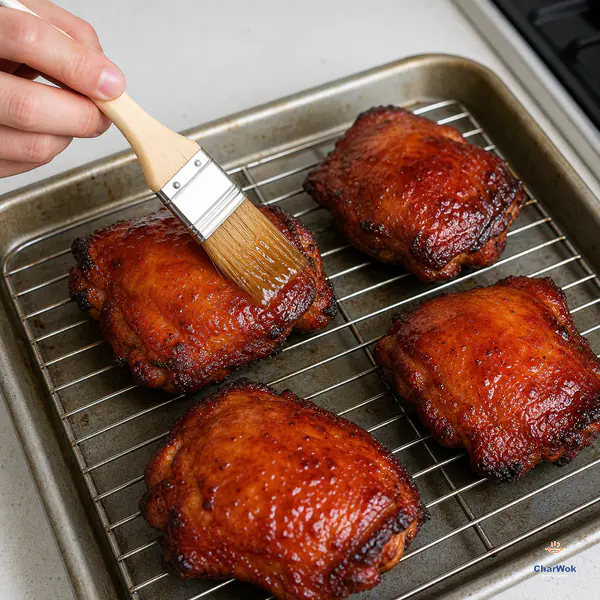
Dry the marinated surface before cooking, then add only a thin honey or maltose glaze near the end so the edges caramelize under the final high heat instead of scorching.
Every summer spread needs one warm, fragrant centerpiece that you can mostly ignore while it cooks. These four do exactly that. Char siu-style BBQ ribs get their lacquered glow from a marinade of hoisin, honey, and five spice, then roast low so the fat renders before a final blast caramelizes the edges. The same thinking drives char siu chicken, which I prefer done in the air fryer on a weeknight because the concentrated heat mimics a hanging roast in a fraction of the time.
For outdoor grilling, cumin-and-chili lamb skewers (yang rou chuan'r) are the obvious choice, seasoned in the Xinjiang street style. The trick is fat: thread a piece of lamb fat between every two or three lean pieces so the meat bastes itself over the coals. And if you want the dish that defines Sichuan cold poultry, mouth-watering chicken (kou shui ji) belongs on the same table as the grilled meat. Poach the bird gently, shock it in ice water for tight, juicy skin, then drown it in a chili-oil sauce that uses the poaching broth as its base.
Cold dressed proteins that carry the meal
Once you have one warm centerpiece, the rest of the table can be cold. Cold poultry and pork are where Chinese cooking shows its restraint, because the meat is barely seasoned on its own and all the character lives in the sauce.
| Dish | The move that makes it | Serves as |
|---|---|---|
| Bang bang chicken | Beat the poached breast with a cleaver to shred the fibers so the sesame-chili sauce clings | Main or sharing plate |
| Scallion oil chicken | Slow-pour smoking-hot oil over minced scallion and ginger to bloom their aroma | Main or sharing plate |
| Sichuan garlic pork slices (suan ni bai rou) | Slice chilled pork belly paper-thin against a cucumber roll so each bite is fat, lean, and crunch | Appetizer |
A note on poaching, because it is the step that fails quietly: never let the water return to a hard boil once the bird is in. Hold a bare shimmer, around 85 to 90 C (185 to 195 F), until the thickest part reads 74 C (165 F). A rolling boil tightens the muscle fibers and squeezes out the juice, and no sauce rescues dry chicken. I have ruined more breasts this way than I care to admit.
Cooling vegetables and crunch
This is the section you will reach for most. Cold vegetable dishes are fast, cheap, and the part of the meal that actually makes the heat bearable. They share a single method: break the vegetable open so dressing can get in, then hit it with soy, vinegar, garlic, and chili oil.
The archetype is smashed cucumber salad (pai huang gua). You whack the cucumber with the flat of a cleaver rather than slicing it, because irregular, fractured surfaces hold the dressing where a clean cut would let it pool at the bottom of the bowl. From there the family branches out: napa cabbage salad uses the crisp inner leaves as a vehicle for a tangy dressing with crunchy toppings, while spinach salad with ginger dressing relies on a quick blanch, a thorough squeeze, and a bright ginger-soy finish.
Two more deserve a permanent spot. Silken tofu with scallions and soy is the closest thing to a no-cook main in this list. Spoon the sauce over cold tofu straight from the fridge and dinner exists in five minutes. And wood ear mushroom salad is the texture people cannot place until you tell them, springy and crunchy at once; rehydrate the dried mushrooms fully, blanch them briefly, and the dressing does everything else. For something literally hands-off, five spice edamame is just steamed soybeans tossed with homemade five spice and salt, the kind of snack that disappears before it reaches the table.
The eggplant problem, solved
Eggplant is the hard case of summer vegetables. Deep-fry it and you get silk, but you also get a kitchen full of oil. The fix here is steam, and steamed eggplant with chili garlic dressing proves the point. Eight minutes in a bamboo steamer collapses the flesh into something creamy, then a cold pour of garlic, chili, and vinegar brings it back to life. Served chilled, it is one of the most refreshing things you can make from a vegetable most people only know fried.
Cold starch: the noodles that cool you down
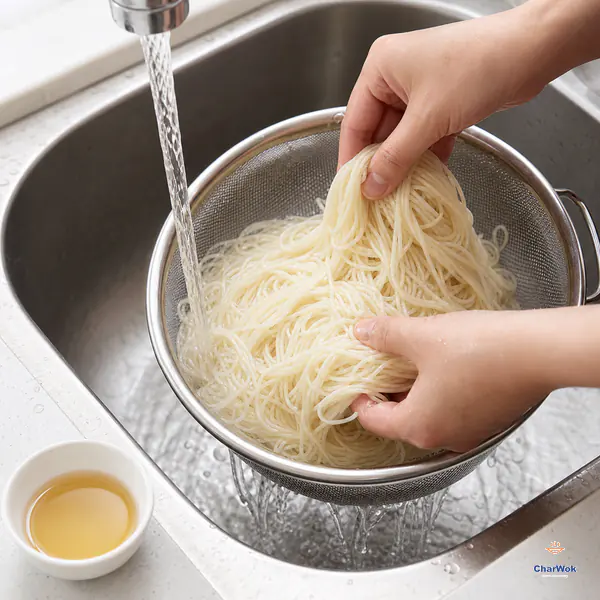
Rinse cooked noodles under running cold water until completely cool, loosen every strand, drain well and add only a thin film of sesame or cooked oil before keeping the dressing separate until serving.
If cold vegetables are the relief, cold noodles are the meal. There is real science behind why a bowl of chilled, dressed noodles feels cooling: cold starch does not trigger the same thermic response as a hot bowl, and the slick of sauce slows eating, which slows heat generation. Every dish in this group runs the same engine, a neutral starch base with a soy-vinegar-chili dressing, but each uses a different noodle and therefore a different texture.
| Noodle dish | Texture | Notes |
|---|---|---|
| Sichuan cold noodles (liang mian) | Chewy wheat strands | Toss with chili oil and sesame paste; top freely |
| Sesame noodles (ma jiang mian) | Thick, coating | The sauce must loosen with warm broth or water before it meets the noodles |
| Glass noodle salad | Slippery, springy | Vegan-friendly, gluten-free with bean threads |
| Mung bean jelly noodles (liang fen) | Soft, jiggly, cooling | Make the jelly from scratch and cut just before serving |
One ingredient worth its own shelf is Chinese sesame paste, the thick, roasted paste that gives sesame noodles and many Sichuan dressings their body. Peanut butter is the usual substitute and it works, but it is sweeter and less toasted. Warm the paste and thin it with the noodle cooking water or broth before it touches anything else; a cold lump of paste will never emulsify and you will fight it the whole time.
If you want to keep a batch of the chili component on hand, a jar of chili oil in the fridge is the single best investment for summer cooking. Spoon it over cold noodles, spoon it over cold chicken, spoon it over silken tofu. It is the through-line of nearly every dish here.
Sweet endings, kept cold
Western summer desserts lean on the oven. These two do not. Red bean popsicles are a four-ingredient nostalgia project, just cooked adzuki beans, sugar, water, and a little milk or coconut milk frozen in molds. They are the popsicle I remember from childhood, and they are nearly impossible to buy at that quality. For something to serve guests, Hong Kong-style mango pancakes wrap fresh mango and softly whipped cream in a thin, elastic crepe. The crepe batter needs the melt-in-the-mouth flexibility that comes from a little cornstarch and a long rest, so make the batter the morning you plan to fill them.
How to build a menu from these
Resist the urge to make all twenty. A good summer table is three to five dishes with contrast built in. My default spread: one warm centerpiece (lamb skewers off the grill, or char siu chicken from the air fryer), one cold dressed protein (mouth-watering chicken), two cold vegetables (smashed cucumber plus wood ear mushroom), a cold noodle, and popsicles waiting in the freezer. That gives you hot and cold, soft and crunchy, mild and spicy, and exactly one thing that demands your attention at the stove.
If you are cooking for a crowd and want to spread the work, several of these are natural make-ahead dishes. Cold proteins and dressed vegetables are better on the second day once the flavors marry, so poach the chicken and mix the cucumber the night before. Only the noodles and the desserts want to be finished close to serving.
When it cools down
Seasons flip fast. When the table turns from cooling salads to braises and soups, the sister collection of warming recipes for chilly days picks up the other half of the year. The pantry is the same, only the cooking changes.
Storage and leftovers
Most dressed cold dishes keep three days refrigerated and genuinely improve overnight, with one rule: store the dressing and the base separately when you can. Smashed cucumber and spinach wilt fast once salted, so dress them the day you eat them. Cold noodles will absorb sauce and turn gummy by day two, so refresh with a splash of water and a little extra chili oil before serving. Reheat grilled ribs and char siu chicken gently, covered, at 160 C (320 F), to warm through without drying the edges.
Common failures and fixes
- The dressed dish tastes flat. Almost always missing acid or salt at the finish. Add rice vinegar a half-teaspoon at a time and taste; cold food needs more seasoning than hot because chill dulls the palate.
- Cold chicken is dry and stringy. You poached it too hot or too long. Next time hold a bare shimmer at 85 to 90 C (185 to 195 F) and pull the bird at 74 C (165 F) internal, then ice-bath it immediately.
- The chili oil dressing splits and pools. Emulsify it. Whisk a spoonful of warm broth or water into the sesame paste first to loosen it, then stream in the chili oil while beating; never add loose oil straight to noodles.
- Smashed cucumber leaks a puddle. Salt the broken pieces and let them sit ten minutes, then squeeze out the water before dressing. Skipping this step dilutes everything.
- Mung bean jelly falls apart when cut. It was undercooked or under-set. The starch must come to a full boil and cook three to four minutes more to fully gelatinize, then chill until completely firm, at least four hours.
Related recipes & further reading
Once the cold-table logic clicks, the same dressings and textures carry over to a wider circle of dishes worth keeping in rotation. The cucumber-and-tofu playbook extends into other cold starters, the cold-noodle family runs deeper than the four above, and the dessert shelf has room for more than popsicles. These thirteen recipes share the engine behind this collection, with two wider lists for branching out once the heat breaks.
- Cucumber salad, three ways: more cold-cucumber riffs built on the same soy-vinegar-chili engine.
- Northeast tiger salad: a sharp, peppery raw-vegetable plate for the hottest afternoons.
- Steamed enoki mushrooms: a five-minute steamer dish that needs no stove time.
- Homegrown mung bean sprouts: crisp sprouts you grow on the counter for cold crunch.
- Eggplant with plum sauce: eggplant's sweet-tart sibling, good warm or chilled.
- Cold soba noodles in beef broth: Yanji-style chilled noodles for serious heat.
- Sweet water noodles (tian shui mian): chewy wheat strands in a sweet-soy-chili sauce.
- Liang pi cold skin noodles: hand-cut wheat noodles with a vinegar-chili dressing.
- Mango sago with grapefruit: a cold, creamy fruit dessert for the end of the meal.
- Homemade bubble tea: three ways to brew and assemble boba at home.
- Spicy orange beef: a fast stir-fry that runs the chili-and-acid engine with citrus.
- Core Chinese cooking skills: a wider technique-first guide that connects wok dishes, braises, and dough.
- Must-try authentic Chinese recipes: a curated starter set that overlaps the summer lineup.
Questions home cooks actually ask
A few things come up again and again when readers start working through these recipes. Here are the short answers; the full reasoning lives in each dish's own page.
Where to start
If twenty feels like too many, begin with three. Make the smashed cucumber for the crunch, the mouth-watering chicken for the show, and the cold Sichuan noodles for the meal. That trio teaches the whole logic of summer Chinese cooking, the cold base, the punchy dressing, the contrast of textures, and once it clicks you will reach for the rest of the collection without a recipe.