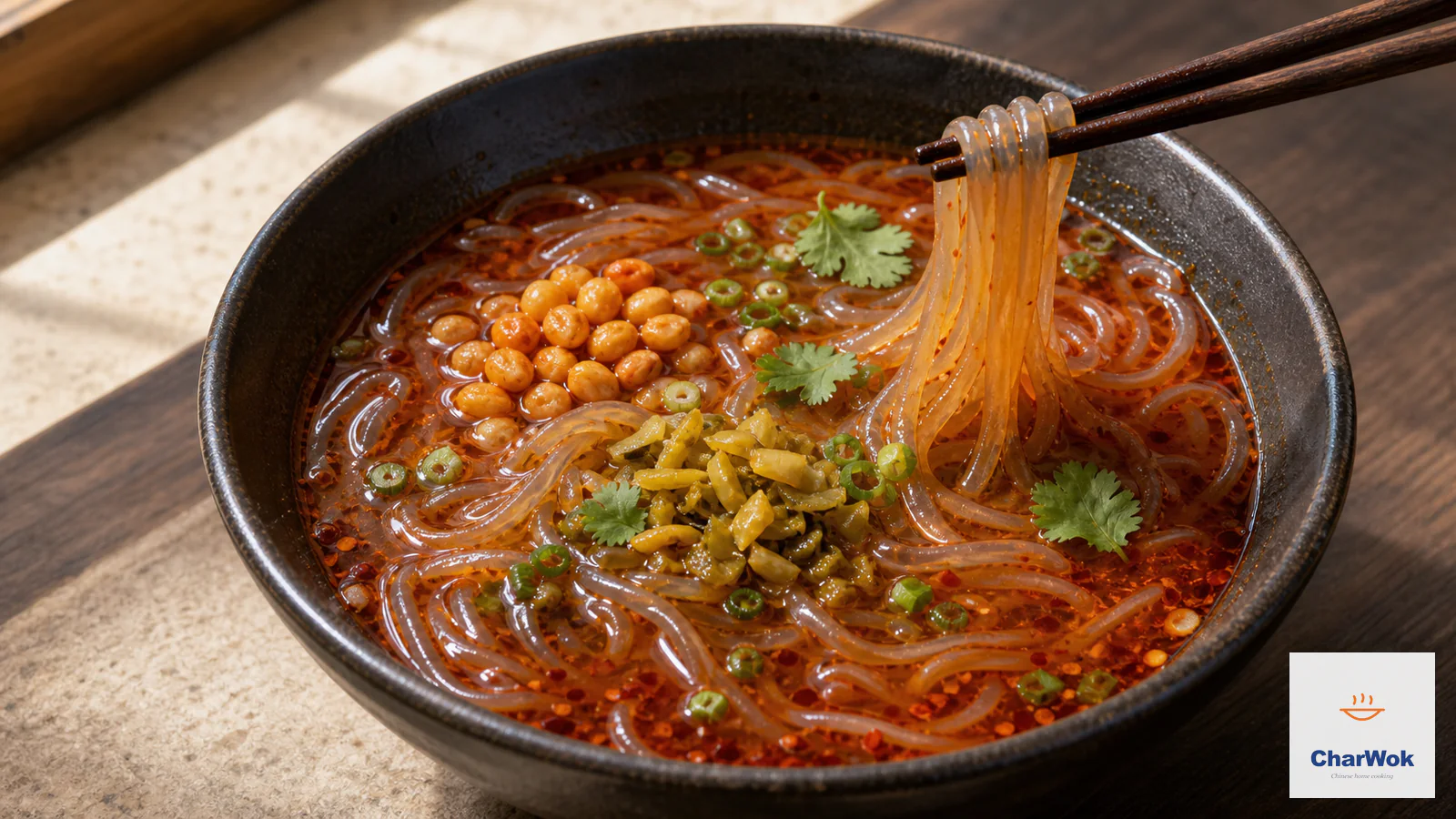
Acid, chili heat, and the strange tingling buzz of Sichuan pepper, all riding a slippery sweet-potato noodle through a bowl of hot broth. That is Suan La Fen (酸辣粉), the street-food noodle soup that has ruined me for bland lunches. The pain point I want to solve here is the home version that disappoints: noodles that turn to paste, broth that tastes only of soy sauce, garnishes that go soft before the first slurp. None of that is hard to avoid once you understand what each component is doing.
Build the bowl like a vinaigrette, not a stew. Two tablespoons of black rice vinegar against two of chili oil per 2 cups (480 ml) of unsalted stock is the ratio that lands between bright and brutal, and the noodles get boiled separately, never in the soup.
What Suan La Fen actually is
This is a Chongqing-born street snack, part of the broader Sichuan and Chongqing mala family but built on starch noodles rather than wheat. The noodles are fen tiao, extruded from sweet potato starch and sold dry in coils. Cooked, they go translucent and take on a chew that wheat noodles cannot: bouncy, slightly resistant, almost glassy. That chew is the whole reason the dish exists.
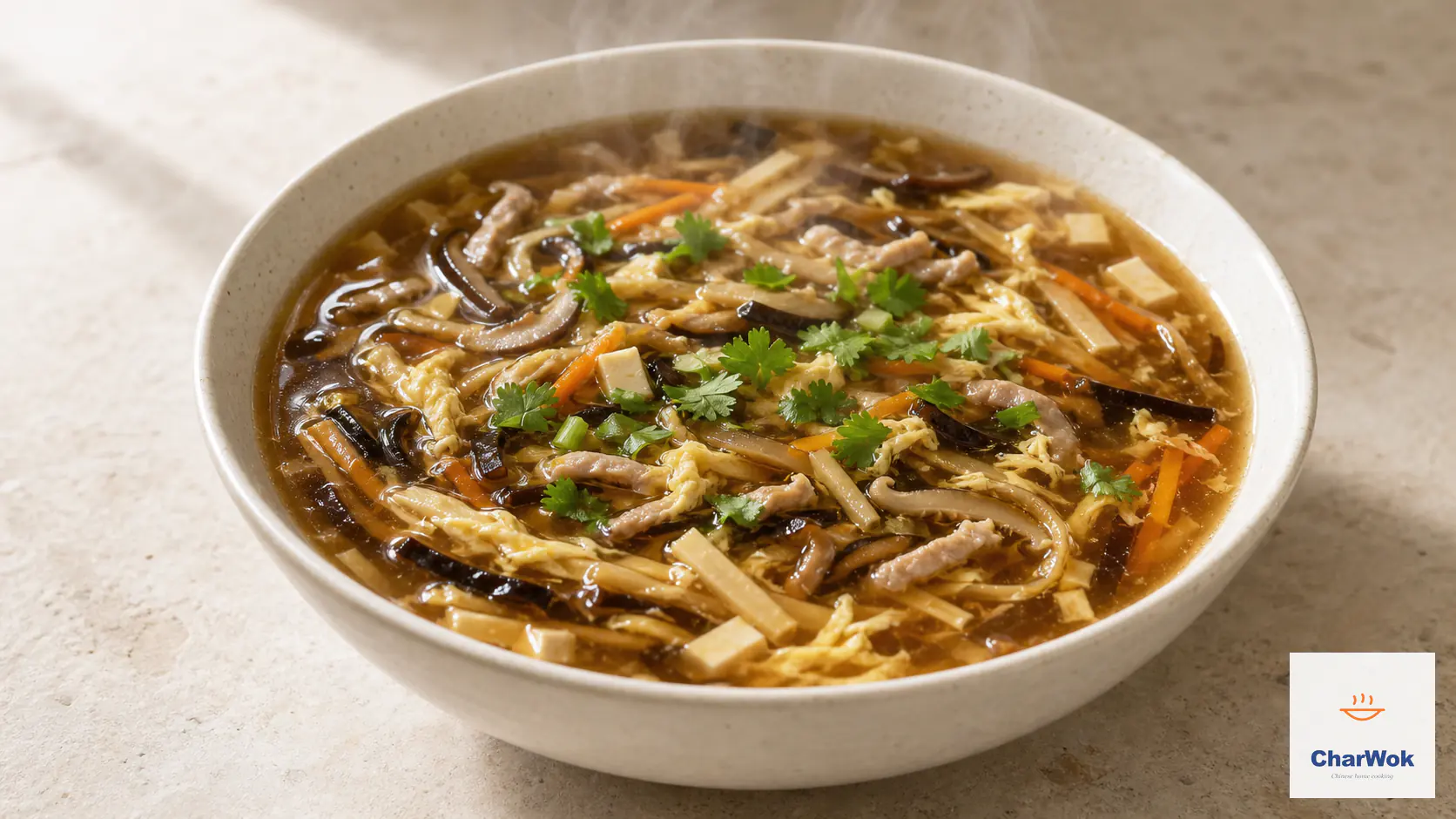
Do not confuse this with wheat-noodle Suan La Mian, the close cousin that swaps in regular noodles and reads as a different dish. And it is distinct from the thickened, cornstarch-bodied hot and sour soup you know from takeout menus; Suan La Fen is a clear, brothy soup where the body comes from stock, not slurry.
Ingredients
Ingredients at a glance
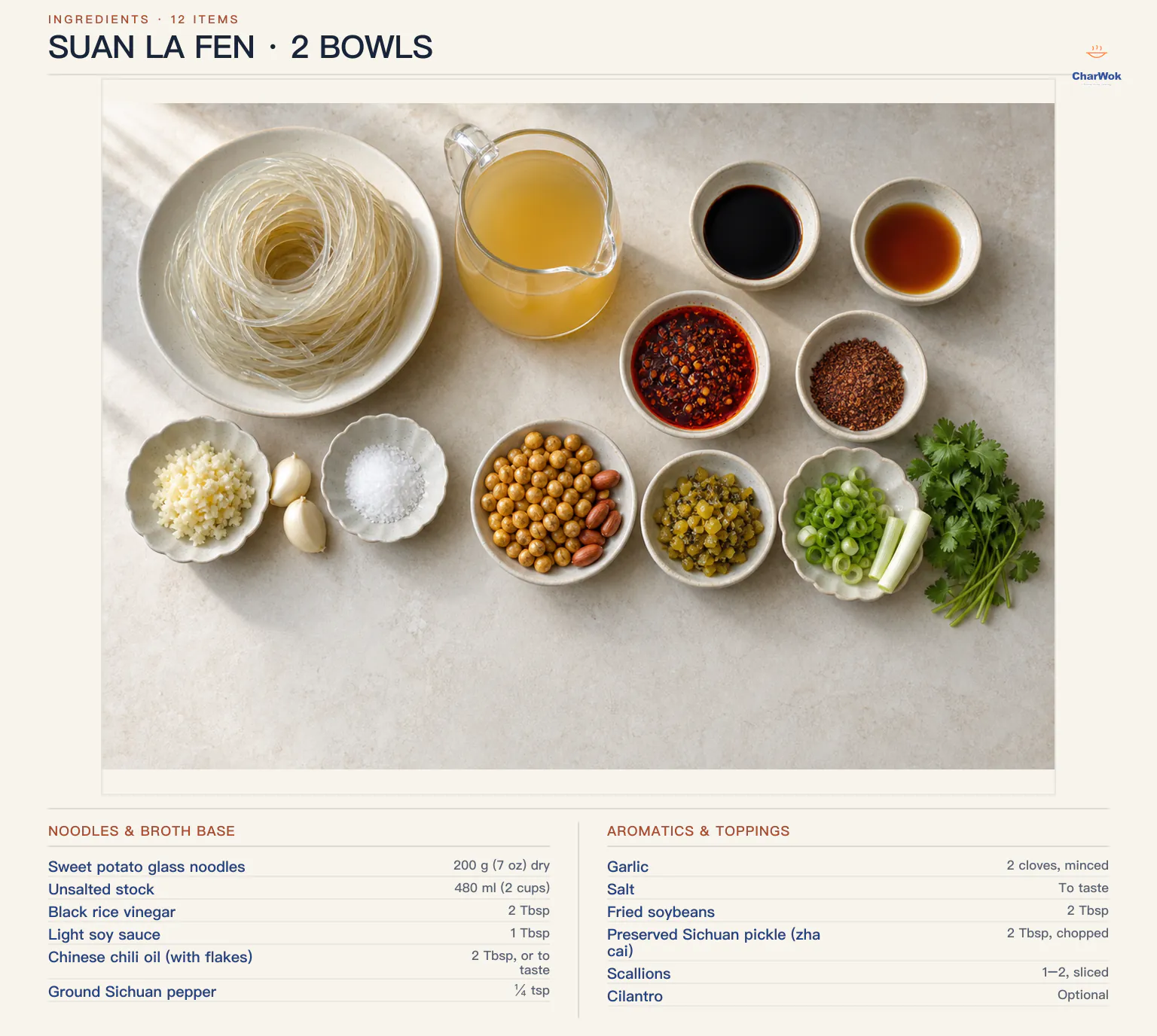
Two bowls. Quantities are per-bowl where noted.
| Ingredient | Amount (for 2 bowls) | Notes / substitute |
|---|---|---|
| Sweet potato glass noodles | 200 g (7 oz) dry | True fen tiao. Mung bean vermicelli (bean thread) works but is thinner and softer; cut the boil by half. |
| Unsalted stock | 480 ml (2 cups) | Chicken or vegetable. See homemade chicken stock; bouillon + hot water is fine in a pinch. |
| Black rice vinegar | 2 Tbsp | Zhenjiang / Chinkiang vinegar is the right one. White rice vinegar is too sharp; read about black rice vinegar to see why the malt-like depth matters. |
| Light soy sauce | 1 Tbsp | Light, not dark. Light vs. dark soy sauce matters here; dark will muddy the bowl. |
| Chinese chili oil (with flakes) | 2 Tbsp, or to taste | The chili-and-sediment kind. Make your own chili oil for a fresher, fruitier heat. |
| Ground Sichuan pepper | ¼ tsp | Freshly ground. How to grind Sichuan pepper correctly, since stale powder tastes like dust. |
| Garlic | 2 cloves, minced | Finer than you think. Raw garlic carries in hot broth. |
| Salt | To taste | Only if your stock and soy are unsalted enough; taste first. |
| Fried soybeans | 2 Tbsp | For authentic crunch. Roasted peanuts are the easy swap. |
| Preserved Sichuan pickle (zha cai) | 2 Tbsp, chopped | The salt-sour-crunchy garnish. Rinse briefly if very salty. |
| Scallions | 1–2, sliced | Garlic sprouts are the traditional swap. |
| Cilantro | Optional | Add at the end; it wilts fast. |
The three things you have to get right
Everything else is flexible. These three are not.
Soak before you boil. Dry sweet-potato noodles are brittle and the outside will overcook before the inside softens if you throw them straight into boiling water. A 30-minute warm-water soak hydrates the starch evenly so the final boil only sets the texture. Skip this and you get noodles that are mushy on the outside, chalky at the core.
Boil noodles in their own water, never in the soup. Starch leaches out of these noodles fast. If you boil them in the stock, the broth turns cloudy and thickens in an unpleasant way and you lose the clean, sharp contrast that defines the dish. Use a separate pot of plain water, then drain well.
Treat the broth base like a vinaigrette. The vinegar, soy, chili oil, Sichuan pepper, and raw garlic go into the empty bowl first or get stirred into the hot stock off the heat. The goal is a seasoning layer that hits before the stock dilutes it. If you add everything to a big pot of stock and simmer, the raw garlic cooks off and the vinegar volatilizes and you end up with a flat, dull bowl.
Method
- Soak the noodles (30 min). Put the dry sweet-potato noodles in a bowl of warm tap water, around 40°C / 105°F. They are ready when you can bend a strand into a circle without it snapping. Drain and leave them in the colander; do not let them sit in water past this point or they turn gummy.
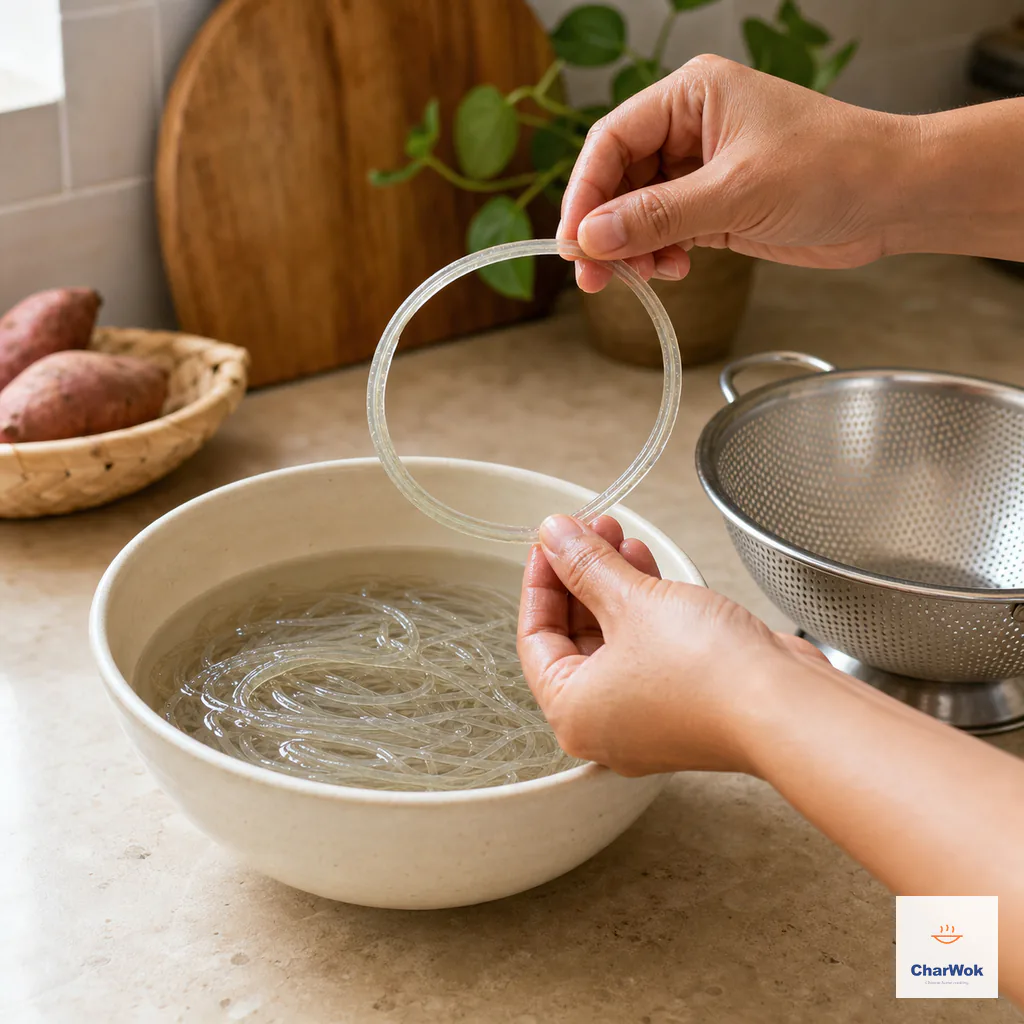
Soak for 30 minutes, then check that a strand bends easily before draining.
- Optional: fry the soybeans. If you are not using roasted peanuts, soak dried soybeans overnight, drain and pat very dry, then shallow-fry in 1 cm (½ inch) of oil over medium heat until deep golden and the skins blister. Drain on paper. They keep for days in a jar and are a good snack on their own.
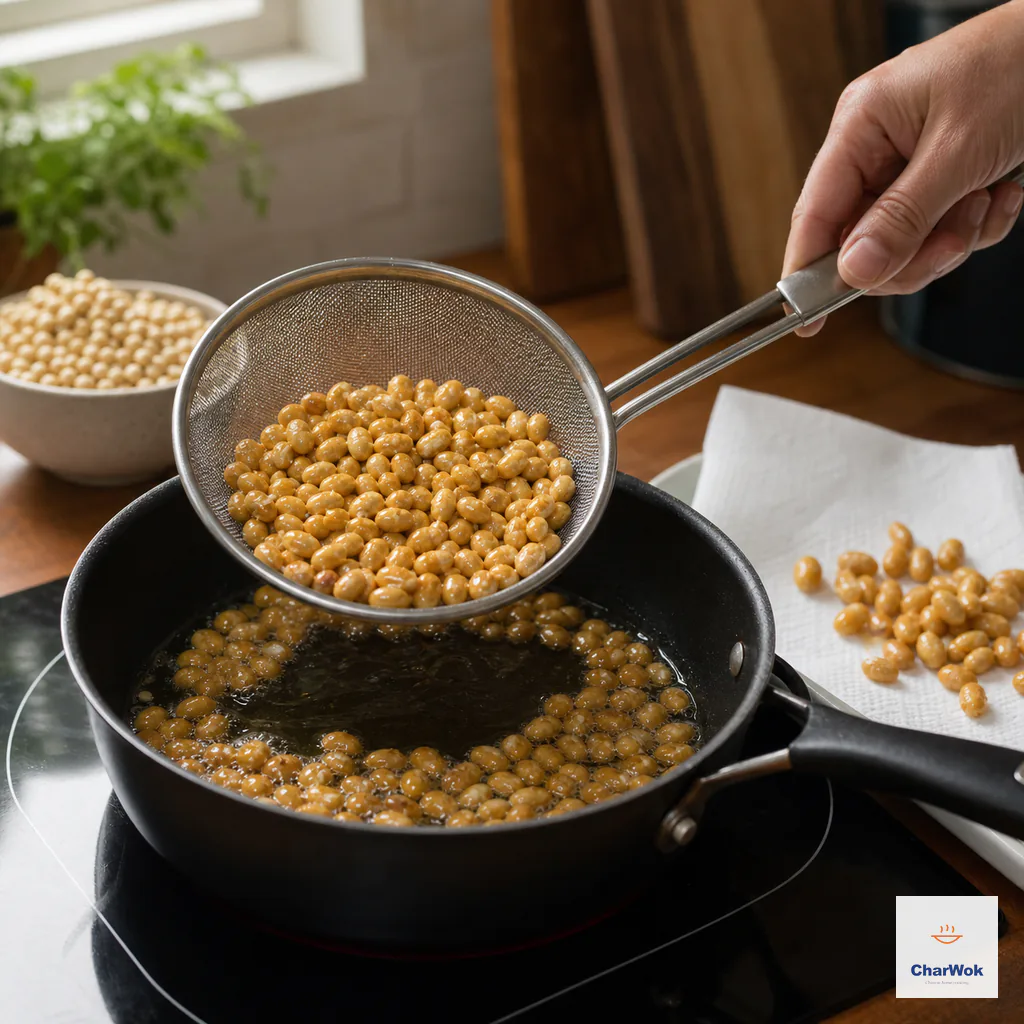
For the optional topping, dry soaked soybeans thoroughly and shallow-fry until deep golden and blistered.
- Heat the stock. Bring the 480 ml stock to a bare simmer in a small pot. Keep it hot. Cold stock kills the dish because it will not bloom the raw garlic or carry the chili oil.
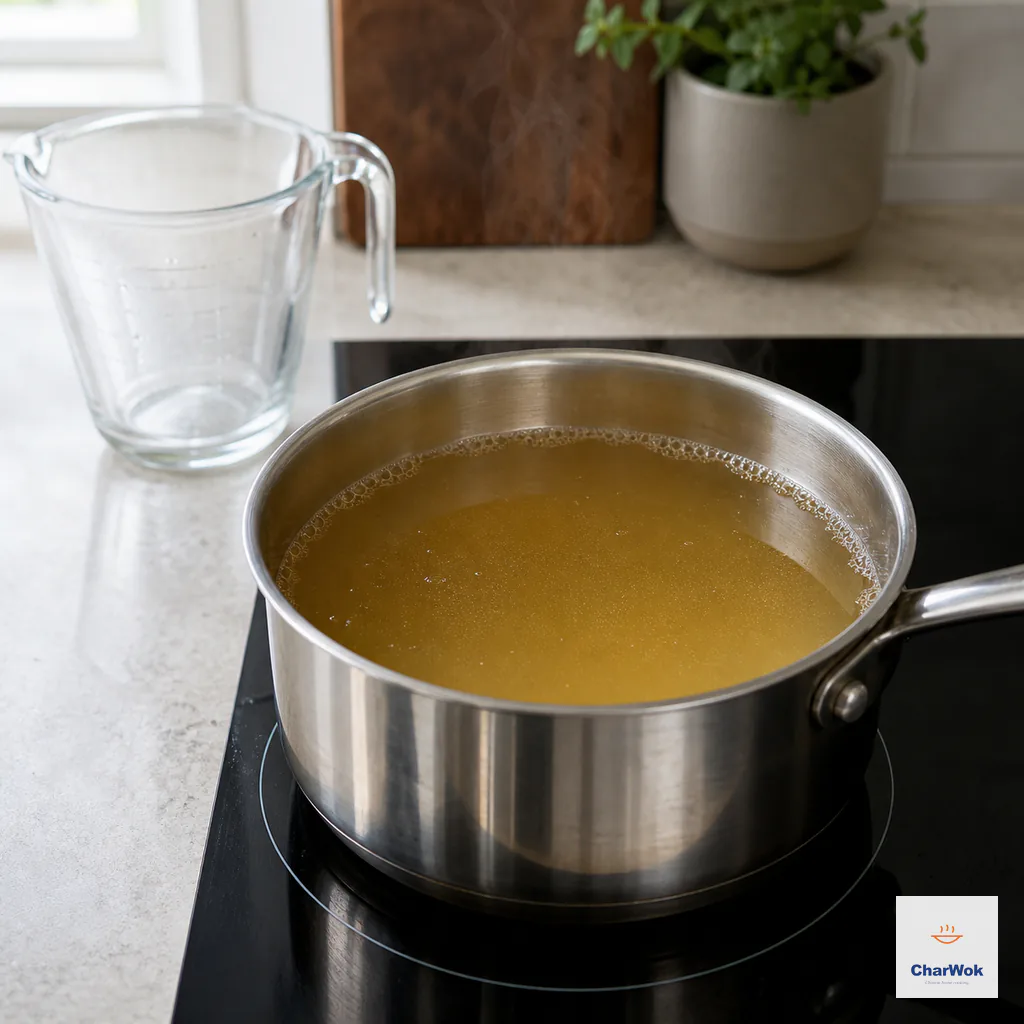
Bring the stock to a bare simmer and keep it hot while the noodles cook separately.
- Boil the noodles separately. In a separate large pot, bring plenty of unsalted water to a rolling boil. Drop in the soaked noodles. Sweet-potato noodles are forgiving but still overcook; start tasting at 2 minutes. You want translucent strands with a bouncy snap that just yields between your teeth. Expect 2–4 minutes. Mung bean vermicelli will be done in under a minute. Drain immediately and shake off every drop of water.
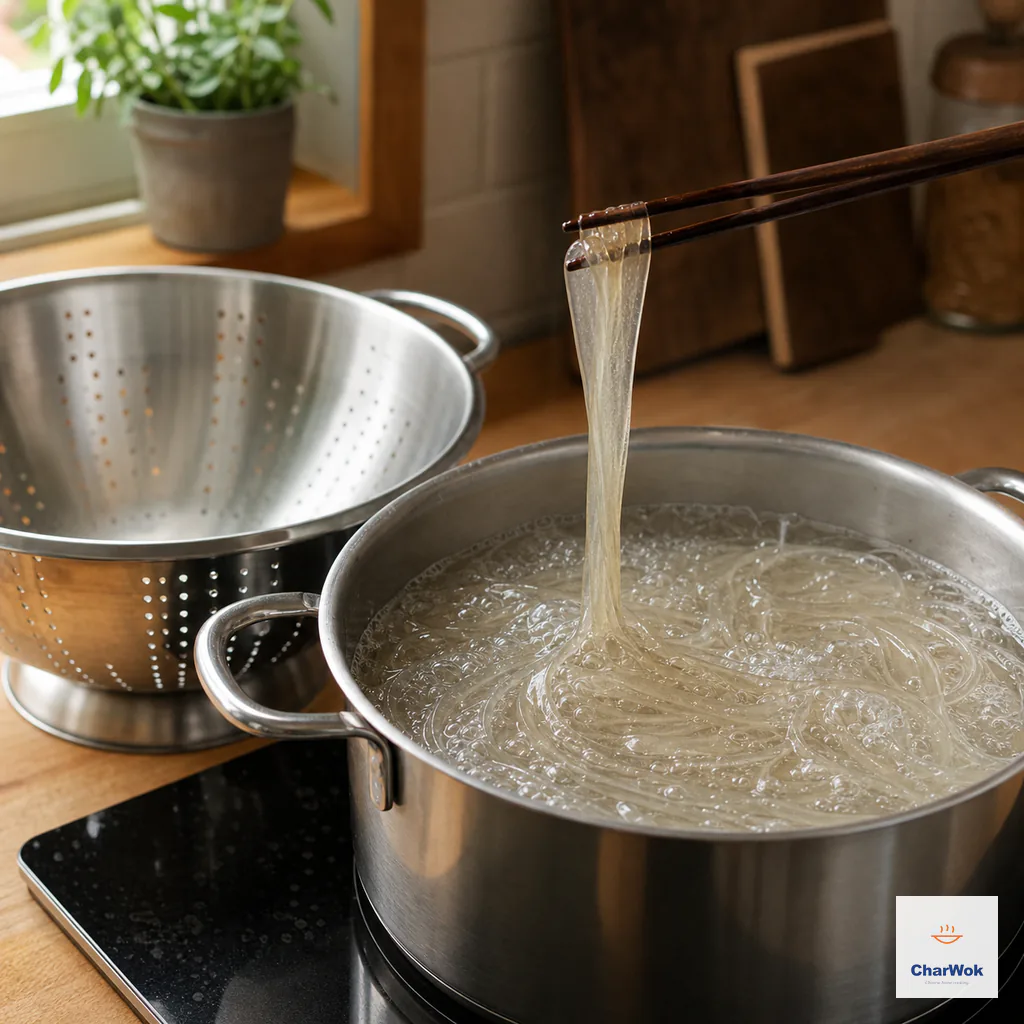
Boil in abundant unsalted water for 2–4 minutes; drain as soon as the noodles turn translucent and bouncy.
- Build the seasoning base. Into each empty serving bowl put half the black rice vinegar, light soy sauce, chili oil, ground Sichuan pepper, and minced garlic. Do not stir yet. Putting the seasoning at the bottom means the hot stock and noodles will mix it evenly as you serve.
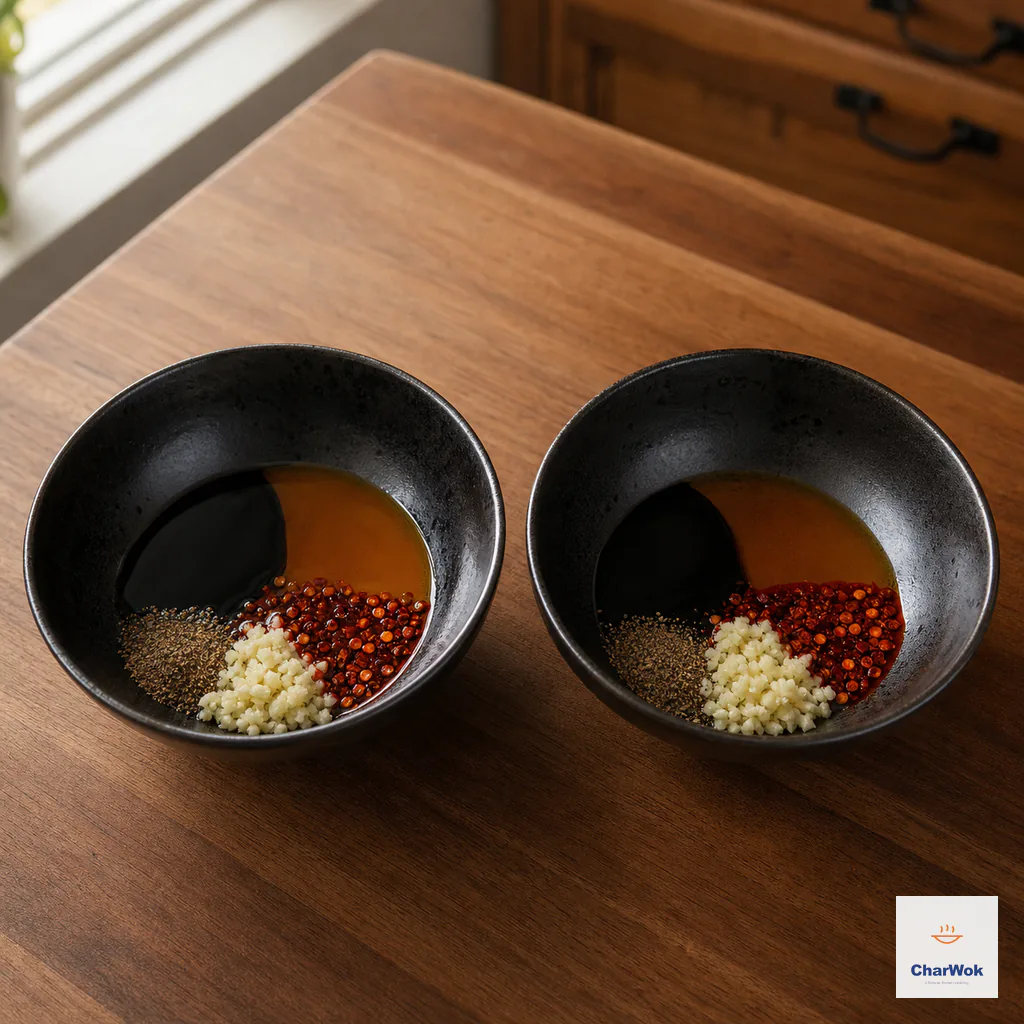
Divide the five seasonings between two empty bowls and leave them unstirred until the stock arrives.
- Combine and taste. Pour the hot stock into the bowls and stir well so the chili oil emulsifies into the liquid rather than floating in a red slick. Taste the broth now. Add salt only if it reads flat; the zha cai and soybeans are salty, so you usually need very little.
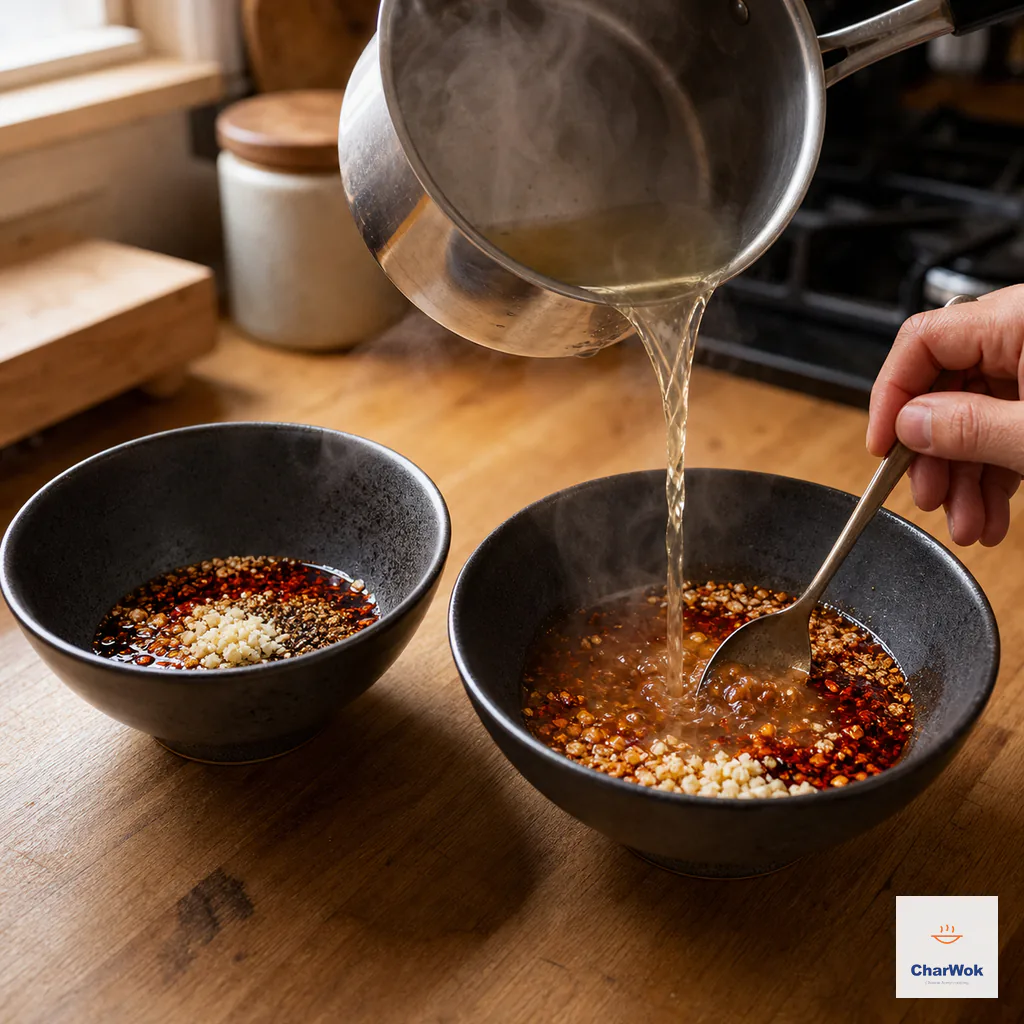
Pour in the hot stock, stir to emulsify the bowl base, then taste before adding salt.
- Finish and serve immediately. Divide the drained noodles between the bowls. Top with fried soybeans (or peanuts), chopped zha cai, scallions, and cilantro. Serve at once. The noodles keep absorbing broth, so this is a dish to eat the moment it is assembled.
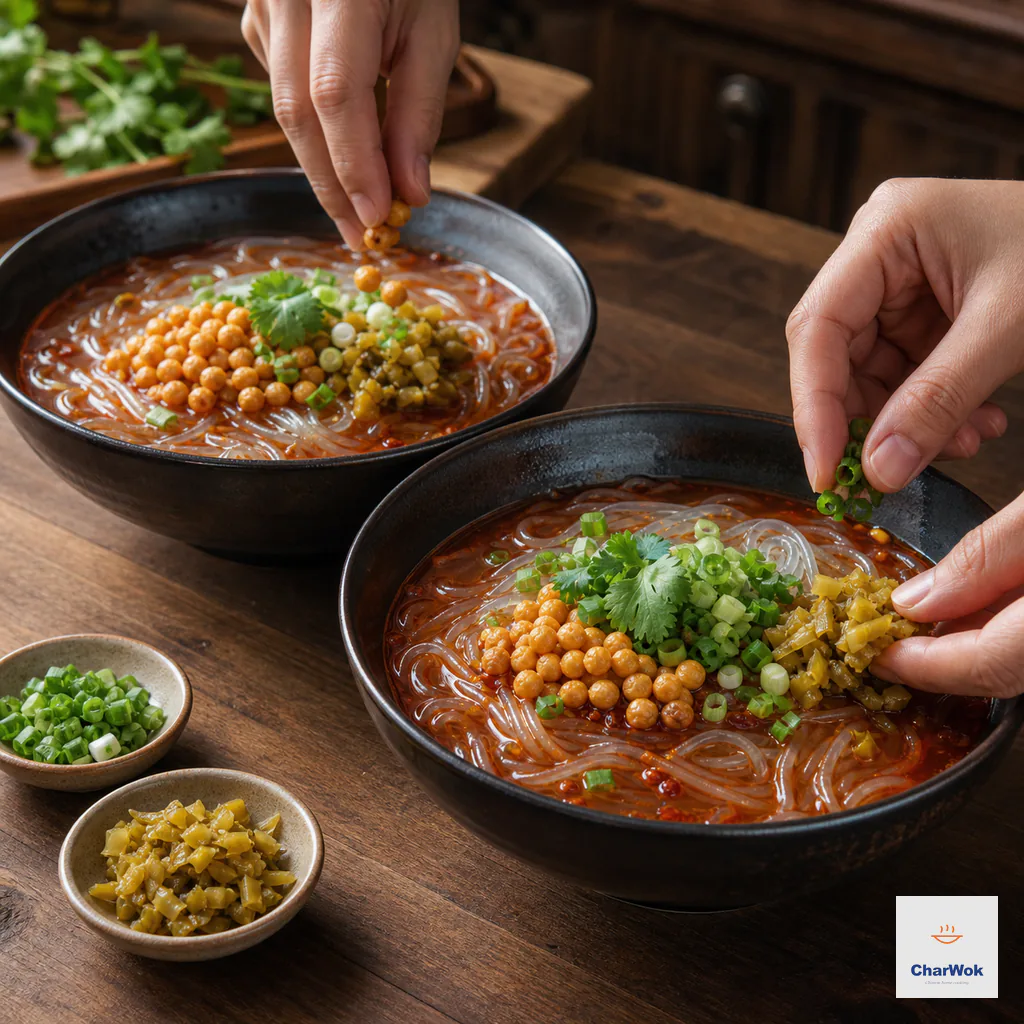
Divide the noodles, add the crisp and fresh toppings, and serve immediately before the noodles swell.
Why the texture goes wrong, and how to fix it
I have wrecked this soup in every way there is. Here is what each failure looks like and what to do.
Noodles turn to slime. Two causes, both common. You skipped the soak and tried to boil them soft from dry, so the outer layer disintegrated. Or you left them sitting in the bowl for ten minutes before eating. Fix: always soak, always serve at once. If you must hold cooked noodles, rinse them under cold water, toss with a few drops of oil, and re-dip in boiling water for ten seconds right before serving.
Bowl is hot but not actually spicy or sour. You cooked the vinegar and garlic. Heat drives off acetic acid and the sulfur compounds in raw garlic, which is great for some dishes and fatal here. Add the vinegar and garlic off the heat, into hot but not boiling stock.
Chili oil floats in an oily red layer on top. That means the stock was not hot enough or you did not stir. The oil needs thermal energy and agitation to disperse. Vigorous stir with chopsticks right after the stock goes in.
Bowl tastes one-dimensional. You probably used table salt instead of letting the zha cai and soy sauce do the salting. The pickle adds a fermented depth that salt cannot replicate; do not skip it. No zha cai? A little chili bean paste (doubanjiang) dissolved into the stock before serving gets you partway there.
Mouth-numbing buzz is missing. Stale pre-ground Sichuan pepper loses its tingle within weeks. Buy whole peppercorns, toast them dry for a minute, and grind fresh. More on this in the Sichuan pepper guide.
Variations and what to serve it with
The broth formula is a frame you can hang other things on.
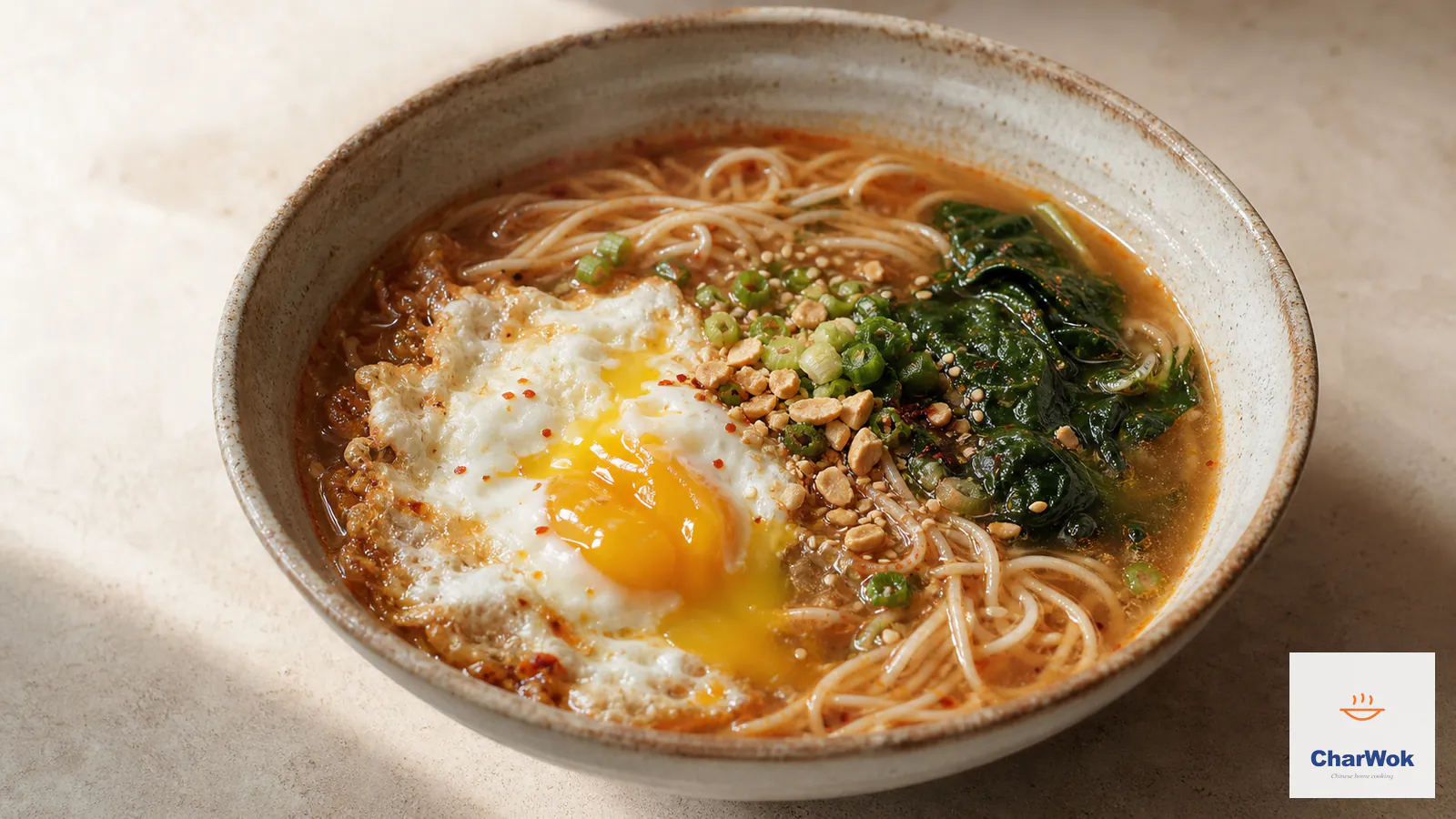
Protein it up. Add a handful of cooked wontons, sliced char siu, or leftover roast chicken. Drop them in hot to warm through. A soft-boiled egg, halved, is a modern addition that reads more ramen-shop than street stall, but it works.
Make it a vegetable bowl. Blanch spinach, mung bean sprouts, or shredded napa cabbage in the noodle water for the last 20 seconds, drain with the noodles, and add to the bowl. A cold smashed cucumber salad on the side cools the heat between slurps. For a heartier vegetable soup built on the same noodles, see glass noodles with napa cabbage.
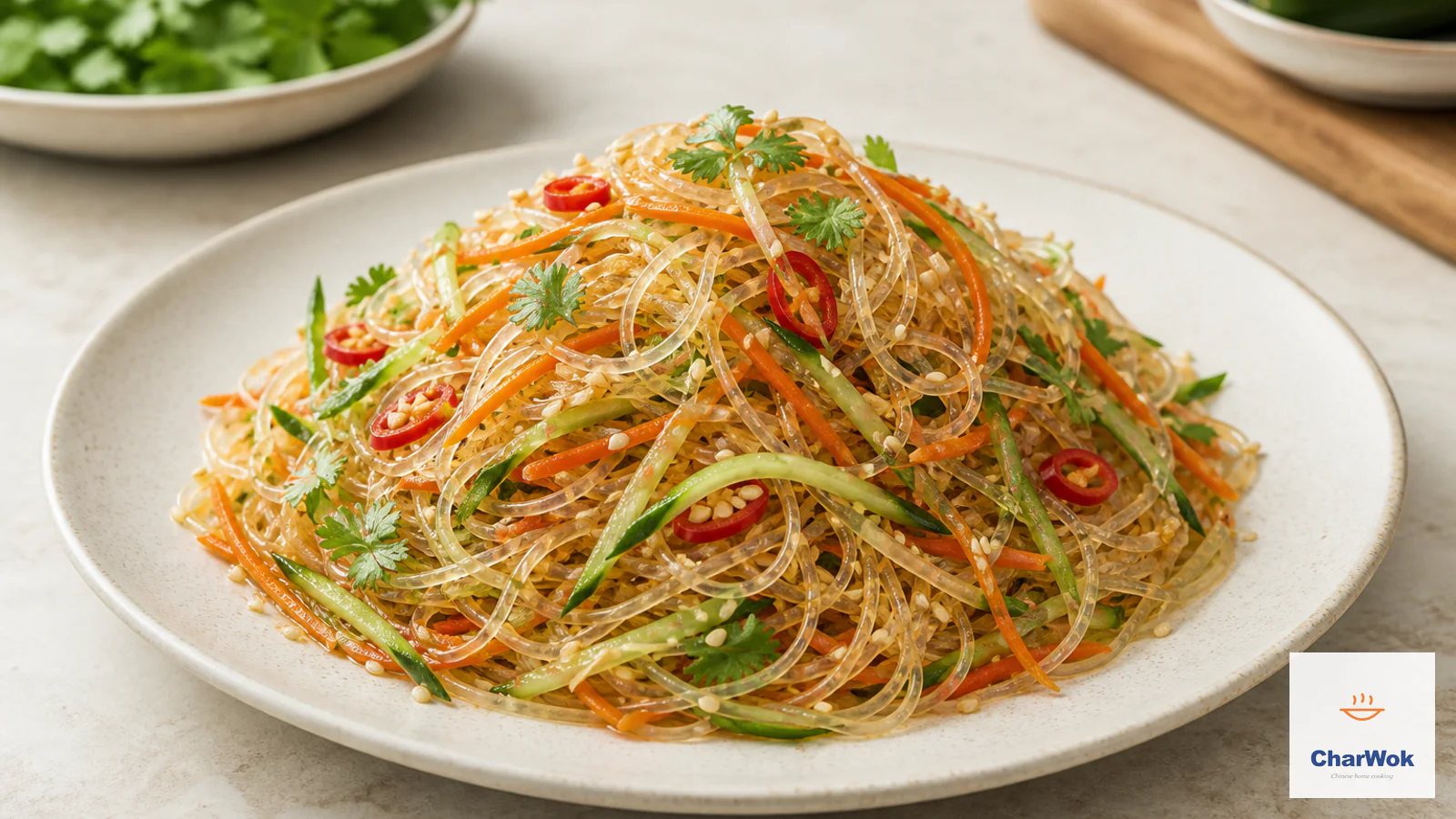
Cool it down for summer. The same noodles, drained and shocked cold, become the base of glass noodle salad or a relative of liang fen, mung bean jelly noodles. The chili-vinegar dressing travels surprisingly well to cold preparations.
Related noodle bowls to explore. If you like the punch of this one, the wheat-noodle cousins Chongqing xiao mian and Dan Dan Noodles live in the same flavor world, as does the sweeter Tian Shui Mian. For more ideas, browse the full collection of Chinese noodle recipes.
Storage and reheating
Assembled Suan La Fen does not reheat well. The noodles keep drinking broth and go soft, and the chili oil separates into a greasy film. The honest move is to store components separately.
Keep soaked, drained noodles in the fridge for up to two days, loosely covered. Reheat by dipping in boiling water for ten seconds. Keep stock and the seasoning base in separate containers and combine only when you are ready to eat. Fried soybeans and peanuts stay crunchy in a sealed jar for a week; zha cai lasts months in the fridge once opened.
Frequently asked questions
Can I use mung bean vermicelli instead of sweet potato noodles?
Yes, but expect a softer, thinner noodle with less chew. Skip the long boil entirely: soaked mung bean vermicelli needs only a 30-second dip in boiling water, sometimes none at all if the stock is very hot.
Is this the same as hot and sour soup from takeout?
No. That soup is thickened with cornstarch and built on pork and bamboo. Suan La Fen is a clear, brothy noodle soup with a brighter acid punch and no thickener. They share a hot-and-sour personality but little else.
How do I make it less spicy without losing the flavor?
Cut the chili oil to one tablespoon and replace the second tablespoon with an equal amount of toasted sesame oil for body. Keep the vinegar and Sichuan pepper at full strength; the sour and tingle are what make the dish recognizable. Skimming the red oil off store-bought chili oil also drops the heat a lot.
Why soak the noodles if I am going to boil them anyway?
Even hydration. A dry noodle dropped into boiling water cooks unevenly, with a mushy exterior around a chalky core. Soaking first lets the final boil only set the chew, which is the whole point of using sweet-potato starch in the first place.
That is the whole dish. Get the soak, the separate boil, and the off-the-heat seasoning right and the rest is dial-twiddling. Eat it the moment it is assembled, while the noodles still have their snap and the broth still bites back.