There is a reason every Northern Chinese household reaches for smashed cucumber salad the moment the weather turns hot. Cold, loud with garlic, slicked with black vinegar and chili oil, it is the dish that cools you down while waking your appetite back up. But most home versions I have eaten outside China get one thing quietly wrong: the cucumber sits in its dressing and weeps until the plate is half a puddle, and the seasoning tastes diluted where it matters most.
The fix is not in the sauce. It is in the smash, and in a ten-minute salt rest most recipes treat as optional. Once you understand what those two steps actually do to the cell walls of the fruit, this becomes a five-minute dish that holds its crunch for an hour on the table, not five minutes.
At a glance: One firm crack per cucumber, not a flurry of taps. Salt it 10 minutes and drain the liquid. Dress right before eating. The ratio to remember is roughly 2 parts light soy to 1 part black rice vinegar, plus 1 teaspoon toasted sesame oil and garlic to taste. That backbone lets you push it toward Sichuan, Cantonese, or northern without rebuilding it.
Why smash at all?
A neat, knife-cut cucumber slice is a closed system. The cut surfaces are smooth, the seeds sit inside an intact membrane, and a dressing poured over it mostly slides off. Smashing changes the geometry in a way a knife cannot. The flat of a cleaver splits the cucumber along its weakest lines, shattering the seed cavity and exposing the spongy, water-holding flesh inside. Those ragged, irregular surfaces are what grab the garlic and vinegar. Smooth cucumber in a smooth bowl of sauce is a salad. Smashed cucumber in the same sauce is the dish.
The smash also does something a food processor cannot: it leaves the skin mostly intact in big, jagged pieces, which is what gives each bite its snap. I have tried the trick of whacking the cucumber with the back of a chef's knife, and it works, but the cleanest results come from the flat of a Chinese cleaver or a heavy rolling pin laid sideways. The key is to commit. One decisive blow per section, enough to crack it open in a single stroke, rather than tapping timidly three or four times in the same spot. Timid tapping bruises the flesh into mush without ever breaking the structure.
Choosing the cucumber
The fruit matters more than the recipe does. You want a cucumber with thin skin, small or nonexistent seeds, and a high water content held in firm flesh. In a Chinese or Asian grocery, look for the long, dark, slightly bumpy cucumbers labeled "Chinese cucumber" or the shorter, nearly seedless Persian cucumbers. English (hothouse) cucumbers work and are everywhere, but they are more watery and a little less flavorful. Standard waxed American slicing cucumbers are my last choice: thick bitter skin, large wet seed cavities, and a texture that turns cottony once salted.
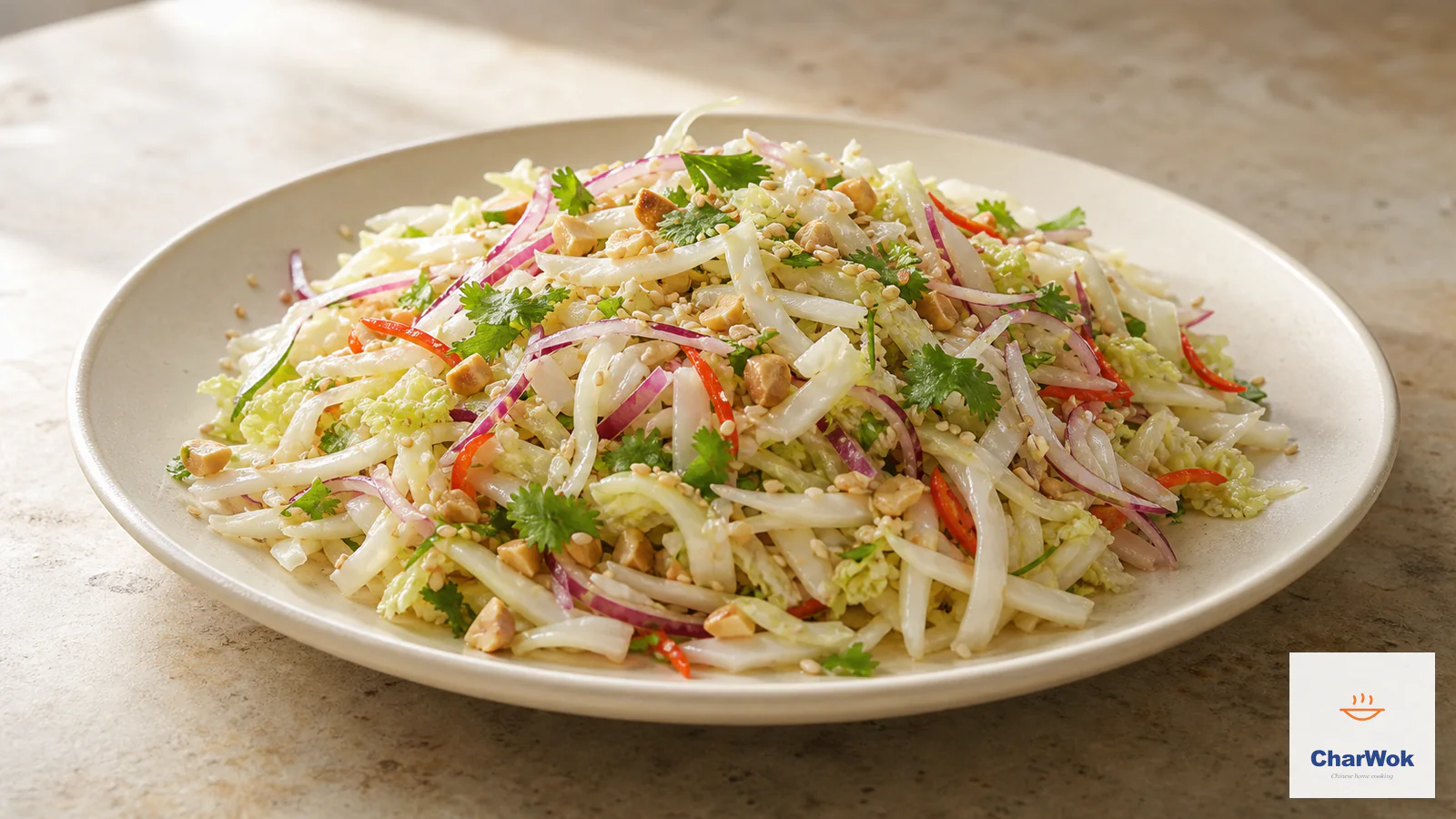
If you are already shopping for this kind of cold vegetable plate, the same store will have everything you need to build a wider spread. Smashed cucumber is the gateway; from there it is a short step to a napa cabbage salad with a ginger-soy dressing, a tangle of spinach with soybeans, or a plate of rehydrated wood ear mushroom in black vinegar. Cold dishes are the backbone of a Chinese summer table, and they share one rule: salt, drain, then dress.
Ingredients
Ingredients at a glance
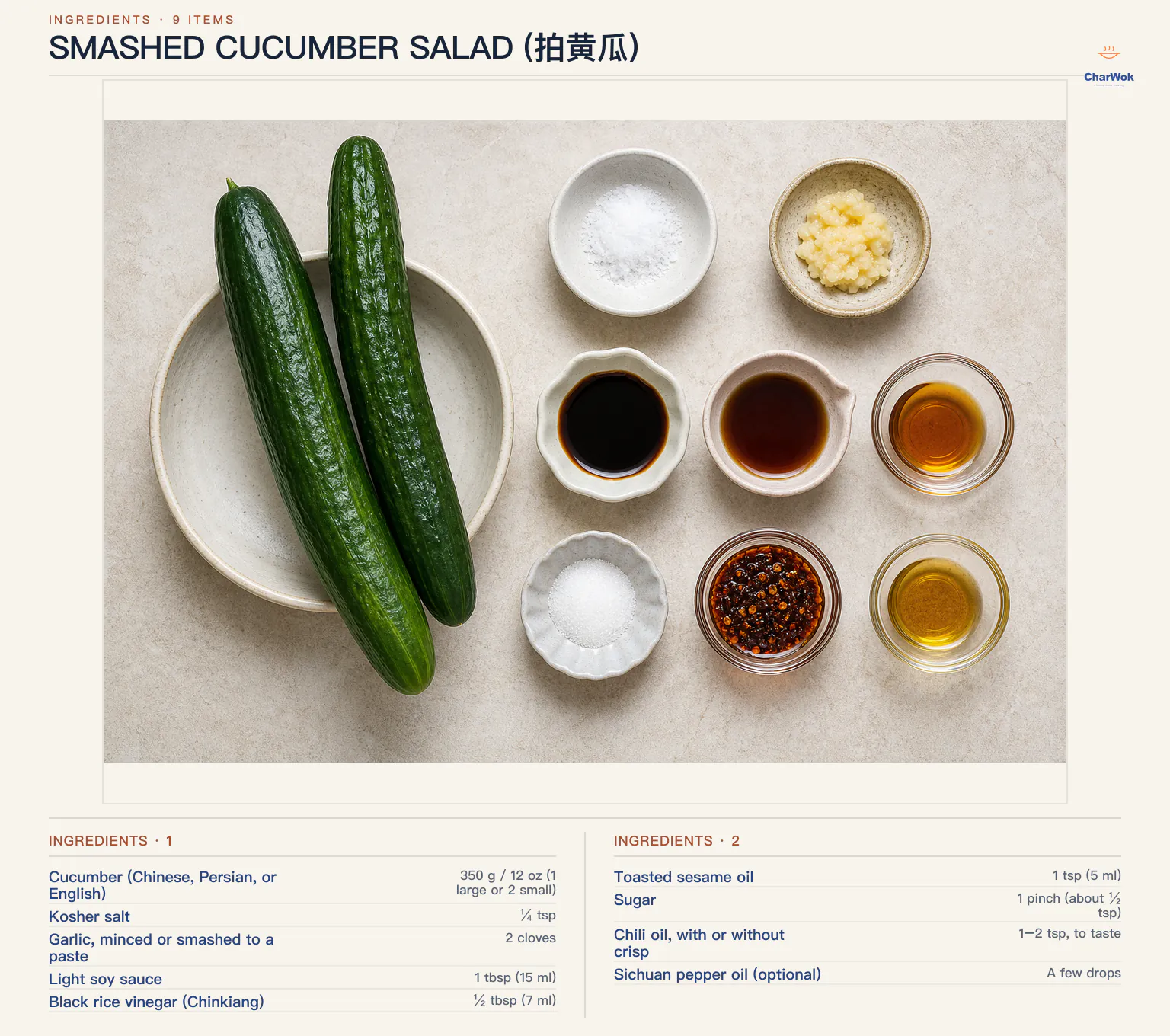
| Ingredient | Amount | Notes / substitute |
|---|---|---|
| Cucumber (Chinese, Persian, or English) | 350 g / 12 oz (1 large or 2 small) | Chinese cucumber is best. Avoid thick-waxed American slicers. |
| Kosher salt | ¼ tsp | Use fine salt; halve if yours is very fine. |
| Garlic, minced or smashed to a paste | 2 cloves | Smash to a paste with the salt for a sharper, more even bite. |
| Light soy sauce | 1 tbsp (15 ml) | See the difference between light and dark soy sauce; you want light here for salt without color. |
| Black rice vinegar (Chinkiang) | ½ tbsp (7 ml) | Read up on black rice vinegar; if you only have rice vinegar, add a few drops of balsamic for depth. |
| Toasted sesame oil | 1 tsp (5 ml) | Use toasted, not untoasted; see Chinese sesame oil. |
| Sugar | 1 pinch (about ½ tsp) | Balances the vinegar; omit only if your vinegar is mild. |
| Chili oil, with or without crisp | 1–2 tsp, to taste | Homemade or a good jarred chili oil. Start with 1 tsp. |
| Sichuan pepper oil (optional) | A few drops | Adds the numbing tingle; grind your own from the Sichuan peppercorn if you keep it whole. |
The method, step by step
- Prep the cucumber. Rinse and dry it. Trim about 1 cm off each end; the stem end is bitter and the blossom end can be bitter too. If the skin is thick or waxy, peel alternating stripes so some skin stays on for snap. Cut the cucumber in half crosswise, then halve each piece lengthwise so you have four long quarters. This just gives the cleaver a shorter, more manageable piece to crack.
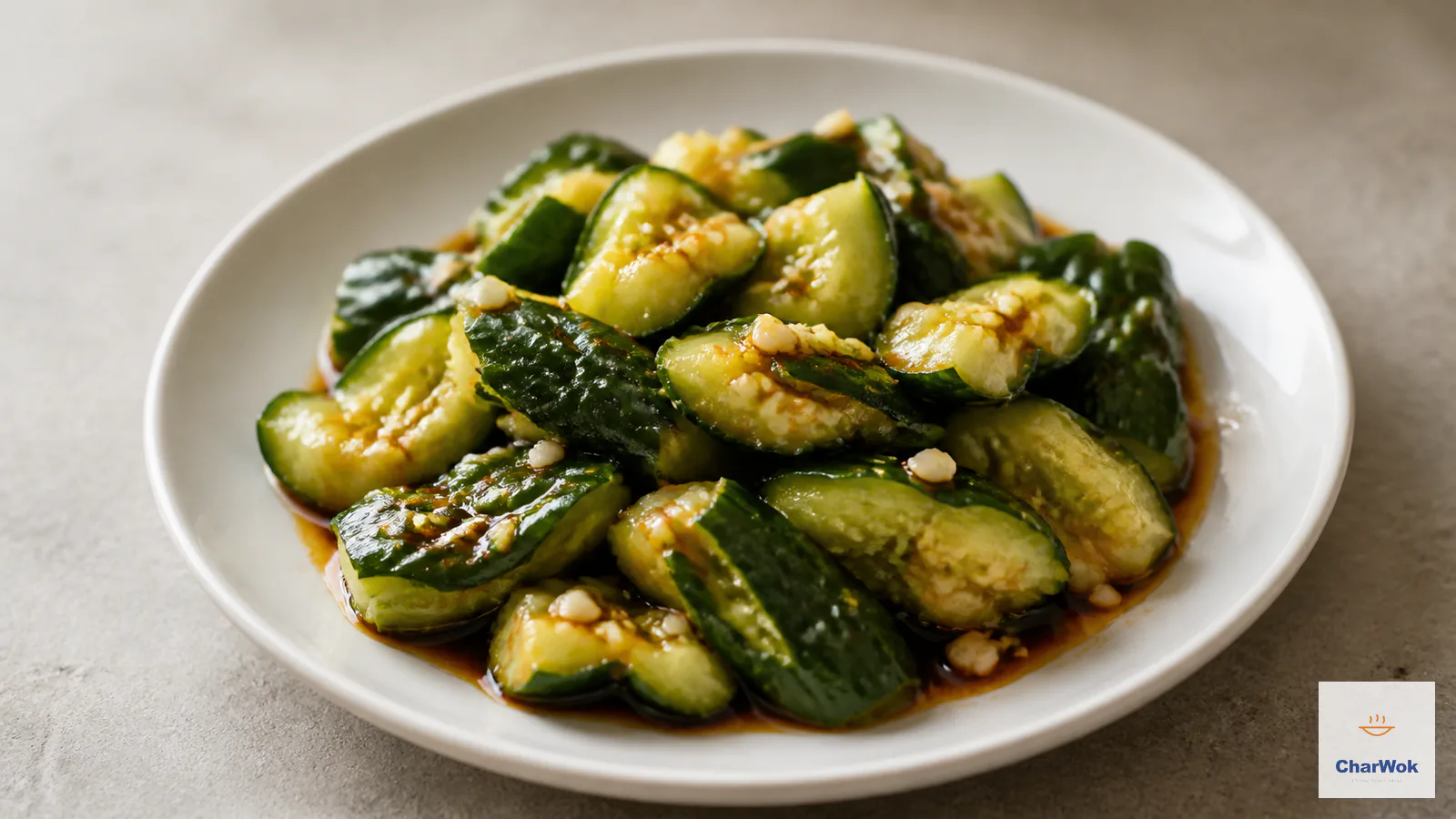
- Smash it in one stroke. Lay a quarter skin-side down on a cutting board. Place the flat of a cleaver or a heavy rolling pin across it and press down firmly and fast, once. You want to hear it crack and see it split open into jagged ribbons, not flatten into mush. Repeat for each quarter. If a piece did not crack open, it is fine; leave it. Then chop crosswise into rough bite-sized pieces, seeds and all.
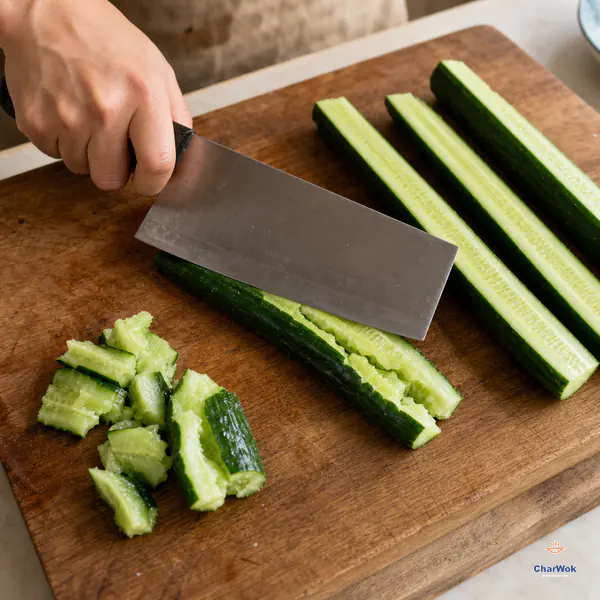
Place each quarter skin-side down and press once, firmly and fast, until it cracks into three or four rough connected ribbons; repeated pounding turns the crisp flesh to mush.
- Salt and rest. Pile the cucumber into a bowl, sprinkle the salt evenly, and toss with your hands so every surface is coated. Walk away for 10 minutes. You will come back to a pool of cloudy liquid in the bottom of the bowl. This is the step people skip and then wonder why their salad turns watery. The salt pulls out the free water through osmosis now, on your terms, instead of later, diluted into your sauce.
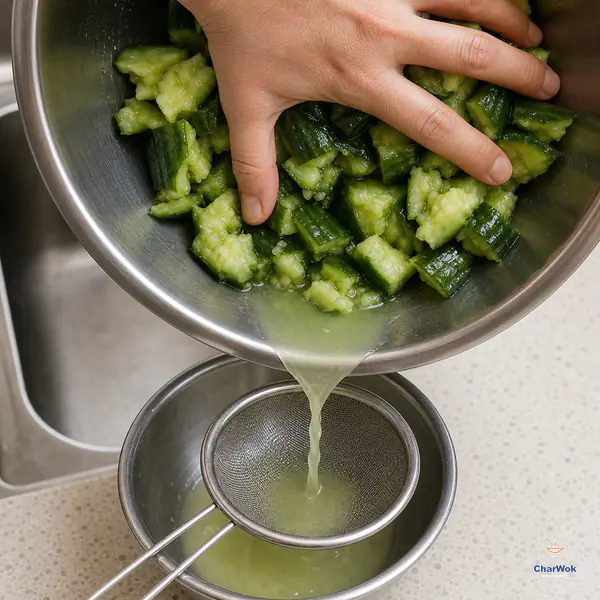
Salt the cucumber evenly for about 10 minutes, then tip away the modest cloudy puddle and drain firmly; removing this loose water keeps the later dressing concentrated.
- Drain, firmly. Pour off the liquid, then take a handful of cucumber and squeeze it gently over the sink. You are not trying to crush it, just to press out the loose water so the dressing is not fighting a flood. Return it to a clean, dry bowl. (I have on occasion skipped the squeeze when I was lazy, and the dish was good for exactly four minutes before it started swimming.)
- Make the dressing in one corner. In a small bowl, stir together the garlic paste, light soy sauce, black rice vinegar, sesame oil, sugar, and as much chili oil as you like. Taste it. It should be salty-sour with a hum of garlic and a slow heat. Adjust the vinegar or sugar now, before it ever touches the cucumber, because once mixed you are guessing.
- Dress and toss. Pour the dressing over the cucumber and toss thoroughly with a spoon or your hands for a full 30 seconds. Every jagged surface should be coated. If you are using Sichuan pepper oil, add it now, a few drops at a time, tasting as you go. It is powerful and easy to overdo.
- Serve now, or in two minutes. Eat it immediately for the cleanest crunch, or let it sit two minutes so the flavors sink in. Do not let it sit fifteen. Salted cucumber continues to weep, and after a quarter hour you are back to a puddle.
When it goes wrong, and how to fix it
Watery, diluted dressing after five minutes. You skipped or shortened the salt rest, or you did not drain and squeeze. There is no rescuing the plate in front of you; pour off the liquid, add a splash more soy and vinegar, and next time do the full ten minutes. This is the single most common failure and it is entirely avoidable.
Mushy, bruised cucumber instead of crunchy shards. You tapped instead of struck. The flesh needs one decisive crack, not a dozen gentle pats. A heavier tool helps; a light chef's knife will bounce off. Switch to a cleaver, a meat mallet, or a rolling pin.
Garlic that bites the back of your throat raw. Mince it finer, or better, smash it to a paste with the side of your knife and a pinch of the salt. The salt breaks the cell walls and mellows the harshness without cooking it. If your garlic is old or sprouted, the green core is the bitter part; cut it out.
A dressing that tastes flat even though you followed the recipe. Nine times in ten it is the vinegar. Black rice vinegar (Chinkiang) has a malty, smoky depth that plain rice vinegar completely lacks. If you are substituting, add a few drops of balsamic to fake some of that complexity, and a slightly bigger pinch of sugar.
Variations worth making
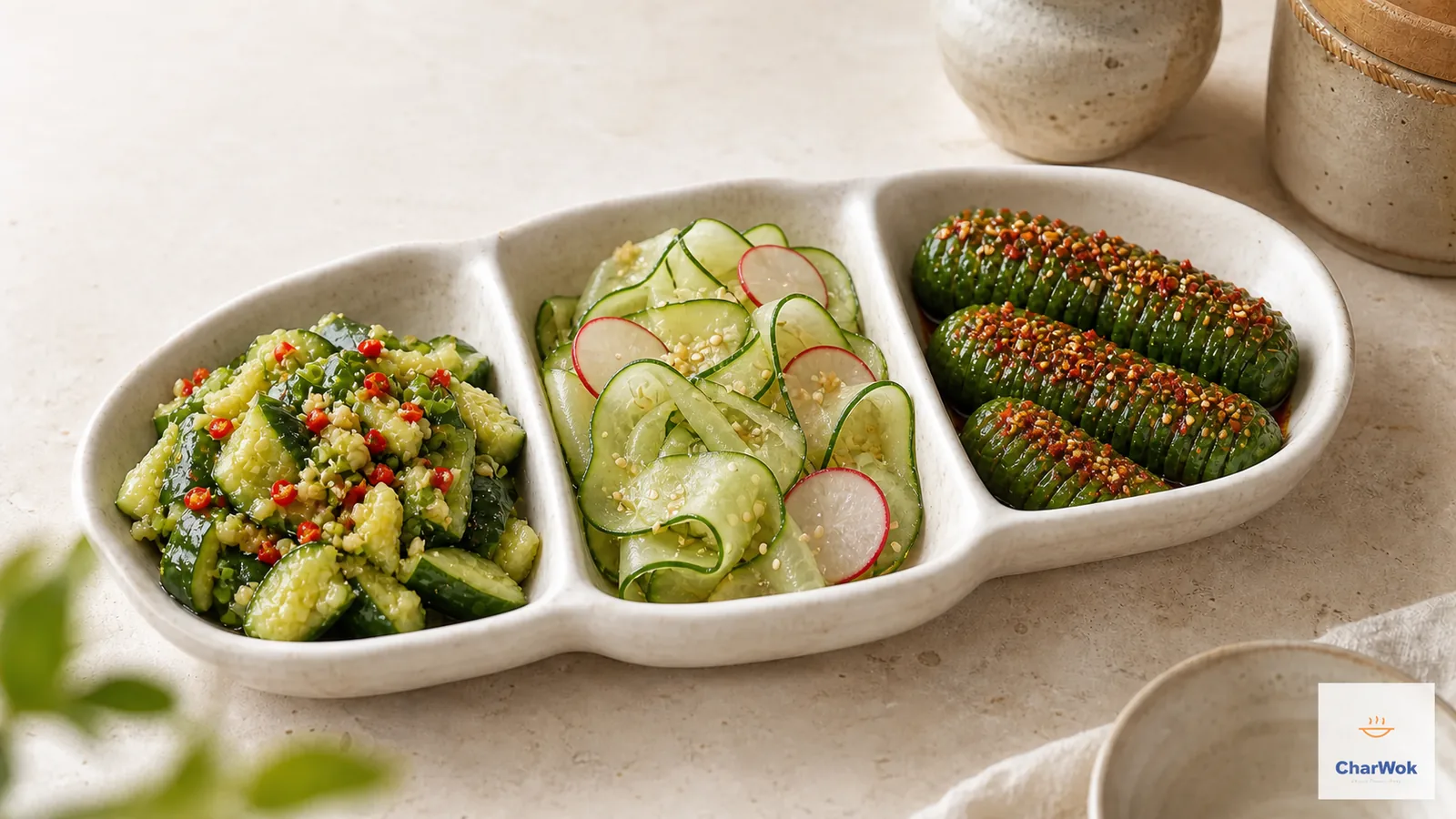
The base of soy, black vinegar, sesame oil, and garlic is a dialect you can speak in several regional accents. The cucumber salad, three ways approach lets you spin the same vegetable into three personalities, and the smashed version is the most fun of them.
- Sichuan smashed cucumber. Add a teaspoon of chili oil with crisp and a few drops of Sichuan pepper oil, plus a pinch of ground roasted Sichuan peppercorn tossed in at the end. The numbing-mala tingle turns it into the cold dish you would expect next to a bowl of dan dan noodles.
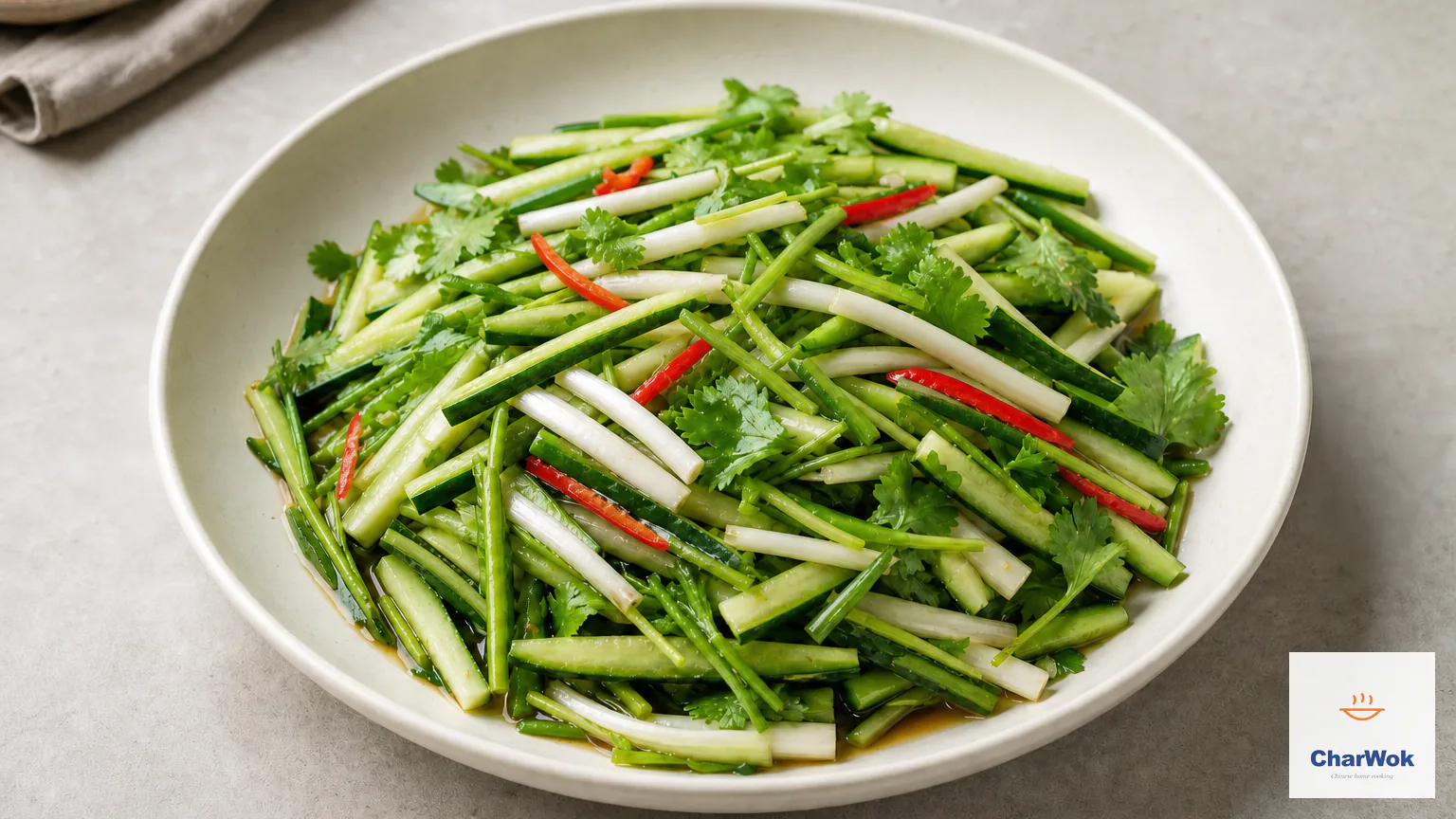
- Northern, with peanut and cilantro. Toss in a handful of roasted peanuts and a fistful of chopped cilantro and scallion. This leans toward the loud, herbal personality of northeast tiger salad, where raw pepper, cilantro, and cucumber share one aggressive bowl.
- Garlic-steamed eggplant on the side. If you want a vegetarian cold platter, pair it with steamed eggplant in chili-garlic dressing. The soft eggplant against the snapping cucumber is a texture contrast worth planning a meal around.
What to serve it with
Smashed cucumber is a palate cleanser first and a side dish second. It earns its place next to anything rich, deep-fried, or heavy on sauce. I most often put it beside a sticky, soy-glazed main like three cup chicken, where the cold vinegar cuts straight through the sweet sesame-sauce reduction. It does the same work next to braised pork belly, soy sauce chicken, or a plate of fried rice. The rule of thumb: if the main is glossy and savory, this salad is the breath of fresh air the table needs.
Storage and make-ahead
This is not a dish that improves with time, and I would not dress it more than ten minutes ahead. You can, however, do everything else in advance: smash and salt the cucumber, drain and squeeze it, and store the dry pieces in a sealed container in the fridge for up to a day. Mix the dressing in a separate jar and keep it in the fridge too. Combine the two at the table. Pre-dressed cucumber is a sad cucumber; prepped-and-undressed cucumber is a dinner-party lifesaver.
One honest limitation: leftovers do not re-crisp. The dressed cucumber you put back in the fridge will be softer the next day, edible but not the same dish. If you are cooking for one, cut the recipe in half and make it fresh each time. That is the only real drawback of a recipe this fast.
Frequently asked questions
Can I skip the smashing and just chop the cucumber?
You can, but you lose the point. Chopped cucumber is a perfectly fine salad; it is just not this dish. The jagged surfaces from smashing are what hold the dressing. If you are short on time or nervous with a cleaver, chop and then score the pieces deeply with a knife to fake some of that surface area.
Do I really need to rest it ten minutes?
Yes. Five minutes pulls maybe half the water; ten gets you a cucumber that holds its crunch on the table for half an hour instead of five minutes. The wait is the whole reason restaurant versions stay crisp while home versions flood.
Is there a less garlicky version?
Two options. Drop to one clove and smash it to a paste with the salt, which mellows the bite considerably. Or infuse the dressing instead: warm the sesame oil with a smashed clove for a minute, discard the garlic, and use that oil. You get garlic aroma without raw garlic heat.
Why is my dressing separating?
Sesame oil and a water-based sauce do not stay mixed on their own. Give the dressing a quick stir right before pouring it over the cucumber, and toss the salad thoroughly. It is not broken; it just needs emulsifying by hand each time.
The bottom line
Smashed cucumber salad lives or dies on two movements: one decisive crack, and one unhurried salt rest. Get those right and the recipe almost does not matter, because the backbone of soy, black vinegar, sesame, and garlic is forgiving and endlessly adjustable. Skip them, and no amount of good vinegar or fancy chili oil will save a watery plate. Make it once the right way and you will never need to look at the recipe again.