The trick to great sesame noodles is not the noodles at all. It is a spoonful of toasted sesame paste, loosened with water until it falls in a slow ribbon, then sharpened with vinegar and soy. Get that sauce right and you can pour it over whatever strand you have in the pantry. Get it wrong and you are eating peanut butter with chopsticks.
I ate versions of this dish, ma jiang mian, all over northern China for years before I understood why one bowl was forgettable and the next one kept me thinking about it for a week. The good ones share two things: a sauce loose enough to actually coat the noodles instead of clumping on top of them, and cold noodles shocked under the tap so they stay distinct and a little bouncy. The bowls that disappointed me almost always skipped the second step and served warm, sticky wheat noodles that welded themselves into a single brick the moment the sauce hit them.
At a glance. Two servings, ten minutes from cold pot to bowl. Thin roughly 60 ml (4 tablespoons) of Chinese sesame paste with water in tiny additions until it flows like heavy cream, then fold in soy, vinegar, and a pinch of sugar. The non-negotiable step is shocking the cooked noodles under cold running water until they are completely cool, because sauce will not cling to a warm, sticky strand.
What this dish actually is
Ma jiang mian is a cold wheat-noodle bowl from northern China, where sesame paste is treated the way southern Italy treats olive oil. You find it on breakfast carts in Beijing, in lunch counters, and in the version sold as Wuhan's hot dry noodles, which is the same idea served warm without the cold-water shock. The northern bowl leans on toasted unhulled sesame paste for its bitter, deeply roasted backbone, brightens it with black rice vinegar, and cuts the richness with cold cucumber and raw scallion.
It is a cousin, not a clone, of the chili-forward Dan Dan noodles and the numb-and-spicy Sichuan cold noodles. Those bowls want heat and tingling. This one wants balance. The paste is heavy, so the sauce needs acid and a little sweetness to keep it from reading as one-note. That is the whole architecture.
The ingredient that decides everything
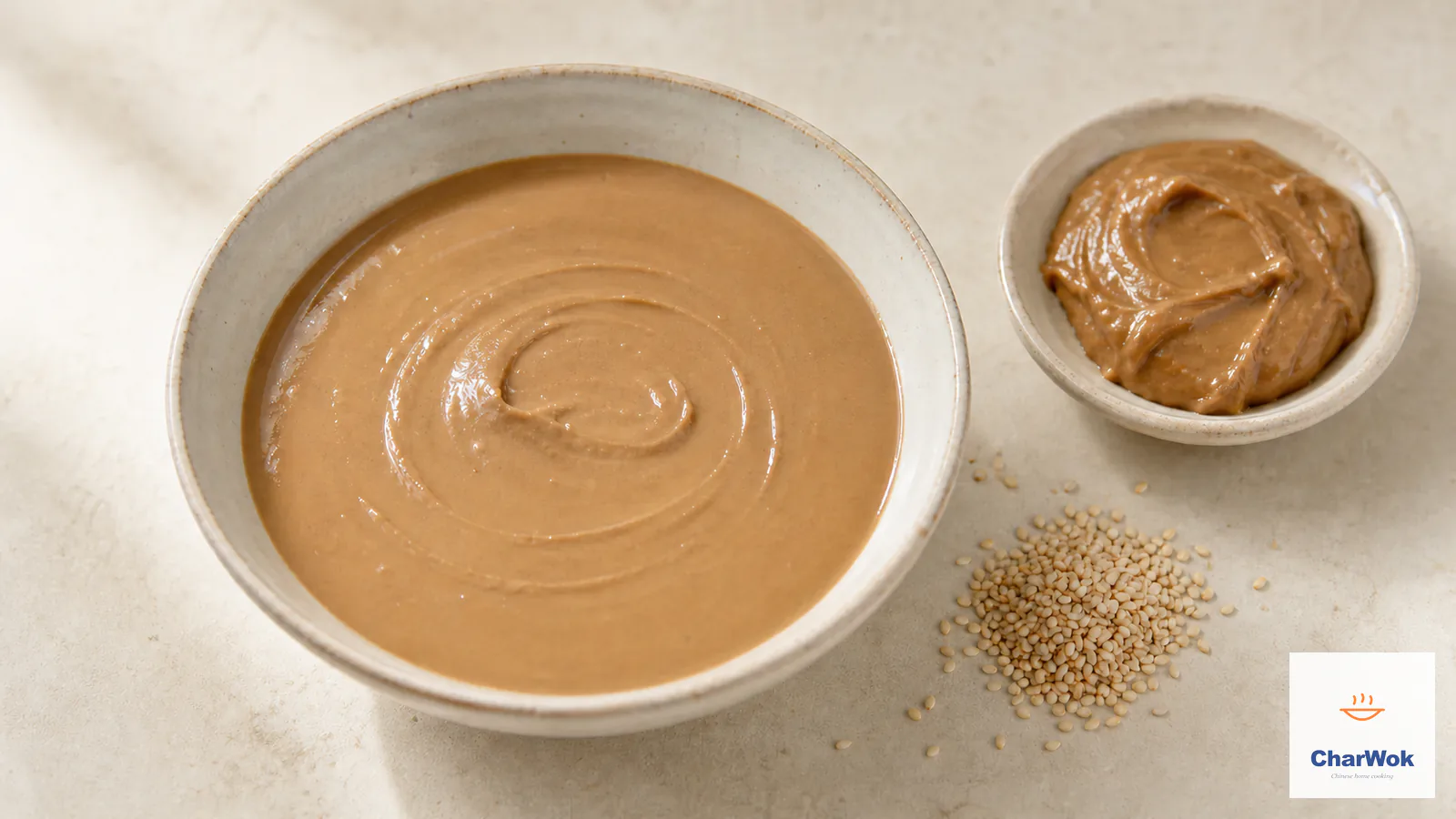
Chinese sesame paste (zhi ma jiang) is made from toasted unhulled sesame seeds, and it is nothing like the tahini you find next to the hummus. Tahini is pale, mild, and a little flat. The Chinese paste is dark beige, thick enough to stand a spoon in, and tastes aggressively roasted with a faint bitter finish. That bitterness is the point. It is what makes the dish taste like a meal rather than a dessert.
If you cannot find it, you have two routes. Smooth natural peanut butter, peanuts-only, is the closest in texture and gives a genuinely good bowl, just a different one. Tahini is the wrong substitute on its own because it lacks the roast, but you can fake some of it by stirring in a teaspoon of good toasted sesame oil per tablespoon of tahini. Either substitute is thinner than the real paste, so hold back on the water when you loosen them.
Ingredients
Ingredients at a glance
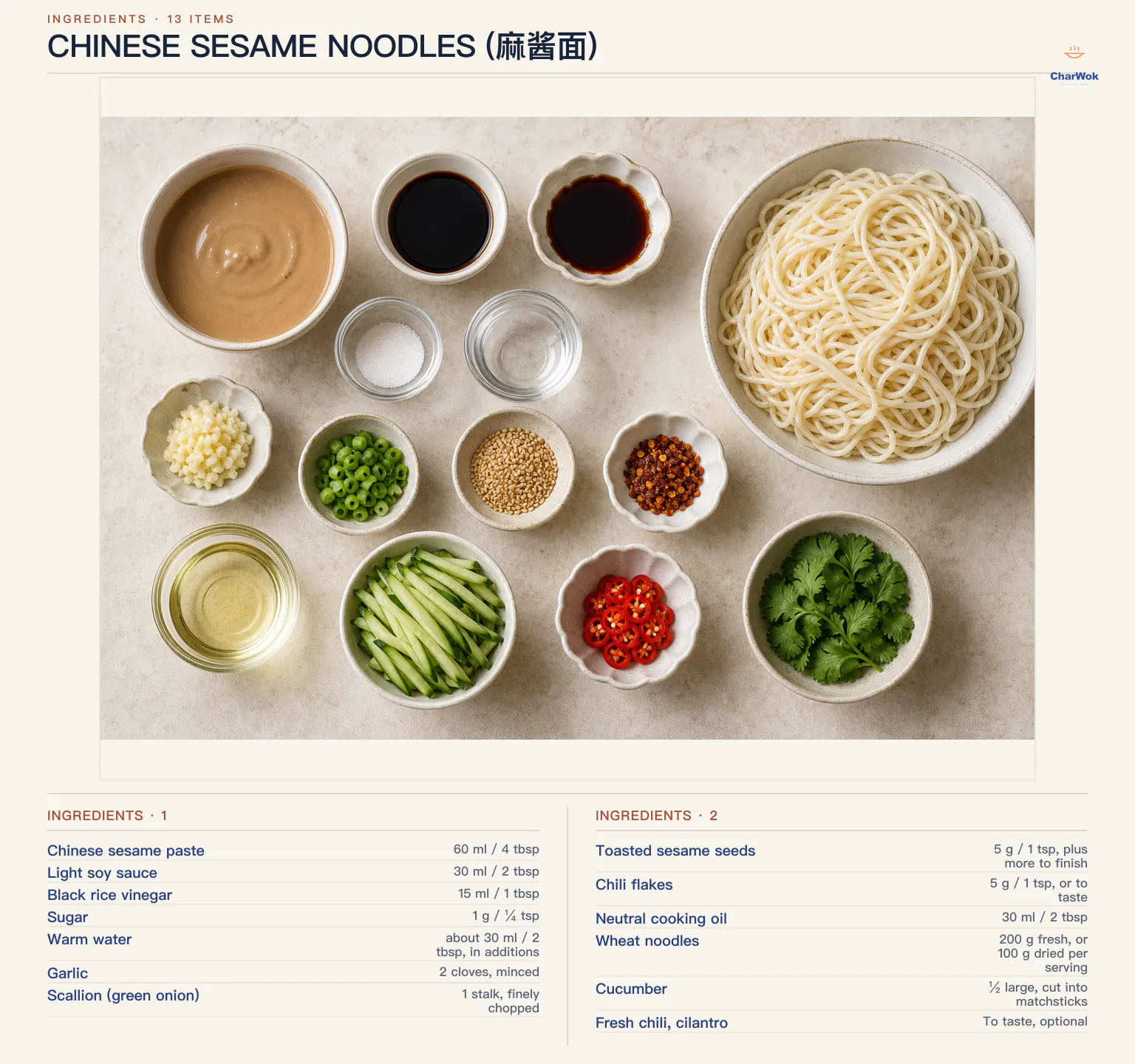
| Ingredient | Amount (2 servings) | Notes / substitute |
|---|---|---|
| Chinese sesame paste | 60 ml / 4 tbsp | The star. Smooth natural peanut butter, or tahini + 1 tsp toasted sesame oil per tbsp. |
| Light soy sauce | 30 ml / 2 tbsp | Use light, not dark. Tamari for gluten-free. |
| Black rice vinegar | 15 ml / 1 tbsp | Chinkiang-style; white rice vinegar is acceptable, slightly sharper. |
| Sugar | 1 g / ¼ tsp | Balances the bitterness of the paste. |
| Warm water | about 30 ml / 2 tbsp, in additions | For loosening the paste. Add gradually. |
| Garlic | 2 cloves, minced | For the hot-oil dressing. |
| Scallion (green onion) | 1 stalk, finely chopped | Green and white parts. |
| Toasted sesame seeds | 5 g / 1 tsp, plus more to finish | For the dressing and garnish. |
| Chili flakes | 5 g / 1 tsp, or to taste | Sichuan or standard red pepper flakes. |
| Neutral cooking oil | 30 ml / 2 tbsp | Grapeseed, canola, or avocado. |
| Wheat noodles | 200 g fresh, or 100 g dried per serving | Round alkaline noodles are ideal; see below. |
| Cucumber | ½ large, cut into matchsticks | English or Persian work best. |
| Fresh chili, cilantro | To taste, optional | For garnish. |
Picking the noodle
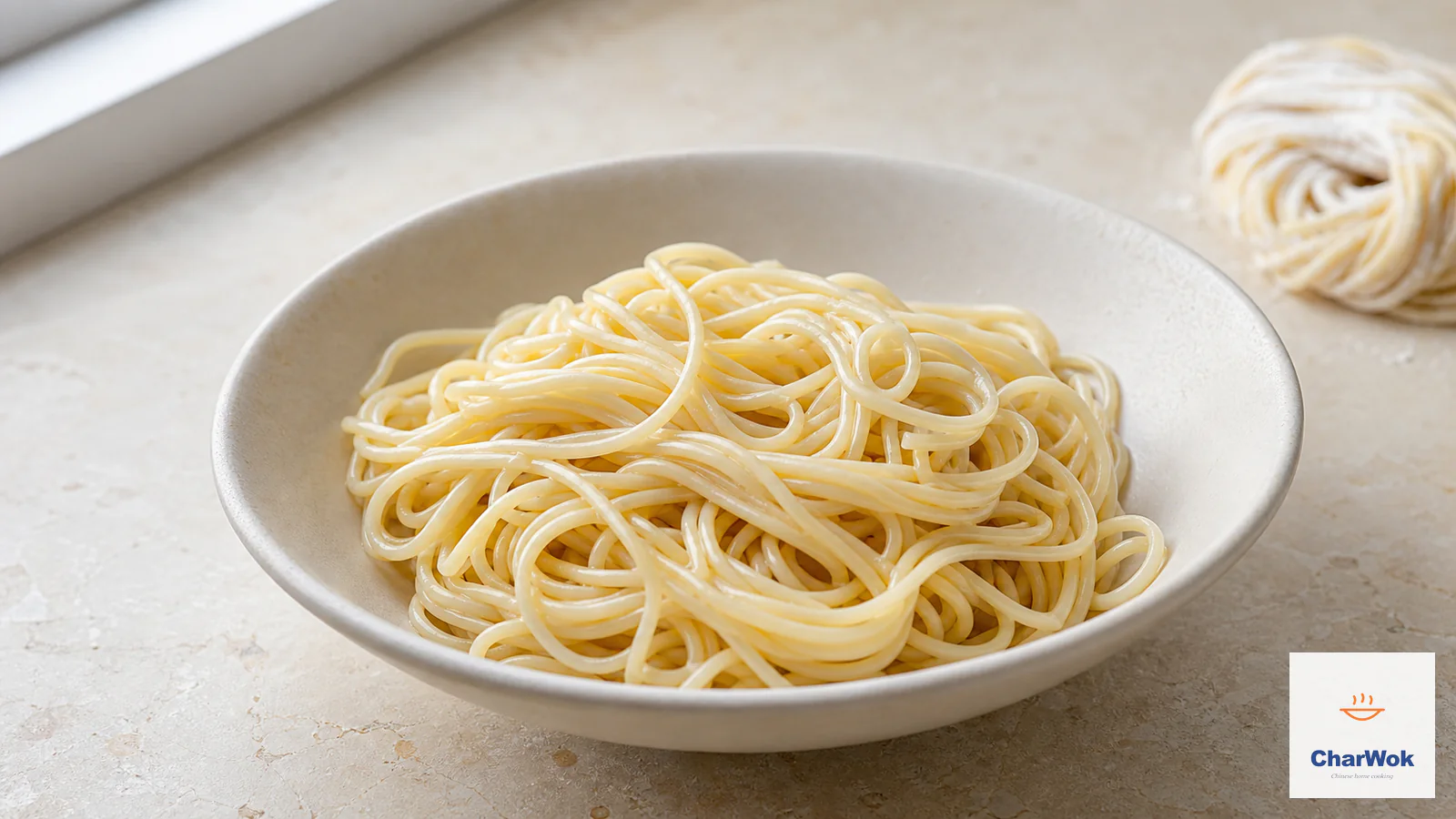
Any wheat noodle works, but the texture matters more than the shape. You want something with bite that survives the cold-water rinse without going slack. My default is homemade alkaline noodles, because the kansui gives them a springy, slightly translucent quality that catches the sauce in the surface wrinkles. Fresh round noodles from the refrigerator case are the realistic weeknight choice and they are completely fine.
Dried noodles are perfectly good if you cook them a touch less than the package suggests, since they continue to soften as they cool. Wide ribbons like biang biang or hand-pulled noodles are dramatic but a little unwieldy in a thin sauce. I would save those for zha jiang mian, where a chunky meat sauce can actually grab the broad surface. Rice noodles and even spaghetti are acceptable in a pinch, though they change the character of the dish enough that I would not call it the same recipe.
The method, and why each step matters
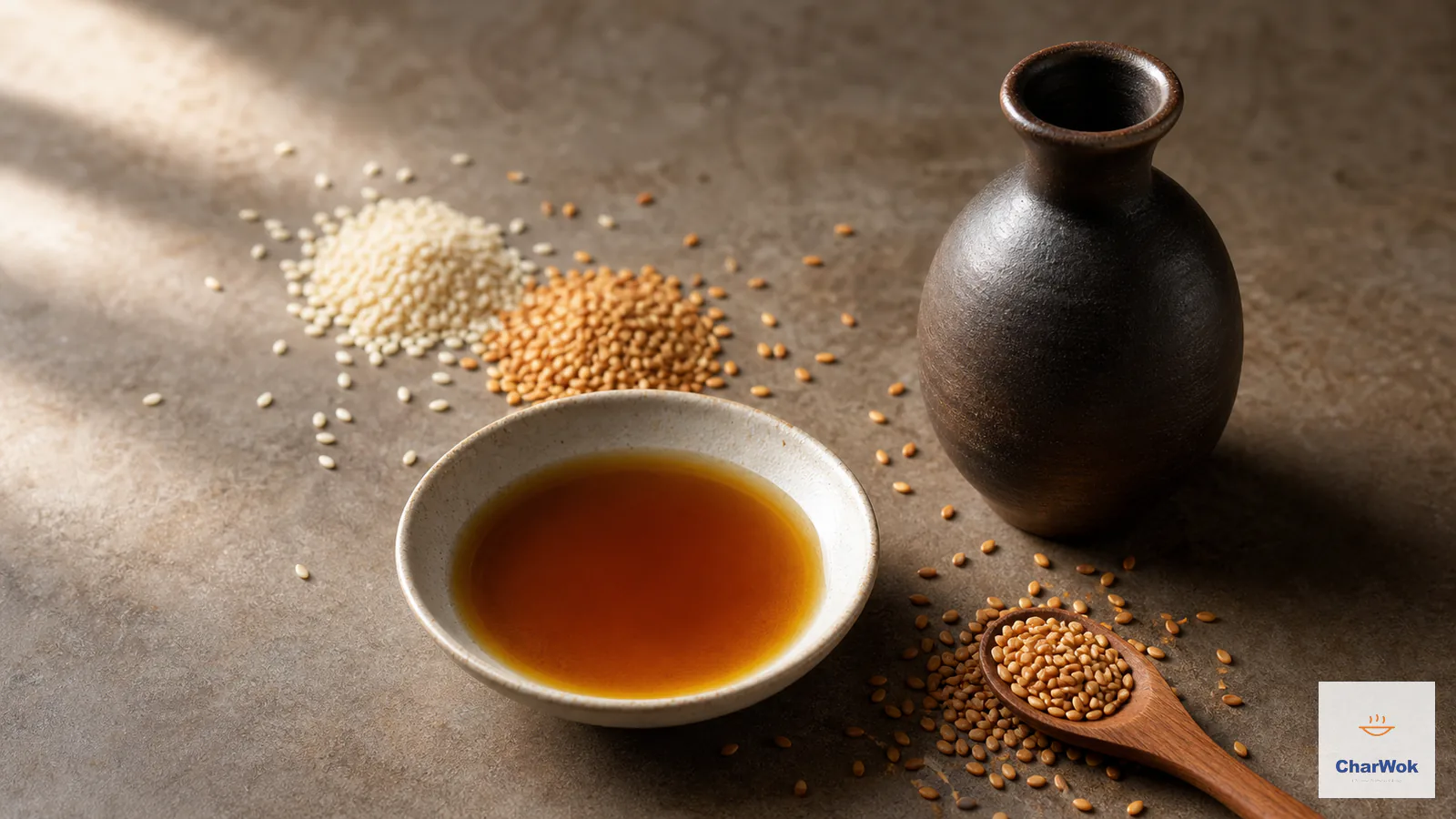
- Bloom the aromatics in hot oil. Pile the minced garlic, chopped scallion, sesame seeds, and chili flakes into a heatproof bowl. Heat the neutral oil gradually to about 175–180°C / 350–355°F, fluid and shimmering but not smoking. Pour it straight over the aromatics and stir immediately. You should hear a sharp sizzle and smell the garlic lose its raw edge in seconds. This is the same principle behind a quick scallion oil: controlled hot fat releases the aroma of the alliums and dried chili without scorching them. If the oil smokes, turn off the burner and let it cool before pouring.
- Loosen the sesame paste in tiny additions. Put the paste in a separate bowl. Add the warm water one teaspoon at a time, beating hard with a spoon after each addition. Here is the counterintuitive part: the paste will look thicker and grainier before it gets thinner. This is the same phase-inversion you see when emulsifying mayonnaise or loosening peanut butter. The solids are absorbing the first drops of water and swelling before there is enough liquid to flow. Keep adding water, a teaspoon at a time, beating constantly, and at some point between one addition and the next it will break into a smooth, glossy ribbon the consistency of heavy cream. Stop there. If you dump all the water in at once you get a lumpy, broken mess that no amount of stirring will fully rescue.
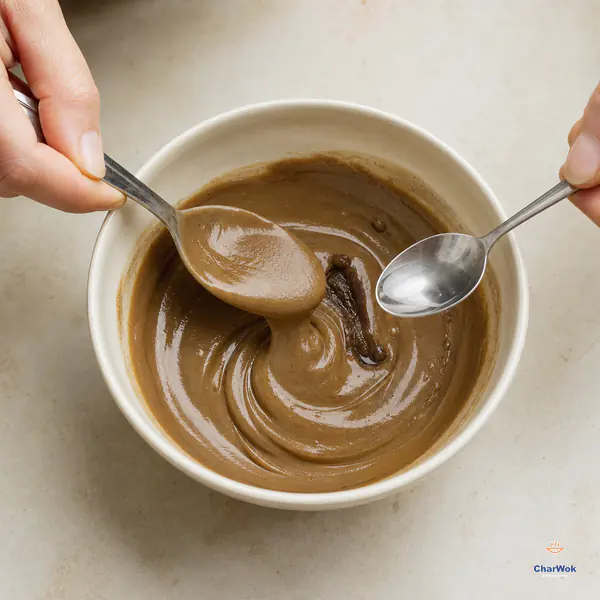
Add water a teaspoon at a time and stir until the sesame paste changes from stiff to smooth and falls back in a glossy ribbon.
- Season the loosened paste. Stir in the soy sauce, black rice vinegar, and sugar. The sugar is not for sweetness; it rounds the bitter edge of the toasted paste. Taste it. The sauce should be salty enough to season bland noodles, with a clear acidic lift and a deep roasted base. If it reads flat, add a few drops more vinegar. If it is too thick to pour, thin with another teaspoon of water.
- Boil and shock the noodles. Use a generous pot of water at a full rolling boil. Drop the noodles in, bring back to the boil, then nudge the heat down just enough that it does not foam over. Fresh noodles are done in one to two minutes; dried take six to eight. Taste a strand. The moment it is tender with a firm core, pull it. Transfer straight to a colander and run cold tap water over the noodles until they feel completely cool to the touch. This is not optional. Cold water halts the residual cooking, washes off the surface starch that would otherwise turn the sauce gluey, and firms the gluten so each strand stays separate. Drain them hard, shaking off every drop.
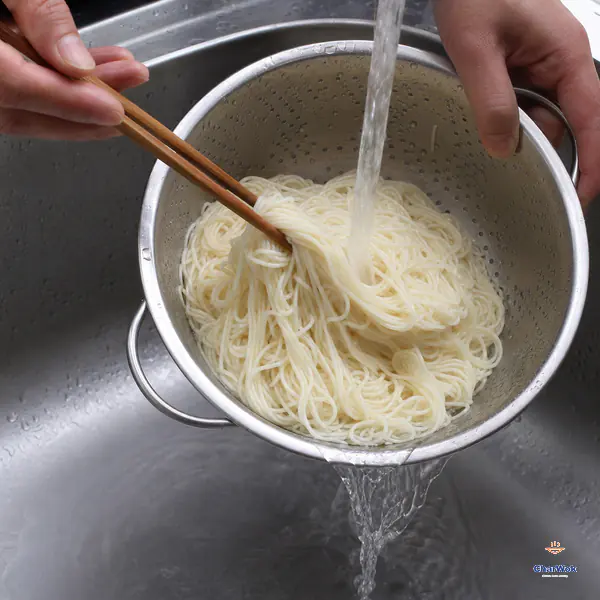
Rinse immediately under cold water, loosen the strands with chopsticks and drain thoroughly so the noodles stay cool and separate before saucing.
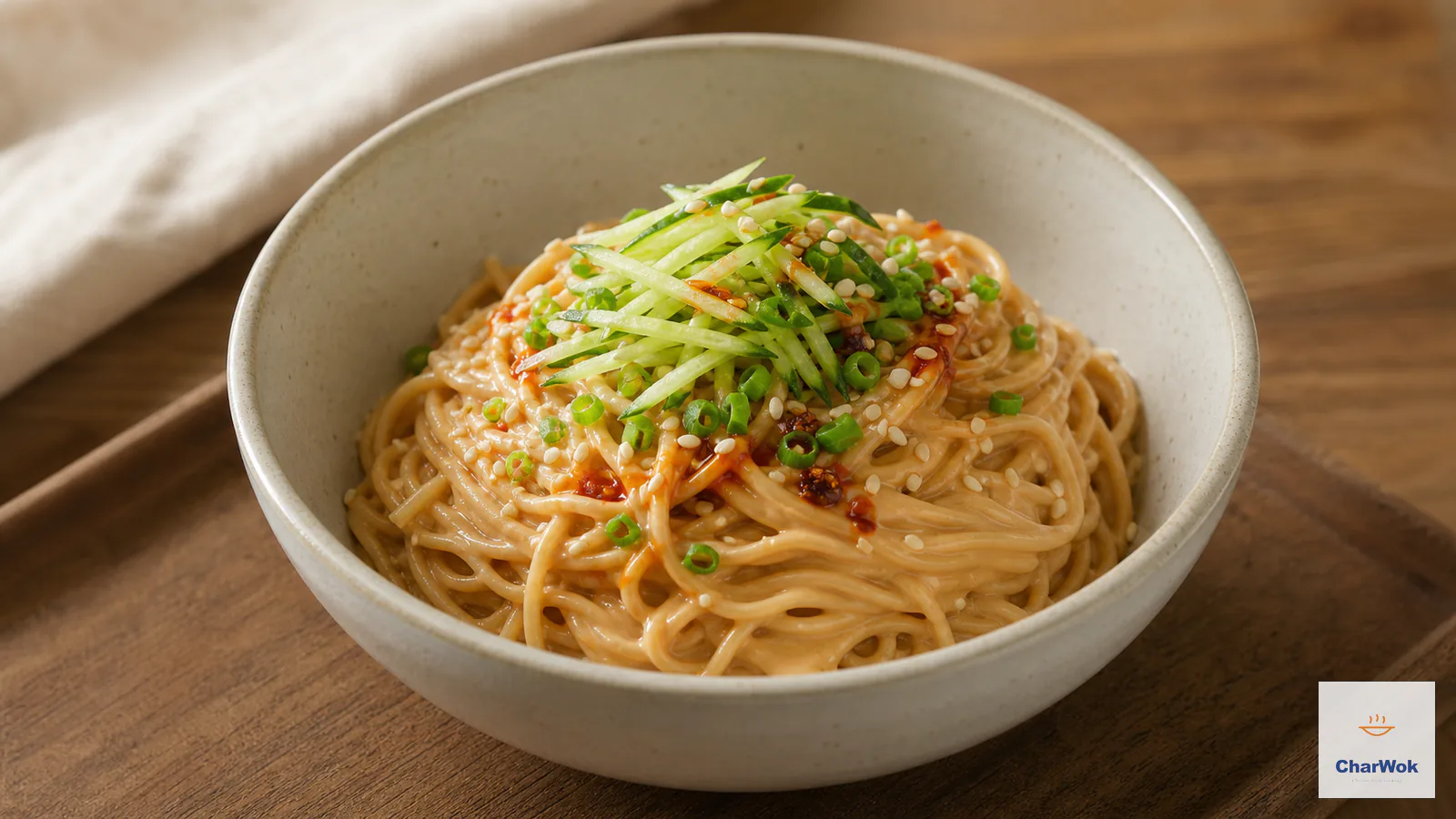
- Assemble and toss at the last second. Divide the noodles between two bowls. Pile on the cucumber matchsticks, fresh chili, and cilantro. Spoon over the sesame sauce and the hot-oil dressing. Toss thoroughly with chopsticks or tongs, lifting from the bottom, until every strand is coated and the sauce has disappeared into the noodles rather than pooling at the bottom. Finish with extra toasted sesame seeds. Tossing right before eating matters: the sauce thins as it meets the damp noodles, and if you let it sit the noodles slowly absorb it and go dry.
Oil-temperature safety follows the U.S. Fire Administration cooking guidance: stay beside the pan, turn off the burner if oil smokes, and never add water to burning oil.
When the bowl goes wrong
This is a forgiving dish, but it fails in predictable ways. Here is what to check.
- The sauce is lumpy and refuses to smooth out. You added the water too fast. There is no clean fix once it has broken, so start over with a fresh spoonful of paste and add the lumpy batch back in as one of your gradual additions. It will emulsify into the new base.
- The sauce is too thick and the noodles feel dry after tossing. You likely under-loosened the paste, or the noodles were not drained well and soaked up the liquid. Stir another tablespoon of warm water into the sauce and toss again. Aim for a pourable, glossy ribbon, not a paste.
- The noodles clump into a single mass. They were either not shocked cold enough or not drained thoroughly. Warm, wet noodles weld together. Next time, run them under cold water longer and let them sit in the colander for a full minute before plating.
- The chili flakes taste burnt and acrid. The oil was too hot when it hit them. Burnt chili is irreversible; scoop out the flakes and start the dressing over. Next time use a thermometer and stop at about 175–180°C / 350–355°F, before any smoke appears.
- The whole bowl tastes flat. Usually missing acid. Add another quarter teaspoon of black rice vinegar and taste again. The vinegar is what makes the roasted paste read as savory instead of heavy.
- It tastes good but one-dimensional. That is the difference between tahini and real sesame paste. The roasted, slightly bitter undertone of unhulled sesame is what gives the dish depth. Track down the real paste if you can.
Variations and what to serve alongside
The base recipe is quietly vegan, which makes it a useful vehicle. My favorite upgrade is a soft-boiled or jammy egg halved on top, the yolk mixing into the sauce as you eat. Shredded leftover chicken, crumbled smoked tofu, or a spoonful of crispy fried pork mince all turn it into something closer to a full meal. For a punchier, chili-oil-forward bowl, swirl in a spoonful of homemade chili oil with the sesame paste.
On the vegetable side, swap or supplement the cucumber with bean sprouts, julienned carrot, or quick-blanched edamame. A small bowl of smashed cucumber salad or cucumber prepared one of three ways on the side doubles down on the crunch that makes the dish feel fresh. If you are building a spread, pair it with something clean and savory, like a simple plate of scallion oil chicken; the noodles handle the richness and the chicken handles the protein.
Making it ahead
The two sauce components keep separately for days, which is what makes this worth putting in your weeknight rotation. The hot-oil dressing holds in the fridge for up to three days; the loosened sesame sauce will keep for a week in a sealed jar. Cook and shock the noodles right before you eat, because cold noodles held in the fridge slowly go starchy and stiff. Assemble, toss, and serve immediately.
If you want the dish warm instead of cold, follow the same method but skip the cold-water rinse and simply drain the noodles, shaking off the excess water. The sauce loosens faster on hot noodles, so you may need a touch less water in step two. This is closer to the Wuhan hot dry noodle tradition, and it is just as legitimate a way to eat it, especially in winter.
Questions home cooks actually ask
Can I use peanut butter instead of sesame paste? Yes, smooth peanuts-only peanut butter gives a tasty bowl with a different flavor. Thinner than sesame paste, so add the water more sparingly.
How do I make this gluten-free? Use rice noodles, swap regular soy sauce for tamari, and replace the black rice vinegar with plain white rice vinegar, which contains no wheat.
Why does my sauce get lumpy when I add water? The water went in too fast. Add it by the teaspoon, beating hard each time, and the paste will flip from grainy to glossy. There is no quick rescue for a broken batch, so start over and fold the lumpy portion back in gradually.
Can I serve it warm? Yes. Skip the cold-water rinse and toss the hot, drained noodles with the sauce directly. Expect to use slightly less water when loosening the paste, since warm noodles thin the sauce on their own.
Where do I find Chinese sesame paste? In the jarred-sauce aisle of Chinese and larger Asian grocers, usually near the bean pastes and chili sauces. Look for a brown, oily paste labeled zhi ma jiang or pure sesame paste.
One last note
If you take one thing from this, it is that the sauce is the dish. The noodles are a delivery system, the cucumber is a relief, and the chili is an option. Spend your attention on the paste: toast it in your mind, loosen it patiently, taste it before it meets the noodles, and the rest of the bowl falls into place. The version that disappointed me for years was the one where I treated the sesame paste as a checkbox instead of the main event.