The bowl in front of you is glossy and red, streaked with crushed peanuts and a slick of dark oil. You take a sip and your tongue lights up, then goes half-numb, then reaches for more. That two-step punch, heat chasing tingle, is what a bowl of Chongqing noodles (Xiao Mian, 小面) is built around. Get that seasoning base right and the rest of the dish is almost forgiving. Get it wrong and you have plain noodles floating in chili water.
I have wrecked this bowl more than once. The worst version I ever made tasted like a kitchen accident: I poured chili oil straight from a jar that had gone stale, used stock from a cube, and dumped in Sichuan pepper that had been sitting open for a year. The broth was muddy and flat, and the noodles turned to paste while I fiddled with the toppings. The lesson, hammered in over many bowls, is that Xiao Mian rewards a small amount of prep and punishes a tired pantry. Almost everything here you can make from scratch on a weekday, as long as the chili oil is alive and the pepper is fresh.
At a glance. Total time about 30 minutes, 10 to prep and 20 at the stove, for two bowls. The make-or-break move is the seasoning base you build in the bottom of each bowl: 2 tablespoons each of light soy sauce and chili oil, 2 teaspoons black rice vinegar, and ground Sichuan pepper to taste. Pour hot stock over that and the bowl is alive. Boil the noodles just shy of done so they finish softening in the broth, never past it.
What a bowl of Xiao Mian actually is
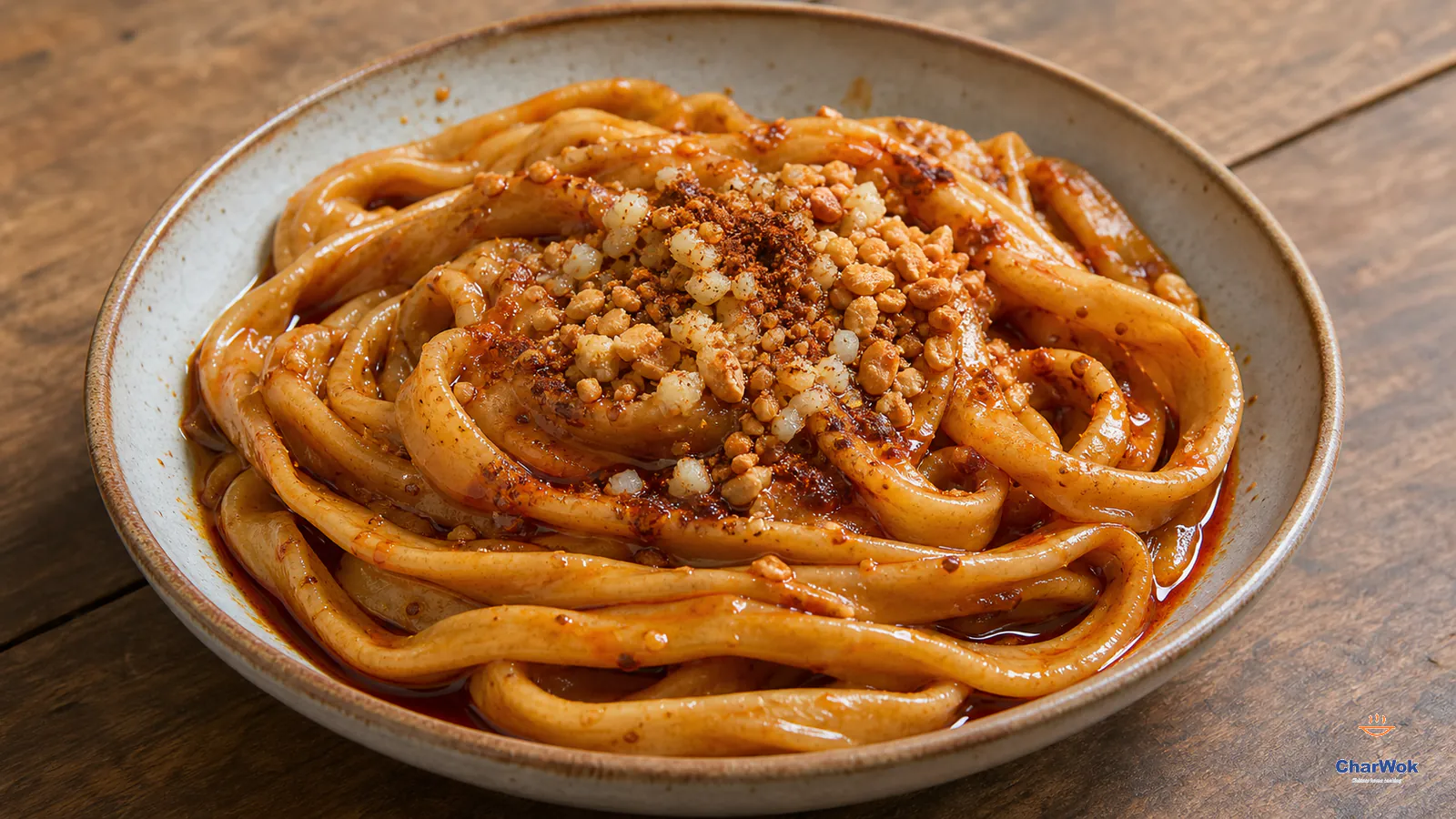
Chongqing is a steamy, hilly city at the meeting of two rivers, and its street food runs hot and loud. Xiao Mian, literally "small noodles," is the everyday version: a quick bowl you eat standing at a counter or perched on a tiny stool, often for breakfast. The plainest form, called Su Mian (素面, "vegetarian noodles"), is just noodles, greens, broth, and peanuts, sometimes enriched with a spoonful of lard for body. From that bare skeleton the carts branch out into dozens of topping combinations. If you have made Dan Dan Noodles or any of the classic Sichuan dishes, the flavor register will feel familiar, but Xiao Mian is its own animal. Dan Dan is dry, sauce-coated, and nutty. Xiao Mian is soupier, sharper, and leans harder on the numbing side of málà.
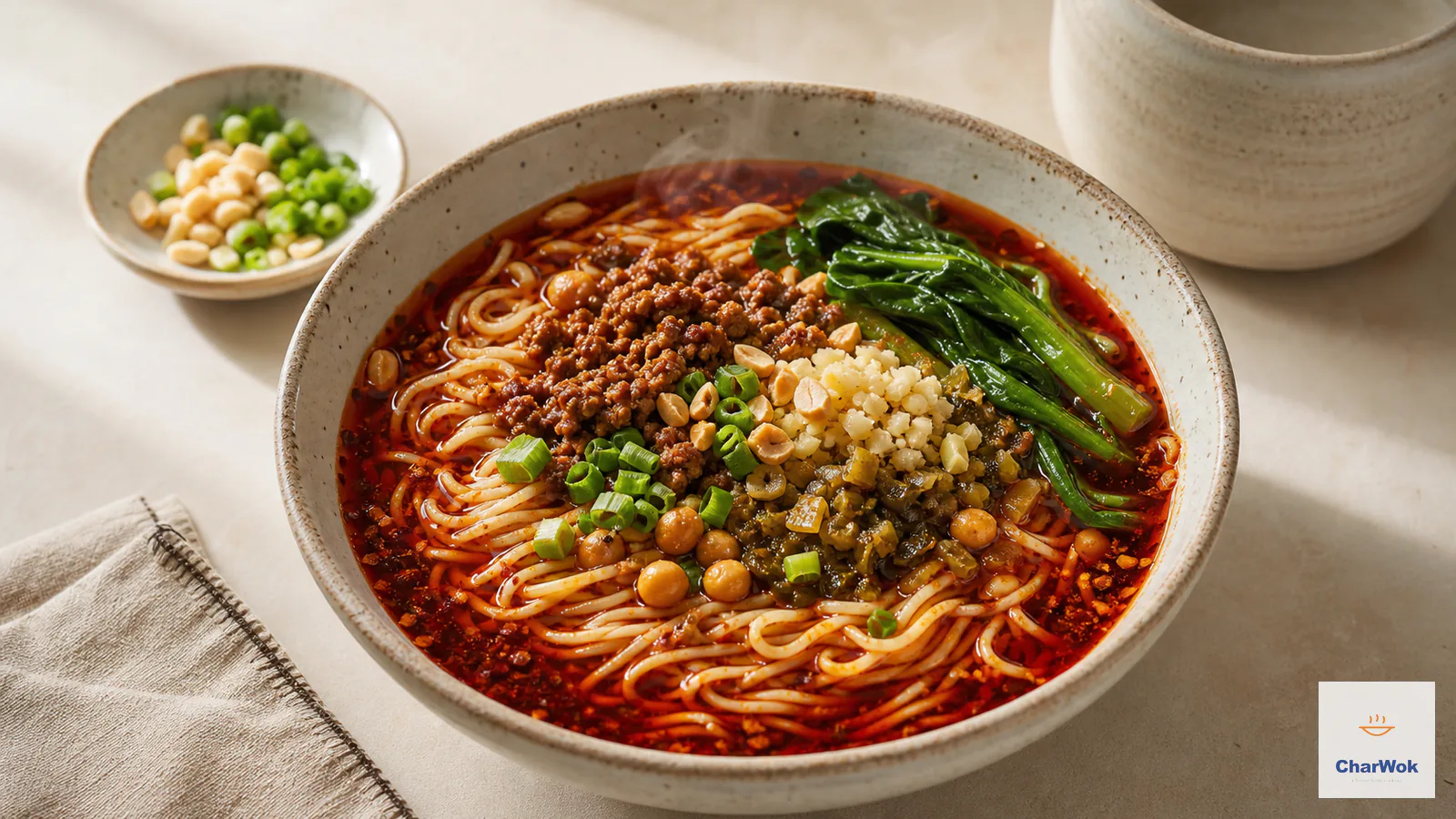
This recipe is for one of the most popular loaded versions, Wān Zá (豌杂面): noodles with soft yellow peas and a spoonful of fried minced-meat sauce. The version below uses canned chickpeas in place of the yellow peas, which are hard to find outside Chinese groceries. Chickpeas are not a compromise I am embarrassed about. They look right, eat right, and need no overnight soak.
The three notes the broth has to hit
Locals describe a good Xiao Mian broth with three characters: má (麻, numbing), là (辣, spicy-hot), and xiān (鲜, that savory clarity we loosely translate as umami). Stack those three and the bowl works. Skimp on any one and the whole thing reads as incomplete. The numbing comes from Sichuan pepper, the heat and aroma from chili oil, and the xiān from a stock that actually tastes like something.
Fresh-ground Sichuan pepper, not the dusty jar
Pre-ground Sichuan pepper sold in little jars is usually weak, sometimes stale to the point of tasting like cardboard. The numbing compounds are volatile oils, and they fade fast once ground. If you want that buzzing, lips-twitching quality, toast whole peppercorns yourself and grind them fresh. My guide to Sichuan pepper covers the different varieties, and the step-by-step on how to grind it correctly walks through toasting, sifting out the gritty husks, and storing it. For this bowl, ½ teaspoon per serving is a sane starting point. New to the sensation? Start with ¼ teaspoon. You can always add more at the table.
Chili oil that smells like something
A red bowl does not automatically mean a brutally hot one. The oil floating on top carries most of the aroma, and a freshly made chili oil is fragrant in a way no store jar can match. When I have ten spare minutes I make a batch of Chinese chili oil from scratch, because controlling the flake blend lets me dial the heat to where I want it instead of surrendering to whatever the factory decided. Even a small jar in the fridge changes this dish. Two tablespoons per bowl is the baseline here; heat-seekers should feel free to push it.
Stock that does the heavy lifting
Street stalls in Chongqing lean on MSG to push the xiān, and there is no shame in a pinch of it if that is your kitchen. I prefer to get there with stock instead. Chicken, beef, or a robust vegetable stock all work, but it needs to be seasoned enough that you would happily drink it on its own. If yours is unsalted, add salt until it tastes right, then a touch more, because the noodles and toppings will dilute it. A thin, bland stock is the single most common reason a homemade Xiao Mian falls flat.
Ingredients
Ingredients at a glance
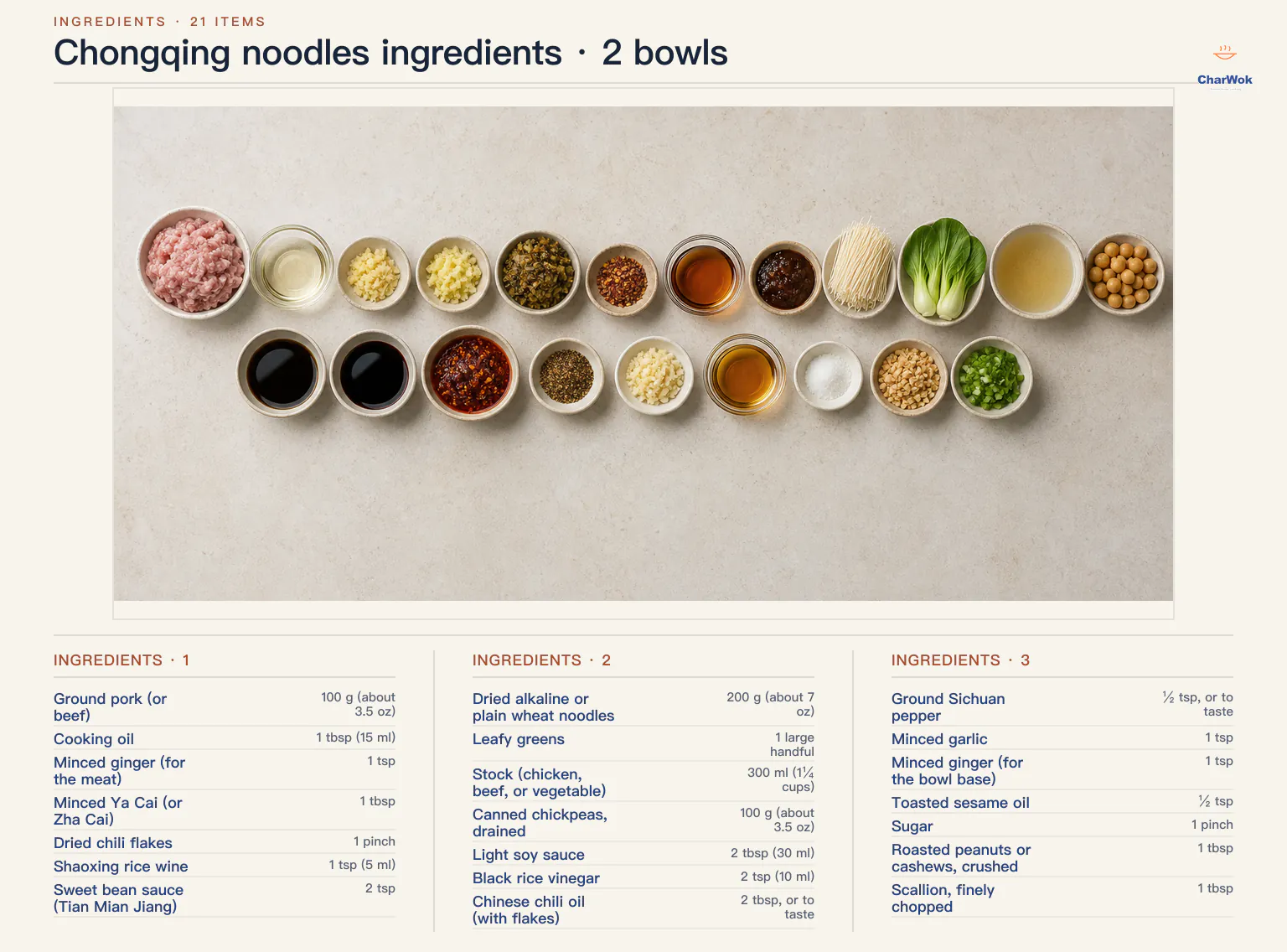
Serves two. Metric first, with US household measures noted where they are standard. Read the Notes column before you shop, since a few of these have easy swaps that matter.
| Ingredient | Amount | Notes / substitute |
|---|---|---|
| Ground pork (or beef) | 100 g (about 3.5 oz) | Pork is traditional and fattier; beef is leaner and needs a little more oil in the pan |
| Cooking oil | 1 tbsp (15 ml) | Neutral oil, or rendered pork fat for more flavor |
| Minced ginger (for the meat) | 1 tsp | Fresh, microplaned fine |
| Minced Ya Cai (or Zha Cai) | 1 tbsp | Preserved mustard greens or stem; chop tiny. See note below |
| Dried chili flakes | 1 pinch | For aroma in the meat, not serious heat |
| Shaoxing rice wine | 1 tsp (5 ml) | Deglazes and cleans up the pork flavor; dry sherry works |
| Sweet bean sauce (Tian Mian Jiang) | 2 tsp | Coats and colors the meat. Hoisin is a closer-than-nothing stand-in; see note |
| Dried alkaline or plain wheat noodles | 200 g (about 7 oz) | Fresh alkaline noodles (Jian Mian) are the authentic choice; round dried noodles are my everyday pick |
| Leafy greens | 1 large handful | Baby bok choy, choy sum, or water spinach |
| Stock (chicken, beef, or vegetable) | 300 ml (1¼ cups) | Must taste good on its own; salt to taste |
| Canned chickpeas, drained | 100 g (about 3.5 oz) | Stand-in for soft yellow peas; see note |
| Light soy sauce | 2 tbsp (30 ml) | Use light, not dark; dark is too heavy and sweet here |
| Black rice vinegar | 2 tsp (10 ml) | Its smoky depth is part of the profile; Chinkiang style preferred |
| Chinese chili oil (with flakes) | 2 tbsp, or to taste | Homemade is best; add the solid flakes, not just the oil |
| Ground Sichuan pepper | ½ tsp, or to taste | Fresh-ground from whole peppercorns |
| Minced garlic | 1 tsp | For the bowl base |
| Minced ginger (for the bowl base) | 1 tsp | Separate from the meat's ginger |
| Toasted sesame oil | ½ tsp | Just a thread of aroma |
| Sugar | 1 pinch | Rounds the acid and heat, should not taste sweet |
| Roasted peanuts or cashews, crushed | 1 tbsp | For crunch. Sichuan spicy peanuts are a great upgrade |
| Scallion, finely chopped | 1 tbsp | Green and pale green parts |
The method, and why each step matters
The order matters less than you might think, but the timing of the noodles against the broth does not. The goal is for hot stock to hit the seasoning base at the exact second the noodles come out of the pot. Stalling here is what makes the bowl go limp.
- Fry the meat topping first. Heat the oil in a wok or wide pan over high heat. Add the ground pork and the first teaspoon of minced ginger and break the meat up the moment it hits the pan, before it has a chance to clump. You want fine, separate bits, not a patty. As soon as the pink is gone, add the Ya Cai, the pinch of chili flakes, and the Shaoxing wine. The wine hisses and lifts the browned bits off the pan, which is exactly the flavor you want trapped in the meat. Why high heat: you are driving off moisture fast so the meat fries instead of steams, and so the sweet bean sauce will cling rather than slide off.
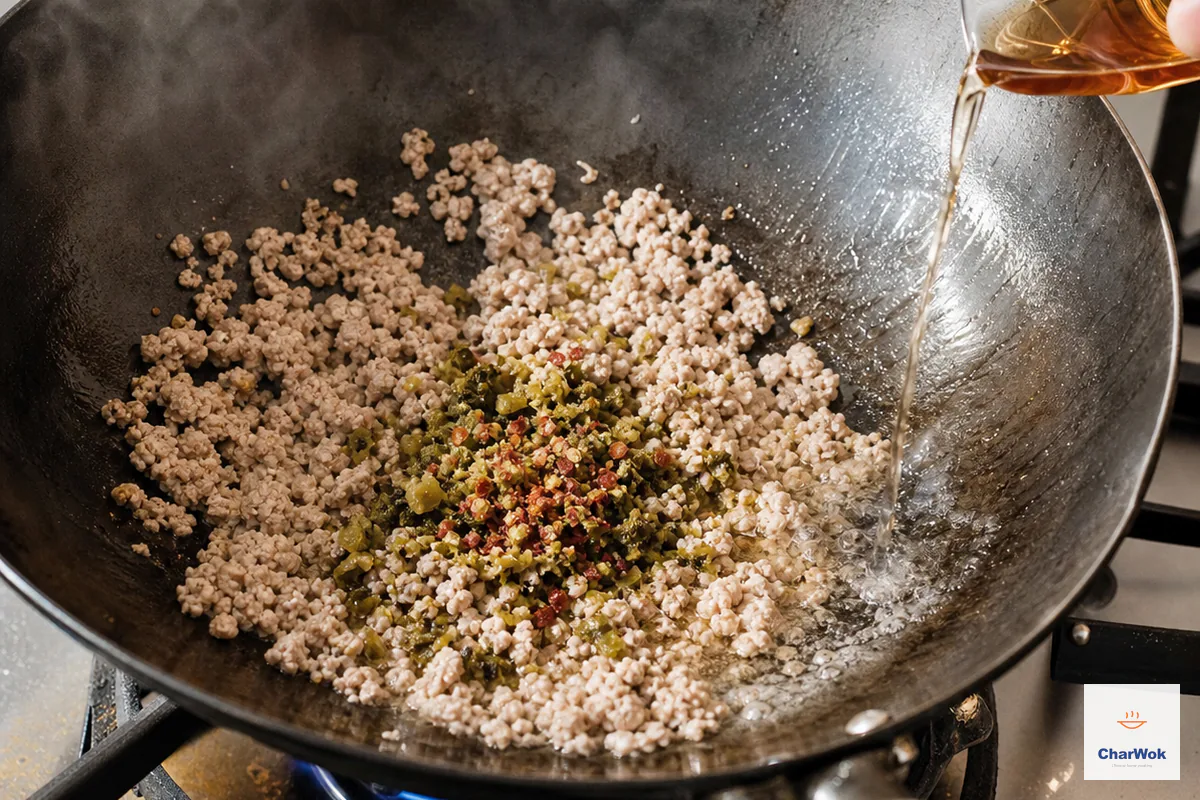
Add the minced ya cai and chili flakes, then splash the Shaoxing wine around the hot wok edge.
- Glaze the meat with the sauce. Once the meat looks dry and slightly crisp at the edges, push in the sweet bean sauce and stir for about 30 seconds. The sauce should coat every crumb and turn it a deep mahogany. Pull it off the heat and set aside. If the sauce looks raw and floury, it has not cooked out yet; give it another 15 seconds. This little pile is essentially the same fried-sauce idea behind Zha Jiang Mian, just tuned for a soup bowl.
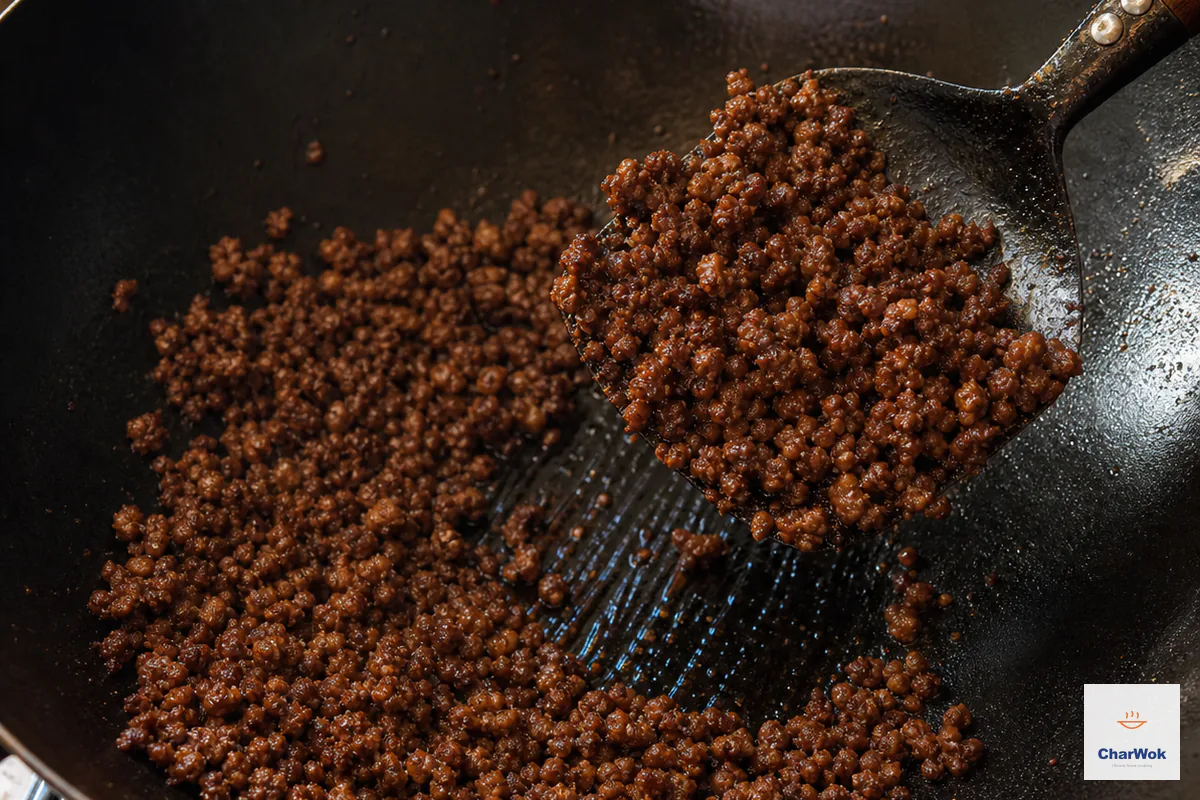
Stir in the sweet bean sauce and cook until the meat is deep mahogany, glossy and still loose rather than wet.
- Warm the chickpeas in the stock. Pour the stock into a small pot, add the drained chickpeas, and bring it to a gentle simmer while you handle everything else. Heating the chickpeas in the stock softens their skins and lets them absorb a little seasoning, so they stop tasting like they came straight from a can.
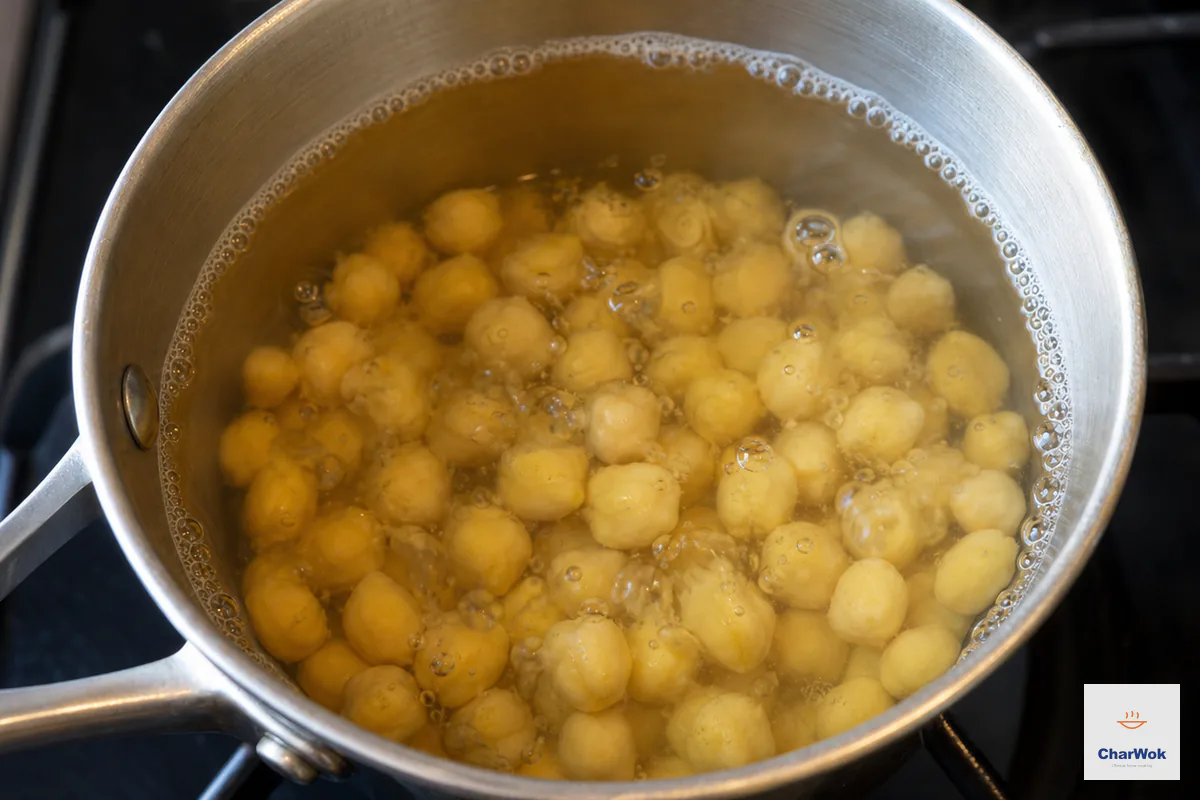
Warm the stock and chickpeas together until nearly boiling, keeping the broth clear and the chickpeas intact.
- Build the seasoning base in the bowls. This is the step that defines the dish. In each serving bowl combine half each of the light soy sauce, black rice vinegar, chili oil (with its flakes), ground Sichuan pepper, garlic, the second teaspoon of ginger, sesame oil, and the pinch of sugar. Stir nothing yet. These seasonings sit raw in the bottom of the bowl, waiting for the stock to bloom them. This bottom-of-the-bowl technique is the same logic behind scallion oil noodles and sesame noodles: season the bowl, then let the hot liquid or noodle water do the cooking.
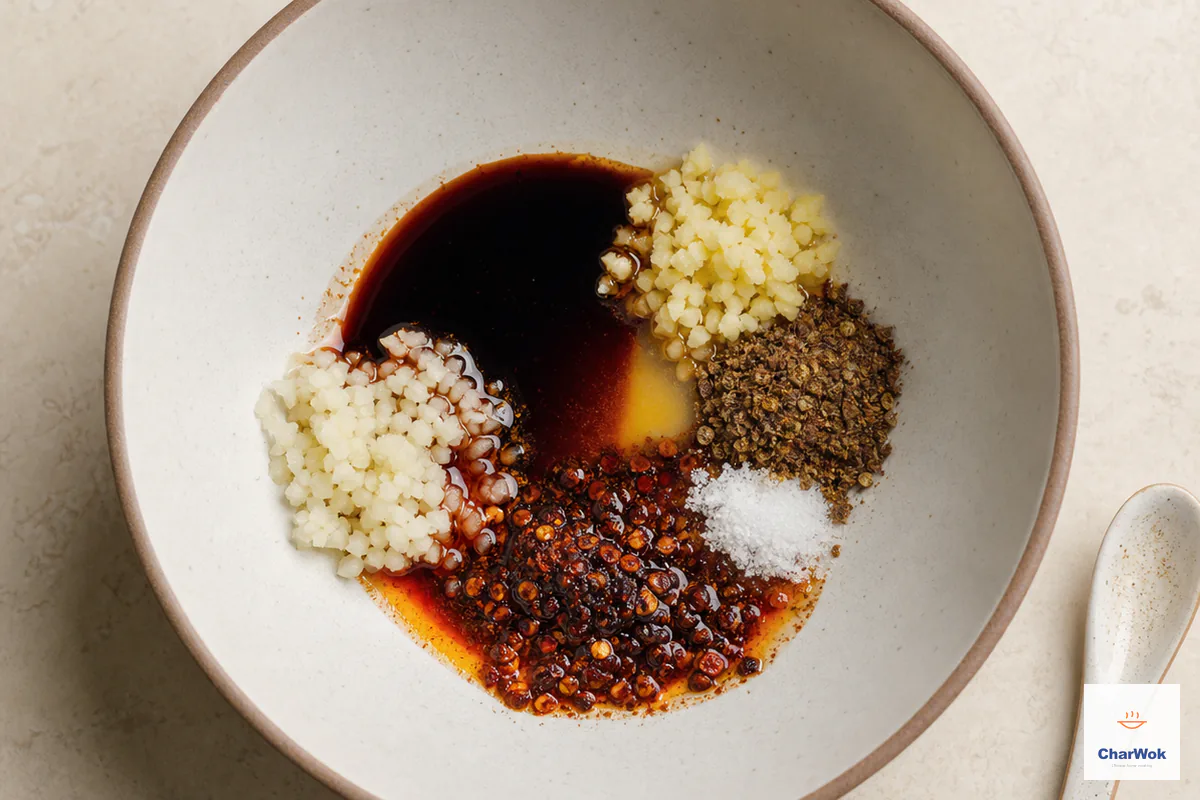
Measure every bowl-base seasoning into the serving bowl and leave the components visibly separate for now.
- Boil the noodles, then flash the greens. Use a generous pot of water at a full, rolling boil. Cook the noodles to one minute less than the package suggests. Undercooking by a hair matters because the noodles keep softening once they meet the hot broth in the bowl; pull them perfectly al dente from the pot and they will be ideal by the time you sit down. In the last 20 seconds, drop the greens in to blanch, then drain everything together. A giant pot of water and constant motion on the boil keep the starch from building up, which would otherwise cloud and thicken your broth once the noodles land in it.
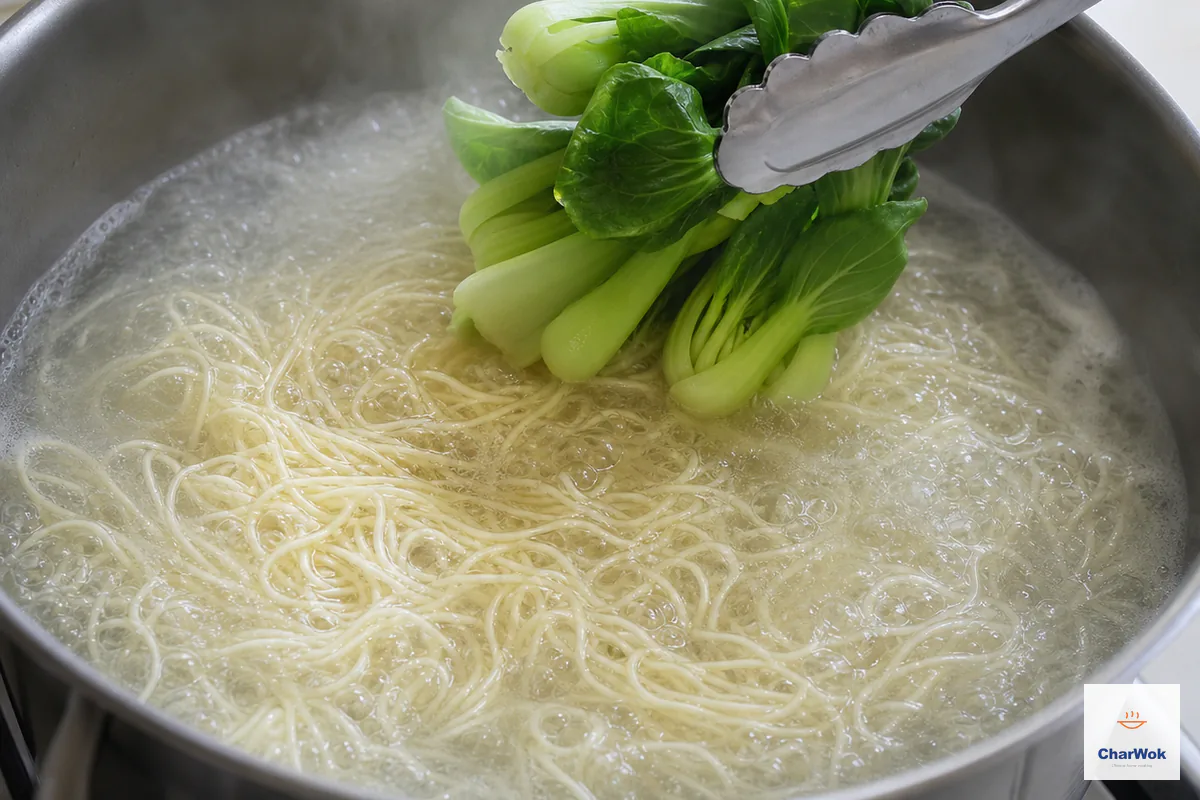
Boil the noodles until just tender, adding the leafy greens only for the final 20 seconds.
- Assemble fast. Ladle the hot stock (chickpeas and all) straight over the seasoning base in each bowl and give it a quick stir to dissolve the paste. Add the noodles and greens, then top with the warm meat, more chickpeas, the crushed peanuts, and the scallion. Serve immediately. The bowl is best in the first three minutes, while the chili oil is still glowing on the surface and the peanuts are still crisp.
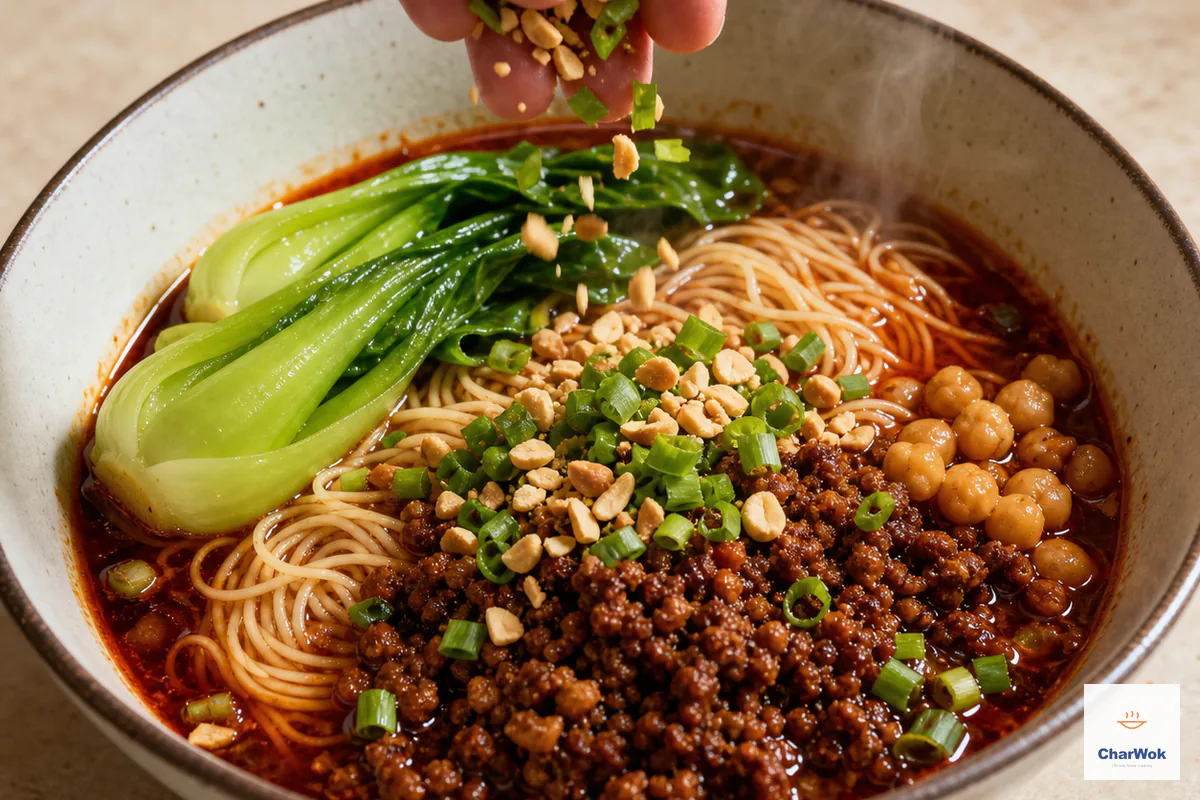
Add the hot stock, noodles, greens, chickpeas and meat topping, then finish with crushed nuts and scallion.
When the bowl goes wrong, and how to fix it
Most failures here come down to one of four things, and three of them are fixable at the table.
The broth tastes thin and boring. Almost always the stock. Taste your stock before you commit to it; if it reads as water with ambition, either reduce it by a third to concentrate it, or bolster it with a teaspoon of soy sauce and a small pinch of MSG. A weak stock cannot be rescued by more chili oil, it just becomes weak stock that is also greasy.
The noodles turn gummy and soft. You boiled them too long, or you used too small a pot and the starch built up. Next time pull them a minute early and use more water. For this batch, drain them, rinse once briefly under hot water to shed surface starch, and drop them in; they are still edible, just not ideal. Fresh alkaline noodles resist this far better than dried, which is one reason Chongqing uses them; see the alkaline noodle recipe if you want to make your own.
It is too hot to actually taste. You went heavy on the chili oil or the pepper. Stir in a spoonful of hot stock or a few drops of sesame oil and let it settle; oil floats, so skimming a little off the top also cools the burn. Next time build the base with half the chili oil, taste the broth, and add more at the table. Numbed-out palates recover fast once the heat drops a notch.
The meat is gray and rubbery, not glazed. Either the pan was not hot enough, the meat went in wet, or you added the sauce while the meat was still releasing juice. Get the pan smoking, pat the meat dry, and wait until it is genuinely dry and beginning to crisp before the sauce goes in. The sauce should sizzle the instant it lands.
Variations and what to serve alongside
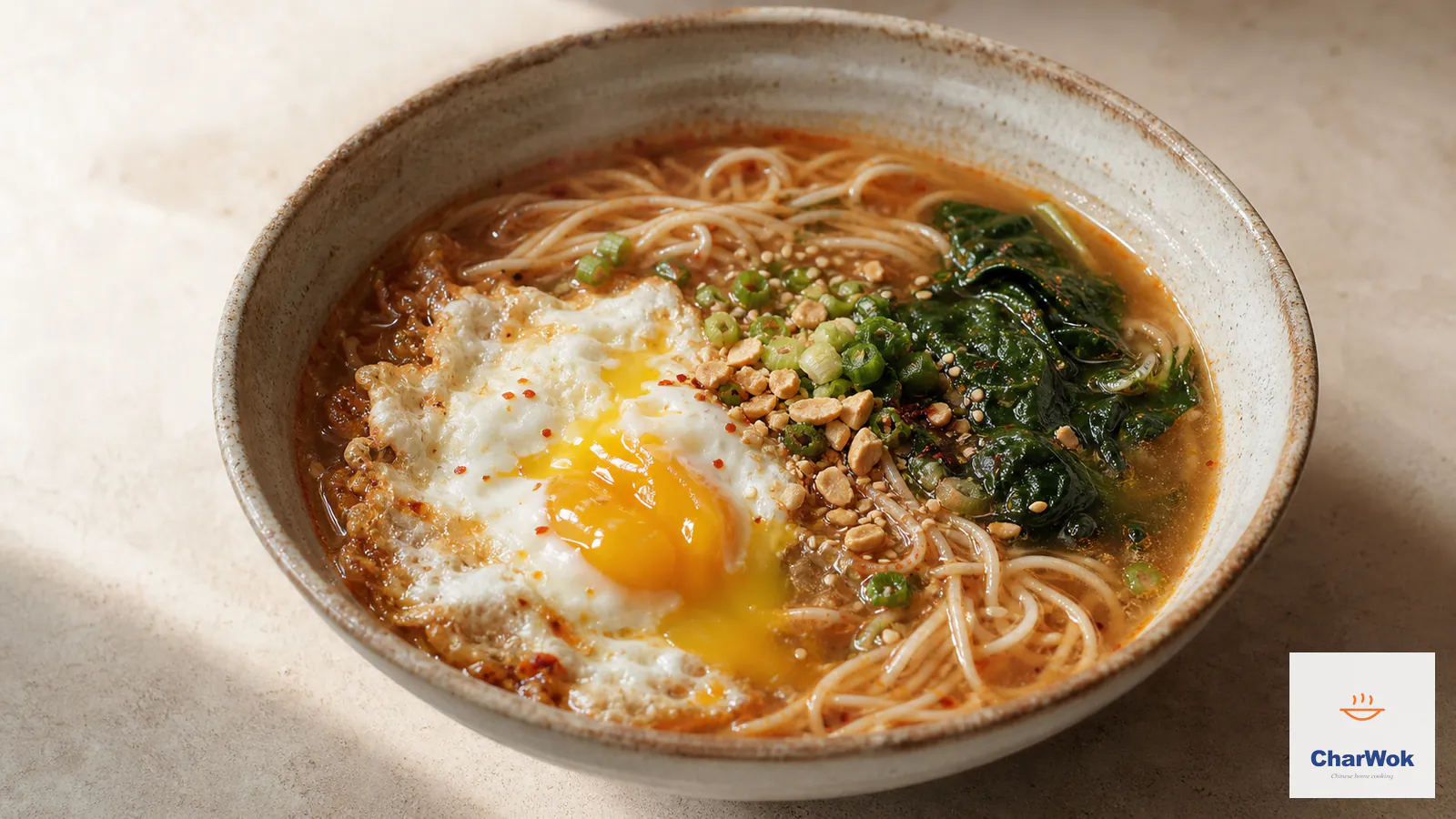
The topping is where Xiao Mian gets personal. Swap the chickpeas and pork for braised beef shank and you have a relative of spicy beef noodle soup in miniature. Skip the meat entirely and lean on the greens, peanuts, and a soft-yolked egg for a quick vegetarian bowl closer to Yang Chun Mian. A spoonful of the chili-and-numbing hot pot broth base dissolved into the stock pushes the whole bowl toward mala-hotpot intensity, which is a fine thing on a cold night.
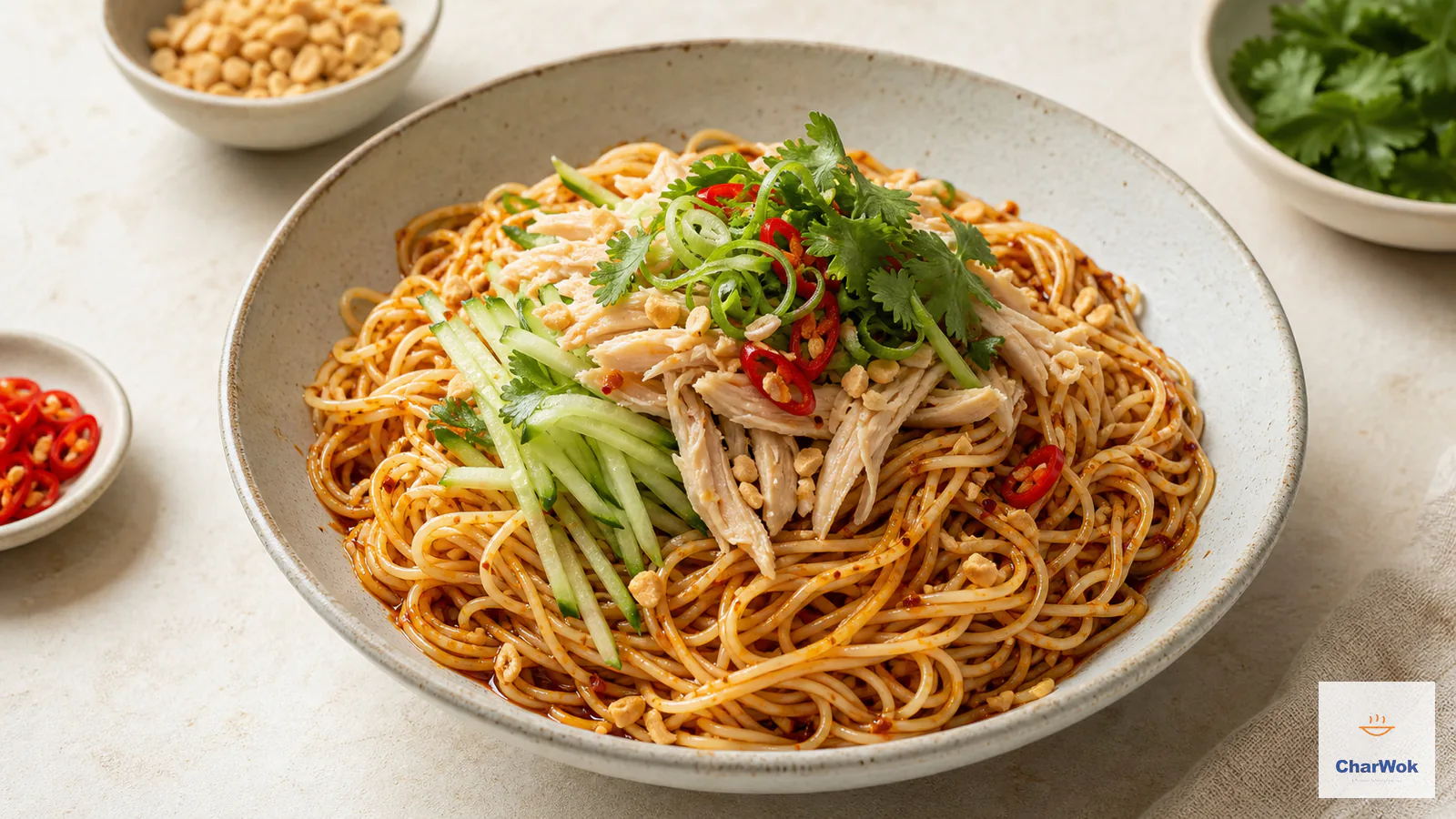
If you want a wider Sichuan meal, pair the noodles with a plate of mala chicken (Chongqing Laziji) or Sichuan boiled beef, where the same málà vocabulary shows up in a different texture. For a gluten-free bowl, swap the wheat noodles for rice noodles, the same move used in easy chow mei fun, or use glass noodles as in hot and sour noodle soup. And if the sweet, chewy strand is your thing, Tian Shui Mian (sweet water noodles) makes a wild dessert-style counterpoint after a spicy main.
Storage and reheating
Xiao Mian does not sit well once assembled; the noodles drink the broth and the peanuts go soft. The smart move is to store the components separately. The fried meat topping keeps in the fridge for up to three days and actually deepens in flavor overnight. The seasoning base can be pre-mixed in a small jar. Reheat the stock to a full simmer, warm the meat through in a dry pan, boil fresh noodles, and assemble at the last second. Leftover assembled noodles are edible but texturally disappointing, so I plan portions to avoid them.
Questions home cooks actually ask
A few things come up reliably, so I will answer them directly here rather than bury them above.
Can I make this vegetarian? Yes, and the plain Su Mian version is vegetarian by nature. Use vegetable stock, skip the pork topping or replace it with fried mushrooms or crumbled tofu, and confirm your chili oil was not made with dried shrimp. Add a spoonful of rendered vegetable oil or coconut oil to mimic the body that lard usually gives the broth.
Do I really need fresh alkaline noodles? No, and on a weeknight I almost never use them. Good dried round wheat noodles cooked just shy of done give you a fine bowl. Fresh alkaline noodles (Jian Mian) are springier and more slippery, which is the traditional texture, so make them when you have the time and the mood.
Why chickpeas instead of the yellow peas? Yellow split peas are the authentic topping, but they need an overnight soak and a long simmer. Canned chickpeas look almost identical, have a similar creamy-mealy texture, and are in every supermarket. Cooked briefly in stock they stop tasting canned and slot right in.
How spicy is this really? As written, it is a solid medium-hot that most chili-eating adults enjoy. The heat is fully adjustable through the chili oil and the Sichuan pepper. Start at half the listed amounts if you are cautious, taste the broth, and build up. The numbing quality is the part that surprises newcomers more than the heat itself.
Can I use MSG? Absolutely. A small pinch in the stock or the bowl base is exactly what a Chongqing stall would do, and it is the fastest way to lift a thin broth. There is no need to be precious about it.
So the bowl comes down to a handful of decisions made before the noodles even hit the water. A stock worth drinking, chili oil that still smells bright, Sichuan pepper ground this week instead of last year, and noodles pulled a minute early. Get those right and the toppings are just a way of dressing it up. The version I keep coming back to is the plain one, no meat, extra greens, peanuts crushed coarse, eaten fast while the oil is still shining on top.