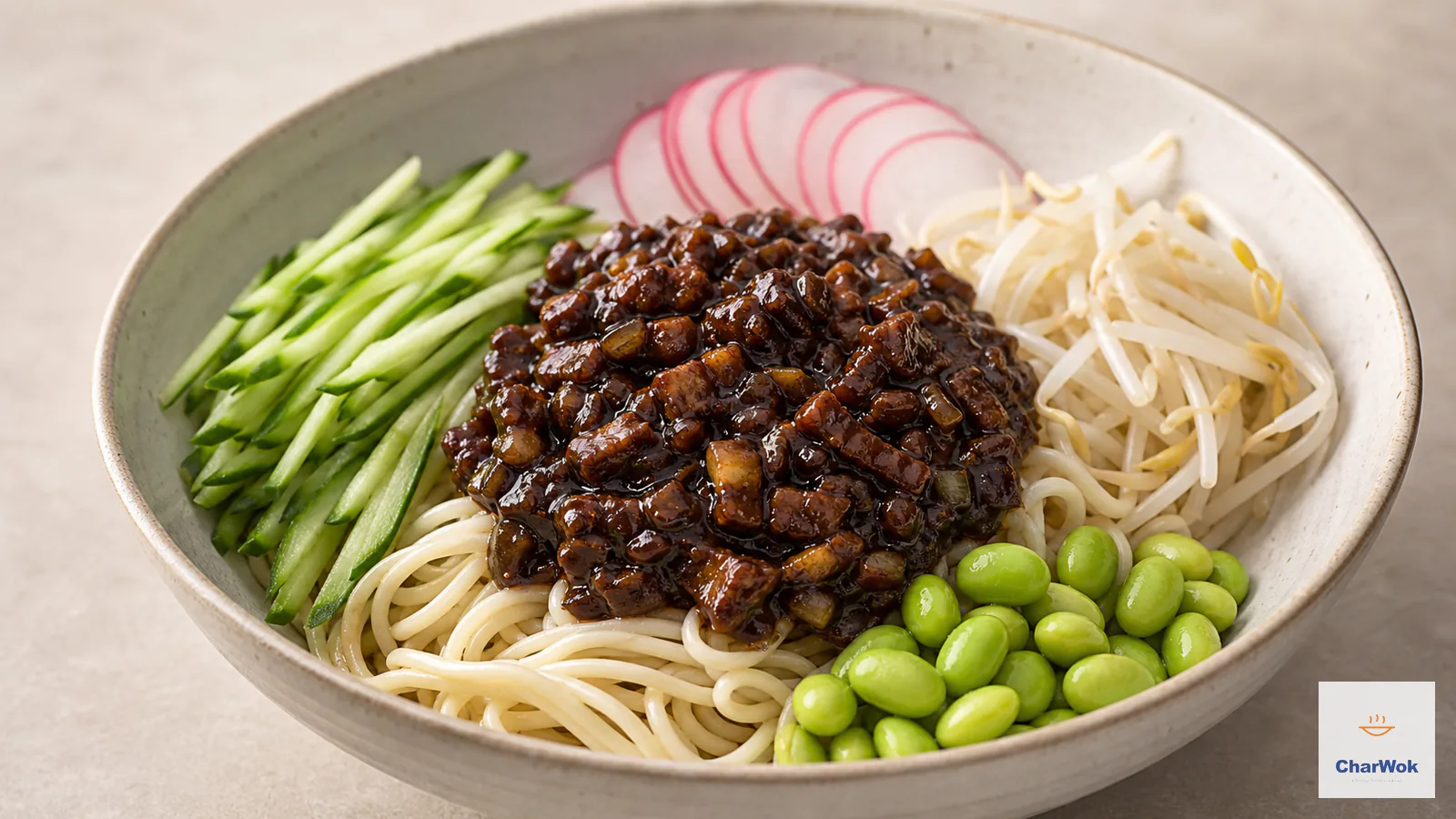
The first time I made Zha Jiang Mian at home, I undercooked the sauce by a full fifteen minutes and served my family a bowl of noodles glossed with gritty, raw-tasting bean paste. Everyone ate politely. Nobody asked for seconds. That failure taught me the one thing that separates this dish from ordinary noodle bowls: the sauce is not a topping you stir together. It is a braise, and it needs time and fat to turn fermented paste into something dark, glossy, and almost jammy.
Zha Jiang Mian (炸酱面), "fried sauce noodles," is a Beijing home-cooking classic built from three honest parts: slowly braised pork in a savory bean sauce, toothsome wheat noodles, and a pile of crunchy raw or blanched vegetables. There is no stock, no complicated wok technique, no theatrics. The difficulty is patience, and knowing which two pastes to buy.
At a glance: Braise diced fatty pork with yellow bean paste and sweet flour sauce in a little water for a true 20 minutes (15 only if using ground meat), then finish over high heat until the sauce coats a spoon. Fat ratio 1:2 of the two pastes, yellow to sweet. Rest the cooked noodles under cold water so the sauce clings instead of sliding off.
What this bowl is, and where it comes from
Zha Jiang Mian is northern Chinese comfort food, the kind of thing a Beijing family eats on a weeknight without ceremony. Like Dan Dan Noodles in Sichuan or the Chongqing small noodles served at street stalls, it is a one-bowl meal where the noodles are the point and the sauce is engineered to coat them. The northern version leans savory-sweet rather than spicy, built on fermented bean and wheat pastes rather than chili oil.
The vegetables matter more than newcomers expect. They are not garnish. Their cold crunch is the structural counterweight to a dense, salty sauce, and a bowl assembled without them tastes flat and one-dimensional. This is why every Beijing household keeps a rotation of toppings, raw in summer and blanched in winter.
The two pastes that make or break it
If you take one thing from this article, let it be this: do not substitute blindly. The flavor comes from two specific northern condiments, and they are not interchangeable.
Yellow bean paste (huang dou jiang / 黄豆酱) is a thick, dark brown, slightly lumpy sauce of fermented soybeans, wheat, salt, and water. It carries the salty, savory backbone. A dry version called gan huang jiang exists; if you can only find that one, thin it with warm water to a spreadable consistency before using, or it will seize and burn in the pan.
Sweet flour sauce (tian mian jiang / 甜面酱) is fermented wheat flour, darker and runnier than yellow bean paste, with a clear sweetness. It rounds off the salt and gives the sauce its glaze. The ratio I use is roughly two parts yellow bean paste to one part sweet flour sauce. If you cannot find sweet flour sauce, Sichuan chili bean paste is the wrong substitute (too hot, wrong flavor); use hoisin, or skip it and add half a teaspoon of sugar to the yellow bean paste. Your result will be a little less complex, but sound.
A splash of Shaoxing rice wine deglazes the fond and lifts the meaty aroma, and a single star anise perfumes the oil without taking over. Both are worth the small effort.
Choosing the meat
Use fatty pork, cut by hand. Pork belly is the classic choice because the rendered fat carries the bean paste the way butter carries a pan sauce; you want that fat. Cut it into small cubes about 1 cm (a little under half an inch) so each piece browns and then melts softly during the braise. If you genuinely cannot face chopping, ground pork works, but the bowl will read as lazier, with less texture and less rendered fat to emulsify the sauce. Lean cuts are a mistake here. They dry out and the sauce turns thin and sharp.
For a meatless version, skip the pork and use diced firm dried tofu (dou fu gan) or rehydrated shiitake mushrooms; you will need to add a tablespoon more oil to replace the missing fat, and a small pinch of sugar to compensate for the lost caramelization from the meat.
Ingredients
Ingredients at a glance
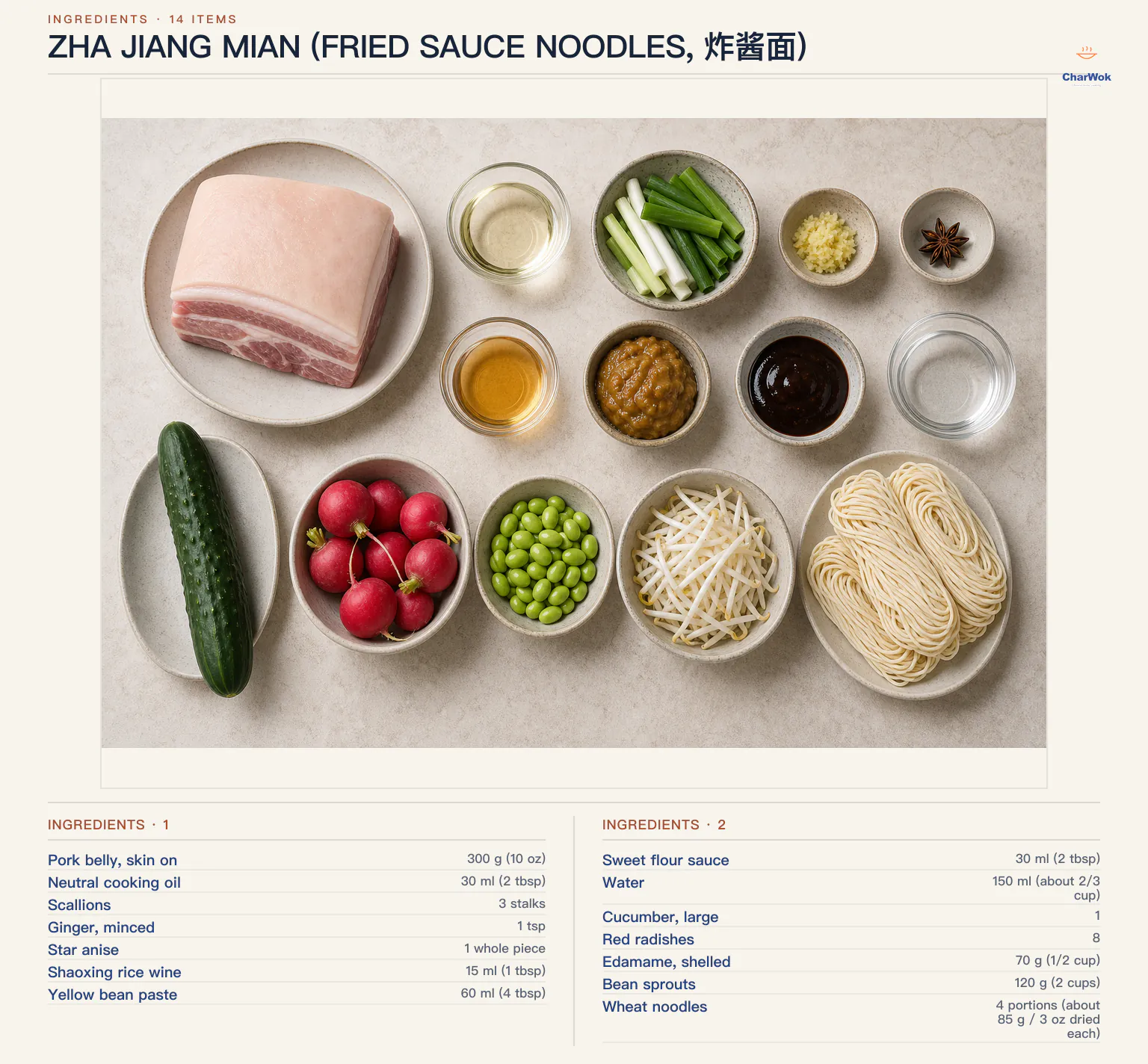
Serves 4. Quantities are metric-first; cup measures are noted where they are the household standard.
| Ingredient | Amount | Notes / substitute |
|---|---|---|
| Pork belly, skin on | 300 g (10 oz) | Or ground pork; or diced firm dried tofu / shiitake for vegan |
| Neutral cooking oil | 30 ml (2 tbsp) | Peanut, canola, or sunflower |
| Scallions | 3 stalks | Chopped; green and white kept separate |
| Ginger, minced | 1 tsp | Fresh, peeled |
| Star anise | 1 whole piece | Remove before serving if you like |
| Shaoxing rice wine | 15 ml (1 tbsp) | Dry sherry in a pinch |
| Yellow bean paste | 60 ml (4 tbsp) | The dry version: dilute first |
| Sweet flour sauce | 30 ml (2 tbsp) | Hoisin, or omit and add sugar |
| Water | 150 ml (about 2/3 cup) | Hot, to keep the braise steady |
| Cucumber, large | 1 | Cut into matchsticks |
| Red radishes | 8 | Thinly sliced |
| Edamame, shelled | 70 g (1/2 cup) | Chilled or frozen; thaw if frozen |
| Bean sprouts | 120 g (2 cups) | Mung bean sprouts preferred |
| Wheat noodles | 4 portions (about 85 g / 3 oz dried each) | Thick hand-cut, fresh, or dried |
Method
- Bloom the aromatics in oil first. Heat the oil in a wok or wide skillet over medium. Add the scallion greens, ginger, and star anise, and let them sizzle gently for about a minute. You are extracting fat-soluble flavor into the oil, so do not rush this with high heat; browning the scallion greens bitter is a common failure.
- Brown the pork until it releases its fat. Add the diced pork and fry until the pieces lose their pink color and the edges start to take on a little color. With pork belly you want some fat to render into the pan, because that fat is what will emulsify with the bean paste later. If the pan looks dry, your heat was too high and the meat seized; lower it.
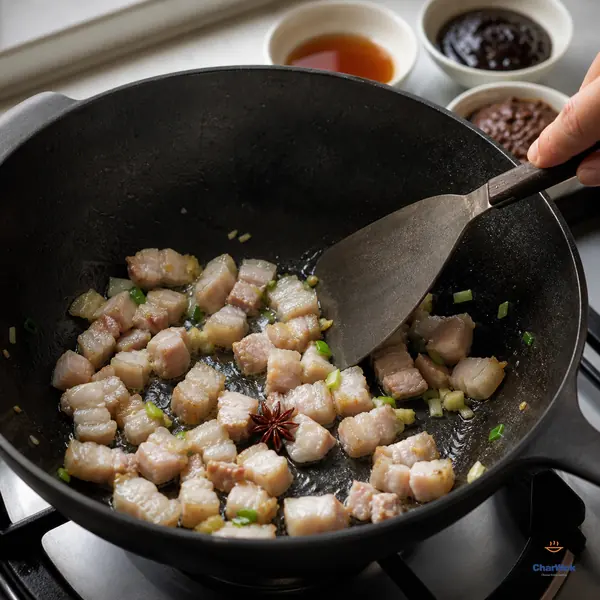
Fry the one-centimetre pork-belly cubes after the scallion greens, ginger and star anise until the pink surfaces turn pale, a few edges become lightly golden and the fat begins to render clear. Keep the wine and bean pastes out until this browning stage is complete.
- Deglaze, then add the pastes. Splash in the Shaoxing wine and let it hiss and nearly evaporate. Stir in the yellow bean paste and sweet flour sauce, coating every piece of pork. The paste will look stiff and almost too thick; this is correct. Adding it now, before the water, lets it fry briefly in the hot fat, which is the literal zhá (炸, "fried") in the name and softens its raw edge.
- Add hot water and braise covered for 20 minutes. Pour in the hot water, stir, bring to a gentle boil, then cover and drop the heat to low. Twenty minutes for diced pork belly, fifteen for ground pork. The long, covered simmer is what turns gritty paste into a unified, glossy sauce; if you skip it, no amount of high heat at the end will rescue the flavor.
- Finish uncovered on high to thicken. Take off the lid, raise the heat, and let the sauce boil until it darkens and coats a spoon. The water evaporates and the sauce reduces around the pork. Stir in the scallion whites at the very end so they stay bright. Taste, and only now adjust with a few drops of water if it is too salty.
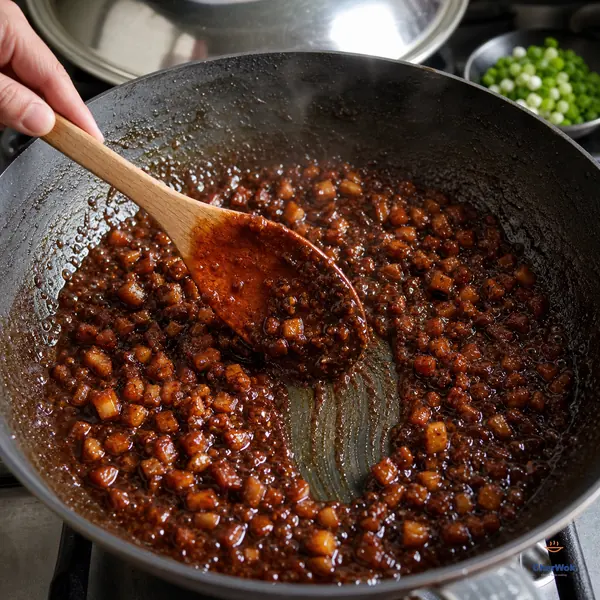
After the covered braise, remove the lid and boil the sauce over high heat, stirring so it cannot catch. Stop when it coats the pork and spoon, a path through the pan holds briefly and only a thin red-brown sheen of oil separates; it should remain fluid enough to toss with noodles.
- Prep the vegetables while the braise works. Cut the cucumber into matchsticks and slice the radishes thin. Blanch the edamame in boiling water for one minute if chilled, two if frozen; then add the bean sprouts and blanch no more than twenty seconds so they keep their snap. Lift them out and drain.
- Boil the noodles in the same water. Top up the pot if needed, bring it back to a full boil, and cook the noodles until just done. Drain, then run them briefly under cold water. Rinsing washes surface starch off so the sauce clings evenly rather than slipping through; skip this only if your tap water is not safe to drink.
- Assemble and toss at the table. Put noodles in four bowls. Add a generous spoon of the pork sauce and let diners pile on whatever vegetables they want. Toss thoroughly before the first bite. Untossed, you are eating layers of salt and starch; tossed, it becomes one bowl.
When it goes wrong, and how to fix it
The sauce tastes raw and gritty. You under-braised it. Put it back on low heat with a splash of water, cover, and give it another ten minutes. The fermented pastes need time and moisture to mellow; nothing else fixes this.
The sauce is too salty. This is almost always too much yellow bean paste, or a brand that is saltier than mine. Dilute with hot water a tablespoon at a time and simmer a few minutes more. Next time, lean on the sweet flour sauce and hold back a little of the bean paste.
The sauce looks thin and greasy, with the fat pooling on top. Two causes: not enough reduction at the end, or lean meat that did not render enough fat to emulsify. Boil it down a minute longer and stir vigorously to pull the fat back in. If it is still split, stir in a slurry of half a teaspoon of cornstarch in a tablespoon of cold water and let it come back to a bubble.
The noodles clump and the sauce slides off. You skipped the cold rinse. The starch on the surface of freshly boiled noodles is sticky and repels oil-based sauces. Rinse, drain well, and the sauce will coat.
The vegetables are watery and dilute the sauce. Drain the blanched edamame and sprouts thoroughly, and salt the cucumber matchsticks lightly ten minutes ahead, then pat dry. Wet toppings are the silent killer of a good bowl.
Noodles: which to use
Beijing tradition calls for thick hand-cut wheat noodles (shou gan mian), and they are the right answer if you have the time. Their rough, floury surface grabs the sauce better than anything extruded. My default for a weeknight is either simple hand-cut noodles rolled and sliced at home, or hand-pulled noodles when I want that bouncy chew. Fresh alkaline noodles work too, though their slipperiness is a slightly different texture than the northern ideal.
Dried noodles are perfectly acceptable on a Tuesday. Use about 85 g (3 oz) per person and do not overcook them; mushy noodles collapse under a heavy sauce. Thinner noodles are fine, but you lose some of the sauce-to-noodle ratio that makes the dish feel substantial. For something with more bite, the wide, belt-like Xi'an biang biang noodles are an indulgent substitute, and quick scissor-cut noodles are a fun shortcut that still gives you that rustic hand-cut surface.
Variations and pairings
Spicy version. Swap half the yellow bean paste for doubanjiang and finish the bowl with a spoon of chili oil. This drifts toward northern-Sichuan territory and is genuinely good, just know it is no longer Beijing Zha Jiang Mian.
Korean-leaning bowl. Use Chunjang (Korean black bean paste) in place of the yellow bean paste for a result closer to jajangmyeon. It is darker and a touch more bitter, and benefits from a half-teaspoon of sugar.
Switch the toppings. Anything crisp works: shredded napa cabbage raw or quick-blanched, julienned carrot, celery, kohlrabi, or blanched soybean sprouts. Let the season drive it. I lean on smashed cucumber in summer because the irregular surfaces hold the sauce.
Pair it with. A light soup balances the richness; a quick tomato egg drop soup or a bowl of plain yang chun noodle soup on the side turns this into a proper meal. If you want to keep it in the noodle family for another night, scallion oil noodles and a clean bowl of sesame noodles are the cousins most worth knowing.
Storage and reheating
The meat sauce is the part worth making in bulk, and it freezes beautifully. Cook a triple batch, cool it fully, and portion it into containers. It keeps a week in the fridge or three months frozen. Thaw overnight in the fridge, then reheat gently in a pan with a splash of water until it loosens and comes back to a simmer. Cook the noodles and prep the vegetables fresh each time; reheated noodles are not worth eating.
This is why Zha Jiang Mian is one of my favorite weeknight recipes and belongs on any list of solid make-ahead Chinese recipes: twenty minutes of hands-off braise on Sunday buys you four near-instant dinners later in the week.
Frequently asked questions
Can I use ground pork instead of diced pork belly? Yes. Cut the covered braise to fifteen minutes since ground meat cooks through faster, and accept a slightly leaner, less textured sauce.
What if I cannot find yellow bean paste? Use hoisin in place of the sweet flour sauce, and for the bean paste use a mild Korean Chunjang or thin miso thinned with water. Avoid substituting doubanjiang unless you want a spicy dish.
Do I have to rinse the noodles? It is recommended, not mandatory. A brief cold rinse removes surface starch so the sauce clings. Skip it only if your tap water is not safe to drink.
Is this the same as jajangmyeon? They share an ancestor but have diverged. The Korean version uses Chunjang and usually ground meat with starch thickening; the Beijing version uses hand-cut fatty pork and the two northern pastes, with no starch.
The whole dish lives or dies on that covered braise and the fat that renders out of the pork. Get those right, and the rest, the noodles, the vegetables, the toss at the table, falls into place without much fuss. That is the entire secret, and once you have cooked it correctly once, you will not need this recipe again.