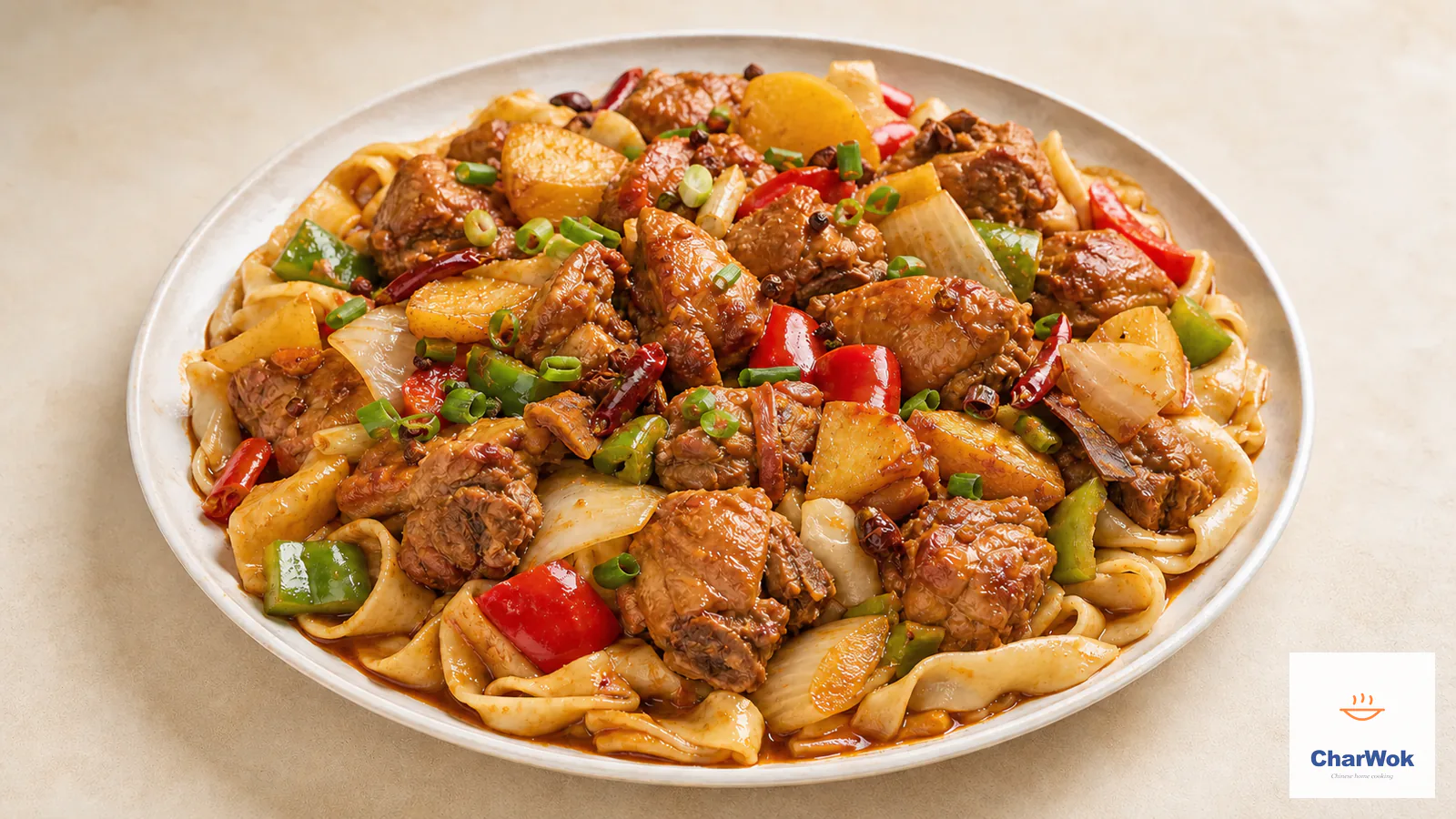
Big Plate Chicken, or Dapanji, combines chicken braised in a chili-bean sauce, tender potatoes and broad hand-pulled belt noodles on one shared platter. At home, the noodle dough needs enough rest to stretch cleanly, while the chicken needs gentle braising and a measured safe endpoint.
The two parts run on different clocks: start the dough first, braise the chicken near the end of its rest, and pull the noodles only when the stew is ready. This sequence prevents torn noodles and potatoes that dissolve before the chicken is cooked.
At a glance: A 50% hydration dough, rested under oil for at least an hour, makes the belts stretch without snapping. The chicken is seared, then braised gently in a doubanjiang-and-spice gravy, with potatoes going in late so they hold their shape. Fifteen minutes is the first temperature-check point: every chicken piece must reach 74°C (165°F) before the platter is assembled.
What this dish actually is
Dapanji translates as "big plate chicken" and is associated with Xinjiang cuisine. Recipes vary by region and cook, but the defining format is a large shared platter of chicken and potatoes in a spiced sauce, often served with broad noodles that absorb the gravy.
The noodles here are daoxiao-adjacent belt noodles, cousins of the wide ribbons in Xi'an biang biang noodles and the pulled strands in a proper bowl of hand-pulled la mian. The technique is gentler than full la mian, though. You flatten, then stretch by hand. If you have ever wanted to try hand-pulled noodles but found the classic recipe intimidating, this is the friendly on-ramp.
The two things people get wrong
First, under-resting the dough. A belt noodle stretches because gluten has had time to relax. Skip the hour oil-rest and the dough fights you, then tears. Second, boiling the dish into a soup. Dapanji is not a braise with broth. The finished sauce should be thick enough to cling, reduced enough that a noodle pulled through it comes up glossy. You add water in deliberate, small amounts.
Ingredients
Ingredients at a glance
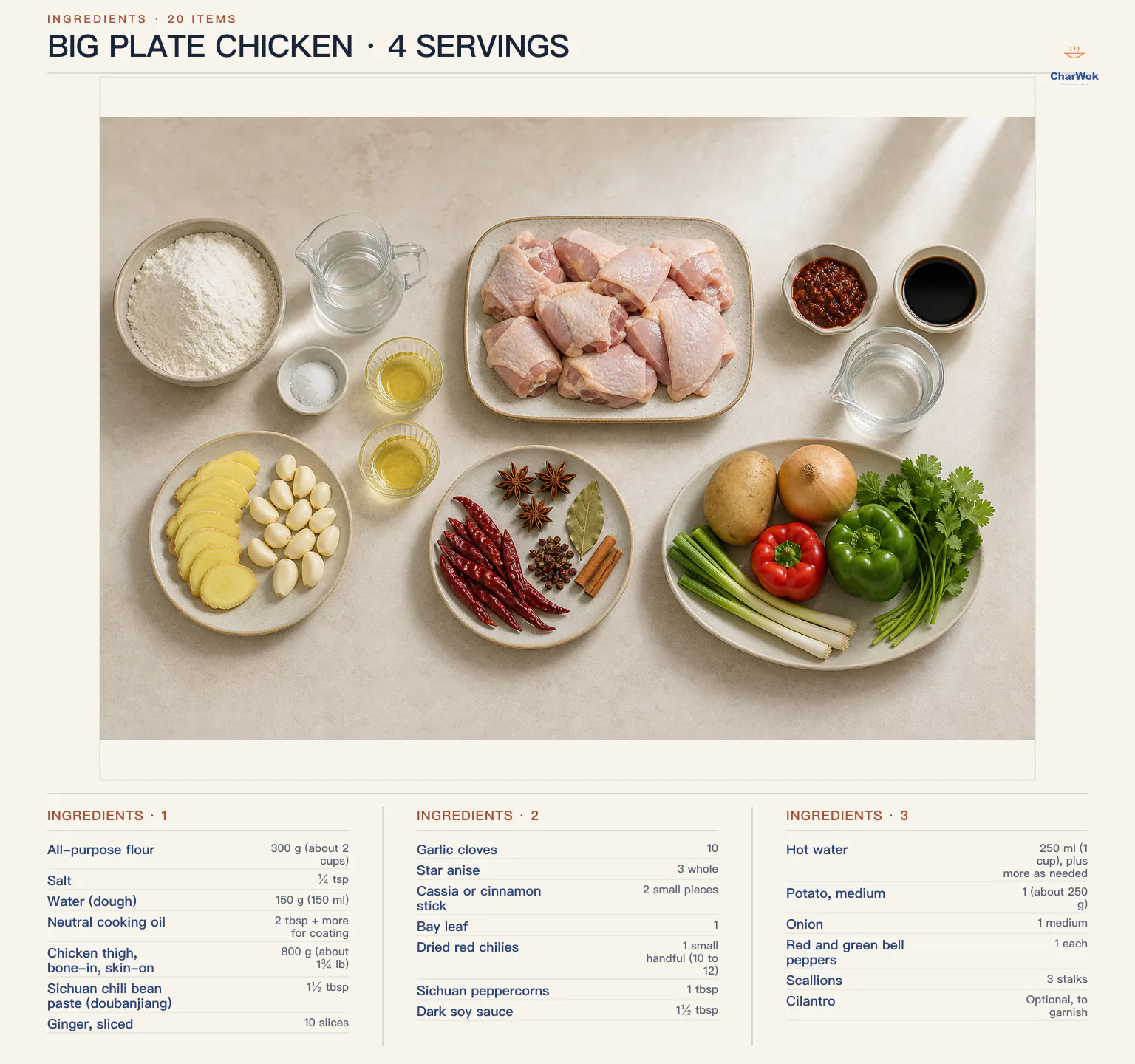
For the chicken, bone-in thigh is the classic cut and the one I recommend. The bone gives the sauce backbone. If you only have boneless thigh, it still works, but the finished dish will taste thinner. Breast is the wrong choice here; it dries out before the braise is done.
| Ingredient | Amount | Notes / substitute |
|---|---|---|
| All-purpose flour | 300 g (about 2 cups) | Bread flour works and gives a chewier noodle; do not use cake flour |
| Salt | ¼ tsp | For the dough; tightens gluten slightly |
| Water (dough) | 150 g (150 ml) | 50% hydration by flour weight; lukewarm |
| Neutral cooking oil | 2 tbsp + more for coating | Grapeseed, canola, or avocado; not olive oil |
| Chicken thigh, bone-in, skin-on | 800 g (about 1¾ lb) | Cut into 1½-inch chunks; drumsticks can sub partly |
| Sichuan chili bean paste (doubanjiang) | 1½ tbsp | Pixian is best; see the doubanjiang guide |
| Ginger, sliced | 10 slices | About a 30 g knob |
| Garlic cloves | 10 | Smashed, skins off |
| Star anise | 3 whole | The warm-spice backbone; do not skip |
| Cassia or cinnamon stick | 2 small pieces | Cassia is more authentic; cinnamon is fine |
| Bay leaf | 1 | Any bay leaf works |
| Dried red chilies | 1 small handful (10 to 12) | Erbajiao or Facing-Heaven; reduce for less heat |
| Sichuan peppercorns | 1 tbsp | For the numbing note; toast lightly first |
| Dark soy sauce | 1½ tbsp | Gives color and body; light soy cannot sub |
| Hot water | 250 ml (1 cup), plus more as needed | Use hot, never cold, to avoid stalling the braise |
| Potato, medium | 1 (about 250 g) | Russet or Yukon Gold; cut into ¾-inch pieces |
| Onion | 1 medium | Large dice; separates into petals on the plate |
| Red and green bell peppers | 1 each | Color and sweetness; cut in chunks |
| Scallions | 3 stalks | Chopped; some for the stew, some for garnish |
| Cilantro | Optional, to garnish | Skippable, but it lifts the finished dish |
The method, step by step
- Mix the dough, then rest before kneading. Combine the flour and salt in a bowl. Add the water gradually, stirring with chopsticks until no dry flour remains. It will look shaggy and a little ugly. Gather it into a rough ball, cover, and walk away for 10 minutes. That short rest lets the flour hydrate evenly and gives the gluten a head start, so the second knead goes from sticky mess to smooth dough in about two minutes. This is the same lazy-but-effective logic behind easy homemade noodles, and it works.
- Knead until smooth, divide, shape, coat in oil. Knead the rested dough on an unfloured surface for about two minutes until smooth and springy. Divide into 6 equal pieces. Roll each into a short cucumber-shaped log. Coat each thoroughly in neutral oil, set them on a plate, cover tightly with plastic, and rest at least 1 hour, or up to 3 at room temperature, or overnight in the fridge. The oil-rest is the whole trick: it keeps the surface from skinning over and lets the gluten relax so the noodles pull cleanly later. Do not shorten this.
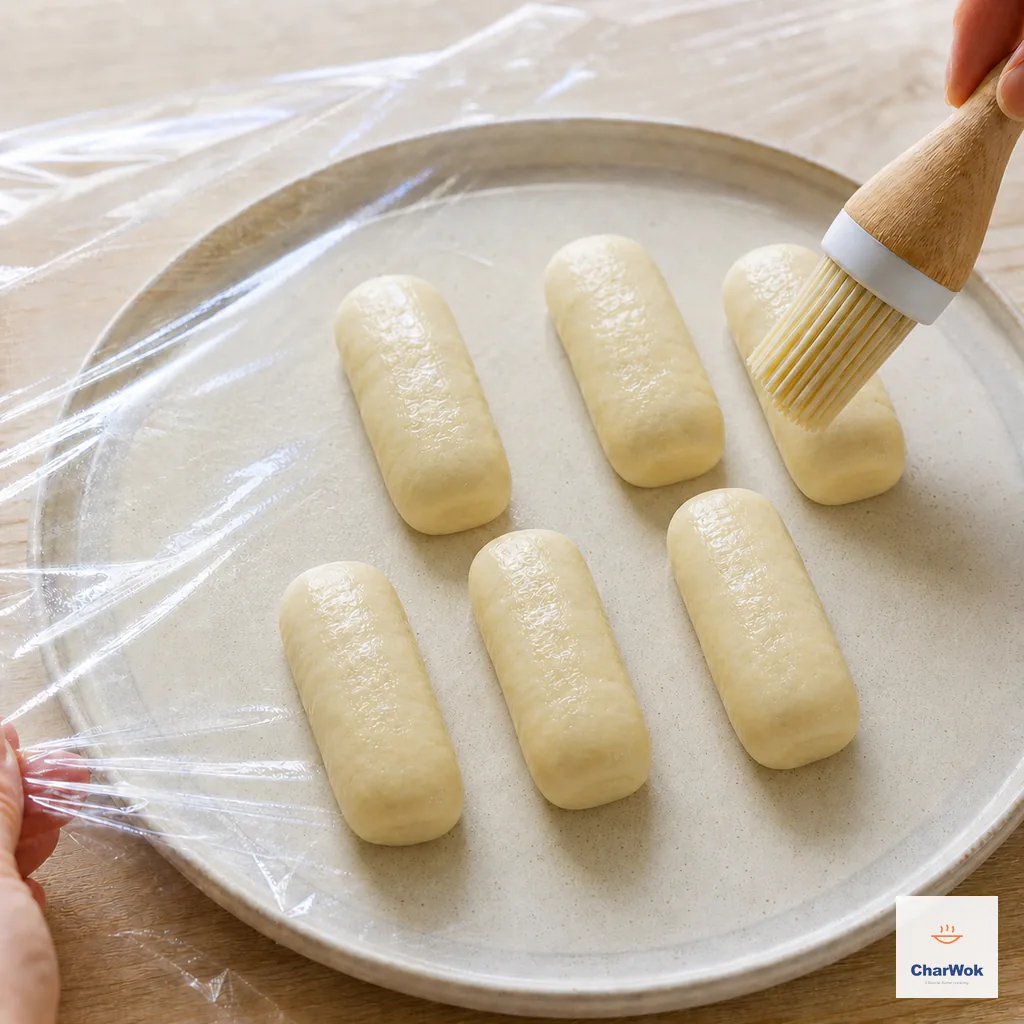
Divide into exactly 6 logs, coat every surface with neutral oil, cover, and rest for at least 1 hour so the dough pulls without tearing
- Sear the chicken. Heat a wok over high until a drop of oil shimmers, add the 2 tbsp oil, then the chicken skin-side down. Let it sit for about a minute so the skin renders and browns, then flip and brown the other side. If your wok is small, work in two batches so the chicken sears instead of steaming. Wash your hands after handling the raw chicken, and keep its plate and utensils away from cooked food. For wok fundamentals, this wok guide covers seasoning, heat, and maintenance.
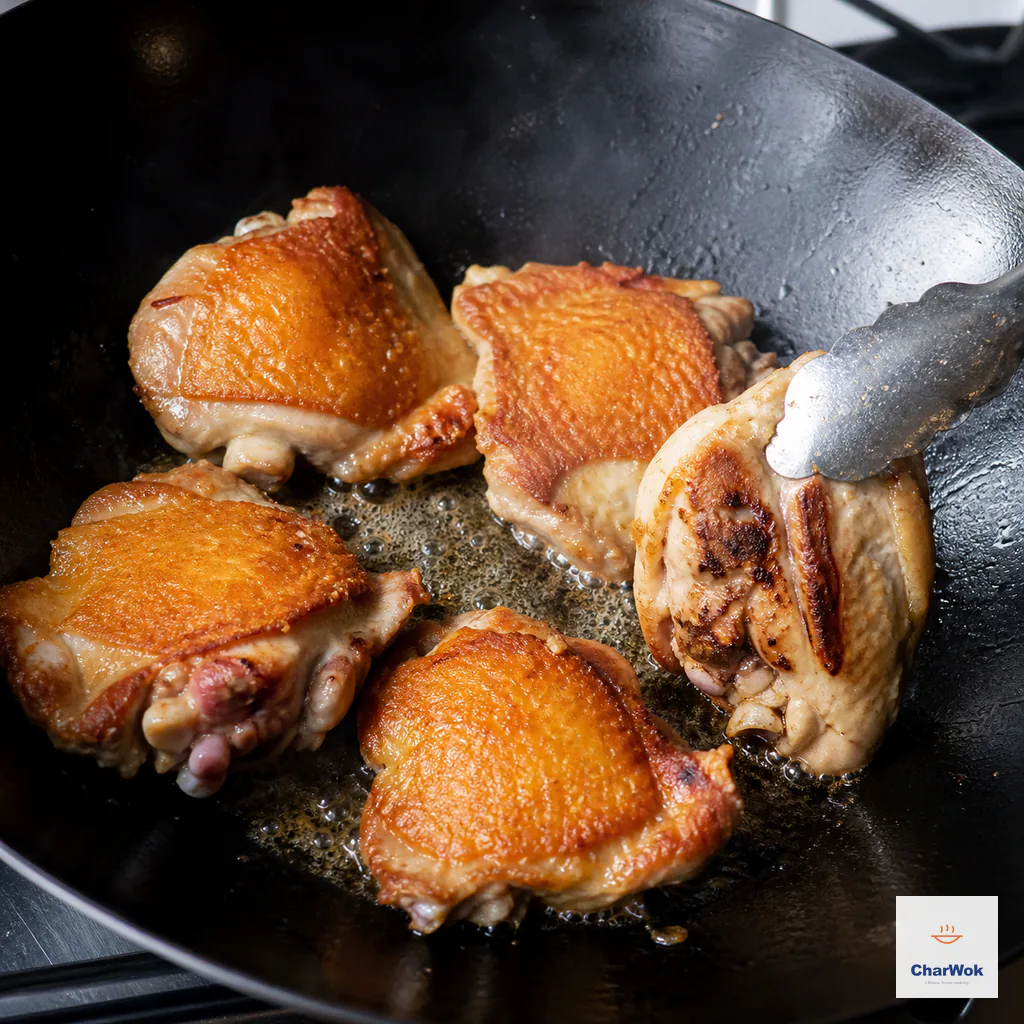
Sear the bone-in, skin-on thighs in batches, skin-side down first, until the skin is deeply golden and both sides carry firm browned contact patches
- Bloom the aromatics and spices. Turn the heat down to medium. Push the chicken to one side and drop in the doubanjiang, letting it fry in the oil for 15 to 20 seconds until it turns from bright red to a darker brick color and you can smell the chili toast. Add the ginger, garlic, star anise, cassia, bay leaf, dried chilies, and Sichuan peppercorns. Stir everything together for another 30 seconds. Frying doubanjiang in hot oil before adding liquid is what releases its flavor and deep red color; dumping it into broth does almost nothing.
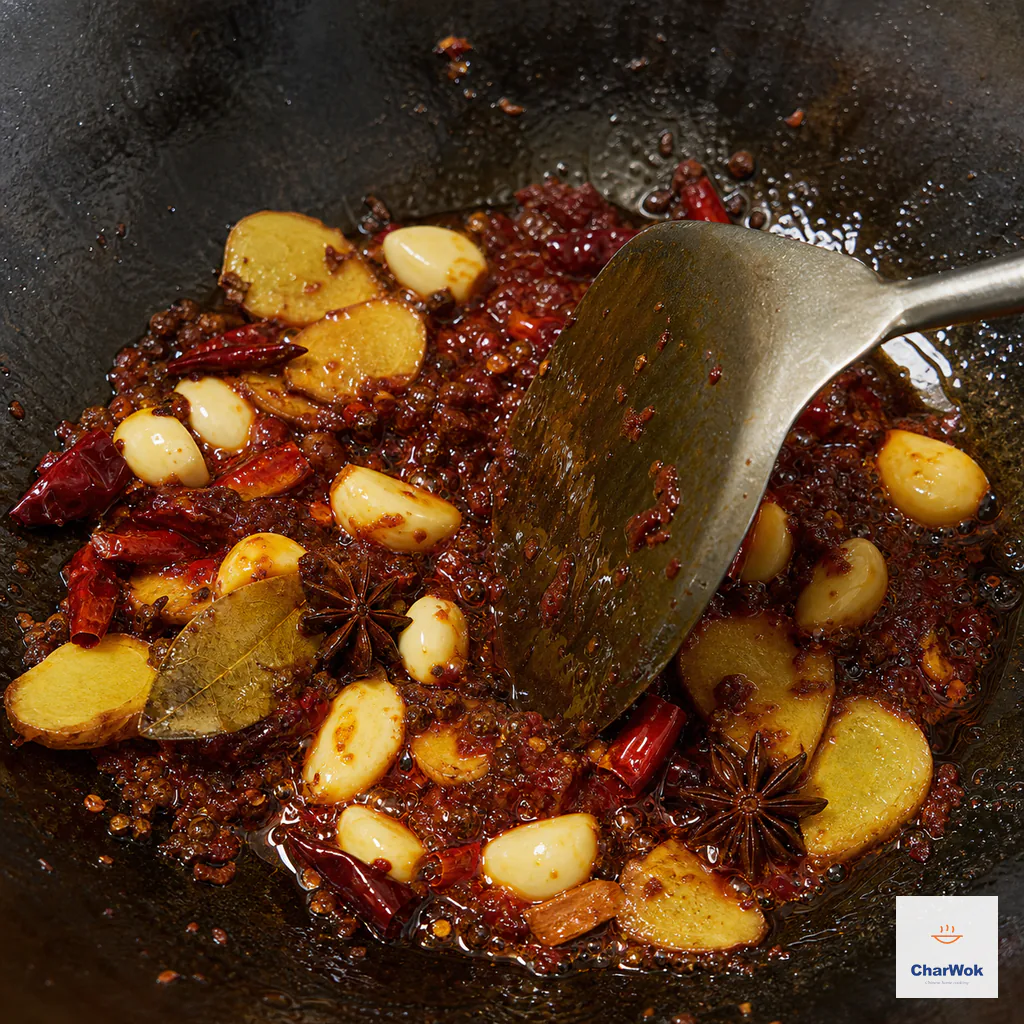
Fry doubanjiang for 15 to 20 seconds until brick red, then stir in the ginger, garlic, and whole spices for about 30 seconds without scorching them
- Add soy and water, then braise. Pour in the dark soy, stir to coat, then add 250 ml hot water. It should come about halfway up the chicken, not cover it. Bring to a steady simmer, cover, and cook about 10 minutes as the first stage—not as a doneness test. If you want to understand why Sichuan peppercorn matters so much here, this Q&A explains the numbing-warm note it adds.
- Add the vegetables, then check every chicken piece. Add the potato, stir, cover, and cook about 5 minutes. Add the onion and bell peppers and cook about 3 minutes more, until the potato is tender but not disintegrating. If the pan looks dry, add hot water 50 ml at a time. Use a clean instant-read thermometer on the thickest part of several pieces from different parts of the wok; for bone-in chicken, probe beside rather than against the bone. Continue simmering until every checked piece reaches 74°C (165°F). Potato tenderness and sauce thickness do not prove the chicken is done. Stir in most of the scallions at the end.
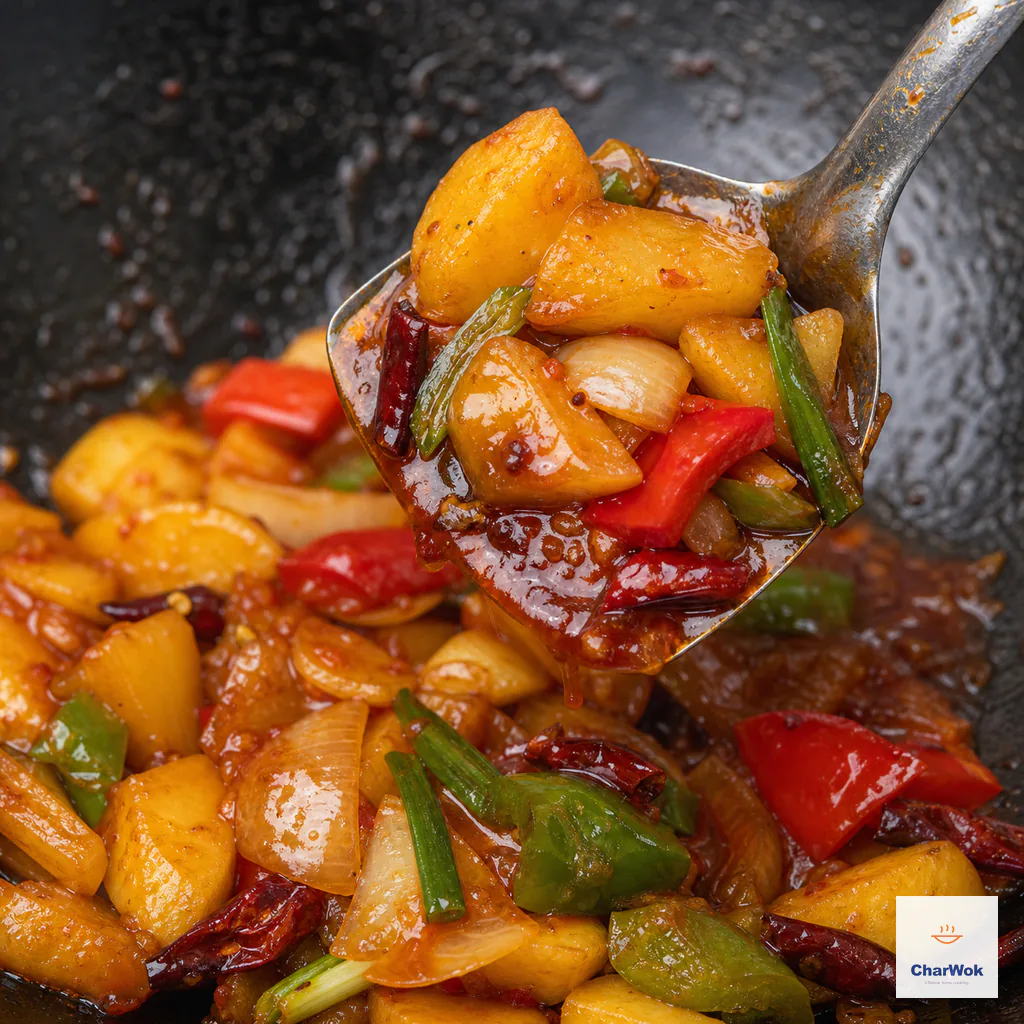
Cook the vegetables until tender, then use a clean probe on chicken from different parts of the wok; every checked piece must reach 74°C or 165°F before serving
- Boil the water and flatten the dough while the chicken finishes. Bring a large pot of water to a full rolling boil. Working on a lightly oiled surface, use a rolling pin to flatten each oiled log into a thin rectangle, about ¼ inch thick. The oil on the dough means you do not need extra flour, which would cloud your boiling water and muddy the noodles.
- Pull and cook the noodles. Pick up one flattened piece by the ends, gently bouncing it against the counter while you move your hands apart, letting gravity and the bounce stretch it into a long, wide ribbon. The dough should give willingly; if it resists or springs back, it has not rested long enough. Drop the ribbon straight into the boiling water. Repeat with the rest. Cook 1 to 2 minutes from the moment the last noodle goes in. They cook fast because they are fresh and thin.
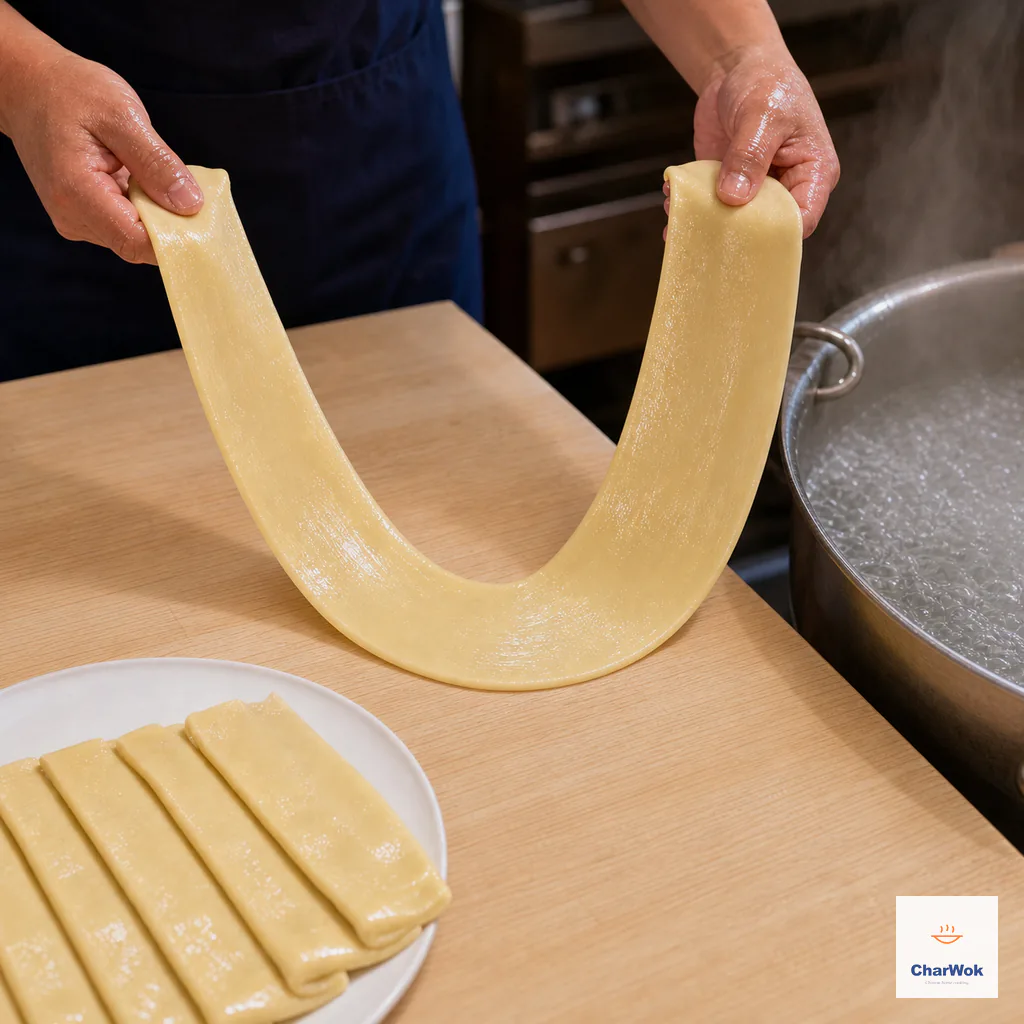
Flatten one rested log, pull and bounce it into one broad ribbon, then drop it into the rolling boil; repeat all 6 and cook for 1 to 2 minutes after the last goes in
- Assemble on one big platter. Lift the noodles out with chopsticks or a spider and pile them on a wide, shallow serving plate. Pour the chicken, vegetables, and all the sauce over the top. Garnish with the reserved scallions and cilantro. Bring the whole plate to the table and let everyone toss their own noodles through the sauce before eating. The dish is not a noodle soup; it is a noodle-and-gravy partnership, and the tossing is the point.
When it goes wrong, and the fix
The noodles tear when you pull them. Almost always a rest problem. The gluten has not relaxed. Give the oiled logs another 30 minutes, covered. A cold kitchen slows the relax; a warm one speeds it. You can also flatten the dough a little thinner with the pin before pulling, which asks less of the stretch.
The noodles come out gummy or sticky. Usually two causes. The dough was too wet to begin with, or the boiling water was not at a true rolling boil when the noodles went in. Weigh the water at 150 g, and make sure the pot is big and the water is furious. A small pot of half-hearted water dumps temperature the moment noodles hit it.
The chicken is tough. Breast is leaner, and a hard boil can dry any cut. Keep the braise at a steady simmer and begin checking at the suggested time. Remove fully cooked pieces as they reach 74°C (165°F) instead of cooking the whole batch longer by default.
The sauce is thin and soupy. Two fixes. First, lift the lid for the last few minutes and let it reduce hard. Second, the potato is your built-in thickener; mash a couple of pieces against the side of the wok and stir them back in. The starch does the rest. This is the same trick that gives beef and potato stew its velvety finish.
The sauce tastes flat, not spicy-numbing. The doubanjiang was not fried long enough, or the Sichuan peppercorns were stale. Buy peppercorns in small quantities and toast them dry for 20 seconds before using. For the douban, the color shift to dark brick is your cue, not a timer.
Variations and what to serve alongside
Three swaps that work without breaking the dish. Swap the chicken for bone-in lamb and lean harder into cumin, the way cumin lamb hand-torn noodles do. Add a handful of dried shiitake or wood-ear mushrooms with the potato for texture and umami. Or fold in strips of firm tofu to stretch the dish and soak up sauce, the way Sichuan-style braised tofu leans on the same flavor base.
On the side, this is a meal in itself, so keep things light and crunchy. A plate of cold smashed cucumber salad or di san xian works as a contrast to the rich, saucy main. A bowl of scallion oil chicken is overkill if you are already serving chicken; choose one or the other. If you want heat on the table, a small dish of chili oil lets each diner dial up their own.
Storage and reheating
Separate the stew and noodles, then refrigerate both in shallow covered containers within 2 hours of cooking, or within 1 hour when the room is above 32°C (90°F). Eat refrigerated leftovers within 3 to 4 days. Reheat the stew and every chicken piece to 74°C (165°F); bubbling at the edge alone is not enough. Fresh noodles give the best texture, but refrigerated noodles can be reheated separately.
For the dough, the oiled logs hold in the fridge for up to 24 hours; bring them back to room temperature for an hour before pulling, or they will tear. You can also freeze the raw logs, well wrapped, for a month, then thaw overnight in the fridge before using.
Frequently asked questions
Can I use dried noodles or fresh store-bought instead of making them?
Yes. Wide fresh noodles or dried Chinese noodles work in a pinch, but you lose half the point of the dish, which is the contrast between the silky fresh belt and the rustic stew. If you skip the from-scratch dough, buy the widest fresh noodle you can find.
Is bone-in chicken really necessary?
Bone-in thigh gives the sauce a richer body, while boneless thigh cooks more quickly and is easier to eat. Either works. Begin checking boneless pieces earlier, but use 74°C (165°F)—not a fixed time reduction—as the completion test.
How spicy is this, and can I make it milder?
Medium-hot by default. Cut the dried chilies to three or four, and the Sichuan peppercorns to a teaspoon, for a mild version. Keep the doubanjiang at full strength; it carries the flavor more than the heat.
Do I need a wok, or will a Dutch oven work?
A wide Dutch oven or deep skillet works fine for the braise, though you lose some of the high-heat sear a wok gives. If you cook Chinese food regularly, a carbon-steel wok is worth the investment.
What if my dough snaps back instead of stretching?
It has not rested long enough under the oil. Cover and wait another 30 to 45 minutes at room temperature. Cold dough also resists, so let chilled dough warm up fully before pulling.
For related techniques, explore these classic noodle recipes and these chicken recipes. The useful checkpoints are clear: rest the dough until extensible, brown the chicken without crowding, keep the braise gentle, verify 74°C (165°F), and reduce the sauce only to the consistency you want.
Food-safety references
- USDA FSIS: Chicken from Farm to Table — safe poultry temperature and raw-chicken handling.
- USDA FSIS: Leftovers and Food Safety — refrigeration and reheating limits.