There is a moment, about fifteen minutes into cooking scallions in oil, when the kitchen turns. The sharp, grassy smell of raw allium is gone, replaced by something toasted, sweet, almost nutty. That aroma is the whole point of scallion oil, and it is also the reason most home versions fall short: people rush it, burn it, or never make it at all.
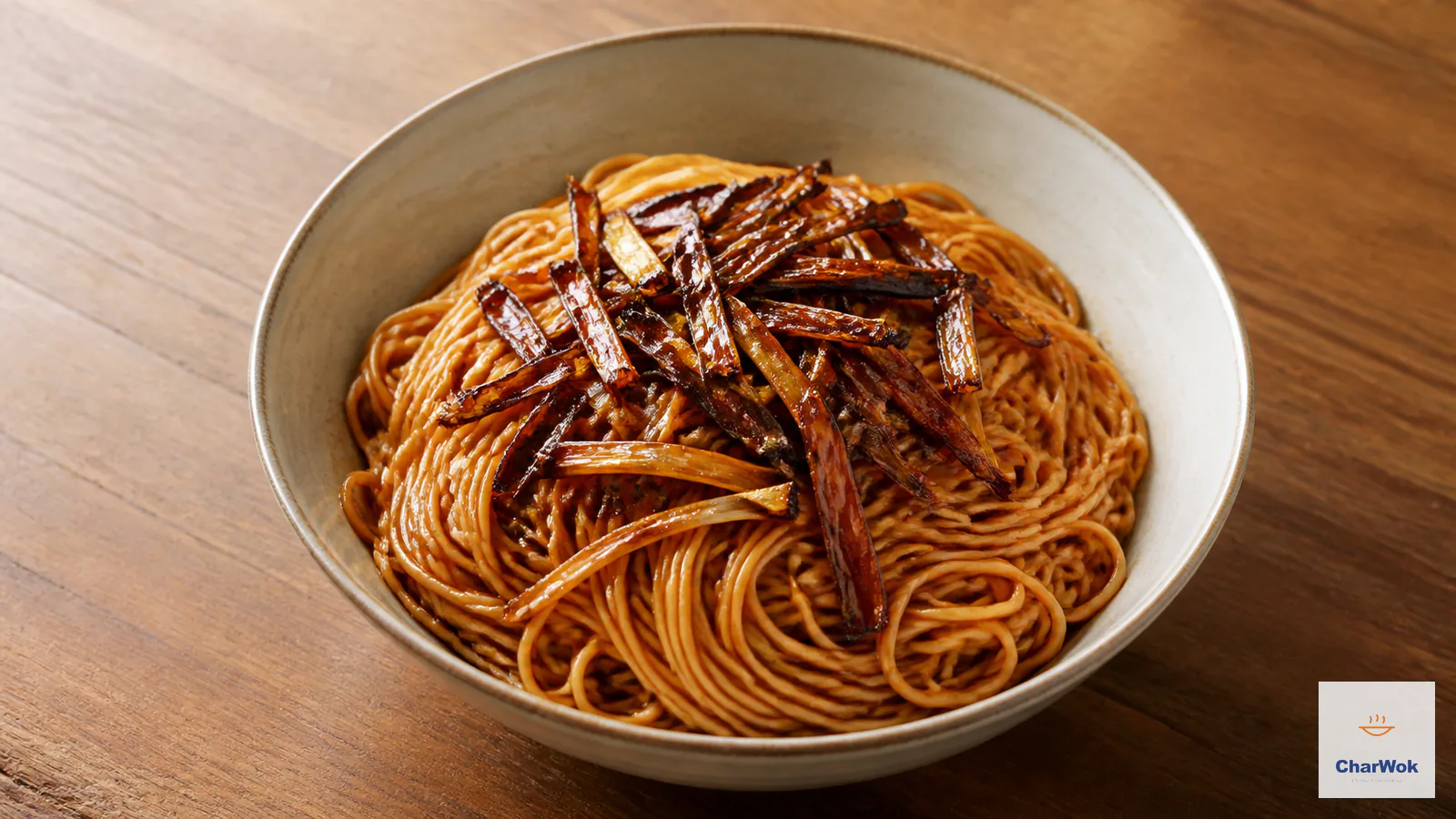
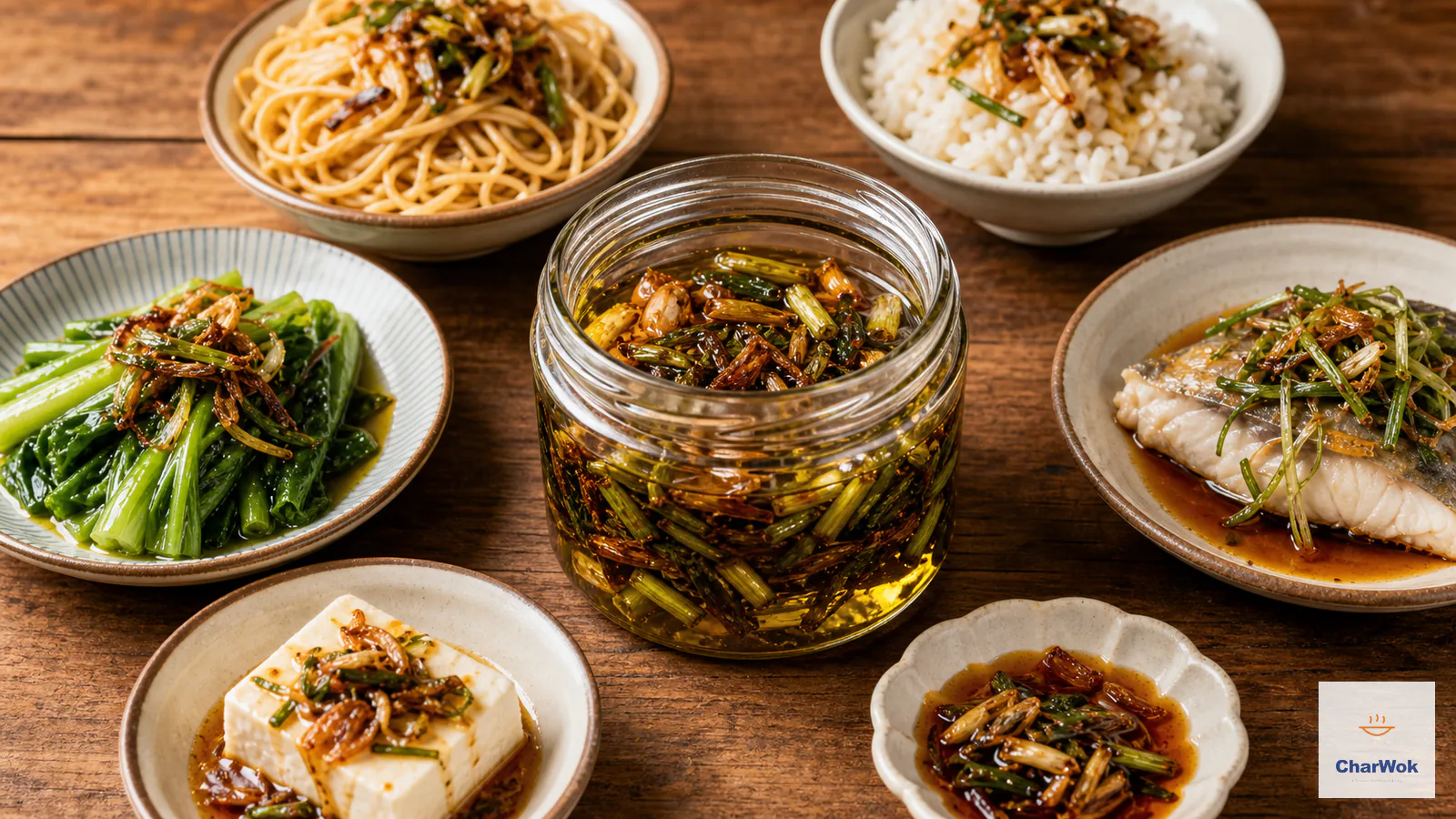
I keep a jar of this in my fridge the way other cooks keep butter on the counter. A spoonful stirred into plain noodles rescues a tired Tuesday. A drizzle over steamed fish turns a clean fillet into something restaurant-worthy. And once you have a batch on hand, you stop buying scallions every three days just to watch half of them go limp in the drawer.
At a glance
Infuse 150 g shallot plus 150 g scallion in 480 ml neutral oil over low heat for about 25 minutes. The single most important move: pull the pot off the flame the instant the alliums turn golden, because residual heat will carry them from fragrant to bitter in seconds. Yields roughly 350 ml of seasoned oil that keeps a month refrigerated.
What scallion oil actually is
Congyou (葱油) is a flavored oil built by slowly cooking alliums in fat until their water evaporates and their aromatic compounds dissolve into the oil. It is a staple of Jiangnan and Shanghai home cooking, where it is best known as the soul of scallion oil noodles and as the finishing pour over scallion oil chicken. Northern cooks use a similar oil for folding into flatbreads and pancakes, and Cantonese kitchens pour a hot scallion-ginger-shallot oil over blanched fish and tofu.
The science is straightforward and worth knowing. Alliums carry their aroma as flavor precursors locked inside their cells. Heat ruptures those cells and triggers the enzyme reactions that create the savory, sulfurous notes we associate with cooked onion and scallion. Because these aroma molecules are fat-soluble, they migrate out of the plant tissue and into the surrounding oil, where they are stable and keep for weeks. Water, by contrast, would let those aromas evaporate and spoil. That is why this condiment is oil-based, not water-based, and why drying the scallions before cooking matters more than people expect.
Why I add shallot to a traditional recipe
The old-school Shanghai version uses scallion alone. I cook a shallot in first, then the scallion. Shallot contributes a rounder, sweeter, more caramelized base note that scallion cannot reach on its own; scallion adds the bright, green-onion top notes shallot lacks. Layered together, the finished oil reads as deeper and more complete. If you only have one or the other, the recipe still works, but the two together are the reason a friend will ask what you did differently.
Ingredients
Spring onion oil ingredients at a glance
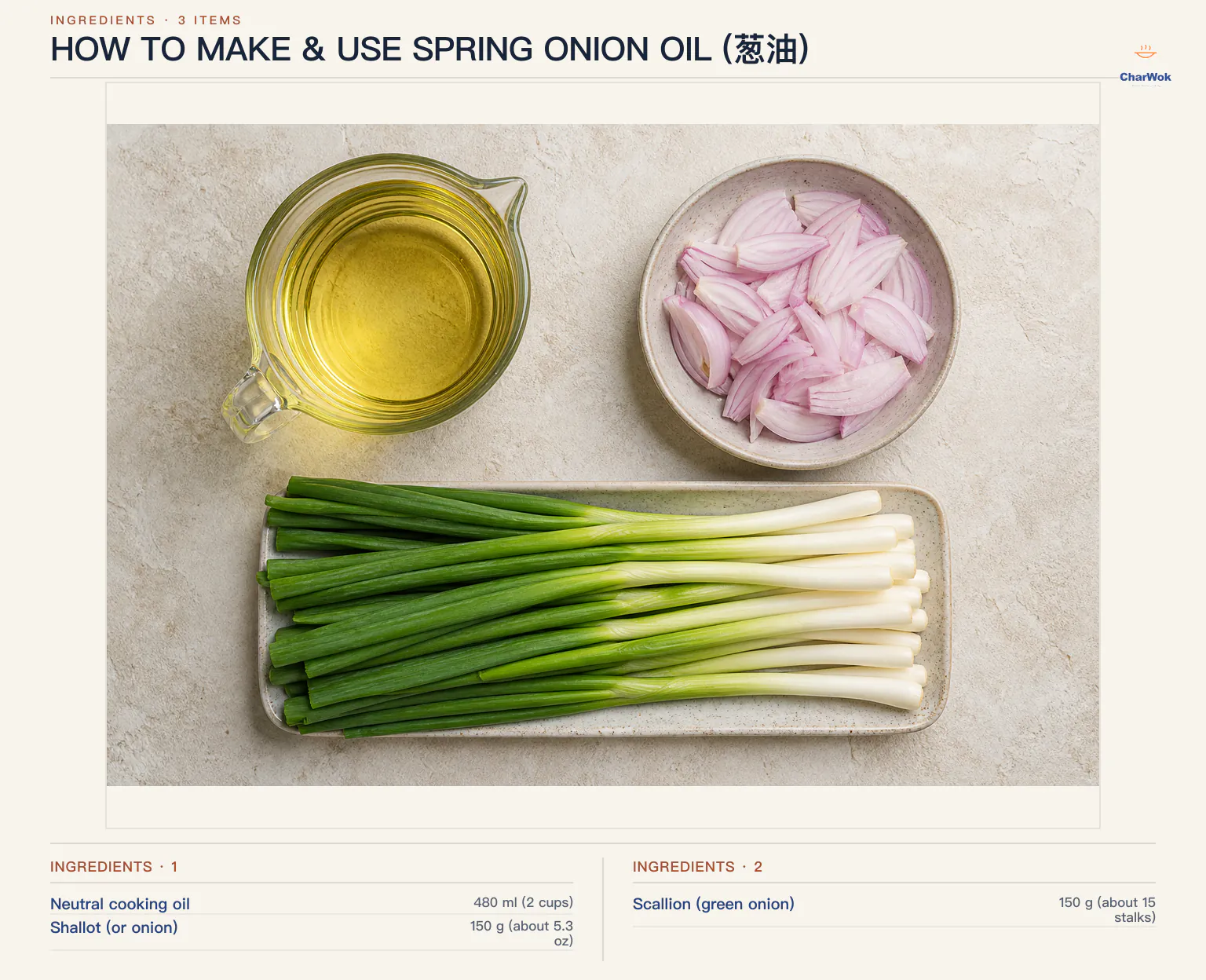
| Ingredient | Amount | Notes / substitute |
|---|---|---|
| Neutral cooking oil | 480 ml (2 cups) | Canola, grapeseed, sunflower, or avocado. Avoid extra-virgin olive oil, toasted sesame, and peanut if you want a clean base; peanut works but adds its own flavor. |
| Shallot (or onion) | 150 g (about 5.3 oz) | Shallot is sweeter and softer. Yellow or white onion works; red onion turns the oil pink and tastes sharper. |
| Scallion (green onion) | 150 g (about 15 stalks) | Firm, bright green, no slime. Leek greens or the green tops of storage onions can stand in, cut thin. |
One note on oil choice. A neutral, high-smoke-point oil is not a stylistic preference here. Strongly flavored oils fight the alliums and muddy the result, and oils with low smoke points (extra-virgin olive oil, unrefined nut oils) break down during the long, gentle cook and turn rancid-tasting. If you want a sesame finish, you add toasted sesame oil raw at the end, not as the cooking fat.
Method
- Prep and dry the alliums. Peel the shallot and slice it thin, about 2 mm. Wash the scallions, then dry them aggressively with a kitchen towel until no surface moisture remains; wet scallions spit and splatter in hot oil and slow the infusion. Cut the scallions into 5 cm lengths and split them into two piles: the white and pale green parts, and the dark green tops. The two piles go in at different times because the white parts are denser and need longer.
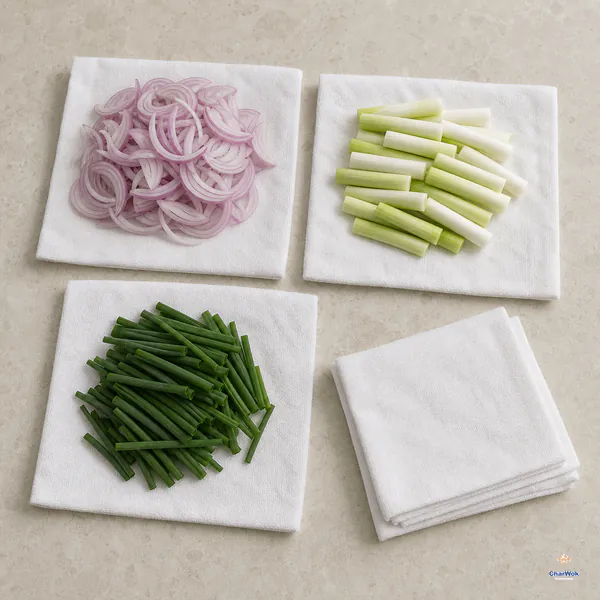
Slice the shallot thinly, pat every scallion piece completely dry, cut the stalks into 5 centimetre lengths, and keep the white and dark-green parts separate.
- Crisp the shallot first. Put the oil in a wok or a deep, heavy saucepan over medium-low heat. Add the sliced shallot. You want a lazy simmer, with the occasional small bubble, not a fry. Let it ride, stirring now and then, until the slices turn pale gold, about 15 minutes. The moment they look lightly browned, kill the heat and lift them out with chopsticks or a slotted spoon. They keep darkening after they leave the oil, so pull them one shade before you think they are done.
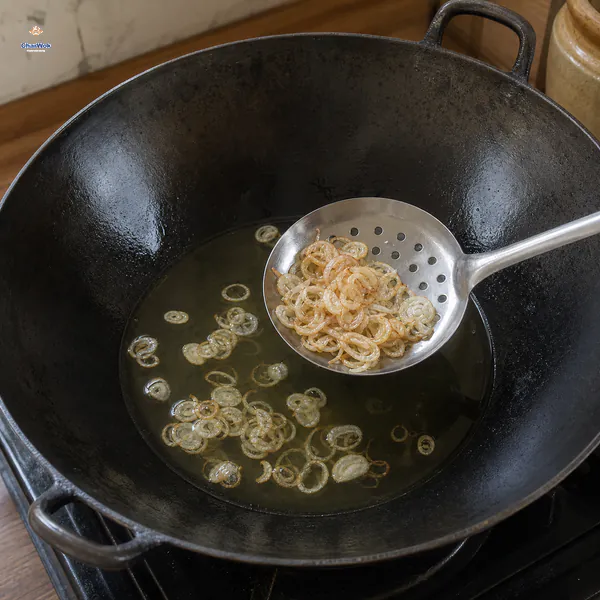
Infuse over medium-low heat with only an occasional tiny bubble, then remove the shallot one shade before full gold because carryover heat keeps darkening it.
- Cook the scallion whites, then the greens. With the heat back on at medium-low, add the white and pale green scallion pieces. Simmer until they soften and the edges wrinkle, around 5 minutes. Then add the dark green tops and cook another 4 to 5 minutes, until they darken, lose their brightness, and turn slightly crisped at the edges. Turn the heat off as soon as the greens brown. Carryover heat will finish the job; leaving the flame on guarantees bitterness.
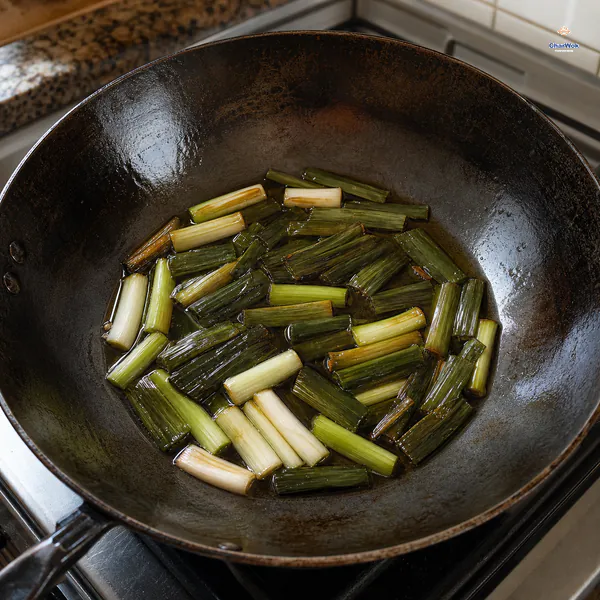
Cook the dense white parts first, add the green tops only after the whites wrinkle, and turn off the heat as soon as the greens darken and begin to brown.
- Strain and store. Let the oil cool until it is warm but not hot, then pour it through a fine sieve into a clean, dry, ideally just-boiled glass jar. You can keep the fried shallot and scallion bits in the oil for flavor and texture, or strain them out and save them as a topping, for instance over noodles or stirred into a stir-fry. Refrigerate the jar, lid on, and dip in with a clean, dry spoon every time.
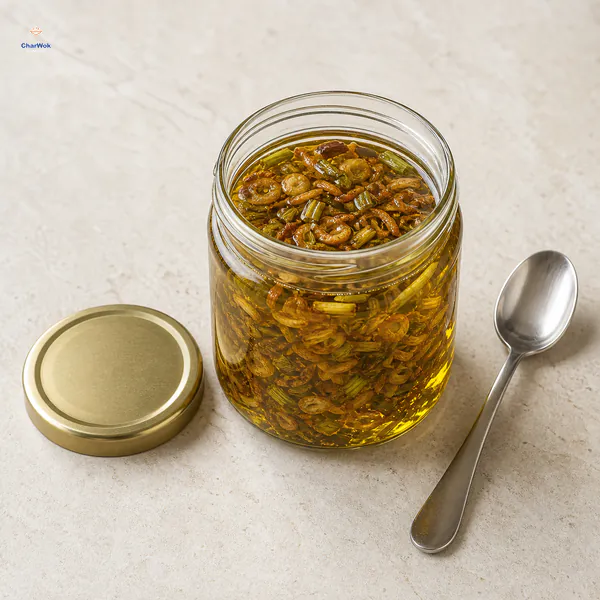
Let the oil cool until warm, transfer it to a clean dry jar, refrigerate with the lid on, and use only a clean dry spoon.
The decision to pull the alliums slightly early is the one that separates good scallion oil from bitter oil. Alliums brown from the outside in, and the color you see on the surface is already one step past the flavor peak inside. If in doubt, undercook. A pale, fragrant oil is useful; a dark, acrid one is not.
When the oil goes wrong: troubleshooting
- The oil tastes burnt and harsh. The alliums overcooked. Burnt is unrecoverable; strain it out, toss it, and start over. Next time, drop the heat lower and pull the alliums one shade paler than golden.
- The oil is bland and thin. Either the heat was too high (aromas flashed off before they infused) or the cook was too short. Low and slow is the whole technique. Twenty-five minutes at a true simmer beats ten minutes at a sizzle.
- The oil spits and splatters badly. The scallions were wet. Dry them fully, stems included, before they touch the oil. Surface water is the culprit, never the oil.
- The oil went cloudy or smells off after a week. Water got in, or a wet spoon was used. Always use a clean, dry spoon, and keep the jar refrigerated. Cloudiness from cold is normal and harmless; cloudiness plus sour smell is not.
- The scallion bits turned black, not brown. You fried instead of simmered. The greens cook in the same gentle oil as the shallots. If you see active bubbling around them, the heat is too high.
I will admit my own recurring failure: I get distracted, leave the room, and the shallot crosses from gold to tan in the time it takes to read a text. Now I set a phone timer at the ten-minute mark and stay within sight. Scallion oil does not punish patience, but it punishes absence.
How to use the jar
Once made, this is a condiment you will reach for constantly. The classic destination is scallion oil noodles, a Shanghai street snack of this oil, soy sauce, and sugar tossed through hot noodles. But it shines well beyond that.
For noodles, a spoonful stirred into a bowl with soy and a pinch of sugar turns plain noodles into a meal; the same trick lifts Dan Dan noodles, chow mein, and cold sesame noodles. For stir-fries, cook with it instead of plain oil to shortcut the scallion-and-ginger base, the way I do for egg fried rice and chicken chop suey. For cold dishes, use it where you would use sesame oil; it is excellent on smashed cucumber salad. For steamed food, a hot pour over just-steamed Cantonese steamed fish is transformative. For soup, a few drops stirred into a finished bowl of hot and sour soup or egg drop soup adds aroma without thinning the broth.
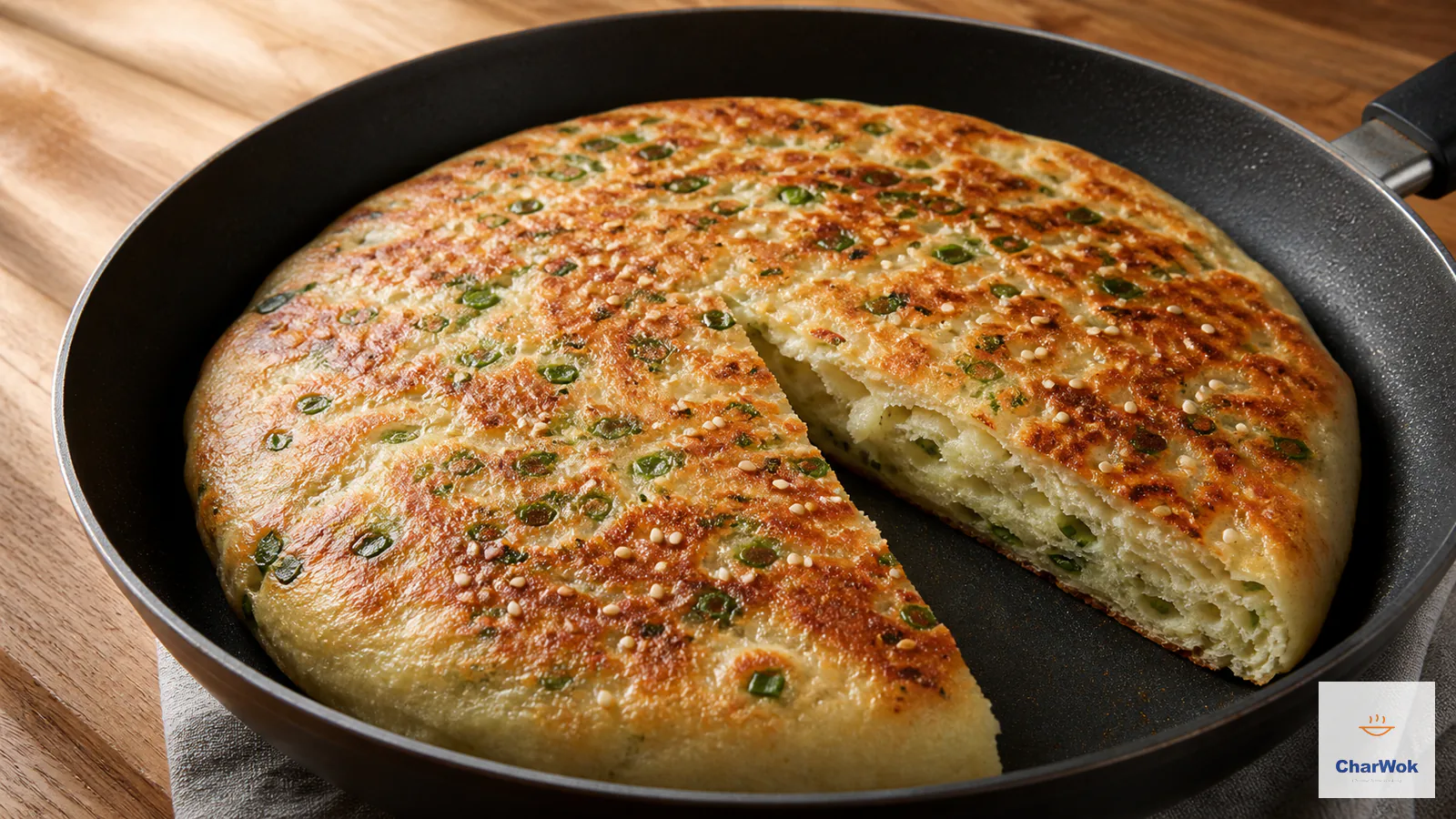
It also belongs in dough. Brush it between layers of scallion pancakes and baked scallion bread, or use it to separate the layers of spiced beef flatbread. The fat blocks the dough from sticking and bakes in flavor that plain oil never would.
Variations and pairings
- Ginger-scallion oil. Add 30 g of smashed young ginger with the scallion whites. This is the Cantonese standard for pouring over blanched chicken and white-cut proteins.
- Garlic-scallion oil. Add minced garlic in the last two minutes only; garlic burns faster than scallion and turns bitter instantly. This hybrid is closer to a chili oil base than a pure scallion oil.
- Fast version, scallion only. Skip the shallot and raise the heat slightly. You trade depth for speed, finishing in about 15 minutes, but you must watch the greens constantly.
- Pair it with plain congee and a few pickles, with cold sliced chicken, or with blanched greens dressed at the last second.
Storage and reheating
Keep the strained oil in a clean, airtight glass jar in the fridge and use it within a month. It will partially solidify when cold, which is fine; a clean spoon scoops out what you need, and it melts to liquid again at room temperature. Never reintroduce a used or wet spoon. The fried scallion and shallot bits, if you keep them in the oil, shorten the shelf life to about two weeks; for longer storage, strain them out and store the bits separately in the fridge for topping noodles. This oil does not need reheating; use it cold or at room temperature straight from the jar.
Frequently asked questions
Can I use olive oil? Not recommended. Extra-virgin olive oil has a low smoke point and a strong flavor that clashes with the alliums and breaks down during the long cook. Stick with canola, grapeseed, sunflower, or avocado oil.
Why did my oil turn bitter? The alliums overcooked. Alliums keep browning in residual heat after the burner is off, so pull them one shade paler than golden and cut the heat a few seconds early.
Does it need refrigeration? Yes. Refrigeration slows oxidation and water-driven spoilage and extends the oil to a month. A clean, dry spoon every time is what keeps it safe.
Can I make a smaller batch? Easily. Scale everything down, but keep the oil-to-allium ratio near 3:1 by volume. The timing shrinks with the quantity, so start checking for color earlier.
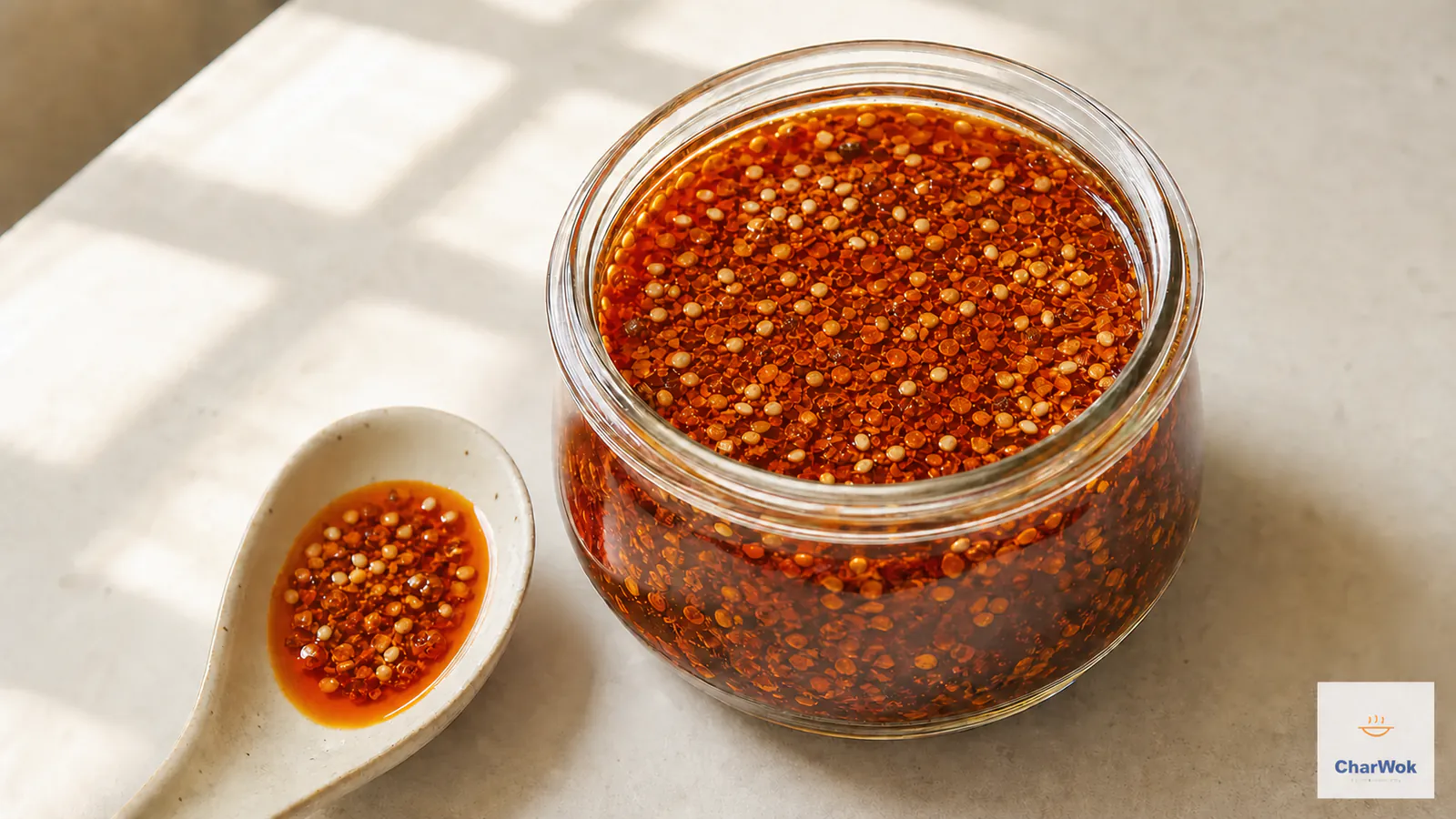
Is this the same as chili oil? No. This is a clear, allium-infused oil. Chili oil uses dried chilies and spices for heat. The two are complementary, not interchangeable, though this oil makes a great base for a homemade chili oil.
The core of this recipe is patience and timing, not ingredients. Cook low, watch closely, and pull the alliums early. Do those three things and the jar in your fridge will quietly upgrade noodles, stir-fries, steamed fish, and soup for the next month.