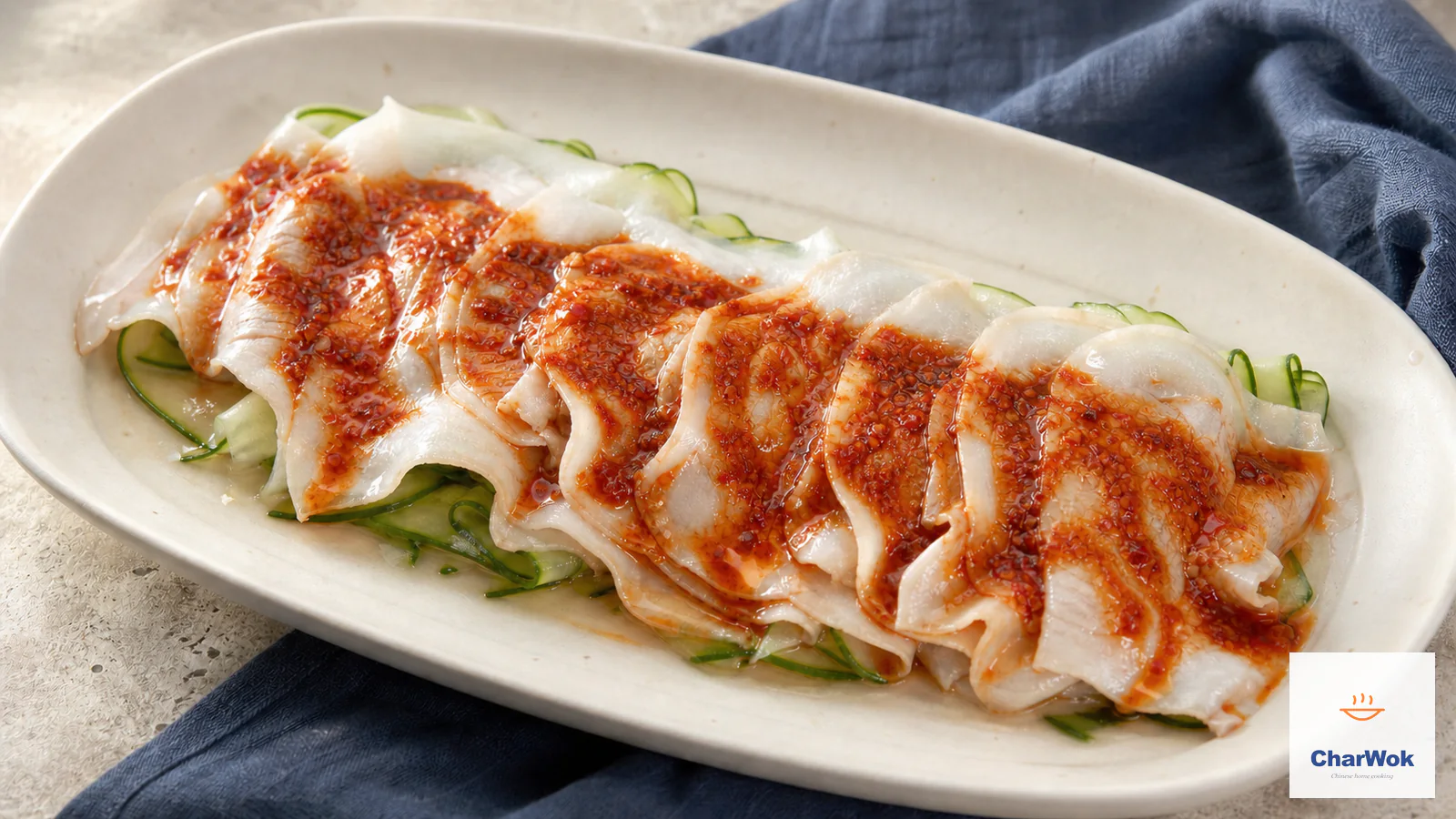
There is a moment, a few minutes after you lay the first slice of cold pork belly on the plate, when the garlic hits the chili oil and the whole kitchen smells like a Sichuan sidewalk at dusk. That is the dish. Everything else, the simmering and the ice bath and the knife work, exists to protect that moment.
The pain point home cooks hit with Suàn Ní Bái Ròu (蒜泥白肉, literally "garlic paste white meat") is almost always the same: the meat tears into greasy shreds instead of clean, translucent slices, and the dressing sits on top instead of clinging. I have wrecked this dish more times than I have nailed it, and the fixes are not where you think. It is not the knife. It is not even the pork. It is the temperature of the meat when the blade meets it, and a quiet little trick with the garlic that most recipes skip.
At a glance: simmer a 1 lb (450 g) skin-on pork belly slab 25 to 30 minutes in aromatic water, then shock it cold so the fat firms into something you can slice see-through. Dress with 1 Tbsp garlic mashed to a paste, 2 Tbsp chili oil, 2 Tbsp light soy sauce, 1 tsp each black vinegar, sugar, and sesame oil. Serve the same day, over cucumber. Slice thin, dress late, eat soon. That is the whole contract.
What this dish actually is, and where it comes from
This is a cold appetizer from Sichuan, and it belongs to the same family of "white-cut" (bái qiē) dishes you see across southern Chinese cooking: meat poached gently in plain water with aromatics, then served at room temperature with a bold dip. Bái qiē jī (white-cut chicken) is the Cantonese cousin. The Sichuan twist is the garlic and the chili oil, which is what makes it feel less like hospital food and more like a dare.
It shares DNA with two other cold Sichuan classics that use the exact same dressing logic: mouth-watering chicken (Kou Shui Ji) and the older, northern Bang Bang chicken, which gets its name from the wooden rod used to beat the poached bird flat before slicing. The pork version is the heaviest of the three, which is exactly why the cucumber and the vinegar matter so much. You can drop it into a wider Sichuan lineup as an opener, or lean on it for the summer table when nobody wants a hot main.
Why poach low, not boil hard
The single biggest mistake people make here is a rolling boil for the full cook. Pork belly is mostly fat and collagen. Boiling it hard forces the muscle fibers to contract violently, squeezing out moisture and leaving the lean part gray, dry, and stringy. The fat also renders into the water, so your slices end up thinner and waxier than they should be.
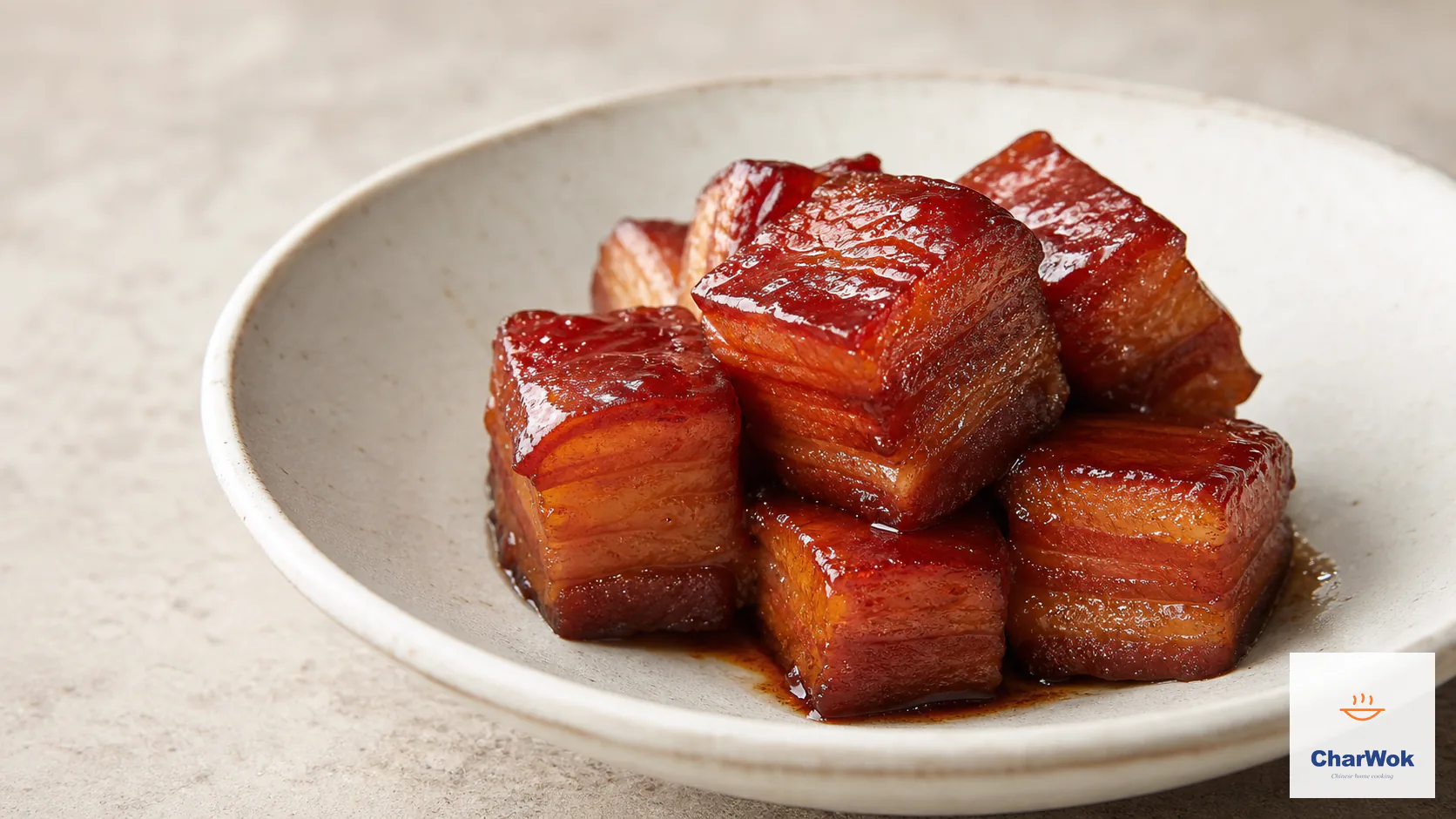
What you want is a bare simmer, around 85 to 90 °C (185 to 195 °F), where a bubble only occasionally breaks the surface. At that temperature the proteins relax and the collagen in the connective tissue slowly converts to gelatin. That gelatin is the real prize. It is what makes the slices feel succulent and slightly bouncy instead of cottony. This is the same low-and-gentle principle behind a good red-braised pork belly, only here you stop at the poach and skip the braise.
The aromatics in the pot do two jobs. Scallion and ginger mask the pork's barnyard edge. Shaoxing wine and Sichuan peppercorn go further: the rice wine carries alcohol-soluble flavor compounds out of the meat, and the Sichuan peppercorn leaves a faint hum of málà that you will only notice once the dish is dressed. Use the whole peppercorns, not ground; you want to strain them out, not chew them.
Ingredients
Ingredients at a glance
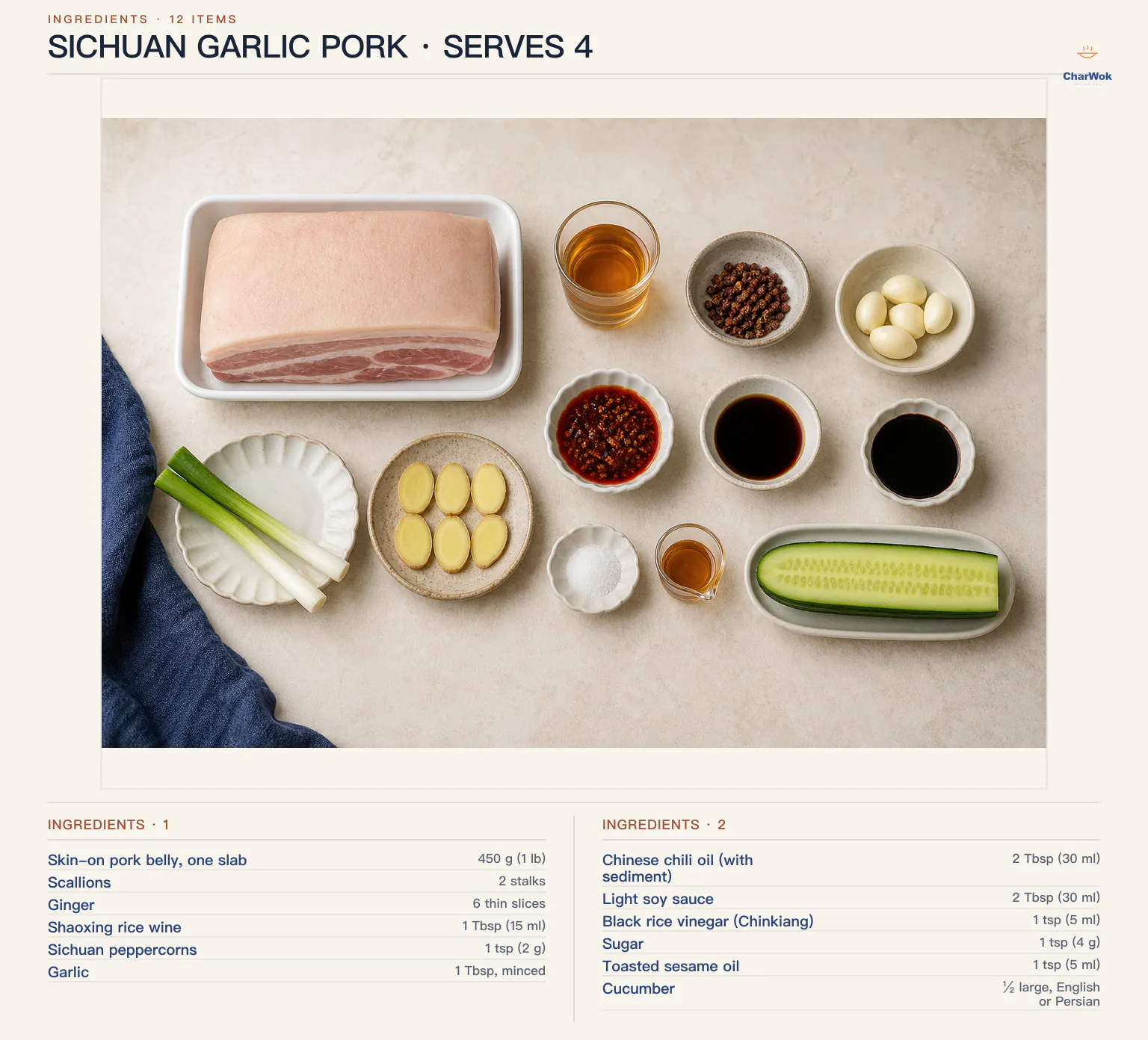
| Ingredient | Amount | Notes / substitute |
|---|---|---|
| Skin-on pork belly, one slab | 450 g (1 lb) | Pick a rectangular block, 5 to 7 cm thick, with roughly equal fat and lean. Skin-on, not skinless; the skin holds the slab together for slicing. Skinless bacon slab works in a pinch but is saltier, so skip the soy in the pot. |
| Scallions | 2 stalks | Cut into 5 cm sections, smashed lightly. |
| Ginger | 6 thin slices | Smash them with the side of a knife to release more oil. |
| Shaoxing rice wine | 1 Tbsp (15 ml) | Dry sherry is the closest Western substitute. Skip the "cooking wine" with added salt. |
| Sichuan peppercorns | 1 tsp (2 g) | Red or green both work. Toasted lightly first for more aroma. |
| Garlic | 1 Tbsp, minced | About 4 to 5 cloves. Mash to a paste (see method) for the real thing. |
| Chinese chili oil (with sediment) | 2 Tbsp (30 ml) | Use one with the fried chili flakes in it, not just the oil. Homemade chili oil is noticeably better than the jar. |
| Light soy sauce | 2 Tbsp (30 ml) | Light, not dark. For the traditional sweet-spiced version, swap for Sichuan fùzhì jiàngyóu (see variations). |
| Black rice vinegar (Chinkiang) | 1 tsp (5 ml) | The dark, smoky black rice vinegar matters; white vinegar tastes sharp and thin. Balsamic, reduced, is a rough substitute. |
| Sugar | 1 tsp (4 g) | Plain white is fine. Rock sugar, crushed, dissolves slower but rounds the edge more gently. |
| Toasted sesame oil | 1 tsp (5 ml) | The finishing sesame oil. A little goes far; too much and the dish tastes like a bakery. |
| Cucumber | ½ large, English or Persian | Thin slices or julienne. Salt and drain for 5 minutes if yours is watery. |
The method, step by step
- Start cold, aromatics and all. Drop the pork into a pot that fits it snugly. Add scallions, ginger, wine, and peppercorns, then pour in cold water to cover the slab by about 2 cm. Starting cold lets the meat come up to temperature evenly and pulls more scum out early, so the poaching liquid stays cleaner and the pork flavor stays in the pork.
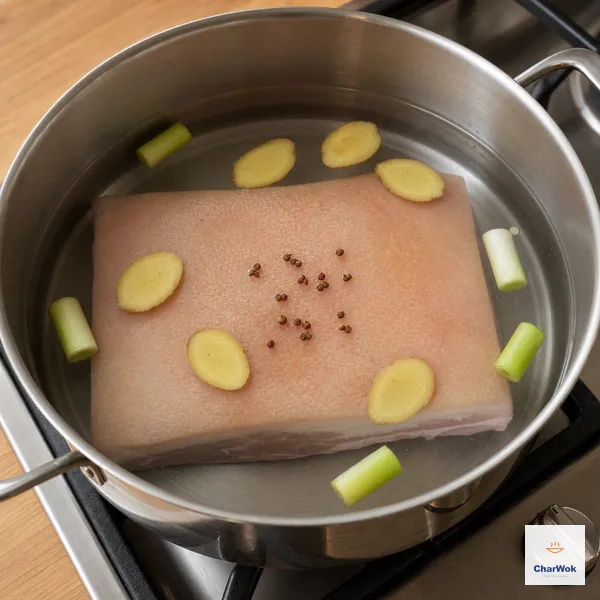
Start the whole slab in cold water that covers it by about 2 cm, with scallion, ginger, wine, and peppercorns already in the pot
- Bring to a boil, then murder the heat. Over medium-high, bring it to a full rolling boil. You will see gray foam rise, which is just coagulated protein, not impurity to fear. Skim what you can. The instant it boils, drop the heat to the lowest flame that keeps a single bubble popping every few seconds. Cover. A full boil for 30 minutes is the dry-meat failure mode; the goal from here is a long, drowsy poach.
- Simmer 25 to 30 minutes, flipping once. Halfway through, turn the slab over so the top half also sits under the liquid. At 25 minutes, poke the thickest part with a chopstick. It should slide in with a little resistance and the hole should run clear, not pink. If you see any pink juice, give it another 3 to 5 minutes. Pull it at just-cooked; it will keep cooking in the ice bath.
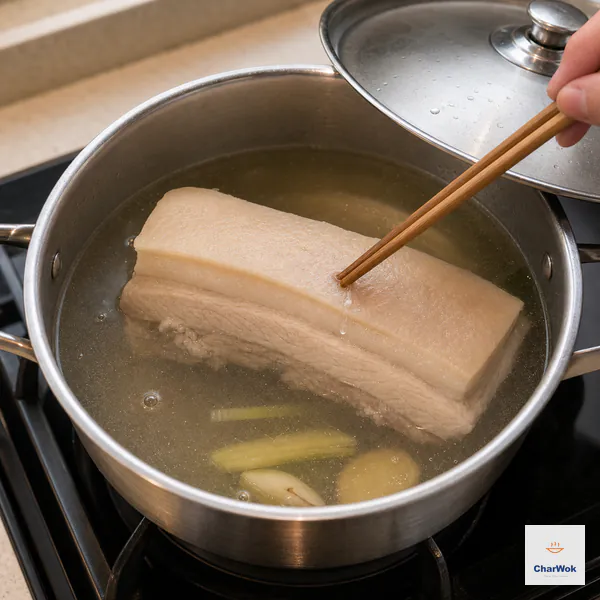
Keep only an occasional bubble for 25 to 30 minutes, flip once, and stop when a chopstick enters with slight resistance and the puncture runs clear
- Shock it cold, ideally with ice. Lift the pork straight from the hot liquid into a bowl of very cold water, with ice if you have it. This is not optional. The fast chill does two things: it stops the carryover cooking so the meat does not overcook, and it snaps the fat from soft and greasy to firm and sliceable. A properly chilled slab will hold a knife edge without deforming; an unchilled one will smear. Leave it 10 minutes in the ice bath, then move it to the fridge if you are not slicing right away.
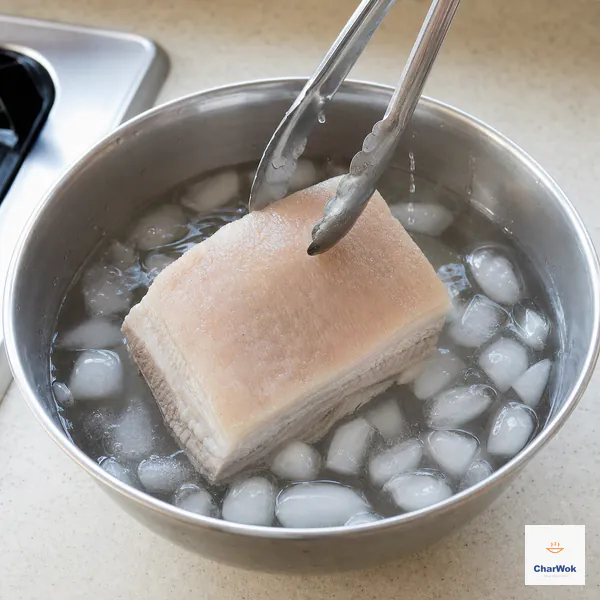
Move the pork straight into ice water for about 10 minutes so carryover cooking stops and the fat firms enough to hold a knife edge
- Make the garlic a paste, not a mince. While the meat cools, take the minced garlic and either pound it in a mortar or scrape it with the side of a heavy knife with a pinch of salt until it is a wet paste. The salt is abrasive and the crushing releases the sulfur compounds that give suàn ní its name; minced garlic floating in oil reads as raw and harsh, paste reads as integrated. If your garlic is fierce, stir in half a teaspoon of warm water and let it sit 2 minutes to take the edge off.
- Mix the dressing. In a small bowl, combine the garlic paste, chili oil, light soy sauce, vinegar, sugar, and sesame oil. Stir until the sugar dissolves. Taste. Too flat? A few more drops of vinegar. Too sharp? A pinch more sugar. The chili oil should carry both heat and the toasty flavor of the fried flakes, which is why a sediment-heavy jar is non-negotiable.
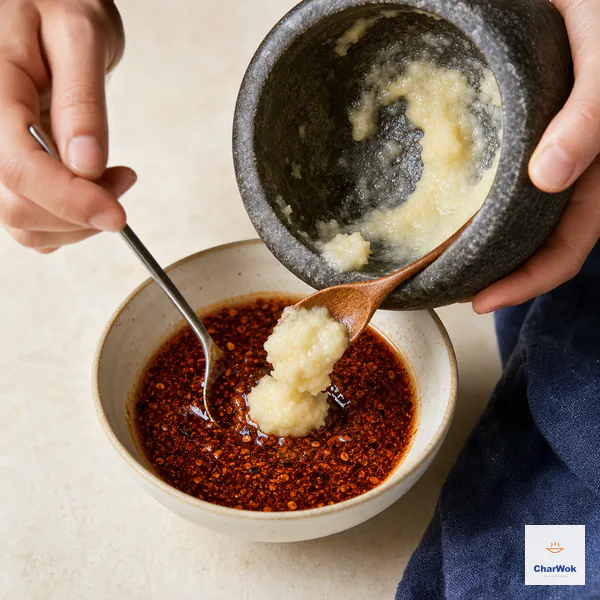
Crush the garlic to a wet paste, then mix it with chili oil, light soy, black vinegar, sugar, and sesame oil until the sugar dissolves
- Slice from the wider face, as thin as you can manage. Stand or lay the slab so you are cutting across the short side, giving you the widest, most stable face. Use the longest, thinnest knife you own, and let the heel of the blade do the work with a gentle sawing motion. Aim for 2 mm slices, thin enough to read newsprint through the fat. The fat layer, chilled, is what makes this possible. If slices tear, the meat was either under-chilled or slightly overcooked.
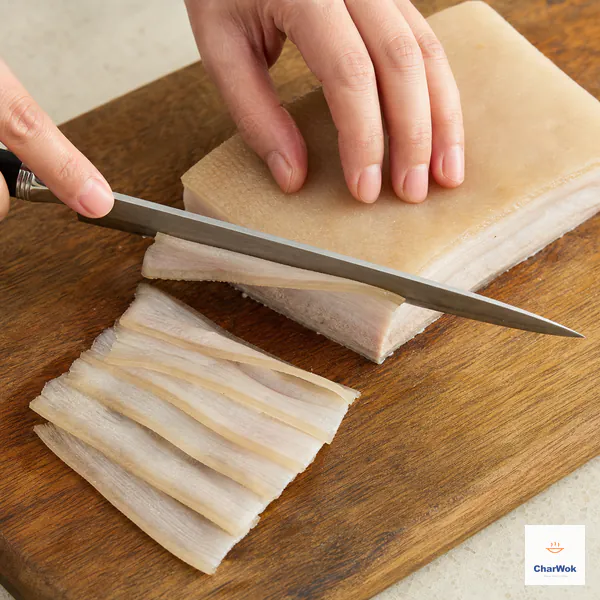
Use a long sharp knife and a gentle sawing motion across the wider face, aiming for intact slices about 2 mm thick
- Build the plate and dress at the last second. Fan the cucumber over a serving plate, lay the pork slices on top in a loose shingle, and pour the dressing over only when you are walking to the table. The acid and salt in the dressing will start pulling water out of the cucumber within minutes, and the chili oil will pool at the bottom of the plate instead of clinging to the meat. This is the failure you cannot unmake, so dress late.
When it goes wrong, and how to save it
The meat shreds instead of slicing. Either it was overcooked (check for a too-soft, fibrous texture) or not cold enough when cut. There is no rescue for overcooked meat, but for next time, pull it the moment the chopstick runs clear. If it is just under-chilled, give it another 15 minutes in the fridge, then try again with a thinner knife.
The slices look dull and gray, not pearly. You boiled it too hard. The fix is prevention. Next time, skim the foam at the boil, then drop to that one-bubble-every-few-seconds simmer and trust it.
The dressing pools at the bottom and the meat tastes bland. Two causes. The meat surface was wet when you dressed it, so the oil slid off, or you dressed too early and the cucumber wept. Pat the slices dry before plating, salt and drain the cucumber first, and pour the dressing at the table.
The garlic is aggressively hot, almost burning. Your garlic was old or the cloves were sprouting, both of which concentrate the pungency. Use the freshest heads you can find, and mellow the paste with a teaspoon of warm water before mixing. A pinch of sugar in the dressing also softens raw-garlic heat.
Too greasy, coating the mouth. Either the pork was a very fatty slab or you skipped the ice bath. The shock-chill is what makes the fat feel firm and clean rather than slick. You can also lean more heavily on the vinegar; acid cuts the perception of fat faster than anything else on the plate.
Variations and where it fits on the table
Use real Sichuan spiced soy (fùzhì jiàngyóu). The traditional dressing is not light soy but a sweet, spiced, slowly reduced soy sauce scented with star anise, ginger, and rock sugar. It is what gives the dish its restaurant depth. You will find the method tucked into recipes for Zhong dumplings and Tian Shui Mian (sweet water noodles), both of which lean on the same seasoning. If you make a batch, it keeps for weeks in the fridge and lifts everything it touches.
Swap the base. The garlic-chili dressing works on almost anything poached and cold. Try it over hand-shredded chicken for a pork-free take, or drizzle it on cold Sichuan noodles or chili-oil wontons for a quick lunch. The ratio above is a starting point; noodles usually want more vinegar and a splash of the pasta water to loosen it.
Change the vegetable. Cucumber is classic because it is cold, crisp, and watery, the perfect foil for fat. Thinly sliced daikon radish, smashed cucumber in larger rustic pieces, or blanched bean sprouts all work. Avoid leafy greens; they collapse and weep under the dressing.
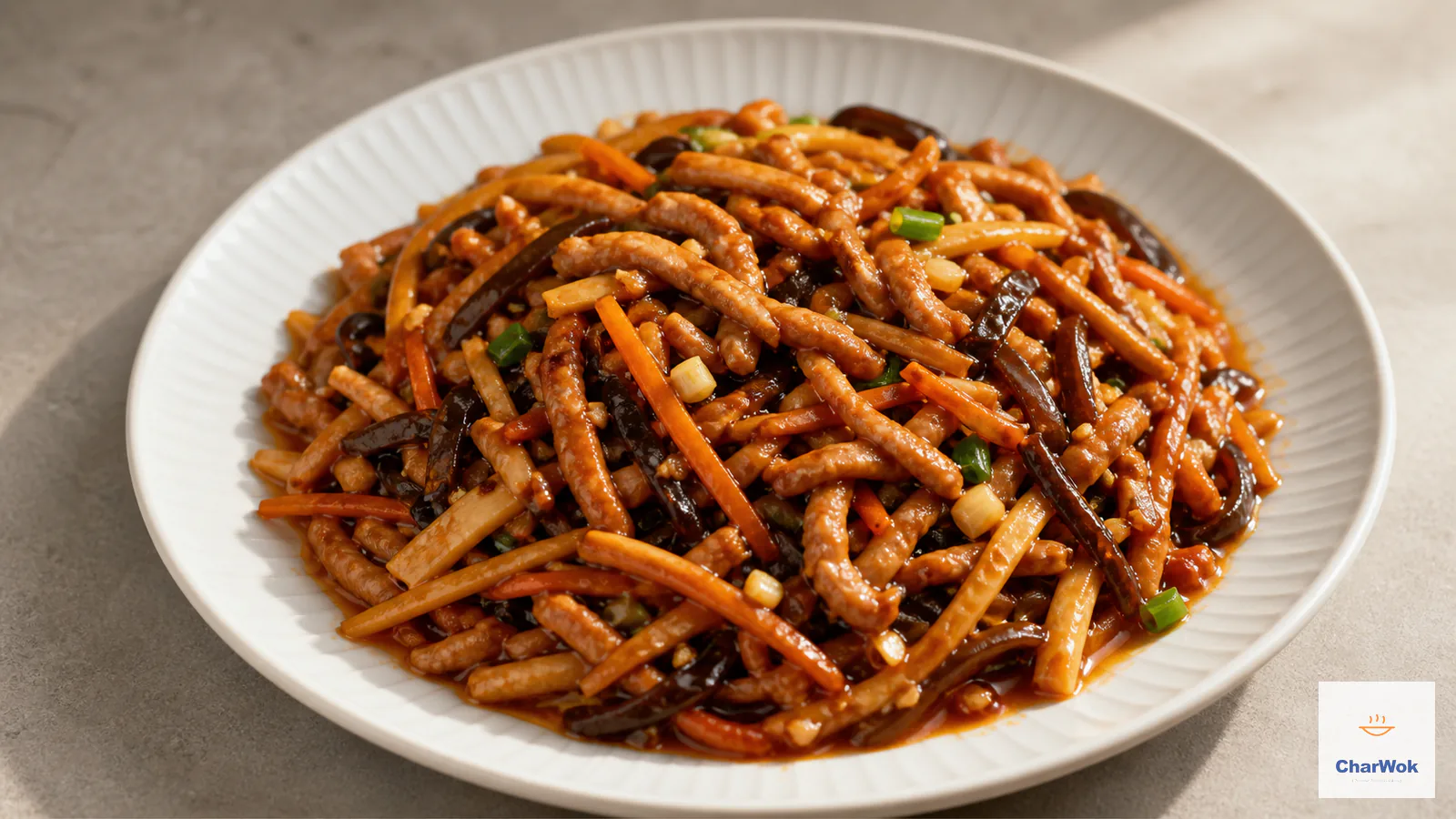
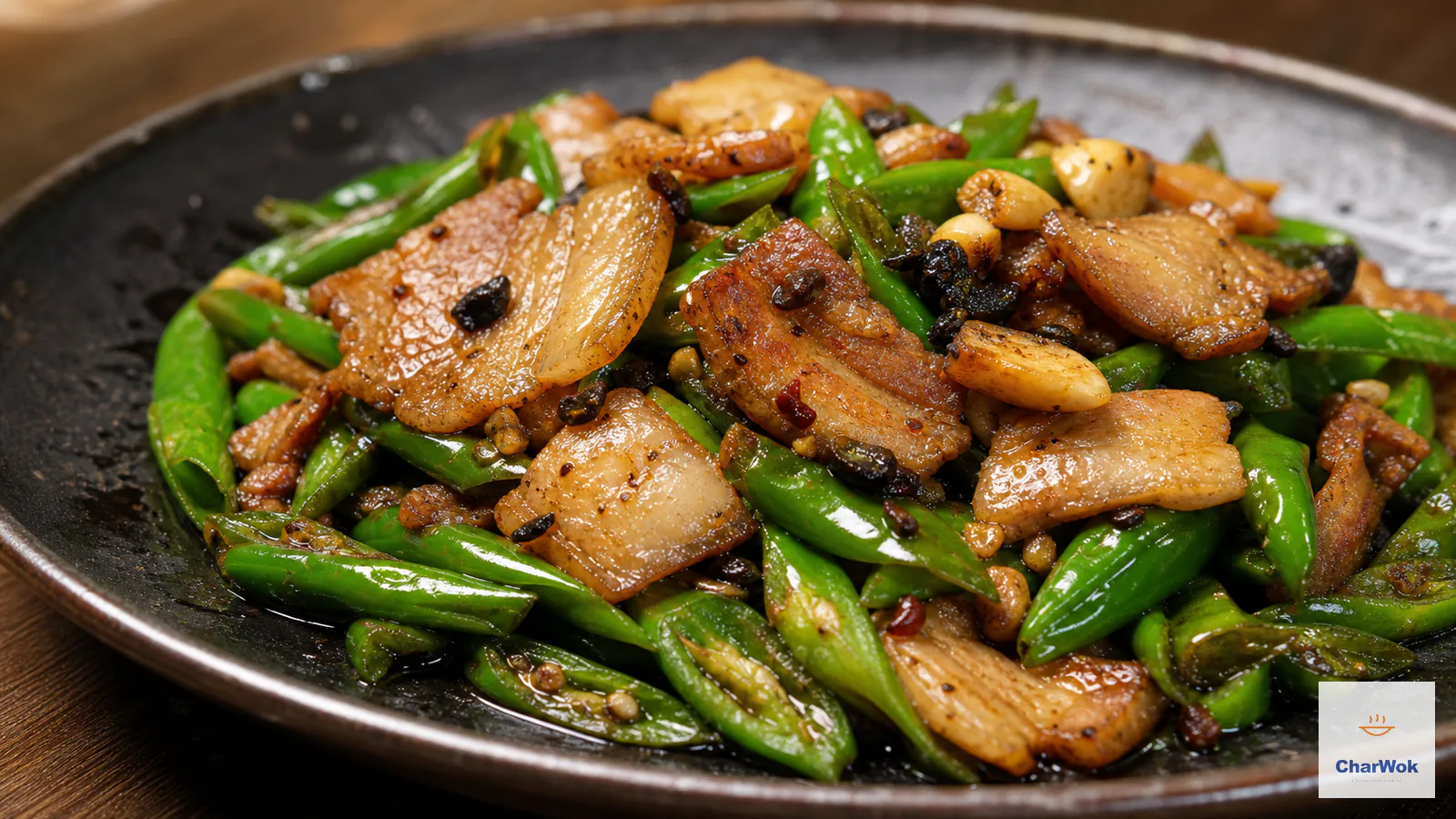
Lean into a Sichuan starter spread. This dish is at its best as one of three cold openers before a heavier main like twice-cooked pork. Two cold plates, one hot stir-fry, and a bowl of rice is a meal that feels composed without much last-minute work. If you are building a pork-heavy menu, it slots neatly into a pork-recipe lineup as the cold counterpoint to the braises.
Storage and reheating
The cooked, un-sliced slab keeps in the fridge, tightly wrapped, for up to three days, and it actually slices better on day two because the fat has fully set. Do not freeze it; the texture of poached pork belly breaks down badly on thaw and the slices will weep a cloudy liquid.
Slice and dress only what you will eat in one sitting. Once dressed, the dish has maybe 30 minutes of prime texture before the cucumber starts leaking and the oil separates. Leftover dressed pork is fine cold the next day, stirred into plain rice, but it is not the same dish and I would not serve it to guests.
Frequently asked questions
Can I use a pork loin or tenderloin instead of belly? You can, and it will be leaner and easier to slice thin, but you lose the whole point of the dish. The fat layer is what carries the garlic and chili oil; lean loin tastes like cold cooked pork with hot sauce on top. If fat is a hard no, chicken thigh is a better swap than loin.
Do I really need to remove the skin? Eat around it or slice it off as you go. Properly poached skin is soft and gelatinous, and many people love it, but it does not slice cleanly and will drag the knife. Some cooks remove it before poaching for tidier slices; I leave it on because it protects the slab and adds body.
Can I make it ahead for a crowd? Yes, and it is one of the better make-ahead cold dishes for exactly that. Poach and chill the slab up to three days in advance, mix the dressing and store separately, then slice and dress 10 minutes before serving. Do not assemble earlier or the cucumber will flood the plate.
Why shock with ice instead of just letting it cool? Speed. A slow cool lets the fat stay soft and the carryover heat keeps cooking the lean part, so by the time it is cool enough to slice it is also overdone. The ice bath sets the fat fast and locks the doneness in.
Is it very spicy? Only as spicy as your chili oil. With a standard jar, it is a gentle, fragrant warmth. If you want it fiery, double the chili oil and add a pinch of the fried flakes from the bottom of the jar. The vinegar and sugar keep the heat from being one-note.
The throughline of this dish is restraint on the heat and aggression on the seasoning. Poach the meat gently, chill it hard, mash the garlic, and dress at the last moment. Get those four things right and the rest takes care of itself.