The weeknight problem in a Chinese home kitchen is rarely the cooking. It is the deciding. You stand in front of an open fridge at 6:40, a child is asking what is for dinner, and you reach for the takeout app because no single dish has won the argument in your head. I have lost that argument more times than I care to admit. So I built a short, opinionated list of the dishes I actually return to between Monday and Thursday, organized by the kind of night it is, not by ingredient or region.
This is not twenty random recipes. It is a working weeknight rotation, grouped by how tired you are and what your fridge looks like. Some entries cook in fifteen minutes from a hot pan. Others are make-ahead projects you do once on Sunday and raid all week. Use the categories below to match the dish to the night, and you will rarely default to delivery again.
The whole weeknight system comes down to one rule: pair a fast, high-heat dish with a make-ahead staple. Keep a pot of rice or a batch of broth ready, and the actual cooking shrinks to one pan, one protein, one vegetable, under twenty minutes. Most of the recipes below fall into one of those two slots.
What counts as a weeknight dish in my kitchen
20 weeknight recipes at a glance
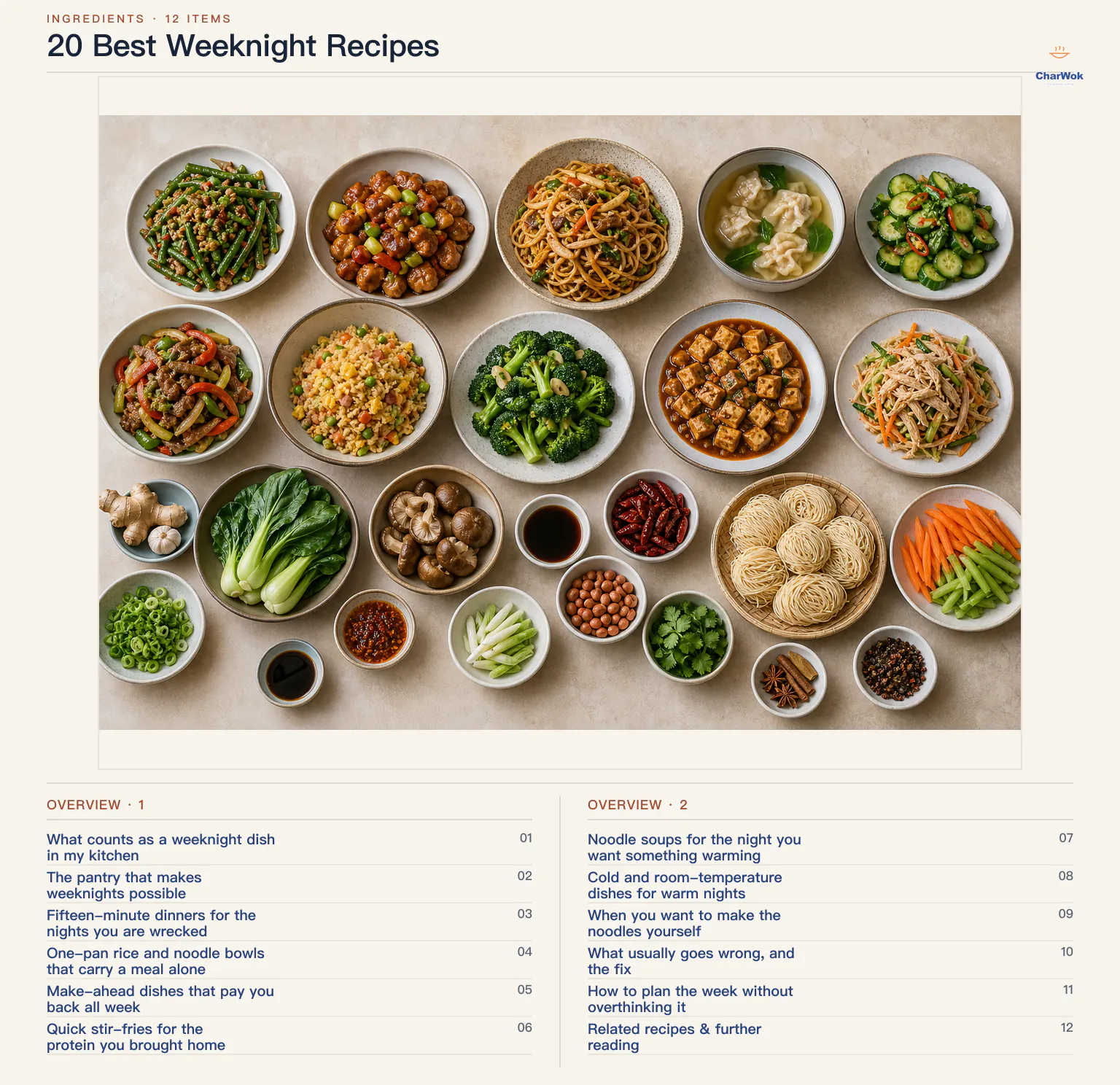
I use a strict filter. A weeknight dish has to clear three bars at once: active cooking under thirty minutes, a method that forgives distraction, and cleanup that fits in one wok or one pot. A whole hand-pulled noodle session is a weekend joy, not a Tuesday dinner. A quick pork fried rice made from yesterday's rice is exactly right. The distinction matters because the failure mode on a weeknight is not bad food, it is giving up and ordering out.
There is also a fourth, softer filter: the dish should reheat or hold well. Life does not wait for dinner. A stir-fry that turns to mush after ten minutes on the stove is a poor weeknight citizen. I will flag which dishes here are cook-now versus cook-ahead, because that decision drives the whole week.
The pantry that makes weeknights possible
Before the dishes, the shopping list. These are the things I keep stocked so that a weeknight meal is never more than a protein and a vegetable away. None of it is exotic to a decent Asian grocery, and most of it lasts months.
- Soy sauce, light and dark. Light for seasoning and salt, dark for color and a touch of sweetness. You cannot fake one with the other.
- Oyster sauce. The fastest route to a glossy, savory finish on a chicken thigh.
- Shaoxing wine. A splash deglazes and rounds out the sharp edges of any meat.
- Toasted sesame oil. A finishing oil, never a frying oil. Heat kills its aroma.
- Dried shiitake and dried shrimp. Rehydrate both and the soaking liquid becomes instant umami for broth or sauce.
- Ginger, garlic, scallion. The aromatic trinity. I keep ginger in the freezer; it grates cleanly and never goes moldy.
- Neutral oil with a high smoke point. Peanut or canola, for wok work. Olive oil has no place in this list.
With those seven things in the house, more than half the recipes below are twenty minutes away. The rest is buying a protein and one or two vegetables on the day.
Fifteen-minute dinners for the nights you are wrecked
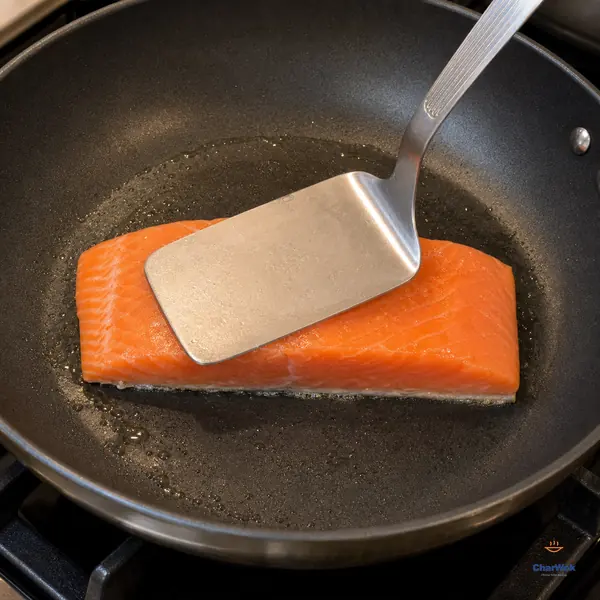
Set the salmon in the hot pan skin-side down and press the flesh evenly for the first 30 seconds. Keeping the entire skin in contact prevents curling and builds an even crisp surface; once it lies flat, leave the fillet undisturbed until the skin turns golden and releases cleanly.
These are the nights you walked in late, the fridge is half-empty, and hunger is already making decisions for you. Reach for a single hot pan and a dish that rewards speed.
My first call is almost always scallion ginger salmon. A skin-on fillet goes into a hot pan skin-side down, you press it flat for the first thirty seconds so the skin crisps instead of curling, and you finish with scallion-and-ginger oil poured over the top. The whole thing is fifteen minutes, and the crispy skin is the reward for not moving the fish. Pair it with a smashed cucumber salad pulled from the fridge and a bowl of rice, and the meal is done.
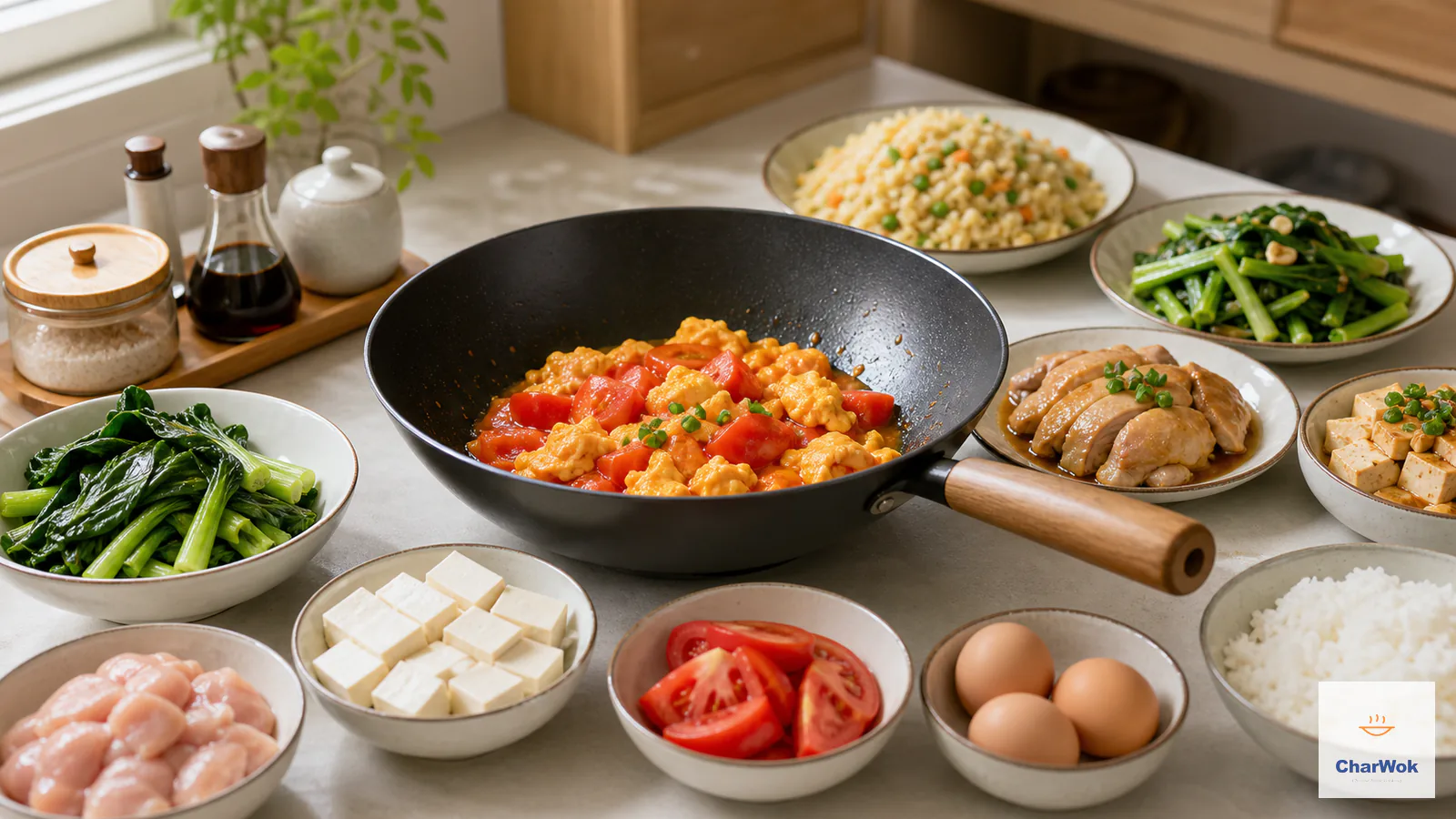
If there is no fish, egg foo young turns three eggs and whatever vegetable is dying in the crisper into a real dinner. The trick is a hot pan and a quick hand: pour, let the edges set, fold, and do not overcook. The gravy is optional but worth the extra two minutes. Serve over rice with a simple tomato egg stir-fry on the side and you have a meal that costs almost nothing and tastes like more.
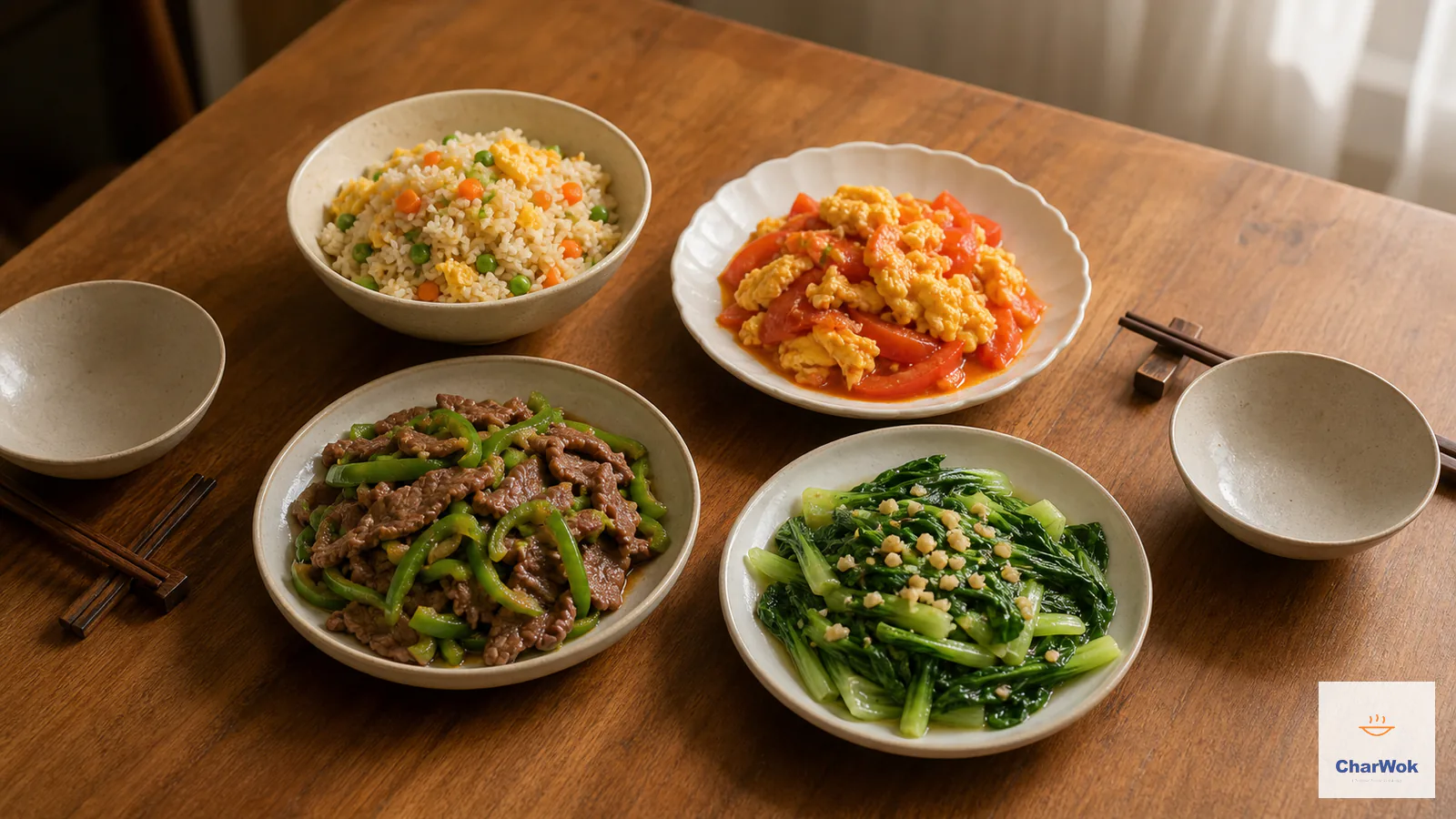
The ultimate fallback is fried rice. Cold, day-old rice is not a suggestion here, it is the whole technique: fresh rice has too much surface moisture and you get clumping instead of separate grains flecked with egg. Pork fried rice is the classic, but the method is the same for any leftover protein. Dice everything small so it cooks evenly, season at the end, and move fast.
One-pan rice and noodle bowls that carry a meal alone
Some nights you want one dish that is the whole meal, starch included. These are the all-in-one bowls I lean on, each a different route to the same outcome: dinner in a single bowl, minimal washing up.
One-pot Hainanese chicken rice is the dish I make when I want dinner to cook itself. The rice is cooked in the chicken's poaching liquid and chicken fat, so every grain is savory. You can do it in a pot, a rice cooker, or a pressure cooker. The only thing I insist on is rendering a little chicken fat into the rice first; skip that and you have yellow rice, not chicken rice.
Chinese sausage rice is the lazier cousin and honestly the one I make more often. Cured lap cheong sliced thin, rice, a little soy and sugar, twenty-five minutes. The fat from the sausage bastes the rice as it steams. Use a clay pot if you want the crackly crust at the bottom; a regular pot is fine if you do not care about the crust.
When the craving is for noodles, chow mein is the reliable answer. The make-or-break step is par-cooking and drying the noodles so they sear instead of stew. Get the pan hot, spread the noodles flat, and let them sit until you hear them hiss. That is the sound of the browning you want. A beef chow mein with sha cha sauce is a good variation when you want a deeper, slightly funky flavor than plain soy.
Make-ahead dishes that pay you back all week
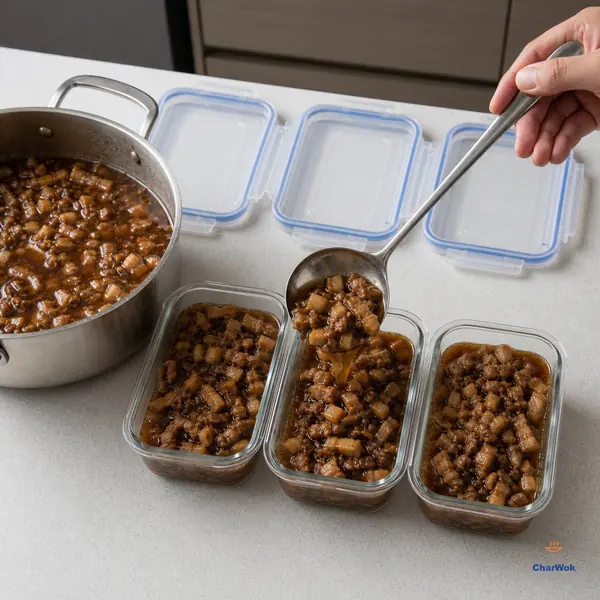
Cut pork belly by hand rather than grinding it, braise one large batch and divide the meat with enough flowing sauce into single-meal containers. Cool the portions before sealing and freezing, then reheat one while fresh rice and a vegetable finish the weeknight meal.
The opposite strategy: cook once, on a Sunday afternoon when you have the energy, and eat the rewards for days. These dishes improve with a night in the fridge. That is not laziness talking, it is chemistry. A braised meat rested overnight lets the collagen finish setting and the salt even out, so Tuesday's portion tastes better than Sunday's first bowl.
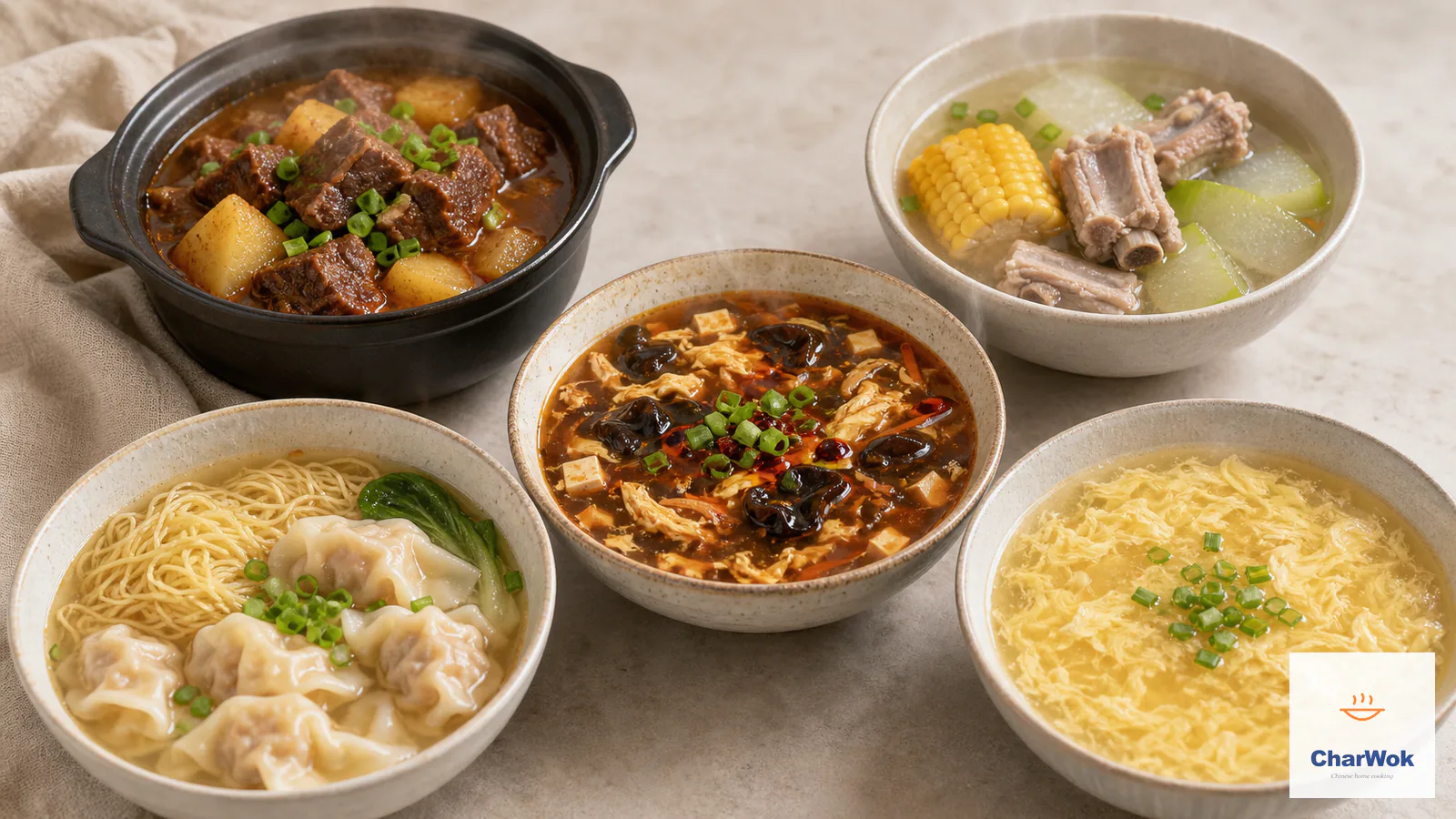
Chinese beef stew with potatoes is the textbook example. Chuck or shin, cut large, simmered low with star anise, ginger, and soy until the meat yields to a spoon. Cook it Sunday, cool it overnight, and on weeknights you reheat a portion with fresh rice. The potatoes are the one thing I add the day I serve, not the day I cook, because they turn to paste if they sit in the liquid.
Lu rou fan, the Taiwanese braised pork rice bowl, is the make-ahead champion. Pork belly hand-cut into small strips, never ground, braised in a soy-rock sugar broth until it falls apart. The fat renders into the liquid and becomes the sauce. A big batch freezes in portions and reheats in minutes over fresh rice. On a hard night there is nothing faster or more comforting.
For the freezer, nothing beats a tray of wontons. Fold a hundred on a quiet afternoon and you have a month of wonton soup at the ready. Freeze them flat on a tray, then bag them. Boil from frozen, straight into a quick broth made from the soaking liquid of dried shrimp and shiitake. The folding is the only skill you need, and the simple triangle fold is plenty for soup.
Quick stir-fries for the protein you brought home
These are the workhorses, the stir-fries that work with whatever protein looked good at the store. Master the method, not the recipe.
The core principle of a Chinese stir-fry is heat and sequence. Get the wok smoking before the oil, the oil shimmering before the aromatics, the aromatics brief before the protein. Add ingredients in order of cooking time, and season at the end so the sauce glazes instead of boiling. Break that sequence and you are steaming, not stir-frying, and the texture goes soft.
- Cut for even cooking. Uniform pieces mean nothing is overcooked while something else is still raw. This is the single step home cooks skip and restaurants never do.
- Preheat the wok dry, then add oil. A hot wok with cold oil stops sticking and gives you the sear that defines the dish.
- Aromatics first, but only for seconds. Ginger and garlic burn in a hot wok. Ten seconds, then the protein goes in.
- Do not crowd the pan. Moisture pools, the temperature drops, and you get a braise. Cook in two batches if you must.
- Sauce last, off the heat edge. Pour the seasoning down the side of the wok so it flash-reduces and coats the food rather than diluting into soup.
With that method, oyster sauce chicken is a five-ingredient dinner that tastes like more. Boneless thigh, not breast, because thigh stays juicy under high heat where breast turns chalky. Sha cha chicken uses the same method with a deeper, seafood-savory sauce from sha cha paste. And chili cumin chicken thighs bring the northern Xinjiang flavor profile, cumin toasted in the hot oil until it smells like a street stall.
On the pork side, Shanghai scallion pork chops are my favorite quick braise. The scallions fry first in oil until they collapse and give up their flavor, then the chops go in and the pan is deglazed with soy and sugar. The scallion oil is the point of the dish; do not skim it off. Lemon chicken, done without deep-frying, is the lighter answer when you want brightness instead of richness.
Noodle soups for the night you want something warming
A bowl of noodle soup is the most forgiving weeknight dinner. The broth does the heavy lifting, the noodles cook in two minutes, and the toppings are flexible. Keep a container of broth in the freezer and most of these are ten minutes away.
Tomato and egg noodle soup is the simplest thing in this entire list and the one I make when I am sick or short on time. Tomatoes cooked down until they collapse, water or broth, a thin egg ribbon poured at the end, noodles. The acidity of the tomato cuts through a heavy day. If you have rice instead of noodles on hand, the same logic gives you a tomato egg stir-fry over rice.
Chinese chicken noodle soup uses the poaching liquid from a whole chicken as the base, so the broth and the topping come from the same bird. Cook the chicken and stock ahead, freeze in portions, and on the night you only boil noodles and assemble. For a richer option, a Taiwanese beef noodle soup starts from the same make-ahead beef broth as the stew above.
Cold and room-temperature dishes for warm nights
When the kitchen is hot and the appetite is light, cold noodles are the move. The dressing does the work and the stove time is minimal.
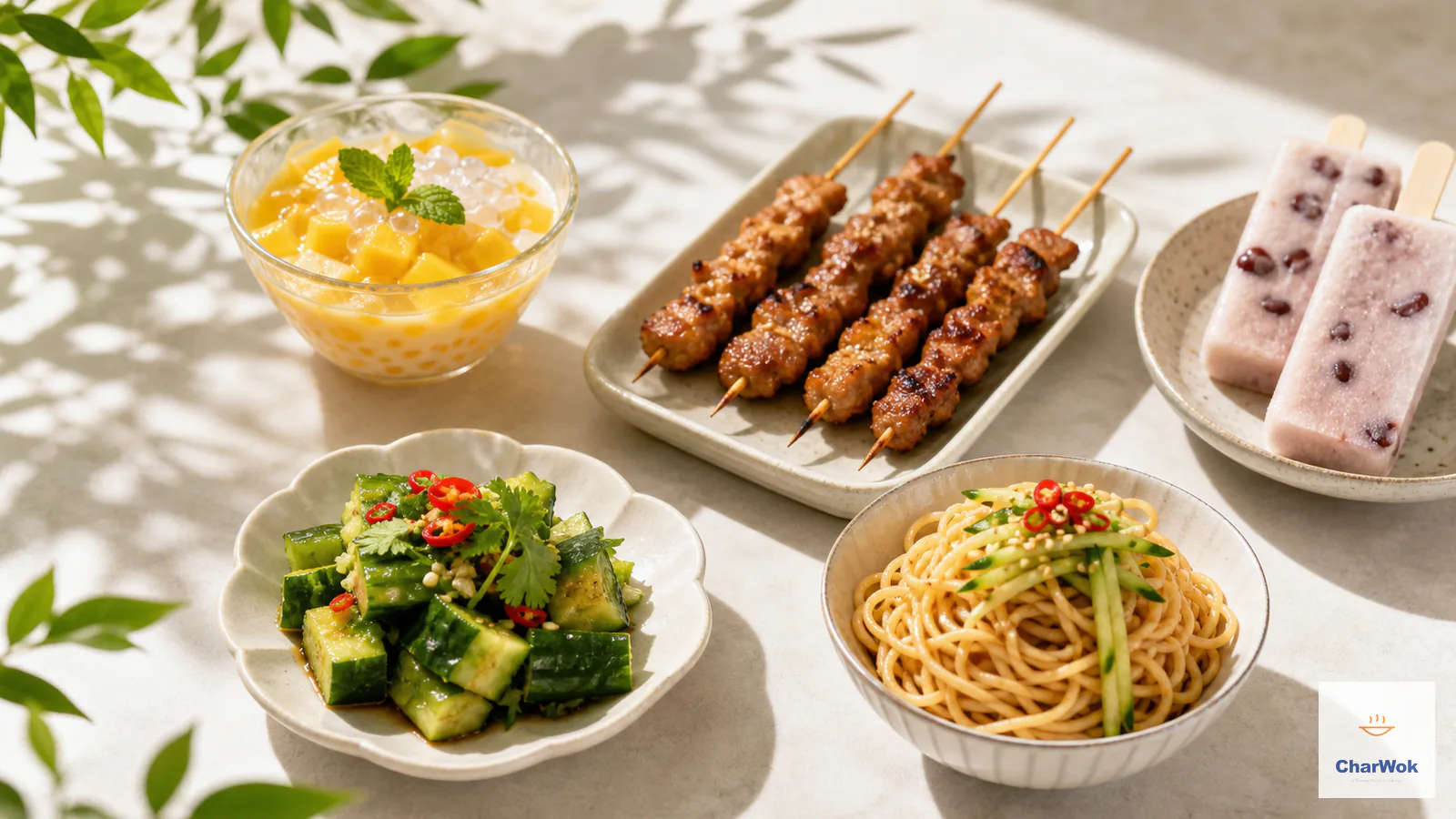
Cold noodles with Sichuan dressing (liang mian) are tangy, numbing, and refreshing, with a sauce built from chili oil, black vinegar, and sesame paste. The noodles are rinsed cold after cooking so they do not clump and the sauce clings instead of sliding off. Top with cucumber, bean sprouts, or shredded chicken. It is the dish I make when I cannot face a hot wok.
For a more substantial one-bowl meal, stir-fried rice cakes (chao nian gao) are chewy in a way nothing else in the kitchen is. The chew comes from gelatinized rice starch, and the trick is separating the cakes in the pan and letting them sear instead of stewing them in sauce. If you have dried rice cakes, rehydrate them overnight; chilled or frozen ones go straight in.
When you want to make the noodles yourself
Most weeknights call for dried or fresh store-bought noodles, and there is no shame in that. But there is one homemade noodle that is genuinely fast enough for a weeknight, and it is the one I reach for when I want the texture only fresh dough gives.
Scissor-cut noodles need fifteen minutes of dough resting, not the hour a pulled noodle demands. You mix flour and water into a stiff dough, rest it briefly so the gluten relaxes, then snip pieces directly into boiling water with kitchen scissors. The irregular shape holds sauce in a way a smooth factory noodle cannot. Dress them with a hot scallion oil and chili and you have a bowl that tastes like far more effort than it was.
What usually goes wrong, and the fix
I have made every one of these mistakes. Most weeknight failures come down to a handful of fixable habits.
- The stir-fry turned into a braise. The pan was not hot enough or it was too full. Fix: heat the wok until it smokes, cook in batches, and never add the sauce until the protein is already browned.
- The fried rice clumped. The rice was too fresh or too wet. Fix: use rice that has sat in the fridge at least overnight, break it up with wet fingers before it hits the pan, and keep the pan hot.
- The chicken breast is dry. You used breast on high heat. Fix: switch to thigh for stir-fries and braises. Save breast for gentle steaming, like the steamed chicken with shiitake, where the low temperature keeps it tender.
- The noodles stuck together. They were not rinsed or oiled after cooking. Fix: drain, rinse under warm water to wash off surface starch, and toss with a few drops of oil if you are not saucing immediately.
- The braised meat is tough. It needed more time, not more heat. Fix: simmer gently until a fork slides through, which can mean ninety minutes for shin. Boiling fast makes the fibers seize and stay hard.
- Everything tastes flat. You under-salted or skipped the aromatics. Fix: taste and adjust with light soy at the end, and never skip the ginger-garlic-scallion base. A few drops of sesame oil at the finish rescues a dull dish.
How to plan the week without overthinking it
The system that finally worked for me is dead simple. On Sunday I cook one make-ahead anchor, usually the beef stew or the lu rou fan, and I make extra rice. That gives me two or three nights where dinner is reheating plus a fresh vegetable. The other nights I rotate through the quick stir-fries and one-pot rice dishes, buying protein day by day. Wednesday is noodle night by tradition, which removes the decision entirely.
The point is not to cook every dish on this list. Pick three or four that match your nights, learn them until you do not need the recipe, and they become the dependable backbone of your week. Everything else is variety on top of a structure that already works. That is how weeknight cooking stops feeling like a daily emergency and starts feeling like something you actually have under control.
Related recipes & further reading
If you want to widen the rotation, these are the recipes and collections I keep coming back to. Some are 15-minute fixes for a wrecked night, others are the make-ahead projects that fill the freezer and carry the week.
- For a broader map of the cuisine, my list of must-try authentic Chinese recipes covers the dishes I think every home cook should meet once.
- When you want to build beyond quick dinners, the core Chinese cooking skills guide links weeknight wok work to braises, steaming, and dough.
- If you are new to the wok, start with these easy Chinese recipes for beginners before the faster stir-fries on this page.
- Build the Sunday anchor habit with my make-ahead Chinese recipes, the freezer-friendly backbone of a low-stress week.
- For pork night, the essential Chinese pork recipes go deeper than the scallion chops and lu rou fan above.
- A silky chicken corn soup is the gentle dinner for a night when nothing else sounds right, ready in well under thirty minutes.
- Zucchini pancakes turn a stray squash and two eggs into a crisp-edged meal, no frying thermometer needed.
- A quick tofu omelet adds protein and softness to a breakfast-for-dinner kind of night.
- The three-minute chive and egg stir-fry is the kind of back-pocket dish that saves a tired Tuesday.
- Plain egg fried rice is the method behind every fried rice here, worth learning on its own before you add pork or shrimp.
- Swap the pork for bird and you have chicken fried rice, the same cold-rice technique with a lighter protein.
- Beef and broccoli is the takeout classic you can beat at home once the wok is hot and the beef is velveted.
- Spicy orange beef brings the bright, citric heat of a restaurant favorite into the weeknight stir-fry slot.
- For the stories behind the food rather than the recipes, my culinary tour of China traces the regional roots of many of these dishes.
Questions I get asked most
A few things come up again and again when readers build their own weeknight rotation.
Can I prep the stir-fry ingredients in the morning? Yes, and you should. Cut and marinate the protein, wash and dry the vegetables, mix the sauce in a small bowl. Cover and refrigerate. Dinner becomes five minutes of cooking with zero thinking.
Which dish freezes best? The braises are the winners. Beef stew and lu rou fan both freeze cleanly in single-portion containers for a month. Fried rice, stir-fried noodles, and leafy vegetables do not; their texture collapses on reheating.
How do I keep weeknight dinners from repeating? Rotate the protein and the sauce, not the method. One stir-fry method gives you chicken, pork, beef, or shrimp dinners depending on what you buy. Change the sauce between soy-ginger, oyster, and sha cha and the same technique feels new each night.
What if I only have one pan? A flat-bottomed carbon-steel wok or a wide skillet covers nearly everything here. The make-ahead braises want a heavy pot with a lid. You can run the whole rotation on those two pieces of cookware.