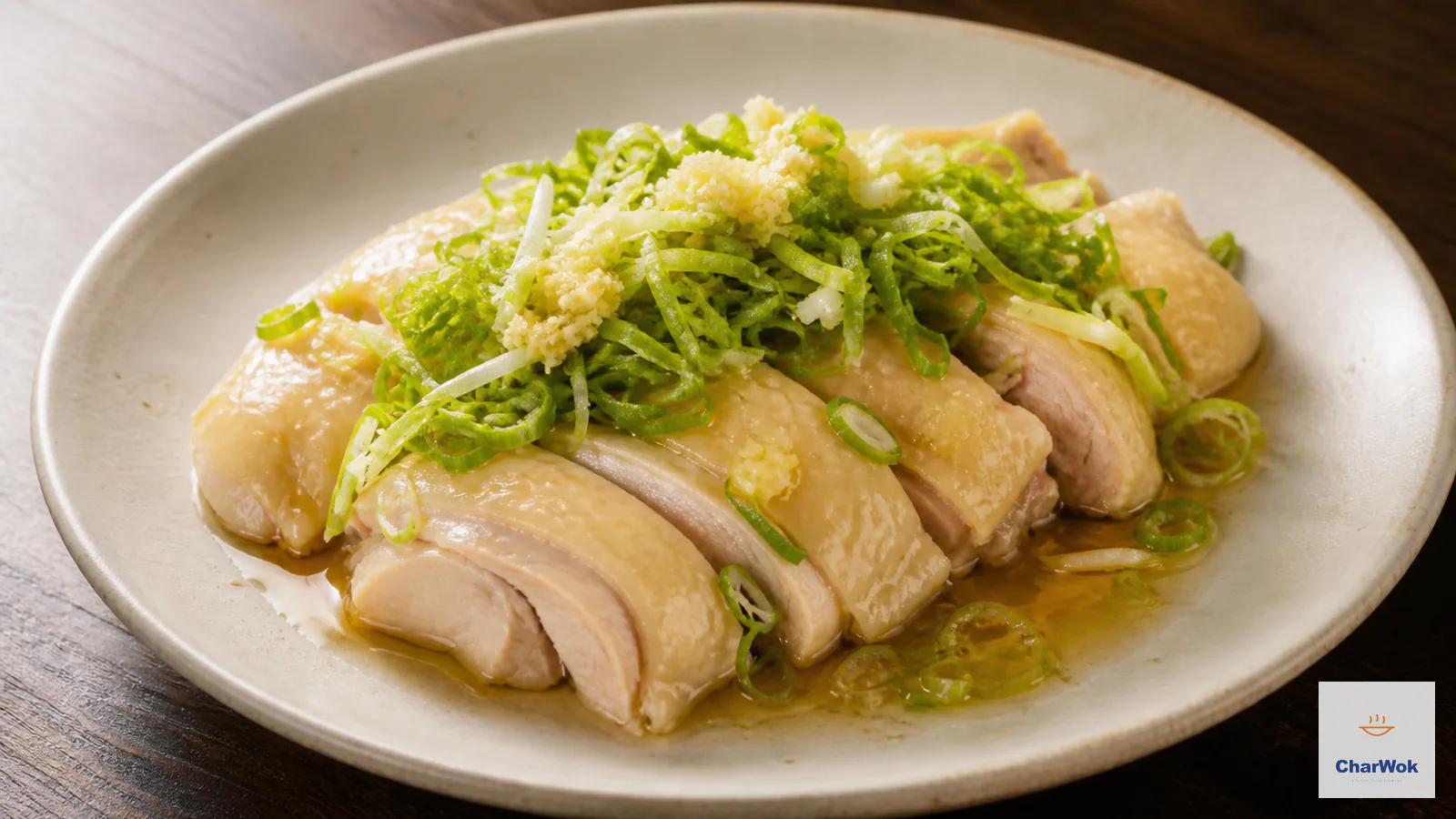
Scallion oil chicken combines gently poached chicken with a warm scallion-and-ginger dressing. The two controls that matter are measurable poultry doneness and careful oil heating: cook every drumstick to 74°C (165°F), then heat the oil only until it shimmers before pouring it over dry aromatics in a heatproof bowl.
A gentle simmer helps limit overcooking at the surface while the center heats. The same broad approach appears in Sichuan mouth-watering chicken and Bang Bang chicken, but pot size, water volume, burner output, and chicken size all change the time required. The clock is a prompt to start measuring, not proof that the chicken is done.
At a glance: poach 6 bone-in drumsticks at a bare simmer for 12 minutes, then rest off the heat for 10 minutes as starting checkpoints. Measure the thickest center of every piece and continue cooking until each reaches 74°C (165°F). Move the cooked chicken into clean ice water, refrigerate promptly, then finish with scallion-ginger oil heated only until shimmering.
Where this dish comes from
Cōng yóu jī (葱油鸡) means chicken seasoned with scallion oil. This version uses poached drumsticks, ginger, light soy sauce, and a warm scallion dressing. It can be served chilled or warm, either with rice or as one dish in a larger meal.
Heating scallion whites gently flavors the oil without scorching them. After removing the whites, reheat the oil only until it shimmers, then pour it over dry chopped greens and ginger in a heatproof bowl. Keep water away from the hot oil to reduce splatter, and do not wait for the oil to smoke.
Ingredients
Ingredients at a glance
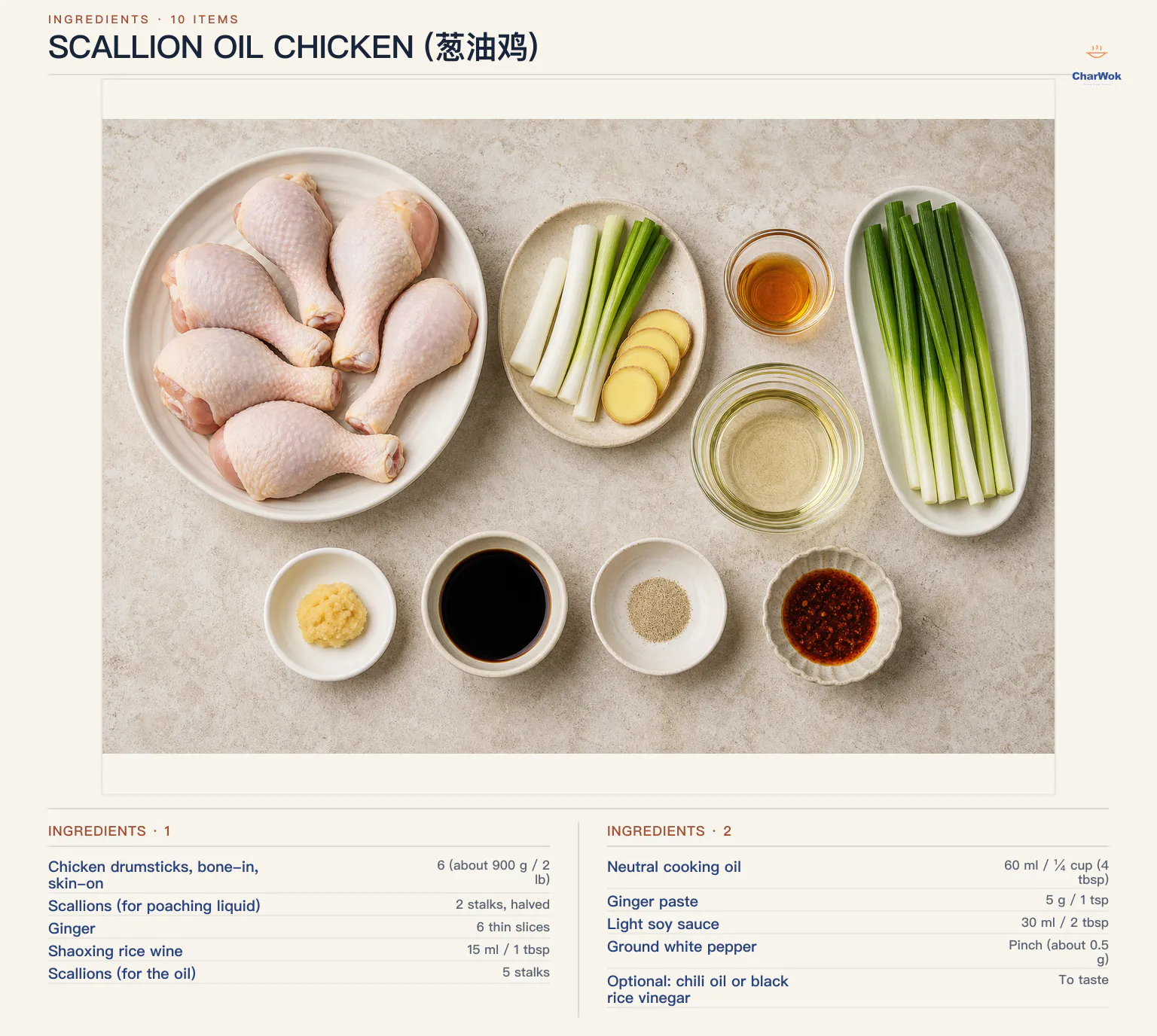
This serves three as a main with rice, or four to six as one plate in a larger spread. Bone-in, skin-on drumsticks flavor the poaching liquid and add gelatin. Boneless thighs or breasts can also work, but their different thickness means the stated times do not transfer; measure each piece to 74°C (165°F).
| Ingredient | Amount | Notes / substitute |
|---|---|---|
| Chicken drumsticks, bone-in, skin-on | 6 (about 900 g / 2 lb) | Or use 4 bone-in thighs, 2 whole leg quarters, or similarly sized boneless pieces; measure every piece rather than shortening the cook by a fixed number of minutes. |
| Scallions (for poaching liquid) | 2 stalks, halved | Smash the white parts lightly to release flavor. |
| Ginger | 6 thin slices | About 20 g; lightly smashed. |
| Shaoxing rice wine | 15 ml / 1 tbsp | Optional. Dry sherry also contains alcohol; omit both if needed. See Shaoxing rice wine. |
| Scallions (for the oil) | 5 stalks | Wash and dry thoroughly before chopping to limit splatter. |
| Neutral cooking oil | 60 ml / ¼ cup (4 tbsp) | Canola, grapeseed, sunflower, or avocado oil. |
| Ginger paste | 5 g / 1 tsp | Finely grate fresh ginger and place it in a heatproof bowl with the scallion greens. |
| Light soy sauce | 30 ml / 2 tbsp | See the light vs. dark soy sauce guide. |
| Ground white pepper | Pinch (about 0.5 g) | Ground Sichuan pepper gives a different flavor. |
| Optional: chili oil or black rice vinegar | To taste | Add chili oil or a few drops of black rice vinegar at the table. |
The method, step by step
Start the chicken first, then prepare the scallions while it cooks. Have a clean ice bath, clean tongs, a clean plate, and a food thermometer ready before checking the chicken.
- Choose a snug pot. Put the drumsticks in a saucepan just large enough to hold them in a single layer. Cover with cold water by 2 cm, then add the halved scallions, ginger slices, and optional Shaoxing wine. The cold start is a workflow choice, not a doneness guarantee.
- Bring to a boil, then lower the heat. Bring the liquid to a full boil, skim the surface if desired for a clearer stock, then immediately reduce to a bare simmer. Cover and cook for 12 minutes as the first checkpoint.
- Rest off the heat, then measure every piece. Move the covered pot completely off the burner and rest for 10 minutes as a starting point. Transfer the drumsticks to a clean plate. Insert a clean thermometer beside the bone into the thickest meat without touching bone. Every piece must reach 74°C (165°F), the USDA minimum for poultry. Return any cooler piece to simmering stock, cook longer, and recheck with a clean probe.
- Chill safely. Once every piece reaches 74°C (165°F), use clean tongs to move it into a clean bowl of potable water and ice. Chill for 10 minutes, drain on a clean plate, then refrigerate in a shallow covered container if not serving immediately. Strain the stock into shallow containers and refrigerate promptly.
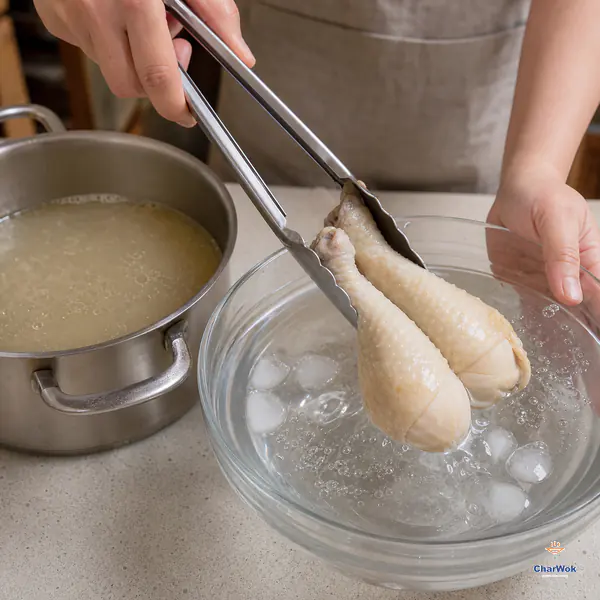
After every drumstick reaches 74°C (165°F), use clean tongs to move it into clean potable ice water, then drain and refrigerate promptly.
- Tear or slice. With clean hands and utensils, remove the bones and tear or slice the cooked chicken into bite-sized pieces. Keep it chilled while finishing the dressing.
- Split the scallions by part. For the dressing scallions, cut the whites into short segments and the greens into fine rings. The whites get slow-cooked in oil; the greens get flashed at the end. Mixing the two jobs into one step is the most common mistake and the reason a lot of homemade versions taste flat.
- Infuse the oil low and slow. Put the scallion whites into a small, dry pan with the oil over low heat. Let it climb gently. You are looking for the whites to turn pale gold at the edges and smell sweet, about 5 to 7 minutes. As soon as the edges brown, turn the heat off and fish out the spent whites. They have given up everything; leaving them in makes the oil bitter.
- Flash the greens safely. Pat the chopped scallion greens dry and put them with the ginger paste in a dry heatproof bowl on a stable surface. Reheat the infused oil only until it shimmers, remove it from the burner, then pour from a short distance while keeping hands and face clear of splatter.
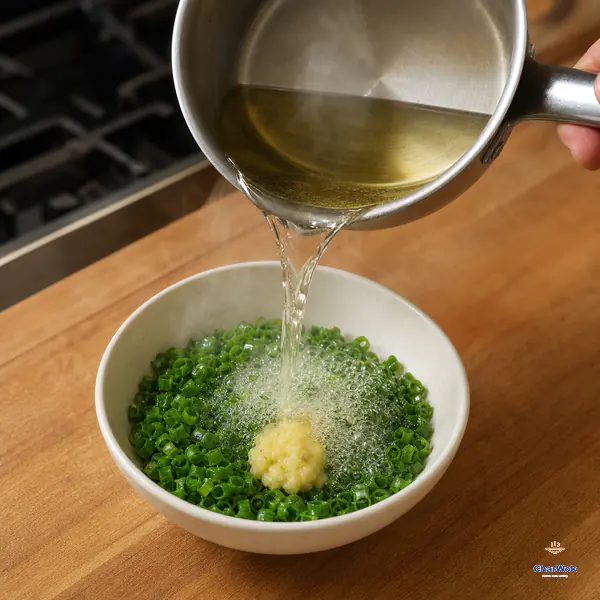
Put thoroughly dried greens and ginger in a dry heatproof bowl; heat the clear oil only until shimmering, remove it from the burner, and pour carefully from a short distance.
- Finish and serve. Add 30 ml / 2 tbsp of the strained stock, scallion-ginger oil, white pepper, and light soy sauce to the chicken. Serve promptly while warm, or keep the dish at 4°C (40°F) or below until serving.
When it goes wrong, and how to save it
Use these checks to separate a texture problem from a safety problem.
- Pink near the bone. Color alone cannot confirm whether poultry is safe. Measure the thickest meat beside the bone; if any piece is below 74°C (165°F), return it to simmering stock and recheck before chilling or serving.
- Dry, stringy meat. You let the water boil during the poach, or you skipped the ice bath. Nothing rescues already-dry chicken, but a generous pour of warm stock and extra scallion oil at the table masks it. The fix is prevention: a bare simmer only, and the ice shock.
- The oil tastes flat. Use fresh, thoroughly dried scallions and finely grated ginger. Warm a small fresh portion of oil until it shimmers; do not heat it to smoking.
- Sogginess on the plate. You pooled too much stock. Two tablespoons is enough to moisten, not drown. The dish should glisten, not swim.
Variations and what to serve alongside
The scallion oil here is a blueprint. Once you can build it, you can branch out.
- Sichuan tingle. Swap white pepper for ground roasted Sichuan pepper and add a spoon of chili oil. This pushes the dish toward the cold-chicken-with-chili-oil register, leaning on the same poached base with a more aggressive dressing.
- Ginger-forward. Double the ginger paste and add a teaspoon of finely julienned young ginger on top. This pushes the dish toward Ginger Chicken flavors while keeping the cold-plate format.
- Crispy skin version. After every piece reaches 74°C (165°F), drain and pat it thoroughly dry before searing skin-side down. Keep water away from the hot oil.
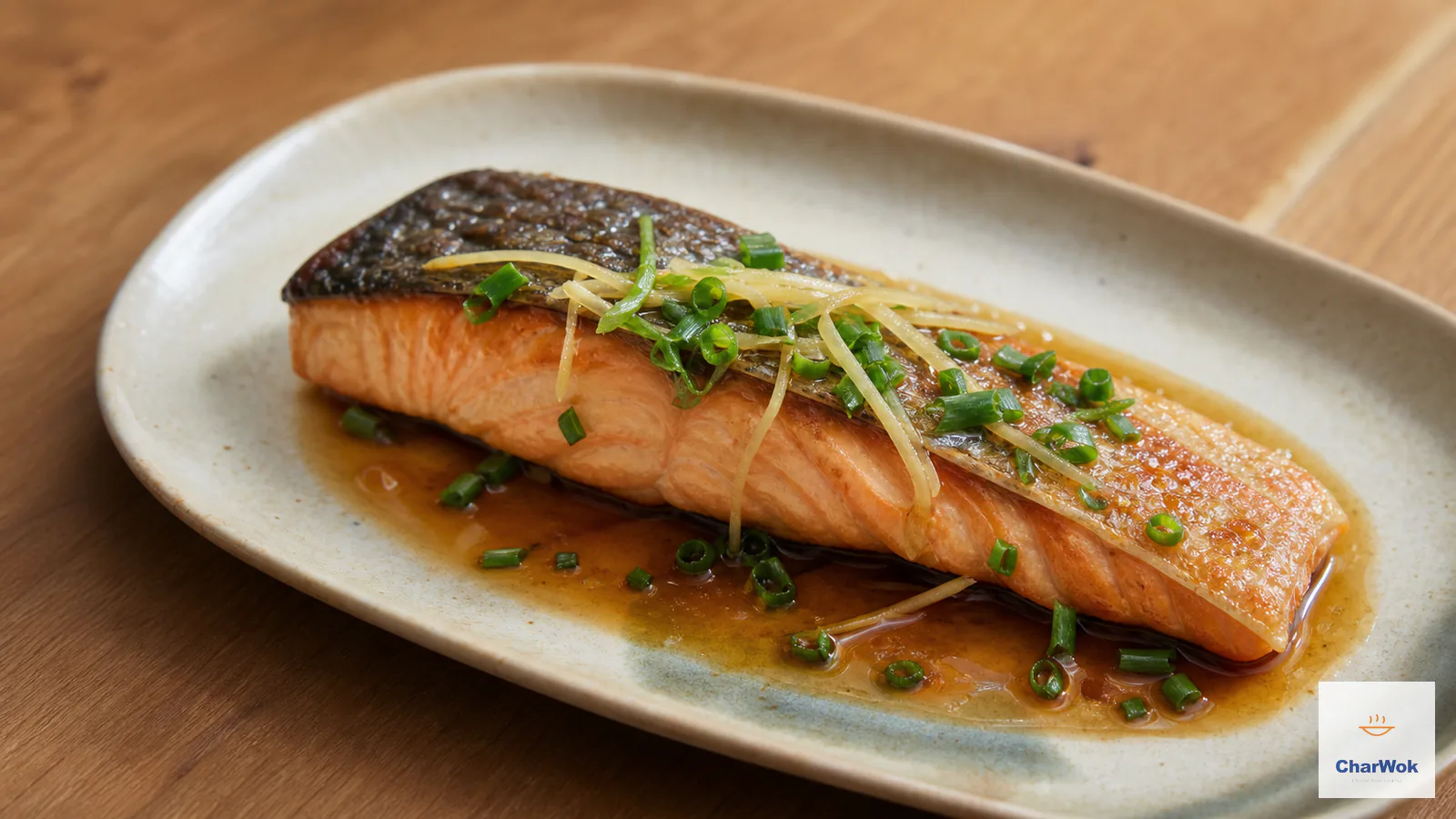
- Seafood swap. The same scallion-ginger oil is excellent over steamed fish, where the pour-over-hot-oil finish is equally central.
Serve it with smashed cucumber salad, wood ear mushroom salad, bok choy stir-fry, or eggplant with garlic sauce. For another chilled chicken preparation, compare the alcohol-containing brine used for drunken chicken.
Don't throw out the leftovers
The recipe may leave extra dressing. Because it contains fresh scallion and ginger in oil, refrigerate it promptly in a clean covered container and use it within 4 days, or freeze it; Oregon State University Extension gives the same limit for home-prepared herbs and vegetables in oil. Use it on scallion oil noodles, egg fried rice, or chicken noodle soup. The scallion oil guide covers a separate batch method.
Cool the strained poaching liquid quickly in shallow containers and refrigerate within 2 hours. Use it within 3 to 4 days or freeze it in small portions for wonton soup or any recipe that calls for chicken stock.
Storage and reheating
Refrigerate the chicken, stock, and dressing in separate shallow covered containers within 2 hours, or within 1 hour when the air temperature is above 32°C (90°F). Keep them at 4°C (40°F) or below and use within 3 to 4 days. The chicken may be eaten cold; if reheating, measure several pieces and bring each to 74°C (165°F). These limits follow USDA leftovers guidance.
Frequently asked questions
Can I use chicken breasts?
Yes. Halve very thick breasts horizontally for even pieces, begin checking earlier than for drumsticks, and cook every piece to 74°C (165°F). Do not substitute a fixed shorter time for temperature measurement.
Why does the recipe say ice water? Is cold tap water not enough?
Use a clean bowl, potable water, and clean ice. The cold bath limits carryover cooking after the chicken has already reached 74°C (165°F); it is not a substitute for cooking. Keep utensils that touched raw poultry away from the cooked chicken and ice bath.
Is the chicken fully cooked if the water never boils during the 12 minutes?
Only a thermometer can confirm that for your pot and chicken. After the suggested simmer and rest, measure the thickest meat beside the bone in every drumstick. Continue cooking and rechecking until each reaches 74°C (165°F).
Can I make the scallion oil ahead?
The dressing is best made near serving time. Once fresh scallion or ginger is mixed into oil, refrigerate it promptly and use within 4 days or freeze it. Do not store the fresh-aromatic oil at room temperature.
What if I do not have Shaoxing wine?
Dry sherry is the closest substitute. A splash of dry vermouth works in a pinch. Skip it entirely if you have none; the dish is still good, just a little less round.
The one thing to remember
Use the suggested simmer and rest as checkpoints, not guarantees. Measure every piece to 74°C (165°F), chill with clean equipment, keep the chicken cold until serving, and heat the dressing oil only until it shimmers.